Bentzi Gopshtain and members of his anti-assimilation organization Lehava protested at the entry to Immanuel Church, located adjacent to Jaffa Gate in Jerusalem’s Old City, which was opened to the public this week at the peak of the Jerusalem Light Festival.
Gopshtain told Arutz Sheva that the opening of the church to the wider public was meant to lead Jews astray and into the trap of the missionaries, as he termed it.
-by Benny Tocker, June 3, 2016
“Jerusalem Light Festival hijacked by missionaries?” Arutz Sheva
Given the rather disquieting historical relationship between Christians and Jews, I can appreciate that there are Jewish organizations who seek to minimize the threat of Jewish assimilation and conversion to a religion they see as false.
But are Jewish people so gullible that if they accidentally walk into a church that they’ll suddenly abandon all of their beliefs and their heritage?
Of course, to the best of my understanding, the majority of Jews in Israel are secular and have no affiliation to religious Judaism, but even still, why is it a foregone conclusion that if a Jew, secular or otherwise, is exposed to the inside of the church or speak to missionaries for a few minutes that they’ll automatically convert to Christianity?
There is another side to the story. One person commented below the news article:
I’m a religious Jew who has gone to the festival year after year. There is ALWAYS a light show on the side of the church because it IS part of the festival. Been there. Seen that. I don’t walk inside the church; nor have I ever seen anyone unintentionally walk inside the church. Is Gopshtain simply uninformed or is it intentional?
I have no idea. I have no yardstick by which to measure Gopshtain.
One possible explanation is that according to multiple sources including Rabbi Naftali Brewer at The Jewish Chronicle, it is forbidden for a Jew to go into a church for any reason whatsoever:
Your rabbi is correct. The rabbinic consensus, based on the Talmud (Avodah Zara 17a,) is that it is forbidden to enter a church, even if just to admire the architecture or artwork. This body of opinion spans the generations and comprises leading medieval Sephardic and Ashkenazi rabbis such as Maimonides, Rashba (Rabbi Solomon ben Aderet), Ritba (Rabbi Yom Tov ibn Asevilli) and Rosh (Rabbi Asher ben Yechiel), as well as contemporary halachists including Rabbis Moshe Feinstien, Ovadia Yosef and Eliezer Waldenberg.
But again, not all Jews are religious, so even though it is Rabbinically forbidden, secular Jews may not acknowledge that authority over their lives.
I should say that the same site also gave the opinion of Reform Rabbi Jonathan Romain who states in part:
A key question is: why are you going into a church? Entering does not mean worshipping. It could be for a variety of other valid reasons: to admire the architecture, to attend the funeral of a non-Jewish friend or to learn about Christianity for the sake of dialogue.
There is a small possibility that a Jew may be so impressed by what he finds that he decides to convert – but such instances are extraordinarily rare. It also displays an insecurity about Jewish loyalties that is very unattractive. Why are we so afraid?
So I see two issues here.
The first is whether or not the church in question was trying to trick gullible Jews into entering their house of worship so they could fall into the clutches of missionaries?
The second is whether or not the majority of Jewish people are so vulnerable to conversion and assimilation that one visit to a church would put them at significant risk?
Image: yadlachim.org
I can only imagine that churches operating in Israel would be well aware of how Jews feel about being proselytized. While, again to the best of my knowledge, it’s not actually illegal for Christians to proselytize in the Holy Land, I believe it is highly discouraged by the authorities, both civil and religious.
If some Christian groups are engaged in “bait and switch” tactics all for the sake of “saving Jewish souls,” then in my opinion, they are violating the integrity of their calling. If you believe you should share the “good news of Jesus Christ” to Jewish people, be honest about what you’re doing and why.
If some Jewish groups are “stretching the truth,” or downright being disingenuous about the tactics and intent of Christian groups in their midst, then, for whatever reason, they’re painting a false portrait of those groups, depicting them as “wolves in sheep’s clothing.”
I am well aware of the Church’s historical hostile and dishonest behavior toward Jewish communities, but it doesn’t mean that each and every Christian on the planet is de facto the vicious enemy of the Jewish people.
Maybe there should be a little balance exercised here.
The title of today’s little missive will probably rub at least some people the wrong way, but hear me out.
Living with a Jewish wife, a non-Messianic Jewish wife, one who shares absolutely no common theology with me, is sometimes quite illuminating. Last week, the oldest son of the local Chabad Rabbi and Rabbitzen had his Bar Mitzvah. Apparently, I’m quite ignorant about all this, since I thought it would be on Shabbos.
Not so (although there was another related event on Shabbos). It was on Thursday. There were a ton of Jews from Crown Heights (Brooklyn) who came for the affair. My wife helped cook tons and tons of kosher meals since Boise is hardly the center of a thriving Jewish community, thus Kosher is hard to come by.
My wife is very protective of her Judaism and her Jewish community. The occasional “Messianic” (Jew or Gentile, it doesn’t really matter to her) who shows up at Chabad kind of rubs her the wrong way. Fortunately, the Bar Mitzvah was by invitation only, so it was unlikely to attract the casually curious or the Messianic who wanted to dive a tad deeper into actual Jewish life.
By the way, one of the people she’s protecting the local Jewish community from is me. I’m never quite sure if my asking something like, “How did the Bar Mitzvah go” will be perceived as genuine interest or as an intrusion (fortunately the former in this case).
Processing all this over the past several days, and doing a lot of detailed lawn work while the missus was at Shabbos services (all day in this case, there was a lot of “hobnobbing” to do), I realized that maybe it’s a good thing I’m not Jewish.
Really, I can’t stand being stuck in a crowd, particularly made up of (mostly) people I don’t know, for a long period of time. If, for some strange reason, my wife had asked me to attend with her, I’d feel like the proverbial fish out of water. I’ve read some books on the Rebbe and the Chabad, but I’m sure I’d fit in at a Chabad Bar Mitzvah about as much as a Pepperoni and Canadian Bacon pizza.
The missus is about as much of an introvert as I am, so when she finally came home from Shabbos services and the subsequent activities around 5 p.m., she was wiped out. I don’t blame her.
I don’t blame her for not including me in her Jewish life, either. The more I’ve disconnected myself from any formal association with Messianic Jewish groups, the more I have begun to realize that maybe I never belonged in the first place. Of course, I belong in a church about as much as a nudist in a nunnery, so I’m not saying that traditional Christianity is an option for me either.
I am saying that a Gentile (well, me anyway) attempting to adopt Jewish practices is kind of like putting a cat in a doghouse. One of these things is not like the other.
My wife showed me a photo of the Bar Mitzvah boy. Wow, what a young face. He was also wearing one of those black fedoras and a black jacket, which seemed strange on a kid that age. But then again, I’m not Chabad or even Jewish. Even if I discovered some long-lost family secret that my mother was Jewish, while halachically, that might make me Jewish, at almost 62 years of age, I would still lack a lifetime of Jewish experience.
In other words, I’d still think and feel like a Goy.
I think it’s OK for me and people like me to not pretend to be someone and something we’re not. It’s OK not to engage in what I’ve heard called “Evangelical Jewish Cosplay”.
I don’t think I have a Jewish soul, and I don’t think I’ve got long, lost Jewish ancestors, and I don’t think I’m a descendent of one of the lost tribes or any of that stuff.
I hang onto my current understanding of the Bible because it’s the one that makes the most sense. That’s why I’m about as welcome in a Christian Bible study group as a quart of Vodka at an AA meeting. Sooner or later, I’m going to say something that will be perceived as a threat.
Just showing up in a traditional Jewish venue would be enough to be looked at askance since I’m a Christian (what my wife calls me, not necessarily how I see myself).
Like I said, it’s easier and better to avoid trying to be something you’re not, especially since you’ll (I’ll) stick out like a clown at a funeral. Oh, for a time I can “blend into” a Church setting, but only until I open my mouth.
If religious community is important to you, then I hope you’ve got one where you are accepted for the person you are. I hope you fit in.
For those of you who don’t, welcome. That’s my world. That’s the world of a lot of us who hold to an alternate view of the Bible’s overarching message, particularly the actual meaning of the New Covenant. Some of you have found enough fellow “oddballs” within driving distance that you have formed your own groups. That’s good.
But we’re pretty strange ducks, and sometimes there isn’t a significant number of like-minded oddballs around to get together with.
Besides, within our own little sub-group, there are numerous sub-sub-groups who are just different enough to where we’re not going to get along for one reason or another.
Image: Cafepress.com
And then, there are those folks who are just plain “out there”.
So, if you have ever gotten that feeling that you don’t fit in, no matter how hard you try, maybe you’re trying too hard to belong in the wrong place. Instead of having that make you feel disenfranchised, maybe you should feel grateful.
Thank you God for making me who I am, even if that sort of person isn’t very common, and even if that person isn’t always easy for others to understand. The downside is you don’t have a small Bible study group to go to every Wednesday night (at least not without starting a theological “knife fight”). The upside is you don’t have to pretend to be someone you’re not. All you have to do is be the person you are.
What does being “contaminated by death,” and a traveling on a “distant road” have to do with us?
These terms point to deeper concepts. A state of disconnection from God is a type of death. A distant road is place where we are far away from who we really are supposed to be. This is something most of us can identify with.
-Kareb Wolfers Rapaport
“Pesach Sheni: The Holiday of Second Chances” Aish.com
Second chances.
Any person of faith who believes Hashem grants us only two chances in life is sadly delusional. As far as my life goes, I can’t count the number of “chances” God has given me (and is still giving me) to pull my head out of that hole in the ground and get back into the game.
I don’t know about you, but I sometimes find it disheartening to blog in the religious space, particularly in the realm Messianic Judaism and Hebrew Roots.
While I’ve been told repeatedly that my blog speaks for a certain number of people out there, people like me, non-Jews who have discovered that a particularly Jewish interpretation of the scriptures, of the New Covenant, of God’s intent for not only Israel but the rest of humanity, of the meaning and purpose of Messiah, is the best and most accurate way to understand all of that and who we are because of it, what I write doesn’t speak for a much, much larger segment of both Christianity and Judaism.
I’ve received criticisms and complaints, both on my blog and via email, from mainstream religious Jews, from Messianic Jews, from Messianic Gentiles, from mainstream Christians, and just about anyone and everyone who identifies with what we call Hebrew Roots.
Some of these folks are Internet trolls, but many of them are good, kind, well-meaning people who I’ve managed to inadvertently offend in one way or another.
I’ve stopped going to church, in part, because what I believe and who I am is fundamentally incompatible with traditional Christian theology and doctrine (and not being one who tends to keep his mouth shut when asked for an opinion, I became quite a pain in the neck).
I don’t deliberately stick my nose into online and actual mainstream Jewish venues, already knowing what they would think of someone like me (apart from quoting sources such as Aish).
I have increasingly separated myself from a number of Messianic Jewish organizations for similar reasons.
Only God is silent about what I write. I suspect He’s waiting for me to make up my mind about what I’m supposed to be doing.
So you see, I believe that if people were only given two chances, me included, the vast majority of us would already be toast.
According to Karen Wolfers Rapaport’s article:
Pesach Sheni, the holiday of second chances, reminds us that we can always change our steps and return home.
The question for someone like me is where exactly is “home,” at least in the material sense?
Of course Pesach Sheni has little or nothing to do with me since I’m not Jewish. In any event, its applicability in the current Jewish world is stifled by the absence of the Temple and the Priesthood.
The holiday only tangentially speaks to the non-Jewish world that God offers such “second chances” to us, too, and it begs the question, what do I do with the chance I hold in my hands now? What are you going to do with yours?
Writes Rabbi Twerski: the sum total of all the traits that are unique to human beings comprise the spirit that makes us distinctly human. Whether one believes that the spirit was instilled in man by God or somehow developed in the process of human evolution — the fact that human beings have a spirit is independent of one’s belief.
If one is seeking spirituality, then one must exercise his uniquely human capacities. Spirituality is thus nothing more than the implementation of these capacities, hence spirituality can be seen as being synonymous with humanity. To the degree that a person is lacking in spirituality, to that degree he is lacking in humanity.
Without including religion in the definition of spirituality, the above definition is for generic spirituality. However, for Jewish spirituality one needs to look to the Torah for direction on how a Jew should exercise his uniquely human capacities!
-Rabbi Kalman Packouz citing
Rabbi Abraham Twerski’s book Twerski on Spirituality
in this week’s “Shabbat Shalom Weekly” Aish.com
Which begs the question of what Rabbi Packouz or Rabbi Twerski would believe a non-Jew’s proper expression of spirituality should be. Probably as a Noahide, but I’ve covered that territory before.
Taking a step back, what makes human beings unique and spiritual beings? From R. Twerski’s book, Rabbi Packouz lists eight attributes:
The ability to learn from past history.
The capacity to think about the goal and purpose of one’s existence.
The capacity to volitionally improve oneself.
The capacity to delay gratification.
The capacity to reflect on the consequence of his actions.
The capacity to control anger.
The capacity to forgive.
Free will.
Rabbi Kalman Packouz
Granted, that people possess these abilities doesn’t mean they exercise them all the time (and some people exercise them almost none of the time, or so it seems), but we do possess them and they are at our disposal.
Please click the link to R. Packouz’s article that I inserted above to read the definitions for each of the numbered items. I’ll quote from the last one here: Free Will.
Animals are under the absolute domination of their body and cannot make a free choice. If hungry, it must look for food. It can’t decide to fast today. If a jackal sees a tiger eating a carcass, it will refrain for fear of retribution. Only a human being can be in a position with no possibility of detection or retribution and decide not to steal because it is morally and ethically wrong.
To the best of my understanding, only a human being can contemplate God and his/her relationship to Him. Only a human being can deliberately ignore God or dismiss Him as “unreal”.
However, since God gave us these capacities, we are responsible for putting them into play and in how we choose to use each of them.
That means we are responsible for not only learning from our past mistakes, but the past mistakes of our ancestors; history’s past mistakes.
Thus a world of human beings should have learned from thousands of years of anti-Semitism and Jew-hatred, but that doesn’t seem to be taking place. The Church as a unified entity (understanding that there are actually thousands upon thousands of separate denominations) should have learned that the Jewish people and Israel have not been rendered obsolete because of “Jesus,” but that doesn’t appear to be happening either. So far, humanity has done a rather poor job of learning from history, in spite of the fact that so-called “progressives” believe they are “on the right side of history” (but are they on the “right side of God?”).
I mentioned a little earlier that only human beings are able to contemplate God. Item two seems related to this since our goal and the purpose of our existence cannot be separated from God’s reason for creating each of us. And yet, how many times have you asked yourself why God specifically created you and why you are here in the first place? I’ve asked myself that question many times. I still do.
I heard a bit of dialogue in an otherwise unremarkable movie once that’s stuck with me:
Her: “People change.”
Him: “Most people don’t.”
Once we’ve locked on to a goal or goals for ourselves, we can create a plan for personal improvement and enact that plan.
Yeah, right.
OK, maybe that’s unfair, but most people, including me, get to a certain point in our personal development and then tend to stay there. Depending on what stage the person is stalled or stuck at, they can be adequate and even accomplished human beings, or they can be desperately flawed and dysfunctional.
Some people make many plans and goals but fall flat at the execution stage. Others become too anxious to even imagine a plan to change and perform the metaphorical act of “hiding under the bed,” as if life will just leave them alone if they ignore it.
Fasting on Yom Kippur (or for other reasons) teaches delaying gratification. Actually, anyone who’s ever been a parent or grandparent knows all about delaying gratification.
My wife and I had our grandkids for the weekend. Actually, our son brought them over for dinner last Thursday and Friday evening as well, so we saw a great deal of them all. My grandson is seven years old, and my granddaughter is 9 months. They have radically different needs and meeting the needs of both simultaneously isn’t always easy.
Since babies need more attention than little boys, my grandson sometimes had to delay gratification. When I was alone watching both kids and I needed for feed my granddaughter, my grandson had to find something else to do besides play with Grandpa (don’t worry…we found plenty of opportunities to have adventures).
It goes without saying that my wife and I, as well as the kids’ Dad, Uncle, and Auntie, all delayed gratification to one degree or another when the children were in our home. That’s what adults do, especially when taking care of kids. That’s what you do when you love someone and you put their needs and wants ahead of your own.
Ideally, it’s what you do when you love God and you recognize what He wants you to do and what His priorities for you are. It’s not like God is a dictator or doesn’t want you to have time to relax or have fun, but as His servants and His children, we have a responsibility to Him first and foremost. If we see someone else in our world who has a need, God has given us the ability to attend to that need first because, after all, it’s the right thing to do.
Not that we actually do so all the time.
Consequences, like Karma, are a b**** (you probably know how to finish that quote). They are also a reality of life. For instance, if you choose not to pay a debt, your wages or taxes can be garnished. I think this goes along with delaying gratification.
Unless you are insanely wealthy, you have only so much money each month to work with. That means, if you are at all responsible, you have a budget. You may “flex” it a little bit with a credit card, but when all the bills come in, they need to be paid.
That means choosing to pay for necessities first, such as food, housing, clothing, and so forth, and only afterward using money to “play”. Reversing that process tends to lead to painful consequences.
Image: vintagecardprices.com
There are also consequences for “blowing off” God. They most likely aren’t immediate. We know that will be an accounting, a judgment at the end of all things, so it may seem as if God is giving you a pass with what ever sin(s) you have a problem with.
Sure, God can arrange for natural consequences. If you use drugs or alcohol habitually, all God has to do is wait for your body to start falling apart. Same for overeating (which is a big problem in our nation). Same for a lot of things. The consequences are built into many sins. For some though, you just have to stand by. Don’t worry. They’ll come. Or you can learn from your mistakes and improve your life so you stop sinning and thus avoid uncomfortable consequences.
Your choice (free will, remember?).
Every time I drive anymore, I get a lesson in controlling my anger. I’m not always successful. It seems that as I get older, I don’t have as great a capacity to tolerate traffic. Good thing I live near Boise, Idaho now rather than Orange County, California.
But going back to the example of being a parent or grandparent for a moment, let’s take another look at controlling anger. Sometimes adults get angry at kids, at least momentarily. You catch a kid coloring on the freshly painted walls of her bedroom or letting the air out of your car’s tires (I did the latter once when I was five). Your immediate tendency is to explode at them (Don’t worry, my Dad didn’t).
If you are a mature adult, you stop yourself. Really, they’re just kids. They do stuff like that. Yeah, you can create consequences for their behavior so they can learn more about right and wrong, but blowing up at a kid is just satisfying your own impulses rather than displaying good parenthood.
The same is true when you get angry at another adult in the presence of your kids. Parents fight sometimes. Some fights are louder than others. While yelling and screaming at a significant other doesn’t do you or them any good (how many people have changed for the better as a result of being screamed at?), if kids are around, it’s not only uncomfortable, it’s terrifying.
When Mom and Dad have a major emotional eruption at each other, it’s like the kid’s world has fallen apart. The two people in life who a child absolutely must depend upon and believe in have just exploded into a temper tantrum that makes Mount St Helens look like a firecracker, and that means the two people who are supposed to provide for the physical and emotional security of their child have completely failed and gone down in flames, pulling their child in with them.
OK, I get it. People argue sometimes. Fine. We’re all human, in good ways and bad. But don’t do it when your children are around. That’s not being a good parent, adult, or human being.
The flip side is the capacity to forgive. But wait.
I think Rabbi Packouz (and maybe Rabbi Twerski) missed something. It’s not just about putting our own hurts aside and forgiving the person who hurt us. How about the ability to say you’re sorry, mean it, and ask for forgiveness when you’re the one who’s “blown it?”
If you indeed have blown up at someone or otherwise have failed to maintain behavior consistent with being a mature adult, after you’ve calmed down and realized the consequences of your actions, you have the option of apologizing and asking forgiveness.
Bernie Sanders recently accused the IDF of killing 10,000 innocents in an operation responding to terrorist acts initiated in Gaza. He admitted in the radio interview that he wasn’t sure of his statistics, then went ahead and uttered his outrageous statements anyway.
When later confronted with the fact that the figure was more like 2,300 “Palestinian” Arabs, and many of them were combatants, not innocent bystanders, instead of Bernie apologizing, he said that the New York Daily News distorted his statement.
I heard the radio interview and nothing was distorted or misrepresented except Sanders’ so-called “facts”. Bernie could have taken the moral high road and admitted his mistake (it’s pretty easy to make one when you don’t have accurate information immediately at hand), but instead, he chose to (in my opinion) lie about it, avoid personal responsibility, and blame others for his own inadequacies.
While R. Packouz citing R. Twerski’s list of items of what it is to be human seems pretty optimistic, it’s all too apparent that being human has some serious drawbacks. We have all of these wonderful abilities, and a lot of the time, we don’t use them or don’t use them very well.
Which brings us back to free will.
We can recognize that we are flawed, imperfect, and sometimes even damaged and dysfunctional human beings who have these terrific capacities and screw up using them more often than not.
Image: giudittagareri.com
We can recognize all that and say “screw it.” We can give up. Someone recently wrote about this on her blog. Her choice was go not give up and not give in, but to stay the course.
Moved by her struggle, I offered this:
Affirmations are powerful. They work for us or against us. Every statement we tell ourselves about who we are and what we find possible is really an affirmation. Positive affirmations build us. Negative affirmations do the opposite. So right now you can tell yourself a great affirmation: “I choose better, higher, and wiser self-talk each and every day.”
-Rabbi Zelig Pliskin
The trick about positive affirmations, is that they need to be used as motivators for actual change, not just internet “memes” that sound good, but only serve to create the illusion that you already are the person you want and need to be.
Using the positive affirmation that you are courageous means that you have to follow-up by facing some difficult situation with courage, rather than avoiding it. Using the positive affirmation that you are compassionate means that you have to follow-up by showing compassion to another person, even if they aren’t very easy to get along with. Using the positive affirmation that you are productive and self-supporting means…
…well, you get the idea.
Bernie Sanders is a politician, so I expect him to lie, even to himself. However Bernie Sanders, like the rest of us, is a human being, and thus, he is ultimately responsible for using what God gave him or to face the consequences…in this life or the next.
Since he’s Jewish, as the quote I placed at the top of today’s “meditation” attests, he’s responsible for looking “to the Torah for direction on how a Jew should exercise his uniquely human capacities!”
As far as I can tell, he’s got a long way to go.
But so do the rest of us.
Where do we look (assuming non-Jews) for direction on how we should exercise our uniquely human capacities? If you are a normative Christian, you’ll probably say “the Bible” and really means your particular church’s interpretation of scripture.
If you’re someone like me, the answer is essentially the same, but the interpretation is different, sometimes really different.
I recently read a question in a closed Facebook group asked by a non-Jew who was wondering what sources he could consult to determine if we, like the Jewish people, are obligated or at least allowed to participate in specific times and practices of prayer. There was a brief but lively discussion, and the general consensus was that while we may not be obligated, we are most likely allowed to pray in a manner similar to Jewish praxis, adjusting for a non-Jewish and non-covenant relationship with God.
And all this takes us back to the question I implied at the top of today’s blog post: What is a non-Jew’s proper expression of spirituality given a more “Judaic” understanding of the meaning and purpose of the Bible, the Messiah, and Jewish Israel?
That answer is our ongoing struggle for self-definition and, for some of you at least, your role and purpose within Jewish community. For the rest of us, it’s merely working out who we are to God and to other human beings, community notwithstanding. At the end of the day, regardless of who we are, who is in our lives, and what we believe, it’s just us and God.
What we do matters. Each day is an opportunity to do just a little bit better than you did the day before. With each morning’s dawn you can dedicate yourself to having a good day. With each passing day, you are building a life. Let’s all try to build a good one.
Individual commitment to a group effort — that is what makes a team work, a company work, a society work, a civilization work.
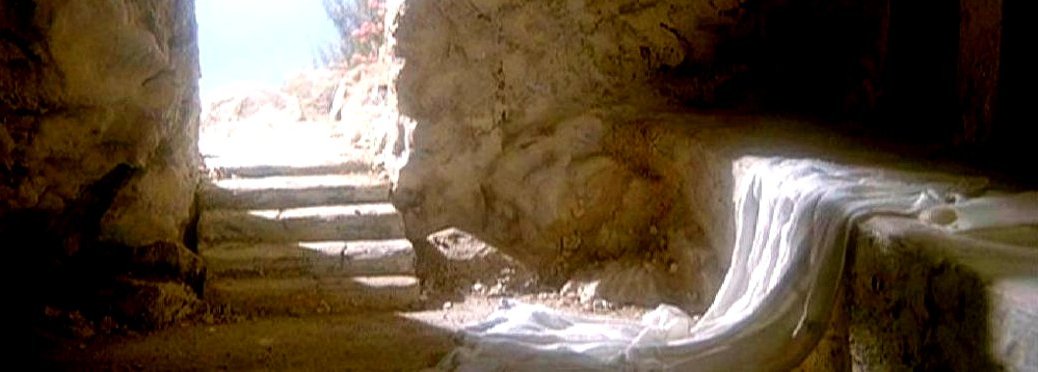
Something to ponder. If Jesus died on Passover and rose again a few days later (depending on your timetable), then why are most people celebrating his resurrection a whole month before Passover this year (and various other years as well)? Respectful responses are welcome. No witch hunting.
-Query from Facebook
No, this wasn’t directed at me. It was a general question tossed out into social media by a Facebook “friend” (I put that in quotes because we’ve never met face-to-face).
It’s an interesting question, but I must admit, it wasn’t the catalyst for today’s “morning meditation.” Easter was.
More specifically, my massive and total disconnect from Easter was the catalyst. For Easter, or perhaps more accurately expressed, for “Resurrection Day” three years ago, I crafted this little missive about my emotional disconnect from the event, even as I was attending Easter…uh, Resurrection Day services in a little, local Baptist church.
There were certain things I liked about the service. There were certain things I learned. But I wasn’t just gushing with joy like everyone else around me because “he is risen”.
Add to that, the memory of how my wife looked at me when I was walking out the door to go to Resurrection Day services, how crushed and betrayed she seemed, as if she found out I was cheating on her. I know I’ll never attend another Easter service in my life.
My regular readers are aware that my wife is Jewish and not a believer. More specifically, her viewpoint of Jesus, Paul, and Easter is what she learned from the local Chabad Rabbi. She would never stop me from expressing my faith in whatever way I choose, but I know it bothers her, at least on certain occasions…
…like Easter.
She sometimes surprises me, though. She said that although she wouldn’t take me to Israel with a Jewish group, she does want me to go with a more appropriate (for me) Messianic group. I once had a passion to do that, but a lot of things dried up for me, including my sense of community.
I’ve been thinking about Rabbi Stuart Dauermann’s essay “The Jewish People are Us — not them” which you can find published here and which I reviewed a few years back.
Rabbi Dauermann was emphasizing that a Jewish faith in Yeshua shouldn’t result in Jewish “messianists” considering the wider Jewish community as “them” or as “the other,” the way most Christians consider “unbelieving” Jews. From his perspective (as I understand it), Jewish devotion to Rav Yeshua is very Jewish and should, if anything, result in Jewish Yeshua-disciples being drawn closer to larger Jewish community because, after all, Moshiach is the first-born of Israel’s dead, living proof that the New Covenant promise of the resurrection to Israel will indeed come to pass.
What’s more Jewish than that (and I know I’ll take “heck” from one or two Jewish critics of my blog for that question)?
But what about those of us, we non-Jewish “Christians” who stand on the Jewish foundation of the Bible, who feel a greater connection to Passover and Sukkot (Festival of Booths) than Christmas and Easter? What about those non-Jewish believers who feel more comfortable calling ourselves “Messianic Gentiles” or Talmidei Yeshua than Christians?
While Rabbi Dauermann may feel a lot closer to Jewish community than the Christian Church (and I agree, he should), does a “Messianic” perspective for a Gentile believer draw us closer to the Church or push us further away?
Simply put, because Rabbi Dauermann is Jewish, he identifies with larger Jewish community, even those who are not disciples of Rav Yeshua (which just baffles the daylights out of most Christians I’ve spoken to about it). I have a Jewish wife, so I’ve seen that dynamic in action first hand, and any thought of my denying her or forbidding her to associate with Jews (not that I would, of course), is totally revolting to me, absolute anathema.
But to reverse the equation somewhat, being a Gentile disciple of Jesus does not automatically make me think of the Church as “us” or even “me”. In fact, on Easter, I feel more apart from “Church” than ever.
Going back to the previously mentioned Facebook commentary on Easter, there have been some interesting responses. There are others like me out there who also experience the disconnect from this Christian holiday, even those who remain in the Church. Some recognize Easter as a deliberate attempt by the early “Church Fathers” to co-opt the Passover/Resurrection event for Gentiles, divorcing it from its Jewish origins and context.
Others launched into “paganoia,” often a consequence of some Hebrew Roots teachings, saying that Easter was a deliberate attempt to introduce paganism, particularly worship of “Ishtar.”
I don’t think I’d take it that far.
But I am disturbed by one thing. The resurrection of Rav Yeshua is living proof that the New Covenant promises of God to Israel (Ezekiel 37:11-14) will indeed occur, and Yeshua is the “first fruits from the dead” (1 Corinthians 15:20).
Why don’t I feel connected to that?
Well I do, sort of, but it happens more on Passover and during the week of Unleavened Bread than it does at Easter, whether I’m in a church or not.
I know there are Hebrew Roots and Messianic Gentiles out there, those in their churches and elsewhere, who still have an emotional connection to Easter. These people were probably raised in a Christian setting by their Christian families or otherwise, spent enough time in a church to forge that visceral linkage.
I didn’t, not when my parents took me to church as a child, nor when I returned to Christian community as an adult.
Today being Easter punctuates for me that I consider normative Christianity as “them, not me.” I can’t say “us” because I don’t have an alternative “us” to relate to, at least not in an actual, physical form of community.
I’ve said before that I’ve given up the identity crisis that has seized so many non-Jews who are either in Messianic Jewish or Hebrew Roots community. As Popeye famously quipped, “I yam what I yam,” even if it doesn’t have a widely recognized name or label.
For those of you who are indeed emotionally and theologically attached and even thrilled by Easter or Resurrection Day, may you use your worship to strengthen your devotion to Rav Yeshua (Jesus Christ) and all he brings to us.
For those of you who are like me, any day is a good day to bring honor to our Rav and glory to the God of Israel. May the day come when we all merit the resurrection from the dead, and the life in the world to come.
However, what really got my attention occurred in the comments section of that blog post.
I’ve always been a little baffled when Jewish people willingly convert to (Gentile) Christianity, disdain the Torah, the mitzvot, the Shabbat, and the Biblical moadim (festivals) in favor of Christmas, Easter, and the “freedom” to eat ham sandwiches.
OK, I’m being a little snarky here, but remember, I have been married to a Jewish wife for over 30 years (although she hasn’t been “religious” all that time, and even now, her observance isn’t as full as I wish it was), so I have a rather unique perspective on what being Jewish means to her, including her special and precious covenant relationship with Hashem (God).
I don’t know the history or background of most of the people commenting at RPP, but it seems that at least some of them are believing Jews in the vein of “Hebrew Christians,” Jews who attend church along with their Gentile Christian counterparts, adopting the lifestyle and beliefs of the believing “Goyim,” and being Jewish in name and DNA only.
To me (but who am I to talk?), a large part of being a Jew of faith is living a life of Jewish praxis, of lighting the Shabbos candles, davening with a minyan, attending the prayer and Torah services in synagogue on Shabbat, donning a tallit and laying tefillin to pray, and many other things that are inexorably intertwined with observing the Torah mitzvot and living life as a Jew.
Even as I’m writing this, one or more comments responding to the one I made at the aforementioned RPP blog post, are being published, so it’s going to be interesting writing this while commenting there.
I feel like I’m repeating myself in making my points, but to believe the traditional Christian view of Galatians 4 that the Torah is slavery or Hebrews 8:13 that the Torah is obsolete, and thus replaced rather than augmented by the New Covenant (Jeremiah 31; Ezekiel 36) means that God lied to Israel when He gave them the Torah at Sinai and when He promised to redeem Israel as Israel in the New Covenant promises.
I’ve written so much about the New Covenant, why it adds to and augments the Sinai and other covenants God made with Israel, why Israel, that is, the Jewish people, have been and always will be special and unique to God, even among the ekklesia of Jews and Gentiles who worship the God of Israel and bring honor to Yeshua, our Rav and King. I don’t want to write it all down again in a single blog post. It wouldn’t be an essay, it would be a small book (and believe me, I’ve thought of collecting certain of my blog series into a book, but who’d publish it?).
I went through something of a crisis of faith a few years back when I realized that there is nothing whatsoever in the New Covenant language that promises salvation or a place in the world to come to non-Jewish, non-Israel people who believe in Jesus. The fact that Yeshua mentions the New Covenant in his blood in Matthew 26:28, Mark 14:24, and Luke 22:20 has no apparent connection to Jeremiah 31 and Ezekiel 36 at all.
So I spent somewhere around nine months or so complaining in the blogosphere, asking for help from anyone I thought would/should know how to make that connection. Ultimately, I made it myself through a lot of study and investigation. No wonder most Christians just take the “this is the new covenant in my blood” statement and how to interpret it for granted. If you really look at it, the statement is like a castle built on air if you don’t understand how all of the covenants work together. The Church doesn’t teach that part. You have to dig it out for yourself.
Recently, I wrote a blog post that clarified how we non-Jewish disciples do not have a covenant relationship with God at all, but rather, we rely on faith and trust alone to assure us that God’s great mercy and grace allows us to participate in blessings of the New Covenant without being named parties.
But for the Jews, it’s a different matter. Acts 15 makes it clear that our participation in God’s blessings does not require the same rigorous involvement in covenant mitzvot as God requires of the Jewish people and nation. Nothing in the New Covenant language states that it replaces the old.
Paul’s Hagar and Sarah midrash in Galatians 4 challenges the traditional Christian interpretation of Torah as slavery, and my review of D. Thomas Lancaster’s sermon Glory to Glory clarifies the meaning of a previous covenant becoming old and growing ready to disappear. It’s not the conditions and requirements of the Sinai covenant (Torah) that are disappearing, it’s the difference between the Torah being external and internal. In the Messianic Age, Jews will have the Torah written on their hearts; wholly internalized so it’s natural for them to be obedient to God in performance of the mitzvot, thus it will be humanly possible to serve God without sin.
I think I know where the fine folks at RPP are coming from. A month or so ago, I wrote Exploring Reformed Theology: The Fallacy of Covenant Equality Between the Church and Israel. Doing this investigation actually helped me understand why Christians think it’s logical and Biblical to believe that Jesus observing the Torah mitzvot perfectly “fulfilled righteousness,” and thus rendered it unnecessary for Jews to continue to be Torah observant, and eliminates the requirement for the Sinai covenant.
I just happen to believe that interpretation is in error and was ultimately created as a consequence of the ugly divorce that happened between the Gentile novices and their Jewish teachers and mentors within the first century or less after Yeshua’s ascension, and ended up becoming the Christian Church’s two-thousand year old mistake.
I know from a traditional Christian point of view, the continued practice of Rabbinic Judaism for the past nearly twenty centuries, is considered to be the “mistake.” From that point of view, Jews should have abandoned Jewish praxis, if not Jewish identity, and converted to Christianity the way Paul did in Acts 9 (except he didn’t convert, he just changed Ravs and took on a more Judaically enlightened perspective and purpose based on his supernatural revelation).
To my way of reading the Apostolic scriptures, the Jewish disciples of Rav Yeshua did not cease Jewish practice, did not cease the traditional prayers, did not cease offering Korban at the Holy Temple, and did not renounce the Torah.
You see, brother, how many thousands there are among the Jews of those who have believed, and they are all zealous for the Law…
–Acts 21:20 (NASB)
I don’t have the time to pull in all the necessary quotes from the Bible to illustrate my points, which is why I’m peppering this blog post with links to many other of my essays. However, when Paul was falsely accused of “teaching all the Jews who are among the Gentiles to forsake Moses, telling them not to circumcise their children nor to walk according to the customs,” the thousands of Yeshua-believing Jews who were all “zealous for the Torah” doubted Paul because of these rumors. Paul had to do something to convince these Jews and their non-Yeshua-believing brothers, that he had never turned away from Torah or Temple and had never taught other Jews in the diaspora to do the same.
Unfortunately, that didn’t work out as planned, but if you follow the progression of trials Paul went through as depicted in Luke’s Book of Acts, you’ll see that Paul never agreed with the false accusations against him. He always maintained his innocence and repeatedly stated that he never committed a crime against Roman law or Torah.
I agreed with Rabbi Stuart Dauermann that the “Jewish people are ‘us’ not ‘them,'” meaning that Messianic Jews are part of the larger community of Jewish people, not “Christians in kippot” who see non-Yeshua believing Jews as something alien and apart.
While I’m throwing in links, let me direct you to the excellent volume compiled by Mark Nanos and Magnus Zetterholm called Paul within Judaism: Restoring the First-Century Context to the Apostle. There is a growing movement of Jewish and Christian New Testament scholars (and that’s a pretty amazing statement in and of itself) who are re-examining the writings of Paul without peering through traditional interpretive lens of the Church, investigating Paul’s intent and meaning as a Pharisaic Jew rather than a Christian convert.
The results are quite enlightening and, since we depend on Paul for much of our understanding of early “Christian” theology and doctrine, if we reconstruct him back into his Jewish environment and then re-read his letters, we get a very different view of the Apostle to the Gentiles and what he was actually trying to communicate.
Christianity, as we understand it today, was invented by a Gentile majority population within the ancient and short-lived Jewish religious stream of Yeshua believers once called “the Way”. Christianity had to occur in order for these Gentiles to “divorce” themselves, not only from their Jewish teachers, but from the wholly Jewish and Israel oriented message of the Messiah, re-interpreting the ancient Jewish writings to say what they were never intended to say. Only two-thousand years of Christian dogma make it seem as if replacement or fulfillment theology is at all reasonable, let alone Biblical.
The “good news” of Yeshua has always been about the coming of the New Covenant, the fulfillment of God’s promises to Israel, to restore them, to restore the Temple, to restore the Levitical priesthood (start reading at Jeremiah 31 and go forward through the subsequent chapters…it’s all there). It’s always been about good news for Israel first, and then because of that, also good news for the people of the nations, that is, the rest of us.
But if Jewish people, Jewish praxis, Jewish covenant connection with God, and Judaism as a lifestyle and expression of the covenants goes away and is replaced by Gentile Christianity and a Gentile Jesus, not only does Israel’s “good news” go up in a puff of smoke, so does ours. Gentile salvation and reconciliation to God only happens because of Israel’s covenants with God. If you replace them, then you drive the Jews away from God for all time and you destroy any hope the rest of the world has, because we depend on Israel’s covenant linkage to God to metaphorically link us (graft us in), too.
I’m sorry. I know there are many good and faithful Hebrew Christians in the Church and they really do believe the Torah is not only obsolete, but actually an error. It’s incredibly sad, because a Jew is the only person who is born into a covenant relationship with God, whether he or she wants to be or not. For them to be erroneously taught that their unique identity and relationship with God through the Sinai and other covenants, including the New Covenant, has been done away with, is to cause them to stumble in that relationship with Hashem and with Messiah.
In John 4:22,Yeshua famously said that “salvation comes from the Jews” and he wasn’t kidding. If the Church got her wish and converted 100% of the worldwide Jewish population to Gentile Christianity causing them to abandon the mitzvot and the covenants, we would not only be risking Israel’s future but our own.
The Jewish people have been living out their covenantal lifestyle against the constant threat of genocide for thousands of years. Don’t let conversion and assimilation finish what Haman and Hitler started. There is another way, a better way for a Jew to accept the revelation of Yeshua as Rav and Messiah. That way is to accept Jewish devotion to Yeshua and worship of the God of Israel as a Judaism, not Christianity.
No, we non-Jews don’t exactly practice “Judaism,” even when we accept the Jewishness of Yeshua-faith, but we do recognize that Jewish people do have that obligation, even as we come alongside of them in the ekklesia. If you are a non-Jewish Christian, then it is your duty to support observance of the mitzvot among the Jewish disciples of Yeshua. If you are a Jewish disciple in the manner of the Hebrew Christians, at least consider idea that your connectedness to God is much more than what you’ve been taught, that you are more unique and precious to God as a Jew than the Church will ever be willing to admit.
If nothing else, right before the sun goes down this coming Friday evening, say the blessings and light the candles to welcome Shabbos into your home as a Jew. Judaism isn’t an all or nothing religion. It happens one mitzvah at a time. Turn your heart back to the Torah and thus back to God, and He will certainly turn His heart to you.
"When you awake in the morning, learn something to inspire you and mediate upon it, then plunge forward full of light with which to illuminate the darkness." -Rabbi Tzvi Freeman





















 Morning Meditations