Tag Archives: Christianity

John MacArthur and Struggling with Biblical Sufficiency, Part 1

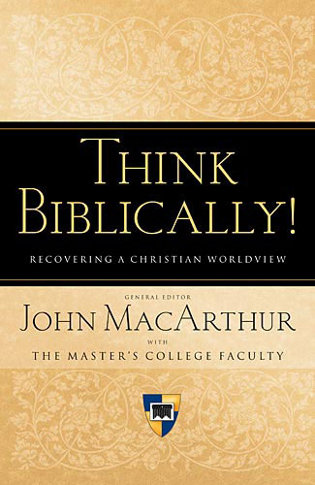
think_biblicallyA truly Christian worldview begins with the conviction that God Himself has spoken in Scripture. As Christians, we are committed to the Bible as the inerrant and authoritative Word of God. We believe it is reliable and true from cover to cover, in every jot and tittle (cf. Matt 5:18). Scripture, therefore, is the standard by which we must test all other truth-claims. Unless that axiom dominates our perspective on all of life, we cannot legitimately claim to have embraced a Christian worldview.

John MacArthur
“Chapter 1: Embracing the Authority and Sufficiency of Scripture” (pg 21)
from Think Biblically: Recovering a Christian Worldview (ed. John MacArthur)

NOTE: I had a conversation with Pastor Randy last night (Monday) which amended a few things I understand about him and about MacArthur. This blog post and Part 2 which will be published tomorrow morning, were written before that encounter. I’ll post an update after the publication of Part 2.

I remember when I “discovered” the Bible contained internal inconsistencies that could not be “smoothed out” in any reasonable fashion. I remember when I realized that the different Gospel accounts of the timing of the death of Jesus didn’t match up. I remember hitting a wall, going into a tail spin, and experiencing a classic “crisis of faith.” It wasn’t pretty.

I eventually came out of it and retained my faith, but my view of the Bible has never been quite the same since. Yes, I believe it is the Word of God, His chronicle of the interactions between man and God, but I no longer believe that God literally spoke each word of the Bible in the ear of each of the Bible’s contributors as if He had dictated a series of letters to a series of secretaries (I guess I should say “administrative assistants” in this day and age). I believe that in some supernatural sense, God and the contributors became “partners” in the endeavor of composing what we have in our Bibles. It’s inspired by a Holy God but it contains the lived personalities and experiences of each person who did the actual writing.

Pastor Randy gave me the photocopied pages of this chapter written by MacArthur during last week’s Wednesday night meeting. I made the time last Friday to read the pages and found myself scribbling notes furiously in the margins and highlighting numerous sentences and paragraphs. Needless to say, I have some responses to MacArthur’s viewpoint about the Bible.

It might help before you continue, if you click the link of MacArthur’s name that I inserted above. It leads to his Wikipedia page and you can get a brief sketch of who he is, what he’s done, and what he believes about the Bible, Christianity and so on. That will provide the background for understanding his chapter and what I’m going to say about it.

Since we’re going to talk about the Bible being inerrant and sufficient, I suppose a few definitions are in order, via a bit of linkage: Biblical inerrancy and sufficiency of scripture (PDF).

First, something I agree with.

Christian bookstores are full of books offering advice drawn from sources other than the Bible on almost every conceivable subject — parenting, Christian manhood and womanhood, success and self-esteem, relationships, church growth, church leadership, ministry, philosophy, and so on. Various self-appointed experts who claim to have discovered some deep truth not revealed in Scripture have now become familiar fixtures on the evangelical landscape.

-MacArthur, pp 22-23

I almost never go into Christian bookstores anymore for exactly this reason. The products and marketing of said-products in Christian bookstores is little different from their secular counterparts. Oh, they are “dressed up” with “Christianese” terms and phrases to make them sound more “Biblical,” but the methods and techniques used to transmit information and often the information itself is strictly “Madison Avenue meets the Church.”

Also, many years ago, I attended a church that was all about selling itself. Dissatisfied with its image and how the church was growing, the board fired its Pastor and hired one who actually had a graduate degree in “Church Growth.” Interesting educational emphasis. The new Pastor came in with graphs and charts and statistics showing us how we needed to move locations, build a much larger facility with multi-purpose capacities, target an area of our valley that contained a specific demography of the population, and use other modern marketing techniques to attract a large influx of people “for the Lord.”

I couldn’t get out fast enough and I’ve never been back.

Oh, on top of all that, what MacArthur says about “various self-appointed experts who claim to have discovered some deep truth not revealed in Scripture” is spot on. For the better part of a decade, in one way or another, I was involved in the Hebrew Roots (One Law) movement. While most of the people I had regular fellowship with were good, well-grounded, honest, devoted disciples of Christ, the Hebrew Roots movement is totally unregulated and unrestricted, so just about anyone can pop up, put on a kippah and tallit, and call themselves a “Messianic Rabbi.” Then they get to sell their wares to whatever audience they can attract, based on the particular theological ax they’re grinding, and claim to have received some sort of “special anointment from the Lord” or “revelation of the end times.”

I’ve learned to beware of congregations that are run by “one-man shows” rather than being governed by a board based on a distributed leadership model.

If you can’t back up what you’re teaching with Scripture, then there’s a problem. But even then, lots and lots of stuff is taught that is supposedly based on Scripture, proving you can make the Bible say almost anything if you spin it fast enough.

Which brings me to MacArthur’s quoting from the Westminster Confession of Faith (1647 CE):

“The whole counsel of God, concerning all things necessary for his own glory, man’s salvation, faith, and life, is either expressly set down in Scripture, or by good and necessary consequence may be deduced from Scripture: unto which nothing at any time is to be added, whether by new revelations of the Spirit, or traditions of men.” (emph. mine)

-ibid, pg 22

It’s that “may be deduced from Scripture” part that makes things a little hazy. What MacArthur calls “deduced” could, in theory, be just about anything depending, again, on how hard and fast you spin the Bible. I know MacArthur probably had Judaism in mind when he mentioned “traditions of men”, leveraging the classic Christian view of all Pharisees making stuff up out of whole cloth and that the Rabbis being the direct inheritors of traditions and hypocrisy.

BiblicallyBut to be fair to the Rabbinic sages, they believe that they are actually “deducing” stuff from the Torah (Bible) in order to make the contents applicable to different generations and different circumstances (apparently) not anticipated by the literal text (using microwave ovens and driving cars on Shabbat comes to mind). According to MacArthur, this would be against the rules and that the Bible does anticipate all contingencies, circumstances, and technological advances. The Bible is sufficient. End of story.

Let’s drill down into a specific example using an issue that MacArthur definitely has strong feelings about.

Scripture reveals the deepest thoughts and intentions of the human heart, so that “all are naked and exposed to the eyes of him to whom we must give account” (Hebrews 4:13). Thus, the Bible can do what psychoanalysis can never do. It is sufficient to penetrate and lay bare the deepest part of a person’s soul. (emph. mine)

-ibid pg 27

Never mind that psychoanalysis, a therapeutic model based on the theories of Sigmund Freud that, to the best of my knowledge, is no longer practiced due to the amount of time it takes (years), the sheer expense of the treatment, and the fact that insurance companies don’t cover the costs involved. I think MacArthur probably means psychotherapy, but let’s continue.

He is also an advocate of Nouthetic Counseling, which stresses the Bible as a sufficient tool for counseling people with mental illnesses such as depression and anxiety. MacArthur rejects psychological theories and techniques, considering psychology and psychiatry as contrary to the Bible…MacArthur criticises “so-called Christian psychologists and psychiatrists who testified that the Bible alone does not contain sufficient help to meet people’s deepest personal and emotional needs,” and he claims “Such a thing as a ‘psychological problem’ unrelated to spiritual or physical causes is nonexistent.” Concerning people who consult secular mental health professionals, MacArthur believes “Scripture hasn’t failed them—they’ve failed Scripture.”

MacArthur has argued that “True psychology (i.e. “the study of the soul”) can be done only by Christians, since only Christians have the resources for understanding and transforming the soul. The secular discipline of psychology is based on godless assumptions and evolutionary foundations and is capable of dealing with people only superficially and only on the temporal level… Psychology is no more a science than the atheistic evolutionary theory upon which it is based. Like theistic evolution, Christian psychology is an attempt to harmonize two inherently contradictory systems of thought. Modern psychology and the Bible cannot be blended without serious compromise to or utter abandonment of the principle of Scripture’s sufficiency…. ”

His stance has caused several controversies, the most notable of which was the first time an employee of an evangelical church had ever been sued for malpractice. The case failed to come to trial because a judge ruled the case as having insufficient evidence.

Wikipedia: MacArthur on Psychology

Wikipedia doesn’t give a clear picture of MacArthur’s education, but I’m pretty sure it doesn’t include psychology, psychiatry, social work, or similar disciplines. I have an undergraduate degree in Psychology and a Master’s in Counseling with fifteen years of post-graduate clinical experience (before switching careers) and I have a little bit of an understanding of mental illness and its treatment. I can tell you that it is quite possible to provide successful treatment of a variety of disorders without consulting the Bible. This isn’t to say that I find the Bible useless in addressing our emotional and spiritual woes (and the Bible is uniquely able to address our spiritual hurts), but I know that I and many, many other mental health practitioners have successfully alleviated the painful struggles of countless men, women, and children who were suffering from depression and anxiety related symptoms.

Phobias are a perfect example and they can be treated with rationally based desensitization techniques that gradually enable the person who can’t even think about driving, getting in an elevator, or whatever without breaking out in a cold sweat, to do the very thing that formerly caused them to experience fear and dread.

john-macarthurGranted, it’s not a perfect tool, but even medicine “isn’t an exact science” (I remember the first time I heard a doctor tell me that, and it came as quite a shock). Nothing works perfectly all the time, but to do nothing at all would not only be immoral and unethical, but terribly cruel. Although MacArthur doesn’t speak about psychopharmacology, I suspect he’s against it, and that is even worse. Depression, for example, is very treatable using various medications and many depressions have a clear physiological basis. And let’s not get started on psychotic disorders which cannot be addressed without medication therapy. You can’t “talk” a person out of hallucinations.

I could spend all day on this one disagreement, but there are other issues to discuss, which I’ll get to in Part 2 of this article in tomorrow’s “morning meditation.”

140 days.

Save Me!

falling-save-meA guy is riding his motorcycle down a mountain road when suddenly he loses control and goes hurtling off the cliff. As he’s sailing through the air, he shouts out: “God! Please make a miracle! Save me!”

Within moments his shirt gets caught on a protruding branch – and he is left dangling thousands of feet above the ground.

There’s no way out, so he looks heavenward and shouts: “God! Please save me!”

“Do you trust Me, my beloved son?” calls the voice from heaven.

“Yes, God, I trust you. Just please save me!”

“Okay then,” says God. “Let go of the branch and I’ll catch you.”

The man thinks for a moment, looks around, and calls out: “Is anyone else out there?!”

“Recognizing God”
-from “Ask the Rabbi”
Aish.com

I’ve been writing a lot lately on topics that seem to inspire not only conversation (which is good) but emotional disagreement (which isn’t always good). I thought I’d back off a bit and discuss something that we all have in common: trusting God. I say we all have it in common (assuming you have faith in the living God of Israel), because trusting God isn’t always easy. The little story I quoted above is a joke but jokes are funny because they contain a truth we all understand.

Not only is trusting God difficult but the worse the situation is we find ourselves in, the more difficult of a time we have in trusting. Hence the punchline, “Is anyone else out there?”

Trusting God isn’t a matter of how well our lives are going. If we trust God only when things are doing well with us, it’s not trust. Trusting God is about the relationship we have with Him and to some degree, who we are as an individual personality.

The Aish Rabbi continues:

The key to forging a relationship with God is to trust Him. God is not some vindictive, punishing old man in the sky. God is our loving Creator, who wants only our best. Sometimes that calls for Him to “test” us with difficulties; but the intention is only to bring out our very best.

When we are children, we think we are the center of the universe. Then, through experience and trials, we become increasingly aware of the fact that there are things in life beyond our control. Whether it’s earthquakes, cancer, the rise and fall of fortunes, circumstances of our birth – and even birth itself… this can only be ascribed to a Higher Power.

Maimonides writes that there are two primary ways to attain recognition of God: by observing the wonders of Creation, and by performing mitzvot. Through nature, we see the beauty, splendor, and perfect unity of the world. Through mitzvot, we see how humanity can likewise attain unity and perfection.

trustingIn a way, we learn to trust God by acting the way we want Him to act (speaking of mitzvot). If we live a life that is upright, generous, charitable, merciful, compassionate, and wholesome, we will tend to think of God in that way. If our natures (which are sinful and thus very bad) are stingy, mean-spirited, cruel, hard-hearted, base, and immoral, we tend not to think of God that way, but we think we are going to be struck down any second by God. We expect, when hard times come, that we deserve it and we can’t trust God to help us out.

Trusting God depends on how well we can trust ourselves and how well others trust us.

Rabbi Mordechai Kamenetzky at Torah.org has a commentary based on last week’s Torah reading that also illustrates this point.

My dear friend Rabbi Benyamin Brenig of Golders Green, London recently related this wonderful story to me: Reuvain and Shimon were two men, who lived on opposite ends of town. They each inherited a fortune of gold. Each of them decided to bury their fortunes in their backyards. They wanted to make sure that they would have something to sustain them in their old age. On their respective properties, they each picked a landmark, paced twenty steps due north and dug a large hole.

Reuvain, the more nervous of the two, was careful to make sure that no one was watching. Every other second he glanced furtively over his shoulder to make sure that no one saw him bury the treasure. No one did.

Shimon, by nature, was trusting and carefree and he was not so careful. He was not worried that anyone would steal his fortune. But he was wrong. He was spotted by a nosy neighbor, who was also a thief.

In the middle of the night, the thief dug up the fortune. Out of mercy, he left few coins at the bottom of the pit, and removed the coins. He refilled the hole and packed the ground perfectly as if nothing was disturbed. Then he took off with the fortune.

Reuvain’s fortune, however, remained intact. But he was, by nature, a worrier. And so, the next day he decided to dig up the hole to make sure that the gold was still there. Accidentally, he counted only fifteen paces from his landmark and dug. There was nothing there. Reuvain was frantic. Someone must have seen him dig the pit, he figured. For the rest of his life, he worried. On his property, he had a pit filled with gold coins, but all Reuvain did was worry!

Shimon on the other hand had nothing but the remnants of a few coins. Everything else was stolen. But he never checked the fortune, and was merrily content, assured that when the time would come he could dig up the pit and retrieve his fortune. Reuvain, the millionaire, died heartbroken and frantic. Shimon, the man with but a few coins left for his old-age lived his life content as if he was the wealthiest man in the world.

The Torah tells us about the different types of blessings. For the faithful, Hashem says, “I will command my blessing in the sixth year,” in which Rashi assures us that even a bit will feel like a bounty. But we must acknowledge that despite Heavenly assurances, there are those who always worry. They need to see the money! They ask, “What will we eat in the seventh year? Behold! We will not sow and not gather in our crops!” Hashem must assure them that he will increase their bounty in a way that is visible to them.

Some of us can believe without seeing immediate results. We can sleep well, with full satisfaction on empty stomachs. The greatest expression of faith is when we do not see the blessing, but we feel it in our hearts and even in our stomachs. That blessing transcends tangibility, and the fear of deficiency. I think that is a noble goal.

For the rest of us, those who keep looking over their shoulder and check their fortunes every day, they need a different type of blessing. Sometimes we dig for tangible salvation, even though the treasure is sitting undisturbed in our own backyard.

waiting-for-mannaI know that was a long quote, but I think it’s a good story and it tells us something about God and who we choose to be in God. Once you bury gold in the backyard, you can no longer see if it is there or not unless you dig it up. You can be like Shimon who lost most of his gold but because he trusted in something more precious than gold, lived his life in security and happiness as if he were a wealthy man. Reuvain, by contrast, didn’t lose a dime, but because he thought he had lost everything due to his untrusting nature, he could not trust the One who is worth far more than gold coins, and thus he lived out his life, though wealthy, as if he were a pauper dressed in rags.

We can’t control the circumstances of our lives with any certainty. Yes, we can invest in IRAs, spend cautiously on personal comforts, give generously to the poor, treat the lonely and grieving with kindness and compassion, but like the residents of New York and New Jersey, we cannot anticipate when the next superstorm Sandy will come and wipe all of our material possessions away like a sandcastle on a beach.

Like Job, we can learn to trust in God whether he grants us much or little. And we can strive to learn to trust God as did Paul.

Not that I am speaking of being in need, for I have learned in whatever situation I am to be content. I know how to be brought low, and I know how to abound. In any and every circumstance, I have learned the secret of facing plenty and hunger, abundance and need. I can do all things through him who strengthens me.

Philippians 4:11-13

I’ll freely admit that I sometimes have trouble with matters of trust, but that’s my problem, not God’s. God is not only immensely trustworthy but infinitely so. And even if I were to lose everything, I could only try to aspire to be like Job when he said, “Though he slay me, I will hope in him; yet I will argue my ways to his face” (Job 13:15). The part about “argue my ways” may seem a little off base, but if I trust God, then I can trust Him with my heart, which includes all of my emotions, my disappointments, and my anguish, even my problems of trust in Him.

But in the end, we all will arrive at the same destination. In the end, we must all trust God and cry out to Him, “Save me!” Will we “let go” and let Him catch us?

141 days.

Judging Outside the Box

thinking-inside-the-boxCourage enables a person to say what is on his mind. This is wonderful for someone who has deep respect for other people. He realizes that each person is created in the image of the Creator and therefore he has a basic respect for every person he encounters.

This is wonderful for someone who consistently sees the good in others, and even though he is aware of faults and limitations, he focuses on the good and the potential good. This is wonderful for someone who is on a high level of love for other people and therefore would never want to needlessly cause anyone pain.

For courage to be valuable, the owner of that attribute needs to be sensitive to the feelings of others. While he has the assertiveness to say whatever he feels like saying, he would not feel like saying something that is needlessly painful. He will be careful how he says whatever he says. He pays attention to the outcome of his messages. Since there are always a multitude of ways to word any message, he will choose the most sensitive approach.

-Rabbi Zelig Pliskin
“Courage for Good”
Daily Lift #810
Aish.com

I can see people calling others names on the blogosphere again. Actually, it’s just two bloggers who’ve done this recently and I won’t draw any further attention to them by mentioning their names or the URLs to their blogs.

This is another thing that bugs me about “religious people” (and I’ve mentioned these sorts of problems a time or two before). In the name of being right or telling the truth or whatever we think we’re doing, we behave as if anyone we disagree with is bad or wrong or even evil.

I suppose it’s one thing to have someone criticize us and then to respond with anger. That’s still wrong but it’s understandable and all too human. It’s another thing entirely though, to seek out someone else, compare your position to their’s on some matter, and then go out of your way to write a blog post telling the world how bad that person is in your eyes, specifically calling them denigrating names, and then defending your poor behavior when someone calls you on it.

Although the next example isn’t quite what I’m talking about, in researching an article I recently read that was authored by John F. MacArthur, I read the following on his Wikipedia page:

His writings are critical of other modern Christian movements and ministers such as those who run “seeker-friendly” church services such as Robert Schuller, Bill Hybels, and Rick Warren.

He has criticized popular mega-church pastor Joel Osteen, whom he has spoken of as a quasi-pantheist and proclaimed his teachings to be Satanic…

MacArthur has referred to Catholicism in previous speeches as the “Kingdom of Satan” and holds to the confession that the pope is the antichrist.

We live in a nation where we have free speech rights and so MacArthur has a right to his opinions and to express them in public. No question about that. I’m also not a fan of the whole “megachurch” model and think it’s a bad idea that doesn’t serve the needs of its members as much as it does the needs of its leaders. It’s OK to be critical of this style of offering the Gospel, but calling someone “Satanic” or referring to the Pope as “the antichrist” is not only non-productive, but inflammatory. I suppose you could spin the Bible to justify public name-calling, but there are plenty of scriptures that talk about loving other believers and even praying for your enemies.

Using the above-examples, it might be more “Christian” for MacArthur to pray for those he disagrees with than to call them names.

But I don’t really want to pick on MacArthur much (though Wednesday’s and Thursday’s “morning meditations” will focus my comments on material he’s written), since I’m supposed to be talking about better ways of addressing situations where we disagree with each other in the world of faith. Name calling isn’t on the board nor should it ever be.

Judge NotThere are principles in Judaism that advise we judge people favorably (something I’ve written about before) and see the merit in everyone (see Rabbi Noah Weinberg’s article, Make Others Meritorious). That’s not easy to do. Our entire world is constructed around crushing your enemy and seeing the worst in everyone. From the news media, to politicians, to dealing with your next door neighbor and his noisy dog, we’ve been taught that we must come out on top, we must be a winner therefore others must be losers, and we can only be good when other people who are different are bad.

Is that what the Bible says?

A new commandment I give to you, that you love one another: just as I have loved you, you also are to love one another.

John 13:34

If I speak in the tongues of men and of angels, but have not love, I am a noisy gong or a clanging cymbal. And if I have prophetic powers, and understand all mysteries and all knowledge, and if I have all faith, so as to remove mountains, but have not love, I am nothing. If I give away all I have, and if I deliver up my body to be burned,but have not love, I gain nothing.

Love is patient and kind; love does not envy or boast; it is not arrogant or rude. It does not insist on its own way; it is not irritable or resentful; it does not rejoice at wrongdoing, but rejoices with the truth. Love bears all things, believes all things, hopes all things, endures all things.

Love never ends. As for prophecies, they will pass away; as for tongues, they will cease; as for knowledge, it will pass away. For we know in part and we prophesy in part, but when the perfect comes, the partial will pass away. When I was a child, I spoke like a child, I thought like a child, I reasoned like a child. When I became a man, I gave up childish ways. For now we see in a mirror dimly, but then face to face. Now I know in part; then I shall know fully, even as I have been fully known.

So now faith, hope, and love abide, these three; but the greatest of these is love.

1 Corinthians 13:1-13

Bless those who persecute you; bless and do not curse them. Rejoice with those who rejoice, weep with those who weep. Live in harmony with one another. Do not be haughty, but associate with the lowly. Never be wise in your own sight. Repay no one evil for evil, but give thought to do what is honorable in the sight of all. If possible, so far as it depends on you, live peaceably with all. Beloved, never avenge yourselves, but leave it to the wrath of God, for it is written, “Vengeance is mine, I will repay, says the Lord.” To the contrary, “if your enemy is hungry, feed him; if he is thirsty, give him something to drink; for by so doing you will heap burning coals on his head.” Do not be overcome by evil, but overcome evil with good.

Romans 12:14-21

If you value the Word of God at all, you can’t ignore these teachings. But how do you put them into practice? None of us are spiritual Pollyanna‘s, as much as I suppose we should be. We all have our darker sides, our “sin natures” that stand in-between us and a life of righteousness and holiness.

I’ll put myself on the hot seat. I haven’t publicly offered my criticisms of the chapter MacArthur wrote yet, but I do need to reframe and rethink what I say and think about him. If I disagree with his position on a number of matters (not that he’ll ever know about it or even know that I exist), what should I do? It’s appropriate to write book reviews or “chapter” reviews as long as the disagreement isn’t personalized and I don’t call MacArthur bad names.

I don’t think he’s satanic and he’s probably a nice person. If I met him, I would probably like him. I can see that he values honesty, he certainly values the Word of God, which I admire greatly, and he’s serious about studying the Bible and encouraging others to do so as well. These are all very fine qualities.

HumbleWhat about the parts I don’t agree with? Beyond writing critiques and exercising my free speech rights, I need to pray, not only for him but for me. I’m not a perfect person and I don’t have all the brains in the world, so it’s possible for me to misunderstand something. I must turn to God, who possesses all knowledge and all compassion and ask Him to help me and to help all of us break out of our little boxes and to consider how God thinks about us and how He sees us.

I’m sure if we could see ourselves as God sees us, even for a second or two, it would be a tremendously humbling experience.

Maybe that’s how we do it. Maybe we learn to see the best in others by realizing God’s grace means He’s seeing the best in us. More than that, He’s seeing the best in the human life of Messiah as the best in us, though we hardly deserve it.

In religious Judaism, you sometimes hear that Jews are granted a favor in the merit of the Patriarchs or some similar statement. In Christianity, we tend not to think in those terms. We think instead of Jesus and what he’s done for us. But we also have a place in the world to come in the merit of our Master, the Messiah, Yeshua. It’s the same concept looked at from a slightly different point of view. To see it though, we had to get outside our box for a moment.

Before I’m critical of someone else again, I’ll try to remember that they look differently to God than they do to me, and therefore, I need to see the merit in them and to judge them favorably…even when I disagree with them.

“Never argue with stupid people, they drag you down to their level and then beat you with experience.”

-Mark Twain

142 days.

Squiggle

squiggly-lineAnd the Lord said to Job: “Shall a faultfinder contend with the Almighty? He who argues with God, let him answer it.”

Then Job answered the Lord and said: “Behold, I am of small account; what shall I answer you? I lay my hand on my mouth. I have spoken once, and I will not answer; twice, but I will proceed no further.”

Job 40:1-5

As it is written, “Jacob I loved, but Esau I hated.”

What shall we say then? Is there injustice on God’s part? By no means! For he says to Moses, “I will have mercy on whom I have mercy, and I will have compassion on whom I have compassion.” So then it depends not on human will or exertion, but on God, who has mercy. For the Scripture says to Pharaoh, “For this very purpose I have raised you up, that I might show my power in you, and that my name might be proclaimed in all the earth.” So then he has mercy on whomever he wills, and he hardens whomever he wills.

You will say to me then, “Why does he still find fault? For who can resist his will?” But who are you, O man, to answer back to God? Will what is molded say to its molder, “Why have you made me like this?” Has the potter no right over the clay, to make out of the same lump one vessel for honorable use and another for dishonorable use? What if God, desiring to show his wrath and to make known his power, has endured with much patience vessels of wrath prepared for destruction, in order to make known the riches of his glory for vessels of mercy, which he has prepared beforehand for glory—even us whom he has called, not from the Jews only but also from the Gentiles?

Romans 9:13-24

Pastor Randy is back!

It’s only temporary as he’s leading a group on a two-week trip to Israel in the middle of this month (and alas, I won’t be going with them), but we renewed our conversation last Wednesday evening. We spent very little time in Lancaster’s Galatians book, but we did revisit Calvin and his five points, otherwise known as “TULIP:”

  • Total Depravity (also known as Total Inability and Original Sin)
  • Unconditional Election
  • Limited Atonement (also known as Particular Atonement)
  • Irresistible Grace
  • Perseverance of the Saints (also known as Once Saved Always Saved)

Oy.

I have to admit, Romans 9:13-24 is a devastating argument and one that I can’t ignore. The last time this came up in our conversations, I blogged about it and came to the uneasy peace that God’s mercy outweighs His justice and He desires that none should die, but all live in Christ.

And even Jesus said that “For God so loved the world, that he gave his only Son, that whoever believes in him should not perish but have eternal life” (John 3:16), which does not seem to mean for God so loved the elect… He loved…loves the world.

But what do I do with all this? I happen to agree that “He who makes the universe makes the rules” and that God is sovereign over all, even when we don’t like how He expresses His ultimate sovereignty over our existence.

If God “pre-chose” who would be saved and who wouldn’t be, who am I to argue?

But one of the things I really like about Judaism is that it’s OK to wrestle with God about the “hard stuff” and not be afraid (though I expect to get banged up in the process).

One theory of “election” is that God already knew before He created the universe who would accept Him in faith and who would not, so the “elect” are simply those who would have chosen God anyway and the “non-elect” are those who, no matter what, would never have accepted God.

eph-2-10-potter-clayBut that’s not how Romans 9:13-24 reads. It reads like God made His decision and, as his creations, as clay jars from the potter’s hands, we have nothing to say about how we are formed, if we are formed “saved” or “doomed.”

On the other hand (I actually argued this last Wednesday), we are all formed in God’s image, which means that everyone has something of the Divine in them/us. We are all searching for God, granted some in pretty malformed ways, but that’s why the very concept of “spirituality” exists in our world.

Pastor Randy didn’t buy it.

But I do remember reading a Rabbinic commentary (I can’t remember where anymore) that said part of being made in God’s image has to do with having a built-in desire to do good as God does good, which may account for both religious people and atheists trying to help our fellow human beings. Even the person who denies the existence of God still is made up of the essence of God, the Divine spark within man.

And free will is one of the effects of being made in God’s image according to the Aish.com Rabbis. But if we are “pre-chosen” since before the creation of the universe and we absolutely cannot lose our salvation as a “pre-chosen” group of people, then free will is an illusion.

Or is it?

I won’t give the details, but Pastor Randy did tell me a story that undercut his own argument. Apparently, he knew a man who was an exceptionally fine Pastor and Christian, a man who served God and man unswervingly for decades, a man who no one doubted was is in God’s hand and that doing the will of God was his only waking thought.

Then he suffered a terrible tragedy, but not one any more difficult than many other Christians. The effect through, was astounding. Again, I won’t paint you the full picture, but this man of God, who even Pastor Randy was convinced was a trustworthy servant of the Most High, did a terrible thing and sinned against not just a few, but ultimately against anyone who had ever believed in him.

Most of the time, if we take a Calvinist point of view, we can look at a “Christian” and realize that they are not really committed to Messiah as shown by their behaviors, their “fruits,” so to speak. Yes, even the best of us struggle with sin, but there’s a difference between that, and remaining captured by the ways of the present world and only paying lip service to God.

The falling of Pastor Randy’s friend was almost literally something that came out of left field, a totally unanticipated event. How could it have possibly happened? Even Pastor Randy is baffled. Either this guy was a world-class actor, or there is something wrong with Calvin’s theory. It could mean that God has allowed some small part of us to be completely outside of His control.

Free will.

fallingBut if God’s plan is absolute, cannot be defeated, and if God Himself can’t be surprised, what do we do with free will and what do we do with election?

We talked about another interesting thing that relates to all of the above: sequencing.

As human beings living in linear time, we understand the world in terms of sequencing. That is, something happens first, then second, then third, and so on.

But as far as I’m concerned, God isn’t subject to linear time. He doesn’t “see into the future” or “look into the past.” He exists outside of creation (although He can intersect it) and is not subject to the rules of our reality. For God, there is no before, during, and after…there is just is.

OK, this is all speculation, but what the heck, I can’t lose anything by giving it a shot.

God decides to create the universe but saying that, it really means that God has already created the universe, God is in the process of creating the universe, and God is about to create the universe, all at once. It also means some interesting things. God gives man free will to choose or not to choose Him but that happens at the same time (everything happens at the same time from God’s point of view) as us making all of the decisions we’re ever going to make from birth to death. Literally, the act of God creating the universe means that He is not just starting the universe and then letting it progress, He’s creating the universe from Big Bang to the last gasp of entropy and everything that occurs in-between in a single, unified act.

Try to get the implications of all this.

It doesn’t mean that God created the universe, and then the earth, and then the garden, and then Adam, and then Eve, and then all the animals, and then watched Adam and Eve sin, and then the fall happened, and then sin entered the world, and then….

It means that God created the universe, sun, moon, stars, earth, garden, humans (all of us), and at the same time, all we humans committed every single event every single living being would ever, ever commit from zero to infinity, all as the same creative act.

Yes, I can’t prove any of it so don’t ask me to try. This is just my imagination shooting off sparks and hoping that some illumination will occur.

But what if it’s true? What would it mean? It would mean that at the instant of creation, predetermination and free will, even seemingly minor and random actions (how dust motes float through the air), all happened in a single instant and as a single action.

It’s only from a human being’s point of view from inside the bubble of creation that concepts like election and free will have any “legs” so to speak. It’s not like God decided who was saved and who wasn’t before they were born, exactly. And it’s not like we have free will to defy God and His plan, exactly. Our decisions from birth to death were all part of the creation process. Yes, we will make, are making, and have made those decisions of our own “free will,” but since our entire lifetimes go “squiggling” across the nearly infinite panorama of cosmic history, we’re all part of the single creative act by God wherein He “created” that history.

It’s terrifically metaphysical and impossible to truly communicate in human language, since we (including me) are all designed to communicate accurately only about the environment contained in God’s creation. “Metacommunication” is practically a “mystic art” since it requires describing the indescribable.

creationThat’s the closest thing I can come up with to explain why God isn’t heartless and cruel (though, as Job 40 and Romans 9 seem to say, I don’t have the right to question…but as Genesis 32 seems to say, I do) and at the same time, feebly try to explain the co-existence of man’s free will and God’s total sovereignty. I know my theory’s got more holes than a golf course, but as I said, it’s the best I can do.

I think God created the universe exercising just slightly more mercy than He did justice, so we’d even have a fighting chance, but given that, at the moment of creation, our lives flashed across history like a hyper-energized photon, so even if creation took any time at all from God’s perspective, within that unimaginably fleeting instant, we made all of the free will decisions we would ever make, and when God declared creation a done deal, so were all our decisions…a lifetime’s worth.

It just seems as if we have future decisions to make from inside linear time.

So God has mercy on whomever He wills and hardens whomever He wills. Because His will was, is, and will be the will of Creation and we human beings willed (are willing, are about to will) inside of that creative act.

A lousy theory, I admit. If you’ve got a better one that explains all the facts and still accounts for God’s sovereign will and man’s free will, I’m all ears.

Oh, and if the hard and fast rule of Divine Election turns out to be true, what do we do about Luke 14:15-24?

142 days.

The Signpost Up Ahead

waiting-for-a-signMay it be Your will … that You lead us toward peace … and enable us to reach our desired destination for life, gladness, and peace.

-Prayer of the Traveler

Before we take a long trip in a car, we first consult a map to determine the best route. If we know people who have already made that particular trip, we ask them whether there are certain spots to avoid, where the best stopovers are, etc. Only a fool would start out without any plan, and stop at each hamlet to figure out the best way to get to the next hamlet.

It is strange that we do not apply this same logic in our journey through life. Once we reach the age of reason, we should think of a goal in life, and then plan how to get there. Since many people have already made the trip, they can tell us in advance which path is the smoothest, what the obstacles are, and where we can find help if we get into trouble.

Few things are as distressful as finding oneself lost on the road with no signposts and no one to ask directions. Still, many people live their lives as though they are lost in the thicket. Yet, they are not even aware that they are lost. They travel from hamlet to hamlet and often find that after seventy years of travel, they have essentially reached nowhere.

The Prayer of the Traveler applies to our daily lives as well as to a trip.

Today I shall…

…see what kind of goals I have set for myself and how I plan to reach these goals.

-Rabbi Abraham J. Twerski
“Growing Each Day, Iyar 21”
Aish.com

I can see the point Rabbi Twerski is making with this, but he missed a few things. When the first European explorers were sailing their tiny ships to the west and south across the unknown vastness of the ocean, they had no maps at all to guide them, and even those who went after them probably had maps that were woefully inadequate to the task of surely guiding their voyages. Exploring ships would be gone for years at a time and some of them never came back, making it difficult for those who wanted to follow to repeat their journeys with any sort of accuracy. Sailing uncharted waters doesn’t allow for consulting a map first to determine the best route. It’s a voyage into the unknown. Here be dragons.

I know life isn’t exactly like that but there are similarities. While we can consult our parents and other people whom we feel would be good “guides” for our journey in life, no two people live exactly the same life, so there are going to be “blank spots.” My son David served in the United States Marine Corps and I’ve never been a member of the Armed Forces. Before he entered the Corps and during his service, I had no way to guide him through many of his experiences. Even now that he has been honorably discharged for several years, there are things I can’t relate to because I didn’t live the life he did. Only others who have also served could understand what David went through.

That doesn’t mean my understanding and “sage” advice to him is useless…but there are limits.

Which brings me to the Bible.

I know what you’re thinking. You’re thinking that the Bible is the perfect guide for a person’s life, and that it anticipates every detail for good or bad that we could possibly encounter.

Well, that’s not entirely true (Note: I wrote this before reading a chapter from John F. MacArthur’s (editor) book Think Biblically called “Embracing the Authority and Sufficiency of Scripture,” a photocopy of which was given to me by Pastor Randy…more on that in a later blog post). In the Aish.com Ask the Rabbi pages, someone asked the following question:

How do we know that the Torah we have today is the same text given on Mount Sinai? Maybe it’s all just a game of “broken telephone.”

This is part of the Rabbi’s answer:

The Torah was originally dictated from God to Moses, letter for letter. From there, the Midrash (Devarim Rabba 9:4) tells us:

Before his death, Moses wrote 13 Torah Scrolls. Twelve of these were distributed to each of the 12 Tribes. The 13th was placed in the Ark of the Covenant (along with the Tablets). If anyone would come and attempt to rewrite or falsify the Torah, the one in the Ark would “testify” against him.

Similarly, an authentic “proof text” was always kept in the Holy Temple in Jerusalem, against which all other scrolls were checked. Following the destruction of the Second Temple in 70 CE, the Sages would periodically perform global checks to guard against any scribal errors.

reading-a-mapMost Christian and Jewish Torah scholars and academics will likely disagree with this explanation, since it’s based more on Midrash than on historical record or other academic and scientific investigation. The Rabbi also neglects to mention the destruction of Solomon’s Temple and what would have happened to the Ark and the Torah scroll it contained (assuming Midrash is correct and the scrolls ever existed in the first place). When ten of the twelve tribes went into the diaspora, what happened to their Torah scrolls? Do any of those original scrolls exist today? If not, how do we know the level of fidelity of the Torah we have today to those earlier copies (and this is why the Dead Sea Scrolls are such in incredible find because they allow us to check much of our current Bible against much earlier manuscripts)?

Even within the scholarly study of the New Testament, experts such as Larry Hurtado often have differences of opinion with other academics in the field. These aren’t bad people, inexperienced people, or unintelligent people…they are educated believers who are experts in their field, and who, based on their studies, continue to disagree with each other, even on important aspects of the Gospels and Epistles.

That, of course, leads to different conclusions, at least to some degree, on the nature of Jesus Christ and what was being taught to the first century CE Jewish and Gentile believers.

It’s not just having a roadmap and it’s not just having an accurately translated roadmap, it’s interpreting the roadmap in one way or another. It’s also important to remember that interpretation starts right at the first step: translating the ancient text into a language we can understand.

I know what you’re thinking. What about the Holy Spirit? Isn’t the Spirit of God supposed to guide us in all truth and to help us correctly understand the Bible? In theory, yes. In practicality, it doesn’t seem to work out that way. Otherwise, all believers would have an identical understanding of the Bible and that would be that.

So what gets in the way? Our humanity. Our need to be “right.” Our trust in our own intelligence over the trust in God’s “intelligence.” So of all the different Christians and all the different Christian interpretations of the Bible, how do we know who is fully “trusting the Spirit” and who isn’t? Are we just supposed to “check our brains at the door” and let the Spirit “beam” understanding into our skulls?

They think self-surrender means to say, “I have no mind. I have no heart. I only believe and follow, for I am nothing.”

This is not self-surrender—this is denial of the truth. For it is saying there is a place where G–dliness cannot be—namely your mind and your heart.

G‑d did not give you a brain that you should abandon it, or a personality that you should ignore it. These are the building materials from which you may forge a sanctuary for Him, to bring the Divine Presence into the physical realm.

Don’t run from the self with which G‑d has entrusted you. Connect your entire being to its Essential Source. Permeate every cell with the light of self-surrender.

-Rabbi Tzvi Freeman
“Self-Surrender”
Based on letters and talks of the Rebbe, Rabbi M. M. Schneerson
Chabad.org

If we are to believe Rabbi Freeman, then God doesn’t expect us to abandon the use of our brains and expect us to just “sense” what the Bible, the world, and everything else means. Understanding and exploring our life is a partnership between the ordinary and the Divine, between man and God.

rabbis-talmud-debateHowever, because the trust and faith of a human being is never perfect, then our understanding is never perfect. We fill in the gaps with our own personalities, our own biases, our own intellect, and that’s what has resulted in about a billion different translations and interpretations of the Bible, and thus the differences we experience in our understanding of God…and the differences we experience in understanding ourselves and other human beings. That’s one reason (to use an extreme example) why some believers are completely delighted that NBA center Jason Collins came out as gay and other believers express concerns.

It would seem that while we’re all using the same roadmap, what it tells us is radically different depending on who we are. Taken to an extreme, we can get caught up in revising our understanding of the Bible to the point where we believe we can “reinvent” or “overrule” what it says for the sake of adapting to the current cultural context.

Where does that leave us as travelers on a journey? Are we “lost on the road with no signposts,” or are we making up the road and the signposts as we go along?

143 days.

Gathering Jerusalem

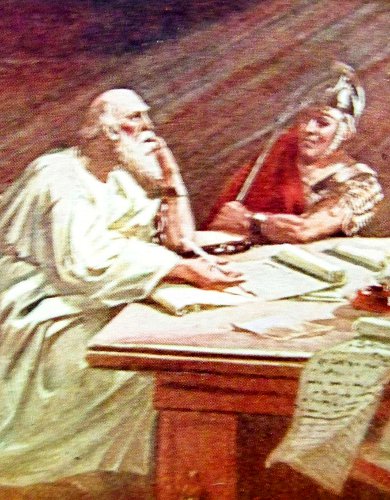
paul-in-romeHe lived there two whole years at his own expense, and welcomed all who came to him, proclaiming the kingdom of God and teaching about the Lord Jesus Christ with all boldness and without hindrance.

Acts 28:30-31

So ends Luke’s chronicle on the acts of the apostles in what we know today as the Book of Acts. Paul is left in Rome as a prisoner of Caesar in a rented abode, still in chains and guarded by a member of the Praetorian guard. We have only bits and pieces from Paul’s letters and other documents to help us understand what happened to him afterward and the fate to which he finally arrived.

The abrupt end of the book leaves the reader wondering why Luke closed the narrative at that point. He does not grant any specific stories about Paul’s activities in those two years, and he does not mention the outcome of his appeal before the emperor. It seems like a strange and unsatisfying place to conclude the story.

-D Thomas Lancaster
Study for “Behar (On the Mountain)”
Commentary on Acts 28:16-31
Chronicles of the Apostles, Volume 6,  pg 837
First Fruits of Zion (FFOZ) Torah Club

This is the conclusion, as far as Luke’s narrative is concerned, of Paul’s long, dangerous, and confusing journey from Jerusalem to Rome, a journey which began under the shadow of grim prophesy.

While we were staying for many days, a prophet named Agabus came down from Judea. And coming to us, he took Paul’s belt and bound his own feet and hands and said, “Thus says the Holy Spirit, ‘This is how the Jews at Jerusalem will bind the man who owns this belt and deliver him into the hands of the Gentiles.’” When we heard this, we and the people there urged him not to go up to Jerusalem. Then Paul answered, “What are you doing, weeping and breaking my heart? For I am ready not only to be imprisoned but even to die in Jerusalem for the name of the Lord Jesus.” And since he would not be persuaded, we ceased and said, “Let the will of the Lord be done.”

After these days we got ready and went up to Jerusalem. And some of the disciples from Caesarea went with us, bringing us to the house of Mnason of Cyprus, an early disciple, with whom we should lodge.

When we had come to Jerusalem, the brothers received us gladly. On the following day Paul went in with us to James, and all the elders were present. After greeting them, he related one by one the things that God had done among the Gentiles through his ministry.

Acts 21:10-19

Even before Paul entered Jerusalem, he knew he might not be leaving the Holy City again, at least not in this life. Yet he did as a result of false accusations against him, having been accused by Jews from Asia of teaching against the Temple, against Jews keeping Torah, and even bringing a Gentile into the Temple past the court of the Gentiles.

As I said, none of it was true, but Paul defended himself as he was taken from one city to the next, from one court venue to the next. And even though he had done no wrong, because of the accusations against him and the threats against his life, Paul finally appealed to Caesar to hear his case, and his assurance of a one-way journey to Rome and the emperor was complete.

But he never saw Jerusalem again. Never saw Peter or James or the elders and apostles again. Never offered sacrifices in the Holy Temple again.

While Paul’s ultimate fate remains a mystery, what about the Council of Apostles in Jerusalem?

Last Sunday, Pastor Randy said a funny thing from the pulpit and he repeated it during last Wednesday night’s conversation with me.

Now those who were scattered because of the persecution that arose over Stephen traveled as far as Phoenicia and Cyprus and Antioch, speaking the word to no one except Jews. But there were some of them, men of Cyprus and Cyrene, who on coming to Antioch spoke to the Hellenists also, preaching the Lord Jesus. And the hand of the Lord was with them, and a great number who believed turned to the Lord.

Acts 11:19-21

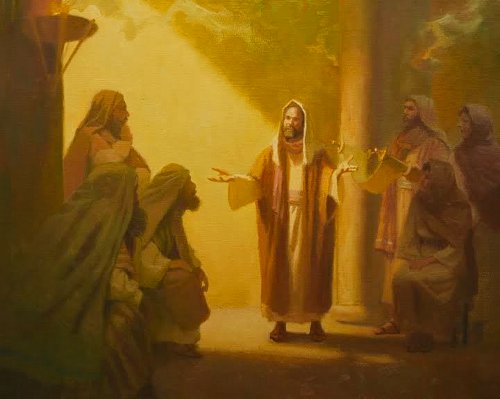
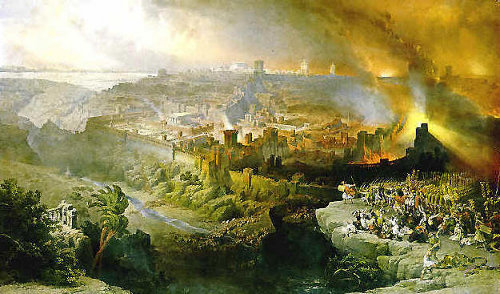
Apostle-Paul-PreachesPastor said this was the beginning of the process of transferring authority from Jerusalem to Syrian Antioch. What? Transferring authority? I’d never heard of such a thing. How could any city but Jerusalem be the geographic and spiritual center of our faith? I had always believed that the ultimate authority over the “church” was always wielded from Jerusalem, that is until 70 CE when the Romans leveled the Temple, razed Jerusalem, and sent the vast majority of the Jewish population into the diaspora. Only then was authority transferred from the Jewish apostolic council to the Gentiles, and this by force.

But according to Pastor Randy, once the original apostles, those who walked with Jesus and who witnessed the resurrection, died…their authority was not automatically passed down to others, either their heirs or any other appointed elders. There is only one record of an apostle being replaced and that was long before the trials of Paul.

So one of the men who have accompanied us during all the time that the Lord Jesus went in and out among us, beginning from the baptism of John until the day when he was taken up from us—one of these men must become with us a witness to his resurrection.” And they put forward two, Joseph called Barsabbas, who was also called Justus, and Matthias. And they prayed and said, “You, Lord, who know the hearts of all, show which one of these two you have chosen to take the place in this ministry and apostleship from which Judas turned aside to go to his own place.” And they cast lots for them, and the lot fell on Matthias, and he was numbered with the eleven apostles.

Acts 1:21-26

Protestantism tends to discourage the idea of a more permanent intent for the Council of Apostles because it smacks of the authority of Rome in Catholicism and other Ecumenical Councils who exercise authority over the faithful, many times to the detriment of the faithful. So Pastor’s thoughts could be a reflection of his perspective and education.

Be that as it may, the Council of Apostles disappears from Jerusalem and from history, certainly by 70 CE if not before.

But what about the centrality of Jerusalem? If you believe there will be a Third Temple (as I do) from where Messiah will reign in Jerusalem, then you cannot dispense with Jerusalem. If you believe that each year the Gentile nations must send representatives to Jerusalem to celebrate Sukkot (Zechariah 14:16-19), then you cannot dispense with Jerusalem. Jerusalem is the focus, the nexus for all of our prophetic hopes in the return of the Messiah. If the apostles and the council vanished from Jerusalem with no successors, did “authority” shift to Antioch?

Now there were in the church at Antioch prophets and teachers, Barnabas, Simeon who was called Niger, Lucius of Cyrene, Manaen a lifelong friend of Herod the tetrarch, and Saul. While they were worshiping the Lord and fasting, the Holy Spirit said, “Set apart for me Barnabas and Saul for the work to which I have called them.” Then after fasting and praying they laid their hands on them and sent them off.

Acts 13:1-3

It certainly seems so, but let’s think about this. The first large group of Gentiles to become disciples of the Master and to receive and extensive education in his teachings and (very likely) in the Torah were the Antioch Gentile God-fearing believers. Antioch also became a good “jumping off place” for Paul and his fellow apostles to go to the Gentiles in the diaspora with the good news of the Messiah (but going to the Jews first, of course). And while Antioch seems to have been a major center of Jewish/Gentile Messianic worship and evangelism, Paul continued to return to Jerusalem (Acts 15 and 21) to receive authoritative rulings on difficult matters and to bring donations for support of the Jewish “saints” in Israel.

fall-of-jerusalemAntioch may have been the center of the Jewish/Gentile interface of the Way, but Jerusalem was the heart, soul, and final authority over the movement.

But when there were no more living apostles in Jerusalem, did God close the door on Jewish authority over the Way, even over the Jewish members?

Lest you be wise in your own sight, I do not want you to be unaware of this mystery, brothers: a partial hardening has come upon Israel, until the fullness of the Gentiles has come in. And in this way all Israel will be saved…

Romans 11:25-26

This and other references of Paul’s, indicate that whatever separation there may be between the Jewish people and King Messiah is only temporary, which includes the separation between the King and Jerusalem. The “authority” left Jerusalem temporarily, but the Throne of the King has always been in the City of David.

The Lord swore to David a sure oath from which he will not turn back: “One of the sons of your body I will set on your throne.

Psalm 132:11

When Jesus returns as Lord of Israel and Lord of all, the authority will return to Jerusalem again. I don’t think even Protestant resistance to “apostolic authority” can deny that we all have one King and he is the authority and author of our lives.

“Jerusalem, Jerusalem, who kills the prophets and stones those who are sent to her! How often I wanted to gather your children together, the way a hen gathers her chicks under her wings, and you were unwilling. Behold, your house is being left to you desolate! For I say to you, from now on you will not see Me until you say, ‘Blessed is He who comes in the name of the Lord!’”

Matthew 23:37-39 (NASB)

Good Shabbos.

145 days.