Tag Archives: church

“He is Risen” Day

he-is-risenBut on the first day of the week, at early dawn, they went to the tomb, taking the spices they had prepared. And they found the stone rolled away from the tomb, but when they went in they did not find the body of the Lord Jesus. While they were perplexed about this, behold, two men stood by them in dazzling apparel. And as they were frightened and bowed their faces to the ground, the men said to them, “Why do you seek the living among the dead? He is not here, but has risen. Remember how he told you, while he was still in Galilee, that the Son of Man must be delivered into the hands of sinful men and be crucified and on the third day rise.” And they remembered his words, and returning from the tomb they told all these things to the eleven and to all the rest. Now it was Mary Magdalene and Joanna and Mary the mother of James and the other women with them who told these things to the apostles, but these words seemed to them an idle tale, and they did not believe them. But Peter rose and ran to the tomb; stooping and looking in, he saw the linen cloths by themselves; and he went home marveling at what had happened.

Luke 24:1-12

I learned something new on Sunday morning. I learned that on Easter, when a Christian greets you by saying “He is risen,” the proper response is He is risen, indeed.” Seriously, I’d never heard that before Pastor Randy greeted me that way right before “sunrise services” (I say that in quotes because sunrise yesterday was at 7:27 a.m. and our “sunrise services” were scheduled to kick off at 8:30 a.m.).

I also remembered something that I had completely forgotten. Easter is usually the service which requires a multimedia program for the main event. But I didn’t remember that until the program actually started.

I did remember that church is usually packed on Easter and tried to arrive early, but the real crowds didn’t show up by 8:30 (though there was a respectable attendance). By the middle of the main service (or around 10:30 or so), people were still coming in and it was practically standing room only.

Or almost.

But the thing that struck me most of all was my lack of emotional attachment to Easter. Everyone was fairly gushing with joy and happiness over Easter and while I think it is important to commemorate the resurrection of the Master, I just didn’t “feel” it, at least not with an intense power surge.

I dunno…maybe there’s something wrong with me. As an emotional experience, it felt pretty much like any other Sunday at church. I had some friendly conversations with folks. I enjoyed Pastor Randy’s teachings. I was OK with the music and the Easter program.

But it wasn’t like the day was incredibly, amazingly, profoundly, special. I’m sure that after it was all over (around 11:30), families went home for a big Easter Sunday feast, but because I’m the lone Christian in my house, I went home and helped my wife pull weeds and water the new plants.

I don’t know how it happened, but I’m more attached to Passover than I am Easter. It’s probably through sheer repetition. Even when I first became a believer, I only attended a church for a few years before becoming “Messianic.” I’ve probably been to a lot more Seders than I have Easter Sunday sunrise services. In fact, this was the first early morning service I’ve ever attended for “Resurrection Day.”

Actually, besides Pastor Randy’s teaching on Luke 24, I’d have to say that the early morning outdoor service was my favorite part. I learned that even when the high for the day is projected to be about 70 degrees F, it’s still quite cold outside at 8:30 in the morning. I’m glad I wore a sweater, but people brought blankets, and when I first sat down, that chair seat was freezing!

Boise-SunriseThe outdoor service was simple.

Someone reads a section of Luke spanning chapters 22 through 24 and we sing a little bit. Back and forth, back and forth. Three stanzas and five readers. Sing a stanza, a reader reads. I like having the Bible read to me. It sort of reminds me of a Torah service when readers are each called up for an aliyah.

Other than that, I especially liked when, during the main service, Pastor explained what “TaNaKh” meant, including that “Law” is a poor translation of the word “Torah,” and that “Torah” comes from a Hebrew root word related to “teaching.” I did a silent little happy dance inside when he was sharing that from the pulpit.

I almost felt him chiding me when he was talking about how we need to study the scriptures, and especially on “things to come.” We had the identical conversation last Wednesday. I told him I tended to steer clear of studies and commentaries about “the end times” because I’ve encountered too many people who are just “conspiracy theory crazy” about “the end times.” He said to everyone else on Sunday what he more or less said to me last Wednesday. I doubt he was trying to “zing” me, but maybe my response to him resulted in the topic being included in his sermon.

I learned the theological use for the words “inspiration” and “illumination.” Apparently inspiration is directly related to this:

All Scripture is breathed out by God and profitable for teaching, for reproof, for correction, and for training in righteousness…

2 Timothy 3:16

“Inspiration” really means “expiration” (actually, “exhalation”) or breathing out, so imagine God exhaling and His Word leaves His lips and enters the ears of man. Pastor Randy said that each word of the Bible was written exactly as God intended it to be written and thus is perfect. I tend to think of the Bible more like a partnership between God and human beings so that something supernatural is experienced by the writer, but the vocabulary, style, syntax, and everything else about the written scriptures has the “thumbprint” of the human author. That’s why we see such variability between accounts of the same event in different Gospels, for instance.

“Illumination” is just what it sounds like, light or enlightening.

And beginning with Moses and all the Prophets, he interpreted to them in all the Scriptures the things concerning himself…They said to each other, “Did not our hearts burn within us while he talked to us on the road, while he opened to us the Scriptures?”

Luke 24:27, 32

Then he opened their minds to understand the Scriptures…

Luke 24:45

light-in-my-handsDuring his sermon, Pastor Randy said almost exactly what I often think about. He said that he would love to be able to watch and listen as Jesus opened the minds of the apostles and explained scripture. From my point of view, I would be ecstatic if Messiah would open up my rusty mind and interpret the scriptures with absolute fidelity for me.

I’ve said before that I believe one of the roles of the returned Messiah is that he will be a great teacher (the greatest) and teach what the Bible means in absolutely correct and perfectly enlightening terms to all of us.

Please, illuminate me.

But that, among many other things, is yet to come.

I wish I could get all worked up about Jesus being risen. But in my mind, he was risen a thousand years ago, he was risen the day before yesterday, and he’ll still be risen the day after tomorrow. I know Easter (interestingly, Pastor Randy referred to the day as “Resurrection Day” or “the Lord’s Day,” but he didn’t say “Easter” once…he did mention the Didache, which surprised me, since FFOZ articles refer to it with some regularity) is the Christian equivalent to Passover; a sort of “retelling” of the greatest event in the history of the church.

But like I said, I didn’t feel it. Easter Sunday didn’t resonate within me. I went to have fellowship and to worship, but the fact that it was Easter didn’t set off any bells and whistles. I wonder if it ever will?

He explained those statements, saying that it was energetically imperative for human beings to realize that the only thing that matters is their encounter with infinity.

-Carlos Castaneda
from The Author’s Commentaries on the Occasion of the Thirtieth Year of Publication of The Teachings of Don Juan: A Yaqui Way of Knowledge, pg xiii

Maybe I’m just bad at Christian traditions and culture. Or maybe I missed out on a special encounter with infinity; with the infinite One.
Lancaster’s Galatians: Introduction, Audience, and What Happened to the Torah?

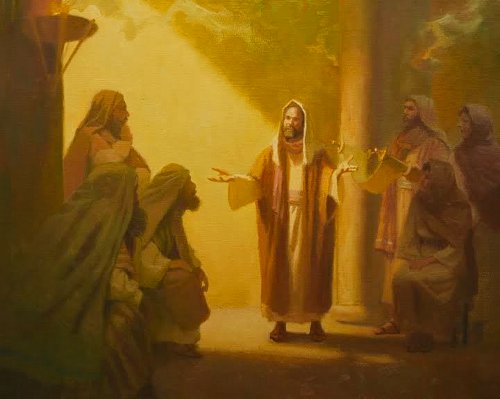
Apostle-Paul-PreachesThe Apostle Peter said that the writings of “our beloved brother Paul” contain “some things hard to understand.” If that was true in Peter’s day, how much more so today. Paul was a prodigy educated in the most elite schools in Pharisaism. He wrote and thought from that Jewish background.

-D. Thomas Lancaster
from the Introduction (pg 1) of his book
The Holy Epistle to the Galatians: Sermons on a Messianic Jewish Approach

I know I’m going to regret this, but if I wait until tomorrow or later in the week to write this, I’m going to forget something about my conversation with Pastor Randy. I have to get up at an insanely early hour tomorrow, but I need to make a record of what we discussed tonight.

As I write this it’s Wednesday night. I left Pastor’s office just about fifteen or twenty minutes ago after discussing the Introduction and first chapter of Lancaster’s Galatians book with him. You’ll recall I mentioned a few days ago our intention to make a study of Lancaster’s Galatians chapter-by-chapter, week-by-week as the subject of our Wednesday night discussions. I wasn’t sure what to expect when I agreed to focus our weekly talks on this book, but I never thought I’d be involved in such a densely packed conversation. Actually, I was afraid that we would run out of material, since Chapter One (really, Sermon One) is very introductory. However, we barely made it out of the Introduction section and into the first chapter before time ran out.

I finally confessed to Pastor Randy tonight that I’m more than a little in awe that we’re having these conversations. Debating theological topics with him, given his intellect, education, and his fluency in languages, makes me feel like a five-year old trying to discuss the Grand Unified Theory with Albert Einstein. OK, maybe it’s not quite that extreme, but I’m definitely out of my depth. To his credit, Pastor Randy said the benefit he receives is that I am well versed in the New Testament from a Messianic Jewish point of view.

I’m sure there are a few people out there who would disagree with that assessment or me, but such is life.

Did Paul convert to Christianity? That question came up rather abruptly.

No, not from my point of view and Pastor Randy agreed but he believes that Paul changed direction 180 degrees from his former life as a Pharisee, not just in turning from persecuting believing Jews to supporting them and evangelizing the Gentiles, but in his entire conceptualization and attitude about Judaism (as opposed to “Jewishness” which is the quality of a person being a Jew without the religious and halalaic implications) and the Torah.

Acts 15 came into the conversation very quickly and I realized that Pastor Randy believes that not only did James and the Council absolve the Gentiles from having to observe Torah, but the Jewish believers as well. As I’ve said before when addressing Acts 15, I don’t believe James made a decision that extended beyond the Gentile disciples of Messiah.

This all goes back to our previous conversations about the purpose of the Torah, which we’ve been having for many weeks. While Pastor Randy doesn’t believe Jews and their “Jewishness” ended with Jesus, ultimately, he believes the Torah pointed to Jesus as a sort of culmination and that it’s not Judaism but the message of the Gospel that saves. He believes that if Jews had continued in the “Messianic faith” (i.e. Christianity) beyond the first century or two after the ascension, the observance of Torah would have largely fallen away. Certainly the vast majority of what we think of as Rabbinic Judaism wouldn’t have gained traction and evolved and expanded to what we see today, particularly in Orthodox Judaism.

I know more than a few Jews reading my blog post probably just winced or gasped a bit. when reading the last few sentences.

On the other hand, looking at the opposite end of history, we both agree that the Jewish Messiah King will return and sit on the Throne of David in Jerusalem. There will be a Third Temple. The festivals will be reinstated. Gentiles as well as Jews will observe the festivals but, according to Pastor Randy, the Messiah will be the focus, not simply observance for its own sake.

But will “Judaism” disappear? Should “Judaism” (as opposed to “Jews” and “Jewishness”) disappear?

I didn’t hear Pastor say that Jews should disappear, quite the opposite, but we did discuss, and discuss, and discuss what is a Jew, what is Jewishness, and what is Judaism. My argument is that, whether you agree with everything that the Rabbis said, did, and wrote over the past twenty centuries, for right or for wrong, it was the necessary element and organizational structure for the preservation of Jews as a people and without that ethnic, traditional, legal, corporate structure, with only a string of DNA identifying the Jewish people as Jewish , they would ceased to exist as an identifiable people group in the world a very long time ago.

Both Pastor Randy and I agree that God will not allow the Jewish people to perish.

But what then are the distinctions between Jewish believers and Gentile believers in Messiah, both in ancient times and now? That was a hotly debated discussion. No, we didn’t get “hot under the collar,” but we did go around and around the point, orbiting it like two comets chasing each other’s dust trails.

judaismIf the Torah is to be observed in Messianic Days during the time of the Third Temple and if God meant for the Torah to be obeyed by the Jewish people prior to the first coming of Messiah and even during his lifetime, what was supposed to happen to it between the ascension and the return? Granted, we have no Temple today, but does that mean the entire Torah is in cold storage awaiting a spring thaw? And what about the sages? Are none of their interpretations, rulings, and judgments valid? Even in Yeshua’s day, he agreed with some of the halachah of the Jewish authorities (PDF) and indeed, he agreed they had authority to make such rulings.

At one point in the conversation, Pastor Randy said that he believes both Jews and Gentiles in Messiah in today’s world should look and behave in substantially similar ways, if not identically based on his understanding of the New Testament. His issue is that Torah was always impossible to keep and was put in place primarily to point to that impossibility and why we all need the Messiah. My point is that such an act looks like God just set the Jews up to try to obey an impossible set of rules for the sake of eventually pointing to Jesus. Those hundreds of generations of Jews who lived and died struggling to obey Torah would have led lost lives if the only reason for Torah’s existence was to make a point. What saved those ancient, devout Israelites?

“Grace,” says Pastor Randy.

My point exactly. Torah never, ever was intended to save. It was always faith and grace.

I think he can agree with the value of the Jewish traditions if they’re viewed as traditions and not behaviors one must do in order to please God. “But what about feeding the hungry and visiting the prisoner,” says I? The Torah didn’t stop, particularly the parts that clearly are a responsibility for Christians and Jews today. And if “Rabbinic Judaism” was God’s mechanism for preserving the Jewish people as a people since the fall of Jerusalem in 70 C.E., then who is to say that it’s wrong? After all, what systems have been put into place to implement and sustain Christianity over the long course of history?

One of the big stumbling blocks in the discussion was “Rabbinic Judaism” which could be defined as relying on a “system” instead of what the Bible says. I countered that a Christian denomination is a system and that Pastor Randy operates within one. He countered that he can and has existed outside a denomination before and that what the Bible says is ultimately more important than a denomination or any other system of religious practice.

But do we have unfiltered access to the Bible and to God? Don’t we use “systems” as the means by which we implement what the Bible tells us to do in our daily lives? Yes, if we take all of the incredible detail involved in living life as an Orthodox Jew, for example, those “implementations” are vast, multi-layered, and frankly, there are many that seem to go too far (I know I’m going to catch heck for that), but it’s still fits my definition of what humans do to “operationalize” a life of faith. Christian denominations do this to a lesser or greater degree, but without the same level of formalization (after all, what is Christmas, what is Easter, and what is Lent?).

Can we live a life of just the Bible without a system (be careful how you answer that)? Are there portions of both the modern Christian and the modern Jewish “systems” that are valid interpretations of a Biblical life, even if Messiah would (and will) have “issues” with other portions?

Jesus made distinctions between halachah he supported and did not support (is it lawful to heal on the Shabbat?) when he was first here and I suspect that he’ll “straighten out” both Jews and Gentiles when he returns. Some Jewish authorities write that one of the things Messiah will do when he comes (returns) is teach Torah properly and I believe it, too.

Shofar as sunrisePastor Randy says he believes that Gentiles should and will observe Pesach, Shavuot, and Sukkot along with the Jews but you can’t do that without the Torah not only being intact, but valid, and able to be applied in our world.

You can see why we almost didn’t make it out of page 1, let alone the Introduction of the book, and this is where we spent most of our discussion time. Sermon One runs from page 9 to page 19. It’s where we’ll have to pick up next week, but we did encounter an interesting question in the Sermon One material, and one I thought I knew the answer to. To whom did Paul write the Galatians letter? Yes, the churches in Galatia, but who in those churches? On page 19, Lancaster says it’s to the “God-fearing Gentile believers in Galatia” specifically.

But get this:

For I would have you know, brothers, that the gospel that was preached by me is not man’s gospel.

Galatians 1:11 (ESV)

Would Paul have called Gentles “brothers?” Wouldn’t it have made more sense for him to call his fellow Jews by that name?

We ourselves are Jews by birth…

Galatians 2:15 (ESV)

Paul is obviously talking to Jewish people at this point.

To give a human example, brothers…

Galatians 3:15 (ESV)

Brothers, I entreat you…

Galatians 4:12 (ESV)

I could go on. There’s 4:28, 4:31, 5:11, 5:13, and 6:1 to consider, but according to these references, there’s every reason to believe that Paul was addressing both a Jewish and a Gentile audience in this letter. That being the case, Pastor Randy suggests that Paul is explaining to both Jewish and Gentile believers that obedience to the Law is not necessary if one is in Christ. Is obedience to the Law unnecessary for either the Jew or the Gentile if Messiah is your Master?

Salvation is through Jesus but does that obliterate the Sinai covenant for the Jews? Pastor Randy and I agree that it is through Abraham and the New Covenant that we Gentiles are “grafted in.” We know that the Hebrew for the word “New” in “New Covenant” really means “new” and not “renewed,” even though the wording of the New Covenant (see Jeremiah 31 and Ezekiel 36) largely confirms and expands all of the covenants that God previously made with Israel.

Something I didn’t remember to bring up during my conversation with Pastor Randy is the question of whether or not the New Covenant is already completely written on our hearts or if God is in the process of doing the writing? If the latter, then God may be rather slowly (from a human perspective) doing away with the old (yes, the Torah will go away when heaven and earth go away) and replacing it with the new, but that such a thing has not been accomplished yet (Hebrews 8:13). As I alluded to a moment ago, Jesus also said that “until heaven and earth pass away, not an iota, not a dot, will pass from the Law until all is accomplished,” (Matthew 5:18) and I don’t think that “all is accomplished” yet. After all, the Messiah hasn’t returned, we don’t have universal peace on earth, the Temple hasn’t been rebuilt, and Israel is not yet the head of the nations.

You can see why I didn’t want to wait until later to get this all down. I’m tired but energized at the same time. I’m fighting well out of my weight class, so to speak, but I have to keep going. I agreed to have these conversations in order to learn and I know that Pastor Randy is both teaching and learning as well.

There’s nothing better to show you what you truly know and believe than to have your belief’s challenged and be asked to give a “ready defense.”

western-wall-jerusalem-dayThe funny thing is, after the conversation was over and Pastor Randy was walking me to the door of the church (by the time we’re done talking, just about everyone is gone and he wants to make sure all the doors are securely locked for the night), he continued to share with me his love for the Jewish people and his fascination with Judaism. Listening to him talk about his life in Israel and his relationship with his Jewish friends, it is abundantly apparent that he adores the texture, fabric, and essence of living among Jews. But at that moment, his words and emotions seemed so inconsistent with his beliefs on the Law and Judaism relative to our conversation. And yet in every other way, he confirms my own belief in the exceptional “specialness” of what it is to be Jewish and to live a fully realized Jewish life. The Jewish Jerusalem is where we feel the beat of God’s heart.

If ten thousand religious Jewish people came to faith in Yeshua as Messiah tomorrow, should we really ask them to give up everything in their lives that defines them as Jewish and that allows them to worship God as Jews? It sure didn’t sound like Pastor Randy was saying that in those last seconds we had together before I walked out into the night. I know he agrees that we Christians haven’t gotten it all right and we’ve built up our “systems” that help us understand how to obey God. Someday, Messiah will show us what we did right and what we didn’t do right, what we should have included, and what we should have let go.

In examining the vast body of Jewish practice, particularly the complexities of Orthodox Judaism, can we say that much of it is right and necessary now but that when Messiah returns, he will also say what is proper and what is not? Will there be a distinction in Torah for Jews that will be Jewish and will be a Judaism but will not look quite the same as Judaism looks right now?

Incredibly tough questions. I don’t have the answers. Messiah does but he’s not here yet.

This series of conversations and my blogs about them are controversial by design and I don’t expect all of my readers to accept everything I’m documenting here. I have no idea what kind or how much “blowback” I’m going to receive, but I expect there will be some.

Please be patient and exercise kindness and even some restraint in your responses, should you choose to respond. This is a journey of exploration into what for me is an undiscovered country. If you know the territory and would like to share some details about the road ahead, you are welcome to participate.

The journey continues next week.

Addendum, March 15: After reading all of the comments and continuing to struggle with the conversation and the issues involved, I have produced another reflection of my thoughts in an “extra meditation,” Broad Strokes.

Following the Galatian Letter

paul-editedPaul, an apostle—not from men nor through man, but through Jesus Christ and God the Father, who raised him from the dead—and all the brothers who are with me,

To the churches of Galatia:

Grace to you and peace from God our Father and the Lord Jesus Christ, who gave himself for our sins to deliver us from the present evil age, according to the will of our God and Father, to whom be the glory forever and ever. Amen.

Galatians 1:1-5 (ESV)

In the Holy Epistle to the Galatians, the Apostle Paul argues against Gentile believers in Yeshua (Jesus) of Nazareth undergoing conversion to become Jewish. Paul maintained that Gentile believers attained salvation and inherited the blessings promised to Abraham through faith, not conversion.

The Apostle Peter said that the writings of “our beloved brother Paul” contain “some things hard to understand.” If that was true in Peter’s day, how much more so today. Paul was a prodigy educated in the most elite schools in Pharisaism. He wrote and thought from that Jewish background. Unfortunately, that makes several key passages of his work almost incomprehensible to readers unfamiliar with rabbinic literature. I invite Christians to use this book as an opportunity to study Paul’s epistle to the Galatians from a Jewish perspective.

-D. Thomas Lancaster
from the Introduction (pg 1) of his book
The Holy Epistle to the Galatians: Sermons on a Messianic Jewish Approach

I reviewed Lancaster’s book the better part of two years ago, but I never thought my write-up did the book justice. Normally, Lancaster writes in an easy to follow manner, making complex theology accessible to laypeople and non-scholars such as me, but Galatians was probably a bit of a stretch to try to get to fit into a comfortable mold. I’m sure I missed a lot along the way, although when I pulled the book out of my closet (my wife allows me exactly one closet for all of my books…she’s trying to train me not to be a “pack rat”), I saw that I have voluminous notes scribbled all over a mass of bits and scraps of paper like so much ticker tape parade confetti. I was obviously trying to “get it.”

And count the patience of our Lord as salvation, just as our beloved brother Paul also wrote to you according to the wisdom given him, as he does in all his letters when he speaks in them of these matters. There are some things in them that are hard to understand, which the ignorant and unstable twist to their own destruction, as they do the other Scriptures.

2 Peter 3:15-16 (ESV)

That’s Peter’s description of and probably experience with the writings of Paul, as Lancaster quoted from in his introduction, and we can see from the full quote that not only can Paul’s meaning be misunderstood, but it can be deliberately “twisted” with the potential result of “destruction” by people Peter refers to as “ignorant and unstable.”

I don’t think you have to be “unstable” to misunderstand Paul and especially his letter to the churches in Galatia, but a lot of us are ignorant (I don’t mean that in a pejorative manner) of what it was to think, write, and live as a highly educated Pharisaic Jew in the middle of the first century, a mere decade or two before the destruction of the Holy Temple in Jerusalem. It may be ignorance, at least in part, that makes Paul’s Galatians letter so difficult to grasp. I’m sure it’s my ignorance that resulted in me not fully comprehending Lancaster’s book back in the summer of 2011.

But that’s about to change.

This coming Wednesday evening, my weekly conversations with Pastor Randy at my church are taking a left turn at Albuquerque, so to speak, and following Paul’s classic letter into Galatia. This time, Pastor Randy and I will be pursuing Paul’s letter together. Frankly, I can’t wait.

study-in-the-darkI wish Pastor would put his bio on the church’s website (which needs serious help, but I’m working on it) so I could access more than just my failing middle-aged memory to describe him. He’s not only been a missionary and a Pastor, but he also has a history as an educator in a scholarly setting. I’ve seen what he studies and reviews just to get ready for a single sermon, and it usually involves anywhere between twelve and twenty books. In our discussions we may not always agree on everything, but my respect for his knowledge and insight continues to grow geometically with each encounter. Admittedly, it’s an honor to just sit in the same room with him for ninety minutes or so once a week and be able to access his thoughts and experiences, especially since his education and background are a great deal of what I lack.

Lancaster repurposed twenty-six sermons on Galatians, which he delivered to his congregation, Beth Immanuel Sabbath Fellowship in Hudson, Wisconsin in 2008, to create this book I’m about to revisit. That’s twenty-six weeks and twenty-six opportunities for me to not just re-read Lancaster’s book, but to study it and to learn from two fine scholars and devoted believers in Christ.

Along the way, I’m hoping not only to learn a lot more about Paul’s letter, but more about the nature of how Paul saw non-Jewish God-fearing believers within a Jewish worship and faith context, who they were in the Jewish Messiah King, and how he saw their role, and our role, in the Kingdom of Heaven. I’m hoping to learn a little something more about myself as a Christian, too.

I was able to talk with Pastor Randy briefly just before services began this morning (as you can imagine, Sunday is his especially “busy” day) and confirmed our meeting for this coming Wednesday and the plan to cover Sermon 1: Letter to the God-Fearers (Galatians 1:1-5). I’m planning on taking notes as I read through the book and during my discussions with Pastor Randy so that I can collect the results of this experience, not just for my own edification, but hopefully for yours.

I invite you to come along with Pastor Randy and me on this weekly adventure as we return to the churches of Galatia by way of Lancaster’s The Holy Epistle to the Galatians. May we all learn the wisdom and message of our Master together through the voice of his Apostle to the Gentiles, Paul, and through this, may we all draw ever closer to God.

Shammai, Peter, and Cornelius

hillel_shammaiShammai’s school of thought became known as the House of Shammai (Hebrew: Beth Shammai‎), as Hillel’s was known as the House of Hillel (Beit Hillel). After Menahem the Essene had resigned the office of Av Beit Din (or vice-president) of the Sanhedrin, Shammai was elected to it, Hillel being at the time president. After Hillel died, circa 20 CE, Shammai took his place as president but no vice-president from the minority was elected so that the school of Shammai attained complete ascendancy, during which Shammai passed “18 ordinances” in conformity with his ideas. The Talmud states that when he passed one of the ordinances, contrary to the opinion of Hillel, the day “was as grievous to Israel as the day when the [golden] calf was made” (Shabbat, 17a). The exact content of the ordinances is not known, but they seem to have been designed to strengthen Jewish identity by insisting on stringent separation between Jews and gentiles, an approach that was regarded as divisive and misanthropic by Shammai’s opponents.

Wikipedia

And he said to them, “You yourselves know how unlawful it is for a Jew to associate with or to visit anyone of another nation, but God has shown me that I should not call any person common or unclean.”

Acts 10:28 (ESV)

I suppose I could have called this blog post, “Things I Learned in Church Today,” but then, I’d have a lot of blog posts with the same title. I recently came across a “statistic” on a blog (it’s not based on any real data) that said the vast majority of Christianity, something like “99.99999999999%” is “anti-Judaic.” I’ll agree that the church has a rather poor track record relative to Jews, Judaism, and Israel, but that’s changing. I know because the church I attend is very pro Jews, Judaism, and Israel. It’s not just the Pastoral staff but the regular members, too. In my Sunday school class, the teacher, who by trade is an electrical contractor, opined on how much we Christians owe the Jewish people at the very start of class.

But what did I learn in church about Jews, Judaism, and Acts 10? I learned about something called the “18 measures.” Apparently, this was something debated between Hillel and Shammai and while the specifics of these “measures” crafted by Shammai are no longer known, two of them were said to be “anti-Gentile.” Pastor Randy came to speak with me right before services began and shared what he had found out during his research. He said that one of the measures of Shammai stated that it was “unlawful” for a Jew to enter a Gentile’s home because it would be possible for a corpse to be present without the Jew’s knowledge (resulting in ritual defilement: see Num. 19:11-16). This could include a dead person buried under the house, since it seems it was the custom in some households to bury the family patriarch under the structure.

Or was Shammai looking for excuses to keep Jews and Gentiles apart? After all, Israel was occupied by Gentile forces and the Romans never went out of their way to be friendly or courteous to the Jewish population. Quite the opposite in fact. The Jews had good reason to want to avoid Gentiles and particularly Roman soldiers.

Was this part of what Peter was thinking of when he was confronted by God with the news that he was to visit the household of a Roman Centurion? In the above-quoted passage from Acts 10, the greek word translated as “unlawful” as in “how unlawful it is for a Jew to associate…” isn’t the word for “Law,” but the word for “tradition.” Basically, Peter was telling Cornelius that it was against halakhah for a Jew to enter the home of a Gentile because the Jew might well become ritualistically “unclean.” God showed Peter the contradiction (in this case) between the prevailing halakhah of his day and the teachings of God that no human being is “unclean.”

I don’t know if Peter was specifically thinking of Shammai during this whole transaction, but it’s certainly within the realm of possibility.

But am I being too hard on Shammai?

Shammai is a much misunderstood character and you malign him with your words…. according to the Mishnah in Treatise Avot, one of Shammai’s favourite sayings was “Always receive all men with a cheerful expression on your face!” (Avot, chapter 1, para. 15)

-ProfBenTziyyon, 18 Jan 09
http://messiahtruth.yuku.com

I’m not trying to be hard on Shammai or for that matter, on Peter. I did think this was an interesting detail that works to “flesh out” the humanity and the lived context for Peter as he was faced with doing a very hard thing. About fifteen years earlier, Jesus gave his Jewish disciples the “commission” to make disciples out of the Gentiles, but as far as we know, that command received no attention until the Master spurred Peter into action using a vision (Acts 10:9-16).

In this case however, if Peter has responded to halakhah rather than God, the good news of Christ would never have come to Cornelius and his household and arguably the rest of us would have suffered the same fate. Or God would have chosen a different messenger, but He chose Peter. It was Peter who had to grow beyond his prejudices and perhaps only a Jewish apostle could deliver the Gospel to the Gentiles. I mean, the angel (Acts 10:3-6) could have told Cornelius everything he needed to know, but it was more than just information that needed to be delivered, it was the forging of new connections and relationships. While Cornelius, a Roman Centurion, was a “God-fearing man, who is well spoken of by the whole Jewish nation,” God had a far better destiny for him as one of first Gentiles to ever receive the Holy Spirit and be reconciled to God. Peter, for his part, and his Jewish companions needed to be witnesses and to see for themselves that “God shows no partiality, but in every nation anyone who fears him and does what is right is acceptable to him.” They needed to see that even the Gentiles could receive the Spirit and be saved, even as the Jews had done.

This, as much as anything else in the Bible, was an incredible miracle, because God so loved the world.

What biases and prejudices prevent you and me from doing the will of God?

Healing the Enemy

healingIt is not incumbent upon you to complete the work.

Ethics of the Fathers 2:21

In economics, the bottom line measures success and failure. Someone who goes into a business venture with complete recklessness, yet makes a great deal of money, is considered a successful entrepreneur. Another person who was extremely cautious and applied sound business principles, yet went bankrupt, is considered a failure.

Unfortunately, we tend to apply these values to our personal, non-business lives. If things do not turn out the way we wish, we may think that we have performed badly. This is not true. If parents abuse and neglect their children, yet one child wins the Nobel Prize, or discovers the cure for cancer, they do not suddenly become good parents. On the other hand, if they did their utmost to raise their children well, yet one becomes a criminal, they are not necessarily bad parents.

We must understand that we have no control over outcome. All we can control is process, i.e. what we do. If we act with sincerity and with the best guidance available, then what we are doing is right.

Parents whose children turn out to be anti-social invariably fault themselves and may be consumed by guilt. Their pain is unavoidable, but their guilt is unjustified.

Humans do not have the gift of prophecy, nor do we always have the most accurate knowledge. We should hold ourselves responsible for that which we can control, but we should not hold ourselves responsible for that which is beyond our control.

Today I shall…

…try to realize that I must judge the correctness of my actions by how I arrive at them, and not by what results from them.

-Rabbi Abraham J. Twerski
“Growing Each Day, Adar 16”
Aish.com

There’s a lot going on here including the struggle to define what is good and what is bad, not only in our own actions, but in the actions of others. We all know our own intent when we say or do something, but even when that intent is good, especially on the Internet, our words can be taken in the wrong way and people can respond with offense and even hurt and anger, as if we had gone out of our way to try to injure them. On the web, that’s usually how we define an “enemy.”

“You have heard that it was said, ‘You shall love your neighbor and hate your enemy.’ But I say to you, Love your enemies and pray for those who persecute you, so that you may be sons of your Father who is in heaven. –Matthew 5:43-45 (ESV)

Bless those who persecute you; bless and do not curse them. Rejoice with those who rejoice, weep with those who weep. Live in harmony with one another. Do not be haughty, but associate with the lowly. Never be wise in your own sight. Repay no one evil for evil, but give thought to do what is honorable in the sight of all. If possible, so far as it depends on you, live peaceably with all. Beloved, never avenge yourselves, but leave it to the wrath of God, for it is written, “Vengeance is mine, I will repay, says the Lord.” To the contrary, “if your enemy is hungry, feed him; if he is thirsty, give him something to drink; for by so doing you will heap burning coals on his head.” Do not be overcome by evil, but overcome evil with good. –Romans 12:14-21 (ESV)

None of this is suggesting that Jesus or Paul wanted us to give a kiss on the cheek to someone who’s holding the barrel of a loaded handgun to our head. It’s not as if we are forbidden from defending ourselves in war or must allow ourselves to be beaten during a robbery attempt. We see Christ’s intent in his juxtaposing the words “neighbor” and “enemy.” Someone can be our “enemy” if they are our next door neighbor. Maybe we’re upset with them because they borrowed our favorite power tool six months ago and never gave it back, or they have a dog that barks half the night but refuses to quiet the animal. For whatever reason, our “neighbor” can become our bitter enemy and they can even say bad things about us and malign our character unjustly.

WrongThis happens a lot on the web and often in blogs and blog comments (and I’ve written about this many times before). While I haven’t been “stung” in a little while, in my readings this morning (as I write this), it occurred to me that misunderstanding and misinformation are rampant on the Internet, and disagreements or differences of opinion on a good many things, but particularly in the world of religion, have created many enemies from the body of our neighbors. Against my better judgment, I’m going to refer to a blog post by Judah Himango, his commentary on a sermon delivered at his wife’s church (Judah attends church with his wife on Sunday but considers his Hebrew Roots congregation, which meets on Saturday, to be his primary place of worship) which Judah calls My experience at church today, a friendly criticism of Pastor Troy Dobbs’ sermon on Jesus and the Sabbath.

In reading Judah’s commentary, I must say that I agree with him that the Pastor in question was not accurate, (in my humble opinion) and that his message from the pulpit reflected a very traditional supersessionist stance which we have often observed in the church historically. I have been fortunate to find a church and a Pastor who sees beyond the rhetoric and back into the Scriptures in a way that reflects what I believe to be the true intent of Jesus and the Apostles relative to Jews, Judaism, and the Torah (although we don’t agree on everything), but many other churches still have a long way to go. Does that make the particular Pastor at Judah’s church my “enemy” or any sort of enemy to those of us to disagree that “the Law was nailed to the cross and replaced by grace?”

Absolutely not. In fact, at one point in the comments section, Judah even defends this Pastor by saying, “Pastor Dobbs has much great teaching.” It’s only on certain points that Judah and Pastor Dobbs disagree; it’s not (I hope) a more general drawing of battle lines between Hebrew Roots and Christianity, as if they were mutually exclusive entities (although I’m disappointed to find out that Judah “posted [a] friendly criticism on the Church’s website, underneath their post for this particular sermon, and on the Church’s Facebook page, but they deleted both..”) I think we in the church should be big enough to take a few criticisms rather than assuming what we say will always be taken as “Gospel” by literally everyone hearing the message without question.

I don’t believe it Judah’s intent to say that only his perspective is correct and everything produced by any Christian Pastor is wrong (unfortunately, a number of people have commented on his blog who seem to have a more “adversarial” relationship with Christianity and the church), but it is all too easy for most of us to start making enemies between different factions of Christianity by pointing out where they (we) disagree and ignoring how much alike both sides actually are. It’s inevitable that we are going to disagree, particularly in the religious blogosphere, but then, what are we supposed to do about it? What did Jesus and Paul say to do in their words as I quoted them above? What did Rabbi Twerski say?

Today I shall try to realize that I must judge the correctness of my actions by how I arrive at them, and not by what results from them.

Said another way, perhaps we should try to realize that we must judge the correctness of the actions of others by how they arrive at them, not by what results from them. If we understand that our good intentions can be misunderstood, then we must certainly grant that same “grace” to others. No, it’s not like we have to agree with everything that everyone else says and we can certainly recognize and challenge error, but the fact that we disagree with someone and think they’re wrong about something doesn’t make them bad or evil, nor does it make them our enemy, unless we choose to decide that they are. churches

Pastor Dobbs isn’t Judah’s enemy and frankly, he isn’t mine, either. Extending that out from individuals to systems, it also doesn’t mean that the church is the enemy of Hebrew Roots or even Messianic Judaism (or any Judaism). Yes, there has been great enmity between Christians and Jews historically, and yes, sermons like those delivered by Pastor Dobbs have often been used to maintain the distance and to some degree, the hostility we sometimes experience between Christians and Jews. To deny the validity of Jews and Judaism within the confines of what once was a sect of Judaism is kind of crazy-making, especially if you think the scriptures support such a position.

But the answer to this problem isn’t to make enemies, to revile “the church,” or to believe that some other movement that exists outside of Christianity is the only valid expression of the worship of Messiah. The answer, or at least part of it, is communication, fellowship, and patience. This is why I thought it was rather poor form of whoever manages the church’s website and Facebook page to remove Judah’s commentary (assuming it was worded in a respectful manner). Of course, depending on the church’s policy on public communications, it might be a conversation that would better be conducted (initially) in private, but even that might not have yielded Judah a friendly and receptive audience.

What to do? There’s probably no one right answer for all people and all churches, but I think part of the answer is what Boaz Michael suggests in his book Tent of David. We need to persist in the church. We need to be present in the church. We need to be the change we want to see in the church, not by forcing our thoughts, feelings, and opinions down the church’s collective throat, but by living the sort of life we believe is right in relation to Jews, Judaism, and Israel. But this doesn’t mean we should act like Jews, Judaism, and Israel (and I said just yesterday, that the best way to preserve the safety and continuance of Judaism and the Jewish people is for we Christians to protect Jewish identity, especially from ourselves).

Paul says we must do our best, as far as it depends on our own behavior, to “live peaceably with all,” which includes those with whom we disagree. And when we disagree, our response is not to beat our “enemy” about the head and shoulders with a blunt instrument (such as a handy Torah scroll), but to “heap burning coals” on their heads by offering them acts of kindness, meeting their needs, and providing for their requirements. Part of that, for some of us anyway, is to show up at church every week, to attend Sunday School, to take a weekday evening class offered at church, to smile and be friendly, to make relationships.

No one is going to listen to us, especially in a disagreement, unless we’ve first established a relationship with them and we’ve demonstrated that we are committed to being part of the church community. Even if we go on a more or less regular basis, if we are going as if we’re just guests and not part of the church, who will want to listen to us? Why will anybody care? They don’t think we care, so why should they?

If you want to inspire change, you have to demonstrate love. This isn’t just one group trying to convince another group to change their minds or to acknowledge that our group may have a valid point. The ability to commit and to show love has much wider and deeper implications.

The purpose of every human being is to serve his Creator, and that is a service of great joy: “I, puny mortal and decidedly finite being, serve with my deeds the Infinite Creator of All Worlds! I am bound to the Source of Life from birth, and all the many raging waters of this world cannot tear me away from that bond. Even if I sometimes fail, I may always return and in a single moment reconnect all my soul.”

-Rabbi Tzvi Freeman
“The Infinite Connection”
Based on letters and talks of the Rebbe
Rabbi M. M. Schneerson
Chabad.org

communityI disagree with Judah that it will always be a mistake to ask anyone who supports Jews, Judaism, the Jewishness of Messiah, and the centrality of Israel to become part of a traditional church (though I admit, it isn’t for everybody). After all, Judah and his wife are part of a church and yet that doesn’t seem to have inhibited his ability to express a differing opinion. I’m a part of my church, and the content of my blog posts should provide ample evidence that I haven’t been “brainwashed” or otherwise inhibited from holding and expressing my individual perspectives. Boaz Michael, who wrote Tent of David, and his wife Amber regularly attend a small Baptist church in their community and yet, he is not only able to write such a book, but his Pastor actually wrote the book’s introduction, endorsing Michael’s views.

The church isn’t a building or a denomination or even a theology. The church is people. The church is the body of Messiah, all of us, each and every individual who acknowledges that Jesus Christ is Lord and Yeshua HaMoshiach is ani or ha-olam (light of the world). Yes, the body of the Messiah seems hopelessly shredded, fragmented, scattered, and dismembered, with the bloody parts strewn to the four corners of the globe. But God has promised to gather the Jews who are called by His Name back to Israel (Zechariah 10:6-8, Micah 2:12) and He has also promised to gather the Gentiles from the nations who are also called by His Name (Zechariah 14:16-19, Amos 9:11-12).

One day the body of the Messiah will be One just as God’s Name is One. The body will still have “parts” even as an individual human body has many parts, but all of those parts must work together in harmony if the body is to live and to maintain good health. So to it will be for the body of Messiah. Yet, we in that body will only wither and die if we say that we reject another body part or that our own part is the only thing the body needs. Can a person live without a heart or a liver? Can the lungs say that they are the only body part the person needs and all of the other parts are “wrong?”

Even when Israel has behaved in total disobedience, God called her back to Him like a groom calls his virgin bride. How can we do any less when we perceive disagreement between ourselves and some other part of the church? I know the analogy is far from perfect, but to believe otherwise is to deny that Christ has a body of those who are called by his name or worse, it’s to say that in our own opinion, we have judged only ourselves to be the “true church” and that all congregations who don’t agree with us right down to the finest theological detail, are not part of the larger Messianic community.

Seize the vision of hope, healing, unity, and community. The beginning of restoration of the body of Christ starts with one person reaching out a friendly hand to another, even when they’ve disagreed, and calling him “brother.”

Afraid of Church

leaving-the-churchNot a word is said in the “olive tree” passage (see Romans 11:11-24) or anywhere else in Scripture about splitting the promises into earthly ones for the Jews and heavenly ones for the Church. However, God has made two kinds of promises. In regard to the promises which relate to individual salvation, there is neither Jew nor Gentile (Galatians 3:28), no distinction between them (Romans 10:12), no dividing wall of hostility (Ephesians 2:14-19). On the other hand, there remain promises to national Israel, the Jewish people, in which Gentile nations corporately and Gentile believers individually have no direct share – although it is worth noting that there are also promises to certain Gentile nations…

-David H. Stern, Ph.D
Restoring the Jewishness of the Gospel: A Message for Christians
Chapter 2: “Restoring the Jewishness of the Gospel,” pg 25.

The only reason I’m reading this book is because one of the Associate Pastors at my church asked me to read it and evaluate it for him. He’s obviously read it a number of times himself, because there is evidence of a great deal of note taking and underlining in its pages, so he must know its contents well. And yet, this charming, older gentleman from Oklahoma asked me if I’d read Stern’s small book and give him my opinion on how we can restore the Jewishness of the Gospel. Of course, I told him I’d be glad to.

But I was a little worried. My first introduction to Dr. David Stern was through his best known work, The Complete Jewish Bible and it was presented to me as a “real” Jewish Bible (New Testament, actually) within a Hebrew Roots (advertising itself as Messianic Judaism) congregation. I didn’t know any better and so I was thoroughly enthralled with what I read. Real “Hebrew” words were sprinkled among the English. Later, I found some Yiddish also anachronistically inserted within its pages. Ultimately though, I discovered that I desired a Bible that focused on accurate translation with no specific audience in mind.

Don’t get me wrong. I understand what Dr. Stern was trying to do, but there were already a number of New Testaments translated into Hebrew and many other Christian Bibles in English that would have served as well. Also, since I have separated myself from the “One Law” expression of the Hebrew Roots movement, Stern’s “Complete Jewish Bible” is a painful reminder of how incredibly naive I was once upon a time.

So in approaching Restoring, I was a little timid and figured what I was going to be reading would be “old school” Hebrew Roots at its finest.

Wow, was I surprised. The book is about 76 pages long, minus an appendix or two and I’m just on page 26 so far, but I was completely impressed. The writing and teaching is basic (but after all, Stern was trying to reach the widest possible Christian audience), but the ideas he documents are very close to what I’ve been trying to express. Given that I associate him with “One Law” and that his New Testament translation is still well-regarded in some Hebrew Roots circles, I just naturally believed his stance was in support of Hebrew Roots Christians rather than Messianic Jews.

Man, was I wrong.

I’m not writing this in any way as my response to the aforementioned Pastor, since he probably isn’t interested in this aspect of Stern’s book, but in recent conversations on Acts 15 commentary and why I go to church, I’ve entered a debate or two on why I believe (though it’s not as if I haven’t stated my reasoning many times before) that there are fundamental differences between Jewish and Gentile believers in Christ relative to identity and covenant obligation.

But theologically, the Jews are unique because God chose them as the vehicle for bringing salvation to the world. The entire Hebrew Bible attests to that, as does the New Testament (see Yochanan [John] 4:22; Romans 3:2, 9:4-5). The Jews are God’s people in a sense that applies to no other people on earth. Because of this, the New Testament abounds with theological Scyllas and Charybdis rocky places that offer dangerous passage. What other people is faced with Galatians 3:28 (“there is neither Jew nor Greek”) or Ephesians 2:11-22 (“the middle wall of the partition”)?

-Stern, pp 12-13

praying_jewNotice what Stern doesn’t say. He doesn’t say that the Jews are theologically unique and identical to the Gentile Christians who have joined their ranks. He doesn’t obliterate Jewish identity and, from the quote above, Stern supports a view that God made unique promises to the Jews that are not shared with Gentile believers just because Christ performed a unique service in the plan of God and allowed the Gentiles to also be saved.

Some of the debates I’ve been having in the comments sections of some of my other blog posts lately have to do with the following:

But many believers feel uneasy about restoring Jewishness to the Gospel and encouraging Messianic Jews to express their Jewish identity. They fear an elitism will arise in which Gentile Christians will be made to feel like second-class citizens of the Kingdom. This is a real pitfall, and Scripture warns against division between Jew and Gentile in the Body of the Messiah. However, the New Testament also gives assurance that both are one in Yeshua, serving one God by one Spirit. Therefore, let all believers, both Jewish and Gentile, work together to avoid invidious comparisons, which only serve the Adversary. Let every Messianic Jew and every Gentile Christian demonstrate in his own life those elements of Jewishness which arise from his own spiritual consciousness and identity, without feeling condemned for expressing either too much or too little.

-Stern, pg 14

That last paragraph might seem ambiguous in terms of how Stern sees the differences between believing Jews and Gentiles, but put together with the other quotes, we see his opinion develop. Both Jews and Gentiles are unique in God’s plan but not in identical ways. They are united in salvation but do not share a uniform identity. There is danger in forgetting the uniqueness of the Jews, especially in light of how some Christians interpret scriptures such as Galatians 3:28 and Ephesians 2:11-22, as if the aforementioned uniqueness of the Jews was cast aside. Jewish believers must be allowed and encouraged to express a wholly lived Jewish identity by we Gentile Christians. To do that, we Christians must set aside our fears that the Jews will “take over” somehow, and cast the Gentiles out of their midst and “back into the churches.” Stern doesn’t seem to object to both Jews and Gentiles expressing “elements of Jewishness” (which should be a given for Jewish believers) but that which arise from “his own spiritual consciousness and identity (emph. mine).”

Recently I was chastised for my support of Boaz Michael’s book Tent of David (TOD), particularly as it inspired my own return to church. One of my (and Boaz Michael’s) especially passionate critics is Judah Himango, a long time blogger in the Messianic Judaism and Hebrew Roots space.

My interpretation of his response to me and particularly to Michael’s TOD book seems to be precisely what Stern predicts when he says, “…they fear an elitism will arise in which Gentile Christians will be made to feel like second-class citizens of the Kingdom.” Coupling TOD with the philosophy of “bilateral ecclesiology” presented in Mark Kinzer’s book Postmissionary Messianic Judaism: Redefining Christian Engagement with the Jewish People, a portrait of a Messianic Judaism that is plotting the expulsion of all Gentile Christians from their ranks disguised as a benign attempt to reconnect “Messianic” non-Jewish believers to their counterparts in the “Church” begins to emerge.

Or is it what Stern wrote about in 1988 and earlier; that the fear of Jewish elitism by Gentile Christians in the Messianic/Hebrew Roots realm, is still very much alive and kicking (and I’ve got the metaphorical boot prints on my backside to prove it)?

But do Hebrew Roots Christians really have anything to be afraid of?

Yes and no.

kinzer-postmissionaryOK, let’s be fair. The people and groups within the expression of Messianic Judaism I’m discussing very much support Jewish unique identity and distinction within the larger body of Messiah. Much of Stern’s book addresses this in an attempt to help its Christian audience understand that when a Jew becomes a disciple of Jesus, they are not only allowed, but obligated to remain a Jew relative to Torah and halachah (although again, to be fair, Stern hasn’t addressed halachah as of page 26). Messianic Judaism walks a fine line in terms of Stern, because on the one hand, he encourages Jews to continue living as Jews and as having the right to be a unique people chosen by God, but on the other hand, he is insistent that uniqueness and distinction absolutely not get in the way of unity between Jewish and Gentile believers.

So far, he hasn’t outlined his vision for how believing Jews and Gentiles are supposed to be separate and unique and yet also united, except to say that we share equality in salvation but the Jews are unique in certain national promises from God.

I’m not offering this as a solution, but as an explanation and a reminder that this problem has been around for at least a few decades and it’s not going away anytime soon. But we are talking about relationships and identity that are based on fear and on who your group is opposed to and struggling against. Both Hebrew Roots and Messianic Judaism feel victimized by the other. Hebrew Roots fears Jewish elitism and that the Jewish believers will seize sole possession of the Torah mitzvot, and Messianic Jews see the encroachment of Gentile Christians who demand a “Jewish identity” identical to the Jews as a form of replacement resulting in the obliteration of everything it means to be Jewish.

It’s fear that is at the very heart of Hebrew Roots opposition to Michael’s TOD book, as if somehow elitist Messianic Judaism will “force” or “trick” the Hebrew Roots Christians back into their “church ghettos.”

I’m not afraid because I’ve already come to terms with who I am in Christ and what it all means. I have also come to terms with what (to the best of my ability to comprehend) it means for a Jew to possess a unique Jewish identity and role, mainly just because I live with a Jewish wife and have three Jewish children (although their apprehension of their lived Jewish identity varies from one child to the next). I’ve learned what it is to be a Christian living with Jews without having to worry about the distinctions between their identity and mine. I can go to church and not lose anything and in fact, I actually gain quite a bit…and I still get to live with my Jewish family…and they still get to be Jews…and my Christianity doesn’t have to inhibit or interfere with that in any way.

What some of the “fine bloggers” who are deeply concerned with the implication of Michael’s TOD book are missing are the myriads of voices across the Internet who here and there are saying that TOD is changing their lives for the better. TOD is helping people overcome their “fear of church.” People who I’ve known for years and who I never thought would see the inside of a church again are seeking out Christian Bible studies and worship services…largely because they read or are reading TOD and listening to the voice of reconciliation and restoration.

David Stern speaks of restoring the original Jewishness of the Gospel so that both Jews and Christians can hear the voice of the Jewish Messiah King. Boaz Michael speaks of healing the vision of the “Messianic Gentile” or the Christian who has become or is in the process of becoming aware of the “Jewishness of the Gospel;” Stern’s primary message to us. Michael may as well have written the sub-title of his book as restoring the vision of the Christian and the Church. If minds and hearts and relationships really, really are being healed because of this book and the overarching vision it presents, who are you or I to say that’s a bad idea. People are perfectly free to reject the message of healing if they so choose because of fear, because of prejudice against Christians (and sometimes against Jews), or for whatever reason.

But for every blogger who protests, how many people who we may never see or hear from are beginning a journey that will transform isolation, loneliness, broken fellowship, and sometimes, broken families, into a path leading to reunification and reconciliation? Most likely (though I only have anecdotal information to go by), a lot more of them are out there than there are bloggers who oppose those Christians and their mission.

dont-go-to-churchI’ve said this before, but I’ve seen that it’s gone unnoticed, so I’ll repeat the message. Author Boaz Michael and his wife Amber are “walking the walk,” so to speak. For the past several years, Boaz and Amber have been attending a small Baptist church in their community in Missouri. To the best of my knowledge, this church is their only regular worship venue, so they infrequently are able to visit a Messianic (or otherwise) Jewish synagogue. Again, to the best of my knowledge, Boaz and Amber haven’t lost a thing by attending this church, and in fact they’ve gained fellowship and belonging and have shared their unique vision with the Church.

If they aren’t afraid of losing who they are by “going to church,” how should the rest of us feel? I suppose anyway we want. But if we are afraid of church, then we should be honest and ask ourselves why. I was certainly afraid of what returning to church would mean to me, but with a lot of help, I set those feelings aside. And in returning to church, I found that I could also encounter God within its walls and with other Christians. That doesn’t have to be you if you don’t want it to be, but please, don’t let it be fear, animosity, or hostility that stops you from walking that path or causes you to disdain those of us who do.

If you are confident that G‑d will help you, why is anxiety written all across your face? If you are truly confident, show it and celebrate!

-Rabbi Tzvi Freeman
“Celebrate”
Based on letters and talks of the Rebbe
Rabbi M. M. Schneerson
Chabad.org

Oh, and I’ll let you know how the rest of Stern’s book turns out.