Tag Archives: church

Questions You Can Never Ask In Church

There is a Yiddish saying that is familiar to many: “One doesn’t die from asking a question.” This expression is a pithy way to explain to someone who has questions that having a question — or many — is no big deal.

As one gets older and wiser, he has a broader perspective and realizes that questions are a part of life and that we make choices despite questions all the time.

Daf Yomi Digest
Stories Off the Daf
“The Missing Husband”
Kereisos 11-1

I had coffee after work with a couple of guys yesterday. That’s actually kind of unusual for me since I don’t socialize very often, but this was a somewhat unusual situation. Those of you who have been following my blog for awhile know that one of my “issues” is my lack of fellowship with like-minded believers. You have probably read my discussion about why I don’t go to church. These two fellows are more or less in the same boat as I am. We are all believers, but through one process or another, we find ourselves without a congregation to which we can belong. Maybe we’re too independent or idiosyncratic or something.

So over coffee at Moxie Java, we discussed why we were meeting in the first place. We hadn’t brought our Bibles and we didn’t have a specific plan or agenda for our meeting. The most we had settled on before getting together yesterday was that we wanted to have a meeting and talk. But what about?

We came up with a number of reasons why we were more alike than unalike, and why we don’t seem to fit into a traditional church setting. One of the reasons was that we ask a lot of questions.

You might not think this is a big deal, but I know from my own experience that it’s not a good idea to ask a lot of questions in church, or at least, you shouldn’t ask questions that don’t have canned, pre-programmed, Christian answers. But we were discussing things like the Deity (or lack thereof) of Jesus and whether or not there really is a Trinity, and whether the third Temple would be a real, physical structure built by men (I think so, but someone else didn’t) or something more “spiritual.” These are questions that would probably raise a few eyebrows if you discussed them in adult Sunday school after services. They might even get you quickly escorted to the door by a couple of ushers with a strong “suggestion” never to return.

That’s the difference between how I see Christianity and Judaism. Christianity is about always having the right answers and only asking questions that map to those answers. Judaism is about always asking all kinds of questions and then struggling with the answers, maybe coming up with half a dozen possible responses, and then arguing all of them around back and forth. There’s no sin in wondering exactly what makes Jesus divine and what his relationship is with “God the Father,” but you might not get that feeling if you asked those kind of questions in a church.

But if you don’t ask questions, then you don’t learn. And if you don’t learn, then your relationship with God drops into a deadend rut and never goes anywhere for years and years.

The rebellious child who questions everything sits in a place beyond the one who has nothing to ask.

If the rebellious child questions, it is because it touches him, it says something to him. Perhaps it even bothers him.

But a perfectly capable human being who has no questions about Torah and G-d — he is stuck in his place. Perhaps he is a good religious Jew who does good deeds and never sins. But there is no sense of the spirit, of the meaning of life, of transcendence.

He is stuck in Egypt and knows of nothing higher.

—at the second Seder, 1965

Chronicled by Rabbi Tzvi Freeman
“Inquisitively Challenged”
Based on letters and talks of the Rebbe
Rabbi M. M. Schneerson
Chabad.org

I was discussing this matter with a Pastor on his blog the other day, and his response was that the issue wasn’t Christianity vs. Judaism, but west vs. east. He said that the eastern churches tended to very much encourage question asking and wrestling over difficult issues. The western church tends to be more “goal-oriented” and likes conclusions rather than conundrums. That may well be true. I don’t know. I do know that the traditional Yeshiva model of learning is to argue opposing positions and “posing problems that would cross a rabbi’s eyes.” (from the lyrics to If I Were a Rich Man)

broken-crossSo there we were, three guys sitting around drinking mediocre coffee and occasionally having our conversation being drowned out by the latte machine, asking questions, posing problems, and generally discussing matters that would “cross a Pastor’s eyes.”

But it felt good.

Part of getting close to God is meditating upon Him and His awesome, mighty works and wonders. Part of getting close to God is prayer. Part of getting close to God is reading the Bible and studying the Torah commentaries of the ancient Jewish sages.

And part of knowing God is getting together with a few other guys in a coffee shop in southwestern Idaho and talking about Him, asking all the questions we can’t ask other people, and hoping we get at a few answers, or better yet, a few more questions, that surprise and challenge us.

Because if we can’t find a way to get closer to Him, we’ll always be too far away.

Whom have I in heaven but you?
And there is nothing on earth that I desire besides you.
My flesh and my heart may fail,
but God is the strength of my heart and my portion forever.

For behold, those who are far from you shall perish;
you put an end to everyone who is unfaithful to you.
But for me it is good to be near God;
I have made the Lord God my refuge,
that I may tell of all your works. –Psalm 73:25-28 (ESV)

We’ll get together again next Thursday after work and see how it goes. Maybe, I’ll have a good question to ask. I hope no one comes up with just one answer.

Is the Cross Holy?

Today’s amud discusses the level of respect one should afford the bimah, aron and the sefer Torah.

A certain man’s niece married someone that he felt was below her. The uncle preferred to stay as far away as possible from the chosson and did everything he could to avoid him. Yet every time he got an aliyah, the uncle would follow the halachah and walk back to his seat using the longer route around the bimah, and this meant that he passed near the chosson’s place. He preferred not to even see him and now he was forced to walk past him! Since he was an important man in the community he was called up to the Torah fairly frequently and this became more than a passing annoyance.

After much thought, he figured he had a solution to his problem. He would walk back to his seat the way he came, but he would do so very slowly rather than take the longer route. Surely this was as much honor to the Torah as going the long way since he was taking at least as much time to return to his seat. After all, does it not say that one should rush to shul but leave in an unrushed manner?

But when he consulted with the Ben Ish Chai, the sage ruled this is absolutely prohibited. “You are definitely incorrect in your assumption that walking slowly to your place via the shorter way back is the same as taking the longer way with bigger steps. The proof to this is the words of the Rambam who writes that rushing or walking slowly does not have any relevance on our consideration of what is the short or long way to leave the Beis Hamikdash. The same holds true here.

He concluded, “Taking the longer way to one’s seat shows respect; any other way shows disdain no matter one’s pace!”

Mishna Berura Yomi Digest
Stories to Share
“The Respectful Route”
Siman 154 Seif 7

From a Christian point of view, this rather elaborate response to the respect and sanctity shown to holy objects in Judaism may seem rather excessive. While Catholicism and other Christian traditions maintain a number of holy objects that must be treated with sanctity, Protestant Christianity has few if any such items.Perhaps the sanctuary itself is considered holy or the baptismal font. Some Christians consider their personal Bibles to be holy objects and will treat them with care (although this isn’t consistent across all Christians in all churches).

What else? Anything?

How about the cross?

I pass a number of churches when I travel to and from work each day. One church, just a few minutes from my home, has a large cross mounted on their grounds outside the church building. Since the church is located near a major intersection, the cross is visible to thousands and thousands of drivers every day. How much holiness should this cross, or any cross, afforded? Should a cross be afforded respect and sanctity as an object that is holy to God?

I don’t know.

The reverence shown the cross was always a little mysterious to me, even when I attended the church. I’m sure I’m not the first person to notice that a great deal of attention is being paid to an object that was used to kill a lot of people in ancient times. The “execution stake” used by the Romans to do away with criminals was not exclusive to Jesus. Who knows how many thieves and murderers and political dissidents met their lingering and horrible end nailed to this gruesome thing?

I’m not completely naive, and I realize it is the symbolism of the cross that has meaning in Christianity, not the physical object itself. Of course, we also have this:

And he said to all, “If anyone would come after me, let him deny himself and take up his cross daily and follow me.” –Luke 9:23 (ESV)

It is clear that the Master also used the cross as a symbol of self-sacrifice and even as representing an aspect of discipleship, so maybe I’m way off base in even raising this question. I expect to be criticized by more than a few people for using this topic as my morning meditation, but in reading and studying about the holy objects in Judaism, it seemed to be a logical extension of my current thoughts. Also, in studying both last week’s Torah Portion and this week’s, the mention of holy objects is extremely prominent (especially considering the “incident of the Golden Calf” and how Israel believed paying homage to an object was an appropriate way to worship God).

But even if you, as a Christian, consider the cross as holy or even a church as holy, not everyone shares your opinion.

Today’s amud discusses things which are unusable for holy purposes because they are disgusting.

Beis Medrash Hagadol on the East Side of New York was confronted with a serious problem. They were required to find new premises in the area but the only place for sale was an apartment that had been used as a church for several years. Although Rabbi Avraham Yosef Asch knew that many authorities prohibit this in general, here the structure had been a regular apartment which had not originally built for religious purposes. In addition, the prior tenants had not brought in idols or icons of any sort. Nevertheless, they asked the Binyan Tzion if this was permitted.

The Binyan Tzion ruled decisively. “It is certainly not prohibited to purchase the property, since one can buy a place used for idolatry for his personal use. The moment he sells the property he has nullified the idolatrous use of it and it is permitted.

“However, there is a dispute whether a house of idol worship that has been nullified is considered disgusting for use as a shul and the like.”

Mishna Berura Yomi Digest
Stories to Share
“The Former Tenants”
Siman 154 Seif 12

I suppose it’s not comfortable for most Christians to consider the thought that many religious Jews would see their churches as places of “idol worship,” and perhaps even too “disgusting” to be used for Jewish worship. However, I often write about the “intersection” between Gentile Christian worship of Jesus and Jewish worship of Jesus, or Yeshua, as Messiah. Fundamentally, the Christian and Messianic Jew worship the same God and give honor to the same Messiah. But the cross that the Christian holds so dear may not be seen as holy and precious by the Jew who, though Messianic, has endured the memories how the cross was used for thousands of years as a symbol of persecution, exile, and even death.

I’m not saying that the cross has that meaning in the church today, but old wounds heal slowly. If you beat a man often enough with a baseball bat, pretty soon, all you have to do is show the man the bat in order to get him to cringe.

The Torah, including the portions of Exodus that are currently being studied in the synagogue, is very specific about the exact nature and character of objects that are considered holy to God. The cross isn’t one of those objects considered holy anywhere in the Bible. Nevertheless, I often miss the point, according to some of my critics, so I’m willing to admit that I may be missing something here.

Answer me if you can and are willing, because I don’t know. Is the cross a holy object in the church? Is it holy to God? Are we, as disciples of the Master, to afford it sanctity? And how should Jewish believers in Jesus as the Messiah view the cross?

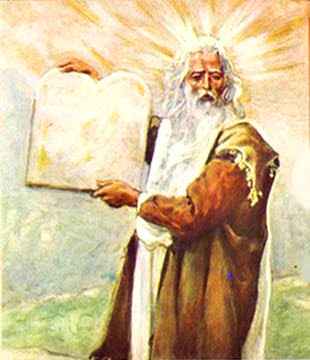
Everything Man is given comes in a finite package. Even the tablets Moses carried down from Mount Sinai were defined and bounded.

And so, when G-d saw Moses mourning over the broken tablets, He said, “Your powers were focused when you smashed the tablets. For now you will receive a Torah you may extend wider than the sea.”

When Man fails, he shatters the treasures G-d has put in his trust. But then he cries and picks up the shards to restore what he has ruined.

That is when he discovers that G-d Himself was hidden inside.
He discovers the Infinite.

-Rabbi Tzvi Freeman
“Breaking Limits”
Based on letters and talks of the Rebbe
Rabbi M. M. Schneerson
Chabad.org

If the cross of Christ were smashed, would we find that its pieces contain the infinite light of Jesus?

Waiting in a Minefield

The words and the stories of Torah are but its clothing; the guidance within them is its body.

And, as with a body, within that guidance breathes a soul that gives life to whoever follows it.

And within that soul breathes a deeper, transcendental soul, the soul of the soul: G-d Himself within His Torah.

Grasp the clothes alone and you have an empty shell. Grasp straight for the soul—or even the body—and you will come up with nothing. They are not graspable; they are G-dly wisdom and you are a created being.

Instead, examine those words and those stories, turn them again and again. As fine clothes and jewelry can bring out the beauty of the one who wears them, so these words and stories can lead you to the G-dliness that dwells within the Torah.

-Rabbi Tzvi Freeman
“Grab the Clothing”
Based on letters and talks of the Rebbe
Rabbi M. M. Schneerson
Chabad.org

I quoted the above in today’s morning mediation but it seems this particular lesson isn’t done with me yet. The “clothing” of Torah or of God (take your pick since they’re interchangeable in one way or another) is only one aspect of who we are. We refer to Jesus as “the Word made flesh” declaring that Christianity, as well as Judaism, has a tradition of imbuing the Torah with the life of the Divine, but what about the clothing that we wear as disciples of the Master? Interestingly enough, Rabbi Freeman has something to say about our live clothing, too.

There is a suit we wear that has a life of its own.

It is knitted of the fabric of words, images and sounds, mischievous characters that no one else can see—or would care to know.

You, however, hear them day and night, chattering, buzzing, playing their games in the courtyard of your mind. They are all the threads of the garment of thought that envelops you.

Leave your thoughts to play on their own, and they will take you for a ride to places you never wanted to see.

Grab the reins, master them, direct them, flex your mind, and they will follow. Provide them a script, and they will play along.

Do something quick, because you, after all, are dressed up within them.

We seek to be clothed in the holy but all the while, we struggle with the fabric of the mundane, which is the fabric of our human lives. I suppose that’s as good a way as any of describing the struggle we go through every day as people of faith living in a broken world. It’s also more personal because the brokenness is in each of us, not just in the world we inhabit. Rabbi Freeman says that we can achieve some manner of control over this “suit” we wear by giving it a “script” to follow, but make no mistake, taking control is not the same as shedding your skin, because after all, we “are dressed up within them.” We are all trapped in the mundane while longing for the holy.

Recently, I was accused of not understanding this particular lesson and failing to have compassion for people whose life of faith competed with the demands of family. I suppose I feel that demand a bit less because my children are not adults and are responsible for their own religious existence (or lack thereof), but I still experience the push, pull, and shove between the various “words, images and sounds” that make up the different forces that struggle for control over me. I continue to be encased by the competing priorities of man and God.

Part of the interesting dilemma of asking for advice when trying to make a decision, is that you get some. I’ve been asking for advice about the future of fellowship in my life and have been receiving both public and private messages in response. I’ve been forced to consider options that had not occurred to me and avenues I previously had not considered valid. I feel like a man standing in the center of a room with blank walls and no furniture and who is told that I am surrounded by explosive mines. I’m provided with several conflicting maps showing me a safe path out of the room, but I don’t know which one to trust. I’m also told that my own plans for escaping the room are flawed and will certainly lead to destruction.

There’s a difference between asking for and receiving advice, and then taking it.

I think this is one of those times when I’m supposed to be still and quiet and I’m supposed to patiently wait. As you know, I’m not very good at being quiet, but it seems I have no choice about waiting. In real life, making a move one direction or another won’t result in an actual explosion, but a wrong step will still result in making a mistake (which I suppose is inevitable, no matter what I do). On the other hand, I can choose to grab a chair and make myself comfortable in the center of the empty room. Perhaps this is where God wants me after all…or it may be the consequence I’ve built for myself as a result of my assumptions and decisions.

Either way, I am in an empty room with no clear way out…and God is here.

So I sit and wait for God to make the next move. My only question now is, will the wait be temporary or permanent?

Falling and Rising

Rabbi Noah Weinberg was visiting the United States of America. He spent one Shabbat in a small New Jersey community. The people were friendly, and because of the small size of the congregation for Rabbi mingled freely with all the congregants. On Shabbat afternoon, when they sat to eat Seudah Shelisheet, the third Shabbat meal, a young man who was sitting next to the Rabbi began a conversation, which expressed his frustration with his ability to learn Torah. The young man described the many hours in the many techniques he had tried in order to grasp the difficult concepts of the Talmud study.

“How come I just can’t get it?” he asked. “No matter what I do, it seems my conclusions are wrong when I get a chance to review with my Rabbi. I am about to give up,” he said he reported.

-Rabbi Raymond Beyda
“Try Try Again”
Commentary on Parashas Terumah
Torah.org

On last Friday’s extra meditation, I posted a video of Rev. LeeAnne Watkins, Rector at St. Marys, St. Paul, a faith community located in the Merriam Park neighborhood of St. Paul, Minnesota. As you may recall, she was lamenting that after “years of experience and lots of good will, traditional Faith Formation programming is floundering in communities across the country,” including her own. In response, the ministerial staff at St Mary’s had stopped offering all adult education classes. They cancelled everything. They gave up. Rev. Watkins gave up.

I just got an email notice from WordPress.com notifying me that the domain name for this blog will expire in 90 days. I can either choose to renew it for another year, or let it lapse, sending my “morning meditations” into obscure oblivion. Believe me, there are times when I’m tempted to give up, too. The contentiousness and extreme lack of unity within the community of faith in Jesus Christ is just stunning at times. It’s not only the lack of unity, but the hostility expressed in our various online exchanges that makes me wonder if there even is a community of faith in the Messiah anymore. Everyone is so concerned with protecting their own turf and their own theologies, usually at the expense of everyone else who calls Jesus “Master” and “Lord.”

An extreme, though understandable, example is found in Lawrence H. Schiffman’s review of Rabbi Shmuley Boteach’s controversial book, Kosher Jesus as posted at JewishJournal.com. Even the concept of attempting to establish peace between Judaism and Christianity is depicted in widely different ways by these two Jewish gentlemen:

Most difficult to accept is Boteach’s claim that Jews should re-accept Jesus as one of their own teachers, so that Jews and Christians will share this common teacher and unite in our service of God. This notion is probably the cause of the great controversy that already surrounds this book. In making this proposal the author ignores two major issues: 1) The symbolism of Jesus in Western culture where Jews were taunted, persecuted and killed in Jesus’ name. It is simply insensitive to expect, as Boteach does, that this experience should be forgotten so quickly. 2) The need for Judaism to draw clear lines between itself and Christianity to avoid losing adherents to the dominant faith. The Jewishness of Jesus is regularly used in evangelizing Jews by Christian proselytizers to ease the way from Judaism to Christianity. So there is no sense to the proposal to reclaim Jesus as a teacher and hero. He is best left to his Christian adherents, even if he was once a fellow Jew who lived by the Jewish tradition.

Although Rabbi Boteach advocates Jews attempting to reintegrate the historical and Jewish Jesus back into Judaism in order to foster Jewish/Christian peace, Professor Schiffman believes that such peace can only be achieved and maintained by abandoning any hope that Jesus could be considered Jewish, relegating him to the exclusive realm of “Gentile god”. While I can certainly understand the need to separate the Christian Jesus from modern Judaism, given the traditional enmity between the two religions, it is still discouraging that Judaism is unable or unwilling to at least consider the teachings of the Jewish teacher from Natzeret, even apart from Christian rhetoric.

Of course, there are plenty of disagreements within Christianity and particularly between the church and the Messianic Jews who have accepted the Nazarene as Master and Messiah, so I don’t have to go looking too far for discouragement. Going back to Rabbi Beyda’s commentary, at the level of the individual, disappointment doesn’t have to be caused by interfaith conflicts. Just facing personal inadequacies can be enough to make you, or rather, to make me want to give up.

But what about our metaphorical Talmud student. Is his case truly hopeless. I found an interesting answer from a very non-religious source:

In this new paper, Moser et al. extends this research by looking at how beliefs about learning shape these mostly involuntary error-related signals in the brain, both of which appear in less than half a second. More specifically, the scientists applied a dichotomy first proposed by Carol Dweck, a psychologist at Stanford. In her influential research, Dweck distinguishes between people with a fixed mindset — they tend to agree with statements such as “You have a certain amount of intelligence and cannot do much to change it” — and those with a growth mindset, who believe that we can get better at almost anything, provided we invest the necessary time and energy. While people with a fixed mindset see mistakes as a dismal failure — a sign that we aren’t talented enough for the task in question — those with a growth mindset see mistakes as an essential precursor of knowledge, the engine of education.

-Jonah Lehrer
“Whe Do Some People Learn Faster?”
October 4, 2011
Wired.com

I encourage you to read the entire article but in brief, research seems to support the idea that what you tell yourself about learning affects your ability to learn more and to learn faster. If you believe learning is only an effect of your raw, native intelligence, then you internally set limits that you cannot and will not exceed. If, on the other hand, you believe that time and effort can create change and expand your ability to learn beyond your current thresholds, then you indeed will learn more and exceed your limitations.

Interestingly enough, that’s not much different from the advice Rabbi Weinberg gave to the troubled Talmud student.

“That is the worst solution, you could choose” the rabbi responded. “A person has to understand that the learning of Torah is not something that a human being can do without the help of Hashem. Hashem expects you to put in all the effort you can, and then he will produce the results.”

The young man listened and was encouraged. The respect he had for the sage gave him the strength to continue with his suggestion of try try again. Not long after he made a breakthrough. He reached a level where he was able to prepare a portion of the Talmud on his own. Today that young man is a practicing Rabbi in his community teaching others how to learn and how to be patient, if at first they do not succeed.

I’ve presented a lot of content to express what has already been said in a single sentence attributed to 19th century educator Thomas H. Palmer: If at first you don’t succeed, try, try again. W.C. Fields said something similar, but it’s hardly as useful. Then there’s what the brother of the Master said.

Count it all joy, my brothers, when you meet trials of various kinds, for you know that the testing of your faith produces steadfastness. And let steadfastness have its full effect, that you may be perfect and complete, lacking in nothing. –James 1:2-4 (ESV)

Am I trying to give you some sort of pep talk? Not at all. If anything, I’m trying to encourage myself. Given the sad shape the world is in lately, the spiritual struggles of one human being who otherwise is doing fairly well don’t really stack up all that much. To extend that thought back into the realm of famous Hollywood quotes, here’s what the “great sage” Rick (played by Humphrey Bogart) had to say:

I’m no good at being noble, but it doesn’t take much to see that the problems of three little people don’t amount to a hill of beans in this crazy world. Someday you’ll understand that.

Casablanca (1942)

If I (or anyone else) feels alone in the world of faith, it’s not because we are separated from God, it’s because we are separated from each other as human beings and disciples of the Master. That separation is largely by choice. We choose to believe this or that about what the Bible says, which makes it difficult for us to associate with people who interpret the Bible differently. We choose to organize a worship service on a particular day, using specific prayers, and songs, and sermons, and others choose to do it differently on a different day. Then we tell ourselves that one type of service “feels at home” while another type “feels uncomfortable,” but those are choices, too.

There’s nothing wrong about making those choices, but having made them, we live with the consequences. I’ve made choices and am living with the consequences now. I can choose to do nothing or choose a different direction and then there will be more and different consequences. Rev. Watkins and the folks at St. Mary’s made a choice and now they, and the people who attend their church, will live with the consequences. If the Talmud student had given up, there would have been consequences too, but he chose to go on and the consequence for perseverance was to become a Rabbi.

We like to think that we make one choice and we never have to revisit it again, but I find that I am looking at the choices I’ve made every day and continually confronting the consequences, adjusting my studies, my searches, my prayers, and my actions all the time as a result. A relationship with God is incredibly dynamic. If I were to dare to become comfortable with my choices, I have no doubt He would challenge me into discomfort, and then I would have to learn something by generating some effort. What we learn isn’t always what we want to learn but it all adds up to something, though I’m not always sure what. In the end, the only thing I know how to do is to move forward, whether I ultimately choose to continue this blog after the next 90 days or not. I can’t see around the next bend on this “trail of faith” which I suppose makes sense. Faith is pursuing the unseen, not the knowable. God is unseen but sometimes, so are people. Even though I know that my goal is holiness and it is God, what the finish line looks like, and whether I’ll accompany anyone else on the journey, is a mystery.

I only know that I can’t give up what I’m doing, whether it is chasing the scorching Sun like Icarus and plummeting to earth in flames, or like the Phoenix, rising painfully from my own burnt and smoldering ashes. I only know that I have to keep trying, regardless of the consequences. Because God will let me do no less.


Shopping for a Christian Church

Likewise, Gentile Christians are in brotherhood with Jewish Christians, reckoned as spiritually circumcised in heart (Rom 2:26) and thus joined to Abraham through faith (Gal 3:29). Here then is racial diversity within spiritual unity, in the same way as a Christian man and wife are diverse in their spiritual unity (Gal 3:28). This same diversity in unity is strongly intimated in Rom 15:8-9 since “Christ has become a servant of the circumcised on behalf of the truth of God, to confirm the promises to the fathers, and so that Gentiles may glorify God for His mercy” because of their inclusion as Gentiles with the fathers.

-Pastor Barry E. Horner
“Chapter 10: Israel and a Romans 11 Synthesis” (pg 278)
Future Israel: Why Christian Anti-Judaism Must Be Challenged

Hoch also quoted A.T. Hanson on this issue. While explaining that the prevailing interpretation of Phil 3:3 identifies the “we” as all true Christians, Hanson nevertheless declared that this understanding…

…seems quite foreign to Paul’s thought and means actually reading into Philippians ideas which seem to have originated at the time of the Reformation…The Philippians, being Gentiles, would have no reason to boast in the flesh anyway. Paul goes on to describe what he means by this phrase in the ensuing verses: it is plain that he means boasting of the national and spiritual privileges peculiar to the Jews. This the Philippians could not do…It is simpler to take “we” here as “we believing Jews”, or even “we, Paul and Timothy”, in whose name the letter is written. We know that Timothy was circumcised. So there is no good reason for maintaining that the use of “the circumcision” here suggests that Paul could apply the name Israel to Gentiles.

-A.T. Hanson, The Pioneer Ministry (London: SCM, 1961), 35
as quoted in Horner, pg 277

There’s really a lot going on in this chapter of Horner’s book, but space won’t allow me to insert all of the relevant quotes. If I tried, I might as well just copy and paste the chapter in verbatim. Actually, I’m not just writing another anti-supersessionism rant. I have a different, but related purpose for this “extra meditation” today.

I don’t agree with everything each of these gentlemen says in their respective books, but they are still refreshing to me. I tend to read mostly Jewish commentaries, but I’ve been reading Horner as part of my research into superessionism relative to my ongoing series on that topic in FFOZ’s Messiah Journal. What’s really exciting is that I’m reading the works of Christian authors and Pastors who actually agree that the church has not replaced the Jews in the covenant promises. I know they’re out there somewhere. Now if only I could find them.

Let me explain.

Not long ago, I discovered that “plan A” wasn’t going to work. Plan A was my separating from active participation in Messianic Jewish worship (One Law, anyway) for the purpose (well, it’s one of the reasons) of joining my wife in classes and services at our local Reform and Chabad synagogues. It took awhile, but I eventually discovered that it wasn’t just my former association with Messianic Judaism that made my wife hesitant to include me in that part of her life. It is my active and continuing faith as a Christian.

That’s not something I’m going to walk away from, even for the slim chance that my wife would feel more comfortable including me in her Jewish communities (and I don’t think it would do any good anyway). So plan A is shot to heck. Now I can either exist in isolation as a person of faith, or I can attempt to find some sort of community in which to participate as a Christian. But that presents a problem.

I previously wrote at length regarding all the roadblocks that stand in the way of my attending a church. On the other hand, there must be some churches that aren’t dripping with supersessionist rhetoric, aren’t there? I decided to look for one by querying a Christian Discussion Group several days ago. As the saying goes, except for one person trying to convince me that the church has replaced the Jews, the silence has been deafening (a second, more helpful person, responded while I was composing this blog).

But then, you have these Christian authors that make such encouraging statements. I mean, do these guys worship in heavily anti-Jewish churches and just keep their mouths shut, or are there actual havens of sanity and brotherhood under the sign of the cross? You couldn’t prove the latter by me, but since I’m facing a move to “plan B” now, I need to start somewhere.

I haven’t the faintest idea how to “shop” for a church.

I’ve occasionally talked to people who have been around churches for decades and can go into a church and assess its theology and how it operates almost immediately. They tell me what they see and hear that convinces them that the church is this and that, but I haven’t the faintest idea what they’re talking about. I went to a Lutheran church as a kid and then, decades later, I “came to the Lord” (I hate to say it, but “Christianese” still makes me crazy) in a Nazarene church (which ultimately turned out to be a bad experience, with a few bright spots mixed in), but that’s it. I don’t know from larger “organized Christianity”. The church, as in “all churches everywhere,” is a mystery to me. Actually, given my general outlook, the idea of “church shopping” makes me nervous.

But I’m getting a little tired of only being able to talk about what I think, feel, and believe in a virtual environment. It would be nice to occasionally address human beings face to face. However, I don’t want to get into a verbal “knock down-drag out” in a church because I don’t comfortably blend in to the homogenous Christian scenery, relative to Judaism. If I encounter a supersessionist attitude or worse, an anti-Semitic one, I’m liable to take it personally since my wife and kids are Jewish.

Does anyone have any ideas as to how to proceed? I’m not necessarily in a rush, and in fact, I’d like to plot, plan, and scheme, so to speak, about my next move. I have to admit, the thought of walking into a church again is intimidating. I call myself a Christian but socially, (which is a lot of what going to church is about) I’m anything but.

If you aren’t a regular visitor on this blog, you’ll need to get some idea of who I am and where I’m coming from. Since I more or less wear my heart on my sleeve when I write, just read four or five of my blog posts (the most recent, or pick some at random), and you’ll get a pretty good idea about how I see things.

Oh, I live near Boise, Idaho if that helps any.

Thanks.

The Moshiach and Christianity: My Personal Dilemma

On today’s amud we find the proper seating order in shul.

Rav Raphael of Barshad, zt”l, was a very well known and respected personage, but this did not make him feel any arrogance at all. On the contrary, his every motion was filled with true humility. Every time he would enter a shul or gathering, he would sit in a common seat that was very distant from the coveted eastern wall.

One person felt that this was very strange and decided to ask him what was behind this odd practice. “With all due respect, I cannot fathom what is behind the rebbe’s custom. Either way—if the Rebbe sits in the back because he has true humility, why not sit in the front? Surely, one can retain a feeling of broken-heartedness even while sitting in an honorable seat. And if the rebbe has problems with thoughts of arrogance, chas v’shalom, what does sitting in the back help? Clearly it is possible to be filled with self-inflated feelings while sitting in the back as well as in the front. On the contrary, it is possible to fathom how one would be filled with more thoughts of arrogance because he acts humble…”

Rav Raphael replied, “Listen to me, my brothers. In Kiddushin 59 we find that although action nullifies the intent in one’s thoughts, mere thoughts cannot nullify action. If I, who is unworthy for the honor, were to sit in the mizrach, I would be doing an action of arrogance while trying to overcome this with thoughts of humility. But
we see that this is an exercise in futility. However, sitting in the back is an action of humility which overcomes any thoughts of arrogance. Isn’t it clear that this is the only option that gives me a chance of overcoming thoughts of arrogance?”

Mishna Berura Yomi Digest
Stories to Share
“Action Overrides Thought”
Rema Siman 150 Seif 5

Now he told a parable to those who were invited, when he noticed how they chose the places of honor, saying to them, “When you are invited by someone to a wedding feast, do not sit down in a place of honor, lest someone more distinguished than you be invited by him, and he who invited you both will come and say to you, ‘Give your place to this person,’ and then you will begin with shame to take the lowest place. But when you are invited, go and sit in the lowest place, so that when your host comes he may say to you, ‘Friend, move up higher.’ Then you will be honored in the presence of all who sit at table with you. For everyone who exalts himself will be humbled, and he who humbles himself will be exalted.”Luke 14:7-11 (ESV)

I always worry about “getting into trouble” whenever I post quotes from Talmud and the Gospels in parallel. I realize that the Talmud was written and compiled centuries after the death, resurrection, and ascension of Jesus, so he couldn’t have known about “Rabbinic Judaism” as such, though he probably did know about the teachings of Hillel and Shammai. And yet, again and again, it seems as if much of what the Master taught in some manner or fashion, is carried on in how Jews continued to teach and in how they continue to teach today. I know the connection is tenuous at best, but for some reason, I find it comforting on a purely visceral level.

And yet, someone completely unexpected seems to hold an opinion similar to mine. Frankly, I was more than surprised when I read this.

Not only was Jesus a rabbi, he was a deeply learned, well-versed student of Jewish holy texts. Almost all his teachings derive directly from the Torah. The lessons he articulated line up squarely with Jewish morality and statements of rabbis found in the Talmud. Some of Jesus’ most famous and recognizable teachings are taken directly from earlier Jewish sources.

…Jesus was equally familiar with Talmudic sayings. When Jesus instructs his listeners, “First take the plank out of your own eye, and then you will see clearly to remove the speck from your brother’s eye,” he alludes almost word for word to a Talmudic teaching of Rabbi Tarphon: “If someone urges you to remove the speck from your eye, he must be given the answer, ‘Take the plank out of your own.'”

-Rabbi Shmuley Boteach
Chapter 4: Jesus the Rabbi (pg 24)
Kosher Jesus

Although, as an Orthodox Jew, Rabbi Boteach’s perspective on Jesus is quite a bit different than the one held by Christianity (and when I finish reading his book, I’ll post a complete review), he does recognize that many of the teachings of Christ recorded in the Gospels are indeed teachings that resonate very strongly with what Jews understand from Torah and Talmud (though as I said, the Talmud didn’t exist during the time of the Gospels).

This is how I can draw parallels from the following:

Sadly, there is always a need for charity, especially while we are in exile. The Ohr HaChaim, zt”l, explains that a wealthy man has been entrusted with more money so that he will support the poor and worthy institutions.

Daf Yomi Digest
Stories Off the Daf
“Consecrating One’s Wealth”
Arachin 27

For to everyone who has will more be given, and he will have an abundance. But from the one who has not, even what he has will be taken away. –Matthew 25:29 (ESV)

However, there is a 2,000 year old “disconnect” between the teachings of the Jewish Rabbi from Nazareth and his almost completely non-Jewish followers all over the earth. In one sense, Jesus was remarkably successful in delivering his message, but according to Boteach, it was Paul’s fault that it was totally stripped of its Jewish origins and recreated in the image of the Goyim.

I have to strongly disagree with Rabbi Boteach here, since I don’t believe Paul is the “culprit” but rather, subsequent non-Jewish church leaders who, when they saw that Judaism was universally reviled in the Roman empire after the fall of Jerusalem and the exile of the Jews from Israel, decided to change horses in mid-stream (and this part, Boteach does agree with), creating a faith that would eventually become the state religion of the Roman empire.

I know. I’m probably being unfair and the history of the early church is a lot more complicated than that, but how many Jews have suffered and died because the non-Jewish disciples of Christ forgot that he was also Jewish? However, I must say here that many good non-Jewish disciples loved God and did their best to live out the true principles taught by the Master, so the core of what it is to be Christian has endured, at least as a remnant. But here we are, 2,000 years later, still trying to pick up the pieces of shattered human lives and relationships like tiny bits and shards of Herod’s Temple after the Romans got through with it.

I admit to being discouraged lately. Ironically, it’s mostly to do with Christianity. As much as I’d like to think that the church is getting past its attitude of blaming the Jews for not converting to Christianity, something or someone comes along and shows me that I’m wrong. Then there are some folks who are more or less associated with the Messianic or Hebrew Roots movement who, in their own way, are trying to do the same thing: minimize the Jews in their own faith, not by replacing Jews with Gentiles the way some churches have attempted, but by saying there is absolutely no difference between Gentiles and Jews, as if God “unchose” the Jewish people and then reapplied the same “Sinai choseness” upon all of believing humanity.

Yeah, I’m discouraged. It’s why I wrote my lament on the value and validity of church community and why I know more than ever that it would be completely intimidating for me to go to a church. If someone said to my face the things they feel free to say to me on the Internet, I would have to walk away and regain my composure before deciding if I should respond or not. That’s easy on the web, but harder to do in an in-person encounter, especially when you’re supposed to be “safe” within the encouraging arms of the “body of Christ.”

There are other, even more personal reasons why life as a Christian is becoming depressing and although I am mostly transparent here, this part I’ll reserve to myself. No, I’m not talking about a lack of faith in God or any sort of desire to abandon my discipleship under the Master. However, my faith in some of the people of the church is sorely being tested.

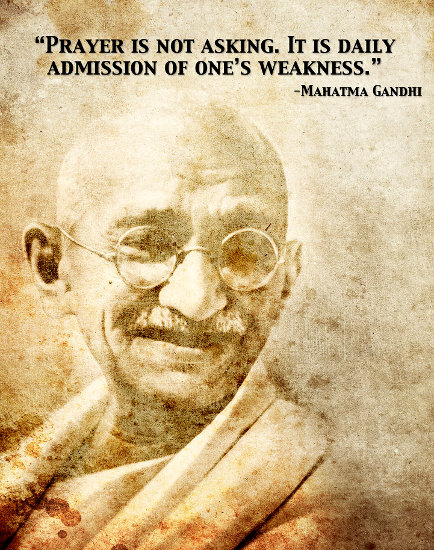
Frankly, I don’t know how God manages to put up with some of his followers, sometimes especially me. No wonder Gandhi said, “I like your Christ, I do not like your Christians. Your Christians are so unlike your Christ.”