Tag Archives: community

The Hollow Man

clickedIt clicked when I saw this photo. I realized what’s been bothering me all along. I finally got why I was counting time down. Why I was waiting for it all to end. Why I didn’t believe my life in the community of faith was ever going to last. I realized I didn’t belong. I wasn’t part of the whole. No matter how hard I tried, I’d always be on the outside looking in.

Let me explain.

In reading the Rudolph and Willitts book Introduction to Messianic Judaism: Its Ecclesial Context and Biblical Foundations, I found a confirmation of what I believed about Jewish/Christian relations on so many levels. It all made so much sense. Chapters 17, 18, and 19, written by Craig Keener, William Campbell, and Scott Hafemann respectively, all spoke of Jewish and Gentile interdependence within the body of Messiah, specifically accessing Paul’s letter to the Romans. I’ll write about those chapters in more detail some other time, and I believe that there is an interdependence between believing Jews and Gentiles, but there’s a puzzle to solve, at least for me. The contributors to the Rudolph/Willitts book universally present the Messianic Jewish movement as one that is a home to believing Jews who are ethnically, culturally, religiously, and experientially Jewish. You cannot separate the lifestyle of being Jewish from the person who is Jewish, regardless if they have come to faith in Jesus as Messiah or not.

However, for the vast amount of Gentiles who are believers, their culture is the church. I know there are multiple expressions of the Christian church in our world, but they all have one thing in common. Their culture isn’t even remotely Jewish. Jewish religious and lived culture isn’t even remotely Christian. It’s like two different worlds that are trying to intersect and as interrelated as they are in Messiah, I’m not sure how they’re ever going to fit together.

And then there’s me.

No matter who you are as a believer, you “fit” somewhere. There are Gentiles, just tons and tons of them, who fit extremely well in the church. I’m anticipating seeing a lot of them tomorrow morning, Sunday morning at the church I attend. They are all very comfortable where they are. I’m the only one who sticks out like a sore thumb.

No, don’t tell me to go to a Jewish religious venue. None are accessible to me and even if they were, I don’t fit in there, either. Even if I fit in, that wouldn’t “fit in” with my wife. She’d feel extremely uncomfortable with my being a square peg trying to fit into a round hole. And that’s what I’d be. My past participation in pseudo-Jewish Hebrew Roots wouldn’t even come close to preparing me for an actual Jewish cultural encounter.

I like to think of myself as a person with a foot in each of two worlds but the fact is, I am only standing in between them. I’m not in contact with either one. I don’t belong in either one. That isn’t to say I don’t believe, but faith and religion and worship don’t exist in a vacuum, they exist in community, and I don’t belong in any of them.

It’s like someone tried to transplant a heart into my chest, but my body is rejecting it. It doesn’t belong. It’s alien. Without it, I’ll die (metaphorically speaking, of course), but I’m not being nourished by it, either.

A friend of mine once said, don’t seek Christianity and don’t seek Judaism, but rather, seek an encounter with God. But how do I meet God without a context and a culture? People can’t experience God in raw, unshielded contact. We need an interface, layers of abstraction so we can make sense of what’s happening to us, so we won’t be obliterated by connecting to God. For Jews, that interface is Judaism, cultural, Talmudic, tradition-based Judaism. For Christians, that’s the church and all the culture and traditions that are attached to the various “Christianities” in our world.

But I don’t connect to either one. I don’t belong. That’s the problem. I can read the Bible, but if I read it in a Jewish or Christian framework, it seems alien. Only just plain reading it makes any sort of sense to me, but then I’m limited to my own experience. To access the sages and the experts, I have to apply a context, which puts me in contact with denomination, with doctrine, with theology, with culture, and while that seems to work for everyone else, it doesn’t work for me because their doctrine, theology, culture, and context doesn’t belong to me and I don’t belong to them.

Classic approach-avoidance syndrome or as put more plainly, can’t live with it and can’t live without it.

That’s why doing my homework for Sunday school seems like an exercise in emptiness. It’s a culture that I don’t relate to, a perspective that seems hollow. If I’m ever going to experience God, it will be somewhere outside religion and culture, but that’s impossible for a human being. So where does that leave a “hollow man?”

157 days.

Separate Paths

SeparatedHowever, after a few years these same mission organizations started putting other books at the top of the bags of Bibles. These were books about one particular denomination’s theology, or teaching that focused on certain aspects of God’s Word.

This, I believe, was the start of disunity among many of China’s house churches.

These booklets told us we must worship in a certain way, or that we must speak in tongues to be a true believer, or that only if we were baptized in Jesus’ name (instead of in the name of the Father, Son, and Holy Spirit) could we be saved. Other teachings focused on extreme faith, still others argued for or against the role of women in the church.

We read all these booklets and soon we were confused! The churches started to split into groups that believed one thing against groups that believed another. Instead of only speaking for Jesus, we also started speaking against other believers who didn’t conform to our views.

-Brother Yun (with Paul Hattaway)
Chapter 20: “The Road to Unity” pg 233
The Heavenly Man: The Remarkable True Story of Chinese Christian Brother Yun

“Where ignorance is bliss, ’tis folly to be wise.”

-Thomas Gray
“Ode on a Distant Prospect of Eton College” (1742)

Any of this sound familiar?

Brother Yun (Liu Zhenying) is describing a situation that occurred with the Christian communities of China in 1994. Various Christian missionary organizations from other nations wanted to help the isolated and often persecuted church in China. When China’s borders started to open up in the 1980s, these missionaries took the opportunity to engage representatives of the church in China, which was broken up in to thousands of house churches for the purposes of security and anonymity in relation to a hostile government, and try to provide for the Chinese Christians’ needs. They needed Bibles…lots and lots of Bibles.

After foreign Christian missionaries were expelled from China after the advent of the communist revolution in 1948-1950, the body of Chinese believers were pretty much on their own. Only a handful of Christians possessed Bibles, including Brother Yun, and almost nothing was known about “Christian theology” except what was revealed by the Bible itself and the Holy Spirit as it was manifested in the lives of the faithful, particularly Pastors and teachers like Brother Yun. Although there were very rare encounters with a few Chinese people who self-identified as Catholic, Christianity in China had no denominational identity of any sort. The focus of Christians in China was to covertly study the Bible, covertly meet in small house churches, covertly travel to preach the Gospel where it was unknown in China, and if captured, imprisoned, and tortured, covertly teach the Gospel to other prisoners and on occasion, even to sympathetic prison guards.

No one was thinking about denominationalism and anyone who was a Christian was a brother and sister to everyone else who was a Christian. They shared the same passion for Christ, the same fear of the government, the same pattern of concealing themselves to avoid detection and arrest, and the same risk of being tried, jailed, tortured, and executed by the anti-church state.

That changed in the early 1990s, and with the knowledge that there were different theologies, different doctrines, different denominations, and different identities, all calling themselves “Christian” but sometimes differing radically from one another, the once unified church of China became fragmented and fractured, just like Christianity in the rest of the world.

We arranged for Zhang Rongliang and the leaders of this Fangcheng Church to meet with us. This was a big step because of the tension that had existed between his group and Brother Xu’s group for many years. The day before Zhang arrived we had a time for prayer. Brother Fan said, “Brother Xu, I believe the Lord has given me a word for you, but I’m not sure you can accept it.”

He continued, “I feel that when Zhang Rongliang and his leaders arrive you shouldn’t sit down with them and talk straight away. You shouldn’t even pray with them at first. When they arrive you should immediately get on your knees and wash their feet one by one.”

Brother Xu, who leads millions of believers across China, immediately responded, “I accept this as a word from the Lord. I’ll certainly wash their feet.”

Yun/Hattaway, pp 236-7

I’ve spent this past week addressing the struggle between Messianic Judaism and Hebrew Roots Christianity in terms of community identity and whether or not we can consider our two groups (and the multiple sub-groups contained within) at all part of the same “body of Christ.”

There are days when I have my doubts.

This isn’t quite what Brother Yun is describing, but it is related. At one point, the Chinese Christians conceptualized their identities as Christians in fundamentally the same way. They just didn’t know any better. Then, with the awareness of denominationalism, split after split occurred, and the only way to even begin the healing was through an act of humility, much as what the Master performed upon his own disciples shortly before his crucifixion and death.

washing-feetIn the case of Brother Xu and Zhang Rongliang, it almost didn’t work. When the different groups of Chinese Christian leaders got together in the same room, discussions degraded and old arguments resurfaced. Zhang flew into a rage and almost stormed out before Brother Fan pushed Brother Xu into hurriedly getting some water and kneeling in front of Zhang to wash his feet. It took years to unify most of China’s churches again but the effort wasn’t totally successful, at least in the short run. However, by the beginning of the 21st century, most of China’s estimated 58 million Christians were unified as brothers and sisters, averting the disaster that came about with the knowledge of “differences.”

But the problem isn’t the same in the Messianic Jewish/Hebrew Roots Christianity space. Jews are different by design…God’s design. Finding a way to integrate Gentiles into a Jewish religious movement and yet have the Gentiles retain their identity, not requiring that they convert to Judaism, was and is something of a chore. I personally don’t believe it was ever completely accomplished in Paul’s lifetime, and not that soon afterward, the whole thing disintegrated (though it took a few centuries to finish it off) into a Jewish religion that did not believe the Messiah had yet come, and a Christian religion that believed the Jewish Messiah came, rejected the Jews for rejecting him, and took upon himself the Gentiles instead. When the Christ returns, it is generally believed he will reward his faithful Gentile Christians and judge the unbelieving Jews.

What a mess.

I still don’t have an answer but I have a vague sense of an ideal. The ideal is that somehow, in some way, the Jewish sheep and the Gentile sheep will be able to enter the same room and without too much discord, be able to have a conversation. In some way, we’ll be able to discuss what we have in common and not just what makes us different (and was drives us apart). In some way, we will all seek to encounter God and we will all seek joy in Him in a way that is universal.

Imagine what it would be like to speak to the wisest, most powerful being in the universe.

Realize that when you pray, you are doing just that. As you talk in prayer, nothing else in the world exists for you but Him and you. Talk to Him with the ease you talk with your father. At the same time, maintain complete awe and respect.

-Rabbi Zelig Pliskin
Proper Prayer

When you personally are happy, it doesn’t make any difference what others have. So the way to counteract envy is to increase your own level of joy.

By mastering joy, you will become free from envy.

-Rabbi Zelig Pliskin
Joy Removes Envy Of Others

I believe fear of assimilation and marginalization within the Messianic movement drives Messianic Judaism to strive with great effort to preserve their Jewish identity. The history of the church has certainly shown us that such Jewish fear is well founded and that supersessionism, otherwise known as replacement theology or completion theology, is something, in all its forms, to be resisted, battled, and defeated.

I believe that a lack of recognition of the Jewish source of Christian faith, and frankly, envy of Jewish “chosenness” has led some factions within Hebrew Roots to claim the full Torah mitzvot for themselves. Even if these factions deny attempting to usurp an actual Jewish identity, modeling your life on modern Jewish synagogue worship practices and recognizing zero differentiation between Gentile and Jewish believers within the body of Messiah amounts to taking away another kid’s toys just because that kid has them and you want them.

OK, both of those examples were of extremist positions but things can be pretty “extreme” in the world of religion. The Chinese Christians had nothing to fight about until the very concept of differences and distinctions within Christianity was introduced from outside of China. You might think that Hebrew Roots has the right idea from that example and say that the “cure” for the Messianic Judaism/Hebrew Roots conflict is also to eliminate distinctions, form a unity movement, and to start washing each other’s feet (washing away uniqueness and identity along with the dust of the road).

But as far as I can tell, there were no Jewish believers in China. Brother Yun’s book doesn’t address the issue. The problems and the practice of Christianity in China over the forty or so years his book covers had wholly different priorities.

But it also presents a kernel of truth. Distinctions being what they are, we all either need to find some common ground upon which to walk and talk with each other, or we might as well accept the denomination solution that has been alive and well within both Christianity and Judaism for many centuries and agree to disagree, form our own groups, and be happy inside of them.

Do Orthodox Jews complain about Reform Jews? Do Protestants complain about Catholics?

separation-east-and-westProbably.

Even if I went around washing everyone’s feet in the blogosphere, I doubt that it would result in the sort of healing that Brother Yun describes in his book. The only healing I know how to accomplish is my own, and even that is a monumental task. Rabbi Pliskin describes how prayer can connect each of us to God and dispel petty bickering, envy, and unhappiness, replacing them with awe, respect, and joy.

I can’t control anyone reading this blog. I can’t stop caring about you and what happens to you, but I can’t affect your lives in any way, shape, or form unless you allow it on some level. I probably shouldn’t even try because trying only contributes to my own lack of peace, blunting my joy in the realization of God.

Rejoice in the Lord always; again I will say, rejoice. Let your reasonableness be known to everyone. The Lord is at hand; do not be anxious about anything, but in everything by prayer and supplication with thanksgiving let your requests be made known to God. And the peace of God, which surpasses all understanding, will guard your hearts and your minds in Christ Jesus.

Finally, brothers, whatever is true, whatever is honorable, whatever is just, whatever is pure, whatever is lovely, whatever is commendable, if there is any excellence, if there is anything worthy of praise, think about these things. What you have learned and received and heard and seen in me—practice these things, and the God of peace will be with you.

Philippians 4:4-9 (ESV)

“Hope never abandons you, you abandon it.”

-George Weinberg

Walk whichever path that you will. Peace.

The Fragmented Body

fragmented-bodyPaul’s two epistles to the Corinthians grant us an up-close and personal portrait of the Corinthian community he was leaving behind. They were a diverse community of Jewish believers, God-fearing Gentiles, and recently converted pagans. They were not perfect people.

They struggled to maintain cohesion after Paul left. They often differed in their opinions and practices regarding such matters as gender roles, sexuality, use of spiritual gifts, and the doctrine of the resurrection. Some found it difficult to adapt to Judaism’s strict standards of modesty in dress and conduct. Sexual immorality was a problem. The Corinthian leadership struggled with censuring members who were engaged in immorality. A lack of qualified leaders to serve as judges in civil suits encouraged the community to use secular courts. The Corinthian believers misused ecstatic utterances and allowed charismatic antics to disrupt worship services. Philosophical monotheists among the Corinthians chafed at the prohibition on things sacrificed to idols and struggled with the concept of a literal resurrection of the dead. Visits from other apostles led to factionalism. Some among the Corinthians began to question Paul’s authority and apostleship. In his letters, Paul addresses these issues and several other problems with genuine pastoral concern.

-D. Thomas Lancaster
Ki Tisa (“When you take”)
Commentary on Acts 18:11-23, pg 538
Torah Club Volume 6
First Fruits of Zion (FFOZ)

Sound familiar? No? Consider a recent discussion in the comments section of Derek Leman’s blog. Although the topics and themes aren’t really the same (no apparent problem of sexual immorality, for example) the dynamics and the diversity of populations and opinions on all things spiritual and philosophical is very much in evidence. You have the same mix of Jewish and non-Jewish believers with a few converts tossed into the mix. That brings in a diversity of background, education, perspective, and identity into a single container which, in both ancient and modern examples, is the community of the Messiah; the body of Christ.

And after 2,000 years, we still are having a tough time getting along.

Not that the Corinthian “church” was completely representative of all believing first century communities, but whenever you involve dissimilar populations in a common group, especially a religious group, you are asking for a few “strongly worded” debates. And that’s what we experience today on the blogosphere when we come together (virtually) to have some of the same interactions that the ancient Corinthians did in the days of Paul.

Actually, there’s quite a time gap between the ancient mixed Jewish/Gentile “church” and the modern one. After the schism between Judaism and Christianity, each religion, for they became separate religions, went their own way, only getting together for a pogrom or an inquisition every now and again. The problems of the Corinthian religious congregation faded away into history…until quite recently.

Now that we’re trying to put our theological humpty dumpty back together again, we’re finding out that it would be easier to take an omelet and put it back into the broken egg-shell than it is getting different factions of Messianic Judaism, Hebrew Roots Christianity (and it’s variants), and more traditional Christianity (or Christianities) to come to any sort of agreement.

I know I’ve written about this before and used Lancaster’s Torah Club commentaries to do it, but in reading this past week’s Torah club chapter right on the heels of Derek’s blog post, the similarities jumped out at me again.

Doesn’t anyone else out there see it?

Was there ever a peace between the Jewish and the Gentile believers? We see strife looming largely in the Messianic world right there around 50-53 CE when Paul was the most active in his “missionary travels.” In Acts 18:1-17, Paul experiences a “split” in the synagogue at Corinth and half the Jewish membership follows Messiah right out of the synagogue and into a building next door. There were actually two competing synagogues, one Messianic and the other not, strongly contending with each other. There wasn’t unity over the Messiah in the local Jewish community let alone between Jews and Gentiles.

But then again, not all Jewish communities experienced the message of Messiah the same way.

And they came to Ephesus, and he left them there, but he himself went into the synagogue and reasoned with the Jews. When they asked him to stay for a longer period, he declined. But on taking leave of them he said, “I will return to you if God wills,” and he set sail from Ephesus.

Acts 18:19-21 (ESV)

FallingApartIt seems the synagogue in Ephesus was much more unified in its reception of Paul’s teaching on the Messiah and I’m sure he would have rather spent more time in this particular setting, but he wanted to get to Jerusalem in time for Sukkot.

I won’t pull any quotes from Derek’s blog (you can click the link and read through the comments yourself) but it seems as if the same old debates are being continually recycled. Things haven’t changed a whole lot in twenty centuries. Human nature after all, is human nature. I guess that’s why the Bible is still relevant after the passage of so much time. We’re still the same old creatures we’ve always been, stirring up the pot and making a mess out of the message of the good news.

The Messiah came and then he left. And after he left, his apostles and disciples struggled to keep the new Jewish sect of “the Way” afloat while integrating a large Gentile population in the diaspora along with whoever among the Jews would accept that Yeshua (Jesus) was Moshiach. In the end, it fell apart and all of the broken pieces have been shattered and scattered across the landscape for almost 2,000 years. Recently, we’ve been trying to put them back together again with limited success. We’re encountering pretty much the same barriers that Paul did in his “mixed population churches.” Maybe the “bilateral ecclesiology” people are on to something after all. No mix, no mixed up community.

But I don’t think that’s how it’s supposed to work out, at least not in an extreme and absolute segregationist sense. Paul didn’t seem to demand that the Gentiles form their own churches, although that’s how things ended up. Here we are, trying to forge new or renewed relationships to pave the way for Messiah’s return. But it seems that it will take the Messiah to teach us to get along, share our toys, and play well together.

We live in a broken world. There are religious Jews who cry out, “Moshiach now!” Given the sorry state of affairs in his “Messianic community,” maybe we should be shouting the same thing. Nothing else we are doing seems to be working out.

Why I Go To Church

afraid-of-churchI’m actually enjoying going to church. When I came to that realization last Sunday, no one was more surprised than I was.

Wait! Let me explain.

Starting last October, I created a “Days” series that was a countdown to the end of the year. I was planning to make a decision, both about whether or not to go back to church and whether or not to continue to blog in the “Christian” or “Messianic” or “religious” space, given the endless contention occurring in the blogosphere. I started at 78 days and worked my way down to zero. It should be obvious that I continued blogging after January 1st, and I not only continued to go to church regularly, but frequently meet with the Head Pastor.

Eleven months to the day before I published “Day Zero,” I wrote and published an article called Why I Don’t Go To Church. This was in response to both my internal angst (my favorite theme) and to Pastor Jacob Fronczak’s blog post Why I Go To Church. Even back then, I had returning to church in mind, but was undergoing what I’d consider classic approach-avoidance conflict (I was a psychotherapist and family counselor back in the day).

I’ve overcome my “fear of flying,” so to speak, but I was afraid that once I started attending church, I’d find not “niche” of my own and end up being bored. While it’s true, I don’t go to my particular church for the music, I am experiencing many other benefits and even on some small level, beginning to give back just a tad. What added momentum to my journey happened just five days before my countdown was to end. I was reminded that seeking fellowship with God’s people is seeking an encounter with God.

And in church, I have encountered Him.

Today, I did something I shouldn’t have done. There’s a “community” within Google+ called “Messianic Judaism” (for all I know, there could be more than one, but this is the one I belong to). Access is by invitation only, so posting a link to it wouldn’t let you see inside, but someone in the community posted a link to a book review and asked for opinions. Unfortunately, it struck a nerve, and even though I had already determined I wouldn’t address the review and what I believe it represents, I shot off my big mouth (figuratively speaking) and now I’m regretting it.

But the transaction had an interesting side effect. It (or rather someone) challenged my going back to church and further, criticized the church in a manner that resulted in my feeling defensive. Me? Really?

I’ve maintained a relationship with blogger Judah Himango for the past few years, and that relationship has, on occasion, been quite stormy. We still talk online periodically, and today was one of those “talks.” But what he said got under my skin. Here’s part of what he posted to me.

My concerns with Tent of David are that it purports to “heal the vision of the Messianic gentile” by sending them back to the church, which will inevitably lead to assimilation.

I asked, “assimilation into what?” and he responded:

Assimilation into the doctrines of the Church. Sabbath is done away with, the Church has replaced Israel, any non-moral mitzvah is no longer applicable to anyone.

Unfortunately (mea culpa) I missed a part of what Judah had said before I rapidly posted my reply (I think I need to switch to decaf):

There are indeed folks called to the church. But for many others, we’re called to Hebraic Roots congregations or Messianic congregations.

I certainly don’t advocate compelling people to “go to church” if they feel called elsewhere, but on the other hand, I do object to the church being seen as “inferior” or “anti-Biblical” compared to non-Jewish Christians who feel called to worship within a more “Jewish” framework. I’ve been one of those people before and for reasons too lengthy to relate here, I needed to seek my community of faith elsewhere.

Why do I go to church?

First of all, thanks to Boaz Michael and (my advanced reading of) his book Tent of David (TOD) and other influences, not the least of which is my Mom, I summoned the courage to overcome my own personal prejudices and start attending church again.

communityI was welcomed by lots and lots of people, but you’d kind of expect that in an authentic Christian setting. But what happened next, was unanticipated…I started making connections. I’ve had several interesting and compelling conversations with the Head Pastor and just last Sunday, I spent an hour talking to one of the Associate Pastors (when I should have been in Sunday School) in the church library. Not only that, but a number of people actually seem authentically glad to see me, not just because I’m a warm body showing up a church, but because of me as the person I am (or at least as they perceive me to be). In fact, I’m stunned that some of these connections have occurred so quickly and that I’m now even feeling a sense of belonging.

People have offered to pray for me. I’ve seen genuine caring and concern for the hungry, the sick, and the dying. They offer tangible, material support for the needy and for missionaries in many countries. There is a genuine heart for Israel and a desire for her posterity. It’s not just the occasional person, but to the best of my ability to tell, the human community within the church’s walls does look to Christ as Messiah and Israel’s King for salvation and sustenance.

In my talks with Pastor Randy (and they’re really quite candid), we don’t always see eye to eye, but you can’t believe what an incredible pleasure it is, even to disagree with someone and still have the encounter be illuminating, positive, refreshing, and friendly. Try doing that on the Internet!

I don’t know where all this is going to lead me, but for the first time in a long time, I not only have hope that I will find a place in the church and among the community of believers, but that the church itself is turning in a direction that will indeed be part of the healing between the Jewish and non-Jewish disciples of the Master.

I feel that I’ve failed in my comments on Google+ today and allowed my emotions to overcome my common sense. I could delete my comments, but they’ve already been read and responded to, so I might as well leave them up. In any event, God knows what I’ve said and done, so removing my annoyed comments won’t repair my relationship with Him.

But the realization, thanks to Judah’s statements (though he probably didn’t intend them the way I’ve taken them), that there really is hope for Christianity and a way forward in being part of “rebuilding David’s fallen tabernacle” is encouraging. It’s even better now that I realize it’s possible for me to have a small part in that “project” within the community of Christianity.

I don’t particularly mind if people don’t agree with my going back to church, and I understand that whenever you write and publish a book (such as Boaz Michael has), especially in such an emotionally explosive realm as religion, people are going to write critical book reviews. The only thing I mind about some of the criticism being leveled against Tent of David (and yes, I’ve read the reviews), is that it simply misses the overall vision Boaz is trying to communicate. I can appreciate people who have an eye for detail, and who may feel certain specific terms or other content wasn’t used with as much accuracy as they could have been, but look at the big picture.

In between the Gentile Christians going to church and those who have found a home in either a Hebrew Roots or Messianic Jewish congregation are just tons and tons and tons of people with little or no fellowship at all. Maybe they attend small home Bible studies or maybe they just worship with their families. Some, like me, may even seek fellowship over the Internet (which is problematic at best). But remember, seeking fellowship is seeking an encounter with God, and in my experience, many people who think of themselves as “Messianic Gentiles” are disconnected and isolated from other believers and, Heaven forbid, from the God who loves their souls.

symmes_chapel_churchThrough bad teaching, bad leadership, or bad experiences, they’ve become convinced that “the Church” (whatever you imagine the term to mean) is bad, evil, awful, pagan, lost, apostate, anti-Law, and so on…I mean all Christian churches everywhere. And, for whatever reasons, they haven’t found an alternative or the alternative that they’ve found may be a group that defines itself solely on being “anti-Christian,” as opposed to a community dedicated to discipleship under Jesus Christ and a sincere desire to meet with God.

If even some of those people can find in Tent of David what I have, then maybe they don’t have to be alone, either. I don’t think you have to agree with each and every thing Boaz set forth in TOD, but you can embrace the vision and let it take you where God wants you to go.

I am beginning to “fit in” with this church. I probably wouldn’t fit in at most other churches in my area. The fact that a set of unlikely occurences led me to this church as the first stop in my search for community I believe indicates the hand of God at work in my life.

You don’t have to like the fact that I go to church. You don’t have to go to church if you don’t want to. Really, no one is holding a gun to your head. However, I’d like you to consider two things. The first is that there might be a reason God wants me to go to church. The second is that God might have a plan for you that you don’t agree with Him about. That was me once upon a time. Could it be you, too?

That’s not all about why I go to church…but it’s a start.

Collision and Recoil, Part 1

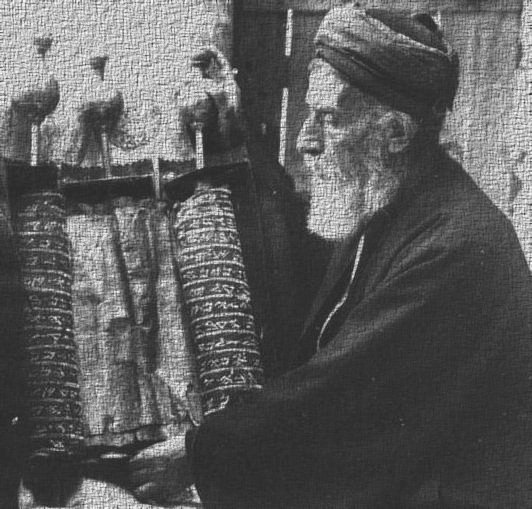
ancient-torahFor some days he was with the disciples at Damascus. And immediately he proclaimed Jesus in the synagogues, saying, “He is the Son of God.” And all who heard him were amazed and said, “Is not this the man who made havoc in Jerusalem of those who called upon this name? And has he not come here for this purpose, to bring them bound before the chief priests?” But Saul increased all the more in strength, and confounded the Jews who lived in Damascus by proving that Jesus was the Christ.

When many days had passed, the Jews plotted to kill him, but their plot became known to Saul. They were watching the gates day and night in order to kill him, but his disciples took him by night and let him down through an opening in the wall, lowering him in a basket.

Acts 9:19-25 (ESV)

And when the Gentiles heard this, they began rejoicing and glorifying the word of the Lord, and as many as were appointed to eternal life believed. And the word of the Lord was spreading throughout the whole region. But the Jews incited the devout women of high standing and the leading men of the city, stirred up persecution against Paul and Barnabas, and drove them out of their district.

Acts 13:48-50 (ESV)

This becomes a familiar refrain in Paul’s life. Always someone is condemning him for his message or what it implies in their lives. As you may recall from yesterday’s “morning meditation,” when, in Acts 9:23, it says that “the Jews plotted to kill him,” the word we read in English as “Jews” in Greek is “Ioudaioi,” which specifically refers to the Jewish religious leaders and those who support them, not the Jewish people in general (according to the commentary in my ESV Bible, anyway). We see the same word used in Acts 13:50 when it also says, “But the Jews incited the devout women of high standing and the leading men of the city, stirred up persecution against Paul and Barnabas…”

I’ve been reading D. Thomas Lancaster’s Torah Club 6: Chronicles of the Apostles, specifically his commentary on Acts 13 (pp 379-405) which is intended to be read during the week that Torah Portion Bo (“Come”) is studied. I really wish that all of you reading this blog (and everyone else) could read this particular lesson on chapter 13 of Acts, because it is illuminating in many ways, presenting the message of salvation to Jews, Jewish converts, and everyone else in such a clear manner. Space on this blog prevents me from replicating Lancaster’s arguments in full and besides, if I simply “copied and pasted” the lesson here, I would be depriving you of the pleasure of studying from the Torah Club.

Nevertheless, there is some important territory to cover. For instance, why does Chapter 13 end with the Jewish religious leaders of Antioch (and according to Lancaster,“thanks to the Seleucid dynasty, more than fifteen cities in the Roman world bore the name Antioch”), conspiring with “a few prominent, God-fearing, Gentile women who were friendly with the Jewish community” to drive Paul and Barnabas out of their area? I mean, the whole thing started out so well. After Paul’s brilliant teaching as we read in Acts 13:16-41.

When they went out [from the synagogue] they requested of them to speak these things to them the following Shabbat. When the assembly was dismissed, many individuals from the Yehudim and righteous converts followed Polos and Bar Nabba, who spoke to their heartfelt need and warned them to stand in the kindness of God

Ma’asei HaShlichim 13:42-43 (As quoted from Torah Club, vol 6, pg 393)

The above version of Acts 13:42-43 is taken from an unpublished translation based upon the work of the nineteenth-century Christian scholar Franz Delitzsch (a translation of the Gospels based on Delitzsch’s work is currently available). Let me present the same verses in a form that might be more familiar to you.

As they went out, the people begged that these things might be told them the next Sabbath. And after the meeting of the synagogue broke up, many Jews and devout converts to Judaism followed Paul and Barnabas, who, as they spoke with them, urged them to continue in the grace of God.

Acts 13:42-43 (ESV)

Now, according to Lancaster, here’s the Jewish reaction to what Paul had taught the Jews, converts, and Gentile God-fearers about the risen Messiah:

The synagogue of Pisidian Antioch received Paul’s message enthusiastically. The synagogue heads asked Paul and Barnabas to return the following Sabbath and present more teaching about the man from Nazareth, His messianic claims, His resurrection from the dead, and the evidence from the prophets. After the Sabbath services concluded, an excited group of Jewish people (both Jews and proselytes) gathered around Paul and Barnabas. They followed them back to where they were staying and asked for more teaching and stories about the Master. The apostles spent the remainder of the Sabbath instructing them further in the message of the gospel and the teaching of Yeshua. They “were urging them to continue the grace of God.”

-Lancaster, pp 393-4

I’m not sure where Lancaster found that level of detail about what happened between the Jewish and proselytes from the synagogue and Paul for the rest of the Shabbat, but I can see how it could be true. Certainly it is evident that Paul’s message sparked a tremendous amount of excitement from his audience, it was received enthusiastically, and they couldn’t wait to hear more. This hardly seems like the sort of atmosphere that would abruptly turn to the local Jews experiencing “the offense of the cross” as some modern Christians might put it.

What happened?

Well, let’s back up a little bit.

Brothers, sons of the family of Abraham, and those among you who fear God, to us has been sent the message of this salvation.

Acts 13:26 (ESV)

Before proceeding, let me present the same verse from the Delitzsch translation to give it a more Judaic context:

Men, brothers, sons of Avraham’s family and God-fearers who are among you: to [us] this word of salvation was sent.

Ma’asei HaShlichim 13:26

synagogueAnd now Lancaster’s explanation:

Paul finished his historical review with the prophecies of John the Immerser. Before going on to present the story of Yeshua, his suffering, and resurrection, he stopped to appeal directly to the people present in the synagogue. He declared, “To us the message of this salvation has been sent.”

Paul’s first person, plural pronoun “us” included all three types of people he addressed that day in the synagogue: “Brethren, sons of Abraham’s family, and those among you who fear God” (Acts 13:26). “Brethren” referred to his fellow Jews. “Sons of Abraham” referred to proselytes. (Proselytes take the patronymic “son of Abraham” at the time of their conversion.) “You who fear God” referred to the God-fearing Gentiles present that day in the synagogue. The God-fearing Gentiles were not accustomed to being acknowledged in such addresses, and they had never been included in the promises of Messianic redemption or covenant privilege.

-Lancaster, pg 390

That’s absolutely true. God-fearers, such as the Roman Centurion Cornelius and his household who we met in Acts 10, acknowledged the sole sovereignty of the God of Israel and denied all other Gods, but they had no covenant status to connect them to God as did the Jews. There was only the covenant God made with Abraham, but it was unrealized as far as the Jews and God-fearers who were listening to Paul knew.

I will bless those who bless you, and him who dishonors you I will curse, and in you all the families of the earth shall be blessed.” So Abram went, as the Lord had told him, and Lot went with him. Abram was seventy-five years old when he departed from Haran. And Abram took Sarai his wife, and Lot his brother’s son, and all their possessions that they had gathered, and the people that they had acquired in Haran, and they set out to go to the land of Canaan. When they came to the land of Canaan, Abram passed through the land to the place at Shechem, to the oak of Moreh. At that time the Canaanites were in the land. Then the Lord appeared to Abram and said, “To your offspring I will give this land.” So he built there an altar to the Lord, who had appeared to him.

Genesis 12:3-7 (ESV)

Now the promises were made to Abraham and to his offspring. It does not say, “And to offsprings,” referring to many, but referring to one, “And to your offspring,” who is Christ.

Galatians 3:16 (ESV)

For the first time, as Paul addressed all those present at that synagogue in Antioch, he “hot wired” the connection between the Abrahamic covenant and the Jewish Messiah who he revealed was Yeshua of Nazareth, Son of David, who was born, died, and resurrected, and who carried the promise of salvation to the Jew, the Jewish convert, and yes, even to the Gentiles of the nations who feared God.

We’ve already seen how the Jews and proselytes reacted with great joy, but what was the response of the Gentiles who heard this message?

We’ll pick up with the answer to that question and more in Part 2 presented in tomorrow’s “morning meditation.”

5 Days: Encounter

meeting-a-strangerOne who responds “Amen” after a blessing surpasses the one who recites the blessing.

-Berachos 53b

“Amen” is an expression of confirmation, whereby we attest that what the other person has said is indeed true. Thus, when someone recites a blessing expressing gratitude to God or asserting that God has commanded the performance of a particular mitzvah, one is making a declaration of one’s faith. When we respond by saying “Amen,” we are essentially stating, “What you have said is indeed true,” and thereby we are not only concurring with what was said and expressing our own faith, but also reinforcing the other person’s statement and strengthening the other person’s faith.

There are things that one can do that will strengthen other people’s faith in God, and things that will weaken it. In Torah there is a concept of arvus – mutual responsibility – by virtue of which one is obligated to try to strengthen other people’s belief and trust in God. Although every person has free will, and God does not intervene to deter someone from committing a wrong, people who have suffered because of someone’s misdeeds often feel that God has abandoned them. Thus, if we deal unfairly with others, we may not only cause them to be angry at us, but also bring them to doubt God for allowing an injustice to happen. While such reasoning is faulty, the one who caused it is nevertheless responsible for causing the victim to feel that way. On the other hand, when we behave in the manner which God wishes, the result is kvod shamayim – bringing glory and honor to God, and strengthening people’s faith. Our actions can and do affect how other people will think and act.

Today I shall…

try to behave in a way that will result in people having greater respect for and trust in God.

-Rabbi Abraham J Twerski
“Growing Each Day, Tevet 11”
Aish.com

On Sunday afternoon, I had my periodic “coffee meeting” with a friend of mine. It was cold, windy, and threatening to snow, which is the perfect time to sit in a coffee shop, sip some hot java, and chat.

Oh, the conversation started out with small talk but that’s not where it ended up.

Have you ever been in a situation where someone said something to you and your internal response was “I wish he hadn’t said that,” not because it wasn’t true, but because it was true and you didn’t want to hear it?

I think most of us have at one point or another in our lives and last Sunday afternoon was the most recent occurrence in mine.

Can you encounter God in church?

I know that sounds like a silly question if you’re a Christian, but church was the last place I thought I’d ever encounter God in a meaningful way.

Let me explain.

My most recent “church experience” has been like a process of steps. I walk into the church, Bible in hand. I get the program, the pamphlet or whatever it’s called from the older lady standing near the door. We greet each other and I move on. I weave my way through the crowd of people chatting with each other and head for the door of the sanctuary. At the doorway, I’m greeted by several other gentlemen, one or two of which may engage me in brief, light conversation. Once that’s done, I try to find a seat near the rear of the chapel where I’ll be out of the way.

I busy myself before services by reading the contents of the pamphlet, paying extra attention to the outline for the day’s sermon. I’m usually greeted a couple more times by people I’ve made a casual acquaintance with.

People enter, settle down, and services begin.

The service has a pattern which is almost always the same. There’s singing, praying, the reading of the daily Bible passage, sometimes an appeal for donations for missionaries or other worthy causes and needs, the passing around of the plate for offerings, more singing, and the Pastor delivers his message while I rapidly take notes.

I usually slip out to use the men’s room during the last hymn because afterwards, the service ends and everyone floods out and lines start to form. I might even manage to get a cup of coffee before Sunday school.

Then I go to Sunday school. For the first few minutes, there’s the usual casual conversation between everyone else since they are all friends. I politely listen. Class begins and I struggle not to say too much, aiming for not saying anything at all.

Class ends, church ends, and I go home.

waiting-for-mannaAt what point in all that would I encounter God?

Oh, I’ve encountered God in a meaningful, supernatural manner that I can’t even begin to articulate, but those “meetings” are quite rare.

And I believe I encountered God over coffee last Sunday afternoon, but it wasn’t what you would call supernatural. I forgot that God can insert people into the stream of your life who will tell you what you need to hear (though not necessarily what you want to hear).

He said several things.

  • People go to church to encounter God.
  • Anyone who wants to encounter God should spend time in prayer and reading the Bible, asking and expecting to encounter God.
  • Don’t seek Judaism and don’t seek Christianity, seek God.

Oh.

He said a lot more too, particularly on the dynamics of how to make connections and relationships. The following metaphor is my own but it applies.

If you are single and you want to make an impression on a girl, you don’t do so by showing up for dates only sometimes. If you have a standing date with your girlfriend every Sunday morning, if you like her and want to develop a relationship with her, you’ll show up for your date every Sunday morning unless something serious comes up to prevent it. You don’t just go hit and miss and still expect her to want to develop a relationship with you. She won’t think you’re very trustworthy and reliable. She won’t spend the time and energy to try to connect with you if she doesn’t see you making the same effort.

Oh.

I’ve been viewing going to church as only an obligation. Who in their right mind dates a girl if it’s only an obligation and not a desire?

And let us consider how to stir up one another to love and good works, not neglecting to meet together, as is the habit of some, but encouraging one another, and all the more as you see the Day drawing near.

Hebrews 10:24-25 (ESV)

That sounds like an obligation but an obligation of love.

To be honest, I don’t always want to encounter God in a meaningful way, because some of those encounters aren’t easy to take.

Then Job arose and tore his robe and shaved his head and fell on the ground and worshiped. And he said, “Naked I came from my mother’s womb, and naked shall I return. The Lord gave, and the Lord has taken away; blessed be the name of the Lord.”

Job 1:20-21 (ESV)

If he should set his heart to it and gather to himself his spirit and his breath, all flesh would perish together, and man would return to dust.

Job 34:14-15 (ESV)

Fear of the Lord may be the beginning of wisdom but it’s also fear.

But God cannot be avoided and without God, life is nothing.

Man’s life is dependent on the air around him. Without air he cannot live and the quality of life is dependent on the quality of air. In an atmosphere of Torah and mitzvot there is healthy life. In a G-dless environment life is diseased, and one is constantly threatened with the possibility of being stricken with contagious maladies.

“Today’s Day”
Shabbat, Tevet 11, 5703
Compiled by the Lubavitcher Rebbe
Translated by Yitschak Meir Kagan
Chabad.org

torah-tree-of-lifeThe Rebbe goes on to describe how we can purify our environment by studying words of Torah, but taking the message down to basics, what is being said is that God must inhabit our environment for us to be who He designed us to be. We must encounter Him in order to live the life He has planned for us.

No matter how uncomfortable or even frightening those encounters may be.

Obey your leaders and submit to them, for they are keeping watch over your souls, as those who will have to give an account. Let them do this with joy and not with groaning, for that would be of no advantage to you.

Hebrews 13:17 (ESV)

That reminds me of what Pastor Randy said to me the second Sunday after Thanksgiving. I skipped going to church the Sunday after Thanksgiving because I was wiped out and wanted some rest. Pastor made some remark, supposedly joking, asking where I was the week before. I figured I wasn’t very important to anyone at the church and my missing a Sunday or two wouldn’t be a big deal. Maybe it’s a bigger deal than I thought. I still don’t feel important at church, which isn’t necessary, but I don’t feel even slightly significant, either. But that’s my fault.

If church is an opportunity to encounter God rather than just a Biblical and social obligation, then it becomes something entirely different from what I first thought. Next Sunday is the last day of my countdown to zero and the end of the year.

Or, it’s a new beginning and a fresh encounter.