Tag Archives: D Thomas Lancaster

Sermon Review of the Holy Epistle to the Hebrews: A Word of Exhortation

Pray for us, for we are sure that we have a good conscience, desiring to conduct ourselves honorably in all things. And I urge you all the more to do this, so that I may be restored to you the sooner.

Hebrews 13:18-19 (NASB)

Sermon Two: A Word of Exhortation
from the Holy Epistle to the Hebrews sermon series

In this second sermon on the Epistle to the Hebrews, Beth Immanuel Sabbath Fellowship teacher D. Thomas Lancaster thrusts his audience into a Biblical mystery and casts us all in the role of detectives who are trying to solve that mystery. What is the mystery? We have to answer a series of questions. We should attempt to answer these questions each time we study and analyze any book of the Bible.

The questions are:

  • What
  • When
  • Who
  • To Whom
  • Why

In other words, when considering any book of the Bible, we must try to discover what sort of literary genre it is, when was it written, by whom was it written, to whom was it written, and why was it written.

Lancaster prefaces his attempt to address this mystery by saying that some of his audience, the congregation at Beth Immanuel, might find this presentation long, tedious, and boring. Not the best way to introduce a topic and certainly he was risking alienating his audience. On the other hand, before you paint a masterpiece or write a classic symphony, you must learn the very basics of art or music. So too with Biblical studies.

What, When, Who, To Whom, and Why.

First off, while the Book of Hebrews is assumed to be an epistle, the title “The Epistle to the Hebrews” is traditional and probably wasn’t the original title of the document, if it had a title at all. It doesn’t come with a superscription, that is, it doesn’t say, from so and so to the community of such and thus at this place or that, the way most of Paul’s letters began. Also, according to Lancaster, it doesn’t even sound like an epistle until you get to chapters 12 and 13, especially chapter 13, part of which I quoted above.

What?

If it doesn’t read like a letter until nearly the very end of the document, then what else could it be?

But I urge you, brethren, bear with this word of exhortation, for I have written to you briefly. Take notice that our brother Timothy has been released, with whom, if he comes soon, I will see you. Greet all of your leaders and all the saints. Those from Italy greet you. (emph. mine)

Hebrews 13:22-24 (NASB)

The words I put in bold in the above-quoted scripture are the answer, but what exactly is a “word of exhortation?” What sort of literary genre is that?

But going on from Perga, they arrived at Pisidian Antioch, and on the Sabbath day they went into the synagogue and sat down. After the reading of the Law and the Prophets the synagogue officials sent to them, saying, “Brethren, if you have any word of exhortation for the people, say it.” (emph. mine)

Acts 13:14-15 (NASB)

Papyrus FragmentIn Acts 13, we see a traditional example of a Sabbath service in a synagogue in the diaspora (and probably in Israel) in the first century. Prayer services were conducted on every day of the week, but on Shabbat, there was also a Torah service which added a reading from the Torah, a reading from the Prophets (haftarah), and finally a sermon or drasha (Rabbinic commentary) on the Torah reading. When Paul stood up (v 16) and began to speak, he was starting to deliver his sermon, his drasha, his discourse, his teaching on Yeshua the Messiah based on the Torah portion that had just been read.

According to Lancaster, that’s how the vast majority of the Book of Hebrews reads. It’s not a classic epistle, it’s a sermon, probably delivered by the author, perhaps to whatever synagogue community to which the author belonged, or maybe a sermon the writer wanted to deliver to the intended recipients of this document, and then transcribed into a letter and sent to the remotely located recipients who were most likely very far away from where the author and his community were located.

I should say at this point that Lancaster told his own audience that we can’t really answer any of the “What, When, Who, To Whom, and Why” questions very well, and each opinion Lancaster offers resides firmly in the realm of educated guesses. Please keep in mind that neither Lancaster or I are saying that any suggestions offered in his sermon or in this blog post are definite facts. They aren’t. But they are attempts to address the mystery with some sort of credible hypothesis.

So, the suggested answer to “What is it” is, “a Drasha or Sermon”. The “word of exhortation” is a sermon.

When?

Does it matter? Yes. Imagine, as Lancaster suggested, you were reading Abraham Lincoln’s Gettysburg Address, but you thought it was delivered by an American President in 1963 rather than 1863. It would sure give a different meaning to what “four score and seven years ago” meant and thus change much or all of the meaning of this address.

The same is true of any Biblical document including Hebrews. Lancaster offered various proofs establishing that Hebrews must have been written earlier than the year 95 CE, and probably before 70 CE.

For every high priest is appointed to offer both gifts and sacrifices; so it is necessary that this high priest also have something to offer. Now if He were on earth, He would not be a priest at all, since there are those who offer the gifts according to the Law; who serve a copy and shadow of the heavenly things, just as Moses was warned by God when he was about to erect the tabernacle; for, “See,” He says, “that you make all things according to the pattern which was shown you on the mountain.”

Hebrews 8:3-5 (NASB)

Notice that the references to the high priest, the sacrifices, and the Temple are in the present tense (in Greek as well as in this English translation). Although there are detractors, Lancaster believes this is firm evidence that the Temple had to still exist when the letter, uh…sermon was written. He further places it in the mid-60s, maybe before 64 CE but not too much earlier, however you’ll have to listen to the recording to get the details.

Who?

Who wrote the letter, uh…sermon to the Hebrews? No one knows. It’s a mystery. The letter/sermon has no superscription (if it’s a sermon and not a letter, this is probably why it’s absent). The author is anonymous. Not that the intended audience thought the author was anonymous. They probably knew who wrote this missive.

Pray for us, for we are sure that we have a good conscience, desiring to conduct ourselves honorably in all things.

Hebrews 13:18 (NASB)

If the author said “Pray for us,” that likely indicates that the audience knew who to pray for and who “us” included.

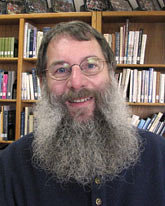
D. Thomas LancasterI won’t go into the details about Lancaster’s proofs, but he’s really sure it couldn’t have been Paul. The style and theology are wrong and the Greek is a lot better than Paul’s. In fact, it shows no signs of having originally been written in Hebrew or Aramaic, and looks like it was written by a native Greek-speaker and probably to native-Greek speakers (more on that last part in a minute). The bottom line though, in Lancaster’s opinion, is that it wasn’t written by Paul or any of the apostles, but probably by someone close to Paul, someone who probably knew how Paul thought, perhaps someone close to other apostles, like the “number one disciple” to an apostle, like the role Peter fulfilled for Jesus or the role Timothy fulfilled for Paul.

But we just don’t know who wrote Hebrews. Please listen to the recording though to hear some of Lancaster’s rather intriguing suggestions for authors and the evidence that exists supporting each possible writer.

To Whom?

Who was the intended audience? Not us, that’s for sure. In fact, as Lancaster says, not one word in the Bible was written primarily for any person, Christian or Jew, in the 21st century. That doesn’t mean the Bible doesn’t apply to us, but a lot of believers read the Bible as if it were written directly to them (us). It wasn’t, and that makes a great deal of difference when we try to understand the Bible, including Hebrews.

The language and the contents provide the answer, or at least a good guess as to the answer.

The language was written (in all likelihood) by a native Greek speaker since the Greek is so much better than Paul’s. That indicates it must have been written to native Greek speakers. On the surface, that would seem to say that the audience was in the diaspora, but the sermon reads more like a Rabbinic commentary with lots of references to the Temple, to the sacrifices, and to the Torah, so it seems reasonable that the audience should be Jewish (to the Hebrews). But the present-tense references to the sacrifices present a problem.

Some people think the author was in Jerusalem or Judea and writing to Jews in the diaspora, perhaps in Rome, but Lancaster’s theory is that the intended audience was a group of Greek-speaking Jews in Jerusalem or Judea. The references to the Temple would have made much more sense to an audience who had direct and frequent access to the Temple and the sacrifices.

But was there a large group of Greek-speaking Jews in or around Jerusalem when Hebrews was written?

Now at this time while the disciples were increasing in number, a complaint arose on the part of the Hellenistic Jews against the native Hebrews, because their widows were being overlooked in the daily serving of food. So the twelve summoned the congregation of the disciples and said, “It is not desirable for us to neglect the word of God in order to serve tables. Therefore, brethren, select from among you seven men of good reputation, full of the Spirit and of wisdom, whom we may put in charge of this task. But we will devote ourselves to prayer and to the ministry of the word.” The statement found approval with the whole congregation; and they chose Stephen, a man full of faith and of the Holy Spirit, and Philip, Prochorus, Nicanor, Timon, Parmenas and Nicolas, a proselyte from Antioch. And these they brought before the apostles; and after praying, they laid their hands on them.

Acts 6:1-6 (NASB)

Apostle Paul preachingThere could be a problem with Lancaster’s theory here. After the stoning of the Greek-speaking Jew Stephen (Acts 7:54-60), there was a great persecution of the believing Jewish community in Jerusalem and except for the apostles, the Messianic Jews were “scattered throughout the regions of Judea and Samaria” (Acts 8:1-3) so the question here is, did the “synagogue of the Freemen” (for the Greek-speaking Jews in Jerusalem) exist when this sermon/letter was written?

As far as I’m aware, no one knows. Perhaps after the “heat” died down, a number of Hellenistic Jews returned to Jerusalem. The text above also says that the persecuted Hellenistic Jews were “scattered” to Judea, so if they remained in that area, Lancaster’s theory still makes sense.

Why?

According to Lancaster, the contents of Hebrews also answers this question. The letter is full of exhortations, that is, words of encouragement.

“Let love of the brethren continue. Do not neglect to show hospitality to strangers, for by this some have entertained angels without knowing it,” (Hebrews 13:1) “Remember those who led you, who spoke the word of God to you; and considering the result of their conduct, imitate their faith,” (v. 7), “Do not be carried away by varied and strange teachings; for it is good for the heart to be strengthened by grace, not by foods, through which those who were so occupied were not benefited.” (v. 9)

According to Lancaster, he believes that the author wrote this sermon/letter to encourage and support a group of Greek-speaking Jewish believers who were in dire danger of apostasy; of falling away from faith in Yeshua of Nazareth as the Messiah, and abandoning the specific stream of Jewish faith once known as “the Way”.

Lancaster concluded his lengthy sermon (just over forty-four minutes) with some interesting applications.

The first is that, even though he dates the letter/sermon at about 64 C.E, before the Jewish revolt against Rome, before the destruction of the Temple, and before the horrible exile from Israel and into the diaspora, the letter functions very much as a warning and a lesson of how Jewish believers were to continue to survive as Jewish believers in exile, without the Temple, the sacrifices, the priesthood, and without Jerusalem.

“Before the Holy One, Blessed be He, inflicts the wound, He prepares the remedy.”

A quick Google search didn’t render the source for that piece of Rabbinic commentary, but it is a principle, says Lancaster, that applies to Hebrews. Even though the original audience and probably the author, could not have known what was coming in the next few years, Hebrews, nevertheless, speaks to the believing Jewish population about how to survive faithfully in exile. Hebrews is the remedy for all future generations of Jews in the galut and across the long centuries, even into the present age.

The other issue Lancaster came up with is the danger of apostasy right here and now. I know there’s been a lot of concern about apostasy in my little corner of the blogosphere recently. Certainly, there have been believing Jews and Gentiles who have abandoned Yeshua-faith for more “normative” Judaism. But according to Lancaster, the anti-missionaries aren’t the “boogeyman” we should be afraid of.

It’s apostasy into secularism, into agnosticism, into materialism, modernism, hedonism, and “me-ism” that’s the real danger.

You must not turn aside, for then you would go after futile things which can not profit or deliver, because they are futile.

1 Samuel 12:21 (NASB)

The Prophet said this in response to the Israelites’ request for a human King, rather than serve Hashem as their King, and even as he called this “evil,” Samuel granted their wish, only to adjure them to continue to “serve the Lord with all your heart.” (v. 20)

Biblical history tells us that Israel’s first King, Saul, did not obey and neither did generations of Israelites, and yet God has always kept a remnant for Himself. (see 1 Kings 19:18)

What Did I Learn?

Everything. To be more precise, I have never taken up a serious study of Hebrews before, so I really didn’t have a context in which to approach it. The text, as Christian tradition renders it, is very anti-Jewish people/Judaism, anti-Torah, anti-Temple, and probably anti-Israel. As I said in my previous review, the Book of Hebrews, along with Galatians, is among the weapons in the Church’s arsenal to be used to destroy any suggestion or hint that anything “Jewish” survived the first century and continued into the historic progression of Christianity after the leveling of the Holy Temple and the razing of Jerusalem.

It is such Christian traditions that allow men like John MacArthur to say that Jesus “obliterated the sacrificial system because He brought an end to Judaism with all its ceremonies, all its rituals, all its sacrifices, all of its external trappings, the Temple, the Holy of Holies, all of it.”

conference2I personally believe nothing could be further from the truth, and I also believe that in order to make such an offensive and outrageous statement, Christian scholars, theologians, clergy, and laity have to not just tweak Biblical interpretation, but fold, spindle, and mutilate the original meaning of many portions of the Bible, deforming the intent of the Biblical authors (both the human ones and the Holy Spirit) in order to make a Jewish square peg fit with exceptional discomfort into a Gentile Christian round hole.

Every time I read, watch, or listen to a modern Messianic commentary on books like Galatians or Hebrews, I realize those writings don’t belong in a Christian “weapons depot” to be used against the Jewish people, Judaism, and a Jewish-oriented faith in Moshiach, but rather, they are to be an encouragement to Jewish and Gentile believers that the Gospel message is indeed first to the Jews as good news, and thereafter good news also to the Gentiles of the nations who are called by His Name.

Right now, based on this sermon of Lancaster’s, I have a working theory with which to approach the Book of Hebrews that doesn’t drive me crazy. Lancaster said the next sermon will go into more detail about the “Why” of this letter/sermon. I’m looking forward to hearing this lesson and reviewing it.

Sermon Review of the Holy Epistle to the Hebrews: Fire on the Mountain

On the third day when it was morning, there was thunder and lightning and a heavy cloud on the mountain, and the sound of the shofar was very powerful, and the entire people that was in the camp shuddered. Moses brought the people forth from the camp toward God, and they stood at the bottom of the mountain. All of Mount Sinai was smoking because HASHEM had descended upon it in the fire; its smoke ascended like the smoke of a furnace, and the entire mountain shuddered exceedingly. The sound of the shofar grew continually much stronger; Moses would speak and God would respond to him with a voice.

Exodus 19:16-19 (Stone Edition Chumash)

Sermon One: Fire on the Mountain
from the Holy Epistle to the Hebrews sermon series

I’ve wanted to review D. Thomas Lancaster’s lecture series on Hebrews for a while now, and since I have just finished my reviews of the First Fruits of Zion (FFOZ) television series A Promise of What is to Come, I thought Hebrews, a particularly troublesome epistle for me, would be a worthy project.

Two interesting things happened to encourage me to start this project. The first was the sermon at church Sunday before last. The guest speaker (Pastor is out of town for a few weeks) taught on Hebrews 1:1-3. I took copious notes and disagreed with about half of what the person was saying. I almost wrote a blog post about it, but decided that I didn’t need to blog about every single experience I have, and certainly not about every single sermon I have issues with.

The next interesting thing was going over last week’s Torah reading, which was Torah Portion Yitro (Exodus 18:1-20:23), a part of which I quoted from above because it factors in to Lancaster’s first lesson on Hebrews.

Lancaster begins his first sermon, “Fire on the Mountain” in the Holy Epistle to the Hebrews series by announcing that the traditional Torah readings of the Book of Genesis had just ended (as he made the recording) and the Torah reading cycle was entering the Book of Exodus. Lancaster then briefly summarized the first twenty chapters or so of Exodus for his congregation and I began to think I’d clicked on the wrong audio file in attempting to access the start of his Hebrews sermons.

But there’s a connection between Exodus and Hebrews.

For you have not come to a mountain that can be touched and to a blazing fire, and to darkness and gloom and whirlwind, and to the blast of a trumpet and the sound of words which sound was such that those who heard begged that no further word be spoken to them. For they could not bear the command, “If even a beast touches the mountain, it will be stoned.” And so terrible was the sight, that Moses said, “I am full of fear and trembling.” But you have come to Mount Zion and to the city of the living God, the heavenly Jerusalem, and to myriads of angels, to the general assembly and church of the firstborn who are enrolled in heaven, and to God, the Judge of all, and to the spirits of the righteous made perfect, and to Jesus, the mediator of a new covenant, and to the sprinkled blood, which speaks better than the blood of Abel.

Hebrews 12:18-24 (NASB)

Lancaster takes his audience through a short and somewhat loose history of the introduction of the Epistle to the Hebrews and its canonization. The Eastern Church adopted the anonymously written letter almost immediately upon receiving it, but the Western (Roman) Church took its sweet time, not canonizing the epistle until the Fourth Century…three hundred years after it arrived on the scene.

Mount SinaiThe letter was so “Jewish,” so “Rabbinic” that a lot of people didn’t know what to make of it. It came with the title “To the Hebrews,” but what does that mean exactly? It could have been added later and may only reflect the opinion of some translator or interpreter as to the intended audience.

Lancaster then compared his experience with Hebrews to his experience with Paul’s Epistle to the Galatians, since both Galatians and Hebrews are typically used by the Church as “proof texts” that the Law is dead and has been replaced by grace. In other words, those two letters are the biggest guns in the traditional Church arsenal used to shoot down Judaism and replace it with Christianity.

To illustrate this, Lancaster described some of his personal history, especially related to Galatians, starting with being a “Pastor’s kid” attending Sunday school classes taught by his oldest brother David. Lancaster thought he knew Galatians pretty well growing up, but about twenty years ago, when attending a congregation that he called back then “the Messianic Jewish heresy,” he was prompted to re-read Galatians and all of his beliefs about what Paul was saying in that letter suddenly weren’t quite so clear.

I won’t go through the entire story, which culminated with yet another sermon series of Lancaster’s that eventually became the book The Holy Epistle to the Galatians, but twenty years ago, so disturbed by how the “Messianic Jewish heresy” was describing the continuance of Torah rather than its abrupt death at the hands of Paul, Lancaster called his brother David to get some guidance. Guidance arrived but not in the form Lancaster was expecting. Lancaster quotes his brother as saying about the continuation of the authority of Torah:

Maybe it’s not what we always teach, but that’s the way it’s supposed to be.

But what’s all that got to do with the Book of Hebrews?

Lancaster set the stage for the further study of the epistle (or any Biblical document, really), but that’s not the emphasis of this thirty minute teaching. The emphasis in the first sermon was on the Kal Va-chomer argument or a comparison of two items from the “lighter” or somewhat less significant, to the “heavier” or more significant.

Jesus used this particular method on more than one occasion:

Or what man is there among you who, when his son asks for a loaf, will give him a stone? Or if he asks for a fish, he will not give him a snake, will he? If you then, being evil, know how to give good gifts to your children, how much more will your Father who is in heaven give what is good to those who ask Him! (emph. mine)

Matthew 7:9-11 (NASB)

Galatians by D.T. LancasterLancaster gave a few other examples, both from the Gospel and Talmud of such an argument, including the Parable of the Widow and the Unjust Judge (Luke 18:1-8), which only implies the Kal Va-chomer argument (and seeing that the argument can be implicit rather than explicit is important because a reading of Hebrews 12:18-24 also indicates the Kal Va-chomer argument is somewhat implicit), but the point is that such an argument is not alien to Judaism in general and the teachings of the Master (and apostles) in particular.

Notice something important, though. Lancaster says that in the latter situation in the above example, the generosity of our (good and perfect) Father in heaven, when compared to the earlier situation, generosity of earthly (evil) fathers, the latter does not undo the former. That is, the fact that God is good, perfect, and generous does not invalidate, replace, or cancel the generosity or the status of our human fathers.

Another point to pay attention to is that the first situation, the generosity of imperfect but giving earthly fathers, must be true and have value in order for the second situation, the generosity of the good and perfect Father in Heaven, to be even more true.

Now let’s revisit Hebrews 12:18-24 which compares Mount Sinai and the Torah to Mount Zion and the Messiah. Paraphrasing, and these are my words trying to capture Lancaster’s message:

If you thought it was incredible, awesome, terrifying, and the greatest revelation of God to humanity when God appeared to the ancient Israelites and gave them the Torah at Sinai, how much more so will it be incredible, awesome, terrifying, and an even greater revelation of God to humanity when you confront Mount Zion, the city of the living God, the heavenly Jerusalem, and His myriads of angels?

But the latter doesn’t invalidate the authority, truth, and value of the former, it is just bigger, badder, has more authority, is more true, and has more value.

If the latter invalidated the former, the Kal Va-chomer argument would fall apart and neither situation could be true.

One verse later, the anonymous writer of the letter to the Hebrews uses the same method again:

See to it that you do not refuse Him who is speaking. For if those did not escape when they refused him who warned them on earth, much less will we escape who turn away from Him who warns from heaven.

Hebrews 12:25 (NASB)

If those who received the Torah at Sinai couldn’t escape the consequences of ignoring God, how much less will you escape the consequences of “Him who warns from heaven.”

Lancaster offered other examples of these arguments as presented by Jesus, but I think you get the point. Lancaster is saying that, like the traditional, majority Christian interpretation of Galatians, we have it all wrong about how we understand Hebrews. It took a rather pointed and shocking revelation from his brother David for Lancaster to decide to re-evaluate Galatians from a fresh perspective, setting aside Christian tradition, and interpreting the letter from its original, first century Jewish viewpoint.

Setting aside the traditional Christian interpretation and taking a fresh look at old epistles is one point that Mark Nanos makes about the Galatians letter in his book The Irony of Galatians: Paul’s Letter in First-Century Context. This is the point that Lancaster is making about how we should treat the book of Hebrews, too. It’s the focus of this lecture series, which I imagine will actually start at Chapter 1, verse 1 in the next recording. I’m looking forward to it.

What Did I Learn?

d_thomas_lancasterI learned to shift my perspective when looking at the book of Hebrews, at least Hebrews 12:18-25. As I mentioned above, Hebrews has been a big problem for me. I had been so exposed to the traditional Christian interpretation of this letter, that I couldn’t see any way around its anti-Jewish, anti-Judaism, anti-Torah message, which stood in such opposition to everything else I understand in the Bible. Now Lancaster has given me a basic tool with which to shift that understanding, a new lens with which to look at the text.

The website of Beth Immanuel Sabbath Fellowship, the congregation where Lancaster teaches, contains all of the audio recordings of the Holy Epistle to the Hebrews series (thirty-seven as I write this). Believe it or not, I only listed the highlights of Lancaster’s first sermon. You can listen to “Fire on the Mountain” and the other recordings of his Hebrews teachings on that page at your convenience.

I’ll review the second sermon, “A Word of Exhortation” next week.

Gifts of the Spirit in Review, Part 1

D. Thomas LancasterOn the last, great day of the festival, Yeshua stood and called out, saying “If anyone thirsts, let him come to me and drink. One who believes in me, as the word is written, from his belly will flow rivers of living water.” He said this about the spirit that those who believe in him would receive, because the Holy Spirit was not given before Yeshua was glorified.”

John 7:37-39 (DHE Gospels)

We confuse ourselves regarding the giving of the Holy Spirit when we assume that, prior to the Shavu’ot event described in Acts 2, Jewish people did not have the Holy Spirit. That assumption also leads us to believe that non-Messianic religious Jews after that could not possibly receive inspiration from the Holy Spirit, act in any capacity of the Holy Spirit, or perform miracles by the Holy Spirit. These assumptions, I believe, are based squarely upon a misunderstanding of John 7:39 where it says, “He said this about the spirit that those who believe in him would receive, because the Holy Spirit was not given before Yeshua was glorified.”

-D. Thomas Lancaster
“Chapter 3: A Pledge of What is to Come,” pg 39
Gifts of the Spirit

I so agreed with Lancaster’s statements in the third chapter of this book, and as originally presented at the First Fruits of Zion (FFOZ) Shavuot Conference “Gifts of the Spirit” last May at Beth Immanuel Sabbath Fellowship in Hudson, Wisconsin, that as I was mentally planning to write this blog post, I couldn’t imagine it being something that John MacArthur and the other presenters at last October’s Strange Fire conference would criticize. Then I re-read the opening of the chapter again and realized they would not only be dismayed, they would be startled. I mean, how could any “normative” Christian believe that “non-Christian” Jewish people would have any access at all to the Holy Spirit post-Acts 2?

But what I was considering was that Lancaster didn’t offer any commentary on the “gifts of the spirit” as being apprehended by the faithful in the modern era. His entire talk centered about “the ministry of Jesus” and the Messianic promises presented in the gospels and other areas of the Bible that involve the Spirit of God.

Consider Ezekiel 45:4-5 and the filling of the Third Temple by the Divine Presence, or Joel 2:28 where God’s Spirit will be “poured out on all flesh.”

But there is no Third Temple containing the Shechinah, and the Holy Spirit has yet to be poured out on all living beings of flesh, so obviously, the work of the Spirit and of Messiah is not complete. Not by a long shot. In fact, Lancaster considers the giving of the Spirit as we see it in Acts 2 and subsequently in the New Testament as a down payment on the future, and a promise of what is to come.

Where both Boaz Michael and Rabbi Carl Kinbar linked the Holy Spirit with the Torah, Lancaster associates the Spirit with the Temple.

The whole structure, being joined together, grows into a holy Temple of the Lord. In him you are also being built together into a dwelling place for God by the Spirit. (emph. Lancaster)

Ephesians 2:21-22

Lancaster employs a play on the words “mishkan” and “mashkon”, but for the sake of brevity, I’ll have to refer you to the book for the details.

When we think of gifts of the Spirit, our mental image naturally reflects Pentecostal Christianity, since this is the denomination and movement that sought to restore the spiritual gifts of the church. And as we in the Messianic Jewish movement seek to objectively analyze and possibly incorporate the gifts of the Spirit, it is natural that we would begin by looking at Pentecostalism. But we should at least understand what Pentecostalism is and the mind-set that results in the outward expressions that we associate with the gifts of the Spirit. If we accurately understand Pentecostalism’s attitude toward the implementation of the gifts, then we can evaluate that viewpoint fairly and can determine which aspects of it are in line with a Messianic Jewish worldview and which are not.

-Aaron Eby
“Chapter 4: The Pentecostal Experience,” pg 53
Gifts of the Spirit

The first sentence Aaron uttered when he began this presentation was, “I spent most of my childhood years and my early adulthood in an Assemblies of God church.” Aaron brought a wealth of history and personal experience in describing how the “gifts of the Spirit” were practiced within his early church experience and then offered the counterpoint from a Messianic Jewish perspective. He was fair and honest in his appraisal of both without at any time denigrating or belittling anyone else’s religious orientation or perspective.

He did have this to say, which I tend to apply to the aforementioned “Strange Fire” conference, even though the “Gifts of the Spirit” Shavuot conference occurred a full five months before MacArthur’s gathering:

I saw another category of responders to Pentecostalism as well: the detractors, who thought we were either insane, demonic, or charlatans. That mind-set always offended me, and it still offends me to hear people speak of charismatics that way. There are probably all three kinds of people in the charismatic movement, but in my experience most of us were sincere, intelligent, sane, and spiritually healthy people who loved God.

-Eby, pg 54

To which any “Strange Fire” speaker would probably add, “…and you were also wrong.”

Aaron EbyI think what I took away from reading Aaron’s presentation and the very well-balanced nature of it, was how the focus between “Gifts of the Spirit” and “Strange Fire” were so different. Basically, they were addressing the same topic: the nature of the work of the Holy Spirit in our world today, but while MacArthur and Strange Fire defined itself as who and what they were against, FFOZ and Gifts of the Spirit defined themselves by who and what they were for.

That didn’t mean they didn’t tell the truth or watered down criticism. It meant that they did what Aaron said he wanted to do. They were fair.

I find that’s what attracts me to FFOZ and certain other individuals, organizations, and books: the desire to be fair and to be defined by what they believe in rather than who their “enemies” or “opponents” are. I can only imagine that if I were a Pentecostal sitting in a pew at Beth Immanuel and listening to these presentations (and I know some Pentecostals were present), I would be more inclined to listen and take note of what was being said, even when it contradicted my stated beliefs, than if I attended or listened to the podcasts of the Strange Fire conference.

Wearing a bow tie and jacket that clearly indicated that he was channeling his inner “Dr. Who,” Jacob Fronczak began his presentation “The Historical Context of Pentecostalism” (Chapter 5) with the words, “I love history.”

Though actually a Pastor, Jacob looks the part of the young history instructor at a liberal arts college who has just started teaching after receiving his degree. He did take the historical approach to Pentecostalism by way of nineteenth-century evangelicalism, enlightenment and post-enlightenment, heresy trials, modernism, fundamentalism, and finally, “Azusa Street.”

The “Strange Fire” conference also provided a historical approach, specifically with Steve Lawson’s presentation on Charismatic Calvinists, as well as Lawson’s commentary on Puritans vs. Quakers, but the difference was that Fronczak refused to take any sides, presenting history as history, a series of influential events that shape our understanding of both the past and the present, in an attempt to discover why “do some (churches) believe that these gifts were temporary means to grow the church in the first century while others believe that they are valid expressions of faith today” (pg 76).

There was also a more pointed reason for Fronczak reviewing the history as he did (pg 89):

Understanding how and why these movements came to be is a prerequisite to fully understanding their traditions — why their adherents practice the way they do. Once they are understood, these traditions can be analyzed, sorted through, and brought into line with the Scripture and with the emerging Messianic Jewish corpus of tradition.

He further said that we “must have a balanced, historical perspective on our own faith as well as on the faith of those who do not share our convictions.” Yet another piece of evidence that trying to authentically understand even those with whom we do not agree is a better and more noble road to communication and promoting healthy change (in my opinion, anyway) than wholesale “demonizing” of Pentecostals and Charismatics.

Aaron Eby returned to the podium for his presentation “The Miracles of Yeshua” (Chapter 6) to explain the relationship between Jesus and the Holy Spirit relative to the miracles of Christ.

John MacArthurThat Jesus had the Holy Spirit rest upon him is not in dispute (Matthew 3:16, Luke 3:22) as well as the fact that he performed many miracles in the three years of his ministry, but the question Aaron raised at the conference and in the pages of this chapter is the purpose of those miracles.

Somewhere in my “Challies Chronicles” notes, there is a reference to one presenter (it may have even been John MacArthur) stating that miracles were to validate the message of the gospel and that the speaker was an apostle (this also presumably applies to validating Jesus as “the Christ”). Once that need was fulfilled, according to cessationists, the “gifts of the spirit” stopped.

Aaron disputes that the miracles of Jesus were to validate the authenticity of his teachings or his identity as Messiah or Divine.

If a prophet or a dreamer of dreams arises among you and gives you a sign or a wonder, and the sign or the wonder that he tells you comes to pass, and if he says, “Let us go after other gods,” which you have not known, “and let us serve them,” you shall not listen to the words of that prophet or that dreamer of dreams.

Deuteronomy 13:1-3

The Bible is replete with tales of prophets and magicians who did not serve God and who were able to perform miraculous signs and wonders, so the fact that someone can perform miracles is no indication at all that they must be a servant of God. So much for the cessationist rationale for the purpose of miracles in the New Testament.

There were a number of episodes in the FFOZ television series A Promise of What is to Come that touched on what the miracles of Jesus and the apostles were supposed to communicate: the Gospel message of the coming Kingdom of God. If you followed my reviews of the show, you’ll likely see the connection.

That said, Aaron concluded (pg 110):

There are a few things that we can take away from this. First of all, miracles and signs should not be our primary focus. If they are, we place the cart before the horse, since miracles are simply the byproduct of the nearness of the kingdom. It is not for us to decide whether or not miracles should be happening in our day and age. Our particular beliefs on the matter do not dictate to God whether he will or will not do miracles for us. Rather, our Master taught us, “But seek first the kingdom of God and his righteousness, and all these things will be added to you” (Matthew 6:33). Thus, our goal should be to bring the kingdom nearer and to bring ourselves nearer to the kingdom.

What we believe, the theology to which we cling, and the doctrine we espouse, does not define God to God, it only helps define God to flawed and imperfect human beings.

In “Chapter 7, The Age of Miracles,” Toby Janicki asks if the age of miracles ended with the closure of canon or the death of the last apostle. And if miracles are happening today, where are they? Why don’t we see them?

Toby didn’t use the terms “cessationist” or “continualist” but he did say that the proponents of the end of the age of miracles often use 1 Corinthians 13:8-10 to justify their point of view. The problem is that “when the perfect comes” is up for grabs. How could “the perfect” be the death of the last apostle or the canonization of scripture (it wasn’t finally canonized for several centuries after John, the last of original apostles, died)?

From Toby’s point of view, “the perfect” can only mean the Messianic Age (see Jeremiah 31:34 and Joel 2:28-29 for instance).

Cessationists say that miracles were only to get the Church “off the ground,” so to speak. If that’s true, what about all of the miracles in the Old Testament (Tanakh)?

toby_janicki_vimeoOf course, it depends on what you define as a miracle. I just read about a miraculous healing of a Christian woman being treated for a cancerous tumor in Israel in the Israel Today online magazine. No special “faith healer” was involved, nor did anyone claim they utilized a “gift of the spirit” in her healing. It was just God. Her doctors had no explanation for why her tumor so dramatically reduced in size.

Toby says that a miracle doesn’t have to break the laws of physics. First off, our physical laws just describe what we observe about the usual behavior of the universe, it’s not a law code like the Torah. Toby pointed out that famed Christian theologian C.S. Lewis had much to say about miracles and their continuation in our world.

Of course, we’re not apostles, who were unique witnesses to Messiah, and so we shouldn’t expect to operate at their lofty spiritual level, but that doesn’t prohibit God from acting supernaturally, even today. In fact, if the Holy Spirit wasn’t active, no one would ever come to faith, which I consider a miracle. Toby also mentioned, that it doesn’t matter what a person does or doesn’t believe (relative to cessationism or continualism), since God acts according to His own will, not ours.

He made a number of other good points (buy the book if you want to find out what they are) but I thought this part of his conclusion was important (pg 131-2):

Miracles, as we have said, are not an end in themselves; they are not the goal for which the disciple labors. They are evidence of the Holy Spirit working among us, and they should, as they did with the apostles in Acts, instill in us the fear of the Lord. Miracles should cause us to tremble as we realize that God is among us and we become aware of his presence.

If the goal of our faith is receiving spiritual gifts of supernatural powers for healing or whatever, then we are nothing more than “spiritual thrillseekers.” Toby’s right. Seek first the Kingdom of God. God will take care of the rest.

There are four more chapters in this book and for the sake of length, I’ll cover them in Part 2 of this review.

The Spirit of God and the Jewish People

Lubavitcher Rebbe, Rabbi Menachem Mendel SchneersonMy father wrote that he heard in the name of the Alter Rebbe that all rabbinic authors until and including the Taz and Shach, composed their works with ruach hakodesh, the Divine Spirit. An individual’s ruach hakodesh, as explained by Korban Ha’eida in Tractate Sh’kalim (Talmud Yerushalmi), end of ch. 3, means that the mysteries of Torah are revealed to him. This comes from the aspect of chochma in its pre-revelation state.

-from the talks and letters of the sixth Chabad Rebbe, Rabbi Yosef Yitzchak Schneersohn, of righteous memory.
Compiled by the Lubavitcher Rebbe; Translated by Yitschak Meir Kagan

Moses received the Torah from Sinai and transmitted it to Joshua; Joshua to the elders; the elders to the prophets; and the prophets handed it down to the men of the Great Assembly.

Pirkei Avot 1.1

This isn’t going to resonate well with Christians who believe that God has abandoned the Jewish people. On the other hand, in reading the First Fruits of Zion book Gifts of the Spirit, I came across this:

We confuse ourselves regarding the giving of the Holy Spirit when we assume that, prior to the Shavu’ot even described in Acts 2, Jewish people did not have the Holy Spirit. That assumption also leads us to believe that non-Messianic religious Jews after that could not possibly receive inspiration from the Holy Spirit, act in any capacity of the Holy Spirit, or perform miracles by the Holy Spirit. These assumptions, I believe, are based squarely upon a misunderstanding of John 7:39 where it says, “He said this about the spirit that those who believe in him would receive, because the Holy Spirit was not given before Yeshua was glorified.”

-D. Thomas Lancaster
“Chapter 3: A Pledge of What is to Come,” pg 39
“Gifts of the Spirit”

That quote also won’t sit well with the vast majority of Christians, and I will comment more extensively on this quote and other chapters of the book next week.

But I got to thinking about the relationship between God and the Jewish people, all the Jewish people, not just those who profess a faith in Yeshua (Jesus) as the Messiah and Son of the Most High. Did God cut them off? Are Jews and Judaism “dead” to God and only those Jews who convert to Christianity (or alternately, enter into faith as a Messianic Jew) “alive” to God?

I say then, God has not rejected His people, has He? May it never be! For I too am an Israelite, a descendant of Abraham, of the tribe of Benjamin. God has not rejected His people whom He foreknew. Or do you not know what the Scripture says in the passage about Elijah, how he pleads with God against Israel?

Romans 11:1-2 (NASB)

Paul goes on to speak of a chosen remnant within Israel selected by God’s grace, which certainly makes it seem as if only a few Jewish people will “make it” and the rest are toast.

But there’s more to the story:

But I am speaking to you who are Gentiles. Inasmuch then as I am an apostle of Gentiles, I magnify my ministry, if somehow I might move to jealousy my fellow countrymen and save some of them. For if their rejection is the reconciliation of the world, what will their acceptance be but life from the dead?

Romans 11:13-15 (NASB)

JudaismIt seems the “stumbling” and “partial hardening” (v 25) of the Jewish people is for the benefit of the Gentiles, and this was Paul’s warning to the Gentile believers in Rome, as I discussed in my reviews of the Mark Nanos book The Mystery of Romans, to not create additional “stumbling blocks” between the Jewish people and faith in the Messiah by the arrogance of the Gentiles in the Roman synagogues.

How can we say that God abandoned all or even most of the Jewish people if Paul never did?

I am telling the truth in Christ, I am not lying, my conscience testifies with me in the Holy Spirit, that I have great sorrow and unceasing grief in my heart. For I could wish that I myself were accursed, separated from Christ for the sake of my brethren, my kinsmen according to the flesh, who are Israelites, to whom belongs the adoption as sons, and the glory and the covenants and the giving of the Law and the temple service and the promises, whose are the fathers, and from whom is the Christ according to the flesh, who is over all, God blessed forever. Amen.

Romans 9:1-5 (NASB)

One of the Nanos papers (PDF) discusses a translation of the Greek we read in Romans 11:25 as “partially hardened” and renders it as “callused,” indicating that what separates most Jewish people from the knowledge of Messiah is a temporary condition, one which can be healed so that “all Israel will be saved” (Romans 11:26).

If this is God’s intention for Israel, the Jewish people, the chosen nation of Hashem, then who are we, the non-Jewish disciples of the Jewish Messiah, to stand in the way for the sake of our own “self-superiority,” which is the same condition Paul was chastising the believing Gentile believers in Rome for exhibiting?

And yet, how are we to believe that the Holy Spirit continues to be with the Jewish people, even as they are “temporarily calloused” toward the identity of the Messiah, when in the Church, we believe someone receives the indwelling of the Spirit only when we come to faith in Jesus Christ?

Has the Holy Spirit of God abandoned the Jewish people or does the Spirit guide the “rabbinic authors” in composing their works? It’s difficult to imagine that one unifying Spirit is guiding all the Jewish people when the various sages across history and the different streams of Judaism today all seem to disagree with each other. But then again, examining the different denominations of the Christian Church, we see the same phenomenon: multiple streams of Christianity which are theoretically all guided by the same, unifying Spirit and yet all disagree with each other on a number of important theological and doctrinal details.

But every once in a while in Christianity and Judaism, we see evidence of the presence of the Spirit of God working in interesting and surprising ways:

A few months before he died, one of the nation’s most prominent rabbis, Yitzhak Kaduri, supposedly wrote the name of the Messiah on a small note which he requested would remain sealed until now. When the note was unsealed, it revealed what many have known for centuries: Yehoshua, or Yeshua (Jesus), is the Messiah.

With the biblical name of Jesus, the Rabbi and kabbalist described the Messiah using six words and hinting that the initial letters form the name of the Messiah.

-Aviel Schneider
“The Rabbi, the Note and the Messiah,” May 30, 2013
Reprinted from Israel Today Magazine, April 2007
israeltoday.co.il

You can click the link I provided to read the full article and also, go to YouTube to view a brief (4:48 minutes) video on Rabbi Kaduri’s revelation.

Rabbi Yitzchak KaduriThe yartzeit of Rabbi Yitzchak Kaduri was observed last December 31st (the 29th of Tevet), which is why this information has been recently re-published in magazines and social media.

I’ve been writing a great deal on whether or not the “gifts of the spirit” have ceased or continued past the closure of Christian Biblical canon. To listen to John MacArthur of Strange Fire fame and other “cessationists,” the answer is that no human being has been granted specific gifts of prophesy, speaking in tongues, having visions, or healing in nearly two-thousand years. He and his colleagues have plenty of opposition to this idea.

My reading of the “Gifts of the Spirit” book, named for a conference I attended last May, tells me that the Holy Spirit continues to be active in our world today in very observable ways, but doesn’t really emphasize particular individuals continually exercising specific “gifts” provided by the Spirit of God. After all, we aren’t the apostles, so how can we expect to operate at their level of spirituality and holiness? Maybe there are a few tzaddikim (Christianity would call them “saints”) or exceptionally righteous individuals who can apprehend such gifts, but I’d have to say they’re few and far between in our religious and historical landscape.

I consider it nothing less than miraculous that Rabbi Kaduri could come to such a startling conclusion, which certainly has sent ripples of interest and shock across the body of his disciples and across the span of religious Judaism.

There’s a great deal that I don’t know about the Spirit and how He chooses to move among those who pray to the God of Abraham, which includes Christians, Jews, and Muslims, but I believe God can do exactly as He desires to do without the consent of human beings. I choose to believe Rabbi Kaduri had a vision. I choose to believe God did not abandon the Jewish people or Judaism. There is still wonder, and awe, and amazement, in our world as God is present among His people and speaking to us in many voices. I’m glad Rabbi Kaduri chose to listen and obey. It’s a message of hope for all believers and for all Jewish people that the gospel message of Moshiach is indeed good news for the Jews, and also for the people of the nations who are called by His Name.

Why did I write all this now? I read the quote I put at the top of this blog post today and everything else fell into place.

Lancaster’s “Galatians” Book Revisited and Reviewed

galatians-book-lancasterChristians often wonder if the Old Testament saints are “saved.” Have you ever heard that question? It’s problematic. Like most of these questions, the person asking it usually does not know what he means by it. What the person probably thinks he means is this: “Did Noah, Abraham, Isaac, Jacob, David, and Isaiah, and others go to heaven when they died?” What they are trying to ask is this: “Did the divine souls of the men of faith who lived prior to the atoning death of the Messiah find repose in paradise while they await resurrection? Will those men and women who did not confess the name of Yeshua attain the resurrection?”

-D. Thomas Lancaster
“Sermon Thirteen: Abraham’s Gospel (Galatians 3:8-9),” pg 131
The Holy Epistle to the Galatians

As many of you know, I previously started going through this book with My Pastor on Wednesday nights starting many months ago, debating our different viewpoints on Lancaster’s take on one of Paul’s most well-known epistles. This is the letter that Christianity most often uses to prove that Paul preached against the Law of Moses for both Jews and Gentiles. Unfortunately, that take on Paul, especially relative to his behavior in the latter chapters of Acts, makes him seem like a liar and a hypocrite. Interestingly enough, most Christians and most Jews believe that Paul really was a traitor to Judaism, the Temple, and the Torah, and that he took the teachings of Jesus and morphed them into a brand-new religion: Christianity.

If he had done that, then how can we possibly trust the teachings of such a disreputable fellow? Most of our New Testament would be a fabric of lies and half-truths, not the inspired Word of God. Christianity would be a farce. But nearly twenty centuries of post Biblical Christian doctrine have spun this interpretation so that Paul comes out smelling like a rose. Not so the Jewish people and Judaism, however, who for that same amount of time, have played the villain in the tale of the rise of the Gentile Church.

What Lancaster is attempting to do with this landmark book from First Fruits of Zion (FFOZ), based on his original sermon series, is to recast Paul in the role of the apostle to the Gentiles who remained zealous for the Torah, zealous for the Temple, even as he was zealous for the Messiah. Paul is not the liar and hypocrite but the misunderstood hero of the early Messianic movement, trying by long distance correspondence, to hold together a fragile string of communities of Messiah-faith scattered across the diaspora.

I wrote my original review of Lancaster’s book back in 2011 when the book was published, and since then, I wrote a short series of commentaries based on my conversations on Lancaster with my Pastor, but I haven’t completely read through the book again before now.

A number of weeks ago, my Pastor and I agreed to pursue other topics in our discussions, having hit a rather firm impasse on whether or not Jewish Torah observance was intended to continue on this side of the cross (you can surely guess my position in this matter). He subsequently said he’d be willing to continue our discussions on Lancaster, but I’m convinced at this point that each of us are well entrenched in our perspectives to the point where the conversation would only serve to frustrate both of us. I want my time with my Pastor to be productive, illuminating, and in service to God, not a once-a-week head-banging-against-brick-wall session.

Having made that decision, I decided to pick up in the book where Pastor and I had left off and go through it again. I’m not going to rehash all of the content but I want to post a few highlights that probably didn’t occur to me before.

Actually, a few months back, after reading A Torah-Positive Summary of Sha’ul’s Letter to the Galatians written by Ariel Berkowitz and published at MessianicPublications.com (I don’t agree with their general premise on Gentiles and the Torah, but I found the Berkowitz paper worthwhile), I revisited relevant sections of Lancaster’s book and “re-reviewed” them in comparison to Berkowitz.

BerkowitzMy comparison of Berkowitz and Lancaster on the “Torah-Positive Paul” is chronicled in Nitzvaim-Vayelech: The Torah of Paul. Commentary on Paul’s Hagar and Sarah midrash (Galatians 4:21-31) can be found in Paul’s Hagar and Sarah Midrash. My last contrasting of Berkowitz and Lancaster on the matter of circumcision and uncircumcision (Galatians 5:1-6) can be read in Abraham, Paul, Circumcision, and Galatians. I also wrote a separate commentary on the same subject in If Paul Had Circumcised Gentiles.

Now that I’ve covered all that territory, what is there left to talk about?

But that theory does not seem credible. To be fair, God must have done so for all his people for all of the years up until the death and resurrection of Yeshua. And if that is the case, why did he stop doing so in the generation of Messiah? When did he stop doing so? Another way of putting this: “In the Old Testament times, God had some different means of bringing people to salvation, and it worked up until the death of Messiah, at which point people now need to believe in Yeshua. If so, that makes the “good news” actually “bad news” because, prior to the coming of Messiah, Jews received a special revelation from God, but now God has cancelled that program and that is why Jewish people are not believers in Yeshua. That’s a bad deal for Jews.

-Lancaster, pg 132

In order for the traditional Christian view of salvation to be correct, God had to change the rules, rather dramatically too, and cause the course of Biblical history and His own plan to “jump the tracks,” so to speak, and take an entirely different direction. For thousands of years, Jewish faith and devotion to Hashem, God of Heaven, Savior of Israel, and walking in obedience to His statues, was sufficient to ensure God’s continued love and a place in the World to Come for all faithful Jews. Now, something has changed and the focus of faith has shifted from God (the Father) to Jesus (the Son).

And the Scripture, foreseeing that God would justify the Gentiles by faith, preached the gospel beforehand to Abraham, saying, “In you shall all nations be blessed.”

Galatians 3:8

Lancaster supports the idea of progressive revelation, the idea that more and more information is revealed to humanity by God as time goes on. Abraham didn’t know as much as Jacob, Jacob didn’t know as much as Joseph, Joseph didn’t know as much as Moses, and so on. Put that way, I can see the point, but that continual process of God’s revelation to people can’t result in God saying something later that directly (or even indirectly) contradicts what He said earlier. If God said that the Sabbath is an eternal covenant between God and the Children of Israel, and a sign forever, then no later revelation can turn what God said was “eternal” and “forever” into “temporary” with an expiration date stamped on it in invisible ink.

hagar_and_sarahI think we can find the clue to answering the dilemma of whether or not ancient Israel was “saved” in Paul’s Hagar and Sarah midrash. The later covenant cannot take the place of the earlier covenant, and so it is between the Abrahamic promise and Sinai. Faith was always the “mechanism” by which Israel, and later the rest of us, was saved, not obedience to the Torah mitzvot.

But why the shift from God (the Father) to Jesus (the Son)? Jesus only said “No one comes to the Father except through me,” (John 14:6) not “You must come to me and not the Father.” Galatians 3:8 is the link between faith and Messiah, the blessing to the nations, and ultimately, the fulfillment of Israel’s national as well as personal redemption. Devotion to Messiah King is the “doorway” by which we are all ushered into the presence of God, always by faith, not who we are or what we do.

This is actually the whole point of Paul’s letter to the Galatians. No one is justified by their ethnicity or their behavior, but by faith in God by the “merit” of Messiah Yeshua. Faith is the ultimate common denominator between all human beings, Jews and Gentiles alike.

So if the Jewish people were always saved by a faith like Abraham’s, then so too are the Gentiles by being grafted into the Abrahamic (but not Mosaic) blessings of the “good news” as we see in the aforementioned Galatians 3:8. Everything else promised to Abraham by God flows through the descendents of Abraham through Isaac and Jacob, and ultimately Israel’s children, the twelve tribes, on down through the Jewish people, but faith is the one promise we can all apprehend. Lancaster calls it “Abraham’s Gospel” since after all “gospel” just means “good news” and is an Old Testament concept, not a New Testament invention.

Abraham may not have fully understood all of the implications of his seed being a blessing to all nations, but nothing God promised Abraham had to be contradicted or nullified by later revelations. This is why, if Paul and Galatians seem to contradict earlier promises and prophecies of God, then the fault can’t be Paul or the Bible or God, but our incorrect interpretations, which have historically been driven by anti-Semitic and supersessionistic teachings of the Church designed to separate Christianity and Judaism since the earliest days of the Gentile Church. Even when many Christians are no longer seeing themselves as replacements of the Jewish people in God’s covenant promises, the foundation of those ancient anti-Jewish doctrines still color our perceptions.

That’s why it’s important for us to read men like Lancaster and to take the “risk” of adjusting or even changing the lens by which we view the apostle Paul.

Paul knew that the ignorant and unstable would twist his words to their own destruction. He knew that some would take his declarations about Gentiles “not under the law” as a license for sin. Therefore, he warned his readers, “Do not be deceived: God is not mocked, for whatever one sows, that will he also reap” (Galatians 6:7).

-Lancaster
“Sermon Twenty-Five: Torah of Messiah,” pg 266

I chose to read that statement differently than Lancaster (and Paul) intended. I don’t think you have to be ignorant and unstable to misunderstand Paul. I think you can even be intelligent, well-educated, and well-meaning, and still let historically established religious tradition color Paul’s writing. It’s probably impossible to read the Bible without having some sort of interpretive filter between you and the text. That’s just as true with the perspectives of the various “flavors” of Messianic Judaism as it is for the different branches of Hebrew Roots and all the different denominations of the Christian Church. The trick is to find a perspective that brings you the closest to the original intent of the writer and how the intended audience would have heard those words. That’s why I think a Jewish or Hebraic perspective is necessary for us to understand Jewish and Hebraic writers, writings, and audiences.

I know my opinion on Galatians is in the minority, but I think Christianity and Judaism have both gotten Paul all wrong for nearly two-thousand years. I think Lancaster and this book is one effort to try to correct centuries of error.

D. Thomas LancasterIn re-reading D. Thomas Lancaster’s The Holy Epistle to the Galatians, I find it more illuminating than my first pass-through, probably because I’ve continued to study and learn over the past two years, and my discussions with my Pastor have forced me to hone my interpretive skills. I don’t think the book is perfect and in fact, there are a number of points Lancaster makes I don’t agree with (cheeky of me, I know). I think the letter still works if it is addressed to both Jews and Gentiles in the faith communities in Galatia. I think his explanation, as you can read elsewhere, on the Hagar and Sarah metaphor was overly complicated and addressed a different audience than Lancaster surmises.

But, in the majority of his general perspective, I agree with Lancaster. Paul was not nullifying the Torah of Moses. He was explaining to the Gentile believers that conversion to Judaism and full Torah obedience was not a requirement for salvation. He was also explaining to people born Jewish and to righteous converts that neither being ethnically Jewish or being a convert conveyed salvation. Taking on the full yoke of Torah as a Jew does not justify anyone before God. You can’t do enough for God to buy your way into reconciliation. Only faith like Abraham’s does that.

Jews should remain Jews and observe the Torah, for no later covenant, as Paul stated, invalidates the earlier ones. Sinai did not undo Abraham, and the New Covenant, for a Jew, does not undo Sinai. Jewish observance of Sinai is in effect because a Newer Covenant cannot take the place of an older one, it can only ratify it. That’s why we Gentiles don’t have to convert to Judaism and observe the Torah: because Sinai’s Torah did not undo Abraham’s faith. And the New Covenant, in spite of how it is seen in the Church, is generally a repetition of all the previous covenants with some portions being amplified.

After two years, I continue to recommend Lancaster’s Galatians book which is available in hardcopy from First Fruits of Zion and in hardcopy or kindle versions from Amazon (and by the way, the reviews for this book at Amazon are excellent).

The Last Reading of the Chronicles of the Apostles

study-in-the-darkIn the two decades following the Bar Kochba revolt, three major personalities came to represent three different types of second-century Christianity. A philosopher named Justin Martyr championed the dominant, orthodox Christianity that would soon become the normative expression of Christian faith. A bishop named Marcion of Sinope brought anti-Jewish, Gnostic Christianity from obscurity to the mainstream where it became a serious threat to true faith. The bishop Polycarp of Smyrna continued to defend and represent the old-fashioned, Jewish, apostolic Christianity he had inherited from the disciple John. As a short epilogue to our studies, the Chronicles of the Apostles concludes with a brief look at each.

-D. Thomas Lancaster
“End of the Chronicle,” pp 1407-8
Study read with Vezot Ha’Bracha
Torah Club Volume 6, Chronicles of the Apostles

This is the last reading in my year-long study of the “Chronicles of the Apostles.” It began with Acts 1:1 and proceeded through an adventure of learning and re-learning about the life of Paul and well beyond, as recorded in scripture, historical texts, and even myth. My Torah Club readings have been a fixture of my Shabbat studies and I will miss them. It seems fitting as one Torah cycle closes and another opens, that I offer a brief review and commentary of the last Chronicle of the Apostles of D. Thomas Lancaster.

For the Law that came from Mount Horeb is now old, and it belongs to yourselves alone, but [the Law of the New Covenant] is for everyone. Law against law has abrogated the one that came before it, and a covenant which comes later cancels the previous one. (Justin Martyr, Dialogue with Trypho 11)

-quoted by Lancaster, pg 1410

Justin Martyr doesn’t sound all that different from modern Protestants, at least in some churches. Martyr was a lot closer to the original writings of the New Testament but even he seems to have forgotten something. Perhaps he didn’t have access to Paul’s letter to the churches in Galatia, written a mere century before:

What I am saying is this: the Law, which came four hundred and thirty years later, does not invalidate a covenant previously ratified by God, so as to nullify the promise.

Galatians 2:17 (NASB)

To extend Paul’s words, can we say that the New Covenant, which isn’t even fully enacted as yet, invalidates “a covenant previously ratified by God?” Justin Martyr seems to think so. So do a lot of Christians today.

In Justin Martyr’s dialogue with Trypho, they even addressed a topic on which I often write:

Trypho pressed the question further. He asked, “Are there some Christians who believe that Jewish believers will not be saved if they keep the Torah?”

Justin replied, “There are such people, Trypho. And these [Christians] refuse to have any dialogue with or to extend any hospitality to such persons, but I do not agree with them.” In other words, Justin Martyr admitted that his own opinion on the question of whether or not a Torah-observant Jewish believer could be saved represented the more liberal, broad-minded view. Other Christians in his day refused to have any interaction whatsoever with Jewish believers who still observed the Torah. Justin’s final statement on Jewish believers who still observed the Torah refers to them as “weak-minded” but probably not damned…

-Lancaster, pg 1411

Things haven’t changed very much in the past almost twenty centuries. Justin Martyr’s thoughts and opinions still seem well represented in the church today. But we can hardly say that he was completely anti-Judaic, at least not compared to Marcion the Heretic:

Marcion taught a radical dichotomy between the Jewish Scriptures and the gospels. Like other Gnostics, he believed that the Old Testament God of the Jews was a corrupt and inferior being who had marred His creation with His own imperfections. The physical matter, which He created, possessed intrinsically evil qualities. Marcion taught that the Jewish God’s own scriptures revealed His complete ignorance and incompetence.

-ibid, pg 1413

Christus_Ravenna_MosaicI suppose today, we’d call Marcion a “nut” or a “cult leader” for espousing such “fringy” beliefs, but as we know, nuts and cult leaders are able to gather followings, sometimes really large ones.

Lancaster records how Marcion created his own version of the apostolic scriptures, leaning heavily on only one gospel and ten of Paul’s epistles. He even edited out any references to anything from the Old Testament, thus building his theological house on shifting and unstable sand.

However, saying that…

Marcion’s New Testament collection spread quickly, and Marcionite churches began to flourish. Marcion’s form of Christianity was easier to understand and naturally appealed to people. It removed the inherent contradictions between Christian theology and Judaism that conventional Christians like Ignatius and Justin Martyr attempted to retain and gloss over. It seemed more logical. Marcionite Christianity assessed Judaism as the religion of legalism, laws, and concerns with the corrupt world of physical matter. According to Marcion, Judaism stood in antithesis to Christianity’s teachings about grace, love for one’s neighbor, and spiritual salvation. Marcionite Christianity instantly appealed to Gentile Christians who felt uncomfortable with their relationship with Judaism and the hated Jews who had persecuted Christ and Christians.

-ibid, pg 1414

Although the “nuts and bolts” of Marcion’s theology may no longer be with us, the “echo” of it seems to be thoroughly woven into the fabric of Christianity (if you’ll forgive the mixed metaphor), at least in terms of the dichotomy many Christians believe exists between the Torah of Moses and the Grace of Christ, as if these are two mutually exclusive concepts, wholly divorced from one another. Many Christians give intellectual assent to the idea of our faith having Jewish origins, but in the same breath, they will say that there is no valid Jewish context for Christianity. The legacy of the heretic Marcion in the twenty-first century Church.

All this while, Polycarp, the bishop of Smyrna and the last living disciple of the last living disciple of the Master, continued steadfast in the ways of the apostles. Like his teacher John, Polycarp lived to an advanced age. The Christians in Smyrna considered him to be a prophet. They said, “For every word that went out of his mouth either has been or shall yet be accomplished.”

-ibid, pg 1415

Of any of the three people presented in Lancaster’s last chronicle, this is the one I’d like to meet. If any of these three individuals had a clue as to the true intent of Messiah in how we all should live and relate to each other and to God, it was Polycarp of Smyrna.

In 154 CE, the new bishop of Rome, a man named Anicetus, attempted to force the Christians of Asia Minor to abandon their observance of Passover. Roman Christians commemorated the Master’s death by fasting from the Friday that falls during the seven days of Passover until midnight on the subsequent Saturday. They broke the fast by taking the Eucharist together in celebration of the Master’s resurrection.

Anicetus tried to force Christians everywhere to adopt the Roman custom. The Christians who refused to adopt the Roman custom were called “fourteeners” (quartodecimans) because they insisted on keeping Passover on the fourteenth of Nisan. They kept the Passover “on the fourteenth day of the month at evening” (Exodus 12:18), more precisely speaking, at the beginning of the fifteenth day.

-ibid

Polycarp’s followers seem to have adhered to more of the “Jewish” practices, but we have no clear picture of exactly how this was accomplished in a wider range of behaviors. If we understood more about Polycarp and his stream of Christianity, we might get a better idea of the nature of the relationship of Gentile and Jewish believers, especially in terms of identity and religious practice.

Here ends the Chronicles of the Apostles — men of whom the world was not worthy. I have collected these things after they had almost faded away due to the passage of time. So too, may our Master Yeshua the Messiah gather me along with His chosen ones into His kingdom.

-ibid, pg 1419

reading-torahThe last paragraph of the last page of the last teaching of the last Torah Club volume. As you read this, it is Shemini Atzeret and tomorrow is Simchat Torah. We read the final words at the end of Deuteronomy soon and immediately begin again with the reading of the first words in Genesis. My Pastor says this is a reminder that we are never done with reading the Bible. I see it as part of the lifecycle of people of faith, even as we mark the cycles of our lives each year in birthday celebrations.

But although the Torah is timeless, not so the years of man. I’m not quite the same person I was a year ago when I began this study. I’d like to think I’ve gained a bit in my studies but as with aging, there are a few things I’ve lost as well. It’s nearly time to pack up the sukkah for another year. In synagogues all over the world, it will soon be time to re-roll the Torah scrolls for another year. Many things are endless and many more are not. The future is shrouded in fog and mystery. What will the coming year bring? What will begin once again…and what will end?