Tag Archives: D Thomas Lancaster

Ekev: Christians Clinging to Torah

clinging_to_torahAnd if you do obey these rules and observe them carefully, the Lord your God will maintain faithfully for you the covenant that He made on oath with your fathers: He will favor you and bless you and multiply you; He will bless the issue of your womb and the produce of your soil, your new grain and wine and oil, the calving of your herd and the lambing of your flock, in the land that He swore to your fathers to assign to you. You shall be blessed above all other peoples…

Deuteronomy 7:12-14 (JPS Tanakh)

If, then, you faithfully keep all this Instruction that I command you, loving the Lord your God, walking in all His ways, and holding fast to Him…

Deuteronomy 11:22 (JPS Tanakh)

God made great promises to the Children of Israel in the Torah which were contingent upon the Israelites obeying “these rules”, “loving the Lord your God, walking in all His ways.” But it can become very confusing about how or if that has any sort of impact on Christians or what it even means for Jewish people today? What does it mean to “hold fast” or to “cleave” to God, and what does that have to do with Torah?

What does it mean “to cleave to the Almighty”? The Almighty has no body or corporeality to hold on to.

Rabbi Meir Simcha HaCohen comments that this verse is the commandment to trust in the Almighty. Cleaving, clinging to the Almighty means that we trust in him like a king’s son who relies on his father. His father loves him and, being a king, has the ability to supply him with all his needs. This is our relationship with the Almighty. He is our King and our Father. We must make our efforts, but understand that success is ultimately a gift from the Almighty.

Cleaving to the Almighty means living with this awareness. The immediate benefit to a person who internalizes this attribute is an inner feeling of peace and serenity.

Dvar Torah for Torah Portion Ekev
Based on Growth Through Torah by Rabbi Zelig Pliskin
as adapted by Rabbi Kalman Packouz
Aish.com

According to the commentary by Rabbi Shlomo Katz at Torah.org, it would be impossible to literally cling to God, who is an all-consuming fire. The sages say one “clings” to the Almighty through Torah study and performance of the mitzvot. In the Siddur, the phrase “You who cling to HaShem, your G-d, you are all alive today” is part of the Torah service, thus clinging to God and the reading, studying and performance of Torah are associated if not equivalent acts.

This could sound very attractive to some Christians. After all, why wouldn’t we want to “cling” to God? What do we have to do? Read, study, and observe the Torah? Cool? How do we do that?

Several days ago on his blog, Derek Leman wrote an article called Torah and Non-Jews: A Practical Primer. It might have better been called “What Does Torah Mean to Jews and What Should Christians Do About It”. I’ve long since set aside my illusions that I have to look and act “pseudo-Jewish” in order to obey God’s will for my life, but over the past several months, I have been attempting to defend Jewish Torah observance, especially among Messianic Jews, in conversations with my Pastor. However, one of the sticking points is trying to define just what “Torah” is.

Of course I wrote a blog series on the purpose of Torah for Messianic Jews, but it never quite satisfied me as a unified and complete answer to Pastor’s query.

In Leman’s response to some Christian questions about the Torah, he disassembled the Torah commandments in what I thought was a useful way:

There are a lot of differences and categories we could note in the commandments in the Torah. First, there are positive (“remember the Sabbath,” “you shall love”) and negative (“you may not eat,” “you shall not”) commands. Second, since Torah is an actual constitution for people living in the Iron Age in the ancient Middle East, it has criminal and societal laws which cannot be applied directly. It assumes a theocracy with the actual Presence of God guiding the king and priests. Do not think that stoning people is part of Torah practice now! Third, it permits some things from ancient culture which are no longer permitted (owning a slave, taking a war bride, practicing blood vengeance). Fourth, it contains some things which are the highest expressions of love, justice, and faithfulness. The concern in Torah for the defenseless and needy, the insistence on truth in justice for the powerful and powerless, the provisions of generosity, these things are the height of Torah. This list is not as detailed as it could be, but the point is, Torah requires long, habitual, careful study.

torah-what-isThat isn’t exactly an “in a nutshell” lesson on Torah, but it does communicate the level of complexity for someone approaching Torah with the intension of becoming “Torah-compliant” or “Torah-observant” or “Torah-submissive.” However, the upshot of Leman’s article is that it takes a lifetime of study to approach and refine one’s understanding and observance of Torah. It is true that, for practical purposes, observant Jews operate in a set daily pattern relative to their responsibilities to the mitzvot, but it’s also true that with continuing study and understanding, that observance evolves and deepens, not only on the level of behavior and cognition, but particularly (ideally) in devotion to God. Remember, we are discussing the relationship between Torah and “cleaving” to God.

Most people would comprehend why an observant Jewish person would study the Torah in order to understand and perform the mitzvot in the appropriate manner, but Christians may not be aware that we need to study and understand Torah as well.

But, why? Even if you don’t believe that Christ’s grace replaced the Torah for the Jews, most Christians believe the Law has nothing to do with them.

Therefore it is my judgment that we do not trouble those who are turning to God from among the Gentiles, but that we write to them that they abstain from things contaminated by idols and from fornication and from what is strangled and from blood. For Moses from ancient generations has in every city those who preach him, since he is read in the synagogues every Sabbath.”

Acts 15:19-21 (NASB)

Most Christians believe that this is the pronouncement of James and the Council of Apostles replacing the Law with grace for the believers, Jewish and Gentile alike. Some believe that James and the rest of the Jewish disciples of Messiah continued to apply Torah observance to their lives but removed such obligations from the lives of the newly-minted Gentile disciples since, as Peter said, “why do you put God to the test by placing upon the neck of the disciples a yoke which neither our fathers nor we have been able to bear?”

Torah observance isn’t required for salvation for Gentile or Jew, but from a Jewish point of view, the Torah defines the identity and lifestyle of the descendants of those who stood at Sinai and “as one man” who agreed to do all that Hashem their God commanded.

But does this mean Gentile disciples (Christians) have no obligation to Torah at all? Certainly not. Leman continues:

If you are not Jewish, God was not speaking directly to you when he gave Torah. Read Exodus 19. You can learn about God, about holiness, about love and the ways of God for people to live in the Torah. But it requires translating and interpreting it from one context (Israel’s constitution) to another (how you, as a Messiah-follower, should live your life). Even for the Jewish people translation and interpretation is required from one context (Israel in the Iron Age when it was a theocracy with God present in the sanctuary) to another (Israel in the long exile without the direct Presence of God in the sanctuary). Look to Torah as a late arrival at the party. Israel is already there and you are a guest. What can you learn from God’s instructions to this people? What in these instructions and teachings apply to you as someone outside of the specific group? The truth is, most of what is here has meaning for you, but interpretation and integration of multiple ideas will be required.

torah_up_closeIn a very real way, the Torah is Israel’s story, even as the Gospel message of Messiah is the story of good news to Israel, but it doesn’t mean the rest of us aren’t involved. I wrote extensively on this topic in a multi-part series called Return to Jerusalem, which is an analysis of Acts 15 based on the commentaries of D. Thomas Lancaster in the Torah Club, Vol. 6: Chronicles of the Apostles.

For Christians, Torah study is exceptionally important because Torah does apply to us, but it doesn’t apply in a manner identical to the Jewish people. We can’t simply put on a tallit gadol, avoid bacon and shellfish, and call ourselves “Torah-submissive kosher.” If it requires a lifetime of study for a Jewish person to live out the Torah and to draw closer and to cling to God, it should require the same for Christians.

As Leman states:

There is a community that has been studying Torah for millennia. Many Torah-keeping non-Jews retain from their church life a prejudice against things Jewish. The rabbis don’t believe in Jesus, so they must not know anything! Never mind that God promised his Spirit would never depart from Israel (Isa 59:21). Never mind that God established in Israel judges and priests to know the Torah and teach it (Deut 17:8-13) and that the rabbis have come to occupy that place during the two-thousand year exile. Studying what Judaism teaches about the Torah is not easy. FFOZ (First Fruits of Zion) makes it easy through their Torah Club volumes. If you really want to know Torah and how to practice it, Torah Club Volume 5 is for you. Meanwhile, you cannot keep Torah and ignore what Jewish tradition says about it.

Torah study for Christians is Bible study, but it’s Bible study from a perspective that rejects supersessionism, anti-Judaism, and anti-Israel mindsets. As Leman says, you cannot divorce the Torah (or the Bible as a whole) from Israel and Judaism since the Bible is specifically the story of God’s involvement with Israel (with applications for the rest of us). Gentile Christians have gotten all too comfortable thinking the Gospel message is “all about us because we have Jesus,” but “Jesus” is Yeshua, the Messiah God sent to redeem first and foremost Israel and also the nations of the world. We can no longer afford to be arrogant lest Messiah humble us severely upon his return.

We also can’t afford to ignore that Jewish people including Messianic Jewish people, have a special relationship with God, even above the Gentiles who are called by His Name, and a special relationship with Torah, whereby additional commandments apply to them that don’t apply to Gentile Christians. Beyond that, studying Torah and the rest of the Bible should reveal that the Torah never “expired” for the Jewish people and indeed, it tells the story of future restoration of Israel:

“So it shall be when all of these things have come upon you, the blessing and the curse which I have set before you, and you call them to mind in all nations where the Lord your God has banished you, and you return to the Lord your God and obey Him with all your heart and soul according to all that I command you today, you and your sons, then the Lord your God will restore you from captivity, and have compassion on you, and will gather you again from all the peoples where the Lord your God has scattered you. If your outcasts are at the ends of the earth, from there the Lord your God will gather you, and from there He will bring you back. The Lord your God will bring you into the land which your fathers possessed, and you shall possess it; and He will prosper you and multiply you more than your fathers.

“Moreover the Lord your God will circumcise your heart and the heart of your descendants, to love the Lord your God with all your heart and with all your soul, so that you may live. The Lord your God will inflict all these curses on your enemies and on those who hate you, who persecuted you. And you shall again obey the Lord, and observe all His commandments which I command you today. Then the Lord your God will prosper you abundantly in all the work of your hand, in the offspring of your body and in the offspring of your cattle and in the produce of your ground, for the Lord will again rejoice over you for good, just as He rejoiced over your fathers; if you obey the Lord your God to keep His commandments and His statutes which are written in this book of the law, if you turn to the Lord your God with all your heart and soul.

“For this commandment which I command you today is not too difficult for you, nor is it out of reach. It is not in heaven, that you should say, ‘Who will go up to heaven for us to get it for us and make us hear it, that we may observe it?’ Nor is it beyond the sea, that you should say, ‘Who will cross the sea for us to get it for us and make us hear it, that we may observe it?’ But the word is very near you, in your mouth and in your heart, that you may observe it.

Deuteronomy 30:1-14 (NASB)

resources-studyI could do a study just on these verses as far as how the words of Moses apply to the restoration of future Israel, the New Covenant for Israel, and the accessibility of Torah for the Jewish people, including how God completely and honestly intended Israel to observe the commandments. He didn’t just give the Torah to Israel to prove a point about how hard it is to obey God and then pull a bait and switch, inserting Jesus and grace in its stead.

If God had annulled the Torah, then not only would He have eliminated everything that Jesus taught, but He would have destroyed any possible access to God for the Gentiles, since it is through the promises God made to Abraham about Messiah, which are contained in Torah, that the Gentiles are saved at all.

Yes, Christians. Study the Torah. Learn. Comprehend. Obey as the mitzvot apply to you. Live out the Word and Will of God. Just don’t assume that it’s easy. Please believe that it will take the rest of your life to even scratch the surface. Start one day at a time. Start now.

If you’re a Christian who is at all interested in the Torah and how it applies to a life of faith in Jesus (and believe me, a lot of it applies), you can also read Torah Study for Christians to get an introduction and find a starting point on your path.

Addendum: I know one of the complains against arguments like mine from some folks in Hebrew Roots (and for that matter, traditional Christianity) is that those of us who support a Messianic perspective don’t account for non-Jewish covenant connection with God. I used to wonder how we were connected to God through Messiah myself, but frankly, once you know where to look, it’s incredibly obvious: Abraham. Read Abraham, Jews, and Christians and Sharing with Abraham to put the covenant connection of believing Gentiles to God in proper perspective. I’ll be talking more on this subject in Sunday’s and Monday’s “morning meditation.”

Good Shabbos.

61 days.

Prophesies of the Master

jewish-revolt-against-romeDo the prophesies of Jesus Christ about the final tribulation really mean what we think they mean?

By the time the Jewish revolt against Rome began, only a few of the Master’s original twelve disciples remained alive. Most had already fallen asleep in various places throughout the world. Thomas continued his work in India; tradition says he died in 70 CE. Simon the Zealot followed up on the work of Thaddeus in Armenia and Parthia, but according to “The Golden Legend,” he did not escape martyrdom, and he may have already been dead by the outbreak of the war with Rome. John continued his labors in Asia Minor where he kept a low profile through the years of the Jewish revolt. James the Less appears to have been still alive in Galilee near the end of the Jewish revolt.

-D. Thomas Lancaster
“War in Perea and Judea,” pg 1037
Torah Club, Volume 6: Chronicles of the Apostles
First Fruits of Zion (FFOZ)

This is how Lancaster begins the study of the “Acts of the Apostles” for the week of Torah Portion Balak. This part of Volume 6 of the Torah Club covers the time of the Jewish revolt against Rome, which leads up to the siege of Jerusalem and culminates in the destruction of the Holy Temple and the dispersion of most of the Jewish inhabitants of Israel into the diaspora.

I thought it was appropriate, since we are currently in the three weeks of mourning between 17 Tammuz and Tish’a B’Av, that I cover a little bit of that “territory” in the history of the Jewish people.

Actually, what captured my interest in the Torah Club study, were the prophesies of the Master regarding this period in Israel’s history. Within this particular lesson, Lancaster recounts several prophesies of the Messiah that not only provide a direct revelation regarding this tragic time for the Jewish people, but which, in my opinion, tells us something new about the words of Christ. For the sake of length, I’m only going to comment on three of the prophesies.

“Therefore, behold, I am sending you prophets and wise men and scribes; some of them you will kill and crucify, and some of them you will scourge in your synagogues, and persecute from city to city, so that upon you may fall the guilt of all the righteous blood shed on earth, from the blood of righteous Abel to the blood of Zechariah, the son of Berechiah, whom you murdered between the temple and the altar. Truly I say to you, all these things will come upon this generation.”

Matthew 23:35-36 (NASB)

The Zealous implemented a state of martial law in the city. They positioned guards at all the exits and allowed no one to leave as they rounded up men culpable in the uprising against them.

-Lancaster, pg 1041

Lancaster recounts the general circumstances in Jerusalem during the Shevet-Tevet, 68 CE time period as recorded by Josephus in Jewish War. In describing the events associated with the above-quoted prophesy of the Master, he relates how the original Sanhedrin was executed by the Zealots and an illegal court was created in its place. But at the “trial” of Zecharyah ben Baruch, a wealthy citizen in Jerusalem who was thought to be a Roman collaborator, Zecharyah’s defense was so convincing, that the Zealot’s puppet court found him innocent of the charges.

But the Zealots were not out for justice and their response fulfilled the Master’s prophetic words:

The Zealous rose up in fury. Two of the Zealot leaders unsheathed their swords and ran the plaintiff through. They said, “You also have our verdict. We acquit you too.” Then they dragged his body into Solomon’s Colonnade and threw it from that height into the valley below. The other Zealots struck the seventy legislators with the flats of their swords and drove them from the Temple. That was the last trial a Sanhedrin conducted in the city of Jerusalem.

The incident fulfills a word spoken by Yeshua in reference to the murder of Zecharhiah the son of Jehoiada in the Temple.

-ibid, pg 1042

The second of the prophesies of Jesus I’m citing here is even more illuminating and perhaps controversial.

I tell you, on that night there will be two in one bed; one will be taken and the other will be left. There will be two women grinding at the same place; one will be taken and the other will be left. [Two men will be in the field; one will be taken and the other will be left.”] And answering they said to Him, “Where, Lord?” And He said to them, “Where the body is, there also the vultures will be gathered.”

Luke 34-37 (NASB)

nyc-sandy-aftermathMost Christians believe they have a complete understanding of the meaning of these verses, and it provides a great deal of theological comfort to them. But notice that the section in brackets is not contained in the oldest manuscripts, which may hint at something about the meaning of what Luke is trying to communicate.

The Zealots kept the city under their martial law. They punished all crimes with death, regardless of how serious the offense. They refused to allow anyone to leave lest he defect to the Romans. They struck down those they discovered escaping and left them unburied. Corpses lay along the roadways into the city. They refused to allow burial for any man they put to death.

To the people of Jerusalem, it seemed as if the Zealots had declared war against Rome and God both. They left the dead bodies to putrefy in the sun. They put to death anyone who dared to bury one of their victims. Josephus says, “He that granted the favor of the grave to another soon stood in need of a grave himself.” In those days, the words of the Master were fulfilled.

-Lancaster, pg 1043

This is a very different interpretation of the Master’s prophesy I quoted above than what we are used to hearing. There is no relation to “the rapture” at all (and I know I’ll probably “get in trouble” for even quoting Lancaster’s interpretation). One is taken by the Zealots for various crimes, real or imagined, and the other, who is not a suspect, is left behind. And where the dead bodies are left in the street, there the vultures gather.

You may have heard stories of Hitler’s Gestapo kidnapping political enemies in the middle of the night from their homes and from their beds. Similar stories have been told of the KGB in the Soviet Union. Under any despotic rule, citizens can be taken away without due process, imprisoned, or killed. There is no justice and no mercy. Why then could this not be the fate of many in Jerusalem during the Roman siege against the city as the Zealots ruled inside the city’s walls with brutality and force?

For then there will be a great tribulation, such as has not occurred since the beginning of the world until now, nor ever will. Unless those days had been cut short, no life would have been saved; but for the sake of the elect those days will be cut short.

Matthew 24:21-22 (NASB)

This is another prophesy that is attributed, in Christian tradition, to “the rapture,” stating that “the elect” will be whisked into Heaven before things get too bad on earth in the last days before the Messiah’s return.

However, according to Lancaster’s commentary, this prophesy may well have been fulfilled during the Fall of Perea in the month of Adar, 68 CE. Again, Lancaster’s source is Josephus’ Jewish War.

As the springtime drew near, Vespasian commenced his campaign. The rebels in Perea held the city of Gadara (or Gedora), which Josephus called “the capital of Perea and a city of some strength.” The leading men of Gadara had sent ambassadors to Vespasian urging him to come and liberate their city from the rebels. Vespasian took the tenth legion from Scythopolis (Beth-shan) and marched them to Gadara. On the fourth day of Adar, the legion came within sight of the city. At the sight of the approaching legion, the rebels abandoned the city and fled. Gadara surrendered immediately.

Vespasian left his tribute Placidus and five hundred cavalry and three thousand footmen to pursue the fleeing rebels. He returned to Caesarea.

-Lancaster, pg 1043

Placidus pursued and harassed the rebels, killing them as they ran and eliminating the populations of any hapless villages the rebels happened to take refuge in. Finally the rebel forces were trapped, hemmed in between the rain-swollen Jordan river and Placidus and his men.

By the time it was all over, more than fifteen thousand corpses floated down the Jordan and washed into the Dead Sea. Placidus continued his assault all the way to the Dead Sea, taking all the villages and towns of Perea except the fortress Macherus.

This slaughter happened just south of Pella where the Jewish believers had taken refuge inside the walls of that city. From their perspective in the city, it seemed as if the Master’s words had come to pass.

They prayed ardently for the coming of the Son of Man to cut the days of tribulation short. They looked for a sign of the Son of Man in the sky, and they listened for the sound of His shofar, but He did not come.

-ibid, pp 1043-44

Broken FaithLancaster presents more prophesies of Jesus as applied to the says that preceded the fall of Jerusalem, verses that most Protestant churches attribute to a final tribulation in which the faithful will be taken up and those who are not chosen are “left behind.”

Can I say what these prophesies mean? No, of course not. I present this interpretation from the Torah Club for two reasons. The first I’ve already mentioned, to recount and commemorate these three weeks of mourning in solidarity with the Jewish people. The second is to illustrate that prophesy is one thing and theology and doctrine based on long-held Christian tradition is something else entirely.

I’ve often wondered what would happen in the final days of tribulation, before the return of Christ, if we all finally realized that there is no rapture…what would happen to us…what would happen to the faithful?

However, when the Son of Man comes, will He find faith on the earth?”

Matthew 24:8 (NASB)

If there is no rapture, if terrible times arrive and we are not rescued, if like the believing Jews who sought refuge in Pella, we look to the sky and pray, if like those devout ones, we gaze up to in the air and the Master does not come in the clouds when we expect him to, what happens to us? What will become of our faith if we fail to hear the sound of his shofar? Then, when Messiah does come at the time appointed by the Father, will he find that we still have faith…or will it have fled along with our courage as our theological expectations and the traditions of the church turn to dust?

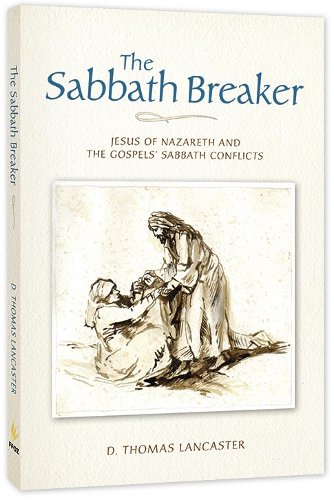
The Sabbath Breaker: A Book Review

Teaching of the TzadikimOnce it happened that the Master and his disciples walked in the holy city of Jerusalem on the Sabbath day when they encountered a man blind from birth. Our Master spat on the ground, made clay of the spittle, and applied the clay to the man’s eyes. Then he told the man, “Go, wash in the pool of Siloam.” The man went and immersed, and miraculously, he could see.

To heal the man, Jesus spat on the ground and made clay of the spittle. Mixing two substances to form a third is a form of work that Jewish law prohibits on the Sabbath day. Jesus smeared the mud on the man’s eyes. Applying a salve or medicine by means of smearing is also considered a form of work prohibited on the Sabbath day. It is a violation of the Sabbath. He sent the man to immerse himself. At least by conventional definition in traditional, Jewish interpretation, immersions are not done on the Sabbath. This single healing incident from the Gospels potentially involves three Sabbath violations.

The Pharisees claimed, “This man is not from God, for he does not keep the Sabbath” (John 9:16). Vocal critics of the Master insisted, “He is a Sabbath breaker.”

Do we appreciate the gravity of this allegation?

-D. Thomas Lancaster
from “Introduction: This Man Breaks the Sabbath” (pg 7)
The Sabbath Breaker: Jesus of Nazareth and The Gospels’ Sabbath Conflicts

This is Lancaster’s latest book published by First Fruits of Zion (FFOZ) and, like a number of Lancaster’s books, leverages material previously published in volumes of the Torah Club and issues of Messiah Journal. A great deal of valuable information on topics of intense interest to Christians both in the church and within the Messianic community, is “buried” within much larger documents. In order to make this information more readily accessible, FFOZ is taking material on specific subjects from these “tomes” and refactoring it into several smaller, self-contained books. Lancaster’s The Sabbath Breaker is one such book.

The focus of Lancaster’s book is rather narrow, so don’t imagine it will answer questions such as “Was Sabbath changed from Saturday to Sunday,” “Should Gentile Christians keep the ‘Jewish’ Sabbath and if so, how,” or “Should Messianic Jews keep the Sabbath in the same way as non-Messianic Jews.” The book’s entire focus is to address whether or not Jesus broke the Sabbath and if he didn’t, then how can we explain why he was criticized by the Jewish religious authorities for healing on Shabbat, gleaning with his disciples on Shabbat, and telling other people who were not his disciples to carry and to immerse on Shabbat?

Christianity tends to believe that Jesus did break the Shabbat in order to show us that he had cancelled all of the Shabbat restrictions and Shabbat itself, as part of his “nailing the Law to the cross,” setting us free from the Law and putting us under the Law of Grace.

As you might imagine, Lancaster dismisses the traditional Christian interpretation out of hand and frankly, so do I. But then how can this be explained? Was Jesus “cancelling” the halachah of the Pharisees? Was it indeed permissible Biblically to glean on Shabbat, to heal on Shabbat, to carry on Shabbat, and to immerse on Shabbat? Were the Pharisees adding unreasonable man-made burdens and was Jesus correcting them and rebuking the Pharisees? Or was it more a matter that the Pharisees thought they were upholding the Biblical way to keep Shabbat (and after all, they wanted to kill Jesus for healing on Shabbat, so they were obviously sincere), and Jesus was just interpreting the Bible better?

How about none of the above:

For many Bible readers, this distinction may be too obscure, but if missed, the reader also misses the message of all the Sabbath stories in the Gospels. The essential message is not that Jesus has cancelled the Sabbath or that the rabbinic interpretation of Sabbath is illegitimate. The Sabbath-conflict stories instead communicate that acts of compassion and mercy performed to alleviate human suffering take precedence over the ritual taboo. The miraculous power by which Jesus performs the healings only serves to add God’s endorsement to Jesus’ halachic, legal rationale.

Did Jesus’ disciples break the Sabbath in the grain fields? Yes. But they were justified in doing so because their need took precedence over the Temple service, and the Temple service took precedence over the Sabbath. Therefore Jesus declared them guiltless and told the Pharisees, “If you had known what this means, ‘I desire mercy, and not sacrifice,’ you would not have condemned the guiltless” (Matthew 12:7).

Did the Master break the Sabbath when he healed on the Sabbath day? Yes. Would fixing a car break the Sabbath? Of course it would, and by the same standard so does fixing a human body. Nevertheless, the Master justified doing so because compassion for his fellow man took precedence over the Sabbath.

-Lancaster, pg 61
“Chapter Seven: At Dinner with the Sages”

blind2That’s a more or less “in a nutshell” explanation of how Jesus did break the Sabbath, but at the same time, each event of Sabbath breaking was justified because of a higher halachic standard.

That’s not the full description of course, and you’ll have to read Lancaster’s book to get all the answers. Not including the footnotes, the book is about 135 pages long, so you should be able to get through it pretty quickly.

The book is divided into three sections:

  1. Sabbath Conflicts in the Synoptic Gospels
  2. Sabbath Conflicts in the Gospel of John
  3. The Thirty-Nine Prohibited Forms of Work

The first two sections focus on different explanations (or the lack thereof in the case of John’s Gospel) for Jesus’s apparent “Sabbath breaking” activities. The quote from Lancaster above is a nice summary of the first section. The second one presents some problems, which Lancaster readily admits, such as Jesus telling the man he healed in John 5 to “take up your bed and walk.” (John 5:8). While the content of the book up to this point (pg 65) confirms that Jesus did break the Sabbath by healing but that chesed (lovingkindness or compassion) takes precedence over Shabbat (it’s more involved than that, but you’ll have to read the book to get all the details), carrying is considered a form of Melachah, or a type of work that involves creation and mastery over our environment (a concept that has to be understood to grasp Lancaster’s major points in his book), and this is forbidden on Shabbat, at least in modern times in Orthodox Judaism.

That brings up the issue of whether or not the Thirty-Nine Prohibited Forms of Work can reasonably be applied to First-Century normative forms of Judaism, and that’s a big if. Lancaster addresses this question in his book and seems convinced that an earlier, less formalized version of this halachah was in existence in the day of Jesus’s ministry on earth. The reader will have to decide if this is credible from their own understanding, but capable arguments can be made either way.

Part two which reviews the healings of Jesus in the Gospel of John departs from the legal and even mechanical explanation of his Sabbath breaking activities and the fact that he told a man to do something that also breaks the Sabbath remains a mystery. It is interesting though that after initially criticizing the man for carrying on Shabbat, once they find out that a healing was done on Shabbat also, the Pharisees lose all interest in the man carrying and seek out the healer instead.

Part three is Lancaster’s description, in some detail, of the thirty-nine melachot or types of work that are forbidden on Shabbat. This may be the part of the book most readers will blow past as irrelevant, even if they are Messianic Jews or non-Jews who observe some form of Shabbat, but I think that would be a mistake.

Protestant Christianity does not consider Sabbath a concept worth consideration or if they do, they simply believe that going to church on Sunday fulfills the fourth commandment out of the ten. Grace makes all things permitted on the “Sabbath” so no one has to struggle to confine their behavior, separating the mundane from the sacred on one day of the week.

Christians who are Sabbatarians including those who are involved in the Hebrew Roots or Messianic Jewish movements, for the most part, tend to create their own “halachah” or methods of Shabbat observance, either as individuals or as individual congregations. I would be willing to wager that there are few if any standards for Sabbath observance that encompass large collections of congregations, unless those groups adhere to a set of halachot established by an umbrella group that has adopted Shabbat observance behaviors from another, normative form of Judaism.

sabbath-breaker-lancasterWe all want to believe that Jesus can be our guide to correct Shabbat observance (assuming we value Shabbat observance) and that God has an objective set of standards for how Shabbat is to be kept (and like Lancaster, I’m not going to get into who should keep Shabbat). However the Melachot were derived from Torah (Lancaster’s book provides those specifics as well) so they weren’t just dreamed up out of someone’s imagination. If you believe in an objectively established Sabbath and (again, assuming you believe you are either required to keep the Sabbath or voluntarily choose to do so out of personal conviction or for other reasons) that there are objective standards for keeping Sabbath, then the third part of Lancaster’s book, if you can believe it is reasonably connected back to the first two parts, may actually be your roadmap for how a Jesus-following Sabbath keeper should keep Sabbath.

In The Sabbath Breaker, Lancaster takes a decidedly different approach to looking at Jesus and his “sabbath breaking” behaviors, acknowledging that he did break the Sabbath, not to cancel it, but to uphold it and to illustrate that there are circumstances wherein it is permissible to break the Sabbath for a higher purpose. Jesus himself, according to Lancaster, is not the higher purpose: human beings are. After all, “Sabbath was made for man, not man for the Sabbath” (Mark 2:27).

146 days.

Introduction to Messianic Judaism: Struggling with the Nemesis

Traffic ConesThe fact that experienced readers of the New Testament come away with diametrically opposed interpretations of the same text is today perhaps one of the few universally recognized results of modern historical critical scholarship.

-Joel Willitts
“Chapter 23: The Bride of Messiah and the Israel-ness of the New Heavens and New Earth” (pg 245)
Introduction to Messianic Judaism: Its Ecclesial Context and Biblical Foundations

Brother, you said a mouthful.

I was pretty frustrated when I went to bed last night (as I write this on Tuesday morning). I had a rather busy day on several of my blog posts with various comments, usually related to something I said about the Rudolph/Willitts book. But as I was reading the above referenced chapter in bed, a number of thoughts came to me that weren’t particularly connected to the material I was perusing. I kept going back to what I said a month ago about the problem with religious people. They always think they’re right, they always think their interpretation of the Bible is the only interpretation of the Bible, and they always think that everyone they talk to and disagree with should immediately see the devastating logic of their arguments and then completely roll over to their point of view.

And when you don’t, they get a little cranky.

So when I read the opening sentence in Willitts’ chapter, it was wonderfully confirming.

But there’s still a problem.

Furthermore, softening the logical link between 5:18a and 5:18b lessens the rhetorical force of the statement. What was likely intended to be a ringing affirmation of the Spirit’s ability to release one from being under law (cf. 5:16) comes out sounding, at least practically speaking, more like a piece of encouraging advice to dispense with the need for law observance. Yet this construal is necessary for the viability of the reading proposed by the majority of Galatians commentators, who must assume the mutual compatibility of the leading of the Spirit and existence “under law”; otherwise the point of Paul’s statement would be altogether lost. For this reading to succeed, then, one must downplay both the implicit logic and the rhetorical force of 5:18.

-Todd A. Wilson
“Chapter 22: The Supersession and Superfluity of the Law? Another Look at Galatians” (pg 239)
Introduction to Messianic Judaism

Ah Galatians, my old nemesis. How I have missed thee…not.

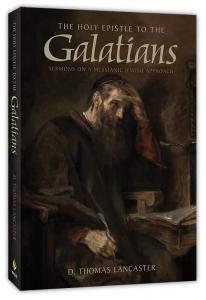
Pastor Randy has been away in Brazil for most of the month of April so naturally, we’ve had to suspend our Wednesday evening meetings until his return. He returned on Tuesday (today, as I write this) but didn’t want to “push it” by trying to return to our regular meetings the day after he got back. He’s got a lot of catch up work to do, so I’ll see him next week, and we’ll pick up where we left off with our discussions on D. Thomas Lancaster’s Galatians book.

I enjoy my conversations with Pastor Randy, but I sometimes anticipate them with some degree of “dread.” As I was trying to puzzle my way through Wilson’s brief analysis of that same epistle with an eye on the Messianic Jewish perspective, I became totally lost. I also became kind of skeptical as a result of being lost. If I can’t understand this and it doesn’t make sense to me, does it make sense at all? Is Wilson trying to push the text too far into a particular viewpoint or interpretive model? Is he pushing Paul into an area where Paul never intended to go? And how can I tell?

One thing Pastor Randy has said to me on numerous occasions is that when studying the Bible, the best place to start is with the literal meaning of the text in its original language and context. In reading Wilson and phrases such as “softening the logical link between 5:18a and 5:18b,” I started wondering what Paul would make of all this and how he would see Wilson’s treatment of his letter.

Galatians by D.T. LancasterOf course, you can’t take Galatians in isolation. You have to look at it within the larger context of Paul’s other writings and the events of the New Testament times in general (not to mention the rest of the Bible). You also have to look at the chronology of these writings, with Galatians being one of Paul’s earlier letters, written even before the events we’ve read in Acts 15.

Justin Hardin’s Chapter 21: Equality in the Church,” was easier to digest, but he took a much smaller portion of Galatians to examine (specifically Galatians 3:28) and was more successful at relating how Paul was not attempting to “support a collapse of ethnicity any more than [he] supports the collapse of the male and female genders.” (pp 224-5). On page 226, Hardin tries to explain that the tutor (pedagogue) function of the Law we find in Galatians 3:23-24 is indeed only one of a number of functions of the Torah for the Jewish people. Only that function went away when Messiah came to show us the perfect model of “Torah living,” but that didn’t eliminate the Jewish requirement to observe Torah for other reasons (national identity, covenant obedience, eschatological linkage to the Messianic age, and so forth).

But how am I supposed to gain an understanding of Galatians that comes anywhere near to Hardin’s or Wilson’s, or even Lancaster’s when I meet Pastor Randy again? I can’t keep these fellows in my pocket and bring them out to present their wares at a critical moment in our dialog, but since Galatians is obviously far more complex than meets the eye, how can I defend a position on this puzzling epistle that I don’t fully understand? (And by the way, like Lancaster, Hardin believes Paul wrote the Galatians letter only to the Gentile population of the churches in that region, not to their Jewish counterparts.)

Like most of the chapters in this book, Willitts’ essay and analysis of “the Bride” imagery (in the aforementioned Chapter 23) in Revelation 19 and 21 is dense with footnotes and scholarly references. In order to present a respectable argument regarding Galatians (or anything else from the Bible), I’d have to be far better read than I am and then somehow have the ability to recall all of that information at a moment’s notice at it is required for a certain topic brought up in my Pastor Randy Galatians discussions.

I need a bigger brain.

With the Scripture as a background, we can now clarify John’s use of the bride imagery in Revelation 19-22. First, since for John the Lamb is divine, it presents little problem for him to correlate Israel’s God with the Lamb — what was attributed to the God of Israel in Isaiah is now associated with the Lamb. Thus, what was once God’s bride is now the bride of Messiah.

The Lamb’s bride is the New Jerusalem, both the people of Israel and the place where God will dwell. Israel, who was unfaithful, now is not. At the end of the age, the Lamb will remarry his bride; he will fulfill his promise. The divine Messiah will redeem his people from captivity and clothe them with righteous deeds because they will be “taught by the Lord” (Isa. 54:13).

-Willitts, pp 252-3

That quote will no doubt shock most Christians and probably more than a few Jewish believers. In the church, I was always taught that “the church” was the bride of Christ, which usually means Gentile Christians. Here, Willitts completely reverses identities, saying that both Israel as a place and as a people/nation are the Divine Messiah’s bride. What I didn’t quote was how Willitts states that the nations (believing Gentile Christians) are the wedding guests! We’re not the bride at all but we are on hand to celebrate at the “wedding reception,” so to speak.

That’s going to ruffle a few feathers.

But…

filtered…but Willitts isn’t presenting the conclusions in his brief article as if they were absolute fact or as if they were the only possible interpretation of the text. He deliberately is framing his interpretation within a Messianic Jewish context in order to show an alternate point of view, a different perspective for his readers, probably to make us think and to help us question our assumptions. I can relate to that, since I often write from that perspective myself.

Now look at this comment made on one of my blog posts in response to my question about whether the commentor thinks Christians sin by not observing the Torah in the same manner as the Jews:

Some Jews may be accepting of Christian Torah observances that make them look Jewish, but in my experience, it can’t be that many. And have you told other Christians you associate with about them being obligated (rather than them having a choice) to Torah observance to a level that will make them look Jewish too?

Yes, I have, I argue for covenant obligation, are you in covenant with God, then you have an obligation

“Zion” is well-meaning and a decent human being, but we often come to loggerheads because he believes that Gentiles in Messiah are directly linked into the covenants rather than receiving them through Israel, and as such, we covenant members are “grafted in” to the full 613 Torah mitzvot and are required to observe them, not in the manner of modern “Rabbinic Jews,” but from a Biblical model (nevermind that we have no idea how to observe the Torah without Rabbinic interpretation).

I disagree and believe we Gentile disciples of the Messiah receive certain blessings from the covenants God made with Israel thanks to the linkage between Abraham’s faith and our faith in Messiah, but that doesn’t include turning us into “Israelites,” nor does it mean we have an identical Torah obligation with the Jewish people.

So we have a difference of opinion. That brings us back to the Willitts quote I inserted at the top of this blog post.

I don’t mind disagreements. I really don’t. I do mind being backed into a corner by folks who believe that it’s their way or the highway. My point of view is one point of view. There are aspects of the Bible I don’t understand. Galatians is a frustrating mystery to me. Even when someone tries to explain it, such as Wilson, the explanation is a frustrating mystery to me. There are days when I want to pack it in and give up on religion. I don’t fit. I don’t understand. I am really annoyed with the dissonance between different Bible interpretations, and I am really, really annoyed with people who think that they and only they (or their group) are the sole possessors of God’s truth about the Bible.

To me, being a believer and studying the Bible is like being an explorer. As a person of faith, I’m on a journey of discovery. Such journeys are rarely straightforward and often involve going in the wrong direction, backtracking, retracing steps, and sometimes using a machete to hack through thick underbrush, like an adventurer-archaeologist on his way to the next big find. But as Dr. Henry Jones Jr. once said, “seventy percent of all archaeology is done in the library.” It requires painstaking, laborious study, not dramatic arguments by people who are all too sure of themselves. Archaeology is also a science of patience. At a dig, you must be slow and deliberate in attempting anything. It might be today, tomorrow, ten years from now, or never, before you uncover anything of even the remotest significance at all.

walking-side-by-sideJesus is like a companion on a long journey who helps to guide us but who will not override our decisions, even if we should take the wrong path. He’ll advise us, prod us, give us hints, and occasionally berate us as we find we’ve stepped into a pool of quicksand, but he won’t just lead us by the hand so we can passively follow where he has gone before us.

I’m nearly done reading the articles in Rudolph’s and Willitts’ book. I’m hoping to get through all of them and finish taking my notes before I have to return the book to the library. But once I have, I’ll move on to another book. While I’ve found Introduction to Messianic Judaism to be an excellent survey of the perspectives on different aspects of theology and doctrine from a Messianic Jewish perspective, it’s still only one book. To the degree that the twenty-six contributors reference countless other sources, then countless other sources are required to help understand the Bible and thus a life of faith.

I can’t stop now, though one day, I may completely withdraw from the public realm and conduct my search privately, but a life of encountering God requires a lifetime. I can’t simply accept one religious person’s statement that they’re “right” and blindly consume their declarations.

I’ve got to keep going. Will I ever arrive at a destination? Probably not this side of paradise.

153 days.

Introduction to Messianic Judaism: Fulfilling the Prophesy of Amos, Part 2

Receiving the Spirit

When this group of Gentiles believed in Jesus, they immediately received the Holy Spirit in so evident a way that Peter could only conclude that God had extended salvation to them as Gentiles, not requiring that they first become Jews. He therefore baptised them, admitting them to the messianic people of God without expecting them to be circumcised or to observe any more of the Torah than they already did (as God-fearers who worshiped the God of Israel and lived by the moral principles of the Torah).
-Richard Bauckham
“Chapter 16: James and the Jerusalem Council Decision” (pg 178)
Introduction to Messianic Judaism: Its Ecclesial Context and Biblical Foundations

This is Part 2 of a two-part blog post. If you haven’t done so already, read Part 1 before proceeding here.

Bauckham seems to be making a few assumptions about what Peter expected, but they are reasonable assumptions, since we have no record that Cornelius (or any other Gentile disciples of the Master) was ever circumcised or ever assumed a greater obligation or duty to Torah as time progressed, at least as an expection of or obligation to God. Bauckham states that “these Gentiles received the same blessing of eschatological salvation that Peter and other Jewish believers in Jesus had received at Pentecost.” The Jewish and Gentile believers were two bodies within a single ekklesia, sharing the hope of the resurrection and the promise of the life in the world to come as co-heirs of Messiah.

But so far, this is confined to Peter’s observation of Cornelius and his household. What about the other Gentiles? What about James and the Council of Apostles (who Peter had to give an accounting to in Acts 11)?

Peter’s testimony before the council (Acts 15:9) indicated that he understood that God made no distinction between Jew and Gentile, specifically in relation to “cleansing their hearts by faith.” Whatever “impurity” that the Jewish believers saw, even in the Gentile God-fearers, was set aside (which was the point of Peter’s vision in Acts 10) as a result of the Spirit being received even by the Gentiles “through the grace of Jesus Christ” (Acts 15:11). The “distinction” that was eliminated between Jewish Israel and the believing Gentiles was the distinction between the “holy” and the “profane” with the Gentiles also receiving access to holiness through faith in Messiah.

It became possible to envisage the messianic people of God as a community of both Jews and Gentiles, the former observing Torah, the latter not. Of course, neither Peter nor any of the Jerusalem leaders entertained the idea that Jewish believers in Jesus should give up observing Torah. But Torah observance no longer constituted a barrier between Jews and Gentiles, since their fellowship was not based on Torah, but on faith in Jesus the Messiah and experience of the transformative power of the Spirit.

-ibid pg 180

Bauckham doesn’t reference Ephesians 2, but his statement seems to evoke “abolishing the law of commandments expressed in ordinances” in this case, by making Torah a “non-issue” between Jewish and Gentile believers, since it is faith in Messiah that binds them, not Torah obedience.

Bauckham’s statement will be difficult to accept for almost anyone in Christianity, both in mainstream Protestantism and the numerous variant worship platforms. However it does line up with content written by FFOZ’s Lancaster and numerous other contributors and cited sources in the Rudolph/Willitts book. In the church, we have gotten so used to the idea that we have permanently altered if not replaced Jews, Judaism, and Jewish Torah observance, that it never occurs to us to ask why Judaism should have had to change in order to accomodate the entry of Gentile disciples. We were (and are) the ones who need to change, since Israel and her King were totally foreign to any one except Israel. Faith in Yeshua HaMashiach is a perfectly expected developmental progression in Israel’s history. The really dramatic event is that the nations, Gentile Christianity, were allowed entry into the Jewish religious branch “the Way.”

apostles_james_acts15In Acts 11:1-8, Peter already convinced the Council that the Gentiles could receive the Spirit as part of God’s plan for the nations, and they praised God for His graciousness to the Gentiles. In Acts 15, Peter reminds the Council of these events, and James, in deliberating the matter, offers Amos 9:11-12 (part of last week’s Haftarah portion) as the proof text supporting what Peter had observed and in support of Paul’s position to admit Gentiles without requiring they be circumcised. In using the words “all the nations over whom my name has been invoked”, according to Bauckham, James is stating that God has declared “ownership” over “all the nations” (Amos 9:12) just as He had declared ownership over Israel as His own people (e.g., Deut 28:10; 2 Chr 7:14; Jer 14:9; Dan 9:19).

It shows that in the messianic age, Gentiles, precisely as Gentiles, will no longer be “profane” but will join the Jews in belonging to God’s holy people…

-ibid, pg 182

Now I suppose you’re going to ask about the four prohibitions James laid upon the Gentiles, otherwise known at the “apostolic decree.”

The reason these four are selected from the commandments of the Torah as alone applicable to Gentile members of the messianic people of God is exegetical. They are specifically designed as obliging “the alien who sojourns in your/their midst” as well as Israelites. Applied to the situation of the messianic people of God, this phrase could be seen as referring to Gentiles included in the community along with Jews. But the point is made more precisely by the use of this same phrase in two of the prophecies about the conversion of the Gentiles in the messianic age: Jeremiah 12:16 (“they shall be built in the midst of my people”) and Zechariah 2:11 (LXX: “they shall dwell in your midst”). In light of these exegetical links, the Torah itself can be seen to make specific provision for these Gentile converts, who are not obligated, like Jews, by the commandments of Torah in general, but obligated by these specific commandments.

-ibid, pg 183

I can certainly see many of the points D. Thomas Lancaster made about Acts 15 in his Torah Club essays (which I recorded in my Return to Jerusalem series) may have had their origin in the research and documentation of Bauckham and other scholars. Boaz Michael, First Fruits of Zion’s (FFOZ’s) Founder and President, also made similar points in his book Tent of David: Healing the Vision of the Messianic Gentile.

We see in Bauckham’s analysis, that he not only answers the Protestant Christian question about whether the Jews should continue to observe the Torah, but also the Hebrew Roots Christian question about Gentile Torah obligation. I know that neither population of Gentile believers, for the most part, will accept this position, even though it’s based on good biblical research and scholarship, but we must begin to challenge our thinking and our traditions which lead both platforms of Gentile faith in Jesus to misunderstand the plan of God for the Jews and Gentiles within the ekklesia.

Although we know that not all Jewish believers in the days of James, Peter, and Paul could accept Gentile inclusion into Jewish religious worship of Messiah, especially by allowing the Gentiles to remain as Gentiles, the alternative was to deny the words of the Prophet and the plan of God, that not only the Jews but the Gentile nations would be called by His Name, and that the nations would also belong to Him.

“In that day I will raise up the fallen booth of David,
And wall up its breaches;
I will also raise up its ruins
And rebuild it as in the days of old;
That they may possess the remnant of Edom
And all the nations who are called by My name,”
Declares the Lord who does this.

Amos 9:11-12 (NASB)

We can hardly fulfill our role in prophesy if we believe we must convert to Judaism as a requirement of Messianic disicpleship or forcably take on the full Jewish obligation to Torah observance (becoming “pseudo-Jewish”) in direct defiance of the ruling of the Council of Apostles. If we believers from the nations, insist that we too are “Israel,” then all believing humanity is “Israel” and thus, the prophesy of Amos is either a lie or it will remain forever unfulfilled.

155 days.

Introduction to Messianic Judaism: Fulfilling the Prophesy of Amos, Part 1

conference2The most momentous decision the early Christian movement had to make was on the status of Gentiles who wished to join it. That Gentiles should join the movement was not in itself problematic, since there was a widespread Jewish expectation, based on biblical prophecies, that in the last days the restoration of God’s own people Israel would be accompanied by the conversion of the other nations to the worship of the God of Israel. Since the early Christians believed that the messianic restoration of Israel was now under way in the form of their own community, it would not have been difficult for them to recognize that the time for the conversion of the nations was also arriving. What was much less clear, however, was whether Gentiles who came to faith in Jesus the Messiah should become Jews, getting circumcised (in the case of men) and adopting the full yoke of Torah, or whether they could remain Gentiles while enjoying the same blessings of eschatological salvation that Jewish believers in Jesus did.

-Richard Bauckham
“Chapter 16: James and the Jerusalem Council Decision” (pg 178)
Introduction to Messianic Judaism: Its Ecclesial Context and Biblical Foundations

This should be a familiar theme to those of you who regularly read my blog. I spent a considerable amount of time and effort reviewing Luke’s Acts, thanks largely to D. Thomas Lancaster’s Torah Club series Chronicles of the Apostles, published by First Fruits of Zion (FFOZ). I was pleased to find that several of the articles in Rudolph’s and Willitts’ book addressed the same issues. But let’s back up a step.

Darrell Bock, in “Chapter 15: The Restoration of Israel in Luke-Acts” sets the stage for the drama of Gentile inclusion into a branch of normative Judaism by deconstructing the traditional Christian view of these books of scripture.

Burge argues for a landless and nationless theology in which the equality of Jew and Gentile in Christ is the key ecclesiological reality. In this view, Jesus as Temple or as forming a new universal Temple community becomes the locus for holy space. Israel is absorbed into the church and hope in the land is spiritualized to refer to a restored earth.

This chapter seeks to redress the balance. When I speak of Israel in this essay it is the Jewish people I have in mind as opposed to new Israel.

-Bock, pg 168

It is true that Luke-Acts is really all about the Gentiles. According to Bock…

Luke-Acts was written between CE 60 and 80 in part to legitimate the inclusion of Gentiles in an originally Jewish movement according to God’s plan. Theopolis (Luke 1:3; Acts 1:1) is a Jesus-believing Gentile who needs assurance. Luke-Acts presents Jesus as God’s exalted and vindicated bearer of kingdom promise, forgiveness, and life for all who believe, Jew and Gentile. The bestowal of God’s Spirit marks the new era’s arrival…This message completes the promises made to Abraham and Israel centuries ago.

-ibid, pp 168-9

The Messiah movement was a wholly owned and operated franchise of Judaism (if you’ll forgive the slight levity here). It’s only natural to imagine that Gentiles hearing that they too could join might have been skeptical about the reality of this promise and the status that they would (or wouldn’t) be granted. Luke means to reassure them that they will be equal sharers in the blessings made to Israel, but make no mistake, there is another side to Luke’s narrative.

Luke argues that the church roots its message in ancient promises, a story in continuity with Israel’s promised hope found in God’s covenantal promises to her. The entire saga involves Israel’s restoration. For all that Gentile inclusion and equality in the new community brings, we never lose sight of the fact that it is Israel’s story and Israel’s hope that brings blessing to the world, just as Genesis 12:3 promised.

-ibid

Nothing Luke, let alone Bock, writes allows Gentile inclusion to delegitimize the Jewish people as God’s people and nation Israel. Messiah is depicted as “the light to the Gentiles and the glory of Israel” (pg 171). We among the nations receive blessings because of Israel, not because we become Israel. Bock also states:

Thus, redemption involves both political and spiritual elements, nationalistic themes (Luke 1:71, 74) and the offer of forgiveness (1:77-78).

-ibid, pg 171

Redemption for Israel is not just spiritual, it’s national and physical. If Israel is obedient to God, Messiah will place Israel at the head of the nations and take up his Throne in Jerusalem. However, there is a problem. Bock does not cast the Gentiles as the primary roadblock to God’s restoration of Israel, but instead declares:

The warning to the nation is that if she rejects God’s message, then blessing may not come to her but may go to the Gentiles. Israel’s story has an obstacle, her own rejecting heart. The question is whether that obstacle is permanent or not.

-ibid, pg 172, citing Luke 4:16-30

the-prophetTraditional Christian supersessionism would say that the obstacle was permanent and the blessings forever left Israel and were transferred to the (Gentile) church. However, since the blessings promised to Abraham only come to the nations by way of Israel, if Israel were permanently eliminated what would happen to us? By definition, any roadblock confronting Israel can only be temporary, just as the Old Testament (Tanakh) record presents how God only turned away from his people Israel “momentarily,” turning immediately back when they humbled their hearts and turned to their God.

Luke 21:24 pictures a turnaround in Israel’s fate. Near the end of the eschatological discourse, Luke describes Jerusalem being trodden down for a time and refers to this period as “the times of the Gentiles.” It refers to a period of Gentile domination, while alluding to a subsequent hope for Israel.

…this view of Israel’s judgment now but vindication later suggests what Paul also contents in Romans 11:25-26: Israel has a future, grafted back in when the fullness of the Gentiles leads her to respond. These chapters certainly have ethnic Israel in view, not any concept of a spiritual Israel. Romans 9-11 develops the temporary period of judgment noted in Luke 13:34-35.

-ibid, pg 173

I should say at this point that Bock extensively cites scripture to support his statements. To restrict the length of this blog post (and I’ve already had to split it into two parts), I am editing out most of his references, so I encourage you to read his chapter in full to get all of the corroborating details.

In covering Acts, Bock deliberately omits Acts 15 and presents several other key areas. Using Acts 1:4-7, Bock establishes the “promise of the Father” which leads the disciples of Jesus to anticipate that the kingdom of Heaven is at hand and that Messiah, prior to (or instead of) the ascension, will restore Israel nationally and spiritually. He does no such thing, but not because the desire is inappropriate. It simply isn’t time yet. However in Acts 3:18-21, Bock shows us that Peter is completely aware that the “times of refreshing” refer to future “refreshment”, which promises the messianic age of salvation as foretold by the Prophets.

But what’s important for we Gentiles to note, is his treatment of Acts 10-11:

In the two passages involving Cornelius in Acts 10-11, the Spirit’s coming shows that Gentiles are equal to Jews in blessing, so that circumcision is not required of Gentiles. The Spirit occupying uncircumcised Gentiles shows they are already cleansed and sacred. The new era’s sign comes to Gentiles as Gentiles. There is no need for them to become Jews. Israel’s story has finally come to bless the nations.

-ibid, pp 175-6

Notice that the nations (Gentiles) did not have to actually become Israel, either by replacing them or joining them as Jews (or pseudo-Jews). We are blessed within one ekklesia made up of Israel (Jews) and the nations (Gentile believers).

As I mentioned before, Bock omits the most critical part of Acts for Gentile inclusion. Bauckham picks that theme up in the following chapter, which you’ll read, along with how we Gentile Christians fulfill the words of the Prophet Amos, in Part 2 of this meditation.

156 days