Tag Archives: D Thomas Lancaster

The Unsimple Truth

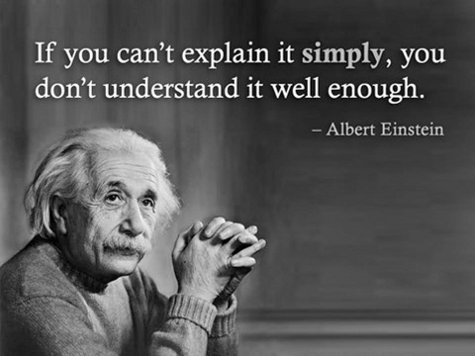
einstein_simplyIf you can’t explain it simply, you don’t understand it well enough.

-attributed to Albert Einstein

According to Rashi, the question is directed against Rav Yirmiyah who had said that the basket in the tree does not actually have to be within ten tefachim of the ground to be valid. We are dealing with a long basket where it could be tilted and emptied even without being brought below into the reshus harabim. In contrast to this, Rav bar Sh’va brings a Baraisa where an eiruv is not valid unless it is actually brought to where it must be situated. Here, we do not take into consideration the fact that the eiruv should be valid due to the potential that it could
theoretically be brought during bein hashemashos to its destination.

Daf Yomi Digest
Distinctive Insight
from “Rabbinic injunctions and Bein HaShemashos
Eruvin 33

I’m a failure. More to the point, I don’t understand God, Jesus, faith, and spirituality well enough. I can’t explain it simply. I’m not sure I can explain it at all. Certainly the fact that I have posted nearly eight-hundred articles in this “morning meditations” blog (not to mention other blogs) about these subjects and have hardly scratched the surface must mean I don’t understand all this well enough. I can’t explain what I believe simply. I certainly can’t explain it briefly.

I quoted from a commentary on an excerpt from Talmud above to illustrate the level of complexity of the halachot related to Orthodox Judaism. Although I read from the Daf Yomi Digest daily, I scarcely comprehend what I’m reading and what I understand most clearly is that the Talmud is an enormously complex set of works. I don’t know how observant Orthodox Jews manage to obey all of the minute details involved in daily living. I can only imagine that Einstein would have contended with the sages based on his above-quoted statement (though it is unsure if Einstein or Richard Feynman actually said those words).

I can hardly be said to live anything close to an Orthodox Jewish lifestyle in my “observance” as a Christian, but as I write and write and write, and then read back what I’ve written, I realize that I am no closer to truly comprehending God and faith than I was when I first accepted Jesus Christ as Lord. Sometimes I wonder if I’ve even gone that far.

For I do not understand my own actions. For I do not do what I want, but I do the very thing I hate. Now if I do what I do not want, I agree with the law, that it is good. So now it is no longer I who do it, but sin that dwells within me. For I know that nothing good dwells in me, that is, in my flesh. For I have the desire to do what is right, but not the ability to carry it out. For I do not do the good I want, but the evil I do not want is what I keep on doing.

Romans 7:15-19

If we’re honest with ourselves as Christians, then I suppose we all have to admit that this statement of Paul’s is also true of us. How can we live a life we call “holy” and yet still struggle with the mundane, the common, and even the evil within us? If God’s Word is written on our hearts, how can we defy that word and pursue what we know isn’t right? I can only imagine that atheists have moral struggles as well, though as I recall myself from before I came to faith, they didn’t seem as dire.

Is a life of faith really that hard or that hard to explain? It certainly seems that hard to live. But then again, is Einstein’s quote the litmus test we should be using against ourselves? After all, he also said this:

If I could explain it to the average person, I wouldn’t have been worth the Nobel Prize.

Einstein made that statement in response to being asked to give a brief quote on why he won the Nobel Prize. That’s the problem with taking quotes out of context. It’s easy to make a person seem completely inconsistent. How much more difficult it is to analyze “chunks” of the Bible and find consistency and comprehension?

My conversations with Pastor Randy (which are on hiatus for the month of April and for several weeks in May) about D.T. Lancaster’s book The Holy Epistle to the Galatians aren’t hugely complex, but they do get detailed…and we’ve barely covered one chapter in Galatians! How about the book of Romans?

mystery-in-midtownI know that Mark Nanos is popular in Messianic circles, but some years ago, when I tried to read his book The Mystery of Romans, I gave up, not getting very far in his book. Maybe I’d be better able to comprehend his writing now, but Paul’s letter to the Roman church is extremely dense with meaning that I wonder if I’ll ever truly understand either Paul or Nanos. I know the Nanos books on Romans and Galatians should be on my “required reading” list, but who knows if they’ll do me any good? I’m tasked to understand a scholar and author in order to understand the mystery of “letter writer.” Are these reasonable goals?

In some ways, trying to comprehend a life of faith is a fool’s errand. While the concept of Christian salvation is supposed to be simple enough for a small child to understand, the fact remains that the Bible contains depths that if plumbed, would make even explorers such as Jacques Cousteau bolt for the surface as if hotly pursued by Leviathan.

Maybe it’s not quite that bad, but I feel that way sometimes.

Of course there’s a difference between understanding a life of faith and living it. Well, maybe not for the Orthodox Jews since behavior and conceptualization are largely interwoven, but certainly for Christianity, where one can live a basic Christian life without having to know much of the Bible at all. You can feed the hungry, visit the sick, remain faithful to your spouse, give to charity, pray to God, and fellowship with other believers without having to spend even a single day in seminary. Of course studying the Bible gives such a life context and meaning, but you don’t really have to know all of the arcane debates about the doctrine of Divine Election, for example.

Don’t get me wrong. I enjoy reading. I enjoy studying. I enjoy discussing all of these little details. But at what point do you turn it all off and just spend time with God? What’s the point of all of our debates on the web? Why do you try to convince me you’re right about something and why do I try to convince you that I’m right about something? What difference does it make? OK, probably a pretty big one, depending on what we’re talking about, but we can’t all be right? Can we all be wrong? That seems far more likely.

If we believe God exists, then He must exist separately from what we believe and from the web of theology and doctrine we’ve spun for ourselves. God must be an “objective” God. If the world’s population stopped believing in God totally and completely, God would continue to exist and His plan for the universe would continue to move forward toward its ultimate conclusion. We spend all our lives examining the Bible trying to uncover the clues to that plan and what it means in our lives, but we only get bits and pieces, and much of the time, we can’t really be sure we understand what we think we’ve got in our hands.

This theologian espouses one particular theory and another theologian opposes him or her. More theories spring up, more debates occur. But God is God. Our theories and debates don’t affect him in the slightest. He exists as He exists regardless of our “religious orientation.”

We’re all seeking truth but even with the help of the Holy Spirit, who is supposed to guide us in all truth (John 16:13), we all come up with different conclusions. You’d think if there were one Spirit and He was guiding us to One truth, we’d all arrive at the same conclusion.

But we don’t.

I’m most of the way through Carlos Castaneda’s book The Teachings of Don Juan: A Yaqui Way of Knowledge. It’s not really what I expected, but I appreciate Castaneda’s honesty in saying that he didn’t quite succeed either in his field study or as a disciple of don Juan. I decided to read this book because I hadn’t read any Castaneda before and felt I owed it to myself to have the experience.

letting-goMaybe I should just let go and move away from religious and spiritual reading altogether and just read for pleasure (not that reading books on religion and spirituality aren’t pleasurable). I used to read a lot of science fiction and mystery back in the day, with a few of the classics thrown in just for giggles. Maybe that would be more satisfying. Nothing I know or don’t know affects God. I’m not sure it even affects me. I can probably explain simply Castaneda’s book, but how could I possibly explain even one letter of Paul’s? Many have tried, including Nanos and Lancaster, but what does it matter if you end up with a body of work about the Bible that is fraught with disagreement?

I guess there’s a reason people pursue truth all their lives but either never find it or find only what some people (but not all) call “truth.” Maybe we never find it at all. Maybe we just delude ourselves and say what we have is “truth” because living a life of existential uncertainty is too difficult to bear.

Maybe that’s why there are so many atheists. There are no mysteries to the universe beyond what they can see. It’s all nuts and bolts with no colors, textures, or moods. There’s only light and darkness. More’s the pity.

One who returns from the darkness must bring of it with him and convert it to light. He must exploit his experience to surge higher and higher with greater strength.

Therefore, the one who returns from a distance is greater than the one who was always close. What matters is not so much where you stand, but with what force you are moving in which direction.

-Rabbi Tzvi Freeman
“Exploiting the Darkness”
Based on letters and talks of the Rebbe
Rabbi M. M. Schneerson
Chabad.org

So which direction should I move in next in pursuing truth or God or whatever?

Lancaster’s Galatians: Sermon Four, Wind and Sail

wind-sky-spirit-ruachAll Scripture is breathed out by God and profitable for teaching, for reproof, for correction, and for training in righteousness…

2 Timothy 3:16 (ESV)

Is given by inspiration of God – All this is expressed in the original by one word – Θεόπνευστος Theopneustos. This word occurs nowhere else in the New Testament. It properly means, God-inspired – from Θεός Theos, “God,” and πνέω pneō, “to breathe, to breathe out.” The idea of “breathing upon, or breathing into the soul,” is that which the word naturally conveys. Thus, God breathed into the nostrils of Adam the breath of life Genesis 2:7, and thus the Saviour breathed on his disciples, and said, “receive ye the Holy Ghost;” John 20:22. The idea seems to have been, that the life was in the breath, and that an intelligent spirit was communicated with the breath. The expression was used among the Greeks, and a similar one was employed by the Romans. Plutarch ed. R. 9:p. 583. 9. τοὺς ὀνείρους τοὺς θεοπνεύστους tous oneirous tous theopneustous. Phocylid. 121. τῆς δὲ θεοπνεύστου σοφίης λόγος ἐστὶν ἄριστος tēs de theopnoustou sophiēs logos estin aristos.

Barnes’ Notes on the Bible for
2 Timothy 3:16

You may be wondering how this connects to my ongoing discussion with Pastor Randy about D. Thomas Lancaster’s book The Holy Epistle to the Galatians. The answer is, “not much.” Frankly, we started our discussion last night with trying to clarify his thoughts on Divine Election (Pastor has a paper he wants to loan me that describes all of the various positions), but then moved to how we can understand the Bible (Pastor has some reservations relative to how Lancaster derives certain conclusions in his book from the Galatians text). We addressed Sermon Four of the book eventually, but it didn’t occupy the significant portion of our time together, nor was it the most compelling topic upon which we touched.

Going back to “God-breathed,” Pastor said that the Greek word used has the implication of wind filling a sail and pushing the boat along (Correction, according to Pastor Randy’s comment below, “the phrase about ‘the wind filling a sail’ has to do with the II Peter 1:21 passage and the meaning of men being ‘carried along by the Holy Spirit’.” See the following quote). He told me he believes that as God gave His inspiration to the human writers of the Bible, the authors did not say anything, at least as originally given in their manuscripts, that contradicted what God intended.

And we have the prophetic word more fully confirmed, to which you will do well to pay attention as to a lamp shining in a dark place, until the day dawns and the morning star rises in your hearts, knowing this first of all, that no prophecy of Scripture comes from someone’s own interpretation. For no prophecy was ever produced by the will of man, but men spoke from God as they were carried along by the Holy Spirit.

2 Peter 1:19-21 (ESV)

People, that is, prophets and those people who have written the Word of God we have in our Bible, did not hear something from God and then interpret what it meant through their own intellect and emotions. God used their personalities, their vocabulary, their style of writing, their perceptions to craft His message, but the message was and is His message, not the prophets’, and the message “carried them along” as it was first given and recorded in the original documents, and the message was and is exactly what God meant to say and meant to carry us along as well.

But then we have a problem.

We don’t have the original documents…any of them.

Also, Bible reading and translation is an enormously complex task.

According to Pastor Randy, and I agree with him, we have to start with what the text literally says. We also have to apply the immediate context of the scripture, not taking it out and making it stand on its own. Beyond that, we have to consider the history, the culture, and the circumstances in which the scripture was written. On top of that, we have to connect the scripture to the larger context of the entire Bible, including other times when similar circumstances were mentioned and similar or identical wording was used. If, for instance, in describing the two greatest commandments (see Matthew 22:37-40), Jesus references Deuteronomy 6:5 and Leviticus 19:18, in understanding the Matthew 22 passage, we must also take into consideration the context, history, culture, and circumstances in which Deuteronomy 6 and Leviticus 19 take place, including the author and his personality, vocabulary, style of writing, and personal experiences. We cannot separate what Jesus was trying to say from what Moses was trying to say, however Jesus and all that was in play when he was talking may modify the original meaning, giving it a somewhat different shape, color, and texture.

paul-editedOh, and let’s not forget the intended audience. Moses may not have been aware that what he was writing was ultimately intended for the entire world, but we realize that God has a greater scope. Jesus may well have understood that his words would eventually be consumed by all of humanity across time, but his immediate audience, like Moses’ was the Jewish people or more specifically in Jesus’ case, the Pharisee he was addressing at that particular moment.

We must take all that into consideration when reading the Bible and seriously attempting to understand its message.

And we must constantly remind ourselves that it is all God-breathed.

Pastor Randy and I spent most of our time together exploring how to understand the Bible, with the promises and pitfalls built into such an effort. We discussed how we don’t necessarily have to “reinvent the wheel,” since many people have read and observed the literal meaning of the text from a variety of perspectives, and it would be irresponsible of us to disregard their work and rely only on our own. Pastor described how he approaches understanding texts looking at those who came before him. He reads a variety of expert analyses and takes into consideration what the scholars they did and didn’t take into consideration.

For instance, a particular writer may have a good grasp of the original language but not sufficiently address the history involved, or another writer may have a good handle on the historical context, but not the cultural context. Pastor said he looks at the various scholarly opinions in that manner and ultimately settles on which one he…wait for it…

…which one he likes best.

What?

Pastor Randy is a literalist, an educator, a scholar, a linguist, and is very serious about pursuing as accurate an understanding of the Bible as he can achieve, but after much discussion we agreed that even under the best of circumstances and intentions, there will always be this little, fuzzy, grey, area in the middle of our understanding where we fill in the blanks with our own personalities.

Geordi La Forge (played by Levar Burton): I don’t know, Data, my gut tells me we ought to be listening to what this guy’s trying to tell us.
Data (played by Brent Spiner): Your gut?
Geordi: It’s just a… a feeling, you know, an instinct. Intuition.
Data: But those qualities would interfere with rational judgment, would they not?
Geordi: You’re right, sometimes they do.
Data: Then… why not rely strictly on the facts?
Geordi: Because you just can’t rely on the plain and simple facts. Sometimes they lie.

-from the Star Trek: the Next Generation Episode
The Defector (original air date 30 Dec. 1989)

In the scene from which I just quoted, Data concludes that in any meaningful analysis, the observer must fill in whatever blanks there are in the facts and other available information with their personality. In Data’s case, he was in a bind because effectively, he had no personality. All he had were the facts. By the way, it turns out Geordi’s “gut” was wrong. The defector in question had been fed disinformation by his superiors to mislead the Enterprise and ultimately to provoke a war. Fortunately, Picard’s “gut” proved to be more accurate and the ruse was exposed.

All this doesn’t mean that we can never understand the Bible or that we should always equivocate on its meaning, but we should be a little less than one-hundred percent certain that we always know what everything in the Bible means all of the time.

It also means that when we realize we’ve made a mistake based on subsequent study and analysis, we should admit it.

Pastor Randy says that’s one thing he admires about Boaz Michael, President and Founder of First Fruits of Zion (FFOZ). When Boaz and the organization came to the conclusion, several years ago, that they had made a significant error in understanding what the Bible said in relation to Jewish and Gentile covenant responsibilities to God, after much prayer and soul-searching, he announced that FFOZ was making a major shift in its theological and doctrinal position. Boaz knew it would cost FFOZ much of its income and might even result in the organization collapsing completely. Thank Hashem that the latter did not occur, but many sacrifices had to be made. Sadly, to this day, Boaz and his group continue to be severely criticized and harangued by their detractors as a consequence.

That’s the price of integrity and following God where He calls you to go. That’s also part of the ongoing struggle of understanding God through His Word and maturing as people of Spirit and of faith.

ancient-sail-boatI tried to get Pastor Randy to say that you can have a room full of people with equal intelligence, equal qualifications, all people of good character, and they could still disagree with each other on what parts of the Bible mean, but he wouldn’t go for it. He said that we’re all human and we’re all capable, not just of making mistakes, but of following our own human desires. We all can and do sin.

Does that mean there is only one right person (or close-knit group of people) who understands the Bible correctly and it is because he or she is the best person morally and ethically that their understanding is right? Does that mean all of this person’s critics are liars and haters who purposely want to bring the “right” person down in order to elevate their own agendas?

I don’t think it’s that simple. I think that you can gather a group of people together who are of good will and intent who will disagree. Sure, some of the people in that room will be liars and haters, but they should be easily spotted by their lack of integrity and good character (their fruits) in how they treat others and how they walk with God. Even the best of us can allow our personal, pet theories and biases affect our judgment. We all want to be right and to be admired and respected.

But at the end of the day, the best of us (and I’m hardly saying I’m among the best) will put all that aside, suck it up, and make the hard call, even if it costs them, because that’s just what God’s true servants do. Once we realize that the evidence is solid about some piece of scripture, even if it’s not what we want it to mean, we’ll go forward and accept it and embrace it, because that’s part of who we are if we are disciples of our Master. We’ll also continue to study, to learn, and to mature, because God continually breathes in us.

For a ninety minute conversation, last night’s talk with Pastor Randy inspired a lot in me that I could write about…and maybe I will, but I won’t try to cram it all into a single “meditation” today.

But I do want to be a sail. And I do want to be available to the wind. And I do want to let my sail conform to the wind, to the shape it causes me to manifest, to the direction it drives me, toward the destination to which it guides me.

I don’t know yet what distant and alien shore God has planned for my future, but I can feel His hand on me. Do I have the integrity and courage to let Him take me where He wants me to go? I hope so. I pray to possess those qualities that I may serve Him…even in something as “simple” as reading the Bible.

Pastor will be out of the country for the rest of April so naturally, we won’t be meeting each Wednesday evening for the next several weeks. We’ll revisit Lancaster’s Galatians next month and reformulate our study plan for the book…I promise.

In the meantime, I’ll try to continue writing in the spirit of what my Pastor, and ultimately God, provokes in my mind and heart, and move forward with integrity and purpose. Unfurling my sail and setting my course for uncharted seas as the wind sends me forth.

Lancaster’s Galatians: Sermon Three, Paul’s Gospel, and the Unfair Election

voting-ballot-electionFor I would have you know, brothers, that the gospel that was preached by me is not man’s gospel. For I did not receive it from any man, nor was I taught it, but I received it through a revelation of Jesus Christ.

Galatians 1:11-12

What did Paul mean by “man’s gospel”? He did not mean a false gospel, or a corrupt gospel, or something fleshly and worldly. He meant to differentiate the way that he became a believer from the way that people ordinarily became believers in that day, and he wanted to differentiate between his gospel message and the one the other believers ordinarily proclaimed in his day.

-D. Thomas Lancaster
“Sermon Three: Paul’s Gospel (Galatians 1:11-24)” pg 33
The Holy Epistle to the Galatians

I’m depressed. I’m hitting walls I didn’t know were there, probably because I don’t have much of a formal education in theology or Bible studies.

But let’s go back to the beginning.

Last night was my scheduled Wednesday night conversation with Pastor Randy. I arrived at his office as he was finishing his dinner salad for our discussion on Chapter Three of Lancaster’s book. We ended up talking about topics that didn’t directly relate but were nonetheless interesting (Revelation and the rapture, and the age of the universe, but those are topics for a different time).

As I said in my previous blog post, we’ve been searching for some common ground on the definition of “Torah,” and that does figure heavily into last night’s conversation and this missive.

We focused on Paul’s “my gospel.” Pastor Randy and I agreed that Paul literally wasn’t preaching a separate gospel from the one taught by the other apostles or the one that we have with us today. The differentiation, as we both understood it, was how Paul received the gospel vs. just about everybody else. Paul didn’t take lessons from James and Peter, he received his information, at least initially, directly from Jesus through supernatural means.

“As I was on my way and drew near to Damascus, about noon a great light from heaven suddenly shone around me. And I fell to the ground and heard a voice saying to me, ‘Saul, Saul, why are you persecuting me?’ And I answered, ‘Who are you, Lord?’ And he said to me, ‘I am Jesus of Nazareth, whom you are persecuting.’ Now those who were with me saw the light but did not understand the voice of the one who was speaking to me. And I said, ‘What shall I do, Lord?’ And the Lord said to me, ‘Rise, and go into Damascus, and there you will be told all that is appointed for you to do.’ And since I could not see because of the brightness of that light, I was led by the hand by those who were with me, and came into Damascus.

“When I had returned to Jerusalem and was praying in the temple, I fell into a trance and saw him saying to me, ‘Make haste and get out of Jerusalem quickly, because they will not accept your testimony about me.’ And I said, ‘Lord, they themselves know that in one synagogue after another I imprisoned and beat those who believed in you. And when the blood of Stephen your witness was being shed, I myself was standing by and approving and watching over the garments of those who killed him.’ And he said to me, ‘Go, for I will send you far away to the Gentiles.’”

Acts 22:6-11, 17-21

According to Lancaster (pg 36), the difference between man’s gospel and Paul’s gospel is that Paul’s gospel teaches:

  • Gentiles can inherit eternal life.
  • Gentiles can become part of the Kingdom of Heaven.
  • Gentiles can experience resurrection from the dead.
  • Gentiles have standing among the people of God (i.e., Israel) without becoming Jewish.

It certainly seems to me that Paul “pioneered” the idea that Gentiles could become full covenant members of “the Way” without having to convert to Judaism, but did Paul write his letter before or after Peter’s encounter with Cornelius in Acts 10? Assuming it was after, did Paul know about that encounter? And how do we know that Jesus gave Paul specific instructions relative to the Gentiles that no one else had, particularly by the time he was writing his Galatians letter?

I’m not saying it’s impossible, but Paul still had to come under the authority of the Jerusalem Council, so he couldn’t “shoot from the hip” as far as his ministry to the Gentiles was concerned. The whole point of Acts 15 was putting the status of Gentiles in the Way to the test to determine if they had to convert to Judaism or not. Even if Paul’s authority came directly from Messiah, he still had to respond to James and the Council of Apostles as the Master’s primary representatives in our world.

album-unsavedBut that’s not what worries me.

Pastor and I got around to talking about what Jesus did for the Jewish believers (what he did for the rest of us should be obvious…but apparently it isn’t). I said that he fulfilled the Messianic promises and gave hope for redemption, not only for individual Jews but for the redemption of national Israel. So what did the Jews do for salvation before Jesus? Did the sacrifices in the Temple and earlier, in the Tabernacle save?

No, of course not. Faith is what saves. That goes all the way back to Abraham. It wasn’t the sacrifices as such, but due to their faith, the Jews were saved and they fulfilled the requirement of the sacrifices out of obedience. It’s always been about faith in God, otherwise millions upon millions of Jews who had lived before the birth of Christ would have been set up for failure.

Pastor Randy agreed.

But…

And when the Gentiles heard this, they began rejoicing and glorifying the word of the Lord, and as many as were appointed to eternal life believed.

Acts 13:48

I added the emphasis above to make a point.

I’ve probably heard of the Christian Doctrine of Election before, but never in any real detail. According to Paul (Ephesians 2:8), “for by grace you have been saved through faith. And this is not your own doing; it is the gift of God.” OK, I get that. There’s nothing I can do to earn salvation. No matter how many good deeds I commit, that doesn’t add any “bonus points” to my “salvation score.” Only by the grace of God am I saved.

But what’s my part in the deal? It’s not like I just sit around watching television and God comes over and randomly “zaps” me with salvation. Don’t I do something? Well, Paul did say, “saved through faith.” That is, I have to choose to have faith in God through Christ in order to be saved.

But Pastor Randy asked if even the act of choosing to have faith a “work.” That seemed kind of a stretch to me. In order to be a part of anything, it really helps if you contribute something, even just a tiny bit, so as to have a sense of “ownership” in the process, including salvation.

Long discussion short, Pastor Randy says that God preselects individuals to have faith. Thanks to Adam and Eve, we are all born into a state of sin as our basic nature. We can’t help it. We have no say in the matter. But here’s the kicker. Supposedly, we also have no say in the matter in regard to being saved. By nature, we all would reject Christ if given a choice, because of that nature. Only God implants faith in a human being and only those human beings who God has “programmed” to be capable of faith will ever be saved.

The rest of humanity, not so much. Fires of hell for them, no matter how many times they hear the words of the gospel.

One of my favorite sections of the Bible is the sequence that describes Jacob wrestling with the Angel. From a Jewish point of view, this gives human beings a broad license to “wrestle” with God on ethical and moral issues. We can actually debate God if we think He’s advocating for a position that is unfair or unjust. After all, Abraham did it in the matter of Sodom and Gomorrah. God doesn’t seem to mind.

But am I wrestling with God or with a specific Christian doctrine? I’m definitely wrestling with Pastor Randy. It was one of those times when I was acutely aware that his education in religious matters far, far outstripped my own, and I was absolutely fighting under my weight. It was like I was Justin Bieber trying to go a couple of rounds in the boxing ring with Mike Tyson.

I was going to get slaughtered.

Saying, “Hey, that’s unfair” or “That’s not right” doesn’t cut it if I can’t support my position from the Bible. God doesn’t have to be fair. He told Job that after all the arguing had stopped. He who makes the universe makes the rules. Fairness doesn’t come into play.

But in the aforementioned debate between Abraham and God, Abraham invoked God’s attribute of justice. If God is just, can He perform an unjust act?

Abraham,God_and_two_angelsIf God is just, is it right for him to automatically condemn some and probably most of the entire human race across all of history to eternal damnation and horrible, flaming agony, while preserving only a remnant…and absolutely none of those human beings have a choice in the matter?

Think about it. It’s all Adam’s and Eve’s fault. They are the only ones who ever had a choice. According to “Divine Election,” if you’re saved, it wasn’t your choice, you just got lucky. If you’re not saved, same deal. You just have really crummy luck.

This is why atheists say Christians are crazy and even cruel. I mean, it’s one thing if Jesus offers me the free gift of eternal salvation and I throw it back in his face. Then I can see how I’d deserve condemnation. But to never even have a shot at it?

Pastor Randy, at one point, shared how incredibly grateful he is to God for choosing him for salvation. That’s good for him and maybe good for me, but what about the poor, dumb, characters out there who are among the unchosen and don’t even realize what they’re facing…and if they did, there is absolutely nothing they can do about it. No amount of repenting of sins, turning to God, professing faith in Christ will save them.

Of course, according to Pastor Randy, they wouldn’t desire to do any of that anyway, but no one is born with that desire if we are all born in original sin. What’s the difference between Pastor Randy, who came to faith early in life, and me who came to faith after the age of forty? Was my program from God somehow slightly defective that it waited so long to start to run? I’d heard about Jesus for decades before I came to faith. How come my program didn’t kick in before it did?

However, there are other perspectives. According to Richard Land in his article at ChristianPost.com:

First, we must understand that the Bible reveals two different kinds of election, and much confusion has resulted from failing to see this distinction. Abrahamic Election is substantially different from Salvation Election. Abrahamic Election (Gen. 12:1-3) explains how God chose the Jews to be His chosen people. Salvation Election pertains to God’s elective purpose in how He brings about the eternal salvation of individual human beings, both Jew and Gentile, in both the Old and New Testaments.

Abrahamic Election is corporate, is to special people status, and is not related to anything. Salvation Election is individual and is to eternal salvation. In God’s providence, He has chosen to reveal His dealings with His people more fully in the New Testament. In doing so, a third difference between Abrahamic (corporate) and Salvation (individual) Election is underscored. God revealed in the New Testament that Salvation Election is somehow intertwined with, and connected to foreknowledge in a significant way (Rom. 8:29-30; 11:2; I Pet. 1:2).

“There is no question here of predestination to Heaven or reprobation to hell; …. we are not told here, nor anywhere else, that before children are born it is God’s purpose to send one to heaven and one to hell….The passage has entirely to do with privilege here on earth.” (Ironside, Lectures on the Epistle to the Romans, p. 116)

What if the Bible is telling us in the concept of “foreknowledge” that God does not just know all things that have, or ever will happen, as if they were the present moment to Him, but that He has, and always has had, the “experience” of all things, events, and people as a punctiliar present moment?

That makes a bit more sense and satisfies my personal value of justice. We all have free choice and can choose to accept or reject Jesus. God just knows what choice we’ll make because, while history and our lives seem like a movie that he have to live through frame-by-frame, God sees everything all at once, as if it were a snapshot.

I doubt that’ll satisfy Pastor Randy, and he admits agonizing over this issue before coming to a final decision, but if I have to err, I’d prefer to err on the side of mercy and compassion.

Because if Pastor Randy is right, how does anyone know if he’s really saved?

“Not everyone who says to me, ‘Lord, Lord,’ will enter the kingdom of heaven, but the one who does the will of my Father who is in heaven. On that day many will say to me, ‘Lord, Lord, did we not prophesy in your name, and cast out demons in your name, and do many mighty works in your name?’ And then will I declare to them, ‘I never knew you; depart from me, you workers of lawlessness.’

Matthew 7:21-23

condemnedObviously, not everyone who thinks they’re saved is really saved. Mistakes will be made and errors encountered. What if someone who isn’t supposed to be saved becomes convinced and believes they have faith in Jesus. Maybe they really don’t, but they think they do. It’s not like they’ve made an internal error in thinking, they just aren’t “programmed” to be saved. It’s impossible, from a Divine Election point of view, for that person to be saved.

So on the last day, they find out, “Oops, I’m condemned” and appeal to Jesus and he blows them off, just like that.

Not that it was the person’s fault because they had no choice in the matter!

You can see why I’m depressed and a little disgusted. I think I can remain a Christian and still not have to marry the “Divine Election” theory because if that were the only option, my faith would hang in the balance.

In my last blog, I said:

No human being is a perfectly neutral, objective observer. We all tend to read the Bible, even in its original languages, in terms of what we already “know” about it; that is, what we already believe is says. We translate the ancient Greek and Hebrew text in a manner usually consistent with those beliefs and that means we generally never surprise ourselves with the outcome.

The Bible is the Bible, but doctrine is man-made. The fact that there’s more than one way to interpret how people get saved means there’s more than one way to view the Bible, and thus, God. Right now, I’m a little too upset to go into cold, dispassionate research on this matter, weighing the pros and cons. Right now, if God really is programming us like little widgets, deliberately condemning people to eternal damnation for no better reason than they were just born as human beings in a fallen world, then I am up for a good old fashion wrestling match with God.

I’ll probably lose…but so have billions of other human beings out there. They never had a chance.


Lancaster’s Galatians: Sermon Two, Influencers, Circumcision, and What is Torah?

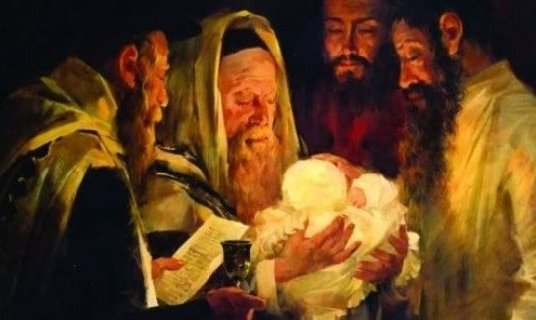
circumcision-mohelNo word in the Jewish religion is so indefinable and yet so indispensable as the word Torah. Torah is the most comprehensive term for the substance of Judaism. Torah is Teaching. Torah is Law. No one can hope to achieve even a minimal appreciation of the Jewish religion without learning, and then reflecting on, the idea of Torah and its place in the life of the Jew. Torah has been for ages the sum and substance of Jewish scholarship. But it would be utterly wrong to conclude from this emphasis on study that Jewish spirituality runs dry in the sands of intellectualism.

-Rabbi Maurice Lamm
“What is Torah”
Aish.com

After greeting them, he related one by one the things that God had done among the Gentiles through his ministry. And when they heard it, they glorified God. And they said to him, “You see, brother, how many thousands there are among the Jews of those who have believed. They are all zealous for the law, and they have been told about you that you teach all the Jews who are among the Gentiles to forsake Moses, telling them not to circumcise their children or walk according to our customs.

Acts 21:19-21 (ESV)

Last night’s conversation with Pastor Randy about the second chapter (sermon) in D. Thomas Lancaster’s book The Holy Epistle to the Galatians wasn’t quite as intense as the previous week’s talk (though it had its moments early on). A lot of the focus was on who Paul’s intended audience was supposed to be, what Paul was trying to say, and why he was saying it.

I think Pastor Randy wanted to pull in all of the material from the letter whilst I wanted to try to contain our investigation to the current chapter of Lancaster’s book, which only covers Galatians 1:6-10. Yes, that’s pretty hard to do, but as I’ve mentioned before, I wasn’t satisfied with my original reading of Lancaster’s book, and I wanted to take this opportunity to go through it again with the proverbial fine-toothed comb, sifting its pages, and uncovering its message, along with Paul’s message to the Galatian churches.

Pastor Randy remains convinced that Paul was writing to the Gentile and Jewish populations in the churches in Galatia, and it’s hard to refute that. Pastor did back away from his comments of the previous week regarding Paul’s addressing of “Brothers” as being only to Jews, but he maintains the term can be applied to both Jews and Gentiles in the community of believers.

And then I brought up how silly it would be for Paul to tell Jews not to become circumcised and convert to Judaism.

And then he brought up how some/many of the Jews in the diaspora may not have been circumcised and may not have been all that Torah observant.

What?

It would seem, summoning Occam’s razor to my rescue, that the most reasonable understanding of the Jewish population of the diaspora was that they were observant to Torah relative to the normative halachah of their day, and that the Jewish males would routinely have been circumcised on the eighth day, even as Jesus was circumcised on the eighth day.

I’ll get back to that in a moment, but before I forget, we also discussed the identity of the influencers:

I am astonished that you are so quickly deserting him who called you in the grace of Christ and are turning to a different gospel—not that there is another one, but there are some who trouble you and want to distort the gospel of Christ. But even if we or an angel from heaven should preach to you a gospel contrary to the one we preached to you, let him be accursed.

Galatians 1:6-8 (ESV)

Who were these “troublers and distorters?” Christian expository preaching for centuries has referred to them as “Judaizers.” We will take a look at that terminology as we wrestle with this question in the ensuing material, but for now, we will adopt a term currently popular in Pauline studies and simply refer to them as the “influencers.” They are within the Galatian communities who are influencing the God-fearing Gentiles to undergo conversion.

One quick observation about the “influencers:” They are most likely believers in Yeshua of Nazareth. This possibility is lost on many interpreters. They might be Jewish believers or believing proselytes to Judaism, but they are almost certainly believers.

How do we know? We will consider the evidence as we work through the epistle, but from the outset, Paul says that they “want to distort the gospel of Messiah.” A non-believer does not want to distort the gospel; he wants to refute it and repudiate it. Only believers distort the gospel. Paul says that they preach “a gospel contrary to the one we preached to you,” but they [are] preaching a gospel, they [are] teachers of good news. For that reason we may deduce that they are believers in Yeshua of Nazareth.

-Lancaster, “Galatians” Sermon Two

When I arrived for my appointment with Pastor Randy, he was working on his computer with translations of Galatians 1:6-8 from the ESV, the KJV, and the Greek text in preparation for our meeting. Here’s the relevant portions of vv. 6-7 from the King James Version with emphasis added:

I marvel that ye are so soon removed from him that called you into the grace of Christ unto another gospel: Which is not another; but there be some that trouble you, and would pervert the gospel of Christ.

paul-editedI can’t reproduce the Greek but the question Pastor was asking is if the “gospel” being preached by the Influencers was indeed the gospel of Christ, or another preaching altogether. While we can agree that there is no other “gospel” of Christ, there can be other types or fashions of “good news,” and Pastor’s opinion is that the Influencers didn’t have to be believing Jews based on the text or context, and indeed, they might not be believers at all.

There’s a certain merit in this, since during Paul’s time with the Jewish communities in the area of Galatia, he encountered many Jewish people and God-fearing Gentiles who listened to the message of the Gospel, but not all of them came to faith.

One of the big, big problems that all Jewish people had with “the Way,” including many of the Jews within the Way, was how to admit Gentiles as equal covenant members without requiring that they become circumcised and convert to Judaism. Acts 15 answers that question, but Galatians was almost certainly written before the Acts 15 event. The decision that Gentiles were not required to convert seems to have been clear to Paul as he was writing the letter to Galatia, but James and the Council had not yet rendered a halakhic ruling based on legal proof-texts. The “Jerusalem Letter” made the decision official, but at this point, Paul is going by his understanding of the Messiah’s plan for the Gentiles through the guidance of the Holy Spirit.

Getting back to circumcision, Pastor maintains that Paul very well could have been telling both Gentiles and Jews that they did not have to become circumcised and observe the Law in order to be disciples of Jesus Christ, the Messiah.

OK, I accept that was Paul’s message to the Gentiles, but to the Jews? Would Paul ever say such a thing?

…and they have been told about you that you teach all the Jews who are among the Gentiles to forsake Moses, telling them not to circumcise their children or walk according to our customs.

Acts 21:21 (ESV)

That’s what finally got back to the Jews in Jerusalem about Paul, and they were taking it very seriously. What was Paul going to do to quell these rumors?

What then is to be done? They will certainly hear that you have come. Do therefore what we tell you. We have four men who are under a vow; take these men and purify yourself along with them and pay their expenses, so that they may shave their heads. Thus all will know that there is nothing in what they have been told about you, but that you yourself also live in observance of the law.

Acts 21:22-24 (ESV)

That’s the solution, but was Paul being disingenuous? That is, was he just going through the motions to mollify the Jerusalem Jews by undergoing a Jewish vow ritual, something he no longer saw as relevant in his life because of his faith in Messiah?

In other words, was he lying to the Jerusalem Jews (and was James and the Elders supporting his lies) about whether or not he was telling the diaspora Jews not to circumcise their sons and to forsake Moses? Did he really tell all those things to the Jewish populations in Galatia?

“I am a Jew, born in Tarsus in Cilicia, but brought up in this city, educated at the feet of Gamaliel according to the strict manner of the law of our fathers, being zealous for God as all of you are this day.

Acts 22:3 (ESV)

Now when Paul perceived that one part were Sadducees and the other Pharisees, he cried out in the council, “Brothers, I am a Pharisee, a son of Pharisees.

Acts 23:6 (ESV)

If anyone else thinks he has reason for confidence in the flesh, I have more: circumcised on the eighth day, of the people of Israel, of the tribe of Benjamin, a Hebrew of Hebrews; as to the law, a Pharisee; as to zeal, a persecutor of the church; as to righteousness under the law, blameless.

Philippians 3:4-6 (ESV)

arrestedPaul was certainly working to establish his “Jewish credentials” in these circumstances. I know that a lot of people, when in fear of their lives, would lie to save themselves, but if Paul were telling diaspora Jews to not circumcise their sons and to go against the Torah, would he have lied about it, even to save his own life?

That hardly seems likely. We know from the New Testament record that Paul endured enormous hardships for the sake of the Gospel of Christ, and that his own life was worth less to him than preaching the good news of Moshiach to the Jews and the Gentiles. If he was trying to save his own life, he wouldn’t have done what we know he did on numerous occasions, which resulted in him being beaten, left for dead, shipwrecked, arrested, put in prison, and ultimately executed by the Romans.

We also know this about some of the Jews in Jerusalem.

And they said to him, “You see, brother, how many thousands there are among the Jews of those who have believed. They are all zealous for the law…

Acts 21:20 (ESV)

Jewswho have believed and all zealous for the law. Believing Jews zealous for the law. Jewish disciples of Jesus as the Messiah who were also zealous for the Torah.

Of course they were upset at the thought that Paul was rumored to be teaching against the law to the diaspora Jews. Of course they were upset when they thought he had taken Trophimus the Ephesian into the Temple (Acts 21:29).

When the seven days were almost completed, the Jews from Asia, seeing him in the temple, stirred up the whole crowd and laid hands on him, crying out, “Men of Israel, help! This is the man who is teaching everyone everywhere against the people and the law and this place. Moreover, he even brought Greeks into the temple and has defiled this holy place.”

Acts 21:27-28 (ESV)

Paul was believed by the Jews from Asia to have taken a Greek into the Temple, defiling it (think “Maccabees” and Chanukah), and speaking against the people (Jews) and the Torah, and they called to the crowds of Jerusalem Jews to help capture this “traitor.” Either that was true and Paul lied about it to save himself, or it was untrue and Paul was defending himself from these vicious rumors. As I mentioned, Paul lying about this seems completely inconsistent with what we know about his history. If he’s telling the truth and the rumors are false, then Paul never told the diaspora Jews to not circumcise their sons, to not observe Torah, and he never took a Gentile into the Temple or spoke against Jewish people or Israel.

But if Paul supported Jewish observance of Torah and circumcision and if there were Jerusalem Jews who were both believers and zealous for the Torah, then they obviously didn’t see any sort of inconsistency between faith in Messiah Jesus and a traditional Jewish life of Torah observance.

I think I gave Pastor something to think about but he is going to test my beliefs very stringently, as well he should.

What is Torah?

Silly question, right? Not according to the quote from Rabbi Maurice Lamm I put at the top of this blog post. And yet, Pastor Randy said that he and I need to have a working definition of “Torah” so that we can know what we’re supposed to be talking about in these conversations. When I say, Paul was a “Torah observant Jew,” what do I mean? I think I know what I mean, but the answer is far more complex than we might imagine.

simhat-torahIt’s also important to understand what “Torah” was in the days of Paul and the Apostles so that we can establish how that relates to what Torah is today. What “Torah” observance is appropriate for a modern “Messianic Jew” to follow? Are those practices identical to say, an Orthodox Jew? How does that observance relate to modern Jewish halachah, let alone the future of the Torah and the rebuilding of the Temple?

Rabbi Yanki Tauber calls the Torah a guidebook, a contract, an identity, a vision, and a daughter and wife. Rabbi Tzvi Freeman calls Torah “oneness.”

The writers at First Fruits of Zion (FFOZ) say this about Torah:

The Torah is the foundation of faith in Yeshua. All of the concepts associated with the Gospel—such as God, holiness, righteousness, sin, sacrifice, repentance, faith, forgiveness, covenant, grace and the kingdom of heaven on earth—are introduced in the Torah. Basic sacraments and rituals like baptism, communion, prayer and blessing all come from the Torah. Faith in Jesus is meaningful because of the Torah. Without the Torah, the Gospel has no foundation on which to stand.

The Hebrew word torah is translated “law” in most of our English Bibles. The Torah is called the Law of Moses because Moses wrote it, but the Torah is more than just a legal code. The word “Torah” (תורה) is from the Hebrew root, yara (ירה) which means “to instruct,” or “to teach.” Although it does contain laws, Torah itself is not only a “law,” but it is God’s “teaching” and “instruction.” That explains why the word Torah is often used to refer to the whole Bible. From our perspective, even the Gospels, Acts, Epistles, and Revelation fall under the broad definition of Torah. It’s all God’s instruction, and it’s all rooted in the Torah of Moses.

The Torah is the story of God’s people and how they came to be the people of God in the first place. The Torah is something all believers have in common. We all have this common ground. The Torah is our shared origin. It is God’s book.

And that hardly scratches the surface.

What is “Torah” relative to my conversations with Pastor Randy when trying to comprehend Paul, his letter to the Galatian churches, and the wider scope of how to understand Jews in Messiah today?

I am entertaining suggestions and comments. Please let me…let us know what you think and let’s see if we can be pointed in the right direction.

Four Questions, Part 3

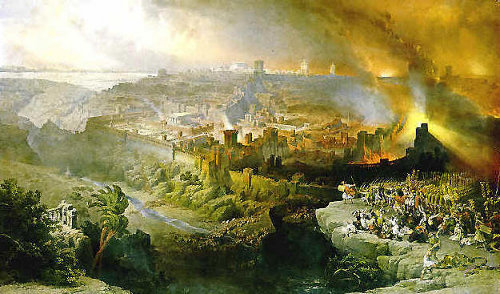
fall-of-jerusalemThis is a continuation on the topic I started discussing in Lancaster’s Galatians: Introduction, Audience, and What Happened to the Torah? and continued in Broad Strokes. I asked the first two of these four questions in Part 1 and Part 2 of this series. Part 3 presents the third question. Hopefully, the answer will be illuminating.

Just a reminder, all quotes from scripture will be from the ESV Bible unless otherwise stated.

Were the Jewish Apostles of Jesus Supposed to Remain in Jerusalem During the Fall?

History records that the Romans destroyed Herod’s Temple and exiled the Jews from Israel in the year 70 of the Common Era (CE). Israel was renamed “Palestine” by the Romans as in insult to the Jews. We also know that there was always a small remnant of Jewish people in “Palestine” from that time until the formation of the modern state of Israel in 1948. But of those who remained in Jerusalem and in the Land during and just after the destruction of the Temple, how many were disciples of the Master?

The destruction of the Second Temple in 70 CE and the subsequent expulsion of the majority of Jews from what would be called Palestine marked a disastrous shift in the Jewish authority over the Messianic community. Up until that time, the head of the Jerusalem leadership of the Messianic community, otherwise referred to as “the bishop of the church”, had always been Jewish. Once the Jews were expelled from Jerusalem by Hadrian, for the first time a Gentile had to be elected into the role. As events moved forward from that point in time, the Gentile presence in the Messianic community grew dramatically while the Jewish leaders and worshipers of Yeshua struggled under the heartbreak of the loss of the Temple and the ejection from their land.

-James Pyles
“Origins of Supersessionism in the Church”
Part one in a four-part series
published in Messiah Journal
Issue 109/Winter 2012

I bring all this up because one of the topics Pastor Randy and I discussed was whether or not the Jewish disciples of the Way “abandoned ship,” so to speak, when the rest of the Jews were expelled from Israel at this point in history. It’s Pastor’s opinion that they did and that it was definitely the wrong thing for them to do. In his opinion, they should have stayed.

Should they have fought the Romans like the zealots? Should they have died like the Jews at Masada?

I don’t know if Pastor is suggesting such a thing. Dying, down to the last man as martyrs, may have been a dramatic move and even a faithful one, but it would not have allowed the apostles to survive and to spread the word of Moshiach to the Jews and Gentiles of the diaspora.

I remember when Pastor was delivering a sermon on the death of Stephen (see Acts 7:54-60) and the consequences that followed his demise.

And there arose on that day a great persecution against the church in Jerusalem, and they were all scattered throughout the regions of Judea and Samaria, except the apostles.

Acts 8:1

According to Pastor, one of the effects of the scattering of devout Jewish believers away from Jerusalem was to allow the spreading of the gospel message throughout Judea and Samaria. This is how I see one of the results of the destruction of Jerusalem and the great exile of the Jews to the diaspora. Not that Paul had been unsuccessful in taking the message of the Messiah to much of the then civilized world, but this “allowed” (though it was a terrible thing) all or most of the believing Jews in the Land to take who they were and extend that into the galut to other Jewish and probably Gentile communities.

That’s one thought, anyway.

Did Jesus ask or require the believing Jews to stay in Jerusalem during this time of great tragedy?

“But when you see Jerusalem surrounded by armies, then know that its desolation has come near. Then let those who are in Judea flee to the mountains, and let those who are inside the city depart, and let not those who are out in the country enter it, for these are days of vengeance, to fulfill all that is written. Alas for women who are pregnant and for those who are nursing infants in those days! For there will be great distress upon the earth and wrath against this people. They will fall by the edge of the sword and be led captive among all nations, and Jerusalem will be trampled underfoot by the Gentiles, until the times of the Gentiles are fulfilled.

Luke 21:20-24

It seems clear that Jesus was telling those who are in Judea to flee to the mountains. Also, those who are inside the city depart, and let not those who are out in the country enter it. He knew that many [would] fall by the edge of the sword and be led captive among all nations. Nowhere in that short narrative do I hear the Master telling anyone to stay and die. In fact, it was necessary for Jerusalem to be trampled underfoot by the Gentiles, until the times of the Gentiles [were] fulfilled.

I don’t know if the times of the Gentiles are fulfilled yet, but the modern nation of Israel has been in existence for over sixty years now, so if our time isn’t yet up, it soon will be.

I mentioned before, in quoting from my “supersessionism” article, that up until the destruction of Jerusalem, every leader of the Council of Apostles had been Jewish. When the Jews were expelled, the first “bishop of the church” had to be a non-Jew since at that time, they were “flying below the radar” of the Romans, so to speak. It’s not unlike the situation with Lydia and the devout God-fearing women in Philippi.

So, setting sail from Troas, we made a direct voyage to Samothrace, and the following day to Neapolis, and from there to Philippi, which is a leading city of the district of Macedonia and a Roman colony. We remained in this city some days. And on the Sabbath day we went outside the gate to the riverside, where we supposed there was a place of prayer, and we sat down and spoke to the women who had come together. One who heard us was a woman named Lydia, from the city of Thyatira, a seller of purple goods, who was a worshiper of God. The Lord opened her heart to pay attention to what was said by Paul. And after she was baptized, and her household as well, she urged us, saying, “If you have judged me to be faithful to the Lord, come to my house and stay.” And she prevailed upon us.

Acts 16:11-15

jerusalem-at-nightThe Jewish population in that area had been expelled at some earlier point, but the God-fearing Gentiles were “under the radar,” and not included in the exile from Philippi because they had not been counted as Jews, even through they had been worshipping in the synagogue with Jews, praying with Jews, discussing Torah with Jews, and otherwise having fellowship with Jews. When Paul and his party came upon Lydia and her companions by the river, he must have understood that these Gentile women were all who were left of those devoted to Hashem to keep the worship of the God of Israel alive in that community. Perhaps the same can be said of the Gentile believers in Jerusalem after 70 CE, but it’s hard to tell.

There has always been a Jewish remnant in Israel for the past 2,000 years. When the Temple was utterly destroyed, when the golden menorah melted and flowed like water, when Jerusalem herself moaned in agony like a woman in hard labor, after all these things, who is to say if, among the Jewish remnant, there were followers of Yeshua HaMashiach or not. There’s no way to know.

I don’t think the Messianic Jews had a specific mandate to stay and endure the incredible suffering of Israel’s downfall under the Romans. If some did stay, so much the better, but I believe what happened was supposed to happen. I think God knew. I think the words of Jesus tell us that he expected it and expected those who listened to him to flee. The time of the Gentiles was upon them.

But that time is running out fast.

Only one more question left. Be here for Part 4 in the conclusion of this series in tomorrow’s “morning meditation.

Four Questions, Part 2

Apostle-PaulThis is a continuation on the topic I started discussing in Lancaster’s Galatians: Introduction, Audience, and What Happened to the Torah? and continued in Broad Strokes. I asked the first of these four questions in Part 1 of this series (please read it if you haven’t yet) but quickly discovered that I’d never get all four questions and their answers in a single blog post. Hence, Part 2 presents the second question. Hopefully, the answer will be illuminating.

Why Did Many Jewish People Reject Paul and the Message of the Messiah?

Let’s face it. Paul received a tremendous amount of opposition during his journeys as he spoke of Christ, not only from the Greeks and Romans, but from many individual Jews and Jewish communities as well. This is exquisitely documented in Luke’s Book of Acts and often gives support to the traditional Christian doctrine that the Jews rejected Jesus but the Gentiles accepted him, thus Jews are now universally without salvation and a place in Heaven, and the Gentile Christians have inherited all of the covenant promises that once belonged to the Jews, replacing them as God’s chosen, splendourous people.

Did the Jews reject Jesus? We’ve already seen in Part 1 of this series (link above) that not all of them did and actually, thousands upon thousands of Jews completely accepted the Christ and were devoted disciples of the Messiah. In fact, in one of my conversations with Pastor Randy, he said he believes that the Jewish population of “the Way” very likely outnumbered, and by a substantial amount, the population of any of the other sects of Judaism, most principally, the Pharisees. This is just conjecture on my part, but as Pastor Randy mentioned this, I couldn’t help but wonder if the Pharisaic sect as well as the Essenes, Sadducees and others, saw that their power bases would erode into eventual extinction should “the Way” take over the Jewish religious landscape by sheer weight of numbers in Jewish membership.

We’ve also seen within the borders of ancient Israel that the apostles and disciples of Messiah were considered a threat to the corrupt and compromised Jewish religious leadership streams (particularly the Priesthood) that were firmly in the pocket of the occupying Romans. Herodian rule was also threatened for similar reasons. The Son of God accused them all of falsehood and usurping the rightful place of the valid Priests and Kings of Israel. These false rulers had every reason to want to silence a small but rapidly growing group who might one day soon incite the people to overthrow them.

But that doesn’t explain the immense amount of resistance Paul experienced in the Jewish synagogues of the diaspora, who were outside the flow of those political currents.

And he entered the synagogue and for three months spoke boldly, reasoning and persuading them about the kingdom of God. But when some became stubborn and continued in unbelief, speaking evil of the Way before the congregation, he withdrew from them and took the disciples with him, reasoning daily in the hall of Tyrannus.

Acts 19:8-9

After three months, opposition to Paul’s message surfaced. It may have taken that long for the Jews of Ephesus to realize that Paul’s gospel invited Gentiles into the fold.

-Lancaster, Torah Club Vol 6, pg 620

This, I think, is the key to much (but not all) of the Jewish opposition to Paul and the Way. Besides announcing the salvation from sin and the life in the world to come promised through the Messiah, the number one thing that set Paul’s sect apart from all of the other Judaisms of that day was the inclusion of Gentiles as equal covenant members without the requirement that Gentiles undergo circumcision and convert to Judaism. This was unprecedented in ancient Judaism and in my opinion, the single largest stumbling block for Jews hearing the Messianic message of Paul and the other apostles.

Remember the Jews of Pisidian Antioch who, in Acts 13:42-43 couldn’t get enough of Paul, Barnabas, and the message of Messiah, and begged them to return to their synagogue on the following Shabbat to speak more about the Kingdom and the Son of David?

The next Sabbath almost the whole city gathered to hear the word of the Lord. But when the Jews saw the crowds, they were filled with jealousy and began to contradict what was spoken by Paul, reviling him. And Paul and Barnabas spoke out boldly, saying, “It was necessary that the word of God be spoken first to you. Since you thrust it aside and judge yourselves unworthy of eternal life, behold, we are turning to the Gentiles.

Acts 13:44-46

This doesn’t mean, as we saw in Part 1 of this series, that Paul never again preached the good news to the Jews, but only on that occasion, when the Jewish leadership of the Pisidian Antioch synagogue spoke against him and reviled him. So what happened? On one Shabbat, the Jews couldn’t get enough of Paul and his teaching and exactly one week later, they can’t wait to shut him up and get rid of him. What changed?

But when the Jews saw the crowds, they were filled with jealousy…

Crowds? Crowds of who?

The Jews of Antioch were not jealous that Paul and Barnabas has such appeal or that their message was so popular. They were jealous that the message of the apostles compromised theological ethnocentrism. The message of the apostles seemed to throw the doors of Judaism wide open to the Gentile world.

This is the “jealousy” to which Paul referred in his epistle to the Romans.

-D. Thomas Lancaster’s commentary on Acts 13:1-51 read with Torah Portion Bo (“Come”) Torah Club 6: Chronicles of the Apostles, pg 394

prayer-synagogue-riga-latviaI commented extensively in a previous meditation regarding this “jealousy” that the huge influx of Gentile God-fearers and pagans elicited from the Jewish synagogue leaders in Pisidian Antioch and you are invited to click the link above and read the full analysis of that event. Lancaster supports my understanding that the thing about the Way that summoned such a passionate and even hostile response from some Jewish communities was the unfettered admittance of non-Jews into what was once a wholly Jewish religious and community space.

Here’s more.

When the seven days were almost completed, the Jews from Asia, seeing him in the temple, stirred up the whole crowd and laid hands on him, crying out, “Men of Israel, help! This is the man who is teaching everyone everywhere against the people and the law and this place. Moreover, he even brought Greeks into the temple and has defiled this holy place.” For they had previously seen Trophimus the Ephesian with him in the city, and they supposed that Paul had brought him into the temple. Then all the city was stirred up, and the people ran together. They seized Paul and dragged him out of the temple, and at once the gates were shut. And as they were seeking to kill him, word came to the tribune of the cohort that all Jerusalem was in confusion.

Acts 21:27-31

Two major points must be considered here. The first is the fear and hostility elicited at the very thought that Paul would allow admission of a non-Jew into the Temple past the court of the Gentiles. After all, such a thing was not done. True, Paul hadn’t actually taken Trophimus into the Temple, but just seeing the two of them together inspired all sorts of terrifying fantasies in many of the Jerusalem Jews. The very thought of Gentiles having full and equal membership into a Jewish religious sect without first having to convert to Judaism and being compelled to obey the complete body of Torah mitzvot and halachah was unthinkable. For many Jews, access to the God of Israel was located in a “Jews-only” zone, which is understandable, given that Israel was a nation then occupied by a brutal Gentile army. Only the apostles and disciples of Jesus understood differently and even some of them would never completely reconcile themselves to Gentile admission.

Here’s the second major speed bump.

And when they heard it, they glorified God. And they said to him, “You see, brother, how many thousands there are among the Jews of those who have believed. They are all zealous for the law, and they have been told about you that you teach all the Jews who are among the Gentiles to forsake Moses, telling them not to circumcise their children or walk according to our customs.

Acts 21:20-21

To the Jews in Jerusalem who were both devout disciples of Jesus the Messiah and zealous for the law, even the rumor that Paul was teaching the Jews in the diaspora, who were living among and worshiping with the Gentile God-fearing disciples, to forsake Moses, telling them not to circumcise their children or walk according to [their] customs was a horrible and virtually unthinkable idea. It was completely and totally against everything the Messianic Jews in the Land understood about the life and character of a devout Jew.

Again, this rumor was completely untrue. Paul totally denied ever teaching such a thing to the Jews in the diaspora, so we can believe that Paul and the other devoted Jewish disciples of Messiah fully understood that there was no contradiction between their faith in Jesus and their lives as Torah-obedient Jews. The only thing that may have given the Jerusalem Jews the idea that Paul was teaching against the Torah to diaspora Jews is this.

Thus all will know that there is nothing in what they have been told about you, but that you yourself also live in observance of the law. But as for the Gentiles who have believed, we have sent a letter with our judgment that they should abstain from what has been sacrificed to idols, and from blood, and from what has been strangled, and from sexual immorality.

Acts 21:24-25

Paul-ArrestedApparently, there was some confusion about the instructions James and the Council of Apostles issued to the believing Gentiles (see Acts 15) involving the limits of their obligation to the Torah as opposed to what Paul was and wasn’t saying to his Jewish audience. If word got back how Paul was instructing the Gentile disciples within the context of the “Jerusalem Letter,” it may have been assumed that such was Paul’s general message to everyone he encountered, including diaspora Jews (for a more complete treatment of the Council’s ruling of “Gentile halachah,” see my six-part series on Lancaster’s Acts 15 commentary, Return to Jerusalem).

I’m firmly convinced that among all the various reasons why individual Jews and Jewish communities rejected Paul’s message of Messiah, the number one “biggie” was the admission of unconverted Gentiles. Sadly, this was a problem that was never resolved and the cracks and fissures that developed between the Jewish Way and the rest of the Jewish sects eventually spawned a total split, ultimately resulting in a Gentile Christianity, and a stream of Judaisms moving forward in history that, by definition, were compelled to consider just about anyone a possible Messiah except Jesus Christ.

Rabbinic literature also reluctantly admits the reality of the miracles performed in Yeshua’s name but forbids it all the same. Some sages maligned the Master as a sorcerer, and they accused him of using a secret name of God to perform His miracles. By the second century, the sages forbade using the Master’s name for healing. They also forbade Jews from accepting the prayers of Yeshua’s disciples (b. Avodah Zarah 27b.)

-Lancaster on Acts 19:13-14, Torah Club Vol. 6, pg 623

Happily, there is a small but growing movement of Jewish people today who are rediscovering the Messiah Yeshua and who are devoted disciples of the Master within a completely Jewish worship, cultural, and lifestyle context. It is my belief that Messiah will continue to call the Jewish people who are his own back to him and back to the Gospel promise of personal salvation and national redemption of Israel.

Part 3 of this meditation will address the third question that came up as a result of my “Pastor Randy conversations” and I encourage you to return here and read the continuation of this series in tomorrow’s “morning meditation.”