Tag Archives: David Rudolph

Introduction to Messianic Judaism: Fulfilling the Prophesy of Amos, Part 1

conference2The most momentous decision the early Christian movement had to make was on the status of Gentiles who wished to join it. That Gentiles should join the movement was not in itself problematic, since there was a widespread Jewish expectation, based on biblical prophecies, that in the last days the restoration of God’s own people Israel would be accompanied by the conversion of the other nations to the worship of the God of Israel. Since the early Christians believed that the messianic restoration of Israel was now under way in the form of their own community, it would not have been difficult for them to recognize that the time for the conversion of the nations was also arriving. What was much less clear, however, was whether Gentiles who came to faith in Jesus the Messiah should become Jews, getting circumcised (in the case of men) and adopting the full yoke of Torah, or whether they could remain Gentiles while enjoying the same blessings of eschatological salvation that Jewish believers in Jesus did.

-Richard Bauckham
“Chapter 16: James and the Jerusalem Council Decision” (pg 178)
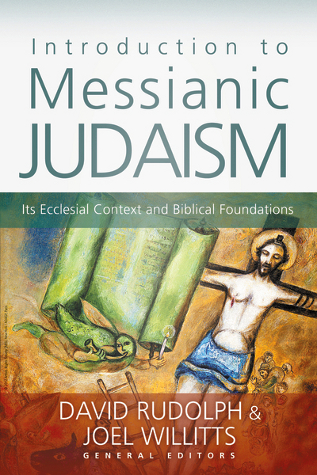
Introduction to Messianic Judaism: Its Ecclesial Context and Biblical Foundations

This should be a familiar theme to those of you who regularly read my blog. I spent a considerable amount of time and effort reviewing Luke’s Acts, thanks largely to D. Thomas Lancaster’s Torah Club series Chronicles of the Apostles, published by First Fruits of Zion (FFOZ). I was pleased to find that several of the articles in Rudolph’s and Willitts’ book addressed the same issues. But let’s back up a step.

Darrell Bock, in “Chapter 15: The Restoration of Israel in Luke-Acts” sets the stage for the drama of Gentile inclusion into a branch of normative Judaism by deconstructing the traditional Christian view of these books of scripture.

Burge argues for a landless and nationless theology in which the equality of Jew and Gentile in Christ is the key ecclesiological reality. In this view, Jesus as Temple or as forming a new universal Temple community becomes the locus for holy space. Israel is absorbed into the church and hope in the land is spiritualized to refer to a restored earth.

This chapter seeks to redress the balance. When I speak of Israel in this essay it is the Jewish people I have in mind as opposed to new Israel.

-Bock, pg 168

It is true that Luke-Acts is really all about the Gentiles. According to Bock…

Luke-Acts was written between CE 60 and 80 in part to legitimate the inclusion of Gentiles in an originally Jewish movement according to God’s plan. Theopolis (Luke 1:3; Acts 1:1) is a Jesus-believing Gentile who needs assurance. Luke-Acts presents Jesus as God’s exalted and vindicated bearer of kingdom promise, forgiveness, and life for all who believe, Jew and Gentile. The bestowal of God’s Spirit marks the new era’s arrival…This message completes the promises made to Abraham and Israel centuries ago.

-ibid, pp 168-9

The Messiah movement was a wholly owned and operated franchise of Judaism (if you’ll forgive the slight levity here). It’s only natural to imagine that Gentiles hearing that they too could join might have been skeptical about the reality of this promise and the status that they would (or wouldn’t) be granted. Luke means to reassure them that they will be equal sharers in the blessings made to Israel, but make no mistake, there is another side to Luke’s narrative.

Luke argues that the church roots its message in ancient promises, a story in continuity with Israel’s promised hope found in God’s covenantal promises to her. The entire saga involves Israel’s restoration. For all that Gentile inclusion and equality in the new community brings, we never lose sight of the fact that it is Israel’s story and Israel’s hope that brings blessing to the world, just as Genesis 12:3 promised.

-ibid

Nothing Luke, let alone Bock, writes allows Gentile inclusion to delegitimize the Jewish people as God’s people and nation Israel. Messiah is depicted as “the light to the Gentiles and the glory of Israel” (pg 171). We among the nations receive blessings because of Israel, not because we become Israel. Bock also states:

Thus, redemption involves both political and spiritual elements, nationalistic themes (Luke 1:71, 74) and the offer of forgiveness (1:77-78).

-ibid, pg 171

Redemption for Israel is not just spiritual, it’s national and physical. If Israel is obedient to God, Messiah will place Israel at the head of the nations and take up his Throne in Jerusalem. However, there is a problem. Bock does not cast the Gentiles as the primary roadblock to God’s restoration of Israel, but instead declares:

The warning to the nation is that if she rejects God’s message, then blessing may not come to her but may go to the Gentiles. Israel’s story has an obstacle, her own rejecting heart. The question is whether that obstacle is permanent or not.

-ibid, pg 172, citing Luke 4:16-30

the-prophetTraditional Christian supersessionism would say that the obstacle was permanent and the blessings forever left Israel and were transferred to the (Gentile) church. However, since the blessings promised to Abraham only come to the nations by way of Israel, if Israel were permanently eliminated what would happen to us? By definition, any roadblock confronting Israel can only be temporary, just as the Old Testament (Tanakh) record presents how God only turned away from his people Israel “momentarily,” turning immediately back when they humbled their hearts and turned to their God.

Luke 21:24 pictures a turnaround in Israel’s fate. Near the end of the eschatological discourse, Luke describes Jerusalem being trodden down for a time and refers to this period as “the times of the Gentiles.” It refers to a period of Gentile domination, while alluding to a subsequent hope for Israel.

…this view of Israel’s judgment now but vindication later suggests what Paul also contents in Romans 11:25-26: Israel has a future, grafted back in when the fullness of the Gentiles leads her to respond. These chapters certainly have ethnic Israel in view, not any concept of a spiritual Israel. Romans 9-11 develops the temporary period of judgment noted in Luke 13:34-35.

-ibid, pg 173

I should say at this point that Bock extensively cites scripture to support his statements. To restrict the length of this blog post (and I’ve already had to split it into two parts), I am editing out most of his references, so I encourage you to read his chapter in full to get all of the corroborating details.

In covering Acts, Bock deliberately omits Acts 15 and presents several other key areas. Using Acts 1:4-7, Bock establishes the “promise of the Father” which leads the disciples of Jesus to anticipate that the kingdom of Heaven is at hand and that Messiah, prior to (or instead of) the ascension, will restore Israel nationally and spiritually. He does no such thing, but not because the desire is inappropriate. It simply isn’t time yet. However in Acts 3:18-21, Bock shows us that Peter is completely aware that the “times of refreshing” refer to future “refreshment”, which promises the messianic age of salvation as foretold by the Prophets.

But what’s important for we Gentiles to note, is his treatment of Acts 10-11:

In the two passages involving Cornelius in Acts 10-11, the Spirit’s coming shows that Gentiles are equal to Jews in blessing, so that circumcision is not required of Gentiles. The Spirit occupying uncircumcised Gentiles shows they are already cleansed and sacred. The new era’s sign comes to Gentiles as Gentiles. There is no need for them to become Jews. Israel’s story has finally come to bless the nations.

-ibid, pp 175-6

Notice that the nations (Gentiles) did not have to actually become Israel, either by replacing them or joining them as Jews (or pseudo-Jews). We are blessed within one ekklesia made up of Israel (Jews) and the nations (Gentile believers).

As I mentioned before, Bock omits the most critical part of Acts for Gentile inclusion. Bauckham picks that theme up in the following chapter, which you’ll read, along with how we Gentile Christians fulfill the words of the Prophet Amos, in Part 2 of this meditation.

156 days

Introduction to Messianic Judaism: The Troubled Ekklesia

jewish-repentanceJewish repentance is not the same as repentance for Gentiles. R. Kendall Soulen highlights a pivotal distinction intrinsic to the Bible but almost entirely ignored by the church:

Christians should recover the biblical habit of seeing the world as peopled, not by Christians and Jews, but by Jews and gentiles, by Israel and the nations…. The Bible, including the Apostolic Witness, presents the distinction as an enduring mark of the one human family, still visible in the church and even in the consummated reign of God.

Human sin is never merely the sin of the creature against the Creator-Consummator. Human sin is also always the sin of Jew and Gentile, of Israel and the nations.

This insight has profound implications for our understanding of Jewish repentance. If departure from Torah living is the measure of Jewish sin, should not a return to the paths of Torah be a sign of Jewish repentance?

-Stuart Dauermann
“Chapter 7: Messianic Jewish Outreach” (pg 95)
quoting R. Kendall Soulen, “The Grammar of the Christian Story” and “The God of Israel and Christian Theology”
Introduction to Messianic Judaism: Its Ecclesial Context and Biblical Foundations

I chose the paragraph’s quoted above from Dr. Dauermann’s chapter in Rudolph’s and Willitts’ book largely to highlight the struggle of understanding between the Messianic Jewish and Gentile Christian perspectives. Certainly Dauermann’s and Soulen’s descriptions of sin and repentance, and especially differentiating them between Jews and Gentiles, flies in the face of how Protestant Christianity defines those concepts. In normative Protestantism, sin is sin, regardless of the individual involved being Jew or Gentile. It’s personal, never national. But therein lies the rub.

I might as well tackle this rather difficult topic since lately, I’ve been pursuing unpopular causes. No, that’s too cynical, even for me. It’s just been a rough week, and I know how much people struggle with the interactions I’m trying to explore.

Whenever I try to describe (let alone understand) the relationship between Messianic Judaism and Christianity, I typically am criticized for my “lack of understanding” of Messianic Judaism. I’m generally told that my error is in defining Messianic Judaism as a “Judaism.” Although my critics aren’t Jewish, they do accurately describe the problem between Messianic Jews and the other Judaisms, both historically and in the modern sense.

Messianic Judaism and its antecedent movement, Hebrew Christianity, first emerged as attempts to reconfigure the relationship between the Christian Church and the Jewish people. The Hebrew Christians of the nineteenth and twentieth centuries were for the most part evangelical Protestants who saw the Church as an invisible and universal body of “true believers” that was expressed concretely but imperfectly in the local Christian congregation – a community constituted by the regenerated individuals who voluntarily joined it.

-Mark Kinzer
“Chapter 11: Messianic Jews and the Jewish World” (pg 126)
Introduction to Messianic Judaism

Although I doubt Dr. Kinzer intended this paragraph to be received in such a manner, when I read it, I could only be reminded of a long-standing argument between Messianic Jewish and Hebrew Roots perspectives. In the situation described by Dr. Kinzer, Jewish people accepted Jesus as Lord and Savior, set aside all “Jewish” types of religious observance, self identified as Christians, and joined the larger body of the church, being absorbed into their ranks. The Hebrew Christians, except for a string of DNA and the self-awareness of being “Jewish,” were indistinguishable from their Gentile Christian counterparts. People “knew” they were “Jewish” but that knowledge was beside the point. They were first and foremost Christians and anything that distinguished their national and covenant identity as Jews was swept away.

By contrast, to accept (in general since there are a number of variations on this theme) the Hebrew Roots perspective of Gentile “obligation” to Torah observance and full covenant identity as “Israel” as wholly shared with Jewish believers effectively does the same thing to Messianic Jews. Jews and Gentiles in the Hebrew Roots movement look, act, and identify identically. Except for a string of DNA and the cognitive awareness that certain members are Jewish, both Gentile and Jewish participants are indistinguishable from one another. While Jewish covenant observances and behaviors are not “swept away” as such since the Jewish members remain Torah observant, the distinction becomes irrelevant, since everyone looks and acts “Jewish.”

kinzer-postmissionaryHebrew Christians within evangelical Protestantism become invisible and absorbed by the church as a whole. In Hebrew Roots, it is the same for Messianic Jews.

But this is so hard for most Christian Hebrew Roots practitioners to understand.

And why is it so important for Messianic Jews to maintain their distinctiveness from Gentile Christian populations?

The term “postmissionary” was chosen to make an ecclesiological rather than a missionological point – namely, that Messianic Jews are not called to be representatives of the Christian community operating within another religious community (i.e., the Jewish people) but to be fully part of the Jewish world in both religious and national terms. In fact, they are to represent the Jewish community in relation to the Church, rather than the reverse.

-Kinzer, pg 132

Dr. Kinzer is describing material from his book Postmissionary Messianic Judaism: Redefining Christian Engagement with the Jewish People, a work that is at once revolutionary, controversial, wildly applauded by many but not all Messianic Jews, and frequently criticized by various branches of Christianity.

But it, and Dr. Kinzer, describe the need for Messianic Jews to be disciples of the Messiah first and foremost as Jews. The Hebrew Christianity and Hebrew Roots solutions to Jewish Messianic discipleship both require the surrender of that unique covenant identity and role from the Jewish people, in both cases, isolating Messianic Jews from larger Judaism and larger Jewish practices (while Hebrew Roots Gentiles generally support Torah observance in one sense or another, they usually disdain and reject much or all of the historic Jewish traditions which have identified Jewish communities for the past twenty centuries). The Hebrew Roots solution, like Hebrew Christianity, “absorbs” the Jewish population of believers into the wider “ekklesia,” diluting their identity and eventually, causing them to “disappear” within the masses.

But as has been pointed out to me time and again, even the largest and most robust of Messianic Jewish synagogues still have a majority of Gentiles as its members. However, as I have learned time and again, those are Gentiles who have chosen to come alongside Messianic Judaism in order to dialog with and to support the Jewish disciples of the Jewish Messiah King in Torah observance, identification with national Israel, and forming the ekklesia made up of (Jewish) Israel and (the believers of) the nations that will once day herald the Messiah’s return.

Together the Messianic Jewish community and the Christian Church constitute the ekklesia, the one Body of Messiah, a community of Jews and Gentiles who in their ongoing distinction and mutual blessing anticipate the shalom of the world to come.

“Defining Messianic Judaism”
UMJC.org

In quoting the Hashivenu core values, Dr. Kinzer states:

The expanded core value continues by expressing appreciation for the religious life of the wider Jewish world: “When we say that Messianic Judaism is ‘a Judaism,’ we are also acknowledging the existence of other ‘Judaisms.’ We do not deny their existence, their legitimacy, or their value.”

Never before had a group of Messianic Jewish leaders sought to differentiate their movement so definitively from evangelicalism and to identify it so radically as a branch of Judaism.

-Kinzer, pg 131

women_praying_at_the_wallI suppose you have to be Jewish to really understand the perspective Dr. Kinzer is describing, but being married to a (non-believing) Jewish spouse, I think I have some idea why it’s intensely important for her to be, not just genetically or generically Jewish, but culturally, ethnically, religiously, traditionally, and right-down-to-the-bone Jewish.

Obviously, her requirement has not been the “swan song” for our marriage because I’m a Gentile Christian since we’re still together after over thirty years, but it comes with a few additional challenges. In terms of the wider Messianic Jewish-Christian interface, those challenges are magnified.

Messianic Jews regard Gentile Christians as their brothers and sisters in the Lord and at the same time experience significant tension with the Gentile Christian world.

-Daniel Juster
“Chapter 12: Messianic Jews and the Gentile World” (pg 136)

That’s pretty much it in a nutshell. “You’re my brother and I love you, but you also drive me crazy.” That’s what family members do to each other, sometimes.

Oh, it gets even more “interesting:”

According to this statement, the Messianic Jewish community is united with the “Christian Church” in forming the ekklesia, the Body of Messiah. The term “Christian Church” is used here in a more delimited way to describe the “Gentile wing of the Church.” This is in keeping with the connotation of the word “Christian” in the wider Jewish world. For Jews, Christian = not Jewish, i.e., Gentile. This is why Messianic Jews do not self-identify as “Christians.” It would imply to fellow Jews that they are no longer Jews.

-Juster, pp 136-7

I can imagine that many Christians will take Juster’s words as an insult, but again, I think you have to be Jewish to understand the dissonance being experienced. For the vast majority of the last two-thousand years, Christianity has demanded that Jews surrender every last bit of their Jewish identity and practice in order to become disciples of the Jewish Messiah King. Go figure. For the vast majority of the last two-thousand years, the larger, normative Judaisms have considered any Jew who believes that Jesus is the Messiah is no longer Jewish but instead, a “Christian.”

But what if, like James, and Peter, and Paul, and all of the other first-century CE Jewish apostles and disciples (thousands upon thousands of them) you, as a Jew, wanted to be a disciple of the Moshiach and continue a fully lived and observant Jewish experience? Where’s the problem in that?

Old habits die hard. The church will need to learn to accept Jews who identify as “Messianic” as Jews, not just in terms of DNA and a cognitive awareness that the Jew in question had Jewish parents and other family members, but that the Messianic Jew is really, really Jewish in every observable, identifiable, and covenantal sense.

But what about those Gentiles who self-identify as “Messianic?” Not all of them are, as I previously described, Hebrew Roots Christians who aspire to the same identity as the Jews in the Messianic movement, thus claiming what is not their’s. I mentioned in my review of the First Fruits of Zion television series, that narrator and teacher Toby Janicki introduces himself as a Gentile who practices Messianic Judaism. Do Gentiles who come alongside Jews in Messianic Jewish synagogues practice Messianic Judaism (as distinctly different from Christianity)?

jewish-t-shirtI’ve laid out a case, based on chapters in the Rudolph-Willitts book, that describes why Messianic Jews need to identify separately from Christianity, even as Messianic Jews and Christians must be unified within the body of Messiah to form the Ekklesia, but where to “Messianic Gentiles” fit in, if at all?

I could make a case for Christian/Jewish intermarried couples to identify as “Messianic” and whose religious practice is within that context for what I hope are obvious reasons. What about the large number of non-Jews attracted to the Messianic movement who aren’t intermarried or otherwise connected to the Jewish community? I can’t really describe the attraction except I know it’s there. I have the same attraction, which is evidenced by what I write on this blog. Even if I weren’t intermarried at this point, the drive to see God, the Messiah, and the Bible through that particular lens would not go away. For some reason, it’s hardwired to my soul.

But that drive can’t be used to justify the diluting or elimination of Jewish identity and covenant distinctiveness from within the larger Ekklesia of Messiah. Juster, in describing the initiative Toward Jerusalem Council II, speaks of coming together to “heal historic wounds and repudiate ancient decisions by the Church against Messianic Jews.” I believe this should be applied to the overarching relationship of Messianic Jews and believing Gentiles, both within the Messianic Jewish worship framework and between Messianic Jews and all believing Gentile worship groups including the Church and other variant branches of Christianity (even if they choose not to self-identify as “Christianity”).

Juster’s conclusion of Chapter 12 is the hopeful note within the continual struggle between believing Jewish and Gentile communities.

This notwithstanding, the Messianic Jewish community views itself as united with the Gentile wing of the Church in a partnership that is intended by God to reflect interdependence and mutual blessing (emph. mine). Such interdependence and mutual blessing can come about only through close relationship. Therefore, Messianic Jews invest in Christian groups and organizations that welcome a Messianic Jewish presence, even as Paul wrote, “Welcome one another, therefore, just as Messiah has welcomed you, for the glory of God” (Rom 15:7 JNT).

Christian theology emphasizes that God is unfolding his great plan for the redemption and transformation of the cosmos through the work of the Church. As Messianic Jews, we have added a significant corollary to the traditional Christian narrative: the work of the Gentile Christian world cannot be accomplished without being in right relationship with Israel and the Messianic Jewish community in particular.

-ibid, pp 142-3

Most Gentile believers aren’t going to accept this message, at least at first. Some never will at all, for a variety of reasons, some of which I’ve already mentioned. But Christianity in all its forms has traditionally rejected the Jewish people from the worshipers of Messiah except on the condition that they give up being uniquely Jewish in any demonstrable and experiential sense. That is no longer a sustainable position for the church or any believing Gentile organization or individual.

When King Messiah returns in power and glory, the Church will be in no position to demand that he surrender his Jewish identity as a condition of ascending the Throne of Israel. That being the case, how can we dare to make such a demand of his Jewish subjects?

157 days.

Acharei Mot-Kedoshim: Why We Fail to Walk with God

WalkingMy ordinances you shall do, and My statutes you shall observe, to walk with them, I am the Lord, Your G-d.

Leviticus 18:4

What does the Torah mean “to walk with them?”

The Ksav Sofer, a famous Hungarian rabbi, commented that the words “to walk with them” mean that a person needs to walk from one level to the next level. That is, a person should constantly keep on growing and elevating himself.

It is not enough to keep on the same level that you were on the previous day. Rather, each day should be a climb higher than the day before. When difficult tests come your way, you might not always appreciate them. The only way to keep on elevating yourself is to keep passing more and more difficult life-tests. View every difficulty as a means of elevating yourself by applying the appropriate Torah principles. At the end of each day, ask yourself, “What did I do today to elevate myself a little higher?” If you cannot find an answer, ask yourself, “What can I plan to do tomorrow to elevate myself?”

-Rabbi Kalman Packouz
“Shabbat Shalom Weekly”
Commentary on Torah Portion Acharei MotKedoshim
Aish.com

I’m getting a little tired of these “tests.” They don’t seem to be helping me. Worse, they don’t seem to be helping anyone else, either.

Let me explain.

In continuing to read Rudolph’s and Willitts’ book Introduction to Messianic Judaism: Its Ecclesial Context and Biblical Foundations, I arrived at “Chapter 6: Messianic Jewish Ethics,” written by Russ Resnik. It’s interesting that when we think of Jesus, we usually think of his mercy, his grace, or his compassion, but it’s a little unusual to consider his ethics. And yet, even Jews who are not believers, when they read the Gospels, find the ethics of Jesus are undeniably Jewish.

A generation later, the Orthodox Jewish scholar Pinchas Lapide commented on the Sermon on the Mount, “In all this messianic urgency toward humanization God wills for all the children of Adam and toward the humanization of this earth, in the deathless power of hope that finds in reliance on ‘the above’ the courage to go ‘forward,’ Jesus of Nazareth was ‘the central Jew,’ as Martin Buber called him, the one who spurs us all to emulation.”

-Resnik, pg 82

Resnik states that “Yeshua fully embodies the image of God, which is placed upon humankind from the beginning: ‘God created mankind in his own image’ (Gen 1:27).” He also refers to the first man and woman as “divine image bearers” and further says:

…the divine image is obviously not a physical resemblance, but neither is it an abstract spiritual resemblance. Rather, it entails representing God through active engagement in creation. This understanding of the image of God gives rise to the Jewish idea that God does ethics before we do, that our ethical behavior is not just a matter of obedience, or even pleasing God, but of reflecting God and his nature, fulfilling the assignment to bear the divine image.

-Resnik, pg 84

In other words, even before the commandments to do good and to walk with God’s ordinances and statues were recorded in the Torah, they were humanity’s built-in imperative to do good because God does good and we are made in His image. When we do good, we are a reflection of the image of our Creator. Resnik provides a quote from the Talmud to cement his point.

What does it mean, “You shall walk after the Lord your God?” Is it possible for a person to walk and follow in God’s presence? Does not the Torah say “For the Lord your God is a consuming fire”? (Deut 4:24). But it means to walk after the attributes of the Holy One, Blessed be He. Just as He clothed the naked, so you too clothe the naked, as it says “And the Lord made the man and his wife leather coverings and clothed them” (Gen 3:21). The Holy One, Blessed be He, visits the ill, as it says, “And God visited him in Elonei Mamreh” (Gen 18:1), so you shall visit the ill. The Holy One, Blessed by He, comforts the bereaved, as it says, “And it was after Abraham died that God blessed his son Isaac…” (Gen 25:11), so too shall you comfort the bereaved. The Holy One, Blessed be He, buries the dead, as it says, “And He buried him in the valley” (Deut 34:6), so you too bury the dead.

-b. Sotah 14a
quoted by Resnik, ibid

Although Resnik didn’t cite this portion of the Gospels, the following seems to fit rather well as an illustration of “walking with God.”

Then the King will say to those on his right, ‘Come, you who are blessed by my Father, inherit the kingdom prepared for you from the foundation of the world. For I was hungry and you gave me food, I was thirsty and you gave me drink, I was a stranger and you welcomed me, I was naked and you clothed me, I was sick and you visited me, I was in prison and you came to me.’ Then the righteous will answer him, saying, ‘Lord, when did we see you hungry and feed you, or thirsty and give you drink? And when did we see you a stranger and welcome you, or naked and clothe you? And when did we see you sick or in prison and visit you?’ And the King will answer them, ‘Truly, I say to you, as you did it to one of the least of these my brothers, you did it to me.’

Matthew 25:34-40

boston_marathon_terror_explosionAs I write this (most of it, anyway), it is early Tuesday morning, and yesterday, several explosions occurred at the Boston Marathon, killing three and injuring and maiming many others. To walk with God and reflect His image is to do good under all circumstances, to visit the sick and injured, and to bury the dead, but I despair for humanity. Although we certainly can find some helpers involved in response to this terrible expression of violence, how many more people exist who are capable of committing similar acts of hostility or worse? It always seems like we struggle and struggle in this unending battle of good vs. evil, and to what gain?

Batman (played by Christian Bale): Then why do you want to kill me?

The Joker (played by Heath Ledger): [giggling] I don’t, I don’t want to kill you! What would I do without you? Go back to ripping off mob dealers? No, no, NO! No. You… you… complete me.

Batman: You’re garbage who kills for money.

The Joker: Don’t talk like one of them. You’re not! Even if you’d like to be. To them, you’re just a freak, like me! They need you right now, but when they don’t, they’ll cast you out, like a leper! You see, their morals, their code, it’s a bad joke. Dropped at the first sign of trouble. They’re only as good as the world allows them to be. I’ll show you. When the chips are down, these… these civilized people, they’ll eat each other. See, I’m not a monster. I’m just ahead of the curve.

The Joker: We really should stop this fighting, otherwise we’ll miss the fireworks!

Batman: There won’t *be* any fireworks!

The Joker: And here… we… go!

[Silence. Nothing happens. Confused, Joker turns to look at the clock, which shows that it’s past midnight and neither ferry has blown the other up]

Batman: [triumphantly] What were you trying to prove? That deep down, everyone’s as ugly as you? You’re alone!

The Joker: [sighs] Can’t rely on anyone these days, you have to do everything yourself, don’t we!

-from the film The Dark Knight (2008)

In this scene, Batman and the Joker are debating the nature of humanity. Batman believes that human beings are basically good, while the Joker believes that “these civilized people, they’ll eat each other.” In the film, the situation that the Joker sets up to prove his point fails. The people involved don’t blow each other up, but risk their own lives in order to show compassion, even for people they don’t know, even for criminals.

But it’s just a movie, a work of fiction. People are good in the movie because they’re written that way.

What about people in reality?

According to Resnik, we are also “written” to do good because we are made in the image of God and should “naturally” reflect His goodness. However, the history of the human race seems to prove otherwise. We are not good, we have not been good, and in spite of what “progressives” may believe, we are not getting better. We simply shift around the types of “badness” we commit and just call it “good.”

aloneBut wait. I’ve already been down this path once before and I know where it leads. It leads to a dark, depressing dead end where no one will follow you and where no one wants to go. Do I really want to go there again? I probably will. Given the nature of my personality, I visit that place periodically. But do I want to stay this time?

When I complained previously that all the heroes were dead, I was reminded “All the more reason to be the “called out” ones and live counter to our culture.” It’s true. The fewer of us there are, the harder we’re supposed to work for what we know is good and right. It gets more lonely and more scary, but God didn’t ask us to serve Him in a world of truth and light. If everything were perfect, He wouldn’t need us to do Tikkun Olam. It’s in the face of terrorism, tragedy, and horror that we need to be especially faithful to the tasks that God has given us. No matter how discouraging things get sometimes, we still have to work and we still have to wait.

We’re all waiting for something to happen to save us. Christians and Jews are waiting for the Messiah. The inquisitions happened and the Messiah didn’t come. Pogroms beyond measure have happened and the Messiah didn’t come. Crusaders raped, pillaged, and murdered, with the blood of their victims running through the streets like water and the Messiah didn’t come. Wars have slaughtered millions and the Messiah didn’t come. The Nazis murdered six million Jews and countless other “undesirables” and the Messiah didn’t come. Someone blew up a bunch of people at the Boston Marathon, killing three and injuring hundreds and Messiah didn’t come.

What’s God waiting for? Is He waiting for us to “walk in His ordinances and His statutes?” Is He waiting for us to become the people He designed us to be? Is He waiting for us to follow Him in the footsteps of the Messiah? He’s been waiting a long time. He’s waiting for us to do what He sent us here to do. He’s waiting for us to live out His image. If the Messiah is the ultimate human image of God, we share that with him as his disciples. We must hold on. I must hold on. One little dip in the pool of despair, a couple of laps just for good measure, then out again, dry off, get dressed, and get going.

“You must not lose faith in humanity. Humanity is like an ocean; if a few drops of the ocean are dirty, the ocean does not become dirty.”

― Mahatma Gandhi

How ironic that I should hear the voice of Messiah from the mouth of Gandhi, but then I think Gandhi understood Jesus better than many of his followers, including me. This is why God created the Shabbat…to give our injured spirits a rest in Him. Someday the rest will be perfect. Until then, we must continue to carry the image of God to a suffering and disbelieving world. Without that, there is no hope.

Good Shabbos.

159 days.

Introduction to Messianic Judaism: Reading the Bible in Flux

Talmud Study by LamplightMessianic Jews accord Scripture a unique status as the inspired and authoritative Word of God. They study it, use it liturgically, and base their life and practice on it. However, Messianic Jews grapple with certain issues involved in biblical interpretation that are particularly relevant to Jewish followers of Yeshua. In the first two parts of this essay I will focus on how Messianic Jewish interpretation of Scripture is affected by interpretive traditions and how this leads to the task of shaping a post-supersessionist canonical narrative. In the third part I will focus on unique uses of Scripture in Messianic Judaism.

-Carl Kinbar
“Chapter 4: Messianic Jews and Scripture” (pg 61)
Introduction to Messianic Judaism: Its Ecclesial Context and Biblical Foundations

In my conversations with Pastor Randy at the church I attend, the core of our conversations are on interpretation of the Bible. Pastor says that the first step in any proper interpretation is understanding the literal meaning of the text in its original language and within its context. I can hardly argue against that, but there are two additional steps: “what the text means” and “what the text means to me.” The former is an application of the text in its original context and the latter is an application of the text today.

Hyper-literalists would say that the application of all Biblical text is uniform across time, being the same both the day it was written and right now in 21st century America. I don’t think I can go that far, since, for instance, many portions of scripture in Tanakh (Old Testament) and New Testament addressing slavery are not particularly applicable in today’s world, whether in Israel or the rest of the nations.

But Dr. Kinbar suggests a finer degree of application depending, in this case, on whether one is or is not a Messianic Jew. We do know that, depending on whether one is an observant Jew or a Gentile Christian, certain passages of the Tanakh, specifically those often understood as “Messianic,” are interpreted differently, with the latter population seeing Jesus in the text and the former group seeing the future Messiah or sometimes national Israel instead.

Even when both populations interpret the same text in terms of its literal meaning within its original context, the application, especially in the present age, differs radically because it is being interpreted by two different populations, each with a different “agenda.”

It’s what I keep trying to explain to Pastor Randy. Even multiple parties who are honest and who seek truth can arrive at different interpretations of the Bible depending on who the parties are and how they’ve been “programmed” to interpret the Bible, sometimes just based on who they are (the ultimate arbiter of scripture may be the Holy Spirit, but that doesn’t prevent many people of good faith and character from interpreting scripture quite differently from one another, sometimes even within the same church).

But Christians will always see Jesus in Messianic texts. Religious Jews, not so much.

Now Kinbar is factoring Messianic Jews into the equation in his article. What can we expect?

Perhaps no one specific application.

Mark Kinzer, another Messianic Jewish thinker, approaches the interpretation of Scripture from a different direction. He argues that the Bible must be interpreted in the context of interpretive traditions, which consist of “the accumulated insights of a community transmitted from one generation to the next. In a Messianic Jewish context, tradition represents the understanding of Scripture preserved through the generations among the communities – Jewish and Christian – within which Scripture itself has been preserved. If we are connected to these communities, then we are also heirs of their traditions.”

-Kinbar, pg 62

jewish-handsThat’s something of an adaptation to how Orthodox Jews see Biblical interpretation. My wife occasionally quotes our local Chabad Rabbi as saying that the Bible cannot be interpreted correctly except through tradition, which in this case, means the traditions of Orthodox Judaism. According to Kinbar, Kinzer includes Jewish and Christian traditions as part of the requirement for correct Biblical interpretation, but Jewish and Christian interpretive traditions (and make no mistake, Protestant Christianity does have traditions for interpreting the Bible) are often at odds with each other, including the rather critical element of identifying the Messiah. Establishing the particulars of which traditions to use from each religious perspective must be an enormous challenge.

But there’s more than one way Messianic Jews look at this matter.

(Daniel) Juster argues for a more cautious approach toward Jewish tradition, asserting that “only biblical teaching is fully binding, whereas other authorities might be followed because we perceive wise application or respect community practices.” In other words, Scripture is the measure of tradition, never the reverse. Juster does not address the claim of traditionalists that the cumulative weight of centuries of interpretation is necessarily of greater weight than the judgment of the individual.

The positions of Juster and Kinzer on the place of tradition in the interpretation of Scripture represent the views of two branches of Messianic Judaism and are emblematic of broader disagreements in the movement over the place of traditional practices in Messianic Jewish life.

-Kinbar, pp 62-3

How I define Messianic Judaism is fairly conservative, and possibly closer to how the contributors of the Rudolph/Willitts book see the definition as opposed to how Hebrew Roots identifies the movement. I see Messianic Judaism as a “Judaism” (most or all of the other “Judaisms” in the world will disagree), that is, a religious, cultural, and ethnic group made up primarily or exclusively of Jewish people who are desiring to establish and nurture a Jewish cultural and religious community for the purpose of worshiping the God of Israel and having “fellowship” with other Jews. The distinction of “Messianic Judaism” is the centrality of Yeshua (Jesus) as the Jewish Messiah King in accordance with his revelation in the Apostolic Scriptures.

I’ve periodically encountered Hebrew Roots congregations (including the one I once attended and taught at) that have defined themselves as “Messianic Judaism,” in spite of the fact that few halachically Jewish people made up their membership and even fewer Jews within that group were born and raised in an ethnically, culturally, and religiously Jewish family. Few of the Jewish people within a Hebrew Roots “Messianic Jewish” group have any more familiarity with Jewish halachah and worship practices than the non-Jews in attendance. I base that statement on personal experience, and since I have little to no equivalent experience in more “authentic” Messianic Jewish congregations, I cannot comment on the membership demographics of their groups. I can only say that the ideal of Messianic Judaism is to provide Jewish communities for Jewish worshipers of God and disciples of Yeshua the Messiah, with some Gentile believers attending to “come alongside” their Jewish brothers and sisters.

prayer-synagogue-riga-latviaBut as we’ve seen, relative to Biblical interpretation, even Messianic Judaism as I define the movement, isn’t a single entity. If Kinzer and Juster represent two different perspectives in this arena, then there are two different expressions of Messianic Judaism based on how scripture is interpreted and subsequently applied. I’m not saying this to throw a monkey wrench into anyone’s machine, but to point out that these issues of religious identification and affiliation aren’t as simple as they may appear on the surface. Many Christians in the church see “Messianic Judaism” as a single container, and when visiting Hebrew Roots congregations, assume that all groups are identical in composition and practice and erroneously believe that all Hebrew Roots groups are “Messianic Judaism.”

Obviously this isn’t the case.

But returning to Messianic Judaism and interpretation of scripture, there are a few important matters to address.

Kinzer remarks that Christian theology generally ignores the eschatological character of Israel’s holiness and accentuates the “discontinuity between Israel’s covenant existence before Yeshua’s coming and the eschatological newness that Yeshua brings. Messiah is thus exalted by the lowering of Moses and Israel.” To the contrary, God’s presence with Israel is an ongoing reality that always anticipates the time of consummation. Kinzer agrees with (R. Kendall) Soulen’s argument that the death and resurrection of Yeshua anticipates what will be achieved for Israel and the nations at the time of the consummation of all things…Israel’s vocation is thus not occluded but brought to a new height in Yeshua, the one-man Israel. The person and work of Yeshua may thereby be seen in the context of Israel’s ongoing life and vocation and not its replacement.

-Kinbar, pg 65

In other words, the coming of Jesus didn’t do away with Israel and the Jewish people but insured their continuation into the future Messianic age. A rather radical thought for many Christians to absorb. But it’s not just Israel’s continuation as a wholly Jewish nation and people, but their ascendency to the head of the nations and the core of Christ’s Kingship on Earth that is being presented. Israel isn’t replaced by Christianity but rather, placed at the head of the table, so to speak. The Jews not only have a future, but an exalted and glorious future.

This is a unique interpretation of the Bible, not so much for religious Jews in general, but for Jews who believe that Jesus is the Messiah and who see him in both the prophesies of the Tanakh and the words of the New Testament.

There’s just one more unique Biblical interpretation attributed to Messianic Judaism I want to point out.

Among the Scriptures, the Torah (the five books of Moses) holds a primary place in the history and affections of the Jewish people as the record of the progenitors of Israel and the formation of Israel as a community bound to God by the commandments (also called collectively “the Torah”). Mainstream Messianic Jews, especially those who adhere to Jewish tradition, depart from the classic Christian teaching that the Torah was made obsolete in Messiah. Rather, they see that Yeshua has affirmed the Torah as the basis for life of covenant faithfulness in keeping with their calling as Jews (Matt 5:17-19).

-Kinbar, pg 69

a-long-way-to-go-pathPastor Randy and I go back and forth on this particular issue, and I continue to maintain, in agreement with Kinbar, that Torah observance for Messianic Jews remains in force if, for no other reason, than such observance defines Messianic Jews as Jews. There may be a variety of other reasons for the continuation of Torah observance within the Messianic Jewish community, but if we believe that Yeshua and subsequently the Apostles, including Paul, supported such observance (and I’ve been writing a good deal lately about Paul’s life of Torah observance) as a life long pattern for Jews in the Messiah, then these are compelling reasons not only for Messianic Jews to interpret scripture in this manner, but to continue to live their lives in accordance with the commandments, as do other Jews in other branches of religious Judaism.

But this is just the beginning, and Messianic Judaism, relative to scripture and a good many others elements, has a long way to go.

The Messianic Jewish construal of the relationship between Scripture and tradition is in flux. Messianic Judaism is still in need of a canonical narrative that is clear and comprehensive, accounting for Israel’s ongoing vocation as a holy people.

-Kinbar, pg 70

The dynamic between scripture and tradition is at the heart of many arguments regarding how a Jew is supposed to relate to the Messiah. For some observers and even some practitioners of Messianic Judaism, observance of Torah is not the issue but observance of “the traditions” very much is. As Dr. Kinbar said, the debate is “in flux” and Messianic Judaism is in many ways, still a “diamond in the rough.”

Of all of the contributors to the Rudolph/Willitts book, only Carl Kinbar (as far as I know) regularly (or periodically) reads this blog and occasionally comments on it, so if I’ve gotten anything wrong in my analysis of his article, I can expect he’ll come by to correct me. While this is slightly intimidating on one hand, on the other, it is rather comforting since it is part of the expected and required dialogue between Messianic Judaism and Gentile Christianity that David Rudolph expressed earlier in the book.

If, as I believe, Gentile Christians have a major role in supporting Israel and encouraging Messianic Jews in taking up and observing the Torah mitzvot as part of the process of a returning Messiah, then conversation and cooperation between our two populations within the body of Yeshua brings us one step closer to repairing our broken world and anticipating the return of the King.

161 days.

Introduction to Messianic Judaism: The Silo Invasion

silosA synagogue is above all a sacred community of Jewish people who gather for worship, prayer, study, benevolence, social justice, lifestyle events, outreach, and other Jewish community activities. What distinguishes Messianic synagogues from mainstream synagogues is the centrality of Yeshua, the prominent place of the New Testament, and the presence of Gentile followers of Yeshua who come alongside Messianic Jews to build a congregation for Yeshua within the house of Israel.

-David Rudolph and Elliot Klayman
“Chapter 2: Messianic Jewish Synagogues” (pg 37)
Introduction to Messianic Judaism: Its Ecclesial Context and Biblical Foundations

Let’s look at part of the above-quoted paragraph again.

…and the presence of Gentile followers of Yeshua who come alongside Messianic Jews to build a congregation for Yeshua within the house of Israel.

For a long time, I’ve been hearing some Messianic Jews describe the relationship between themselves and we Gentile Christians (whether we call ourselves “Christians,” “Hebrew Roots,” or “Messianic Gentiles,” in this context, it’s all the same) as two groups who come alongside each other, or more commonly expressed as “Christians coming alongside” Messianic Jews.

What does that mean?

I know the Messianic Jews who make this statement have an internal conceptualization about what it means, but I’ve never had access to that conceptualization. As someone on the outside looking in, this whole “alongside” thing has reminded me to two silos standing next to each other on a farm somewhere. Sure, silo B is standing “alongside” silo A, but otherwise, what do they have in common? They’re both silos, but let’s assume they hold different contents. Let’s also assume that there is no conduit (tunnel or other direct link) that attaches one silo to another and allows the contents of each silo to freely flow from one to another.

That’s how I’ve imagined the whole “alongside” thing.

Then I read the introduction to the Rudolph/Willitts book (pg 15) written by David Rudolph and received a revelation.

One of the main purposes of this book is to give Gentile Christians vision for the dialogical relationship they share with Messianic Jews so that they will come alongside the Messianic Jewish community and assist it. Coming alongside can take many forms, including (a) praying for the Messianic Jewish community, (b) sharing the good news of Yeshua in a way that affirms the calling of Jews who follow Yeshua to remain Jews and to become better Jews, (c) encouraging Jews in churches to be involved in the Messianic Jewish community, (d) supporting Messianic Jewish education, (e) contributing to the welfare of Messianic Jews in Israel, (f) helping local Messianic synagogues, (g) collaborating with Messianic Jewish ecclesial leaders and scholars, (h) preaching and teaching the Scriptures in a way that affirms God’s covenant faithfulness to the Jewish people and the bilateral (Jew-Gentile) nature of the church, and (i) including Messianic Jews in Jewish-Christian dialogue.

In reading Rudolph’s definitions for “coming alongside,” I seem to fit several of those points, at least as I perceive myself. Thus being alongside doesn’t mean just standing there next to, but actually being directly involved on numerous levels with the Messianic Jewish community including, as we saw in the quote at the top of the page, worshiping with Messianic Jews in a synagogue setting (and I’ll be coming alongside a number of Messianic Jews next month at the First Fruits of Zion (FFOZ) Shavuot conference).

Now, some people are going to take exception to this next part:

The demographic reality of Messianic Gentiles, including a second and third generation, raises a number of questions that the Messianic Jewish community is currently engaging. Many of these questions relate to time-honored traditions in the Jewish world concerning the participation of non-Jews in Jewish life. In mainstream synagogues, for example, Gentiles are not generally permitted to have a bar/bat mitzvah, wear a tallit, or read from the Torah because these are all activities in which a Jew affirms his/her covenant responsibilities as a member of the people of Israel, something a non-Jew cannot do. Some Messianic synagogues believe that these normative standards should be maintained for reasons of conscience and to avoid blurring the distinction between Jew and Gentile in the body of Messiah, a differentiation that the New Testament upholds (1 Cor 7:17-24; Acts 15; 21:24-25). Other Messianic synagogues contend that these customs should be modified so that Messianic Gentiles may participate more fully in Jewish community life.

-Rudolph/Klayman, pp 48-9

mens-service-jewish-synagogueI remember taking my three Jewish children to the local Reform – Conservative synagogue a number of years ago. As a Gentile I felt somewhat uncomfortable in reading from those portions of the siddur where I was supposed to refer to myself as “Israel” or to the patriarchs as my “Fathers.” Since it’s a pretty liberal place, the Rabbi once offered me an aliyah (to go up and read from the Torah) but I was incredibly intimidated and turned it down. In retrospect, and given my current values, I am glad I refused the honor because in a synagogue setting the honor is not mine. My children, once past bar/bat mitzvah age, were the ones accepting the aliyot because they (and their mother) are Jewish.

But as we’ve just seen within the Messianic Jewish community, the struggle continues regarding how to include and incorporate those Gentiles who have come alongside their Messianic Jewish brothers and sisters. Messianic Judaism is still in the process of creating itself and a “silo” containing both Jewish and Gentile components.

And that’s good. There should be a struggle. There was a struggle in Apostolic times, which was the whole point of Acts 15, but the Jerusalem letter didn’t define the specific halachah for Gentile participation in Jewish worship and ritual within the synagogue setting, at least not with any detail. In other words, we don’t have a Biblical model for how to include Gentiles in Messianic Jewish communities today.

At least not a good one.

And when the Gentiles heard this, they began rejoicing and glorifying the word of the Lord, and as many as were appointed to eternal life believed. And the word of the Lord was spreading throughout the whole region. But the Jews incited the devout women of high standing and the leading men of the city, stirred up persecution against Paul and Barnabas, and drove them out of their district.

Acts 13:48-50

And he said to me, ‘Go, for I will send you far away to the Gentiles.’

Up to this word they listened to him. Then they raised their voices and said, “Away with such a fellow from the earth! For he should not be allowed to live.” And as they were shouting and throwing off their cloaks and flinging dust into the air…

Acts 22:21-23

paul-editedAs you can see, many Jews didn’t have a problem with Paul’s message about the Messiah, but they had a really big problem with including non-Jews into a Jewish worship and ritual community. At that point in history, James and the Council of Apostles were the highest authority in our world for the Messianic community. Today, we have reversed the order, with Gentiles being the largest single body of people who worship the Jewish Messiah and Messianic Jews being only a tiny minority.

So should Gentile believers have control over the Messianic Jewish community? Common sense says “no” but that won’t stop some Gentile Christians from trying. Now keep in mind that for nearly twenty centuries, Gentile Christians have been treating Jewish people and Judaism with less than kindness and courtesy. It’s understandable that Jewish people should feel a little “standoffish” when approached by Christians since historically, Christians have been responsible for inquisitions, pogroms, and burning synagogues, Torah scrolls, volumes of Talmud, and occasionally bunches and bunches of Jewish human beings.

Remember those two silos I mentioned before? Now imagine that “coming alongside” wasn’t sufficient for a subset of Gentile believers. They want inside the Jewish silo and to take possession and control of the covenant identity and responsibilities assigned by God to Jews. Frankly, it doesn’t matter to this population of Gentiles if the Jews want them to do this or not.

Which is crazy, because based on my quotes of Rudolph, both in this blog post and in yesterday’s, Gentile Christians are not just welcome in Messianic Jewish communities, but we are an integral part of the body of Messiah. Messianic Jews and Gentile Christians must be united elements in a single body in order for the body to live and thrive, just as the human body must contain a heart, lungs, and liver in order to be alive. Yeah, they’re radically different organs with different functions, roles, and purposes, but they all work together.

For the body does not consist of one member but of many. If the foot should say, “Because I am not a hand, I do not belong to the body,” that would not make it any less a part of the body. And if the ear should say, “Because I am not an eye, I do not belong to the body,” that would not make it any less a part of the body. If the whole body were an eye, where would be the sense of hearing? If the whole body were an ear, where would be the sense of smell? But as it is, God arranged the members in the body, each one of them, as he chose. If all were a single member, where would the body be? As it is, there are many parts, yet one body.

1 Corinthians 12:14-20

I know Paul wasn’t necessarily talking about differences in Jewish vs. Gentile roles, and he was likely talking about the differences between prophets, preachers, teachers, and the guy who has to take out the garbage at church, but the principle and analogy holds up, at least to a degree. There are aspects to Jewish worship and community life that confirm the covenant identity and responsibility of a Jew as a Jew. Should Gentiles in the community also claim that identity, especially by force or demand? In First Century CE Jerusalem, the Jewish Council of Apostles had the authority to issue halachah that impacted both the Jewish and Gentile believers in Messiah. Shouldn’t Messianic Jewish communities in the Twenty-First Century CE have the right to issue halachah just for themselves and whoever attends their synagogues?

I know this gets into arguments that involve “flesh” and there are accusations of bigotry and even racism that fly about the blogosphere, but Gentiles aren’t being excluded from the Messianic community. The Messianic community is just in the process of defining itself and how it is supposed to work, something that was never made clear in the letters of Paul (and who better than Paul to have known such a thing?).

Both Judaism and Christianity are communities with unique cultures and characteristics. Some Gentile believers, for whatever reason, desire or fit better within the Messianic Jewish community than the Christian church community and that’s fine. Some Gentile Christians such as myself, take pieces of that Messianic culture, identity, and conceptualization and live it out within a church setting to support and encourage an understanding of Messianic Judaism in the church. I think that’s part of coming alongside, too.

going-to-church-sketchesBut I don’t tell my Pastor or the congregation what to do, what rights I have, how they aren’t being Biblical, or otherwise “storm the gates” of their community with my ideas and my personality just because I think the Bible tells me that I should (and I don’t think it tells me that I should). I respect the community and only speak my mind freely when invited (and Pastor Randy has been abundantly gracious with me in this area). I would never dream of going into the local Conservative – Reform shul or the local Chabad and telling the respective Rabbis that they’re doing it wrong and I’m there to straighten them out (although some local Hebrew Roots people have done exactly that in the past). Why would I do such a thing either in a church or in a Messianic synagogue? What would give me the right, even if I thought they had erred in relation to the commands of God?

In some ways, I’ve “come alongside” the church by going back to church since culturally, I’m not a “typical” Christian. Being part of a community isn’t about individual rights or making demands. It’s about being an active part of the community, making a contribution, benefiting the whole. Sure, the community gives back, but the community is about the community. We all benefit each other. I’m not there just to have my needs fulfilled, especially if that results in causing others in the community pain or discomfort.

One of the traditional songs sung at the Passover seder is Dayenu or “It would have been sufficient…” One portion of the traditional song goes:

If He had brought us before Mount Sinai, and had not given us the Torah – Dayenu, it would have been sufficient!

Part of my personal version goes:

If He had given us His only begotten Son so that the world might be saved, and had not given us the Torah – Dayenu, it would have been sufficient!

God has given us so much. What more do we want besides grace and mercy…and for believing Jews and Gentiles to come alongside each other and together bring honor and glory to King Messiah? It is sufficient.

I don’t share my thoughts because I think it will change the minds of people who think differently I share my thoughts to show the people who already think like me that they’re not alone.

-Anonymous

163 days.

Introduction to Messianic Judaism: An Exercise in Wholeness

intro-to-messianic-judaism-bigSimilarly, New Testament scholars have long-held that the Jerusalem community headed by Ya’akov/James was (1) primarily composed of Yeshua-believing Jews who (2) remained within the bounds of Second Temple Judaism and (3) lived strictly according to the Torah (Acts 15:4-5; 21:20-21). Michael Fuller, Richard Bauckham, Craig Hill, Darrell Bock, Robert Tannehill, and Jacob Jervell are among the many Luke-Acts scholars who maintain that the Jerusalem congregation viewed itself as the nucleus of a restored Israel, led by twelve apostles representing the twelve tribes of Israel (Acts 1:6-7, 26; 3:19-21). Their mission, these scholars contend, was to spark a Jewish renewal movement for Yeshua the Son of David within the house of Israel (Gal 2:7-10; Acts 21:17-26).

-David Rudolph
“Chapter 1: Messianic Judaism in Antiquity and in the Modern Era” (pg 22)
Introduction to Messianic Judaism: Its Ecclesial Context and Biblical Foundations

I very recently discovered this book in the “New Books” section of my local library. When I saw it, I immediately checked it out (on Thursday) so that means I have only two weeks to read it before I have to return it (no renewals for new books). I was pretty excited to find this book in my local library system (which covers several counties in Southwestern Idaho) since I’ve never seen any book that could remotely be called “Messianic” in our collection of libraries before. Congratulations Rudolph and Willitts for “breaking the barrier,” so to speak.

But what made me write this “meditation” based on the Introduction and Chapter 1 of this book was the focus on a topic that has been near and dear to my heart these past few months: the ancient Messianic Jewish world and how it impacted newly minted Gentiles disciples of the Jewish Messiah.

You all know the argument. In Acts 15, what exactly did James and the Council do? Did they cancel the Torah for all disciples of Jesus or only for the Gentile disciples? Opinions vary widely (and sometimes wildly), with most Christians seeing the chapter as the final death knell of the Torah and a minority Hebrew Roots group stating that it was the foundation of universal Torah obligation for everyone.

Messianic Judaism as I’ve come to understand the movement, somewhat splits the difference.

As F. Scott Spencer points out, “The representatives at the Jerusalem conference – including Paul – agreed only to release Gentile believers from the obligation of circumcision; the possibility of nullifying this covenantal duty for Jewish disciples was never considered.” If the Jerusalem leadership had viewed circumcision as optional for Yeshua-believing Jews, there would have been no point in debating the question of exemption for Yeshua-believing Gentiles or delivering a letter specifically addressed to these Gentiles. Michael Wyschogrod rightly notes that “both sides agreed that Jewish believers in Jesus remained obligated to circumcision and the Mosaic Law. The verdict of the first Jerusalem Council then is that the Church is to consist of two segments, united by their faith in Jesus.”

-Rudolph, pg 23

Sometimes when I’m having these debates with Pastor Randy in his office, I feel like it’s just him and me (well, it is just the two of us) with my tacit partner being D. Thomas Lancaster, since it is his book we are using as the object of our talks. In finding the Rudolph/Willitts book suddenly available to me, it’s a little like finding gold or a golden information treasure trove that links back to numerous, scholarly information sources, all supporting the basic belief that the ancient Jewish believers in Jesus (Yeshua) never saw being released from circumcision and Torah observance as an option. The only question on their minds was whether or not the Gentiles had to be circumcised and thus obligated to said-Torah observance as Jews.

It’s no secret that I depend on First Fruits of Zion (FFOZ) as my primary information repository for all things Messianic (and by inference, all things Christian), but no matter how reliable a source they may be, they are still one source. It’s sort of like putting all my eggs in one basket. I know better than to believe a single source of data without searching for corroborating support. While the authors and contributors of the “Introduction” book (Rudolph and Willitts are the primary authors of the book, but there are multiple, scholarly contributors as well, so the book reads like an anthology) share many of the views espoused by FFOZ, they don’t share all of them, and that variability lends itself quite well to my corroboration requirement. Do other scholars in the Messianic and Christian academic spaces support the basic belief of early believing Jewish adherence to the Torah that was considered normative and not anachronistic or transient, and do they also share the belief that Gentile disciples were united with their Jewish counterparts in the body of Messiah without having to ever accept obligations to Torah observance that were identical to Jewish observance?

ancient_jerusalemI’ve only read the Introduction and Chapter 1 of the Rudolph/Willitts book as I write this, but so far, the answer is a resounding “yes.”

Rudolph cites Philip S. Alexander’s “Jewish Believers in the Early Rabbinic Literature (2d to 5th Centuries) from the book Jewish Believers in Jesus: The Early Centuries (ed. Skarsaune and Hvalvik), 686-87:

They lived like other Jews. their houses were indistinguishable from the houses of other Jews. They probably observed as much of the Torah as did other Jews (though they would doubtless have rejected, as many others did, the distinctively rabbinic interpretations of the misvot). They studied Torah and developed their own interpretations of it, and, following the practice of the Apostles, they continued to perform a ministry of healing in the name of Jesus….[T]hey seem to have continued to attend their local synagogues on Sabbath. They may have attempted to influence the service of the synagogue, even to the extent of trying to introduce into it the Paternoster [the Lord’s Prayer], or readings from the Christian Gospels, or they may have preached sermons which offered Christian readings of the Torah. The rabbis countered with a program which thoroughly “rabbinized” the service of the synagogue and ensured that it reflected the core rabbinic values.

According to Rudolph, this is a description of Jewish believers who lived in the Galilee during the Tannaitic period or during the first two-hundred years (or so) of the Common Era (CE). In other words, according to Alexander, Jewish believers in Messiah continued to live as observant Jews after the lifetimes of the original Jewish Apostles of Christ.

I know I’ll get some criticism on a couple of points: the first being “circumcision” since it’s not Biblical as a means of conversion from being a Gentile to being Jewish (it certainly is Biblical in terms of the Abrahamic covenent which was re-enforced for the Jewish people by the Mosaic and New Covenants). I’m not going to get into a big argument. The Torah doesn’t presuppose circumcision as a sign of conversion because in the days of Moses, it wasn’t possible to convert to Judaism. One does not convert to a tribe or later, to a clan. By the days of the Maccabees forward, tribal and clan affiliation as a primary definition within national and covenantal Israel had been lost and Jewish religious authorities halachically introduced the process of allowing Gentiles entry into the covenants through ritual conversion.

Woe to you, scribes and Pharisees, hypocrites! For you travel across sea and land to make a single proselyte (convert)…

Matthew 23:15

Even Jesus accepts that the Pharisees and scribes (scribes can include other sects of first century Judaism including Essenses and Sadducees) were converting Gentiles to Judaism.

walking-together2The second point of criticism I’ll receive is how I believe that Jewish but not Gentile believers were obligated to full Torah observance as a result of the Acts 15 ruling (I’d receive a different criticism from most Christians by my belief that the Jewish apostles and disciples remained “under the Law”). See the earlier quotes in this blog post plus my six-part Return to Jerusalem series for my opinion and text supporting said-opinion on this topic. Again, I don’t want to spend a lot of time on this point. I have something more important to talk about.

The beginnings of this book go back to England. Joel Willitts and I met as PhD students in the New Testament at Cambridge University, where we studied under the same supervisor…

Joel and I became good friends and found that much mutual blessing took place whenever we had conversations about the Bible and theology. I valued Joel’s perspective as a Gentile Christian and Joel valued my perspective as a Messianic Jew. There was a synergy in our exchange that often led to fresh insights and unforeseen avenues of theological inquiry. My experience at Tyndale House with Joel and other Gentile Christian friends taught me that there is indeed a God-designed interdependence between Messianic Jewish and Gentile Christian ecclesial perspectives, and that one without the other is woefully inadequate.

Those were magical days in Cambridge. Joel and I talked about what we wanted to accomplish after we completed our doctoral programs and agreed to write a book together.

-Rudolph from the book’s Introduction, pg 18

The result of that dream is the book that’s sitting next to me on my desk as I compose this blog post. A Gentile Christian and a Messianic Jew collaborated together as co-authors, co-editors, and close friends to do what in all likelihood, they could never have done independently. In fact, it took twenty-six Messianic Jews and Gentile Christians to create Introduction to Messianic Judaism. The product is a physical example of an ecclesial reality. Messianic Jews and Gentile Christians need each other. Apart, each one is only half of the whole. Together they…we are the body of Messiah.

Christianity, in general, is the ultimate in inclusionist movements. Any one from any place can turn to Messiah and be accepted. No prior experience required. As it turns out in reading Rudolph, his vision of Messianic Judaism is one that isn’t whole without including Gentile Christians. Our differences complement each other, as do the differences between a man and a woman in a marriage. We aren’t complete without each other.

I look forward to continuing my reading of Rudolph’s and Willitts’ book. So far, it is inspiring hope.