
Tag Archives: failure

The Failing Light

Candle in ObsidianIn some naïve areas of Christian consensus people imagine that Jews obey Torah because they believe that this will save them. However, a simple conversation with the average religious Jew, or reading in books by religious Jews will demonstrate this to be a fantasy. And which of us has not heard the proposition that Judaism is a religion of law and Christianity a religion of grace, with Judaism being pictured as Mount Sinai covered in thunderbolts, and Christianity, the grace of Jesus dying on the cross. People forget, or never seem to get, that it was on that very same Mount Sinai that God revealed himself as “the LORD, the LORD, merciful and abounding in steadfast love and faithfulness.”

-Rabbi Dr. Stuart Dauermann
“The Foundational Reason Jews, Including Messianic Jews, Should Obey Torah”
Interfaithfulness.org

There are times when I think I’m going crazy. No, not hallucinating, voice-hearing, I-need-my-meds crazy, but when the world of Messiah that I see being constructed around me is roundly and soundly contradicted in every detail by people I respect and admire, I feel crazy.

I had the “crazy” experience last night in my weekly meeting with my Pastor. I had several weeks to “get my ducks in a row,” so to speak, to present my side of the story about why Jews remain obligated to Torah, but there’s a difference between walking into your Pastor’s office with half a dozen books in hand plus a bunch of notes, and being a Pastor who has decades of experience interpreting scripture, a Master’s degree in the subject, and someone in a Doctoral program in religious studies.

I’d need about twenty years to catch up and he’d always have the same amount of time to stay ahead of me.

I used to be amazed that I seemed to be able to “hold my own” in our little debates, but last night was proof positive that I’ve definitely been “fighting out of my weight class” all along.

As a “Messianic apologist,” I’m terrible.

But when I read commentaries such as Dr. Dauermann’s or many of the resources produced by First Fruits of Zion (FFOZ), what they say seems to make so much sense, and they don’t require “retrofitting” the Tanakh (Old Testament) with later interpretations to make the Messianic prophesies work alongside what the Apostolic Scriptures say about Yeshua (Jesus).

They answered and said to Him, “Abraham is our father.” Yeshua said to them, “If you are Abraham’s children, do the deeds of Abraham.”

John 8:39

Deeds are a natural response to faith. In fact, one can’t exist without the other. Messiah’s brother knew this all too well.

What use is it, my brethren, if someone says he has faith but he has no works? Can that faith save him? If a brother or sister is without clothing and in need of daily food, and one of you says to them, “Go in peace, be warmed and be filled,” and yet you do not give them what is necessary for their body, what use is that? Even so faith, if it has no works, is dead, being by itself.

But someone may well say, “You have faith and I have works; show me your faith without the works, and I will show you my faith by my works.” You believe that God is one. You do well; the demons also believe, and shudder. But are you willing to recognize, you foolish fellow, that faith without works is useless? Was not Abraham our father justified by works when he offered up Isaac his son on the altar? You see that faith was working with his works, and as a result of the works, faith was perfected; and the Scripture was fulfilled which says, “And Abraham believed God, and it was reckoned to him as righteousness,” and he was called the friend of God. You see that a man is justified by works and not by faith alone. In the same way, was not Rahab the harlot also justified by works when she received the messengers and sent them out by another way? For just as the body without the spirit is dead, so also faith without works is dead.

James 2:14-26 (NASB)

abraham-covenant-starsI see a completely clear line leading from Abraham to his physical son, the only son he had that was promised the inheritance, his son Isaac, and that line extends to Isaac’s son Jacob (but not Esau), and then to Jacob’s offspring, whose descendants are the twelve tribes of Israel, with that line extending out of Egypt, to Sinai, to the Torah, to the Mountain of God, to the Land of Israel, to the Messianic promises, to Messiah.

Unfortunately, I can’t verbally articulate that line and all of its details, at least not convincingly. Sure, I can write and write and write, but as you can see, over a thousand blog posts later, I’m still writing, I’m still exploring. I’m still trying to understand.

But I still can’t explain why it seems so simple and so reasonable and so Biblical that Jewish people, past, present, and future, and yes, Jewish people in Messiah, are obligated to observe the mitzvot, not as a condition of salvation, but because of the continual stream of ratified covenants God made with Israel and only Israel (name a covenant God made that wasn’t with Israel) and as a definition of the relationship Jewish people have with each other, with the Land of Israel, and with God.

The LORD appeared to Isaac just as He had appeared to Abraham. He told him, “I will establish the oath which I swore to your father Abraham” (Genesis 26:3). He restated the promise to multiply his descendants, to give them the land and to bless all nations through them “because Abraham obeyed Me and kept My charge, My commandments, My statutes and My laws” (Genesis 26:5). Isaac was inheriting the Abrahamic blessing because Abraham had merited God’s favor.

How did Abraham keep God’s charge, commandments, statutes and laws? The commandments of God’s Torah—His divine law—had not been given yet. Did Abraham know all the laws of the Torah given through Moses at Mount Sinai? If not, how could he be said to have kept them?

Rashi claims that this means Abraham kept the entire Torah and the oral traditional law of Judaism. That seems like a stretch, but what does it really mean? What laws did Abraham keep?

-from “Abraham’s Torah”
Commentary on Torah Portion Toldot
FFOZ.org

The Torah and the Prophets never really talk about salvation the way the New Testament does, so it’s hard to make comparisons. People like Abraham, Jacob, Moses, and Joshua didn’t seem to worry or fret over their own salvation or the personal salvation of others. They worried about listening to God, and obeying God, and encouraging others to obey God, lest they become disobedient and as a consequence, die physically (their ultimate spiritual fate was never discussed).

So how can I compare the importance of obedience as we see in the case of Abraham above, when we have to deal with Paul?

But now apart from the Law the righteousness of God has been manifested, being witnessed by the Law and the Prophets, even the righteousness of God through faith in Jesus Christ for all those who believe; for there is no distinction; for all have sinned and fall short of the glory of God, being justified as a gift by His grace through the redemption which is in Christ Jesus; whom God displayed publicly as a propitiation in His blood through faith. This was to demonstrate His righteousness, because in the forbearance of God He passed over the sins previously committed; for the demonstration, I say, of His righteousness at the present time, so that He would be just and the justifier of the one who has faith in Jesus.

Where then is boasting? It is excluded. By what kind of law? Of works? No, but by a law of faith. For we maintain that a man is justified by faith apart from works of the Law. Or is God the God of Jews only? Is He not the God of Gentiles also? Yes, of Gentiles also, since indeed God who will justify the circumcised by faith and the uncircumcised through faith is one.

Romans 3:21-30 (NASB)

practicing_faithFaith has to be the common currency for salvation, otherwise non-Jews could never be justified before God without converting to Judaism and observing the entire Torah. Faith was counted to Abraham as righteousness, and so it is with us, but then why does God commend Abraham, not for his faith, but for obeying God and keeping his “commandments, statutes, and laws?” (Genesis 26:5). In fact, in verse 3 of the same chapter, God says that it’s because of Abraham’s obedience that he re-established this promise with Isaac to multiply Abraham’s descendants, to give those descendants the Land of Israel, and “bless all nations through them.” It’s because of Abraham’s faith and obedience to God’s commandments, statues, and laws that we, the people of the nations, are blessed through Abraham’s seed, that is, Messiah.

I don’t want to quote from too much of Dr. Dauermann’s article, but commenting on the siege of Jerusalem by Babylon recorded in Jeremiah 35, he says:

What point is the Holy One Blessed be He making here? Just this: that the Jewish people have failed to show to Him the honor and respect due him. While the Rechabites show honor to their father Jonadab by obeying his rulings, the people of Israel dishonor God by not obeying his Torah.

And THAT is the reason we as a people, and as a movement, should be far more concerned with Torah living—because we honor God when we do so, and we dishonor him when we do not.

This very closely mirrors something the Master said to his disciples and his critics among the Jewish people:

Whoever then annuls one of the least of these commandments, and teaches others to do the same, shall be called least in the kingdom of heaven; but whoever keeps and teaches them, he shall be called great in the kingdom of heaven.

Matthew 5:19 (NASB)

Jewish people, and especially Jewish teachers, who annul (fail to obey or disregard) the least of the commandments of God (Torah), will be called the least in the Kingdom of Heaven, the Messianic Age. But those who keep and teach the commandments, statutes, and laws of the Torah will be called great in the Kingdom of Heaven. A Jew annulling the Torah is dishonoring God and as a result, will be least, but a Jew who keeps the Law and teaches other Jews to do so, is honoring God and as a result, will be great.

If this makes so much sense to me, why can’t I communicate that convincingly to someone else? Really, I’m not making all this up, it’s in the Bible. If the primary matrix with which you interact with God is your intellect, and your primary tool for doing so is the Bible, shouldn’t you at least consider the possibility that this explanation has merit, even if it conflicts with your current tradition of Biblical interpretation?

Sigh.

smallI’m ranting. It’s been a frustrating week. I have to keep reminding myself that no matter what happens to me, if I get tossed out on my ear into the street tomorrow, it won’t affect God or His promises to Jewish Israel in the slightest. The fate of the world doesn’t rest on my shoulders.

So why am I here? Why do I matter? Do I matter?

In principle, the Bible seems to say so, but in the face of an infinite God, I always feel so terribly small and insignificant.

After reading some commentaries written by Christian blogger Tim Challies about MacArthur’s Strange Fire conference, I posted this on Facebook and Google+:

I was just thinking of MacArthur and his “Strange Fire” conference again (reading a Fundamentalist blogger my Pastor recommended). It occurred to me that MacArthur would no doubt view the Messianic movement as “strange fire” as well. I got to thinking that if MacArthur were aware of my existence, he might “come after” me, too. Then I realized I’m just small potatoes and I would be totally beneath his notice. I also realized in the same moment that I am never beneath God’s notice. What an odd situation. I can be too small to be noticed by a big-time famous Christian Pastor but I’m never too small to escape the notice of God.

In the 1994 film True Lies, starring Arnold Schwarzenegger and Jamie Lee Curtis, the character Simon, played by Bill Paxton, delivers this line when he erroneously thinks he’s going to be killed by Schwarzenegger’s character:

Oh God, no, please don’t kill me. I’m not a spy. I’m nothing. I’m navel lint!

Compared to all the Christian Pastors, and Christian bloggers, and Christian theological instructors, a guy like me “on the ground,” just praying, and studying, and worshiping day by day is pretty much “navel lint.” Compared to an infinite and cosmic God, I absolutely am “navel lint,” and actually, far, far less.

So why am I here? Why do I matter? Do I matter?

Why do I feel like God expects something out of me and that I have some sort of job to do…and if I fail, it won’t be a good thing…it will matter if I fail?

There are two ways of spreading light: to be the candle or the mirror that reflects it.

-Edith Wharton, American writer

I don’t know what’s going to happen. I know that Israel was called to be a light to the nations by God (Israel 42:6). I know that Jesus, as Messiah, the firstborn son of Israel said he was the light of the world (nations) (John 8:12), and he said that his disciples (presumably including all future disciples such as me) are the light of the world (nations) (Matthew 5:14). If all that is true and it filters down to the level of the individual, that is to say, me, then I’m supposed to be a light to the world around me.

As Edith Wharton rather aptly states, I can be a candle or a mirror. I guess either will do. The worst thing that can happen is that I can go dark, either because I’ve been blown out or I’ve been shattered into tiny pieces.
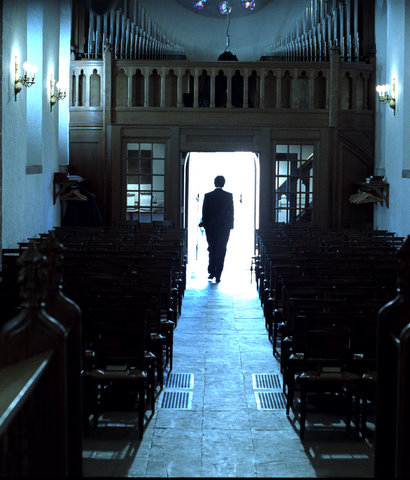
walking-into-churchFortunately, Messiah’s light can never go out, and his light isn’t dependent on me. In the parable of the ten virgins (Matthew 25:1-12), five let their lamps go out, so I guess it’s not impossible for my light to fail as well, at least while it’s in my charge.

But if I have failed, then what use am I? Of the billions of “second chances” God has already given me, does He have one more, or is it all over?

I don’t know. I guess all I can do is keep showing up until I find out one way or another.

Early in the Morning – Late in Life

Running out of timeMoshe ascended early in the morning and descended early in the morning.

-Shabbos 86a

Rabbi Menachem Bentzion Sacks used to expound upon this theme. The climb to God, the spiritual drive to perfection, must begin early in one’s life. In reference to Moshe’s receiving the second tablets (34:2), the Torah similarly emphasizes: “Be ready in the morning, and go up in the morning to Mount Sinai, and be placed there before Me at the top of the mountain.” Within these words is contained a message for all generations. Namely, one must prepare in the “early morning” of one’s life and begin an ascent in order to stand before Hashem when one reaches the peak of one’s maturity.

Our sages have praised those who partake of a hearty morning meal. We are told (Bava Kama 92b): “I will remove illness from amongst you.” (Shemos 23:25). This refers to the removal of eighty-three maladies associated with the disease called “marah”. Also among the benefits gained by eating a morning meal is that one is granted the ability to study Torah and to teach.

Finally, “Sixty men may pursue one who has early meals in the morning, but they will not overtake him.” All of these advantages can be applied as well to one who partakes of spiritual food. “Torah is compared to water, as in Yeshayahu 55:1.” – Bava Kama 17. The more a young person is nourished early in the morning by studying in the dawn of his life, the stronger and more solid are the fibers of his spiritual foundation. By means of this reinforced and vitalized internal charge, our youth can merit to study Torah, to teach Torah, and to have the knowledge of Torah permeate their beings. Shlomo HaMelech has written (Mishlei 22:6): “Educate a child in the way he should go, and when he is old he will not depart from it.” This system serves to immunize children from illnesses of the soul which otherwise infect them with ‫ .מרה‬Only when our youth are equipped with Torah ideals can they withstand the difficult and corrupting challenges which the world will present to them later.

Daf Yomi Digest
Gemara Gem
“Early in the Morning – Early in Life”
Commentary on Shabbos 86a

Fortunate are we that our youth has not caused us embarrassment in later life.

-Succah 53a

Many people gain wisdom in their later years. When they look back on their youth, they regret having squandered so much time. Some people’s “golden years” are unfortunately marred with regret over the time they lost.

Young people can learn from their elders. People who reflect on the past during their last days often say, “My greatest regret is that I did not spend more time with my family.” Has anyone ever said, “My greatest regret is that I did not spend more time at the office”?

While experience teaches most efficiently, some things are simply too costly to be learned by experience, because the opportunity to apply these lessons may never arise. Our learning too late that we have spent time foolishly is a prime example.

Ask your father and he will tell you; your elders and they will say it to you (Deuteronomy 32:7). In his last words, Moses gives us this most important teaching: “Why learn the hard way when you can benefit from the experience of others who have been there?” We should regularly ask: “How pleased will I be in the future about what I am doing now?”

Today I shall…

try to examine my actions with the consideration of how I will look back at them in the future.

-Rabbi Abraham J. Twerski
“Growing Each Day, Tevet 15”
Aish.com

None of the above is at all comforting to those of us who came to faith later in life. Worse, since my initial coming to faith was not within a Jewish context and there were a lot of “mixed messages” between Christianity and Judaism traveling in my household when my children were young, I was unable to communicate a distinct Jewish “intent” for my children who now, as young adults, operate only marginally within the Jewish lifestyle and not at all within one of religious observance and faith.

interfaithMore’s the pity and certainly as the Father, it is my fault.

Not that my children blame me, I suppose, but given the dangers we hear about intermarriage and assimilation as delivered by the Jewish community and by Jewish history, I feel the weight of responsibility rests upon my shoulders.

Patrick Stewart (in the role of Captain Jean-Luc Picard on Star Trek: The Next Generation) once delivered the line…

Remembrance and regrets, they, too, are a part of friendship…And understanding that has brought you a step closer to understanding humanity.

Being human and given my particular background, I may understand humanity, but I am no less vulnerable to human foibles and failures as the next man. I suppose, from the Jewish point of view, at least if I use the above quoted commentaries as my guide, I’ve arrived at the party far too late and wearing the wrong suit for the occasion. Only the Master suggests that it may be otherwise.

“For the kingdom of heaven is like a master of a house who went out early in the morning to hire laborers for his vineyard. After agreeing with the laborers for a denarius a day, he sent them into his vineyard. And going out about the third hour he saw others standing idle in the marketplace, and to them he said, ‘You go into the vineyard too, and whatever is right I will give you.’ So they went. Going out again about the sixth hour and the ninth hour, he did the same. And about the eleventh hour he went out and found others standing. And he said to them, ‘Why do you stand here idle all day?’ They said to him, ‘Because no one has hired us.’ He said to them, ‘You go into the vineyard too.’ And when evening came, the owner of the vineyard said to his foreman, ‘Call the laborers and pay them their wages, beginning with the last, up to the first.’ And when those hired about the eleventh hour came, each of them received a denarius. Now when those hired first came, they thought they would receive more, but each of them also received a denarius. And on receiving it they grumbled at the master of the house, saying, ‘These last worked only one hour, and you have made them equal to us who have borne the burden of the day and the scorching heat.’ But he replied to one of them, ‘Friend, I am doing you no wrong. Did you not agree with me for a denarius? Take what belongs to you and go. I choose to give to this last worker as I give to you. Am I not allowed to do what I choose with what belongs to me? Or do you begrudge my generosity?’ So the last will be first, and the first last.”

Matthew 20:1-16 (ESV)

That helps me but it doesn’t help my family, particularly my children who, as young adults, are now responsible for making their own decisions without any sort of “parental influence” from me, at least the unwanted kind.

But if I didn’t arrive early enough, perhaps it’s still not too late.

Hearken and hear Israel, (Devarim 27:9) this is the time marked for the redemption by Mashiach. The sufferings befalling us are the birth-pangs of Mashiach. Israel will be redeemed only through teshuva. (Jerusalem Talmud, Taanit I:1) Have no faith in the false prophets who assure you of glories and salvation after the War. Remember the word of G-d, “Cursed is the man who puts his trust in man, who places his reliance for help in mortals, and turns his heart from G-d” (Yirmiyahu 17:5). Return Israel unto the Eternal your G-d; (Hoshei’a 14:2) prepare yourself and your family to go forth and receive Mashiach, whose coming is imminent.

“Today’s Day”
Wednesday, Tevet 15, 5703
Compiled by the Lubavitcher Rebbe
Translated by Yitschak Meir Kagan
Chabad.org

early_morning_skyI wish I could prepare my family to go forth and receive Mashiach, but the best I’m able to do at the moment is attempt to prepare myself. On the other hand, my wife recently confided in me that she feels I blog more about my feelings of going back to church than I ever discuss with her. I was rather shocked at hearing this, since I had no idea she had any interest in my church activities at all. Maybe what I do to prepare myself to go forth and receive Mashiach is more noticeable than I thought.

On the one hand, God and faith seem to be happening too late to do much good in my life and in the lives of those I love the most. On the other hand, Rabbi Tzvi Freeman had this to say about the Rebbe’s lessons, which may also apply to me.

There is a recurring theme in the volumes of stories told of the Rebbe: The tale of the man who was in the right place at the right time.

There are the stories of someone embarking on a trip to some distant place, and the Rebbe gave him a book to take along, or asked him to do a certain thing there, or to meet a certain person. Or the Rebbe simply asked someone to go to a place, with little direction of what to do there.

And then, in these stories, it always works out that just at the right time the right person turns up in the right place and all the story unfolds. It’s all a matter of making connections: Every soul has certain sparks of light scattered throughout the world that relate to it in particular. The Rebbe sees the soul and senses, like a geiger counter, the sparks that await this soul. All that was needed is to bring the two within a reasonable proximity and the rest takes care of itself.

The stories are meant as a teaching as well. The Rebbe was revealing to us the wonder of our own lives, that there is purpose latent in whatever you are doing.

To extend the metaphor and express it as a question, is God still writing my story with purpose and intent in what I am doing today? Is it still possible for my life to draw others to God?

“A wise man changes his mind, a fool never”

-Spanish Proverb

The Broken Starfish

Do good with all your ego. Say, “I need to make this happen.” Say, “I have to see this done.”

Not only is this “I” permissible, it is crucial to getting things done.

So what is forbidden? To believe the “I” belongs to you.

-Rabbi Tzvi Freeman
“The Kosher Ego”
Based on letters and talks of the Rebbe
Rabbi M. M. Schneerson
Chabad.org

“If your contribution has been vital there will always be somebody to pick up where you left off, and that will be your claim to immortality.”

-Walter Gropius, German architect

On the surface, the quote from Walter Gropius I posted above sounds great. But then, you have to ask yourself if every single human being who ever lived and who ever will live actually ends up making a vital contribution to something. I mean after all, some of us are pretty ordinary. I mean, I know I contribute something, but can I really consider anything I do as vital?

I guess that depends on who you ask. I certainly haven’t cured cancer or accomplished world peace. I haven’t developed safe nuclear fusion power or even built the better mousetrap. I haven’t done anything that would significantly contribute to improving the world as a whole.

In fact, depending on who you ask, my life has taken away from the well-being world. Certainly being male, religious, and conservative automatically makes me a villain in some people’s eyes. If you value youth, diversity of ethnicity (non-caucasian), and “flexible” sexual orientation (anything but straight), then I’m a failure there as well. In fact, as far as the mainstream western culture is concerned, I’m pretty much a flop.

So I haven’t contributed to the betterment of the world as a whole, nor do I belong to any of the groups or “types” of people who are considered positive contributors in the progressive social and cultural values system.

If my culture were my ultimate judge, I’d be in big trouble right now.

Of course, my life hasn’t been a complete waste of time and resources, but you have to look on a very local scale. My family has depended on me bringing in an income to support them for decades.

Oh, but sometimes I’ve been unemployed, so I failed that one.

My wife and children have depended on me to be a sane, calm, organized, and supportive husband and father for thirty years.

Oh, but sometimes I’ve failed at that, too (more often then I’d care to admit).

Gee, what else?

Sorry, it’s hard to get past those first two, but I’m sure there’s a lot more.

Thankfully, I’m gainfully employed at the moment and manage to do some “side work” writing (no, not blogs, alas), so we aren’t starving. My kids are all grown and whatever contribution I’ve made as a father, for good or for ill, is set in cement. As the saying goes, “you can’t unring a bell.”

So what’s left?

According to Yerachmiel Tilles, you can actually learn how to be in exile, but only if it’s absolutely necessary.

“I live in the city of Pest, near which I own several villages, fields and vineyards. Once a large sum of money was stolen from me, and I did not know who the thief was. We had a maid—an orphan—and since we suspected that this was her doing, we took her along to the local authorities. The police there beat her in order to induce her to confess, but she insisted she had stolen nothing, so they sent her home to us. But the harsh treatment that she had endured left its mark. For some days she languished in bed, and then died.

“Two weeks later the thief was found. I was stricken by terror. I had suspected an innocent person, and through my doing, this orphan had met her death!

According to Christianity, Jesus atoned for everyone’s sins, so there should be no guilt among Christians. The blood has been washed from our hands. We are clean; pure and unsullied, white as driven snow.

For the Jewish man from the city of Pest, it wasn’t so simple. Through an act of injustice, he had caused, however inadvertently, the death of an innocent person, an orphan and a servant. He couldn’t just walk away from that and Rabbi Meir of Premishlan felt the same way.

‘Choose one of these three,’ he said. ‘Either you die, though you will be granted a place in the World to Come; or you will be ill and bedridden for three years, while the suffering you undergo will cleanse you of your sins; or for three years you will wander about as a vagabond, as the law prescribes for an unwitting manslaughterer.’

After initially refusing to choose, the man became ill and was near to death. Apparently Rabbi Meir had made the choice for him. Only by pleading for the Rabbi’s prayers was he spared, along with agreeing to walk away from his home, his family, his wealth, everything, for a span of three years.

“If you are hungry, ask no man for money or for food. But if people offer you something out of compassion, you may accept it.”

I suppose Christianity would consider this a fool’s errand and a misguided attempt to atone for a debt that can never be repaid. You can’t return a life, and even living like a homeless person for three years won’t bring that life back.

But let’s for a moment assume this story isn’t literally true. Let’s take a look at it from the point of view of a parable. What does it teach us?

“But then I heard that in Sanz, not too far from here, there lives a tzaddik known as the Divrei Chaim. In fact, I’m heading in that direction now, in the hope that he will guide me. And that is why I will not accept your donation, thank you, because at the moment I am not setting out on another leg of my trek as an exile; I am on my way to visit Rabbi Chaim of Sanz.”

The innkeeper was so curious to know what the end of the story would be that he set out with his ragged guest and escorted him directly to the rebbe’s house in Sanz. The vagabond did not even manage to put his question to Reb Chaim, when the tzaddik said: “Return to your home, traveling by way of Premishlan. Find the grave of Reb Meir, and tell him that the rebbe of Sanz says that two years of exile are enough for you, for you observed them with true self-sacrifice.”

Maybe all this was just an attempt on the now deceased Rabbi’s part to assuage the guilt of this wealthy merchant and maybe it worked. On the other hand, what did he learn about being helpless, weak, poor, homeless, and defenseless? Maybe his wandering didn’t atone for a thing, but it could have taught him a much greater sense of mercy and justice. After this experience, will he ever carelessly be cruel to someone who is in his power again?

Who knows? I hope not.

I once heard it said that, “If there are self-made purgatories, then we all have to live in them. Mine can be no worse than someone else’s.” If the Rebbe of Premishlan did not provide for this man’s “penitence,” the merchant surely would have created one of his own. In fact, the illness he suffered soon after the servant’s death may have been of his own (unconscious) doing. It’s funny what guilt and shame will do to you…and what you’ll do to yourself.

That takes care of the merchant from Pest. But what about other failures? Where do I go from here?

Do I accept the gift of Jesus Christ and blow off all of the disappointments I have committed in my lifetime as well as the consequences they created (some of which continue to wield power today), or do I, in my own way, “wander in exile?”

Here’s one possible answer, according to Rabbi Freeman:

In every hardship, search for the spark of good and cling to it. The greater the hardship, the more wondrous the good it bears.

If you cannot find that spark, rejoice that wonder beyond your comprehension has befallen you.

Once you have unveiled and liberated the spark of good, it will rise to overcome its guise of darkness. It may perhaps even transform the darkness fully to light.

I once heard a story about a starfish. Supposedly, if you cut off the arm of a starfish, it will eventually grow back. There was a man who was very cruel. He lived by the seashore and everyday, as he went about his business, he passed an area near the beach with shallow pools of water. In one of those pools, there lived a starfish.

The starfish was very beautiful, illuminating its environment with subtle reds and oranges. The cruel man did not like beauty and hurt the starfish by using a knife he carried with him to cut off one of the starfish’s arms.

By the by the arm grew back, just as it was before. This made the cruel man angry and he cut off the same arm again.

And it grew back.

And he cut it off.

And it grew back.

And this happened over and over again. Eventually, the man noticed something. Each time the arm grew back, it was a little different, a little shorter, a little more twisted and withered. The more he cut it off and the more it grew back, the more deformed and hideous the arm became.

Finally, the man didn’t need to cut the arm off the starfish anymore. It was now as injured and crippled as he was.

Rabbi Freeman says that even in the darkest circumstances, there is some spark of divine goodness. Even if you cannot find the spark, that too is a miracle, for you have a wonderful mystery laid at your feet.

But if I cannot find the spark, then it cannot “rise to overcome its guise of darkness.”

I cannot wander the world for three years as a beggar and it wouldn’t do any good if I could. Assuming God has indeed forgiven me and that the life of the Messiah has atoned for my wrong deeds, then in God’s eyes I may appear clean, but what do you do when your soul, like the arm of the starfish, is malformed and crippled?

Leonardo da Vinci once said, “Where the spirit does not work with the hand there is no art.” My hands work reasonably well, but what about the “twisted” spirit? There is no art. The sparks remain dark. But in spite of everything I’ve just said, I still can’t stop trying. It’s not like I’m even refusing to give up. I wish I could. I wish I could lay down and rest. But I just can’t.

I just read something Michoel Ogince said:

Imagine: How would the world look if we could see the Divine sparks that animate every physical creation?

Those sparks are supposed to be there (if you are willing to accept a bit of Kabbalah for a moment) in all things, including people. They’re just hidden in the mundane, waiting to be set free and to return to their divine source, that eternal flame; waiting to return to God.

If Walter Gropius is right, everyone who has made a vital contribution to something will have someone to come after them and to pick up the work when their time is done. If not, then whatever you did ends with you.

If the various motivational writers, speakers, and bloggers are right, everything everyone does at some point or another is significant and that on some level, all people are worthy, whether they believe so or not. The trick then, is actually learning to believe it, not so much about other people, but about yourself.

I once wrote something, probably inspired by Rabbi Freeman or another Chabad Rabbi, that said if you treat someone as if they are the person they are supposed to be, as if they have already done great things, as if they are already close to God and have peace and kindness in their hearts, and you keep at it long enough, eventually they will become that person. I suppose it’s the starfish story in reverse. You can injure someone long enough until they become distorted and their spirit mirrors their long torture, or you can treat someone with kindness, mercy, respect, and even honor long enough, and their injuries will heal, if not in body, then certainly in spirit.

But for all the wonderful storytelling, parables, and tales of the Chasidim, how does that ever cross over from the realm of fantasy and mystical wishful thinking into a real and practical life?

That’s my secret…I’m always angry.

Bruce Banner (played by Mark Ruffalo)
The Avengers (2012)

Balancing Flight

These days, my son David and I go to the gym together at about five every weekday morning to work out. This morning, I was on one of the aerobic machines. The last five minutes of a workout, I go into a cooldown mode trying to get my heart rate back down to something more or less reasonable. Often, I’ll close my eyes and imagine that I’m running alone on a path that’s climbing to the crest of a hill. It’s dark, but I can see the light of a new sunrise beckoning ahead of me. The light gets brighter as I near the top. It’s almost as if I can see the breath of God intermingling with my own as we approach each other. I jog toward the crest of the hill but never quite reach it before the timer on my machine gets to zero.

But in the last seconds of my fatal descent from the heavens, I manage to pull back up, avoiding a fiery disaster, and with my wings fully extended and my engines roaring with new life, I begin to climb.

-James Pyles
Climb!

I suppose it’s narcissistic for me to quote myself in order to start another blog post, but I couldn’t think of anything else that fit. OK, how about this one?

I’ve heard that there’s a kind of bird without legs that can only fly and fly, and sleep in the wind when it is tired. The bird only lands once in its life… that’s when it dies.

-Yuddy (played by Leslie Cheung)
from the film Days of Being Wild (1990)
original title, “A Fei jingjyhun”

I’ve never seen this film and probably never will, but when I Googled what I was thinking about, the above-quoted piece of dialog came up. Interestingly enough, I first heard this idea in High School. A fellow in my Creative Writing class (yeah, I was interested in writing even back then) wrote a poem (I think…it’s been forty years) about a bird without legs that was perpetually in flight. Sadly, that’s all I can remember.

But it’s enough.

I had a conversation like this with Boaz Michael at the FFOZ Shavuot Conference last month in Hudson, Wisconsin. During one of his presentations, he was talking about FFOZ being able to “land the plane,” which meant being able to get past the chaos of how various people and groups reacted to their shift away from the One Law theology. The idea was to be able to move on and focus on the primary mission and goals of FFOZ. This includes being able to reach out to the church in an effort to promote a more pro-Jewish message, and reaching out to normative Judaism to promote the Jewish Messiah.

At some point during the conference, I had several opportunities to sit down with Boaz and discuss various topics. One of the things I said is that the plane would never land because there will always be challenges.

I think that’s true of us personally in the realm of faith, too. Once we are introduced to God and realize that we must strive to approach Him, we take flight. But its only when we are in the air that we realize we can never land again. There is no turning back. There is no true sense of rest or peace.

I know that sounds strange, especially to anyone who has a bumper sticker on their vehicle that says, “No Jesus, No Peace; Know Jesus, Know Peace.” But really. You live in a world that is completely hostile to the discipline of religion in general and a Christian faith specifically (I think only Jews and, in some circles, Muslims are more reviled). Once we leave the ground, there are only two options: flight and death.

Sounds pretty grim.

When I say “death,” I don’t mean (necessarily) actually dying but if we choose to leave the faith, we die in terms of being spiritually dead. We no longer have a sense of God. Our relationship with Him is severed. We’ve gotten a divorce.

But considering flight, what a glorious thing it is. Imagine being able to fly without the aid of some sort of machine. Imagine simply extending your arms, raising your head, and realizing that your feet have left the ground. Up, up, up you go. The air is cold and crisp but you don’t feel chilled. Instead, you are invigorated, excited, thrilled. You are sharing the skies with God, seeking Him, soaring up to Him, as a bird might climb high above the clouds to seek out the Sun.

Now imagine that flying is something like running. Eventually all of that flapping will make you tired, just like running a marathon will exhaust you (not that I’ve ever run a marathon). Sooner or later you will want to land, to rest.

And you can’t.

You’re committed. It doesn’t matter how tired you get. It doesn’t matter if you’re exhausted. It doesn’t matter that your wings feel like they’re made of lead and sometimes, you feel as if you don’t care anymore. You just want to rest. Even if you fall. Even if you crash. It’s like Yuddy said:

I’ve heard that there’s a kind of bird without legs that can only fly and fly, and sleep in the wind when it is tired. The bird only lands once in its life… that’s when it dies.

So you can glide. Find a sustaining wind, a jet stream, a thermal and let them do the work. Just hold your wings out and let them catch the air and feel yourself suspended between Heaven and Earth; between life and death.

Isn’t that were we all are right now?

Bette Midler sings the Jeff Silbar and Larry Henley song Wind Beneath My Wings (no, I won’t inflict the YouTube videos on you) and the song ends with:

Fly, fly, fly high against the sky,
So high I can almost touch the sky.
Thank you, thank you,
Thank God for you, the wind beneath my wings.

That last line should probably say, “Thank God, You are the wind beneath my wings.” Without God, how could we sustain such an existence.

We all want to enter into His rest. We all long for the Messiah’s return for just that reason. The character Yuddy said cynically, “I used to think there was a kind of bird that, once born, would keep flying until death. The fact is that the bird hasn’t gone anywhere. It was dead from the beginning,” but if that were true, then faith is in vain. The atheists say that, and they say they are more alive than we are. There are more than a few believers who have been unable to find that updraft to support them, and exhausted and flightless, have collapsed back to earth like a latter-day Icarus, not because they flew too close to the Sun, but because they flew too long with leaden wings. They never found their source or they lost the will to keep seeking out that great imagination.

Now let me tell you a little secret. My wings get tired, too. It isn’t always easy to find a convenient wind to keep me aloft. Sometimes I doze and drift and wake up to find myself in a spiraling descent. I rouse my wings and push and lift and climb.

But sometimes it’s a close call.

Somewhere between Heaven and Earth are the forces that balance flight and falling. I know that God would not have called me into the sky if He only intended me to lose my ability to fly, but like that first generation of Israelites who were called out of Egypt, I sometimes doubt and complain. Like them, I sometimes feel as if God really did call me into the Heavens just to break my wings and send me plummeting back into the mud and tears. Like them, sometimes my faith is shaken. Like them, I fear defeat.

Today, if you hear his voice,
do not harden your hearts, as at Meribah,
as on the day at Massah in the wilderness,
when your fathers put me to the test
and put me to the proof, though they had seen my work.
For forty years I loathed that generation
and said, “They are a people who go astray in their heart,
and they have not known my ways.”
Therefore I swore in my wrath,
“They shall not enter my rest.” –Psalm 95:7-11 (ESV)

What a horrible thought that, after all of this effort, after tiring days and sleepless nights, no rest, no sanctuary, no oasis, constantly encountering resistance and opposition, that when it’s all over, I will not enter into His rest anyway.

So desperately terrified of a flight that never ends even after I have collapsed into shredded bone and flesh, I look around for some sign of another thermal. I try to find a way to let the wind lift me so I can rest my wings. I strive to look for the courage and strength to make it one more day in the air. I hope that God will show me, not just the ponderous effort of flying, but the glory of infinitely ascending across the skies.

Because sometimes, that’s all I have left.

Each journey the soul travels takes her higher.

There are journeys that are painful, because there is struggle. Struggle to wrestle out of one place to reach another, struggle to discern the good from the bad and put each in place, struggle to face ugliness and replace it with beauty. But in each of these, a sense of purpose overwhelms the pain and brings its own joy.

Then there are journeys that seem to have no purpose. Where nothing appears to be accomplished, all seems futile. There is no medicine to wash away the pain.

But every journey the soul travels takes her higher. It is only that in some, the destination is a place so distant, so lofty, she could never have imagined. Until she arrives.

-Rabbi Tzvi Freeman
“Unimaginable Journeys”
Based on letters and talks of the Rebbe
Rabbi M. M. Schneerson
Chabad.org

I hope, I pray, I plead that every day is a journey that takes me higher. But the destination is so far away and the effort to reach it is so great. Yet I dare not consider the possibility of falling. I must climb. I must soar. I must fly.

May God, by His grace and mercy, give me the strength. May He grant it to us all.

Repairing Life

R’Simlai notes that the posuk (Yeshayahu 45:23) teaches that everyone in the world takes an oath before God. What is this oath, and when is it administered? The oath is the one referred to in Tehillim (24:3-4), “Who shall ascend into the mountain of God, and who shall be able to stand in His holy place? He who is of clean hands and pure of heart, who has not lifted up his soul to falsehood and has not sworn deceitfully.” The oath itself is that at the time of birth the soul is commanded, “Be righteous, and do not be evil!” It is given when the soul is sent to the world. We recite Tehillin 24 – the paragraph of “L’David Mizmor” – at Maariv immediately after the silent Amidah on Rosh HaShana and Yom Kippur.

Rabbi Chaim Hager, the Rebbe from Viznitz, was also known as the Imrei Chaim. When he would read this posuk on Rosh HaShana and Yom Kippur he would cry. A visitor to his community was taken aback to hear the Rebbe whimpering at the particular point where false oaths are mentioned. The visitor could not fathom how the Rebbe could be so moved about the possibility of having taken a false oath.

As the chassidim passed by the Rebbe after davening, this visitor followed along in the line. When he asked the Rebbe for an explanation, the Rebbe answered: The Gemara (Niddah 30b) tells us that before a soul is sent into this world it is administered an oath which states “You are to be a tzaddik! Do not be a rasha!”

The oath continues with the person being adjured that even if everyone in the world tells him that he is a tzaddik, he must never become complacent by believing their compliments. Rather, the person must always strive for perfection and consider himself to be a rasha.

“Now,” continued the Rebbe, “who can confirm that he has fulfilled this oath which his soul has taken and that he is a tzaddik? Who can insist that he has not taken a false
oath?”

Daf Yomi Digest
Gemera Gem
“Be a tzaddik! Do not be a rasha!”
Niddah 30

This is midrash and not (as far as I know) literal fact, so I don’t suppose that before we are physically born, our souls take an oath before God to be righteous and not to be evil. Still, what if you happen to feel obligated to do good but find yourself doing the opposite? Who are you accountable to and what are the consequences?

I commented in yesterday’s morning meditation about the ongoing debate between Atheists and Christians (and other religious people). I mentioned that atheism as a belief system, does not have a built-in moral or ethical structure. The only requirement to be an atheist is to not believe in God or that any supernatural being had anything to do with the creation of the universe, or is involved in the course of human events.

But if you choose to be a person of faith, you are agreeing to a certain set of moral and ethical standards. If you fail to meet those standards, even occasionally, you have not only reneged on your agreement with your religion and with God, but you have dragged the Name of God through the mud for all to see, especially those who disdain religion and religious people.

If you believe that you have taken an oath before God to be a “tzaddik” and not be a “rasha,” you’ve failed that, too.

The problem is, being human, sooner or later, you will fail. If a non-religious person fails, who is hurt? It depends on the failure. They may hurt themselves, people where they work, their friends, their family, and so forth. Of course none of that is good, but when we who claim faith in God fail, particularly in a moral or ethical area, we fail all those people and we fail God as well. We become a “rasha” and not a “tzaddik.”

I’m exaggerating here. Not all people in religion can be considered tzaddikim, since these are the most righteous, noble, and holy in the world of faith. Christianity would call them “saints.” How many Christians can truly be called “saints” (although some Christian denominations consider all Christians to be worthy of being saints because of the sacrifice of Jesus Christ)?

Most of us are “mere mortals” who are doing our best to try to make it through one day at a time. Some days are better than others. Some days we’re better at honoring God and His desires than others. Some days seem pretty crummy, but we try to keep going because of our faith and our belief that God is with us, regardless of our circumstances and, in most cases, regardless of how badly we fail.

That’s why anti-Christian and anti-religious rhetoric on the Internet or in real life is so disturbing. Not because secular people don’t agree with my choosing to have faith, but because it means that I or someone like me has failed. We have failed to show that we are doing our best to follow a moral standard that was set for us by the Creator of the Universe and the lover of our souls. We have given the world the opportunity to believe that our faith is not only a lie, but an excuse to actually indulge in selfish, moral attacks on those we deem weaker or more vulnerable in the world.

I wish I could find the image I saw the other day on the web (thought it was on the atheism sub-reddit but I can’t find it). It was a “rant” on how a young atheist found himself in church (not sure how this happened) and listened to the Pastor preach on how young people don’t have values today. The person listening to the sermon reasoned that the Pastor meant that young people don’t have the church’s values, which the commenter described as repression, inequality, exclusivism and so forth. He defined atheist values as inclusiveness (except if you’re a person of faith, but that’s beside the point), equality, compassion and so forth (I really wish I could find the image because it was just brilliant).

The conclusion is that the church wasn’t particularly moral at all and that atheism, by comparison, was a much better belief system. Of course, the commenter wasn’t really describing atheism but rather western political and social progressivism which includes atheism as a core element. Nevertheless, there are times when Christians do not take the moral high road and liberal progressives do (and I should mention that there are more than a few Jewish people who have doubts about God, too).

But the argument against religion has to discount the times when Christian programs really do feed the hungry, send visitors to the sick, comforts the mourning, defends the widow, the orphan, and the disadvantaged, but those people and programs don’t make it on the news or, for the most part, in the popular social networking sites. It also isn’t generally advertised that the civil rights movement was started and supported by Christian and Jewish activists rather than atheists and scientists.

Whether you as a Christian like it or not, the world is watching and waiting for us to fail (they never expect us to succeed). Some of those watching are really anxious for us to fall face down in the sewer. When we do fail, we fall far, and we hit hard, and we take the reputation of God with us when we go over the edge.

Debating atheists on their own terms will not sanctify the Name of God. You will never elevate God’s reputation by trying to “prove” He exists and created the universe. Living a life of faith and devotion to your ideals by helping others and repairing our damaged world will. You may never convince even one atheist to consider a life of faith, but at your finest, you will be fulfilling your oath, doing your best to live as a “tzaddik,” and helping vulnerable and needy people in the process. But you should always question your own motives before criticizing someone else’s.

If you have not yet succeeded in fulfilling the criteria to be a critic, yet still feel a necessity to provide criticism, there is an alternative:

Sit and criticize yourself, very hard, from the bottom of your heart, until the other person hears.

If it comes from your heart, it will enter his as well.

-Rabbi Tzvi Freeman
“The Last Word on Criticizing”
Based on letters and talks of the Rebbe
Rabbi M. M. Schneerson
Chabad.org

Repair the world one day at a time. And for Heaven’s sake, be a tzaddik! Do not be a rasha!

The Uninspired Passover Seder

All in all, this year’s Passover seder in my home was pretty lousy. There are a lot of reasons for this, most of which I am not at liberty to discuss. It’s wasn’t anyone’s fault. No one burned the roast, or behaved poorly, or arrived abysmally late to the event. But it certainly wasn’t the joyous occasion of freedom that I usually anticipate…at least not on the surface.

But I was disappointed and sundown at the end of Shabbat and the first full day of Passover was a sad relief. At least it was over.

I had anticipated a simple but happy affair. It is true that we were all busy for the past couple of weeks and there was no elaborate preparation for Passover, as there has been in years past. My wife and daughter (the principle authors of our family seder) were incredibly busy in the weeks approaching the first day of Pesach, so there wasn’t an opportunity to plan an elaborate meal. I had once suggested to my daughter that my sons and I do the actual planning and cooking this year, but her disdain for our “male” abilities in this area became immediately apparent. I actually thought at one point that we wouldn’t have a seder at all.

As the head of household, the responsibility to lead our family seder falls to me. This is when I become acutely aware that I’m a goy and while reading the Leader’s portions of the Haggadah, I tend to become more than a little embarrassed. This year, I was also the only Gentile present in a family of Jews, so my chagrin was even greater than usual. I also hadn’t had time to even look at the Haggadah prior to the start of the seder, so I could feel myself stumbling over the words and wondering if it was such a good idea to even hold the seder.

But it was my idea.

My wife, son, and I actually talked about not having the seder earlier in the day. True, all the food had been prepared, but perhaps, given the circumstances, we should just have a “Passover-themed” meal and call it good. But then, I had to shoot off my big mouth (and remember, I’m the only goy in this conversation) and say that Passover has been observed by Jews in all sorts of difficult circumstances but it has been observed. It’s important (in my humble Gentile opinion) to not give up the celebrations and commemorations of Judaism when faced with adversity. If a little difficulty was all it took to stop a Jew from celebrating what is Jewish, then probably there would be few or even no Jews left by now, or at least, no Jews who remember how to have a Passover seder.

So we went ahead and had our seder.

I won’t describe the grizzly details, but it wasn’t joyous. It wasn’t hideous or outrageously bad, but it simply fell rather flat. It lacked “pizzazz.” Whatever makes a seder an experience rather than just a meal with some reading just wasn’t there.

It was sort of like praying to God in a time of need and then feeling worse after praying then you did before entering His presence.

And it’s over for another year. Next year in Jerusalem? I’d be satisfied if it’s next year in my dining room, as long as at the end of the seder, we all felt, as a family, as if the Passover had been observed and not mangled or abused.

So for the next week or so, I’ll be dining on dry matzah and ashes and trying to remember that holiday expectations are not the same as a relationship with God. Events can be messed up for many, many reasons but it’s what God experiences with us that matters. Since I’m not Jewish, I am not strictly commanded to observe the Passover, but my family is. If I’ve done anything to prevent them from observing the mitzvot associated with the Pesach meal, then I’ll bear my guilt and whatever consequences that go along with it alone.

It’s not particularly my fault. It’s no one’s fault. But this being the first year I’m not affiliated with any congregation or religious organization, I somehow feel that I’m to blame. I’m looking for the good among the bad; the flower among the weeds, but so far, it hasn’t bloomed.

It is hard to describe the dire poverty that afflicted the citizens of Yerushalayim eighty years ago. The scarcity of food was so extreme that children sometimes went to sleep without having tasted a morsel the entire day.

One child was was walking along on a Shabbos afternoon when he noticed a very valuable gold coin. Of course he could not pick it up, since it was muktzeh. But he figured that he could stand on it, to guard it and take it after Shabbos. Unfortunately, an Arab youth passed by and he noticed that the boy remained stationary. Understanding that it was the Jewish Shabbos and that the boy might be guarding something to take after Shabbos, he threw the child to the floor and spotted the valuable coin— which he immediately pocketed.

The child was overwhelmed with grief. Not only had he endured being thrown violently to the ground, he had also lost a coin which could have fed his family for quite some time. He went into the Rachmastrivka shul and began to cry bitter tears.

When Rav Menachem Nochum, zt”l, the Rachmastrivka Rebbe, heard a child crying copiously in the beis haknesses, he immediately went to see what had occurred. When he asked the child and was told the entire story, he comforted the child. “Today is Shabbos, so we can’t speak about money, but please calm down for now. Come to see me after Shabbos.”

After Shabbos the rebbe took out a coin—exactly like what had been taken from him— and showed it to the child. “I am happy to give you this coin if you will sell me the merit of having endured great pain for the honor of Shabbos. To keep the halachah you were thrown onto the floor and you lost a fortune of money.” But the boy immediately refused. “No. I will not relinquish the reward for this mitzvah for any money in the world!”

Later the boy recounted. “I left the rebbe’s presence with a conviction that the treasure I had gained through my suffering was much more valuable than any mere coin!”

Daf Yomi Digest
Stories Off the Daf
“The Golden Treasure”
Kereisos 20

“Blessed are the poor in spirit, for theirs is the kingdom of heaven. –Matthew 5:3 (ESV)

The “poor in spirit” is looking for the golden treasure among broken crumbs of matzah. When a celebration of God dedicated to joy and freedom is anything but joyous and free, what then?

NOTE: I didn’t post my usual “meditation” Sunday morning because, outside of Israel, both the first and second day of Passover are considered “Sabbaths.” For that reason, I refrained from making any comments on the Internet during these special Shabbatot. Thank you to those who contacted me behind the scenes asking if everything is OK. I appreciate it.