Tag Archives: faith

When We’re Left Behind

Teresa MacBain has a secret, one she’s terrified to reveal.

“I’m currently an active pastor and I’m also an atheist,” she says. “I live a double life. I feel pretty good on Monday, but by Thursday — when Sunday’s right around the corner — I start having stomachaches, headaches, just knowing that I got to stand up and say things that I no longer believe in and portray myself in a way that’s totally false.”

MacBain glances nervously around the room. It’s a Sunday, and normally she would be preaching at her church in Tallahassee, Fla. But here she is, sneaking away to the American Atheists’ convention in Bethesda, Md.

-by Barbara Bradley Hagerty
“From Minister to Atheist: A Story of Losing Faith”
NPR.org

When I read the NPR story, my immediate reaction was one of anger. I took the actions of ordained ministers who have become atheists and yet continue to serve in the pulpit as personally insulting and hypocritical. I also felt that NPR’s publishing of this story was an attack on Christians.

Of course, I shot my big mouth off on twitter and received replies asking why I felt that the telling of one person’s story on their journey of faith (even if it’s away from faith) was an attack on Christianity.

Good question. Why do I feel this way? If someone loses faith and a news agency decides to write a story about it, why do I care? For that matter, if some people choose to walk away from the church, why should I feel that they’re invalidating everything I believe in?

I don’t mind when people disagree with me. I don’t expect everyone in the world to have the same, thoughts, ideas, and opinions as I do. In fact, the world would be a pretty boring place if everyone were just like me. I actually enjoy a frank debate on interesting topics now and then. I guess it’s just the sense of being completely devalued, considered unintelligent, superstitious, and finally, irrelevant that bothers me. It’s one thing for a person to have never had faith and to refuse the option to consider God. It’s another thing entirely to be a person who was once devout and who helped others come to faith, do a complete u-turn and say God doesn’t matter anymore.

It’s like saying I don’t matter anymore, either. Faith isn’t something that I put on like a raincoat when the forecast is for thunder showers. Faith and trust in God is the fabric of my personality and the substance of my being. If we were once alike in our faith and you walk away, it’s like you’re saying who I am is no good anymore.

Two days later, MacBain returned to Tallahassee — and to reality.

“I didn’t know how far or how explosive her coming out would be, but, then again, nobody did,” says MacBain’s husband, Ray MacBain. “The next morning, we got up, I went to work and my son Alex texted me and said it went viral.”

The local TV station, WCTV, ran a series of stories about MacBain, interviewing her boss but never MacBain herself. Hundreds of people wrote comments on the site, and MacBain says they were painful to read.

“The majority of them, to begin with, were pretty hateful,” she says, although some nonbelievers soon came to her defense. “For somebody who’s been a good guy their whole life and been a people pleaser, it’s really hard to imagine that overnight you’re the bad guy.”

This is a very tragic consequence for a person, a member of the clergy, to experience when she “comes out of the closet” and admits to losing her faith. While the NPR story is very sympathetic to MacBain and others like her, I can see why people in the church would be angry.

broken-crossThere’s a sense of being betrayed. Imagine going through your own spiritual and emotional crisis. Who do you turn to for help? Often secular counselors, though well-meaning, just don’t understand the dynamics of a crisis of faith. For many people, the first person you turn to is your Minister or Pastor. You go to them, pour out your heart, fearing some “fire and brimstone” lecture, but hoping and praying he or she will understand. Then they do, they help you, they pray with you, and they gently guide you to a place where you feel like you can trust God again.

And then you find out they were lying between their teeth.

OK, it’s probably a lot more complex than that, and I certainly don’t want to be unfair to the practicing clergy who are atheists and enduring their own spiritual conflicts and crises in the pulpit, but yes, I do understand how the people around them could get very angry, could feel ripped off, and could feel discounted and even attacked.

It’s as if the one person in this world who you depend upon to be your spiritual anchor turns out to be made out of paper mache. I guess this is why we’re supposed to have faith in God and not in people, but for most human beings, it really helps to have someone spiritually stronger than you to rely upon when times get tough.

But people lose their faith. Really good and kind and wonderful people lose their faith. They go through hard times. They watch other people who they love go through hard times. Little children die of horrible diseases. Relationships are shattered. Where is a loving and compassionate God? I can see how faith could take quite a beating. Then your Minister announces to the world that she is an atheist.

Gee. What’s the point?

I’ve mentioned Joe and Heidi Hendricks before. I’ve mentioned they both have cancer. I’ve talked about the emotional roller coaster ride they’ve gone through on a daily basis for years and years. They are the two most remarkable people I know. I don’t know what holds them together…except their faith in God and their love for each other.

Put two Christians through identical horrible circumstances and then never let up on them. Hurt, terrify, and disappoint them over and over again until they both feel like they’re going to explode. Offer them comfort and hope, and then rip it away at the last possible second. What enables one Christian to endure with their faith intact or even strengthened, while the other’s faith is torn to shreds and they crawl away defeated, abandoning God as they feel they have been abandoned by God?

I don’t know. I’m not so cruel as to say one person’s faith was stronger or that the ‘weaker’ person didn’t have a ‘real’ faith at all. I can’t judge another person’s faith. I have no idea what they’re experiencing.

So if someone loses faith and walks away, what does that do to the rest of us? Why do we let it affect us at all? After all, it’s the other person’s decision. They’re making it for themselves. Pastors and Ministers and Rabbis are human beings after all. In fact, the demands of being a religious leader can make things harder rather than easier, and who knows how many of them silently suffer week after week, pretending to their congregations that they have a faith that has long since evaporated like an ice-cube in an Arizona heat wave.

We know we’re supposed to love one another. We know it isn’t easy. But that’s the point. Love isn’t easy. We have to love when it’s hard, too. If someone like Teresa MacBain in the NPR story is our Minister and she tells us she’s lost her faith, how should we respond?

“I believe in God,” says her husband, Ray. “And to be honest, I pray for her every night, I got friends praying for her.”

But he says he adores his wife and defends her right to disbelieve. “That’s why I spent 23 years in the Army. That’s why I’m still a police officer. We have freedom of speech and freedom of thought. And God never forced anybody to believe, so who am I to step up?”

This could have torn the MacBain family apart. For all I know, someday it might do just that. But we’re supposed to love and to try to understand, even when it’s not easy, and even when we feel attacked, and even when we feel insulted and take what the other person says and does really personally.

Love isn’t a warm and fuzzy feeling or lots of hugs and kisses. Love is setting aside your (my) personal reactions and trying to understand what the other person is going through. And then, you try to offer them what they need, even when it’s not what you want to give (and sadly, a recent study indicates that very religious people aren’t particularly motivated by compassion).

Is God that hard to find? When someone walks away and leaves us behind, God says we’re supposed to love them. Sometimes, with so many atheists telling us how bad we are and how evil Christianity is in the world, it’s hard to believe in love at all. It’s not rational, but if we acted like the rest of the world around us (and some religious people do), then we’d be as bad as they say we are. Jesus said to love. It hurts when someone who used to be a believer tells us they’re and atheist and that they’re “better” or they’ve “grown up” now. If we want them to respect our choice to be a person of faith, we have to allow them the same right and not take it as a slap in the face.


Who Are We in Christ, Part 3

Dear Rabbi,

If G-d is a mystery to us, beyond human reason and logic, then how can we relate to Him?

Answer:

You’re right, G-d is essentially unknowable. Yes, He makes Himself known to us through His miracles, His prophets, His Torah, and by the very act of creating and sustaining our world and our very existence. But none of that can really provide information that defines who He is. Because He cannot be defined. In the language of the Kabbalists, He is infinite, even beyond “the beginning that cannot be known.”

So how can we pray or have any relationship with a being so unknowable, so undefinable, He can hardly be called a being?

The answer is because our relationship with G-d is not measured by our capacity to understand Him, nor by heightened consciousness or any sublime ecstasy we claim to have from the experience of His presence. Our relationship to G-d is measured by what we do, by our firm adherence to the morals that He has established for us and by our integrity in our dealings with others.

One who claims he has one G-d, but cheats his fellow, has in fact two gods. One who claims he is godless, but believes in a fixed and immutable moral law is in fact a believer. Ultimately, G-d is in your life when you act G-dly—consistently following His ways in all you do. That is why He has given us His Torah, so that by following these instructions, we can bond with Him in our daily lives.

G-d is not an idea that can be grasped with the mind. G-d is real, and reality is grasped by real deeds.

-Rabbi Tzvi Freeman
“How Can I Relate to an Unknowable G-d?”
Learning and Values
Chabad.org

I know it seems strange to begin a blog post about “who we are in Christ” by quoting a question to and answer from a Chabad Rabbi, but bear with me. It’s relevant.

I wasn’t going to write a part 3 to this series (if you haven’t done so already, see part 1 and part 2 before continuing here), but I received a rather tongue-in-cheek request to do so:

Your gonna have to write a part 3 cause all the Christians are gonna be wondering what the hell your talking about Jew and gentile identity and why you aren’t talking about the spiritual blessings in the heavenlies and the freedom from condemnation and having the miraculous signs and authority to cast out demons and living forever etc. how does all the chiristian good stuff fit in here?

I’m only kinda joking. When I hear “in Christ” it makes me think of the time I spent in church!

OK, not much to build on from those statements, but it did make me realize that I didn’t provide much of a resolution to the question. On the other hand, there may not be much of a resolution to the question. That’s disappointing to hear, but that’s the nature of a relationship with God. We don’t get all the answers, at least in an intellectual fashion. To paraphrase Rabbi Freeman (and quote James T. Kirk), “We learn by doing.”

But what do we do?

For some Christians, the answer is, “we don’t have to do anything. We’re saved by grace.”

That’s true, but it’s hardly the end of the story…well, it is for some.

One of the criminals who were hanged railed at him, saying, “Are you not the Christ? Save yourself and us!” But the other rebuked him, saying, “Do you not fear God, since you are under the same sentence of condemnation? And we indeed justly, for we are receiving the due reward of our deeds; but this man has done nothing wrong.” And he said, “Jesus, remember me when you come into your kingdom.” And he said to him, “Truly, I say to you, today you will be with me in Paradise.” –Luke 23:39-43 (ESV)

For some Christians, this is the quintessential picture of salvation by grace. The thief on the cross, dying by inches with Jesus, had no time or ability to do anything except believe and confess his faith…and then expire by slow torture. He couldn’t sing praises (he would have been lucky to even catch his breath enough to make a whisper) to God, give to the poor, visit the sick, or anything else in response to his faith. He came to faith, confessed, and shortly thereafter, died.

And I suppose there’s nothing wrong with that, even if you come to faith at age 20 and then wait with your faith until age 80 or so to die.

But is who we are in the Messiah just realization of his reality, coming to faith, confessing, and then patiently waiting for the bus to Heaven?

OK, OK. You go to church on Sunday, listen to a sermon, sing hymns, give money when they pass around the plate, go to a Bible class, have coffee and donuts, and then go home. Maybe you go to a dinner and Bible study at your church on Wednesday nights, too. You celebrate Christmas. You get really worked up for Easter.

But is that it?

An observant Jew, who lives out religious details in a day-to-day manner, performing the mitzvot and following halachah might commit more “acts of righteousness” in a week than you will in an entire year.

Yes, I’m being unfair, but how many Christians out there believe that all there is to their faith is being saved by grace, going to church, and getting by until they finally die and go to Heaven to be with Jesus?

broken-crossProbably quite a few. More’s the pity.

That’s why it’s important to ask questions like, “who are we in Christ” and then start pursuing the answer with all available energy and concern. Some Christians won’t get this only because it doesn’t affect their salvation. But what if it’s not just all about salvation? What if “being saved” is only the beginning of the journey, not the conclusion?

Jonathan Stone recently wrote a blog post called Pilgrim’s Progress in which he discussed the matter of spiritual growth (or lack thereof, in my opinion). Stone says in part:

All around us the world is falling apart. We are overwhelmed with constant news of economic collapse, natural disasters, genocides, political wars, all sorts of crimes, starvation, extreme poverty and the sort. All of which reminds me of this, but you get the point. It is NOT the call of the pilgrim to stand idly by while people’s lives are shattered. However, it is the pilgrim’s call to continue on the path. And that path is a path that gets brighter and brighter as one progresses along.

This is a call to actually do something with your life of faith!

Wow! Really? What? What makes the path “get brighter?”

“When the Son of Man comes in his glory, and all the angels with him, then he will sit on his glorious throne. Before him will be gathered all the nations, and he will separate people one from another as a shepherd separates the sheep from the goats. And he will place the sheep on his right, but the goats on the left. Then the King will say to those on his right, ‘Come, you who are blessed by my Father, inherit the kingdom prepared for you from the foundation of the world. For I was hungry and you gave me food, I was thirsty and you gave me drink, I was a stranger and you welcomed me, I was naked and you clothed me, I was sick and you visited me, I was in prison and you came to me.’ Then the righteous will answer him, saying, ‘Lord, when did we see you hungry and feed you, or thirsty and give you drink? And when did we see you a stranger and welcome you, or naked and clothe you? And when did we see you sick or in prison and visit you?’ And the King will answer them, ‘Truly, I say to you, as you did it to one of the least of these my brothers, you did it to me.’ –Matthew 25:31-40 (ESV)

You know, if you continue reading verses 41-46, you sort of get the idea that what you actually do for other people does affect your salvation. If you don’t feed the hungry, visit the sick and people in prison, and so on, you can expect an answer from Jesus like,“Depart from me, you cursed, into the eternal fire prepared for the devil and his angels.”

If you claim to love God and still cheat someone or steal from someone, you have two gods.

Oh wow!

So, let’s go over this again. You get saved and then what are you supposed to do (assuming you aren’t nailed to a cross by big, metal spikes and getting ready to die)?

Feed the hungry.

Give water to the thirsty.

Welcome the stranger.

Clothe the unclothed.

Visit the sick and those in prison.

Don’t take that as a hard and fast “religious formula” whereby you perform exactly those deeds and because of that are promised a life in the world to come. Consider those behaviors as fitting into this general category:

And a second is like it: You shall love your neighbor as yourself. –Matthew 22:39 (ESV)

ReflectionA day or so ago, I was talking about love; how we are to love each other and how Jesus loves all of us. Paul described this kind of love in Ephesians 5:25-32 when he compared a husband’s love for his wife to Christ’s love for the church. Paul called it “a profound mystery.”

Here’s another one:

A new commandment I give to you, that you love one another: just as I have loved you, you also are to love one another. By this all people will know that you are my disciples, if you have love for one another.” –John 13:34-35 (ESV)

Add to the list, someone who makes peace with fellow Christians and who loves them.

So who are we in Christ?

We are people who love those who are like us and those who are unlike us. We treat everyone the way we want to be treated as human beings. If someone has needs like food, water, or companionship, we do our best to provide for those needs, not just because the other person needs them, but for the sake of our love for God and His love for us. When we show this kind of love, we’re telling people this is how God loves all human beings. Our actions are our witness and speak much, much louder than all the sermons ever spoken and all the religious tracts and pamphlets ever shoved into undesiring hands.

Now compare what the Bible says you’re supposed to be to that person you see in the bathroom mirror every morning. We know what Jesus says about who you’re supposed to be in Christ. Are you that person?

You should be able to answer that question now.

Practicing Faith, Part 3

What has to be healed in us is our true nature, made in the likeness of God. What we have to learn is love. The healing and the learning are the same thing, for at the very core of our essence we are constituted in God’s likeness by our freedom, and the exercise of that freedom is nothing else but the exercise of disinterested love – the love of God for His own sake, because He is God.

The beginning of love is truth, and before He will give us His love, God must cleanse our souls of the lies that are in them. And the most effective way of detaching us from ourselves is to make us detest ourselves as we have made ourselves by sin, in order that we may love Him reflected in our souls as He has re-made them by His love.

This is the meaning of the contemplative life, and the sense of all the apparently meaningless little rules and observances and fasts and obediences and penances and humiliations and labors that go to make up the routine of existence in a contemplative monastery: they all serve to remind us of what we are and Who God is – that we may get sick of the sight of ourselves and turn to Him: and in the end, we will find Him in ourselves, in our own purified natures which have become the mirror of His tremendous Goodness and of His endless love…

-Thomas Merton upon entering a Trappist monastery as a novice
Part Three, Chapter Four: “The Sweet Savor of Liberty” (pp 409-10)
The Seven Storey Mountain: An Autobiography of Faith

I hadn’t planned on writing a “part 3” to the part 1 and part 2 of “Practicing Faith,” but this quote form Merton’s book, which I did want to write about, sort of demanded it. I’ve been trying to define what “practicing faith” means which, for me, isn’t always the same as “practicing religion.”

Religion is the mechanism or the interface by which we practice our faith. For Thomas Merton, that interface was the Catholic church and eventually, a Trappist monastery. That’s not exactly my cup of tea and it may not be yours either, but it certainly was his and in the above quote, he has a point to make that I rather like.

But it’s not perfect.

On the one hand, Merton draws a sharp dichotomy between our human self and our selfless love of God. On the other hand, he reunites these two halves when he says our “purified natures which have become the mirror of His tremendous Goodness and of His endless love…” Christianity tends to split the world into the secular and the Divine, devaluing the former and elevating the latter to the highest degree. This explains the rationale for Merton’s joining a “contemplative monastery” in which he could engage in the “little rules and observances and fasts and obediences and penances and humiliations and labors” that comprise monastery life as a life dedicated to our holiness while minimizing our human nature.

Judaism doesn’t support a monastic lifestyle and generally believes that everything we do in the secular has meaning and substance in the Divine realm without really being separated from it. Life is life and faith is faith; a unified whole, much as God is, not divided or relegated into different categories, meanings, or realms. If God created you to be here in the world, then He meant for you to live out your holy life in a concrete universe, not pining away for the ephemeral, spiritual heavens.

When we are confronted to lead a life of faith, we have to ask ourselves (and God) how we’re supposed to do it. For Merton, the answer was to convert to Catholicism and later, to join a Trappist monastery in Kentucky. That isn’t the answer for all of us.

But wait!

If God is One and His Name is One, isn’t there just One religion or One religious sect…one and only one way to worship Him?

You’d think so, which is what allows many people in many different religions to say, “we are the one and you are not.” But I recently compared Thomas Merton and some of the things he teaches to Rabbi M. M. Schneerson and his teachings, and I think we can agree that these two men had radically different ways of practicing faith and certainly of practicing religion.

But the vision or essence behind the mechanics of their practice may have been more closely aligned than we can see on the surface. True, they would have disagreed on a good many things, but they also seemed to see and talk to the same God and I am convinced that God talked to both of them.

I don’t know how they would have tolerated each other if they had actually ever met (both the Rebbe and Merton have since passed away some time ago, so only God knows what a conversation between these two would be like), but in stripping away the “little rules and observances and fasts and obediences” involved in each of their daily lives, maybe we can get a glimpse of the bigger picture.

He has an opinion of how each person should be, how each thing should be done. Those who follow his choreography are his friends, those who dare dance their own dance are his enemies; and few, if any, are left without a label.

In truth, he has neither enemies nor friends. He has only himself, for that is all that exists in his world.

“If you don’t want to be so lonely,” we tell him, “make some room for the rest of us.”

-Rabbi Tzvi Freeman
“The Thick Lagoon of Ego”
Based on letters and talks of the Rebbe
Rabbi M. M. Schneerson
Chabad.org

I suppose I’m coming dangerously close to saying that what religion you practice doesn’t matter and that there are many roads that lead to God. That statement is bound to offend just about everyone, since we are all deeply invested (me too) in our various religions and how our particular religion is a wonderful way (or the wonderful way) to encounter God and find the meaning of our life in Him. In fact, as proof there is one and only one way, Christians will undoubtedly quote:

Jesus said to him, “I am the way, and the truth, and the life. No one comes to the Father except through me. –John 14:6 (ESV)

This, for the Christian, would automatically rule out the Rebbe as having the ability to come to God and for many Protestants, it would rule out Merton’s having a life of holiness as well. And yet, how can we be so sure of just who God accepts and who God rejects, based on their life and how they understand practicing faith?

Human beings can be terribly arrogant and self-absorbed. In order to feel as if we matter to God, we sometimes make the mistake of believing that God cares less for people who are not like us than for people who are like us. For God to love us more, He must love someone else less. We have to be the favorite child to feel secure, so God’s other children can’t also be “favorite.”

Blowing out someone else’s candle doesn’t make yours burn any brighter. -Anonymous

If you want to get better at your faith, by all means, please practice it. But this isn’t a competition. You don’t have to worry that God has only one “gold medal” in the “holiness Olympics.” If we’re competing against anyone, it is ourselves. The only challenge is to be a better person of faith today than we were yesterday. What someone else does or doesn’t do in practicing their faith cannot and does not affect who we are and what we are doing as people who are faithful to God.

We spend all of our lives trying to understand God and understand who we are in Him. That’s a full time job. Do we really need to waste that time worrying about the other person and how he or she chooses to practice faith?

There are no things. There are only words. The Divine Words of Creation.

The words become scattered and we no longer understand their meaning. Only then are they things. Words in exile.

If so, their redemption lies in the story we tell with them. Reorganizing noise into meaning, redefining what is real, and living a life accordingly.

-Tzvi Freeman
“Reinterpretation”
Based on letters and talks of the Rebbe
Rabbi M. M. Schneerson
Chabad.org

We are all journeying on our own path. We are all using our own words to tell our story about God. We each live our life according to that story. The story is our tale about how we practice our faith, and it is always different for each person…but God is the same.

Practicing Faith, Part 2

RebbeSurprisingly, when this question reached Rav Yosef Shalom Eliyashiv, shlit”a, he ruled leniently. “Although the Mishnah Berurah rules that one may not eat food which was in one of the seven liquids without washing, I am lenient in this matter. Although it is certainly a good custom to follow the Magen Avraham in this regard, it is not an obligation. ‬But one who wishes to wash should not interrupt between washing and eating.

Mishna Berura Yomi Digest
Stories to Share
“The Morning Snack”
Shulchan Aruch Siman 158 Seif 4

On today’s amud we find that sometimes being unnecessarily strict
stems from pride.

Rav Meir Chadash brought a story to illustrate how bad middos can cause an otherwise wonderful person to act inappropriately. “A certain woman was very careful to give generously to tzedakah, even going to much trouble so that yeshiva students should eat at her house at no charge. One time a certain student used a bit more water than necessary to wash his hands. The woman began to scream, ‘Kloiznikim! Good-for-nothings! These people are not careful to save water!’

He concluded, “This is a classic case of petty miserliness. The underlying attitude is, ‘If I give, that is fine. But if someone takes even a little without my say-so, I am willing to heap insult and shame on his head!’”

Mishna Berura Yomi Digest
Stories to Share
“The Root of Sin”
Shulchan Aruch Siman 158 Seif 9

But when this question reached Rav Nissim Karelitz, shlit”a, he ruled that no correction was necessary. “Although it is true that some sources hold this chumrah—the Yafe L’Lev is another achron who is stringent—the Chazon Ish clearly disagrees. He writes that one can certainly wait for his hands to dry since the main reasons we must dry our hands before eating is either because of the defiled water which is still on one’s hands or because it is disgusting to eat with wet hands…”

Mishna Berura Yomi Digest
Stories to Share
“A Little Knowledge”
Shulchan Aruch Siman 158 Seif 11

These Rabbinic rulings may seem strange, arcane, and even bizarre to most Christians. We aren’t often taught to be particularly concerned by whether or not we should wash our hands as a condition of dunking a donut in a cup of coffee, if we should use only a certain amount of water in hand washing, and whether to use a towel or forced air to dry our hands after washing as religious obligations, but they can be serious concerns for the observant Jew.

Remember in Part 1 of this “mediation,” I was talking about “practicing faith.” I said that we practice faith by doing and certainly in the examples I’ve just presented, we see Jewish people who are greatly concerned with exactly how they practice, even the smallest details of their faith in daily living.

I’m not suggesting that we Christians go down that particular path. Remember, in Part 1, I quoted from a commentary on the Ethics of Our Fathers that defined a Jew as someone who was more than the sum of his practices and stated that even if a Jew were to completely ignore all of the Torah, they would always be a Jew before man and God.

That doesn’t seem to describe the Christian, since it’s our faith and how we live it out that defines us.

However, I offer these quotes for another reason besides just as examples of “practicing Judaism.” There’s a sort of fallacy in Christian thinking that says Jewish religious practice is inflexible and practically dictatorial. The concept of “being under the Law” is a statement uttered by Christians almost always in a tone of horror. Even those Christians (and some “Jewish Christians”) who say they love Israel and feel called to the Torah, have significant problems with what is referred to as “Rabbinic Judaism.”

And yet we see that there is a great deal of flexibility in how Rabbinic rulings are issued and in how Judaism is practiced. We even see that excessive rigidity is considered sinful rather than pious, and an indication of an individual’s personal pride rather than a sincere desire to serve God.

Ironically, the sort of rigidity and judgmentalism that has been attributeed to Rabbinic Judaism actually describes some non-Jews in certain corners of the Hebrew Roots/Messianic Jewish movement (I use those terms somewhat loosely, since under that umbrella is contained a broad spectrum of beliefs and practices, and not all of them healthy). I’ve personally heard non-Jews in particular areas of this movement (not those with whom I was closely associated) argue almost violently about the proper method of tying tzitzit or what level of kashrut is considered correct. These same folks also dismissed “Rabbinic Judaism” out of hand and proceeded to “possess” the “practice” their own brand of “being Jewish” based on their personal interpretation of scripture or worse, based on some self-declared Gentile “Rabbi’s” revelations from (supposedly) on high.

Practicing righteousness and faith isn’t the same as practicing self-righteousness and faith in a cult leader. It’s also not the same as making concrete judgments on religious and practical behaviors not only for your own group, but for everyone around you and for the world in general.

It also isn’t exercising the supreme irony of Gentiles “practicing Judaism” by removing everything Jewish from the practice except some superficial “Jewish-like” activities. You don’t love Jews by hating Judaism.

Case in point.

Rav Aharon Leib Steinman, shlit”a, once discussed the terrible scourge of sin’as chinam in a moving manner. Speaking in a pained tone of voice, he said, “It is sad that when a Jew wants to expand his apartment, his neighbor—even if the construction doesn’t affect his apartment in the slightest—will often find an ‘underground’ way to stop construction. Such a person often won’t even allow his neighbor to put up a sukkah for seven days a year. But why should he care? In many situations the protestors’ apartment is in the north and the construction is in the south. Although there is no earthly reason why such construction should annoy them, they still protest.

Daf Yomi Digest
Stories Off the Daf
“Human Nature”
Me’ila 4

Here, we see human nature getting in the way of practicing even general human compassion. When a Jew wants to put up a sukkah, for example, in obedience to the commandments, why should his non-Jewish neighbors care? It doesn’t affect them and they aren’t being made to obey the commandment themselves.

The same goes for those non-Jews who are attracted to certain aspects of Judaism but who do not accept the authority of the Rabbis to be able to define what is Jewish religious practice and lifestyle. If there are observant Jews who do choose to keep Glatt Kosher, for example, or who do wash their hands in the morning, or who say the Shema twice daily…even if you disagree with how those Jews practice their faith, why do you, a non-Jew, care enough to say they are wrong and to devalue who they are? What harm does it do to you? Aren’t you free to practice your faith as you see fit?

But this is exactly the point. If you are too rigid in how you judge the religious practice of others or object to what another person does or doesn’t do in the course of their relationship with God, are you practicing faith or practicing being a prideful human being?

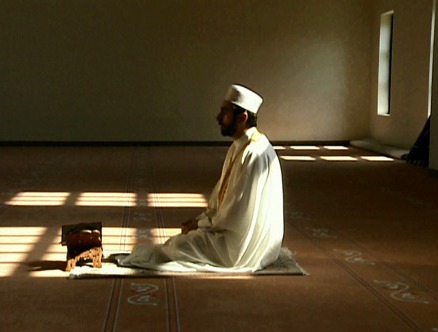
To take it a step further, if a Muslim man kneeling on his prayer rug cries out to God with all his soul for a greater understanding of Allah and the desire to serve and be holy, why do you, even if you have “issues” with Islam, care if or how that Muslim prays? Why do you care if or how a Jew prays? If you have issues with the Christian church and believe bad things about the religion where you were raised, why do you care if or how some Christians pray to God?

If you really want to practice faith and get better at it; if you really want to make a small faith bigger, what must you do?

He has told you, O man, what is good; and what does the LORD require of you but to do justice, and to love kindness, and to walk humbly with your God? –Micah 6:8 (ESV)

God, through the prophet Micah, didn’t say to judge others, force your religious convictions on everyone you disagree with, and demand that you take over another group’s faith practices because you “know better.”

Do justice.

Love kindness.

Walk humbly with your God.

So is this practicing Christianity? It is if you’re a Christian. It’s practicing Judaism if you’re a Jew, and practicing Islam if you’re a Muslim. For all I know, it’s practicing Buddhism is you’re a Buddhist. Most of all though, it’s practicing getting closer to God.

So practice justice, kindness, and humility every day and perhaps then, your small faith will begin to grow.

Practicing Faith, Part 1

The essential thing, however, is the training to habituate one’s mind and thought continuously, so that it always remain imprinted in his heart and mind, that everything one sees with his eyes — the heavens and earth and all they contain — constitutes the outer garments of the king, the Holy One, blessed be He.

In this way he will constantly remember their inwardness and vitality, which is G-dliness.

This is also implicit in the word emunah (“faith”), which is a term indicating “training” to which a person habituates himself, like a craftsman who trains his hands, and so forth.

Today’s Tanya Lesson (Listen online)
Likutei Amarim, end of Chapter 42
By Rabbi Schneur Zalman of Liadi (1745-1812), founder of Chabad Chassidism
Elucidated by Rabbi Yosef Wineberg
Translated from Yiddish by Rabbi Levy Wineberg and Rabbi Sholom B. Wineberg
Edited by Uri Kaploun.

Now faith is the assurance of things hoped for, the conviction of things not seen. For by it the people of old received their commendation. By faith we understand that the universe was created by the word of God, so that what is seen was not made out of things that are visible.

Hebrews 11:1-3 (ESV)

Um, what is “faith” again?

We tend to think of faith as something we either have or don’t have, kind of like the color of your eyes. You either have brown eyes or not. It’s not something that comes and goes in stages, exactly. You either have faith or you don’t. You either believe in God or you don’t.

But wait a minute. Faith and belief aren’t the same things, are they? The writer of Hebrews seems to say that faith is the mechanism by which we understand that everything was created by the word of God, even though there isn’t any obvious physical evidence to support that this must be so.

But the lesson from the Tanya says that faith (emunah) is something we can be trained in and that we learn to habituate. Faith is learned? You can train in faith?

Kind of an interesting concept, and if you think about it a minute, it makes a lot of sense.

And he said to them, “Why are you afraid, O you of little faith?” –Matthew 8:26 (ESV)

But Jesus, aware of this, said, “O you of little faith, why are you discussing among yourselves the fact that you have no bread?” –Matthew 16:8 (ESV)

Then Jesus said to her, “O woman, your faith is great; it shall be done for you as you wish.” And her daughter was healed at once. –Matthew 15:28 (ESV)

Here, we see that faith can be little or great. Presumably, faith can be anywhere between little and great, too. So there are degrees of faith. But where do these “degrees” come from? Is there anything we can do if we have little faith to make it great or at least bigger than it was before?

Jesus seemed to think so, otherwise he wouldn’t have criticized his disciples for having little faith. But how is this to be done? The commentary in the Tanya Lesson continues:

The Rebbe notes that “who trains his hands” means: “He is cognizant of the craft in his soul; he has a natural talent for it, but needs only to train his hands, so that it will find tangible expression in his actions (be it through art, or fashioning vessels, or the like).”

This is sort of like the old joke about a country fellow who decided to visit New York City. He went on a sightseeing tour of all the famous places in New York such as Times Square, Madison Square Garden, and the Empire State Building. He also bought a ticket to a Broadway play, but as the time of the performance was drawing near, he realized he didn’t know how to find the theatre.

The tourist stopped someone on the street who looked like a local and asked, “How do I get to Broadway?”

The New Yorker brusquely replied, “Practice.”

Can faith be practiced? Can we learn faith the same way we learn a skill, such as painting, molding clay, or replacing a light switch in the hallway of your home?

The Rebbe said something else though. He said that the soul “has a natural talent for it…” (faith) “…but needs only to train his hands, so that it will find tangible expression in his actions.”

So who has a natural talent in faith?

G-d speaks with us at every moment.
His words form the world we see about us.

A prophet is no more than one who catches those words before they congeal into space and time.

-Rabbi Tzvi Freeman
“Prophecy”
Based on letters and talks of the Rebbe
Rabbi M. M. Schneerson
Chabad.org

While the Rabbi is talking about prophecy and not faith, I think we can apply his lesson to our “meditation.” God speaks to everyone, not only by virtue of the universe continuing to exist, but in many other ways. We were all created in His image. We are all His children, whether we even acknowledge Him or not. That means, we all have the ability, if we choose to use it, to connect to Him using faith as our bridge. True, some folks seem to have a greater talent for faith than others, as the Prophets had a greater “talent” for “hearing” God and passing on His Words, but even as we all can “hear” the voice of God, we all have a native talent to respond with faith…and to strengthen that faith by practicing it.

So how to you practice the “skill” of faith?

Part of the answer is in the source of the question. You study. You also pray, meditate, seek reliable teachers, spend time with other people who are also learning faith, and you let your general, day-to-day behaviors reflect your practice. This goes back to things I’ve said before about donating food to the hungry and visiting sick people in the hospital. If you want to be a person of faith, you have to act like a person of faith.

We learn by doing.

But I’ve heard some Gentile Christians say that if we are attracted to “practicing” the Bible and particularly practicing what we consider the Torah, we are really “practicing spiritual Judaism.” But is that true?

Who Is A Jew?

This apparent dichotomy in the nature of relations between Jew and Jew also appears in the words of our sages which describe the very definition of Jewishness and a Jew’s relationship with G-d.

The Talmud states: “A Jew, although he has transgressed, is a Jew.” He may violate, G-d forbid, the entire Torah, yet his intrinsic bond with the Almighty is not affected. In the words of the Midrash, “Torah preceded the creation of the world… but the thought of Israel preceded all in the mind of G-d.”

Commentary on Ethics of Our Fathers, Chapter 1
“Ulterior Motive”
Nissan 28, 5772 * April 20, 2012
Chabad.org

Judaism, at least from the Chabad perspective, considers a Jew to be a Jew, even if he or she doesn’t “practice Judaism” at all. That can’t apply to we non-Jewish Christians if we must practice our faith to be disciples of the Master and are attached to the God of Israel by that practice. So it would seem that “spiritual Judaism” isn’t something that the goyim (non-Jews) can possess, even by diligent practice.

So what are we practicing when we who are not Jewish, practice faith? Christianity?

I’ll save the answer for Part 2.

Unavoidable

It was the summer of 1930, before most of these things had happened…It was several months since I had been in London, and then only in passing, so I had really hardly had seen Father at all since he had entered the hospital the autumn before.

So all of us went to the hospital. Father was in a ward. We had arrived much too early and had to wait. We were in a new wing of the big hospital. The floor was shiny and clean. Vaguely depressed by the smell of sickness and disinfectant and the general medical small that all hospitals have, we sat in a corridor downstairs for upwards of half an hour…

Finally, the clock we had been watching got around to the appropriate hour; we went up an elevator. They all knew where the ward was – it was a different ward. I think they had changed his ward two or three times. And he had had more than one operation. But none of them had been successful.

We went into the ward. Father was in bed, to the left, just as you went in the door.

And when I saw him, I knew at once there was no hope of his living much longer. His face was swollen. His eyes were not clear but, above all, the tumor had raised a tremendous swelling on his forehead.

I said: “How are you, Father?”

He looked at me and put forth his hand, in a confused and unhappy way, and I realized that he could no longer even speak. But at the same time, you could see that he knew us, and knew what was going on, and that his mind was clear, and that he understood everything.

But the sorrow of his great helplessness suddenly fell upon me like a mountain. I was crushed by it. The tears sprang to my eyes. Nobody said anything more.

I hid my face in the blanket and cried. And poor Father wept, too. The others stood by. It was excruciatingly sad. We were completely helpless. There was nothing anyone could do.

What could I make of so much suffering? There was no way for me, or for anyone else in the family, to get anything out of it. It was a raw wound for which there was no adequate relief. You had to take it, like an animal. We were in the condition of most of the world, the condition of men without faith in the presence of war, disease, pain, starvation, suffering, plague, bombardment, death. You just had to take it, like a dumb animal. Try to avoid it, if you could. But you must eventually reach the point where you can’t avoid it any more. Take it. Try to stupefy yourself, if you like, so that it won’t hurt so much. But you will always have to take some of it. And it will all devour you in the end.

-Thomas Merton
“Chapter Three: The Harrowing of Hell”
pp 90-91
The Seven Storey Mountain: An Autobiography of Faith

Reading this part of the chapter doesn’t hurt so much today as it did when I first read it a day or two ago. It doesn’t hurt so much as it did when I read it the day after writing about Joe and Heidi’s latest scene from their cancer battle. Merton was about 17 years old when he visited his dying Father in the London hospital as described above. He had gone through a few vague encounters with religion up to that point in his life, but none yet with God. So as he said, facing his father’s terrible illness and imminent death was like a “dumb animal” facing a tragedy it could not avoid and had no ability to understand.

Does faith make tragedy easier to handle? Joe and Heidi think so. I can’t imagine what that must be like, and frankly, coward that I am, I don’t want to imagine. Who actually wants to face that and have their faith tested? Peter, James, and John had their faith tested at Gethsemane (Mark 14:32:42) and it was found wanting.

My friend Leah said that having faith helps. When her husband died in a sudden accident many years ago, she went around in a fog for the first twenty-four hours, but after that, it was her faith in God and the certainty of the resurrection that sustained her. It was still “the year from hell” in which she grieved terribly, and any hint of joy was fleeting if present at all, but the presence of God was with her the entire time. She was not alone.

I suspect Merton was alone in his grief and sorrow when he visited his father in the hospital, even though he was surrounded by family. God was there too, but no one noticed. No one except Merton’s father, that is.

In fact, if he could not talk, there were other things he could do. One day I found his bed covered with little sheets of blue note-paper on which he had been drawing. And the drawings were real drawings. But they were unlike anything he had ever done before – pictures of little, irate Byzantine-looking saints with beards and great halos.

Of us all, Father was the only one who really had any kind of faith. And I do not doubt that he had very much of it, and that behind the walls of isolation, his intelligence and his will, unimpaired, and not hampered in any essential way by the partial obstruction of some of his senses, were turned to God, and communed with God Who was with him and in him, and Who gave him, as I believe, light to understand and to make use of his suffering for his own good, and to perfect his soul. It was a great soul, large, full of natural charity. He was a man of exceptional intellectual honesty and sincerity and purity of understanding. And this affliction, this terrible and frightening illness which was relentlessly pressing him down even into the jaws of the tomb, was not destroying him after all.

-Merton pp 91-92

Merton wrote his autobiography as a young Trappist monk and saw the world and his past through the newly minted lens of his Catholic faith, rather than from the perspective of later in his life as a cleric. I have no idea if, at 17, any of this would have occurred to him, and of course, he had no idea what his father was subjectively experiencing, but his father, a professional artist, was communicating that experience in the only way he knew how. And years later, it’s possible that his son finally understood.

At the time, Merton probably only understood the following, and ironically, decades removed from the event and having lived a completely different life than he, I also understand.

Indeed, the truth that many people never understand, until it is too late, is that the more you try to avoid suffering, the more you suffer, because smaller and more insignificant things begin to torture you, in proportion to your fear of being hurt. The one who does most to avoid suffering is, in the end, the one who suffers most: and his suffering comes to him from things so little and so trivial that one can say that it is no longer objective at all. It is his own existence, his own being, that is at once the subject and the source of his pain, and his very existence and consciousness is his greatest torture.

-Merton, pg 91

I don’t know if Merton captured the ineffable essence of all human suffering in that paragraph or if, by the grace of God, he managed to actually create in that brief stream of words, a completely accurate description that points to my life as it is today specifically for the sake of my soul, but these words speak to me like no other words that I’ve ever read. In virtually one literary breath, Merton describes my predicament and it’s potential cure. In trying to avoid suffering, I have become the author of my own pain. Every little event is registered as another injury, and my very life, with every beat of my heart, is my greatest agony. Each heartbeat is like another splinter inserted into my eyes, and each breath is constricted by a great hand crushing my lungs.

And the cure is to stop avoiding suffering.

Strange cure, I must admit. After all, who seeks to suffer? Who actually wants their own faith to be tested?

But Peter became a better man after he recovered from denying the Master. Merton believed that, even in terrible suffering, with death waiting for him as close as his shadow, that his father’s soul was becoming better because of his torment. Of course, this is a Catholic’s perspective on the matter, and a 17 year old Merton could not truly assess the condition of his father’s soul, but his father could not avoid suffering and so there he was; drawing “little, irate Byzantine-looking saints with beards and great halos,” and communing with God.

So I went back to school, after seeing Father for a moment on the way through London. I had been back for barely a week when I was summoned, one morning, to the Headmaster’s study, and he gave me a telegram which said that Father was dead.

-Merton, pg 93

And so the great mass of horrible agony and pain is really made up of tiny bits and pieces of frustration and annoyance and sorrow. The missed opportunity to say, “I love you,” the driver that cuts you off on the road, the harsh rebuke from your daughter, the unfriendly chiding of an online critic; these are all filtered through the self and the self-loathing of my existence and my life as I vainly attempt to avoid injury and insult. The harder I try to isolate myself from the “slings and arrows,” the more they strike and stab at me.

Is there some truth after all in letting down my defenses and praying that God stand with me in the face of my own wretched life?

Ironically, it was famed martial arts master Bruce Lee who said, “Do not pray for an easy life, pray for the strength to endure a difficult one.” On the one hand, I have no control whatsoever, of the seemingly random events of the world around me. But on the other hand, I have a great deal of control about how or if I choose to try to avoid them and, in encountering such events, how I choose to interpret their impact. Am I in pain? It feels that way. Do I have to be? I don’t know.

Rabbi Tzvi Freeman, interpreting the letters and talks of the Rebbe, Rabbi M. M. Schneerson, said:

In the morning, we make our plea as though unable to tolerate another moment. And as evening comes, we demand again as though morning never passed.

We live on the verge of eternity. May we arrive now.

We live on the verge of eternity, as if life were like dancing on the edge of a razor blade, running fast and hard, terrified that if we fall, we’ll be cut to ribbons.

But what if we…what if I chose one day, to deliberately fall off of the edge of the razor, but rather than falling headlong into the sharpened metal and being destroyed in bloody shredded flesh…

…I flew?