Tag Archives: First Fruits of Zion

Messianic Judaism for the Rest of Us

In November of 2014, the Caspari Center in Jerusalem invited me to participate in a panel discussion titled “Four Different Views on Messianic Judaism.” It wasn’t a debate, but rather just an opportunity for the panel members to express their own thoughts on the subject.

-Boaz Michael
from The Director’s Letter: “Four Different Views on Messianic Judaism,” p.8
Messiah Journal, issue 118/Winter 2014/5775

I’ve been having an interesting discussion in a closed Facebook group dedicated to Messianic Judaism in relation to my blog post Will Our Children Have Faith. Some of the dialogue addressed issues of Jewish and non-Jewish roles and responsibilities within the Messianic community and whether or not there should be any significant presence of Gentiles in Messianic Jewish synagogues.

Then the current issue of Messiah Journal arrived in my mailbox and I start reading Boaz’s latest “Director’s Letter.”

In an earlier letter presented in issue 117, Boaz said:

When I say that “Messianic Judaism is the practice of Judaism,” I mean to imply that we should regard ourselves more of a functional sect of Judaism rather than another Protestant Christian denomination.

In the current letter (pp.7-8), Boaz acknowledges:

I realize that this definition of the Messianic movement is not to everyone’s taste, and that many Messianic Jewish leaders would phrase it differently, but I believe that Messianic Judaism should be a real Judaism — not a Jewish flavored sect of Protestant Christianity.

I agree that statement would not work very well for many, most, or all Protestants, and probably not for many, most, or all Hebrew Roots Gentiles either. But here’s where I think Boaz is coming from. Remember that Boaz and his family made Aliyah and moved to Israel, specifically Jerusalem, some months ago. He stated earlier in his letter:

Messianic Judaism in Israel is faltering and fragile, and Messianic Jews here face enormous pressures. For the most part, Messianic Judaism in Israel has been raised up under the heavy influence of Missionary Messianic Jewish theology, and the Messianic congregations in Israel are sometimes more like Pentecostal churches than Messianic synagogues.

-Michael, p.7

I know nothing of Messianic groups in Israel, but I’ve attended plenty of Gentile-driven Hebrew Roots groups over the years here in the U.S., and their services are often some form of “Jewish-lite,” with a few really seeming like typical Evangelical or Pentecostal churches with a little Hebrew thrown in for seasoning (and to be fair, a few of them strongly attempt to map to a more authentic synagogue service).

But Evangelical and Pentecostal Christianity is where the movement came from decades ago and the influence of the Church on the Messianic movement can still be keenly felt, particularly, as Boaz points out, in Israel.

However, I’m building to a point which is to call out a few details about the four perspectives Boaz presents in his letter. The presenters, other than Boaz, at the Caspari Center for Biblical and Jewish Studies were Seth Ben-Haim (UMJC; MJTI), Baruch Maoz (Soli Deo Gloria), and Alec Goldberg (Caspari Center).

Mr. Maoz’s perspective on Messianic Judaism matches how Evangelical Christianity sees the role of believing Jews; that Jesus replaced the Law and that a Jewish Christian is no longer obligated to observe the mitzvot. Mr. Ben-Haim’s view is the polar opposite and coincides with Rabbi Mark Kinzer’s conception of Bilateral Ecclesiology as presented in his book Post-Missionary Messianic Judaism: Redefining Christian Engagement with the Jewish People.

Boaz’s definition of Messianic Judaism is represented by four points, which I’ll present in summary here except for point four which I’ll quote in its entirety:

  1. Peace, particularly between believing brothers and sisters and between Jews and Gentiles.
  2. Torah observance for the Jew in Messiah.
  3. Observance of the traditions in Messianic Judaism.
  4. Gentiles: I stated that, since the kingdom is represented by both Jews and Gentiles worshiping together, Messianic Judaism today should have a mechanism and broad enough self-definition to include Gentile disciples in positive and affirming ways. This is the message of Messianic Judaism for the nations.
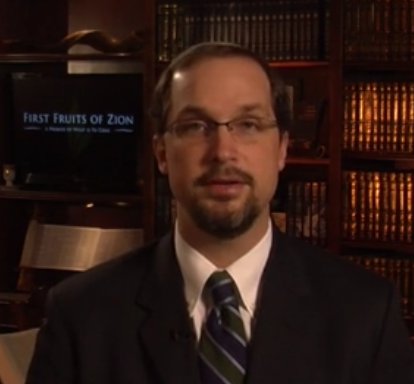
Boaz Michael
Boaz Michael

As you can see, Boaz’s definition of Messianic Judaism is very inclusive of non-Jewish disciples, although it’s true that he didn’t specify what sort of mechanism should be used to “include Gentile disciples in positive and affirming ways.” He did mention the phrase “Messianic Judaism for the nations” which also appears on the website of Beth Immanuel Sabbath Fellowship located in Hudson, Wisconsin. Beth Immanuel is led by one of First Fruits of Zion’s (FFOZ) head teachers D. Thomas Lancaster who has also been a good friend of Boaz’s for many years. The fact that Beth Immanuel seems to have a leadership that is mostly Gentiles and presents itself as “Messianic Judaism for the Nations” may be the mechanism Boaz had in mind.

But this doesn’t change the need of Jews in Messianic Judaism to belong to wholly Jewish community and to live completely Jewish lives of performing the mitzvot and observing the traditions, just like their other Jewish brothers and sisters in other branches of Judaism.

Going back to the panel discussion, the wild card in the deck seemed to be Alec Goldberg. Boaz expected Mr. Goldberg to agree with Mr. Maoz’s understanding that Jesus replaced the Law, but he was in for a surprise:

He said, “I have come to realize that as a Jew, I am called to live out the Torah.” Goldberg explained that the prophetic-kingdom promise of the new covenant in Jeremiah 31 had revealed to him that the Torah is part of the new covenant: “I will put my law within them, and I will write it on their hearts” (Jeremiah 31:33). Moreover, he had come to realize that the Jerusalem Council of Acts 15 which exempted Gentiles from circumcision and obligation to the Torah’s Jewish identity markers said nothing at all about exempting Jews from any aspect of the Torah. Since the Jerusalem Council did not address Jews in their ruling, he deduced that they intended Jewish believers to remain faithful to Torah.

-ibid, p.10

Actually, from my perspective now, Mr. Goldberg’s conclusions seem fairly obvious, since the problem the Jerusalem Council was trying to solve was what to do with all the Gentiles, not how has devotion to Messiah changed Jewish obligation to Torah. Jews and the Torah weren’t on the table, so to speak. Only trying to figure out how Gentiles were receiving the Holy Spirit without first converting to Judaism. The answer was that conversion was not necessary and thus Gentile Torah observance was not incumbant upon them, only an Abraham-like faith in God through Messiah. But like I said, Jews and Jewish Torah observance weren’t even on the radar screen.

At one point in his letter, Boaz wrote, “I could hardly contain my enthusiasm over Mr. Goldberg’s remarks.”

It seems that on occasion, a person’s long-held and firm beliefs can be changed thanks to regular and diligent Bible study and the influence of the Holy Spirit upon a human life.

I’m writing this “meditation” for a few reasons. I wanted to present the fact that there’s no one, overarching definition of Messianic Judaism. I wanted to show that there are Jews who (sadly, in my opinion) view Messianic Judaism in the same way as Evangelical Christianity, taking a low view of Torah, of religious Judaism, and of the traditions. I wanted to show that, at least in this one limited context, the majority of Jews present supported Messianic Jewish Torah observance as well as adhering to the traditional lifestyle of religious, ethnic, and cultural Judaism. And I wanted to show that at least one of those definitions was accepting of a Gentile presence as “Messianic Judaism for the Nations.”

I do want to make sure to add one thing:

While I truly do respect Baruch Maoz for his tireless years of service to Messiah, I cannot find much common ground with his theological perspectives. His view that the Torah is canceled and Jewish believers in Yeshua have no obligation to it has been the prevailing view among Jewish believers here in Israel. Mr. Goldberg’s words offered me hope that things are changing.

-ibid

The very first point in Boaz’s definition of Messianic Judaism is peace. While he and Mr. Maoz may disagree, there is no animosity between them and Boaz acknowledges Mr. Maoz’s years of tireless and dedicated service to the cause of Messiah among the Jewish people.

When Boaz mentioned having little common ground theologically between him and Mr. Maoz, I couldn’t help but think of my many conversations with the Pastor of the church I used to attend, and how that lack of common ground finally resulted in me leaving the Church again. The Pastor is an intelligent, well-read, and well-educated man who is faithful to God and a dedicated shepherd to his congregation. He’s a good person in the faith, but alas, we have greatly divergent perspectives, just as do Mr. Maoz and Boaz Michael.

There are some churches and some Pastors who will benefit from the inclusion of a “Messianic” within their midst but I found that my church environment was not one of them. Ultimately, we all have to be the people God made us to be and follow the path He has put before us.

But there’s hope. As Boaz said, people are changing. Jews are recognizing Messiah without the Goyishe mask the Church placed on his face nearly twenty centuries ago, and they’re recognizing that there is no inconsistency between living a Jewish life and being a Jewish disciple of the Master. Gentiles, for our part, are also meeting the “Jewish Jesus” for the first time, and once we get over the shock, are learning to accept him as who he is and accept ourselves as who we are in him.
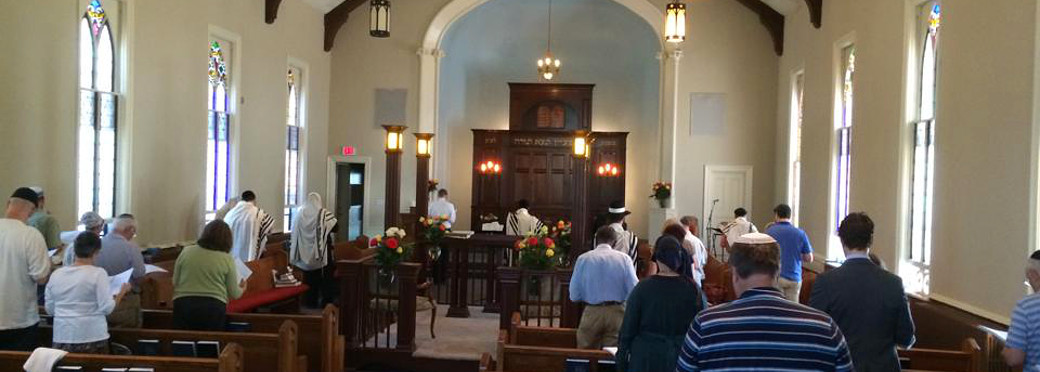
Messianic WorshipWho we are as Messianic Gentiles isn’t exactly how the Church defines a Christian, but it’s an exciting role which leads in new and unexpected directions. The Bible, studied from within a Messianic perspective, tells a radically different story about God’s redemptive plan for Israel and through Israel, God’s redemptive plan for the world.

I don’t know how it’s all going to work out yet. There are a lot of roadblocks in the way. We must not discount the power of God to make happen what He promised He would do, even if we haven’t a clue about what comes next.

Boaz finished up his letter by saying:

Things are indeed changing, and HaShem is at work restoring his people and preparing us for the kingdom. We are part of something much larger than ourselves; we are part of what God is doing today. I went home rejoicing over the opportunity to participate in the conversation at the Caspari Center, and I thanked God for opening the door.

If God can open the door that Boaz walked through, He can open doors for the rest of us. We must be patient. We must be ready.

As you read this, I am traveling. I won’t be near a computer to approve any comments until this evening at the soonest. I’ll return when I can. Thank you.

A Review of the Sinai Ethic: The Ethic of Possession

In the third month after the sons of Israel had gone out of the land of Egypt, on that very day they came into the wilderness of Sinai. When they set out from Rephidim, they came to the wilderness of Sinai and camped in the wilderness; and there Israel camped in front of the mountain. Moses went up to God, and the Lord called to him from the mountain, saying, “Thus you shall say to the house of Jacob and tell the sons of Israel: ‘You yourselves have seen what I did to the Egyptians, and how I bore you on eagles’ wings, and brought you to Myself. Now then, if you will indeed obey My voice and keep My covenant, then you shall be My own possession among all the peoples, for all the earth is Mine; and you shall be to Me a kingdom of priests and a holy nation.’ These are the words that you shall speak to the sons of Israel.”

Exodus 19:1-6 (NASB)

The Sinai Ethic was originally presented by Rabbi Russ Resnik, executive director of the Union of Messianic Jewish Congregations (UMJC), during the annual First Fruits of Zion (FFOZ) Shavu’ot Conference at Beth Immanuel Sabbath Fellowship in Hudson, Wisconsin. Shavu’ot, the anniversary of the giving of the Torah and the pouring out of the Spirit, is a holy and deeply spiritual time that provides a reverent connection with the people of God who heard the words of the LORD spoken from the fire at Mount Sinai. These teachings, given in three sessions during the festival, focus on the moral and ethical mandates that the giving of the Torah established for the Jewish people and all nations.

-from the back cover of the CD for the audio teaching, “The Sinai Ethic”

Session Three: The Ethic of Possession

It’s been almost two weeks since my review of Part Two of this series. I’ve been wanting to get to it, but frankly, I just haven’t had the time up until now.

This is the shortest of Rabbi Resnik’s lectures at twenty-nine minutes and it sounds like he delivered it right after session two.

In the previous session. R. Resnik related a joke told by Rabbi Jonathan Sacks that the Bible was a record of “failures, contradictions, and shortcomings.” Setting the joke aside, R. Sacks also speaks of the Bible’s overarching themes as Creation, Revelation, and Redemption, and it’s these three themes that are the backbone of session three.

Resnik said that Creation is God’s relationship with the universe. Revelation is God’s relationship with humanity. And Redemption is what happens when you apply Revelation to Creation. This is somewhat mapped out in the siddur, according to Resnik, because there are two blessings said before the Shema and one afterward. The first two are blessing God as Creator of light and blessing He who has chosen His people Israel. Creation and Revelation.

The blessing after the Shema is blessing God as Israel’s redeemer.

Revelation also points to Sinai where God revealed Himself, but the ultimate background or stage upon which revelation occurs is the Land of Israel. It is in the Land that God reveals Himself to the Jewish people, and it is through Israel that God reveals Himself to the nations. Israel’s (that is, the Jewish people’s) possession of the Land is part of facilitating God’s revelation to humanity across the globe.

There’s a lot of political debate about the Jewish right to the Land of Israel but what about her responsibilities?

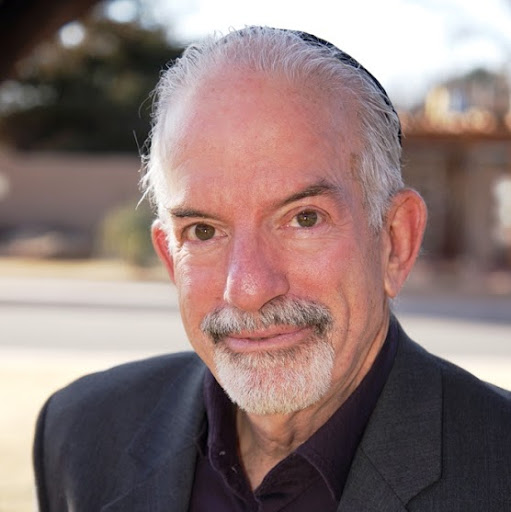
Rabbi Russ Resnik
Rabbi Russ Resnik

Resnik laid out a number of examples revealing that Israel’s ethical and moral behavior were the responsibilities that determined if they lived in the Land or went into exile. For instance, the Fifth Commandment ties living in the Land to how parents are honored.

However he focuses on the following:

‘When you reap the harvest of your land, moreover, you shall not reap to the very corners of your field nor gather the gleaning of your harvest; you are to leave them for the needy and the alien. I am the Lord your God.’

Leviticus 23:22 (NASB)

This is the section of Leviticus describing the Moadim or “God’s Appointed Times”, but this mitzvah appeared earlier.

‘Now when you reap the harvest of your land, you shall not reap to the very corners of your field, nor shall you gather the gleanings of your harvest. Nor shall you glean your vineyard, nor shall you gather the fallen fruit of your vineyard; you shall leave them for the needy and for the stranger. I am the Lord your God.’

Leviticus 19:9-10

Why the repeat?

Resnik says Leviticus 19 addresses the Laws of Holiness while Leviticus 23 speaks of the Laws of the Moadim. He believes that these two occurrences provide linkage between ritual and ethical practices. He states that Israel cannot truly celebrate the festival of Shavuot (any festival, actually) as a unique Jewish heritage if it ignores the universal, moral dimensions contained within the festival.

Shavuot is called the Festival of Revelation, which makes sense. It is a celebration of the giving of the Torah at Sinai. But in citing the Laws of Gleaning, it also reveals God’s compassion to the poor and to the ger (stranger). This is part of the ethic of possession, the responsibility to not ignore the disadvantaged among you.

Choosing to focus on the stranger, Resnik references various scriptures including Leviticus 19 and Exodus 22 but his favorite is:

“You shall not oppress a stranger, since you yourselves know the feelings of a stranger, for you also were strangers in the land of Egypt.”

Exodus 23:9

The word translated as “feelings” in the NASB is the Hebrew word “nefesh” which is better translated as “soul”. “You shall not oppress the stranger since you know the soul of a stranger…”

But why are there strangers in the Land living among the Israelites? Was Israel not expected to exterminate the people living in the Land and displace them?

The problem isn’t that the people living in Canaan were Gentiles, the problem was that they had racked up 400 years of sin and iniquity.

IsraelResnik says that the Torah doesn’t preach racism and ethnocentrism. The Torah doesn’t have a problem with Gentiles. In fact, Israel was chosen, not because they were the strongest or the best, but because they too had been strangers and out of God’s abundant love for Abraham.

God gave the Israelites possession of the Land according to His promise and to facilitate His revelation to the nations of the world. Leviticus 25:23-24 is God’s declaration that the Land of Israel really belongs to Him, but He has given the Jewish people stewardship over the Land.

This relates to the following:

The Lord’s appointed times which you shall proclaim as holy convocations—My appointed times are these…

Leviticus 23:2

Periodically, someone points this verse out to me indicating that the Moadim are not “Jewish” festivals, but the Lord’s festivals as a way to say that anyone has the right to observe the festivals, and that the Jewish people are not uniquely associated with them.

But let’s look at that verse again with some emphasis added:

The Lord spoke again to Moses, saying, “Speak to the sons of Israel and say to them, ‘The Lord’s appointed times which you shall proclaim as holy convocations—My appointed times are these…'”

Leviticus 23:1-2

The relationship Israel has to the Land is the same relationship it has to the festivals. Yes, it all belongs to Hashem, but He has given Israel the Land and the Festivals to use to proclaim the revelation of God to the nations of the world. It all flows from God through Israel and then to the rest of us. We cannot eliminate or disconnect Israel from God’s revelation or redemptive plan because it is only through Israel and her Messiah that the rest of the people of the nations of the Earth can also be redeemed.

Because of Israel’s “chosenness” and her unique role and relationship with God, some non-Jews have accused the Jewish people, especially Jews in the Messianic Jewish movement, of elitism and even racism. But Resnik says that Israel’s election and possession (of the Land) are for God’s purposes, not Israel’s.

Believers in Messiah aren’t elite, they’re marginal. They/we stand at the margins of the world, not being sucked into its values, as prophetic witnesses. The Ethic of Possession looks forward into the future to the Messianic Age.

Traditionally, the Torah commands that all people in the Land of Israel, from the least to the greatest, from the pauper and stranger to the King, all celebrate the moadim with overwhelming joy. Why? Because it’s a portrait of the coming Messianic Age when there will be no poor and no strangers; when everyone will have a place and a role in the Kingdom through Messiah.

What Do I Think?

Rabbi Resnik was measured and considerate, not only in this session but in all three, in pointing out the relationship Israel has with God and their responsibility to the rest of the world. This has profound implications on the role of Jews and Gentiles in the Messianic movement as prophetic witnesses standing on the margins of the world, summoning the future age of prosperity and peace under King Messiah.

Resnik chose not to emphasize the ceremonial or ritual distinctions between Jews and Gentiles and focused instead on Israel’s responsibilities to the Gentiles. Granted, this was all in grand and sweeping generalizations and none of this is going to answer questions like “should a Gentile wear a tallit when praying”. The universal moral imperative of the Ethic of Possession requires that in their practice including celebrating the Moadim, the Jewish people make provision for the “disadvantaged” of the world as the world lives among them; the poor and the stranger, which Resnik seems to use as a synonym for non-Jews.

So, in a sense, Israel is “advantaged” because the Jewish people are the possessors of the covenants and the chosen of Hashem.

Then what advantage has the Jew? Or what is the benefit of circumcision? Great in every respect. First of all, that they were entrusted with the oracles of God.

Romans 3:1-2

Since Gentiles have no direct connection to the Sinai and New Covenants and our linkage to any of the blessings promised by God is only through a single part of God’s covenant with Abraham, I guess you could say we are “disadvantaged” in that we are dependent on Israel fulfilling her responsibilities to God and to us.

AbrahamThis is most directly realized through Messiah, Israel’s firstborn son, so to speak, the living embodiment of the Word of God and His Will, the Savior and King of the world. But that salvation and kingship is inexorably bound to the people and nation of Israel, and any attempt to “de-couple” that relationship undoes God’s redemption…

…not that it’s possible to undo anything God does, we only attempt it by creating theologies and doctrines that spin the illusion that Jesus and salvation are completely separate from God’s covenantal relationship with Israel and the Ethics of Sinai.

After a rocky start in Session One, I find I’ve thoroughly enjoyed Rabbi Resnik’s presentation. It’s a pleasure to add another perspective on the issues with which we all struggle as people of faith, expanding my knowledge and understanding, not only of God and the Jewish people, but of who I am as a Gentile of the nations in the reality of Messiah.

A Gentile’s Book Review of “First Steps in Messianic Jewish Prayer”

It is appropriate for Gentile disciples of Yeshua to participate in Jewish prayer. After all, the Temple in Jerusalem is to be called “a house of prayer for all peoples” (Isaiah 56:7). Yeshua did not come to create a separate religion for Gentiles with different prayers.

-Aaron Eby
“Prayer in Jewish Space,” p.33
First Steps in Messianic Jewish Prayer

I’ve quoted from Aaron’s book twice before, the first time in Messianic Jewish Shabbat Observance and the Gentile and just yesterday in Discovering Myself by the Light of Torah. I suppose it’s appropriate for me to do a more proper book review, and I’m writing it from the expected perspective: that of a non-Jew.

You see, for the most part, Messianic Jewish Prayer is Jewish Prayer. Aaron’s book can be thought of as a “Jewish Prayer 101” class complete with a minimalist siddur at the end of the book. It’s unique in that it has a specific focus on Yeshua HaMoshiach, but a focus on Messiah is not considered unusual according to Aaron:

The traditional Jewish prayers are constantly focused on the Messiah. Although they do not identify Yeshua by name, they do identify the Messiah by character and title.

Some people might object that the traditional Jewish prayers do not say anything about Yeshua since they do not mention him by name. The same is true of the Hebrew scriptures, yet we know that they say a great deal about Yeshua.

-Eby
“Prayer in Jewish Space,” p.29

Aaron starts out in Part One by describing “Prayer in Messianic Judaism” as distinct from the other Judaisms and Christianity. Although describing Jewish Prayer, as I said above, the specific focus is always on Messiah. In essence then, this is an instruction manual about prayer in Messianic Judaism which first and foremost should speak to Jewish people. Granted, devout Jewish people raised in religious households are raised in Jewish prayer, but many of the Jews attracted to Messianic Judaism have not had a traditional Jewish education. Still, the emphasis on Judaism must be recognized. The portions of his book that specifically address Gentiles in Jewish Prayer and in Jewish Space are called out and those are the parts I spent most of my time in.

In fact, the section of Part One called “Prayer in Jewish Space” seems to be a primer on how Jewish Prayer is conducted “procedurally” as well as in terms of “kavanah” (intent). I quoted from this chapter previously when addressing “Gentiles and Jewish Prayer.”

For example, one line in the traditional after-meal blessing offers thanks to God “for the covenant that [he] sealed in our flesh.” It seems problematic for a Messianic Gentile to say this. But should someone who is not Jewish then say “for the covenant that you have written on our hearts?” To do so would imply that Messianic Jews have only a fleshly covenant, whereas the new covenant that is written on hearts belongs only to Messianic Gentiles, God forbid.

-ibid, p.36

First Steps in Messianic Jewish Prayer

For the uninitiated Gentile or for those who are sensitive in one way or another to the distinctions made between Jews and Gentiles in Messianic Jewish space, parts of this book may be a little confusing or disorienting and even seem kind of annoying. At best, it will take some work for Gentiles, even those familiar with Jewish Prayer on some level, to get used to the flow of prayer outlined in the book during a synagogue service or even a Shabbat dinner. At worst, some Gentiles will feel put out not to be considered “Israel” and thus directed to pray the prayers in not exactly the same manner as their Jewish counterparts.

However, this book is designed to not only teach Messianic Jewish Prayer, but to continue to establish the distinctive roles Jews and Gentiles play in Messianic Judaism, with the understanding (from my point of view, anyway) that those roles are not firmly anchored or agreed upon at present.

That said, I was surprised when Aaron didn’t make much in the way of Jewish/Gentile distinctions relative to the standard prayers, particularly the Shema. But let me back up a step:

Gentiles who devote themselves to Yeshua of Nazareth are not only disciples; they are his subjects, and he is their King. In that sense they relate to the nation of Israel and the Jewish people in the same way that a conquered and annexed people is subordinated to a conquering king. These Gentiles are no longer separated from the Messiah or “alienated from the commonwealth of Israel and strangers to the covenants of promise” (Ephesians 2:12). Instead, they share in the inheritance and the destiny of the whole nation. In keeping with this identity, the God-fearing Messianic Gentile should not hesitate to join the Jewish people in formal prayer.

-ibid
“Declaration of Intent for Messianic Gentiles,” p.47

As a non-Jew in Messianic Jewish territory, you could choose to take this one of two ways. The first is that you could rejoice in your (our) unique role in the Kingdom of Messiah as grafted in Gentiles who had no hope and no belonging until our faith in Messiah brought us alongside Israel in devotion to God and sharers in the blessings of the New Covenant promises. The second is that you could feel pushed away, slighted, or “sent to the back of the bus,” so to speak, as if, as a Gentile, you aren’t worthy of sitting in the front of the synagogue with the Jews. By definition, if the nations of the Gentiles are to be considered vassal, then they serve Israel as well as Israel’s King. The wording Aaron uses could be spun in either direction:

As Messianic Gentiles engage in these prayers, they must not lose sight of their own important and esteemed position as the crowning jewels of the nations. A Messianic Gentile who participates in the prayers and petitions of Israel should thus consciously acknowledge that since he is not legally Jewish, his connection to Israel comes only through King Messiah.

-ibid

That’s where the “declaration of intent” comes in. Aaron has a difficult job as the author of this book in balancing the invitation of Gentiles into Jewish prayer and, at the same time, containing and protecting Jewish identity in Jewish space including in (Messianic) Jewish prayer. It’s our faith in Messiah that binds us and it’s difficult, particularly in egalitarian America, to accept the status of a subordinate or vassal citizen in the Kingdom of Messiah, with Jewish Israel being “large and in charge” of the rest of the world (that means the rest of us).

If you can accept that role as many Messianic Gentiles have done, then the only difficulty you may encounter is adapting your prayer life to the structure and language this book presents (depending on your experience in Jewish prayer up to this point). If you can’t, then you’re going to have a difficult time stumbling over the presuppositions Aaron makes about Jewish and Gentile roles in the Messianic Jewish synagogue.

shabbaton
Aaron Eby

Although I’ve attended Shavuot services and had a Shabbat meal or two at Beth Immanuel Sabbath Fellowship, which offers Jewish services and includes Jewish prayer, I’ve not had the pleasure of attending any of First Fruits of Zion’s (FFOZ) Shabbaton events. This would have given me a more personal look at how to use The Sabbath Table prayer book (which, as you read this, I’ll be using tonight for the first time), and thus experience Jewish prayer in the manner Aaron describes.

Although I’ve used a number of siddurs before, including Artscroll’s Sefard Siddur, this coming Shabbat will be a unique experience. I’m somewhat used to making the mental and linguistic adjustments Aaron’s book recommends for Gentiles since the language in traditional siddurs assumes the perspective of a Jewish man, but it’s refreshing to come across material that can be specifically adapted to me as a Messianic Gentile. I still expect to be challenged by the flow of Erev Shabbat prayers, especially since there won’t be anyone else present to emulate.

Aaron’s book devotes a lot of attention to the Shema and Amidah, which you’d expect, and as I mentioned before, I was surprised that these pages weren’t covered with caveats and alternate language for Gentiles, since this is the heart of Jewish prayer. Aaron continues to write for the reader, Jewish or Gentile, who knows little or nothing about Jewish prayer. Standard siddurs, although they contain many notes on a variety of topics, assume a certain amount of prior knowledge by the user. Aaron’s book opens the box, so to speak, and lets the reader look inside the prayers, what they mean, and how they were written.

But while there are few mentions of Jewish/Gentile distinction, they can be found:

Tefillin are a distinct marker of Jewish identity. It is not forbidden for a Messianic Gentile to wear them; however there are some communities in which it would be confusing or even offensive for a non-Jew to do so. It is important that Messianic Gentiles who wear tefillin are sensitive to the message that it communicates and that they conform to community standards; it may be advisable for Messianic Gentiles to avoid wearing them in public venues.

-ibid, p.65

And again…

Tzitziyot serve as a marker of Jewish identity. It is not forbidden for Messianic Gentiles to wear them; however, doing so may cause confusion and offense. It is advisable for Messianic Gentiles who choose to wear them to do so with utter discretion.

-ibid, p.69

Several years ago, for a variety of reasons, I put my tefillin and tallit in a box and shoved the box onto a shelf in the back of my closet. One of the reasons I did so was I became convinced that the part of Aaron’s statement about distinctiveness and Jewish identity is correct. This was filtered through the knowledge and experience of being married to a Jewish wife who had come to the conclusion that having a Gentile/Christian husband dressing up as a Jew was a pretty odd thing to do.

israel_prayingNo, she never mentioned it, but after being married for over thirty years, you pick up a few things about how your wife thinks. To honor her as much as for any other reason, I stopped doing pretty much anything that might appear “Jewish”.

I know Messianic Gentiles, including those within FFOZ and at Beth Immanuel, who wear tzitzit and kippot, and within their personal or community contexts, given Aaron’s words above, that would seem to make sense. In fact, since giving up the practice of wearing a kippah, tallit, and laying tefillin, even in private, I’ve been concerned about some potential “blowback,” even if it’s left unsaid, from some Messianic Gentiles and Jews concerning my non-use of Jewish “particulars”. Identity confusion goes both ways, and I can see how I might seem a little too “light” or “insubstantial” for actually not donning a tallit when I pray.

I wonder if someone like me would be considered offensive in a Messianic synagogue that more or less expected most Gentiles to wear a kippah and tallit, especially since Aaron presents the Shema as acceptable for Gentiles to recite, and especially because one of the customs during the Shema is to grasp the tzitzit together in the left hand?

I think the bottom line as Aaron suggested, is for the Messianic Gentile to adapt their practice based on the standards of their local worship community. Being “community-less” at the moment allows me to do more or less anything based on personal standards, but I’ve still got good reasons for not getting that box out of the closet and opening it up.

But that suggests another option. Many Hebrew Roots individuals and groups not only consider wearing a tallit to be an available option, but even an obligation and their right as grafted-in Gentiles. While I disagree with that opinion, since these people operate within their own communities and those communities have set standards permitting and even commanding Gentile men to wear tallitot, then technically, this part of Aaron’s book is adaptable to their needs.

I also started wondering (and I guess this is a community standard thing) if Gentiles could be considered as part of a minyan in Messianic Jewish synagogues. Aaron didn’t address that topic at all, and yet certain prayers, including Birkat HaMazon (Grace After Meals) require a minyan.

As I said, much of the book was taken up with a detailed description of the Shema and Amidah prayers, but then on page 103, starts an analysis of what most Christians call “The Lord’s Prayer.” Aaron refers to it as “Our Father”.

The Didache contains this prayer in a version that is quite similar to that of Matthew, and it instructs believers to recite it three times a day. From the earliest available records, Christians have used this prayer as part of liturgical worship. Like a majority of traditional Jewish prayers, the first-person pronouns of “Our Father” are plural (“us,” “our”). This suggests that the prayer was intended for corporate liturgical use.

-ibid, p.104

While some scholars have suggested that “Our Father” (the Lord’s Prayer) was meant to take the place of the traditional Jewish prayer service and even contains all of the basic elements of said-service, Aaron believes that it was meant to be included at the end of the Amidah for Messianic Jewish and Gentile believers, particularly because the Didache instructs Gentile disciples to recite it three times a day.

The Didache was a sort of “training manual” for how to teach a non-Jew to become a disciple of the Jewish Messiah. It’s thought to have been originally composed by the Apostles or those close to them. The earliest version may have been in the form of oral instructions that accompanied the well-known Acts 15 “Jerusalem Letter.” This all seems to say that the very earliest Gentile disciples of Messiah practiced Jewish prayer alongside their Jewish teachers and mentors, perhaps well beyond the First Century CE.

The final portion of the book is a sort of “mini-siddur” containing the text, in English and Hebrew, for:

  • I Hereby join
  • Declaration of Intent for Messianic Gentiles
  • Shema
  • Amidah
  • Our Father
  • Prayer for the Restoration of Zion

Aaron even put in a “Suggested Readings” list at the back of the book for those who want to go beyond the “Jewish Prayer 101” level.

Shabbat candlesI know many of us in the Messianic Jewish and Hebrew Roots movements have struggled at one time or another about how to use a siddur, how to adapt it to our faith in Messiah, and how to adapt it for a mixed Jewish/Gentile worship service. Over a decade ago, I regularly worshiped in our local Reform/Conservative synagogue during the time when my children were in Hebrew school, and I had no guide for this sort of thing. I felt pretty awkward.

That sort of dynamic is built-in to a Messianic shul and I think Aaron’s book is at least part of the answer to integrating Jews and Gentiles in a Messianic Jewish prayer service, at least enough to get a lot of people and communities started along the right path.

As I said, it’s not for everyone. If you, as a Gentile, think of yourself as part of “Israel” or a “spiritual Jews” or even espouse a “two-house” theology, then several parts of what Aaron wrote won’t suit you at all. Interestingly enough though, I’d still recommend First Steps in Messianic Jewish Prayer to just about anyone interested in the topic, because the research and level of description that has gone into the book illuminates the origin, purpose, and meaning of the prayers.

Shabbat Shalom.

A Review of David Hall’s “Homosexuality and the Torah”

I have experienced same-sex attraction for most of my life. When I was seventeen years old, I embraced a gay identity. Almost ten years after I came out, I saw the pain that this addiction was working in my life. I sought help from Outpost Ministries, a Minneapolis-based ministry that helps men and women find freedom from unwanted same-sex attraction.

-David Hall
“Homosexuality and the Torah,” p.59
Messiah Journal, Issue 117/Fall 2014

This is something of an interlude between my first and second review of Jay Michaelson’s book God vs. Gay: The Religious Case for Equality. I’ve still got about sixty pages to go (as I write this) in the Michaelson book, but Hall’s article is only eight pages long (nine if you include the endnotes) so I shot through it a few days ago. As it turns out, Hall answers many of Michaelson’s points on homosexuality and the intent of scripture. It’s not a complete hand-and-glove fit, but it’s close. And Hall’s commentary has the advantage of being written by a person who has “been there,” meaning his opinions should have greater credibility than mine since I’ve never experienced “being gay.”

In his article, Hall uses the acronym “SSA” for “same-sex attraction” rather than the more “socially licensed” labels for the LGBTQ community. His footnote for the term (p. 67) states:

I use “SSA” to describe the emotional and physical attraction to members of the same sex. The term “homosexuality” includes the socio-political self-identification as gay or lesbian predicated on those attractions.

Hall says that two years after seeking help, he was “reasonably healed” to where he could begin working for Outpost Ministries and continued for six years to work on his own healing while helping others seeking help from the ministry to do the same.

I know this is going to push a lot of noses out of joint, particularly those advocates for full inclusion of the LGBTQ community into the church and synagogue, but this is the other side of the coin, so to speak, this is the life that stands opposite those such as Jay Michaelson and Matthew Vines.

I can’t speak for Hall and certainly not for Michaelson and Vines. As I said above, I don’t have a “gay experience”. I don’t know what it’s like to have those feelings or to live that life, in or out of the closet. Like Hall, I don’t have all the answers (p.60), but maybe there is an answer, even if it’s not the one that sells books and makes popular stories in social and news media.

One difference between Hall and other, similar commentators is that he’s addressing this topic from a Messianic Jewish perspective, rather than a traditional Christian viewpoint. The key in all this is that Christianity generally dismisses the Law but in doing so, has also done away with obeying God from a physical/bodily as well as spiritual manner.

I don’t know if I entirely agree since Christians, at least in more conservative denominations, tend to provide strong support for physical purity and marital fidelity, at least on the surface. I don’t see why that wouldn’t extend to purity in the sense of not only marital fidelity but exclusively heterosexual romantic/erotic relations.

However…

I have seen that the church suffers profound confusion about what it means when the Bible says that God created us male and female. I have seen the ramifications of a “freedom from the law” theology.

-ibid, p.66

But the churches Hall seems to be referencing are those on the more socially and politically liberal end of the spectrum.

The ELCA and PC-USA recently approved ordaining openly gay clergy and affirming same-sex marriages. In their debates I saw that the discussions never focused on what the Word says but on the feelings of various groups: “Don’t make people feel unwelcome in the PC-USA” or “I love being Lutheran, but I’m gay — don’t kick me out” were common refrains.

-ibid

DHE GospelsThis is more or less the argument in Part One of Michaelson’s book, a focus on feeling rather than the Word. Of course, Part Two of the book does address “what the Word says”, both from a Christian and Jewish point of view, but Hall addresses that as well.

I consider the following paragraph to be the core of Hall’s article:

You may have noticed that in our discussion of homosexuality, I did not mention the Torah’s prohibitions against the behavior in Leviticus 18. I made my appeal not from prohibition but from created intent. This approach helps us see that God’s law is not simply a list of cold rules but boundaries directing us into holiness, righteousness, and life. Why does God prohibit homosexual behavior? Because he is jealous for his image on the earth as reflected in male and female.

-ibid, p.64

Hall’s opinion is similar to my own. Even if we were to completely dismiss all of the apparent Biblical prohibitions against homosexual behavior, we absolutely do not see a normalization of “loving, monogamous same-sex romantic/erotic relationships” in the Bible. In one of the chapters in Part Two of his book, Michaelson attempts to make a case for such a “normalization,” at least to a degree by citing not only David and Jonathan’s friendship but the relationship between Ruth and her mother-in-law Naomi. I’ll issue my response in more detail in a later review, but even Michaelson admits that “sexual orientation” as such was not understood (or experienced) in ancient times, thus using those friendships (and any sexual component implied is highly questionable) in support of normalization of gay relationships in the church and synagogue today is sketchy at best.

Hall continues:

Have we then implied that a person experiencing same-sex attraction is condemned by God? Absolutely not! We have, I hope, shown that there is more going on underneath same-sex attraction than either rebellion or genetic predisposition…

…The opposite of homosexuality is thus not heterosexuality but righteousness. The question regarding SSA is not “Can I be gay and a follower of Yeshua?” but rather “Can I disagree with God about who he made me to be and still truly be Yeshua’s disciple?”

-ibid

So why do gay people experience their sexual orientation/identity as such an immutable quality? From Hall’s viewpoint, it’s just another sign of “brokenness” in the world and in human beings among all the other ways people are broken spiritually. The very concepts, as Michaelson has confirmed in his book, of sexual orientation and sexual identity have been created quite recently in human history. While we have a long record of homosexual sex, what it meant “back in the day” can’t be compared to what we call it in the modern world.

gay marriageWhat if we’re seeing a “power surge” of “sexual diversity” not because the people who once would have hidden who they were, maybe for all their lives, are being given permission to “come out of the closet” by an increasingly “progressive” society, but because our world is becoming increasingly permissive of many sins once treated as strict taboos, including sexual sins, and including those sexual sins (at least in their physical expression) identified as sexual “orientation” and “identity”?

Like Michaelson, I can’t really prove my points, but if looked at through a spiritual and Biblical lens rather than with what Hall calls “the fruit of cheap grace,” it makes more sense.

Like I said, it’s not a perfect fit. There are men and women who try for years to change, to become attracted to the opposite sex as their primary or exclusive object of romantic and erotic love, but who continue to fail. For many, that is proof that sexual orientation is innate and immutable in human beings, with some minority human population being same-sex attracted. For others, it’s a sign of just how far we have morally fallen, and perhaps a sign of the “spiritual warfare” being directed at the world as the time of Messiah’s return draws near. The spirit of humanity is so wide open to all manner of injury and damage, that it never occurs to us (and in some circles it is forbidden to mention it) these so-called “normal” and “natural” attractions and behaviors are a sign that something is seriously wrong.

After seven years of working through my issues, choosing to live beyond my same-sex attraction, I do not see myself as a gay man anymore. God brought enough healing to my life that, in September 2013, I was married to a beautifully feminine woman who does not see me through the lens of same-sex attraction. She sees me as a man perfectly made for her.

-ibid, p.65

Hall makes many good points in his small article and I’ve only touched on a few of them here. If you are convinced that the LGBTQ community should be fully included in the body of faith, then nothing in Hall’s article is likely to change your mind and you probably will just become angry at Hall and at me. If you are a traditional Christian or devout Jew, you are likely to praise Hall and continue to condemn Michaelson, Vines and others, even though Hall says God does not condemn them, at least not any more than anyone else trapped in a life that God did not choose for them. I’m not writing this to beat up gay people, whether they’re in religious community or not. I’m trying to understand what God is really saying and doing, and since I’m only human, that isn’t always easy for me.

I’ve struggled with the inherit nature of humans being created as Male and Female, as complementary physically and in many other ways, as helpmates standing opposite one another, and also having a long line of gay people saying that they were born that way, that being gay is natural, normal, and part of God’s plan, and that it’s cruel and bigoted to ask them to change what is unchangeable.

But if they weren’t “born that way,” at least as part of a God-sanctioned process, then what?

How much pain, suffering, and injustice exists in the world today that we seem helpless to change? The list is endless. What’s the cause in a God-created world? Man’s fall from grace at Eden. The world changed in a fundamental way such that the universe actually started operating differently, where disobedience became possible and much more likely than it was previously, and where even death existed in a way that was previously impossible.

What if one of the things that changed is the fundamental way that sex and attraction works? I agree, I’m proposing a big of “what if,” but it makes more sense than God forbidding same-sex sex and then creating human beings who are designed to desire same-sex sex/love. The way people experience sex and love has been twisted into just about anything you can imagine. The list of sexual fetishes we have categorized is astounding. But God also gave the Torah and the whole of His Word, the Bible, not as a cold list of “do’s and “don’ts” but as boundaries and expectations, a plan of God for human beings and specifically human coupling, of being created male and female.

jewish weddingThe Bible in no way presupposes the normalization of same-sex love/sex in the community of faith. I’m sure many will disagree with me, particularly because I lack a rock solid alternative for addressing what Hall calls SSA. But I can’t “interpret” the Bible so radically that I see something that is not written on any of its pages. I don’t see modern homosexual relationships, let alone marriages, sanctioned and sanctified by God. I don’t see a path to making them sanctioned and sanctified that can be derived or inferred from the scriptural text.

That’s as far as I can take this little interlude. I’ll publish my review of Part Two in tomorrow’s “morning meditation” and then on Tuesday, will publish Part Three’s “unofficial” review, and later on, a final conclusion based on Torah study.

Messianic Jewish Shabbat Observance and the Gentile

It is appropriate for Gentile disciples of Yeshua to participate in Jewish prayer. After all, the Temple in Jerusalem is to be called “a house of prayer for all peoples” (Isaiah 56:7). Yeshua did not come to create a separate religion for Gentiles with different prayers.

-Aaron Eby
Chapter 2: Prayer in Jewish Space, p.33
First Steps in Messianic Jewish Prayer

I mentioned in my previous blog post My Personal Shabbos Project that I was planning an undertaking for two Sabbaths in November (the first is just a week away as you read this) to actually do my best to authentically observe Shabbos. The family will be away, so I’ll have the ability to construct my observance without offending anyone or intruding on “Jewish space” as a goy.

To that end, I mentioned a couple of resources I’d be studying: The Sabbath Table and Aaron Eby’s aforementioned First Steps in Messianic Jewish Prayer.

I’ve been looking through Eby’s book and in the second chapter, I came across a section called “Gentiles and Jewish Prayer”. The quote at the top of the page is taken from the first paragraph in that section. It sounds very supportive, encouraging, and inclusive. This is the second paragraph:

Nonetheless, there are issues and boundaries that must be considered when a Gentile chooses to participate in Jewish prayer services. In the same way, the “house of prayer for all peoples” had distinct areas through which men, women, Jews, Gentiles, and priests could enter and different ways in which they could participate.

-ibid

This was certainly true in the time of Herod’s Temple, and I can imagine, relative to Gentiles, it was also true in the time of Solomon:

Also a gentile who is not of Your people Israel, but will come from a distant land, for Your Name’s sake — for they will hear of Your great Name and Your strong hand and Your outstretched arm — and will come and pray toward this Temple — may You hear from Heaven, the foundation of Your abode, and act accordingly to all that the gentile calls out to You…

1 Kings 8:41-43 (Stone Edition Tanakh)

The key phrase for me is “and will come and pray toward this Temple…” I don’t have any command of the Hebrew, so I don’t know really what “toward this Temple” is supposed to indicate. Were the gentiles to stand outside the Temple and pray in its direction? King Solomon doesn’t seem to be saying that gentiles anywhere on earth could just face Jerusalem, because he speaks of gentiles traveling to Israel because of God’s great reputation.

Most Christian English language Bibles use the word “toward” although the International Standard Version says “facing,” and both the Jubilee Bible 2000 and the Douay-Rheims Bible say “in this house” and “in this place” respectively. Put together, I get the definite impression that gentiles weren’t expected to enter any part of the Temple’s grounds when Solomon was King. At least in Herod’s Temple, there was a court of the Gentiles.

About the ninth hour of the day he clearly saw in a vision an angel of God…

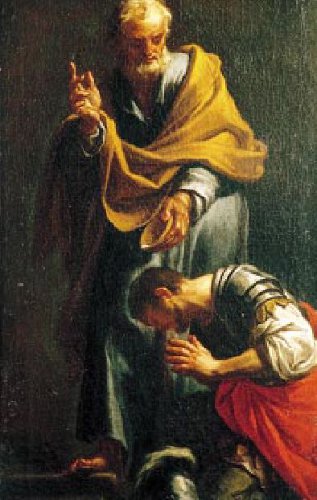
Cornelius said, “Four days ago to this hour, I was praying in my house during the ninth hour; and behold, a man stood before me in shining garments…

Acts 10:3, 30 (NASB)

Cornelius the centurion was the quintessential God-fearer. Luke says that he was a “devout” man, indicating some level of Torah observance.

-D. Thomas Lancaster
“Cornelius, the God-Fearer of Caesarea,” p.18
Messiah Magazine, Fall 2014 edition

cornelius
Peter and Cornelius

Clearly in the days of the apostles, the God-fearing Roman Cornelius had taken it upon himself to observe some of the mitzvot including the set times of prayer. Luke places the centurion praying at the ninth hour which corresponds to between two to three p.m., a time in both the ancient and modern worlds when devout Jews pray the Minchah or afternoon prayers. Exactly what and how Cornelius was praying we’ll never know, but his devotion to God and to the Jewish people got the attention of an angel and subsequently the apostle Peter.

So I agree that Gentiles were always meant to participate in the prayers, and both in the days of Solomon and Herod, we have indications that, as Eby says, there were distinctions regarding the placement of Gentiles in Jewish space, specifically the Temple.

I find this promising and more than a little daunting, which is why, even though ideally Shabbat observance is done in community, it is better for me to observe Shabbos alone, and particularly outside of Jewish space. Frankly, for me to have any sort of “thumbprint” placed upon my Sabbath practice, it’s just easier to do so in my own home.

Not that my home isn’t “Jewish space” since I live with a Jewish wife and daughter, but one of the requirements of my project is that I be alone so that, among other things, I don’t (metaphorically speaking) stomp all over their Jewish space with my big, fat feet. I have no desire to appear more “observant” than the Jewish people I live with, Heaven forbid. My role is supposed to be to encourage them to be more Torah observant.

It should be noted that until Peter and his party of Jewish companions entered Cornelius’s home, the centurion’s environment was composed exclusively of gentiles, so whatever Jewish observances he employed were not impinging on Jewish space. Of course God-fearing Gentiles regularly attended synagogue, but I can only imagine that they didn’t simply just “mix in” with the Jewish crowd but instead, had specific seating arrangements.

Eby in his book agrees with Lancaster and believes the “text implies that Cornelius prayed in what seemed to be a Jewish way” (p.33). Further, Eby says:

There is a delicate balance when it comes to the relationship of Gentiles to Jewish prayer. If the prayer of Messianic Gentiles is to be identical to Jewish prayer, it implies that these Gentiles have become Jews or that they fit into the same legal category as Jews. This is a type of replacement theology. On the other hand, if Messianic Gentile prayer is to be completely different from Jewish prayer, it denies the concept that it is through Israel that all nations connect with God.

-Eby, pp.33-4

Next, Eby speaks of “Blessings in Vain” and “Misappropriation of Identity,” both of which the Gentile (me) encounters in many of the blessings in a standard siddur, which, as Eby states, is “written from a first-person Jewish perspective.”

Fortunately, though I’m not terribly familiar with it yet, The Sabbath Table is written in such a way that it guides the Jewish and Gentile disciples along slightly different paths in the traditional liturgy, so the Gentile doesn’t have to “think fast on his/her feet,” so to speak, when reaching a part of the prayers where the reader is identified as Israel.

I remember encountering this issue in my “Hebrew Roots” days and I eventually learned to either avoid certain “problematic” areas of the siddur, or to broadly re-interpret them as meaning I supported Israel and her people rather than I was Israel.

Aaron Eby
Aaron Eby

Eby also suggests substituting “us” with “your people Israel” as a plea for Israel rather than as a request from Israel.

I know all this is going to rub some people the wrong way, but prior to the apostolic era, it was relatively rare for Gentiles to be in Jewish space and particularly to keep the Shabbat unless they were in the process of converting to Judaism or represented that equally rare phenomena (in those days) of being a Gentile married to a Jew.

Going back much further and into the time of Moses, any Gentile who wished to become attached to Israel and be considered a “resident alien” was actually obligated to a significant number of the mitzvot, including Shabbat observance, with the understanding that they would become permanent members of the community as Gentiles and that their descendents, starting at the third generation (grandchildren), would be absorbed into an Israelite tribe and clan (probably through intermarriage) and be considered Israelites; their ties to their Gentile ancestors obliterated.

But as Gentile disciples of Yeshua, we are not considered gerim as such (since Israel is no longer tribal), nor God-fearing Noahides, since all the nations of the earth are obligated to the basic laws of Noah, but we benefit from the blessings of the New Covenant, the promise of the resurrection, the giving of the Spirit (see Acts 10), and the life in the world to come.

Paul’s vision, his “gospel” included Gentiles in Jewish social and religious space and he staunchly defended his position, even in the face of James and the Apostolic Council (see Acts 15), and while his vision died with him, it has been reborn in modern Messianic Judaism.

Boaz Michael, President and Founder of First Fruits of Zion (FFOZ), defines Messianic Judaism in part by saying:

To me, Messianic Judaism is not just a Jewish-flavored version of Christianity. If I was asked to define Messianic Judaism, I would say, “Messianic Judaism is the practice of Judaism coupled with the realization that Yeshua of Nazareth is the Messiah, the New Testament is true, and the kingdom is at hand.”

-Boaz Michael
“Defining Messianic Judaism”
from the Director’s Letter, p.10
Messiah Journal, issue 117, Fall 2014

Boaz didn’t mention Gentiles in his definition of Messianic Judaism, but on pages 7 and 8, he states:

In many ways, the Messianic movement seems to be stuck in a rut, unable to resolve its most basic identity questions. Like one of those endless Messianic circle-dances, we are continually circling around the same sets of questions: Jewish identity, effective evangelism strategies, the role of tradition, the role of liturgy…and especially the role of Gentiles in the Messianic Jewish movement. (emph. mine)

I don’t know if the question of the role of the “Messianic Gentile” in Messianic Judaism is a problem in Messianic Judaism or just my own personal issue. I suppose I’m more sensitive to these matters than most because I’m intermarried, and particularly to a non-Messianic Jew. The divide between me being a Christian and her being Jewish is a well-defined line of demarcation.

Which brings me back to observing Shabbat individually and the “problem” of me being a Gentile and the Shabbat prayers being Jewish.

For example, one line in the traditional after-meal blessing offers thanks to God “for the covenant that [he] sealed in our flesh.” It seems problematic for a Messianic Gentile to say this. But should someone who is not Jewish then say “for the covenant that you have written on our hearts?” To do so would imply that Messianic Jews have only a fleshly covenant, whereas the new covenant that is written on hearts belongs only to Messianic Gentiles, God forbid.

-Eby, p.36

As my long-suffering wife would say, “Oy!”

Eby goes on to say that prayers in a Messianic Jewish synagogue should not be homogenized across the Jewish and Gentile population, and I agree, but that also would introduce a certain amount of “clashing” with one group saying one thing and another saying something completely different at the same time.

I can see the attraction of church only because it is homogenized. Everyone is the same, though I feel sorry for the “Christian Hebrews” in attendance since it is my firm belief that they aren’t “cookie cutter identical” to the Gentile Christian congregation in which they are embedded (I also can see the attraction of a homogenized [Jewish] synagogue environment for Messianic Jews and for the same reasons).

I don’t know how Paul did it. I wish he’d left more detailed instructions.

beth immanuel
Beth Immanuel Sabbath Fellowship

I remember feeling this sense of dissonance the second time I attended the Shavuot conference at Beth Immanuel Sabbath Fellowship. Although it advertises itself as “Messianic Judaism for the Nations,” within its walls, I experienced a severe case of identity confusion, probably because at that time, I had returned to regular church attendance and didn’t know if I was “fish or fowl”. How could I totally commit to church and still “feel” like a “Messianic Gentile?”

The dissonance damaged my Shavout experience and a few relationships along with it, much to my regret, and ultimately resulted in me bouncing back out of church since in the end, I didn’t have a single thing in common with the people there, at least in terms of theology and doctrine.

But “shoehorning” my way back into Messianic Judaism hasn’t proven particularly easy, either. When I’m just me, studying alone, praying alone (though I haven’t touched my siddur for months now), it’s just me and God and problems of identity and relationship aren’t a problem. God knows who I am and who I am created to be. I don’t know what He’ll think of all my preparations for Shabbat. Maybe He thinks they’re all foolish. I don’t know. If I’m doing this just for me, then I’m doing it in vain. Shabbat only means something if my intent is to honor God.

But dodging through this minefield of a Gentile and Jewish prayer and a Gentile and Jewish Shabbat observance makes me glad I’m doing all this in the privacy of my own home. If I slip or, Heaven forbid, get a little bit to “liberal” with the prayers, the only person who’ll be offended is God, and I’m hoping He’s more forgiving of me than I am of myself.

The Shabbat is supposed to be a delight. So why do I have a feeling of impending dread?

Actually, here’s part of the answer:

Don’t confuse God’s commandments with the traditions of men. Does God actually want such “extra effort” to do things He has never commanded?

Why was Jesus challenged so many times about what He did on the Sabbath? Was it because He was breaking God’s law? Or was it because His actions contravened the traditions men had ADDED to God’s commandments about the Sabbath?

What did Jesus actually mean by “The Sabbath was made for man, not man for the Sabbath”.

I just find something ludicrous in the fact that a refrigerator light can cause such concern and is that kind of thing REALLY what the Sabbath is about? Would applying duct tape to the switch (or disconnecting the light some other way) be pleasing to God or would leaving the light to shine displease Him ?

This is a recent comment on another blog post and it highlights one side of the argument. The other side is me trying to be sensitive to Jewish requirements as a non-Jew choosing to observe one or two Sabbaths using the only template I have available: a Jewish template. In trying to navigate the competing priorities of human beings, I’m letting them suck the joy out of what should be a joyous occasion. Really guys, I’m going to be alone so how I choose to observe Shabbos should be between me and God.

If I were in someone else’s house or in someone’s synagogue, I’d follow the requirements of my host, but in any real sense, my “host” will be God. Like I said, I’m following Jewish tradition to some degree because it’s the template I have available to me, and frankly, Jews have been observing the Shabbat for untold centuries before there were any Christians. You’d think we goyim would recognize by now that the Jewish people are the experts on Shabbat.

I probably won’t be perfect in my observance or meet everyone’s expectations, Jewish or Christian, but why should this be any different than anything else I’ve done or written about?

shabbos-candles-banner

A Review of the Sinai Ethic: The Ethic of Election

In the third month after the sons of Israel had gone out of the land of Egypt, on that very day they came into the wilderness of Sinai. When they set out from Rephidim, they came to the wilderness of Sinai and camped in the wilderness; and there Israel camped in front of the mountain. Moses went up to God, and the Lord called to him from the mountain, saying, “Thus you shall say to the house of Jacob and tell the sons of Israel: ‘You yourselves have seen what I did to the Egyptians, and how I bore you on eagles’ wings, and brought you to Myself. Now then, if you will indeed obey My voice and keep My covenant, then you shall be My own possession among all the peoples, for all the earth is Mine; and you shall be to Me a kingdom of priests and a holy nation.’ These are the words that you shall speak to the sons of Israel.”

Exodus 19:1-6 (NASB)

The Sinai Ethic was originally presented by Rabbi Russ Resnik, executive director of the Union of Messianic Jewish Congregations (UMJC), during the annual First Fruits of Zion (FFOZ) Shavu’ot Conference at Beth Immanuel Sabbath Fellowship in Hudson, Wisconsin. Shavu’ot, the anniversary of the giving of the Torah and the pouring out of the Spirit, is a holy and deeply spiritual time that provides a reverent connection with the people of God who heard the words of the LORD spoken from the fire at Mount Sinai. These teachings, given in three sessions during the festival, focus on the moral and ethical mandates that the giving of the Torah established for the Jewish people and all nations.

-from the back cover of the CD for the audio teaching, “The Sinai Ethic”

Session Two: The Ethic of Election

It’s been over three weeks since I reviewed Part One of Rabbi Resnik’s three-part series. I haven’t had much time to sit down and listen to the audio CD graciously provided by FFOZ but admittedly, I’ve been kind of dreading continuing with the series. Part One was difficult for me to get a handle on, and when I did, I found I didn’t always agree with what R. Resnik said.

Part Two was a pleasant departure from that experience, and I found The Ethic of Election to be straightforward, easy to follow, and to be what I expected it to be. It also provided me with some new perspectives on crucial parts of the Torah record and the story of Israel.

Resnik began his lecture with sort of a joke, kind of like a story about different siblings get together and find out they all thought that Mom loved them the best, as if each one of them were especially “chosen” or “elect” in relation to their Mom (“But I thought Mom loved me best”).

It gets uncomfortable when you think you’re the favorite in the family only to discover that all of your other family members think they’re the favorite, too. But more so, and especially in our egalitarian culture, where in order to avoid any losers having their feelings hurt, we’ve created a society where “everyone’s a winner,” Resnik says it’s a “scandalous idea” that any one person or group could be chosen, because it means other people and groups are not. It’s even worse when God made a choice and that choice of a people was an ethnic group. We don’t like any one ethnic group to be considered more, better, or special than any other group.

I quoted Exodus 19:1-6 above since Resnik read it to his audience, but he also read the following:

But you are a chosen race, a royal priesthood, a holy nation, a people for his own possession, that you may proclaim the excellencies of him who called you out of darkness into his marvelous light.

1 Peter 2:9

Landron Paule_Histoire Sainte_Première Alliance_Droguet Ardant_Limoges 1991This came up in a previous blog post some weeks ago when I naively thought Peter must have been addressing a non-Jewish audience using the “chosen” language of Exodus 19, but it was pointed out to me that the apostle could have been as easily addressing Jewish disciples of the Master.

That said, Resnik acts as if Peter were addressing Gentiles and he (Rabbi Resnik) was using the verse to highlight the dynamic tension between all Israel being chosen by God and a remnant of the people of the nations also being chosen by God, and their being no contradiction between these two choices.

Resnik referenced his previous lecture, particularly the part about conditional and unconditional covenant elements, to highlight that the nature of Israel being chosen is unconditional. Exodus 19:5 makes Israel’s being chosen seem conditional on whether or not they obey the Torah, which is how most Christians read it, but verse 4 tells us that Israel being chosen is totally unconditional. What’s conditional is the role Israel plays and whether or not they will live out that role in a completely realized way, which they can only do if they obey God by observing the conditions of the covenant, the Torah mitzvot.

So God doesn’t “unchoose” Israel when they stumble, they just lose key elements in their role, such as living in the Land of Israel, being free vs. being slaves, and so on.

Resnik compares God as impartial judge to God as father. We all think we want God to be an impartial judge because that eliminates any preference of a particular population over all the people on earth. But while that may sound like a good idea, it also eliminates a father’s love for his children. Yes, all fathers love all of their children, but truth be told, any father will admit when pressed, that he usually relates better to one of his children than to the others.

Do you see where this is going? Relating better to one child does not remove the father’s love from any of the other kids, but because he’s human (this is a metaphor so don’t get too literal on me), he’s naturally going to connect to one kid’s personality more than the others for some reason.

This is God the Father in relation to Israel, His chosen one.

Christianity, and particularly what we call “Hebrew Roots,” regularly struggles with Israel’s chosen and special status because they think it means “God loves the Jewish people best” and to the exclusion of the Gentiles, but that’s not what Resnik is getting at here.

Now then, if you will indeed obey My voice and keep My covenant, then you shall be My own possession among all the peoples, for all the earth is Mine… (emph. mine)

Exodus 19:5

What a strange statement to stick in that sentence: “for all the earth is Mine.” What does it mean? According to Resnik, it could have one of two possible interpretations:

  1. It could mean “all the earth is mine anyway, so I’ve got every right to choose you (Israel) among all the nations.”
  2. It could also mean “all the earth is mine, and so I’m choosing you (Israel) on behalf of all the nations.”

Resnik prefers the second interpretation. It’s not a matter of Israel being chosen and the rest of the nations are out of luck, Israel is chosen for a unique role of service to the rest of the world and to God. It’s one way to understand the two most important commandments, loving God with all your (Israel’s) resources by loving your neighbor (the rest of the world) as yourself.

You ever wonder why the story of Joseph takes up so much of the book of Genesis? I never did until Resnik brought it up.

Now Jacob lived in the land where his father had sojourned, in the land of Canaan. These are the records of the generations of Jacob.

Joseph, when seventeen years of age, was pasturing the flock with his brothers while he was still a youth, along with the sons of Bilhah and the sons of Zilpah, his father’s wives. And Joseph brought back a bad report about them to their father. Now Israel loved Joseph more than all his sons, because he was the son of his old age; and he made him a varicolored tunic. His brothers saw that their father loved him more than all his brothers; and so they hated him and could not speak to him on friendly terms.

Genesis 37:1-4

joseph-the-slaveThe “varicolored tunic” or “coat of many colors” doesn’t have a direct translation from Hebrew into English, but Resnik thinks of it as a “princely robe,” a sign of status, a sign of Joseph’s “election” by his father Jacob. It wasn’t that Jacob didn’t have a right to have a favorite among his sons. I mention above that this is kind of normal for human fathers (and for God). But his mistake, and Joseph’s, was rubbing the noses of the other brothers in it. While the brothers were supposed to support and endorse the election of Joseph, they never accepted it, so much so that when they got a chance, they tried to kill Joseph.

But first, they stripped off the sign of his election, ripped it to shreds, dipped it in blood, and threw it at their father’s feet as if to say, “This is what we think of your election of Joseph.” That’s not how it literally played out, but the symbolism is enough to give one pause, especially if we expand the metaphor into the history of the Jewish people in exile and how they have been mistreated and even murdered for the sake of our Gentile/Christian resentment of Israel’s election.

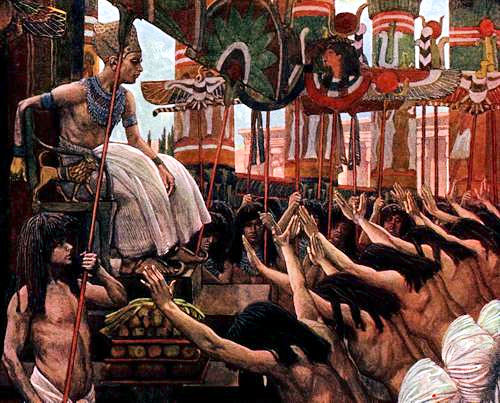
They say “the clothes make the man” and Joseph’s life seems to mirror that because his role changes as often as he changes clothes. He’s transformed from a slave into a prisoner when Potipher’s wife grabs his robe after her failed attempt to seduce him, and he is transformed from a prisoner to a prince when Pharaoh, King of Egypt, puts a signet ring on Joseph’s hand, clothes him in garments of fine linen, and puts a gold necklace around his neck (Genesis 41:42).

I never thought of Joseph subsequently testing his brothers as a test of whether or not they’d accept Jacob’s election of Benjamin as the favored son. After Joseph’s (perceived) death, all Jacob had left of Rachel was Benjamin. That’s why Jacob didn’t send Benjamin down to Egypt for food with the other brothers and why, when the brothers tell him what Joseph (as the Egyptian prince) did to them in demanding Benjamin’s presence, he resisted sending Benjamin to Egypt for months.

In the end, when given gifts of clothing and food by Joseph in Egypt, Benjamin always got bigger and better portions, and Judah passed the test on behalf of his brothers by guaranteeing his safety.

There’s an obvious comparison between Joseph and Yeshua (Jesus) in revealing the “mystery of election.” I said before that the clothes make the man, but it’s not just the clothes. Joseph didn’t really come into his own until he was stripped, not once but twice, and when he stopped being arrogant and learned to be a servant, only then were the robes of a King restored to him.

Jesus too was stripped and given the robes of a King and a crown (of thorns) but only to mock him. The Romans played at bowing to him, but it was to humiliate him. As a teenage boy, Joseph dreamed his brothers and father would bow to him and they resented it, but decades later it became the literal truth. We also know the literal truth that someday, every knee will bow to our King (Romans 14:11, Philippians 2:10).

Both Joseph and Jesus were chosen by their fathers, rejected by their brothers, handed over to Gentiles, went down into a pit (of literal death in Jesus’ case), were dressed as Kings (as a form of mocking in Jesus’ case). Yet we know that one day Messiah will come back and assume the throne as our King, as ruler, and as servant.

And that’s the secret, that’s the missing ingredient, that’s what it took Joseph many years to learn, and that’s the secret of Israel’s election as well.

While Jacob may have chosen Joseph as his elect and dressed him up for the role, the seventeen year old kid had a lot to learn. He thought of the robe as a status symbol and as long as he did, he failed. Only when he learned to be a servant to people and to God did he realize the “princely robe” is really a servant’s apron. Only when his life was transformed was he worthy of election. Our Master taught us the same thing:

“For even the Son of Man did not come to be served, but to serve, and to give His life a ransom for many.”

Mark 10:45

Joseph of EgyptWhen the chosen Israel is obedient to God and of service to the world, she prospers in her “servant’s apron,” chosen of God on behalf of the nations of the earth. She is special and she wears the robes indicating their status, not as rulers but as especially responsible to God and to the world. When she’s disobedient, she is not “unchosen,” but like Joseph, she experiences “reversals” such as being slaves or prisoners, and Israel’s history is replete with such experiences. When she sees the robes of her election as a status symbol, they become twisted around her, trapping her.

When she understands their true nature, she is free, free to serve God and to realize her role in the world.

What Do I Think?

R. Resnik didn’t take it this far, though I suspect he might in his third and final lecture, but let’s see if I can anticipate him a little. As we saw in Joseph’s example, simply dressing up in a “princely robe” doesn’t make you a prince. If you’re a spoiled brat before putting on the robe, you’ll be a spoiled brat after you put it on, too. If you think you are deserving, special, and it’s your right to have that robe, then you risk having it stripped from you and worse.

And He began speaking a parable to the invited guests when He noticed how they had been picking out the places of honor at the table, saying to them, “When you are invited by someone to a wedding feast, do not take the place of honor, for someone more distinguished than you may have been invited by him, and he who invited you both will come and say to you, ‘Give your place to this man,’ and then in disgrace you proceed to occupy the last place. But when you are invited, go and recline at the last place, so that when the one who has invited you comes, he may say to you, ‘Friend, move up higher’; then you will have honor in the sight of all who are at the table with you. For everyone who exalts himself will be humbled, and he who humbles himself will be exalted.”

Luke 14:7-11

I quote these verses with some regularity and with good reason. There are plenty of well-meaning non-Jewish believers who are authentically convinced that they are equally chosen along with all Israel and that they deserve to wear the princely robe along with them. Problem is, they see it as a status symbol, sort of like the BMW of robes, rather than the clothing of servants who are expected to “go the extra mile,” so to speak, in the service of the world and of service to God.

It was God who gave, among the other Torah mitzvot, the commandment of the tzitzit to Israel. One might think of a tallit as Joseph’s “princely robe,” but then again, the Shabbat, which is the actual sign of the Sinai covenant, kosher, the festivals, they all could be considered as those robes of servanthood.

Joseph eventually revealed his true identity to his brothers and his father and they were all brought down to Egypt and given land on which to live. Pharaoh was excited to hear that Joseph had brothers. If one Joseph could save Egypt and the rest of the civilized world from famine, think what a dozen “Josephs” could do.

But they never did. None of Joseph’s brothers were elevated to a position anywhere near what Joseph had achieved. None of them became “princes in Egypt” or anywhere else. Joseph was Jacob’s elect and he served and ruled until his dying day. His brothers were pale shadows by comparison. Yes, Jacob loved all his sons, but he rightly recognized that Joseph was special and chose him accordingly as was his right.

God chose Israel as is His right, not because of any quality Israel possessed, but simply because it was God’s desire to do so. He doesn’t have to have a reason, at least one we understand.

Joseph was chosen on a larger scale to save his family (Israel) and the rest of the world from famine and he did it. Jesus was also chosen by his Father to save Israel and the rest of the world, and in one sense, it was accomplished on the cross. But in a larger sense, the process is still ongoing and won’t be complete until he returns. Israel, national Israel and all the Jewish people, are chosen to prepare the world for the redemption of their nation and through them, the entire world.

tallit-prayerIf we, like Joseph’s brothers, choose to reject that election, and metaphorically speaking, rip up Israel’s robes (or Messiah’s), dip them in blood, and throw the gory mess at the feet of God (and how often has that already happened?), we will also suffer as the brothers did. We’ll still be part of the family, but we will forfeit much of our special role in the service of God. You cannot say you love God if you hate Israel and the Jewish people and covet their princely robe.

You also can’t simply crawl under the robe with Joseph like a small child of yesteryear would crawl under his mother’s skirts.

I don’t know if this is anywhere near where Resnik is going, but it’s what came to mind as I was listening to the lecture.

I didn’t want to go here but it seems to be the inevitable destination of “The Ethic of Election.”

Addendum: I know my review and commentary is likely to inspire some pushback from “the usual suspects” (if you’ll pardon my rather tongue-in-check expression), but I read something written by NT scholar Larry Hurtado, just a brief sentence fragment, that I thought relevant:

“Scholars really can’t be expected to agree all the time, and he and I have disagreed occasionally on this or that… (but) I also have enormous respect for Bagnall’s work overall…”

If Bible scholars can’t be expected to agree all the time about the message of the Bible, at least in the details, how much more so can we expect some disagreement between different groups of believers in relation to observing mitzvoth and the distinctive differences between Jewish and Gentile disciples of the Master?