Tag Archives: God

Noah: Reminder of the Rainbow

rainbow-israelThe story of one righteous man in an evil generation. The Almighty commands Noah to build the ark on a hill far from the water. He built it over a period of 120 years. People deride Noah and ask him, “Why are you building a boat on a hill?” Noah explains that there will be a flood if people do not correct their ways (according to the comedian Bill Cosby, Noah would ask “How long can you tread water?”). We see from this the patience of the Almighty for people to correct their ways and the genius of arousing people’s curiosity so that they will ask a question and, hopefully, hear the answer.

The generation does not do Teshuva, returning from their evil ways, and God brings a flood for 40 days. ah leave the ark 365 days later when the earth has once again become habitable. The Almighty makes a covenant and makes the rainbow the sign of the covenant that He will never destroy all of life again by water (hence, James Baldwin’s book, The Fire Next Time). When one sees a rainbow it is an omen to do Teshuva — to recognize the mistakes you are making in life, regret them, correct them/make restitution, and ask for forgiveness from anyone you have wronged as well as from the Almighty.

-Rabbi Kalman Packouz
Torah Portion of the Week
Noah, Genesis 6:9-11:32
Aish.com

The rainbow is a sign to do teshuvah. I’d never heard of that before or, if I had, it leaked out of my memory somewhere along the way.

The Jewish world has just completed the period of the High Holidays including Yom Kippur, the Day of Atonement, the most Holy and solemn day on the Jewish religious calendar, a day when every observant Jew seeks to repent and to beg God’s forgiveness and the forgiveness of others. The rest of the world, including most Christians, don’t have much regard for Jewish holidays, but for Christians, you’d think we might take a cue from the rainbow.

Of course, since we have the blood of Jesus covering our sins and we’ve been washed white as snow, most Christians don’t give a great deal of thought to ongoing repentance, forgiveness, and atonement. More’s the pity.

But this is about me, not you. No, I’m not writing this as an exercise in narcissism, but rather as my effort to continue to turn toward God and to seek His face.

The heart of those that seek God shall rejoice. Seek God and His might, constantly seek His countenance

Psalms 105:3-4

As I write this, I didn’t sleep well last night. I thought about seeking God, about recounting His wonders, about remembering His marvels and judgments, but my mind was too clouded and distracted. Reading the Bible while fighting fatigue was unproductive. All I could do was to try to cling to God and pray that He would grant me at least a little bit of rest.

I’ve resolved to meditate on and even to memorize His Word (some of it, anyway) as a way to keep Him and His teachings close to my heart. Last night wasn’t a good time to do that and it reminded me of just how far a journey I must yet travel.
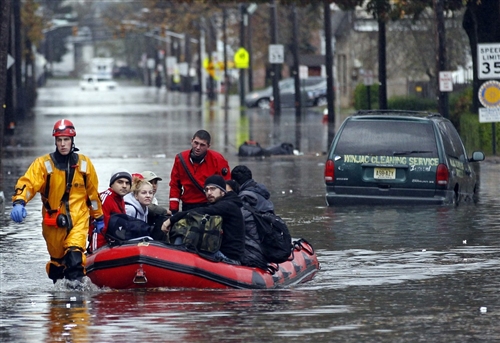
sandy-little-ferry-flooding-hmed-4a_photoblog500If I had known last night what I know this morning, I might have meditated on a rainbow.

Rabbi Yirmiyahu Ullman says that the rainbow is both a curse and a blessing. It’s a curse because it is a reminder that the world deserves to be destroyed for its sins, but that God has promised by covenant not to do so by flooding. Such a grim reminder of destruction that, in slightly smaller ways, we still suffer from today. But then, what else can we say about the rainbow? Rabbi Ullman states this:

The generation of the flood indulged in this worldliness to the point of perversion. Their wanton obsession with variety and variation resulted in their abusing the full gamut of their G-d given powers for the purpose of impurity. The flood purged the world of this impurity and the rainbow was given as a sign and reminder of what results from inundating the world with indulgence. However, the same rainbow simultaneously reminds us to repent from the relentless pursuit of multiplicity drawing us away from G-d. It urges us to direct the full spectrum of our powers and interests over the rainbow to the One on High.

In this way the rainbow is at once both curse and blessing; transgression and repentance; seductively appealing and pristinely beautiful. It depends on what you’re looking for in life. And perhaps that’s why, although it’s forbidden to indulge in the rainbow’s beauty, one may gaze at it – for the purpose of doing teshuva and directing one’s pluralities to G-d — in order to make the blessing.

I think the rainbow is visually appealing so that it will draw our gaze and having done that, remind us that we must continually seek to repent, to do teshuvah, to be reminded that we have a purpose in this world that goes beyond pursuing our individual desires.

I’ll never look at a rainbow the same way again.

One of the fundamental differences in Jewish Law and Noahide Law is that, Jews do not actively pursue Jewish converts, among non-Jewish nations.

The B’nai Noah are already under the Seven Laws, and have been permanently warned concerning their observance, so it is not a matter of trying to “convert” someone, from one religion to another; for the Noahide Code is not a “religion;” and all organized “religions,” are prohibited for the Noahide.

For the Noahide, it is a matter of Teshuva (return to G-d), not proselytization. Similarly a Jew who grew up atheist or agnostic, or who had strayed from the Torah and converted to an idolatrous religion; when he realizes his mistake and returns to Judaism, he does not “convert” back to Judaism; it is a matter of Teshuva, or returning.

It is the same for a Noahide. Others proselytize, Noahides return.

-Shlomo
“The Noahide Teshuva”
Gateway to Heaven

I include this quote because it suggests a very interesting idea. Jewish people are born into a covenant relationship with God whether they want to be or not. When a Jew leads a wholly secular life and later wants to return to God, as “Shlomo” says, that person doesn’t have to “convert” to Judaism, since they’re already Jewish and in relation to God. However, they do have to return to God, to do teshuvah, to repair the damage done in that relationship (I’ll argue that a Messianic Jewish person has not converted to Christianity but rather, made an even more complete return to God by becoming a disciple of Moshiach).

Blessed by GodMost Jewish people don’t recognize the Christian connection to God or that we are the beneficiaries of the blessings of the covenant God made with Abraham. However, they are quite willing to say, as “Shlomo” did above, that all non-Jews already have a covenant relationship with God through Noah. So, from that perspective, a Gentile does not have to “convert” to Judaism or anything else. The Gentile, like the Jew, is born already having a covenant relationship with God and on that basis, must return to God.

And in you all the families of the earth will be blessed.

Genesis 12:3 (NASB)

Now the promises were spoken to Abraham and to his seed. He does not say, “And to seeds,” as referring to many, but rather to one, “And to your seed,” that is, Christ.

Galatians 3:16 (NASB)

Christianity is something else. No one is born a Christian. Even if you are born to parents who are believers, you are not automatically a believer. Each person negotiates their own relationship with God. On the other hand, the covenant God made with Abraham is very old and spans across human history just waiting for any and all of us to grasp it and experience the blessings of the seed, of Messiah. In that sense, are we converting to Christianity or returning to something God intended for us all along?

The Lord is not slow about His promise, as some count slowness, but is patient toward you, not wishing for any to perish but for all to come to repentance.

2 Peter 3:9 (NASB)

Not that all of us will, of course. But we each have a responsibility to turn…to return to Him. It is not a casual act and it’s not something you do once and then it’s done forever. I neglect my relationship with God at my own peril. God created each of us in His own image, and endowed us with free will and a desire to seek Him. Many of us twist or distort those gifts and either go our own merry way in chasing our pleasures, or in seeking “something” we can’t define, become lost in the maze of religions and philosophies, imagining we are wise by worshiping what isn’t alive or even real.

Another Shabbos approaches. Another opportunity to welcome the Lord of the Sabbath (Matthew 12:1-8) beckons. Will the glow of the candles symbolize the warmth of God in my home and my heart? Will I fill in the “missing rainbow colors” in that glow and see the reminder to repent and return?

“A different world cannot be built by indifferent people.”

-Peter Marshall

Good Shabbos.

Crossing the Ford of the Jabbok

PrayingHear my prayer, O Lord, Give ear to my supplications! Answer me in Your faithfulness, in Your righteousness! And do not enter into judgment with Your servant, For in Your sight no man living is righteous. For the enemy has persecuted my soul; He has crushed my life to the ground; He has made me dwell in dark places, like those who have long been dead. Therefore my spirit is overwhelmed within me; My heart is appalled within me. I remember the days of old; I meditate on all Your doings; I muse on the work of Your hands. I stretch out my hands to You; My soul longs for You, as a parched land. Selah.

Psalm 143:1-6 (NASB)

Part of the Returning to the Tent of David series

This is the “flip side” to this morning’s meditation, The Christianization of Acts 15. Every couple of weeks or so, I have coffee and conversation with a friend who is smarter and wiser than I am. Certainly, his spirit is far closer to God than mine. I often tell him of my thoughts and feelings and he is direct and forthright in his response.

This is a continuation of my Returning to the Tent of David series since it has a direct connection to my reacquaintance with the church and how I have been conducting myself within its walls.

Apparently, I haven’t been doing so well.

I spend a fair amount of time expressing my point of view on this blog. I guess that’s OK since, after all, it is my blog, my platform for talking about my experiences as they occur. But I also air out my opinions of and frustrations with the church and its members on occasion. I commented to my friend that I felt my Sunday school teacher is rather dogmatic in how he presents his lessons. And the instant the words left my lips, I knew what he was going to say.

So am I, just with a different point of view.

I’ve been spending a lot of time presenting and expressing my opinions. But what about God? That is, who is expending the effort here and whose purpose is being served, mine or God’s? In my friend’s view, it’s the former, totally.

No, he isn’t being too hard on me and in fact, I have every reason to believe he speaks not only with an honest heart, but from the heart of God. I’ve been studying and using what I’ve learned as a sword or a club to “go after” those with whom I disagree, and without the slightest concern about God’s desires. I guess I assumed that if I was doing this, it must be what God wants, but that was arrogant presumption on my part. I never even considered the possibility that I wasn’t in the right spiritual frame from which to conduct such activities.

No, it doesn’t mean I’m going to stop going to church, attending Sunday school, or meeting with my Pastor (unless none of them will have me anymore). It does mean I need to take a step backward and start “preparing” for these actions in a different way.

Yes, studying the Bible is good. Studying intelligent and informative commentaries is good. But is it the mind and will of God that makes change, not the efforts of mere men.

There’s little doubt that my Pastor and I, in meeting together, are each trying to help the other change in a particular direction. Of course, I learn a great deal from these conversations, but I’m also hoping to impart something as well. But so far, I’m the only one doing the imparting. Has God been in my voice? Am I even aware of His presence in the Pastor’s office? For that matter, am I aware of God’s presence in the chapel during services or in the classroom during Sunday school?

Man aloneThe vast majority of the time, I must say “no.”

My friend keeps suggesting I “meditate” on the Bible, but the word “meditate” seems indistinct to me. He says it’s matter of considering a portion of scripture and mulling it over. What does it mean? What does it mean to me? What can it tell me about God and about myself? What scripture should I choose?

I meditate on all Your doings;
I muse on the work of Your hands.

I read books, including the Bible, as fast as I can, as if I’m in some sort of race to cover the maximum amount of territory in the least amount of time. I’m only mortal and my span on this sphere is exceptionally limited. God is infinite and forever. He can afford to take His time. After all, it is His time; He made it. Time exists only within His will and should He desire, time would cease to exist and scurry back to the nothingness from whence it came.

“In that day I will raise up the fallen booth of David,
And wall up its breaches;
I will also raise up its ruins
And rebuild it as in the days of old;
That they may possess the remnant of Edom
And all the nations who are called by My name,”
Declares the Lord who does this.

Amos 9:11-12 (NASB)

I keep coming back to these verses because they define my purpose within a “Hebraic” and “Messianic” context. I say “my purpose” but it’s really the purpose of any non-Jewish disciple of Messiah, “the nations who are called by My Name,” says the Lord. It’s the “job description” for Gentile disciples of the Jewish Messiah who perceive that they are operating within a Jewish religious and spiritual context and not necessarily inside of “goyishe Christianity.”

I’m not trying to be insulting, but consider who our King is and from where he will reign. Can there be any doubt that Moshiach our King is and will be King of Israel, King of the Jews, and only out of all that is he King of the World?

But I’m getting ahead of myself again. Humility is something I didn’t think far from my grasp, but a guess I am farther from its sheltering arms than I imagined. This isn’t my battle. I didn’t come here to fight. I came here to serve God. What an interesting thought, since it never occurred to me to say it that way before. I always thought, harkening back to Boaz’s book, that I returned to the church to help breach the gap between the traditional fundamental and evangelical perspective on Jesus, the Bible, and everything and how it all should be seen within the Jewish context, using Jewish terms, Hebrew language, and especially removing the paint from “Joseph’s” alien face (Genesis 45:4) to reveal the son of Jacob or more to the point, the son of David…the Jewish son and firstborn of Israel. The son of God.

man-without-a-coatIf this is how you want me to serve you God, then I have to admit I haven’t been doing such a good job. If this isn’t what you’ve wanted me to do, then I’ve been doing an even worse job than I thought.

How can I promote any form of healing at all by “banging heads” with other people or by beating my head against a wall? When Jacob wrestled the Divine, in midrash, it is said that Jacob wrestled with his doubts, or his evil inclination, or his own dark angel. He had to conquer something in himself before he could take the next steps back into the Land his descendants would one day inherit, the Land of Promise. Is that my mission as well, to conquer something within myself?

That I should slow down, take time with scripture, mull and turn over the Word in my mind and heart, meditate on His wisdom day and night is all worthy and right, and I’ve been in too much of a hurry to actually do it. Where will my spirit and the Spirit of God find a common meeting ground? Jacob arose at night, crossed the ford of the Jabbok and was left alone. There he encountered God. Jacob wrestled for the rest of the night and when the sun began to dawn, the battle was still raging. Jacob’s “companion,” seeing he had not prevailed, injured Jacob, permanently disabling him (see Genesis 32:22-32). But Jacob also received a blessing, a new name, and a mission to form a dynasty; to  ultimately become the father of a mighty nation that belongs only to God.

I seriously doubt my destiny is such a great thing in God’s eyes or in man’s. And yet there must be some reason for my existence, else God would have long since extinguished me, like I might blow out a candle. Not that I’m such a great light or even a small one. Who can glory in their own light when confronted with the blazing inferno of an Everlasting God? Only a fool. I pray that I am no fool, though I know I’ve been foolish.

God will judge us not according to how much we endured, but how much we could love.

-Richard Wurmbrand

Whatever God wants me to do could easily fail if it was all up to me. Having launched myself in a particular direction for nearly a year, I haven’t looked back and I haven’t checked the map. I just figured if I went in a nice, straight line, I’d end up where I’m supposed to be. But there are no nice straight lines in my terrain, only back alleys, narrow corridors, dark tunnels, and labyrinthine passages. Getting lost if I am the only navigator is a foregone conclusion.

…but whatever your original intentions, you have become truly lost.

-Ducard (played by Liam Neeson)
Batman Begins (2005)

extinguished_candleIs that me? Maybe. Or maybe it’s what I’m on my way to becoming. But according to my friend, it’s not too late. I can slow down the horse, so to speak, take stock of my surroundings, renew my connection to God, through the Bible, through meditation on His Word, through prayer, through sincere repentance. Like a watchman on the walls of the city at night, I rely on the Presence of God as I await the dawn, considering His mighty deeds, recalling Days of Old, meditating upon Him in my heart.

My voice rises to God, and I will cry aloud;
My voice rises to God, and He will hear me.
In the day of my trouble I sought the Lord;
In the night my hand was stretched out without weariness;
My soul refused to be comforted.
When I remember God, then I am disturbed;
When I sigh, then my spirit grows faint. Selah.
You have held my eyelids open;
I am so troubled that I cannot speak.
I have considered the days of old,
The years of long ago.
I will remember my song in the night;
I will meditate with my heart,
And my spirit ponders…

Psalm 77:1-6 (NASB)

And my spirit ponders…as I cross the ford of the Jabbok and am left alone in the dark…waiting.

Encounter with Now

Moses at SinaiNow Moses went up from the plains of Moab to Mount Nebo, to the top of Pisgah, which is opposite Jericho. And the Lord showed him all the land, Gilead as far as Dan, and all Naphtali and the land of Ephraim and Manasseh, and all the land of Judah as far as the western sea, and the Negev and the plain in the valley of Jericho, the city of palm trees, as far as Zoar. Then the Lord said to him, “This is the land which I swore to Abraham, Isaac, and Jacob, saying, ‘I will give it to your descendants’; I have let you see it with your eyes, but you shall not go over there.” So Moses the servant of the Lord died there in the land of Moab, according to the word of the Lord. And He buried him in the valley in the land of Moab, opposite Beth-peor; but no man knows his burial place to this day. Although Moses was one hundred and twenty years old when he died, his eye was not dim, nor his vigor abated. So the sons of Israel wept for Moses in the plains of Moab thirty days; then the days of weeping and mourning for Moses came to an end.

Deuteronomy 34:1-8 (NASB)

The final verse of the final portion of the Torah refers to “the strong hand and all the great awe, which Moses performed before the eyes of all Israel.” According to the Talmud, the phrase “before the eyes of all Israel” alludes to the incident when Moses smashed the Tablets of the Covenant when he found the Jewish people worshiping the Golden Calf.

An odd conclusion for the Five Books of Moses! The whole Torah ends by recalling the destruction of the Ten Commandments by Moses! Another interesting point to consider is that after completing the reading of this portion in the Synagogue, we immediately begin reading from the first portion of the Torah (Gen. 1:1): “In the beginning, G-d created…”

The reason that the Torah ends as it does – by alluding to the breaking of the Tablets of the Covenant – is the same reason that we start over again once we’ve finished. Both ideas are rooted in the same principle; we never just finish up and move on. Just when we think we’ve reached the end – when we get to the very last line of the very last portion – we are reminded that the Tablets of the Covenant were once destroyed and had to be remade.

Rabbi Ben A.
“Starting Over”
Chabad.org

In many ways, the start of a new Torah cycle is about starting over. But like the Children of Israel at the death of Moses and being poised to cross the Jordan with Joshua as their leader and prophet, it’s also a continuation and even a radical change…or it can be. It probably should be, otherwise, you’re just recycling the Torah and spiritual learning year by year and as a result, not actually learning anything new.

As the Children of Israel discovered when Moses died (and Aaron and Miriam and an entire generation of Israelites before him), change inevitably means loss, sorrow, and grief, even as change can mean growth, progression, and fulfillment.

broken-tabletsWe know that after Moses destroyed the first set of tablets as a result of the sin of the Golden Calf, at the command of God, he made a second set. But it was God who made the first set and it was God who wrote on it. The second set was created by Moses and Moses wrote on it at the command of God. God gave the Israelites a “second chance” but it wasn’t the same situation as the “first chance.” Even if God grants you “do-overs,” you lose something, even if you don’t lose it all.

Rabbi Ben A. is the most famous anonymous rabbi. Using his pen name, Ben A. draws from his personal experience in recovery to incorporate unique Chassidic philosophy into the practice of the 12 Steps. He tells us that our spiritual journey is never complete and we are always starting over, but not quite with fresh start. There is not perfect “reset” button for our lives.

As newcomers looking at the Steps for the first time, many of us wondered what we were supposed to do once they were completed. The answer is that our recovery is never finished; it continues by beginning again. We remember that the life we now have was once in a state of apparent destruction, just as the Tablets containing the Word of G-d had been smashed. In our despair, we agreed to let go, and let G-d give us a new life. We learned to trust G-d. We cleaned house; and we repaired our relationships with others.

We remember that it is He who takes away our pain and gives us joy. It is He who takes away our sickness and gives us health. It is He who instills renewed energy into our desolate lives…it reminds us how the spiritual lives we now have began out of darkness, chaos and void. It is now our job to once again transform our lives with light, order and fulfillment.

Spiritual growth is like a 12-step program? A Spiritual recovery program? It seemed a strange thought when I first encountered it, but actually, it makes perfect sense. Who are we without God but human beings on a path to destruction. We repent, but repentance, forgiveness, and atonement are not accomplished in a single act. It takes time, perhaps a great deal of time…perhaps all of our lives, over and over, year by year, like the Torah cycle.

It is now as it was now a moment before. It grew no older. It was not touched, not moved nor darkened by the events that flickered upon its stage. They have vanished; it has remained. It perpetually transcends.

And it is immanently here. Tangible, experienced, real and known. For what can be more known than the moment in which you stand right now?

Yet, what can be so utterly unknown?

-Rabbi Tzvi Freeman
“Now”
Chabad.org

Rolling the Torah ScrollLike the continual Torah reading cycle, we are constantly moving forward, continually experiencing and re-experiencing what we need and what God understands we need. But also, we only live inside of one instant in eternity at a time. It is always “Now.” We look to the future and remember the past, but it is always now. When you read Beresheet last Shabbos (if you follow the traditional Torah readings), it was “Now” and when you read Noah next Shabbos, it will also be “Now.”

It’s what we do inside of each instant of life that creates or inhibits the progression, the growth, the journey toward drawing closer to God. We may have done terrible damage to ourselves and to others in the past, but the past is just that. It’s gone, though the consequences can still be with us. It is now. It is always now. You are always in now. Living inside of now is like guiding a ship by working the tiller to move the rudder. Now you move it one way. Now you move it another. Now the tiller moves the rudder and now the ship moves in response. Moment by moment, every action you take in an endless progression of “now events” creates the sequence of our lives and results in consequences for us, for our loved ones, and in our relationship with God.

Rabbi Freeman concludes:

If you are here only now, what is the purpose?
And if all is transient, why be here now?

Grasp the now by both ends and every moment is divine,
every experience is precious.
For you have grasped G‑d Himself.

I will tell you a secret that can be told, and within it a secret that cannot be known: Take the Hebrew present tense of the verb to be, and prefix it with the letter yud to indicate a perpetual state of now-being—and you will have the name of G‑d.

G‑d is now.

Over two weeks ago, a friend of mine challenged me to experience God more fully. I felt backed into a corner knowing that I should want such an experience but dreading it as well. I didn’t want to change and I knew God would require it if I turned to Him. Now…yes, right now, God is also backing me into a corner. The choice of whether or not to turn to Him is still mine but God is limiting my options. The consequences for not accepting His challenge are becoming more dire, and I see that He has been allowing me enough rope and may yet let me swing if I continue in that direction.

ancient-sail-boatSo what do I do? I do what God wants, I do what God requires, not because I have no choice, but because God has made it abundantly plain what the result of my choices will be.

I know there is a future, a wonderful and terrible future. Where I’ll be standing when that future becomes “Now” depends on which direction I move the tiller, which direction I choose to turn the ship. The wood is in my hands, I can move right or left, the ship is traveling forward into the storm. Moving one way leads to disaster, with my ship and everyone on it being broken apart on jagged rocks, and moving the other way leads to safe haven. I may have seen this before but I chose to ignore it, believing I had time before I had to make the final decision. Now, what I once saw vaguely and disregarded has become a present reality viewed with absolute and crystal clarity.

Now I grasp the ship’s tiller, I apply pressure. I feel resistance. The tiller moves and with it, the rudder. Now the ship begins to change course and…

…and Moses dies. And the Children of Israel mourn. And the Ark goes ahead of the Assembly into the Jordan. And Joshua leads. And we read the last few lines in Deuteronomy. And we hastily re-roll the scroll. And we read, “When God began to create heaven and earth…”

O Hashem, You have scrutinized me and You know. You know my sitting down and my rising up; You understand my thought from afar. You encompass my path and my repose, You are familiar with all my ways. For the word is not yet on my tongue, behold, Hashem, You knew it all. Back and front You have restricted me, and You have laid Your hand upon me.

Psalm 139:1-5 (Stone Edition Tanakh)

And now…

Genesis: Searching for the Self-Evident God

Simchat Torah

By contrast, on Simchat Torah we do not celebrate our national receiving of the Torah; we celebrate our personal one. God gave us the Second Tablets because He deemed us worthy of receiving them. He had just forgiven us on Yom Kippur and decided to take us anew. And we celebrate by each of us holding close that Torah God entrusted us with and dancing with it. And likewise every single member of the synagogue is called up to the Torah for the reading of a section.
-Rabbi Dovid Rosenfeld
“Simchat Torah: Just You and Me”
Aish.com

As you read this, it is Simchat Torah, the celebration of the end of one Torah cycle and the beginning of another. Yesterday was Shemini Atzeret which is considered the last day of Sukkot but in fact is a separate festival, the eighth day of assembly. Of course, sundown tonight begins the weekly Shabbat, and tomorrow in synagogues all over the world, the very first words of Genesis will be read again.

A lot is going on and almost all of it exclusively has to do with the Jewish people. Let me explain.

The seven days of Sukkot have a great deal of meaning, not the least of which is an invitation for guests to join a Jewish family in their sukkah. Some synagogues have congregational sukkot (plural of sukkah) and will invite in anyone who desires to enter. Especially the Chabad will invite non-religious Jews in order to reacquaint them with the Torah and Jewish religious practice, but it’s not unheard of for non-Jews to also join in on the fun.

But that’s for seven days. While Shemini Atzeret is considered an eighth day of Sukkot, it is not the same as the other days of the festival. I once heard a commentary stating that while guests are invited on the seven days of Sukkot and that everyone is engaged with each other and with God, the eighth day is more intimate, more of a personal encounter, a private exchange between the Jewish people and their loving Father. It’s like having a houseful of family and friends in your home for a seven-day party, but on the eighth day, the guests all go back to their homes, and the family spends one special day of closeness with their Father.

Doesn’t sound very flattering if you’re a guest but we understand that family is special and they need the time to be together as family.

But what if you’re a Christian? Aren’t you family? In terms of traditional Judaism, no (for the most part, Messianic Judaism would have a different take). It’s not that God isn’t the Creator of Jews and Gentiles, but Shemini Atzeret commemorates the unique relationship God has with the Jewish people and, as Rabbi Rosenfeld suggests relative to Simchat Torah, God commemorates His relationship on this day with each, individual Jew.

clinging_to_torahSimchat Torah celebrates the special relationship of the Jewish people and the Torah. While Shavuot (Pentecost) observes the anniversary of the giving of the Torah to the Jewish people at Sinai, Simchat Torah is the celebration of the unbroken joy of ending one cycle of readings and beginning another, dancing with the Torah and with God on the very final day of the holiday season, for tomorrow the Torah readings begin again.

And there’s something else.

“He stared at me for a moment seeming very moved by the idea that this Torah would help people come closer to Judaism. All of a sudden, he started crying — I mean really crying with tears streaming down his face. I was trying to get him to talk, but he literally couldn’t get any words out. Finally, he explained. He had drifted away from Judaism and married a Buddhist woman. This Torah scroll was his only connection, and at this point, he felt so cut off that he thought he might as well sell it. But when he found out that this Torah would help reconnect people to Judaism, he wanted to give it to me as a gift. In this way, he felt he would perhaps have the merit to be reconnected too and find his way home at last.

“I didn’t know what to say, but I certainly appreciated his incredible gift. I realized that this was a Torah that had been basically homeless for the past 50 years. There was no one to read it, hold it or keep it properly, and now God gave the Torah a home, and would hopefully bring this lonely Jew back in the near future as well.

“Now, what about an ark? That’s a story of its own. I found an online ad for an old Jewish artifact, a Jewish chest. The sellers weren’t Jewish, but they had bought it from a priest who told them it was of Jewish origin.

“When I opened the online pictures of the chest, I saw before me what seemed to be a beautifully crafted ark. It was small, so it wouldn’t be able to hold a regular sized Torah, but would be perfect for the Torah we had. But when I viewed a picture of the top of the ark, I almost fainted. There was a large cross attached to it.”

-Rabbi Binyomin Pruzansky
“The Lost Torah Scroll: Bringing Torah Home”
Aish.com

simhat-torahI’ve read Rabbi Pruzansky’s story in years past, and it’s a good one. He relates how he habitually held Shabbos meals in his home for 30 or 40 young Jewish people, Jews who for one reason or another, don’t feel comfortable entering a synagogue. In a more home-like setting, the Rabbi wanted to give these young Jews the opportunity to eat a kosher meal and even to have an aliyah, to be called up to read the Torah from a kosher scroll.

As you read, he had some difficulties acquiring a proper scroll for a reasonable cost and an authentic Jewish ark for the scroll. In different ways, the scroll and the ark had “strayed from the path,” so to speak, with the scroll all but neglected and the ark having been in possession of a Christian Priest.

“My dear friends, look at what we have here. A Torah that was neglected for so many years was finally given a home in an ark that had been used by a priest. Yet the message was clear that God would never give up on them. He had not forgotten about this lost ark and Torah scroll, and finally the two of them were brought together and can now be used to bring young men and woman back to their Father in Heaven as well.

“This Torah has not been danced with for over 50 years, and now we have the chance to welcome it home. Let’s give it the welcome it deserves.”

I know Gentile followers of Jesus who steadfastly maintain that the Torah belongs to both Jewish people and Gentile believers in exactly the same way, but I consider this not only to be untrue, but to be incredibly insensitive to the connection between the Jewish people and God. It’s not that I don’t believe God loves those of us from the nations who are called by His Name (Amos 9:11-12), but I do draw a distinction between the nature and character of God’s relationship with and purpose for the Jewish people and how God relates to the rest of us (yes, even the rest of us who are in Christ).

Yes, I firmly believe Christians have a special role and purpose that God has assigned us and that only we can accomplish and fulfill. Yes, I do believe that God loves us as much as He loves the Jewish people and that we are not second class citizens in the Kingdom of Heaven. But I also believe that the Jewish people are unique to God and have a place that is especially near to His heart. They are His treasured splendorous people (Exodus 19:5). I can hardly begrudge God and the Jewish people special times in which they meet just between the two of them to acknowledge, celebrate, and experience what is uniquely between God and the Jews.

Torah at SinaiWe need to acknowledge the complexity of human relationships with God, what makes the connection especially precious regarding the Jewish people, and what we all can share together as human beings who live in a universe authored by the Creator.

“In the beginning of God’s creating the heavens and the earth” “… God blessed the seventh day and sanctified it because on it He abstained from all His work which God created to make”.

Genesis 1:1, 2:3

These two verses encompass all of Creation. The opening three words end in the Hebrew letters taf, aleph, mem which comprise “emet” (truth), and the closing three words end in aleph, mem, taf which spells “emet”. Reb Simcha Bunim of P’shis’che cites the Talmudic statement, “The seal of God is emet” and comments, “It is customary for an author to place his name in the opening of his book. God placed His Name, emet, in the opening chapter of the Torah. Emet thus envelops all of creation, a testimony to God as the Creator.”

Divrei Shaul notes that all traits can be a matter of degree. There can be greater beauty and lesser beauty, greater wisdom and lesser wisdom, greater strength and lesser strength. Only one trait cannot be more or less: truth. Something is either true or it is not true.

God is identified with truth. Just as truth can never be altered, because altered truth is no longer truth, there can be no change in God (Malachi 2:6).

The Talmud says that emet is broad-based, consisting of the first letter of the alphabet, aleph, the middle letter, mem and the last letter, taf (Shabbos 55a). Truth, therefore, has stability and durability. Falsehood, on the other hand is the Hebrew word sheker, consisting of three letters near the end of the alphabet. Sheker is top-heavy and cannot endure.

To the extent that a person lives with truth is the extent one identifies with God. Any falsehood distances a person from God.

Dvar Torah for Beresheet
Based on Twerski on Chumash by Rabbi Abraham J. Twerski
as quoted by Rabbi Kalman Packouz
“Shabbat Shalom Weekly: V’Zot HaBracha-Bereishit”
Aish.com

seek-truthOne of the things we all have in common if we have any sort of relationship with God at all is that we are all truth seekers. If we can see God’s “signature” on His Creation and know that it is truth, then we will seek out that truth. We will discover God’s truth, and in order to foster closeness between us and God, we will increase the truth in us and remove the falsehood.

All truth passes through three stages. First, it is ridiculed. Second, it is violently opposed. Third, it is accepted as being self-evident.

-Arthur Schopenhauer, German philosopher (1788 – 1860)

Once we accept the truth, God’s love and grace will be self-evident in all of our lives, Jewish and Gentile alike.

“I do not ask on behalf of these alone, but for those also who believe in Me through their word; that they may all be one; even as You, Father, are in Me and I in You, that they also may be in Us, so that the world may believe that You sent Me. The glory which You have given Me I have given to them, that they may be one, just as We are one; I in them and You in Me, that they may be perfected in unity, so that the world may know that You sent Me, and loved them, even as You have loved Me.”

John 17:20-23 (NASB)

Good Shabbos.

The Obscured Messiah in the Bible

tallit-prayer“My servant David will be king over them, and they will all have one shepherd; and they will walk in My ordinances and keep My statutes and observe them. They will live on the land that I gave to Jacob My servant, in which your fathers lived; and they will live on it, they, and their sons and their sons’ sons, forever; and David My servant will be their prince forever. I will make a covenant of peace with them; it will be an everlasting covenant with them. And I will place them and multiply them, and will set My sanctuary in their midst forever. My dwelling place also will be with them; and I will be their God, and they will be My people. And the nations will know that I am the Lord who sanctifies Israel, when My sanctuary is in their midst forever.”’”

Ezekiel 37:24-28 (NASB)

Tales of the Messianic Era series

I think most Christians and Jews would agree that this passage of scripture is referring to the Messianic age when David, King Messiah, will rule as Israel’s “prince” forever. Jews believe this text also confirms that Messiah will build the Temple in Holy Jerusalem, while some Christians believe the Temple is only a spiritual manifestation rather than a physical structure.

In the past several weeks, I’ve been challenged by a Jewish friend of mine to see if I can (or can’t) find Jesus in the Old Testament (Tanakh). Like most Christians, it’s difficult for me not to see Jesus in the Torah and the Prophets, but I want to be honest and actually make as much of an unbiased examination as I can. Interestingly enough, it was in last Sunday’s Bible study at church where some serious questions about Christian hermeneutics came up for me. I listened to my teacher explain some of the Jewish texts in a way that didn’t make sense. On the other hand, he had to interpret the scriptures in this manner if he was to locate Jesus there.

‘Behold, days are coming,’ declares the Lord, ‘when I will fulfill the good word which I have spoken concerning the house of Israel and the house of Judah. In those days and at that time I will cause a righteous Branch of David to spring forth; and He shall execute justice and righteousness on the earth. In those days Judah will be saved and Jerusalem will dwell in safety; and this is the name by which she will be called: the Lord is our righteousness.’ For thus says the Lord, ‘David shall never lack a man to sit on the throne of the house of Israel; and the Levitical priests shall never lack a man before Me to offer burnt offerings, to burn grain offerings and to prepare sacrifices continually.’”

The word of the Lord came to Jeremiah, saying, “Thus says the Lord, ‘If you can break My covenant for the day and My covenant for the night, so that day and night will not be at their appointed time, then My covenant may also be broken with David My servant so that he will not have a son to reign on his throne, and with the Levitical priests, My ministers. As the host of heaven cannot be counted and the sand of the sea cannot be measured, so I will multiply the descendants of David My servant and the Levites who minister to Me.’”

Jeremiah 33:14-22 (NASB)

This passage from Jeremiah 33 says several important things:

  1. In the Messianic Kingdom, God will fulfill the good news he has announced to Israel and Judah, in other words, the Jewish people.
  2. Messiah, a descendent of David, will be raised up as a “righteous branch.”
  3. Peace will be established for Israel and there will be safety in Jerusalem.
  4. Messiah, a descendant of David, will sit on the throne of Israel forever and the Levitical priests will once again offer sacrifices in the rebuilt Temple.
  5. The descendants of David and the Levitical priests will be multiplied to a number that cannot be counted.

temple-prayersSome Christians believe there will be a Temple and that sacrifices will be offered, but they believe Jesus, the Messiah, will be offering those sacrifices as a memorial (as opposed to an actual, functioning, sacrificial system). And yet, we see it is the Levites who will be sacrificing, not Messiah as a King-Priest. It’s understandable that the Priests would have families, children, and grandchildren across the future years but is this saying that Messiah also marries and has children (descendants)? Interesting, but I suppose you could also say that’s metaphorical and “David’s descendants” are the Jewish people.

“In the first month, on the fourteenth day of the month, you shall have the Passover, a feast of seven days; unleavened bread shall be eaten. On that day the prince shall provide for himself and all the people of the land a bull for a sin offering.”

Ezekiel 45:21-22 (NASB)

Waitaminute? What? Who makes an offering for his sins and the sins of the people? The prince? Who’s the prince? It can’t be Jesus because Jesus never sins.

My Bible teacher says that the prince is David not Christ. Matthew Henry’s Concise Commentary treats this concept a little differently:

In the period here foretold, the worship and the ministers of God will be provided for; the princes will rule with justice, as holding their power under Christ; the people will live in peace, ease, and godliness. These things seem to be represented in language taken from the customs of the times in which the prophet wrote. Christ is our Passover that is sacrificed for us: we celebrate the memorial of that sacrifice, and feast upon it, triumphing in our deliverance out of the Egyptian slavery of sin, and our preservation from the destroying sword of Divine justice, in the Lord’s supper, which is our passover feast; as the whole Christian life is, and must be, the feast of the unleavened bread of sincerity and truth.

My teacher didn’t see these verses the same way and used the following to establish that the prince must be literally David:

“Then I will set over them one shepherd, My servant David, and he will feed them; he will feed them himself and be their shepherd. And I, the Lord, will be their God, and My servant David will be prince among them; I the Lord have spoken.

Ezekiel 34:23-24

“My servant David will be king over them, and they will all have one shepherd; and they will walk in My ordinances and keep My statutes and observe them. They will live on the land that I gave to Jacob My servant, in which your fathers lived; and they will live on it, they, and their sons and their sons’ sons, forever; and David My servant will be their prince forever. I will make a covenant of peace with them; it will be an everlasting covenant with them. And I will place them and multiply them, and will set My sanctuary in their midst forever. My dwelling place also will be with them; and I will be their God, and they will be My people. And the nations will know that I am the Lord who sanctifies Israel, when My sanctuary is in their midst forever.”’”

Ezekiel 37:24-28

messiah-prayerBut we are presented with a problem. The term “David” in Messianic prophesy, almost assuredly refers to Messiah, not literally David. Also, Ezekiel 37:24 refers to David as “king” and “one shepherd” which must certainly be Messiah. It also describes this figure as walking in God’s “ordinances and statues to observe them,” which can’t mean anything else other than Torah, which means for the Jewish Messiah and the Jewish people, the Torah of Sinai will still be in effect in the Messianic era and apply to all Israel.

If we believe that the “prince” is the Davidic Messiah, that is to say, Christ, then Christians have a serious problem. How can a future Jesus Christ as King of Israel offer sacrifices for sin? Christians have to assign the identity of the “prince” either to another individual such as David or to a set of generic princes (who do sin), then it would be more appropriate for them to offer such sacrifices. But given what I said above, the prince can be none other than Messiah, at least if my teacher’s “proof texts” are really proof.

Additionally, we have the matter of whether or not this is a “real” sin offering or simply a memorial, harkening back to days of old, and reminding us that Christ made the offering for sin once and for all with his body on the cross.

Going back to some more traditional interpretations, we find that Jeremiah 23:3-6 also describes a righteous branch rising up, but we find something interesting in Zechariah 6:11-13:

Take silver and gold, make an ornate crown and set it on the head of Joshua the son of Jehozadak, the high priest. Then say to him, ‘Thus says the Lord of hosts, “Behold, a man whose name is Branch, for He will branch out from where He is; and He will build the temple of the Lord. Yes, it is He who will build the temple of the Lord, and He who will bear the honor and sit and rule on His throne. Thus, He will be a priest on His throne, and the counsel of peace will be between the two offices.”’

If “Branch” is a name for the Messiah, then we seem to see him sitting on the throne as both King and Priest. Since Messiah is of the house of David and the tribe of Judah, where does this leave the Levitical Priests? Or does the Priesthood of Melchizedek (Hebrews 7) trump the Levitical priests both in the Heavenly Court and on earth?

Ezekiel 43:2-7 was used by my teacher to describe the Divine Presence inhabiting the Temple in the future Messianic age but that creates an interesting situation for Christians. If the Divine Presence is God and Jesus is God and they’re both in the Temple how are we to understand this? How do they co-exist as two, separate physical entities within a single structure (the Temple)?

These are just the examples that came to mind and that I took notes on during my Sunday school class (no, I didn’t breathe a word to anyone about what I was thinking). But can we prove, just from the Old Testament scriptures, that Jesus is Messiah and God? I’m not sure we can without factoring in the New Testament record and lots and lots of Christian theology and doctrine.

No, I’m not going to throw my faith out the window, but try to look at all of this from a religious Jewish person’s point of view. In order to establish Jesus as Messiah King, we need to seriously morph the original meaning of the ancient scriptures that point to Messiah, the Temple, and the Priesthood. I don’t know that Occam’s Razor is the best hermeneutic tool to use, but if we accept that the most succinct and straightforward explanation in the bunch is probably the correct one, then Christians are obviously jumping through a few extra hoops to get Jesus to fit in all of the Messianic prophesies, at least Jesus as he’s understood in the modern Protestant church.

up_to_jerusalem

The Tanakh doesn’t speak of the sacrifices in the Messianic era as being memorials, but indicate they are the sacrifices that would have been familiar to any Israelite in the days of the Tabernacle or Solomon’s Temple. Also, the same ancient Israelites wouldn’t have had a problem with King Messiah offering sacrifices for his own sins, since they would have believed any descendant of David would be as human as David and would thus have sin. Even the greatest tzaddik who ever lived wouldn’t be completely sinless, but given that Jesus is sinless, how are we to reconcile these differences?

Obviously I’m playing, you should pardon the expression, “devil’s advocate” in this situation, but as I said before, I want to give this challenge an honest examination. I believe there are answers to all these questions, but I don’t think we can always rely on traditional Christian thought to provide those answers.

One of the messages presented by the First Fruits of Zion (FFOZ) television series, A Promise of What is to Come, is that the Bible and especially what we read about the coming Messianic age, the Kingdom of Heaven, seems to make a lot more sense when we look at the information from a more Jewish perspective. That’s the whole point of the television show.

I will probably get some pushback from my Christian readers, but one of the reasons I can’t simply walk away from Messianic Judaism is that nearly twenty centuries of Christian reinvention of the Jewish Messiah and Jewish history has obscured much of the original interpretation and meaning to the Biblical text, both in the Tanakh and the Apostolic Scriptures.

I will be honest and say that I have learned much from my Sunday school classes, but I’ve also been exposed to material that is hardly sustainable (if it’s sustainable at all) based on my reading of the Bible. I know we can’t always get the full meaning of what the Word is saying by relying on just the plain meaning, but how many knots do we have to tie in the string, and how many twists do we bend the pretzel in, before we divorce the Word of God from the “lips” of God?

The next part of this series is: Trouble Breaking into Church with Messianic Prophesy.

Asking to Walk with God

father-son-walkingOn further reflection, a person might also become disheartened, G‑d forbid, wondering how is one to fulfill adequately one’s real purpose in life on this earth, which is, to quote our Sages, “I was created to serve my Creator” — seeing that most of one’s time is necessarily taken up with materialistic things, such as eating and drinking, sleeping, earning a livelihood, etc. What with the fact that the earliest years of a human being, before reaching maturity and knowledgeability, are spent in an entirely materialistic mode of living.

-Translation of a letter from the Rebbe, Rabbi Menachem M. Schneerson
“Is Most of My Life a Waste?”
Chabad.org

Some people feel discouraged. They then assume that these feelings are facts: since they feel discouraged that is a “proof” there is no hope. But feelings only represent a person’s present state of mind, they cannot predict the future.

They can ask themselves: “Do my present feelings actually prove that there is no hope?” Of course not. There is never absolute proof that your situation will not improve. By believing you have no hope, you are causing yourself great harm. Adopt the attitude: “It is always possible that the future will turn out much brighter than I presently feel it will. What constructive action can I take for improvement?”

-Rabbi Zelig Pliskin
Daily Lift 943: “Feelings Aren’t Facts”
Aish.com

Last Sunday afternoon, a friend challenged me. I hate these sorts of challenges because they always mean that I have to crawl out of my comfort zone. Yes, we all have one. The place where we spend most of our lives or want to, anyway. The place where we excel. The place where people see us as competent, and significant, and see all of the good things in us we want them to see.

And we see them in ourselves.

But…

…but there isn’t so much to actually achieve there. The comfort zone is where you exercise all of the skill sets you are already really good at. There’s nothing more to learn in the comfort zone. Oh, you may learn some stuff, but it’s stuff that never really surprises you. It never shocks you. It certainly never scares you.

That’s why when my friend suggested that I get out of my comfort zone and ask God to show me more of Himself…a real encounter with Him, I experienced true dread. I know that sounds horrible. After all, in the realm of religious people, who doesn’t ask, plead, beg to experience a closer walk with God?

Most of us. A closer walk with God means having to change, not just a little bit and not in the direction we feel comfortable changing (or not changing and just pretending to change). I mean real, unanticipated, unpredictable, uncomfortable, “I don’t wanna go there” change.

Yuck! Who wants that?

But what’s the alternative?

My soul thirsts for You; my flesh pines for You.

Psalms 63:2

One Yom Kippur, after the Maariv (evening) services that ended the 25-hour fast, Rabbi Levi Yitzchok of Berdichev exclaimed, “I am thirsty! I am thirsty!” Quickly someone brought him water, but the Rabbi said, “No! I am thirsty!” Hastily they boiled water and brought him coffee, but again he said, “No! No! I am thirsty!” His attendant then asked, “Just what is it you desire?”

“A tractate Succah (the volume of the Talmud dealing with the laws of the festival of Succos).” They brought the desired volume, and the Rabbi began to study the Talmud with great enthusiasm, ignoring the food and drink that were placed before him.

Only after several hours of intense study did the Rabbi breathe a sigh of relief and break his fast. The approaching festival of Succos with its many commandments – only five days after Yom Kippur – had aroused so intense a craving that it obscured the hunger and thirst of the fast.

It is also related that at the end of Succos and Pesach, festivals during which one does not put on tefillin, Rabbi Levi Yitzchok sat at the window, waiting for the first glimmer of dawn which would allow him to fulfill the mitzvah of tefillin after a respite of eight or nine days.

Today I shall…

…try to realize that Torah and mitzvos are the nutrients of my life, so that I crave them just as I do food and water when I am hungry or thirsty.

-Rabbi Abraham J. Twerski
“Growing Each Day, Tishrei 11”
Aish.com

plead1Particularly in Jewish thought, performing the mitzvot are the nutrients of life but what you do lacks meaning if you do not employ kavanah, otherwise known as “intention” or “direction of the heart.”

When asking for a closer connection with God, it’s always important to consider that time-honored caveat, “Be careful what you ask for.”

It’s sort of like dying of thirst but being afraid to drink because you might drown. It’s like dying of thirst, but the only source of water is at the bottom of a massive waterfall. You only need a few drops or a glassful, but your only option is a raging torrent.

How about just a little revelation, God…something I can handle, something not too scary or overwhelming. Let’s warm up with that and see where we should go from there.

Believing in God is easy. Trusting God is hard, and yet we have this.

Do not trust in princes,
In mortal man, in whom there is no salvation.
His spirit departs, he returns to the earth;
In that very day his thoughts perish.
How blessed is he whose help is the God of Jacob,
Whose hope is in the Lord his God,
Who made heaven and earth,
The sea and all that is in them;
Who keeps faith forever;
Who executes justice for the oppressed;
Who gives food to the hungry.
The Lord sets the prisoners free.

Psalm 146:3-7 (NASB)

I have plenty of experience being disappointed in human beings, including me. I don’t think I’ve ever been disappointed by God, but then again, have I ever given Him the chance?

Has this ever happened to you?