Tag Archives: identity

When the Jewish People are One

Rabbi Mendel TeldonI am not Orthodox.

There. I said it.

Yes, I look like I am. I have a full beard, I am the rabbi of a traditional synagogue and don’t eat anything not kosher. But I am finally comfortable enough with myself and my Judaism to come out and say what has been lying underneath the surface for so many years.

I just can’t classify myself anymore as an Orthodox Jew.

Truth be told, as I look at the membership list of my congregation here in suburban Long Island I feel that none of my community is really Orthodox either.

Please allow me to describe to you my journey on how I reached this conclusion.

-Rabbi Mendel Teldon
“I Am Not Orthodox”
Opinion piece written for
The Jewish Week

And so begins the (you should pardon the expression) “unorthodox” commentary of Rabbi Teldon about Jewish identity from his particular perspective. I must admit, when I read this article, the first thing I thought of was Rabbi Dr. Stuart Dauermann’s article in the most recent issue of Messiah Journal called “The Jewish People are Us – not Them” (read my review of the article for more details).

As his story progresses, Rabbi Teldon relates how, during one Erev Shabbat meal in his home, he asked his (Jewish) guests, “Do you consider yourself Conservative, Reform, Orthodox, None of the above or Other?”

The first guest thought for a few moments and said “I’m not sure. My parents were Conservative, we were married by an Orthodox rabbi, but our kids went to a Reform temple for nursery. I didn’t fast on this past Yom Kippur but my daughter’s upcoming Bat mitzvah is going to be done by an Orthodox rabbi.”

The next guy said he is Reform since currently he is not a member at any temple but he takes his family to a Reform temple in Westchester every year for the high holidays. Since his parents are on the board of directors they get a good price on tickets so it is worth the schlep. Also, while he hadn’t studied much lately, he feels that his beliefs are more in tune with the Reform movements ideas of Tikun Olam.

The third scratched his head and said, “My friends ask me this same question when they hear I am a member at an Orthodox congregation. My response is “Other” since I don’t fall into any of those categories.”

Not being Jewish, I have no real basis for evaluating the question much less the answer, except in relationship (perhaps) with Dr. Dauermann’s article. Dauermann also discusses the nature of Jewish identity and the vital necessity of Messianic Jews to relate first and foremost as Jews. That point dovetails quite nicely with what Rabbi Teldon says next:

That is when it suddenly hit me.

I am not Orthodox since there is no such thing as an Orthodox Jew. As there is no such thing as a Reform Jew or Conservative Jew.

These terms are artificial lines dividing Jews into classes and sub-classes ignoring the most important thing about us all. We share one and the same Torah given by the One and same God.

That is, from my point of view, the essence of what Rabbi Dauermann was communicating in his article. Jewish identity is more than just a label, it’s more than just whether or not you were Bar Mitzvahed by an Orthodox Rabbi, attend the High Holy Days in a Reform shul, and have your kids go to Hebrew school at a Conservative synagogue. Jewish identity is transcendent across all of these “labels.”

Of course, the Jewish people sharing affiliation across those different Jewish institutions or religious streams might have a problem with a Messianic Jew attempting to enter their spectrum of Jewish experience (and I just violated Rabbi Dauermann’s “Us, not them” emphasis).

I was also reminded of this:

We are on more solid ground if we attempt to define the term “Messianic Jew” – a Messianic Jew is simply a Jewish person who believes in Yeshua. Messianic Jews have all sorts of theological views, ranging from attending shul weekly and treasuring Yeshua in their hearts as a crypto-faith and living out a more Orthoprax Judaism, to attending a Pentecostal church every week, and simply maintaining an awareness of their Jewish identity.

-Dror
“The shape of the Messianic Jewish movement”
rosh pina project
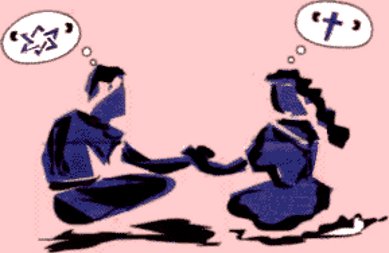
IntermarriageBut all this introduces a level of complexity into the equation of Jewish identity and Jewish community. When trying to explain these concepts to my Pastor a few weeks ago, he asked me if Messianic Jews had more in common with Judaism or Christianity. He was getting at the idea that in Christ, we are all “one new man” (Ephesians 2:15) and are saved through Jesus on the cross, while most streams of Judaism deny Christ as Messiah and as the Son of God.

I don’t think I can adequately answer such a question without being Jewish. I don’t have a lived Jewish experience and a unique identity as a part of Israel. In Christianity, we are taught to revere Jesus above all else and our culture and identity is defined by our beliefs.

Jewish identity and covenant relationship with God is established at birth (with the exception of those who convert to Judaism, “Jews by choice”) and, as Rabbi Teldon said, are defined by the Torah and by God. Any Gentile can enter or leave Christianity, but a Jew is born a Jew and even if they reject that heritage, they can never leave and become an “unJew”.

Historically, as Rabbi Dauermann brought out in his article, Jews have always been required to make a choice when coming to faith in Yeshua as Messiah. Either surrender all Jewish identity, practice, and culture, or forget about becoming a disciple of Jesus and lose (or never attain) your salvation.

I seriously doubt that any Christian past or present has any idea what they were asking of Jewish people who desired to have a relationship with the Jewish Messiah. How can you ask a Jew to leave his covenant people in order to honor the capstone of Jewish history, the Messiah, Son of David, who is utterly devoted to his covenant people Israel?

Then we come to a recent debate in the blogosphere on Jewish apostasy, and by that, I mean Jews who previously were believers within a Messianic Jewish context, denouncing Jesus and re-entering another Jewish religious community. General Christian and Hebrew Roots consensus says that any Messianic Jew who desires to live a completely Jewish lifestyle in honor of his fathers, in honor of the Torah, and in honor of Messiah significantly risks leaving Yeshua-faith because, somehow, living as a completely observant Jew among completely observant Jews and focusing on Messiah are mutually exclusive experiences.

Rabbi Teldon’s commentary may seem heartwarming when applied to any other Jewish population, but Christians consider having Messianic Jews making transitions across multiple corridors of (non-Messianic) Judaism as a severe threat which will result in those Jews leaving Yeshua-faith for “dead” Jewish worship. Even many Gentiles in the Hebrew Roots movement who believe as non-Jews, they are obligated to “observe” Torah, are at least hesitant about if not actively critical of Jews in Messiah who want to actually live as Jews and among Jews. Go figure.

I wrote a review a few days ago on one of John MacArthur’s presentations at his Strange Fire conference, and at the end of my review, I brought into question who Christians should be focusing upon, God the Father, Jesus the Son, or the Holy Spirit? Christianity, including Hebrew Roots, insists that the only valid focus of Christian faith must be Jesus Christ, but if that’s true, do we simply disregard the God of Genesis, the God of Abraham,  the God of Jacob, and the God of Moses? Even at the end of all things, the Bible specifically mentions only “the throne of God and of the Lamb” (Revelation 22:3).

I don’t see how it can be reasonable to ask a Jew to stop being Jewish in order to worship the God of Israel and Messiah, Son of David, King of the Jews. What are Jewish families in Messiah supposed to do, shop at the mall on Saturday afternoon and serve shrimp at their daughter’s wedding?

Oh, not everyone thought Rabbi Teldon’s article was heartwarming. Here are a couple of comments from the blog post:

Dear Rabbi Mendel,

Will you daven in a shul that is not Orthodox? Will you sit next to a woman who is also davening, and consider yourself yotse? Will you pray in any shul, regardless of denomination? Do you recognize those with non-Orthodox smicha as rabbis? Do you count women in a minyan? Will you daven, in tefilla b’tzibur, if there are women forming the minyan of ten? Will you share a pulpit with a woman who is a Rabbi in doing a wedding, or leading a service? I imagine that you would say yes to all of the above, since you have publicly claimed you are not an Orthodox Rabbi. If you cannot say yes to all of the above, I encourage you to publish an apology and a detraction of your public statement about being not being an Orthodox Rabbi. If you cannot say yes to all of the above, to claim one is not Orthodox is both disingenuous and inaccurate.

Thank you.

And another comment…

What do you expect? He’s a Lubavitcher. For Lubavitchers, every other Jew from unaffiliated to Satmar is classified as either Lubavitcher or not-yet-Lubavitcher. Everyone is conversion fodder to them. If one regards O/C/R as affiliations, he’s not affiliated with any of the other Orthodox orgnaizations – Lubavitch institutionally does not join with other Jewish institutions.

Except that Orthodoxy, according to R’ Micha Berger, is not a movement, but an attribute a movement can have. OU, Agudah, Lubavitch organizations, they’re all Orthodox because of their adherence to certain ideas. IOW, this is a marketing move. Since R’ Teldon finds that his congregants eschew labels, he’ll eschew labels too. Doesn’t change what he believes.

judaismIn the Messianic Jewish and Hebrew Roots movements, the concept of Jewish identity is fiercely discussed, but it’s obviously a matter of concern among all of the other Judaisms as well.

I think Rabbi Teldon has the right idea. I think that the core of being Jewish must cut through all other distinctions. When the Nazis came for the Jews, it didn’t matter what the synagogue affiliation (if any) of their victims were. Jews were simply herded into cattle cars and taken away as slave labor or to the gas chambers.

While there may be some “bumps in the road” between different Jewish streams regarding who is or isn’t considered Jewish, no other form of Judaism attracts masses of non-Jews like Messianic Judaism. This has been a really BIG “bump in the road” for Jewish Messianics who desire a truly Jewish life and worship experience.

Derek Leman, who like many other congregation leaders in the Messianic movement, oversees a congregation of mostly non-Jews, and yet he also sees the need for “Jewish” Messianic Judaism, as he blogged recently. Naturally, his blog post generated a lot of discussion in the comments section, since many non-Jews associated with the movement and certainly most traditional Christians, are at least confused about why Judaism is such a big deal, to outright offended at the suggestion that Jews converting to Christianity is not God’s real plan for them.

Gentile involvement in Messianic Judaism, although well established historically, results in an interruption of Jewish community that Rabbi Teldon and those at his Shabbos table couldn’t possibly imagine. And yet, without Gentile Christian involvement and support, the vast majority of Messianic Jewish communities would not be able to exist. On top of that, most Jewish people I know in the Messianic movement originally came to faith within a Christian church context. It would seem that continued Christian Gentile involvement or crossover into Messianic Judaism is inevitable, regardless of the other problems this raises.

But God, one by one, calls back each of His Jewish children to stand before Him at Sinai and to recall the Torah of their fathers. God speaks to each Jewish person, reminding them of who He is and who they are in Him.

The apostle Paul probably understood this dilemma best. He was a Jew, a Pharisee, of the tribe of Benjamin, circumcised on the eighth day, zealous for the Torah, the Messiah, the Temple, and Hashem. And yet, he associated with many, many Gentiles. Yes, he always went to the synagogue first whenever he entered a town in the diaspora, and he told of the good news of Moshiach to the Jews first, and also to the Gentiles.

And yet, the Biblical record testifies that as Paul lived and eventually died among the Gentiles, he never compromised who he was as a Jew, nor was he required to make such a heinous compromise by Messiah in order to be an emissary to the Gentiles. If anything, Paul’s Jewish “credentials” underwent the most strenuous scrutiny and the apostle clung to who he was as a Jew with outstanding fidelity (see Acts 21 and subsequent chapters for multiple examples).

It was a difficult road to walk, and it is no wonder that Jews in the Messianic movement today struggle to find a path. If only it could be as Rabbi Teldon relates. If only the binding link between all Jews could be Hashem, and Torah, and the promise of Messiah, who is realized among Messianic Jews. A Messianic Jew living as a Jew among other observant Jews should never violate zealousness for Moshiach at all. It never once dimmed Paul, the Jewish emissary to the Gentile’s vision of the Messiah King.

I know both Christians and Jews will disagree with me in all that I’ve said. But when I read the Bible and factor in the historical, cultural, linguistic, and yes, Rabbinic (proto-Rabbinic) context of Paul’s world, that’s how I see him. I see Paul as a shining example that a Jew who is zealous for Torah does not have to compromise his observance or his Messianic faith in order to honor the King and to worship Hashem.

Messiah is the lynchpin, the capstone that holds all believers together, Jewish and Gentile alike, but there is a dimension possessed by Jews in Messiah that we non-Jewish disciples, by definition, cannot apprehend. God created at Sinai an identity and an experience of what it is to be Jewish in community with other Jews that is unique to the living descendants of Jacob. The Messiah means a great deal to Christians, and we would be hopelessly lost and separated from God without him. But he is even more than all that to the Jewish disciples.

Messiah is the culmination of the prophesies from the Tanakh which all speak of the personal, community, and national redemption of all Jews and of Israel. Messiah is the link that allows the people of the nations to come alongside Israel and share in the prophetic blessings. To demand that a Jew in Messiah stop being Jewish and stop participating in Judaism is to deny Biblical prophesy, deny God’s sovereign plan for Israel and the world, and frankly, when we are dumb enough to make such a silly demand, we Gentiles are shooting ourselves in the foot (remember, the Jews would offer sacrifices to God for the atonement of the nations of the Earth, and the Romans destroyed that atonement in 70 C.E.). Without Jewish Israel and Judaism, what links us to Messiah and to salvation at all?

Capstone archSomeday, Messiah will be the capstone, not only for the (mixed) body of Messiah, but for all Jews everywhere, as they flock to Jerusalem to celebrate the return of the King. We Gentile believers will also celebrate, but it is our job to help conduct the exiles back to their Torah and their Land in accordance to the will of our Master and the will of Hashem.

The party will be first and foremost for the Jewish people, the nation of Israel, the Holy people of God who He gathered to Himself at Sinai. We of the nations who are called by His Name are grafted in by a faith learned from Abraham and through the grace of Messiah and the providence of God.

Rabbi Teldon ended his article with these words:

When we are able to focus on the fact that while we have differences but a family truly remains connected eternally, it will reconfirm what we already knew: Am Yisroel Chai!

There must be a way for this to be accomplished also for Messianic Jews, because they too are part of the family, regardless of other differences. Paul is part of that family, as are James, Peter, John, and for that matter, Abraham, Isaac, and Jacob. Messiah is part of that family, and he leads that family and that nation, for he is, first and foremost, the Jewish King.

How can Gentile believers in the Church not understand that being Jewish is a gift and demand that Jews return that gift to their Father in Heaven in exchange for Gentile Christianity? Someday what Rabbi Teldon describes will become an overwhelming reality in a way we cannot possibly imagine. Someday Messiah will bring all of his people, all of Israel home. And on that day, I and my other non-Jewish brothers and sisters will line the highway leading up to Jerusalem and loudly, jubilantly applaud the return of the lost remnant of Judaism, and cheer in joy and gratitude that the will of God has finally come to pass…

…and  we will bless God that we among the nations were allowed to humbly be a part of it all.

If I Should Ever Forget Your Torah

Rescuing_torah_scroll_Beth_IsraelRashi on the Chumash (Devarim 31:21) comments and says that this verse serves as a promise that the Torah will never be forgotten from the Jewish people totally – ‫.לגמרי‬

There is a discussion among the commentators how to interpret the meaning of this promise. When the verse says that “Torah” will not be forgotten, Rashi understands that we are assured that the song of Ha’azinu will never be forgotten. This song will remain as testimony for the Jewish people for all generations, and its lesson of the trials and tribulations of the nation and its destiny will accompany them on their trek through history. However, there never was a promise that the rest of the Torah would be remembered forever. This, then, is what Rashi alludes to when he comments that the Torah will never be forgotten “totally”, because the song of Ha’azinu will always remain. This is also how Maharsha understands the statement of Rebbe Shimon ben Yochai in our Gemara.

Maharshal understands that the promise in the verse refers to the written Torah. However, it is the oral teachings that are vulnerable, and there is a danger of their possibly being forgotten. This explanation fits into the narrative of the Gemara, where we find that the day will come when a woman will take a loaf of bread and circulate among the shuls and batei midrash to find out if the loaf is tamei or tahor, but no one will be able to answer her question. The Gemara then asks how this can be so, for the halachah of tum’ah of bread is explicit in the verse (Vayikra 11:34)! Now, if the written Torah itself is not guaranteed to be intact and remembered, it would still be possible for the explicit information of the verses to be forgotten. It must be, explains Maharshal, that the Gemara knows that the written Torah will always be remembered.

Yet even according to Rashi, although the promise of continuity was only made in reference to the song of Ha’azinu, the halachah is that this shira cannot be written by itself (Rambam, Hilchos Sefer Torah 7:1). Therefore, if the song of Ha’azinu will remain forever, it will necessarily require that the rest of the written Torah accompany it in the same scroll. Therefore, the promise of Ha’azinu never being forgotten automatically indicates that the rest of the written Torah, as well, will never be lost.

Daf Yomi Digest
Gemara Gem
“The Torah will never be forgotten”
Shabbos 138

My father writes in one of his letters: A single act is better than a thousand groans. Our G-d lives, and Torah and mitzvot are eternal; quit the groaning and work hard in actual avoda, and G-d will be gracious to you.

“Today’s Day”
Monday, Adar Sheini 8, 5703
Compiled by the Lubavitcher Rebbe
Translated by Yitschak Meir Kagan
Chabad.org

For the vast majority of Christians, reading what I’ve just quoted above won’t make a great deal of sense, especially when we focus on the sure promises we have through salvation in Jesus Christ, but since I’ve been talking about Jewish identity in the body of Messiah lately, I thought those words applied. More specifically, I think it’s important for we in the church to try to comprehend what a sense of identity as a Jew means to many Jewish people, including those who have accepted Jesus (Yeshua) as the Jewish Messiah. Most of Christian history has created a sort of “reflexive expectation” in the church that results in our anticipating that Jewish believers should look and act like the Gentile believers, and that the things of Judaism (lighting candles on Erev Shabbat, davening with a siddur while wearing a tallit gadol and laying tefillin, keeping glatt kosher, and so forth) should simply go “bye-bye.”

This is at the heart of much of the debate between the halachically Jewish members of Messianic Judaism, and the Christians in the church, as well as many Christians attending Hebrew Roots groups. We non-Jews keep asking ourselves and the Jews who revere the Master what’s the big rip-roaring deal about remaining distinctively Jewish? Didn’t Paul say it was no big deal for him?

If anyone else thinks he has reason for confidence in the flesh, I have more: circumcised on the eighth day, of the people of Israel, of the tribe of Benjamin, a Hebrew of Hebrews; as to the law, a Pharisee; as to zeal, a persecutor of the church; as to righteousness under the law, blameless. But whatever gain I had, I counted as loss for the sake of Christ. Indeed, I count everything as loss because of the surpassing worth of knowing Christ Jesus my Lord. For his sake I have suffered the loss of all things and count them as rubbish, in order that I may gain Christ and be found in him, not having a righteousness of my own that comes from the law, but that which comes through faith in Christ, the righteousness from God that depends on faith—that I may know him and the power of his resurrection, and may share his sufferings, becoming like him in his death, that by any means possible I may attain the resurrection from the dead.

Philippians 3:4-11 (ESV)

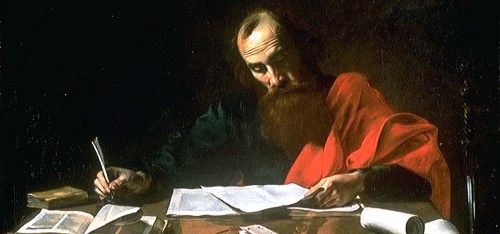
paul-editedOK, Paul wasn’t saying that he exchanged his Judaism for his faith in Jesus Christ, since they are hardly mutually exclusive. He was saying that being Jewish, in and of itself, didn’t make him a “big deal” and didn’t hold a candle to everything he had gained since he had come to knowledge and faith in the Jewish Messiah. The Messiah is the goal, he opens all the doors, he holds all the keys, and compared to that, no matter who you are, it doesn’t mean as much as everything Messiah means.

But it also doesn’t mean that Paul thought being Jewish was nothing, either. He never stopped being Jewish, never stopped acting Jewish, never stopped eating, sleeping, walking, and breathing Jewish until the day he died.

And for nearly 2,000 years, the vast, vast majority of Christianity has required, demanded, insisted, and red-in-the-face screamed at the Jewish people desiring to come to Messiah to stop being Jewish as a condition of becoming a “Christian.” (and I put that word in quotes because of how it has been used against the Jewish people who are just as Jewish as their King). If we demand that they forget the Torah, that they set aside their halachah, that they extinguish their Shabbos candles for the sake of Moshiach, how are we any different from all those generations of Christians who came before us and demanded the same things or worse?

But there’s something more to consider.

Sitting at a table in a non-kosher restaurant is a problem of “marit ayin,” which means that we have a responsibility to avoid creating a situation where others may draw the wrong conclusion – i.e. a passerby might see you and think that the restaurant is really kosher and it’s okay to eat there. Or others might think that since you (who purports to keep kosher) are lax in observance, then somehow it’s okay for them, too.

-From Ask the Rabbi
“Eating in Non-Kosher Restaurant”
Aish.com

Sounds a little bit like this sort of problem…that is, if the Jewish person in question was a believer.

But when Cephas came to Antioch, I opposed him to his face, because he stood condemned. For before certain men came from James, he was eating with the Gentiles; but when they came he drew back and separated himself, fearing the circumcision party. And the rest of the Jews acted hypocritically along with him, so that even Barnabas was led astray by their hypocrisy.

Galatians 2:11-13 (ESV)

You’d think that Peter would have gotten past this problem after his staying in the household of the Roman Cornelius back in Acts 10, but he still seemed to be worried about what some important Jewish men from James might think if they saw him eating with the non-Jewish brothers of the faith. Was it because Peter was enjoying a nice, big, juicy cut of pork or maybe a steaming hot bowl of prawns? Probably not, but that’s just a guess because the Bible doesn’t say what was on the menu. It’s more likely though, that whatever was being eaten was acceptable under the laws and accepted halachah involving kashrut, even if Peter was just having a salad, and he thought not all of the emissaries from James were totally on board with this whole “It’s OK to have table fellowship with the Gentile believers” thing.

kosher-in-los-angelesPaul, for his part, was completely OK with it and the fact that these were supposed to be “important men” cut no ice with him at all (v. 6). As the Aish “Ask the Rabbi” writer says, Peter may have been concerned with “a problem of marit ayin.”

I recently read David H. Stern’s book Restoring the Jewishness of the Gospel (2nd ed.) and one of the points Stern made was that a Jewish believer must continue to observe the mitzvot including the accepted halachah. Another of his points was that Jewish reluctance to share a meal with a Christian must not stand in the way of unity in the larger body of Messiah which includes both Jewish and non-Jewish “body parts.”

That’s a tough one, especially depending on the level of kashrut the Jewish believers are observing (I’ve seen some variability). Of course, it also depends on the level of kashrut being observed by the Gentile believers, but keeping kosher (in my opinion) is optional for non-Jews but (again, in my opinion) mandatory for Jews (particularly Jews considering themselves observant within the Messianic framework).

I should say at this point that it’s pretty cheeky of me to even suggest that I know what observant Messianic Jews should or shouldn’t do, except that I’ve been told on numerous occasions by a number of Jewish Messianic believers that this is how they think about kashrut as well.

In this particular blog post, I’m not going into what I think are the specific differences between how Torah should be applied to believing Jews vs. believing Gentiles, but I do want to suggest (again) that we Christians cannot expect or demand that Jews stop being observant Jews because we may not know how to operationalize “kosher” (for instance) or that we have issues with some of the halachah involved in kosher (or many other Jewish practices). Jews should be allowed to observe halachah as long as such practices don’t fly completely in the face of how the Bible describes the proper behavior for a disciples of Christ (and I realize I’m opening the door to various interpretations of “Biblically proper” here).

At this juncture, I can’t help but be reminded of this, particularly since it’s part of the blessings associated with the Birkat HaMazon.

If I forget you, O Jerusalem, let my right hand forget its skill! Let my tongue stick to the roof of my mouth, if I do not remember you, if I do not set Jerusalem above my highest joy!

Psalm 137:5-6 (ESV)

And then, there’s this particular mitzvah.

In order that you remember and perform all My commandments.

Numbers 15:40

Now we’re right back where we started: the commandment for the Jewish people not to forget the Torah. Of course, it’s not as if there haven’t been gaps when the Torah was not remembered let alone studied.

And when the king heard the words of the Law, he tore his clothes. And the king commanded Hilkiah, Ahikam the son of Shaphan, Abdon the son of Micah, Shaphan the secretary, and Asaiah the king’s servant, saying, “Go, inquire of the Lord for me and for those who are left in Israel and in Judah, concerning the words of the book that has been found. For great is the wrath of the Lord that is poured out on us, because our fathers have not kept the word of the Lord, to do according to all that is written in this book.”

2 Chronicles 34:19-21 (ESV)

But then again, it’s always been rediscovered, and Israel has always repented and returned to God and the Torah.

Rolling the Torah ScrollWhether we Christians always understand it or not, there is a bond between God, the Torah, and the Jewish people. That bond has existed for thousands of years, in spite of every effort of the nations opposing Israel and those persecuting the Jewish people to destroy that bond (often by burning synagogues, Torah scrolls, volumes of Talmud, and sometimes Jewish people). So when we Christians attempt to loosen the bond between Jew and Torah, which includes halachah, we can expect to see some resistance and even some push back. Expecting a Jew to forget Torah, at least because we’ve said they should, is like expecting a mother to forget her only child.

Memory is a unique Divine gift. Indeed, to this very day, neuropsychologists have not discovered the secret of exactly how memory operates. The turnover of the chemicals in our bodies is such that after a period of time not a single atom remains in the brain that was there several months earlier, yet a person’s brain retains memories for years, decades, a lifetime.

This unique gift should not be abused. Many times the Torah tells us what we should remember and cautions us against forgetting. The concepts and events that we must retain are goals that are vital to our spiritual well-being. Most siddurim list six verses of the Torah that we should recite each day to remind us of who we are and to caution us against idolatry and lashon hara (harmful talk).

However, if we use this wonderful gift to remember those who have offended us and to harbor grudges against them, or if we remember the favors we have done for others and expect them to be beholden to us, we are abusing this Divine gift.

The key to discerning what we should remember and what we should forget is contained in the above verse: “In order that you remember and perform all My commandments.” Any memory that does not assist us in working toward the ultimate goal of serving God does not deserve being retained.

Today I shall…

…try to retain in my mind only those things that contribute to my devotion to God, and dismiss those things that may deter me therefrom.

-Rabbi Abraham J. Twerski
“Growing Each Day, Adar 8”
Aish.com

I know someone out there is going to tell me how unfaithful the Jewish people have been to God throughout their history. I know someone is going to tell me that the majority of the world’s Jewish population is completely secular. Be that as it may, that doesn’t justify Christians requiring the believing Jews in our midst to also forget the Torah when they believe with great zeal that God has called them to always remember the mitzvot, to love God, and to obey Him, as He has long since taught His people Israel to do.

The Jewish Girl Who Saved Her Children

intermarriageSome of my friends began dating non-Jews. I stopped socializing with them in silent protest, after a more outspoken effort had failed. I self-righteously concluded that we had nothing in common, since they were prepared to give their Jewish identity the backseat. I was sitting firmly in the driver’s seat with mine, so much so that I became the leader of a Zionist youth movement, and started to mix with an idealistic new crowd.

In Ethics of Our Fathers, Rabbi Hillel warns us that we should be careful not to judge another person until we have stood in their place. And I was going places…

I don’t remember making conversation, but apparently I must have mumbled something, since the next morning the host of the party told me that Mr. Attractive had inquired after me. As I was catching my breath, she casually mentioned, “Oh, I told him you don’t date non-Jews, and he’s fine with that. He just wants to meet you. He really liked you.”

This was a delicate situation, to say the least. Here I was, being pursued by a bona fide heartthrob with absolutely no strings attached. He was an advertising executive. Flutter. He had a motorbike. Swoon. And, if that wasn’t enough for my ego, he was a commercial pilot.

Help!

-Jennifer Cooper
“My Non-Jewish Boyfriend”
Aish.com

You’ll never realize how many blog posts I don’t write just because I don’t have time. I’ll read something or hear a snippet of conversation, and my mind pursues it and I begin to internally construct a short essay on the topic between 1500 and 3000 words. I never mean to write as much as I do, which includes this story about the girl who would never intermarry. It just happens.

In Christianity, this is yet another thing about Judaism that simply doesn’t register with us. What’s the big deal exactly? OK, among many Christians, there’s the idea that it’s not a good thing to be “unequally yoked” and I suppose the equivalent quandary would involve a young Christian woman dating a handsome, talented, and very romantic atheist guy. Look out. Danger up ahead.

But there’s something more operating here. There’s a lot more operating here.

I’ve written many times before about intermarriage and part of this blog’s mission is to address the challenges and dynamics of Christians and Jews being married. You can see the angst and the ecstasy expressed in missives such as Opting Out of Yiddishkeit and Cherishing Her Yiddisher Neshamah. If my wife had been observant when we met or even if she had been raised in a secular Jewish home, we might never have gotten married since I am a goy (we were both atheists when we met and her parents were also intermarried).

I’ve been spending some blog time lately struggling to define why it’s important for believing Jews to continue to live as halalaic Jews. If Jesus saves, what difference does it make if a Jewish person lives a Jewish life or not?

Plenty, as Cooper’s story reminds me.

The next day I found myself in the car with my father. We parked in the driveway. There we sat for a good few minutes, lost in our separate worlds. I, in my bubble of optimistic self-gratification, and my father – mourning the potential loss of future generations. Finally, I broke the heavy silence.

“Dad, why is it so important that Jews marry Jews?”

“Because it’s important that we preserve our unique heritage.” he replied, surprised by this basic question coming from me.

I wasn’t buying it.

“Yes, but what’s so special about our heritage, I mean, why is it SO important that there be Jews in the world?” I challenged.

“Because we are supposed to be a light among the nations,” he stressed, wondering where this was going. I pressed on, going for the jugular.

“So, Dad, if our heritage is so special, and we have to be a light among the nations, and my entire future depends on it, why do I eat McDonalds, and why on earth don’t we keep Shabbat?!”

More silence. This time, it was my father that spoke. “I don’t know. I guess I never thought that far,” he admitted, somewhat ashamed.

For the first time ever, I had stumped my brilliant lawyer father. But he still had one last trick up his sleeve.

broken-marriageI’ve heard it said you can’t choose who you fall in love with, but Jennifer had a problem. Without intending to, she had fallen in love with a non-Jew and all of her determination to never “marry out” was fast evaporating. Her parents were culturally but not religiously Jewish, but you can’t dismiss the importance of Jewish identity based on lack of religious observance. Something deeper was in operation here and it was enough to turn Jennifer and her father into emotional pretzels, turned and twisted and trying to straighten out again.

My heart was heavy with respect for my parents and the desire to please them. I felt the weight of my Jewish identity on my fragile shoulders. What exactly was I trying to preserve and protect? After all, I was not religious. Why had it been so fundamentally clear to me that I would marry a Jew? And what had happened to that clarity?

I had been taking my Jewishness for granted. Jewish day school, Jewish friends, a traditional Jewish home. There had been no challenge, no threat, no temptation. No chance to think or look outside the box. But now my exclusive Jewish education and traditional upbringing was on trial. Was it enough to save me?

I took the witness stand. For the first time in my life, I consciously thought about, and decided, who I was, what I wanted to be, and what was truly important. I was first and foremost a Jew. My heritage mattered. I wanted it to continue to be a part of my life. And it was vitally important that my future husband feel the same.

The Verdict: A strong Jewish identity saves Jews.

It wasn’t so difficult after that. A short, tense phone call ended what would have been the mistake of a lifetime. I never saw or spoke to him again, although I cried for days. I don’t really know why, but I think it had something to do with my soul.

There’s something more to being Jewish than just a string of DNA or whether or not you eat McRibs at McDonalds. It’s not just the cultural aspects of Judaism because films like My Big Fat Greek Wedding (2002) have shown us that cultural differences can be bridged (Nia Vardalos wrote and starred in the film and in real life, she is a Greek woman married to a non-Greek man…Ian Gomez, who plays “Mike” in the film).

No, there’s more than just genetics, religion, and culture going on with Jennifer and with Jewish people in general, but you have to go back to Abraham, Issac, and Jacob to find it. You have to go back to Moses and Sinai to find it. You have to look into a pillar of cloud by day and a column of flame by night and deep inside you’ll see the God who molded, formed, fashioned, and defined the Jewish people to be a unique and special people before Him for all time.

And every intermarriage, particularly where the intermarried Jew does not maintain their identity and pass that identity along to the next generation removes not just one more Jew from eternity, but that Jew and all of his or her descendents. Yes, if Jennifer had married her handsome, charming goyishe suitor, her children would have been halachically Jewish, but how would they have been raised and how strongly would they cherish their own Jewish identity?

Memories and regrets are part of what it is to being human, and if I had it all to do over again, I would still have married my wife and had our children, but I would have fought tooth and nail to instill a strong Jewish identity in all of them.

But that ship has sailed and here I am standing at the dock watching it slip over the horizon and into the distance and darkness beyond.

We want our children to care about the meaning of being Jewish. We need to nurture their Jewish identity to the point that it becomes innate. Our homes are where we nurture, and where our children learn to care. Our homes are where we show our children what it is important to care about.

A lot of people feel that they need to make a great sacrifice to live out their Jewishness. It is an even greater sacrifice not to. We can’t be complacent for lack of funding, knowledge, the right address or social circle. The good news is, caring is not a sacrifice. It’s fun, and it’s far-reaching.

How do we put a little Yiddishkeit into our homes? If you ask anyone that grew up with it, they will tell you the same thing: it’s the simple rituals that have the greatest impact. Lighting Shabbat candles, decorating a sukkah or eating matzah on Passover, putting up mezuzahs on every doorway, laying some Jewish books proudly out on the coffee table, saying Shema Yisrael with our children, hanging out an Israeli flag on Israel’s Independence Day. These are the definitive moments that can carve a caring Jew out of the stoniest backdrop of threatened assimilation.

Our Torah and Jewish calendar are filled with a veritable treasure trove of tradition and meaningful ritual, enabling us to live uniquely enhanced lives filled with memorable moments of celebration and wisdom, all with that inimitable Jewish flavor.

These are the moments that kept me in the fold. They can impact you and your children, too.

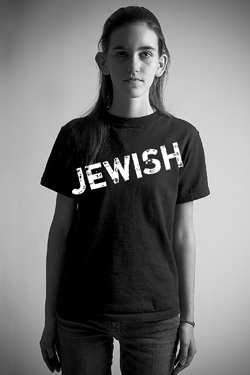
jewish-t-shirtI can’t change the past, but I can tell you that I will not be responsible for separating even one more Jewish person from his or her God-given identity. I can’t change the past but I can learn from it, and more than that, I can teach from it. I can pass my knowledge on to whoever cares to read these words and explain that this is why it is not only important but absolutely vital that Jews who are Messianic must establish and maintain a strong Jewish identity, must observe the mitzvot, must walk in the footsteps of their Fathers and actively live out the wisdom of their sages.

I can’t tell you the right and wrong of every single mitzvot and the amazingly intricate details of each little item of halachah within each of the Judaisms in our world today, but I can tell you that without them, without all of the behaviors and the activities that define a person as a Jew, not only are the Jewish people in danger of disappearing from the face of the earth (although I believe God would never allow this), but that Jews who come to Jesus will vanish into the mass of Gentile Christians in the church, never to be seen or heard from again. Only God will know that Jews ever stood among the disciples of the Jewish Messiah in these latter days of history.

But it all starts with one Jewish person who realizes that his or her identity as a Jew is more important than almost anything because that identity comes directly from God. And we in the church must also learn to cherish Jewish uniqueness, to support it, to uphold it, to esteem it, for our Master said that “salvation comes from the Jews.” (John 4:22)

The story Jennifer Cooper relates occurred almost twenty years ago, but the heartbreaking actions of one young Jewish girl saved not only her, but her children, and future generations of children who would not otherwise be Jewish or value who God made them all to be. The Good Shepherd will come and seek out all of his sheep…those of the Gentile pen, but also those who know his voice from the sheep of Israel. God forbid that when he returns, he discovers that none of them survived.

An Invitation to Keruv

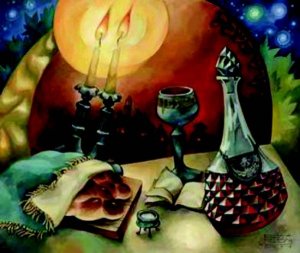
Shabbat-Made-Easy-paintingThough there are an estimated 175,000 to 250,000 Messianic Jews in the U.S. and 350,000 worldwide, according to various counts, they are a tiny minority in Israel — just 10,000-20,000 people by some estimates — but growing, according to both its proponents and critics. Messianic Jews believe that Jesus is the Jewish messiah, and that the Bible prophesizes that God’s plan is for him to return to Jerusalem, prevail in an apocalyptic battle with the Antichrist, and rule the world from the Temple Mount. Unlike Jews for Jesus, which focuses on bringing Jews into churches, Messianic Jews seek to make Jews believers in Jesus while still maintaining congregations that identify as Jewish and observe Jewish customs and holidays.

While these Messianic Jews are derisive of Orthodox Jewish fundamentalism (particularly what they call its “legalism”), they pick and choose some of the practices of traditional Judaism, such as weekly Torah readings — although they add New Testament verses to it.

They import to Israel many of the worship practices and the political agenda of the American Christian right. They are tightly knit with an American-born global revival movement that holds that modern-day prophets and apostles receive direct revelations from God, forming an elite army of prayer warriors on a mission to carry out God’s plans to purify Christianity, “restore” Israel, and bring the Messiah back.

-Sarah Posner
“Kosher Jesus: Messianic Jews in the Holy Land”
An article written for
the Atlantic

In a previous blog post, I mentioned that it’s helpful to take a look at that entity we call “Messianic Judaism” from outside the Messianic Jewish and Hebrew Roots contexts. We have a tendency to see our arguments through a very narrow tube that significantly limits our vision, not only of who and what Messianic Judaism is (along with Hebrew Roots and its variants such One Law, One Torah, Sacred Name, and Two-House), but how the rest of the world perceives it and them.

The above-quote from a recent online magazine article was apparently written by a Jewish reporter who, in all likelihood (but I can’t know for sure), is not religious (I say this based on the overall content of the full article). Her description of Messianic Jews in Israel was either so biased as to make the Jews she interviewed seem overly Christian (and certainly not Jewish in a cultural or halakhic sense) or indeed, the Jews she spoke with were very “Christianized.” But if the latter is true, then did this reporter choose a representative sample of the Messianic Jews in the Land or did she bias her research to only select the most “Christian-like” Jews in the Israeli Messianic environment?

In other words, are there any authentically, halachically, and culturally Jewish Messianic Jews in Israel, and can Messianic Judaism be fairly assessed by a Jewish reporter who may have “issues” with whether or not the Jewish participants in Messianic Judaism are actually Jewish?

When I write about Messianic Judaism as a Judaism (as opposed to “a Christianity”), I’m usually criticized, typically from Hebrew Roots proponents, saying that the majority of people involved in what I term as Messianic Judaism are not Jewish. True enough. As I’ve said before, Messianic Judaism as it exists today is a goal or an ideal. It is not a fully realized movement among the other Judaisms of our era.

And that’s probably Christianity’s fault.

Granted, “ownership” of the Jewish Messiah passed from Jewish to Gentile hands nearly 2,000 years ago and it’s only within the past century or less that any Jews at all have even considered the possibility that Jesus is the Messiah and that it’s “Jewish” to honor him. Tsvi Sadan in his article “You Have Not Obeyed Me in Proclaiming Liberty”, written for the Fall 2012 issue of Messiah Journal, says of past and present Messianic Judaism in Israel:

In the past, leadership was largely in the hands of Christian missionaries. Today leadership is predominately held by American Jews, American “wannabe” Jews, and American Christians. Where Jewish Israelis are in leadership, they have received their education – if they have any – from Christian institutions either in North America or Great Britain. In addition, with the influx of immigrants from the former Soviet Union in the 1990s, Russian speakers began to establish new churches and assume leadership positions in existing churches (congregations). Yet though some of the people and organizations have changed, the present-day leadership is essentially operating in the same way as their missionary predecessors did. While Hebrew is now the spoken language in most Israeli churches, modes of operation and models of leadership which grew mostly out of evangelical worldviews still dominate the scene.

christians-love-israelSo perhaps Ms Posner’s report on Messianic Jews in Israel wasn’t particularly inaccurate or biased after all. However, Posner ends her article with a chilling pronouncement:

In the meantime, Messianic Jews are assiduously attempting to, essentially, redeem Israel from its Jewishness. That seems to be the task at hand at the Jerusalem Prayer Tower, another 24-7 prayer meeting place located on the top floor of an office building on the bustling downtown thoroughfare Jaffa Street. At the “Restoring Jerusalem” prayer meeting, an American Christian woman read about Jezebel from the Book of Revelation, and exhorted the half dozen people in the room to pray to “purify” and “cleanse” Jerusalem.

Another woman prayed for the Jews “to change their mind, to feel you, Lord, to convert to you, Lord.” The first woman resumed her prayers, hoping that Jesus will give Israeli Prime Minister Benjamin Netanyahu “a great understanding of who you are.” She seems to earnestly believe this is a plausible scenario. “Help him, Lord,” she implores. “Bring him to Messiah.”

I was especially taken by the statement, “Messianic Jews are assiduously attempting to, essentially, redeem Israel from its Jewishness.” This comment clashes incredibly against what most of the Jewish Messianics I interact with tell me. In the article “Messianic Judaism: Reconsidering the One-Law, Two-House Trajectories” written by Boaz Michael, also for Messiah Journal, in addressing Gentile and Jewish roles, Boaz states:

In rejecting the right and responsibility of the Jewish people to define what it means to be Jewish and to practice Judaism, One-Law theology strikes directly at the core of authentic Judaism. One-Law replaces the Jewish rabbis and sages with self-appointed Gentiles who believe that they are divinely sanctioned to interpret the Torah outside of a Jewish context: whatever conclusions they come to are given greater weight than those of Jewish halachic authorities.

There is a struggle to define Messianic Jewish practice as Jewish and some of the Jews in the Messianic Jewish movement are caught between two forces: Evangelical Christianity and Hebrew Roots. Both groups of non-Jews are vying for the opportunity to define the Jewish worshipers of Christ in some manner that removes significant parts of what it is to be a Jew. In the vast majority of cases, this isn’t done from the malicious desire to harm Jews or Judaism, but intentions aside, the results are obvious. Even many Jews in Messianic Judaism believe that to accept Jesus as the Jewish Messiah, they must reduce or eliminate their Jewish identities. Those Jews who accept the One Law proposal are required to surrender their unique Jewish identity to any Christian demanding an equal share in the Torah.

111-mjThe latest discussion (as I write this) in the “Messianic blogosphere” on this struggle is Derek Leman’s article, CRITIQUE: Tim Hegg’s Article on Acts 15. By the time you read this “morning meditation,” the comments section of Derek’s blog will most likely have heated up to the temperature where lead melts (621.5 degrees F or 327.5 degrees C). There is a great deal of tension in this communications dynamic largely because each group, Evangelical Christianity, Hebrew Roots (One Law, Two House), and Messianic Judaism, have “turf” to defend. But while both Evangelical Christianity and Hebrew Roots see themselves as pro-Judaism and pro-Israel, it has been strenuously asserted by Messianic Jews that their impact is otherwise.

Boaz Michael says:

These movements damage and diminish Jewish identity in several ways. In one way, a very practical and real diminishing of Jewish identity occurs when people who are not Jewish begin to dress and act like they are Jewish (particularly like Orthodox Jews). When Jewish customs and Jewish apparel are taken on outside the context of a Jewish community and authentic Jewish identity, it diminishes real Judaism and real Jewish life. It sends a message to the Jewish people: “All of the things that make you unique and identifiably Jewish are mine too.”

Tzitzit are a prime example. In a traditional Jewish context, tzitzit have real meaning. They send a specific message: “The person wearing these is shomer Shabbos. They keep a high standard of kashrut. They are serious about traditional Judaism.” To see a person with tzitzit, for example, eating a cheeseburger or driving on the Sabbath actually diminishes the Torah and casts Messiah (and Messianics) in a negative light. It is application without understanding. It strips tzitzit of their meaning and significance.

That final statement could be extended to say that such a person “strips Judaism of its meaning and significance.”

Again, the large portion of the blame for this mess is Christianity, not in its intent but in its approach. Sadan stated that many Jews in Israel have come to know the Messiah, not through Jewish people or contexts, but through Evangelical Christians or Jews who have an Evangelical mindset. In the United States, many Jews come to know the Messiah, either through the traditional Church or through Hebrew Roots churches, and particularly One Law groups. My wife and I were introduced to “Messianic Judaism” through a local One Law congregation and for quite some time, we thought this was the only expression of Messianic Judaism. It was our introduction to “Judaism” without having to actually enter into a Jewish community (the vast, vast majority of people present were Gentiles). Jewish customs and practices were very poorly mimicked and an understanding of even the prayers was only elementary.

It wasn’t until my wife joined first our local Reform-Conservative shul and later the Chabad, that we both began to understand actual Judaism. From my wife’s point of view, it was in the form of a real, lived experience, and for me, it was largely by observation.

But I got to observe a lot.

Tsvi Sadan’s article presents an alternate method of introducing the Jewish Messiah to Jewish people in Israel:

Instead of this traditional Mission approach with its “proclamation of alienation,” Messianic Jews should consider the “proclamation of Keruv,” not as a tactical maneuver but as a state of being. Keruv is a Hebrew word that comes from “near” (karov). Essentially therefore, Keruv is a mission to call Jews to draw nearer to God and one another, first and foremost through familiarity with their own religion and tradition. The Jewish people, as taught by Jesus, cannot comprehend his message apart from Moses (John 5:46). Talking about the significance of Jesus apart from the everlasting significance of Israel is that which renders evangelism ineffective. Keruv on the other hand is all about reassuring the Jewish people that Jesus came to reinforce the hope for the Jews as a people under a unique covenant.

elul-shofarIt’s impossible to change the past but we have the power to summon the future. We have the ability to change directions and to correct our mistakes. In order to introduce the Jewish Messiah to Jewish people without damaging Jewish identity, either by removing it or co-opting it from Jews, it must be communicated that Judaism and the Jewish Messiah are mutually confirming and supporting. Instead of Messianic Judaism being seen as trying to “redeem Israel from its Jewishness,” it must behave in a manner that is totally consistent with restoring Jewishness to Israel and the Jewish people. This is not to say that Israel and Jewish people aren’t currently Jewish, but that the Messiah affirms, supports, and restores the rightful place of Israel and the Jewish nation as the head of nations and as a people called out by God to be completely unique from among the nations and peoples of the earth, including Gentile Christians.

This doesn’t diminish the Christian in the slightest. Even non-Messianic Jews assert that Jews are not better than Christians or any other group of Gentiles, just different and unique. I’ve said many times before that we Christians have a responsibility to support Jews, both materially and in their return to the Torah of their Fathers, all for the sake of the Kingdom and the return of the Messiah. As Boaz Michael said in a recent blog post, “The completion or resolution of Israel’s story does not and will not occur until she is redeemed from her exile, planted firmly in the land God has promised to her, and returned to a state of loving obedience to the Torah under the leadership of the Son of David, Yeshua the Messiah.”

We serve One God and we have one Messiah King who will return to rule over all of Creation. As servants and sons, we each have our roles and duties. We can’t afford to let our limitations, biases, and human ambitions restrict who we are and who God created us to be…both the Jew and the Gentile. Christian support of Israel does not mean taking control of the process of defining Israel. It’s allowing the Jewish people and nation the space to define themselves, and supporting them in this effort through whatever means are at our disposal. That is a Christian’s unique role and purpose in life. It’s time we start living it.

41 Days: Still Processing Sunday

“Our fathers had the tent of witness in the wilderness, just as he who spoke to Moses directed him to make it, according to the pattern that he had seen. Our fathers in turn brought it in with Joshua when they dispossessed the nations that God drove out before our fathers. So it was until the days of David, who found favor in the sight of God and asked to find a dwelling place for the God of Jacob. But it was Solomon who built a house for him. Yet the Most High does not dwell in houses made by hands, as the prophet says,

“‘Heaven is my throne,
and the earth is my footstool.
What kind of house will you build for me, says the Lord,
or what is the place of my rest?
Did not my hand make all these things?’”

Acts 7:44-50 (ESV)

Conclusions from Pastor Randy’s sermon on Acts 7:44-53:

  1. Israel’s history is one long story of their stubborn, rebellious tendency to reject God’s gracious dealings with them.
  2. Israel’s history has been characterized by limiting worship to a sacred placed, rather than a sacred person.
  3. We must take great care that we are not guilty of the same things!
  4. We should faithfully imitate Stephen’s bold witness, rather than have undue concern for our own safety or protection.

I don’t know. For the most part, what Pastor Randy said about this portion of Stephen’s defense before the Sanhedrin was supportive of the Tabernacle and the later Temples, including the idea that Ezekiel’s temple is literal and not figurative, and will someday exist in Jerusalem.

On the other hand, I’m bothered by the “either/or” concept of “Israel’s history has been characterized by limiting worship to a sacred placed, rather than a sacred person.” I think it would be valid to say that there were times in Israel’s history when they were faithless and even when offering sacrifices in the Temple, did so only to pay “lip service” to the commandments, while their hearts were far from God. But I don’t think that Israel’s temple service was always without value. Point 2 above seems to imply that rather than the Temple, the Jewish people should always have been focused on the Messiah, but didn’t God command Israel to build the Tabernacle? Didn’t the Shekhinah inhabit first the Tabernacle (Exodus 40:34-38) and later Solomon’s Temple (1 Kings 8:10-12)?

Did Jesus replace the Temple? But then Pastor believes Ezekiel’s Temple will be built, so can he believe that?

The title of the sermon was something like “Putting God in a Box.” I think the idea was that it’s a bad thing to put limits on God in any sense, but I never really got the impression that throughout the history of the Jewish people, anyone actually thought God was confined to the interior of the Mishkan (Tabernacle) or Temple. The Divine Presence, what most Christian Bibles translate as “the Glory of God,” was understood as a manifestation of God’s Presence without being perceived as anything like His totality. This is where understanding a little bit about Jewish mysticism and concepts such as the Ein Sof and Shekhinah would be helpful.

In Sunday school class, I did hear one gentlemen using examples of the specific type of clothing worn by Orthodox Jews and praying at the “wailing wall” (Kotel) as illustrations of Jews “putting God in a box.” It was one of the few times during class that I didn’t speak up, mainly because it would have taken too long to try to explain why those practices aren’t necessarily bad things (for Jews, anyway).

I was also a little disturbed about where I would lead such conversation if I allowed it to go down the predictable path. At the beginning of services, Pastor Randy reminded everyone that he would be leading a tour of Israel this coming spring and that “affordable prices” for airline tickets needed to be purchased by the end of this month. He was extremely supportive of Israel’s efforts in defending itself during the current crisis, and said that we should not let ourselves be put off in planning to visit in the spring because of what is happening right now.

As he went through the slide show of where the tour group would be visiting, the last place is to be Jerusalem, including stopping at the Kotel. How was I supposed to tell this fellow in Sunday school that when I saw the slides of the old city, that I have always desired to offer prayers to God at the Kotel? What would he say? How much more trouble would I stir up than I already had?

I know I don’t fit in to a Jewish community. I’m not Jewish and I’m not going act in such a way that pretends otherwise. But while I say that I’m a Christian because it’s the closest approximation of an accurate description of my faith, I don’t believe a Jewish devotion to the House of Prayer that God Himself requested and required of the Jewish people is a vain and empty effort, even relative to the person and power of the Jewish Messiah King.

And I don’t believe that Jews who choose to observe the mitzvot by a certain way of dress, or who honor their Creator by praying at the Kotel is “putting God in a box.”

Am I just looking for excuses for not going back to church? Maybe. I’ve already concluded that this particular church is about the closest I’ll ever come to finding what I’m looking for within the Christian world. If I blow it here, I’ve blown it completely. I knew I’d never find perfection, but then, what did I expect?

I just don’t know if I can agree with how Stephen’s defense is being interpreted. More from last Sunday’s study notes:

  1. They had accused him of reviling the Holy Place; He accused them of resisting the Holy Spirit. (vs 51)
  2. They had accused him of belittling the Law; He accused them of breaking the Law. (vs. 52a)
  3. They had accused him of making light of Moses, the man of God; He accused them of murdering Jesus, the Messiah of God. (vs. 52a-53)

Granted, Stephen was limiting his accusation to the Sanhedrin (as opposed to leveling it toward all Jews everywhere) in turning the accusations around to apply them to his accusers, but did he not defend the Temple, the Law, and Moses as well as the Messiah?

What am I doing here?

For the most part they were willing to support the state and to partake of the cultural bounty of the Hellenistic world, but they were unwilling to surrender their identity. They wished to “belong” but at the same time to remain distinct. Support for the state was not to be confused with the abnegation of nationalist dreams. Hellenization was not to be confused with assimilation. This tension is also evident in the social relations between Jews and gentiles.

-Shane J.D. Cohen
Chapter 2: Jews and Gentiles
Social: Jews and Gentiles, pg 37
From the Maccabees to the Mishnah, Second Edition

That’s not really describing me, but when I read this paragraph from Cohen’s book, I couldn’t help but think of my attempts at “belonging” in my current church context. However, at the same time do I want to remain distinct? Distinct as what?

I’ve described both Judaism and Christianity as cultures in addition to “faiths” (for lack of a better word). Judaism is notoriously difficult to define since it is a nation, a people, a faith, a culture, and an ethnicity, all rolled into one thing. Worse than that, Judaism encompasses multiple cultural and ethnic elements as well as variations on religious practices, but at its core, Jews will always be part of a single nation; Israel, because God has so ordained it.

By comparison, what is Christianity? It is primarily a religion, but it encompasses many “Christianities” and it has many different cultural and theological expressions. In the middle of all that, what identity do I have among them, and of what they teach, how much can I believe?

Do Christians Practice Judaism?

You probably think I’m crazy even asking if Christians practice any form of Judaism. The vast, vast majority of both Christians and Jews would answer a resounding “no.” Only a tiny population of Jews and non-Jews in what is referred to as the Messianic Jewish and Hebrew Roots movements (they overlap somewhat but are hardly the same thing) even ask such a question. Moreover, only some of the people inside of those movements are considering or confused by the answer.

But why even ask such a ridiculous question? First of all, I recently read such a question as it was floating by in the blogoverse and was intrigued by its audacity. One such church-going (non-Jewish) Christian says he regularly tells other people in his church that he practices “Messianic Judaism”. This is just a hair off from his possibly telling other Christians that he’s a “Messianic Jew”. I don’t want to be unfair or inaccurate, and this person did not refer to himself as a Jew, Messianic or any other kind.

But as you know if you’ve been reading my blog for very long, I have a very definite perspective on What is Messianic Judaism. If you click that link, you’ll see that I don’t think it’s possible for a non-Jew and particularly for a Christian to actually “practice Judaism,” but apparently the question requires more attention.

There’s a conversation going on in Facebook currently (you may need to be logged into Facebook to see it) that was started by Boaz Michael, President and Founder of the educational ministry First Fruits of Zion (FFOZ). He asks:

A good benchmark for the Nations? The seven laws of Noach are all things that can be derived from one place or another in the Bible, if not directly from Genesis 9. They form a sort of minimalist approach to ethical monotheism: believe in God, be a decent person, be kind to animals, and settle your disputes in court.

Now to be fair, when I queried Boaz on the differences between how Noahides are viewed in Judaism and the blessings of being a Christian, he replied:

Yes, I think that for believers there are additional standards and expectations. After all, the God-fearing Gentile believers were not just “sons of Noah.” Through Paul’s gospel, they considered themselves co-heirs to the messianic promises and spiritual members of the people of Israel. They fellowshipped with the Jewish believers, shared meals with them, and worshipped in their synagogues. They considered themselves spiritual sons of Abraham.

Which brings us to a relevant point: Did Gentiles ever practice Judaism?

The complete answer would probably turn into a book or at least a doctoral thesis on the subject, neither of which I have time for. The short answer is a kind of “maybe” as I see it (well, not really, but I’ll get to that). It all hinges on whether or not you believe that Gentles imitated literally every behavior of their Jewish mentors when learning to become disciples of the Jewish Messiah, and even if they did, what that behavior meant to both the Jews and non-Jewish believers involved.

We see in Acts 10 that the Roman God-fearer Cornelius (who didn’t become a “Christian” as far as receiving the Spirit and water baptism until the end of the chapter) most likely prayed the daily prayers in the same pattern as the Jew.

…Four days ago, about this hour, I was praying in my house at the ninth hour…

Acts 10:30 (ESV)

The ninth hour is about 3 p.m. which would be the proper time to pray the mincha or afternoon prayers. As Boaz said, the early non-Jewish disciples also very likely shared meals with their Jewish counterparts, which would have required that they keep a kosher diet, at least during those shared meals, and if, as Boaz said, they also worshipped in Jewish synagogues, then they would have prayed the same prayers (which were said from memory rather than through use of a siddur) and gone through the same “order of service” as the Jews. In fact, it’s likely that significant portions of the lifestyle of an “early Christian” would have been substantially similar to that of a Jewish person (disciples of the Jewish Messiah, or otherwise).

This may have contributed to some of the confusion we see among a number of the Gentles, as recorded both in Galatians, where Paul admonishes the Galatian church goers, saying they do not have to convert to Judaism and keep the full yoke of Torah (see Galatians 5:3) in order to be justified, and in Romans where Paul goes to great lengths (see Romans 11) to explain to the Gentile disciples that their entry into covenant with God did not cause them to supersede the Jewish “branches.”

No wonder now that Jews are rediscovering Jesus as the Jewish Messiah and Christians are rediscovering their “Jewish roots,” that we are also reviving something of that confusion in the present day (I’m speaking with some poetic license, since I don’t know if or to what extent Gentiles in the early church experienced any sort of “identity crisis” the way we see it in certain corners of the modern Hebrew Roots movement). I want to make it clear that many Gentiles in Hebrew Roots do not think they are Jews, nor do they intend on practicing any form of Judaism, so those who are “confused” represent a very small minority in Hebrew Roots.

So, I’ll ask it point-blank. Did early Christians practice Judaism? In terms of actual worship and significant lifestyle behaviors, it probably looked that way to an objective observer (though we lack a lot of information about how early Christianity really worked relative to Judaism). They might have been mistaken by some for people undergoing the process of converting to Judaism. The Roman empire recognized Judaism as a valid religion and would allow Jews to cease work during the Shabbat and so forth, but “the Way” as it was practiced among the non-Jewish disciples, was not a legal religion in the empire, and it would have been extremely difficult for diaspora Gentiles to keep Shabbat as did the Jews, and probably observe many of the other obviously Jewish mitzvot as well, such as eating kosher and praying shacharit and mincha, if it meant ceasing work during the morning and afternoon prayers.

Of course, after the destruction of the Temple and the exile of the vast majority of the Jewish population from Israel (renamed “Palestine” by the Romans), the first non-Jewish “bishop of the church” (certainly those exact words weren’t used to define the “office” of the head of the “Jerusalem Council” in those days) had to be elected. That, and many more events, resulted in the non-Jews taking administrative control over “the church of Jesus Christ” and within a few centuries (exactly how many centuries is up for grabs), the schism between what became Christianity and any form of Judaism was complete. At that point, no Christian was practicing any form of Judaism and any Jews who may have still, even secretly, acknowledged Yeshua as Messiah, would have done so as part of a completely Jewish religious life, isolated in the extreme from the Gentile Christian.

As part of the research (such as it is) I did for writing this “extra meditation,” I read articles such as Who is a Jew and Definition of a Jew, but they don’t really respond to the question I’m asking. First of all, there may be a difference between being Jewish and practicing Judaism, though I’m sure the distinction is very fine and difficult to identify. Then there’s the idea that we have post-modern Jews defining themselves without the “benefit” of the New Testament, thus they do not take into account any Apostolic material that might modify such definitions (and please keep in mind that Jews have every right to define who is a Jew and what is Judaism).

I tried to see if there was any way of answering the question, “Do Noahides Practice Judaism,” but other than finding a rather interesting article written by Rabbi Shraga Simmons about his brief interview with Noahide Jim Long, I came up dry. Certainly a Noahide would have no other place to go to worship and find community except a synagogue, thus he would be singing, praying, and worshiping alongside Jews on every Shabbat and holiday, but does that mean gentlemen like Mr. Long, a Gentile Noahide, are “practicing Judaism?”

The Gentiles in Hebrew Roots or worshiping in authentic Messianic Jewish communities seem to think they are the only non-Jews who have been attracted to and captivated by the Torah, but reading some of the comments in Rabbi Simmons’ article, I see that there is a significant number of us who have chosen the Noahide route and set aside Christianity/Hebrew Roots and Messianic Judaism as viable options.

What is Judaism? Since Judaism is a people, a nation, and a religion, it’s difficult to say that just “behaving” like a Jew means you’re practicing Judaism. You, as a non-Jewish Christian or Noahide, may be worshiping alongside Jews in a synagogue setting, sharing their fellowship, and breaking bread with them, but it might be a bit of a stretch to say you are practicing Judaism in precisely the same sense as the Jew davening next to you. If a Jew, for example, were to visit a Christian church (say he was married to a Christian wife but maintained a Jewish cultural, ethnic, and religious identity), and prayed and worshiped God within that context, we wouldn’t say he was “practicing Christianity.” Of course, he wouldn’t be acknowledging Jesus as Messiah and Savior, either.

What about the “Messianic Jew” who maintains a Jewish cultural, ethnic, and religious identity but acknowledges Jesus as Messiah? Does he practice Christianity? Some “Jewish Christians” do, but they have voluntarily left a Jewish religious and (to some degree) cultural context to worship and identify primarily as a Christian, but one of Jewish heritage. If you are a Jew who is Messianic and maintains that Jewish cultural, ethnic, and religious identity, it’s easier and clearer to say that you are “practicing (Messianic) Judaism.” A Messianic Jew in a church isn’t practicing Christianity, but worshiping alongside their Christian brothers and sisters. (Dr. Michael Schhiffman commented about this significantly on his own blog recently)

I suppose on that basis, regardless of how we see those early, ancient Christians and what they were practicing in the synagogue, today, we Christians, even those of us who daven in the presence of our Jewish fellows in a (Messianic) Jewish synagogue, are not practicing Judaism, but worshiping God with the Jewish people who, in this case, have the same God as we do, and know the same Messiah as we do.

I realize my little missive is not perfect, but I think I have made a reasonably good case for my point of view. Last spring during Shavuot, I worshiped in a completely Jewish synagogue context at Beth Immanuel Sabbath Fellowship. But even though the prayers were in Hebrew, even though we davened using a siddur, even though the Torah was read, and even through we all ate kosher meals prepared in a kosher kitchen, that doesn’t mean I was “practicing Judaism.” I was a Christian worshiping with other Christians and a good many Jews in a place where we were all welcome to share fellowship in love and peace, each of us just as who we were created to be by God.