Tag Archives: Jerusalem

It Takes a Child to Build the Temple

Yehuda Glick, head of the LIBA Movement for Freedom of Movement on the Temple Mount, expressed his satisfaction that “for the first time in three years the Temple Mount has been opened to Jews on Tisha b’Av.”

“300 Jews have already come, including MK Shuli Muallem-Refaeli (Jewish Home). Afterward, we went to Commander of the Old City, David Avi Biton, and expressed our appreciation of the wonderful work the police were doing today,” Glick added.

Earlier this morning, masked Arabs arrived at the Temple Mount throwing stones and Molotov cocktails at the security forces. Police entered the area and dispersed the rioters. There were no casualties, and the police have remained in place to maintain order.

Last night the Jerusalem District Police arrested 27 Arabs suspected participating in the rioting in East Jerusalem.

Thus far, 457 suspects have been arrested for rioting, of which 160 have been served indictments. Additional arrests are anticipated.

“Temple Mount Open to Jews on 9th Av for First Time in 3 Years”
-found at VirtualJerusalem.com

I hadn’t planned to write on Tisha B’Av but the above-quoted article plus something else inspired me. To understand why, read this:

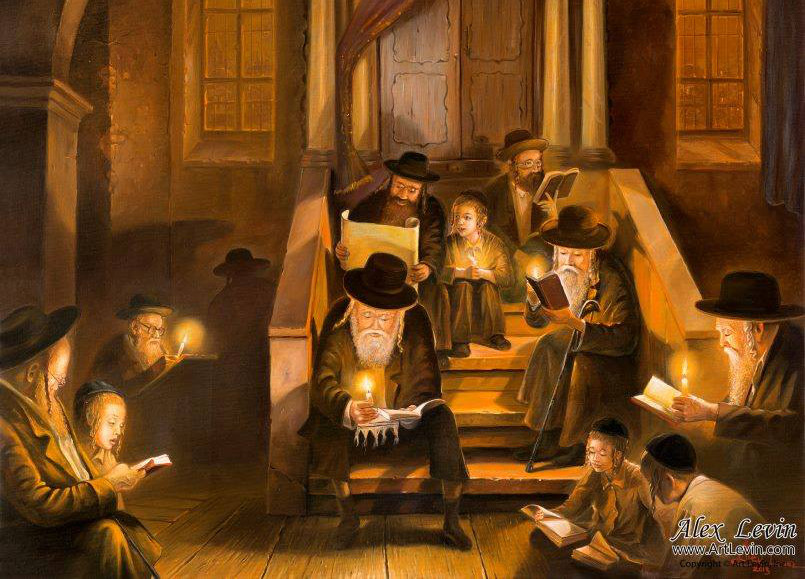
Tisha B’Av night we sit on the floor and read from the Book of Lamentations. In a mournful voice we chant “Alas, she sits in solitude! The city that was great with people has become like a widow. She weeps bitterly in the night and her tear is on her cheek.”

We grieve for our Temple that was destroyed. We recall a once golden Jerusalem that now sits in darkness, abandoned. The streets of the city run red with rivers of blood. Lamentations describes a glorious nation being led out in chains as the fires of destruction fill the air. We cry “for Mount Zion which lies desolate, foxes prowled over it.”

-Slovie Jungreis-Wolff
“Making Tisha B’Av Relevant”
Aish.com

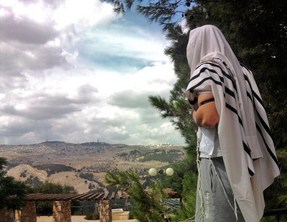
Tisha B'Av
photo credit: Alex Levin http://www.artlevin.com

Observant Jews mourn the loss of both Solomon’s and Herod’s Temples on this date as well as commemorate many other tragedies that have occurred in Jewish history employing very specific practices. Personally, I’ve decided to fast but not to employ all of the traditions involved in Jewish observance to avoid giving the impression that I’m fulfilling the mitzvah. I fast, pray, and study in solidarity with the Jewish people, but I must consider their losses as theirs, not mine.

But while Tisha B’Av is a day of mourning, it is also a day of hope. The very fact that the Temple Mount was opened to Jews on Tisha B’Av for the first time in three years makes me want to smile, even though that is inconsistent with a state of mourning.

I did have to smile at the following, though:

My son was on the lookout the minute the plane touched down in Israel. I could see the ignited light in his little four-year-old eyes on the entire car ride from the airport as he viewed the Holy Land for the first time. He was a tiny man on a mission, to see the Beit Hamikdash, the Holy Jewish Temple, he was always hearing about.

He learned in school the common Jewish notion that each mitzvah (good deed) a Jew performs adds a “brick” to rebuild the destroyed Temple. And he was expecting to see the third Temple in the process of being rebuilt, brick by brick, mitzvah by mitzvah. You can imagine how his face fell and heart was broken when we arrived at the site of the Kotel, the Western Wall.

-Beth Perkel (as told to her by R.S.)
“Searching for the Third Temple”
Aish.com

Some among Israeli Jews believe the Third Temple should be rebuilt right now, while others (including me) think when the Messiah comes (returns), he will build it.

But the wonderfully innocent audacity of a four-year old little boy expecting the bricks of the Temple to miraculously appear one by one as Jews all over the world perform mitzvot is an obviously literal interpretation of midrash and also the perfect faith only a child could have.

“Mommy, this is it?”

“What do you mean this is it?”

“Where is the Beit Hamikdash? All I see is a wall Mommy, where are the bricks we have been working for, where are all the extra bricks?”

“They are coming precious child, someday, hopefully sooner rather than later, they are coming.”

But my answer wasn’t enough. He stood transfixed, woefully unsatisfied, hoping somehow that the bricks would miraculously appear. When they didn’t, he wandered around, the only one moping at the Kotel during the precious moments of our short visit there.

Ultimately, this searching Jewish child actually did find the bricks to the Temple at the Yad La-shiryon tank museum at Latrun, or more specifically, in the memorial wall, in which each brick is a representation of the mesirat nefesh or the self-sacrifice of the soldiers who died defending Israel.

“Mommy, this is it! We found the bricks! These are the bricks for the Beit Hamikdash!”

It brought tears to my eyes. Somehow, his soul had understood something so deep on this very spot where soldiers throughout Jewish history, from the time of the Tanach onward, had died glorifying God’s name, defending the Jewish homeland and helping us take steps towards our destiny. I could see the radiance on his face. He had found it – the bricks that showed him that God’s promise of redemption was on its way.

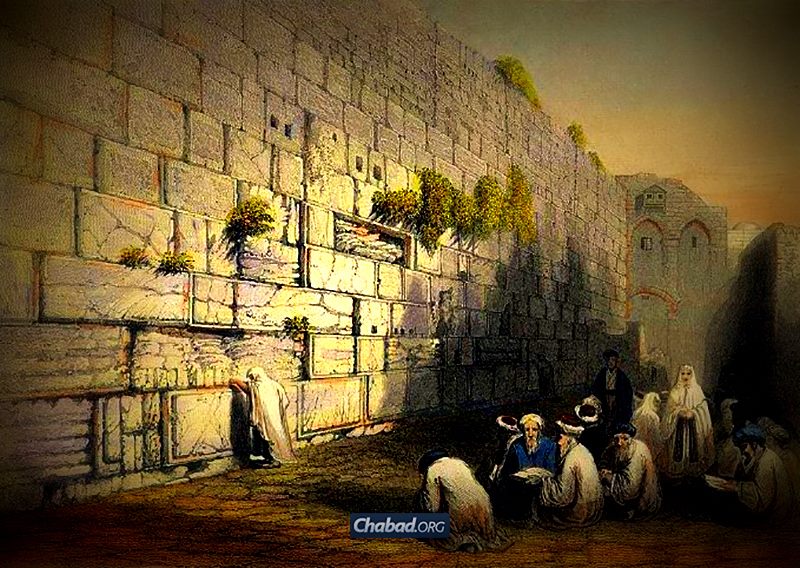
Kotel
photo credit: Chabad.org

What will bring (back) the Messiah, what will rebuild the Temple, is hope, even during the darkest periods of life. That’s what Tisha B’Av is, hope in the darkness. Even as Jews study Lamentations by candlelight sitting on short stools (as is the custom), with some eyes welling with tears, there is always hope.

Hope is what has enabled the Jewish people to endure as a people for so long. Hope is what recreated the modern state of Israel from the sand and ashes of “Palestine”. Hope is what keeps the prophesy of Messiah alive and all that he will do to return the exiles, redeem God’s people, and restore the nation to its former glory.

I lift up my eyes to the mountains—where does my help come from? My help comes from the Lord, the Maker of heaven and earth.

Psalm 121:1-2 (NASB)

Our hope is in the Lord, maker of Heaven and Earth. That is the Jewish hope but it must be the hope for the rest of us, otherwise we have nothing, for “Salvation comes from the Jews” (John 4:22).

Hope is a four-year old boy who sees the “extra” bricks for building the Temple in the memorial of Israel’s honored fallen heroes.

May you have an easy fast.

Christians and Tisha B’Av

…Should I weep in the fifth month [Av], separating myself, as I have done these so many years?

Zechariah 7:3

In the fifth month, on the seventh day of the month …came Nebuzaradan … and he burnt the house of the L-RD…

II Kings 25:8-9

In the fifth month, on the tenth day of the month… came Nebuzaradan … and he burnt the house of the L-RD…

Jeremiah 52:12-13

Tisha B’Av, the Fast of the Ninth of Av, is a day of mourning to commemorate the many tragedies that have befallen the Jewish people, many of which have occurred on the ninth of Av. Tisha B’Av means “the ninth (day) of Av.” It occurs in July or August.

Tisha B’Av primarily commemorates the destruction of the first and second Temples, both of which were destroyed on the ninth of Av (the first by the Babylonians in 586 B.C.E.; the second by the Romans in 70 C.E.).

Although this holiday is primarily meant to commemorate the destruction of the Temple, it is appropriate to consider on this day the many other tragedies of the Jewish people, many of which occurred on this day, most notably the expulsion of the Jews from Spain in 1492 and from England in 1290.

-from Judaism 101

Sometime before May of 2011, as chronicled on my former blog, I significantly reduced many activities that I had erroneously believed were my obligation to Torah observance. Not that my observance was performed with any sort of accuracy as an observant Jew might consider it, but at one time in my life I made the mistake of thinking that Jews and Jesus-believing Gentiles were assigned identical obligations to God and for all intents and purposes, a homogenous identity.

All that changed over the period of about a year and one of the primary motivators of that change was me watching my Jewish wife integrate into the local Jewish community across two synagogues and into her exploration of who she is as a Jew.

I realized that by attempting to “mimic” Jewish observance and behavior, I was diminishing my wife in her Jewish identity and diminishing the special chosen status the Jews have received from God.

Which left me with the question of just how much Jews and Christians can and should share, at least relative to Messianic Judaism but ultimately as an act of interactive fellowship between all Christians and all Jews.

And that brings me to Tisha B’Av or the ninth day of the month of Av on the Jewish religious calendar. You can click the link posted in the last sentence as well as the Judaism 101 link to learn more about this event and the weeks leading up to it.

The question is, can I or should I fast on Tisha B’Av? What is the purpose of a non-Jew fasting on a day of Jewish mourning? I’m sure the question has been asked so I went searching for questions and answers.

QUESTION: Is it OK for a Noahide to fast on Tisha B’Av? [The 9th/Tisha of the Hebrew month of Menachem Av, when Jews observe total fasting for about 24 hours and 40 minutes, as part of their traditional mourning on this anniversary of the destruction of both the first and the second Holy Temples in Jerusalem. When the 9th falls on the Seventh Day as in this year, the fast is pushed off 24 hours, and starts on Saturday night.]

ANSWER: It would seem that if a Noahide would make a full observance of all the Jewish precepts of Tisha B’Av, he would be making a religiously-observed memorial day for himself, which is like innovating a religious observance, which is forbidden.

Rabbi Moshe Weiner, author of Sefer Sheva Mitzvot HaShem, says that the only point upon which an individual Noahide could justify fasting is that he is mourning the temporary (but far too long) destruction of the Holy Temple and the exile of the Divine Presence. Since this is a permitted activity, it depends on his intention.

-from “Remembering the destruction of the Temples”
AskNoah.org

rainbow-forestYou may think it strange that I started looking for answers by exploring the propriety of a Noahide (a Gentile who observes the Seven Noahide Commandments [see Genesis 9] and is considered a “righteous Gentile” from a religious Jewish perspective) observing the fast. After all, I previously explored the idea of a Christian also being seen as a “righteous Gentile” and found, with rare exception, that the two states are incompatible.

But since this question (and many others like it) has probably been considered by the various branches of Judaism for hundreds of years or more, why not seek out their viewpoint? After all, it is a Jewish commemoration.

I only quoted from part of the article, but as you can see, it’s not considered obligatory for a Noahide to observe the fast or any of the other customary events leaving up to the actual fast day.

While a complete fast is discouraged, there are other recommended behaviors that are thought appropriate according to the Ask Noah Rabbi:

You can certainly increase in deeds of goodness and kindness for others, especially in giving donations to proper charities (which are not in conflict with Torah laws or morals)

Certainly a Noahide is encouraged to pray that the Third Holy Temple shall be established by Moshiach ben David very speedily in our days. And it very appropriate for a Noahide to read the Book of Lamentations on the night and/or day of Tisha B’Av.

The Rabbi also recommended the traditional reading of the Book of Job.

Rabbi Qury Cherki at the Noahide World Center has a similar opinion:

There are no commandments binding on a Noahide on the Ninth of Av. Any actions that he or she takes are completely voluntary. Anybody who decides to fast, or to read the Book of Lamentations or the Wars of the Jews and the Romans by Josephus, will be blessed for compassion.

The same is true of other restrictions, such as not listening to music, not greeting other people, and not using makeup. All such practices are copied from the obligations of Israel and are voluntary for Noahides. Children should not be told to fast.

Noahides can also decide on their own conditions. For example, they might allow themselves a partial fast by drinking but not eating any food. They can freely choose their own conditions.

This commentary seems a bit more relaxed than the “Ask Noah” opinion but it ultimately centers on any action the Noahide takes in response to Tisha B’Av being completely voluntary and a blessing for compassion.

churchBut what about Christians? Since the Church has been the source of much Jewish misery over the long centuries, would it be considered forbidden for a Christian to participate, or would it be (perhaps) considered an obligation as a matter of Teshuvah? If we have caused Jewish suffering, should we now, as an act of repentance, share in Jewish mourning?

It’s not easy to find anything online about Christianity and Tisha B’Av. I did manage to locate a letter written by Rabbi Yechiel Eckstein posted at the International Fellowship of Christians and Jews. It’s addressed “Dear Pastor and Friend of the Fellowship,” so the audience is generically Christian. The letter seems educational in nature and is more advice to a Pastor on how to explain the Jewish significance of Tisha B’Av to Christian congregations.

R. Eckstein ends his letter:

It is my hope that these materials will help you gain greater insights into the Jewish roots of the Christian faith and understand the significance of Tisha b’Av.

I thank you for your continued interest and partnership in building bridges of understanding between our two faith communities.

May God bless you richly as you and your congregation continue to study His word.

The Christian Broadcasting Network posted an article by John Parsons of Hebrew for Christians Ministries entitled Tishah B’Av: Remembering the Destruction of Zion, but that too was an informational piece with no specific recommendations for Christian observance of the fast.

Which brings me to First Fruits of Zion’s (FFOZ) article The Affliction of Av.

This day holds intense significance for the Jewish people, but what about Christians, the followers of Messiah? Should believers mourn as well? Yes, we more than anyone else.

This is the first and only affirmation I could find (granted, my search was hardly exhaustive) that Christians not only could but should observe the fast. The article continues to conclusion:

The afflictions of Tisha b’Av were not just limited to the days of the Bible. Tisha b’Av has continued to be an ominous day for the Jewish people throughout their history. Sadly, many of these tragedies have been at the hands of “Christian” rulers, popes, and angry mobs. Whether by crusades, inquisitions, pogroms, or blood libels, so-called followers of Yeshua have tortured, burned, and murdered Jews. In so doing, these “Christians” have maligned the name of the Master and blasphemed His character.

But though some of these tragedies may seem like ancient history, “Christian” persecution is still fresh in the collective mind of the Jewish people. Given that fact, perhaps Tisha b’Av should become a Christian tradition as well. We must continue to rid our congregations of the sin of anti-Semitism in whatever form it takes, whether in thought, speech, or theology.

Once again, tzom kal – May you have an easy fast.

If the Church can be said to be obligated at all to the observance of Tisha B’Av, repentance for our historic (and maybe more modern) crimes against Israel, Judaism, and the Jewish people is the reason. Beyond Teshuvah is fasting as an act of compassion and solidarity. From a Christian and Messianic point of view, we are all looking to a future time when Messiah comes (returns) and rebuilds the Temple in Jerusalem, defeating Israel’s enemies, and bringing a lasting peace to the entire world for all nations…for Jews and Gentiles alike.

Each of them will sit under his vine
And under his fig tree,
With no one to make them afraid,
For the mouth of the Lord of hosts has spoken.

Micah 4:4 (NASB)

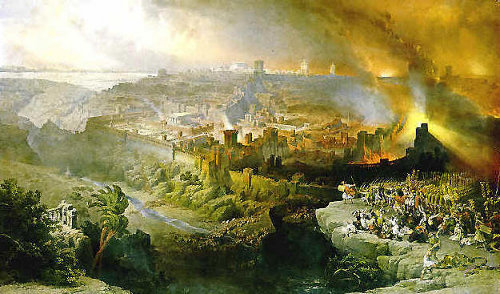
fall-of-jerusalemYesterday, I posted both a blessing and a cautionary tale about praying for the peace of Jerusalem or, conversely and even fatally, failing to do so. I believe Christians are commanded to pray for Israel’s shalom as a matter of aligning ourselves with the will of God for the Jewish nation and all of her people. In that light, I can see Christian observance of Tisha B’Av on some level to be obligatory as well. That most church Pastors and their congregations know nothing at all of Tisha B’Av may be a tragedy and a crime. Could it also be a sin?

As I write this, it is the first day of the month of Av, which begins the Jewish observance of the Nine Days leading up to the fast day. You can also learn a lot more about the three weeks leaving up to Tisha B’Av at Chabad.org.

This year, Tisha B’Av begins just before sundown on Monday, August 4th and ends about forty minutes after sundown the following day, Tuesday the 5th.

If you are Jewish and reading this and you don’t have a practice of fasting on Tisha B’Av (unless for a medical reason) I encourage you to strongly consider participating in the fast as a matter of community with all of Jewry, your brothers. If you are a Christian, from a traditional Jewish point of view, any observance of Tisha B’Av is completely voluntary and you are free to not observe the fast at all. However, the reality from a Messianic point of view (and who is to say this isn’t God’s point of view as well) is that observing Tisha B’Av can be seen as an obligation for Gentile Jesus-believers as both a matter of repentance and compassion.

This could be akin to that portion of Psalm 122 which pronounces prosperity for anyone who prays for the peace of Jerusalem and who loves the Holy City, as well as to Genesis 12 which announces blessings for those who bless Israel and curses for those who curse her.

Thus not only should we pray for Israel’s peace but we should also mourn with her in her loss.

“Be joyful with Jerusalem and rejoice for her, all you who love her; Be exceedingly glad with her, all you who mourn over her…”

Isaiah 66:10

“He who does not mourn over the Destruction of Zion will not live to see her joy.”

-T. Bab Bathra, fol. 60. 2. & Caphtor, fol. 118. 2.

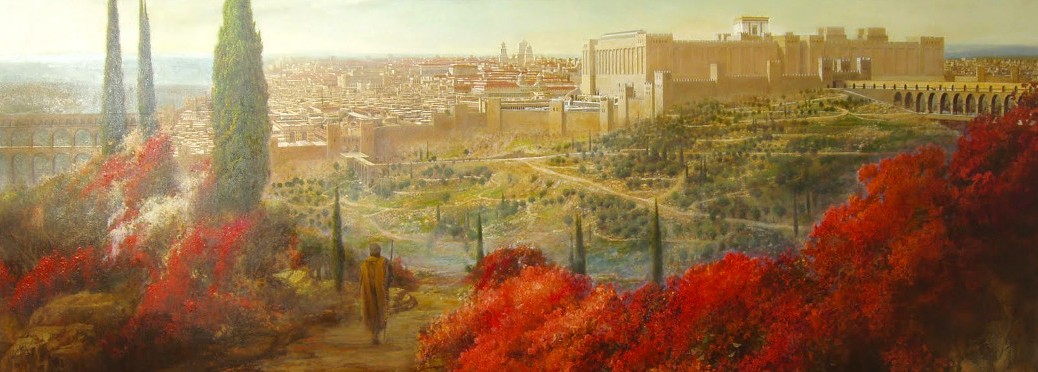
RestorationOur hope as Christians is in the return of the Messiah and the resurrection in the New Covenant age when Jerusalem will be rebuilt and Israel will raised as the head of all the nations. Jerusalem will be in her uttermost joy, but according to Jewish tradition, those who do not mourn for Zion now will not be alive in the Messianic future to receive her joy. This is commentary on both Isaiah 66:10 and Genesis 12. This is a warning to all believers who still embrace hatred of Israel in their (our) hearts.

May God grant wisdom and compassion to His worshipers among the nations, and may He teach us to weep bitter tears over the fallen Temple, so that we may sing with joy when Messiah raises the Mikdash, the Holy Temple, again.

What I Learned in Church Today: Pray for Jerusalem

I was glad when they said to me,
“Let us go to the house of the Lord.”
Our feet are standing
Within your gates, O Jerusalem,
Jerusalem, that is built
As a city that is compact together;
To which the tribes go up, even the tribes of the Lord—
An ordinance for Israel—
To give thanks to the name of the Lord.
For there thrones were set for judgment,
The thrones of the house of David.
Pray for the peace of Jerusalem:
“May they prosper who love you.
“May peace be within your walls,
And prosperity within your palaces.”
For the sake of my brothers and my friends,
I will now say, “May peace be within you.”
For the sake of the house of the Lord our God,
I will seek your good.

Psalm 122 (NASB)

Not that the sermon wasn’t good or the Sunday school class wasn’t stimulating, but this is the best thing I learned in church today (yesterday as you read this). Pastor Randy returned from being away for several weeks in California and led the congregation in an impassioned prayer for Israel in these trying times. Randy lived in Israel for fifteen years and still has many Jewish friends there. One of his friends calls Randy every three days or so and gives him an update on what is really happening there, events you’ll never see reported on CNN or MSNBC.

The Iron Dome missile defense is working but when a missile was intercepted directly over the home of Randy’s friend, they heard the loud explosion followed by the rain of shrapnel hitting the roof. The missile alarms go off daily prompting everyone to go to the shelters.

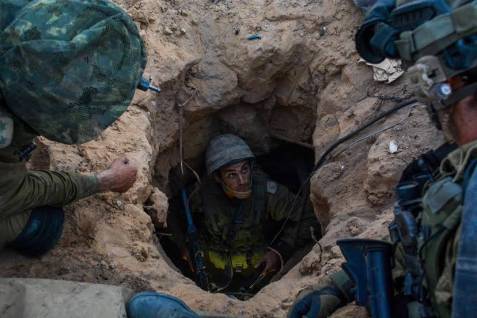
The friend’s adult age daughter’s boyfriend is an officer of an elite ground unit in the IDF. This officer was leading his men (in the IDF officers don’t tell soldiers to go and do something while sitting back, they always say “follow me” and then lead their troops) through one of the thirty-eight known Hamas terrorist tunnels in Gaza when a booby trap bomb blew up literally in his face.

The three men behind him died but amazingly, this man survived. A number of bones on his face were broken, bomb fragments are in both eyes, and he’s lost the hearing in one ear.

He will regain his sight eventually but will always be partially deaf.

Randy was insistent that we must pray for the peace of Jerusalem. He also said this:

And I will bless those who bless you,
And the one who curses you I will curse.

Genesis 12:3 (NASB)

Not only did Randy speak of blessings but of curses, and he even invoked these curses against all of Israel’s enemies.

He also recited Psalm 122:6 in Hebrew and wished we could read and speak it in Hebrew as well:

שַׁאֲלוּ, שְׁלוֹם יְרוּשָׁלִָם

Remember the second half of that verse:

May they prosper who love you…

Which strongly implies the opposite to those who hate Jerusalem.

terror tunnel discoveredFrom my point of view, loving Israel and cherishing Jerusalem is a “no brainer,” but after all, my wife of over thirty years is a Jew and I have learned a deep-seated compassion for the nation and the people whom God has called His “priests” and the “apple of His eye”.

I also consider it spiritual suicide to not love Israel for in the end, God Himself will defend her against all of her enemies in war, which sadly I fear, includes the nation in which I live.

This topic wasn’t supposed to spill over into Sunday school class but when Charlie was asking for prayer requests, I mentioned that Randy fulfilled my typical request in a much better way than I ever could. That started a discussion and one fellow, who tends to have a “sparky” temper at times, inserted the “there are two sides to every story” argument.

I didn’t mind, and in fact I agreed with him, when he said that the Arab non-combatants in Gaza are as much victims of Hamas as the Jewish Israelis, but he then downgraded Israel and her current Jewish population saying they are guilty of doing many wrongs as well.

I can’t speak for the actions of every individual in Israel, but I can see that God didn’t promise to fight off the enemies of the “Palestine,” He will defeat the enemies of Israel. To stand against Israel now, even in the slightest degree, isn’t only standing on the wrong side of history, it’s standing on the wrong side of God.

I wasn’t the only one to come to Israel’s defense in class, and shortly afterward, this fellow seeing “both sides” got up and left, followed a minute or so later by his wife.

I actually feel bad about that because on many other levels, this person does love Jesus and sincerely serves him (he just returned with a group from our church who went on a short-term missions trip to the Philippines and Thailand). It’s just that so many Christians are blind as to the true focus of Christ’s love and what Jerusalem means to him.

I mentioned before that I thought John MacArthur’s current battle against the Presbyterian Church (U.S.A.) over PCUSA’s support of “marriage equality” was something of a Red Herring, not because MacArthur isn’t sincere (he’s always sincere), but because the center of God’s attention is always Israel.

This isn’t to say that missions trips or the many other fine endeavors of the Church are “Red Herrings,” but we can’t let all of these other activities make us take our eye off the ball, so to speak, lest we lose the prosperity that comes of loving Jerusalem and praying for her Shalom.

The rest of the world, and particularly Europe, are attacking the Jews over perceived Israeli injustices in Gaza. Sometimes those attacks include physical assaults against Jewish people. How long before European nations start marshalling their armies and physically attack the nation of the Jews: Israel?

Here in America, we have lost our way as well and can no longer see the moral chasm between Israel and Hamas (that last link leads to an article written by General James T. Conway, who retired in 2010, and was the 34th commandant of the U.S. Marine Corps). Most of us, including many in the Church, swallow the anti-Israel, anti-Jewish propaganda being pumped at us by the mainstream news media as well as social media venues. We pay attention to secular “wisdom” and abandon the Word of God. More’s the pity.

IsraelRandy said that in the days of the Temple, many of the songs of ascents would be sung by those who were going up to Jerusalem, to the House of the God of Jacob, He asked us to imagine going up the steps with Psalm 122 on our lips. Imagine the Levitical priests singing the songs as you entered the Temple court. Imagine the anticipation, the grandeur, the beauty, the thrill of approaching a tangible encounter with God in the only place in the world He has placed His Name.

I reminded my Sunday school class that in modern Judaism, you can pray the Psalms for different occasions. This is a good occasion to pray Psalm 122 for the peace of Israel.

Pray for the peace of Jerusalem; those who love you will be serene. May there be peace within your wall, serenity within your palaces. For the sake of my brethren and my comrades, I shall speak of peace in your midst. For the sake of the House of Hashem, our God, I will request good for you.

Psalm 122:6-9 (Stone Edition Tanakh)

“Come, I will show you the Bride, the wife of the Lamb.” And he carried me away in the Spirit to a great, high mountain, and showed me the holy city of Jerusalem coming down out of heaven from God…

Revelation 21:9-10 (ESV)

One last cautionary note. Verse five of Psalm 122 says, “For there sat thrones of judgment.” There will be a judgment against those who do not seek Israel’s peace. Choose a blessing and not a curse. Choose life.

Pray for the Peace of Jerusalem

BTW, considering the subject of the kingdom of heaven and the establishment of the physical messianic kingdom on earth in Israel, at present and during the past couple of hours a large area of southern Israel has been under heavy bombardment by missiles fired from Gaza. I’ve spent a portion of that time in my home’s concrete-reinforced shelter room. So far, all but a few of these missiles have been intercepted and destroyed by the Iron Dome defense system (Baruch HaShem!). The few that landed have not injured anyone or caused serious damage. They have reached, however, as far as the northern suburbs of Jerusalem, as well as to Tel-Aviv, and the alert sirens have blared from BeerSheva to Tel-Aviv and Jerusalem. Hamas claims to have fired toward Haifa, but I have not yet seen any reports confirming that their missiles can actually reach that far. Nonetheless, this is a time for intensive prayer for the continued protection of Israeli citizens, and success for the IDF efforts to destroy Hamas’ capabilities to continue waging war against civilian populations in this or any manner.

-ProclaimLiberty
July 8, 2014 at 3:12 p.m.

It all seemed to start with the kidnapping and subsequent murder of three Jewish teenagers, Gilad Shaer, Naftali Fraenkel, and Eyal Yifrah, perpetrated by Hamas terrorists. This horrible and tragic event brought Israeli Jews and Jews in the diaspora together in a way that hasn’t happened for a long time. While the IDF made a concerted effort to find the perpetrators, the military and public response was remarkably restrained. Believe me, as a father and grandfather, if one of mine were brutally murdered in what we call in the United States, “a hate crime,” I’d have wanted blood.

But I’m not as noble as the families of the victims.

Apparently in revenge for the killings, a 16-year-old Palestinian named Mohammed Abu Khdeir was kidnapped and found burned to death. Although there were early allegations that Abu Khdeir, supposedly gay, had been murdered by other Palestinians in an “honor killing” and then blame shifted to Jewish Israelis, the latest report is that six Jewish suspects were arrested. It is still highly disputed in some circles that the suspects are the actual killers and that police are covering up for Arab perpetrators, perhaps to stop or at least inhibit the Palestinian rioting that has broken out since Mohammed’s burnt body was discovered.

I heard that one of the mothers of the Jewish victims reached out to Mohammed’s mother, but I can’t find that story online just now (speaking of people more noble than I am), but I do know that Mohammed’s parents refused a visit by President Shimon Peres. In fact, unlike the mothers of the Jewish boys, Mohammed’s mother called for violent revenge against Jews.

Women from Mohammed Abu Khdeir's family hold pictures of the killed Palestinian teenager
Women from Mohammed Abu Khdeir’s family hold pictures of the killed Palestinian teenager

If you’ve been reading my blog for very long, you know where my bias lies in all this, but I’m not writing my “meditation” to bash Palestinians, but rather, to try to put all of this together.

Rabbi Kalman Packouz was recently taken to task by one of the readers of his column at Aish.com for condemning the murders of Gilad, Naftali, and Eyal, but not Mohammed’s.

I received the following email from Judith R. in response to my recent Shabbat Shalom Weekly:
“And no word condemning the despicable murder of Muhammad Abu Khdeir, and referring to him by his name??? What kind of Rabbi are you? Wasn’t he also created in God’s image?”

Of course she is right.

The juxtaposition of attitudes is startling.

But “attitudes” aren’t all people are worrying about in Israel just now.

Some 120 rockets from Gaza were fired at Israel on Tuesday, the first day of the IDF’s Operation Protective Edge.

IDF Spokesperson Peter Lerner told the AFP news agency that 23 of the rockets were intercepted by the Iron Dome missile defense system, with most of the rest exploding on open ground causing no damage or casualties.

Hamas upped the ante on Tuesday and extended the range of the rockets.

-Elad Benari
“120 Rockets Fired at Israel During Day 1 of Operation”
First published 7/9/2014, 1:15 a.m.
Arutz Sheva

Hamas has vowed revenge after an attempt to use Palestinian civilians as human shields resulted in several fatalities, as Israeli Air Force planes targeted the home of a Hamas commander.

Gazan emergency services claim Israeli strikes on Gaza killed 15 people on Tuesday and wounded 80 others, as the military began an aerial campaign against terrorists in the Strip and prepares for a potential ground offensive.

-Ari Soffer, Dalit Halevi, and AFP
“Hamas Vows Revenge After Use of Human Shields Goes Awry”
First published 7/8/2014, 5:29 p.m.
Arutz Sheva

Struggling to maintain the banner of ‘resistance’, the Gazan terror group is firing at Israel in the hope Ramallah and Cairo will hear its plea for help.

-Elhanan Miller
“Hamas decides to go for broke”
Published 7/8/2014, 4:02 p.m.
Times of Israel

Smoke rises from Gaza airport

And America’s response to all of this?

Hamas terrorists kidnapped and killed three Israeli teenagers, one of whom was a U.S. citizen.

These jihadist terrorists murdered kids. Yet, the reaction of the Obama Administration has been an absolute disgrace.

Remember, a U.S. citizen was just murdered (along two other Israeli teens) by Palestinian terrorists – known brutal terrorist who routinely fire rockets at Israeli civilians – and the Obama Administration responded by urging restraint.

In fact, President Obama actually urged “all parties to refrain from steps that could further destabilize the situation.”

Destabilize? Hamas terrorists killed an American teen and all this Administration is concerned about is that things may destabilize?

-Matthew Clark
“President Obama Responds to Hamas Terrorists’ Murder of American Teen with “Strongest Possible” Meaningless Words”
July 1, 2014, 12:47 p.m.
ACLJ.org

OK, that last story is over a week old, but to the best of my information, America hasn’t become more involved diplomatically or in any other way since Hamas started firing hundreds of rockets at Israeli civilians in an all out attempt to provoke other Arab forces to join the violence against Israel.

I do know that although the American press was exceptionally silent about the death of the three Jewish teens, it prominently posted stories regarding Mohammed:

Several Israeli Jewish suspects were arrested Sunday in connection with the killing of a Palestinian teen, Israeli police said.

“Investigation continuing, strong indication a nationalistic incident,” Israeli police spokesman Micky Rosenfeld tweeted about the death of Mohammed Abu Khedair.

Rosenfeld told CNN that those arrested were Israeli Jews.

-Kareem Khadder, Ben Wedeman, and Steve Almasy CNN
“Israel arrests several suspects in killing of Palestinian teen”
updated 11:21 a.m., Monday, 7/7/2014
CNN.com

New arrivals at Ben Gurion airport

If I can be said to have a bias in this situation, so can the American news media…and perhaps the American President.

Amazingly, even in the midst of a war zone, life goes on in Israel:

Making Aliyah is never an easy task, and leaving family, friends and memories behind is enough of a challenge for any new oleh.

But imagine making Aliyah under fire.

That is precisely what 26-year-old Becky Kupchan – one of the 64 new olim who arrived today from the USA – is doing. She is moving from Chicago straight to the southern Israeli city of Be’er Sheva, despite the fact that the city, like other Negev communities, is currently being rocked by waves of rocket-fire from Gaza.

-Ari Soffer
“Making Aliyah Under Fire”
First published 7/8/2014, 8:06 p.m.
Arutz Sheva

Where am I going with all this? By the time you read this tomorrow (Wednesday) morning, everything I’ve written will be old news. Things could get better or things could get worse. Or things could get much, much worse.

I think of my friends in Israel. I won’t embarrass anyone by naming names. But I’m not limited to my personal feelings for friends and acquaintances. If Israel is under attack, then so are all Jews everywhere. My wife is Jewish. So are my two sons and my daughter. At different times, my wife and my daughter have visited Israel. What if they were visiting there now?

But as I said, Jews are under attack all over the world. If Arab Muslims are firing rockets at Jews in Israel, they are at war with all Jews. The rest of the world, if they/we don’t stand up against terrorism and against this rabid series of rocket launches, are offering tacit approval of this war.

And what’s going to happen when Israel seriously strikes back as the operation continues? If this were happening in America, how long would even the person we have now in the White House stand by and let innocent people be endangered before firing back with all the might in our arsenals, eliminating the hostile forces and everything (everyone) else in the way?

Most of you reading this blog post have never been under fire unless you have served in the military or in law enforcement. How would you like to hear a siren in the middle of the night and have fifteen seconds to get to shelter because after that, it becomes distinctly possible you could be killed in a missile explosion?

Such things don’t happen in America, in Canada, in most or all western nations. They are happening right now in Israel.

pray for the idfIt started (this time) with an act of terrorism and cold-blooded murder that took the lives of three innocent Jewish teenage boys. It escalated with what appears to be a completely misguided revenge killing of another innocent teenager, a Palestinian. And then all hell broke loose.

I can only record how this began, I can’t tell you how it will end. Well, I can tell you that it will end, ultimately end.

“A song of ascents. Of David. Had it not been for Hashem Who was with us, let Israel declare now. Had it not been for Hashem Who was with us when men rose up against us, then they would have swallowed us raw when their anger was kindled against us. Then the waters would have washed us away; illness would have passed over our soul. Then the wicked waters would have passed over our soul. Blessed is Hashem, Who did not give us as prey for their teeth. Our soul escaped like a bird from the hunters’ snare; the snare broke, and we escaped. Our help is in the name of Hashem, Who made heaven and earth.”

Psalm 124

Pray for the peace of Jerusalem; they shall prosper that love thee.

Psalm 122:6

The Morality of Israel…Yes, You Can Depend On It.

Sermon Review of the Holy Epistle to the Hebrews: Sundry Times and Divers Manners

Our fourth teaching on the book of Hebrews considers the first two verses of the epistle:

“God, who at sundry times and in divers manners spake in time past unto the fathers by the prophets, hath in these last days spoken unto us by his Son.” (Hebrews 1:1-2)

How does Yeshua and the message of Messiah stack up against the patriarchs and the prophets?

The thesis statement behind the book of Hebrews with reference to Yalkut Shimoni and Midrash Tanchuma on Isaiah 52:13.

-D. Thomas Lancaster
Sermon Four: Sundry Times and Divers Manners
Originally presented on January 19, 2013
from the Holy Epistle to the Hebrews sermon series

After my significant goof up in my review of last week’s session, I’m a little hesitant to write another review, but hopefully, I’ll be more mindful of my notes if not my memory.

Today’s the day. It’s the day Lancaster actually starts delving into the book of Hebrews, well the first couple of verses in the first chapter, anyway. However, there’s a lot to cover in this thirty-five minute sermon. Let’s get going.

The first thing a traditional Christian Bible student should know is that Lancaster thinks the Book of Hebrews reads like Midrash Rabbah, other Talmudic portions, and even the Zohar. That’s because the sermon/letter seems so Jewish. That isn’t going to make a lot of Christians happy because they (we) have been taught some pretty negative things about Talmud and especially about Zohar (most Christians have probably heard of the Talmud but how many teachers and Pastors even breathe the word “Zohar”?).

Lancaster says he feels pretty comfortable with Talmudic literature, at least in English, but he rather feels sorry for the innocent and unsuspecting Christian Bible student who stumbles into Hebrews without that background. The implication is that without familiarity with Rabbinic commentary, most Christians are going to come away from Hebrews with an inaccurate interpretation of what the anonymous author was trying to say.

Lancaster says the experience of an uninitiated Christian facing Talmudic writings encounters the intellectual and perhaps spiritual equivalent of stepping on a rake. I assume he means the “business end” of the rake and not the handle.

God, after He spoke long ago to the fathers in the prophets in many portions and in many ways, in these last days has spoken to us in His Son, whom He appointed heir of all things, through whom also He made the world.

Hebrews 1:1-2 (NASB)

What does this mean?

It’s actually pretty straightforward. In ancient days, God spoke to “the fathers in the prophets”. Who are they? Prophets include Abraham, Isaac, Jacob, and especially Moses. They also include anyone of the Judges as well as prophets like Samuel, Isaiah, Ezekiel, Jeremiah, and any of the so-called “minor prophets” who, in Hebrew Bibles, are called the “later prophets.” No prophet of God is “minor.”

We also see prophetic words from God in the writings such as the Psalms and Proverbs, so God spoke to all of the writers of all of the books of what Christians refer to as the “Old Testament” and what Jews call the Tanakh (Torah or Law, Nevu’im or Prophets, and Ketuvim or Writings).

We call all of this put together the “Old Testament,” but for Jews in the Apostolic Era, it was just The Testament or The Scriptures.

Verse one testifies that God inspired all of the writers of all of those writings speaking through them and to them. These were the men of God of the past and God spoke to ALL of them. Thus, what they wrote is ALL the Word of God. God spoke in many diverse ways to the prophets:

He said, “Hear now My words: If there is a prophet among you, I, the Lord, shall make Myself known to him in a vision. I shall speak with him in a dream.

“Not so, with My servant Moses, He is faithful in all My household; With him I speak mouth to mouth…”

Numbers 12:6-8 (NASB)

God spoke through the other prophets in many and different ways but only with Moses did God speak “face-to-face” (lit. mouth-to-mouth). The message of the prophets was to all of Israel and ultimately, to all the world.

However in the last days, God spoke through His Son.

What last days? While the apostles and early disciples may have thought they were living in the last days, they must have been wrong, because almost two-thousand years have passed and the “days” haven’t ended yet.

But were they wrong? They were living in the last days of the Apostolic Era. They were living in the last days of the Holy Temple. They were living in the last days of Jerusalem, the last days before the Jewish people would be exiled from their Land to wander the diaspora for nearly twenty desperate centuries.

Thy Kingdom ComeThe First Fruits of Zion (FFOZ) television show A Promise of What is to Come produced a number of episodes describing how the coming of the Messianic Kingdom was upon us and that time wasn’t the relevant factor in summoning the Kingdom. Episodes such as Seek First the Kingdom, Thy Kingdom Come, and Keys to the Kingdom all speak of this.

Lancaster characterized the imminent coming of the Kingdom as a clock that is stuck at one minute to midnight, sort of how the Doomsday Clock is used to show the imminence of Nuclear War.

The men and women of the Apostolic Era were living in the “end times” no more or less than we. The stage has been set, the actors have taken their places, now all that is left is for the curtain to go up, the house lights to go down, and for the play to begin. However, the audience and the actors haven’t been told exactly when the curtain will rise and to a large degree it is they who will determine the moment, not the director.

Truly I say to you, this generation will not pass away until all things take place.

Luke 21:32 (NASB)

But this interpretation makes me consider that “this generation” isn’t meant to be taken literally.

…in these last days has spoken to us in His Son.

Hebrews 1:2 (NASB)

This speaks more than I could have possibly known before hearing this sermon.

Lancaster invoked my English 101 class which I took the first time I attended university. In an English Composition class, you’re taught to begin a paper with a thesis statement, a declaration of the topic and purpose of the paper, then you spend the rest of the time writing documentation supporting your thesis.

That’s how Hebrews begins.

Lancaster took a moment to explain that the New Testament is NOT just commentary on the Torah, which may come as a surprise to some Messianic Jewish and Hebrew Roots people who have been taught to focus on the Torah and almost nothing else.

The thesis of the writer of Hebrews is that in ancient days, God spoke through and to the Prophets of old and what they spoke and wrote was and is the Word of God. But in the End Times, God spoke through his Son, Moshiach, and what Moshiach spoke is recorded in the Gospels.

We take all this for granted as Christians in the twenty-first century. After all, we have our Bibles, they include the Old Testament and the New Testament, and the New Testament includes the Gospels, so of course what Jesus said was and is the Word of God, but that was a revolutionary concept in the early 60s CE. The Jewish believers as well as all other Jewish people understood that the Hebrew Scriptures were the Word of God, but could Jesus of Nazareth also speak God’s Word (not to mention his apostles, but we won’t address that today)?

Was/is Jesus greater than the Prophets? The answer is of course, “yes,” but what did the original readers of Hebrews believe? Was Jesus greater and better than angels (see Hebrews 1:4)?

The writer of Hebrews had to establish this as his thesis and then spend the rest of the sermon/letter defending and supporting that thesis.

Behold, My servant will prosper, He will be high and lifted up and greatly exalted.

Isaiah 52:13 (NASB)

Delitzsch BibleThis is the beginning of the Song of the Exalted Servant. Traditional, normative Judaism considers the Exalted or Suffering Servant to be the people and nation of Israel, while Christians believe it is Messiah, it’s Jesus.

Lancaster began to establish that the Servant must be Messiah based on a variety of Jewish sources, such as Targum Jonathan and too many others for me to write down and thus record here. He mentioned again that the Zohar is one of those sources, but it should be noted that most if not all of the supportive Jewish writings were authored well after the Apostolic Era.

Lancaster wants to show his audience that his interpretation is correct but that it must be understood and supported by Jewish sources. The question, and it’s an important one, is if the audience of the sermon/letter to the Hebrews would have understood this document through the Jewish documentation and commentary they had access to in or around the year 62 CE.

The most reliable estimates regarding the Zohar say it was written in about the 12th century and the Talmud wasn’t authored for centuries after the apostles died. We can accept some of Lancaster’s argument if we believe the information later recorded in Rabbinic writings already existed, probably in oral form, during Apostolic days. But for many Christians, that’s quite a leap.

What Lancaster is trying to establish is that the writer of Hebrews was declaring, and again, this would be controversial and even revolutionary in the mid-first century, that Yeshua of Nazareth was not only equal to the Prophets and Judges and even Angels, but that he was superior to them all as Messiah and as the Son of God. The audience of Hebrews was to understand that the words of Jesus were indeed also the Word of God, which Christians accept today without question but the original readers of Hebrews still needed to comprehend.

And He is the radiance of His glory and the exact representation of His nature, and upholds all things by the word of His power. When He had made purification of sins, He sat down at the right hand of the Majesty on high…

Hebrews 1:3 (NASB)

For He has been counted worthy of more glory than Moses, by just so much as the builder of the house has more honor than the house.

Hebrews 3:3 (NASB)

Jesus is worthy. He sits at the right hand of the Father. He is the radiance of God’s glory, an exact representation of God’s nature. Messiah upholds all things by his word, which is the Word of God because Messiah is greater, more glorious, more worthy than any of the prophets, including Moses and even more so than the Angels.

Now here’s the important part for today.

For this reason we must pay much closer attention to what we have heard, so that we do not drift away from it.

Hebrews 2:1 (NASB)

Read the entire first chapter of Hebrews and then read the first verse of the second chapter. What were the readers of this sermon/letter (and what are we) supposed to pay much closer attention to?” The Word of God as spoken by Messiah. Why? So they wouldn’t drift away.

life_of_pi_by_megatruh-d5noigdRemember, that according to previous sermons, the writer of the Book of Hebrews was deeply concerned that his audience, because they were denied access to the Temple in Jerusalem, were tempted to “drift away” from their faith in Messiah, all for love of and devotion to Temple worship.

Christians believe that Hebrews was a warning to Jews not to abandon Jesus and “backslide” into Jewish practices including the Temple sacrifices, but according to Lancaster, it was a warning to not forget priorities.

Lancaster used a number of metaphors to get his point across but I’ll choose just one. How many couples do you know have gotten a divorce? Maybe you are divorced. Maybe you have friends who are, or maybe your parents are.

Sometimes, when describing the process that lead up to divorcing, men and women will say that they drifted away from each other over time. This rather contradicts a sudden trauma such as being abruptly denied access to Temple worship and suggests a gradual cooling of faith.

Faith and devotion to the Master are there, but for a variety of reasons, they can begin to become less important over weeks, months, and even years. Christians are taught in Church that only one thing matters: Jesus. It’s pretty easy to lock onto Jesus and not let go because he is all anyone ever talks about.

But the Messianic Jewish and Hebrew Roots movement are sometimes so devoted to Torah, to Talmud, to Shabbat, to a thousand other things, that Jesus gets lost in the shuffle. I think that’s why some Gentile Messianic believers convert to normative Judaism, usually Orthodox, because the things of Judaism become more attractive and they slowly drift away from Yeshua.

Hebrew Roots people accuse Messianic Jewish adherents of promoting this kind of apostasy all the time, but here we have D. Thomas Lancaster, no small voice in the realm of Messianic Jewish teachings and writings, offering the same cautionary tale based on the warning of whoever wrote the Book of Hebrews.

What Did I Learn?

I’ve been bending my brain around what Lancaster has been teaching and filtering it through some of the comments of people who have been reading my reviews.

broken-crossCould the Book of Hebrews been written after the Temple’s destruction and the writer was trying to encourage his Jewish readers that the quintessential Temple continued to exist in Heaven with Messiah as its Kohen Gadol?

Regardless of differences in interpretation, the main point of Lancaster’s sermon was what hit home the most, especially in the face of recent failures and my continued struggle with the rigidity of certain Christians and their commentaries.

For this reason we must pay much closer attention to what we have heard, so that we do not drift away from it. For if the word spoken through angels proved unalterable, and every transgression and disobedience received a just penalty, how will we escape if we neglect so great a salvation?

Hebrews 2:1-3 (NASB)

We must…I must pay attention to what I have heard so that I do not drift way from it, for if the Word spoken by angels at Sinai to Moses, the Torah, proved unalterable, how can I escape if I neglect so great a salvation as the Word uttered by the Master?

It Isn’t Done

first-fruits-barleyThen the Lord spoke to Moses, saying, “Speak to the sons of Israel and say to them, ‘When you enter the land which I am going to give to you and reap its harvest, then you shall bring in the sheaf of the first fruits of your harvest to the priest. He shall wave the sheaf before the Lord for you to be accepted; on the day after the sabbath the priest shall wave it. Now on the day when you wave the sheaf, you shall offer a male lamb one year old without defect for a burnt offering to the Lord. Its grain offering shall then be two-tenths of an ephah of fine flour mixed with oil, an offering by fire to the Lord for a soothing aroma, with its drink offering, a fourth of a hin of wine. Until this same day, until you have brought in the offering of your God, you shall eat neither bread nor roasted grain nor new growth. It is to be a perpetual statute throughout your generations in all your dwelling places.

Leviticus 23:9-14 (NASB)

I don’t have my notes from last Sunday’s sermon so I’m pretty much winging it, but Pastor, in describing the Festival of First Fruits, said an interesting thing. He said that God gave the Children of Israel and their descendants, the Jewish people, the Land of Israel in perpetuity, that is, forever. He said that this giving of the Land to the Jews goes well beyond the Messianic Age and even to the end of our understanding of time as presented in the Bible. He said that should settle all of the political wrangling we see in current times, and the various attempts to persuade or coerce the Jewish people to surrendering some (all) of their Land to the Arab people living among them, in exchange for the Arabs not committing various acts of terrorism.

The Land of Israel was given to the Jewish people by God for all time through the Almighty’s promises to Abraham, and to Isaac, and to Jacob.

Now let’s look at one of the functions of Torah. Torah, as it was given at Sinai and recorded by Moses throughout the forty years in the desert, was to operate as the national constitution of the nation of Israel. It described all of the civil and criminal laws, as well as social customs and mores, as well as what we think of as “religion” today, though Torah doesn’t specifically categorize these distinctions. This is just how the Jewish people, as citizens of Israel, were to behave in all the various details of their lives, with God as their King.

We know that verse 14 in the above-quoted passage indicates that the Festival of First Fruits was “to be a perpetual statute throughout your generations in all your (the Jewish people’s) dwelling places.” Perpetual. Forever.

But according to Pastor, the only thing left of this particular festival in modern Judaism is the Counting of the Omer. Actually, Leviticus 23:15-16 says to count the days, not the Omer.

When Torah was given, it was tailored to an agrarian society, one where the primary economy is based on agriculture. So the sacrificial system involves the products of such a society, the religious calendar is geared to the timing of the harvests.

But how can God give the Israelites a commandment that says the Festival of First Fruits is perpetual when there is no Temple? How can this be a perpetual command when there have been times when the Jewish people have been exiled from their Land and arguably, continue to remain in exile until the return of Messiah?

If you believe that the Jewish people were given perpetual possession of the Land of Israel by God, and you believe that the Torah is the national constitution of the Land of Israel when ruled either by God directly or a King appointed by God, and you believe that at least the Festival of First Fruits (and possibly the other festivals…certainly Sukkot) is to be a perpetual festival before the Lord, and you believe that Messiah will restore Israel completely to the Jewish people, rebuilding Jerusalem, and rebuilding the Temple, then how can you believe that the Torah is no longer valid and will never again be valid?

I know, I know. It depends on what you call Torah. That gets pretty complicated, at least from a Christian point of view. If everything I said in the paragraph above is true, then Torah must include all of the commandments related to the perpetual festivals and if that’s true, then the commandments related to the Temple and the Priesthood must all continue to be valid, although currently held in abeyance.

Consider the Babylonian exile. Consider the Israelites either scattered or held captive in a foreign country, with only a tiny remnant remaining in the Land. Consider the destruction of Solomon’s Temple. Did that cancel the Torah? Were the Laws of Moses removed? Were the Jewish people deleted from any significance in the course of history?

temple-prayersNo, of course not. Then why should the destruction of Herod’s Temple mean the cancellation of Torah and the “dejudizing” of the Jewish people? Oh, because of Jesus and the cross? Why should that make a difference? Because of Paul? Why does Paul get to re-write God’s law for the Jewish people? Why does the Christian viewpoint of the Jewish Messiah exist in such opposition to everything else we see in the Bible?

You’d think Messiah would exist in harmony with the Word of God. You’d think Messiah would be the pinnacle, the culmination, the very height of the commandments of God. In Torah, it is said that the King must possess a personal copy of the Torah and study it daily, so he does not place himself above his people, but that he functions as King among his people, the perfect example of obedience to God as a Jewish man and ruler.

As the perfect and final King, shouldn’t that also be the role of Messiah, of Jesus?

On the cross, Jesus said, “It is finished,” (John 19:30) and this is interpreted to mean that Judaism and the Torah are finished and that finally grace reigns in their stead. But then what was actually finished if we have this?

And He who sits on the throne said, “Behold, I am making all things new.” And He said, “Write, for these words are faithful and true.” Then He said to me, “It is done (emph. mine). I am the Alpha and the Omega, the beginning and the end. I will give to the one who thirsts from the spring of the water of life without cost. He who overcomes will inherit these things, and I will be his God and he will be My son.

Revelation 21:5-7 (NASB)

I’ve said before that I don’t think all of the work of Messiah was finished at the cross. How could it be? If it were, why would he need to return or for that matter, why did he leave? What was finished at the cross was his suffering and he was brought to the point of death. The forgiveness of sins for all the people of the earth was established through Messiah and the beginning of the process of the New Covenant, which also is not yet finished, for we do not all yet know God.

But God said, “It is done,” right before the coming of New Jerusalem, right before the final time, right before the end of all things as we understand them.

Revelation 21:22 says that the New Jerusalem has no Temple in it because God and the Lamb are the Temple, but that doesn’t occur until everything else we are waiting for as prophesied in the Bible is finally completed. We are no where near that point in human history.

What men like Thomas Schreiner describes in books like 40 Questions About Christians and Biblical Law can’t possibly be correct because such a viewpoint denies God’s promises to the Jewish people about the Land, the Temple, the Torah, and particularly the Messiah. Christian theological blinders inhibit a view of the “big picture” of the Bible. It’s a fascination with a piece of bark on one tree while ignoring the panorama of the forest. It’s like focusing on every detail of a freeway rest stop when you need to be planning a major road trip that includes all of the miles between Los Angeles and New York.

In the span of one Sunday church sermon, my Pastor inserted enough information that confirms and supports the continuation of the Torah of Moses…the Torah of God in the lives of the Jewish people, both in the present and especially in the future.