Some people object to this. When they see Messianic Jews declaring the Gospel to other Jewish People and to Gentiles, they say, “Why are you doing that? That’s not Jewish. We Jews are not a proselytizing faith.” Well, that may be a popular notion to many people, but it isn’t true. In Matthew 23:15, Yeshua says, “Woe to you, teachers of the Law and Pharisees. You hypocrites! You travel over land and sea to win a single convert and, when he becomes one, you make him twice as much a son of hell as you are.” Clearly, the Jewish leaders of Jesus’ day were proselytizing. They were telling people about God. They were winning converts, Yeshua says. So, sharing our faith is definitely Jewish. Not only was it true in the First Century, and before Messiah came, but it is also true today.
Last Sunday afternoon, I had my regular “coffee meeting” with a friend of mine. We meet every other week to talk about all sorts of things, but mainly to maintain relationship, friendship and community in Messiah. My friend is one of the few people in my life (face-to-face or online) who can really challenge me and present me with questions that make me stop and think. It’s not always comfortable but is it always inspiring.
Over lattes, he asked me how I’m personally sharing the good news of Messiah to the people around me as a Messianic Gentile. He didn’t word it exactly like that, but I have a reason for expressing the query this way.
Just about anyone I can think of who is involved in either Messianic Judaism or some aspect of the Hebrew Roots movement entered these movements by way of a Church experience. Before I entered Hebrew Roots and then became more Messianic in my practice and study, I came to faith in a Nazarene church here in Southwestern Idaho. Even the Jewish people I know, with rare exception, entered Messianic Judaism after coming to faith in Jesus (Yeshua) as Messiah within normative Christianity.
In other words, it wasn’t a Messianic Jewish or Messianic Gentile evangelist who shared the good news of Moshiach and the coming Kingdom of God with any of these folks. For me, a more traditional Christian evangelist (in my case, a youth Pastor and friend of my brother-in-law) asked me that standard question, “If you were to die tonight, do you know where your soul would go?”
That’s a horrible introductory line in my opinion, and the actual process of me coming to faith took a large number of specific steps and encounters over a six month to one year period of time. But in the end, I made the initial baby steps of coming to faith and then my life fell apart.
But how would a person with a Messianic Gentile perspective on the Bible come to evangelize, not Christians in the normative Church, which is what we’re used to doing, but atheists or even people from completely unrelated religious traditions, telling them of the plan of personal salvation through Christ?
It’s not an easy question to answer, because I believe the “good news” of Messiah is so much more than just a plan for personal salvation. Scot McKnight expanded on this idea in his book The King Jesus Gospel: The Original Good News Revisited and I agree that we (the Church) have reduced the actual gospel message down to a bullet list of talking points centered around individual salvation so that a person may be forgiven of their sins and go to Heaven when they die.
The gospel message of Jesus is often simplified down to believe in Christ and your sins will be forgiven and you will go to heaven when you die. In episode eight this common misconception will be challenged. Viewers will discover that the main message of the gospel is one of repentance and entering into the kingdom of heaven. The kingdom of heaven is not the place we go to when we die but rather God’s kingdom coming down here on earth. The gospel message is about preparation for the Messianic Age.
The episode is only about thirty minutes long and free to view by clicking the link I provided. It offers a more expanded understanding of what the good news or gospel message of Messiah is really all about.
But that story is aimed at people who already have faith in Christ and who are looking for a deeper understanding of what that faith actually means based on a Hebraic examination of the scriptures.
How do you introduce this sort of stuff to people who have no background in it at all? If I go up to someone, tell them I’m a Christian, and ask if they would like to talk about Jesus, they may say “yes” or they may say “no,” but they’ll at least have some idea of what I’m talking about. If I go up to that same person and tell them I’m a Messianic and ask if they would like to talk about the coming Kingdom of God and the blessings of the Messianic Age, they’d have no idea what I was saying and would probably think I’m some sort of religious cult nut.
The Sunday before Easter, one of the Pastors at church announced from the pulpit the opportunity for anyone who desired, to join with others on Good Friday to go door to door in the neighborhood offering to share the gospel message and to pray with people. For a brief instant, I imagined myself doing such a thing, but then all the questions about the true nature of the gospel I mentioned above came flooding in.
I want to share my faith, but it doesn’t always have a lot in common with the doctrinal position of Evangelicals, so how could I employ Evangelical religious tracts and Evangelical language and concepts in any program of sharing faith as I understand it?
Arguably, there are only two populations that Messianics attempt to engage: normative Judaism and the Church. Messianic Jews attempt to communicate to wider Judaism about the Moshiach, Yeshua HaNazir, and the New Covenant promise of a restored Israel and a reunited Jewish people as the head of all peoples and nations of the Earth. Messianic Gentiles and Hebrew Roots Gentiles tend to try to convince people in the Church or people who are disaffected and who have left the Church, that the Messianic and/or Hebrew Roots perspective on scripture tells a more authentic and accurate story about the relationship between God and humanity.
But how do we (or do we ever) communicate our message to people outside of those frameworks, people who don’t have the theological background we usually require of our audiences, and help them understand what it is to be a disciple of the Master?
I know of only one, single missionary effort currently operating, in this case in Uganda, that works to evangelize unbelieving populations directly from a Messianic perspective: Acts for Messiah. As the introductory text regarding their mission states:
ACTS for Messiah serves to follow in the footsteps of Yeshua and the apostles, providing for the needy, feeding the hungry, and providing a home for the children left in the streets. Our current area of operation is in Tororo, Uganda, where Emily Dywer brings ministry to small villages and runs an orphanage rescuing children from desperate and dangerous situations, giving them hope and a future…
That might be the answer or at least part of it. It’s not just what we say, but what we do and how we live. The answer may not be in the differences in perspective between Christians and Messianics (and of course, Messianics are Christians who simply view scripture from a different and more Hebraic perspective), but the similarities. At the end of the day, it’s all about humble obedience to the teachings of the Master, following the path, feeding the hungry, providing clothing, offering comfort, showing kindness, even to the unkind, for they are the ones who need kindness the most.
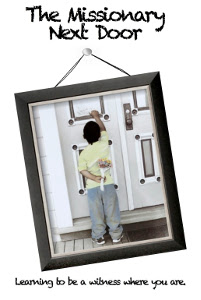
I’m not a big fan of knocking on doors and offering to share the good news with strangers. I’ve been at the receiving end of door-to-door evangelists of one type or another and an unanticipated visit is usually an interruption. On the other hand, I am discounting the Holy Spirit and encounters previously arranged outside human awareness.
We have to start somewhere. We can’t just talk to ourselves about what we already know and we can’t just target limited populations if we really believe we have a good message that people need.
But where to begin? If you call yourself a Messianic anything, do you share your message with strangers or at least with atheists with whom you’re acquainted? How do you talk to someone about faith in a Jewish Messiah within the context of Messianic worship and faith?
Long before the church was called the church, it consisted of an assembly of Jewish believers who practiced Judaism as part of their devotion to Yeshua of Nazareth.
In the days that followed the spiritual outpouring of Shavu’ot, the disciples found themselves shepherding a large community of new disciples in Jerusalem. Three thousand men and women received the message about Yeshua and immersed themselves for his name. Many of these joined themselves to the community of his disciples in the holy city.
By devoting themselves to the apostles’ teaching, the community of early believers continued in the Jewish mode of faith and practice, which prioritizes study above other pursuits. Judaism places a heavy emphasis on study, learning, and Torah education. Jewish life structured itself around study, and the study of Torah permeated every aspect of Pharisaic Judaism. Rabbinic literature frequently extols the virtues of study and praises the man whose “delight is in the Torah of the LORD, and on his Torah he meditates day and night” (Psalm 1:2). The sages had numerous axioms about the greatness of Torah study. Judaism regards the study of Torah as a mitzvah incumbent upon every Jew and the primary obligation of Jewish life.
-D. Thomas Lancaster
“Before the Church Was Called the Church,” pp 16-17 Messiah Magazine, Spring 2014 issue
I wanted to juxtapose the above statement with a definition of the Church as a spiritual body, but all I came up with was this:
noun
1. a building used for public Christian worship.
“they came to church with me”
synonyms: place of worship, house of God, house of worship; cathedral, abbey, chapel, basilica; megachurch; synagogue, mosque
“a village church”
the hierarchy of clergy of a Christian organization, esp. the Roman Catholic Church or the Church of England.
noun: the Church
Origin
Old English cir(i)ce, cyr(i)ce, related to Dutch kerk and German Kirche, based on medieval Greek kurikon, from Greek kuriakon (dōma ) ‘Lord’s (house),’ from kurios ‘master or lord.’ Compare with kirk.
This is an extension, a sort of “Part 2” to my prior blog post Notes on the Church from an Insomniac, except that I’m writing this wide awake after enjoying a reasonably good night’s sleep. But the concept I’m trying to explore is “the Church” as a unique entity of people from all walks of life, including Jews, who have converted to a religion called “Christianity” based on the worship of Jesus Christ as we find him in the Gospels, and because of their faith in Christ, are saved from eternal damnation and when they die, will go to Heaven to be with God in a realm of eternal peace.
OK, that’s an oversimplification and I’ve deliberately employed more than a little “tongue-in-cheek” in crafting that description. Let’s see what happens when I put “Christianity” in my Google search string.
noun
noun: Christianity
1. the religion based on the person and teachings of Jesus of Nazareth, or its beliefs and practices.
Christian quality or character.
“his Christianity sustained him”
Not much help there.
But consider, as I understand it from the teachings at the church I currently attend. “The Church” (big “C”) was “born” in Acts 2 by the Holy Spirit inhabiting, first the apostles of Christ in the upper room on Pentecost (Shavu’ot) and then a body of thousands of Jewish people coming to faith in Jesus. So far, that’s semi-consistent with Lancaster’s description, except that he doesn’t say something incredibly new and disconnected from prior Jewish and Biblical history was established on that occasion. As I read Lancaster and understand his teachings on the New Covenant, I can only interpret the Acts 2 event in terms of previous Biblical history and see it as the logical and natural extension of God’s plan going forward in time without the requirement to make the train “jump the tracks,” so to speak, and violently diverge from everything written in the Bible (in this case, Torah, Prophets [Navim], and Writings [Ketuvim] or “Tanakh”) up to this point in history.
The classic New Covenant texts in Jeremiah 31 and Ezekiel 36 clearly identify Israel as the focus of the New Covenant, a Covenant with identical conditions to those listed in the Old Covenant given at Sinai through Moses. The only difference, and I’ve said this before, is that the covenant would be written on the heart by the Spirit, not on tablets and scrolls, and internalizing the Torah makes it possible for the Jewish people, that is, the nation of Israel, and those who attach themselves to Israel through an Abrahamic faith in the Jewish Messiah, to wholly obey the instructions of God and live a life of holiness.
The New Covenant was inaugurated in the death and resurrection of Yeshua (Jesus) and the Holy Spirit was given as a pledge (2 Corinthians 1:22) that when Messiah returns, he will complete what he has started and the New Covenant will be fully enacted in our world.
Revisiting my quote of Lancaster regarding the vital importance of Torah study, even the Gentiles were required to do this (Acts 15:21) as the means by which they (we) could understand the teachings of our Master and learn to also strive to live holy lives in anticipation of the Messianic Era and the age to come.
So what happened? The original assembly or ekklesia (which also can be interpreted as synagogue) of Messiah was first wholly Jewish, and then it was legally determined that Gentiles had standing in the Jewish ekklesia of “the Way” without having to undergo the proselyte ritual (Acts 15). That is, we people of the nations who are called by His Name (Amos 9:11-12), can be equal co-participants in the blessings of the New Covenant without converting to Judaism and being obligated to the entire set of responsibilities in the Torah. Make no mistake, though. This does not make us absolved of great responsibilities and does not render us “Law-free,” and we indeed have a unique obligation to the Torah of Moses. If we repent of our sins, receive atonement through Messiah, and daily pick up our cross and seek our Master, we will become the crowning jewels of the nations, but only because “Salvation comes from the Jews” (John 4:22) through the centrality of Israel and her firstborn son, Yeshua of Nazareth, not because we convert to Christianity and join the Church.
Confused? Am I repeating myself?
What I’m asking is if this more “Judaic” viewpoint on the Bible is correct, and the ekkelsia, in terms of Messianic community simply means “assembly” rather than requiring the creation of a unique body called “the Church” which after being “raptured” to Heaven and subsequently returned with Jesus to Earth, remains separate from anyone who came to faith during the “tribulation” (which doesn’t make a bit of sense), then how did things get so messed up?
Whole books have been written trying to answer that question (including this one, which I will start reading soon), but something I read on New Testament scholar Larry Hurtado’s blog seems to (somewhat) apply.
In the article I note one or two “fashions” in NT studies of past decades, ideas or emphases that seem all the rage for a short while but then seem to have faded just as quickly as they appeared. In this case, I cite “structuralist exegesis.”
I also discuss a couple of “fallacies,” by which term I refer to ideas that obtained wide and long-lasting currency but have subsequently been shown to be errors. The question here is why this happens. How do a wide assortment of scholars take something as given when there never was adequate basis for it?
Finally, I explore very briefly some possible future emphases in the field, such as the growing internationalization of those who comprise NT scholars, the growing interest in “reception history,” and one or two other things.
Larry Hurtado
A pre-publication version of Dr. Hurtado’s article Fashions, Fallacies and Future Prospects in New Testament Studies (PDF) is freely available for you to read. Hurtado spends much of this article describing how brief “fads” in certain New Testament studies gained traction momentarily, but then…
I turn now to consider some other approaches and ideas that had much more impact and much more “staying power,” but were subsequently shown to be erroneous. These ideas are much more important to consider precisely because they won such wide acceptance and over a goodly period of time. These were not passing fashions. They were firmly held and confidently asserted widely, in some quarters treated as solid truth, but are now clearly seen to have been fallacious.
-Hurtado, pg 4
Hurtado says nothing to discredit current Christian doctrine, but the fact that Christian scholarship had gained an attraction and wide adherence to theories and interpretations of the New Testament that have subsequently proven to be unreliable or just plain wrong is compelling to me. For one thing, it establishes that really anything we believe about the New Testament in specific and the whole Bible in general is up for examination, just like any other scientific endeavor. That’s actually pretty huge since from the point of view of sitting in a pew at church every Sunday morning and listening to the Pastor’s sermon, we are generally intended to take everything we hear at face value and consider the message as (mostly) unquestionable fact and truth.
I say “mostly” because I know Pastor doesn’t expect everyone to agree with him all the time, and because it’s possible to ask questions about the sermon in Sunday school class, but even within that context, there’s a limit and one does not cross the line of (so-called) “sound doctrine” or “solid truth” to consider perspectives that, from an Evangelical point of view, would be considered “cultic” and even “heretical.”
But while we may consider the Word of God as Holy, inerrant, and inspired by the Spirit of God, subsequent human interpretations don’t fall in those categories and therefore are “up for grabs.”
My modus operandi for the EtzMitzvot.com project is to restate each command in the broadest, least-interpretive way possible, keeping faithful to the text without inferring or assuming what those words mean. As I came across Deuteronomy 16:16, I wrestled with this standard.
For some commandments, this standard is near impossible to apply without some creative interpreting/inferring/assuming.
For example, “just the facts, ma’am version of this mitzvah is, “Appear before God at the place he chooses for the 3 pilgrimage feasts.”
OK, that’s nice, how would you actually apply this in your life, today?
Judah also says:
You might think I am arguing for rabbinic or church interpretation; leaving the hard work of Bible interpretation to people smarter and more studied than us. But the take-home here should be: commandments are not always straightforward. Practicing them requires study and learning. Jewish and Christian traditions can guide us as a point of reference, but should not be elevated beyond the educated guesses they are.
So Biblical interpretation is not only normative in our studies, it’s unavoidable. It is impossible to understand everything we see in the Bible without running it through some sort of interpretive matrix yielding a hopefully accurate but undoubtedly biased set of conclusions. Bias isn’t necessarily bad and as I said, in any event, it’s unavoidable. The trick is to come to a set of conclusions that not only fits the immediate text being studied, but the underlying and comprehensive theme running through the entire body of the Bible. If isolated or “cherry-picked” bits of scripture contradict the overall tapestry of the Bible as a whole, chances are something’s wrong with your hermeneutics.
These musings are necessarily limited and selective, and others will no doubt offer observations additional to or even critical of mine. This is to be welcomed. But, if NT studies is to continue as a viable field, I suggest that the future approaches taken will have to demonstrate that they offer something substantial, something “value-added” to the study of the fascinating texts that comprise our NT and the remarkable religious developments that they reflect. Trying out this or that new speculation, or appropriating this or that methodological development in some other field will (and should) continue to be part of the ensuing discussion. But, I repeat, to amount to something more than a passing fashion, our approaches will have to be both well-founded and substantial in what they produce. And to avoid the sort of serious fallacies that we have noted, we will have to exercise both committed scholarly effort and self-reflective critique.
-Hurtado, pg 21
Rabbi Carl Kinbar
This summons questions about the level of Messianic Jewish scholarship today, and I explored that question, thanks to another blog post by Dr. Hurtado, almost a year ago. Rabbi Dr. Carl Kinbar responded in part:
Here are a few thoughts about peer review. The “peer” in “peer review” is used in a very specific sense: it is someone who has recognized expertise in the subject. For example, the scholars who reviewed my doctoral dissertation are peers in the study of rabbinic texts rather than people “just like me” (since I was only a graduate student at the time). You cannot have a peer review process without experts. Although it is possible for someone to become an expert through self-study, such people are as rare as hen’s teeth and the reason is very simple: 99.9% of people who have never been discipled in their field have not learned the basic habits of scholarship and have not been exposed to the sort of critique that would help them to avoid errors of method and fact. With very few exceptions, even the best of the self-taught are like talented basketball players who have only played in pick-up games but have never been involved in organized basketball on any level and therefore have never been coached or received high-level input. I suspect that there are thousands of such basketball players, some of whom have a lot of talent but none of whom have learned the moves that are required even of entry-level NBA players. Becoming a professional player will depend on how others evaluate their talent, not on their own sense that they are NBA-quality. A true peer in “peer review” is someone who has been evaluated as an expert by existing experts.
As a Messianic Jewish scholar, I try to make up for the lack of peer review by submitting my work for review by a range of people, including both scholars and non-scholars. Before I received a significant amount of traditional and academic discipling, I thought that self-study was enough. I now know that it isn’t.
So on the one hand, we may conclude that the current state of Messianic Jewish scholarship would not yet meet the standards set in the realm of New Testament scholarship at the highest academic levels, but on the other hand, it’s headed in the right direction. Does that mean we are forced to accept Evangelical Christian interpretation as the de facto standard? I personally don’t think so, especially when, thanks to Hurtado’s aforementioned paper, we see that even long-standing and popular opinions on the New Testament can be subsequently discounted or discredited.
Am I right and you’re wrong? I can hardly say that and that’s not the point of this missive. My point is that Evangelical Christian theology and doctrine sits on its own laurels at its great peril, as does any position, system, or intellectual endeavor. Intellectual and spiritual honesty and integrity requires continuing investigation and study. The minute you stop questioning your own assumptions and take a position of static dogma, is the minute you lose a living relationship with the Word of God and perhaps even God Himself. That’s not intentional, of course, but it often is a sad result.
Just remember, at one point the Church thought the earth was the center of the universe based on the Bible. At one point, the Church burned people as witches (Europe) or pressed them to death under heavy stones (America) based on the Bible.
Now we are finally facing the idea that much of the Church’s “sound doctrine” and “solid truth” is based on a two-thousand year old mistake, and worse, that we’re taking our major cues, not from the Judaic understanding of the scriptures as they were viewed during the Apostolic Era, but from a group of European reformers who lived barely five-hundred years ago and who themselves may well have been anti-Judaism and anti-Jewish people.
Is that what Jesus taught? Is that how Paul interpreted the scriptures? Is that the way James the Just, brother of the Master, determined Gentiles should be included in the branch of Judaism then known as “the Way?”
When is Church not Church? When it’s the assembly of Messiah longing for the coming of the New Covenant, when God’s instructions are written on hearts, and the spirits of men and women, young and old, from the least to the greatest, know God.
We aren’t there yet, but we have a responsibility to strive to be better than we are and in spite of our assumptions and traditions, to continually “be in the Word” (to employ a Christian aphorism), and to realize that our perspective might not be the best vantage point from which to view the full panoramic scope of God’s overarching plan for His people Israel, who are absolutely necessary and central to the Way of salvation for the rest of the world.
To find out more about why the word “ekklesia” and the word “sunagōgē” which we translate into English as “synagogue,” could all be translated as “meeting place” or “assembly” and don’t have to be translated as “church,” read What does Synagogue mean in Hebrew? by Dr. Eli Lizorkin-Eyzenberg.
A final note. I’m quite aware that I’ve scheduled this “meditation” to automatically publish on the morning of Easter Sunday or Resurrection Day. This is probably the most holy day on the Christian calendar and I suppose my interpretation of “ekklesia” into something other than “Church” could be seen as an inappropriate criticism. And yet, who we are and to what body we belong is of vital importance, on this day as much as any other, for our Master is Risen, and he is returning. The Kingdom is at hand, and the New Covenant is unfolding. We must be ready, but to do that, we must understand the actual and authentic nature and character of King, Kingdom, and Covenant. It is to that purpose I have dedicated this blog post and all of my writing.
Psalm 110 is the most frequently quoted text in the New Testament. Why? And what did Yeshua mean when he quoted it to challenge the concept of a Davidic Messiah?
Listen to a study of Hebrews 4:14-5:6 which unwraps Psalm 110 and introduces the priesthood of Messiah. “The Messiah Psalm” offers discussion about the Messianic interpretation of Psalm 110 as it appears in the teaching of Yeshua (Mark 12) and the Epistle of Hebrews.
Therefore, since we have a great high priest who has passed through the heavens, Jesus the Son of God, let us hold fast our confession. For we do not have a high priest who cannot sympathize with our weaknesses, but One who has been tempted in all things as we are, yet without sin. Therefore let us draw near with confidence to the throne of grace, so that we may receive mercy and find grace to help in time of need.
For every high priest taken from among men is appointed on behalf of men in things pertaining to God, in order to offer both gifts and sacrifices for sins; he can deal gently with the ignorant and misguided, since he himself also is beset with weakness; and because of it he is obligated to offer sacrifices for sins, as for the people, so also for himself. And no one takes the honor to himself, but receives it when he is called by God, even as Aaron was.
So also Christ did not glorify Himself so as to become a high priest, but He who said to Him,
“You are My Son,
Today I have begotten You”;
just as He says also in another passage,
“You are a priest forever
According to the order of Melchizedek.”
–Hebrews 4:14-5:6 (NASB)
Lancaster teaches some really interesting things in this session, but we have to get there first.
As he often does, Lancaster begins by recapping his previous sermon, in this case by reminding us that we need a priest to approach God, to approach paradise, because we have big angels and a flaming sword keeping us out.
Lancaster also reminds us of who the original readership of the writer of the Hebrews epistle was, and it sure wasn’t us, that is, twenty-first century (Gentile) Christians. The original audience, from Lancaster’s point of view, were first century Hellenistic Jews living in Judea. They had just suffered the martyrdom of James the Just, brother of the Master, the head of the Apostolic Council, along with other important leaders, and they had either just been denied access to the Temple and Priesthood or they were about to be denied. The Sadducees, who controlled access to the Temple, never got along with the Master Yeshua (Jesus) because they deny the resurrection and the existence of the divine soul, both of which the Master taught.
From a Christian’s point of view, it’s very important to realize that the Jewish disciples of the Master did not have a problem with the Temple or the Priesthood at all. They only had a problem with the corruption of the Sadducees who at that point in history controlled access to the Priesthood and the Temple sacrifices. Most Christians read Hebrews as the anti-Levitical Priesthood and anti-Temple book in the Bible, so it’s important to point out these distinctions.
In the next part of the sermon, Lancaster takes us on a small but important detour away from Hebrews and into the Gospel of Mark:
They came again to Jerusalem. And as He was walking in the temple, the chief priests and the scribes and the elders came to Him, and began saying to Him, “By what authority are You doing these things, or who gave You this authority to do these things?”
–Mark 11:27-28 (NASB)
Lancaster says that Yeshua evaded the question for about a chapter and then got down to the heart of the matter.
By chapter 12, verse 34, Jesus had so deftly responded to all of his challengers that no one dared to ask him anymore questions. Then Jesus had a question of his own:
And Jesus began to say, as He taught in the temple, “How is it that the scribes say that the Christ [Messiah] is the son of David?”
–Mark 12:35 (NASB)
This is one of those questions that if we don’t consider the context of what was going on and we don’t apprehend the query in the manner of a first-century Jew, we’ll completely miss the meaning. Asking if the Messiah is the Son of David is like asking if the Pope is Catholic. Of course, he is! It’s incredibly obvious. So why did Jesus ask this question?
David himself said in the Holy Spirit,
‘The Lord said to my Lord,
“Sit at My right hand,
Until I put Your enemies beneath Your feet.”’
David himself calls Him ‘Lord’; so in what sense is He his son?” And the large crowd enjoyed listening to Him.
–Mark 12:36-37 (NASB)
Jesus quotes from Psalm 110. It was common for him to refer to older scriptures, so on the surface, this doesn’t seem unusual. It was common for Paul and the other apostles to quote from previous scriptures, so again, it doesn’t seem to be an unusual event.
But of all the Old Testament scriptures quoted in the New Testament, Psalm 110 is the one quoted most often, being cited a total of fifteen times, with nine of those mentions in the Epistle to the Hebrews. The apostles related to Psalm 110 as one of these most noteworthy Messianic prophesies (with Psalm 2 being the other). What was Jesus, and later the writer to the Hebrews, trying to say that we miss, especially in English?
Lancaster tells us that English language Bibles render Psalm 110 poorly because they generally translate the words “my Master” and “Hashem” both as “Lord”. This gives the impression that God is talking to Himself.
Lancaster reads the ESV translation of Psalm 110 but with some slight differences that render it more comprehensible. I’ll reproduce it here with those differences formatted in bold and underlined text.
Hashem says to my Master:
“Sit at my right hand,
until I make your enemies your footstool.” Hashem sends forth from Zion
your mighty scepter.
Rule in the midst of your enemies!
Your people will offer themselves freely
on the day of your power,
in holy garments;
from the womb of the morning,
the dew of your youth will be yours. Hashem has sworn
and will not change his mind,
“You are a priest forever
after the order of Melchizedek.” The Master is at your right hand;
he will shatter kings on the day of his wrath.
He will execute judgment among the nations,
filling them with corpses;
he will shatter chiefs
over the wide earth.
He will drink from the brook by the way;
therefore he will lift up his head.
–Psalm 110
The craziness of this Psalm is that David, under inspiration from the Holy Spirit, referred to his descendent, his “son” as it were, as his “Master.” No son is Master of his father. This was Yeshua’s point. The Messiah was surely the Son of David but Psalm 110 also understands that Messiah is more than the Son of David. If Messiah was only the Son of David, he would be seated at David’s right hand.
Since Messiah is seated at God’s right hand, whose son does that make him (hint, hint)?
Lancaster read from a collection of traditional Jewish midrash which incredibly, has Abraham also asking why Messiah, Son of David, Son of Abraham ultimately, is seated at God’s right hand.
The Even Zohar, Rabbi Yeshiel Tzvi Lichtenstein in his commentary on Mark 12:25 states that Messiah was indeed the Son of David in the flesh and the Son of God in the Spirit.
Yeshua was confirming that he was the Messiah, Son of David and Son of God. Lancaster says it was Yeshua’s interpretation of Psalm 110 that resulted in his execution.
Again the high priest was questioning Him, and saying to Him, “Are You the Christ [Messiah], the Son of the Blessed One?” And Jesus said, “I am; and you shall see the Son of Man sitting at the right hand of Power, and coming with the clouds of heaven.” Tearing his clothes, the high priest said, “What further need do we have of witnesses? You have heard the blasphemy; how does it seem to you?” And they all condemned Him to be deserving of death.
–Mark 14:61-64 (NASB)
If the high priest had just asked “are you the Messiah” and Jesus had said “yes,” maybe he could have been wrong but it wouldn’t be blasphemy. But the high priest asked if Jesus was Messiah and Son of God, and Jesus answered yes. That’s what caused the high priest to condemn Jesus to death.
Now back to Hebrews 4 and our need for a high priest.
Lancaster spent a fair amount of time stating that Jesus had to be fully a human being, not just God or an angel masquerading as a human being. When Jesus was tempted, it had to be completely possible for him to give in to temptation and sin. It’s not temptation if there isn’t a real risk of sinning and if it was actually impossible for Jesus to sin, then he wasn’t really tempted, and therefore, he wasn’t really human. It had to be very possible for Jesus to sin, just like the rest of us. The only difference is that unlike the rest of us, Jesus passed every test and never, ever sinned.
This is where I got stuck last week, since it seems like someone who passed every test still wouldn’t be able to empathize with all of humanity because only he passed all the tests. The rest of us fail.
But in his sermon, as Lancaster entered Hebrews 5, he said this was a very important point. When the writer of Hebrews describes the high priest in verses 1 and 2, he’s not thinking of the then corrupt Sadduceeian high priest, but the ideal among high priests, Aaron. Ironically, one of Aaron’s highest qualifications, according to Lancaster, for the high priesthood was his sin in the incident of the Golden Calf (Exodus 32). It was because Aaron sinned that he could empathize with the weakness of the Israelites and have compassion as he atoned for their sins.
But this presents a problem, at least in an eternal sense.
…he can deal gently with the ignorant and misguided, since he himself also is beset with weakness; and because of it he is obligated to offer sacrifices for sins, as for the people, so also for himself.
–Hebrews 5:2-3 (NASB)
Aaron, or the idealized high priest, could “deal gently with the ignorant and misguided” but on the other hand, he still had to offer sacrifices for himself because he too sinned.
While Aaron was the greatest and most noble of the high priests, there was still one who had better qualifications, one who could also empathize and “deal gently with the ignorant and misguided” but ”One who has been tempted in all things as we are, yet without sin” (Hebrews 4:15).
Verse 5 quotes from Psalm 110 and verse 6 is the writer’s proof text:
“You are a priest forever
According to the order of Melchizedek.”
Lancaster leaves us hanging at the meaning of “priest forever according to the order of Melchizedek,” so I suppose we’ll have to wait until next week to get into what all that’s about.
What Did I Learn?
I liked the “straightening out” of Psalm 110 so that it becomes easier to tell “who’s who” in the text. Also, I found the emphasis of Lancaster (and the writer of Hebrews) on the humanity of Jesus compelling. I’ve heard Christians refer to Jesus again and again as a “man-god,” which makes him sound like something out of a science fiction or fantasy novel rather than who he was and is. It’s fascinating to consider Jesus, our high priest in the Heavenly Court, as fully a human being and out of that sinless humanity, he is able to empathize with flawed and failing people in his being the atonement for our sins. I still struggle with how one who has never failed, as Aaron failed, could ever really feel empathy and completely understand, not only real temptation and the risk of failure, which Jesus did experience, but also how we actually, miserably fail, which Jesus never experienced.
If Jesus had failed, he’d understand us better, but if he failed, he would have been disqualified and never would have ascended to be seated at Hashem’s right hand as our Master.
I can imagine this interpretation presenting some difficulties for many Christians relative to the traditional understanding of the “Godhead” and Trinitarian doctrine. I don’t think Lancaster is challenging this necessarily, but he is forcing us (me, anyway) to view the nature and character of Messiah differently. He was, and arguably still is, fully and completely human and the Son of David according to the flesh, but also fully and completely the Son of God according to the Spirit. How this works, I don’t know. I’m not sure anyone really knows, although there are plenty of opinions to go around, including the denial of the Master’s divine nature completely.
I can only imagine that Lancaster in his analysis of the Book of Hebrews, may have taken this one on as his sermon series progressed. Right now, at the end of sermon thirteen, we’re hanging at the priesthood of Melchizedek. Next week, Hashem be willing, we’ll learn more.
I don’t think I’ve ever reblogged another’s material before, but after seeing this reblogged at the Rosh Pina Project, I was compelled to read the original. Having read the original, I found myself greatly impressed by this thoughtful woman’s insights and sensitivity and thought it important to share.
NOTE: In March 2013, I posted a series of Facebook Notes about so-called “Christian Seders” and the special obligation Christians have in Lent and Holy Week especially to be vigilant about the way our observances may have an impact on Jews, Christian understandings of Judaism, and related matters. I have been asked by several colleagues to re-post these reflections this year. I am happy to do so. I need to make it clear, however, that I am not an expert on these matters. What I say below is my take on controverted questions, born mostly of my own reading and of my interfaith relationships. Please take them as such.
No “Christian Seders,” Please!
With Holy Week on the horizon, many Christian congregations have started announcing Seder dinners to observe Maundy Thursday. People of good will recognize this as a devout and well-intentioned attempt to honor the Jewishness of Jesus, and…
But I have been persuaded by Professor Edward Greenstein to read this story existentially rather than critically. The death of Aaron’s sons was not the result of a miscue in the prescribed choreography of the Tabernacle. Their fate conveys the far deeper and more unsettling truth that no amount of elaborate, awesome, and precisely executed ritual should ever leave us with the illusion that we have brought God under human control. The very moment the Tabernacle comes into service, Israel is taught the sober lesson that God’s will remains free and inscrutable, God’s wisdom unfathomable. The religion of the Torah is not a set of magical techniques to get God to do our bidding, but rather a quest to invest our lives with meaning. To rein in the erratic and destructive passions of the earth’s most intelligent animal, that is the Torah’s desperate mission.
So it came about in the course of time that Cain brought an offering to the Lord of the fruit of the ground. Abel, on his part also brought of the firstlings of his flock and of their fat portions. And the Lord had regard for Abel and for his offering; but for Cain and for his offering He had no regard.
–Genesis 4:3-5 (NASB)
I’ve read a couple of different commentaries on the death of Aaron’s sons Nadab and Abihu (Leviticus 10:1-3) recently. Both said that the “strange” or “alien fire” they offered was fire of their own making. These commentaries said that when God first ignited the fire upon the altar, only that fire was to be used in making offerings to God. A rather simple explanation for a question that has stumped scholars for thousands of years.
No, we can’t make a sacrifice to God of any sort that somehow brings Him under our control or provides Him with something He lacks. Nothing we make, say, or do will manipulate God into behaving or performing in a manner differently than is His intention.
Like prayer, we don’t turn to God with anything that will change Him. The purpose of the sacrifices, the mitzvot, and prayer is to change us.
Likewise the cup that was given to the world’s greatest tzaddik.
And He withdrew from them about a stone’s throw, and He knelt down and began to pray, saying, “Father, if You are willing, remove this cup from Me; yet not My will, but Yours be done.”
–Luke 22:41-42 (NASB)
It was now about the sixth hour, and darkness fell over the whole land until the ninth hour, because the sun was obscured; and the veil of the temple was torn in two. And Jesus, crying out with a loud voice, said, “Father, into Your hands I commit My spirit.” Having said this, He breathed His last.
–Luke 23:44-46 (NASB)
As I write this, I just read a commentary about Passover and atonement which said in part:
“Suffering and pain may be imposed on a tzaddik (righteous person) as an atonement for his entire generation. This tzaddik must then accept this suffering with love for the benefit of his generation, just as he accepts the suffering imposed upon him for his own sake. In doing so, he benefits his generation by atoning for it, and at the same time is himself elevated to a very great degree. Such suffering also includes cases where a tzaddik suffers because his entire generation deserves great punishments, bordering on annihilation, but is spared via the tzaddik’s suffering. In atoning for his generation through his suffering, this tzaddik saves these people in this world and also greatly benefits them in the World-to-Come. In addition, there is a special higher type of suffering that comes to a tzaddik who is even greater and more highly perfected than the ones discussed above. This suffering comes to provide the help necessary to bring about the chain of events leading to the ultimate perfection of mankind as a whole. … Beyond that, the merit and power of these tzaddikim is also increased because of such suffering, and this gives them even greater ability to rectify the damage of others. They can therefore not only rectify their own generation, but can also correct all the spiritual damage done FROM THE BEGINNING, FROM THE TIME OF THE VERY FIRST SINNERS.” (emphasis mine) .. (Derech Hashem, Rabbi Moshe Chaim Luzzatto, translation by Aryeh Kaplan Feldheim Publishers, Jerusalem, 1977, pp 123-125)
If you are a Christian and unfamiliar with Jewish texts, this may seem strange or even startling to you. If you are Jewish and not a believer, this will seem like a gross misappropriation of the writings of the sages, bent in an unintended direction for a mistaken purpose.
I’ve written about just such an interpretation before, both in The Death of the Tzaddik and The Sacrifice at Golgotha. God is not pleased by unauthorized offerings, strange fires, and certainly not by human sacrifice, which we Christians sometimes are mistakenly accused of condoning.
And yet, sometimes God does ask that we put our soul on the altar so to speak, not because human struggle and suffering is His desire, but because we need to learn that as servants of the Most High God, our lives are subject to Him, not to what we want. By offering sacrifices, whether it be a lamb, a prayer, or our time and energy in performing deeds of kindness and charity, we aren’t giving to God something that changes Him, but we are doing what changes us in the manner God desires us to change.
And even that desire of God’s is not for His sake but for our own.
At the last second, God terminated the Akedah or the Binding of Isaac (Genesis 22) to spare the life of Isaac and to spare Abraham the death of his only son, the son of inheritance, the son who would carry forward all of the promises God made to Abraham, so they might be sent into the future with Isaac’s son Jacob, with Jacob’s twelve sons, with the tribes they would found, and with all of Israel, today’s Jewish people.
And because God wasn’t asking Abraham for a human sacrifice on the altar by killing his son, He was changing Abraham and changing Isaac, and the result of those changes reverberate down through history in both Judaism and Christianity.
To rein in the erratic and destructive passions of the earth’s most intelligent animal, that is the Torah’s desperate mission.
-Ismar Schorsch
I might have worded that sentence a little differently, but it’s a sound statement. The Word of God exists to change us, mold us, refine us (like a precious metal in fire if necessary) so that we might become a more spiritually pure product over time.
The Midrash tells us that the Jewish people had the same problem in Egypt. Only 1/5 of the Jewish people were on a high enough spiritual level to leave Egypt — and they were on the 49th level of Tuma, spiritual degradation — and were within a hair’s breadth of being destroyed.
Yet, what is amazing is that in the next 49 days they raised themselves to the spiritual level to receive the Torah at Mt. Sinai! Each day we climbed one step higher in spirituality and holiness. Many people study one of the “48 Ways to Wisdom” (Ethics of the Fathers, 6:6 — found in the back of most siddurim, Jewish prayer books) each day in the Sephirat HaOmer period between Pesach and Shavuot — which will be explained below — as a means to personal and spiritual growth. This is a propitious time for perfecting one’s character!
Some of those terms may seem a little odd to some of you but the principle behind them should be clear. We want to change. We want to be a little better tomorrow than we were yesterday. But even as believers and devout disciples of the Master, that’s easier said than done, at least for me (especially for me). Rabbi Packouz suggests Rabbi Noah Weinberg’s series 48 Ways to Wisdom, working through one “way” each day between the start of Passover and the arrival of Shavuot.
Jesus didn’t die just to be a human sacrifice since God abhors the desecration of human life. But if a great tzaddik can atone for the sins of his generation, how much more does the death of the greatest of all tzaddikim atone for the sins of the world, across the vast panorama of human existence?
But there’s nothing we can offer God that changes God. Every sacrifice, every lamb, every bull, every prayer, every mitzvah, and the death of the tzaddik, the Master, exists to change each of us and to bring us a little closer to God. Empty sacrifices are less than useless however. What we do is important but why we do it is crucial. Simply giving a can of soup to a hungry person feeds that hungry person, which is good, and it may temporarily elevate ourselves, at least in our own eyes, which may not be bad either. But if the act doesn’t reveal a little bit more about God to us, and if we don’t become just a little more dedicated and compassionate as God’s servants because of it, then all we’ve done was given one small meal to one single person.
And they’ll be hungry again in a few hours. So much for our “sacrifice.”
It only really, really matters on a vast and even cosmic scale, if it brings us to a greater realization of who is above us:
“Consider three things and you will not come to sin: Know what is above you: an eye that sees and an ear that hears, and all your deeds are recorded in the Book.”
-Pirkei Avot 2:1
Jesus will have died for nothing if we don’t follow him as a result, if we aren’t changed by the crucifixion and resurrection, if his act of inaugurating the era of the New Covenant did not begin to turn our heart of stone into a heart of flesh.
Run to do good. Shun evil. Pray for God to soften you, to change you, to refine you.
Examine me, O Lord, and try me; test my mind and my heart.
For Your lovingkindness is before my eyes, And I have walked in Your truth.
–Psalm 26:2-3 (NASB)
Be on guard for yourselves and for all the flock, among which the Holy Spirit has made you overseers, to shepherd the church of God which He purchased with His own blood.
–Acts 20:28 (NASB)
Please don’t think me vain if I start by praying for myself. It has been all too easy for me to rest for an extended period of time on a spiritual plateau and it’s all too difficult for me to overcome inertia and begin moving again. Going up means I have to overcome gravity, but going down is not the direction I want to take. Like a boat without oars in a river, standing still is just another way of going backward.
Our love of God is not to collapse even when our soul is shattered.
But if a stranger sojourns with you, and celebrates the Passover to the LORD, let all his males be circumcised, and then let him come near to celebrate it; and he shall be like a native of the land. But no uncircumcised person may eat of it.
–Exodus 12:48
Gentiles are welcome at the Passover table. The rituals of the Passover seder and the Feast of Unleavened Bread are designed to inspire curiosity. The children at the table, observing the unusual rites and foods, are supposed to be inspired to ask, “Why is this night different from all other nights?” The purpose of Passover is to transmit faith to the next generation, to the Jew first, but equally also to the Gentile.
I read this commentary the morning of New Year’s Eve 2013 and it makes sense as far as it goes, but it doesn’t go far enough.
Wait. Let me explain.
There may be some believing non-Jewish people who want to or who have attended a Passover seder. I attended my first seder decades ago, long before I became a believer. I worked with a young Jewish woman and we became friends. She invited me to the seder at her home one year, saying it was a mitzvah to invite Gentiles.
It’s a mitzvah for a Jew to invite a Gentile to eat at a Passover seder? Not according to Adath Shalom:
There is a well-established halachic ruling which forbids inviting a non-Jewish person to festival meals prescribed by the Torah, as opposed to those of Shabbat, where this is permitted. [Shulchan Aruch, Orach Chaim, 512.] The reason for the prohibition is that the law authorizing cooking in these days (in contrast to Shabbat) applies only for those who observe the laws of the festival, which is, of course, is not the case with non-Jews. This is not the place to detail the relevant sources. But we maintain that as long as certain precautions are taken, such as cooking for all of the guests together (and not in separated utensils) – one would not transgress the basic law.
That looks authoritative, but I’d never heard of Adath Shalom before, so I kept looking. Chabad.org seemed to have a somewhat different opinion.
What addressing the myth that “One may not have a Gentile at their Pesach Seder,” Rabbi Aryeh Citron writes:
Fact:
One may not invite a non-Jew to a Yom Tov meal unless Shabbat coincides with that Yom Tov. The reason for this is that one may inadvertently cook for the non-Jew on Yom Tov, which is forbidden. On Shabbat when one may not cook in any case, it is permitted to invite a non-Jew. (Orach Chaim 612:1, Shulchan Aruch HaRav ibid, 2.) If the non-Jew comes without being invited, one may feed him on a regular Yom Tov as well but may not cook or heat up food for him. There is no distinction between the Pesach Seder and other Yom Tov days in this regard.
Possible source of myth:
A gentile may not participate in eating the Paschal lamb in the era of the Holy Temple. (Exodus 12:43)
In addition, to commemorate the Paschal lamb, it is not considered proper to share the matzah from the Seder plate with a non-Jew. (Kaf HaChaim, 558:19 citing the Shelah)
That’s a little better, but the net result is that it would be better or at least easier for Jewish people to not invite Gentiles to their Passover seder.
I still wasn’t satisfied. My friend from long ago must have had a reason for saying that inviting me, a Goy, to her seder was a mitzvah. I know she was deeply rooted in her Jewish identity but she wasn’t always observant, so I don’t believe an Orthodox opinion is where she was coming from.
At Jewish Values Online I found the following question answered by an Orthodox Rabbi, a Conservative Rabbi, and a Reform Rabbi:
I invited a dear non-Jewish friend to my Pesach dinner for the second night. She wrote back stating that her other Jewish friends told her it would be inappropriate for her to attend. As a new Jew I find this off-putting. Were we not strangers in Egypt?
If you click the link I provided above, you can see the answers each Rabbi provided. In short, only the Orthodox Rabbi said “I would generally not encourage inviting non-Jewish friends to the seder.”
Both the Conservative and Reform Rabbis considered it permissible and even desirable to invite a non-Jew to a seder as a way to show kindness to strangers, “for you were strangers in the land of Egypt” (Ex. 22:21, Lev. 19:34, Deut. 10:19) and as an educational experience for the non-Jewish attendees.
But what about the FFOZ commentary? Every authority I’ve cited thus far is traditionally Jewish in the sense that they do not consider Yeshua (Jesus) as the Messiah, and therefore, would have no especially close association with Christians (in some cases, quite the reverse) or any other non-Jew. FFOZ is a Messianic Jewish educational ministry and on the matter of non-Jewish believers and the festivals, their viewpoint should be a lot different:
When we speak of Passover, we generally mean the entire Feast of Unleavened Bread. In the Torah, the term Passover (pesach, פםח) applies only to the sacrifice of the Passover lamb and its consumption. Exodus 12:48 prohibits an uncircumcised person from making a Passover sacrifice and eating a Passover lamb. The New American Standard version makes it sound like an uncircumcised person is prohibited from celebrating Passover in general, but the Hebrew makes it clear that such a person is only prohibited from sacrificing the lamb. This law applies to both Jews and Gentiles:
The same law shall apply to the native as to the stranger who sojourns among you. (Exodus 12:49)
An uncircumcised Jew and an uncircumcised Gentile are both forbidden from sacrificing or eating a Passover lamb. The Torah does not forbid them from keeping the Feast of Unleavened Bread, though. The law leaves them free to participate in the seder meal and keep the seven days of Unleavened Bread.
The matter, as was alluded to earlier in this blog post, isn’t the status of Gentile or Jew as such, but whether or not a non-circumcised person can make the paschal offering at the Temple. In most cases, it’s a foregone conclusion that Jewish males with any attachment to the Temple rituals in ancient times would be circumcised, so by definition, a Jew would be permitted to make the offering and then eat of it.
Gentiles, on the other hand, even those who were disciples of the Master in the late Second Temple period, would have been forbidden to make the Passover offering or eat of it. It even seems unlikely that they would be permitted to attend a seder in Jerusalem because the offering would be present at the table of the Jewish host and the Gentile would be forbidden to partake of it. Also, in most cases, Jewish tradition at that time made it extremely unlikely for any Jewish family to invite a Gentile to a seder fearing the non-Jew’s presence would make the entire meal unclean (see my review of the FFOZ TV episode All Foods Clean for details).
But in the diaspora, there was no access to the Temple because of the distance and Jewish families, particularly those who had come to faith in Messiah Yeshua, could invite believing Gentile friends to their Passover table, as there would be no sacrificed lamb.
According to the FFOZ commentary, that is all the more true today because the Temple currently does not exist. Passover can be a time of interfaith and cross-cultural fellowship between Jews and non-Jews. In the community of Messianic believers, in addition to what I just wrote, the Passover seder has greater meaning in the body of Yeshua, our Passover lamb, and this celebration offers a bond between Jew and Gentile in His Name, a reminder not only of Jewish redemption from Egypt, but of humanity’s redemption from sin.
But I mentioned that the FFOZ commentary didn’t go far enough. According to My Jewish Learning:
That Gentiles as well as Jews brought sacrifices to the Temple is implied in the prayer of Solomon when he dedicated the Temple (I Kings 8:41-3) and in the declaration by the prophet that the Temple will be a house of prayer for all peoples (Isaiah 56:7).
The Rabbis say (Hullin 13b): ‘Sacrifices are to be accepted from Gentiles as they are from Jews,’ although this saying dates from after the destruction of the Temple.
Even Orthodox Jews believe that Gentiles will have a role in offering sacrifices at the future Third Temple, according to AskNoah.org:
Gentiles were welcomed to the First and Second Temples in Jerusalem, and they will participate even more at the Third Temple – especially during the festival of Sukkot (Zech. 14:16). In his commentary on the Torah section beginning with Gen. 12:1, Ramban (Nachmanides) wrote:
“Even in the time of Joshua, … the Gentiles knew that this place was the most august of all, that it was at the center of the inhabited world; and Tradition had taught them that it corresponds in this world to the celestial Temple where Divine Majesty, called (righteousness), resides.”
When the First Temple was inaugurated by King Solomon, he beseeched G-d with an eloquent prayer that included the following words (Kings I, 8:41-43) (which show that in the past, Gentiles were welcomed to the First and Second Temples, and that they will participate even more in the Third Temple)…
So to bring this around full circle, we have an ancient prohibition against an uncircumcised person (Jew or Gentile) making and eating the Passover lamb offering, but it is permissible for an uncircumcised person (which in all likelihood, is a Gentile) to eat the seder meal when the Paschal lamb is not present, either because the seder is being held in the diaspora and/or because the Temple is not currently in existence.
We see that in ancient days, when the Temple did exist, the sacrifices of Gentiles were accepted and it is believed in Judaism that in the future Third Temple, the Gentiles may also make sacrifices and even have a greater role than in the past.
But what about making or even just eating the Passover lamb? In my opinion, even if a Gentile was circumcised (typically as a newborn for hygienic reasons), that is not sufficient for him to even eat of the sacrificed lamb much less make the offering. In Judaism, circumcision is the sign of the covenant and in the eyes of God, uniquely identifies Jewish males eight days of age and older. The requirement of only a circumcised man being allowed to make the sacrifice means that an ethnic Jew or one who has converted is permitted to make the sacrifice, and only born or converted Jews are allowed to eat of it.
I know there will be Christians who say the Third Temple will never be built because Christ is our Temple. And even if the Temple is built, I know there will be Christians who say that there will be no sacrifices because Christ is our sacrifice, the final sacrifice, the Passover Lamb of God, who takes away the sins of the world.
I believe, based on the article “Did Jesus Offer Sin Offerings – Part 1” written by David Matthews at AncientBible.net, that there is scholarly evidence to support Jesus having made sacrifices, perhaps even sin offerings (read the article for the details) in the Second Temple.
Also, Ezekiel 45:13-17 speaks of “the prince,” who very well may be the Messiah (although this is contested), making a number of offerings, so even in the age to come, we have some idea that there will be a Third Temple and possibly the Messiah will offer sacrifices on the altar in Jerusalem.
I know I’m stringing together a lot of “maybes” but I think these are “maybes” that can be supported by Biblical evidence, so don’t disregard out of hand what I’m suggesting.
I personally think there will be a Third Temple in the Messianic Era and in traditional Judaism, it is believed that one of the signs of the Messiah is that he will rebuild that Temple.
If the Temple is restored and sacrifices are made there as in days of old, then there’s no reason to believe that the Pesach offering will be overlooked or absent. That means, unless God decides to change His laws and to modify His decrees, that although Gentiles and Jews will be allowed to sit and eat at the same seder table in the diaspora on Pesach (but will there be any Jews living outside of Israel in those days?), this will not be so in the Land of Israel and in Jerusalem, City of David, as each Jewish family reclines at their table, opens the haggadah, and enters the mystery of why this night is different from all other nights.
It’s something that God has preserved for His Holy people, the Jewish people.
At the end of the Passover seder each year, we say, “Next year in Jerusalem.” I’ve never been to Jerusalem at Pesach or any other time. It is my heartfelt desire to visit the Holy City one day, either in this life or the one to come, Hashem be willing. But if next year Messiah returns and builds the Temple, and next year my Jewish family goes up to make the Pesach sacrifice in obedience to the Law of Moses, then I can’t possibly eat of it with them or even recline at the table with them (apart from the Mechilta commentary on Exodus 12:44 regarding non-Jewish slaves), unless one of you theologians out there has another understanding of all this.
Passover this year begins the evening of Monday, April 14th and concludes the evening of Tuesday, April 22. Chag Sameach Pesach.
Addendum: Since writing this, I wrote another Passover related blog post which received this knowledgeable response from reader ProclaimLiberty:
In that future Pesa’h scenario you pictured, you should certainly refrain from eating the lamb from the sacrifice, but if you have passed through a mikveh of cleansing you should not have to worry about rendering anything tamei by your presence at the table where there should be lots more to eat. This would be the sort of scenario that worried Kefa in Antioch when some visitors from Yakov’s orthodox MJ congregation in Jerusalem showed up. He wasn’t confident that he could convince them that these non-Jews had become purified per HaShem’s instructions and that it was OK to eat kosher meals with them. The notion of purifying non-Jews was still new and unfamiliar at that time. However, by the time of this future event in the messianic era, there should exist some familiarity already with non-Jews coming up to the Temple for festivals like Sukkot, so it shouldn’t be misunderstood if at least some who are properly prepared attend seders.
Perhaps my original assessment of the commandments around Pesach were a little too severe. If I’m going to make a mistake, I tend to err on the conservative side as far as Biblical requirements are concerned. If indeed, PL’s assessment is correct, then we intermarried Gentile believers will indeed be able to become purified and sit at the table with our families, partaking of the meal but not the Paschal offering in accordance with the commandments. That will require the proper frame of mind on the part of people like me, to celebrate the relationship between God and Israel as a member of the nations who is called by His name, honoring the specialness of the Jewish people by appreciating the imagery of them partaking of the Lamb as we support and defend the miracle of death passing over the Jews, as we, like the mixed ethnicities who originally joined with the Israelites in leaving Egypt, saw God through the lens of who He is to Israel.
"When you awake in the morning, learn something to inspire you and mediate upon it, then plunge forward full of light with which to illuminate the darkness." -Rabbi Tzvi Freeman

 That’s a horrible introductory line in my opinion, and the actual process of me coming to faith took a large number of specific steps and encounters over a six month to one year period of time. But in the end, I made the initial baby steps of coming to faith and then my life fell apart.
 But that story is aimed at people who already have faith in Christ and who are looking for a deeper understanding of what that faith actually means based on a Hebraic examination of the scriptures.
 I’m not a big fan of knocking on doors and offering to share the good news with strangers. I’ve been at the receiving end of door-to-door evangelists of one type or another and an unanticipated visit is usually an interruption. On the other hand, I am discounting the Holy Spirit and encounters previously arranged outside human awareness.












 Morning Meditations