Tag Archives: Jesus

Yom Kippur: The Brokenhearted Offering

broken-heartedI hated Yom Kippur because it made me feel like a fraud. I would bang away at my chest all day, enumerating all my sins, promising I was repentant. But in my heart I knew that I would return to my mean self the moment the fast was over. I didn’t believe I could ever change, that I was really worthy of life and that I would ever be able to redeem myself. So I would go through the day anxious for it to be over, hating myself for being such a big, fat fraud.

-Eliana Cline
“Why I Hated Yom Kippur”
Aish.com

I’m writing this on Sunday, almost a full week before you’ll read it. Today, my Pastor’s sermon in church was on Yom Kippur. The timing was deliberate. Last week’s sermon, which I missed because I decided to skip church for the holiday weekend, was on Rosh Hashanah. It’s always interesting to hear a sermon in a Christian church about something that is so profoundly Jewish.

Aaron shall place lots upon the two he-goats: one lot “for Hashem” and one lot “for Azazel.” Aaron shall bring near the he-goat designated by lot for Hashem, and make it a sin offering. And the he-goat designated by lot for Azazel shall be stood alive before Hashem, to provide atonement through it, to send it to Azazel to the Wilderness.

Leviticus 16:8-10 (Stone Edition Chumash)

One of the things I’ve come to learn about Jewish holidays and festivals being preached in the church is that these Jewish events can never be allowed to just stand on their own. They always have to “point to Christ.” Otherwise, I guess, they just aren’t really worthy, God-given events all by themselves (that was a little sarcasm).

Anyway, it is Pastor’s opinion that each of these two goats represent the first and second coming of Christ. I have no idea where this idea comes from, but knowing Pastor, it comes from some Christian source or authority. Although I sometimes disagree with him, Pastor does his research and he hardly ever “shoots from the hip” in a sermon.

The analogy, which is how I think of it, falls apart when you realize the Azazel goat (Pastor called it by the more common name “scapegoat”) must bear the sins of Israel and be sent out into the Wilderness, presumably to die. One commentary in my Chumash on verse ten says:

Or HaChaim notes that the goat is referred to here and in verse 21, before the confession, as alive. After Aaron pronounces confession upon it, however, it is no longer called alive, even though it would be some time before it would go to its death. The confession had the effect of placing all of the people’s sins on the goat, which would then carry them off to the desolate Azazel. The presence of such contamination on the goat rendered it spiritually “dead;” thus it was called alive only before Aaron’s confession.

Even if you don’t quite buy what Or HaChaim says, the Azazel goat seems a poor symbol for the King of the Jews returning to redeem Israel in glory and power, leading an army of angelic beings.

But Pastor said a lot of really good things about Yom Kippur and how we Christians can learn from the Day of Atonement. Yes, he said our final atonement is Jesus Christ, who died on the cross for our sins and who was resurrected to give us the promise of eternal life through faith in him.

struggling_prayBut he also deconstructed the mechanism of teshuvah (though he didn’t call it that) as the observant Jewish world sees it, and said point-blank that simply answering an altar call or raising your hand at Christian camp professing belief in Jesus doesn’t automatically grant you the aforementioned eternal life. Seeking atonement of your sins requires much, much more, and we aren’t fully disciples of the Master and Children of God until we do. After that, we still need to have a life of continual repentance, since we sin every day.

Rabbi J. Immanuel Schochet wrote a rather lengthy article called The Dynamics of Teshuvah, which I won’t quote from here. I think it could be called “Everything You Always Wanted To Know About Teshuvah But Were Afraid To Ask.” If you want to know more, Rabbi Schochet’s article is a good source.

But the heart of teshuvah and atonement is contained in the more modest missive written by Rabbi Shlomo Yosef Zelvin called The Master Key:

One year, Rabbi Israel Baal Shem Tov said to Rabbi Ze’ev Kitzes, one of his senior disciples: “You will blow the shofar for us this Rosh Hashanah. I want you to study all the kavanot (Kabbalistic meditations) that pertain to the shofar, so that you should meditate upon them when you do the blowing.”

Rabbi Ze’ev applied himself to the task with joy and trepidation: joy over the great privilege that had been accorded him, and trepidation over the immensity of the responsibility. He studied the Kabbalistic writings that discuss the multifaceted significance of the shofar and what its sounds achieve on the various levels of reality and in the various chambers of the soul. He also prepared a sheet of paper on which he noted the main points of each kavanah, so that he could refer to them when he blew the shofar.

Finally, the great moment arrived. It was the morning of Rosh Hashanah, and Rabbi Ze’ev stood on the reading platform in the center of the Baal Shem Tov’s synagogue amidst the Torah scrolls, surrounded by a sea of tallit-draped bodies. At his table in the southeast corner of the room stood his master, the Baal Shem Tov, his face aflame. An awed silence filled the room in anticipation of the climax of the day—the piercing blasts and sobs of the shofar.

Rabbi Ze’ev reached into his pocket, and his heart froze: the paper had disappeared! He distinctly remembered placing it there that morning, but now it was gone. Furiously, he searched his memory for what he had learned, but his distress over the lost notes seemed to have incapacitated his brain: his mind was a total blank. Tears of frustration filled his eyes. He had disappointed his master, who had entrusted him with this most sacred task. Now he must blow the shofar like a simple horn, without any kavanot. With a despairing heart, Rabbi Ze’ev blew the litany of sounds required by law and, avoiding his master’s eye, resumed his place.

At the conclusion of the day’s prayers, the Baal Shem Tov made his way to the corner where Rabbi Ze’ev sat sobbing under his tallit. “Gut Yom Tov, Reb Ze’ev!” he called. “That was a most extraordinary shofar-blowing we heard today!”

“But Rebbe . . . I . . .”

“In the king’s palace,” said the Baal Shem Tov, “there are many gates and doors, leading to many halls and chambers. The palace-keepers have great rings holding many keys, each of which opens a different door. But there is one key that fits all the locks, a master key that opens all the doors.

“The kavanot are keys, each unlocking another door in our souls, each accessing another chamber in the supernal worlds. But there is one key that unlocks all doors, that opens up for us the innermost chambers of the divine palace. That master key is a broken heart.”

Eliana Cline’s article captured what it is for a Jewish person on Yom Kippur in a more modern setting:

This Yom Kippur, I can feel the pain of not being in a state of connection and own the consequences of my choices. I can say to God, “This is not me,” and mean it. I feel repentant, not from fear – but from a genuine desire for connection, love and transcendence. Getting in touch with my higher self that yearns to be good has enabled me to sense the sadness of my past choices.

The Talmud teaches that on Yom Kippur we are compared to angels. I never really got the comparison. Until now. On Yom Kippur all the daily responsibilities and tasks are removed; it’s a day we transcend the physical and live with total purpose. It’s a day with one sole mission, like an angel, to pray, to think and to connect – to God and to our inner soul.

PrayingWe can choose whether or not to truly repent of our sins and approach God. Most of us most of the time (am I being too cynical?) repent by saying “Sorry” to God, knowing full well, or at least suspecting it in the back of our minds, that we will be revisiting our same old sins again by the by. Repentance for the moment, sin for a lifetime. No wonder Cline felt like a fraud. Most of us should feel the same way.

But Christianity doesn’t have an event on its religious calendar that’s anything like Yom Kippur. Easter probably comes the closest, but that’s a holiday of victory over sin and death, not taking responsibility for sin and repairing relationships with people and with God.

Yom Kippur can seem incredibly depressing if you don’t come at it from the right direction. If you see it as having to wallow in your sins, feeling like a fraud, feeling like an abject failure, then yes, it’s really depressing. You afflict yourself, usually by a complete food and liquid fast for twenty-four hours and a bit more, and hope that’s enough to appease an angry God. But only pagan gods need to be appeased. You can’t “buy off” the One Living God with a sacrifice unless that sacrifice is you!

For You do not desire a sacrifice, else I would give it; a burnt-offering You do not want. The sacrifices God desires are a broken spirit; a heart broken and humbled, O God, You will not despise.

Psalm 51:18-19 (Stone Edition Tanakh)

And by “you,” I mean your broken, humble, and contrite heart.

Take words with you and return to Hashem; say to Him, ‘May you forgive all iniquity and accept good, and let our lips substitute for bulls.’

Hosea 14:3 (Stone Edition Tanakh, verse 2 in Christian Bibles)

Through Him then, let us continually offer up a sacrifice of praise to God, that is, the fruit of lips that give thanks to His name.

Hebrews 13:15 (NASB)

Whether you’re a Christian or a Jew, we all turn to the One God when we repent and ask for forgiveness, though we are unworthy. As Christians, we turn to God through our great intercessor Christ, and we pray that God reveals Himself and his compassion to us through him. I once heard a Jewish person tell me that no man stands between a Jew and his God. I can only ask, especially now, since as you read this, Yom Kippur is just a few hours away, that God reveals all truth, first to the Jews and then to the Gentiles.

Yom Kippur is a gift. It allows us to remove the barriers that separate us from a Holy God and to once again draw near to our Father in Heaven. The gift is offered by grace. All we have to do is accept it. The only cost to us, is to be sincerely brokenhearted.

Have an easy fast and may you be inscribed in the book of life.

12 days.


Make Teshuvah Now

TeshuvahWe have now gone well beyond Moses’ arguments with God. God’s power is not automatic or unbridled; it is, rather, an expression of God’s will. God can choose how and when to use that power. Teshuvah is God’s gift to us, a singular opportunity to sway God from anger to compassion. This distinctively Jewish idea also teaches that, ultimately, it is human beings who have the power to determine how God will use that divine power. We invoke this theme throughout the liturgy of the High Holidays.

-Rabbi Neil Gillman
“Chapter 2: God is Power,” pg 25
The Jewish Approach to God: A Brief Introduction for Christians

I often write about what Messianic Jews have to say to Christians, hopefully in a very positive light, but Rabbi Gillman’s book is what other Jews, those who don’t believe Jesus is the Messiah, have to say to Christians. By providing the Jewish viewpoint on God, Rabbi Gillman is attempting to be a “light to the nations,” showing us who he believes God actually is (as opposed to who Christians think God is).

We don’t often think we can change God’s mind but I think Rabbi Gillman may have a point.

Then Jonah began to go through the city one day’s walk; and he cried out and said, “Yet forty days and Nineveh will be overthrown.”

Then the people of Nineveh believed in God; and they called a fast and put on sackcloth from the greatest to the least of them. When the word reached the king of Nineveh, he arose from his throne, laid aside his robe from him, covered himself with sackcloth and sat on the ashes. He issued a proclamation and it said, “In Nineveh by the decree of the king and his nobles: Do not let man, beast, herd, or flock taste a thing. Do not let them eat or drink water. But both man and beast must be covered with sackcloth; and let men call on God earnestly that each may turn from his wicked way and from the violence which is in his hands. Who knows, God may turn and relent and withdraw His burning anger so that we will not perish.”

When God saw their deeds, that they turned from their wicked way, then God relented concerning the calamity which He had declared He would bring upon them. And He did not do it.

Jonah 3:4-10 (NASB)

Gillman calls Jonah the only successful prophet in the Bible. Typically, all other prophets call for repentance (usually of Israel) and they only receive a deaf ear in return. Often these prophets are killed by the very people they’re trying to save. The prophet warns Israel. Israel ignores the prophet and does not repent. God fulfills the prophesy by doing terrible things to Israel, which usually include war, exile, and death.

…and My people who are called by My name humble themselves and pray and seek My face and turn from their wicked ways, then I will hear from heaven, will forgive their sin and will heal their land.

2 Chronicles 7:14 (NASB)

jewish-repentanceIf the people who are called by God’s Name would humble themselves and pray and seek God’s face and turn from their wickedness, then He would hear from Heaven and forgive their sin and heal their Land. Seems pretty straightforward to me. But then, God set up the conditions. If you do this, then I will do that. If you do not do this, then I will do something else. God is prepared to respond to Israel depending on what choice Israel makes. It’s not as if God changes His mind as such.

But what about this?

The Lord said to Moses, “How long will this people spurn Me? And how long will they not believe in Me, despite all the signs which I have performed in their midst? I will smite them with pestilence and dispossess them, and I will make you into a nation greater and mightier than they.”

But Moses said to the Lord, “Then the Egyptians will hear of it, for by Your strength You brought up this people from their midst, and they will tell it to the inhabitants of this land. They have heard that You, O Lord, are in the midst of this people, for You, O Lord, are seen eye to eye, while Your cloud stands over them; and You go before them in a pillar of cloud by day and in a pillar of fire by night. Now if You slay this people as one man, then the nations who have heard of Your fame will say, ‘Because the Lord could not bring this people into the land which He promised them by oath, therefore He slaughtered them in the wilderness.’ But now, I pray, let the power of the Lord be great, just as You have declared, ‘The Lord is slow to anger and abundant in lovingkindness, forgiving iniquity and transgression; but He will by no means clear the guilty, visiting the iniquity of the fathers on the children to the third and the fourth generations.’ Pardon, I pray, the iniquity of this people according to the greatness of Your lovingkindness, just as You also have forgiven this people, from Egypt even until now.”

So the Lord said, “I have pardoned them according to your word; but indeed, as I live, all the earth will be filled with the glory of the Lord.

Numbers 14:11-21 (NASB)

On the surface, it certainly seems as if God was ready to wipe out the Children of Israel, but Moses, appealing to God’s reputation, gets Him to change His mind. Or was God setting up the situation so that Moses would change his mind? Remember, it’s far easier for a human being to lose his cool than for God to do so. By deliberately putting Moses in between the Children of Israel and God’s wrath, God is forcing Moses to make a choice. Either Moses can side with God and advocate for the destruction of his people, or he can confront God as Israel’s protector…the very role for which God chose Moses.

Ultimately, if God is Sovereign and if His will and His decisions are always perfect, then He really has no need to change His mind. We, on the other hand, have to change our minds all the time, and I think God is at work trying to get us to do this. We are flawed, sinful, imperfect, self-centered creatures and God loves us anyway. It’s like being the Father to billions and billions of two-year olds. We’re all screaming “mine,” all fighting each other over our toys, all hording the goodies for ourselves, and we all don’t want to listen to God telling us to be good and to share.

Yom-Kippur-ShofarYom Kippur starts at sundown on this coming Friday and ends at sundown on Saturday. Although the Day of Atonement has very little meaning to most Christians, we can still allow it to remind us that there may be some people we have hurt and we have neglected to repent of that. We may have sinned against God and have neglected to repent of that. As long as we are alive, we have the opportunity to repent, to turn back to the ways of God, and to make amends with anyone we have injured.

But who knows when one will die?

Rabbi Eliezer said: “Repent one day before your death.” His disciples asked him, “Does, then, one know on what day he will die?” “All the more reason he should repent today, lest he die tomorrow.”

Babylonian Talmud, Shabbat 53a

From that time Jesus began to preach and say, “Repent, for the kingdom of heaven is at hand.”

Matthew 4:17 (NASB)

Even during the days of Mashiach, it will still be permissible for people to repent…but why wait? God is reminding us to make teshuvah now.

FFOZ TV Review: The Kingdom is Now

tv_ffoz10_1Episode 10: The gospel message says “Repent, the kingdom of heaven is at hand,” but after two thousand years, where is the kingdom? Episode ten will examine this conundrum by looking at these words of Jesus from a Jewish perspective. Viewers will learn that the kingdom did not arrive in Jesus’ day because Israel did not repent. However, all followers of Messiah can receive a foretaste of the kingdom now by repenting and attaching to the king now as they eagerly await his second coming.

-from the Introduction to FFOZ TV: The Promise of What is to Come
Episode 10: The Kingdom is Now

The Lesson: The Mystery of the Kingdom at Hand

This episode continues to build on the previous ones having to do with exile and redemption, the ingathering of Israel, the Gospel message, and Jewish repentance. First Fruits of Zion (FFOZ) teachers Toby Janicki and Aaron Eby answer a question that has been of special importance to me. How can the Kingdom of Heaven, that is, the Messianic Era, be on the brink of arrival or at hand, and yet not have arrived in the past 2,000 years?

This is the “mystery” that Toby presents to his audience and solving the mystery hinges on understanding the meaning of the phrase often translated in our Bibles as “at hand.”

These twelve Jesus sent out after instructing them: “Do not go in the way of the Gentiles, and do not enter any city of the Samaritans; but rather go to the lost sheep of the house of Israel. And as you go, preach, saying, ‘The kingdom of heaven is at hand.’”

Matthew 10:5-7 (NASB)

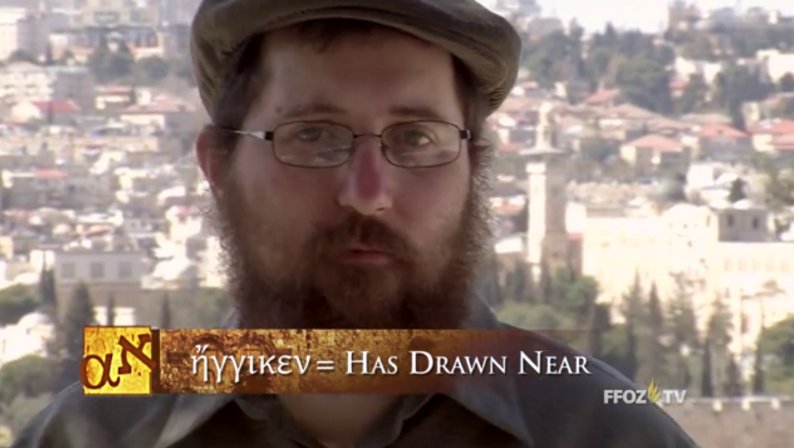
The pacing of this episode runs a bit differently than previous ones. Even before Toby introduces his first clue in solving the mystery, the scene shifts to Aaron Eby in Israel and the Greek word used to impart the meaning that the Kingdom of Heaven is “at hand.” This word, Aaron tells us, more literally says “it has drawn near” or “it has drawn close,” which seems to indicate something came and has already passed by.

19th century translator Franz Delitzsch “retro-translated” the Greek back into the most likely form in Hebrew, which would be the idiom we would understand in English as “drawn near to come.” It gives the sense of something that is poised to enter, like a man standing outside your front door, close enough to ring the doorbell. However, that man hasn’t yet arrived until he is invited inside and goes through the doorway. If he hadn’t yet rung the doorbell or knocked on the door, even though he is literally close enough to touch, you wouldn’t even know he was there at all.

Aaron says something important. The Kingdom of Heaven being “near” isn’t about time or proximity, but rather, accessibility and potential. The Kingdom wasn’t only sort of near 2,000 years ago and slowly coming closer with the passage of time. In a very real way, it’s always like the man standing just on the other side of your front door. He could knock at any second. But what’s stopping him?

One of the scribes came and heard them arguing, and recognizing that He had answered them well, asked Him, “What commandment is the foremost of all?” Jesus answered, “The foremost is, ‘Hear, O Israel! The Lord our God is one Lord; and you shall love the Lord your God with all your heart, and with all your soul, and with all your mind, and with all your strength.’ The second is this, ‘You shall love your neighbor as yourself.’ There is no other commandment greater than these.” The scribe said to Him, “Right, Teacher; You have truly stated that He is One, and there is no one else besides Him; and to love Him with all the heart and with all the understanding and with all the strength, and to love one’s neighbor as himself, is much more than all burnt offerings and sacrifices.” When Jesus saw that he had answered intelligently, He said to him, “You are not far from the kingdom of God.” (emph. mine)

Mark 12:28-34 (NASB)

ffoz_tv10_aaronWait a minute. How can Jesus say that the scribe wasn’t far from the Kingdom of God if “far” and “near” are a matter of the timing of Christ’s return in glory and power? It has to do with the heart of the scribe and his true understanding of the Torah. That, in and of itself, should be a bit startling to a Christian audience, since being close to the Kingdom is linked to both a repentant heart and correct understanding of the Torah of Moses.

Aaron also refers to several different parts of Isaiah to re-enforce his interpretation including Isaiah 56:1:

Thus says the Lord, “Preserve justice and do righteousness, for My salvation is about to come.”

According to Aaron, deliverance is on the threshold of being revealed. It is here and accessible at any moment. The person or people involved just have to become aware of it and then touch it.

Back in the studio, Toby compares this to what we read in Revelation 3:20

Behold, I stand at the door and knock; if anyone hears My voice and opens the door, I will come in to him and will dine with him, and he with Me.

As I said above, the Kingdom is at the door poised to knock and is already knocking. All we have to do is open the door and it will arrive. All we need is to have the right heart and the right understanding of what God is telling us in the Bible. And here’s our first clue.

Clue 1: “At hand” means God’s Kingdom, the Messianic Era, was on the brink of being revealed.

I’m trying not to give too much away in advance of the other two clues, but the revelation of the Kingdom is something that Jewish people have been waiting for longer than there has been anything called “Christianity.” Even in Jesus’s day, once he was resurrected, his disciples expected the Kingdom to arrive immediately. They even asked him about it.

So when they had come together, they were asking Him, saying, “Lord, is it at this time You are restoring the kingdom to Israel?”

Acts 1:6 (NASB)

up_to_jerusalemIt was puzzling when Jesus didn’t summon the Kingdom right away. Yet not only did Messiah’s disciples expect the Kingdom to arrive right then, so did Jesus. Toby says that it was Messiah’s intent to bring the Kingdom to the generation in which he lived. What stopped the Kingdom’s arrival?

Truly I say to you, all these things will come upon this generation. “Jerusalem, Jerusalem, who kills the prophets and stones those who are sent to her! How often I wanted to gather your children together, the way a hen gathers her chicks under her wings, and you were unwilling. Behold, your house is being left to you desolate! For I say to you, from now on you will not see Me until you say, ‘Blessed is He who comes in the name of the Lord!’”

Matthew 23:36-39 (NASB)

It is said in some branches of Judaism that if all of Israel were to repent at a single moment, it would summon the arrival of Messiah. Toby says something very similar. He teaches that the arrival of the Kingdom of Heaven is contingent upon the repentance of the generation, and although he didn’t make this explicit, the generation of Jewish people. In other words, if all of Israel, the Jewish people, were to repent as a single body, the Messiah would come.

But remember, as we saw in last week’s episode, Jewish repentance does not mean simply coming to faith in Jesus Christ, and it definitely doesn’t mean forsaking the Torah of Moses and becoming goyishe Christians. It means repenting of sins, returning to the Torah, and having a profound faith in God. With Yom Kippur just days away, this message is extremely well timed. Perhaps Messiah will come one year during the Days of Awe, when all of Israel makes teshuvah and returns to God.

Why didn’t the Messianic Age arrive with the first coming of Messiah? Some Jewish people repented, but Toby says most didn’t. They weren’t ready. As Toby was talking, I started to think of that first generation of Israelites Moses liberated from Egypt. They had been redeemed but they too were not ready to enter into the Land. Only the generation after them was ready, and they were the ones who received the promises.

Which generation of Jews will be the ones to usher in the Kingdom of God and Messiah’s reign?

Thus we have arrived at the second clue:

Clue 2: The Messianic Era requires repentance.

tv_ffoz12_tobyAgain, I believe this is specifically Jewish repentance, and I believe the unique role of the Gentile Christians, the people of the nations who are called by God’s Name, is to encourage and support Jewish return to God and the Torah within a Messianic framework. Only then will the Messianic Era arrive.

But will that ever happen? The necessary repentance hasn’t occurred in the last twenty centuries. Can the Kingdom of God be near to people now as it was to the scribe to correctly interpreted Torah with Jesus?

Now having been questioned by the Pharisees as to when the kingdom of God was coming, He answered them and said, “The kingdom of God is not coming with signs to be observed; nor will they say, ‘Look, here it is!’ or, ‘There it is!’ For behold, the kingdom of God is in your midst.”

Luke 17:20-21 (NASB)

Christians are used to “beating up” the Pharisees, and believe they are nothing but hypocrites and liars, but here, Toby tells us they were asking a sincere question about the coming Messianic Age. Jesus gave them a sincere answer. Like the scribe, if they turned to God and Torah with a repentant heart, they would benefit from the blessings of the Messianic Era right now. They, and all believers, become a foretaste of the Kingdom in the present age. In that sense, anytime that believers in Jesus exist, some part of the Messianic Age of Jesus is always present.

Here’s the final clue:

Clue 3: Followers of Jesus who heed the message of the good news and repent are the Kingdom in the current age.

Toby describes the Kingdom as the Land and the People under the rule of the King. While we have a foretaste of the Kingdom in our lives as believers and we thus can share the Kingdom with others, it won’t arrive as a physical reality until Messiah arrives and rules as King in our world.

Think of the first coming of Jesus as his planting a seed. The seed is underground. It’s present. It’s real. It’s close enough to touch, but it’s still out of sight. If you didn’t know it had been planted, you wouldn’t know it existed at all. We believers are here as gardeners to nurture the seed and to help it grow.

But like a tiny mustard seed becomes a great tree, the reality of the Kingdom won’t burst forth from the seed, escape the bonds of the earth, and reach for the sky in magnificence until the Messiah’s second coming.

What Did I Learn?

Yom Kippur prayersI believe I’ve written about this before, but what Toby and Aaron taught confirmed something that never occurs to most Christians. The arrival of the physical Kingdom of God, the Messianic Age, is contingent upon human beings, and specifically the Jewish people. It matters not at all if or how well Gentile Christians, including devotees in the Hebrew Roots movement, observe and perform the Torah mitzvot, even with great and utter faith in Messiah. It matters absolutely if Jewish people return to God and Torah and practice a life of faith and obedience. Only when corporate repentance occurs in Israel will Messiah return, and then ” they will look on him whom they have pierced, they shall mourn for him, as one mourns for an only child, and weep bitterly over him, as one weeps over a firstborn.” (Zechariah 12:10 ESV)

As I’ve said previously, this is a little hard to take, because if the timing of the arrival of the physical Messianic Kingdom is totally in the control of the Jewish people and their repentance, then, depending on when they repent (or repented if it happened in the past), the understanding of these realities may or may not have been or be available to the people of the world’s nations.

But of that day and hour no one knows, not even the angels of heaven, nor the Son, but the Father alone.

Matthew 24:36 (NASB)

Jesus could be saying that the Father knows the exact time of the return, even though it is in the hands of the free will of the Jewish people.

Certainly, if I accept the FFOZ understanding of the coming of the Kingdom, then it sets a specific course for we who are believers in Jesus now. We can wait and wait and wait for Jesus to return and experience the foretaste of the Kingdom in our present lives, but Jesus will never return in the sky in power and glory until Israel repents. All this means that we Christians have a duty to support and nurture the Jewish people in their faith in God and in the study and performance of Torah so that they can arrive at repentance.

But as my Pastor often asks me, what exactly is the Torah, relative to the many traditions and customs of the different streams of Judaism in our day? What exactly must we do to encourage Jewish repentance so that the King will return and take up his throne?

Born Again Idol Worshipper

jesus-idolAs Rabbi Abraham Isaac Kook, the great Kabbalist and philosopher living at the turn of the century put it, “There is faith that is actually denial, and there is denial that is actually faith.” When a person says that he believes in God, but in fact, that God he believes in is really a conceptual spiritual idol, an image of God that he has conjured up, then his faith is actually denial of truth, heresy. However, when a person professes atheism because he just can’t believe in some almighty king with a white flowing beard floating somewhere in outer space, in a sense he is expressing true faith, because there is no such God.

-Rabbi David Aaron
“Chapter One: Getting Rid of God,” pg 7
Seeing God: Ten Life-Changing Lessons of the Kabbalah

In Christian thinking, that human failure is inherent in human nature, one of the results of original sin, Adam’s rebellion against God’s will in the Garden of Eden as recorded in Genesis 3. That blemish is transmitted from one generation to another to all of humanity through the sexual act. Jesus’ vicarious death on the Cross then represents God’s gracious gift, which erases that original sin and grants salvation to the believer who accepts Jesus’ saving act.

But in Jewish sources, the very fact that the prophets urge the people of Israel to unblock their hearts, to open their eyes, to remove the obstacles that get in the way of their relation to God suggests that this obstacle is more a matter of will, not at all inherent epistemological obstacle to recognizing God’s presence in the world.

Any time we install a feature of creation and call it God, we are committing the sin of idolatry, the Jewish cardinal sin. It need not be a material object; it can be something much more abstract or elusive: a nation, history itself (as in Marxism), financial reward, or another human being.

-Rabbi Neil Gillman
“Introduction,” pp x-xi
The Jewish Approach to God: A Brief Introduction for Christians

It’s not really pleasant to be called an idol worshipper but that’s exactly what happened to me recently.

No, it wasn’t done in an unkind way and I understand the complete sincerity of the person involved and their desire to be “a light to the world,” so to speak, by encouraging me to reconsider what this person believes is a very bad decision on my part…worshipping a man as God.

I think it’s rather amazing that I checked out both Rabbi Aaron’s and Rabbi Gillman’s books from my local library a week or more ago, before I knew I’d be having this conversation with my friend. In reading their first chapters, they both seem to be speaking to the idea of worshipping idols, albeit from different directions. Rabbi Gillman’s book sounds somewhat like my friend in that it’s a Jewish person attempting to be a light to the nations by writing to Christians and letting us know how we’re not getting it right. We aren’t examining the Bible through the correct lens. There are just too many areas of the Tanakh (Old Testament) that either fail to speak of God becoming man and Messiah, or that directly speak against such a thing.

My friend and I have had these conversations before and while I try very hard to take his suggestions and information and examine them objectively, I continue to run headlong into my faith in Jesus as Messiah. I’ve been challenged to re-examine that faith against the Tanakh and seek my answers within its pages. Can we “prove” Jesus is the Messiah without touching the New Testament at all?

Some of those who were with us went to the tomb and found it just exactly as the women also had said; but Him they did not see.” And He said to them, “O foolish men and slow of heart to believe in all that the prophets have spoken! Was it not necessary for the Christ to suffer these things and to enter into His glory?” Then beginning with Moses and with all the prophets, He explained to them the things concerning Himself in all the Scriptures.

Then their eyes were opened and they recognized Him; and He vanished from their sight. They said to one another, “Were not our hearts burning within us while He was speaking to us on the road, while He was explaining the Scriptures to us?”

Luke 24:24-27, 31-32 (NASB)

I suppose I just cheated because I’m quoting from the New Testament, but look at what’s being said. Jesus, using only Moses and the Prophets (which makes perfect sense as none of the New Testament writings existed during this time in history), “explained to them all the things concerning Himself in all the Scriptures.”

If I take that statement at face value, that means it’s possible to support having faith in Jesus as Messiah using only the Torah and the Prophets. Too bad Luke didn’t record what Jesus actually said. It would have made things a lot easier to investigate.

crossLately, I’ve been writing a lot to Christians in the church defending Messianic Judaism and the observance of the Torah mitzvot by believing Jews. I’ve spent almost no time at all directly addressing Jewish people who are religious but have no faith in Jesus, and who see worshipping Jesus as God as idolatry. Rabbi Aaron implied, based on the above-quoted passage of his book, that someone who doesn’t believe in a God that is not credible because He is quantifiable, physical, and definable, has more faith than a person who can point to Jesus as “the image of the invisible God” (Colossians 1:15). Is worshipping Jesus worshipping an “image?” Is worshipping Jesus who lived a human life actually worshipping a man?

You shall not bow down to their gods, nor serve them, nor do after their works: but you shall utterly overthrow them, and quite break down their images.

Exodus 23:24 (American King James Version)

So watch yourselves carefully, since you did not see any form on the day the Lord spoke to you at Horeb from the midst of the fire, so that you do not act corruptly and make a graven image for yourselves in the form of any figure, the likeness of male or female…

Deuteronomy 4:15-16 (NASB)

Those two verses don’t seem to have a direct bearing on the worship of God in corporeal, living form, since “images” and “graven images” address more manufactured items, like statues and such.

This all goes to the heart of how we Christians understand that Jesus was at once human and Divine. For most Jewish people, this does not compute. Rabbi Gillman’s book is written specifically to refute Christianity, although I’m certain with the best intentions.

When Christians try to explain their/our faith to most other groups, we rely a lot on the New Testament and we speak in all manner of “Christianese.” However, does this work very well with most Jewish people? The majority of Messianic Jewish people I know came into the movement by way of the church. Most of them became familiar with and invested in the Torah and a lived Jewish experience only later on. Faith in Jesus preceded a Jewish understanding of faith in Jesus.

Not being Jewish and not having that lived experience and education, I can only present the basis of my faith from a Christian/Gentile point of view.

A lot of Jewish people have a point in “defending” themselves against Christianity. Conversion and assimilation are considered a real threat to Jewish continuance forward in time. While I don’t believe that God would ever allow the extinction of the Jewish people and of Israel, Jewish people are still afraid. Further more, people like my friend and Rabbi Gillman authentically believe they are providing Gentile Christians a service in explaining how we are mistaken and how to correct our mistakes.

This is the sort of dialog that the church hasn’t done well at during the past twenty centuries or so. But if we can’t show from the Tanakh that Jesus is Messiah and Lord, what can we Gentiles in Christianity say to the Jewish people who challenge the validity of our faith and our identity in Christ?

It Isn’t Done

first-fruits-barleyThen the Lord spoke to Moses, saying, “Speak to the sons of Israel and say to them, ‘When you enter the land which I am going to give to you and reap its harvest, then you shall bring in the sheaf of the first fruits of your harvest to the priest. He shall wave the sheaf before the Lord for you to be accepted; on the day after the sabbath the priest shall wave it. Now on the day when you wave the sheaf, you shall offer a male lamb one year old without defect for a burnt offering to the Lord. Its grain offering shall then be two-tenths of an ephah of fine flour mixed with oil, an offering by fire to the Lord for a soothing aroma, with its drink offering, a fourth of a hin of wine. Until this same day, until you have brought in the offering of your God, you shall eat neither bread nor roasted grain nor new growth. It is to be a perpetual statute throughout your generations in all your dwelling places.

Leviticus 23:9-14 (NASB)

I don’t have my notes from last Sunday’s sermon so I’m pretty much winging it, but Pastor, in describing the Festival of First Fruits, said an interesting thing. He said that God gave the Children of Israel and their descendants, the Jewish people, the Land of Israel in perpetuity, that is, forever. He said that this giving of the Land to the Jews goes well beyond the Messianic Age and even to the end of our understanding of time as presented in the Bible. He said that should settle all of the political wrangling we see in current times, and the various attempts to persuade or coerce the Jewish people to surrendering some (all) of their Land to the Arab people living among them, in exchange for the Arabs not committing various acts of terrorism.

The Land of Israel was given to the Jewish people by God for all time through the Almighty’s promises to Abraham, and to Isaac, and to Jacob.

Now let’s look at one of the functions of Torah. Torah, as it was given at Sinai and recorded by Moses throughout the forty years in the desert, was to operate as the national constitution of the nation of Israel. It described all of the civil and criminal laws, as well as social customs and mores, as well as what we think of as “religion” today, though Torah doesn’t specifically categorize these distinctions. This is just how the Jewish people, as citizens of Israel, were to behave in all the various details of their lives, with God as their King.

We know that verse 14 in the above-quoted passage indicates that the Festival of First Fruits was “to be a perpetual statute throughout your generations in all your (the Jewish people’s) dwelling places.” Perpetual. Forever.

But according to Pastor, the only thing left of this particular festival in modern Judaism is the Counting of the Omer. Actually, Leviticus 23:15-16 says to count the days, not the Omer.

When Torah was given, it was tailored to an agrarian society, one where the primary economy is based on agriculture. So the sacrificial system involves the products of such a society, the religious calendar is geared to the timing of the harvests.

But how can God give the Israelites a commandment that says the Festival of First Fruits is perpetual when there is no Temple? How can this be a perpetual command when there have been times when the Jewish people have been exiled from their Land and arguably, continue to remain in exile until the return of Messiah?

If you believe that the Jewish people were given perpetual possession of the Land of Israel by God, and you believe that the Torah is the national constitution of the Land of Israel when ruled either by God directly or a King appointed by God, and you believe that at least the Festival of First Fruits (and possibly the other festivals…certainly Sukkot) is to be a perpetual festival before the Lord, and you believe that Messiah will restore Israel completely to the Jewish people, rebuilding Jerusalem, and rebuilding the Temple, then how can you believe that the Torah is no longer valid and will never again be valid?

I know, I know. It depends on what you call Torah. That gets pretty complicated, at least from a Christian point of view. If everything I said in the paragraph above is true, then Torah must include all of the commandments related to the perpetual festivals and if that’s true, then the commandments related to the Temple and the Priesthood must all continue to be valid, although currently held in abeyance.

Consider the Babylonian exile. Consider the Israelites either scattered or held captive in a foreign country, with only a tiny remnant remaining in the Land. Consider the destruction of Solomon’s Temple. Did that cancel the Torah? Were the Laws of Moses removed? Were the Jewish people deleted from any significance in the course of history?

temple-prayersNo, of course not. Then why should the destruction of Herod’s Temple mean the cancellation of Torah and the “dejudizing” of the Jewish people? Oh, because of Jesus and the cross? Why should that make a difference? Because of Paul? Why does Paul get to re-write God’s law for the Jewish people? Why does the Christian viewpoint of the Jewish Messiah exist in such opposition to everything else we see in the Bible?

You’d think Messiah would exist in harmony with the Word of God. You’d think Messiah would be the pinnacle, the culmination, the very height of the commandments of God. In Torah, it is said that the King must possess a personal copy of the Torah and study it daily, so he does not place himself above his people, but that he functions as King among his people, the perfect example of obedience to God as a Jewish man and ruler.

As the perfect and final King, shouldn’t that also be the role of Messiah, of Jesus?

On the cross, Jesus said, “It is finished,” (John 19:30) and this is interpreted to mean that Judaism and the Torah are finished and that finally grace reigns in their stead. But then what was actually finished if we have this?

And He who sits on the throne said, “Behold, I am making all things new.” And He said, “Write, for these words are faithful and true.” Then He said to me, “It is done (emph. mine). I am the Alpha and the Omega, the beginning and the end. I will give to the one who thirsts from the spring of the water of life without cost. He who overcomes will inherit these things, and I will be his God and he will be My son.

Revelation 21:5-7 (NASB)

I’ve said before that I don’t think all of the work of Messiah was finished at the cross. How could it be? If it were, why would he need to return or for that matter, why did he leave? What was finished at the cross was his suffering and he was brought to the point of death. The forgiveness of sins for all the people of the earth was established through Messiah and the beginning of the process of the New Covenant, which also is not yet finished, for we do not all yet know God.

But God said, “It is done,” right before the coming of New Jerusalem, right before the final time, right before the end of all things as we understand them.

Revelation 21:22 says that the New Jerusalem has no Temple in it because God and the Lamb are the Temple, but that doesn’t occur until everything else we are waiting for as prophesied in the Bible is finally completed. We are no where near that point in human history.

What men like Thomas Schreiner describes in books like 40 Questions About Christians and Biblical Law can’t possibly be correct because such a viewpoint denies God’s promises to the Jewish people about the Land, the Temple, the Torah, and particularly the Messiah. Christian theological blinders inhibit a view of the “big picture” of the Bible. It’s a fascination with a piece of bark on one tree while ignoring the panorama of the forest. It’s like focusing on every detail of a freeway rest stop when you need to be planning a major road trip that includes all of the miles between Los Angeles and New York.

In the span of one Sunday church sermon, my Pastor inserted enough information that confirms and supports the continuation of the Torah of Moses…the Torah of God in the lives of the Jewish people, both in the present and especially in the future.

Jews on the Wrong Side of the Cross

crossAngela Buchdahl was born to an Ashkenazi, Reform Jewish father and a Korean Buddhist mother, yet on her path to the rabbinate did not take the time to convert to Judaism.

-Yori Yanover
“It’s Official: You Can Be a Non-Jewish Rabbi”
Published: August 14th, 2013 Latest update: August 15th, 2013
JewishPress.com

Now that’s an odd story. I was having coffee with my friend Tom last Sunday afternoon when he mentioned this news item. Today, he sent me the link via Facebook. But Reform Rabbi Angela Buchdahl’s tale isn’t quite as it appears.

Exactly 30 years ago, in 1983, the Reform movement in America adopted the bilineal policy: “The Central Conference of American Rabbis declares that the child of one Jewish parent is under the presumption of Jewish descent. This presumption of the Jewish status of the offspring of any mixed marriage is to be established through appropriate and timely public and formal acts of identification with the Jewish faith and people. The performance of these mitzvot serves to commit those who participate in them, both parent and child, to Jewish life.”

It should be noted that outside the U.S. the Reform movement is yet to adopt the sweeping “presumption of Jewish descent” doctrine, but they do, by and large, offer “accelerated conversions” to children of a Jewish father.

In the Hebrew Roots and Messianic Jewish movements (and their various branches), Jewish identity is an important issue. Who is Jewish and who isn’t directly relates to the roles and responsibilities of individuals within Messianic Judaism and great efforts are made to maintain such distinctions, particularly since Messianic Jewish congregations contain (typically) a minority of halachically Jewish members and a majority of Gentile believers who choose to worship within a Jewish context.

Yori Yanover, in his article says that Reform Rabbi Buchdahl’s synagogue on the Lower East Side of Manhattan can be seen to have a number of African and Hispanic attendees and that, as far as diversity goes, Yanover would “beam with pride” over “gentiles who embrace the Jewish faith and who go through the grueling process of converting to Judaism.” But that presupposes conversion to Judaism and adoption of Jewish identity.

Yet outside of Reform Judaism, especially the United States expression of it, Rabbi Buchdahl would be considered a non-Jew and the lines defining Jewish identity have gone beyond being blurred to being eradicated. A non-Jewish Rabbi and Cantor?

Indeed, the more the Reform movement is reinventing itself, the closer it gets to Christianity. She’s been active, among other things, at Auburn Theological Seminary, “an interfaith platform to address global issues and build bridges across religious traditions.” “Angela is an extraordinary religious leader,” Rev. Katherine Henderson, Auburn’s president, told Hadassah. At a gathering for a Presbyterian group last year, Buchdahl “led worship that was completely authentic for her as a Jew and yet completely accessible for this group of Christians,” says Henderson. “We were all able to praise God together!”

But should Jewish writer Yanover be complaining? Shouldn’t we all be getting along as people of faith? And as a Christian, shouldn’t I delight to see Judaism and Christianity coming together, merging, forming a combined corporate identity? Isn’t this just one more step to converting Jews to Christians and becoming “one new man?”

In 1827, Czar Nicholas I decreed that all Jewish boys be forcibly conscripted into the Russian Army at age 12. Called “cantonists,” these boys were kidnapped from their parents’ home, and tortured repeatedly with the implication that conditions would improve if they’d accept Christianity. (Many died of their wounds.) The boys were indoctrinated in military prep school until age 18, and thereafter served 25 years in the army. The authorities saw it as a corrective, forced assimilation of stubborn Jews into Russian society, and as a way to undermine the authority of Jewish communal leaders. Some 50,000 Jewish boys were forced into Czar Nicholas’ army, and most never returned to the families they had left at age 12. The policy was abolished in 1855, with the death of Nicholas.

Day in Jewish History – Elul 15
Aish.com

gentile-jesusI was talking with another Christian recently and the topic of Jews being forced to convert to Christianity under torture came up. In the course of conversation, my companion said that the Jewish people ultimately need to accept Jesus as the Messiah and that it’s wrong for Jews to refuse to convert. Frankly, I could hardly believe my ears. Was this person saying that a Jewish person who felt that the blue-eyed, Goyishe Jesus was not the Jewish Messiah and who believed that Christianity embodied polytheism and idolatry should nevertheless accept conversion to Christianity while under torture as an act of obeying God?

That’s plain nuts. Yes, I believe that Jesus is the Jewish Messiah, but it is not “Christian” to torture someone to conversion. Further, if you force a “conversion,” how sincere can it be? Did Jesus advocate such monstrous acts? Did Paul routinely beat, starve, burn, and cut other Jews who refused to see his side of the story about Jesus? How can this be right? How is this uplifting the Name of God and keeping it Holy?

I’m not saying that Judaism trumps the Word of God or the message of Messiah anymore than Christianity does. We are all (or should all be) seeking an encounter with God, not blindly marching after a series of theologies, doctrines, and dogmas. But is being Jewish nothing to God? Didn’t He call Abraham as the first Hebrew? Didn’t He require that the Children of Israel set themselves apart from the nations as His treasured possession, a kingdom of priests, and a holy nation? (Exodus 19:5-6) And even on the “other side of the cross,” were not there many thousands of Jews who were all believers in Jesus as Messiah and all of them zealous for the Torah? (Acts 21:20)

It hardly seems as if God established the Jewish people and required them to be unique and set apart from the other nations and peoples of the world, and yet after the crucifixion, deleted them from any significance in the course of human history and the plan of the most Holy and One God.

Is God among the Jewish people who have not accepted Jesus as Messiah?

A commenter recently stated that he had no intention of reading anything by Abraham Joshua Heschel because he did not believe he could “grow spiritually” by reading “someone that doesn’t have the type of faith that’s required to be a born again believer in Yeshua.” I am not writing this response with the intention of casting aspersions on the commenter. I simply want to stand against this idea that we cannot learn from or grow spiritually by reading the ideas of people who do not share faith with us in Jesus.

I think the idea is baseless. I’d like to discuss it from various angles, not least of which is the observation that Christianity and Judaism both have long histories of believing otherwise. The theology behind the idea that spiritual truth can only be learned from people with Jesus-faith is not biblical, is not sound thinking about God and his ways, and has its basis in a spiritual triumphalism of the shallowest proportions. I am not saying that people who believe in the Jesus-believers-only theology are shallow, but they have been influenced by an arrogant religious culture.

-Derek Leman
“Can We Learn From ‘Unbelievers?'”
DerekLeman.com

Abraham-Joshua-HeschelI can’t imagine Abraham Joshua Heschel not being a man of God, and certainly his famed book God in Search of Man is a testimony to every man’s spiritual search for his Creator.

Part of the response I posted on Derek’s blog states:

The whole idea of taking “sides of the cross,” so to speak, drives me nuts. In Scot McKnight’s book The King Jesus Gospel, McKnight tells a story about a chance meeting with another Pastor and McKnight asked in the course of the conversation if Jesus preached the gospel. The Pastor without hesitation said that it was impossible for Jesus to even have understood the gospel message because he was born on the wrong side of the cross! Apparently, this Pastor believed that no one understood the gospel message until Paul.

While Jesus changed a great deal in terms of non-Jewish covenant access to God, he didn’t revolutionize the universe and radically transform Judaism by eliminating any connection between Jewish people and God at the cross. Jesus, as the Jewish Messiah King, should be seen as both a continuation of Judaism across time and as an amplification of Judaism’s greatest gift to the Jewish people and the world.

I found the following Rabbinic stories at Aish.com and I encounter them elsewhere from time to time.

Rabbi Shimon ben Shatach once bought a donkey and found a gem in the carrying case which came with it. The rabbis congratulated him on the windfall with which he had been blessed. “No,” said Rabbi Shimon, “I bought a donkey, but I didn’t buy a diamond.” He proceeded to return the diamond to the donkey’s owner, an Arab, who remarked, “Blessed be the God of Shimon ben Shatach.”

A non-Jew once approached Rabbi Safra and offered him a sum of money to purchase an item. Since Rabbi Safra was in the midst of prayer at the time, he could not respond to the man, who interpreted the silence as a rejection of his offer and therefore told him that he would increase the price. When Rabbi Safra again did not respond, the man continued to raise his offer. When Rabbi Safra finished, he explained that he had been unable to interrupt his prayer, but had heard the initial amount offered and had silently consented to it in his heart. Therefore, the man could have the item for that first price. Here too, the astounded customer praised the God of Israel.

praying-at-the-kotelIn Judaism, kiddush Hashem means “sanctifying the Divine Name,” usually by some sort of behavior. While I can’t say that all Jewish people across the world and across time have always lived up to this principle, I know for a fact that not all Christians have, either. We can hardly point to the cross and the fact that we were born on the “right” side of it as evidence that we have the spiritual upper hand. We certainly can’t say that our efforts to delete Jewish people and Judaism over the last nearly 2,000 years, using tools ranging from torture and murder to assimilation and conversion, represents the highest standard of kiddush Hashem. Are we introducing the Jewish people to their Messiah who holds the message of the good news for Jews, Israel, and through them, the rest of the world, or are we trying to earn points in the church by bringing another one to the Gentile Christ?

In my conversation with my Pastor last week, we discussed the range of beliefs within overall Christianity from fundamental to liberal and where people fall off the “scale of Christianity” on both edges. Yoni Yanover believes such a thing is possible in Judaism as well.

This reporter is known to be flippant, so I very much want to avoid being flippant about this story. I don’t think we should denounce people like Angela Buchdahl, or condemn the Reform movement for its straying so far out of the Rabbinical Jewish tent. But we should remain steadfast in not calling any of these people and the nice things they do “Jewish” in any way at all. We’re already not permitted to set foot inside their houses of worship. We should probably stop calling their religious teachers “Rabbi” – perhaps “Reform Rabbi” will do. And we should look forward to the time when calling someone “Reform” would simply mean a really nice non-Jew.

I’ve written before about the fundamental, core beliefs a person must hold to authentically call themselves “Christian,” but how does our treatment of Jewish people figure in to those beliefs? Is it OK to treat Jewish people and their beliefs with contempt and still call ourselves disciples of the King of the Jews? Can we really say that God is never, ever among the Jewish people because of the cross? How do we know?

“Jerusalem, Jerusalem, who kills the prophets and stones those who are sent to her! How often I wanted to gather your children together, the way a hen gathers her chicks under her wings, and you were unwilling. Behold, your house is being left to you desolate! For I say to you, from now on you will not see Me until you say, ‘Blessed is He who comes in the name of the Lord!’”

Matthew 23:37-39 (NASB)

This set of verses is often used by Christians to condemn the Jewish people, but listen to the compassion and love in Messiah’s lament. He longs to gather his people to him. He begs them to open their eyes and see him. It breaks his heart knowing that Jerusalem will soon be ravaged by Roman armies and be left desolate of her exiled people. He knows that his people, the Jewish people, will see him when they say, Blessed is the one who comes in the name of the Lord.

New Testament scholar Larry Hurtado just wrote a blog post called A Future for NT Studies?.

But, to take a slightly different approach, let’s consider why there is (and should continue to be) a field of study, a discipline, of NT Studies. It’s not practical here to do more than state some things briefly. “Byron” claims that NT scholars are simply “chasing their own tails.” That may characterize some work(ers) perhaps, but as a generalization is an unfair, and uninformed, view of things.

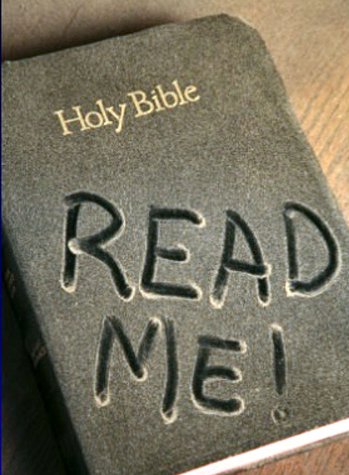
bible_read_meIf, after nearly 2,000 years, our studies of the New Testament record have not produced an understanding of the Jewish Messiah, the Jewish Apostles, the Jewish disciples, and their interaction with and tutelage of the newly minted Gentile disciples who struggled to enter and maintain their presence in a Jewish religious venue, then we can only say that New Testament scholars and theologians are only “chasing their own tails” if they keep studying the same scriptures and coming up with the same conclusions that result in anti-Semitism, supersessionism, and (frankly) worship of the cross instead of the Jewish King who died on it.

As Gentile Christians, we should be provoking zealousness among the Jewish people as the means to emphasizing the need for them to return to the Torah and there, find the Messiah.

I apologize if this blog post has offended or upset anyone. I can’t imagine that I haven’t offended or upset practically everyone with today’s “extra meditation,” but we really, really need to stop worshiping Christianity, especially in a manner that must delete Judaism in order to ensure our continued existence. Seek God and His desires. If He continues to love and cherish the Jewish people, who are we as Christians in the church to do otherwise?