Tag Archives: Jesus

Acting for the Messiah

acts_isaac_maryThe Torah of Moses and the instructions of our Master Yeshua instruct us to open our hands to the poor and not hold back from providing for the needy. As disciples of the Master, it is our duty to fulfill these obligations to the best of our ability and to meet the need where it is greatest. Tororo, Uganda, like many other locations around the world, is subject to harsh poverty, low quality of life, and often a dangerous environment to live in, especially for the young.

-from the A.C.T.S. for Messiah website.

I know I said I wasn’t going to discuss the First Fruits of Zion Shavuot Conference anymore, but there is one important aspect I forgot to mention. During the conference, there were two meals not covered by the conference registration. They were fundraisers for a missionary effort called A.C.T.S. for Messiah, which according to their About page:

…is a non-profit organization dedicated to helping the orphaned, widows, poor and needy in Africa. This Messianic Jewish mission is based in the East African nation of Uganda where Emily Dwyer brings the Gospel of Yeshua to remote villages, teaches discipleship, feeds the hungry and cares for a group of orphaned children. Our ministry is based in the village of Tororo, Uganda.

One thing I know about the Christian church is that they’re very good at sending compassionate missions outside of their own walls, to destinations ranging from different cities in the U.S., to the towns, villages and refuge camps where ever they are found across far-flung corners of the Earth. Messianic Judaism and Hebrew Roots, not so much. Traditionally, Messianic Judaism and Hebrew Roots have focused their attention and resources on establishing their movements and the primacy of the Torah. But Messianic Judaism, thanks in part to the aforementioned Shavuot Conference, First Fruits of Zion (FFOZ) as an educational ministry, and other Messianic organizations, that viewpoint is becoming more balanced, resting upon (if I can “borrow” from the conference again) Torah, the Good News of Messiah, and the Holy Spirit.

I first encountered A.C.T.S. (the acronym means “Action, Compassion, Teaching and Service”) during last year’s conference. Fortunately this year, they accepted credit cards as well as cash, so I didn’t have to depend on the kindness of strangers (I don’t like traveling with cash) when I wanted to participate.

I’m incredibly pleased to see Messianic Judaism embrace this long-established function of the church in extending itself to uphold this principle of Torah and ancient Judaism. I think it means the movement is maturing beyond its “start-up” stage and is becoming a more holistically functioning expression of the Messiah’s love in the world.

And while you may think that such compassion is primarily Christian/Messianic, I just want to remind you that modern Judaism is an abundant source of love for others.

Dr. Rick Hodes concluded his May 19, 2013 commencement address at Brandeis University this way (the link above leads to the entire content of the article which includes many examples of Jewish compassion to the disadvantaged, the sick, and the dying):

You now start a lifelong link with a great name – Brandeis. What can we learn from Louis Brandeis? He was described as “the disturbing element in any gentleman’s club,” he owned a canoe, not a yacht, he angered clients by trying to be fair to both sides; the judge who succeeded him, called him “a militant crusader for social justice… dangerous because he was incorruptible.” Live up to his legacy.

Spread kindness. You are here because a lot of people helped you along the way. Maybe it was your 10th-grade math teacher who gave you a second chance, maybe it was someone who inspired you in a summer job.

This week, buy beautiful cards and send out four or five, to people who’ve helped you. Let them know you’ve just graduated from Brandeis and they were important to you. They’re going to feel great, and they’ll do it again for others.

Remember this: Run to do good. Create a momentum in the right direction. Get your hands dirty. Wear out your shoes. Don’t try to get too comfortable, please!

Now I imagine the start of a horse race and the bell rings. But you don’t need to race against each other. Whatever horse you choose, and whatever path you follow, I wish you great success and great happiness.

I wish you a lot more than luck, and may God bless you all.

syrian-refugeesThe Pastor of my church was raised by missionary parents and he became a missionary himself. The church I attend aggressively supports multiple missionary efforts around the globe. Many people who attend the church volunteer their time to travel to other countries to pray, encourage, support, build, teach, and do whatever else it takes to feed the hungry, heal the sick and injured, and show the love of Jesus Christ to whoever they may encounter.

A video news story was shown at the beginning of last Sunday’s worship service at my church (found online at CBN.com). It was a Skype interview of a missionary in Syria whose group is providing shelter, food, and support to anyone in need, Christian, Muslim, or anyone else. My words fail dismally to describe what this almost four-minute long video illustrates (I’ve posted the video from YouTube at the bottom of this blog post). The devastation of life is just ghastly, but one courageous group of Christians work to help just because God so loved the world, not just the Christian world, not just the white world, not just the American world, but every man, woman, and child who were created in the image of God.

In other words, everyone.

Part of why I’m writing this is to show that Messianic Judaism is indeed following the will of the Master and the teachings of the Torah, as is much of the traditional Christian church. Another part of why I’m writing this is to ask you to care. Yes, some of you really do care. Some of you give generously, work endlessly, pray fervently for those in need. But more of you…of us need to do the same. Love and worship is more than just showing up to the church on time for Sunday services and going to Sunday school afterwards, strolling through the Bible while drinking coffee and munching on muffins.

Love and caring means giving of whatever you have to give and sharing whatever God has given you to share.

Oh people, look around you
The signs are everywhere
You’ve left it for somebody other than you
To be the one to care
You’re lost inside your houses
There’s no time to find you now
Your walls are burning and your towers are turning
I’m going to leave you here and try to get down to the sea somehow

-Jackson Browne
Rock Me On The Water (1972)

Feed the hungry, take care of the widow and orphan, provide medical care for the sick, make a difference.

Act now.

111 days.
Jewish Identity in the Way

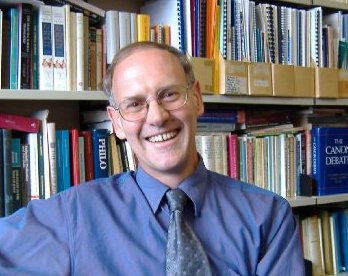
paul_trebilcoIn recent years a lot of scholarly effort has been given to questions about early Christian “identity,” how early and in what ways early believers in Jesus saw themselves and acted as distinct groups with their own identity. Major research projects continue to be devoted to this sort of question (e.g., the project on Prayer and Early Christian Identity, based in Oslo, with which I’m connected currently).

Paul Trebilco has now published an important study relevant to these questions: Self-designations and Group Identity in the New Testament (Cambridge: Cambridge University Press, 2012). His new book comprises a further significant contribution to the study of earliest Christianity. Drawing on observations about how groups develop their own “social dialects” (“in-group” terms and expressions), he focuses on the key terms evidenced in NT writings that appear to have been used to refer to early Jesus-believers, each term given a chapter-length analysis.

-Larry Hurtado
“Trebilco on Early Christian Self-designations”
Larry Hurtado’s Blog

This sounds like a fabulous book but even the Kindle version costs over $63.00, so it’s deffo out of my price range. Hurtado is of the belief that Jesus was worshipped as God very early historically so he’s going to likely come down on the side of an early distinctiveness of identity of Christians as apart from Judaism, probably very soon after the ascension of Christ.

This is an important topic for me since in my readings, I regularly find that the early “Jewish Christians” continued to self-identify as Jews and understood “the Way” as a Jewish branch among the other “Judaisms” of their day.

When they heard it, they praised God. Then they said to him, “You see, brother, how many thousands of believers there are among the Jews, and they are all zealous for the Torah (emph. mine).

Acts 21:20 (NRSV)

I deliberately rendered the world “law” as it appears in the NRSV as “Torah” to communicate more how James and the elders in the apostolic council in Jerusalem would have understood the vital concept. There were thousands of Jewish believers in Moshiach who were all zealous for the Torah.

Sounds pretty Jewish to me.

Going back to Hurtado’s blog post, he praises Trebilco, referring to him as “a proven scholar in the field” and citing his earlier, important works.

Hurtado continues:

These terms = “the brothers” (αδελφοι), “the believers”, “the saints” (οι αγιοι), ”the church” (η εκκλησια), “disciples” (μαθηται), “the way” (η οδος), and “Christian” (Χριστιανος). Among his conclusions, he contends that “εκκλησια” originated among “Jewish Christian Hellenists” (“most likely in Jerusalem,” p. 301), but he further argues that this does not mean that they no longer considered themselves also part of the larger Jewish community. He judges the term “Christian” to have originated among outsiders/observers of early Jesus-believers, thereafter appropriated by believers, especially in the later period of persecutions.

As to the larger question about when and how believers saw themselves as a distinct group, Trebilco contends (rightly in my view) that the use of these terms indicates that “they were creating and shaping their identity” already before the time of our earliest texts. This means easily within the first couple of decades after Jesus’ execution. (I’d say likely within the first few months.) Trebilco again: “…these designations also involve the claim of a distinctive identity . . .” (p. 308), “have clear boundary-marking roles,” and “distinguish this new group from other Jews and from Gentiles” (309).

ancient_beit_dinWhat can we make of this? First, that the Jewish disciples of the Jewish Messiah continued to consider themselves Jews participating in a normative Judaism in their day. However, as “Messianics,” they also understood that their identity was unique and that they were, in some sense, distinct from their Jewish brothers who adhered to other streams of Judaism, because ultimately salvation and the realization of Israel’s redemption and restoration only comes through Messiah.

I have great sorrow and unceasing anguish in my heart. For I could wish that I myself were accursed and cut off from Christ for the sake of my own people, my kindred according to the flesh.

Romans 9:2-3 (NRSV)

In stating this, Paul is saying that Jews outside the framework of “the Way” are also outside of salvation, and the anguish at this thought drives Paul to declare he would be willing to be accursed by God and cut off from Messiah if only it would save the Jewish people who do not know Messiah.

But it also continues to establish that the identity of a first century Jewish disciple of Messiah is as a Jew operating within a Jewish religious framework. This is opposed to Paul assuming a non-Jewish identity in a non-Jewish religious movement as many modern Christians currently believe. Being a “Messianic” (Christian) for a Jew was then both an exercise in normative Jewish religious worship and a unique Jewish identity because of adherence to Messiah, the living embodiment of Torah, Israel, and God’s gracious redemption.

The limits of Hurtado’s blog post allows for a minimal exploration of Gentile identity but that’s not my main point at the moment (though I do touch in it below). My primary point is to affirm for my Gentile Christian brothers and sisters, as well as any Jewish readers, that the historic worship of Jesus by Jews is not an aberration within Judaism or an abandonment of Judaism and the Torah. It was and is the highest expression of devotion to God both within the first century context and within what some have called modern “Bilateral Ecclesiology” Messianic Judaism.

It’s important to note though, that at least one Jewish scholar has a different idea as Hurtado points out:

I mean no criticism in saying that this all seems rather obvious to me, but in view of the nature of recent scholarly discussion (e.g., Boyarin’s claim that we don’t have “Christianity” as such before the fourth century CE), I’m very grateful to Trebilco for this fine evidence-based study, which will further confirm his status as a noteworthy figure in NT/Christian Origins.

Without reading “Boyarin’s claim” in full, I have no context upon which to comment, but I would have to guess that Boyarin may be stating that the “Jewishness” of Christianity extended much further forward into history than Hurtado or Trebilco believe. If, based on Trebilco’s book, Hurtado believes that the Christian identity replaced the Jewish identity of Jews in “the Way” in the first century forward, then I’m going to have to strenuously disagree. As long as Jews participated in the worship of Yeshua as Messiah, I can’t see them self-identifying as anything other than Jewish, and certainly I don’t believe they would ever abandon the Torah and a Jewish identity for the sake of Messiah. I say this because it is totally contrary to the Jewish Messiah himself to request that devotion to him should require abandoning the Torah and Israel.

I will split a hair and say that Jewish identity was not imposed on the Gentiles being admitted into the Jewish “Way” (see Acts 15:22-35, Acts 21:25), thus the Gentile “Christians” would have established an identity that, while initially contained within a Jewish religious framework, made them distinct not only from their Jewish mentors relative to Torah-observance, but also distinct from the pagan people and religions in their world.

In addition, we’ve already seen Hurtado quote Trebilco as saying:

“distinguish this new group from other Jews and from Gentiles” (emph. mine)

jewish-davening-by-waterI’m going to argue, based on the above-statement, that the distinctiveness of first century “Messianic Jews” was in relation to the Gentiles in “the Way.” By definition, all Jews were distinct from all Gentiles, so it would be redundant of Trebilco to say that it was “Christian Jewish” identity that distinguished them from pagan Gentiles. It makes more sense for him to make this statement if he is defining a distinctiveness of Jewish identity within “the Way” that identified the Jewish disciples uniquely both within the context of larger Judaism and as compared to believing Gentiles.

Of course, I’d have to read Trebilco’s book to actually confirm this, but what I can gather from Hurtado’s blog post certainly suggests it.

In summary, Gentile Christian identity distinctiveness as a religious stream wholly separate from paganism would have occurred very early, probably within Paul’s lifetime. Jewish discipleship in Messiah would have continued to be Jewish in every sense and yet, would still have distinguished Jewish members of “the Way” from other Jewish streams by virtue of Messianic redemption and the promise of national restoration upon Messiah’s return.

Here then, we see a template for the modern Messianic Jewish movement, a model for how Jews today can view adherence to Yeshua (Jesus) the Messiah as truly and completely Jewish, and unlike the vast majority of Christian history otherwise indicates, as a movement which does not require a Jew to abandon Jewish identity or the Torah in order to be a disciple of the Master.

112 days.

Shelach: Going Up

Rising IncenseBut the men who had gone up with him said, “We cannot attack that people, for it is stronger than we.” Thus they spread calumnies among the Israelites about the land they had scouted, saying, “The country that we traversed and scouted is one that devours its settlers. All the people that we saw in it are men of great size; we saw the Nephilim there — the Anakites are part of the Nephilim — and we looked like grasshoppers to ourselves, and so we must have looked to them.”

Numbers 13:31-33 (JPS Tanakh)

Then the two men came down again from the hills and crossed over. They came to Joshua son of Nun and reported to him all that had happened to them. They said to Joshua, “The Lord has delivered the whole land into our power; in fact, all the inhabitants of the land are quaking before us.”

Joshua 2:23-24 (JPS Tanakh)

Have you ever wondered about these two events? What set apart one generation from the next? There’s actually an involved set of sociological, psychological, and experiential factors that come into play about why the generation who came out of Egypt couldn’t conquer the Land but their children could.

However, according to Rabbi Kalman Packouz’s commentary on Torah Portion Shlach:

The Kotzker Rebbe said that the mistake of the spies was in the words “and so we were in their sight.” It should not bother a person how others view him. (Otzer Chaim)

A person who worries about how others view him will have no rest. Regardless of what he does or does not do, he will always be anxious about receiving the approval of others. Such a person makes his self-esteem dependent on the whims of others. It is a mistake to give others so much control over you. Keep your focus on doing what is right and proper. Work on mastering the ability to have a positive self-image regardless of how others view you.

The Chofetz Chaim commented, “When you view yourself as inferior, you will assume that others also view you in this manner. The truth could very well be that the other person views you in a much higher manner. As the Yalkut Shimoni states, “The Almighty said, ‘Who says that you were not in their eyes as angels?’ ” (HaChofetz Chaim, Vol 3, p. 1060)

It has been said that “you are what you think,” or in other words, your “attitude” about a person or situation tends to dictate how you’ll respond. If you believe you are a “grasshopper” in the sight of others, often it’s because that’s how you see yourself in comparison to those others (or anyone). The result is what you do or what you fail to do.

Here’s another comparison:

And they were bringing children to him that he might touch them, and the disciples rebuked them. But when Jesus saw it, he was indignant and said to them, “Let the children come to me; do not hinder them, for to such belongs the kingdom of God. Truly, I say to you, whoever does not receive the kingdom of God like a child shall not enter it.” And he took them in his arms and blessed them, laying his hands on them.

Mark 10:13-16

And as he was setting out on his journey, a man ran up and knelt before him and asked him, “Good Teacher, what must I do to inherit eternal life?” And Jesus said to him, “Why do you call me good? No one is good except God alone. You know the commandments: ‘Do not murder, Do not commit adultery, Do not steal, Do not bear false witness, Do not defraud, Honor your father and mother.’” And he said to him, “Teacher, all these I have kept from my youth.” And Jesus, looking at him, loved him, and said to him, “You lack one thing: go, sell all that you have and give to the poor, and you will have treasure in heaven; and come, follow me.” Disheartened by the saying, he went away sorrowful, for he had great possessions.

And Jesus looked around and said to his disciples, “How difficult it will be for those who have wealth to enter the kingdom of God!”

Mark 10:17-23

camel-eye-of-a-needle-gateI suppose another way of putting it is how can a child be compared to a rich man when they attempt to enter the Kingdom of Heaven?

But what does that have to do with the generation with Moses who failed to enter the Land and the generation with Joshua who did?

It’s all a matter of perspective. What is the world a child sees as opposed to someone who is quite wealthy when confronted with bringing the Kingdom of Heaven near?

What did the rich person have to lose and what were the children being brought to Jesus experiencing? When we become secure in our situation for whatever reason, there’s a tendency not to want to leave that security. But children don’t worry about jobs, income, and wealth. They take it for granted that the adults in their lives who love them will take care of them. They focus on the matter at hand which for them is just being a child.

When Jesus said ‘whoever does not receive the kingdom of God like a child shall not enter it,” he wasn’t saying that maturity or education had no value. He wasn’t even saying that having wealth or material comfort was such a bad thing. He was saying that we must learn to trust and value the Master and the “gifts” of the Kingdom of Heaven most of all.

The first generation of Israelites who left Egypt in some sense never really left. Whenever they encountered trouble, they responded by longing to return to the only home they ever knew: Egypt. The fact that they lived as slaves and endured terrible hardships was what they found familiar. No matter how much more beneficial it was to be free and to be protected by the King of Heaven, that life was unfamiliar and frightening. They never really learned to trust God at the core of their beings, regardless of how many miracles they witnessed.

But their children grew up trusting God and Moses rather than the Egyptians. They learned to love God as children and continued that “child-like” trust into their adulthood as they faced the Land of Canaan across the Jordan.

No, they weren’t perfect people, but the Biblical record shows us that no one who obeyed God and followed His precepts was a perfect person. Noah wasn’t, Abraham, wasn’t, neither were Isaac, Jacob, Joseph, Moses, Joshua, David, and so on.

And yet, some part of those people who spoke with God “face-to-face” and who were called people after God’s own heart all had a quality in common with the children who were being brought to Jesus. Those who did not obey thought they had too much to lose by following the Master, even if what they were clinging to was actually degrading, humiliating, and even agonizing.

conference2In my Torah commentary for last week, I discussed my hesitancy at attending the First Fruits of Zion Shavuot conference at Beth Immanuel Sabbath Fellowship in Hudson, Wisconsin. As much as I wanted to just step through the doors of the synagogue and immediately feel at home, I didn’t. I mainly live in a Christian world now, so re-entering a traditional Jewish prayer service was a rough transition. I eventually adjusted, but it was the people I encountered at the conference that finally made me feel at home.

But looking back, I understand that it was the story I told myself about who I am now and what attending a Jewish festival in a traditional setting means. In order to feel more “at home” in church and even to be comfortable in calling myself a “Christian,” I’ve had to put a lot of other stuff away and change my attitude about what it all means.

I was cleaning out my closet recently and came across the box where I have stored my tallitot, tefillin, and other items I previously used when I had adopted a more “Jewish” worship style. I’ve become more comfortable not employing those holy objects in my prayers but I’d be lying if I said that part of me didn’t miss them.

“One who romanticizes over Judaism and loses focus of the kingdom of Heaven can be compared to a carpenter who is infatuated with the hammer, rather than the house it was meant to build.”

Troy Mitchell

At the conference, someone at the synagogue asked Rabbi Carl Kinbar to let them know if their services could be improved in any way. As I recall (so this is hardly word-for-word), Rabbi Kinbar had no complaint and indeed, had a compliment. He said he’s been in other synagogues and the services were technically very correct, but the prayers were horizontal. That is, the services seemed “flat.” There was excellent form but no substance or quality that ascended to Heaven.

Rabbi Kinbar said that the prayers at Beth Immanuel were “vertical.” They ascended up to the Throne of God.

In my own life (and probably in the lives of most people of faith), we have a tendency to let the context in which we worship define who we are as servants of the Most High. That first generation out of Egypt allowed their slavery to define themselves, even after they were free, and slaves cannot conquer a nation. The only difference between them and their children, was that they knew their master was God, not an Egyptian slaver.

looking-upChildren tell themselves one story about life and rich people tend to tell themselves a different story. As a result, it is easier for the former to enter the Kingdom of Heaven than the latter. The story I tell myself about who I am, at its core, cannot be a “Jewish” story (and certainly not, since I’m not Jewish) or a “Christian” story (even though I am a Christian). Who I am must be based less on religous ritual and context than on a child’s trust and faith that regardless of circumstance, knows God is always there, providing, protecting, and loving, just like any good Father.

I can be praying in church, in synagogue, at home, or even in a desert, but it is not where I am that defines me, but who I am in Messiah. And then, like sweet incense, my prayers go up.

Children live in a natural state of awe. To reclaim that energy, identify what fascinates you the most about life. Set goals for living and pursue them with relentless fascination.

Rabbi Noah Weinberg

When G‑d told Noah to build an ark before the world would be destroyed, Noah built an ark.

But when G‑d told Abraham He was about to destroy the cities of Sodom and Gomorrah—cities corrupt and evil to the core—Abraham argued. He said, “Perhaps there are righteous people there! Will the Judge of All the Earth not do justice?”

Abraham felt a sense of ownership for the world in which he lived. If there was something wrong, it needed to be changed. Even if it had been decreed by the will of G‑d.

Moses took ownership of the dark as well as the light. He argued not just for the righteous, but also for those who had failed.

When the people angered G‑d with a golden calf only 40 days after the revelation of Absolute Oneness at Mount Sinai, Moses had to admit they had wronged. Yet he did more than plead for them: he put his entire being on the line for them.

“Forgive them!” he demanded. “And if you do not forgive them, then wipe me out from Your book that You have written!”

-Rabbi Tzvi Freeman
Noah and Abrahamand Moses
Based on letters and talks of the Rebbe, Rabbi M. M. Schneerson
Chabad.org

Good Shabbos.

117 days.

Conquering Wrong with Right

broken-crossSo Christians, tell me. What is the church really like?

Because I go to a church event for the first time in weeks and within twenty minutes, I hear people make off-the-cuff racist, sexist and homophobic comments and nobody bats an eye.

I lay on the couch, curled up in a ball with the phone to my ear and listen to a dear friend tell me how he feels like an outsider to the people he’s attended church with for years because he has chosen to plant his flag with the disenfranchised and the vulnerable in his community, as messy as that gets. And it got messy.

Another friend I grew up with sends me a middle of the night link to an article about the guy in Arizona who stood on his college campus holding a sign reading “You Deserve Rape.” We’ve been having conversations lately about some of his qualms with Christianity, and he sums it nicely by saying, “I don’t want to have to spend the rest of my life explaining this to people. I have better things to do.” And I sympathize. Because I don’t want to have to spend the rest of my life explaining that to people, either.

And that’s just in the last couple of weeks.

-Emily Joy Allison
“Church Prove Me Wrong”
emilyjoyallison.com

The church is its own worse enemy.

I came across Ms. Allison’s blog (I get the impression she wouldn’t consider us on a first name basis so I’ll maintain some formality) as a link someone put on Facebook. That was well over a week ago, but this was the first chance I had to write about it. She says a lot of good things and a few things I disagree with, but she presents me with a struggle. Actually, she presents me with my own struggle, though I don’t conceptualize it in the same manner that Ms. Allison does. The struggle is with being a Christian and going to church vs. some of the really dippy and even hurtful things some Christians and some Christian churches do in the world.

For instance, she posted a screen capture of John Piper tweeting a message on twitter quoting Job 1:19 “in the wake of the terrible tragedies in Oklahoma,”

“Your sons and daughters were eating and a great wind struck the house, and it fell upon them, and they are dead.”

Even if Piper hadn’t intended this message to be taken the way it sounds, his timing (and probably his tastefulness) was ghastly. The tweet was subsequently deleted, but it’s another example of Christians (and people I refer to as “famous Christians” … more on that in a minute) standing on the platform of faith in Jesus Christ and throwing rocks at the injured and dying people of the world.

I sometimes have a problem with some “famous Christians.” These are usually televangelists or other Pastors or leaders who are in the public eye, people whose names are familiar even with atheists. Christians who typically are the worst examples of Christianity and who give the rest of the world the impression that we’re all like they are.

I recently heard an unsubstantiated story (that is, I can’t find it by Googling it) of scandal-plagued Jimmy Swaggart actually selling individual pages from his family Bible while leading a tour group in Israel. This would have been fairly recently, but I can’t find an online reference to the event. We’ve also heard names such as Benny Hinn and Joel Osteen, and I cringe to think that this is what the world sees when they think they’re looking at men who are disciples of and witnesses for Christ.

praying-aloneMany years ago, I knew some Americans who, when they toured Europe, would tell people they were from Canada (this obviously didn’t work at airports when they had to present their passports) because they were too embarrassed by America’s reputation overseas. There are days when I feel that way about being a Christian. I believe as a Christian, that I should be held accountable for my own behavior, my flaws, my mistakes, my errors, but it’s adding insult to injury if I have to be ashamed for every lousy thing someone else does in the name of Christ.

In terms of social consciousness and popular causes, it looks like Ms. Allison and I are different enough to where she would probably be embarrassed to be counted a Christian along with me, so from her perspective, I’m likely one of those folks she’s appealing to when she says:

YOU are supposed to be the living, breathing, embodiment of the gospel, and sometimes I can’t see anything good about it.

Church, prove me wrong. I’m begging you.

Church, prove me wrong. I’ve tried to be patient—and I will continue to try. I will be eating with you, talking with you, praying with you; from time to time I’ll probably be sitting in a church service with you. I will not abandon you, as long as Jesus has anything to do with it. But I need you to show me that he still does.

I recently read a blog post that quoted Jones, E. Stanley, (1925). The Christ of the Indian Road. Abingdon Press, 72-73. You’ve probably read this before:

“Mr. Gandhi, though you quote the words of Christ often, why is that you appear to so adamantly reject becoming his follower?”

Gandhi replied, “Oh, I don’t reject your Christ. I love your Christ. It’s just that so many of you Christians are so unlike your Christ.”

Ghandi’s rejection of Christianity grew out of an incident that happened when he was a young man. During his years studying law in Britain, he had become attracted to the Christian faith, had studied the Bible and the teachings of Jesus, and was seriously exploring becoming a Christian. One Sunday, in South Africa where he had gone to practice law after getting his degree, he decided to attend a church service.

As he came up the steps of the large church where he intended to go, a white South African elder of the church barred his way at the door. “Where do you think you’re going, kaffir?” the man asked Gandhi in a belligerent tone of voice.

Gandhi replied, “I’d like to attend worship here.”

The church elder snarled at Him, “There’s no room for Kaffirs in this church. Get out of here or I’ll have my assistants throw you down the steps.”

Gandhi is certainly an outstanding example, but how many Christians have thrown people out of the church or driven folks away who otherwise are men and women who act and think and breathe with the heart of Christ?

On the other hand, and there’s always an other hand, I can’t use all of this as an excuse to go “church bashing” or “Christian bashing.” From her writing, I get the impression that Ms. Allison is representative of a specifically narrow corridor of the believing world that exists in fusion with many of the popular values western society espouses today.

If the problem Ms. Allison or anyone else has with “the church” is that “the church” has a specific values system that conflicts with the non-religious social priorities we see continually in the popular news media, then maybe it’s a case of the church following its own priorities rather than believing it must “go along to get along” in American culture.

broken_godAlso, if your issue is that your particular religious group or you, as an individual, have difference of opinion with how other religious people or other religious groups conceptualize and operationalize a life of faith, that may not be a matter of the church needing to prove anything to you. That might just be a difference in how you see a life of faith vs. their perspective.

Some churches aren’t going to support what has come to be known as “marriage equality,” not as a matter of bigotry (note, I think the Westboro Baptist Church is reprehensible and does not represent Christ on any level), but a matter of conscience.

If your problem with “church” is that “church” doesn’t mesh with the values we see paraded in public by CNN, MSNBC, the New York Times, and such so that “church” refuses to blend in like a chameleon into the progressive social background, then that’s not the church failing to follow Christ, it’s the church failing to worship society and culture.

I can’t prove to Ms. Allison that she’s wrong. If the church has failed to live up to her expectations, then I’m sorry. The church isn’t perfect because it’s full of imperfect human beings. Sometimes we do stupid things. Sometimes we do mean things. Sometimes some people in the church need to be told that Jesus would never act the way they’re acting.

Ms. Allison will never find a church that is perfect. No matter where she goes to worship and fellowship, she’ll always find “bad apples.” There are whole churches that are “bad apples.”  I don’t doubt though that there are a number of Christian churches that demonstrate values sufficiently similar to her’s that she’d be comfortable worshiping within their walls. I’m not sure what to make of such churches, but if Ms. Allison wants a place to belong, I’m sure it’s out there.

But we’ll never be perfect. Frankly, if a church is following in the footsteps of the Messiah, they probably shouldn’t look and act exactly like the world around us. Jesus said that we are in the world but not of the world.

I’ve been afraid of church for my own personal reasons, but they’re my personal reasons. My problems with going to church belong to me, not church. And yet, I came to a point in my life where I felt I had no other option but to go to church. If you call yourself a believer and a disciple, you can’t go off half-cocked following your own priorities when you know you need to be in fellowship with other believers and you need to follow the Master.

If you want to think that “the church” is irredeemably bad, you’ll find plenty examples of bad churches and bad Christians. If you don’t want to accept church-bashing lying down, and you believe that Christ still exists within the body of believers, you can do something about it. Instead of pointing a finger at what’s wrong, you can be what’s right in the church.

Gandhi is famous for saying, Be the change you wish to see in the world. If you don’t like what you see happening in the church, then be the sort of Christian you believe Jesus wants to see in the church. Walking away doesn’t make you more noble, it just makes you alone. Jesus didn’t walk away from an imperfect world. He died for it.

Mahatma-GandhiAnd then he lived. Someday he’ll come back to redeem our imperfect world. In the meantime, if we call ourselves disciples, if we call ourselves Christians, then we have a responsibility to do here and now what he is going to do when he comes back. We need to introduce a little kindness, compassion, and self-sacrifice into an otherwise broken and bleeding world. Jesus didn’t complain about what was wrong. He was moved by compassion. He caused the blind to see, caused the deaf to hear, caused the lame to walk. Like Christ, don’t complain about what’s wrong. Just do what’s right.

To the contrary, “if your enemy is hungry, feed him; if he is thirsty, give him something to drink; for by so doing you will heap burning coals on his head.” Do not be overcome by evil, but overcome evil with good.

Romans 12:20-21

If I should ever leave the community of faith, it won’t be because church is broken. It will be because I am.

118 days.

Gifts of the Spirit: Building God’s Dwelling Place, Part 1

creation2And there was evening and morning: one day.

Genesis 1;5

R. Samuel b. Ammi said: From the beginning of the world’s creation the Holy One, blessed be He, longed to enter into partnership with human beings… When did the Holy One, blessed be He, compensate them [those below for not partnering with them at that time] there? At the erection of the Tabernacle, as it says, “And he that presented his offering the first day” (Num. 7:12), meaning, the first of the world’s creation, for God said, “It is as though on that day I created My world.”

-Genesis Rabbah 3.9

Rabbi Carl Kinbar’s notes for his teaching “For God’s Dwelling Place” presented at the First Fruits of Zion Shavuot conference at Beth Immanuel Sabbath Fellowship in Hudson, Wisconsin begin this way. It’s really a two-part lesson that Rabbi Kinbar managed to offer to us in a single session on Shabbat (I’ll write it as a “two-parter” presenting the second part tomorrow).

You may be put off by the Talmudic references and I’ve been avoiding them until now, knowing how Christian audiences sometimes react to the teachings of the Rabbinic sages. On the other hand, it is sometimes helpful to access Jewish commentary on the Word of God and the Spirit of God in order to re-insert what we are learning back into it’s “natural Jewish habitat” (as D.T. Lancaster puts it).

But what does the act of creating the world and building the Mishkan (Tabernacle) in the desert have to do with “gifts of the spirit?”

Then Moses went up on the mountain, and the cloud covered the mountain. The glory of the Lord settled on Mount Sinai, and the cloud covered it for six days; on the seventh day he called to Moses out of the cloud. Now the appearance of the glory of the Lord was like a devouring fire on the top of the mountain in the sight of the people of Israel. Moses entered the cloud, and went up on the mountain. Moses was on the mountain for forty days and forty nights.

Exodus 24:15-18 (NRSV)

Rabbi Kinbar told a story about how this verse was once taught in a class. One woman in the class responded that it must have been incredibly boring for Moses to sit up on that mountain for forty days and forty nights with nothing to do.

When I heard him describe this woman’s comment I immediately thought, “Sure, if he were alone!” Rabbi Kinbar kindly suggested to his class, “Let’s assume that God is exactly as the Bible describes Him.” Apparently, it doesn’t occur to some folks to take the Bible at face value and to believe God is as He is described in the pages of His own Word.

But let’s “assume” that He is and that at Eden, He desired to dwell among people. In Exodus, He desires to dwell among His people.

I will meet with the Israelites there, and it shall be sanctified by my glory; I will consecrate the tent of meeting and the altar; Aaron also and his sons I will consecrate, to serve me as priests. I will dwell among the Israelites, and I will be their God. And they shall know that I am the Lord their God, who brought them out of the land of Egypt that I might dwell among them; I am the Lord their God.

Exodus 29:43-46

But it’s more than just God living in the human world. God wants something special from people, something that He doesn’t want from any other portion of creation. He wants to be partners with us. He want us to work with Him, not just for Him. He wants more than servants, He wants sons and daughters to help in building His dwelling place; building the Kingdom of God.

Once Jesus was asked by the Pharisees when the kingdom of God was coming, and he answered, “The kingdom of God is not coming with things that can be observed; nor will they say, ‘Look, here it is!’ or ‘There it is!’ For, in fact, the kingdom of God is among you.”

Luke 17:20-21

looking-at-heavenWe tend to think of the “Kingdom” as either Heaven or the future Messianic era, but Jesus is talking about it in the present tense: “…the kingdom of God is among you.” When he says it’s near, he doesn’t necessarily mean it’s right around the corner or that it’s coming soon, he means that as we pursue our partnership with God and perform the mitzvot necessary to help repair our broken world, we are drawing nearer to the Kingdom, we are building little bits and pieces of the Kingdom every time we perform an act of kindness, charity, or justice.

I don’t mean that God just wants to “dwell” with us in some abstract or metaphoric sense.

Moses did everything just as the Lord had commanded him. In the first month in the second year, on the first day of the month, the tabernacle was set up. Moses set up the tabernacle; he laid its bases, and set up its frames, and put in its poles, and raised up its pillars; and he spread the tent over the tabernacle, and put the covering of the tent over it; as the Lord had commanded Moses.

Exodus 40:16-19

As far as I know, there’s nothing in the Hebrew text that suggests Moses had help when he built the Mishkan for the first time and Midrash states that Moses built the entire structure single-handedly. Moses “partnered” with God in constructing God’s dwelling place. All of the Children of Israel who either directly participated in making the elements of the Mishkan or who donated funds and materials for the work “partnered” with God in constructing God’s dwelling place among them.

And when the Divine Presence descended upon the Mishkan so that even Moses was unable to enter the tent of meeting (Exodus 40:34-38), it was possible for the first time to make offerings to God directly in His presence and God dwelt among His people Israel. In fact, it was not possible to make sacrifices to God unless the Divine Presence was in the Mishkan. And this, according to the Sages, was God’s compensation for the lack of human participation in the creation of the world; allowing human participation in the construction of God’s Mishkan and God dwelling directly within Israel and her legions.

In the Garden, God comes down to human beings. At Sinai, when God gives the Torah, God comes down to human beings. And when the last element of the Tabernacle was constructed, God comes down to human beings.

And God came down to human beings in the form of a human being, not in the totality of all that God is (for the Divine Presence is not the totality of all that God is, for even the earth is His footstool, see Isaiah 66:1, Acts 7:49) but God came down to us and dwelt among us as living, breathing flesh.

No one has ascended into heaven except the one who descended from heaven, the Son of Man.

John 3:13

Most Christians have a difficult time understanding what the Temple means to the Jewish people. Most Christians don’t understand what the big deal is about Jews praying at the Kotel (Western Wall, Wailing Wall). Most Christians don’t get the importance of Exodus 40 because they (we) believe that now that we have the indwelling of the Holy Spirit, God lives in us more than ever, and who needs the Temple anyway?

We do.

The two aren’t mutually exclusive. I mentioned in a previous blog post about the conference, that the Holy Spirit has always been moving among humanity and particularly among Israel. The Spirit didn’t show up for the first time in Acts 2. If we can say there’s any sort of difference between the time of the Tanakh (Old Testament) and the Apostolic Era, it was that the Spirit did not previously dwell upon literally every man and woman in Israel, but after the first Shavuot post-ascension, the Spirit does dwell upon each person who has come to faith in God.

Two men, one named Eldad and the other Medad, had remained in camp; yet the spirit rested upon them — they were among those recorded, but they had not gone out to the Tent — and they spoke in ecstasy in the camp. A youth ran out and told Moses, saying, “Eldad and Medad are acting the prophet in the camp!” And Joshua son of Nun, Moses’ attendant from his youth, spoke up and said, “My lord Moses, restrain them!” But Moses said to him, “Are you wrought up on my account? Would that all the Lord’s people were prophets, that the Lord put His spirit upon them!” Moses then reentered the camp together with the elders of Israel.

Numbers 11:26-30 (JPS Tanakh)

“Would that all the Lord’s people were prophets, that the Lord put His spirit upon them!” Wow.

When the day of Pentecost had come, they were all together in one place. And suddenly from heaven there came a sound like the rush of a violent wind, and it filled the entire house where they were sitting. Divided tongues, as of fire, appeared among them, and a tongue rested on each of them. All of them were filled with the Holy Spirit and began to speak in other languages, as the Spirit gave them ability.

Acts 2:1-4

While Peter was still speaking, the Holy Spirit fell upon all who heard the word. The circumcised believers who had come with Peter were astounded that the gift of the Holy Spirit had been poured out even on the Gentiles, for they heard them speaking in tongues and extolling God.

Acts 10:44-46

Wish granted, Moses.

jewish-temple-messiahAnd even beyond that, there will still be a Third Temple in the Messianic Age, and it is in the Temple that Messiah will be enthroned as King over all.

And it will be God’s House and He will dwell among humanity again.

It’s not an either-or proposition. We can have both. We can build both in partnership with God. But we in the church must never forget that our “connectedness” to God is wholly dependent on Israel’s “connectedness” to God. We are made partners through Israel’s partnership with God.

Thus says the Lord of hosts, the God of Israel: Once more they shall use these words in the land of Judah and in its towns when I restore their fortunes:

“The Lord bless you, O abode of righteousness, O holy hill!”

No longer shall they teach one another, or say to each other, “Know the Lord,” for they shall all know me, from the least of them to the greatest, says the Lord; for I will forgive their iniquity, and remember their sin no more.

Thus says the Lord,
who gives the sun for light by day
and the fixed order of the moon and the stars for light by night,
who stirs up the sea so that its waves roar—
the Lord of hosts is his name:
If this fixed order were ever to cease
from my presence, says the Lord,
then also the offspring of Israel would cease
to be a nation before me forever.

Jeremiah 31:23, 34-36

This set of verses is meaningful in at least two ways. It teaches us that we are not “there” yet. It was quite obvious to me as I was sitting in a conference listening to a Rabbi teach me about God’s partnership with humanity that I still needed to be taught about God. Teachers were still saying “Know the Lord.” We are still in the process of building. God’s finger is still in the process of writing His Word on our hearts, of turning our hearts from stone to warm and beating flesh.

The other thing it teaches is that Israel will not cease to be a nation before God as long as there is a Sun by day and a Moon by night, as long as the waves of the sea continue to come to the shore. Only when this “fixed order” stops will the offspring of Israel stop being a nation before God.

Israel by design and the people of the nations who are called by the Lord’s Name by being grafted in have a job to do. We must continue to build God’s dwelling place among us. How do we do that? By obeying the will of God for our lives, by loving God with all of our being and loving our neighbor as ourselves. By feeding the hungry, visiting the sick, comforting the grieving. By studying His Word, by living the life that God has provided for us in accordance with His wishes. By loving and by humility.

praying-at-the-kotelThe generation of Israelites in the desert weren’t circumcised. The consequence of not obeying the commandment of the brit milah is to be cut off from among the people. This is a serious consequence. Why didn’t God cut off that entire generation that came out of Egypt?

According to Rabbi Kinbar, it was because of God’s love and humility. We don’t often think of God as being humble, but we do know that even Moses was considered the most humble of all men (Numbers 12:3). Maybe Moses, as a “disciple” of God, was imitating his Master.

I want to mention two more items before I end my “meditation” for this morning. Remember the woman Rabbi Kinbar told us about, the one who thought spending forty days and forty nights on the mountain with God would be boring? Another woman responded to her after Rabbi Kinbar suggested we could accept what the Bible tells us about God at face value. The second woman said she heard from God. It was just after her husband died and she was feeling intensely grief-stricken. The woman didn’t say what God told her, but the implication was that His presence was very comforting and very real…and not boring at all.

The last thing I want to say is that Rabbi Kinbar suggested something I hadn’t considered before. Is the Birkat Kohenim (the Priestly Blessing) a blessing for the Messianic Era?

May the LORD bless you and guard you – יְבָרֶכְךָ יהוה, וְיִשְׁמְרֶךָ
May the LORD make His face shed light upon you and be gracious unto you – יָאֵר יהוה פָּנָיו אֵלֶיךָ, וִיחֻנֶּךָּ
May the LORD lift up His face unto you and give you peace – יִשָּׂא יהוה פָּנָיו אֵלֶיךָ, וְיָשֵׂם לְךָ שָׁלוֹם

I’ll pick up Rabbi Kinbar’s lesson in Part 2 tomorrow.

120 days.

The Evidence of Acts 15

Apostle-Paul-PreachesWhen they arrived, they called the church together and related all that God had done with them, and how he had opened a door of faith for the Gentiles. And they stayed there with the disciples for some time.

Then certain individuals came down from Judea and were teaching the brothers, “Unless you are circumcised according to the custom of Moses, you cannot be saved.” And after Paul and Barnabas had no small dissension and debate with them, Paul and Barnabas and some of the others were appointed to go up to Jerusalem to discuss this question with the apostles and the elders.

Acts 14:27-15:2 (NRSV)

Luke notes a sharp disagreement existed (verse 2), his otherwise respectful reference to the circumcision groups contrasts markedly with Paul’s trenchant comment about the Jewish Christians who were advocating the requirement of Gentile circumcision in Galatians 5:12: “I could wish that those who trouble you would even cut themselves off!” This treatment is consistent with the desire by Luke not to hang the church’s “dirty laundry” before Roman officials.

-John W. Mauck
“Chapter 17, Acts 15:1-35: Circumcised Hearts”
Paul On Trial: The Book Of Acts As A Defense Of Christianity (Kindle Edition)

I previously mentioned Mauck’s book on my blog and I am continuing to read and enjoy his insights on Luke/Acts as a reflection of his belief that these books were written as a legal brief pursuant to Paul’s trial in Rome before the emperor (Acts 28). Mauck, an attorney and Bible scholar, suggests that Luke did not write his gospel or the book of Acts as theological instruction for the Jewish and Gentile disciple of Christ, but as a legal document for the secular Roman court. His book acts as “evidence” of his assertion to his readership and I must say, as a lay person, I’m certainly seeing how he arrives at his position.

Acts 15 is of special interest to me, since it is the pivotal chapter in Luke’s book regarding how Gentiles were to be formally entered into the Jewish religious movement of “the Way.” I previously spent a good deal of time writing on Acts 15, primarily from D. Thomas Lancaster’s viewpoint as expressed in Torah Club, Volume 6: Chronicles of the Apostles published by First Fruits of Zion (FFOZ). While Lancaster’s treatment of Acts 15 was dense with information and insight, I always welcome different viewpoints on this material, since I consider it so vital in understanding the purpose and drive of the Gentile Christian life today.

What follows is a summary of Mauck’s chapter on Acts 15 and what I can glean that is of relevance to both Jewish and Gentile disciples of the Messiah today.

(I haven’t abandoned my series on the First Fruits of Zion Shavuot Conference, but wanted to change my focus for a moment to keep my thoughts fresh and to continue to provide new and enlightening material to anyone who is reading my blog. I’ll continue my commentaries on the conference and its presenters tomorrow).

Scripture informs the argument and decision. Acts 15:17, a part of Jacob’s interpretation of the prophet Amos, is particularly important: “that the rest of mankind may seek the Lord. Even all the Gentiles who are called by My name.” It tells the Roman reader that the Hebrew prophets had foreseen that not all Jews would remain faithful to God, while Gentiles would become followers of Israel’s God without becoming Jews. The Messianics were not inventing a new faith, but following a plan of God unfolding from ancient times.

-Mauck, Chap. 17

As a legal brief written by Luke, Mauck believes that the intended audience of Acts is not only Gentile but non-believing. One of the most serious charges leveled against Paul was that he was promoting a new religion among Jews and Gentiles in the Roman Empire. Only Judaism was considered a legal religion outside of the Greek/Roman pantheon of “gods”. The creation and promotion of any other religious form would be considered “atheism” in the Roman courts. Luke then, must convince the court in Rome that Paul’s evangelism to Jews and Gentiles was the promotion of a pre-existing religion: Judaism, and that the Jewish expression of “the Way” was wholly consistent with the other normative Judaisms of the first century CE as evidenced, in part, by the Tanakh (Old Testament).

The-LetterBut as we’ve seen so far, while the plan to include Gentiles in the Jewish movement has been established from ancient times, it isn’t clear just how they (we) were to be involved. At the beginning of Acts 15, Jewish believers from the “circumcision party” assert that the only way for Gentiles to gain entry into any form of Judaism was to be circumcised (convert) and to follow the Torah as proselytes. Paul disagreed with this position and it became such a controversy that the matter was referred to James (Jacob) and the Council of Apostles in Jerusalem for a legal decree.

I’ll leave it to the reader to acquire Mauck’s book and review Chapter 17 in its entirety, but in addressing the “Jerusalem Letter,” which contains a summary of the Council’s final decision about the Gentiles, Mauck says this:

By carefully setting forth the controversy, summarizing the arguments of the disputants, recounting the decision-making procedure, and memorializing the decision and reasons for it, Acts 15:1-35 exemplifies how a legal brief addressing a theological subject should be written to a secular reader.

Instead of the far more extensive law of Moses which the Jewish Christians were following, the Gentiles who are now going to be included in the people of God have been given four laws to obey…

Dan Gruber 1. has shown how the Jerusalem Council never changed the requirements of Torah but rather took portions of Torah which applied to Gentiles living among the Jews and informed the Gentiles of those requirements.

It’s been rather frustrating for both ancient and modern Bible scholars that Luke didn’t record more of the “mechanics” of exactly how the “Apostolic Decree” was supposed to impart a life of holiness and inclusion upon the Gentile believers. On the surface, the four decrees seem especially anemic in addressing Gentile worship and devotion to God within a Jewish framework. However as Mauck points out:

The theological basis for this decision would be lost on a Roman official reading Luke’s brief except that Luke records Jacob’s pronouncement that his decision is based upon the teaching of Moses…if Luke were writing to Gentile or Jewish Messianics, it seems to me that a more comprehensive or edifying explanation for these rules would be forthcoming…

What has been lost to history and thus to us, are the instructions that were orally provided to the letter’s Gentile recipients by Barnabas, Paul, Judas, and Silas (Acts 15:22) which no doubt gave dimension and deeper meaning to the pen and paper content of the Council’s letter to the Gentiles in the diaspora.

However, Mauck appears convinced of an important point: that the Gentile believers were never intended to live a Jewish lifestyle and take on board the full “yoke of Torah” as were the Jews.

I know I’ve said that before in a number of different ways and I’m sure certain members of my audience are getting tired of hearing it, but when presented by an attorney as not theology but legal evidence to be submitted to a pagan court system, the nature and weight of the information changes. The differences in application of Torah to Jewish and Gentile participants in the Nazarene movement cease to be an argument of opposing theological opinions and become a series of established facts set before the Roman court, complete with documentation (assuming any copies of the letter could be acquired) and witnesses (Paul could testify on the events he witnessed as could other apostles and disciples if they could appear before the court).

In the next Chapter, Mauck nails home the point of differing Torah application to Jewish and Gentile disciples:

…that the church’s disruption of the social/religious status quo (allowing Gentiles to become full members of the faith without circumcision and observance of the Torah)…

He further states:

Gentiles could be included into the people of God by faith in him rather than by circumcision and observance of extensive ritual…

A fruit tree budding detailOf course, it is faith that attaches both Jew and Gentile to God through Messiah by the Spirit, not observance of Torah, but Mauck does repeatedly assert that upon turning to God through faith in Messiah, the Gentile was not required to become circumcised or to observe Torah in the manner of the Jews.

While I believe it’s important to continue to establish that it was never the intent of the Council of Apostles (nor of the Holy Spirit) that Gentile disciples were to have Torah applied to their lives in the same manner as the Jewish disciples of Jesus, it is equally important to drive home the point that, according to the evidence, God never intended for Jewish believers to ever cease observance of the Torah of Moses:

Also, the inclusion of Paul’s circumcision of Timothy…refutes charges that Paul and the Messianics were changing “customs handed down from Moses.” (Acts 21:21, see Acts 6:14)

In further support of this point (Mauck’s references to Jews turning to Jesus as Messiah while remaining Jewish and remaining “zealous for the Torah” are replete in this book and I won’t attempt to create a comprehensive list), Mauck notes in Chapter 21:

The meeting with Jacob and the elders (Acts 21:15-26) has essential forensic applications. First, the elders declare how thousands of “zealous for the law” Jews have believed. Luke wants Theophilus to know that the faith in Jesus remains Jewish completely.

I’ll stop here since I only intended to present the content of primarily a single chapter of this book rather than write a complete review. Nevertheless, I believe I have found another stone to support the structure that Gentile entry into the first century Jewish Messianic movement did not require that the Gentiles undergo circumcision and adhere to Torah observance in the manner of the Jews, nor did Jewish entry into “the Way” convert Jewish believers to “Christianity” as we understand it in the modern era, and force them to surrender their Jewish identities and Jewish Torah observance.

The modern Messianic Jewish movement is on a quest of discovery, re-establishing these facts, re-asserting the right of Jews to live as Jews, to observe the Torah of Moses, and to be devoted disciples of the Messiah, as concepts and behaviors that are completely acceptable and integrated within a Jewish lifestyle and worldview.

In doing so, Messianic Judaism, like the Apostolic Council in ancient days, does not require Gentile believers in Jesus to become circumcised and to observe the Torah in a manner identical to their Jewish counterparts. This is established by the Bible and specifically Acts 15 and related scriptures as both theology and legal evidence along with the support of the Holy Spirit of God.

The mystery isn’t in how Jewish believers are to live as disciples of the Messiah, but how we Christians are to understand the application of the Torah upon us, since the oral instructions accompanying the Council’s letter did not survive. However, if we are to believe that the Bible is sufficient for our needs (though not containing all of the information that exists and with the understanding that extra-Biblical data, such as history and archeology, can enhance Biblical understanding), then we must agree that what we have in our hands when we hold the Bible, is enough to tell us who we are and how we are to proceed forward, as Jews and Gentiles, in a life of discipleship as followers of our Master.

1. Dan Gruber, “Torah and the New Covenant” (Hanover, N.H.: Elijah Publishers, 1998), 26-7 and other references; see Bauckham, “James and the Church,” 459-62.

122 days.