Tag Archives: Jesus

The Blood of the Prince

tallit-prayerThis is one of those “hot” topics. A Messianic Jewish rabbi friend of mine recently got an email from a distraught woman urgently asking him to intervene on behalf of her husband. I would like some opinions on the matter from my readers. I will paraphrase that email below to protect all parties:

Please pray for us and help us. You see, my Jewish husband (who is from Israel) believes that Jesus is the Messiah of Israel through whom God redeems and saves, but he refuses to believe that Jesus is God too. My husband is adamant that he will not accept this belief. I don’t know what to do – I don’t want him to be lost. I need urgent help and I think my husband will benefit from your counseling. I am really hoping that you would be able to convince him of his error before it’s too late.

Question for my readers: should this woman be concerned about the spiritual fate of her husband? If this Jewish man never changes his mind on the nature of the Messiah, should he be concerned about his final destiny and should we?

-Gene Shlomovich
Crisis? A Jewish husband believes that Jesus is the Messiah but not G-d
Wednesday, May 9, 2012
Daily Minyan blogspot

I’m not in the habit of quoting one person’s full blog post to begin one of my own, but this question, which I thought was unanswerable, may just have been answered (though judging by the subsequent comments that have been accumulating as I’ve been writing this missive, maybe not). There was a lively debate by various folks commenting on this blog but it degenerated (and is still degenerating) into a “Jesus is God” vs “Jesus is Messiah but not God” vs “I don’t know what Jesus is” kind of debate. A few people took a stab at actually trying to answer Gene’s question, but no one really knew or could support their opinions from scripture…that is until now:

I am convinced that Peter’s first introduction to Messiah (John 1:41), and his own confirmation of that introduction (John 6:69, 11:27) brought him into sonship, and is all that is expected of any Jew to be saved and secured for Kingdom status (Romans 10:13, 11:26).

-Brad

Then Gene replied:

@Brad…

Thank you for providing an answer to my exact question directly from scripture.

Traditional religious Judaism doesn’t spend a great deal of time worrying about whether or not Jews are saved. In the merit of Abraham, Issac, and Jacob, Jews are all considered to have a place in the world to come. However, in Christianity and the various corners of the Hebrew Roots and Messianic Jewish movements (which all overlap but are not really the same), there are a couple of important questions that have remained unanswered:

If Jews are “saved” through the merit of the patriarchs, what significance does Jesus have as the Messiah to them?

On a more fundamental level, the question is:

Are Jews saved?

I’ve struggled with these questions as well. To say that the process of salvation for a Jew is identical to a Gentile means that prior to the coming of the Messiah, no Jews could be saved. I also means that the millions of Jews who refused to convert to Christianity because they believed we Christians practiced paganism and polytheism, have been consigned to hell, often having suffered torture and murder at the hands of the church who was attempting to force their conversion, first.

I’m not sure I have the answer regarding “salvation” relative to all Jews everywhere, but it appears that Brad, armed with “only” a Bible, has answered the first question. Let’s take a look at his material in a more detail. His statement can be broken up into two main sections:

I am convinced that Peter’s first introduction to Messiah (John 1:41), and his own confirmation of that introduction (John 6:69, 11:27) brought him into sonship…

PrayingSo what do we see when we are introduced to the Messiah and that introduction is confirmed? What brought Peter into “sonship?”

The next day again John was standing with two of his disciples, and he looked at Jesus as he walked by and said, “Behold, the Lamb of God!” The two disciples heard him say this, and they followed Jesus. Jesus turned and saw them following and said to them, “What are you seeking?” And they said to him, “Rabbi”, “where are you staying?” He said to them, “Come and you will see.” So they came and saw where he was staying, and they stayed with him that day, for it was about the tenth hour. One of the two who heard John speak and followed Jesus was Andrew, Simon Peter’s brother. He first found his own brother Simon and said to him, “We have found the Messiah”. He brought him to Jesus. Jesus looked at him and said, “You are Simon the son of John. You shall be called Cephas”. –John 1:35-42 (ESV)

After this many of his disciples turned back and no longer walked with him. So Jesus said to the Twelve, “Do you want to go away as well?” Simon Peter answered him, “Lord, to whom shall we go? You have the words of eternal life, and we have believed, and have come to know, that you are the Holy One of God.” –John 6:66-69 (ESV)

Mary, the sister of Martha, also faced the same question and arrived at the same conclusion.

Jesus said to her, “I am the resurrection and the life. Whoever believes in me, though he die, yet shall he live, and everyone who lives and believes in me shall never die. Do you believe this?” She said to him, “Yes, Lord; I believe that you are the Christ, the Son of God, who is coming into the world.” –John 11:25-27 (ESV)

Now here’s section two:

and is all that is expected of any Jew to be saved and secured for Kingdom status (Romans 10:13, 11:26).

So what is actually expected of a Jew for salvation through the Messiah?

For with the heart one believes and is justified, and with the mouth one confesses and is saved. For the Scripture says, “Everyone who believes in him will not be put to shame.” For there is no distinction between Jew and Greek; for the same Lord is Lord of all, bestowing his riches on all who call on him. For “everyone who calls on the name of the Lord will be saved.” –Romans 10:10-13 (ESV)

Lest you be wise in your own sight, I do not want you to be unaware of this mystery, brothers: a partial hardening has come upon Israel, until the fullness of the Gentiles has come in. And in this way all Israel will be saved, as it is written,

“The Deliverer will come from Zion, he will banish ungodliness from Jacob and this will be my covenant with them when I take away their sins.” –Romans 11:25-27 (ESV)

“No distinction between Jew or Greek” seems to be relative to the issue of salvation, so the Messiah has always been a vital element, but as Paul also said, “a partial hardening has come upon Israel, until the fullness of the Gentiles has come in. And in this way all Israel will be saved,” so this two is part of God’s plan for Israel.

Putting it all together, nothing else but what has been presented above is required to answer Gene’s question (and I’m paraphrasing): “Is a Jewish man ‘saved’ if he comes to faith in Jesus as the Messiah but not as God clothed in flesh and blood?”

Peter believed that Jesus was the Messiah, the holy one of God and that he had words of eternal life. Mary, sister of Martha also believed that Jesus was the Messiah and Son of God that that “everyone who lives and believes in him shall never die.” Everyone, Jew or Gentile, who calls on the Lord’s name shall be saved, and Gentiles, in God’s mercy, are brought into the Kingdom through the temporary hardening of the Jews. In the end, as Paul continues, “all Israel will be saved.”

God will not abandon the life of his heritage Israel nor let the blood of the Messiah go to waste:

The poor man stood in the doorway, smelling the sweet, freshly baked bread, and held out his hand for something to eat. Hunger gnawed at his stomach, for he had not eaten in days. He had tried to find work, but no one wanted to hire him. At last, hearing that Rabbi Yitzchak of Kalush had an open heart and an open door, he came to his house late one Friday afternoon.

Even before they opened the door, he could smell the fresh baked bread . . .

The cook looked at her challahs, golden baked and twisted, and sprinkled with poppy seeds. The cook did not want to give him a slice from the challahs. They were for Shabbat. She looked in the kitchen cabinets and drawers for an old, stale piece of bread, the kind that is usually given to beggars, but she found none.

“Slice up a loaf,” a man’s voice said, “no blood will be lost because of it.”

And so she cut into the loaf, soft and white, and gave the poor man a thick slice to eat. Unless a person has truly been hungry, he cannot know the meaning of bread. The poor man ate greedily. As he left, a man with kind eyes nodded. He was the one who had told her to cut the bread. The poor man knew that this man had saved his life.

-from a commentary on
Ethics of Our Fathers (4:3)
“The Blood Not Lost”

The Son of God is the bread of life to all mankind but particularly to His people the Jews. The blood of the Prince was not spilled in vain on Jewish soil and was not wasted for the sake of Israel. We in the church should not consider the Jew with contempt:

Ben Azzai used to say: “Do not regard anyone with contempt, and do not reject anything; for there is no man who does not have his hour, and nothing which does not have its place.” -Avot 4:3

Shavuot Fellowship in Wisconsin

Twenty-years ago the spirit of the Lord kindled something new, and the ministry of first fruits of Zion was born. With the teachings of First Fruits of Zion, Christians and Messianic Jews began to rediscover the Torah.

Two decades later, First Fruits of Zion and the Messianic Jewish movement still lives, breathes, and is ready to thrive. At Shavuot 2012, First Fruits of Zion breaks new ground as we present our game plan for the future of Messianic Judaism, for Jewish believers in Yeshua, and for Messianic Gentiles from all nations. Come and hear the vision, become a solid member for change—be inspired to kick-start a fresh revolution by learning practical ways to facilitate study groups, Torah studies, and other outreach efforts.

from the Shavuot Conference 2012 webpage
First Fruits of Zion (FFOZ)

I have to admit to being a little nervous about attending this conference. Oh, I’m also really excited. I’ll get to see some old friends that I don’t get “face time” with very often, and actually meet people I’ve only communicated with over the web. But like some “fine wines” (yeah, that’s a joke), I don’t really travel well, I like to get to bed early, and I don’t enjoy large crowds. I don’t really thrive in a large conference environment.

But more to the point, I haven’t been to anything like this for a number of years and as an “unaffiliated Christian” in a world of Messianic Jews, Messianic Gentiles, and others who don’t traditionally identify with the mainstream church, I’m not sure what to expect or how I’ll be viewed by everyone (not that I should care, I suppose).

For one thing, the tallit and tefillin are staying at home (I’ll still bring a kippah). When I backed away from the One Law position (the basic Idea that all of the 613 commandments or mitzvot that observant Jews believe apply to them also applies to all non-Jewish Christians by virtue of being “grafted in”), I backed away from just about everything that had an outward Jewish religious practice. I started to imagine (not that she’d say anything) what my (non-Messianic) Jewish wife might be thinking every time I put on a tallit and laid phylacteries to pray. For me, it was easier to come to peace with the direct interfaith part of our marriage if I didn’t try to “walk her side of the street” so to speak. I put most of the religious items I used in “Messianic worship” in a box and there they’ll stay until I have a good reason to bring them out again.

So I don’t consider myself “Messianic” in the sense that most (probably) of the attendees at the Shavuot conference consider themselves Messianic (the non-Jews, that is).

There’s another issue here though. This whole classification of Christian vs. Messianic among non-Jews is just a little crazy. I know that it’s meant to differentiate between traditional Sunday Christians and those who have become more aware of the Hebraic origins of our faith, but it’s gotten to the point where we’re almost acting like we have two different religions.

I’m not OK with this. If Jesus was and is King of the Jews for Messianics, then he was and is King of the Jews for more traditional Christians. Recognizing the Jewishness of Jesus and then encasing that fact with a Messianic “bubble” only isolates that information and the truths it contains from all other Christians everywhere. Rather than focusing on the differences between how many non-Jews in the Messianic movement see things and how most other Christians see things, maybe we need to spend more time paying attention to how we’re alike.

I know a number of non-Jews who self-identify as “Messianic” visit and read my blog posts. If that’s you, I want you to practice something in the privacy of your own homes when you’re all alone. I want you to say out loud, “I’m a Christian.” Repeat it a few times. C’mon, don’t whisper. Really belt it out. “I’m a Christian.”

“I’m a Christian.”

Was that awkward? For some of you, it probably was. No, I’m not making fun of you or trying to be mean. My point is that whether you consider yourself a “Messianic Gentile” and pray wearing tzitzit and tefillin or you think of yourself as a Christian and feel no need to adopt any Jewish customs or commandments in your prayer and worship life, God is One. He’s the same God. Jesus is Jesus. He’s the Messiah, the Lord, the Savior, the Christ.

He’s the same guy for Messianics and Christians. We just picture him differently.

But how does he picture himself?

We don’t really know, but it wouldn’t hurt to stretch ourselves a little and try to see Jesus from a Jewish point of view and within a functional Jewish context. That’s probably a picture closer to his reality than many in the mainstream church see him.

However, you may be very comfortable with the division between Messianics and Christians. You may be asking yourself why you’d want to go through all that trouble and mess up your comfort. Because he is the Christ and we are Christians. He is the Master and we are his disciples. Jesus didn’t ask us to stand apart from each other, he asked us to be a united body and to work together like the different parts in your body.

I’m not a typical Christian. I don’t go to church. I have particular standards regarding food items that most Christians don’t observe. I have certain other convictions and perspectives that you won’t find in most churches. But I’m still going to be a really different “breed of cat” than most of the other conference attendees when I get there in a few weeks. In some ways, I’ll be just as nervous attending the conference as I would be if I decided to visit a church next Sunday morning.

But the point is, I shouldn’t have to feel that way. I probably wouldn’t if I got my wish (and my prayer). My wish and my prayer is that all believers come together in unity and truth, regardless of how different we are, and recognize our mutual fellowship and discipleship as followers of the Messiah King, who came once for the salvation of souls and who will come again to repair the world.

My wish and my prayer is that we who are grafted in realize that we are all Christians.

When you think of yourself and what you believe and then think of other believers and how different they are from you, try to consider how much you have in common with each other. That’s what I’m going to be doing on May 24th at Beth Immanuel.

And if you happen to be planning on attending FFOZ’s Shavuot Conference 2012, post a comment and let me know. I’d love to meet you when we’re together in Hudson, Wisconsin…and meeting in spirit and in truth.

Blessings.

The Elusive Unchanging Dove

The Lord spoke to Moses, saying: Say to the Israelite people: On the fifteenth day of this seventh month there shall be the Feast of Booths to the Lord, [to last] seven days. The first day shall be a sacred occasion: you shall not work at your occupations; seven days you shall bring offerings by fire to the Lord. On the eighth day you shall observe a sacred occasion and bring an offering by fire to the Lord; it is a solemn gathering: you shall not work at your occupations.

Those are the set times of the Lord that you shall celebrate as sacred occasions, bringing offerings by fire to the Lord — burnt offerings, meal offerings, sacrifices, and libations, on each day what is proper to it — apart from the sabbaths of the Lord, and apart from your gifts and from all your votive offerings and from all your freewill offerings that you give to the Lord.

Mark, on the fifteenth day of the seventh month, when you have gathered in the yield of your land, you shall observe the festival of the Lord [to last] seven days: a complete rest on the first day, and a complete rest on the eighth day. On the first day you shall take the product of hadar trees, branches of palm trees, boughs of leafy trees, and willows of the brook, and you shall rejoice before the Lord your God seven days. You shall observe it as a festival of the Lord for seven days in the year; you shall observe it in the seventh month as a law for all time, throughout the ages. You shall live in booths seven days; all citizens in Israel shall live in booths, in order that future generations may know that I made the Israelite people live in booths when I brought them out of the land of Egypt, I the Lord your God.

So Moses declared to the Israelites the set times of the Lord.

Leviticus 23:33-44 (JPS Tanakh)

The Midrash teaches: “Just as a dove (yonah) is simple and accepts authority, the Jewish people accept God’s authority by ascending to Yerushalayim during the holiday. Just as a yonah is distinguished to its partner, who can tell it apart from other birds, Klal Yisrael are separated from the non-Jews by how they cut their hair, their fulfillment of milah and their care to wear tzitzis. The Jews comport themselves with modesty, like doves…Just as doves atone, Yisrael atones for the nations when they bring the sacrificial bulls for them during Sukkos.

Daf Yomi Digest
Stories Off the Daf
“The Dove”
Kinnim 23

Wait a minute. Besides the part where it said “Klal Yisrael are separated from the non-Jews,” what did that say?

Just as doves atone, Yisrael atones for the nations when they bring the sacrificial bulls for them during Sukkos.

Yes, that’s what I thought it said.

I was reading this passage this morning (as I write this) and tried to recall exactly where in the Bible it says that the sacrifices of Sukkot were intended to atone for the nations of the earth. Naturally, my middle-aged memory being what it is, I couldn’t pull up the data, so I turned to my favorite research tool: Google. Turns out that the plain meaning of the text in the Torah regarding the Sukkot sacrifices doesn’t talk about atonement for the nations. But there’s always this:

These seventy oxen correspond to the original seventy nations of the world enumerated in the Torah who descended from the sons of Noah, and are the ancestors of all of the nations till this day. Israel brought these sacrifices as atonement for the nations of the world, and in prayer for their well-being; as well as for universal peace and harmony between them.

Thus our Sages taught, “You find that during the Festival [Succot], Israel offers seventy oxen for the seventy nations. Israel says: Master of the Universe, behold we offer You seventy oxen in their behalf, and they should have loved us. Instead, in the place of my love, they hate me (Psalms 109).”

G-d appointed Israel a kingdom of priests to atone for all these nations, and appointed Jerusalem a house of prayer for all the peoples…

We pray for the day when Israel will be fully restored to its land, rebuild the Holy Temple in Jerusalem, and bring peace between G-d and man, and between all peoples. Amen.

-Rabbi Yirmiyahu Ullman
“The Significance of Succot Sacrifices”
15 October 2005/12 Tishri 5766
Ohr Somayach International

Here’s another look at the same picture:

The Talmud (BT Sukkah 55:B) teaches that the seventy bulls that were offered in the Holy Temple served as atonement for the seventy nations of the world. Truly, as the rabbis observed, “if the nations of the world had only known how much they needed the Temple, they would have surrounded it with armed fortresses to protect it” (Bamidbar Rabbah 1, 3).

-quoted from The Temple Institute website.

The irony involved in this commentary is that even though the nations hate Israel and destroyed her Holy Temple, still the Jewish people continue to pray for the peace and redemption of the nations.

Actually, we do find the number of bulls that are sacrificed during Sukkot is 70 in Numbers 29 starting at verse 12. There’s also another connection between the nations, Israel and celebration of the feast of Sukkot found in the books of the Prophets:

Then everyone who survives of all the nations that have come against Jerusalem shall go up year after year to worship the King, the Lord of hosts, and to keep the Feast of Booths. And if any of the families of the earth do not go up to Jerusalem to worship the King, the Lord of hosts, there will be no rain on them. And if the family of Egypt does not go up and present themselves, then on them there shall be no rain; there shall be the plague with which the Lord afflicts the nations that do not go up to keep the Feast of Booths. This shall be the punishment to Egypt and the punishment to all the nations that do not go up to keep the Feast of Booths.

And on that day there shall be inscribed on the bells of the horses, “Holy to the Lord.” And the pots in the house of the Lord shall be as the bowls before the altar. And every pot in Jerusalem and Judah shall be holy to the Lord of hosts, so that all who sacrifice may come and take of them and boil the meat of the sacrifice in them. And there shall no longer be a trader in the house of the Lord of hosts on that day. –Zechariah 14:16-21 (ESV)

Sukkot is the only festival of the Jews when representatives of the nations of the world will be actually commanded to appear in Jerusalem to celebrate and, as you see, God desires this so much, that there will actually be penalties for nations refusing to be represented at this event in the days of the Messiah.

The Hebrew4Christians site adds a little more information to confirm this:

Prophetically, Sukkot anticipates the coming kingdom of Yeshua the Messiah wherein all the nations shall come up to Jerusalem to worship the LORD during the festival.

But that’s all in the future. What about now and especially, what about in ancient times? Has Israel been atoning for us all along and have we disastrously ended our own atonement before God by destroying the Temple and scattering the Jewish people throughout the earth?

I don’t know, but pondering all these thoughts did bring the following to mind:

You worship what you do not know; we worship what we know, for salvation is from the Jews. But the hour is coming, and is now here, when the true worshipers will worship the Father in spirit and truth, for the Father is seeking such people to worship him. God is spirit, and those who worship him must worship in spirit and truth.” The woman said to him, “I know that Messiah is coming (he who is called Christ). When he comes, he will tell us all things.” Jesus said to her, “I who speak to you am he.” –John 4:22-26 (ESV)

I’m not necessarily drawing a direct connection between all of these points, but they are rather compelling. Consider this. In ancient times, during the Sukkot festival, it is thought that the Israelites sacrificed 70 bulls for the atonement of the nations of the world. In the Messianic Age to come, the nations are commanded to come up to Jerusalem to celebrate Sukkot with Israel. And in his Sukkot commentary, Rabbi Ullman alludes to not only Zechariah 14 but this other prophetic word:

“And the foreigners who join themselves to the Lord, to minister to him, to love the name of the Lord, and to be his servants, everyone who keeps the Sabbath and does not profane it, and holds fast my covenant—these I will bring to my holy mountain, and make them joyful in my house of prayer; their burnt offerings and their sacrifices will be accepted on my altar; for my house shall be called a house of prayer for all peoples.” –Isaiah 56:6-7 (ESV)

Salvation for the nations comes from the Jews. It seems like our atonement in ancient days came from Israel and for those of us who are Christians, it continues to come from Israel even though the Temple in Jerusalem currently does not exist.

“For God so loved the world, that he gave his only Son, that whoever believes in him should not perish but have eternal life. For God did not send his Son into the world to condemn the world, but in order that the world might be saved through him. –John 3:16-17 (ESV)

We from the nations cannot escape the great gift that Israel has continued to bestow upon us from days of old until this very time. God made Israel a light to the nations (Isaiah 49:6) and that light has been allowed be spread from Israel and the Torah to the rest of us (Isaiah 2:2-4) so that we too can illuminate the world with that light (Matthew 5:14). But this is only possible because God sent the Jewish Messiah and King, our Master, to all of us. And this is only possible because the Messiah and Savior was as obedient as a dove (Matthew 3:16) and as silent as a lamb led to the slaughter (Jeremiah 11:19).

The Christian church hasn’t replaced Israel and we certainly haven’t merged into her so that Israel has ceased to be a people before her God. We among the nations are Israel’s beneficiaries. May we continue to bless the heart of Zion and her first born son, Jesus Christ, our Savior, King of the Jews.

That which can be grasped will change. That which does not change cannot be grasped.

-Rabbi Tzvi Freeman
“Grasping Change”
Based on letters and talks of the Rebbe
Rabbi M. M. Schneerson
Chabad.org

Without mentioning it specifically, the Zohar sees great significance in the fact that the dove (and turtledove) is the only kind of bird permitted for sacrifice. In this way, the mysterious legendary dove with an olive leaf in its mouth becomes a representation of King Messiah…

-Tsvi Sadan
Yonah – Dove, pg 113
The Concealed Light: Names of Messiah in Jewish Sources

He is the elusive, unchanging dove.


Who is Worthy of God’s Word?

To some, G-d is great because He makes the wind blow.

For others, because He projects space and time out of the void.

The men of thought laugh and say He is far beyond any of this, for His Oneness remains unaltered even by the event of Creation.

We Jews, this is what we have always said:

G-d is so great, He stoops to listen to the prayer of a small child;

He paints the petals of each wildflower and awaits us there to catch Him doing so;

He plays with the rules of the world He has made to comfort the oppressed and support those who champion justice.

He transcends the bounds of higher and lower.

He transcends all bounds.

-Rabbi Tzvi Freeman
“Greatness Unlimited”
Based on letters and talks of the Rebbe
Rabbi M. M. Schneerson
Chabad.org

Indeed, the prayer of the community was born the very instant the prophetic community expired and, when it did come into the spiritual world of the Jew of old, it did not supersede the prophetic community but rather perpetuated it. Prayer is the continuation of prophecy, and the fellowship of prayerful men is ipso facto the fellowship of prophets.

-Rabbi Joseph B. Soloveitchik
from Chapter VII of his book
The Lonely Man of Faith

Rabbi Soloveitchik says a very interesting thing. He links the age of the prophets to the post-Second Temple world of Rabbinic Judaism. This may seem strange to most Christians, since we are taught a good many things passed away with the ascendency of Christ and the demise of the Holy Temple in Jerusalem. In fact, Christianity tends to discount the early Rabbinic period forward in the history of Judaism and “replace” it with the grace of Jesus Christ.

Of course Rabbi Soloveitchik as an Orthodox Jew, would not offer any sort of acknowledgement of Christ, but I think we can take his words, and those of Rabbi Freeman’s and try to apply them to the world of prayer among all men. While the prophets of old were unique and (as far as I can tell) no man has the “gift of prophesy” today as did Jewish men such as Isaiah, Jeremiah, or Ezekiel, we all have the capacity to engage God in the realm of prayer. This makes no man a prophet in the manner of those I have just mentioned, but the ability of humanity to connect, through faith, with God was not ended when the Second Temple was destroyed. Nor did it end with the life, death, life, and ascendency of Jesus. As Rabbi Freeman tells us, God is so great that “He stoops to listen to the prayer of a small child.”

And yet, from a Jewish point of view, prayer is not the exclusive property of the individual as Rabbi Soloveitchik notes:

No man, however great and noble, is worthy of God’s word if he fancies that the word is his private property not to be shared by others.

Judaism sees its relationship with God as largely corporate as indeed, is the Sinai covenant between God and the Israelites. Yet each Jew living today is also to consider himself as having stood personally at the foot of Mount Sinai as God gave the Torah through Moses. By comparison, Christianity, though the “body of Christ,” exists conceptually as a large collection of individuals, and each believer interacts as a unique personality, almost exclusively independent of the community of the church.

We see this most often in how we, as Christians, pray. It’s an almost irresistible temptation to pray about me, myself, and I, and Jesus did not prohibit this. And yet, he also told us to pray for others, even our enemies, and to petition God for the welfare of our leaders, our neighbors, and our oppressors. Rabbi Soloveitchik echos this when he writes “Man should avoid praying for himself alone…When disaster strikes, one must not be immersed completely in his own passional destiny, thinking exclusively for himself, being concerned only with himself, and petitioning God merely for himself.” To do so would be to imagine that God is little more than Aladdin’s genie and we alone are the one holding onto the lamp.

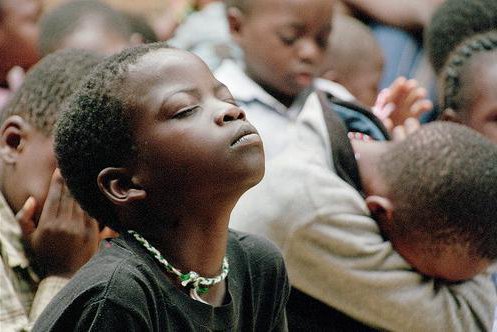
PrayingBut what is prayer and how is it somehow connected to perpetuating the continuation of prophecy?

Who is qualified to engage God in the prayer colloquy? Clearly, the person who is ready to cleanse himself of imperfection and evil. Any kind of injustice, corruption, cruelty, or the like desecrates the very essence of the prayer adventure, since it encases man in an ugly little world into which God is unwilling to enter. If man craves to meet God in prayer, then he must purge himself of all that separates him from God.

God hearkens to prayer if it rises from a contrite heart over a muddled and faulty life and from a resolute mind ready to redeem this life, In short, only the committed person is qualified to pray and to meet God. Prayer is always the harbinger of moral reformation.

So who can pray? On the one hand, it seems as if prayer is reserved for the person who is passionately dedicated to removing all sin and evil from his being and who longs to engage God in a realm of purity. On the other hand, what man, no matter what his condition, is completely clean and pure except that God has made him so?

Even an unbeliever can pray and be heard by God, otherwise no one could ever come to faith and be accepted by God. No one would ever be able to come to faith in God through Jesus Christ and be cleansed, healed, and reconciled with his Creator unless God was willing to hear the prayers of people covered in filth. It’s the desire to have the mantle of sin be removed from our shoulders, not the success of that removal whereby God is willing to hear us. In that sense, we do possess a “specialness” that was experienced by the prophets of old in that they too were willing, though still mortal and imperfect men.

And the foundations of the thresholds shook at the voice of him who called, and the house was filled with smoke. And I said: “Woe is me! For I am lost; for I am a man of unclean lips, and I dwell in the midst of a people of unclean lips; for my eyes have seen the King, the Lord of hosts!” –Isaiah 6:4-5 (ESV)

As I mentioned before, the prophets didn’t consider God’s revelations to them to be their exclusive property but rather, they shared God’s word with all, even as they were commanded to do. Should we, in our own human need, keep prayer just for us and not share it with all of God’s creations?

But since we are all imperfect and perhaps never, even for a moment, attain a purity that allows a true connection to God, how does God hear? What of the person so damaged and injured in his spirit, that he only knows to cry out but is unable to shed his “skin of evil?”

Likewise, we encourage the sinner to pray even though he is not ready yet for repentance and moral regeneration, because any mitzvah performance, be it prayer, be it another moral act, has a cleansing effect upon the doer and may influence his life and bring about a complete change in his personality.

It seems as if I’m wandering further and further away from the prophets or rather, Rabbi Soloveitchik did when he penned these words. On the other hand, the Rav seems to be saying what he did before; that prayer isn’t the exclusive property of the pious and the holy and the righteous. Even sinners can and absolutely need to connect to God. Jesus was criticized for eating with sinners, prostitutes, and tax collectors, yet he said this:

“Those who are well have no need of a physician, but those who are sick. I have not come to call the righteous but sinners to repentance.” –Luke 5:31-32 (ESV)

Thus access to the heart of God is available to all, not just to the perfect and those who sit in clean suits and dresses in pews on Sunday morning.

But going back to the very beginning of today’s “meditation,” we as Christians see that God is accessible not just to us and not just to “sinners,” but to all Jews everywhere, whether they are in the Messiah or not (and I am not lumping the Jewish people in with “sinners”).

I know it’s strange. Do I speak blasphemy? Do I ignore John 14:6? I suppose it looks that way. But I’m not willing to throw post-Jesus Jews under a bus because Christianity (and many in the Hebrew Roots movement) think “Rabbinic Judaism” is a dirty word.

I’ve sat in synagogues on Shabbat and during the Shema, have felt God enter as a tangible presence. I’ve sat in churches during prayer and singing and felt as if the room were completely empty. This is not to say that all synagogues possess God’s presence and all churches contain only God’s absence. Far from it. I am only saying that the 21st century church is not the only receptacle for the spirit of God. God is present where all men who desire Him are gathered, and resides in the heart of each individual, no matter who he is, who longs for the lover of his soul.

Who is qualified to engage God in the prayer colloquy? The person who is ready to cleanse himself certainly, but more than that, even the person who is at present unable or unwilling to be clean may still cry out. The very act of calling God’s Name may not “command” God to listen, but it may require the person praying to change his heart in acknowledgement of Him.

Thousands of years before the coming of Christ, while most of our non-Jewish ancestors (I’m speaking to Christians right now) were dancing around the pagan fires and worshiping “gods” of stone and wood, the Jewish people were turning their hearts to the One God. True, they also turned away many times, but God called them back and they returned. Otherwise, there would be no Christians today, for there would have been no Judaism by which the Messiah entered the world (and will enter it again).

Whoever you are reading this, know that God is not your exclusive property. God is a God to all or He is a God to none. While He has a special and unique relationship with the Jewish people which is perpetual and unable to be broken, He sent His only begotten Son for the rest of us, too. The rest of us just need to make sure that we don’t try to “take over” and restrict God to only ourselves.

Passing Judgment

Said Rabbi Israel Baal Shem Tov:

When a person comes before the supernal court to account for sojourn on earth, he is first asked to voice his opinion on another life. “What do you think,” he is asked, “about one who has done so and so?” After he offers his verdict, it is demonstrated to him how these deeds and circumstances parallel those of his own life. Ultimately, it is the person himself who passes judgment on his own failings and achievements.

This explains the peculiar wording of the above passage of the Ethics, “before whom you are destined to give a judgment and accounting.” Is not the verdict handed down after the cross-examination of the defendant? So should not the “judgment” follow the “accounting”? And why are you destined to “give judgment” as opposed to being judged? But no judgment is ever passed on a person from above. Only after he has himself ruled on any given deed does the heavenly court make him account for a matching episode in his own life.

The same idea is also implicit in another passage in our chapter of the Ethics: “Retribution is extracted from a person, with his knowledge and without his knowledge.” As a person knowingly expresses his opinion on a certain matter, he is unwittingly passing judgment on himself.

Commentary on Ethics of Our Fathers
Chapter 3
“Subjective Judge”
Iyar 10, 5772 * May 2, 2012
Chabad.org

“When the Son of Man comes in his glory, and all the angels with him, then he will sit on his glorious throne. Before him will be gathered all the nations, and he will separate people one from another as a shepherd separates the sheep from the goats. And he will place the sheep on his right, but the goats on the left.”

Matthew 25:31-33 (ESV)

I don’t think many Christians believe they’ll be given the opportunity to judge themselves in Messianic days, but then most Christians think they won’t be judged at all. Only sinners (i.e. non-Christians) will be judged. Christians are saved and exempt from all this sort of stuff.

Whew! What a relief.

But wait a minute. What else did Jesus say?

Then the King will say to those on his right, ‘Come, you who are blessed by my Father, inherit the kingdom prepared for you from the foundation of the world. For I was hungry and you gave me food, I was thirsty and you gave me drink, I was a stranger and you welcomed me, I was naked and you clothed me, I was sick and you visited me, I was in prison and you came to me.’ Then the righteous will answer him, saying, ‘Lord, when did we see you hungry and feed you, or thirsty and give you drink? And when did we see you a stranger and welcome you, or naked and clothe you? And when did we see you sick or in prison and visit you?’ And the King will answer them, ‘Truly, I say to you, as you did it to one of the least of these my brothers, you did it to me.’

“Then he will say to those on his left, ‘Depart from me, you cursed, into the eternal fire prepared for the devil and his angels. For I was hungry and you gave me no food, I was thirsty and you gave me no drink, I was a stranger and you did not welcome me, naked and you did not clothe me, sick and in prison and you did not visit me.’ Then they also will answer, saying, ‘Lord, when did we see you hungry or thirsty or a stranger or naked or sick or in prison, and did not minister to you?’ Then he will answer them, saying, ‘Truly, I say to you, as you did not do it to one of the least of these, you did not do it to me.’ And these will go away into eternal punishment, but the righteous into eternal life.” –Matthew 25:34-46 (ESV)

Now that’s odd. It sounds like we aren’t judged based on what we believe in our hearts but on what we actually do with that belief. The Master’s own brother said, “So also faith by itself, if it does not have works, is dead.” If faith without works is dead, then if we are without works, regardless of what we feel or believe inside, are we dead, too?

I’m not really going to try to evaluate the mechanics of how salvation works or who does or doesn’t merit a place in the world to come (i.e. “Heaven” as Christianity understands it). I do want to talk about the times when you judge other people.

C’mon. Admit it. You do judge other people, dear Christian friends. So do I, though I’m not saying that out of any sense of pride. Think of the guy or gal who cut you off in traffic yesterday when you were driving to work. Didn’t you, even in the privacy of your own thoughts and emotions, momentarily “judge” that person and their relative driving skills? Any time you become angry at another person, don’t you judge them in terms of their worthiness or some other attribute they possess or lack? If you’re a football fan, when your favorite quarterback fumbles what should have been your team’s winning play, don’t you judge that knucklehea…uh, player for his failure to lead his team to victory?

Do you want to be judged by the same standards you use to judge others?

and forgive us our debts,
as we also have forgiven our debtors. –Matthew 6:12 (ESV)

I’ve mentioned this particularly telling part of the Lord’s Prayer before. It certainly seems like Jesus is saying that we will be forgiven in direct relation to how we forgive others.

Oh certainly, Jesus couldn’t have meant anything like that! Oh yeah?

“Therefore the kingdom of heaven may be compared to a king who wished to settle accounts with his servants. When he began to settle, one was brought to him who owed him ten thousand talents. And since he could not pay, his master ordered him to be sold, with his wife and children and all that he had, and payment to be made. So the servant fell on his knees, imploring him, ‘Have patience with me, and I will pay you everything.’ And out of pity for him, the master of that servant released him and forgave him the debt. But when that same servant went out, he found one of his fellow servants who owed him a hundred denarii, and seizing him, he began to choke him, saying, ‘Pay what you owe.’ So his fellow servant fell down and pleaded with him, ‘Have patience with me, and I will pay you.’ He refused and went and put him in prison until he should pay the debt. When his fellow servants saw what had taken place, they were greatly distressed, and they went and reported to their master all that had taken place. Then his master summoned him and said to him, ‘You wicked servant! I forgave you all that debt because you pleaded with me. And should not you have had mercy on your fellow servant, as I had mercy on you?’ And in anger his master delivered him to the jailers, until he should pay all his debt. So also my heavenly Father will do to every one of you, if you do not forgive your brother from your heart.” –Matthew 18:23-35 (ESV)

Oh wow! Apparently, he did.

Now look back at the commentary for chapter 3 of Ethics of the Fathers. Imagine that’s how you’ll actually be judged; by how you judge others. Now imagine that if you show mercy to others to such and thus degree, God will show you the same mercy. But if you show such and thus judgement toward others, God will judge you to the same degree. When you judge, you’re looking in a mirror.

Imagine you have control over how your life will be judged. Imagine you can determine how harsh or how merciful God will treat you at the end of your days. Imagine how you forgive or condemn one human being today will affect how God judges you tomorrow. Imagine.

A gentile once came to Shammai, and wanted to convert to Judaism. But he insisted on learning the whole Torah while standing on one foot. Shammai rejected him, so he went to Hillel, who taught him: “What you dislike, do not do to your friend. That is the basis of the Torah. The rest is commentary; go and learn!”

-Rabbi Hillel

Acharei-Kedoshim: Impossible Love and Holiness

Following the deaths of Nadav and Avihu, G‑d warns against unauthorized entry “into the holy.” Only one person, the kohen gadol (“high priest”), may, but once a year, on Yom Kippur, enter the innermost chamber in the Sanctuary to offer the sacred ketoret to G‑d.

Another feature of the Day of Atonement service is the casting of lots over two goats, to determine which should be offered to G‑d and which should be dispatched to carry off the sins of Israel to the wilderness.

The Parshah of Acharei also warns against bringing korbanot (animal or meal offerings) anywhere but in the Holy Temple, forbids the consumption of blood, and details the laws prohibiting incest and other deviant sexual relations.

The Parshah of Kedoshim begins with the statement: “You shall be holy, for I, the L‑rd your G‑d, am holy.” This is followed by dozens of mitzvot (divine commandments) through which the Jew sanctifies him- or herself and relates to the holiness of G‑d.

These include: the prohibition against idolatry, the mitzvah of charity, the principle of equality before the law, Shabbat, sexual morality, honesty in business, honor and awe of one’s parents, and the sacredness of life.

Also in Kedoshim is the dictum which the great sage Rabbi Akiva called a cardinal principle of Torah, and of which Hillel said, “This is the entire Torah, the rest is commentary”—“Love your fellow as yourself.”

Parshah in a Nutshell
Commentary on AchareiKedoshim
Leviticus 16:1–20:27
Chabad.org

Okay, here’s the problem: I’m supposed to love my fellow man. Which means that I should accept my fellow human beings as they are. (That’s what love means, right?) But can I—indeed, should I—accept my fellow human beings as they are?

Should I accept a malnourished child as she is? Should I accept a drug-addicted teenager, a suicidal spouse or a bigoted friend as he is? If a person I love suffers from a lack of something—whether that something is food, money, knowledge, health, moral integrity or peace of mind—and whether that person wants to be helped or not, should I not do everything in my power to fill that lack?

-Rabbi Yanki Tauber
“Love Yourself”
Commentary on AchareiKedoshim
Leviticus 16:1–20:27
Chabad.org

Love your fellow as yourself: I am the Lord.

Leviticus 19:10 (JPS Tanakh)

I know what you’re thinking. You’re thinking I’m beating a dead horse as far as this “love” stuff in the Bible is concerned. I’ve been writing about love, or our woeful lack of it, all this week now and I can’t even stop long enough to write a commentary on this week’s Torah Portion. And yet the Bible speaks to both the Jews and the Christians (and everyone else) about the need; the absolute requirement for love.

It also speaks about the absolute need for holiness and perfection, but I’ll get to that in a minute.

Christians should be very familiar with the commandment to love our neighbor as ourselves.

And the second is like it: You shall love your neighbor as yourself. –Matthew 22:39 (ESV)

That’s the second of the two greatest commandments issued by the Master and as I’m sure you can tell, this week’s Torah Portion was Christ’s “source material.”

But what does it mean to love someone else as you love yourself? Rabbi Tauber’s commentary is very eye opening.

Love is an oxymoron. To truly love someone, I have to do two contradictory things: I have to respect him, and I have to care for him. If I do not accept him as he is, that means that I do not respect him. It means that I don’t really love him—I love only what I wish to make of him. But to love someone also means that I care for him and desire the best for him. And since very, very few people are the best that they can be, caring for someone means not accepting him as he is, but believing in his potential to be better, and doing everything I can to reveal that potential.

I can respect someone. I can care for someone. I can accept a person as she is. I can not accept a person as he is. But I can’t do both at the same time. Love sounds great in principle. In practice, it’s impossible.

But I love myself. I’m not unaware of my deficiencies; indeed, in a certain sense, I am more aware of them than anyone else. I want to improve myself, but I don’t think less of myself because I haven’t yet done so. I respect myself and I care for myself; I accept myself as I am, while incessantly striving to make myself better than I am. I love myself—truly, fully, in every sense of the word.

Two and OneOften, husbands complain that their wives are always trying to change them, and usually in ways the husband doesn’t want to change. Here we see a little bit about why wives are motivated in this direction. If a wife loves her husband “as herself,” then she sees the faults in him and wants to help him be a better person. But what about the part of love that requires respecting the other? Is it respectful to try and change a person when they don’t want to be changed? Is it possible for a wife to love her husband enough to help him realize his greater potential and still respect him for who he is today?

If a person were trying to kill himself and you could stop him, would you stop him or respect his wish to die?

That’s a tough one, since some people feel that they should, under certain circumstances, respect another individual’s “right to die.” But what about an alcoholic drinking herself to death? What about a drug addict shooting chemicals into her arm while ignoring her baby crying in his crib? If you love someone and they are on a path toward self-destruction in any way, shape or form, could you stand idly by and allow it to happen? Won’t that self-destruction hurt or even destroy others around the person you love? Is allowing a person to “crash and burn” loving and respectful?

I don’t think there’s an easy answer to that one, but I do think that’s why both the Torah of Moses and the commandment of Christ specifically teaches us to love our neighbor as ourselves. Love isn’t easy.

But how does holiness figure into all of this?

Indeed, a Jew’s sanctity can be so lofty that it bears some comparison with G-d’s, as the verse states: “You shall… be holy, for I… am holy.”

But how is it possible for corporeal man to reach such heights? The verse addresses itself to this question when it states “for I, the L-rd your G-d, am holy.” Since G-d is holy, each and every Jew can and must be holy as well, for all Jews “are truly part of G-d above.”

The measure of sanctity which each and every Jew is capable of achieving may best be appreciated when one realizes that the sanctity we are told to aspire to in Kedoshim follows that previously achieved in Acharei. In that portion, the passing of Nadav and Avihu is described as the result of their souls’ extreme longing for G-d. So great was their love that their bodies could no longer contain their souls, which literally expired.

The portion of Kedoshim informs every Jew that he is capable of even greater heights. For the pursuit of holiness is never-ending, one level always following another, the reason being that holiness emanates from G-d, who is truly infinite — “for I am holy.”

-from the Chassidic Dimension
“Holy and Holier”
Chabad.org

Now recall the first of the two greatest commandments given by Jesus as quoted from the Torah:

And he said to him, “You shall love the Lord your God with all your heart and with all your soul and with all your mind. This is the great and first commandment.” –Matthew 22:37-38 (ESV)

Marry all of that to what the Torah says about being holy and what the Master said about being perfect.

You therefore must be perfect, as your heavenly Father is perfect. –Matthew 5:48 (ESV)

The idea mixed in all of that is we can somehow be holy and perfect as God is, or at least shoot for that as a life-long goal; a series of levels that we’re continually climbing toward. But if that also has to do with how we love, then we are being commanded to continually love just like God loves.

How does God love? Unconditionally?

I’m tempted to say He loves us as He loves Himself, but trying to understand how God conceptualizes His own Being is beyond my limited human ability to imagine. But I do know that He loves us enough to have our welfare and what’s best for us at heart.

OK, I know what some of you are thinking. You’re thinking, “Good grief! How can you say that!” If God really loved us and had our best interests at heart, how come children are beaten, women are raped, people are maimed and killed in wars, car accidents, and plane crashes, and how come so many people suffer lingering and horrible deaths from cancer and other miserable diseases?

I don’t know.

I only know that, even in the midst of hideous, nightmarish suffering such as was found in the camps of Dachau, Treblinka, and Auschwitz-Birkenau, God was there. He’s there when your doctor diagnoses you with cancer. He’s there when you have been assaulted by thugs and left for dead. He’s there when your spouse tells you he want a divorce. He’s there when you feel you haven’t the strength to go on and suicide seems the only way out.

He’s there when someone else needs His love and you are the only conduit available to provide that love. That’s the connection between love, holiness, and perfection. God’s love isn’t just some supernatural event or experience. If you are a Jew or a Christian and someone around you is suffering, you are God’s opportunity to love that person. When you are suffering, God has made it possible for someone near you to love you and comfort you in a way that is only possible for God.

Loving someone enough to perceive their faults and loving them enough to respect their wishes seems like trying to travel both east and west at the same time. It’s impossible. But that’s what God asks of us: the impossible. It’s impossible for us to be perfect like God is perfect. It’s impossible for us to be holy like God is holy. It’s impossible for us to love people like God loves people; to love our neighbor just as we love ourselves.

And yet, that’s what God requires of you and me with each waking moment of each passing day of our lives.

To love someone just as they are and still want to help them be the best they can be is to be holy and perfect. Love, holiness, and perfection are not destinations, they’re part of the journey we travel as we walk with God. When Jesus said to the righteous, ‘Truly, I say to you, as you did it to one of the least of these my brothers, you did it to me,’ as found in Matthew 25:40, he was talking about this kind of love.

When we feed a hungry person, visit someone in the hospital, or comfort a recent widow in her grief, we aren’t just giving them our love, we are giving them God’s love. It’s what makes it possible for us to be perfect and holy. It’s what makes it possible for a weak and frail human being mired in the abyss of despair to experience God’s infinite love and strength on earth. It’s what makes it possible for us to do the impossible; to rise above the pain and suffering of life and to experience the glorious, majestic holiness of God.

Be holy. Be perfect. Give love.

Good Shabbos.