Tag Archives: Judaism

The Lessons of Failure

Few of us like tests. However, what if your child comes home from school and tells you that he has the greatest science teacher this year — he’s too busy to grade tests, so there won’t be any tests the whole year! Likely, you’d be heading for the phone to call the principal. Why? Tests ensure that your child pays attention to the material, does the assignments and achieves the ultimate that he can achieve in the subject. No tests, the child will likely slack off and learn little.

However, when WE get a test in life — be it health, economic, interpersonal — we ask “Why is this happening to me?” Why does the Almighty send us a test? Because He loves us and He wants us to get the most out of life, to develop ourselves and our character, to have the greatest life possible and to achieve our potential. The Talmud tells us that the Almighty does not send us a test that we cannot handle.

-Rabbi Kalman Packouz
from the Shabbat Shalom Weekly commentary on Torah Portion Ve’eira (Exodus 6:2-9:35)
Aish.com

So the Talmud says that the Almighty does not send a test the person being tested cannot handle. I’ve heard something similar in Christian circles and I’m not sure I agree with either source. I think there are plenty of Christians and Jews (and lots of others) who have encountered horrifying experiences that completely overwhelmed them.

How many Jews didn’t survive the Holocaust, and even of those who lived, how many did not survive with their emotional and physical health intact?

While I don’t believe Christians are persecuted in the United States, there are plenty in other countries run by oppressive and anti-Christian regimes where Christians are beaten, tortured, raped, and murdered for their faith. Sure, just like in examples of Holocaust survivors, we hear miraculous testimonies from Christians who have been terrifically brutalized, but who endured nonetheless with their faith and other facilities remaining whole.

But what about the stories we’ll never hear because they’re unpopular, of Jews and Christians who were totally broken by these tests and trials, those who never recovered, those who lost faith?

What about things that we don’t see as persecution? What of the Christian father who loses his five-year old little girl in a car accident and turns to alcohol instead of God? What about the Jewish mother whose baby boy dies of SIDS and she responds by ceasing to ever again speak to Hashem in prayer?

God provides the tests, but their’s no guarantee we’ll pass.

failureWhat happens when we fail? I don’t think Rabbi Packouz’s commentary is very helpful here:

How do you know it’s a test? If it’s hard. Test are tailored made for each individual. It may be hard for one person, but not for another. Know that the choice you make will determine whether you get closer to reaching your potential or further away. Think back to a difficult situation. Beforehand you might have thought that you couldn’t handle it, yet you did — and you grew tremendously from it. We only grow from that which is difficult and challenging. We draw upon something inside of us that we didn’t know we had.

That’s assuming we have whatever it takes inside in the first place. But then there’s this:

People think that they are being punished with bad things. The Torah teaches us that ultimate reward and punishment are not in this world, but in the next world, the World to Come (Mesilat Yesharim, Path of the Just, ch.1). In this world, it is not punishment; He’s teaching you a lesson, giving you a message. If you gave tzedakah (charity) and your stocks went up — it’s not a reward, but a message that you are using your money properly and here’s more to use wisely. Likewise, if you misused your wealth and your stocks declined.

It is important to understand that what happens to you may be bitter, painful, but it is not necessarily bad. It depends on how you view what happens and how you respond to it. Bad is what takes you away from a connection with the Almighty.

The flip side is what happens when something good happens to us, something really good? Imagine you win the lottery and win big. Suddenly, you’re set for life. You now can devote much more time and resources to charity, prayer, and Bible study because you don’t have to work, you can hire others to clean your house and take care of your yard, and free you from all the “ordinary” tasks in life.

Just like “bad” tests, “good” tests don’t always have the desired result.

“But Jeshurun grew fat and kicked—
You are grown fat, thick, and sleek—
Then he forsook God who made him,
And scorned the Rock of his salvation.

“They made Him jealous with strange gods;
With abominations they provoked Him to anger.

“They sacrificed to demons who were not God,
To gods whom they have not known,
New gods who came lately,
Whom your fathers did not dread.

“You neglected the Rock who begot you,
And forgot the God who gave you birth.”

Deuteronomy 32:15-18 (NASB)

moses mount neboJust as in difficult tests, there’s no promise we will respond as God desires when He makes life easier for us, there’s no guarantee we’ll come closer to Him either.

I hate tests. I’m not very good at them, at least the ones Hashem provides. It’s disappointing. I sometimes wish for things that would make my life easier, at least from my point of view, rather than having to endure all of God’s “tests.” All this occurred to me again as I was pouring a cup of coffee this morning in an effort to wake up my brain.

It also occurred to me that, just like the test a young student has to take in school, what I receive or don’t receive from God is for my own (ultimate) good, even if I don’t see it that way. If I don’t win the lottery, for example, while that means I still have to work and struggle to save for an eventual retirement, there is something “good” about that. I don’t know what it is, but God must.

And of all the tests Hashem puts in my path that I find uncomfortable or even downright painful, even though I don’t see the “good” in them, it must be there. I have to believe that if I have faith and trust in God. Otherwise, life is just random and meaningless and we have no support from God when we suffer…we simply suffer.

How empty and vain a life is that?

But it’s not easy. Rabbi Packouz teaches us what we learn when we pass a test, but what do we learn when we fail?

Every adversity, every failure, every heartache carries with it the seed of an equal or greater benefit.

-Napoleon Hill

Our best successes often come after our greatest disappointments.

-Henry Ward Beecher

Far better is it to dare mighty things, to win glorious triumphs, even though checkered by failure… than to rank with those poor spirits who neither enjoy nor suffer much, because they live in a gray twilight that knows not victory nor defeat.

-Theodore Roosevelt

You can Google “failure quotes” and find a seemingly endless supply of inspirational statements about learning from failure. Of course, the quotes of famous people don’t necessarily reflect the viewpoint of God on the matter.

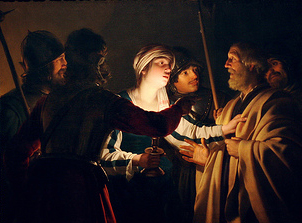
Having arrested Him, they led Him away and brought Him to the house of the high priest; but Peter was following at a distance. After they had kindled a fire in the middle of the courtyard and had sat down together, Peter was sitting among them. And a servant-girl, seeing him as he sat in the firelight and looking intently at him, said, “This man was with Him too.” But he denied it, saying, “Woman, I do not know Him.” A little later, another saw him and said, “You are one of them too!” But Peter said, “Man, I am not!” After about an hour had passed, another man began to insist, saying, “Certainly this man also was with Him, for he is a Galilean too.” But Peter said, “Man, I do not know what you are talking about.” Immediately, while he was still speaking, a rooster crowed. The Lord turned and looked at Peter. And Peter remembered the word of the Lord, how He had told him, “Before a rooster crows today, you will deny Me three times.” And he went out and wept bitterly.

Luke 22:54-62

peters-denialPeter’s failure. But it wasn’t the end, even though the failure was great.

So when they had finished breakfast, Jesus said to Simon Peter, “Simon, son of John, do you love Me more than these?” He said to Him, “Yes, Lord; You know that I love You.” He said to him, “Tend My lambs.”  He said to him again a second time, “Simon, son of John, do you love Me?” He said to Him, “Yes, Lord; You know that I love You.” He said to him, “Shepherd My sheep.” He said to him the third time, “Simon, son of John, do you love Me?” Peter was grieved because He said to him the third time, “Do you love Me?” And he said to Him, “Lord, You know all things; You know that I love You.” Jesus said to him, “Tend My sheep.

John 21:15-17

Rav Yeshua gave Peter (Kefa) another chance to show how he loved his Master. Peter recovered from his failure and recovered well.

But Peter, along with John, fixed his gaze on him and said, “Look at us!” And he began to give them his attention, expecting to receive something from them. But Peter said, “I do not possess silver and gold, but what I do have I give to you: In the name of Jesus Christ the Nazarene—walk!” And seizing him by the right hand, he raised him up; and immediately his feet and his ankles were strengthened. With a leap he stood upright and began to walk; and he entered the temple with them, walking and leaping and praising God. And all the people saw him walking and praising God; and they were taking note of him as being the one who used to sit at the Beautiful Gate of the temple to beg alms, and they were filled with wonder and amazement at what had happened to him.

Acts 3:4-10

This is just one small example of Peter the empowered Apostle and the result of his recovery from failure. He’d never be perfect and sometimes he’d make mistakes, but he never denied his Master again.

But what about us? We could attribute Peter’s boldness to his having received the Holy Spirit in the Acts 2 as opposed to his deliberately choosing to pass God’s tests rather than fail them. He was an Apostle full of the Holy Spirit of God. What about us? What about we poor, dim, ordinary human beings?

As Acts 10 attests, we Gentile Yeshua Talmidei are also supposed to possess the Spirit of the Almighty. Where is our greatness? Why aren’t we like the Apostles? What’s the difference between them and us?

Why do we continue to fail, what does that mean, and what do we learn, if anything at all?

The Torah states:

“And Pharaoh sent word and summoned Moses and Aaron. He said to them, ‘I have sinned this time. The Almighty is righteous. I and my people are wicked! … I will let you leave. You will not be delayed again.’ ”

Shortly thereafter, Pharaoh refused to let them leave.

Why did Pharaoh change his mind once the pressure of the plague was removed? Rabbi Noson Tzvi Finkel of the Mir Yeshiva explained that Pharaoh viewed suffering as a punishment. That is why he said, “The Almighty is a righteous judge and His punishment is fair because I have done evil.”

The reality is that there is a strong element of kindness in the suffering that the Almighty sends to us. In part, it is a divine message that we have something to improve. The goal of suffering is to motivate a person to improve his behavior. Pharaoh viewed suffering only as a punishment. Therefore, as soon as the punishment was over, he changed his mind and refused to let them leave.

Our lesson: View suffering as a means to elevate yourself and you will find meaning in your suffering. Try to accept it with love and appreciation. Even though there is still pain involved, it is much easier to cope. Whenever you find yourself suffering, ask yourself, “How can I use this as a tool for self-improvement?”

-Rabbi Zelig Pliskin
Commentary on Torah Portion Va’eira
from Growth Through Torah

runI think that’s what we learn from failure. If we see our failures as a punishment from God or some sort of inherent quality in ourselves we can never overcome, we will continue to fail. If, however, we choose to consider our failures as tests, they point to the areas in our lives where we need to improve. They show us a target to aim at, a goal to achieve, they illuminate a sort of “finish line” in a race.

Therefore, since we have so great a cloud of witnesses surrounding us, let us also lay aside every encumbrance and the sin which so easily entangles us, and let us run with endurance the race that is set before us, fixing our eyes on Jesus, the author and perfecter of faith, who for the joy set before Him endured the cross, despising the shame, and has sat down at the right hand of the throne of God.

For consider Him who has endured such hostility by sinners against Himself, so that you will not grow weary and lose heart.

Hebrews 12:1-3

We fail, but as long as we persevere and do not give up, we will never be defeated.

I know, easier said than done, but as people of faith, every time we are knocked down, we must either get up again, dust ourselves off, and keep moving forward, or we surrender our faith, give up on God, and go off in our own direction, becoming truly lost.

Passing God’s tests strengthens us, brings us closer to God, and shows us that God has built within us more persistence and empowerment than we realized we had. In fact, without tests, we’d never know just who God has made us to be. Even if we fail and fail often, as long as we keep trying, we never lose our way or step off the path God has placed before us.

Even in abject failure, abandoned by everyone we ever thought loved us, we are never alone.

When you have nothing left but God, you become aware that God is enough.

―A. Maude Royden

May this always be true of each of us.

The Question of Gentiles and Judaism

Dear Rabbi,

I have a question that has bothered me/intrigued me for years. What was Jesus’ true name? What was the name his mother called him? His disciples? The name that he told them that you can do all things “in my name.” I thought ya’ll may have something in your archives that would point to an answer.

Rabbi Rachael Bregman
“Rabbi, What’s Jesus’ Nickname?”
MyJewishLearning.com

I was a little surprised to read such an article at My Jewish Learning, but I guess I shouldn’t be, since the “About Us” page for this site states:

MyJewishLearning.com is the leading transdenominational website of Jewish information and education. Offering articles and resources on all aspects of Judaism and Jewish life, the site is geared toward adults of all ages and backgrounds, from the casual reader looking for interesting insights, to non-Jews searching for a better understanding of Jewish culture, to experienced learners wishing to delve deeper into specific topic areas.

The word “transdenominational” suggests a somewhat more liberal perspective relative to Judaism and perhaps other religious streams. But it wasn’t just that Rabbi Bregman considered the question, but the answer she gave that interested me. Here’s part of it:

This is from a real email I received.

I am a rabbi in a small city on the coast of Georgia; as the only rabbi in a 75-or-so-mile radius, I get many emails and phone calls with all kinds of questions from folks in the Christian community. This one is a favorite for several reasons.

First of all, there is a place where Judaism and Christianity intersect, and that place is Jesus. I love how the writer is looking to me, the local go-to expert on all things Jewish, to help him navigate that intersection. For his sake and for ours, I wish there was an archive of Jewish stuff , where we could look there to not only help our Christian, Muslim and other-faith friends understand their religions better but to also gain deep insight into our own. I mean, a great way to understand the tensions around Jewish religious practice at the time of the Second Temple is to read the Gospels.

By the way, Bregman never gets around to attaching a Hebrew name to Jesus, but she did end her brief blog post with this:

I don’t know any other names for Jesus, or for Allah or Buddha or Brahman, or for God. But what I learned from this man’s email is that many of us are seeking that name, and by sharing the search with one another we enhance the journey for us all.

rabbi bregman
Rachael Bregman – Photo: jacksonville.com

I think what I was impressed with the most was that Bregman seemed completely unthreatened by the question and didn’t mind taking a stab at the answer that wasn’t in some way dismissive of the Christian questioner. Even in my own home, bringing up certain subjects with my Jewish wife (the Apostle Paul being one of them) is likely to be met with a rather icy response.

So I decided to find out what I could about Bregman.

Rachael Bregman knows she doesn’t fit most people’s concepts of a rabbi, at least as seen on TV.
“They’re always old men with earlocks. They’re called peyas,’’ she said of the strands of uncut hair in front of the ears. “That’s spelled p-e-y-a-s … maybe. I know how to spell it in Hebrew.”

Bregman is a 36-year-old divorcee who left Atlanta three weeks ago with her rambunctious 8-month-old dog Safi, a pit bull-ridgeback-Lab mix, at least those are the breeds Bregman thinks she has identified.

Bregman knows big-city life, having grown up in Boston and lived in Atlanta, but she was drawn to Brunswick by the size of Temple Beth Tefilloh, a Union of Reform Judaism congregation chartered 127 years ago.

-Terry Dickson, July 24, 2013
“Woman is Temple Beth Tefilloh’s first rabbi in 50 years”
jacksonville.com

She also has a Facebook page that’s pretty accessible as long as you’re logged in to Facebook.

I know some people, both Jewish and otherwise, who have issues with female Rabbis (or with female authority in general), Reform Judaism, and liberal political and social viewpoints, but at least she seems approachable, even if asking a Rabbi about Jesus’s name might be somewhat awkward.

Of course many of the comments on My Jewish Learning’s Facebook page were a little less than completely cordial:

Daniel C: I’ve been following MJL for quite awhile and this is the first I’ve seen posted on the matter. If they now have Messianic Jewish leanings then they’ve become a Christian organ and I will no longer be following them.

Carol C: Agreed. Jesus has nothing to do with Judaism. We do not study him or ever mention him in our learning. But since the inception of Christianity his followers have used his name to persecute and murder us. Can’t deny that.

D.E: My Jewish Learning is not a JEWISH resource but a trans-denominational collaboration of mostly misinformed christians and URJ adherents. That it exists does not make it authoritative.

Lori F: Has this become a “jews for jesus” site now?

interfaithAnd the beat goes on. Actually, these responses are pretty predictable, although nothing I read in the original article seemed to support the idea of a Jew having any sort of “approach” to Jesus.

A number of Christians and “Messianic” folks also commented in a more direct attempt to answer the question, but that didn’t go over well. One Jewish fellow even called “Messianic Judaism” an “oxymoron,” but I can’t locate the specific entry anymore.

In spite of recent comments from the Vatican and the suggestion of a partnership between Christianity and Orthodox Judaism, I still think we have a long way to go in having a more comfortable conversation take place between Gentile “Talmidei Yeshua” and Jewish people.

I certainly don’t blame any Jew for experiencing some sense of threat at the idea of a Christian “incursion” into Jewish historical, social, and religious space, but from my particular point of view, it is occasionally frustrating. However, even my highly unusual theological and doctrinal viewpoint won’t earn me any points within normative Judaism anymore than it does with my long-suffering wife.

Still, as a Gentile, once you’ve accepted a certain “Judaicly-aware” consciousness regarding the central message of the Bible, particularly the New Covenant, and how the nations of the world even have a place in a wholly Jewish document, it’s difficult to not want to build some sort of “interface.”

But there are limits, sometimes rather severe ones. Having acknowledged to the Jewish people, including those within Messianic Judaism that what’s yours is yours, whether within Jewish community or standing outside of it, we non-Jewish yet “Judaicly-aware” Talmidei Yeshua struggle to find a place where we belong.

I sometimes suspect that’s why many/most/all of the non-Jews associated with the ancient Jewish community of Yeshua followers in the early decades and centuries of the common era finally broke away from their mentors and teachers in what I’ve previously termed a rather ugly divorce, in order to create a brand new religious entity (Christianity) where the Gentile might feel more at home.

That “solution” has worked out, albeit in a very uneasy (gross understatement) manner, for nearly twenty centuries now, but for a few of us on the fringes of both Christianity and Judaism, that’s not good enough anymore.

NoahOf course, normative Judaism’s response to someone like me is to give up Christianity in any form and become a Noahide or “righteous Gentile”. Judaism maintains that the rest of the world doesn’t need to convert in order to be “saved,” so it doesn’t actively seek converts. In fact, it tends to discourage conversion for a variety of reasons.

But according to this JTA news story published a few days ago, a group called the National Center to Encourage Judaism is attempting to break through that “taboo”.

Maybe it’s the centuries of living under Christian and Muslim rule. Maybe it’s the history of forced conversion. Maybe it’s that there’s no religion requirement for the Jewish afterlife.

Whatever the reasons, Jews have traditionally been uncomfortable proselytizing.

But a Maryland foundation is flouting the taboo by funding outreach programs to non-Jews in an effort to bring them into the fold.

I read an article years or even a decade or so ago (so I can’t remember the source) suggesting that Jews attempt to convert Gentiles to Judaism as a matter of Jewish survival, since except among Orthodox Jewish communities, Jewish families are in a decline.

But again, this effort is not without its Jewish critics:

Eli W: If these people weren’t so ignorant of Jewish law they would realize that soliciting converts if prohibited and that the conversion process they’re advocating wouldn’t result in valid conversions anyway.

Of course if these people weren’t so ignorant of Jewish law the attrition rate from their movements wouldn’t be so shockingly high and there would be no need for conversions to replenish dwindling numbers.

So maybe a proper Jewish education for Jews might be a better idea than trying to recruit non-Jews?

Mark J: when was it ruled that soliciting converts is prohibited? Before or after Moshe Rabenyu married his shiksa? The ban on soliciting conversions was made under duress as was the end of polygamy and I am sure many other rulings by ersatz rabbis who ruled out of fear of gentiles…

Eli W: Did you ever hear of work called the Shulchan Aruch? That and predecessor works like the Tur and Maimonides Mishna Torah have defined normative Jewish law for centuries. They preceded the crackpot websites that seem to be your source for Jewish law.

kiruv
Photo: OU.org

Dave M: Eli, you are very right on may of your comments. Except, my friend, many many groups are doing kiruv work eg. Chabad, Aish etc. but still the total result has been sadly very little. I am not sayng to stop. I am just saying let’s just ALSO put the information out there on the internet ie. information about Judaism in terms a non-Jew who knows nothing about Judaism can understand. Let’s spread the light of Torah around the world by talking about Judaism not by hiding it under a bushel basket.

There are voices that potentially could be involved in this debate that I’ve left out, mainly because I didn’t stumble across any convenient articles about them. Certainly Evangelical Christianity would have an opinion about Jews proselytizing Christians. Imagine an individual Jew or Jewish family going door to door in a largely Gentile/Christian neighborhood passing out booklets citing the social and spiritual advantages of becoming a Jews.

I don’t see that happening and I do believe that the Church would probably push back pretty hard if it ever did (also keep in mind that occasionally, converts to Judaism become vulnerable to abuse within Jewish community).

Then, of course, there’s what people in the Messianic Jewish and Hebrew Roots movements would have to say about it. Periodically, non-Jews involved in either movement decide to shoot out the other side and convert to (usually Orthodox) Judaism, mistaking becoming a Jew as the primary means of having a relationship with God.

In many ways, it would be so much easier to accept that Jews are Jews and Christians are Christians and that they are separate communities with nothing in common. If Christians would just mind their/our own business and keep their/our noses out of Jewish community, everyone would be happy.

So being “Judaicly-aware” and a self-described “Talmid Yeshua” is a somewhat risky venture. Many non-Jews have felt the necessity to convert to (non-Messianic) Judaism because of such an awareness, remain Gentile and claim the Torah as belonging to them anyway, or gone the two-house, “I’m a member of a lost tribe” route, essentially saying that they’re already Jewish and thus the Torah is theirs, too.

I have another solution. How about learning to be comfortable in your own skin?

That doesn’t mean you, as a Gentile, have to learn to be comfortable in a church. I tried that for a couple of years and it didn’t work out.

So, you either live near enough to a religious community that is accepting of Jews and non-Jews who are “Talmidei Yeshua,” or you just admit to yourself that you are who you are and that you don’t fit into someone’s pre-conceived identity category.

That has the disadvantage of meaning that you, more often than not, will have no community to which you relate, unless you can find one online. However, it has the advantage of meaning you don’t have to constantly argue with people, since you aren’t claiming anything that belongs to any other person or group.

Up to JerusalemThe double-edged sword is building an identity for yourself that’s consistent with what the Bible says about righteous people of the nations who become disciples of Rav Yeshua. If you’ve been reading this blog for any length of time, you know that’s not such an easy thing to do. On the other hand, at least you have the freedom to create yourself.

If you are a Talmid Yeshua and are in a church (and you’re open with your opinions and beliefs), you are liable to butt heads with clergy and worshippers. The same if you are in a normative synagogue. So you either keep your mouth shut (easier for some people more than others), find a more compatible community, or believe that God accepts you as you are, even if most people don’t.

From Judaism’s point of view, anytime a non-Jew expresses an interest in Judaism the question is, “What do we do with these Gentiles?” Certainly the Apostle Paul (Rav Shaul) faced that question on many occasions. It’s the whole point of the events Luke recorded in Acts 15 relative to the legal proceeding establishing Gentile status in ancient Jewish community, and the resultant “Jerusalem letter.”

As you’ve read above, these aren’t issues contained only within Messianic Judaism and Hebrew Roots. They’re spilling over into many other Jewish venues as well. They probably always have. And normative Judaism doesn’t seem to have any better answer to this question than the rest of us do, and we have the rather gruesome history of how the Church has treated the Jewish people and Judaism to thank for it.

I know that there are all kinds of religious pundits in a wide variety of camps who think they have the definitive answer. I think it’s much more interesting to explore the question and to keep creating a better “me,” whoever that happens to be and whatever that means to God.

The Crazy Flavor in Religion

No, not all religions or all religious people “taste of crazy,” but the ones who do really stand out. Consider:

A well-known, though already controversial, Israeli rabbi recently released a video encouraging his followers that Messianic Jews sharing the Gospel deserve the “death penalty.”

-Israel Today Staff, October 25,2015
“Rabbi Threatens: Messianic Jewish Evangelists Deserve Death”
Israel Today

I found the link to the above-referenced news article at yesterday’s edition of the Rosh Pina Project. It’s a little bit terrifying that this Rabbi makes such public statements and teaches at a yeshiva. Unfortunately, his opinions can add fuel to how many Christians, at least covertly, feel about Jewish people and Judaism.

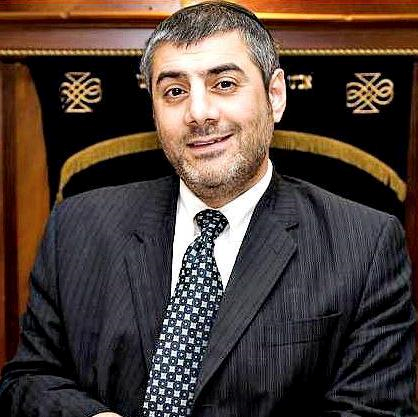
I don’t know how popular Rabbi Yosef Mizrachi’s opinions are, either here in America or in Israel. I hope he’s something of an “edge case” and doesn’t represent mainstream religious Jewish thought. Yes, I know that the idea of Jews “believing in Jesus” pretty much goes against what normative Judaism is able to accept, but the whole “death penalty” thing seems over the top.

mizrachi
Rabbi Yosef Mizrachi

While it would be easy to start saying bad things about the ultra-Orthodox or just Rabbis and Rabbinic authority in general, it’s important to remember that “loose cannons” can exist in just about any religious environment.

Steve Anderson, the anti-Semitic pastor of the Faithful Word Baptist Church in Tempe, Arizona, denies the Holocaust in a video he posted to YouTube last week, claiming that the millions of Jews who were gassed and burned in ovens simply died of hunger and disease due to forced labor and war.

-from “Anti-Semitic Pastor Steve Anderson Promotes Holocaust Denial”
blog.adl.org, June 1, 2015

We like to believe that “the Church” has come a long way since the “bad old days” when they used to torch volumes of Talmud, Torah scrolls, and burn the occasional synagogue to the ground. There’s even been some recent talk about a partnership between Christianity and Orthodox Judaism. But that doesn’t mean that all Christians and all Jews are on board with this.

Anderson goes on to say:

Anderson warns that the “real Holo­caust” for the Jews will occur if they don’t accept Jesus as the Messiah. He says, “The real burnt offer­ing is going to be when all of these Jews that don’t believe in Jesus Christ go to hell for eter­nity. That’s the oven that they ought to be wor­ried about.”

So this Baptist Pastor has his own idea of a “death sentence” for Jews who don’t accept Jesus, he just figures Jesus is going to be the executioner. I find this disturbing because this “burnt offering” he proposes, in his eyes, would include my Jewish wife. I’m glad his church in Tempe, Arizona is far away from here.

But while Anderson is “gunning” for all Jews who don’t believe in Jesus, Rabbi Mizrachi has a more specific target:

Mizrachi was referring specifically to Eitan Bar and Moti Vaknin, the Israeli Messianic Jews behind the One For Israel project that exists primarily to share the Gospel via the Internet.

In one of their more recent videos, Bar and Vaknin exposed several of Mizrachi’s false teachings regarding Yeshua and the promises about Messiah.

Mizrachi warned that “if they dare to speak up again, these two clowns, I will strike them down.”

anderson
Pastor Steve Anderson

That’s a pretty bold statement. I suppose Rabbi Mizrachi could have just been blowing smoke, but I think Bar and Vaknin took the threat seriously.

The irony in all this is that, even though Mizrachi and Anderson would consider each other mortal enemies, they have some things in common. They both believe they are sincerely serving God in calling for (in one way or another) the destruction of those they believe are opposed to God. They are both Holocaust deniers (amazingly enough), and they both aren’t afraid to go on record saying some pretty inflammatory things.

I suppose scary or crazy people can be in any religion, even as Rabbis and Pastors.

By the way, I found Anderson just by Googling “anti-semitic pastor” and his name was returned at the top of the list. I’m sure there are others, maybe many others, most of whom don’t publicly admit to their opinions. For all I know, there may be plenty of Rabbis who covertly agree with Mizrachi but for the sake of peace don’t give voice to their thoughts.

It’s enough to make you want to give up on religion altogether.

That’s why I have to believe that these two individuals are somewhat rare. I have to believe that most Rabbis and most Pastors don’t desire the destruction of Messianic Jews and non-believing Jews respectively.

But even if most or all of them did, that doesn’t change God. Some Christians like to say that “It’s not a religion, it’s a relationship.” I completely disagree. Christianity in its various forms is just as much a tradition-driven religion as the numerous branches of Judaism. Where the relationship comes in, at least from my point of view, is between the individual and God.

I suppose I could say “between the community and God,” but the community isn’t responsible for your “walk” with the Almighty, you are. That people like Pastor Anderson call themselves “Christian” in no way obligates me to agree with any of their nonsensical notions.

waitIf I were stuck on the proverbial desert island with the means to survive in the long haul, and my only companion were God, I wouldn’t give men like Mizrachi and Anderson a second thought. I probably still shouldn’t. After all, I don’t depend on either of them for my ability to connect (or disconnect as the case may be) with Hashem.

And that’s the beauty of it. No matter how many religious “nutjobs” there are in the world, they don’t speak for me and they have exactly zero impact on what God thinks of Christians and Jews relative to Moshiach or anything else.

I can only hope and pray that God will protect anyone Mizrachi and Anderson have influence over.

Calm Down and Sanctify the Name of God

I saw the B.C. comic strip and it reminded me of the angst that is often expressed by both secular and religious people this time of year. “Christmas is pagan!” “Christmas is offensive!” “I celebrate Kwanzaa and Christmas offends me!” “I celebrate Festivus and everything offends me!”
holidays
As my long-suffering wife might say, “Oy!”

This is more a blog post about memes than any extended narrative or profound commentary. A message to the easily offended in the secular and religious blogosphere…chill out.

I’ve been monitoring a couple of conversations on various blogs, basically debates between Jewish and non-Jewish disciples of Yeshua and a Jewish anti-missionary who is on a mission, so to speak.

Then there’s what the Vatican had to say about the Jews and Jesus and how that’s stirred up a virtual firestorm in the digital realm. Dr. Michael Brown finally composed his formal response, which of course is critical of the Pope. Numerous Orthodox Rabbi’s signed what amounts to a response statement issued by the Center for Jewish-Christian Understanding and Cooperation, and others have commented as well.

In the midst of all this, I’m pondering the recent death of six U.S. troops in Afghanistan, killed by a suicide bomber. I’m pleasantly surprised that a McDonald’s restaurant in Nashville has received such a positive response to painting a nativity scene on its windows. No, I don’t eat fast food nor do I celebrate Christmas, but I believe others have the right to do so.

keep calmI also believe those six soldiers had the right to live, but that was taken from them because they are at war. If any of their families celebrate Christmas, then this year, there will be grief and mourning adorning their trees instead of lights and ornaments. Christmas dinner will be ashes rather than turkey or goose.

I hadn’t actually realized this, especially after Hamas took control, but there’s been a Christian community in Gaza for nearly 2,000 years which only now is disappearing, being driven extinct by relentless terrorism.

You may think your faith traditions are threatened by other religious holidays, by secularism, by the government, or whoever you want to blame. Try being a Christian in Gaza. I can only imagine it’s a bit more of a struggle than the “problems” we face as people of faith in the U.S.

Christmas, whatever you think of it, arrives on Friday this year. A little over a week later, most folks will start taking their festive lights down and they’ll deposit their evergreen trees by the curb for orderly disposal.

Christmas, along with every other December holiday, will fade along with 2015 and the buzz about the latest Star Wars movie, and we’ll move on to other topics that offend us.

braceEvery year at about this time, the Aish website runs a story called The Christmas Tree. It’s relatively short and a wonderful illustration of how best to react when we confront a religious holiday that isn’t compatible with us for whatever reason. I’d like to think we are mature enough to respond to each other’s differences and distinctiveness the way the Rabbi in the story reacted to the loving but mistaken act of kindness bestowed upon the Rav’s family by their Irish maid.

When we can not only understand but practice sympathy instead of anger and offense, then we will truly have learned what it is to be a Kiddush Hashem, to sanctify the Name of the Almighty.

Yesterday when I was making a small purchase at a local store, the cashier wished me “Merry Christmas.” I returned the sentiment. How could I be offended at her sincere well wishes toward me? If “Merry Christmas” offends you, then I graciously invite you to deal with it.

Not a Noahide

I periodically “lurk” in a private Facebook group for “Messianic Gentiles.” I was actually surprised to have access to this group, but discovered that a friend of mine, who was already a member, added me as a member as well (I guess ordinary group members can add anyone they want without having to go through a moderator).

Anyway, I peek in every now and then to see what people are talking about. As it turns out, there are a lot of comparisons being made there between these Messianic Gentiles and Noahides. Some of the recent references have been posts originating at the Noahide World Center, specifically a free e-book download of a Siddur for Noachides as well as the same siddur as an app for Android.

I too have wondered in the past if there’s a favorable connection between being a non-Jewish disciple of the Jewish Messiah King and being a Noahide, at least relative to a non-Jews’s status and role in Jewish religious and communal space.

To that end, I began to peruse the AskNoah.org forums and even, at one point, exchanged messages with a Rabbi.

That didn’t end well and I concluded that my journey into considering myself a “Ger Toshav” with an unusual Messianic twist had hit a brick wall.

I took another look at their forums just now but can’t quote anything because each one displays the disclaimer:

All material posted to this forum becomes the exclusive copyright property of Ask Noah International Inc., and may not be published or re-used elsewhere without the express permission of Ask Noah International Inc.

OK. I’ll respect that.

So let’s go to the source:

Then God spoke to Noah and to his sons with him, saying, “Now behold, I Myself do establish My covenant with you, and with your descendants after you; and with every living creature that is with you, the birds, the cattle, and every beast of the earth with you; of all that comes out of the ark, even every beast of the earth. I establish My covenant with you; and all flesh shall never again be cut off by the water of the flood, neither shall there again be a flood to destroy the earth.” God said, “This is the sign of the covenant which I am making between Me and you and every living creature that is with you, for all successive generations; I set My bow in the cloud, and it shall be for a sign of a covenant between Me and the earth. It shall come about, when I bring a cloud over the earth, that the bow will be seen in the cloud, and I will remember My covenant, which is between Me and you and every living creature of all flesh; and never again shall the water become a flood to destroy all flesh. When the bow is in the cloud, then I will look upon it, to remember the everlasting covenant between God and every living creature of all flesh that is on the earth.” And God said to Noah, “This is the sign of the covenant which I have established between Me and all flesh that is on the earth.”

Genesis 9:8-17 (NASB)

NoahAccording to numerous sources including Jewish Virtual Library, the seven general laws for all of humanity derived from this portion of Genesis 9 are:

  1. Do Not Deny God
  2. Do Not Blaspheme God
  3. Do Not Murder
  4. Do Not Engage in Incestuous, Adulterous or Homosexual Relationships.
  5. Do Not Steal
  6. Do Not Eat of a Live Animal
  7. Establish Courts/Legal System to Ensure Law Obedience

Whether or not God holds the entire human race to these standards in the final judgment we’ll just have to wait and see. However, is this applicable to the non-Jewish disciple of Rav Yeshua (Jesus)? Does our devotion to our Rav not distinguish us at all from a non-believing world of secular atheists?

Granted, a non-Jew who becomes a self-declared Noahide is not an atheist, since he or she is professing faith in the God of Israel, but then again, the seven basic standards a Noahide adopts are also the standards that the rest of humanity will be judged by. No difference in expectation, except the Noahide voluntarily acknowledges those expectations while the non-Noahide either couldn’t care less or has some other moral/ethical/religious orientation that may or may not embrace some or all of the Noahide laws.

To be fair, I don’t think the private Facebook group I mentioned above sees non-Jewish Messianic disciples as wholly equivalent to Noahides in all respects. I think it’s a model for attempting to construct a relationship between (Messianic) Gentiles and Jews in (Messianic) Jewish religious and communal space.

It may also be an attempt to equip said-Gentiles with a set of tools and resources that are at once consistent with (Messianic) Judaism and also specifically crafted for the Judaicly-oriented non-Jew (hence the siddur for Noahides).

MessiahHowever, I think we need to be exceptionally clear that we take on board more as disciples of Yeshua than what the Noahide receives. While we non-Jews are not named participants in the New Covenant (see Jeremiah 31:27), through Hashem’s great grace and mercy, we non-Jewish devotees of our Rav are granted access to many of the blessings of the New Covenant, which includes the indwelling of the Spirit, the forgiveness of sins, and the resurrection into the world to come.

These are blessings identical to what the named participants of the New Covenant, that is, the Jewish people…Israel, will receive in Messianic Days. God made the covenant with them, but He also is “not wishing for any to perish but for all to come to repentance” (2 Peter 3:9).

The plain text of Genesis 9 really only promises that God won’t destroy all life by flooding again. It’s not even made exclusively with human beings, but with every living species. There’s no mention of attaining a spiritual knowledge of Hashem through His Spirit dwelling within us. Nor does this covenant speak of forgiveness of sins, and certainly not of everlasting life in the Kingdom of Messiah.

However, these blessings are all well documented in the New Covenant language we find in Jeremiah 31, Ezekiel 36 and elsewhere in the Tanakh (what Christians call the “Old Testament”).

I prefer to think that being a disciple of our Rav gives us a different role and status than the Noahide, although there certainly can be some overlap.

I’ve been approached online, both in the comments section of this blog and privately by email, to “come over to the Noahide side, we have cookies.” Both Jews and Noahides have attempted to induce me to abandon Rav Yeshua, and while I don’t doubt their motives are sincere, I have asked them to respect my wishes and my faith and desist.

I know there are non-Jews who consider themselves Noahides in the two synagogues in my local community. More power to them. We don’t interact, mainly because I don’t have a connection to local (or remote for that matter) Jewish community.

isolationBut even in isolation, once we have declared our devotion as disciples of our Rav, we have an obligation to stay the course, regardless of the personal difficulties involved. Who said a life of faith was easy? Who said you’d be accepted by everyone or anyone?

If I were a “standard” Christian, going to church each week and being in Christian community would serve my needs (but not my family’s needs), however those of us who view God, Messiah, and the Bible through a more “Jewish-focused lens,” are really neither fish nor fowl. We don’t fit in the Church and it would be disingenuous of us to attempt to enter Jewish community in the guise of a Noahide.

The aforementioned Facebook group is an attempt to offer the “Messianic Gentile” some sort of interface into Jewish community on their own grounds and using their own resources to define their roles, both among Jews and among themselves. That’s probably a good thing, though no one group can meet the needs of everyone who may identify as one of them (or something similar).

However, at the end of the day, you need to know who you are in relation to God and what that means (and doesn’t mean) for your life. Assimilating into a church as a Christian might be the easy way out, but it’s not who we are. Assimilating into a synagogue (Messianic or otherwise) as a Noahide might be the easy way out, but it’s not who we are (and forget about converting to Judaism, Orthodox or otherwise…the people of the nations are to have a role in the Kingdom).

WaitingWhether the rest of the Christian and Jewish world likes it or not, we were granted a unique place and role in relation to God and his plan of redemption, first for Israel, and then for the rest of us. Our particular perspective takes into account the primacy of Israel, the Jewish people and nation, in God’s plans, but it also acknowledges the special and specific place Rav Yeshua has as the mediator of the New Covenant and what that means to both Israel and the nations.

Traditional Christianity does (somewhat) the latter but not the former, while Noahides in Jewish community do the former but not the latter.

We do both…even if we have to do it alone.

The Light of Our Traditions

I’ll share a little secret with you. Sometimes, I really don’t like the holidays, but probably not for the reasons you think.

There’s a temptation to read into the reasons a person like me might “disengage” from Christmas, even though my wife and (Jewish) family members consider me a Christian. You might think I’m freaking out over the “pagan origins” of Christmas. Maybe you believe I abhor the secular, consumerism associated with Christmas. Along those lines, you could even consider that I want to put the “Christ” back in “Christmas”.

Actually, the crass materialism connected to one of the biggest American holidays of the year is probably my biggest objection of those listed above. The intense greed and “feeding frenzy” chaotic power surge of “Black Friday” and “Cyber Monday” are more objectionable to me than people putting up a real or artificial pine tree and decorating it with lights and ornaments.

And of course, my family is Jewish, making Christmas a “non-starter” in our home. Really, I don’t miss it. Well, not exactly.

Children's Christmas PageantI’ve written about Christmas before (do a search on “Christmas” on this blog and you’ll see the list…it’s long), and although I’m not fond of this time of year, I really don’t care if secular people or even Christians celebrate it.

Every person has their cherished traditions, as does every family. Christmas is a cherished tradition for many, many American families. Some see it as a way to celebrate the birth of the Savior and take the opportunity to loudly and publicly praise his advent into our world. Some of those same people also seize the moment and choose to give back extra to the community through various forms of charity.

Others, who are not religious, still view Christmas as a time to gather family and friends in whom they find physical and emotional warmth at this time of year, which, here in Idaho, can be pretty cold and dark. Even the areligious bask in the joy of their children on Christmas morning as they open their presents, enjoy roast turkey or goose for the celebratory meal, and marvel in the beauty of neighborhoods decked in the glow of seasonal lights. And sometimes the areligious outshine the Christians in our communities in giving to charity and helping give to those who are doing without.

Personally, I’ve enjoyed seasonal lights recently, they just weren’t Christmas lights.

Every night for the first seven nights of Chanukah, my wife and daughter would gather around our two Chanukiah, say the blessings, and light the Chanukah lights one by one.

I usually only become aware of it when I hear the blessings being said and, when I peak out into our living room toward the kitchen and dining areas, I see my wife and daughter illuminated by the glow.

It still stings a little, but I try to understand that, from their point of view, this is a celebration of Jewish lights, Jewish victories, and Jewish freedom, and the miracles of God toward Israel. As a Christian, my tradition isn’t supposed to include Jewish tradition, so they don’t think to invite me.

But last night was different.

Actually, all of yesterday was different.

lambMy wife and daughter being foodies, can take all day to prepare for a single dinner. My daughter had to work yesterday, so my wife had me fire up the Traeger and pour in the wood pellets so it was prepared, first for beef brisket, and then for lamb. My job as a non-cook, is to clean, usually the ever mounting mess in the kitchen, but also to vacuum the living room and such. I also get sent to the store for various last minute items.

I had an irrational thought about whether or not the stores would be open, only to remember that, for the rest of the world, Chanukah is no big deal. No store closures or limited hours in Idaho for a Jewish celebration.

Finally 5 o’clock arrived and so did the family. Children and grandchildren gathered together. It wasn’t idyllic. These are human beings and we’re a human family, not a Hallmark greeting card. Still, I felt a warmth that didn’t come from the glow of a well used stove top and oven.

I was remembering other family holiday gatherings of the past. I was remembering Christmas, of a sort. Not the tree or the presents or all of that, but the feeling of family coming together, good company, good food, and playing games (my grandson cleaned up on gelt when we played dreidel).

My daughter, who actually knows Hebrew and doesn’t require transliterations of the blessings, helped my six-year old grandson recite the blessing to ignite the Chanukah lights for the final night. His pronunciation was terrible and I doubt he understood the significance, especially since his parents don’t (as far as I know) incorporate any Jewish observance or tradition in their home. But if we can expose him and his now nearly six-month old sister, to activities such as Chanukah, Passover, and Sukkot, year after year, then maybe, just maybe, when they’re older, they’ll be curious enough about their father’s Jewish heritage to look into it on their own.

chanukahOK, that’s pretty unlikely, but what the heck. It’s worth a shot.

That’s what tradition is and what it does. It’s a way to teach your children the values and history of the family, to pass on to the next generation what practices we think are important and why they mean so much to us.

The Jews are experts at this and have been passing on traditions from parent to child for thousands of years, and this, as much as anything, has preserved the Jewish people and the functional practice of Judaism from generation to generation, when over 99% of the rest of the world has actively been trying to destroy them, either through outright extermination or assimilation, which amounts to the same thing.

Although I no longer connect with Christmas, I can hardly distain those who hold it most dear. They’re doing what we’re doing…passing along family and cultural traditions and values. We may or may not approve of the specifics of those values, but we can hardly call the process into question because what they do is what we do.

I know some secular people who have objected to, for example, various practices in Orthodox Judaism involving children, such as what they see as excessively modest dress or little boys wearing their hair in Payot (Hebrew: פֵּאָה‎; plural: פֵּאוֹת), even going so far as to call it child abuse.

But it’s a tradition of their culture and a rather benign one at that. Are we to criticize the traditions of other families and other cultures just because they are not like our own?

So if one family celebrates Chanukah and another Christmas, why the panic attack?

family chanukahHeck, I remember when my children were quite young. We still lived in Southern California. We still celebrated Christmas. My wife had friends, an older Jewish couple (they were friends of her parents actually) who visited us on Christmas Day. One year, they took us to a Judaica store, one of the few businesses open on December 25th, and it was quite interesting.

They didn’t seem to object that we were celebrating Christmas (even though they knew my wife was Jewish, though she wasn’t religious at the time). It was an opportunity for us to get together and spend some time with each other. Friendship and family works like that.

So last night, I enjoyed the lamb and the latkes. We ate homemade ice cream and played dreidel. My grandson helped light the Chanukah lights and I got to stand right there with my family and watch our home become illuminated.

It wasn’t perfect, but it was good. I hope next year it will be even better.