Tag Archives: Judaism

Who is Worthy of God’s Word?

To some, G-d is great because He makes the wind blow.

For others, because He projects space and time out of the void.

The men of thought laugh and say He is far beyond any of this, for His Oneness remains unaltered even by the event of Creation.

We Jews, this is what we have always said:

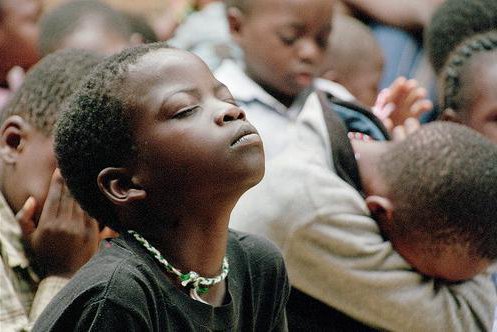
G-d is so great, He stoops to listen to the prayer of a small child;

He paints the petals of each wildflower and awaits us there to catch Him doing so;

He plays with the rules of the world He has made to comfort the oppressed and support those who champion justice.

He transcends the bounds of higher and lower.

He transcends all bounds.

-Rabbi Tzvi Freeman
“Greatness Unlimited”
Based on letters and talks of the Rebbe
Rabbi M. M. Schneerson
Chabad.org

Indeed, the prayer of the community was born the very instant the prophetic community expired and, when it did come into the spiritual world of the Jew of old, it did not supersede the prophetic community but rather perpetuated it. Prayer is the continuation of prophecy, and the fellowship of prayerful men is ipso facto the fellowship of prophets.

-Rabbi Joseph B. Soloveitchik
from Chapter VII of his book
The Lonely Man of Faith

Rabbi Soloveitchik says a very interesting thing. He links the age of the prophets to the post-Second Temple world of Rabbinic Judaism. This may seem strange to most Christians, since we are taught a good many things passed away with the ascendency of Christ and the demise of the Holy Temple in Jerusalem. In fact, Christianity tends to discount the early Rabbinic period forward in the history of Judaism and “replace” it with the grace of Jesus Christ.

Of course Rabbi Soloveitchik as an Orthodox Jew, would not offer any sort of acknowledgement of Christ, but I think we can take his words, and those of Rabbi Freeman’s and try to apply them to the world of prayer among all men. While the prophets of old were unique and (as far as I can tell) no man has the “gift of prophesy” today as did Jewish men such as Isaiah, Jeremiah, or Ezekiel, we all have the capacity to engage God in the realm of prayer. This makes no man a prophet in the manner of those I have just mentioned, but the ability of humanity to connect, through faith, with God was not ended when the Second Temple was destroyed. Nor did it end with the life, death, life, and ascendency of Jesus. As Rabbi Freeman tells us, God is so great that “He stoops to listen to the prayer of a small child.”

And yet, from a Jewish point of view, prayer is not the exclusive property of the individual as Rabbi Soloveitchik notes:

No man, however great and noble, is worthy of God’s word if he fancies that the word is his private property not to be shared by others.

Judaism sees its relationship with God as largely corporate as indeed, is the Sinai covenant between God and the Israelites. Yet each Jew living today is also to consider himself as having stood personally at the foot of Mount Sinai as God gave the Torah through Moses. By comparison, Christianity, though the “body of Christ,” exists conceptually as a large collection of individuals, and each believer interacts as a unique personality, almost exclusively independent of the community of the church.

We see this most often in how we, as Christians, pray. It’s an almost irresistible temptation to pray about me, myself, and I, and Jesus did not prohibit this. And yet, he also told us to pray for others, even our enemies, and to petition God for the welfare of our leaders, our neighbors, and our oppressors. Rabbi Soloveitchik echos this when he writes “Man should avoid praying for himself alone…When disaster strikes, one must not be immersed completely in his own passional destiny, thinking exclusively for himself, being concerned only with himself, and petitioning God merely for himself.” To do so would be to imagine that God is little more than Aladdin’s genie and we alone are the one holding onto the lamp.

PrayingBut what is prayer and how is it somehow connected to perpetuating the continuation of prophecy?

Who is qualified to engage God in the prayer colloquy? Clearly, the person who is ready to cleanse himself of imperfection and evil. Any kind of injustice, corruption, cruelty, or the like desecrates the very essence of the prayer adventure, since it encases man in an ugly little world into which God is unwilling to enter. If man craves to meet God in prayer, then he must purge himself of all that separates him from God.

God hearkens to prayer if it rises from a contrite heart over a muddled and faulty life and from a resolute mind ready to redeem this life, In short, only the committed person is qualified to pray and to meet God. Prayer is always the harbinger of moral reformation.

So who can pray? On the one hand, it seems as if prayer is reserved for the person who is passionately dedicated to removing all sin and evil from his being and who longs to engage God in a realm of purity. On the other hand, what man, no matter what his condition, is completely clean and pure except that God has made him so?

Even an unbeliever can pray and be heard by God, otherwise no one could ever come to faith and be accepted by God. No one would ever be able to come to faith in God through Jesus Christ and be cleansed, healed, and reconciled with his Creator unless God was willing to hear the prayers of people covered in filth. It’s the desire to have the mantle of sin be removed from our shoulders, not the success of that removal whereby God is willing to hear us. In that sense, we do possess a “specialness” that was experienced by the prophets of old in that they too were willing, though still mortal and imperfect men.

And the foundations of the thresholds shook at the voice of him who called, and the house was filled with smoke. And I said: “Woe is me! For I am lost; for I am a man of unclean lips, and I dwell in the midst of a people of unclean lips; for my eyes have seen the King, the Lord of hosts!” –Isaiah 6:4-5 (ESV)

As I mentioned before, the prophets didn’t consider God’s revelations to them to be their exclusive property but rather, they shared God’s word with all, even as they were commanded to do. Should we, in our own human need, keep prayer just for us and not share it with all of God’s creations?

But since we are all imperfect and perhaps never, even for a moment, attain a purity that allows a true connection to God, how does God hear? What of the person so damaged and injured in his spirit, that he only knows to cry out but is unable to shed his “skin of evil?”

Likewise, we encourage the sinner to pray even though he is not ready yet for repentance and moral regeneration, because any mitzvah performance, be it prayer, be it another moral act, has a cleansing effect upon the doer and may influence his life and bring about a complete change in his personality.

It seems as if I’m wandering further and further away from the prophets or rather, Rabbi Soloveitchik did when he penned these words. On the other hand, the Rav seems to be saying what he did before; that prayer isn’t the exclusive property of the pious and the holy and the righteous. Even sinners can and absolutely need to connect to God. Jesus was criticized for eating with sinners, prostitutes, and tax collectors, yet he said this:

“Those who are well have no need of a physician, but those who are sick. I have not come to call the righteous but sinners to repentance.” –Luke 5:31-32 (ESV)

Thus access to the heart of God is available to all, not just to the perfect and those who sit in clean suits and dresses in pews on Sunday morning.

But going back to the very beginning of today’s “meditation,” we as Christians see that God is accessible not just to us and not just to “sinners,” but to all Jews everywhere, whether they are in the Messiah or not (and I am not lumping the Jewish people in with “sinners”).

I know it’s strange. Do I speak blasphemy? Do I ignore John 14:6? I suppose it looks that way. But I’m not willing to throw post-Jesus Jews under a bus because Christianity (and many in the Hebrew Roots movement) think “Rabbinic Judaism” is a dirty word.

I’ve sat in synagogues on Shabbat and during the Shema, have felt God enter as a tangible presence. I’ve sat in churches during prayer and singing and felt as if the room were completely empty. This is not to say that all synagogues possess God’s presence and all churches contain only God’s absence. Far from it. I am only saying that the 21st century church is not the only receptacle for the spirit of God. God is present where all men who desire Him are gathered, and resides in the heart of each individual, no matter who he is, who longs for the lover of his soul.

Who is qualified to engage God in the prayer colloquy? The person who is ready to cleanse himself certainly, but more than that, even the person who is at present unable or unwilling to be clean may still cry out. The very act of calling God’s Name may not “command” God to listen, but it may require the person praying to change his heart in acknowledgement of Him.

Thousands of years before the coming of Christ, while most of our non-Jewish ancestors (I’m speaking to Christians right now) were dancing around the pagan fires and worshiping “gods” of stone and wood, the Jewish people were turning their hearts to the One God. True, they also turned away many times, but God called them back and they returned. Otherwise, there would be no Christians today, for there would have been no Judaism by which the Messiah entered the world (and will enter it again).

Whoever you are reading this, know that God is not your exclusive property. God is a God to all or He is a God to none. While He has a special and unique relationship with the Jewish people which is perpetual and unable to be broken, He sent His only begotten Son for the rest of us, too. The rest of us just need to make sure that we don’t try to “take over” and restrict God to only ourselves.

Passing Judgment

Said Rabbi Israel Baal Shem Tov:

When a person comes before the supernal court to account for sojourn on earth, he is first asked to voice his opinion on another life. “What do you think,” he is asked, “about one who has done so and so?” After he offers his verdict, it is demonstrated to him how these deeds and circumstances parallel those of his own life. Ultimately, it is the person himself who passes judgment on his own failings and achievements.

This explains the peculiar wording of the above passage of the Ethics, “before whom you are destined to give a judgment and accounting.” Is not the verdict handed down after the cross-examination of the defendant? So should not the “judgment” follow the “accounting”? And why are you destined to “give judgment” as opposed to being judged? But no judgment is ever passed on a person from above. Only after he has himself ruled on any given deed does the heavenly court make him account for a matching episode in his own life.

The same idea is also implicit in another passage in our chapter of the Ethics: “Retribution is extracted from a person, with his knowledge and without his knowledge.” As a person knowingly expresses his opinion on a certain matter, he is unwittingly passing judgment on himself.

Commentary on Ethics of Our Fathers
Chapter 3
“Subjective Judge”
Iyar 10, 5772 * May 2, 2012
Chabad.org

“When the Son of Man comes in his glory, and all the angels with him, then he will sit on his glorious throne. Before him will be gathered all the nations, and he will separate people one from another as a shepherd separates the sheep from the goats. And he will place the sheep on his right, but the goats on the left.”

Matthew 25:31-33 (ESV)

I don’t think many Christians believe they’ll be given the opportunity to judge themselves in Messianic days, but then most Christians think they won’t be judged at all. Only sinners (i.e. non-Christians) will be judged. Christians are saved and exempt from all this sort of stuff.

Whew! What a relief.

But wait a minute. What else did Jesus say?

Then the King will say to those on his right, ‘Come, you who are blessed by my Father, inherit the kingdom prepared for you from the foundation of the world. For I was hungry and you gave me food, I was thirsty and you gave me drink, I was a stranger and you welcomed me, I was naked and you clothed me, I was sick and you visited me, I was in prison and you came to me.’ Then the righteous will answer him, saying, ‘Lord, when did we see you hungry and feed you, or thirsty and give you drink? And when did we see you a stranger and welcome you, or naked and clothe you? And when did we see you sick or in prison and visit you?’ And the King will answer them, ‘Truly, I say to you, as you did it to one of the least of these my brothers, you did it to me.’

“Then he will say to those on his left, ‘Depart from me, you cursed, into the eternal fire prepared for the devil and his angels. For I was hungry and you gave me no food, I was thirsty and you gave me no drink, I was a stranger and you did not welcome me, naked and you did not clothe me, sick and in prison and you did not visit me.’ Then they also will answer, saying, ‘Lord, when did we see you hungry or thirsty or a stranger or naked or sick or in prison, and did not minister to you?’ Then he will answer them, saying, ‘Truly, I say to you, as you did not do it to one of the least of these, you did not do it to me.’ And these will go away into eternal punishment, but the righteous into eternal life.” –Matthew 25:34-46 (ESV)

Now that’s odd. It sounds like we aren’t judged based on what we believe in our hearts but on what we actually do with that belief. The Master’s own brother said, “So also faith by itself, if it does not have works, is dead.” If faith without works is dead, then if we are without works, regardless of what we feel or believe inside, are we dead, too?

I’m not really going to try to evaluate the mechanics of how salvation works or who does or doesn’t merit a place in the world to come (i.e. “Heaven” as Christianity understands it). I do want to talk about the times when you judge other people.

C’mon. Admit it. You do judge other people, dear Christian friends. So do I, though I’m not saying that out of any sense of pride. Think of the guy or gal who cut you off in traffic yesterday when you were driving to work. Didn’t you, even in the privacy of your own thoughts and emotions, momentarily “judge” that person and their relative driving skills? Any time you become angry at another person, don’t you judge them in terms of their worthiness or some other attribute they possess or lack? If you’re a football fan, when your favorite quarterback fumbles what should have been your team’s winning play, don’t you judge that knucklehea…uh, player for his failure to lead his team to victory?

Do you want to be judged by the same standards you use to judge others?

and forgive us our debts,
as we also have forgiven our debtors. –Matthew 6:12 (ESV)

I’ve mentioned this particularly telling part of the Lord’s Prayer before. It certainly seems like Jesus is saying that we will be forgiven in direct relation to how we forgive others.

Oh certainly, Jesus couldn’t have meant anything like that! Oh yeah?

“Therefore the kingdom of heaven may be compared to a king who wished to settle accounts with his servants. When he began to settle, one was brought to him who owed him ten thousand talents. And since he could not pay, his master ordered him to be sold, with his wife and children and all that he had, and payment to be made. So the servant fell on his knees, imploring him, ‘Have patience with me, and I will pay you everything.’ And out of pity for him, the master of that servant released him and forgave him the debt. But when that same servant went out, he found one of his fellow servants who owed him a hundred denarii, and seizing him, he began to choke him, saying, ‘Pay what you owe.’ So his fellow servant fell down and pleaded with him, ‘Have patience with me, and I will pay you.’ He refused and went and put him in prison until he should pay the debt. When his fellow servants saw what had taken place, they were greatly distressed, and they went and reported to their master all that had taken place. Then his master summoned him and said to him, ‘You wicked servant! I forgave you all that debt because you pleaded with me. And should not you have had mercy on your fellow servant, as I had mercy on you?’ And in anger his master delivered him to the jailers, until he should pay all his debt. So also my heavenly Father will do to every one of you, if you do not forgive your brother from your heart.” –Matthew 18:23-35 (ESV)

Oh wow! Apparently, he did.

Now look back at the commentary for chapter 3 of Ethics of the Fathers. Imagine that’s how you’ll actually be judged; by how you judge others. Now imagine that if you show mercy to others to such and thus degree, God will show you the same mercy. But if you show such and thus judgement toward others, God will judge you to the same degree. When you judge, you’re looking in a mirror.

Imagine you have control over how your life will be judged. Imagine you can determine how harsh or how merciful God will treat you at the end of your days. Imagine how you forgive or condemn one human being today will affect how God judges you tomorrow. Imagine.

A gentile once came to Shammai, and wanted to convert to Judaism. But he insisted on learning the whole Torah while standing on one foot. Shammai rejected him, so he went to Hillel, who taught him: “What you dislike, do not do to your friend. That is the basis of the Torah. The rest is commentary; go and learn!”

-Rabbi Hillel

Acharei-Kedoshim: Impossible Love and Holiness

Following the deaths of Nadav and Avihu, G‑d warns against unauthorized entry “into the holy.” Only one person, the kohen gadol (“high priest”), may, but once a year, on Yom Kippur, enter the innermost chamber in the Sanctuary to offer the sacred ketoret to G‑d.

Another feature of the Day of Atonement service is the casting of lots over two goats, to determine which should be offered to G‑d and which should be dispatched to carry off the sins of Israel to the wilderness.

The Parshah of Acharei also warns against bringing korbanot (animal or meal offerings) anywhere but in the Holy Temple, forbids the consumption of blood, and details the laws prohibiting incest and other deviant sexual relations.

The Parshah of Kedoshim begins with the statement: “You shall be holy, for I, the L‑rd your G‑d, am holy.” This is followed by dozens of mitzvot (divine commandments) through which the Jew sanctifies him- or herself and relates to the holiness of G‑d.

These include: the prohibition against idolatry, the mitzvah of charity, the principle of equality before the law, Shabbat, sexual morality, honesty in business, honor and awe of one’s parents, and the sacredness of life.

Also in Kedoshim is the dictum which the great sage Rabbi Akiva called a cardinal principle of Torah, and of which Hillel said, “This is the entire Torah, the rest is commentary”—“Love your fellow as yourself.”

Parshah in a Nutshell
Commentary on AchareiKedoshim
Leviticus 16:1–20:27
Chabad.org

Okay, here’s the problem: I’m supposed to love my fellow man. Which means that I should accept my fellow human beings as they are. (That’s what love means, right?) But can I—indeed, should I—accept my fellow human beings as they are?

Should I accept a malnourished child as she is? Should I accept a drug-addicted teenager, a suicidal spouse or a bigoted friend as he is? If a person I love suffers from a lack of something—whether that something is food, money, knowledge, health, moral integrity or peace of mind—and whether that person wants to be helped or not, should I not do everything in my power to fill that lack?

-Rabbi Yanki Tauber
“Love Yourself”
Commentary on AchareiKedoshim
Leviticus 16:1–20:27
Chabad.org

Love your fellow as yourself: I am the Lord.

Leviticus 19:10 (JPS Tanakh)

I know what you’re thinking. You’re thinking I’m beating a dead horse as far as this “love” stuff in the Bible is concerned. I’ve been writing about love, or our woeful lack of it, all this week now and I can’t even stop long enough to write a commentary on this week’s Torah Portion. And yet the Bible speaks to both the Jews and the Christians (and everyone else) about the need; the absolute requirement for love.

It also speaks about the absolute need for holiness and perfection, but I’ll get to that in a minute.

Christians should be very familiar with the commandment to love our neighbor as ourselves.

And the second is like it: You shall love your neighbor as yourself. –Matthew 22:39 (ESV)

That’s the second of the two greatest commandments issued by the Master and as I’m sure you can tell, this week’s Torah Portion was Christ’s “source material.”

But what does it mean to love someone else as you love yourself? Rabbi Tauber’s commentary is very eye opening.

Love is an oxymoron. To truly love someone, I have to do two contradictory things: I have to respect him, and I have to care for him. If I do not accept him as he is, that means that I do not respect him. It means that I don’t really love him—I love only what I wish to make of him. But to love someone also means that I care for him and desire the best for him. And since very, very few people are the best that they can be, caring for someone means not accepting him as he is, but believing in his potential to be better, and doing everything I can to reveal that potential.

I can respect someone. I can care for someone. I can accept a person as she is. I can not accept a person as he is. But I can’t do both at the same time. Love sounds great in principle. In practice, it’s impossible.

But I love myself. I’m not unaware of my deficiencies; indeed, in a certain sense, I am more aware of them than anyone else. I want to improve myself, but I don’t think less of myself because I haven’t yet done so. I respect myself and I care for myself; I accept myself as I am, while incessantly striving to make myself better than I am. I love myself—truly, fully, in every sense of the word.

Two and OneOften, husbands complain that their wives are always trying to change them, and usually in ways the husband doesn’t want to change. Here we see a little bit about why wives are motivated in this direction. If a wife loves her husband “as herself,” then she sees the faults in him and wants to help him be a better person. But what about the part of love that requires respecting the other? Is it respectful to try and change a person when they don’t want to be changed? Is it possible for a wife to love her husband enough to help him realize his greater potential and still respect him for who he is today?

If a person were trying to kill himself and you could stop him, would you stop him or respect his wish to die?

That’s a tough one, since some people feel that they should, under certain circumstances, respect another individual’s “right to die.” But what about an alcoholic drinking herself to death? What about a drug addict shooting chemicals into her arm while ignoring her baby crying in his crib? If you love someone and they are on a path toward self-destruction in any way, shape or form, could you stand idly by and allow it to happen? Won’t that self-destruction hurt or even destroy others around the person you love? Is allowing a person to “crash and burn” loving and respectful?

I don’t think there’s an easy answer to that one, but I do think that’s why both the Torah of Moses and the commandment of Christ specifically teaches us to love our neighbor as ourselves. Love isn’t easy.

But how does holiness figure into all of this?

Indeed, a Jew’s sanctity can be so lofty that it bears some comparison with G-d’s, as the verse states: “You shall… be holy, for I… am holy.”

But how is it possible for corporeal man to reach such heights? The verse addresses itself to this question when it states “for I, the L-rd your G-d, am holy.” Since G-d is holy, each and every Jew can and must be holy as well, for all Jews “are truly part of G-d above.”

The measure of sanctity which each and every Jew is capable of achieving may best be appreciated when one realizes that the sanctity we are told to aspire to in Kedoshim follows that previously achieved in Acharei. In that portion, the passing of Nadav and Avihu is described as the result of their souls’ extreme longing for G-d. So great was their love that their bodies could no longer contain their souls, which literally expired.

The portion of Kedoshim informs every Jew that he is capable of even greater heights. For the pursuit of holiness is never-ending, one level always following another, the reason being that holiness emanates from G-d, who is truly infinite — “for I am holy.”

-from the Chassidic Dimension
“Holy and Holier”
Chabad.org

Now recall the first of the two greatest commandments given by Jesus as quoted from the Torah:

And he said to him, “You shall love the Lord your God with all your heart and with all your soul and with all your mind. This is the great and first commandment.” –Matthew 22:37-38 (ESV)

Marry all of that to what the Torah says about being holy and what the Master said about being perfect.

You therefore must be perfect, as your heavenly Father is perfect. –Matthew 5:48 (ESV)

The idea mixed in all of that is we can somehow be holy and perfect as God is, or at least shoot for that as a life-long goal; a series of levels that we’re continually climbing toward. But if that also has to do with how we love, then we are being commanded to continually love just like God loves.

How does God love? Unconditionally?

I’m tempted to say He loves us as He loves Himself, but trying to understand how God conceptualizes His own Being is beyond my limited human ability to imagine. But I do know that He loves us enough to have our welfare and what’s best for us at heart.

OK, I know what some of you are thinking. You’re thinking, “Good grief! How can you say that!” If God really loved us and had our best interests at heart, how come children are beaten, women are raped, people are maimed and killed in wars, car accidents, and plane crashes, and how come so many people suffer lingering and horrible deaths from cancer and other miserable diseases?

I don’t know.

I only know that, even in the midst of hideous, nightmarish suffering such as was found in the camps of Dachau, Treblinka, and Auschwitz-Birkenau, God was there. He’s there when your doctor diagnoses you with cancer. He’s there when you have been assaulted by thugs and left for dead. He’s there when your spouse tells you he want a divorce. He’s there when you feel you haven’t the strength to go on and suicide seems the only way out.

He’s there when someone else needs His love and you are the only conduit available to provide that love. That’s the connection between love, holiness, and perfection. God’s love isn’t just some supernatural event or experience. If you are a Jew or a Christian and someone around you is suffering, you are God’s opportunity to love that person. When you are suffering, God has made it possible for someone near you to love you and comfort you in a way that is only possible for God.

Loving someone enough to perceive their faults and loving them enough to respect their wishes seems like trying to travel both east and west at the same time. It’s impossible. But that’s what God asks of us: the impossible. It’s impossible for us to be perfect like God is perfect. It’s impossible for us to be holy like God is holy. It’s impossible for us to love people like God loves people; to love our neighbor just as we love ourselves.

And yet, that’s what God requires of you and me with each waking moment of each passing day of our lives.

To love someone just as they are and still want to help them be the best they can be is to be holy and perfect. Love, holiness, and perfection are not destinations, they’re part of the journey we travel as we walk with God. When Jesus said to the righteous, ‘Truly, I say to you, as you did it to one of the least of these my brothers, you did it to me,’ as found in Matthew 25:40, he was talking about this kind of love.

When we feed a hungry person, visit someone in the hospital, or comfort a recent widow in her grief, we aren’t just giving them our love, we are giving them God’s love. It’s what makes it possible for us to be perfect and holy. It’s what makes it possible for a weak and frail human being mired in the abyss of despair to experience God’s infinite love and strength on earth. It’s what makes it possible for us to do the impossible; to rise above the pain and suffering of life and to experience the glorious, majestic holiness of God.

Be holy. Be perfect. Give love.

Good Shabbos.

Emissaries

It is not uncommon for a first-time visitor to fall in love with Yerushalayim. And the place most people feel most attracted to in Yerushalayim is the Kosel itself. When someone told Rav Yosef Shalom Eliyashiv, shlit”a, that many people who live in Yerushalayim do not visit the Kosel at least once in every thirty days, he was astounded. “That is like a man whose ailing mother lives in the same city as he does, who doesn’t visit even once a month! Just as being in such a position is obviously morally untenable, the same should be true about one who is able to visit the Kosel once a month but fails to do so.”

Yet many visitors—perhaps because they come from so far—understand that the Kosel should be visited as often as possible and envy those who live so close, who sadly often visit much less than they would like.

One man on a short trip to Yerushalayim was all broken up about having to go back home to America. “If only I could bring the Kosel with me, it wouldn’t be so bad. Why can’t they instantaneously transport me there every day for shacharis? I would have so much more composure and could much more easily cope with the pressures of the day.”

But of course this was impossible.

When a friend heard about his trouble he made a novel suggestion. “Why not take a small piece of the Kosel back with you? That way you will feel connected and just looking at it will bring you back to the good times when you were here.”

He was very impressed with this idea, but as a religious Jew he was afraid to take such a step without consulting with a posek.

When this question reached Rav Moshe Feinstein, he ruled that this is forbidden. “It is clear that even one who uses the stones of har habayis transgresses me’ilah; how much more so regarding a fragment of a stone from the Kosel itself!”

Daf Yomi Digest
Stories Off the Daf
“A Memento?”
Me’ila 15

They say that “familiarity breeds contempt,” so I suppose it’s not surprising that when you have a fabulous resource or experience just minutes from your front door, you might not take every opportunity to visit it. That’s why people who live in cities with wonderful museums containing priceless treasures don’t visit them on a regular basis (usually it’s only when out-of-town guests come to visit).

This is also true of the relationship between Jews in Jerusalem and the Kotel or what some Christians call “the Wailing Wall.” This is also true of the relationship between some Christians and God.

Think about it.

Therefore remember that at one time you Gentiles in the flesh, called “the uncircumcision” by what is called the circumcision, which is made in the flesh by hands — remember that you were at that time separated from Christ, alienated from the commonwealth of Israel and strangers to the covenants of promise, having no hope and without God in the world. But now in Christ Jesus you who once were far off have been brought near by the blood of Christ. –Ephesians 2:11-13 (ESV)

Examine the experience of someone who has just converted to Christianity, someone who was far off from God who has now been brought near by the blood and grace of Jesus Christ. That person is typically very excited and absolutely thrilled. He takes every opportunity to pray, to go to church, to go to a Bible study, to fellowship with other believers. He is a sponge, taking in every detail, every experience, every subtle nuance of being a Christian.

But sooner or later, the fire cools off. Since God is always near, how often do we visit Him? For some Christians, beyond going through the motions, not very often.

I suppose I should say at this point that this experience is common among people of all faiths, not just the church, but after all, the community of believers in the Jewish Messiah, is my primary audience.

But what about the rest of the story off the Daf? For those who truly appreciate what they can touch, how do you carry away a piece of holiness with you? In terms of the Kotel, you don’t. It’s an unspeakable crime to chip off a little bit of the wall and to carry it around with you as if it were a lucky charm. It’s not the stones themselves that impart holiness, it’s where they are built, why there were built, and what they represent. This doesn’t require that we literally carry a pebble or stone with us. But the man in the story was right in one important way. We do need to constantly carry holiness with us, no matter where we go. We need an anchor to hold us in place and to link us to God, as we are swept this way and that by the storms of everyday life.

We do not keep our traditions for the sake of the past but for their power to create a future, a power that will never end.

For the Torah was not given to this world so that it should return to its former glory, but so that it will transcend itself.

-Rabbi Tzvi Freeman
“Traditions of the Future”
Based on letters and talks of the Rebbe
Rabbi M. M. Schneerson
Chabad.org

One of the ways Judaism has carried holiness and a connection to God with them across history and no matter where they were living (having been driven out of one place and then another, and so on), was and is their traditions. Traditions themselves are not physical objects, though they can employ such objects, but they are concepts and ideas that represent love, faith, and devotion to God. You cannot carry a piece of the Kotel with you, but you can carry the desire to see Jerusalem in your heart. You can pray for the coming of the Messiah and the rebuilding of the Holy Temple. You can enter into prayer with a minyan and summon the presence of God within your midst.

What do we Christians carry around with us to transmit the sense of holiness?

Truly, truly, I say to you, a servant is not greater than his master, nor is a messenger greater than the one who sent him. –John 13:16 (ESV)

Go therefore and make disciples of all nations, baptizing them in the name of the Father and of the Son and of the Holy Spirit, teaching them to observe all that I have commanded you. –Matthew 28:19-20 (ESV)

We are not greater than the one who sent us, but we have been sent. We carry that Spirit and that mission within us and that sacred duty must never leave us. Many Christians think that only “official” missionaries take the Good News of Christ to the unbelievers, but even if we never overtly speak of our faith, if our behavior is consistent with the one who sent us, then we always declare our love of God and humanity by the one we carry around inside of us.

What is holiness? It’s not a thing you can hold and touch and feel. It’s not a candlestick or a kippah or even a Bible, although in their proper contexts, these objects are important or represent something important. Holiness is a spirit and an inspiration. It is God, not only among His people, but within His people. He is represented by our words and our actions, not just during worship and prayer, but as we go about our business in every hour of every day. That is what we carry and what anchors us to Him.

We are holy and sacred as emissaries (and we are all emissaries) and it’s not just what we have, but what we do that matters.

An emissary is one with his sender. This concept is similar to that of an angel acting as a Divine emissary, when he is actually called by G-d’s name. If this is so with an angel it is certainly true of the soul; in fact with the soul the quality of this oneness is of a higher order, as explained elsewhere.

From “Today’s Day”
for Iyar 8 23rd day of the omer
Compiled by the Lubavitcher Rebbe
Translated by Yitschak Meir Kagan

ShekhinahWe, as mere servants, are not greater than the One who sent us, but we are one in goal and purpose. We must not exalt ourselves beyond our station as believers and disciples, but we must take who and what we are very seriously, because not only God, but a desperate and suffering world is watching us at every moment, looking with diminishing hope for evidence that there is a loving God and that He can save.

Yet there is another message we can take away with us from the words of the Lubavitcher Rebbe; a lesson that may explain much, but cause some concern as well. The quote from the Rebbe recalls this event:

“Behold, I send an angel before you to guard you on the way and to bring you to the place that I have prepared. Pay careful attention to him and obey his voice; do not rebel against him, for he will not pardon your transgression, for my name is in him. –Exodus 23:20-21 (ESV)

It may amaze you that God told Moses that a mere angel could forgive sins, but then, if the Name of God is upon the angel, then the angelic being wears God’s Divinity like a shroud, acting for Him in all things, as if it were God Himself.

But we all know an angel is not literally God.

Jesus said, “I and the Father are one,” (John 10:30 [ESV]) and depending on how you interpret his words (and I’ve talked about this before), you may believe he was saying that he, Jesus, is literally and physically the same as God. This is a common belief and most people in the church, though they don’t understand it, do not doubt it for a second.

But just as an angel can carry the Name of God with him such that he can forgive sins and thus literally be called by God’s Name, how much more can the Son of God, the Creator’s personal and most trusted emissary, be also called by God’s Name, forgive sins in God’s Name, not be greater than the One who sent him, and still sit at the right hand of the Father.

I don’t understand it either, but it’s something to ponder as we live out the will of the one who sent us.

Love in Exile

In the previous chapters the Alter Rebbe explained how a Jew can perform Torah and mitzvot “with his heart” — with a love and fear of G-d. When a Jew is motivated by love and by a desire to cleave to the Almighty, his Torah and mitzvot will then surely be lishmah, i.e., with the most purely focused intentions. This, in turn, will add vitality to his endeavors. It is also possible, as explained in the previous chapter, that his love for G-d is such that he is motivated in his Torah and mitzvot by the desire to cause G-d gratification, just as a son strives to do all he possibly can for his father, so that his father may derive pleasure from his actions.

Love and fear of G-d stem from the two attributes of kindness (Chesed) and severity (Gevurah). The attribute of kindness and love is that exemplified by our forefather Abraham, who is described (Yeshayahu 41:8) as “Abraham who loves me.” The attribute of severity and fear is that of our forefather Isaac; the Patriarch Jacob refers to the G-d of his father (Bereishit 31:42) as the “Fear of Isaac.”

Today’s Tanya Lesson (Listen online)
Likutei Amarim, beginning of Chapter 45
By Rabbi Schneur Zalman of Liadi (1745-1812)
founder of Chabad Chassidism
Elucidated by Rabbi Yosef Wineberg
Translated from Yiddish by Rabbi Levy Wineberg and Rabbi Sholom B. Wineberg
Edited by Uri Kaploun

“A new commandment I give to you, that you love one another: just as I have loved you, you also are to love one another. By this all people will know that you are my disciples, if you have love for one another.”John 13:34-35 (ESV)

In yesterday’s meditation I talked about this new commandment of Jesus and how we don’t seem to obey it very well. While most Christians believe that the Law has been done away with and wholly replaced by grace, that doesn’t explain why they (we) should disregard this new “Law” of Christ as if it too were “nailed to the cross.”

As far as people in the Hebrew Roots/Messianic movement (in all its varied forms and expressions) are concerned, since most of them pride themselves on their total obedience to the commandments of Torah, how can they still blatantly disobey this one new commandment of the Messiah by openly expressing displeasure and even hostility toward people in the church?

As we see in the quote from the Tanya which I posted above, as well as other similar quotes I’ve used from this source over the past week or so, most people tend to obey God for one of two reasons: love and fear.

But if we are aware of God, believe in God, understand God is real, and realize that God has the ability to enforce His edicts, why then do we continue to disobey Him, even in the commandment to love one another? The explanation is also in this commentary on the Tanya:

For the soul had to descend from its source, from the most lofty of spiritual heights, to the nethermost level, in order to garb itself in a body whose life-force derives from kelipot, and is as distant as possible from G-d. This is all the more so if the individual caused the “Exile of the Shechinah” through improper thoughts, speech or deeds.

The Rebbe notes that this word alludes to ch. 36, where the Alter Rebbe concludes that this world is “lowest in degree; there is none lower than it in terms of concealment of His light; [a world of] doubled and redoubled darkness, so much so that it is filled with kelipot and sitra achra, which actually oppose G-d.”

Since the Divine spark of the soul is clothed in a body which is animated by the kelipat nogah of this world, it is removed at the farthest possible distance from G-d.

It gets worse.

The body is referred to as a skin, since it serves as a garment to the soul, as the verse states (Iyov 10:11), “You have garbed me with skin and flesh.” This is moreover the skin of a “snake”, since the body in its unrefined state is loathesome, as explained in ch. 31.3 The Divine spark must enter into such a body…

Welcome to exile in the farthest part of the universe away from God, clothed in a body of “snake skin.” Sounds repulsive, doesn’t it? However it explains a good many things, including the current and historical state of humanity, all of the crime, all of the wars, all of the day-to-day cruelty people engage in against each other. Just watch a local or national news broadcast on TV for half an hour and you’ll see what I mean.

It also explains, sadly enough, why we who claim the name of Christ continue to fail in obeying even one, simple commandment to love those who all belong to the same flock and who hear the voice of the same shepherd.

Oh sure, we may love most (or some) of the people in the congregation where we worship, but is that really obeying the commandment to love each other?

“You have heard that it was said, ‘You shall love your neighbor and hate your enemy.’ But I say to you, Love your enemies and pray for those who persecute you, so that you may be sons of your Father who is in heaven. For he makes his sun rise on the evil and on the good, and sends rain on the just and on the unjust. For if you love those who love you, what reward do you have? Do not even the tax collectors do the same? And if you greet only your brothers, what more are you doing than others? Do not even the Gentiles do the same?” –Matthew 5:43-47 (ESV)

Oops. Guess that doesn’t work.

So how do we manage to love at all?

A Jew’s sin causes his soul to be exiled within the domain of the kelipot. This in turn (so to speak) exiles the Shechinah, the source of his soul, too. Pondering this matter will awaken within a Jew a profound feeling of compassion for his soul and for its source. This compassion, as the Alter Rebbe will now point out, should be utilized in one’s study of Torah and performance of mitzvot. This will elevate his soul, enabling it to reunite with its source, the blessed Ein Sof.

Even when Jews are (heaven forfend) in an unclean spiritual state, the Divine Name dwells among them. This arousal of compassion towards the Divine Name is what is alluded to in the previous phrase: “And let him return to G-d,” the stimulus for his repentance being one’s “mercy upon Him,” i.e., the Divine Name, the source of Jewish souls, inasmuch as Jews are part of the Divine Name.

If we try to apply this to the larger body of disciples in the Master, the lesson seems to be telling us that we can learn to love each other by feeling compassion for a “suffering God” who is in exile with us and within us. He is in exile with us in our “snake skin bodies” because we were all created in His image and the Divine spark dwells in each of us. But that includes every human being who has ever lived, including atheists and those of other religious traditions.

But what about we Christians having compassion for the suffering Messiah? He was tortured and killed for our sake because God had compassion on us and refused to let us live out lives without hope. If, upon becoming disciples of the Master, the Spirit of God entered into us, whispered words of love and faith to us, and empowered us to surrender our sin to oblivion and surrender our souls to our Creator, can we not muster up enough of the compassion God has for humanity and express it to each other as “kindred spirits?”

Christian, Hebrew Roots person, Messianic, or whatever you call yourself. You who say you are saved by grace. You who say you flawlessly obey the Torah. You who exalt yourself in whatever manner you choose as attached to God in His Heaven. Do you love, not just the believer who is exactly like you, but those who also have a sincere devotion to the Master and who may look and act nothing like you? If not, what value is your so-called salvation? What light is shining out of the windows to your soul?

Our souls are windows for the world to receive light, pours through which it breathes, channels to its supernal source. There is no function more vital to our universe, nothing more essential to its fulfillment, since for this it was formed.

When we do good, speak words of kindness and teach wisdom, those windows open wide. When we fail, they cloud over and shut tight.

It is such a shame, this loss of light, this lost breath of fresh air. A stain can be washed away, but a moment of life, how can it be returned?

-Rabbi Tzvi Freeman
“Keep the Windows Open”
Based on letters and talks of the Rebbe
Rabbi M. M. Schneerson
Chabad.org


Why Loving Each Other Isn’t Easy

A greater and more intense love than this (i.e., than the love which results from realizing that G-d is one’s true soul and life), a love which is likewise concealed in every soul of Israel as an inheritance from our ancestors, is that which is defined in Ra‘aya Mehemna, (in description of Moses’ divine service:) “Like a son who strives for the sake of his father and mother, whom he loves even more than his own body, soul and spirit, (… sacrificing his life for his father and mother in order to redeem them from captivity.”

This manner of service is not limited to Moses alone: it is within the province of every Jew,)

for “have we not all one Father?”

(Just as Moses possessed this love because G-d is his Father, so, too, every Jew can possess this love, for G-d is equally our Father.)

And although (one may ask), who is the man and where is he, who would dare presume in his heart to approach and attain even a thousandth part of the degree of love felt by Moses, “The Faithful Shepherd.”

Today’s Tanya Lesson (Listen online)
Likutei Amarim, middle of Chapter 44
By Rabbi Schneur Zalman of Liadi (1745-1812)
founder of Chabad Chassidism
Elucidated by Rabbi Yosef Wineberg
Translated from Yiddish by Rabbi Levy Wineberg and Rabbi Sholom B. Wineberg
Edited by Uri Kaploun

I am the good shepherd. The good shepherd lays down his life for the sheep. He who is a hired hand and not a shepherd, who does not own the sheep, sees the wolf coming and leaves the sheep and flees, and the wolf snatches them and scatters them. He flees because he is a hired hand and cares nothing for the sheep. I am the good shepherd. I know my own and my own know me, just as the Father knows me and I know the Father; and I lay down my life for the sheep. And I have other sheep that are not of this fold. I must bring them also, and they will listen to my voice. So there will be one flock, one shepherd. For this reason the Father loves me, because I lay down my life that I may take it up again. No one takes it from me, but I lay it down of my own accord. I have authority to lay it down, and I have authority to take it up again. This charge I have received from my Father.”

John 10:11-18 (ESV)

A few days ago, I wrote on the profound mystery of Christ’s love for the church. Not much later, I also described who we are in Christ as a tangible expression of that love. We are to love all humanity as God loves them (us), and have compassion for them in their troubles, but we are specifically to love each other as brothers and sisters in the Messiah:

A new commandment I give to you, that you love one another: just as I have loved you, you also are to love one another. By this all people will know that you are my disciples, if you have love for one another.” –John 13:34-35 (ESV)

Oddly enough, for some Christians, it’s easier to love strangers than others to also claim the name of Jesus Christ.

In part 3 of my “Who Are We in Christ” series, I set aside all of the theological and behavioral differences between different denominations, groups, and sects among the disciples of the Master, and focused with great intensity on what makes us all alike. It’s in our united vision of our love and obedience to the Master that we are truly his disciples, regardless of our surface differences.

When Jesus gave us the new commandment to love one another as he loves us, he may well have been considering the love the Good Shepherd has for his sheep. Only moments after he gave his new commandment, he also said “I and the Father are one” (John 10:30). We, among the body of believers, are also to be one; one in purpose and goal, if not always practice. That is why I previously described us all this way:

We are people who love those who are like us and those who are unlike us. We treat everyone the way we want to be treated as human beings. If someone has needs like food, water, or companionship, we do our best to provide for those needs, not just because the other person needs them, but for the sake of our love for God and His love for us. When we show this kind of love, we’re telling people this is how God loves all human beings. Our actions are our witness and speak much, much louder than all the sermons ever spoken and all the religious tracts and pamphlets ever shoved into undesiring hands.

If only these thoughts were at the forefront of all our desires and actions in the name of Christ. Sadly, they aren’t, at least not all the time. We very often focus on the differences between the different groups of believers within “mainstream Christianity” and also outside of what Christians might consider the norm, such as the Hebrew Roots movement. We erect fences between our various groups and then take theological pot shots at each other over those fences, which can’t help but accentuate our differences at the expense of our “oneness” in Christ.

There’s got to be a better way…and there is. The better way is suggested in the following words from an unpublished manuscript that is not yet ready to be openly discussed and reviewed:

I am going to propose a radical solution. This solution may not work for everyone—I do not believe that every Messianic Gentile would fit this call. It may not bear fruit in every single instance. But I am convinced that the great task and mission of the Gentile Hebrew Roots movement is not to form a new religion or a new denomination (though again, I believe that solid, grounded Messianic congregations—Jewish and Gentile—are necessary).

The great mission of the Messianic Gentile is to be that voice within the church that speaks gently but firmly against supersessionism and the doctrinal errors associated with it; that speaks toward the church’s connection with the land, the people, and the scriptures of Israel; that inspires people to connect with Jesus in a new and fresh way and to follow his teachings with unprecedented zeal.

This mission requires that many Messianic Gentiles get involved with churches. They must build and maintain a positive relationship with congregational Christianity, and affirm what is good and right in their mother faith. They must build real relationships with Christians and show them personally what it means to follow Jesus the Jewish Messiah.

The single outstanding advantage the (Gentile) Hebrew Roots movement has over traditional Christianity is in its grasp of the Jewishness of Jesus as Israel’s King and Messiah. The single outstanding disadvantage the Hebrew Roots movement labors under is in allowing that information to focus their attention on “minutiae” such as how to tie tzitzit, what foods are considered kosher, and whether or not it is permitted to drive to services on Shabbat. I’m not saying such questions are entirely unimportant, but in those topics being paramount, unity and love between different groups of disciples gets put on the back burner, usually forever.

We can change that, both those in the Hebrew Roots movement and those attached to the mainstream Christian church. We can decide to actually communicate with each other. We can decide to set differences aside and focus on similarities. Are not the Christian in the church and the Hebrew Roots person in the Shabbat congregation both commanded to do good to others, to feed the hungry, to visit the sick, to comfort the mourning? Are we all not commanded by the Master to love one another as he has loved us?

Considering the strife between different denominations within traditional Christianity, let alone the friction between Hebrew Roots and the church, we don’t seem to be doing a very good job at obeying the Messiah’s commandment. Particularly for Hebrew Roots or Messianic people, who take great pride in being “obedient to the commandments,” if you are not obeying the commandment to love, the rest of the Torah is meaningless to you.

If I speak in the tongues of men and of angels, but have not love, I am a noisy gong or a clanging cymbal. And if I have prophetic powers, and understand all mysteries and all knowledge, and if I have all faith, so as to remove mountains, but have not love, I am nothing. If I give away all I have, and if I deliver up my body to be burned, but have not love, I gain nothing.

Love is patient and kind; love does not envy or boast; it is not arrogant or rude. It does not insist on its own way; it is not irritable or resentful; it does not rejoice at wrongdoing, but rejoices with the truth. Love bears all things, believes all things, hopes all things, endures all things.

Love never ends. As for prophecies, they will pass away; as for tongues, they will cease; as for knowledge, it will pass away. For we know in part and we prophesy in part, but when the perfect comes, the partial will pass away. When I was a child, I spoke like a child, I thought like a child, I reasoned like a child. When I became a man, I gave up childish ways. For now we see in a mirror dimly, but then face to face. Now I know in part; then I shall know fully, even as I have been fully known.

So now faith, hope, and love abide, these three; but the greatest of these is love. –1 Corinthians 13:1-13 (ESV)

Can we love our good shepherd but hate the other sheep? Being human, loving one another isn’t always easy. But being sheep of the good shepherd, who loved us with a love that cost him his life, if we aren’t willing to make sacrifices to love each other, then when we say we love him, we are lying.