Fortunate is the person who fears God, and has a great desire for His mitzvos.
–Psalms 112:1
We think of fear as a negative emotion, so we try to eliminate it. We therefore lose sight of the fact that fear can also be constructive. Fear motivates us to drive cautiously even when in a great hurry, and fear makes a diabetic adhere to his diet and take his insulin daily.
Religion has often been criticized for advocating the fear of God. This criticism may be justified if we were conditioned to think of Him as an all-powerful Being holding a huge club, ready to beat a sinner to a pulp for doing something wrong. All ethical works discourage the use of this type of fear as motivation. Rather, fear of God should be understood to mean the fear of the harmful consequences that are inherent in violating His instructions. The Psalmist says that wickedness itself destroys the wicked person (see Psalms 34:22).
“Fortunate is the person who fears God,” in the sense that “he has great desire for His mitzvos” (Psalms 112:1). It is only natural for one to desire the very best, and the realization that observing the mitzvos is indeed in one’s best interest should constitute the “fear” that should deter someone from transgressing the Divine will.
Today I shall…
…try to realize that observance of the mitzvos is in my best interest, and that I should fear transgressing the mitzvos in the same way I fear any injurious act.
-Rabbi Abraham J. Twerski
from “Growing Each Day” Aish.com
I’ve been thinking about this in terms of my own shortcomings, my own fears, and my own relationship with God and with other people.
In the Church, there’s this implicit idea that God punishes sin, and if you step out of line, you will be struck down by God in some manner. Keep stepping out of line, and you’ll be sent on a one-way trip to Hell without an electric fan.
That’s a really good reason to be afraid of God.
But as Rabbi Twerski describes it, the “fear” of God should take the form of a deep respect for the Creator of the Universe and a corresponding desire to obey Him. In fact, to repeat part of the above-quoted passage:
This criticism may be justified if we were conditioned to think of Him as an all-powerful Being holding a huge club, ready to beat a sinner to a pulp for doing something wrong. All ethical works discourage the use of this type of fear as motivation. (emph. mine)
While in traditional, fundamentalist Christianity, the “fire and brimstone” approach is supposed to be our prime motivator for not sinning and walking the straight and narrow, in Judaism, it is ethically unsustainable to use fear of harm and punishment from God to drive us to proper behavior.
Instead, what we “fear” is the natural consequences of our misbehavior.
Afterward Jesus found him in the temple and said to him, “Behold, you have become well; do not sin anymore, so that nothing worse happens to you.”
–John 5:14 (NASB)
It would seem that Rav Yeshua (Jesus) agrees with this perspective. How about the Apostle Paul?
In the name of our Lord Jesus, when you are assembled, and I with you in spirit, with the power of our Lord Jesus, I have decided to deliver such a one to Satan for the destruction of his flesh, so that his spirit may be saved in the day of the Lord Jesus.
–1 Corinthians 5:4-5
Credit: NPR.org
So is Paul advocating for the sinner to literally be dragged to the gates of Hell and handed over to the Adversary to be physically destroyed? Probably not. This is just a guess on my part, but it sort of sounds like Paul is willing to give the sinner enough rope to hang himself with, so to speak.
It comes back to consequences. Drink enough alcohol or do enough drugs, and you’ll destroy your body. View enough “adult material,” and you’ll destroy your marriage. Spend enough money gambling or even just binge buying a bunch of stuff you don’t need and can’t afford, and you’ll destroy your family’s finances.
Or as the Psalmist said, “…wickedness itself destroys the wicked person.”
In most cases, you won’t have to wait for some sort of supernatural intervention. You’ll turn your life into a pile of doggy doo all by yourself…
…or myself.
But if you have the power to destroy your own life, you also have the power to save it.
I’ve always been mystified when I hear Christians saying things like “I turned it all over to the Lord,” or “The Lord released me from my bondage to [fill in the blank].”
How in the world did they perform an action that sounds like a symbolic or even a hypothetical concept?
I think it means that the person finally trusted God so completely that he/she was willing to endure the consequences of making teshuvah (repentance or turning away from sin and back to God), believing that those consequences, no matter how difficult in the short run, would be ultimately beneficial in the long run.
I suppose “I turned it all over to the Lord” is “Christianese” for expressing an act of great trust in God that, no matter what the consequences, teshuvah will always be the better course of action than living with the consequences of sin.
So God isn’t a mean old man with a club waiting to beat us half to death the second we step out of line. He’s a Father and a Teacher, guiding us in a particular direction and letting us know the consequences of each action we take. What He won’t do is override our free will. We have to choose the right path because, right or wrong, we are responsible for the consequences.
The longer we sin, the greater the consequences, or as our Rav put it so long ago, “do not sin anymore, so that nothing worse happens to you.”
Two millennia ago, the block served as one of several Do Not Enter signs in the Second Temple in Jerusalem, delineating a section of the 37-acre complex which was off-limits for the ritually impure — Jews and non-Jews alike. Written in Greek (no Latin versions have survived), they warned: “No foreigner may enter within the balustrade around the sanctuary and the enclosure. Whoever is caught, on himself shall he put blame for the death which will ensue.”
-Ilan Ben Zion
from the article “Ancient Temple Mount ‘warning’ stone is ‘closest thing we have to the Temple’” Times of Israel
I found a link to this article on Facebook and it’s really very interesting. It suggests that Gentiles may have had more access to the Herodian Temple in Jerusalem than was previously believed. I’ll let the article speak for itself, quoting what I think are the most relevant sections, and I encourage you to click the link I provided above and read the entire story yourself.
Contrary to the recent New York Times report, which stated that Herod’s Temple was “surrounded by partition walls that were meant to separate gentiles and Jews,” the warning was meant to protect “not the whole Temple Mount, but the inner sanctuary, the inner courtyard,” Price said. The modern notion “that the entire area is somehow holy is contrary to the original purpose and status of this huge plaza of the Temple Mount.”
Gentiles were not only welcome to ascend the Temple Mount, they were also permitted, if not encouraged, to donate animals for sacrifice. Josephus recounts how Marcus Agrippa, Emperor Augustus’s right hand man, visited Jerusalem shortly after the Temple was built and offered up a hecatomb — 100 bulls — as a sacrifice on the altar. Likewise daily sacrifices paid for by the Roman state were offered up for the welfare of the emperors. Philo records in his Embassy to Gaius that on no fewer than three occasions “we did sacrifice, and we offered up entire hecatombs, the blood of which we poured in a libation upon the altar, and the flesh we did not carry to our homes to make a feast and banquet upon it, as it is the custom of some people to do, but we committed the victims entire to the sacred flame as a burnt offering.”
The article states that Herod may have engineered a more lenient policy about Gentile access to the Temple, with only most holy areas being forbidden, not just to non-Jews but to any Jew not ritually clean.
“It was not ethnic or race as much as [ritual] purity,” Price said. “Jews who were not purified or ritually impure could not pass the soreg either.” Unlike gentiles from across the Roman Empire, Jews were expected to know better than to enter the holy sanctum when impure.
And…
Herod changed that. He wanted to exhibit the grandeur of his compound, the largest temple in the ancient world, but not enrage his Jewish subjects.
“The exclusion of the gentiles, according to the inscription, is a kind of compromise between allowing them into the Temple but still excluding them from the inner temple, which is the properly holy ground,” Orian said.
“Reality necessitates compromise in different aspects of Jewish law,” he said. But “even if they were not viewed as impure, they would still be excluded from the [inner sanctum] of the Temple.”
What Herod changed, at least according to this article’s writer and his source, Matan Orian, a PhD student at Tel Aviv University, was the perception, based on one interpretation of Numbers 18:7, that Gentiles were “intrinsically impure”. This interpretation may be the reason even Rav Yeshua’s (Jesus’) Apostles, including Peter, typically viewed and treated Gentiles as “unclean”.
And he said to them, “You yourselves know how unlawful it is for a man who is a Jew to associate with a foreigner or to visit him; and yet God has shown me that I should not call any man unholy or unclean.”
–Acts 10:28 (NASB)
I’d have to guess that Peter may have been operating from the perception that all Gentiles were “intrinsically impure,” and yet, the Almighty showed Peter in a vision that the Gentiles should not be treated as “unholy or unclean.”
Of course, as the article states, this didn’t mean Gentiles, even among the Jewish Yeshua-followers of “the Way,” would have accepted in every area of the Temple, even if they were considered to be clean. There was a point on the Temple grounds where it would have been an outrage if a Gentile were to enter.
When the seven days were almost over, the Jews from Asia, upon seeing him in the temple, began to stir up all the crowd and laid hands on him, crying out, “Men of Israel, come to our aid! This is the man who preaches to all men everywhere against our people and the Law and this place; and besides he has even brought Greeks into the temple and has defiled this holy place.” For they had previously seen Trophimus the Ephesian in the city with him, and they supposed that Paul had brought him into the temple.
–Acts 21:27-29
Of course, Jewish understanding of the presence and role of Gentiles on any part of the Temple grounds has changed over time.
Despite the Herodian-era status quo, in which gentiles and Jews mingled atop the Temple Mount, most rabbis today maintain the tradition that the entire complex is holy ground and Jewish entry is forbidden. That ban stems from uncertainty over where precisely the Holy of Holies stood.
The information in this article hints at a greater Gentile involvement in the Herodian Temple than most of us might have imagined, and further suggests that this was manipulated by Herod for political/social reasons, rather than theological insight. Nevertheless, it’s exciting to consider the possibility that in the Messianic Age, non-Jews visiting Jerusalem may also be granted, while not completely free access to the Temple, a greater measure of mobility on the Temple grounds, as well as the opportunity to offer sacrifices via the Aaronic and Levitical Priests.
I don’t have any special insights into all this. I just read the article and it sparked a thought or two. Mainly, I just wanted to share.
And we are human, after all. Our humanly unique sense of self is partially framed and reinforced by our awareness of that self in relation to others. It’s only human nature to hope you might be in some way “better” than others — smarter, possessing of higher status, more resources, and greater physical attractiveness — even if that’s not always the case. From there, it’s only a short step toward actively seeking out the more negative aspects of others to feel better by comparison. And once we’ve begun to indulge in those self-gratifying judgments, it’s hard to stop. How else can you explain American’s fascination with reality TV? Next to Honey Boo-Boo and the Duggars, we all look pretty good, right?
Wrong.
Research has also shown that people who seek out and comment upon negative traits and behaviors in others are often highly anxious about those very same traits in themselves.
-Leslie Turnbull
from the article “Don’t Judge Me” The Week
According to this magazine story based, supposedly, on research, it’s natural for human beings to be judgmental, it just makes us unhappy. I suppose that might mean that it’s not natural for a person to give the other guy or gal the benefit of the doubt and to judge them favorably.
However, in Judaism, it is considered desirable to judge others favorably:
Joshua the son of Perachia and Nitai the Arbelite received from them. Joshua the son of Perachia would say: Assume for yourself a master, acquire for yourself a friend, and judge every man to the side of merit (emph. mine).
Now let’s expand our information base to include the Apostolic Scriptures, which also, I believe, qualifies as Jewish wisdom.
Do nothing from selfishness or empty conceit, but with humility of mind regard one another as more important than yourselves; do not merely look out for your own personal interests, but also for the interests of others.
–Philippians 2:3-4 (NASB)
Also…
But if you have bitter jealousy and selfish ambition in your heart, do not be arrogant and so lie against the truth. This wisdom is not that which comes down from above, but is earthly, natural, demonic. For where jealousy and selfish ambition exist, there is disorder and every evil thing. But the wisdom from above is first pure, then peaceable, gentle, reasonable, full of mercy and good fruits, unwavering, without hypocrisy. And the seed whose fruit is righteousness is sown in peace by those who make peace.
–James 3:14-18
James (Jacob or Ya’akov), the brother of Rav Yeshua (Jesus), writes that jealousy, selfish ambition, and arrogance are also natural for human beings, and he calls these qualities “earthly, natural, demonic.”
Not a pretty picture.
He advocates for behaving gently, reasonably, and treating others with mercy.
As students of the teachings of Yeshua as they are interpreted for the Gentiles by the Apostle Paul (Rav Shaul), we really need to be different from the world, behaving “unnaturally”, and as a “light to the nations” (Matthew 5:14-16).
Maybe it’s “natural” for us to be snarky and unkind to others, but as Ms. Turnbull’s article points out, we may complain the most about people who are the most like us.
So the next time you feel the urge to snark about the way your brother-in-law tries to dominate every conversation, spend a few minutes listening to yourself. You might just realize it’s time for you to pipe down, too.
Further…
Need more reason to curtail that instinct to be a hater? Consider this: Unjust criticism may be hurtful to others , but it hurts those who over-indulge in it even more. Just as those who spend a lot of time in the water fixate on the extremely rare shark attack while ignoring the much more prevalent (but still almost non-existent) threat of lightning on land, folks who over-focus on negativity will eventually only see what they spend time thinking about: the bad stuff.
So being judgmental and negative not only hurts us, it hurts other people, and our teachers, as we read them in the Bible, instruct us to not hurt others, but rather, to be kind and, as much as it depends on us, to be at peace with everyone (Romans 12:18).
Not particularly common in the blogosphere, even in the religious blogosphere.
I’m not writing to lean on anyone or masking my own criticism toward anyone else, but with all of the verbal and physical violence in the news and social media lately, it seems like there’s no place to go for a bit of peace.
But ideally, we should be able to seek out other disciples in Messiah for that peace, Jew and Gentile alike.
Not only that, but we should be able to work together, for although we represent a diverse population, and there are sometimes significant differences between Jewish and Gentile disciples, we do have something in common:
From the above closing words of the Acts of the Apostles [Acts 28:30-31] we can see that the Kingdom of God was the message that Paul and the other Apostles preached, a message of God’s Kingship in the person and work of Yeshua Messiah. The Bilateral Messianic Community was the body of believers who had accepted the message of the Kingdom of God and were to be the proclaimers of the coming of the Kingdom of God.
-Sean Emslie
“The Kingdom of God and The Messianic Hope: Bilateral Messianic Community and Kingdom in the Epistles and Revelation” Toward a Messianic Judaism
When did we forget this and how can be get back to what we’re supposed to be doing?
I just read a blog post written by Dr. Larry Hurtado called Early Christian Diversity as well as a brief commentary by Rabbi Abraham J. Twerski on Pirkei Avot 1:14. Interestingly enough, I think they both speak to me personally as well as to the wider body of modern Yeshua (Jesus) believers.
Part of what Rabbi Twerski wrote was:
What Hillel really meant can be better understood with a statement by the Rabbi of Kotzk, who said, “If I am I because I am I, and you are you because you are you, then I am and you are. But if I am I because you are you, and you are you because I am I, then I am not and you are not.”
William Shakespeare said the same thing with the words “To thine own self be true,” and I think that’s what I’m attempting in creating my own definition of a life of holiness (not that it’s so easy to follow such a definition).
Larry Hurtado
In reading Dr. Hurtado’s blog post, I am once again reminded that what I’m going through, what we are all going through, is not new at all:
But it isn’t as though we didn’t know that before Bauer wrote. From our earliest Christian texts (e.g., Paul’s letters and other writings) we have candid references to diversity in the young Jesus-movement, even sharp conflicts and mutual condemnation. Maybe Eusebius could convince himself that everything was sweet agreement initially and that diversity and division only came later, but that’s not what the earliest sources actually show.
This early Christian diversity, however, was not a number of totally separate communities or forms (hence, my dissatisfaction with “early Christianities”). As I contend in a recent article, the diverse expressions of early Christianity seem to have been in vibrant contact with one another, sometimes conflicting, at other times seeming to agree to overlook differences, at other times seeking to persuade others of their own views/emphases…
I’ve tended to think of the differences between “early Christian” communities as being divided largely across the lines of Gentile believers and Jewish disciples of Rav Yeshua, but I believe Dr. Hurtado is making finer distinctions. There may have been numerous branches of “Christianity” in the latter part of the first century and into the second that had other points of separation or distinction. In fact, there was likely no real effort to “form a broadly connected and cooperative trans-local religious movement” until Eusebius or Constantine, according to Dr. Hurtado.
That makes me wonder what the Apostle Paul was up to if not attempting to create unified and uniform communities of Yeshua followers among the Gentiles (certainly Jewish praxis and community was already well established for Jewish disciples of the Rav).
Now let’s look at the Christian and Jewish religious landscapes today. There’s a wide variety of denominations and branches in both faith movements. There are thousands of separate or overlapping Christian denominations, and a number of different branches to Judaism including various subsets.
We could spend a lot of time debating who is right and who is wrong, but that’s not why I’m writing this blog post. Each early “Christianity” (I keep writing that word in quotes because until the Gentiles forcefully separated themselves from their Jewish mentors and teachers and reinterpreted the Bible as a Gentile religious document which excluded Jews, there was no such thing as “Christianity” … it was just another Jewish sect, albeit with an unusually liberal policy about admitting Gentiles) was the result of a separate understanding of the teachings of Rav Yeshua, sometimes interpreted by Paul, sometimes interpreted by other Jewish or Gentile teachers.
In modern times too, we are separate by differences in theology and doctrine, but I believe some of these separations are also the result of efforts to define identity. This is a key issue for Messianic Judaism certainly, but I believe we “Judaicly aware” non-Jewish disciples of the Rav are also worshipers in search of an identity.
Some are comfortable identifying as “Messianic Gentiles” and operating within the confines of a Messianic Jewish community (or primarily Messianic Gentile community in some cases), while others, though appreciating the Jewish perspective on the Bible, feel a need to not necessarily emulate Jewish praxis, even to a minor degree.
In a number of ways, I think that Gentile involvement in Messianic Judaism, while it works for some, can lead other non-Jews to attempt to ingrain Jewish practice and Jewish identity into themselves, either via the “one law” theology promoted in areas of the Hebrew Roots movement, or in extreme cases, by these Gentiles abandoning Yeshua altogether and converting to (usually Orthodox) Judaism.
For some of these non-Jews, there is a justification for conversion, either to the aforementioned Orthodox Judaism (or some other traditional branch) or even within certain streams of Messianic Judaism.
However, there are a plethora of Biblical prophesies stating that both Israel and the people of the nations of the world will acknowledge God and bow to the King in Messianic Days. For that to happen, there have to be some Gentiles around. We can’t all convert to Judaism.
And we can’t all practice Judaism as such. There have to be people around who are devoted to God who nonetheless are recognizably Gentile.
And there are tons of us, but we are mostly in Christian churches of one sort or another. Lots of diversity even within “the Church”. And then there are outliers like me who don’t really fit anyone’s mold, system, or structure, who are seeking an identity that fits our personalities, educations, perceptions, and circumstances.
Rabbi Twerski summed up his small missive with:
Today I shall…
…try to achieve my own identity. Whereas I will listen to the advice of those who are wiser than me, I will nonetheless never hold others responsible for what I do.
Of course, he is describing his personal identity. His identity as a Jew in Jewish community is well-defined largely by the community. Anyone who belongs to any community is, in some fashion, defined by the norms of that community.
And for those of us who don’t belong, we struggle to define ourselves or at least, search the Bible for a way to understand how God defines us.
One mistake we often make is to take offense at how an individual defines themselves relative to the Bible, Rav Yeshua, and God. In writing Isaiah 56 and the Gentile, I started a bit of a “conversation” that was the result of my self-definition spilling over onto how other non-Jews define themselves.
Really, I’m hardly in a position to tell other people who they are and how to live when I’m struggling with those very issues myself. I believe I have a self-identity that’s fairly well-formed but a life of faith remains vital only when it is constantly under scrutiny.
Dr. Hurtado wrote of an early Christianity that was highly diverse as well as interconnected, finding different local and ethnic expressions. Rabbi Twerski spoke of consulting other individuals and the community and ultimately allowing self-identity to emerge from the “self”.
Whoever we are as human beings and people of faith, in community or not, the final responsibility to grasp an understanding of who we are, who God made us to be, and how God defines our identity, remains with each of us.
As I write this, I put our little sukkah kit together several hours ago. It’s only a 4 x 6 foot sukkah and the frame snaps together, but it still took me a little over an hour. The canvas is the hardest part to handle, especially alone. Then there is improvising the roof supports so I can roll the bamboo (yes, it came with the kit and is certified kosher) mat across the top. Hanging the lights is usually pretty easy, though this year I used some masking tape to hold the connecting electrical cord in place.
I’ve got a couple of plastic chairs in the small structure, but since the holiday doesn’t begin until tomorrow evening, I decided not to have lunch inside (not that there’s any particular commandment for me to do so, at least as far as I can find).
All of my family had to go to work today, so I’m alone right now. Given that my major “honey do” task after the lawn was constructing the sukkah, I decided, that done, I’d read the Bible.
For the past several years, I’ve been using the same Bible reading plan to go through the Bible in a year. It’s one of the few things I took from my former church experience. The plan actually will take you through the Bible cover-to-cover in 222 days, but I like to build in some “wiggle room.”
That said, I stopped following my plan months ago, as my “slump” deepened, my faith in religion waned, and I decided to focus on other, less spiritual priorities.
Four days ago (again, as I write this), I downloaded a new plan, printed it, and have started reading again. It felt appropriate given my attempt at “starting over” in returning to God.
Since I’d also abandoned my traditional reading and studying the weekly Torah portion, and still having uninterrupted time on my hands, I decided to brush the dust off my Chumash (metaphorically speaking, of course) and pick up with Torah Portion Ha’azinu, including the haftarah readings and readings from Psalms and the Gospels.
I have to admit, it felt good. It’s a pleasant afternoon, and I decided to do my reading on the back patio with a cup of coffee and glass of water, within just a few feet of the wee sukkah I constructed earlier.
And, in defiance of my desire to not rely so heavily on Jewish sources, I also read the commentary on today’s Torah portion from Rabbi Zelig Pliskin’s book Growth Through Torah.
Even though Rabbi Pliskin is writing for a Jewish audience, I must confess most of what he has authored in this book makes so much sense to me on a personal and moral level. I’ll return to that in a bit. I want to present something to you first.
As part of my Bible reading plan so far, I’ve read the first four chapters of Matthew. Being back in the Gospels reminds me that Gentiles do, from time to time, appear in those pages. I think it’s important to consider how Rav Yeshua interacted with them and I’ll explain why in a minute.
And when Jesus entered Capernaum, a centurion came to Him, imploring Him, and saying, “Lord, my servant is lying paralyzed at home, fearfully tormented.” Jesus said to him, “I will come and heal him.”
But the centurion said, “Lord, I am not worthy for You to come under my roof, but just say the word, and my servant will be healed. For I also am a man under authority, with soldiers under me; and I say to this one, ‘Go!’ and he goes, and to another, ‘Come!’ and he comes, and to my slave, ‘Do this!’ and he does it.” Now when Jesus heard this, He marveled and said to those who were following, “Truly I say to you, I have not found such great faith with anyone in Israel. I say to you that many will come from east and west, and recline at the table with Abraham, Isaac and Jacob in the kingdom of heaven; but the sons of the kingdom will be cast out into the outer darkness; in that place there will be weeping and gnashing of teeth.” And Jesus said to the centurion, “Go; it shall be done for you as you have believed.” And the servant was healed that very moment.
–Matthew 8:5-13 (NASB)
Jesus went away from there, and withdrew into the district of Tyre and Sidon. And a Canaanite woman from that region came out and began to cry out, saying, “Have mercy on me, Lord, Son of David; my daughter is cruelly demon-possessed.” But He did not answer her a word. And His disciples came and implored Him, saying, “Send her away, because she keeps shouting at us.” But He answered and said, “I was sent only to the lost sheep of the house of Israel.” But she came and began to bow down before Him, saying, “Lord, help me!” And He answered and said, “It is not good to take the children’s bread and throw it to the dogs.” But she said, “Yes, Lord; but even the dogs feed on the crumbs which fall from their masters’ table.” Then Jesus said to her, “O woman, your faith is great; it shall be done for you as you wish.” And her daughter was healed at once.
–Matthew 15:21-28
Here we have Rav Yeshua demonstrating two very different attitudes towards non-Jewish people. In the first case, Jesus was actually amazed at the faith in which the Roman Centurion had in Yeshua’s power to heal (and presumably faith in Hashem, the source of all healing). In fact, verses 11 and 12 seem to state that in Messianic Days, many non-Jews, because of their faith, “will come from east and west, and recline at the table with Abraham, Isaac and Jacob in the kingdom of heaven.” This is contrasted with a statement about the “sons of the kingdom,” which in this context, I can only presume are Jewish people, “will be cast out into the outer darkness; in that place there will be weeping and gnashing of teeth,” most likely due to lack of faith.
I’m sure these verses have been misused by Christians for centuries to support the old idea that God replaced the Jews with the Gentiles (the Church) in His love and in the covenant promises. While I do not believe this to be true in any sense, there appears to be some support for the idea the Gentile faith in Messianic days, through the merit of Messiah, will at least metaphorically, allow a number of them to “recline at the table with Abraham, Isaac and Jacob in the kingdom of heaven.”
That’s pretty exciting.
But what about Jesus and the Syro-Phoenician woman?
A lot of Christian commentators (I can’t cite references, but I do remember this explanation being served up to me more than once) believe that Jesus really wasn’t referring to this person, pleading for her daughter’s life, as a “dog,” and that this was just a test of her humility and faith.
But given the traditional social relationship between Jews and Canaanites in those days, that’s pretty much how he, and most other Jewish people, would have thought of her. Even his disciples implored Rav Yeshua to send the woman away, fully knowing that her daughter was “cruelly demon-possessed.” Not the sort of kindness and compassion we’d expect from students of Jesus Christ.
And it’s almost as if Yeshua provided the healing in spite of his feelings for this woman and her people. Yet it was her great faith that seemed to touch the Rav and transcended their usual social roles.
We know Yeshua himself said that he was “sent only to the lost sheep of Israel” (Matthew 15:24), so the Gentiles weren’t particularly any concern of his, and Yeshua’s interactions with them were an extreme exception rather than the rule.
Yet in John’s highly mystical Gospel, as he is declaring himself the Good Shepherd of Israel, he does make one small admission:
I have other sheep, which are not of this fold; I must bring them also, and they will hear My voice; and they will become one flock with one shepherd.
–John 10:16
We presume that these “other sheep” are the Gentiles who will eventually come to faith in the God of Israel through the merit of Messiah, but that must have been a confusing statement to his Jewish audience, since in verses 19 through 21, they accused him of being demon-possessed.
We really don’t find a good example of Gentile Yeshua-devotion in the Gospels, largely because having come to the “lost sheep of Israel,” the Rav wasn’t seeking out, nor did he direct his disciples to seek out, the Gentiles.
In fact, in spite of Matthew 28:18-20, even Yeshua’s closest companions had no expectation that they should actively search out Gentile devotees and make them into disciples. From their point of view, it’s likely that if they had chosen that direction, they would have obeyed their directive by having interested Gentiles convert to Judaism through the proselyte rite.
It wasn’t until about fifteen years later by some estimates, that Peter was more or less forced to witness a righteous Gentile and his household be the objects of God’s acceptance of faith by allowing them the indwelling of the Holy Spirit.
While Peter was still speaking these words, the Holy Spirit fell upon all those who were listening to the message. All the circumcised believers who came with Peter were amazed, because the gift of the Holy Spirit had been poured out on the Gentiles also. For they were hearing them speaking with tongues and exalting God. Then Peter answered, “Surely no one can refuse the water for these to be baptized who have received the Holy Spirit just as we did, can he?” And he ordered them to be baptized in the name of Jesus Christ. Then they asked him to stay on for a few days.
–Acts 10:44-48
If you read the full context of Acts 10, you’ll see that Peter was pretty reluctant to make the journey to the home of the Roman Centurion Cornelius. Peter’s famous rooftop vision, recorded earlier in the chapter, was Hashem’s effort to convince this apostle that associating with Gentiles, even to the point of entering a Gentile’s home and breaking bread with him, was not going to ritually defile Peter and his Jewish companions (no, it’s not about food…it was never about food).
Just as with Jesus and the Syro-Phoenician woman, it was a matter of social roles and the perceived “spirituality” of pagan Romans vs. Jewish worshipers of Hashem that kept them apart.
But while Cornelius was a God-fearer and had made many acts of tzedakah (charity) on behalf of the Jewish people, as well as continually praying to Hashem, he was not a disciple of Rav Yeshua until God directed Peter to visit the Centurion’s home and teach him.
It was only then that Cornelius and all the Gentiles in his household received the Holy Spirit of God in the manner of the Jewish disciples as we witnessed in Acts 2.
After this astonishing revelation, Peter had some explaining to do to the “apostles and the brethren” about why he spent several days in a Roman Centurion’s home.
After relating the supernatural circumstances that resulted in Peter visiting Cornelius, he concluded:
“And as I began to speak, the Holy Spirit fell upon them just as He did upon us at the beginning. And I remembered the word of the Lord, how He used to say, ‘John baptized with water, but you will be baptized with the Holy Spirit.’ Therefore if God gave to them the same gift as He gave to us also after believing in the Lord Jesus Christ, who was I that I could stand in God’s way?” When they heard this, they quieted down and glorified God, saying, “Well then, God has granted to the Gentiles also the repentance that leads to life.”
–Acts 11:15-18
It seems that the leaders of the Messianic sect of Judaism once known as “the Way” never anticipated this possibility. They never expected Gentiles to receive the Spirit and to have the ability to repent “that leads to life.”
I believe this is some sort of indication of the qualitative difference between Cornelius’ status before Hashem as a God-fearer and later, as a disciple of Rav Yeshua. Only by Yeshua’s faithfulness and in the merit of Messiah may a Gentile become a disciple, one who is more or at least different from the God-fearer Cornelius had been before, and repent in a manner that “leads to life,” the resurrection, and have life in the world to come.
As far as the Bible is concerned, we never hear of Cornelius again and have no clue as to how he led his life after these events.
But I do believe that the various incidents I’ve referred to so far provide some interesting perspectives as to the encounters of non-Jews with Messiah or with faith in Messiah.
In all of these examples, faith seems to be the common element. It’s faith that transcends the ethnic and national barriers that “contain” God within Judaism and allow the rest of the world to turn to Him. This faith even impressed the Rav, and it was proof of this faith that convinced Peter, and through him, the rest of the leaders of the Way, that Gentiles could receive the Spirit, could repent, could merit the promise of life in the world to come, just as the Jews had.
But what does that mean for we non-Jewish disciples today who don’t find an identity or role in the traditional Church and who do not find it convenient or even warranted, to, in some fashion, imitate Jewish praxis?
My teachings should come down to you as rain.
–Deuteronomy 32:2
Rabbi Chayim Shmuelevitz used to cite the Vilna Gaon on this verse that rain helps things grow. But what grows? Only what is there from before. If someone has vegetables and fruits that are healthy and delicious, rain will help them develop. But if there are poisonous mushrooms, rain will help them grow too. Similarly, Torah study makes one grow. But it depends on one’s character traits what one will become. A person who has elevated traits will become a greatly elevated person. But if a person has faulty character traits, the more Torah he studies the greater menace he will become.
-Rabbi Zelig Pliskin
Commentary on Torah Portion Ha’azenu, p.464 Growth Through Torah
I suppose this is why we have such a diversity of “characters” in the religious space, particularly among the more learned. But if Bible study only amplifies who you already are, then how do you, Jew or Gentile, truly become a better person? More to the point, what path must the “Judaically aware” Gentile take (on a metaphoric deserted island) beyond Bible study, in changing one’s character and becoming more conformed to the expectations of God?
I’ll continue to explore these questions in future “meditations.”
Then it will come about that any who are left of all the nations that went against Jerusalem will go up from year to year to worship the King, the Lord of hosts, and to celebrate the Feast of Booths. And it will be that whichever of the families of the earth does not go up to Jerusalem to worship the King, the Lord of hosts, there will be no rain on them. If the family of Egypt does not go up or enter, then no rain will fall on them; it will be the plague with which the Lord smites the nations who do not go up to celebrate the Feast of Booths. This will be the punishment of Egypt, and the punishment of all the nations who do not go up to celebrate the Feast of Booths.
–Zechariah 14:16-19 (NASB)
That having been said, Sukkot is coming up, and you should probably give some consideration to how much you are willing to pursue practical enactments of the anticipated messianic era in which Zachariah envisioned the requirement for gentiles to celebrate Sukkot and the aspects of it that imply redemption for the nations. The above essay seems to indicate that you’ve pulled away too far, and perhaps that you’ve begun to acknowledge it.
I used to think that in Messianic Days, we so-called “Messianic Gentiles” would all have an open invitation to celebrate the Festival of Sukkot in Jerusalem, basking in the glory of our King and having a terrific time “partying”. However, a slightly more careful reading of the Zechariah passage illustrates that it’s actually a punishment for the people of the nations who all attacked Israel during that final war when God and Israel win.
If the nations that went up against Israel don’t send representatives to Jerusalem for Sukkot, they get no rain that year. It’s not a party, it’s a command performance, an admission of guilt, an act of contrition.
Nevertheless, PL’s above-quoted statement is a strong suggestion that it is appropriate for all we non-Jews to return to God on Sukkot, and I responded by crafting my own little missive stating that it’s a good time for me to return as well. But as I’m about to relate, the connection between Gentiles and Sukkot may not be what we’ve been told it is.
Now that Yom Kippur is over, I feel the beginning of Sukkot rapidly approaching. I am aware of how much stuff I’ll need to dig through in our storage room to get to our wee Sukkah kit, how I’ll need to drag is out of the garage and around the side of the house, so I can put it together on our back patio this coming weekend.
I build a sukkah each year primarily for one reason: my wife is Jewish and as the husband in the family, it’s my job to build stuff, in this case, a sukkah.
So aside from Gentiles being associated with Sukkot as a matter of consequence for having the audacity to go to war against God’s holy people and His most treasured nation, can I, as a non-Jew (albeit one married to a Jew) get anything out of Sukkot beyond the awareness that I’m a Gentile citizen of one of the nations that will (in all likelihood) attack Israel?
Except possibly for the last article in that list, none of them do me any good at all. They’re all written by and for Jews. Naturally, they have nothing to do with me or with any non-Jew.
That’s why I was surprised to find a Chabad article on the web called How a Gentile Celebrates Sukkot written by Rabbi Moshe Bogomilsky.
The Haftarah for the first day of Sukkot is the prophecy of Zecharya concerning the war of Gog and Magog, which will climax with the final redemption and acknowledgment by the nations that Hashem alone is the King, and that Israel is His people. This realization will be celebrated on Sukkot, for, according to the prophecy, the surviving nations will join the Jewish people every year in celebrating the Sukkot festival. In his prophecy Zecharya declares, “And if the family of Egypt will not ascend and will not come…They will suffer the plague with which Hashem will afflict the nations, because they will not have ascended to celebrate the festival of Sukkot. This will be the punishment of Egypt and the punishment of all the nations that will not ascend to celebrate the festival of Sukkot.”
As interesting as this may sound; it is difficult to imagine that in the future the nations of the world will be obligated to sit in a Sukkah and celebrate together with the Jews, and be punished for it if they don’t!
Both Rabbi Bogomilsky and Sara Debbie Gutfreund, who authored Finding Shelter in a Transient World, mention that, among other things, Sukkot is a time of unity and connection.
Ms. Gutfreund states:
Bring friends and family into your sukkah. Learn from others and share what you have learned. Build and nurture the connections that you have with others in your life. Feel the embrace of the chain of kindness that redeems so much darkness; be another link in that chain.
And Rabbi Bogomilsky tells us:
The common factor in these two mitzvot is achdut — unity.
That the mitzvah of sukkah represents unity is obvious from the fact that many families may eat together in the same sukkah. In fact, the Gemara (Sukkah 27b) says that, “re’uyim kol Yisrael leisheiv besukkah achat” — “All of Israel are fit to sit in one sukkah” — which means that unlike other mitzvot (e.g. four species) where each one must have his own object, one can build a sukkah and let everyone use it to properly fulfill the mitzvah of dwelling in a sukkah. Thus, sukkah is a mitzvah through which Klal Yisrael becomes united.
Putting all this together, we see a hint of a common connection between Jews and non-Jews all sharing the Sukkot celebration together, sharing meals in Sukkot in Jerusalem, and maybe all over the Land of Israel, symbolizing God’s and Israel’s forgiveness of the people of the nations for our sins against them, and a forging of a bond of togetherness under the reign of King Messiah.
But in the paragraphs from which I’ve quoted so far, they are talking exclusively about Sukkot and the Jewish people. What about the Gentiles?
Rabbi Bogomilsky answers that question.
Zecharya’s reference to the sukkah is an allegory. He does not mean that in Messianic times the gentile will be obligated to eat in the sukkah together with the Jew, and be punished if he does not fulfill the mitzvah. He means that the gentile world will be expected to practice the lesson conveyed by the mitzvot of the festival of Sukkot. They must forsake their striving for selfish gain and replace it with a sense of responsibility and sharing of privileges with all of humanity. Hence, Zecharya’s words, “Lo ya’alu lachog et chag haSukkot” — “They have refused to go up to celebrate the festival of Sukkot” — can be explained to mean that they have refused to elevate themselves spiritually and realize the message that Sukkot teaches humanity.
Oh. Well so much for the idea of togetherness, forgiveness, and unity in Messiah. R. Bogomilsky ends his article on an uplifting note, but it rings hollow after his previous block of text:
Let us hope and pray that, speedily in our times, we merit the revelation of Mashiach and the rebuilding of the “sukkah of David” which has fallen — the Beit Hamikdash — (see Amos, 9:10, Sanhedrin 96b), and then all of mankind will enjoy the ultimate of harmony, peace, and tranquility.
According to this source, there will be harmony and peace between Gentile and Jew, enjoyed by all humanity, but as I wrote the better part of two months ago, that peace, for the Jew, will be in their nation, in Israel, and the people of the nations will enjoy that peace in each of their (our) nations.
No vacations for Gentiles to Jerusalem during Sukkot.
I suppose this is more in line with the traditional Christian view of whether or not believers should celebrate Jewish holidays:
4th century theologian John Chrysostom said, “The festivals of the pitiful and miserable Jews are soon to march upon us one after the other and in quick succession: the feast of Trumpets, the feast of Tabernacles, the fasts. There are many in our ranks who say they think as we do. Yet some of these are going to watch the festivals and others will join the Jews in keeping their feasts and observing their fasts. I wish to drive this perverse custom from the Church right now.”
Such a strong expression of this view, especially if associated with Anti-Judaism, is not common in the contemporary church. However, it is an exaggeration to claim that Christians in general tend to adopt and adapt Jewish festivals.
-from “Criticism of Christian Observance of Jewish Holidays” Wikipedia
The Book of Zechariah chapter 14 verse 16 speaks of Gentile nations remaining after the “Lord is king over all the earth”: “And it shall come to pass, that every one that is left of all the nations which came against Jerusalem shall even go up from year to year to worship the King, the LORD of hosts, and to keep the feast of tabernacles.” In both Jewish and Christian eschatology, this scripture refers to a time when the Messiah will come to physically rule in Jerusalem. This reference gives confirmation that future Gentiles are required by the Lord to keep at least an additional feast to Passover and Pentecost: the Feast of Tabernacles.
Christian scholars such as Chuck Missler, Mark Davidson, Steve Cioccolanti and Perry Stone argue that the first four feasts have been fulfilled by Christ’s first coming, therefore the final three feasts will also be fulfilled around the time of Christ’s second coming. The Biblical holidays find their meaning in Messiah, and either commemorates what He has done or what He will do. They are therefore eternal holidays for believers.
You can see why I generally don’t turn to Christian sources regarding Gentile participation in Messianic Times.
I can’t speak to the validity of the information offered by the website for an organization called Light to the Nations, but according to a 1999 article hosted there called Sukkot: A Unique Connection to the Gentiles written by Rabbi Chaim Richman (presumably, the article’s author and the Rabbi Richman associated with the Temple Institute are the same person)…
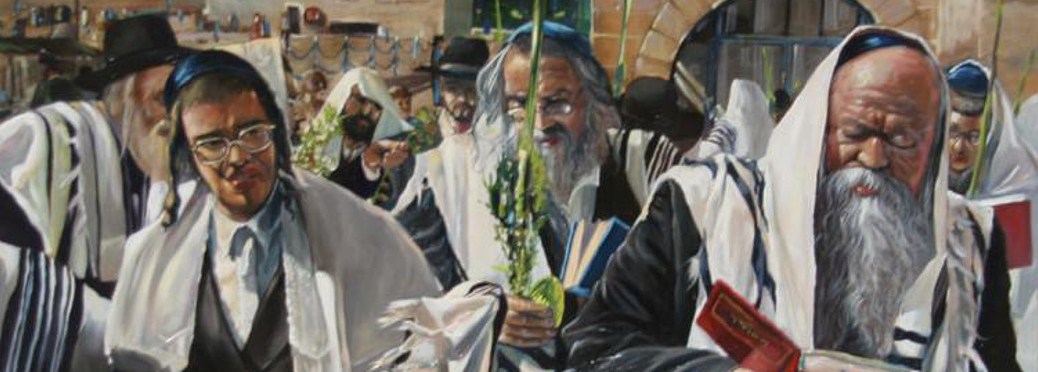
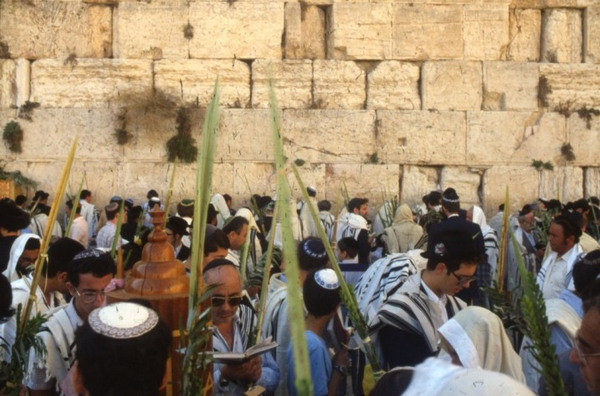
This Friday evening, we begin to observe the Festival of Sukkot. Of all the sacred seasons that G-d commanded Israel to observe, this festival, also known as the Festival of Tabernacles has the strongest implications for the nations of the world. Even today, vast numbers of Gentiles identify with the holiday of Sukkot, and converge on Jerusalem just to be in the holy city at this time of year. It is as if their heartstrings are pulled by some invisible magnet, the source of which they know not. Some force draws them to connect between Sukkot and the location of the Holy Temple.
In the Written Torah and the Oral Tradition
This is well understood, for it is a connection emphasized by both the written Scriptures and the Oral Tradition. The relationship between the nations and the holiday of Sukkot dates back to ancient times, and arcs through our own period as well…to form a bridge into that future, rectified world that we all yearn and long for, Jew and Gentile alike…the day when “the L-rd and His name will be One” (Zechariah 14:9).
The Sacrifice of Seventy Bulls
During Sukkot in the time of the Holy Temple, a unique sacrifice was offered on the altar…with a unique intention.
In chapter 29 of the book of Numbers, the Bible outlines the sacrifices that are to be offered over the span of the holiday. Counting the number of bulls that are offered over the seven-day period, we find that the total number was seventy. And in chapter 10 of the book of Genesis, there are seventy nations mentioned. These are the primordial nations, sometimes referred to as the “seventy languages,” which represent all humanity. The Talmud (BT Sukkah 55:B) teaches that the seventy bulls that were offered in the Holy Temple served as atonement for the seventy nations of the world. Truly, as the rabbis observed, “if the nations of the world had only known how much they needed the Temple, they would have surrounded it with armed fortresses to protect it” (Bamidbar Rabbah 1, 3).
Here we can already sense that inherent within the very nature of the holiday, an inexorable bond-as expressed through its sacrificial requirements-links it to the earth’s peoples. Sukkot was mandated by the Creator Himself to be a holiday for all the world.
Rabbi Chaim Richman
Rabbi Richman does go on to quote from relevant portions of Zechariah, but he stops short of stating that Gentiles would actually be involved in celebrating Sukkot with Jews in Jerusalem. “Jerusalem will dwell in security,” but it doesn’t seem that Jewish sources expect Gentiles to dwell or even sojourn with the Jewish people in Jerusalem on Sukkot, in spite of the fact that in the modern world, many, many Christians visit the Holy City during the holiday of the Festival of Booths.
All of this begs the question about whether or not it is appropriate for Gentiles, especially exclusively Gentile groups, to build a kosher (or even non-kosher) Sukkah and to celebrate Sukkot in a traditionally Jewish manner.
As I previously mentioned, even given all that I’ve said, at it’s most elementary level, I build a sukkah every year because my wife is Jewish and I’m her husband. Technically, at least according the Jewish sources I’ve cited, I do not now nor will I have in the future, any duty to actually eat, sleep, or otherwise spend any of my time inside the Sukkah for the full duration of the festival or any bit of it.
Additionally, traditional Christian sources would probably agree with that assessment as well, though for different reasons (“Jesus fulfilled,” and so on, and so forth).
What would seem to be incumbent upon the Gentile is to practice peace by “forsaking our striving for selfish gain and replacing it with a sense of responsibility and sharing of privileges with all of humanity.”
But we don’t have to build, eat, and dwell in a sukkah to do that.
However, I have been trying to write about how the believing Gentile, even one “stranded” on a metaphorical deserted island and isolated from Gentile and Jewish community, still has a relationship with God, a relationship that indeed is desired by God.
So let’s have a short look at the sorts of “shelter” Sara Debbie Gutfreund says a Jew can expect to find in a Sukkah.
The shelter of faith
The shelter of gratitude
The shelter of connection
The shelter of authenticity
The shelter of prayer
The shelter of awe
Let’s take the obviously easy points in the list first. I don’t think anyone, Christian or Jew, can say that it is inappropriate for the Gentile turning to God to experience faith, gratitude, and awe, and to respond with prayer.
If you deny the Gentile the ability to have faith in God, you deny God to the Gentile. And experiencing God to any degree should inspire awe in the spiritually aware person, Gentile as well as Jew. Naturally, realizing that God extended His plan for the redemption of Israel even to the nations of the world should be our inspiration for feeling grateful, and to humbly thank and praise Hashem in prayer.
What about connection?
For a Jew, unity and connection is all about being united and connected with other Jews. As we’ve seen above, that’s (apparently) never extended to Gentiles. Ms Gutfreund says that connection is created by bringing “family and friends” into your Sukkah, but presumably, she’s talking about Jewish family and friends (although with more liberal branches of Judaism and certainly if there are intermarried Jewish members of the family, then you might see Gentiles in some Sukkot).
So who do we get connected to? Even if we don’t build our own Sukkot, I suppose we can still unite with like-minded Gentiles at this time of year, celebrating, in our own fashion, our anticipation of the ultimate age of peace and tranquility.
For the Gentile on the metaphorical deserted island, alone with his/her Bible and prayers, there is still the ability to forge a connection with God. We can still invite Him into our house, even if that house is only our heart and being.
Authenticity? Ms. Gutfreund describes this as:
Close the gap between who you are and how you appear to the world around you. Don’t be afraid to change in order to be truly aligned with your authentic values. Use the space of the sukkah to open the space within that wants to be free.
That doesn’t sound specific to Sukkot necessarily. I think we have a standing directive to re-order our lives to be more in line with God, to draw closer to Him, to conform our lives to His desires increasingly across the passage of time.
I can’t tell you, as a non-Jewish disciple of Rav Yeshua (Jesus) whether you should or shouldn’t build a sukkah or to celebrate the Festival of Sukkot one way or another, or to just ignore it completely.
I can’t tell you in absolute terms if or how the people of the nations of the world will be involved in Sukkot in the Messianic Era. I can relate what I understand of the Jewish and Christian traditions on the matter, but I can’t tell you what God has in mind. For all I know (and in spite of Jewish and Christian traditional interpretations), God really will require Gentile representatives from each of the nations that went to war against Israel to go to Jerusalem, pay homage to King Messiah, and celebrate Sukkot by eating and drinking with Jewish people in Sukkot.
And for all I know, God wouldn’t mind Gentile families booking their vacations in Jerusalem during the Sukkot festival just because it would be an incredible way to experience our participation in the reign of peace and justice brought forth by Israel’s King and ours.
"When you awake in the morning, learn something to inspire you and mediate upon it, then plunge forward full of light with which to illuminate the darkness." -Rabbi Tzvi Freeman


 I’ve been thinking about this in terms of my own shortcomings, my own fears, and my own relationship with God and with other people.
 I suppose “I turned it all over to the Lord” is “Christianese” for expressing an act of great trust in God that, no matter what the consequences, teshuvah will always be the better course of action than living with the consequences of sin.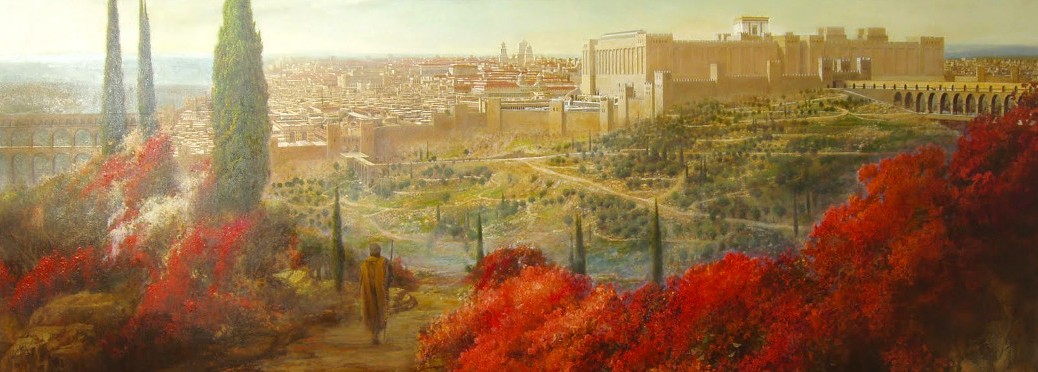










 Morning Meditations