
 Because of our traditions, we’ve kept our balance for many, many years. Here in Anatevka, we have traditions for everything… How to sleep, how to eat… how to work… how to wear clothes. For instance, we always keep our heads covered, and always wear a little prayer shawl that shows our constant devotion to God. You may ask, “How did this tradition get started?” I’ll tell you! I don’t know.
But it’s a tradition… and because of our traditions… Every one of us knows who he is and what God expects him to do.
-Tevye
Fiddler on the Roof (1971)
Rav Shlomo Zalman Auerbach answered, “Although there is no source in the poskim, this is the custom and it has been the custom for quite a while.”
Mishna Berufa Yomi Digest
Stories to Share
“A Sign of Mourning”
Rema Siman 131 Seif 2
Powerful and moving as study can be, Judaism has to do more than challenge us intellectually. If it is to help us search for spirituality and quest for a sense of God’s closeness, Jewish life has to give us opportunities to express hope and fear, joy and grief. It has to connect us not only to tradition and to our history, but to family and community. It has to create moments in which we touch the innermost parts of who we are, when we can appreciate the miracles of everyday living and when we can reconnect to the dreams we have for ourselves, our families, and the world. Judaism, if it is to provide Jews with something that will truly shape their lives, has to make room for the soul no less than for the mind. That is why in addition to the world of words and text, Jewish life also revolves around ritual.
-Rabbi Daniel Gordis
“Ritual – Creating Space for Spirituality” (pp 102-3)
God Was Not In The Fire
As I make my way through Rabbi Gordis’ book, I find myself falling in love with Judaism all over again. I know people can stab and poke at Jews and Judaism and find fault, but I suppose that’s because Jews are human and not perfect and the rest of us are human and not perfect. But there’s something so beautiful and calming about the traditions in Judaism. There’s an order and a “centeredness” about a devout life, from saying the Modei Ani upon awaking to reciting the Bedtime Shema before retiring. People, whether secular or religious, who do not have a tradition from which to draw and add meaning to their lives, must experience existence in such a colorless dimension. It seems rather sad when religious people disdain tradition, because it’s part of what gives context and meaning to a life lived for God. Tradition and ritual also provides direction and form to trust and faith because without them, the Bible does not say in precise detail how we are to even worship.
Shabbat is not the only ritual in Jewish life that fosters relationship and connection. While each life-cycle ritual (the bris, naming ceremonies for girls, weddings, funerals, and the like) has its own symbolism and its own message, and each holiday on the annual calendar cycle (Rosh Ha-shanah, Yom Kippur, Sukkot, Passover, Shavuot, and the others) celebrates a different value or event, what ultimately makes them powerful is the sense of community that they provide. Sharing many of these holidays and life-altering moments together somehow creates the connectedness that many modern Jews desperately want but have not found elsewhere. When they finally find that connection, they find spiritual richness, a sense of intimacy. They find meaning (Gordis, pg 108).
I think this is part of what makes Judaism so attractive for some non-Jews. I know it’s what attracts me but I recognize the inherent limits as well. Ritual does not a community make, at least not right away. It’s not as if I could simply enter a synagogue on Erev Shabbat and gain an immediate sense of belonging. I would have to stay, perhaps for many years, and allow my life to be molded by the rituals and ceremonies of the community. I would have to allow myself to become connected and the community would have to be willing to allow that connection. Rabbi Gordis wrote this book primarily for a Jewish audience longing to return to or to discover the spiritual meaning in their Judaism. I think Goyim like me just get hooked and taken along for the ride without the author’s full intention.
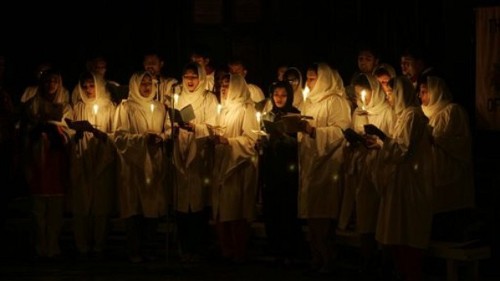 After all, it’s not like other religions don’t have traditions and rituals, even if they don’t recognize their behaviors by those names. Consider the rituals and traditions of the church. We’ve just finished the Christmas season and many believers in the church find deep meaning, both personal and as families, in celebrating the birth of Christ. It’s not important to them that Jesus was probably born no where near December 25th or that the origins of the modern celebration are attached to ancient, pagan festival practices. The meaning is found in tradition, not the history books. This is true for the other important Christian calendar events and rituals such as Easter, but also includes marriages, funerals, the ritual of communion, baptisms, and a myriad of other activities that define Christian living and life. People outside those traditions may not agree with how the church constructs its rituals and some folks are even vehemently opposed to Christian traditions, but traditions are the structure and the building blocks from which we construct our faith and relationship with God and our fellows.
But there are so many traditions, both within the church and the synagogue. I remember, many years ago, sitting in the local Reform shul when a woman asked the Rabbi (I’m paraphrasing, since I can’t remember what she said word-for-word), “Why do we have so many traditions? It’s like every country we were kicked out of, we took their traditions with us. We have so many. I can’t remember them all.”
It was kind of humorous, and kind of frustrating, and kind of sad the way she asked (you had to have been there…her vocal inflections and pacing gave a wealth of meaning). All of those traditions and rituals are what makes Jewish living uniquely “Jewish”. Not that there’s just one way of being “traditionally” Jewish, as Rabbi Gordis relates (pg 104):
As we examine the world of Jewish ritual, we should not anticipate one authoritative reason for each ceremony or custom. Just as each Jew who studies classical Jewish text reaches different conclusions about its meaning and is touched in profoundly personal ways, so, too, each person drawn to Jewish ritual is drawn by something slightly different. The wisdom of Jewish ritual is that it works on many different levels. Often, it functions in different ways for even the same person.
Particularly for a Jew, ritual and tradition connects them to the study of the sacred texts (Talmud torah), to other individual Jews, to the larger Jewish community, and to the wonder of God. It also connects the Jew to himself and his own personal identity as a Jew beyond an ethnic definition. When a Jewish man davens in the morning wearing a kippah, talit gadol and laying tefillin, feeling the siddur in his hands, singing prayers that are hundreds and even thousands of years old, how can he not feel inside of his soul that he is a Jew?
I, of course, am looking in from the outside, but even to me, this is abundantly apparent. It is no wonder that those who chose to try and destroy Jewish life over the long march of time have burned thousands of copies of the Talmud and siddurim, and forbidden Jewish families from lighting Shabbos candles or praying in synagogue. Even with the threat of certain death, under the most horrible conditions possible, Jews have refused to give up the rituals that say to the world that they are Jewish.
Consider the testimonies of Jews who survived the Nazi death machine and who told of Shabbat in the camps. They spoke of inmates who violated the Nazis’ law, risking immediate death by hoarding their bread from Thursday so that they could have two pieces on Friday (symbolic of the two loaves of challah that tradition requires on Friday evening and Shabbat afternoon). Why would people on the verge of starvation, in which Shabbat could scarcely be celebrated, take this risk? What was to be gained?
What they stood to gain was a chance to reassert their denial of Nazi Europe as an ultimate reality. Honoring Shabbat, even in a murder camp, was their way of saying, “I believe in the possibility of a better world. I deny that you are the real ruler. Despite you, I insist that I am human, that I am created in God’s image, and that one day, a world will arise when good will triumph over evil, when God will triumph over you.” (Gordis pg 120)
I know of no other religion or religious people, not even those Christians who have suffered terribly for their faith, who have something so powerful in their lives that they could be inspired to defy death for the sake of honoring the Shabbat and God.
Some non-Jews are so turned toward the delight of Judaism in their hearts that they convert and make being Jewish their life, adopting the rituals and traditions as their own. There are others who do not convert but who attempt to integrate at least some of what they see as precious in the Jewish life into their own as a form of worshiping Jesus or Yeshua as Savior and Messiah. This gets a little dicey when you start making decisions about which traditions you want to keep and which you want to discard, and the Gentile Christian (who may not even believe he still is a Christian) finds himself in the uncomfortable position of actually re-defining Judaism to suit his personal and religious requirements. It’s sort of like a person who has lived in Los Angeles all his life deciding to move to a small rural town in Colorado because he is attracted to the beauty of the Rocky Mountains, clean air, and simple living. Then, upon his arrival, he rebuilds Los Angeles all around him, brick for brick, car for car, freeway for freeway, because it makes him feel more “comfortable” with “country living”.
If you are going to change your lifestyle, you must come to the realization that you are the one who must change, not traditions and rituals. You accept them and change, or you reject them and admit that you do not want to live as a Jew (the latter being the wiser course of action for most non-Jews).
There is one “Jewish” ritual Rabbi Gordis describes that I think belongs to all human beings, though. There’s a blessing a Jew says upon seeing a rainbow in the sky.
Blessed are you O’ Lord our God, King of the Universe, Who remembers the Covenant, is trustworthy in His Covenant, and fulfills His promise.
 However, this covenant was made with Noah who fathered not only Shem (the Semitic people including Jews) but all of humanity after the flood. The covenant spoken here is with mankind and all human beings can bless the heart of God in this gentle tradition.
But the vast majority of Jewish traditions are…well, Jewish. If you are going to adopt any of them for whatever reason (and keep in mind, some Jewish people might take exception if you end up imitating or “characterturing” Jews), please try to understand what you are doing and why you are doing it. Lighting the Shabbat candles honors God as Creator but it doesn’t make you a “spiritual Jew” nor does it say that you are now co-owner of Judaism because you are grafted in (Romans 11). It also doesn’t mean that you can declare yourself “Messianic” as if you are totally divorced from Christianity, and redefine the Torah, Talmud, halachah, and ritual, throwing into the trash whatever doesn’t suit you, and believe that you are in a “Judaism”. You may be doing something, but it probably isn’t very “Jewish”.
One of the “Thou shalt not covets” should be not to covet thy neighbor’s religious practices or his covenants unless you convert to your neighbor’s religion or have another compelling reason to take some on them on board, such as being intermarried. I previously wrote another meditation called Dayenu with that in mind.
Tradition is what gives our faith experience a structure and meaning but what attracts us to a certain tradition may defy logic. Most people love their traditions because it’s what they grew up with and their traditions provide a reminder of childhood comfort, safety, and simplicity. However there are those of us who are drawn to traditions completely alien to our parents for reasons only God knows. Where ever your heart goes and whatever traditions you find yourself practicing, if they belong to someone else, be polite, try to ask permission to join in, and treat the rituals and blessings gently. They may be new to you, but they’ve been precious to others for a hundred lifetimes.








 Morning Meditations