Tag Archives: Judaism

Gratitude

gratitudeAs an exercise, make a list of the ideas you regularly espouse, along with the original sources you heard them from. Think of people who gave you wisdom for living. Did a friend set you straight on something? Your brother saved you from doing some stupid things? An employer gave you good career advice?

Acknowledge that you received the gift. If someone took the blinders off your eyes, it’s fantastic, it’s a different life. Say to yourself: “I am now aware of something very important that I wasn’t paying attention to.” Say it out loud. That alone will make you feel genuine appreciation.

-Rabbi Noah Weinberg
“Way #50: Rewards of Gratitude”
Aish.com

If you ask a Christian who they are grateful to more than anyone, you’ll probably hear “Jesus” nine times out of ten, and rightfully so. Without the grace of the Jewish Messiah and our faith in God through him, we people among the nations would have no connection to the Almighty and His mercy. But Jesus doesn’t exist in isolation. He’s the Jewish Messiah, which Christians sometimes miss. Even when we know that intellectually, we don’t always fully appreciate what it means that he is the Jewish Messiah, the promised Savior of Israel.

I’ve probably said all this before, but in reading Rabbi Weinberg’s commentary, the topic resurfaced for me. Some truths are best restated periodically just to make sure they stay fresh in everyone’s mind.

Make a list of society’s treasures – monotheism, justice for all, universal education, dignity of the individual, preciousness of life. These core values of the civilized world are all from the Torah.

Before the Torah was given, people built their lives on a subjective concept of right and wrong. Then at Mount Sinai, human history underwent a dynamic shift. People understood that there is one God who has moral expectations. You can’t just live as you please; there is a higher authority you are accountable to.

Despite the fact that Jews were never more than a tiny fraction of the world’s population, these ideas became the basis for the civilized world. For example, do you know the source of the idea “Love your neighbor as yourself”?

It’s in the Five Books of Moses – Leviticus 19:18.

The Jewish people are an eminent firm, 3,500 years old. We are no fly-by-night. The world uses our products under different brand names and takes it for granted. Consider what humanity owes to the Jewish people.

If you are living with Jewish wisdom, know it, quote it, and give credit.

There is nothing in the teachings of Jesus that isn’t “Jewish wisdom.” All of Christ’s “source material” was the Torah, the Prophets, and the Writings. It’s what he quoted from. It’s what he taught from. It resonated with his Jewish audience because they had been raised on that “source material” all their lives.

Paul taught from that source material too, when teaching Messiah to Jewish and Gentile God-fearing audiences. Acts 13:13-43 is a perfect example of Paul using Jewish history to explain why Yeshua (Jesus) of Nazareth was the promised Messiah and the Jewish people in the synagogue understood and agreed, at least to the point of inviting Paul and Barnabas back to their synagogue in Pisidian Antioch on the following Shabbat to speak more.

Apostle-PaulEven the Gentiles among the Jews understood because they had been exposed each Shabbat to the teachings from the Torah and so had the basic background that allowed them to follow Paul’s arguments. They understood so well in fact, that they invited practically the whole town (of Gentiles) to hear Paul the following week (which caused problems of their own, but that’s another story).

The only time when “Jewish wisdom” broke down was when Paul and Barnabas addressed a wholly pagan Gentile audience who had absolutely no clue about Judaism and Jewish history. In that case (Acts 14:8-18), Paul had to give the crowd a crash course in Judaism 101 just to keep them from worshiping him and Barnabas as Zeus and Hermes respectively.

I say all this as a reminder (in case anyone’s forgotten) that we would have no understanding of Jesus at all unless we at least minimally understood something about “Jewish wisdom” (and we reject this line of education at our own peril).

More than all, give credit to the Almighty. He gave us a brain to understand and appreciate wisdom. Other teachers enlighten us, but the original teacher is God. He implanted within us the intuition to discover all there is to know about living.

God is showering us with gifts all the time. Food, air, eyes, teeth. Life itself. He programmed us with an antenna for wisdom. Nothing is possible without God.

This should be a no brainer, but it’s more common in Jewish prayer to praise God than in Christian prayer. It’s just my opinion, but I think there’s a definite advantage to praying with a Siddur since the blessings within greatly praise God and thank Him for His mercy and bountifulness. It takes us just a little more concentration to praise God without a prayer book, since the human tendency is to ask for what we want and need (which isn’t bad, except if that’s all we do when we pray).

The problem is that we don’t want to be indebted to Him, so we deny the gifts. We refuse to believe that He loves us.

I know I’ll probably get some static for this, but in a nutshell, I think the Rabbi has given us the reason why many people don’t come to faith. We don’t want to be indebted to Him. We’re afraid of what that means for us, what we’ll have to change about us, how we won’t fit in to the culture, that we’ll realize we aren’t perfect as self-contained human beings.

It’s probably why even a lot of religious people don’t want to thank God, at least not anywhere near as much as He deserves (and face it, He deserves infinite thanks). That may also be why Christians don’t want to thank the Jewish people and Judaism for what we have. We’re afraid of what it will mean. We’re afraid that Jewish people are still part of God’s plan, that He still loves them, maybe more than the Gentile believers. We’re afraid that Israel will be placed at the head of the nations instead of America or Canada or whatever.

raining1We want to be special because we’re Christians, including our particular denomination, branch, or sect. If Jewish Israel was chosen first, they might still be first or at least very special in God’s eyes. What does that do to we Gentiles who are called by His Name (does that make us jealous and covetous of Jews)?

God loving Israel probably does nothing to us except make us just as loved by God as the Jewish people, but also different from them, like two brothers of a King, both loved but both different.

And God loves even those who reject Him and do not want to be called “sons.”

…your Father who is in heaven; for He causes His sun to rise on the evil and the good, and sends rain on the righteous and the unrighteous.

Matthew 5:45 (NASB)

There is no way for the unjust and the unrighteous to acknowledge God and thank Him, but we who are disciples of the Jewish Messiah have no such excuse.

In order to connect with God, you have to learn to appreciate all the good He has done for you. That means giving up the illusion that you alone are responsible for your achievements. It’s all a gift from God. Just as every stroke of Picasso’s brush has his signature on it, everything in this world has God’s signature on it. We have to learn to appreciate it.

Everything in this world has God’s signature on it. Even those people who do not believe, since all human beings have been created in God’s image. We believers know God’s signature is on us. We agreed to that when we acknowledged Messiah and came to faith through the Jewish King.

They asked Rabbi Schneur Zalman:
“Which is greater: love of G‑d,
or love of your fellow man?”

“Love of your fellow man,” he replied.
“For then you are loving the one that your Beloved loves.”

-Rabbi Tzvi Freeman
“Which is Greater”
Based on letters and talks of the Rebbe, Rabbi M. M. Schneerson
Chabad.org

Rabbi Weinberg’s point is that we should publicly give credit to the source of our blessings. Christians usually have no trouble thanking Jesus for our blessings but as I mentioned, Jesus doesn’t exist apart from his connection to Israel. Messiah descended from Heaven for the lost sheep of Israel. When he returns, he will redeem all Israel and restore her at the head of the nations.

We should also give credit to Israel, to the Torah, to the Prophets, to all the instruments God blessed the Jewish people with, because without Abraham, Isaac, and Jacob, without the twelve sons of Israel, without their descendants, without the Davidic Kings, without the Davidic King, Messiah, we would have nothing and be nothing.

Thank you.

Separating the Wheat from the Chaff: Where are the Scholars?

Separating-the-Wheat-from-ChaffLast week a friend pointed me to a web site where a guy, claiming expertise in something else (cryptography, I think, but it doesn’t matter) also claimed to have established beyond dispute and for the first time in modern scholarly studies the “true” meaning of a particular Greek word used by Paul. Moreover, on this basis the guy claims a radically different understanding of what Paul had to say on the topic with which this Greek word is associated. So, what did I think?

Well, I have to say that it’s curious that someone with no training in a given field, lacking in at least some of the linguistic competence required (both relevant classical language and key modern scholarly languages), thinks himself able to find something that has eluded the entire body of scholars in that field who labor year-upon-year to try to discover anything new and interesting. It’s also curious that, as is typical, the guy doesn’t submit his findings to scholarly review for publication in peer-reviewed journals or with a peer-reviewed publisher, but flogs his thinking straight out on his web site, complete with bold claims about its unique validity. We mere scholars in the field, by contrast, do submit our work for critique by others competent in the subject. We present at symposia and conferences where other scholars can engage our views. We strive to get published in peer-reviewed journals and with respected publishers. Even after publication, we hope for critical engagement by other scholars.

-Larry Hurtado
“Expertise and How to Detect It”
Larry Hurtado’s Blog

I was reading the various articles and blogs I use for morning studies and came across this piece by Hurtado. It brought to the forefront something that Messianic Judaism and particularly the large number of Hebrew Roots bloggers seem to struggle with. There are a great many pundits in the religious blogosphere and, as Dr. Hurtado points out, not all of them are scholars in a strictly defined sense. And yet, like the individual Hurtado describes, that doesn’t stop most people from presenting an opinion as fact without any significant scholarly or educational basis.

Before continuing, I want to say that I don’t describe myself as an expert or scholar in religious studies. The purpose of my blog is not to lay down doctrine and theology as if I’m a teacher or instructor of any kind. My blog is simply an expression of my thoughts and feelings on any given morning. I ask more questions than I provide answers and even when I seem to present conclusions, they are my opinions and often, I publish them on the web to inspire conversation so that I can learn more from my readers. I do not fit Dr. Hurtado’s definition of a scholar nor would I ever claim to.

But what about scholarship in the Messianic Jewish and Hebrew Roots spaces (I separate the two movements because to me, they don’t represent the same emphasis, at least in terms of population)?

I believe there is a growing scholarly expression existing within Messianic Judaism. Educational organizations such as The New School for Jewish Studies and The Messianic Jewish Theological Institute kinbaroffer the promise of an organized educational basis for producing scholars in this specific area of religious studies. I’ve not taken any courses from either school so I can’t personally attest to their quality, but there is at least an effort being made to build a valid, intelligent, and organized teaching framework from which to produce teachers and researchers within the Messianic Jewish space.

I’m less familiar with any organized group of teaching institutes within the wider collection of Hebrew Roots groups. The only two that immediately come to mind are TorahResource.com, which was founded by Tim Hegg and TNNOnline.net which seems to be edited by someone named J.K. McKee (I should say that I’ve met Hegg on several occasions and, while he and I may not always agree, I more than acknowledge his educational and scholarly background, however I’ve never met McKee and don’t know what he brings to the table, so to speak).

Dr. Hurtado continues:

Now, of course, I believe in freedom of speech and thought, and I wouldn’t press for a gag on the sort of dubious stuff that I criticize here. But in scholarly life the peer-testing of claims/results is absolutely crucial, and it’s really considered rather unscholarly (and so of little credibility) to present as valid/established claims that haven’t gone through such testing. People (specifically those not clearly qualified in a field) have always been able to make bold claims about a subject of course, asserting their idiosyncratic “take” over against whatever view(s) is/are dominant in the subject. But before the World Wide Web I guess it was much more difficult to get such unqualified opinion circulated. Now, however, ”the Web” and the “Blogosphere” make it so easy.

But, frankly, when I’m shown something that hasn’t been through the rigorous scholarly review process (often, it appears, peer-review deliberately avoided), and comes from someone with no prior reputation for valid contributions in the subject, I’m more than a bit skeptical. If the work is really soundly based, then why not present it for competent critique before making such claims?

Obviously, Hurtado sets some very specific standards for information he’s willing to take seriously, which makes about 99% of the blogosphere unacceptable as sources of theological scholarship. But the question we must ask ourselves is whether or not either the Messianic Jewish or Hebrew Roots movements have any process in place for a “rigorous scholarly review process” and have access to writers with “prior reputation for valid contributions in the subject(s)” being addressed in their respective areas (I’m not being snarky here, I’m asking a serious question).

I do know based on my ten plus years of history within Hebrew Roots that it tends to be a magnet for just about anyone with an opinion. Some of the individuals presenting information are well-meaning and are trying to work through both intellectual and personal issues in regard to how they see Christianity and Judaism. Others, unfortunately, have theological axes to grind and produce vast amounts of dreck designed to provide religious “thrills and chills” but which have absolutely no basis in fact or scholarly research.

For example, I’ve heard people claim that the lost ark of the covenant was hidden underneath the crucifixion site of Jesus and that his blood “anointed” it. I’ve heard people say that the “lost years of Jesus” were spent with the young Yeshua traveling through India at the side of his “uncle” Nicodemus. I’ve heard some folks claim to have possession of the lost original Hebrew manuscript of the Gospel of Matthew. I even read one individual say on a blog that the reason the Temple in Jerusalem was destroyed was that the Jewish priests failed to share the pronunciation of the Tetragrammaton with the nations of the world, thus preventing the Torah from going forth from Zion (see Isaiah 2:3 and Micah 4:2).

All of that stuff is baloney, but it’s important to remember that Hebrew Roots is an extremely wide container and its contents are enormously varied.

yeshiva1I more or less regularly read a few blogs in the Hebrew Roots space, not because I agree with their opinions but so I can be aware of them. I absolutely avoid the kind of “crazy” material posted on the web that makes claim to the sort of “hidden truths” I listed above.

Mainstream Christian and Jewish educational and research foundations have a long, world-wide history and are well established, but the Messianic Jewish and Hebrew Roots movements are in their infancy. I place Messianic Judaism as an entity in a rather narrow field in order to exclude the more “loosely defined” collections of non-Jewish folks out there who have shall we say, rather unusual and unsubstantiated statements to make. Unfortunately, that puts them in the same container as others in Hebrew Roots who are sincerely attempting to study and research the Bible in a manner that will provide illumination within their own context.

But at this point, I’m asking a question because I don’t know. Given the brief set of statements made by Dr. Hurtado (I provided a link to his blog post above), do either Messianic Judaism or Hebrew Roots in its various forms, have or are they building an educational and scholarly system that would provide the same level of peer review and well researched papers as Hurtado describes from his own experiences as an educator and researcher?

One of the books produced by those I would consider established scholars in Messianic Judaism is Introduction to Messianic Judaism. Do you think this book would meet Dr. Hurtado’s expectations for scholarly and peer-reviewed work? Are there other books and papers that would do so within Messianic Judaism? What about Hebrew Roots? Do the writings of Hegg and McKee fit the bill? Are there others doing similar work within that space?

The Internet is a wild west show with no oversight and anyone can create a blog and start publishing anything they want within minutes. It’s important to be able to separate the wheat from the chaff. In order to do so, where do we begin?

Beyond Tisha B’Av

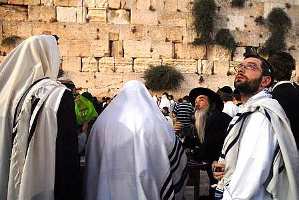
Tisha b'Av at the Kotel 2007In the fourth year of Jehoiakim the son of Josiah, king of Judah, this word came to Jeremiah from the Lord, saying, “Take a scroll and write on it all the words which I have spoken to you concerning Israel and concerning Judah, and concerning all the nations, from the day I first spoke to you, from the days of Josiah, even to this day. Perhaps the house of Judah will hear all the calamity which I plan to bring on them, in order that every man will turn from his evil way; then I will forgive their iniquity and their sin.”

Now in the fifth year of Jehoiakim the son of Josiah, king of Judah, in the ninth month, all the people in Jerusalem and all the people who came from the cities of Judah to Jerusalem proclaimed a fast before the Lord. Then Baruch read from the book the words of Jeremiah in the house of the Lord in the chamber of Gemariah the son of Shaphan the scribe, in the upper court, at the entry of the New Gate of the Lord’s house, to all the people.

Jeremiah 36:1-3, 9-10 (NASB)

For this our heart has become faint, for these things our eyes have grown dim. For Mount Zion, which has become desolate; foxes prowl over it. But You, O G‑d, remain forever; Your throne endures throughout the generations. Why do You forget us forever, forsake us so long? Restore us to You, O G‑d, that we may be restored! Renew our days as of old.

Lamentations 5:17-21 (Tanakh)

This year, the 9th of Av or Tisha B’Av begins at sundown on Monday, July 15th and ends on sundown on Tuesday the 16th. There is no more tragic day in the history of the Jewish people than Tisha B’Av. You can click the link I provided above to read the chronicles of this day of mourning for Israel, but I wanted to provide an additional perspective.

“But when you see Jerusalem surrounded by armies, then recognize that her desolation is near. Then those who are in Judea must flee to the mountains, and those who are in the midst of the city must leave, and those who are in the country must not enter the city; because these are days of vengeance, so that all things which are written will be fulfilled. Woe to those who are pregnant and to those who are nursing babies in those days; for there will be great distress upon the land and wrath to this people; and they will fall by the edge of the sword, and will be led captive into all the nations; and Jerusalem will be trampled under foot by the Gentiles until the times of the Gentiles are fulfilled.

Luke 21:20-24 (NASB)

When the Romans laid siege upon Jerusalem, when they breached her walls, when they utterly destroyed the Holy Temple, how many remembered these words Jesus spoke some forty years before? How many bewailed the tremendous loss, even as Jews all over the world have mourned for their losses since that time? What does the Kotel mean for millions of Jews today? And of the disciples of the Master who lived in the days of destruction, what happened next?

At its height, the Jerusalem community of disciples numbered around ten thousand. Several thousand of these spent the war years in Pella. Their migration back to Jerusalem probably did not happen all at once…

-D. Thomas Lancaster
from Torah Club Volume 6, Chronicles of the Apostles, pg 1135
read with Torah Portion Devarim
published by First Fruits of Zion

There is a three-week period of preparation for commemorating Tisha B’Av but what happens after the fast is over? Go on with regular life? Prepare for the coming week’s Torah reading? Anticipate the Days of Awe and the return of autumn?

After each tragedy, there is a long period of mourning and slow recovery. In the case of the vast majority of Jews after the destruction of Herod’s Temple, they must have struggled to understand how life could go on? How could they make the sacrifices commanded according to Torah? How could they worship God?

As Jewish history continued to unravel forward in time, almost all of the Jewish people were exiled from their land. Holy Jerusalem was renamed by the Romans “Aeilia Capitolina” as yet another insult to the Jews. Only a tiny remnant of Jewish people clung to life within the borders of Israel. According to Lancaster’s commentary, this included Jewish disciples of the Master.

Jewish disciples of our Master continued to live in Pella and the surrounding area at least into the fourth century. In his fourth-century treatise against heresies, Epiphanius complains about the Nazarene “heresy” which he describes as Jewish believers in Yeshua “who remain wholly Jewish and nothing else.”

-ibid

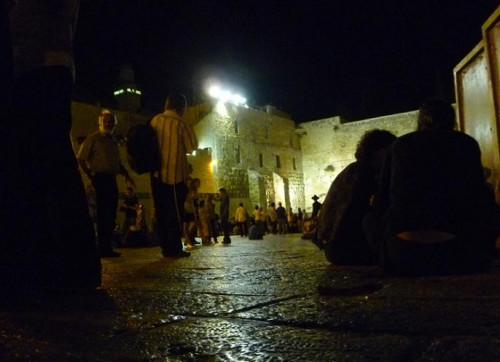
Tisha b'Av at the Kotel 2011Tragedy. Loss. Mourning. Adjustment. Hope.

But much past the fourth century, we must concede that the number of Jewish disciples of Jesus dwindled to few and then none. Like the Temple, Jerusalem, Israel and the Jewish people, Jewish faith in Yeshua of Nazareth as the Messiah went into a long exile and seemed completely lost forever.

But God is gracious. Nearly two years ago, on his blog, Rabbi Joshua Brumbach published a history of Jewish Rabbis who lived during the past several centuries who were also believers, and “who remained wholly Jewish and nothing else.” Both the first and second parts of Rabbis Who Thought For Themselves provide the beginning flickers of illumination after great darkness. Gentile Christianity has flourished in the centuries between the Temple’s destruction and the modern era and Judaism, though suffering greatly, continues to survive and even to thrive in various areas of our world.

But there has always been an enormous disconnect between the two.

That wound is very slowly healing.

In a very real way, Christians and devout Jews are all waiting for the same thing: the coming (or return) of the Jewish Messiah King. Our “visions” of just who is coming (or coming back) and what he will do are quite different, but the Messiah exists as an objective fact, regardless of our beliefs and dreams.

The world herself has been grieving for nearly two-thousand years awaiting the return of the Prince of Peace and the King of Righteousness to stop the bleeding, cease the wars, feed the hungry, and to bring repair and shalom to this broken planet…

…and to her broken people.

Thus said Cyrus king of Persia: Hashem, God of Heaven, has given to me all the kingdoms of the earth, and He has commanded me to build Him a Temple in Jerusalem, which is in Judah. Whoever there is among you of His entire people — may Hashem his God be with him, and let him go up!

2 Chronicles 36:23 (Stone Edition Tanakh)

He who testifies to these things says, “Yes, I am coming quickly.” Amen. Come, Lord Jesus. The grace of the Lord Jesus be with all.

Revelation 22:20-21 (NASB)

May Messiah come soon and in our day, and may he heal the broken and the broken-hearted.

Amen.

The Bible Between God and Man

Moses at NeboThis week’s Torah reading begins: (Deuteronomy 1:1.) “These are the words that Moshe spoke to the entire Jewish people.”

Noting the distinction between this book and the previous four, which are all “the word of G-d,” our Sages explain (Megillah 31b.) that Moshe recited the Book of Deuteronomy “on his own initiative.”

This does not, ח׳׳ו , mean that the Book of Deuteronomy is merely a mortal invention. Our Rabbis (Tosafos, op. cit.) immediately clarify that Moshe delivered his words “inspired by the Holy Spirit.” Similarly, when the Rambam defines the category of “those who deny the Torah,” (Mishneh Torah, Hilchos Teshuvah 3:8.) he includes: “a person who says that the Torah even one verse or one word does not emanate from G-d. If one would say, ‘Moshe made these statements independently,’ he is denying the Torah.”

Not a single commentator maintains that there is a difference in this regard between the Book of Deuteronomy and the four preceding books.

-Rabbi Eli Touger
“A Mortal Mouth Speaking G-d’s Word”
Adapted from Likkutei Sichos, Vol. IV, p. 1087ff; Vol. XIX, p. 9ff
Chabad.org

Reading this commentary on last week’s Torah portion reminded me of my ongoing discussion with my Pastor about the purpose of Torah. Pastor Randy has told me his particular understanding of the function of Deuteronomy, one I’ve never heard before (and I’ll refrain from sharing that with you at this time), but it also made me think of our discussions about the “inspired” nature of the Bible.

Rabbi Touger separates Deuteronomy from the rest of the Torah by saying the first four books were recorded by Moses just as they were given to him by God, but Deuteronomy involves a “relationship” between God’s inspiration and Moshe’s personality.

For the Book of Deuteronomy are merely Moshe’s words. Moshe’s identification with G-dliness was so great that when he states: (Deuteronomy 11:13.) “I will grant the rain of your land in its season,” he speaks in the first person although the pronoun “I” clearly refers to G-d. “The Divine Presence spoke from his mouth.” (See Zohar III, p. 232a; Shmos Rabbah 3:15.)

On the other hand, it is also clear that the book involves Moshe’s own thinking process. To give an example: there is a difference of opinion among our Sages as to whether the proximity (semichus) of two subjects in the Written Torah is significant or not. (Berachos 21b; Yevamos 4a.) One opinion maintains that it is, while the other explains that although when mortals structure their thoughts, order is important, but “Since the Torah was granted by the Almighty, the order of precedence is not significant.” (Raaban [Rabbi Eleazar ben Nasan], sec. 34.)

I’m reading this as saying Deuteronomy is inspired by God so much so that sometimes Moses speaks almost with God’s voice. On the other hand, Deuteronomy involves the words and thoughts of Moses and information provided by God is organized in Moses’s mind and presented in his oratory.

We have to believe that anything coming directly from God is perfect, at least at the moment of its delivery to mankind. What we do with it on the other hand, is another story. So how does that affect the Bible? When God inspired Moses (or any of the other human Bible writers), at that instant in time, perfect information flowed from the Divine to the mundane; from God to man. Through some process we don’t understand, the relationship was developed between that information and how it was interpreted and delivered by the human beings involved.

In Deuteronomy, Moses was speaking to the entire assembly of Israel and, I suppose, either he later wrote down everything he said, or someone was taking notes while he spoke. Tradition says that Moses wrote the entire Torah by his own hand including Deuteronomy. Scholars differ in their opinions, but I’m not going to get into that right now.

Is the Bible perfect?

Well, yes and no.

The Death of the MasterWe have to believe it contains the entire inspired Word of God, otherwise, the Bible is just another book, no different from any of the other supposedly holy books in other religious or philosophical traditions. On the other hand, the Bible does contain internal inconsistencies that we can’t resolve or “smooth out,” although both Jewish and Christian translators and theologians have tried over the long centuries.

I didn’t used to believe this until I was challenged to make the different gospel versions of the crucifixion map to each other. What day of the week exactly was Jesus executed? Don’t automatically say it was Friday, because that’s not a for sure thing. You have to understand that Passover was a special shabbat and that the Saturday shabbat was also observed. I won’t go into a lengthy explanation, but if you put the different gospel versions side by side, they do not match up. You can’t tell which day it was when Jesus died. It’s not the same day in all gospel versions.

Did God goof? God can’t goof. So did the various gospel writers goof?

Well, yes and no.

Yes, if you want to read the Bible like a newspaper or a legal document (though some portions are a legal document). No, if you realize that certain portions of the Bible are written like Chasidic tales, stories based on fact, but crafted for a specific audience, drawing from other, older Biblical and extra-Biblical texts, in order to communicate a particular message to the target audience.

If you read the Bible like Joe Friday would have wanted it (“The facts ma’am, just the facts”), it doesn’t work.

The explanation of the above concepts depends on the appreciation of the relationship between the Torah and our world. Our Sages state: “The Torah preceded the world.” Here, the concept of precedence is not chronological, for time like space is a creation, relevant only after G-d brought existence into being. Rather the intent is that the Torah is on a level of spiritual truth which transcends our material frame of reference. Although the Torah “descends” and “enclothes itself” in our world, speaking of seemingly ordinary matters such as agricultural laws, codes for fair business practice, and the proper structure for marriage and family relations, this is not its essence. The essence of the Torah is “G-d’s will and His wisdom,” united with Him in perfect unity. (See Tanya, ch. 4.)

This concept has always fascinated me. Even my Pastor believes that in God’s Heavenly Court, there exists a “perfect” Bible…God’s Word as it was given to humanity unaffected by the human mind, imagination, interpretation, or anything else. By inspiring people to write various portions of His Word, God, in effect, is “clothing” the Bible in humanity so that human beings can consume it.

Surely, this commandment that I am commanding you today is not too hard for you, nor is it too far away. It is not in heaven, that you should say, “Who will go up to heaven for us, and get it for us so that we may hear it and observe it?” Neither is it beyond the sea, that you should say, “Who will cross to the other side of the sea for us, and get it for us so that we may hear it and observe it?” No, the word is very near to you; it is in your mouth and in your heart for you to observe.

Deuteronomy 30:11-14 (NRSV)

This is the part of Torah I point to whenever Christians say that the Law was only given to Jews so that they’d realize the Law of God was too hard to keep and that they needed Jesus instead. It’s also a good scripture to bring out when I meet with Christians. The Torah, and in fact, the Bible as a whole, is a multi-dimensional, multi-layered, intertwining, interactive document that is more than a document, that was given to human beings to enact, ponder, study, discuss, argue over, and experience in awe.

The Bible was written by human beings in supernatural partnership with God and it digs as much into the living human psyche as it does into the Divine realm.

rabbi_child_and_sefer_torahI disagree (respectfully) with Rabbi Touger when he says that human beings as intermediaries and Bible writers are either derech ma’avir or “funnels” channeling God’s words and intent without altering them at all, or derech hislabshus in which the human intermediary puts what is given from God into his own words. I think that every word written by every Biblical writer was in some sense affected, transformed, or colored by the human writers, the derech hislabshus. Otherwise, God could have just written the whole thing with his “finger” as He did with the first tablets Moses took up to Sinai, the ones Moses smashed during the incident of the Golden Calf (and notice that God had Moses do the writing on the replacement tablets).

If there is a perfect Word of God, it resides with God. It is spiritual perfection, absolute wisdom, pure joy, intelligence, and love. But how could people understand any of it if it weren’t written in a human language and filtered through a human personality, vocabulary, cultural context, individual style, and so forth?

Enclothing the Torah in mortal intellect does not merely grant man the opportunity for advancement, it also introduces a higher quality to the Torah itself, as it were. For clothing limitless spirituality in the confines of mortal intellect represents a fusion of opposites that is possible only through the influence of G-d’s essence. Because His essence transcends both finiteness and infinity, it can weld the two together, bringing the spiritual truth of the Torah within the grasp of mortals.

My personal opinion is that the esteemed Rabbi Touger might be overstating his point just a bit. I’d prefer to say that the Bible acts as a sort of bridge between Heaven and Earth, between the existence of God and the existence of people. The split instant perfection entered our world, it became imperfect, hard to interpret, difficult to understand, internally inconsistent, all because human beings were allowed to affect what God provided. But this was allowed by design, otherwise man would have no part in God or His Word.

It is said that there are two revelations of God, the first being all of creation, hence no man has an excuse for not seeking God (Romans 1:20), and the Bible, God’s written revelation. Both are complementary. The universe and everything in it provides one set of information about God and the Bible a different but complementary data set.

But if our bridge is imperfect because we are imperfect, there is yet another revelation that has and will put everything in order.

And the Word became flesh and lived among us, and we have seen his glory, the glory as of a father’s only son, full of grace and truth.

John 1:14 (NRSV)

Jesus taught the Torah to his people Israel correctly and he interpreted many things, most of the time using parables. It is said in certain corners of Judaism that when Messiah comes (returns), he will teach Torah perfectly and we will all know. More than that, it will be written on our hearts so that we will all know.

No longer shall they teach one another, or say to each other, “Know the Lord,” for they shall all know me, from the least of them to the greatest, says the Lord; for I will forgive their iniquity, and remember their sin no more.

Jeremiah 31:34 (NRSV)

But that’s then, not now. Now we struggle, bicker, and argue about the purpose of Torah, the meaning of the Bible, how it should be interpreted, what we’re supposed to do with it, and how it’s supposed to guide our lives. As Paul said:

For now we see in a mirror, dimly, but then we will see face to face. Now I know only in part; then I will know fully, even as I have been fully known.

1 Corinthians 13:12 (NRSV)

Of course, it is both Christianity and Judaism that struggles to peer through Paul’s metaphorical “glass darkly” and to understand who we are and who God is:

Jews as a group rarely agree on matters of Jewish belief. How could we agree on the essence of another?

Rabbi Evan Moffic

aleph.jpgMoses spoke Deuteronomy to the entire assembly of Israel on the banks of the Jordan river as they were about to cross over and enter the Land. We too are on a similar journey, hearing the Word of God as filtered through human beings and waiting to “cross over,” so to speak, not with Joshua but with Messiah, into his Kingdom. This is the gospel message or the good news. Messiah will come as King and restore what was broken and lost, he will gather in his exiled children and restore Israel, Jerusalem, and the Temple. He will also gather in those among the nations who are called by his name.

But we must never forget today that God is not aloof and apart. The Word was given to man from Heaven and it is not far off. True, it’s not well comprehended, but it was meant to be understood, at least to the best of human ability, and to be lived out.

And though we only seem him dimly now, as through a darkened or dirty window, someday we’ll see him face to face.

And we will rejoice.

If Paul Had Circumcised Gentiles

under-law-torahWe are Torah Submissive, meaning that we try to obey to the divine instructions revealed in the Pentateuch. We recommend Torah observance for Christians (= believers in Messiah Yeshua) as the proper way of sanctification of their lifestyle. We do not believe however that eternal salvation is merited or gained by performing specific commandments. In other words, we are not legalists.

-from the Doctrinal Position page
at Messianic613’s Weblog

I once read a comment written by the author of the above-quoted statement on someone else’s blog saying that a “One Law” position seemed the most likely consequence of the requirement to integrate Gentiles into the first century Jewish movement called “the Way.” This was based on that author’s personal understanding of the New Testament record and the Bible as a whole.

I wish I could find the original comment but it’s lost in the vast wasteland of the blogosphere and I wouldn’t know how to retrieve it. Still, I hate not being able to adequately cite my source when crafting a response. (I also want to say at this point, that although I don’t agree with all of said-author’s opinions, I find this person to be intelligent and reasonable in all comments and rebuttals.)

Given all that, I found myself wondering this morning what was the easiest thing for Paul to do as Christ’s (Messiah’s) chosen emissary to the Gentiles. In the Book of Acts, Luke records in the first six or seven chapters how “the Way” was being established in Jerusalem and Judea. The Spirit was given to the Apostles in Acts 2:1-4 and afterward, Peter spoke boldly for the Messiah. Many Jews in Jerusalem, both native and visiting from the diaspora for Shavuot, became disciples (Acts 2:37-42). Peter began teaching at Solomon’s Portico (starting at Acts 3:11), the early Messianic community among the Jews was formed (starting at Acts 4:32), and in spite of persecution from the ruling Jewish authorities, the Messianic disciples did not cease in their work (Acts 5:41-42).

Acts 8 shows us how the gospel message of the Messiah began to spread out from Jerusalem and Judea, extending into other parts of Israel and into Samaria. Philip encounters the Ethiopian Eunuch (a study unto itself) which results in that message being taken south, at least to the descendants of those Jews who journeyed to that land in the time of Solomon. But God had further plans for the good news of Messiah than to have it shared only with Jews and Samaritans.

The Lord said to him, “Get up and go to the street called Straight, and at the house of Judas look for a man of Tarsus named Saul. At this moment he is praying, and he has seen in a vision a man named Ananias come in and lay his hands on him so that he might regain his sight.” But Ananias answered, “Lord, I have heard from many about this man, how much evil he has done to your saints in Jerusalem; and here he has authority from the chief priests to bind all who invoke your name.” But the Lord said to him, “Go, for he is an instrument whom I have chosen to bring my name before Gentiles and kings and before the people of Israel; I myself will show him how much he must suffer for the sake of my name.”

Acts 9:11-16 (NRSV)

Saul (Paul), the persecutor of Jewish disciples of “the Way” was chosen specifically by Messiah as his instrument to take the name of Messiah before the Gentiles as well as before kings and the people of Israel.

But what did it mean to take the name of Messiah before the Gentiles?

Woe to you, scribes and Pharisees, hypocrites! For you cross sea and land to make a single convert, and you make the new convert twice as much a child of hell as yourselves (emph. mine).

Matthew 23:15 (NRSV)

When the meeting of the synagogue broke up, many Jews and devout converts to Judaism followed Paul and Barnabas, who spoke to them and urged them to continue in the grace of God (emph. mine).

Acts 13:43 (NRSV)

These two, quick quotes tell us that it wasn’t particularly unusual for non-Jews to convert to sects of Judaism. We also know from Acts 10:1-2 and Acts 13:16 that Gentiles who were called “God-fearers” also attended synagogue and were devout but not necessarily on a “track” to convert, and God-fearing Gentiles, although they likely shared some religious and lifestyle practices with the Jewish people, were not considered Jewish or members of the covenants as were born Jews or the “devout converts to Judaism.”

Paul was specifically selected to fulfill the following mandate:

Go therefore and make disciples of all nations, baptizing them in the name of the Father and of the Son and of the Holy Spirit, and teaching them to obey everything that I have commanded you.

Matthew 28:19-20 (NRSV)

Apostle-Paul-PreachesBut how was he supposed to do that, exactly? I know, based on your understanding of the Bible and the last two-thousand years of Christian and Jewish history, you think the answer is obvious (although that answer isn’t the same for everyone), but it wasn’t actually that clear-cut back in the day.

Then certain individuals came down from Judea and were teaching the brothers, “Unless you are circumcised according to the custom of Moses, you cannot be saved.” And after Paul and Barnabas had no small dissension and debate with them, Paul and Barnabas and some of the others were appointed to go up to Jerusalem to discuss this question with the apostles and the elders.

Acts 15:1-2 (NRSV)

There seemed to be a disagreement, even among the Jewish disciples within the Way, as to just how to integrate the Gentiles. As we can see here, there were some Jewish people who advocated for the Gentiles to become devout converts to Judaism. Paul and Barnabas disagreed with that opinion. It took a decision by James and the Council of Apostles in Jerusalem to settle the matter, but even then, it wasn’t really settled (It was before God but not, apparently, before men).

When they heard it, they praised God. Then they said to him, “You see, brother, how many thousands of believers there are among the Jews, and they are all zealous for the law. They have been told about you that you teach all the Jews living among the Gentiles to forsake Moses, and that you tell them not to circumcise their children or observe the customs. What then is to be done? They will certainly hear that you have come. So do what we tell you. We have four men who are under a vow. Join these men, go through the rite of purification with them, and pay for the shaving of their heads. Thus all will know that there is nothing in what they have been told about you, but that you yourself observe and guard the law. But as for the Gentiles who have become believers, we have sent a letter with our judgment that they should abstain from what has been sacrificed to idols and from blood and from what is strangled and from fornication.”

Acts 21:20-25 (NRSV)

“After I had returned to Jerusalem and while I was praying in the temple, I fell into a trance and saw Jesus saying to me, ‘Hurry and get out of Jerusalem quickly, because they will not accept your testimony about me.’ And I said, ‘Lord, they themselves know that in every synagogue I imprisoned and beat those who believed in you. And while the blood of your witness Stephen was shed, I myself was standing by, approving and keeping the coats of those who killed him.’ Then he said to me, ‘Go, for I will send you far away to the Gentiles.’”

Up to this point they listened to him, but then they shouted, “Away with such a fellow from the earth! For he should not be allowed to live.”

Acts 22:17-22 (NRSV)

up_to_jerusalemAs we can see, even after the declaration by the Council about the status of Gentiles in the Jewish Yeshua (Jesus) movement, it appeared to be very confusing to even thousands of Jewish believers, all zealous for the Torah, just exactly what Paul was teaching to the Jewish and Gentile disciples in the diaspora. Was he teaching Jews to abandon Torah? Was he teaching uncircumcised Gentiles to observe Torah like the Jews? Paul appears to deny both allegations. Jews didn’t have a problem with what Paul taught about the Torah and Messiah. They only had a problem with the Gentiles being included without being circumcised and made to convert to Judaism!

It seems that the easiest thing for Paul to have done and the least dangerous way for him to fulfill his mission, was to enact the Matthew 28:19-20 mandate by converting Gentile disciples to Judaism! It would have solved all or at least most of his problems among the Jewish people. It would have been completely consistent with the practices of other branches of Judaism in his day. No one would have batted an eye.

So why didn’t he do that?

While Peter was still speaking, the Holy Spirit fell upon all who heard the word. The circumcised believers who had come with Peter were astounded that the gift of the Holy Spirit had been poured out even on the Gentiles, for they heard them speaking in tongues and extolling God. Then Peter said, “Can anyone withhold the water for baptizing these people who have received the Holy Spirit just as we have?” So he ordered them to be baptized in the name of Jesus Christ. Then they invited him to stay for several days.

Acts 10:44-48 (NRSV)

If Peter thought that Cornelius and his Gentile household should be made to convert in order to enter into the Messianic movement, between the Gentiles receiving the Spirit and baptism by water, the males should have been circumcised. But he didn’t order this to be done. We have no record in the Bible that this was ever done to Cornelius, the males in his household, or any of the male Gentile disciples of the Messiah (you may disagree based on Timothy, but remember that Titus was a specific example of a Gentile not being circumcised, see Galatians 2:3).

Peter presented his experiences with Cornelius as legal testimony in the Acts 15 proceedings.

The apostles and the elders met together to consider this matter. After there had been much debate, Peter stood up and said to them, “My brothers, you know that in the early days God made a choice among you, that I should be the one through whom the Gentiles would hear the message of the good news and become believers. And God, who knows the human heart, testified to them by giving them the Holy Spirit, just as he did to us; and in cleansing their hearts by faith he has made no distinction between them and us. Now therefore why are you putting God to the test by placing on the neck of the disciples a yoke that neither our ancestors nor we have been able to bear? On the contrary, we believe that we will be saved through the grace of the Lord Jesus, just as they will.”

Acts 15:6-11 (NRSV)

Peter saw first hand how Gentiles had their hearts cleansed by faith and received the Holy Spirit, even as the Jews did, but were not required to be circumcised and take on the full weight of the Torah in the manner of the Jews (for my opinion on the full implications of the Acts 15 decision on the Gentile disciples, see my multi-part Return to Jerusalem series).

john-the-naziriteMost Christians believe that what Paul did was to abandon the Torah and teach other Jews to do so, as well as teaching the Gentiles that grace replaced the Law. Paul denied this during multiple legal hearings and I don’t believe he was lying. Some people believe that Paul obligated the Gentile disciples to the full weight of the Torah mitzvot in the manner of the Jews without requiring them to convert, but my understanding of the NT record makes this unlikely as well (For more on this, see The Evidence of Luke and The Evidence of Acts 15).

It is also apparent, although it would have been the easiest option for Paul to use, that he did not require the Gentiles to convert to Judaism in order to become members of “the Way.” If that were his tactic, then I seriously believe very few Gentiles would have gone that route, which would have severely inhibited if not stopped cold dead the spread of the good news of the Jewish Messiah among the Gentiles.

Go to Acts 15:30-31 to find the statement supporting how the Gentiles felt about not having to be circumcised and not being obligated to take on the full weight of the Law which, as Peter said, was “a yoke that neither our ancestors nor we have been able to bear.” To force the full yoke of Torah upon the Gentile disciples, Peter said, would be “putting God to the test.” which, as we’ve already learned, is a “no-no.”

Jesus answered him, “It is said, ‘Do not put the Lord your God to the test.’”

Luke 4:12 (Deut. 6:16)

It might have been easier on Paul and easier on the Jewish people involved in “the Way” to have accepted a message of the good news that included Gentiles actually converting to Judaism, but I don’t think that’s what God wanted. From what I can tell, it would have severely inhibited mass Gentile adoption of faith in Messiah, if circumcision of the males and full adherence to the Law were necessary. It’s interesting to note that if those were indeed requirements, we probably wouldn’t have anything called “Christianity” today and we might even have (although this is debatable) a branch of Judaism that continued to worship a first century Rabbi/Prophet as Moshiach. If that were the case, Gentiles would be welcome to join that faith only if they were willing to convert, but otherwise, they would not be considered full members.

Given how few Gentiles convert to Judaism in the world today, how would the whole world be taught the good news of Messiah, come to faith, and believe? How would the Matthew 28:19-20 mandate be fulfilled?

Devarim: Lessons in Teshuvah

devout_jewish_prayerThe Torah portion begins with the words:

“These are the things which Moses spoke to all of Israel” (Deut. 1:1).

The Torah then enumerates what is seemingly a list of places the Jewish people had traveled. The Siphre elucidates that out of respect for the Jewish people, Moses alluded to their transgressions by the name of each place, without being explicit. What can we learn from this?

Rabbi Yehuda Leib Chasman of the famed Hebron Yeshiva comments that a person who is sincerely interested in self-improvement and growth only needs a slight hint that he has done something wrong in order to realize that he needs to improve. Such a person looks for opportunities to make positive changes in himself and uses his own ability to think to fill in the details when someone gives him a hint that he has made a mistake. The Jewish people only needed a hint.

The goal of life is to improve and to be the best that you can be. Just like a person interested in becoming rich will use any tip if he thinks it will be of financial benefit, so should we look for messages which will help us improve. Rabbi Yisroel Salanter once asked a shoemaker why he was working so late and with an almost extinguished candle. Replied the shoemaker, “As long as the candle is still burning it is possible to accomplish and mend.” From this Rabbi Salanter understood that “as long as the light of the soul is still going, we must make every effort to accomplish and to mend.”

-Rabbi Kalman Packouz
Dvar Torah based on Growth Through Torah by Rabbi Zelig Pliskin
Commentary on Torah Portion Devarim
Aish.com

Easier said than done.

On the other hand, it seems to be God’s expectation that we should all strive to improve, to make amends, to become better.

When describing Tisha B’Av, Rabbi Packouz says:

Tisha B’Av is a fast day (like Yom Kippur, from sunset one evening until the stars come out the next evening) which culminates a three week mourning period by the Jewish people. One is forbidden to eat or drink, bathe, use moisturizing creams or oils, wear leather shoes or have marital relations. The idea is to minimize pleasure and to let the body feel the distress the soul should feel over these tragedies. Like all fast days, the object is introspection, making a spiritual accounting and correcting our ways — what in Hebrew is called Teshuva — returning to the path of good and righteousness, to the ways of the Torah.

Teshuva is a four part process: 1) We must recognize what we have done wrong and regret it 2) We must stop doing the transgression and correct whatever damage that we can, including asking forgiveness from those whom we have hurt — and making restitution, if due 3) We must accept upon ourselves not to do it again 4) We must verbally ask the Almighty to forgive us.

despairThat sounds a lot more complicated than how most Christians just shoot a quick “forgive me” prayer up to God before continuing on with their business. OK, maybe that was really cynical, but I wonder if a lot of Christians have a concept of repentance the way we see described above.

I hope so. It’s not easy. Maybe if we appreciated from the start how much work it is to repent, how much strife and anguish our mistakes make, the enormous effort that goes into a repair of damaged relationships and of damaged people that will never quite be enough, maybe we’d put more effort into not sinning in the first place.

The goal of life is to improve and to be the best that you can be.

That may be true. But there’s a long, hard distance between the goal and where most of us are on the journey.

According to Rabbi Packouz:

Learning Torah is the heart, soul and lifeblood of the Jewish people. It is the secret of our survival. Learning leads to understanding and understanding leads to doing. One cannot love what he does not know. Learning Torah gives a great joy of understanding life. On Tisha B’Av we are forbidden to learn Torah except those parts dealing with the calamities which the Jewish people have suffered. We must stop, reflect and make changes. Only then will we be able to improve ourselves and make a better world.

In an ideal sense, this is how Jewish people are to approach and immerse themselves in the experience of Tisha B’Av. It is said that the Temple was destroyed because of the lack of love the Jewish people had for one another. This is part of the reason why there is such intense mourning in Jewish communities at this time of year. This is why there is such an emphasis toward teshuvah.

Only when true repentance has been made can the Jewish person move forward and begin the process of self-improvement.

What should the rest of us learn from this? Is our candle still burning?

For a different perspective on this portion of the Sidra, visit Rabbi Yitzchak Ginsburgh’s blog.

Good Shabbos.

75 days.