Tag Archives: Judaism

Jewish Identity in the Way

paul_trebilcoIn recent years a lot of scholarly effort has been given to questions about early Christian “identity,” how early and in what ways early believers in Jesus saw themselves and acted as distinct groups with their own identity. Major research projects continue to be devoted to this sort of question (e.g., the project on Prayer and Early Christian Identity, based in Oslo, with which I’m connected currently).

Paul Trebilco has now published an important study relevant to these questions: Self-designations and Group Identity in the New Testament (Cambridge: Cambridge University Press, 2012). His new book comprises a further significant contribution to the study of earliest Christianity. Drawing on observations about how groups develop their own “social dialects” (“in-group” terms and expressions), he focuses on the key terms evidenced in NT writings that appear to have been used to refer to early Jesus-believers, each term given a chapter-length analysis.

-Larry Hurtado
“Trebilco on Early Christian Self-designations”
Larry Hurtado’s Blog

This sounds like a fabulous book but even the Kindle version costs over $63.00, so it’s deffo out of my price range. Hurtado is of the belief that Jesus was worshipped as God very early historically so he’s going to likely come down on the side of an early distinctiveness of identity of Christians as apart from Judaism, probably very soon after the ascension of Christ.

This is an important topic for me since in my readings, I regularly find that the early “Jewish Christians” continued to self-identify as Jews and understood “the Way” as a Jewish branch among the other “Judaisms” of their day.

When they heard it, they praised God. Then they said to him, “You see, brother, how many thousands of believers there are among the Jews, and they are all zealous for the Torah (emph. mine).

Acts 21:20 (NRSV)

I deliberately rendered the world “law” as it appears in the NRSV as “Torah” to communicate more how James and the elders in the apostolic council in Jerusalem would have understood the vital concept. There were thousands of Jewish believers in Moshiach who were all zealous for the Torah.

Sounds pretty Jewish to me.

Going back to Hurtado’s blog post, he praises Trebilco, referring to him as “a proven scholar in the field” and citing his earlier, important works.

Hurtado continues:

These terms = “the brothers” (αδελφοι), “the believers”, “the saints” (οι αγιοι), ”the church” (η εκκλησια), “disciples” (μαθηται), “the way” (η οδος), and “Christian” (Χριστιανος). Among his conclusions, he contends that “εκκλησια” originated among “Jewish Christian Hellenists” (“most likely in Jerusalem,” p. 301), but he further argues that this does not mean that they no longer considered themselves also part of the larger Jewish community. He judges the term “Christian” to have originated among outsiders/observers of early Jesus-believers, thereafter appropriated by believers, especially in the later period of persecutions.

As to the larger question about when and how believers saw themselves as a distinct group, Trebilco contends (rightly in my view) that the use of these terms indicates that “they were creating and shaping their identity” already before the time of our earliest texts. This means easily within the first couple of decades after Jesus’ execution. (I’d say likely within the first few months.) Trebilco again: “…these designations also involve the claim of a distinctive identity . . .” (p. 308), “have clear boundary-marking roles,” and “distinguish this new group from other Jews and from Gentiles” (309).

ancient_beit_dinWhat can we make of this? First, that the Jewish disciples of the Jewish Messiah continued to consider themselves Jews participating in a normative Judaism in their day. However, as “Messianics,” they also understood that their identity was unique and that they were, in some sense, distinct from their Jewish brothers who adhered to other streams of Judaism, because ultimately salvation and the realization of Israel’s redemption and restoration only comes through Messiah.

I have great sorrow and unceasing anguish in my heart. For I could wish that I myself were accursed and cut off from Christ for the sake of my own people, my kindred according to the flesh.

Romans 9:2-3 (NRSV)

In stating this, Paul is saying that Jews outside the framework of “the Way” are also outside of salvation, and the anguish at this thought drives Paul to declare he would be willing to be accursed by God and cut off from Messiah if only it would save the Jewish people who do not know Messiah.

But it also continues to establish that the identity of a first century Jewish disciple of Messiah is as a Jew operating within a Jewish religious framework. This is opposed to Paul assuming a non-Jewish identity in a non-Jewish religious movement as many modern Christians currently believe. Being a “Messianic” (Christian) for a Jew was then both an exercise in normative Jewish religious worship and a unique Jewish identity because of adherence to Messiah, the living embodiment of Torah, Israel, and God’s gracious redemption.

The limits of Hurtado’s blog post allows for a minimal exploration of Gentile identity but that’s not my main point at the moment (though I do touch in it below). My primary point is to affirm for my Gentile Christian brothers and sisters, as well as any Jewish readers, that the historic worship of Jesus by Jews is not an aberration within Judaism or an abandonment of Judaism and the Torah. It was and is the highest expression of devotion to God both within the first century context and within what some have called modern “Bilateral Ecclesiology” Messianic Judaism.

It’s important to note though, that at least one Jewish scholar has a different idea as Hurtado points out:

I mean no criticism in saying that this all seems rather obvious to me, but in view of the nature of recent scholarly discussion (e.g., Boyarin’s claim that we don’t have “Christianity” as such before the fourth century CE), I’m very grateful to Trebilco for this fine evidence-based study, which will further confirm his status as a noteworthy figure in NT/Christian Origins.

Without reading “Boyarin’s claim” in full, I have no context upon which to comment, but I would have to guess that Boyarin may be stating that the “Jewishness” of Christianity extended much further forward into history than Hurtado or Trebilco believe. If, based on Trebilco’s book, Hurtado believes that the Christian identity replaced the Jewish identity of Jews in “the Way” in the first century forward, then I’m going to have to strenuously disagree. As long as Jews participated in the worship of Yeshua as Messiah, I can’t see them self-identifying as anything other than Jewish, and certainly I don’t believe they would ever abandon the Torah and a Jewish identity for the sake of Messiah. I say this because it is totally contrary to the Jewish Messiah himself to request that devotion to him should require abandoning the Torah and Israel.

I will split a hair and say that Jewish identity was not imposed on the Gentiles being admitted into the Jewish “Way” (see Acts 15:22-35, Acts 21:25), thus the Gentile “Christians” would have established an identity that, while initially contained within a Jewish religious framework, made them distinct not only from their Jewish mentors relative to Torah-observance, but also distinct from the pagan people and religions in their world.

In addition, we’ve already seen Hurtado quote Trebilco as saying:

“distinguish this new group from other Jews and from Gentiles” (emph. mine)

jewish-davening-by-waterI’m going to argue, based on the above-statement, that the distinctiveness of first century “Messianic Jews” was in relation to the Gentiles in “the Way.” By definition, all Jews were distinct from all Gentiles, so it would be redundant of Trebilco to say that it was “Christian Jewish” identity that distinguished them from pagan Gentiles. It makes more sense for him to make this statement if he is defining a distinctiveness of Jewish identity within “the Way” that identified the Jewish disciples uniquely both within the context of larger Judaism and as compared to believing Gentiles.

Of course, I’d have to read Trebilco’s book to actually confirm this, but what I can gather from Hurtado’s blog post certainly suggests it.

In summary, Gentile Christian identity distinctiveness as a religious stream wholly separate from paganism would have occurred very early, probably within Paul’s lifetime. Jewish discipleship in Messiah would have continued to be Jewish in every sense and yet, would still have distinguished Jewish members of “the Way” from other Jewish streams by virtue of Messianic redemption and the promise of national restoration upon Messiah’s return.

Here then, we see a template for the modern Messianic Jewish movement, a model for how Jews today can view adherence to Yeshua (Jesus) the Messiah as truly and completely Jewish, and unlike the vast majority of Christian history otherwise indicates, as a movement which does not require a Jew to abandon Jewish identity or the Torah in order to be a disciple of the Master.

112 days.

Finding My Exit

no-exitWhen you and the path you have chosen get along just great, it’s hard to know whether your motives are sincere.

But when you come across a path to do good, and this path goes against every sinew of your flesh and every cell in your brain, when you want only to flee and hide from it —do this.

Then you shall know your motives are sincere.

-Rabbi Tzvi Freeman
“Sincerity”
Based on letters and talks of the Rebbe, Rabbi M. M. Schneerson
Chabad.org

I hit what seemed to be a pretty significant wall this past weekend. Hopefully not too many people noticed, but I was turning myself into knots inside and very seriously doubting my current path for a day or two.

The first event that contributed to this mess was from divisiveness in the blogosphere. I should have known better, but a miscommunication between a friend and I and then another in a long series of online “nastygrams” caused me to question whether or not my friend was pulling away from me and pulling much of my current world view along with him (long story).

As personal as the first event was, the second event was far more intimate. On Sunday morning, my wife and I were having a small chat before I left for church. I happened to mention that Pastor Randy gave me a paper on the different arguments between Arminianism and Calvinism and my difficulties in they way the author of the article was expressing his viewpoint.

I didn’t think much of it, but my wife, who is Jewish, started touting how Judaism has received the Torah in an unbroken line between Sinai and the present and that in any response to changes of circumstances across time, the Rabbis always consult the core text and all applications are based on strict adherence to the Torah, thus avoiding the problems I was having with a Christian commentary.

I think it was her attempt to show me that Judaism has a better handle on the Bible and thus on God than Christianity, which I don’t mind, but in our conversation, she brought up how, if the Christian view of the Bible were true, then it totally invalidates Jews and Judaism.

If you’ve been reading my blog for any length of time, you know that her perception of Christianity is not what I believe at all. And yet I was confronted with a dilemma. I could explain, thanks to all of the information I’ve captured within this blog, why I believe she’s wrong and why a Messianic interpretation of “Christianity” is wholly Jewish, but my being a “prophet without honor in my own land” (and needless to say, in my own family), how would she take it?

The worst that would happen if I were talking to any other Jewish person was that they’d tell me I was “full of it” and walk away (not that I desire to insult anyone). But what would be the worst that would happen if that transaction were to occur between me and my wife?

I didn’t want to find out so I let the conversation die.

But as I went to church, I was confronted with two highly significant relationships in my life being (apparently) damaged, all because of who I am and my faith in Christ.

I remembered part of a conversation I had with my Pastor. I told him I left the Hebrew Roots movement in part because I knew my participation was very embarrassing to my wife. He asked me, somewhat incredulously, if my being a Christian and going to church were any less embarrassing to a Jewish wife. I absolutely didn’t consider that before, but at that moment and again last Sunday morning, it hit me like a punch in the teeth from Mike Tyson.

I also couldn’t help but consider a few verses.

Then Ezra the priest stood up and said to them, “You have trespassed and married foreign women, and so increased the guilt of Israel. Now make confession to the Lord the God of your ancestors, and do his will; separate yourselves from the peoples of the land and from the foreign wives.”

Ezra 10:10-11 (NRSV)

“Do not think that I have come to bring peace to the earth; I have not come to bring peace, but a sword.

For I have come to set a man against his father,
and a daughter against her mother,
and a daughter-in-law against her mother-in-law;
and one’s foes will be members of one’s own household.
Whoever loves father or mother more than me is not worthy of me; and whoever loves son or daughter more than me is not worthy of me; and whoever does not take up the cross and follow me is not worthy of me.”

Matthew 10:34-38 (NRSV)

leavingThe Master doesn’t address husband and wife specifically, but it wasn’t hard for me to read between the lines. And in relation to Ezra, I guess I would be the “foreign wife.”

I wasn’t afraid this would dissolve my marriage, but I could see my friendship receding into the distance and, as damage control, what would be my only option to contain this conflict? If my wife was saying that my being a Christian made me “anti-Semitic” by definition, then how could I prove otherwise except to stop going to church? But how could I stop going to church and maintain my faith in Christ?

The conflict between my faith and my marriage came abruptly into sharp focus.

So last Sunday at church was miserable, not because of church, but because of me.

It’s actually pretty painful to see all of the other couples at church because they’re couples. There’s no conflict that I can see between husband and wife because of their faith. They sit together at church, they bring their children, they go to Sunday school together, they support each other’s views.

That’s also true of most people (but not all) I know in the Messianic movement. I sometimes feel like the only oddball.

So with a nudnik (and I know something about nudniks) trying to drive a wedge between my friend and me on the one side, and my most recent “religious conversation” with my wife on the other, who I am supposed to be at Christ was stuck soundly in the middle. All I could see were “no option options.” I was in a box with no way out, a room with no exit.

So what happened?

I did what I always try to do under similar circumstances…I didn’t do anything about it. The temptation was to act impulsively to reduce the discomfort, but that’s usually the wrong thing to do.

After church, there was plenty of gardening to do and that’s relatively mindless work, so I had a lot of time to think. After that, I was given the annual task of cleaning out my book closet (if left to my own devices, I’d keep everything I’ve ever owned). My wife and daughter tackled the equally daunting job of cleaning out and arranging the food pantry.

My son Michael came over by the by and cooked dinner for us while we were working. By the by, my wife and I interacted and I noticed that she was behaving, not as if I were an anti-Semite in the camp, but like I’m her husband and we’re doing typical Sunday evening family stuff together in our home.

The bubbling pot began to cool.

I got an email later that night allaying my other concern and reminding me that just because “bad attitude” people try to interfere with friendships doesn’t mean those friendships are any less established. The message couldn’t have come at a better time.

when-the-forest-beckonsThis whole episode reminded me that I have a duty to my wife to share the Good News of Messiah with her. The problem is, she’s already heard it, accepted it within the church, re-accepted it within a Hebrew Roots context, and, when transitioning first to the Reform-Conservative synagogue in town and then the Chabad, chosen to reject the Gospel of Jesus “because that’s not what Jews believe.”

I wish I could convince her otherwise, but that “Good News” might not be easy for her to hear coming from me, especially when I’m competing with the Chabad Rabbi, a lot of anti-missionary rhetoric, and two-thousand years of post-Jesus Jewish history.

That particular “adventure” is to be continued, but I do have a message for blogging nudniks who deliberately try to mess up friendships in order to further their own agendas:

There are people who believe they are doing good by swallowing others’ egos alive. The egos of those they cannot help, and of those who cannot help them, are inedible to them—and therefore intolerable. They cannot work with others—because their egos leave no space for “others”—only for those extensions of their own inflated selves that show they need them, or for those whom they need.

You don’t love your neighbor to glorify your own ego. When you come to your sister’s or brother’s aid, leave your own self behind. Love with self-sacrifice.

-Rabbi Tzvi Freeman
“Free Love”
Based on letters and talks of the Rebbe, Rabbi M. M. Schneerson
Chabad.org

If you come to realize that what you do is not for the sake of Heaven but for the requirements of your own ego or emotions, then the need for you to attend to your own affairs is far, far greater than whatever temporary issues I may be experiencing.

I found the exit from my no-exit room and am continuing down the path that God has set before me.

Gifts of the Spirit Poured Out On All Flesh

Pouring waterAnd it shall come to pass afterward, that I will pour out my Spirit on all flesh; your sons and your daughters shall prophesy, your old men shall dream dreams, and your young men shall see visions. Even on the male and female servants in those days I will pour out my Spirit.

And it shall come to pass that everyone who calls on the name of the Lord shall be saved.

Joel 2:28-29, 32

“I will pour out my spirit on all flesh.”

That’s a pretty exciting statement when taken at face value, and it filled in a gap in my understanding of how non-Jews are supposed to fit into the New Covenant God made (is making, will make) with Israel.

I’ve spent a great deal of time trying to follow the threads from the covenant God made with Noah, to the one He made with Abraham, to the one He made with Isaac, to the one He made with Jacob, to the one He made with Moses and the Children of Israel, to the New Covenant language recorded in Jeremiah 31 and Ezekiel 36, to the language of Messiah in Luke 22:14-23, and so on.

Classic replacement theology in Christianity has historically made the New Covenant fit but it must grossly misread the text in order to accomplish its goal. Instead of replacing Israel with “the church,” God has renewed and amplified His covenants with Israel in the New Covenant language and is in the process of or is yet to actually write the Torah upon the heart of Israel and to redeem her to Himself.

Only Messiah’s declaration faintly hints that somehow the Gentiles might be involved as well, and I’ve had to satisfy myself with that “slender thread” using more than a little faith and hope, because it’s not all that clear in the Bible just how Gentiles are attached to God through Israel. Oh, we have plenty of evidence that we are. Paul made considerable effort to engage Gentiles and to bring them into the faith after his encounter with Messiah in Acts 9. Then there’s Peter’s encounter with Cornelius and his entire Gentile household and the astonishing event of all those non-Jews actually receiving the Holy Spirit, just as the Jews had in Acts 2, which completely blew the socks off Peter and his Jewish companions (no, they didn’t really wear socks).

But let’s back up a step.

I’m referencing a presentation given by Toby Janicki at the First Fruits of Zion (FFOZ) Shavuot conference at Beth Immanuel Sabbath Fellowship in Hudson, Wisconsin. The name of his teaching was Spirit on all Flesh, and it was one of the few presentations when I addressed the speaker (Toby) afterward with both a question and a thank you.

One of the things Toby established was that there was a movement of the Spirit prior to Acts 2. It’s hard to believe anyone could not know that since the Spirit is all over the Tanakh (Old Testament), but I guess some Christians have a rather myopic view of the Bible. After all, whose Spirit was it that was hovering over the waters? (Genesis 1:2) In Acts 2:2-3, a sound like a mighty rushing wind filled the entire house where they were sitting. And divided tongues as of fire appeared to them and rested on each one of them.

tape-over-mouthIt is further said that after the Spirit rested on them, each of the apostles could speak foreign languages that they did not know. This ability allowed them to be united with many other Jews from the various nations in the diaspora. But if language can unite, where do we see it breaking unity?

Come, let us go down and there confuse their language, so that they may not understand one another’s speech.” So the Lord dispersed them from there over the face of all the earth, and they left off building the city. Therefore its name was called Babel, because there the Lord confused the language of all the earth. And from there the Lord dispersed them over the face of all the earth.

Genesis 11:7-9

According to the beginning of this chapter, the “whole earth had one language,” and they used this ability to unite in arrogance against God. God confused their languages into, according to midrash, the seventy languages among the nations, and thus was scattered mankind.

Now when all the people saw the thunder and the flashes of lightning and the sound of the trumpet and the mountain smoking, the people were afraid and trembled, and they stood far off and said to Moses, “You speak to us, and we will listen; but do not let God speak to us, lest we die.” Moses said to the people, “Do not fear, for God has come to test you, that the fear of him may be before you, that you may not sin.” The people stood far off, while Moses drew near to the thick darkness where God was.

Exodus 20:18-21

The word of God was pronounced on Mount Sinai in seventy languages (Shab. 88a; Ex. R. v.; comp. Acts ii. 5). The Torah was written in seventy languages in order that the nations should not be able to plead ignorance as their excuse for rejecting it (Tosef., Soṭah, viii.). Among the seventy languages the most noble is Hebrew, for in it was pronounced the creative word of God (Gen. R. xviii., xxxi.; Yalḳ., Gen. 52). The Jewish law required that every member of the Sanhedrin should have sufficient knowledge of the seventy languages to be able to do without an interpreter (Sanh. 17a; comp. Meg. 73b; Men. 65a).

“The Seventy Nations and Languages”
JewishEncyclopedia.com

It is said in midrash that seventy tongues of fire issued forth from the mountain and that the people could actually see the sound of God’s voice, and it was as if God had spoken the Torah in all seventy languages in a single utterance. And that God had spoken in the languages of all the nations of the earth because the Torah was given to all mankind.

Hebrew FireIf you couple this imagery with Acts 2 and then with Acts 10, you can see God reversing what he did in Genesis 11 providing a source of unity rather than division.

But it’s not as if the Spirit never encountered non-Israelites prior to Acts 10. In Toby’s presentation, he asked how Rahab (Joshua 2:16) knew that the Jewish spies could hide in the mountains and that their pursuers would stop looking for them after three days? Why not two, or four, or six? Midrash suggests that the Spirit rested upon Rahab and she prophesied. Certainly, the Gentile magician Baalam also had access to the Spirit, for he could even speak to God. In fact, Judaism considers that there were seven prophets among the Gentiles, although they were not as elevated as the prophets of Israel.

But when Peter and his companions saw the Spirit descending upon Cornelius and the Gentiles, they must have thought that the Messianic Age prophesied by Joel had come and indeed, that the Spirit had been poured out on “all flesh.” I don’t doubt that prior to that event, few if any Jews believed that a Gentile could receive the Spirit and thus forgiveness of sins.

For the Gentiles, who were once far off from Israel and the promises, had been brought near (Ephesians 2:13) by the blood of Christ and their faith in the Messiah, and the Gentiles too received the Spirit and forgiveness. Thus Jew and Gentile became one in Messiah (Galatians 3:28) upon receiving the Spirit, with both being included in the body of Jesus and both having a place in the life of the world to come by the Master’s merit.

Receiving the Spirit is a sign of repentance. Although Luke doesn’t record Cornelius making teshuvah, he must have in order for Peter to witness the Spirit resting upon the Gentiles in the Roman’s home. Once Peter related what he and the other Jewish witnesses saw, the Council of Apostles and the elders praised God (Acts 11:18) that He showed no distinction and gave the Spirit and forgiveness of sins to all who repented, both the Jews and the people of the nations. What a wonderful gift.

For me, Joel 2:28-32 is the necessary linkage between Jeremiah 31 and Ezekiel 36 and binding the New Covenant prophesies to Luke 22:14-23, Acts 2, Acts 10, and finally Acts 15. I know from various sources, including John W. Mauck’s book Paul On Trial: The Book Of Acts As A Defense Of Christianity, that it was always God’s plan to include the Gentiles in a relationship with Him through Messiah.

…that the church’s disruption of the social/religious status quo (allowing Gentiles to become full members of the faith without circumcision and observance of the Torah)…

When I put all this together with everything I’ve learned so far about the connection between the covenants and all the material I’ve gathered about the meaning of the Acts 15 declaration, the relevance of Gentiles as members of the Kingdom becomes increasingly clear.

creative-torahThe Jewish people have been the keepers of the Torah, the Shabbat, and the knowledge of One God for thousands of years, while the people of the nations were worshiping figures made of stone and wood. But it was always God’s plan to include us as equal members in the Kingdom of Heaven, and the unique purpose of the Messiah was to allow us to come along side the Jewish people as equal sharers of the Spirit of God and of salvation, in order to give glory and honor to the King of Israel, the Holy One of Heaven.

God indeed has united all of His people among Israel and the people of the nations who are called by His Name. Just as God is One, we are One in Spirit and in the Kingdom, the Jew first and then also the Gentile. The Kingdom isn’t here yet because the Torah has yet to be written on our hearts. Peace has not arrived. We continue to struggle. But now there is hope. Now there is a path for the rest of us to follow. May the Lord of Heaven grant us wisdom and grace so that we can help in repairing our broken world and straightening the now crooked road upon which the King will walk when he returns to Israel and his throne in Holy Jerusalem.

Thanks for the good news, Toby.

Addendum: This ties up the end of my “Jesus Covenant” series called Building My Model and the other parts that came before it.

121 days.

The Evidence of Acts 15

Apostle-Paul-PreachesWhen they arrived, they called the church together and related all that God had done with them, and how he had opened a door of faith for the Gentiles. And they stayed there with the disciples for some time.

Then certain individuals came down from Judea and were teaching the brothers, “Unless you are circumcised according to the custom of Moses, you cannot be saved.” And after Paul and Barnabas had no small dissension and debate with them, Paul and Barnabas and some of the others were appointed to go up to Jerusalem to discuss this question with the apostles and the elders.

Acts 14:27-15:2 (NRSV)

Luke notes a sharp disagreement existed (verse 2), his otherwise respectful reference to the circumcision groups contrasts markedly with Paul’s trenchant comment about the Jewish Christians who were advocating the requirement of Gentile circumcision in Galatians 5:12: “I could wish that those who trouble you would even cut themselves off!” This treatment is consistent with the desire by Luke not to hang the church’s “dirty laundry” before Roman officials.

-John W. Mauck
“Chapter 17, Acts 15:1-35: Circumcised Hearts”
Paul On Trial: The Book Of Acts As A Defense Of Christianity (Kindle Edition)

I previously mentioned Mauck’s book on my blog and I am continuing to read and enjoy his insights on Luke/Acts as a reflection of his belief that these books were written as a legal brief pursuant to Paul’s trial in Rome before the emperor (Acts 28). Mauck, an attorney and Bible scholar, suggests that Luke did not write his gospel or the book of Acts as theological instruction for the Jewish and Gentile disciple of Christ, but as a legal document for the secular Roman court. His book acts as “evidence” of his assertion to his readership and I must say, as a lay person, I’m certainly seeing how he arrives at his position.

Acts 15 is of special interest to me, since it is the pivotal chapter in Luke’s book regarding how Gentiles were to be formally entered into the Jewish religious movement of “the Way.” I previously spent a good deal of time writing on Acts 15, primarily from D. Thomas Lancaster’s viewpoint as expressed in Torah Club, Volume 6: Chronicles of the Apostles published by First Fruits of Zion (FFOZ). While Lancaster’s treatment of Acts 15 was dense with information and insight, I always welcome different viewpoints on this material, since I consider it so vital in understanding the purpose and drive of the Gentile Christian life today.

What follows is a summary of Mauck’s chapter on Acts 15 and what I can glean that is of relevance to both Jewish and Gentile disciples of the Messiah today.

(I haven’t abandoned my series on the First Fruits of Zion Shavuot Conference, but wanted to change my focus for a moment to keep my thoughts fresh and to continue to provide new and enlightening material to anyone who is reading my blog. I’ll continue my commentaries on the conference and its presenters tomorrow).

Scripture informs the argument and decision. Acts 15:17, a part of Jacob’s interpretation of the prophet Amos, is particularly important: “that the rest of mankind may seek the Lord. Even all the Gentiles who are called by My name.” It tells the Roman reader that the Hebrew prophets had foreseen that not all Jews would remain faithful to God, while Gentiles would become followers of Israel’s God without becoming Jews. The Messianics were not inventing a new faith, but following a plan of God unfolding from ancient times.

-Mauck, Chap. 17

As a legal brief written by Luke, Mauck believes that the intended audience of Acts is not only Gentile but non-believing. One of the most serious charges leveled against Paul was that he was promoting a new religion among Jews and Gentiles in the Roman Empire. Only Judaism was considered a legal religion outside of the Greek/Roman pantheon of “gods”. The creation and promotion of any other religious form would be considered “atheism” in the Roman courts. Luke then, must convince the court in Rome that Paul’s evangelism to Jews and Gentiles was the promotion of a pre-existing religion: Judaism, and that the Jewish expression of “the Way” was wholly consistent with the other normative Judaisms of the first century CE as evidenced, in part, by the Tanakh (Old Testament).

The-LetterBut as we’ve seen so far, while the plan to include Gentiles in the Jewish movement has been established from ancient times, it isn’t clear just how they (we) were to be involved. At the beginning of Acts 15, Jewish believers from the “circumcision party” assert that the only way for Gentiles to gain entry into any form of Judaism was to be circumcised (convert) and to follow the Torah as proselytes. Paul disagreed with this position and it became such a controversy that the matter was referred to James (Jacob) and the Council of Apostles in Jerusalem for a legal decree.

I’ll leave it to the reader to acquire Mauck’s book and review Chapter 17 in its entirety, but in addressing the “Jerusalem Letter,” which contains a summary of the Council’s final decision about the Gentiles, Mauck says this:

By carefully setting forth the controversy, summarizing the arguments of the disputants, recounting the decision-making procedure, and memorializing the decision and reasons for it, Acts 15:1-35 exemplifies how a legal brief addressing a theological subject should be written to a secular reader.

Instead of the far more extensive law of Moses which the Jewish Christians were following, the Gentiles who are now going to be included in the people of God have been given four laws to obey…

Dan Gruber 1. has shown how the Jerusalem Council never changed the requirements of Torah but rather took portions of Torah which applied to Gentiles living among the Jews and informed the Gentiles of those requirements.

It’s been rather frustrating for both ancient and modern Bible scholars that Luke didn’t record more of the “mechanics” of exactly how the “Apostolic Decree” was supposed to impart a life of holiness and inclusion upon the Gentile believers. On the surface, the four decrees seem especially anemic in addressing Gentile worship and devotion to God within a Jewish framework. However as Mauck points out:

The theological basis for this decision would be lost on a Roman official reading Luke’s brief except that Luke records Jacob’s pronouncement that his decision is based upon the teaching of Moses…if Luke were writing to Gentile or Jewish Messianics, it seems to me that a more comprehensive or edifying explanation for these rules would be forthcoming…

What has been lost to history and thus to us, are the instructions that were orally provided to the letter’s Gentile recipients by Barnabas, Paul, Judas, and Silas (Acts 15:22) which no doubt gave dimension and deeper meaning to the pen and paper content of the Council’s letter to the Gentiles in the diaspora.

However, Mauck appears convinced of an important point: that the Gentile believers were never intended to live a Jewish lifestyle and take on board the full “yoke of Torah” as were the Jews.

I know I’ve said that before in a number of different ways and I’m sure certain members of my audience are getting tired of hearing it, but when presented by an attorney as not theology but legal evidence to be submitted to a pagan court system, the nature and weight of the information changes. The differences in application of Torah to Jewish and Gentile participants in the Nazarene movement cease to be an argument of opposing theological opinions and become a series of established facts set before the Roman court, complete with documentation (assuming any copies of the letter could be acquired) and witnesses (Paul could testify on the events he witnessed as could other apostles and disciples if they could appear before the court).

In the next Chapter, Mauck nails home the point of differing Torah application to Jewish and Gentile disciples:

…that the church’s disruption of the social/religious status quo (allowing Gentiles to become full members of the faith without circumcision and observance of the Torah)…

He further states:

Gentiles could be included into the people of God by faith in him rather than by circumcision and observance of extensive ritual…

A fruit tree budding detailOf course, it is faith that attaches both Jew and Gentile to God through Messiah by the Spirit, not observance of Torah, but Mauck does repeatedly assert that upon turning to God through faith in Messiah, the Gentile was not required to become circumcised or to observe Torah in the manner of the Jews.

While I believe it’s important to continue to establish that it was never the intent of the Council of Apostles (nor of the Holy Spirit) that Gentile disciples were to have Torah applied to their lives in the same manner as the Jewish disciples of Jesus, it is equally important to drive home the point that, according to the evidence, God never intended for Jewish believers to ever cease observance of the Torah of Moses:

Also, the inclusion of Paul’s circumcision of Timothy…refutes charges that Paul and the Messianics were changing “customs handed down from Moses.” (Acts 21:21, see Acts 6:14)

In further support of this point (Mauck’s references to Jews turning to Jesus as Messiah while remaining Jewish and remaining “zealous for the Torah” are replete in this book and I won’t attempt to create a comprehensive list), Mauck notes in Chapter 21:

The meeting with Jacob and the elders (Acts 21:15-26) has essential forensic applications. First, the elders declare how thousands of “zealous for the law” Jews have believed. Luke wants Theophilus to know that the faith in Jesus remains Jewish completely.

I’ll stop here since I only intended to present the content of primarily a single chapter of this book rather than write a complete review. Nevertheless, I believe I have found another stone to support the structure that Gentile entry into the first century Jewish Messianic movement did not require that the Gentiles undergo circumcision and adhere to Torah observance in the manner of the Jews, nor did Jewish entry into “the Way” convert Jewish believers to “Christianity” as we understand it in the modern era, and force them to surrender their Jewish identities and Jewish Torah observance.

The modern Messianic Jewish movement is on a quest of discovery, re-establishing these facts, re-asserting the right of Jews to live as Jews, to observe the Torah of Moses, and to be devoted disciples of the Messiah, as concepts and behaviors that are completely acceptable and integrated within a Jewish lifestyle and worldview.

In doing so, Messianic Judaism, like the Apostolic Council in ancient days, does not require Gentile believers in Jesus to become circumcised and to observe the Torah in a manner identical to their Jewish counterparts. This is established by the Bible and specifically Acts 15 and related scriptures as both theology and legal evidence along with the support of the Holy Spirit of God.

The mystery isn’t in how Jewish believers are to live as disciples of the Messiah, but how we Christians are to understand the application of the Torah upon us, since the oral instructions accompanying the Council’s letter did not survive. However, if we are to believe that the Bible is sufficient for our needs (though not containing all of the information that exists and with the understanding that extra-Biblical data, such as history and archeology, can enhance Biblical understanding), then we must agree that what we have in our hands when we hold the Bible, is enough to tell us who we are and how we are to proceed forward, as Jews and Gentiles, in a life of discipleship as followers of our Master.

1. Dan Gruber, “Torah and the New Covenant” (Hanover, N.H.: Elijah Publishers, 1998), 26-7 and other references; see Bauckham, “James and the Church,” 459-62.

122 days.

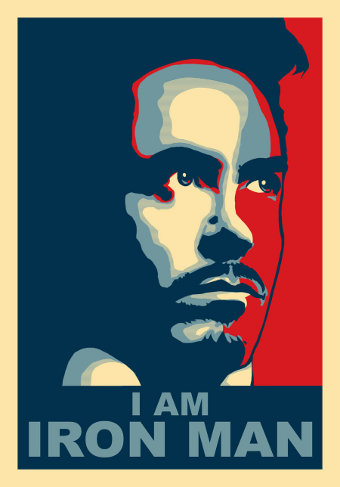
I am Iron Man

iron-man-3-posterFinally, be strong in the Lord and in the strength of his might. Put on the whole armor of God, that you may be able to stand against the schemes of the devil. For we do not wrestle against flesh and blood, but against the rulers, against the authorities, against the cosmic powers over this present darkness, against the spiritual forces of evil in the heavenly places. Therefore take up the whole armor of God, that you may be able to withstand in the evil day, and having done all, to stand firm. Stand therefore, having fastened on the belt of truth, and having put on the breastplate of righteousness, and, as shoes for your feet, having put on the readiness given by the gospel of peace. In all circumstances take up the shield of faith, with which you can extinguish all the flaming darts of the evil one; and take the helmet of salvation, and the sword of the Spirit, which is the word of God, praying at all times in the Spirit, with all prayer and supplication. To that end keep alert with all perseverance, making supplication for all the saints, and also for me, that words may be given to me in opening my mouth boldly to proclaim the mystery of the gospel, for which I am an ambassador in chains, that I may declare it boldly, as I ought to speak.

Ephesians 6:10-20

But on the other hand, Jews put their faith in clothing all the time. Back when the Temple had four walls, the kohanim (priests) wore special clothes. When Jacob wanted to express love for his son, Joseph, he made a special shirt, and all of Joseph’s brothers were so angry they decided to sell him. And when Jacob’s father, Isaac, was getting old and wanted to give Esau a blessing, Jacob’s mother, Rebecca, gave Jacob special clothes to fool his father into blessing him instead, while Esau was off trying to figure out how to hunt wild game with a kosher butcher’s knife. And we specifically wear certain clothes for certain rituals – the tallit (prayer shawl), tefillin, a yarmulke, a white kittel on Passover so we have something on which to spill our wine, and sneakers with our suits on Yom Kippur in case we want to go jogging later. So it’s not like we don’t place any value on clothes.

So how are we to reconcile this?

The case of Jacob seems pretty peculiar, though. Jacob was wearing Esau’s clothes to fool his father, but his father was blind. So who was he trying to fool?

-Mark Papers
“Iron Man 3 and Shavuot”
Aish.com

It has been said that the clothes make the man, but that seems like a pretty shallow way to assess a person’s capacities. On the other hand, people do tend to think, behave, and even feel differently depending on what they’re wearing. If you’re in a tuxedo going to a $500 a plate fund-raiser, you may behave differently than if you are dressed in a ragged t-shirt and swimming trunks going to your neighbor’s pool party.

I would have passed on any sort of commentary on Mr. Papers’ (not his real name) Iron Man 3 review if Pastor Randy hadn’t mentioned Ephesians 6 during his sermon last Sunday. It’s seemed like an odd coincidence, especially since Pastor’s message didn’t breathe one word about Tony Stark’s latest adventure on the big screen.

i-am-iron-manPapers drills down into the “clothes make the man” saying during his review, reminding us (spoilers ahead) that Stark (played by Robert Downey Jr) spends as much or more of his time in the film out of his Iron Man armor than in it. There are also sequences in his film where the armor is operated without anyone inside. What do we do with the “clothes” metaphor then?

At the end of the first Iron Man film (2008), instead of protecting his secret by manufacturing a lie as to who Iron Man is to him, Stark abruptly reveals to the world, “I am Iron Man.”

Stark isn’t just Iron Man when he’s in the suit, he’s Iron Man because that’s part of who he is…not as an inventor and not as a person who gets powers from technology, but because it is part of his lived identity. It didn’t start out that way. Stark, at the beginning of the original film, was a brilliant but wholly self-indulgent person who did whatever pleased him and was totally unconcerned about the consequences of his actions…until he realized that those consequences included the deaths of millions on a global scale, thanks to the black market sales of his weapons.

It was Iron Man who molded the soul of Tony Stark, gradually forming him into a hero from the heart outward as opposed to from the armor inward. Four films later, if you include The Avengers (2012), Tony is Iron Man, whether he’s wearing the armor or not.

But what does that have to do with you and me?

In his Ephesians letter, Paul uses the “armor of God” metaphor to say something similar. As human beings we are weak, mortal, frail, self-indulgent, vulnerable to a thousand temptations. We are anything but heroic. Oh, maybe the occasional person has extraordinary courage and strength, but most of us, including me, will never do the stuff we see heroes do, either in the movies or in real life.

Maybe.

That is, we won’t do it just of ourselves. Like Tony Stark before he was critically wounded, made a prisoner of the very people his weapons were designed to kill, before he saw his weapons used against the very soldiers he was supposed to protect, before the man who saved his life sacrificed himself so that Tony in his first, improvised suit, could escape his captors and return home to a renewed life and a new mission, we are weak and subject to our own passions. We are like spoiled children.

When we encounter God, he gives us something that is designed to change us. He gives us the ability to be heroes of a sort. He gives us the opportunity to be more than who we are…to realize the potential to be everything God designed us to be. The Word of God has been euphemistically called a “sword.” We can defend ourselves from all kinds of harm just by reading and studying the Bible. We can learn to protect others with its power.

Like Tony Stark’s fictional armor, we can let God’s armor change us…first from the outside in…and then from the inside out.

In this movie, like the Jews in the desert, Iron Man is taken out of his element and stripped down to just his goatee in the middle of nowhere. But in our case, the desert was our cocoon. God gave us the Torah, kept us away from distractions for a 40-year incubation period, and helped us grow before releasing us back into our homeland. The Torah is our armor. And after wearing that for 40 years, the hope is that we’ve internalized it.

Tony spent time upgrading his suits, but what he didn’t realize was that he needed to upgrade himself. He has to get a few things, um, ironed out. It’s not his metal that matters. It’s his mettle.

We all have within us what it takes to be heroes. We also have an outer shell, but the real question is what we do when it cracks open. Do we just kind of leak out, or are we Iron Man – unflinching in our values, even in the face of danger?

I am Iron Man.

bare-ironThere are different people going to Christian churches today and, for the sake of this blog post, I’m going to say that there are two different types of people. There are those who use the Bible and their faith like armor, like something they wear but also something that can be taken off once they leave church on Sunday…and there are those who wear their armor on the inside, who have integrated the Word, the will, the Spirit of God into their lives. They are Christians regardless of their circumstances. Even stripped down to their bare essentials, even if their churches and their Bibles are taken from them, who they are in God and who God is in them is the same. You can take everything from them but they will always be with God.

The armor doesn’t make the man…the armor and the man become the same.

This should be my absolute last “meditation” until sometime early next week. And no, I haven’t had a chance to see the IM3 movie yet.

132 days.

Unpopular Righteousness

unpopularThe ascent of the soul occurs three times daily, during the three times of davening. This is particularly true of the souls of tzadikim who “go from strength to strength.” It is certain that at all times and in every sacred place they may be, they offer invocation and prayer on behalf of those who are bound to them and to their instructions, and who observe their instructions. They offer prayer in particular for their disciples and disciples’ disciples, that G-d be their aid, materially and spiritually.

-Today’s Day
Hayom Yom: Iyar29, 44th day of the omer
Compiled and arranged by the Lubavitcher Rebbe,
Rabbi Menachem Mendel Schneerson, of righteous memory, in 5703 (1943)
from the talks and letters of the sixth Chabad Rebbe, Rabbi Yosef Yitzchak Schneersohn, of righteous memory.
Chabad.org

There is no free individual, except for he who occupies himself with the Torah.

-Ethics of the Fathers, 6:2

I had a great idea for a blog post last night before I went to bed. It communicated what I thought we all should be talking about with each other, not only on our blogs, but face-to-face, in our emails, in our phone calls, in every way possible…the communication and communion of holiness.

But then I went to sleep, and when I woke up, it was gone. I’m disappointed because the drive to write it is still within me. But now, I can’t give it expression.

This morning (as I write this), I read Derek Leman’s blog post What is Popular on a Messianic Blog?. I try to steer away from being identified as a “messianic blog” because it limits the audience I attract and fails to communicate that the message of Messiah is for all people, not just “messianics,” and for that matter, not just for “Christians.” The message of the love of God for humanity is for…humanity.

But Derek has a point.

Hands down, and no surprise, the winner of the numbers game is controversy. My leading blog post of the past year was an expose I did on Jim Staley, a Two House and Hebrew roots teaching pastor in Missouri, called “The Messianic Wall of Weird, #2.” And when Ralph Messer wrapped a pastor in a Torah scroll, told the pastor he was royalty in God’s eyes, and promised this bizarre misuse of a sacred object in Jewish life would restore this pastor from his problems, that blog post got a ton of readers (“Ralph Messer is Not a Messianic Jewish Rabbi”). A few critiques of Tim Hegg I have written have drawn many readers, but also lost me many readers, as some fans of Tim Hegg did not appreciate the criticism I threw his way. Of course, we should not be surprised that controversy is popular.

Controversy (especially if negative and more so if tied to a popular figure or current event).

My response to Derek’s missive was to compare this sort of “popularity” to a car accident with horrible human injuries, or NASCAR, where the attraction is the “hope” that there’ll be a massive pile up of cars traveling at high rates of speed, visions of body parts flying about the landscape fairly dancing in the minds of the fans.

OK, that’s probably a little harsh and I don’t doubt I owe an apology to many NASCAR fans out there.

But I also think I’m correct in that what draws a large, vocal audience tends not to be topics of substance but topics of controversy, especially if it’s ugly and there’s an opportunity to “spill blood,” in a virtual sense.

rock_starBut now I’m the one straying into the realm of controversy. See how tempting it is?

Tim at Onesimus Files posted a link to a highly “popular” blog post called When Rock-Star Preachers Spew a False Gospel published at Charisma News. The topic of “rock star preachers” is of interest to me because of my recent comments on “Biblical sufficiency” related to Part 1 and Part 2 of my commentary on John F. MacArthur (no, MacArthur’s not a “rock star preacher,” quite the opposite).

Drama is like blood in the water and we are all sharks looking for the next feeding frenzy.

But is that the way God wants us to be?

The Chofetz Chaim writes that because we are so involved in worldly matters, we lose our sensitivity to the great amount of joy we can potentially experience when performing a mitzvah (good deed). He offers the analogy of a man who was granted an audience with a powerful ruler. Imagine that the ruler is greatly impressed with the man, and has the conversation recorded in his personal diary. What a thrill! Upon returning home, the man’s face would glow with elation as he retells his experience to all his friends and neighbors. Even if he’d previously been worried over personal problems, he’d quickly forget them! Over the next years, whenever he’d meet others at some gathering, his successful meeting with the ruler would invariably be the topic of conversation.

Says the Chofetz Chaim: If this is the joy of someone who found favor with a mortal (who will eventually die and whose glory is short-lived), all the more so should we feel joy when we doing something which finds favor with the eternal Creator of the universe. Even afterward, when recalling the good deed, we will feel a glow of pleasure. In fact, the Torah (Deut. 28:47) stresses that we should feel more joy in serving the Almighty than from all other pleasures that exist.

-Rabbi Zelig Pliskin
“Daily Lift #813: Being in the Almighty’s Favor”
Aish.com

A new commandment I give to you, that you love one another: just as I have loved you, you also are to love one another.

John 13:34

We ask you, brothers, to respect those who labor among you and are over you in the Lord and admonish you, and to esteem them very highly in love because of their work. Be at peace among yourselves. And we urge you, brothers, admonish the idle, encourage the fainthearted, help the weak, be patient with them all. See that no one repays anyone evil for evil, but always seek to do good to one another and to everyone. Rejoice always, pray without ceasing, give thanks in all circumstances; for this is the will of God in Christ Jesus for you. Do not quench the Spirit. Do not despise prophecies, but test everything; hold fast what is good. Abstain from every form of evil.

Now may the God of peace himself sanctify you completely, and may your whole spirit and soul and body be kept blameless at the coming of our Lord Jesus Christ. He who calls you is faithful; he will surely do it.

1 Thessalonians 5:12-24

I suppose I could be criticized for choosing specifically optimistic and encouraging examples of scripture to place here, but then again, if you value the Word of God at all, you shouldn’t ignore them, either.

kindnessWhy do we do good? For the benefit of those around us. This is what God desires. However there is another motive. Each mitzvah we perform, each morsel of food or drink we give to a homeless person, each child’s skinned knee we put a band-aid on and kiss, each smile we give to a person we’re visiting in the hospital, not only helps the lonely and injured and not only helps the loneliness and injury within us, but it brings us closer to God.

We do good because only God is good (Mark 10:18; Luke 18:19). Only God is One (Deut. 6:4). Only by loving God can we love anyone else in the way God designed us to love (Matthew 22:34-40).

I could quote at length from the comments section of some “religious blogs” the transactions of believers who do not seem to be loving each other at all. Occasionally, I try to introduce the voice of reason and yes, of love, but I don’t know if it does any good. On the other hand, it’s difficult to ignore some of these venues. There are people out there who feel they have been badly hurt (and some of them really have) by a “church experience,” and in reaction, they say harsh things about all Christians in churches (and sometimes about Jewish people in synagogues). Reading some of their material is like watching someone terribly injured and bleeding while trapped in the wreckage of a disastrous car accident (and I’ve written about this before). It’s horrible to look at but I can’t turn away. I want desperately to help, but I don’t know how to get them out of the ghastly mess.

(I should say that I wrote this particular blog post several days before my controversial missive but this one was scheduled to be published while I was away from home.)

What do you do when someone is hurt, has been hurt for a long, long time, and yet doesn’t want to be helped? What do you do with people who totally identify with being hurt, who are defined by being hurt, by being victims, and yet don’t want to let go of the pain, even when they know that if they did finally, finally let go, they would be much better human beings…the people God intended them to be?

Is there “power” in playing the victim role? Absolutely. Look back to what I said before about “popular” blogs. Controversy, pain, “blood in the water,” arguments about who is a “true believer” and who is an “apostate” rule the religious web. Everything else, righteousness, holiness, goodness, devotion…all that stuff is boring. Who wants to read it? No one.

Well, that may be an exaggeration, probably a gross exaggeration. I suspect a “silent majority” of people do read about righteousness, holiness, goodness, and devotion, and absorb it into their beings like a starving child voraciously consumes a glass of milk. It’s just that most of them don’t talk about it, don’t comment on blogs, don’t demand to hear more, don’t speak out dynamically, don’t become impassioned, at least in any way we can see in the blogosphere.

As you’re reading this, I’m at First Fruits of Zion’s Shavuot Conference at Beth Immanuel Sabbath Fellowship in Hudson, Wisconsin. Through the miracle of scheduling blog posts, I can write this “last week” and have it become visible on the web Wednesday morning. I hadn’t intended to have new “mediations” be published while away from home, but as I said above, something is driving me to write about what we never talk about, or at least what is never “popular” to talk about.

doing_goodIt could be argued that something is only popular if it produces positive results within its audience and controversy rarely does that. Certainly the common definitions for the word “popular” include “regarded with favor, approval, or affection.” Can controversy be regarded with “affection?” On the other hand, look at what’s “popular” in our world today. Consider the TV shows with the highest ratings. What about movies, music, celebrities? Are these popular things and people always examples of righteousness, holiness, goodness, and devotion, or are they mere reflections of the moral state of our society? I suggest we try to do what is “unpopular.” As people of faith, we must go against the general grain if it violates what we are taught by our Master and Teacher.

The commentary for Pirkei Avot 6:2 states:

Why the roundabout, “negative” wording of the mishnah? Why not simply say “True freedom is attained through Torah”?

Man is a finite being, and everything he possesses and is capable of achieving is likewise finite in scope and extent. It would, therefore, follow that there is no such thing as a free human being. Not only do the proud, the envious, the ignorant and the greedy live in their own prison, but even the most emotionally stable and content individual, blessed with the most plentiful resources and leading the most uninhibited of lives, is still subservient to his own inherent limitations.

Thus, our mishnah opens with the statement, “There is no free individual.” But one who occupies himself with Torah, subordinating his mind and self to the wisdom and will of the Almighty, transcends this most basic nature of every created thing.

Torah defies the unbridgeable gap between the finite and the infinite. It is the wisdom and will of G-d, articulated in terms that the human being can comprehend, relate to and implement in his life. One who submits to the servitude of a life devoted to Torah experiences the freedom that eludes the most “independent” of men.

We also learn something important from Paul:

Put on then, as God’s chosen ones, holy and beloved, compassionate hearts, kindness, humility, meekness, and patience, bearing with one another and, if one has a complaint against another, forgiving each other; as the Lord has forgiven you, so you also must forgive. And above all these put on love, which binds everything together in perfect harmony. And let the peace of Christ rule in your hearts, to which indeed you were called in one body. And be thankful. Let the word of Christ dwell in you richly, teaching and admonishing one another in all wisdom, singing psalms and hymns and spiritual songs, with thankfulness in your hearts to God. And whatever you do, in word or deed, do everything in the name of the Lord Jesus, giving thanks to God the Father through him.

Colossians 3:12-17

white-pigeon-kotelToday, I’m attending a conference dedicated to the gifts of the Holy Spirit. One of those gifts as I see it, is fellowship and community within the body of Jewish and Gentile believers. One might even say that I am participating in “echad” or a sense of “oneness” within the body of Messiah, though it contains many dissimilar parts.

We are commanded to love one another. I think that means we should love each other even if we don’t always like each other. I know I’m not always likeable, but I pray that God finds me always loveable, through His abundant grace and mercy. And if He can love me, He can love anyone. That means I should love anyone, too.

And showing love, more than any act of superficiality or ceremony is what it is to be righteous and holy to God. May the injured find healing in Him.

A person with humility is able to accept misfortunes and suffering. The arrogant person, however, is not able to tolerate these events.

Rabbi Zelig Pliskin

“To become truly great, one has to stand with people, not above them.”

-Charles-Louis de Montesquieu

133 days.