Tag Archives: Messiah

When Will Being A Christian Be Enough?

onfire.jpgStrange Fire by John MacArthur is basically an attack on anything and everything related to the charismatic movement and the various movements descended from it, as if the whole of it were composed of one monolithic set of doctrines and practices that all of us espouse. It invalidates anything that smacks of the supernatural or of emotion freely expressed in God’s presence.

-R Loren Sandford
“Real Holy Spirit Fire Out”
CharismaNews.com

For Thursday’s “morning meditation,” I’m going to publish my own commentary on John MacArthur’s recent Strange Fire conference in Sun Valley, California, or rather, the implications of such activities when one member of the body of Christ apparently attacks another. It’s like my liver wants to eat my pancreas because my liver doesn’t think my pancreas is an authentic member of my body.

Hey! Don’t I have anything to say about it? After all, I need all those organs inside of me so I can stay alive and healthy. Doesn’t my liver have enough to do processing all of the toxic junk that enters my body through the environment (including what I eat) without going after all the other stuff inside my body that keeps me alive?

But enough about MacArthur, Strange Fire, and all that…at least in detail. What I want to know is why being “a Christian” isn’t enough?

Recently I became aware of the buzz surrounding a new book, soon to be released, by a prominent cessationist who has been around for a long time.

Reading MacArthur, you’d think all charismatics espouse prosperity teaching. We do not. You’d think we are all Word of Faith adherents when, in fact, they constitute a small minority and promote a doctrine many of us oppose.

-Sandford

Oh yuk! More divisions and doctrines.

Before now, I’d never heard of the debate between Cessationism vs. Continuationism. I have heard of Prosperity Theology (and am not impressed), but I had to look up Word of Faith to figure out what all that’s supposed to mean.

I’ve written before about how different religious streams are basically Systems human beings use as an interface between themselves and the Bible as well as between themselves and God. We use this sort of interface, like the Graphical User Interface (GUI) of your computer, to help us talk to and understand what otherwise would be inaccessible to us. You use the GUI of your computer to interact with the computer’s software and hardware. You use your religious systems to interact with the Bible and with God.

But as anyone who has used a computer can tell you, the interface isn’t a perfect environment and it has inherit limitations. So does any religious system, even yours.

christian-devotionI’ve talked with my Pastor before about the various Christian denominations and why he’s attracted in a certain denominational direction. Obviously, I lean in my own direction, though it’s far from the fundamentalist world of my Pastor. I’ve also lamented as to whether or not I’ll make a good Christian, but what I’m really saying is that I wonder if I’ll ever make a good and true “demominationalist.”

I know, you probably think of my “denomination” as “Messianic Judaism,” but that has a few problems (I’m going to write on related topics pretty soon), not the least of which is whether or not a Gentile Christian can practice Messianic Judaism or any other Judaism. With apologizes to Toby Janicki and his classic introduction of himself on the FFOZ TV show A Promise of What is to Come, I have my doubts.

On the other hand, Toby could be right, at least in the sense of the future, Messianic Kingdom. My Pastor tells me that “the Church” was formed in Acts 2 and although it started as a completely Jewish religious entity, with the addition of Gentiles and finally, when Gentiles became the “majority stockholders,” so to speak, it became separate from the rest of Israel and developed into its own “thing.”

I disagree.

The Jewish religious stream of “the Way” in the first century CE was the culmination of everything that came before it in Jewish and Biblical history, the apex of a dream, where Gentiles could join a Jewish religious stream in a way that resulted in reconciliation and justification before God without the Gentiles having to convert to Judaism or take on the Torah in the manner of Jewish people. In that sense, “the Church” wasn’t a new thing but it did a new thing…allowing the Gentiles in as equal members without necessarily equal Torah responsibilities.

It’s not that way now, thanks to all kinds of terrible things that happened in the decades and centuries to follow the destruction of Herod’s Temple, but I firmly believe it will be that way again for all of us when Messiah returns. There will be one, valid, thriving, religious stream that has evolved from Abraham, from Sinai, from the life of Messiah, that was always Jewish and will again be Jewish that we, the people from the nations who are called by His Name, are allowed to join, in a manner defined by Jewish authorities with the approval of the Holy Spirit (Acts 15) and commanded by Messiah (Matthew 28:19-20).

But it won’t look much or anything like “the Church” looks like right now.

prophetic_return1Fundamentalism, Charismatics, Word of Faith, Prosperity Theology, Calvinism, yada, yada, yada, will all be swept away from the lived experience of any approved believer and disciple of the Jewish Messiah when he establishes his throne in Jerusalem.

I can imagine there will be Christians and Jews who will resist the Kingship of Messiah in those days. I can imagine there will be a lot of people who will have great difficulty surrendering their pet theologies, doctrines, and dogmas, all of which have been invented in the last two-thousand years, and most of which have been invented only in the past several centuries (or even decades).

It will be enough to be a disciple of the Master. Put in “church-friendly” language, it will be enough to be a Christian.

Religious Jews practice Judaism by definition. In those days (and maybe as a foreshadowing, even today), Gentiles who are disciples and worshipers of the Jewish Messiah King will also “practice Messianic Judaism” in the manner defined for us by Messiah.

And it will be enough.

So try not to become too attached to all of that stuff we argue about now in the blogosphere, on websites, at conferences, in books we write and publish, stuff preached from the pulpit, discussed at the bema, taught in Sunday school, yada, yada, yada.

Learn to accept the idea that someday you may have to let go of most or all of your much-vaunted doctrines and dogmas, because being a disciple of Messiah as he desires us to be will be enough.

It will be enough.

cropped-cropped-jerusalem-snow.jpgDayenu.

The Face of the King

lion-in-the-stormThe sticks on which you write will be in your hand before their eyes. Say to them, ‘Thus says the Lord God, “Behold, I will take the sons of Israel from among the nations where they have gone, and I will gather them from every side and bring them into their own land; and I will make them one nation in the land, on the mountains of Israel; and one king will be king for all of them; and they will no longer be two nations and no longer be divided into two kingdoms. They will no longer defile themselves with their idols, or with their detestable things, or with any of their transgressions; but I will deliver them from all their dwelling places in which they have sinned, and will cleanse them. And they will be My people, and I will be their God.

Ezekiel 37:20-23 (NASB)

Tales of the Messianic Era series

This is a time yet to come. This is a time when God will restore all of the Jewish people to the Land of Israel as a single, united people. The kingdoms will not be divided as they were in days of old. One Israel under One God.

“My servant David will be king over them, and they will all have one shepherd; and they will walk in My ordinances and keep My statutes and observe them. They will live on the land that I gave to Jacob My servant, in which your fathers lived; and they will live on it, they, and their sons and their sons’ sons, forever; and David My servant will be their prince forever. I will make a covenant of peace with them; it will be an everlasting covenant with them. And I will place them and multiply them, and will set My sanctuary in their midst forever. My dwelling place also will be with them; and I will be their God, and they will be My people. And the nations will know that I am the Lord who sanctifies Israel, when My sanctuary is in their midst forever.”’”

Ezekiel 37:24-28 (NASB)

More over, united Israel will be ruled by One King, King Messiah, Son of David. But look at this. Messiah, the King of Israel and Ruler of the World will be their prince forever.

That would be pretty hard to do if Messiah were merely mortal. Of course, in the Messianic age, many will be resurrected, never to die again, so we could say the same of Messiah. But as a Christian, I must believe that Messiah is more.

God also says that the people of Israel, the Jewish people, will “walk in My ordinances and keep My statutes and observe them.” I know I recently wrote about all this, but I’m going through my notes on my recent reading of the latter portion of Ezekiel, so I thought this would be a good time to try to pull them together. I hope I can avoid repeating myself too much.

One puzzling thing I found was this:

Then I heard one speaking to me from the house, while a man was standing beside me. He said to me, “Son of man, this is the place of My throne and the place of the soles of My feet, where I will dwell among the sons of Israel forever.

Ezekiel 43:6-7 (NASB)

I checked a large number of translations of Ezekiel 43:7 and all except one said that the Divine Presence would inhabit Ezekiel’s Temple, the Temple of the Messianic Era, forever (Young’s Literal Translation says “to the age”). You can read the larger context of that chapter to confirm that God is speaking of inhabiting the Temple of Jerusalem in the Messianic age forever. Why is this such a big deal?

I saw no temple in it, for the Lord God the Almighty and the Lamb are its temple.

Revelation 21:22 (NASB)

This describes events after the arrival of the New Jerusalem, after the thousand-year reign of Messiah, after all that had to come to pass has come to past. Humanity is restored in the Garden as such, and God dwells with His people as He did in the beginning.

temple_jerusalemSo how can God dwell in Ezekiel’s temple forever if in the New Jerusalem there is no temple. More to the point, God and the Lamb are the temple. I’m not even sure what that means. I posed the question to a friend of mine and he suggested that as human history ends and we all move into eternity, maybe “forever” ends, too. After all, Messiah said that the Torah wouldn’t pass away until heaven and earth passed away (Matthew 5:18). At some point, heaven and earth, as we understand them, must pass away and something eternal must come in their stead.

Still, one of the things I’m trying to accomplish on this “mission” is to discover any dissonance between how the Tanakh (Old Testament) and the New Testament depict the Messiah and the age to come. The above definitely seems to qualify.

Alas, you who are longing for the day of the Lord,
For what purpose will the day of the Lord be to you?
It will be darkness and not light…

Amos 5:18 (NASB)

We all want the Messiah to come to rescue and repair our broken world, but we also forget that it won’t be *poof* Messiah comes and instantly everything is fixed. There is going to be terrible war against Israel’s enemies which probably will include everyone. It won’t be pretty. Good thing the Church will be raptured up to Heaven for those seven years (I say this somewhat tongue-in-cheek).

Then one of the elders answered, saying to me, “These who are clothed in the white robes, who are they, and where have they come from?” I said to him, “My lord, you know.” And he said to me, “These are the ones who come out of the great tribulation, and they have washed their robes and made them white in the blood of the Lamb.

Revelation 7:13-14 (NASB)

Wait a minute. Who is coming out of the tribulation?

Verse 14 doesn’t identify these people beyond saying that they are the ones who came out of the great tribulation, but they can’t be the Church, at least from a Christian point of view, since the last we see of the Church on earth is in Chapters 4 and 5. Everything in Chapters 6 through 19 is about the tribulation which the Church misses…

…or do they (we)?

It was also given to him to make war with the saints and to overcome them, and authority over every tribe and people and tongue and nation was given to him. All who dwell on the earth will worship him, everyone whose name has not been written from the foundation of the world in the book of life of the Lamb who has been slain. If anyone has an ear, let him hear. If anyone is destined for captivity, to captivity he goes; if anyone kills with the sword, with the sword he must be killed. Here is the perseverance and the faith of the saints. (emph. mine)

Revelation 13:7-10 (NASB)

What are “saints” doing on earth during the tribulation and undergoing such harsh conditions for the perseverance of their faith? Of course, they could be people who came to faith after the Church was raptured, but would they be called “saints?” Usually people in the Church are called “saints.”

waiting-for-mannaThe doctrine of the Rapture didn’t come along until the 17th century, so it wasn’t as if the concept most Christians are pinning their hopes and dreams on has been around since the beginning. In fact, Googling “rapture doctrine” returns a series of links, many of which lead to web pages (of unverified validity) that criticize this very recent Church doctrine.

2 Thessalonians 2:3 speaks of apostasy or “falling away” of the faithful that will occur when many are deceived by the “man of lawlessness.” I can’t directly tie any “falling away” to Christians expecting a rapture to Heaven that never arrives, but I could very well believe that a lot of Christians will indeed fall away once the tribulation starts and they’re still here during the war between Messiah and Israel’s enemies. Why weren’t we given the break and free passage to Heaven we were promised from the pulpit?

I’m not saying all this to be mean-spirited but as a cautionary tale. What if Amos 5:18 is talking to believers, explaining to us that we shouldn’t be so quick to desire the coming of Messiah because it will be “the great and terrible day of the Lord.”

“I kept looking in the night visions,
And behold, with the clouds of heaven
One like a Son of Man was coming,
And He came up to the Ancient of Days
And was presented before Him.
“And to Him was given dominion,
Glory and a kingdom,
That all the peoples, nations and men of every language
Might serve Him.
His dominion is an everlasting dominion
Which will not pass away;
And His kingdom is one
Which will not be destroyed.”

Daniel 7:13-14 (NASB)

This is obviously a vision of Messiah’s coming, but I’ve always wondered why Daniel phrased it “one like the Son of Man?” Here we have a description of the Son of Man’s Kingdom never being destroyed, we have a vision of him coming on clouds of heaven (as opposed to just being born and being a great but totally human Jewish leader as most of Judaism believes of the Moshiach), and we get the sense that he is more than human.

Renowned Talmud scholar Daniel Boyarin wrote a book called The Jewish Gospels: The Story of the Jewish Christ, which I reviewed on more than one occasion. Boyarin, who is Jewish and not a believer, makes a credible case for why a large number of first century Jews in Israel and the diaspora came to faith in Yeshua (Jesus) as Messiah. Part of his evidence for why Yeshua would be seen as a legitimate candidate for Messiah comes from Daniel 7.

This classic and mysterious Jewish text by a well-known but possibly not a well understood prophet may be one of the keys to unlocking the identity of Moshiach. I sometimes receive criticism from Jewish people for my continuing faith, but somewhere between traditional Christian evangelism and Jewish anti-missionaries, may be an unbiased truth in the reading of the Bible. We must seek it out in order to escape our “religious blinders” about Messiah, so that we can see him as he truly is, not as how one doctrine or another imagines him to be.

And the children of Zion, rejoice and jubilate with the Lord your God, for He gave you the teacher for justification, and He brought down for you rain, the early rain and the late rain in the first month.

Joel 2:23

the-teacher2I had to go to Chabad.org to find a translation that describes Messiah as a teacher. Most Christian Bible translations render “He gave you the teacher” as something like “He has given you the early rain…” (NASB translation).

The Douay-Rheims Bible says “he hath given you a teacher of justice,” and Young’s Literal Translation says “He hath given you the Teacher for righteousness.”

The Jewish understanding of Messiah is that, among other things, he will come to teach us what we need to know of his ways and how we should serve him. Christianity expects a warrior, a priest, and a King, but we miss how he will teach us the Torah of justice and righteousness, tzedakah if you will (see my review of the FFOZ TV episode Seek First the Kingdom for a more detailed description of the relationship between tzedakah [charity] and justice and righteousness).

So what can we conclude from my brief (and hardly comprehensive) review of Messianic prophesy?

  • Messiah will come as the One and eternal King of Israel, return the exiled Jews to their Land, the Land of Israel, and unite them as a one people in one Kingdom ruled by one King Messiah forever.
  • The “law of the land” (Israel) will be Torah, and the Jewish people will walk in God’s statues and ordinances as in days of old, but with the Torah written on their hearts rather than on scrolls.
  • The Divine Presence will once again inhabit the third and final Temple in Jerusalem forever (though we have difficulty reconciling this with Rev. 21).
  • There will be “saints” going through the tribulation who suffer and who are killed for the sake of their faith, drawing into sharp dispute the accuracy of the modern doctrine of “the Rapture,” which states “the Church” will be literally removed from earth and into Heaven for the entire length of those troubled days.
  • The Messiah is the Son of Man and the Prince, who seems to be more than a man, who will reign eternally, who will come on the clouds of heaven, possibly in direct contradiction of modern Jewish religious thought (for the most part) which states Messiah will be completely human with no supernatural (and certainly no Divine) nature.
  • Of his many roles in the age to come, Messiah will be a teacher of justice and righteousness.

Who is the King in the age to come? Who is Messiah, Son of David, Son of God?

Christians know him as Jesus Christ. Most religious Jews see him as King Messiah. Any similarity between the two is faint at best and at worst, nonexistent.

But if you believe in a Messiah at all as either Christian or Jew, you have a duty to set aside your preconceptions and what you have been taught (and what has been assumed by your religious stream for hundreds of years) and investigate for yourself what the scriptures say. In my case, this is paying close attention to any dissonance that may occur between the Old and New Testaments. Messiah is an objective being, apart from our need to paint his portrait one way or the other. Instead of seeking his portrait, I need to see his face.

Ezekiel and Paul on Messiah and Torah

destruction_of_the_templeFor they have committed adultery and there is blood on their hands and they have committed adultery with their idols; and even their children, whom they had borne for Me, they passed before them to be consumed. Moreover, they have done this to Me: They defiled My Sanctuary on that day, and they desecrated my Sabbaths, when they slaughtered their children for their idols they would come to My Sanctuary on that very day to defile it! Behold, they have done this in My Temple!

Ezekiel 23:37-39 (Stone Edition Tanakh)

Therefore no one is to act as your judge in regard to food or drink or in respect to a festival or a new moon or a Sabbath day—things which are a mere shadow of what is to come; but the substance belongs to Christ.

Colossians 2:16-17 (NASB)

Tales of the Messianic Era series

Sorry. This is a long one. I was dozing in bed this (Sunday) morning when a few thoughts pulled together for me. This “mediation” is the result.

It seems that, according to the prophet Ezekiel (and many other prophets in the Tanakh), God really, really cared about the Israelites keeping His Sabbaths (the weekly Sabbath and the Moedim or Holy, appointed times), but Paul seems to think they don’t matter. Of course, the traditional Christian resolution is that Ezekiel lived on one side of the cross and Paul on the other. Jesus changed everything.

But did he?

I won’t be seeing my Pastor again for one of our conversations for another week or so, but in our review of D. Thomas Lancaster’s book The Holy Epistle to the Galatians, and specifically the chapter covering Galatians 2:15-16, Pastor asked me to read all of Galatians 2 as well as Romans 3 and 4, and Colossians 2 to prepare for our next discussion.

I can see where he’s leading.

Not too long ago, I reviewed an episode of the First Fruits of Zion TV show called The Torah is Not Canceled. The episode is based on a particular interpretation of the following words of the Master:

“Do not think that I came to abolish the Law or the Prophets; I did not come to abolish but to fulfill. For truly I say to you, until heaven and earth pass away, not the smallest letter or stroke shall pass from the Law until all is accomplished. Whoever then annuls one of the least of these commandments, and teaches others to do the same, shall be called least in the kingdom of heaven; but whoever keeps and teaches them, he shall be called great in the kingdom of heaven.

Matthew 5:17-19 (NASB)

crossYou can click the links I provided to get the deeper analysis from my review or by watching the episode, but the basic idea is that Jesus is saying he did not come to neglect the Torah or to teach others to neglect it, but rather to teach it correctly and to obey Torah himself. Of course, this too is on the “wrong side of the cross,” so my Pastor could just say that after his death and resurrection, Jesus changed his teachings. But that would be really confusing for him to teach one way before his death and then completely change things after the resurrection. Christian doctrine demands that he did so, but it defies not only logic, but the overall narrative of the Bible as God’s message to the Jewish people and the rest of the world.

In Ezekiel and many other places in the Old Testament, we see God caring very much about whether or not the ancient Israelites obeyed His commandments. There were dire consequences for them neglecting the mitzvot including exile and death.

Now the Lord was angry with Solomon because his heart was turned away from the Lord, the God of Israel, who had appeared to him twice, and had commanded him concerning this thing, that he should not go after other gods; but he did not observe what the Lord had commanded. So the Lord said to Solomon, “Because you have done this, and you have not kept My covenant and My statutes, which I have commanded you, I will surely tear the kingdom from you, and will give it to your servant.

1 Kings 11:9-11 (NASB)

But the house of Israel rebelled against Me in the wilderness. They did not walk in My statutes and they rejected My ordinances, by which, if a man observes them, he will live; and My sabbaths they greatly profaned. Then I resolved to pour out My wrath on them in the wilderness, to annihilate them. But I acted for the sake of My name, that it should not be profaned in the sight of the nations, before whose sight I had brought them out. Also I swore to them in the wilderness that I would not bring them into the land which I had given them, flowing with milk and honey, which is the glory of all lands, because they rejected My ordinances, and as for My statutes, they did not walk in them; they even profaned My sabbaths, for their heart continually went after their idols.

Ezekiel 20:13-16 (NASB)

God expects obedience to His commands by Israel’s Kings, Prophets, and the nation as a whole. Disobedience carries dire consequences.

Do not imagine that I have come to violate the Torah or the words of the prophets. I have not come to violate but to fulfill. For, amen, I say to you, until heaven and earth pass away, not one yod or one thorn will pass away from the Torah until all has been established.

Matthew 5:17-18 (DHE Gospels)

messiah-prayerJesus tells his disciples and his critics that he has not come to disobey the mitzvot or to teach others to do so but rather, to teach others to obey the mitzvot and to obey them himself. Further, he says that heaven and earth will pass away before even the tiniest detail of the Torah passes away. Since heaven and earth continue to exist, long after the death, resurrection, and ascension of Jesus, logically, I have to conclude that the Torah still applies to the Jewish people as it did the day Jesus uttered those words.

But then, what do I do with the following?

I do not nullify the grace of God, for if righteousness comes through the Law, then Christ died needlessly.”

Galatians 2:21 (NASB)

But now apart from the Law the righteousness of God has been manifested, being witnessed by the Law and the Prophets, even the righteousness of God through faith in Jesus Christ for all those who believe; for there is no distinction; for all have sinned and fall short of the glory of God, being justified as a gift by His grace through the redemption which is in Christ Jesus; whom God displayed publicly as a propitiation in His blood through faith. This was to demonstrate His righteousness, because in the forbearance of God He passed over the sins previously committed; for the demonstration, I say, of His righteousness at the present time, so that He would be just and the justifier of the one who has faith in Jesus.

Where then is boasting? It is excluded. By what kind of law? Of works? No, but by a law of faith. For we maintain that a man is justified by faith apart from works of the Law. Or is God the God of Jews only? Is He not the God of Gentiles also? Yes, of Gentiles also, since indeed God who will justify the circumcised by faith and the uncircumcised through faith is one.

Romans 3:21-30 (NASB)

Of course, Paul immediately says in the next verse, “Do we then nullify the Law through faith? May it never be! On the contrary, we establish the Law.”

From my point of view, Paul isn’t “undoing” the Torah (Law) but rather, he’s saying (and this is how I read his entire message to the churches in Galatia) that Torah obedience doesn’t justify anyone before God.

However…

…that doesn’t mean God disdains the Law that He Himself created or that Jesus unplugged Jewish obedience to God from God’s overall plan. Jesus said that the Torah wouldn’t pass away, not even in the smallest detail, until heaven and earth passed away.

So the “anti-Torah” portions of Paul’s letters either mean Paul was hopelessly conflicted about the Torah or that Christian tradition has erroneously interpreted Paul for a very long time now.

As you probably guessed, I read Ezekiel quite recently and I “discovered” some startling things about the future; about the Messianic Age that is yet to come:

And He said to me, “Son of man, thus says the Lord God, ‘These are the statutes for the altar on the day it is built, to offer burnt offerings on it and to sprinkle blood on it. You shall give to the Levitical priests who are from the offspring of Zadok, who draw near to Me to minister to Me,’ declares the Lord God, ‘a young bull for a sin offering. You shall take some of its blood and put it on its four horns and on the four corners of the ledge and on the border round about; thus you shall cleanse it and make atonement for it. You shall also take the bull for the sin offering, and it shall be burned in the appointed place of the house, outside the sanctuary.

Ezekiel 43:18-21 (NASB)

temple-of-messiahHere we see the future Temple, the one that will exist in the Messianic Era. God is describing the sacrifices that will be offered by the Levitical priests in the future Temple, just as those sacrifices were offered in the Mishkan (Tabernacle) in the desert and in Solomon’s Temple. In Ezekiel 44:15-31, God is describing the ordinances that apply to the Levitical priests, which mirror those originally given in the Torah.

And then we have this:

‘Thus says the Lord God, “The gate of the inner court facing east shall be shut the six working days; but it shall be opened on the sabbath day and opened on the day of the new moon. The prince shall enter by way of the porch of the gate from outside and stand by the post of the gate. Then the priests shall provide his burnt offering and his peace offerings, and he shall worship at the threshold of the gate and then go out; but the gate shall not be shut until the evening. The people of the land shall also worship at the doorway of that gate before the Lord on the sabbaths and on the new moons. The burnt offering which the prince shall offer to the Lord on the sabbath day shall be six lambs without blemish and a ram without blemish; and the grain offering shall be an ephah with the ram, and the grain offering with the lambs as much as he is able to give, and a hin of oil with an ephah. On the day of the new moon he shall offer a young bull without blemish, also six lambs and a ram, which shall be without blemish. And he shall provide a grain offering, an ephah with the bull and an ephah with the ram, and with the lambs as much as he is able, and a hin of oil with an ephah. When the prince enters, he shall go in by way of the porch of the gate and go out by the same way. But when the people of the land come before the Lord at the appointed feasts, he who enters by way of the north gate to worship shall go out by way of the south gate. And he who enters by way of the south gate shall go out by way of the north gate. No one shall return by way of the gate by which he entered but shall go straight out. When they go in, the prince shall go in among them; and when they go out, he shall go out.”

Ezekiel 46:1-10 (NASB)

The Prince, that is, Messiah, will offer the traditional sacrifices in the Temple, and he shall, along with all Israel, observe the New Moons and Sabbaths in accordance with the commands of God in the Torah. This is all supposed to happen in the future Messianic Age, on the “right side of the cross,” and apparently in direct contradiction to what Paul wrote in Colossians 2:16-17.

So we have a few options to consider. If the traditional Christian interpretation of Paul is right, then in spite of all of the evidence in the Old Testament to the contrary, and especially Ezekiel, Jesus “undid” the Torah of Moses for the Jewish people. But that doesn’t make sense. Not only would Paul have to contradict the Old Testament prophets, but he’d have to contradict Jesus and even himself. The scriptures between the Old Testament, the Gospel of Matthew, and the different letters of Paul don’t match up.

If that option doesn’t work, where can we turn?

The only other direction to move in (unless we want to dismantle Christianity) seems to be the fact that the traditions Christianity have been using to understand the New Testament and probably the whole Bible need a bit of reworking. You can’t ignore one part of the Bible in favor of the other. If Paul seems to contradict the Old Testament prophets and Jesus himself, then either Paul is wrong and our New Testament is hopelessly flawed (in which case, we have to dismantle Christianity), or we’re seriously reading things in the wrong way. We don’t understand Paul and we are forcing an interpretation on him that doesn’t fit and that Paul himself would never recognize.
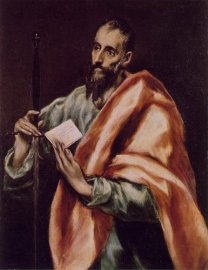
Apostle-PaulWe know from Ezekiel that the Messiah and all Israel will once again offer sacrifices at the Temple, that all of the Sabbaths and New Moons will be observed, that the Levitical priesthood will be restored, and that the Torah mitzvot will be performed correctly by the Jewish people. From Matthew, we know that not one tiny detail of the Torah will pass away until heaven and earth pass away. And from Paul we learn that no matter how important obeying God is by observing the Torah mitzvot, behavioral obedience doesn’t justify anyone, Jew or Gentile, before God. Only faith justifies through God’s grace.

But we still have one little problem. If the Torah is still fully in effect for the Jewish people, what about Jewish disobedience? We have a long record in the Tanakh of the ghastly consequences for such disobedience. While the nation of Israel exists again today, it is still a largely secular nation. Also, many, many Jewish people still choose to live in the diaspora (exile) rather than making Aliyah to Israel and living in the Land, which is also a commandment. Many, many Jews in Israel and all over the world do not observe all or even some of the mitzvot.

What is God’s response to all of this?

Now therefore why do you put God to the test by placing upon the neck of the disciples a yoke which neither our fathers nor we have been able to bear? But we believe that we are saved through the grace of the Lord Jesus, in the same way as they also are.”

Acts 15:10-11 (NASB)

We see a couple of interesting things here. First of all, Peter calls the Torah “a yoke which neither our fathers nor we have been able to bear.” If that’s true, then why do we see so many complementary references to the Torah in both the Old and New Testaments? The answer, I believe, is the long history of Israelite disobedience to the mitzvot which resulted in God’s terrible wrath upon Israel. Faith and obedience to God in the Torah is wonderful, but the consequences of faithlessness and disobedience are disastrous, a yoke that Israel has not been able to bear.

But Peter also said something else. It wasn’t the words he used but the order of them. He said that “But we believe that we (Jews) are saved through the grace of the Lord Jesus, in the same way as they (Gentiles) also are.” As a Jewish person and an apostle, you’d have expected Peter to say that the Gentiles are saved in just the same way as we Jews are. That’s how it was expressed on previous occasions including Acts 10:45.

I think this might be the answer:

For as many as are of the works of the Law are under a curse; for it is written, “Cursed is everyone who does not abide by all things written in the book of the law, to perform them.” Now that no one is justified by the Law before God is evident; for, “The righteous man shall live by faith.” However, the Law is not of faith; on the contrary, “He who practices them shall live by them.” Christ redeemed us from the curse of the Law, having become a curse for us—for it is written, “Cursed is everyone who hangs on a tree” — in order that in Christ Jesus the blessing of Abraham might come to the Gentiles, so that we would receive the promise of the Spirit through faith.

Galatians 3:10-14 (NASB)

clinging_to_torahI believe Paul is saying a couple of things here. First, he is continuing with his central theme in this letter that no one is justified by obedience to Torah in and of itself. If anyone depends on their Torah obedience to justify them before God, then they will be judged by God based on their obedience alone. Since we have a long history of Israel disobeying Torah or not obeying it completely, any disobedience carries with it the curses God proscribed for disobedience, namely things like famine, exile, war, and death.

There is evidence that some first century Jewish people, including some Jewish believers, thought that they could only be justified before God by obedience to the mitzvot (Acts 15:1-2 for example). I think the “light bulb” went off over Peter’s head as he was speaking in front of the Council in Acts 15. I think he understood the Gentiles were saved by faith but it suddenly dawned on him that the same “mechanism” that saves Gentiles also saves Jews…faith, not observance of the mitzvot alone and not being ethnically Jewish.

So what did Jesus “nail to the cross?” Not the Torah. We have too much evidence that says the “curse of the Law” isn’t the Law itself. I believe what he “nailed to the cross” were the curses for Jewish disobedience of Torah. The “yoke” that Israel has never been able to bear. This is the freedom the Jewish people experience in Messiah. And through Messiah, the blessing of Abraham has come to the people of the nations so we too can receive the promise of the Spirit through faith.

I found a rather helpful individual comment on the blogosphere that I think helps illuminate this point:

I would like to add to this that Yeshua removed the curse of the Torah not by making this curse in itself invalid or inapplicable, but by introducing an atonement which exceeds the means of atonement provided by the legal system of the Torah. For in and through his sacrifice we can be justified from all things, from which we couldn’t be justified by the Torah of Moses (cf. Acts 13:39). In becoming a curse for us by being hanged on a tree, Messiah provided a means of atonement which results in eternal and definite forgiveness for those who truly repent, and in this manner he redeemed us from the curse of the Torah (Gal. 3:13).

More: Derek Leman has recently written a blog post on a related topic called Physical and Spiritual Election.


The Messianic Kingdom is not a Democracy

snow-in-jerusalem-bookFor centuries, Jerusalem has been a holy place for Jews, Christians, and Muslims. It has been referred to as both the Center of the Universe and the Eternal City. Jerusalem has also been called the City of Peace despite the fact that it has often been the object of bloody battles over religion and territory.

Today, Jerusalem is a city within a city. Surrounded by Arab East Jerusalem and Jewish West Jerusalem is the ancient Old City, an area of some 220 acres. The Old City is encircled by walls built in the sixteenth century by the Ottoman emperor Suleiman the Magnificent. Visitors may enter the Old City through one of seven large gates.

Inside, the Old City is divided physically and culturally into four sections: the Jewish Quarter, the Muslim (Arab) Quarter, the Armenian Quarter, and the Christian Quarter. These divisions are not totally segregated, however, and include some overlap of cultures. Nevertheless, Jewish and Arab children go to separate schools…

-Deborah da Costa
from the Author’s Note of her book
Snow in Jerusalem

In her affecting but message-driven debut children’s book, da Costa relays the story of two boys who live in Jerusalem’s Old City Avi in the Jewish Quarter and Hamudi in the Muslim Quarter. A fluffy white cat wanders between the homes of the two boys, relishing the scraps each feeds her. Then weeks pass without any sign of the cat, alarming each boy. Looking skinny and dirty, the cat at last visits Avi, who then follows her to Hamudi’s neighborhood, where the youngsters begin to argue, each claiming the cat is his. As a rare snowfall begins, the boys stop bickering and, fearing that the beloved animal will freeze, follow her through Jerusalem to a dark alley where they discover four kittens in a box. As the mother purrs loudly and rubs against the boys, they conclude, “She does not want us to fight…. She wants peace.”

-from the Publisher’s Weekly review of the same book
found at Amazon.com

Tales of the Messianic Era series

My wife checked this book out of our local library (along with a dozen other children’s books) for our four-and-a-half year old grandson, Landon. I took last Friday off of work and spent the day with the little guy. After arts and crafts at the library, lunch of (homemade) macaroni and cheese, two or three episodes of Jonny Quest (1964), Legos and other toys, we got down to the business of reading. Da Costa’s “Snow in Jerusalem” was one of the books he wanted me to read to him while he was enjoying a mid-afternoon snack.

I enjoyed reading the book and especially the feeling of actually walking the streets of the Old City between the Jewish and Arab quarters, but reading the Author’s Note at the very end stopped me cold. I realized that this was a book promoting peace, not just between the characters Avi and Hamudi in the book, but between peoples and cultures. That’s not a bad thing certainly, but there was a further undercurrent suggesting a perpetual sharing of all of Israel, sub-divided between Jewish Israel and Arab Palestine.

That’s a popular solution for the conflict between these two people groups, especially among political and social liberals, but it flies in the face of the Bible and I believe is an affront to God. To be clear, I don’t think peace between all the different people of the world is the affront, but I do believe carving up Israel into different chunks for different people like separating the white and dark meat of a turkey on Thanksgiving is.

The word which Isaiah the son of Amoz saw concerning Judah and Jerusalem.

Now it will come about that
In the last days
The mountain of the house of the Lord
Will be established as the chief of the mountains,
And will be raised above the hills;
And all the nations will stream to it.
And many peoples will come and say,
“Come, let us go up to the mountain of the Lord,
To the house of the God of Jacob;
That He may teach us concerning His ways
And that we may walk in His paths.”
For the law will go forth from Zion
And the word of the Lord from Jerusalem.
And He will judge between the nations,
And will render decisions for many peoples;
And they will hammer their swords into plowshares and their spears into pruning hooks.
Nation will not lift up sword against nation,
And never again will they learn war.

Come, house of Jacob, and let us walk in the light of the Lord.

Isaiah 2:1-5 (NASB)

gateway_jerusalemIn reviewing various scriptures in the Tanakh (Old Testament) about the Messianic Era and the future King of Israel, I don’t see any references to taking the Land of Promise, which God gave to Abraham, and to Isaac, and to Jacob, and all of the physical descendants of that specific line (and notice Ishmael is not included, nor any of Abraham’s other sons) and splitting it up into Jewish and non-Jewish portions. The only “splits” of the Land involved the different areas given to the twelve tribes of Israel.

Messiah will come to return all of the exiled Jewish people to their Land and to rebuild Jerusalem as the Jewish city.

The Lord God, who gathers the dispersed of Israel, declares,
“Yet others I will gather to them, to those already gathered.”

Isaiah 56:8 (NASB)

I will be found by you,’ declares the Lord, ‘and I will restore your fortunes and will gather you from all the nations and from all the places where I have driven you,’ declares the Lord, ‘and I will bring you back to the place from where I sent you into exile.’

Jeremiah 29:14 (NASB)

These are just a few of the examples in scripture declaring that Messiah will gather the exiles of Israel and restore them to their nation.

Peace is a wonderful thing. So is fairness, equity, sharing, friendship, and the like. But how we imagine these general concepts and their application in Messianic Days may not be how they will really play out. Remember, whether you are Jewish or Christian, the Messiah is King, not President or Prime Minister. A Kingdom is not the same as a Democracy. Citizens of a Kingdom ruled by a single Monarch do not get to vote on laws, rules, and ordinances. The King’s Word is Law.

We all assume that everyone will get what they want in the Messianic Kingdom. Perhaps that is true, but I suspect for some people it will not be so. What if you’re a Muslim and the Jewish Messiah comes to rule not only Israel (all of Israel) as a Jewish nation, but the entire planet? For that matter, what if you are a Christian and you suddenly realize just how Jewish your “Jesus” really is? What if the King establishes without any equivocation that the Jewish nation is the head of all the nations (rather than the United States of America), and that the Torah is the Law of the Land for Israel and incumbent upon all of the Jewish people? What if some portions of that Torah go forth from Zion, and apply to all the people of the nations who are called by His Name (Amos 9:11-12)?

Don’t we get a vote on this? Don’t we have a say? How could this possibly be fair? Where is God’s justice?

There will be nothing else but God’s justice on Earth during the Messianic Age. People will get what they need but not always what they want according to the will of God. We will have peace. Our swords will be beaten into plowshares and our spears into pruning hooks, but only after Messiah has led a vast army to defeat all of Israel’s enemies (including, most likely, the United States of America). God Himself will fight for Israel, crush her adversaries, and establish her security.

The Lord will be king over the whole earth. On that day there will be one Lord, and his name the only name.

Zechariah 14:9 (NIV)

Are you getting the picture. The Lord will be one and His Name, One.

In that day the Root of Jesse will stand as a banner for the peoples; the nations will rally to him, and his resting place will be glorious.

He will raise a banner for the nations and gather the exiles of Israel; he will assemble the scattered people of Judah from the four quarters of the earth.

Isaiah 11:10, 12 (NIV)

ffoz-tvNot only will Messiah gather the Jewish exiles and restore them to Israel, but he will act as a banner for the rest of us, drawing us to him.

But remember, we won’t get a vote. This is Law.

The only and last functioning Theocracy (nation directly ruled by God) on Earth was ancient Israel before the people demanded that Samuel anoint Saul as King.

In the Messianic Age, that Kingdom, that Theocracy will be restored. A Davidic King, the last Davidic King will ascend the Throne in Jerusalem again, David’s Throne, which God promised to David and to his descendants forever.

For the sons of Israel will remain for many days without king or prince, without sacrifice or sacred pillar and without ephod or household idols. Afterward the sons of Israel will return and seek the Lord their God and David their king; and they will come trembling to the Lord and to His goodness in the last days.

Hosea 3:4-5 (NASB)

For many, many centuries, Israel has been without a King, but it will not always be so. The King is coming. He will return. He will restore his people, the Jewish people, and all of humanity will go up to Jerusalem, and every knee will bow, to the Ruler, the Prince, the King, Messiah, Son of David, the Righteous Branch.

With respects to Deborah da Costa, while there will be peace within Jerusalem and her walls will forever be secure, it will not be the sort of peace established by a Jewish boy and an Arab boy arguing over possession of a cat and her kittens. It will be a brutally fought and hard-won peace where real adversaries will spill gallons of blood and mountains of dead flesh will decay in the sun and be eaten by carrion birds.

Enemies will be defeated in a war lead by a King whose rule is absolute. Peace will come when all of those enemies are dead, and the survivors of the nations defeated by Israel’s armies and by God must come to Jerusalem once a year to honor the King on Sukkot.

Then it will come about that any who are left of all the nations that went against Jerusalem will go up from year to year to worship the King, the Lord of hosts, and to celebrate the Feast of Booths. And it will be that whichever of the families of the earth does not go up to Jerusalem to worship the King, the Lord of hosts, there will be no rain on them. If the family of Egypt does not go up or enter, then no rain will fall on them; it will be the plague with which the Lord smites the nations who do not go up to celebrate the Feast of Booths. This will be the punishment of Egypt, and the punishment of all the nations who do not go up to celebrate the Feast of Booths.

Zechariah 14:16-19 (NASB)

And then there will be peace.

Everyone will sit under their own vine
and under their own fig tree,
and no one will make them afraid,
for the Lord Almighty has spoken.

Micah 4:4 (NIV)

white-pigeon-kotelPeace comes when the Lord Almighty has spoken it, not when we have imagined some man-made utopia and think we can make it real just by publishing enough books, television shows, and movies based on that fantasy.

All that said, we can escape the fantasy and be part of building the way to Messianic peace now, at least a little of it. But we have to grasp onto the “fringes” of the garment of God, so to speak, humble ourselves, and speak the words of the coming Kingdom and the King who is to be. We can choose that path, or deny it and inherit a more terrible end.

“…and you will come up against My people Israel like a cloud to cover the land. It shall come about in the last days that I will bring you against My land, so that the nations may know Me when I am sanctified through you before their eyes, O Gog.”

Ezekiel 38:16 (NASB)

That choice is ours to make. The King has been patient with us, but his patience will end, and we had better be ready when it does. We are either soldiers in his army or on the side that will see defeat. We will see peace in the Kingdom or find the peace of the grave. The Holy One of Jacob neither slumbers or sleeps.

And he is the King. We must bow or be broken.

Jerusalem has been called the Center of the Universe and the Eternal City. But it is also known as the City of David. One day it will truly be the City of Peace.

A Quick View of the Coming of Messiah Through a Jewish Lens

cloaked-in-light-tallitBelief in the eventual coming of the mashiach is a basic and fundamental part of traditional Judaism. It is part of Rambam’s 13 Principles of Faith, the minimum requirements of Jewish belief. In the Shemoneh Esrei prayer, recited three times daily, we pray for all of the elements of the coming of the mashiach: ingathering of the exiles; restoration of the religious courts of justice; an end of wickedness, sin and heresy; reward to the righteous; rebuilding of Jerusalem; restoration of the line of King David; and restoration of Temple service.

Modern scholars suggest that the messianic concept was introduced later in the history of Judaism, during the age of the prophets. They note that the messianic concept is not explicitly mentioned anywhere in the Torah (the first five books of the Bible).

However, traditional Judaism maintains that the messianic idea has always been a part of Judaism. The mashiach is not mentioned explicitly in the Torah, because the Torah was written in terms that all people could understand, and the abstract concept of a distant, spiritual, future reward was beyond the comprehension of some people. However, the Torah contains several references to “the End of Days” (acharit ha-yamim), which is the time of the mashiach; thus, the concept of mashiach was known in the most ancient times.

from “Mashiach: The Messiah”
Judaism 101

The Jewish people are compared to the stars twinkling in the high heavens. By their light, even he who walks in the darkness of night shall not blunder. Every Jew, man or woman, possesses enough moral and spiritual strength to influence friends and acquaintances, and bring them into the light.

-from “Today’s Day”
Wednesday – Cheshvan 5 – 5704
Compiled by the Lubavitcher Rebbe; Translated by Yitschak Meir Kagan
Chabad.org

Tales of the Messianic Era series

A few days ago, I wrote a blog post called A Quick View of Revelation Through a Christian Lens, which presented what I thought was a traditional fundamentalist Christian viewpoint of the Book of Revelation and the “end times.” It turned out to be one of my more popular blog posts and I hope laid the groundwork for further investigations into this area of study.

I want to be fair, and since I’m searching for a more Jewish understanding of this topic, I thought the next step should be for me to offer the opposite side of the coin: to show a portrait of a wholly and non-Messianic Jewish perspective on the coming of Moshiach. What would a distillation of the Jewish prophesies about Messiah taken just from the Tanakh (Old Testament) look like? Fortunately a few days ago, one fell quite conveniently in my lap.

The real Jewish messiah appears on the scene. He’s not Jesus, but a virtuous and devout Jewish man who is able to unite all Jews, a scholar and wise military leader. The nations of the world hate and oppose him and work against him, as they’ve done to every Jewish leader in Israel’s history. He’s nothing like what they expected to see – not the glorious all-powerful heavenly Jesus. He regathers the rest of the Jews from all around the world. Many wars against Israel break out, but the Messiah leads Israel in defeating their many enemies and in rebuilding the Third and final Temple.

True prophets once again appear in Israel and they are able to recognize the lineage of all Jews, including of priests, Levites and especially that of the Messiah himself, with many Jews recognizing their leader as the awaited Messiah. Christians, however, almost unanimously speak against him, brand him the “antichrist” of their bible, preaching fiery sermons in their churches against the “antichrist” and against the Jews who fell “under his spell just as Jesus, Paul and John predicted”. No Christian may believe in him, or they risk losing their salvation. Jews are ridiculed and the New Testament is held up as having predicted everything the Jews will do. Muslims, who along with Christians likewise believe that Jesus is the Messiah and that no one else fits the bill, also reject the kingship of the Jewish Messiah and join with the Western world in their opposition to him and the nation of Israel.

Finally, all nations gather against Israel for the ultimate conflagration, attacking Jerusalem and causing much damage. The war against Israel appears to be won and situation is hopeless. However, G-d himself intervenes, and sends his fire on earth and destroys the armies of “G-g and Magog and all the cohorts.” The weakest in Israel chases away thousands. The nations of the world are humbled, they are in awe of what G-d has done for Israel, of His salvation. The idols of the nations which do not save (including Jesus) are destroyed, are put away for good and are remembered no more. All false prophets and idol worshipers will be ashamed, they will realize that they inherited nothing but lies from their forefathers. The earth will be finally at peace. G-d raises all the righteous dead and all peoples of the earth are required to come to Jerusalem to worship Hashem in his Temple. The true Messiah of Israel (which could be the resurrected king David himself) will fear G-d, rule justly and will forever reign as prince/king over the Jewish people.

Jewish in Jerusalem(I just want to mention that although Islam considers Jesus a prophet, they do not see him as their “Messiah.” Rather, the Mahdi is the redeemer of Islam).

Just about all Christians and not a few Hebrew Roots and Messianic Jewish adherents are bound to find the above rendition of the coming of Messiah disturbing. The Jewish Messiah is treated by Christians as the “antichrist” because he’s “too Jewish” and fits the description of Moshiach in Jewish understanding too closely. The Church is waiting for someone who never comes, waiting for a rapture up to Heaven that never occurs. In the end, Christianity becomes just another enemy of Judaism and Israel that God defeats. Humiliated, Christians all over the world discover that they’ve been following a false god all along, and either they surrender their “faith” and pay homage the true King of Israel and worship Israel’s God, or they remain defiant, and continue to pray for a Jesus who never existed and who will never answer.

That’s a horrible thought. Here’s a worse one.

The above summary, at least on the surface, seems to fit quite well with what we understand of the Messianic prophesies in the Tanakh. That is, if we don’t factor in the New Testament, this summary seems to connect almost seamlessly with the words of the ancient Jewish prophets about the coming Moshiach.

You don’t have to worry about the distinctions between the raptured Church and resurrected Israelites because no such dissonance exists. It’s all about Israel. Period.

Interestingly enough, this isn’t tremendously far from what I’ve been trying to find in Messianic Judaism, a completely Jewish Messiah King whose focus is first and foremost on national Israel and the Jewish people. From this focus, the people of the rest of the world receive blessings, but ultimately it’s all about Israel. Period.

If there isn’t a “happy meeting place” between the ancient portrait of the Jewish Messiah King who has yet to come and the promise of a resurrected Yeshua who will come again, then either New Testament Christians must be ready to admit that there is a very fuzzy connection between the Old Testament prophesies of Messiah and how the New Testament describes Jesus, or we have to take a whole new look at the Messianic prophesies in the Tanakh and see who we are really supposed to be waiting for.

This isn’t going to be easy, especially when I’m tossing aside the Church’s assumptions and traditions that make it possible to reconcile what doesn’t seem to fit very well, and re-examine the identity of Messiah and his redemptive mission at its core.

I know in my previous blog post, I received a large number of responses explaining the problems with some of the Christian assumptions about the return of Jesus. I’m hoping a similar reaction will be forthcoming, discussing the Jewish viewpoint of Moshiach and how (or if) a Jewish perspective can factor in and make it understandable that Jesus is the same Messiah we find in the Old and New Testaments.

Now it will come about that
In the last days
The mountain of the house of the Lord
Will be established as the chief of the mountains,
And will be raised above the hills;
And all the nations will stream to it.
And many peoples will come and say,
“Come, let us go up to the mountain of the Lord,
To the house of the God of Jacob;
That He may teach us concerning His ways
And that we may walk in His paths.”
For the law will go forth from Zion
And the word of the Lord from Jerusalem.
And He will judge between the nations,
And will render decisions for many peoples;
And they will hammer their swords into plowshares and their spears into pruning hooks.
Nation will not lift up sword against nation,
never again will they learn war.

Isaiah 2:2-4 (NASB)

tallit-prayerWho is the Messiah who will redeem Israel, gather in her exiles, restore tranquility within her borders, vanquish her enemies, rebuild the Temple, and establish a rule of peace and justice over the entire world? Is it the man we see described by such prophets as Isaiah, Jeremiah, Ezekiel, Hosea, and Micah? Or is it the Son of God who we encounter in Matthew, Mark, Luke, and John, the one spoken of by the apostle Paul as he established the churches of the Gentiles, and the one who we find in all majesty and glory within the pages of Revelation?

Or somehow, is it both?

Returning to the Tent of David: The Clay Jar

eph-2-10-potter-clayDo you wrestle with dreams?
Do you contend with shadows?
Do you move in a kind of sleep?
Time has slipped away.
Your life is stolen.
You tarried with trifles
Victim of your folly.

Dirge for Jamis on the Funeral Plain, from “Songs of the Muad’Dib” by the Princess Irulan
quoted from pg 126 of Frank Herbert’s novel
Dune

This book outlines a vast mission and vision. At first it can seem overwhelming both in the scope it entails and in the sacrifice it requires.

-Boaz Michael
“Strategic Mission,” pg 164
Tent of David: Healing the Vision of the Messianic Gentile

Part of the Returning to the Tent of David series

Ever since I’ve been writing about my “re-review” of Boaz’s TOD book and the re-evaluation of my “mission” in my local church, I’ve received a certain amount of pushback in various online venues, speaking of “coming out” of the church, as if the church was some kind of prison or trap. Some people talk about being “unequally yoked,” as if the “Messianic Gentile” and the church-going Christian are not the same and are even diametrically opposed spiritual beings.

The quote from Boaz’s book I posted above reminds me of the difference between the first day of class and mid-terms. I remember in any class I took, no matter how difficult the subject, the first day was always a breeze because there were no expectations of me yet. By the time mid-terms rolled around though, I always knew if I was going to be OK, or if I was in way over my head.

I took a lot of notes as I was going over TOD again, but I decided I wasn’t going to use most of them. I don’t want to re-analyze every page of what Boaz wrote. I want to analyze how I am now against who I was a year ago when I was anticipating a return to church. I struggled greatly against my own inhibitions. It finally took the mocking of someone I disagree with a great deal to push me forward. He too “went back to church,” even as he complained about it (and the irony is not lost on me as I type these words).

True imitation of our Master was practiced by no one better than Paul, who left Jerusalem, the Temple, and the apostolic community behind to go through the Diaspora and spread the message of the kingdom.

-Michael, TOD
“Becoming a Shaliach,” pg 94

If I look at my TOD experience in church as a “diaspora” experience, I’ll forever be alienated from church and only be a perpetual visitor. On the other hand, the model of Boaz’s TOD book is focused on the “Messianic Gentile” as a messenger, an emissary, a “sent out one.” Paul founded many Gentile churches, but though he was united with the non-Jewish disciples in Messiah, he was never a part of them in many other ways. He was a Jew, a Pharisee of Pharisees, a Benjaminite, circumcised on the eighth day, obedient to the mitzvot, bound to the Torah of Moses and the Temple, even as he was bound to Messiah.

But the flip side of the coin is that the “Messianic Gentile” isn’t in church to illustrate how different he or she is from Christians but that it is the Jewish Messiah King who unites them…who unites all of us.

I have a Jewish friend who has been very kindly encouraging me to realize that Jesus is a false Messiah and that I should join the ranks of the Noahides; become a “righteous Gentile.” He sees Christianity, no matter how well intended, as ultimately anti-semitic, just as my wife sees the Church. If he’s right, then my efforts in emulating the Master and his emissaries are doomed to failure. If Boaz is right, then imitating my Master makes me stronger than anyone could possibly imagine.

I can do all things through Him who strengthens me.

Philippians 4:13 (NASB)

But such strength must be in God’s service.

These are all vitally important concepts, but cannot compare to the work of God in reconciling humanity to himself and consummating his entire creation through Yeshua the Messiah.

-ibid, pg 102

jewish-handsLater in the same chapter, Boaz speaks of the Chabad chasidim who are sent out into the world and who believe their efforts are watched over by the Rebbe. How much more should disciples of Messiah feel the watchful eye and empowerment of our Master in our endeavors?

Boaz also speaks of setting priorities, not losing the vision, and being silent rather than talking as the situation demands. As I went through his book again, I found I could argue against a lot of his optimism, but if that’s true, then maybe I’m the wrong man for the job…or I just want to be.

I can make excuses or I can persevere. If I am doing the will of my Master, then I will continue. If I’m not, then whatever I do will fade.

For some time ago Theudas rose up, claiming to be somebody, and a group of about four hundred men joined up with him. But he was killed, and all who followed him were dispersed and came to nothing. After this man, Judas of Galilee rose up in the days of the census and drew away some people after him; he too perished, and all those who followed him were scattered. So in the present case, I say to you, stay away from these men and let them alone, for if this plan or action is of men, it will be overthrown; but if it is of God, you will not be able to overthrow them; or else you may even be found fighting against God.”

Acts 5:36-39 (NASB)

No, I am not comparing myself to the apostles in any sense. I am not worthy to wash the dust from their feet. And yet, the principle is sound. I do nothing on my own, but only what I do when I’m in my Master.

I am the vine, you are the branches; he who abides in Me and I in him, he bears much fruit, for apart from Me you can do nothing.

John 15:5 (NASB)

Even in pleading with critics of this “mission” to not see the “Messianic Gentile” and “Christians” as separate things, I’ve been making the distinction myself. Even considering myself on a “mission” in church makes the distinction. That’s intolerable because in making such a distinction, I’m implying that I’m somehow “better” or “higher” than the people I worship with every week. But I’ve forgotten something.

In fact, I’ve forgotten the most important thing of all: to seek God where ever I happen to be. If I’m in a church, my purpose is to seek an encounter with God. If I’m in a synagogue, that it is also my purpose. It’s the same if I’m praying alone at home, if I’m in Sunday school, if I’m meeting a few Christian men for coffee, if I’m meeting my Pastor in his office.

If that “mission” is forgotten, the overwhelming priority to meet with God and serve God in every situation and circumstance, then everything that follows is a mere shadow by comparison or in fact, nothing at all.

But if I believe I am serving God, encountering God, encouraging others to encounter God by envisioning Jesus Christ as the Jewish Messiah King, the Moshiach, the Holy One of Yisrael, then I must be in the Church and of the Church without having my convictions and my vision dissolved.

Another step to blessing the church is to maintain your distinctiveness as a Messianic Gentile. Be different; exemplify the change you wish to see in mainstream Christianity.

-ibid, “Restoring the Tent of David,” pg 148

You must be the change you wish to see in the world.

-Mahatma Gandhi

I must be who I am and who I am learning to be, because it is God who made me. No matter where I am and what I’m doing I must be that person. To me, this is the only way to be in church and to live out what I’m seeing in the TOD book. To see it any other way, is to be disingenuous in my Christian worship and to possess ulterior motives in every conversation I have with other believers.

sparksThe interface, the transactions, the meetings, the worship, the study, everything I do in church and with Christians (or anywhere else) is the crucible in which we burn away the differences and the inconsistencies and finally arrive at the true Jesus, the Messiah, the King, the High Priest in the Heavenly Mishkan (Tabernacle).

It’s not being the change I wish to see, but being the person God wants me to be. Then, if God choses, that person people see will be one of His agents of change. If what I have to say and the life I’m living is worthy, then Messiah will be visible through me as who he really is, the King of Israel, the final inheritor of the Throne of David ben Yishai.

As I was reading the last pages of Boaz’s book, I was feeling the weight of his words. After all I’ve just written, I am, in the end, just flesh and blood. How could so much ride on someone like me?

Arrakis teaches the attitude of the knife — chopping off what’s incomplete and saying: “Now, it’s complete because it’s ended here.”

-from “Collected Sayings of Muad’Dib”
by the Princess Irulan
quoted from pg 137 of Frank Herbert’s novel
Dune

If I am indeed the branch in the vine, then I will not be cut off. If I’m not, nothing can keep me from being “complete” in the manner of the quote above. I must have faith that God did not give me life for a vain purpose.

The day is short, the task is abundant, the laborers are lazy, the wage is great, and the Master of the house is insistent.

-Pirkei Avot 2:20

He is indeed. And I must listen more carefully to his voice, tarry on each command, ponder his meaning, savor his teachings, sit at his feet as does the faithful servant, and in letting him show me how to become myself, the man God made me to be, the clay jar in the potter’s hand, I will be the shaliach, the lamp, and the light that goes forth into the world, not for my sake, but for God’s.

This is the end of my Tent of David review. I only ask one thing. If there are other TOD shaliach online, perhaps we could dialog with each other. Is anybody out there?