Tag Archives: Messiah

The Living Word of God: Messianic Divinity Part 2

According to this concept, God’s unknowable and divine will and wisdom (which are inseparable from His being) descended to be clothed in the corporal substance of commandments of Torah and ink in a book. This is not to say that a Torah scroll is God, but that the Torah scroll is an earthly container for His will and wisdom. It is similar to the concept of the Shechinah, the “Dwelling Presence of God.” Just as the Shechinah took residence and filled the Tabernacle, the Spirit of God fills the words of the Torah.

-from the Love and the Messianic Age Commentary

The deepest longing, therefore, of the genuine Chasid is to become a “living Torah.” The keeping of the Law is to him only a means to an end: union with God. For this reason he tries to keep the Law scrupulously, for “God’s thoughts are embodied in it.”

-Paul Philip Levertoff
Love and the Messianic Age

The Word became a human being and lived with us, and we saw his Sh’khinah, the Sh’khinah of the Father’s only Son, full of grace and truth.John 1:14 (CJB)

For my second part of the “Divinity” series, I’m mining my old “Searching” blogspot again, particularly the articles We Are Living Torahs and Descent of God to Man. In my first part of this series, Exploring Messianic Divinity, I challenged the general assumption of the church that Jesus is co-equal with God the Father and is literally God in the flesh. I proposed an alternate view that some “essence” of the Divine, related to how the Divine Presence occupied the Tabernacle in the desert without actually becoming the Tabernacle, made manifest in the human form of Jesus, allowing the Divine essence to express itself as a human being without God literally becoming a man.

I know, it sounds confusing, even to me, but probably no more confusing than trying to understand how God could simultaneously be the all-powerful God of Heaven, a Spirit within our hearts, and a human being teaching during the Second Temple period in Roman-occupied Judea. All I’m really changing here is the lens we use to look at the Messiah in order to get a picture of who he is. It’s like changing the prescription of your glasses or contact lenses from one set of values to another, keeping in mind that both prescriptions don’t give us a very clear image.

For now we see in a mirror dimly, but then face to face. Now I know in part; then I shall know fully, even as I have been fully known. –1 Corinthians 13:12 (ESV)

Chasidic Jew and late 19th century Hebrew believer Paul Philip Levertoff has presented us with a different view of the Torah, not as a document containing a collection of laws to be followed by Jews, but as the conduit by which a Jew (and to some degree a Christian) may interface with God, drawing closer to Him and His thoughts and purposes. This image of the “living Torah” is then applied to any Jew who desires a relationship with God. How much more can it be applied to the Jewish Messiah Jesus who often in “Messianic” circles is referred to as “the living Torah” and who was the only human to ever reach a perfect fidelity with God’s standards and will. We do say “the Word became flesh”, after all.

Levertoff also presents us with a very encouraging picture of the Torah as the will of God descended from Heaven and physically “clothed” in Torah, as if Torah had a divine “life” of its own. It’s difficult to imagine imbuing life and will to a scroll, but applying the very familiar John 1:14 to Levertoff’s ideas, we can much more easily perceive the human being Jesus as “an earthly container for His will and wisdom” rather than the Torah scroll. Look at the comparison of the functions of the Shekhinah descending from Heaven to occupy the Tabernacle at the end of the Book of Exodus, the Word becoming a flesh and blood human being as our living Torah, and the Chasidic concept of God’s will embodying the “non-living” Torah. The symbolism and imagery matches up amazingly well and gives us something to “hang our hat on” as far as the relationship between the human Messiah Jesus and his Divine nature and character.

In my Descent blog published last spring, I used Levertoff’s writings to show further the relationship between the “will and wisdom” of God contained in the Torah scroll (according to Chasidic thought) and that same “will and wisdom” of God contained in Jesus.

“that the Torah is the divine expression of God’s will and wisdom, placed within the physical limitations of this world and translated into terms comprehensible to human beings. However, God’s will and wisdom cannot be separated from HaShem Himself. If the Torah contains HaShem’s will and wisdom, then it contains something of HaShem Himself; they are ‘one in the same’.”

This is sort of like saying that Jesus is and isn’t God at the same time. If God’s will and wisdom cannot be separated from who God is, then the container for those qualities possesses something of the Divine inside. At the same time, we cannot picture a Torah scroll as literally God, anymore than we picture the Tabernacle being literally God, so how can we view the human Jesus in any different manner? I also want to point out what the Master said in Mark 14:22-24 to show how matzoh and wine can symbolize Jesus and represent his spiritual nature in physical objects without actually being the literal body and blood of Jesus Christ.

Let me provide you with one more picture that I’ve taken from another blog I previously wrote called The Hovering Dove, but first allow me to lay a bit of scriptural groundwork.

Then Jesus came from Galilee to John at the Jordan, to be baptized by him. John would have prevented him, saying, ‘I need to be baptized by you, and do you come to me?’ But Jesus answered him, ‘Let it be so now; for it is proper for us in this way to fulfill all righteousness.’ Then he consented. And when Jesus had been baptized, just as he came up from the water, suddenly the heavens were opened to him and he saw the Spirit of God descending like a dove and alighting on him. And a voice from heaven said, ‘This is my Son, the Beloved, with whom I am well pleased. –Matthew 3:13-17 (NRSV)

And he set up the enclosure around the Tabernacle and the altar, and put up the screen for the gate of the enclosure. When Moses had finished the work, the cloud covered the Tent of Meeting, and the Presence of the Lord filled the Tabernacle. Moses could not enter the Tent of Meeting, because the cloud had settled upon it and the Presence of the Lord filled the Tabernacle. When the cloud lifted from the Tabernacle, the Israelites would set out, on their various journeys; but if the cloud did not lift, they would not set out until such time as it did lift. For over the Tabernacle a cloud of the Lord rested by day, and fire would appear in it by night, in the view of all the house of Israel throughout their journeys. –Exodus 40:33-38 (JPS Tanakh)

I’m not necessarily suggesting that these two events are direct parallels. If I were to say that, then I’d have to say that Jesus was not actually aware of his being the Messiah until God’s Spirit came to him after being immersed by John in the Jordan river. We have some indication that Jesus was aware of his status before this, at least by age 12, when he was debating the Sages at the Temple after Passover (Luke 2:41-52). But from this brief episode, we don’t know if he was really conscious of being the Messiah or “merely” aware of his amazing “natural Torah aptitude.” Traditional Judaism believes that the Messiah will be born fully human of a human mother and father and he will not be initially aware of his “Messiahship”. In fact, there is the idea that in every generation, a person is born who could potentially be the Messiah if God so designates his age as the time of the Messianic coming. Using that as a basis, we can conceive of a Jesus who did not become fully aware of his Divine and Anointed status until he was indeed anointed by the Spirit as we see in Matthew 3:13-17.

Impossible? Outrageous? Crazy? Perhaps. As I’ve mentioned before, I’m not saying this theory of mine has any foundation in reality or that this is actually how the process of Divine and Human have met in the Messiah, but it is food for thought and discussion. It also is a way to reintegrate Judaism back into the Jewish Messiah as we experience him in Christianity. If Jesus, like Joseph, can completely disguise himself from his brothers, the Jews, so that he is unrecognizable in the body of a foreigner, we will also leave a path of discovery so that the Jewish people can find him again. Kabbalah and Chasidic mysticism could be such a path. All we need to do is learn to walk it and see where it leads and to who it leads.

She is a tree of life to those who lay hold of her;
those who hold her fast are called blessed. –Proverbs 3:18 (ESV)

Tomorrow, the series continues with part 3: The Mystic Mirror Darkly.
Exploring Messianic Divinity

Lion of JudahThus says the LORD: “Heaven is my throne, and the earth is my footstool; what is the house that you would build for me, and what is the place of my rest?Isaiah 66:1

Then the cloud covered the tent of meeting, and the glory of the LORD filled the tabernacle. And Moses was not able to enter the tent of meeting because the cloud settled on it, and the glory of the LORD filled the tabernacle.Exodus 40:34-35

And the Word became flesh and dwelt among us, and we have seen his glory, glory as of the only Son from the Father, full of grace and truth.John 1:14

Great indeed, we confess, is the mystery of godliness:
He was manifested in the flesh,
vindicated by the Spirit,
seen by angels,
proclaimed among the nations,
believed on in the world,
taken up in glory.1 Timothy 3:16

Have you ever wondered who Jesus is? I know. You think you have the answer, but maybe you don’t. If you’re a Christian, you’re probably really sure who he is. The Son of God. The “Son” part of the Trinity. The Word made flesh (whatever that might mean). If you’re Jewish and you don’t “believe”, then at best, you think he was a little known, itinerant teacher who said a few good things and came to a bad end (most Jews I’ve met don’t believe Jesus was trying to start a new religion that hated Jews and they blame Paul for that part of it).

Christians believe that Jesus is the Christ, the Messiah prophesied in the Old Testament. Jews don’t. One of the big reasons Jews don’t believe Jesus could be the Messiah is that no where in modern Jewish thought is it required that the Messiah must be God. In fact, a man claiming to be God is a heretic. People who worship a man as if he were God are pagan idol worshipers. It’s a really big problem and one of the major reasons (which many Christians don’t get) that Jews don’t even consider “converting to Christianity” (and there are lots of other reasons besides this one).

What gets me is that Jews have been radically monotheistic back to the days of Abraham and Christians don’t seem to understand the depth of this feeling. The very idea that there could be more than one God is just insane from a Jewish perspective. Christians, of course, say they are not polytheistic but in fact worship God as “three-in-one”. This doesn’t make a lot of sense to a Jew who would just see the argument as a cheap way to get around worshiping three gods. Christians don’t have a problem believing that God can exist in His heaven (God the Father) and still exist as a human being on earth (God the Son).

I’ve spent a lot of time trying to get some small handle on the nature of the Messiah, and to somehow reconcile the Jewish and Christian viewpoints on who the Messiah must be. It isn’t easy. Christians have long since (as far as I can tell) given up on any attempt to solve the mystery, and just accept that the God-nature of the human Jesus and his co-existence with the Father are simply beyond human understanding.

And yet people have tried to understand it. People have written about it. We can find those writings today. I’ll try to pull some of that stuff together into one (hopefully) short series so we can wrestle around with it, starting with this blog.

I should say that I’ve posted a number of blogs on my old “Searching” blogspot on the topic of the nature of the Messiah. The reason I’m revisiting the material is that all of that stuff is scattered across half a dozen blog posts or more and I’d like to pull it together. For the record, the main source of information, which includes a ton of comment responses, is at a blog I wrote called The Deity Problem. There are 89 comments (as of this writing) posted in response to my original blog and we still didn’t resolve anything. I think there is a resolution somewhere or perhaps just a theory that offers one. Here’s part of it.

Warning! My theory is based on ideas proposed in Kabbalah, so some people are going to be automatically put off by what I’m going to say. If that’s really going to bother you, stop reading now and find a blogspot that’s more politically correct. Also, my source is a site called hebrew4christians.com. I’m not crazy about using this site as a source, not because there are inaccuracies involved necessarily, but I’d prefer to use a non-Messianic site or at least a non-Gentile oriented site as a source for strictly Jewish and Kabbalistic information. But this is what came up when I started looking. OK, here we go.

How did God create the universe according to Kabbalah? Yes, this is relevant to how I understand the nature and character of the Messiah. Be patient. Keep reading.

In the beginning there was only God… and nothing else. God, or Ein Sof, was an all-encompassing Divine Presence/Light called Or Ein Sof (the Light of Infinity). Since nothing but God existed before creation, when God decided to create yesh (i.e., “something”) from its Ein (i.e., “nothing”), God needed to “make a space” or to “provide room” for that which was not God (i.e., otherness). God therefore “emptied himself” by contracting his infinite light to create a conceptual space for the creation of the universe. In a great cosmic flash, God then “condensed” into a point of infinite density and infinite energy called tzimtzum (“contraction”) and “exploded out” in all directions (i.e., the cosmic “Big Bang”). In a sense, this self-imposed “contraction”of the Infinite Light is a picture of God “sacrificing” Himself for the sake of creation.

You can use the link I previously provided to get all of the content, but the key for me is that God had the ability to contract or “humble” Himself, so He could cease to be “infinite” and allow room for the universe (I know all this is highly symbolic and I’m not saying this is really how God made the universe, but bear with me…the method I’m using to try and understand the Messiah has significant mystic elements…I don’t think you can understand the Messiah otherwise).

The next part has to do with how an infinite God (Isaiah 66:1) could occupy a finite container in our universe (Exodus 40:34-35)

Kabbalah suggests different aspects or natures to God. The concept of an infinite, unknowable God, as previously mentioned, is often referred to as Ein Sof in Kabbalah. I suppose if I were to translate that into a Christian concept, I would call it “God the Father”. However, Ein Sof cannot occupy a tent in a desert or a Temple in Jerusalem. Ein Sof is infinite, unknowable, cosmic, unfathomable in an absolute sense. So just what was it that took up residence in the Tabernacle at the end of the Book of Exodus?

ShekhinahJews believe that the Shekhinah or the “Divine Presence” occupied the Tabernacle and later, the Temple. This is an aspect of God that is able to manifest itself in our universe and something that we can experience, sometimes in an extremely powerful way (think about the burnt off top of Mt Sinai when God spoke to the Children of Israel). The root word in Hebrew for “Shekhinah” literally means “to settle”, “to inhabit”, or “to dwell”. It’s an aspect of God that is able to “condense” or “sacrifice” or “humble” itself to make itself physically finite in our finite universe so that we can have a direct interaction with the Divine.

Now remember about the root word in Hebrew for Shekhinah, and that the root literally means “to dwell”.

And the Word became flesh and dwelt among us, and we have seen his glory, glory as of the only Son from the Father, full of grace and truth. –John 1:14 (ESV)

OK, God’s Divine Presence was able to occupy a three-dimensional object in our universe: the Tabernacle. No one would ever suggest that the Divine Presence actually became a tent; it just inhabited the tent temporarily and when it was done living there, it left. Now, using all that as our foundation, let me suggest (and it’s just a suggestion, not a conclusion) that the “Presence” were able to manifest as a human being without God literally transforming himself into a person!

“Chassidic philosophy has added significantly to our understanding of the resurrection generally, and of Moshiach specifically. Moshiach’s case is somewhat different, since his soul comes from the Divine Essence (atzmus in Hebrew). At this level, life and death are equal. In fact this Essence transcends all limitations, for a soul of this Essence, the miraculous and the natural are equal and coexist. It follows that the life of Moshiach is completely above the laws of nature, which our Sages confirm.”

-from “The Greatest Challenge”
Chabad of Central New Jersey

This is actually really amazing to read from a Chabad source because it seems to support both my contention that the Messiah has a Divine nature as a human without literally being God and support many of Christ’s statements about himself such as “The Father and I are One” (John 10:30) and “I can do nothing but what I see the Father doing” (John 5:19).

There’s too much to talk about to contain in a single blog post, so I will continue the “Divinity” series, writing four articles over the course of time. Some of you may become upset that I’m challenging the long-accepted tenets of the church regarding the “Deity of Jesus” and I hope you understand that I mean no offense or disrespect, either to you or to God. I think it’s important to ask questions. I think the episode of Jacob wrestling with the angel (Genesis 32:22-32) can be a picture for us and permission to wrestle with God in our faith. I pray that you read my “Divinity” blogs in that light and respond accordingly. I pray for God’s understanding and guidance in this endeavor.

(To Elie Wiesel:)

Abraham, father of us all, questioned G‑d’s justice. So did Moses. So did Rabbi Akiva. So did many enlightened souls. You are not the first.

Of all those who questioned, there were two approaches: Those who meant it, and those who did not.

Those who wanted understanding gained understanding—a sense of nothingness encountering a reality far beyond our puny minds.

Those who asked but did not want to understand gained nothing.

-Rabbi Tzvi Freeman
“Questioning the Divine”
Based on letters and talks of the Rebbe
Rabbi M. M. Schneerson
Chabad.org

Look for Part 2 in this series on Sunday: The Living Word of God.

nightsky1

Waiting for the Messiah

On today’s daf we find that one may not blemish his entire herd before taking maaser since our attitude is that Moshiach will come imminently and we will need unblemished animals to sacrifice.

In his time, the Chofetz Chaim, zt”l, was almost unique in his absolute conviction that Moshiach will be coming extremely soon. He recommended learning kodoshim since the Beis HaMikdash will surely be rebuilt soon and the avodah will be restored. He lived with deep emunah that the redemption was imminent. This attitude was palpable even in how he answered those who asked him questions.

When a certain man got permission from the Chofetz Chaim to go to America for five years he was shocked when the gadol told him to take his family with him. “If you are going you should definitely take your family. We must assume that Moshiach will surely be here within five years. Obviously it is not worthwhile for one to be separate from his family during such tumultuous times.”

The Chofetz Chaim was so completely filled with longing for Moshiach that whenever a din was heard from outside his home—obviously something had happened and people were excitedly talking about it— the Chofetz Chaim would immediately tell someone present to go outside and check what happened. “We must check what happened; perhaps there is news of Moshiach…”

Every weekday the Chofetz Chaim would wait for Moshiach. He even had a special coat to wear when he greeted Moshiach. From time to time he would wear his “Moshiach kappotah” and sit waiting for the redeemer.

The only time he did not wait in an overtly noticeable manner was on Shabbos. Isn’t Shabbos itself compared to the next world? Shouldn’t one feel on Shabbos that one is already experiencing the days of the redemption? For him, “waiting” on Shabbos meant that he would yearn that Shabbos would never end!”

Daf Yomi Digest
Stories Off the Daf
“Waiting for Moshiach”
Bechoros 53

“So if anyone tells you, ‘There he is, out in the wilderness,’ do not go out; or, ‘Here he is, in the inner rooms,’ do not believe it. For as lightning that comes from the east is visible even in the west, so will be the coming of the Son of Man.Matthew 24:26-27

I feel sort of torn, here. On the one hand, we all long for the coming of the Messiah and the return of the King and we hope it will be “soon and in our days”, but Christ’s own words tell us that there will be many “false Messiahs” and that we shouldn’t chase after every possible report of his coming.

I find it interesting that for six days in the week, the Chofetz Chaim, zt”l would wait for the Messiah in the most excited manner possible, eagerly and almost anxiously leaping upon any event that might herald his coming, but that was not his manner on Shabbos. And yet, as we see above, we experience something of a preview of “the days of the redemption” on Shabbos. All is restful and distractions are to be eliminated so that we can turn our minds and hearts to God.

Of course, it would be almost impossible not to be excited if we actually thought that the time of the return was now. There are parts of the Christian world (and I include that population of non-Jews who call themselves “Messianic” and “One Law” in this group) who are just as focused on the “end times” as the Chofetz Chaim, practically to the point of obsession. The question is, should we be so obsessed?

In Matthew 24, Jesus describes a very dramatic set of events that will occur at the time of his return but he also says this:

“But about that day or hour no one knows, not even the angels in heaven, nor the Son, but only the Father. As it was in the days of Noah, so it will be at the coming of the Son of Man. For in the days before the flood, people were eating and drinking, marrying and giving in marriage, up to the day Noah entered the ark; and they knew nothing about what would happen until the flood came and took them all away. That is how it will be at the coming of the Son of Man. –Matthew 24:36-39

While we are to keep watch (v. 42) because we don’t know when the day will actually be, does that mean we have to put the rest of our lives on the back burner, so to speak, while we’re all waiting like a watchman on the walls of Jerusalem? Obviously the Chofetz Chaim was wrong as far as how soon the Messiah would come and Jewish history is replete with such expectations and with Messiahs who weren’t really Messiahs.

What about everything else Jesus said we should be doing with our lives?

“Then the King will say to those on his right, ‘Come, you who are blessed by my Father; take your inheritance, the kingdom prepared for you since the creation of the world. For I was hungry and you gave me something to eat, I was thirsty and you gave me something to drink, I was a stranger and you invited me in, I needed clothes and you clothed me, I was sick and you looked after me, I was in prison and you came to visit me.’

“Then the righteous will answer him, ‘Lord, when did we see you hungry and feed you, or thirsty and give you something to drink? When did we see you a stranger and invite you in, or needing clothes and clothe you? When did we see you sick or in prison and go to visit you?’

“The King will reply, ‘Truly I tell you, whatever you did for one of the least of these brothers and sisters of mine, you did for me.’ –Matthew 25:34-40

Yes, he had just finished telling the Parable of the Ten Virgins (Matthew 25:1-13) which is the warning to keep watch, keep alert, and to be prepared, but he is also saying that we shouldn’t be sitting on our thumbs while we’re waiting. We’ve got things to do. We’ve got hungry people to feed, cold people to clothe, sick people to look after, and prisoners to visit. We can’t spend all of our time and resources just sitting, waiting, and murmuring to ourselves, “Any second now, any second now…”

In John’s vision, Jesus says he is coming soon (Revelation 22:12) but we don’t know when. Like the Chofetz Chaim, we could believe it’s only a matter of a few years or even a few months, but we don’t know for sure. Whenever he comes, it will certainly be a surprise to just about everyone. In the meantime though, while we’re waiting, isn’t there something we could be doing to serve our Master right now? Just like the weekly Shabbos, we anticipate the Messiah. Just like the weekly Shabbos, he will surely come.

I believe with a complete faith in the coming of the Messiah, and even though he may delay, nevertheless every day, I believe he will come.

-from the Thirteen Principles of Faith

nightsky1

Living in the Echo of Genesis

And Hashem God made for Adam and his wife garments of skin, and He clothed them.Genesis 3:21 (Stone Edition Tanakh)

Not only did God Himself make them comfortable garments, He Himself clothed them to show that He sill loved them, despite their sin. -R’Bachya

If Judaism had relied exclusively on the human resources for the good, on man’s ability to fulfill what God demands, on man’s power to achieve redemption, why did it insist upon the promise of messianic redemption? Indeed, messianism implies that any course of living, even the supreme human efforts, must fail in redeeming the world. It implies that history for all its relevance is not sufficient to itself.

There are two problems: the particular sins, the examples of breaking the law, and the general and radical problem of “the evil drive” in man. The law deals with the first problem: obedience to the law prevents evil deeds. Yet, the problem of the evil drive is not solved by observance. The prophets answer was eschatological…”Behold, days are coming, says the Lord, and I will form a covenant with the house of Israel…not like the covenant that I formed with their forefathers…I will place My law in their midst and I will inscribe it upon their hearts” (Jeremiah 31:30-33). “And I will give you a new heart, and a new spirit will I put within you, and I will take away the heart of stone out of your flesh, and I will give you a heart of flesh. And I will put My spirit within you and bring it about that you will walk in My statutes and you will keep My ordinances” (Ezekiel 36:26-27).

-Abraham Joshua Heschel
God in Search of Man : A Philosophy of Judaism (p. 379)

Creation, existence, devotion, obedience, sin, failure, humiliating shame, but still love.

The story of Genesis is the story of humanity. We are born into the universe and spend our lives trying to understand who we are and why we exist, and then we attempt to live up to what we believe is the purpose of our lives. Those us who have an awareness of God and a faith in our Creator strive to connect to the object of our faith and to join with Him in creating acts of holiness in the world around us.

I acknowledge You, for I am awesomely, wondrously fashioned; wondrous are Your works, and my soul knows it well. My frame was not hidden from You; that which I was made in concealment, which I was knit together in the lowest parts of the earth. –Psalm 139:14-15 (Stone Edition Tanakh)

But we fail, not all the time, but often. How like Adam and Eve we sometimes feel shame and stand naked and exposed in our transgressions against Him.

But love and the struggle to continue in the face of our failures for the sake of Heaven is also the story of Genesis.

Man’s ability to transcend the self, to rise above all natural ties and bonds, presupposes further that every man lives in a realm governed by law and necessity as well as in a realm of creative possibilities. It presupposes his belonging to a dimension that is higher in nature, society, and the self, and accepts the reality of such a dimension beyond the natural order. Freedom does not mean the right to live as we please. It means the power to live spiritually, to rise to a higher level of existence…Freedom is an act of self-engagement of the spirit, a spiritual event. -Heschel p. 411

It is for freedom that Christ has set us free. Stand firm, then, and do not let yourselves be burdened again by a yoke of slavery. –Galatians 5:1

The irony in Paul’s words is in how the church has misunderstood them to believe that the Torah was slavery and that grace and “lawlessness” was the only freedom. In fact, we are declared free the first moment we touch the hem of the garment of God and acknowledge that we are not chained to the laws of an earthly existence. In the spiritual person’s freedom, we escape the shackles that secular man rattles proudly in our faces as evidence of his emancipation from “religion”.

Religion becomes sinful when it begins to advocate the segregation of God, to forget that the true sanctuary has no walls. -Heschel p. 414

The mysterious forbidden fruit and the deceit of the serpent are failure, sin, and slavery, but God’s love for us and our bond with Him are our continued freedom. For Christians and Jews and Muslims and all the other traditions struggling to understand the nature of man and God, even “religion” can become a barrier when it becomes an idol in our lives and a greater force than God Himself. For Jews, Heschel (p. 415) says something even more startling.

Even the laws of the Torah are not absolutes.

Only God is absolute and the Torah, the mitzvah, the prayers, all of them exist as the interface by which we connect with God to perform His will, but like the stars in Heaven and the great seas, they are creations, not the Creator.

The ultimate concept in Greek philosophy is the idea of cosmos, of order; the first teaching in the Bible is the idea of creation. Translated into eternal principles, cosmos means fate, while creation means freedom…The essential meaning of creation is, as Maimonidies explained, the idea that the universe did not come about by necessity but as a result of freedom. -Heschel pp.411-12

Under heavenChristianity, in depending on the Greek philosophy imposed on church’s understanding of the New Testament due the original language of the text, accidently or perhaps deliberately filters out the Jewish meaning of the teachings and wonder of Jesus Christ. As the Apostle Paul said in Galatians 5, we are not possessed by God nor owned by the Master, though our Master he is, but we are free of the weight of human frailty and sin. We are free to allow ourselves to be clothed in not only righteousness but in the performance of the mitzvah, joining as humble partners with God in the task of repairing the world and preparing the way for the coming of the Messiah.

The next day the great crowd that had come for the festival heard that Jesus was on his way to Jerusalem. They took palm branches and went out to meet him, shouting,
“Hosanna!”
“Blessed is he who comes in the name of the Lord!”
“Blessed is the king of Israel!” –John 12:12

As the people in Jerusalem spread palm branches in the road, paving the way for the entry of Christ, so by our faith and our deeds do we pave the road for his return, in triumph, glory, and splendor, for as sin has made man a slave on earth, the King of Kings will break our bonds and we shall be free under his reign and under God.

Hashem, what is man that You recognize him; the son of frail human that You reckon with him? –Psalm 144:3 (Stone Edition Tanakh)

For God so loved the world that he gave his one and only Son, that whoever believes in him shall not perish but have eternal life. –John 3:16

We must continue to ask: what is man that God should care for him? And we must continue to remember that it is precisely God’s care for man that constitutes the greatness of man. To be is to stand for, and what man stands for is the great mystery of being His partner. God is in need of man. -Heschel p. 413

After the failure at Eden, we continue to ask ourselves why God loves us. We try and comprehend beyond our own small ability to reason, that God’s love is boundless and timeless and does not depend on our ability to adequately love Him, for we have no such power. In our weakness, He is strong and gives us strength to love an unknowable God. However, we must grasp onto that strength, lest we fail and fall away.

Man’s survival depends on the conviction that there is something that is worth the price of living. -Heschel p. 422

This is especially true of the Jewish people, but it is no less true for the rest of us.

In trying to understand Jewish existence a Jewish philosopher must look for agreement with the men of Sinai as well as the people of Auschwitz. -Heschel p. 421

We must cling to our God as tightly as possible for only in that attachment may we remain nourished in His love and find our way along the path. Only with God can we survive the failure of humanity and achieve the glory for which we were truly created, both for the Jew and the Gentile.

Israel is the tree, we are the leaves. It is the clinging to the stem that keeps us alive. -Heschel p.424

I am the vine; you are the branches. If a man remains in me and I in him, he will bear much fruit; apart from me you can do nothing. –John 15:5

If some of the branches have been broken off, and you, though a wild olive shoot, have been grafted in among the others and now share in the nourishing sap from the olive root, do not consider yourself to be superior to those other branches. If you do, consider this: You do not support the root, but the root supports you. You will say then, “Branches were broken off so that I could be grafted in.” Granted. But they were broken off because of unbelief, and you stand by faith. Do not be arrogant, but tremble. For if God did not spare the natural branches, he will not spare you either.

Consider therefore the kindness and sternness of God: sternness to those who fell, but kindness to you, provided that you continue in his kindness. Otherwise, you also will be cut off. –Romans 11:17-22

ForgivenessThe antidote to the cruelty of this broken world is kindness and love, not just to those who are kind and loving to us, but to everyone, because God loves everyone, the sinner and the saint alike, with equal passion and devotion, for we are all devoted sons and daughters but we are also prodigals and wayward.

We cannot hate what God loves. Rabbi Aaron the Great used to say: “I wish I could love the greatest saint as the Lord loves the greatest rascal.” -Heschel p. 424

Both Christians and Jews await the return of the Messiah and the hope of the world to come, though each tradition denies the validity of the other’s interpretation. God is God and He is One, in spite of how we misunderstand and misconstrue. A Christian waits for the end of Revelation and a Jew waits for this and remembers.

We remember the beginning and believe in the end. We live between two historic poles; Sinai and the Kingdom of God. -Heschel p. 426

A person of faith is caught between two realities; the one we live in now and the one we hope for, when God will reign and tears and dread are banished forever. We cannot ignore one for the other. We cannot live in the present without the hope of the future, but we cannot look at the end of the tale without realizing that it will never occur unless we work with God here and now to bring the Moshiach. We live in the echo of Genesis while awaiting the sound of the final Shofar of Messiah. In between, we have palm branches to gather in order to prepare his way.

Immanu-El

Ending and Beginning“Men of Israel, listen to these words: Jesus the Nazarene, a man attested to you by God with miracles and wonders and signs which God performed through Him in your midst, just as you yourselves know – this Man, delivered over by the predetermined plan and foreknowledge of God, you nailed to a cross by the hands of godless men and put Him to death. But God raised Him up again, putting an end to the agony of death, since it was impossible for Him to be held in its power. For David says of Him,

‘I saw the Lord always in my presence;
For He is at my right hand, so that I will not be shaken.
‘Therefore my heart was glad and my tongue exulted;
Moreover my flesh also will live in hope;
Because You will not abandon my soul to She’ol,
nor allow Your Holy One to undergo decay.
‘You have made known to me the ways of life;
You will make me full of gladness with Your presence.’

“Brethren, I may confidently say to you regarding the patriarch David that he both died and was buried, and his tomb is with us to this day. And so, because he was a prophet and knew that God had sworn to him with an oath to his seat one of his descendants on his throne, he looked ahead and spoke of the resurrection of the Christ, that he was neither abandoned to She’ol, nor did his flesh suffer decay. This Jesus God raised up again, to which we are all witnesses. Therefore having been exalted to the right hand of God, and having received from the Father the promise of the Holy Spirit, He has poured forth this which you both see and hear. For it was not David who ascended into heaven, but he himself says:

‘The Lord said to my Lord
“Sit at My right hand,
until I make your enemies a footstool at your feet.”’

Therefore let all the house of Israel know for certain that God has made Him both Lord and Christ – this Jesus whom you crucified.”

Now when they heard this, they were pierced to the heart, and said to Peter and the rest of the apostles, “Brethren, what shall we do?” Peter said to them, “Repent, and each of you be baptized in the name of Jesus Christ for the forgiveness of your sins; and you will receive the gift of the Holy Spirit. For the promise is for you and your children and for all who are far off, as many as the Lord our God will call to Himself.” And with many other words he solemnly testified and kept on exhorting them, saying, “Be saved from this perverse generation!” So then, those who had received his word were baptized; and that day there were added about three thousand souls. They were continually devoting themselves to the apostles’ teaching and to fellowship, to the breaking of bread and to prayer.Acts 2:22-42 (NASB)

I have a personal tradition of reading this passage from the Book of Acts on Yom Kippur every year along with the other Yom Kippur readings. It is a reminder that people can be confronted with the truth and by the Spirit of God, change at the core and become new again in Him. These words provide hope and a certain warmth in my heart along with the Yom Kippur Haftarah portion:

If you refrain from trampling the sabbath,
From pursuing your affairs on My holy day;
If call the sabbath “delight,”
The Lord’s holy day “honored”;
And if you honor it and go not your ways
Nor look to yours affairs, nor strike bargains —
Then you can seek the favor of the Lord.
I will set you astride the heights of the earth,
And let you enjoy the heritage of your father Jacob —
For the mouth of the Lord has spoken. –Isaiah 59:13-14 (JPS Tanakh)

For another year, Jews all over the world feel a lightening in their souls as they approach the world and a new year with much excess baggage lifted from them. For Christians, there is no analogous time on our calendar in which we specifically approach the Throne of God in humility and perhaps in shame, and beg our Creator to make everything clean between us again. We can approach God through Jesus Christ on a daily basis, so there’s no need for a “Christian Yom Kippur”, right? Believe it or not, Jews think this way about Yom Kippur too and ask:

Question: Regarding Yom Kippur, why is there a necessity in Judaism to designate a particular day for atonement when one could atone any minute of the day as he or she chooses? Isn’t G-d listening all the time? Why designate a day that could potentially encourage sinful behavior during the year only to repent on Yom Kippur?

Answer: Maimonides addresses both your questions in his “Laws of Repentance”. In Chapter 2 he states,

Even though repentance is always good, during the ten days between Rosh Hashana and Yom Kippur it is more desirable, and is accepted [by G-d] immediately… Yom Kippur is the time for repentance for the individual and community, and it is the end time of forgiveness and atonement for Israel. Therefore everyone is obligated to repent at this time…

During the year, a person has the option. At this time it is obligatory, and easier to accomplish. Consider the difference between flicking a bug off the table, and pushing a tiger off the table.

In Chapter 4 he says that one who sins with the intent of obtaining forgiveness on Yom Kippur is held back from repenting. We all know, the guy who says, “my diet starts tomorrow” never loses weight.

Best Wishes,
Shlomo Soroka
JewishAnswers.org

Inner lightAre there times of year when God is closer and repentence is more at hand? Remember, traditionally Jews prepare for the Days of Awe for over a month prior to the actual Day of Atonement. I hardly think the intent and anguish built up over that period of time in anticipation of Rosh Hashanah and Yom Kippur can be compared to asking for God’s forgiveness in your prayers each morning (but who am I to know).

Rabbi Mordechai Dixler, Program Director at Project Genesis – Torah.org puts it this way:

Many have had the experience of offering an apology, only to be told that “sorry isn’t good enough.” It’s fundamental to Judaism that G-d always accepts a sincere apology, is always ready to welcome us back. There are, however, times that a person can commit such a breach that the relationship with G-d needs major repairs, where a simple apology is not enough by itself.

On Yom Kippur this all changes. The Nesivos Shalom writes (based on the Zohar) that Kol Nidrei‘s annulment of vows erases all spiritual decrees. Major repairs are no longer needed. The opportunity to approach G-d and ask forgiveness for the past and make a commitment for the future is suddenly open to everyone. That is why on Yom Kippur, a simple apology is indeed all it takes. As all obstacles vanish, all hearts and souls open up.

You may not see any validity in Jewish mystic teachings, but if your faith is a Jewish faith, then the entrance to the gates of Heaven are open a bit wider at a certain time of year than at other times. Even without a Jewish faith, in preparing yourself over the course of time to stand and face God as the person you are, you can only be assumed to have a greater readiness to pour your soul out like a drink offering at His feet in this most holy of encounters. We can see God’s desire for this, not only in the Yom Kippur service, and not only in Kaballah, but in Christianity’s own mystic writings:

And He who sits on the throne said, “Behold, I am making all things new.” And He *said, “Write, for these words are faithful and true.” Then He said to me, “It is done. I am the Alpha and the Omega, the beginning and the end. I will give to the one who thirsts from the spring of the water of life without cost. He who overcomes will inherit these things, and I will be his God and he will be My son. –Revelation 21:5-7 (NASB)

In Yom Kippur, we can see the imagery of “He who overcomes” and at the breaking of the fast, as “one who thirsts” we can receive “the spring of the water of life without cost.”

But the day after Yom Kippur is also like another day we have yet to see.

And he carried me away in the Spirit to a great and high mountain, and showed me the holy city, Jerusalem, coming down out of heaven from God, having the glory of God. Her brilliance was like a very costly stone, as a stone of crystal-clear jasper. It had a great and high wall, with twelve gates, and at the gates twelve angels; and names were written on them, which are the names of the twelve tribes of the sons of Israel.

I saw no temple in it, for the Lord God the Almighty and the Lamb are its temple. And the city has no need of the sun or of the moon to shine on it, for the glory of God has illumined it, and its lamp is the Lamb. The nations will walk by its light, and the kings of the earth will bring their glory into it. In the daytime (for there will be no night there) its gates will never be closed; and they will bring the glory and the honor of the nations into it… –Revelation 21:10-12; 22-26 (NASB)

Throughout the Bible, the chronicle of God’s interaction with human beings, we see an unbroken thread of God’s intent to live with us, from Eden, to the Mishkan in the desert, to the Temple in Holy Jerusalem, to the Spirit which has always lived in the heart of the faithful, and finally to a New Jerusalem descending from Heaven, with God and the Lamb as its Temple. Here, both Christianity and Judaism have a tradition of the Song of the Lamb (Revelation 15:2-3) and the Song of the Messiah representing “a new song, shir chadash”; a “universal vision of complete redemption and the perfection of the world” as a “promise of a glorious future for all humanity” and “one of Judaism’s greatest gifts to the world.”

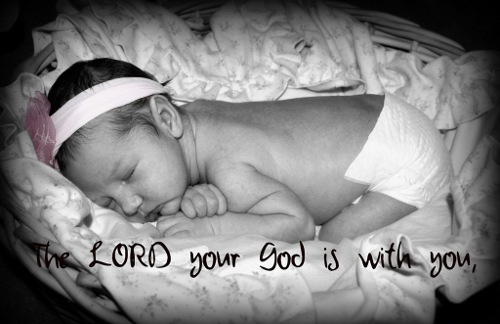
The Lord is with youChristians tend to create a dichotomy between the secular and the holy, between man and God. We also see some of this symbolism of division in how Judaism presents the Shabbat in opposition to the rest of the week. We strive for God in His Heaven above while we struggle with our mortality and humanity on the earth below. Christians talk about “going to Heaven” to be with God when they die, but we see in the vision of Eden and New Jerusalem that in the end, we do not go to God; God comes to us…as it was in the beginning.

The teachings of the Rebbe are not just a collection of advice and nice thoughts —just as a year is more than the sum of 365 days. The teachings of the Rebbe make up one simple whole. All revolve around the same essential concept: The fusion of the loftiest spiritual heights with the most mundane physicality. In the Rebbe’s words, “the highest with the lowest”.

The concept is not only radical but powerful: It means I can be myself, living a “down to earth” existence, and yet fulfilling a transcendental goal. It means that there is nothing we are trying to escape – other than the notion that we must escape something. We don’t run away from this world to join a higher one, instead we work to fuse the two. We aren’t in the business of “making it to heaven” – we’re busy bringing heaven down to earth.

-Rabbi Tzvi Freeman
“Fusion”
Based on letters and talks of the Rebbe
Rabbi M. M. Schneerson
Chabad.org

It’s no coincidence that the expression of God’s desire to live among men comes right before the Festival of Sukkot which will be upon us in just a few days. We will pitch our tents in our backyards and at the synagogues and invite all His holy ones to dwell with us in an imperfect container, with God providing the sheltering roof over us, making the incomplete, complete.

May the expressions of my mouth and the thoughts of my heart find favor before You, HASHEM, my Rock and my Redeemer. –Psalm 19:14

God is with us.

Who is the King?

Lion of JudahMoshe received the Torah at Sinai and transmitted it to Joshua; Joshua to the Elders; the Elders to the Prophets; and the Prophets transmitted it to the Members of the Great Assembly (Avot 1:1). The entire body of Judaic Law, written and oral, came through Moshe, who received it directly from God. God did not give it directly to the Jews. Why not?

The Talmud relates: The Emperor told Rabbi Yehoshua ben Chananya that he wanted to see God. Rabbi Yehoshua took him outside and told him to look at the sun. “This is not possible!” exclaimed the Emperor, to which Rabbi Yehoshua answered: “If you cannot even look upon the servant of God, how can you expect to look at God Himself?!” (Chullin 59b).

-Rabbi Chaim Kramer
“Tzaddik: Leader, Teacher, Intermediary?”
Breslov.org

He who is to be a good ruler must have first been ruled. -Aristotle

Several days ago, I compared the crucifixion of Jesus at the hands of the Romans to the murder of Rabbi Abuhatzeira in the morning meditation, The Death of the Tzaddik. I was trying to re-cast Jesus in the role of tzaddik and thus into a proper Jewish context, as well as communicating that, through the lens of Jewish mysticism, how both of these deaths can be considered to atone for “evil burdens”. After reading Rabbi Kramer’s commentary on tzaddikim, this “extra” meditation pretty much created itself.

But that’s not all:

Every time you people talk about the messianic era, and “the Moshiach” (which I assume equates with “messiah”), you insist on talking about him as a king. Well, we started guillotining kings over two hundred years ago, and they haven’t really been in fashion since then. We have found liberal democracies much more adept at protecting the rights of the individuals, and working for the maximum benefit of the maximum number of people. Kings, as a whole, were pretty lousy at all that.

So how about we just call him (or her) an “enlightened spiritual leader”? The “king” title seems such an anachronism.

Question written to Rabbi Tzvi Freeman
quoted in “Who Needs a King?”
Moshiach 101
Chabad.org

The different roles that Jesus plays can be really confusing. Servant, King, Tzaddik, Savior, Messiah. Just who is Jesus and what is the relationship between who he was, who he is, and who he will become? Also, since Judaism en masse rejects the possibility of Jesus actually fulfilling the role of the Moshiach (Messiah), is there any way we can look to Jewish sources (as opposed to Christian scholarship and commentary which, after all, is biased in a certain direction) and possibly see where Jesus might actually fit in?

I believe there is.

No, my case won’t be iron clad and I can’t present it all in a simple blog. Also, I lack the educational and scholarly “chops” to be able to prove anything to anyone. Still, I see patterns in some of what I read. I saw a pattern and wrote about it in my previous blog post and I see one today.

To continue reading from Rabbi Kramer:

With this in mind, we can attempt to examine the role of the Tzaddik. In Judaism, the Tzaddik is a leader, a guiding light to his followers. In general, people have a need for leadership. The average person is for the most part unsure of his responsibility in life and how to go about fulfilling it. He must learn this from the Tzaddik. Therefore, what is needed is true leadership; truly knowledgeable people with an understanding of what someone else’s capabilities are and what is demanded and required of that individual.

Let’s compare this to what Rabbi Freeman has to say about the role of the Moshiach in the Messianic age:

If so, in such a state, who needs a king? Who needs any government at all? Let the people, so fully enlightened and aware of their Creator and their responsibility to His creation, self-organize and work things out between one another. I mean, do you really expect enlightened beings to hurt, steal, extort, or otherwise cause bodily or monetary harm to one another? So who needs government in such a world, never mind a king?

Okay, to get to that point, we may well need an outstanding individual, a great leader who could deal with the oppressors and dictators and other powerful shmendriks of the world. As Maimonides puts it, someone who will strengthen the Torah and “fight the wars of G-d” (Mishneh Torah, Laws of Kings 11:4..) — not necessarily military wars, but actions that have very powerful political and social ramifications.

But once that mission is complete and the world is at peace, buzzing with wisdom until even the leopards and wolves are behaving and the very earth itself is full of knowledge, then everything changes. What would be crucial at such a point would be not a king, but a teacher. Yes, the world is enlightened, but it is still a world emerging into enlightenment. The Moshiach, as a teacher, would guide people to see and to understand this new world into which they had entered.

Now remember the quote from Aristotle?

He who is to be a good ruler must have first been ruled.

OK, I’m probably not playing fair bringing Aristotle into the argument, so I’ll let the Master speak for himself:

An argument started among the disciples as to which of them would be the greatest. Jesus, knowing their thoughts, took a little child and had him stand beside him. Then he said to them, “Whoever welcomes this little child in my name welcomes me; and whoever welcomes me welcomes the one who sent me. For it is the one who is least among you all who is the greatest.” –Luke 9:46-48

When he had finished washing their feet, he put on his clothes and returned to his place. “Do you understand what I have done for you?” he asked them. “You call me ‘Teacher’ and ‘Lord,’ and rightly so, for that is what I am. Now that I, your Lord and Teacher, have washed your feet, you also should wash one another’s feet. I have set you an example that you should do as I have done for you. Very truly I tell you, no servant is greater than his master, nor is a messenger greater than the one who sent him. Now that you know these things, you will be blessed if you do them. –John 13:12-17

Talmudic RabbisThe Master himself set the prerequisite for being a leader and a tzaddik as being first a servant to others. Rabbi Kramer teaches that a tzaddik must be a leader and Rabbi Kramer and Rabbi Freeman tell us that a tzaddik and the Moshiach (respectively) must also be a teacher:

Torah is the instrument which conveys God’s Infinite Wisdom to man. Who among us can honestly say that he is wise enough to look at that medium and grasp what is required of him? The Talmud, Midrash and Shulchan Arukh stress the importance of receiving from a teacher, so that one’s understanding of Torah be clear. Thus, a teacher or rabbi has to have received from his teacher, and so on, back to Moshe Rabeinu. To look directly into the Torah and say “I know and understand,” is to say “I don’t know and never will, because I consider myself capable enough to glance at God by myself.” As the Talmud teaches: Even one who has studied, as long as he has not received from a Talmid Chakham, a qualified teacher, is still considered an ignoramus (Berakhot 47a). And: How foolish are those who stand up for the Torah Scroll, but do not stand up for the Sage (Makot 22b). The Torah can actually mislead a person who follows it, without the benefits of true guidance and leadership.

Using Moshe (Moses) as an example and a starting point, Rabbi Kramer shows us that one of the main functions of a tzaddik is to present the correct and proper interpretation of the Bible to his disciples (for Christians, substitute “Bible” for “Torah”). Jesus did this continually in the Gospels, with one noteworthy example being the Sermon on the Mount (see Matthew 5). This also goes back to a point I have been trying to make in various blog posts. We cannot simply read the Bible in English with our own understanding, without any training or scholarly background, and expect to always understand what God is trying to say to us. Rabbi Kramer makes this clear when he says, “Even one who has studied, as long as he has not received from a..qualified teacher, is still considered an ignoramus” (quoting Berakhot 47a). Christianity dispenses with the roles of Rebbi and tzaddik as authoritative teachers at our own peril. This model of learning is one of the reasons I am attached to Judaism as a teaching platform.

But why will King Moshiach also need to be a teacher? Here’s Rabbi Freeman’s response:

This will also be the character of the Moshiach. Yes, he will be a teacher—because that’s what those times will be all about: learning, knowing, gaining divine wisdom. But a teacher—a good teacher—limits his lesson to that for which the student is ready and can handle. The Moshiach will be a teacher, but one with a kingly character: as enlightened as they may be, he will see far beyond. And yet, as a teacher-king, he will be capable of transmitting that transcendental knowledge to all of us as well. Perhaps not cognitively, but in some form in which it can be shared.

This teacher, then, is the ultimate of teachers. For he will show us the very core essence of our souls, and how they are rooted in the Core Essence of All Being.

So from Christianity’s point of view, we see that Jesus was required to teach the “lost sheep of Israel” and, through the Gospels, teach all of the subsequent generations of Jewish and Gentile disciples throughout the ages up to the current day, and then beyond. We also see that in the Messianic Age, he will still continue to teach and be the authority for our understanding of the Word of God and how that lamp will completely illuminate our souls.

Even in the beginning, the way Christ taught was considered astonishing:

When Jesus had finished saying these things, the crowds were amazed at his teaching, because he taught as one who had authority, and not as their teachers of the law. –Matthew 7:28-29

Typically, no Rabbi taught in his own name. He taught in the name of his Master; his Rebbe, who also taught in the name of his Master, and so on. Not that there couldn’t be exceptions:

This does not mean that there are no exceptions to the rule. The Talmud speaks of those unique individuals who did succeed in Torah study, though they did not follow the prescribed approach to study outlined by our Sages (see Avodah Zarah 19a). But these singular human beings are very few and far between. One must receive at least the basics of learning from a rabbi, whose task it is to see that the material taught conveys its true meaning (Bava Batra 21a,b).

With apologies to Rabbi Kramer, Jesus would have been even more unique in having “learned” the Torah from his Father, the One God of Heaven. On the other hand, when Rabbi Kramer says, “One must receive at least the basics of learning from a rabbi”, is it such a stretch to consider Christ’s teacher and Rabbi to also be his Father?

The Tzaddik is also an intermediary. He is an agent between God and ourselves. Yet, he is not an intermediary at all. God forbid that anyone should think he needs a medium between the Almighty and himself; not from his side, and certainly not from God’s. Rather, because the Tzaddik is one who has conquered the physicality of this world and entered the spiritual realm, he serves as an agent and a catalyst for bringing spirituality to this world. Having attained the wisdom and understanding necessary for serving God in a true and proper manner, the Tzaddik serves Him by bringing His will to mankind and by getting people to recognize God in all aspects of their lives. The average person cannot perceive God’s will, and therefore has to turn to someone who can. Thus, in this sense, the Tzaddik is an intermediary.

Who is Moshiach?And so, though Rabbi Kramer wouldn’t present it this way, Jesus is an intermediary between us and God as our great High Priest in the Heavenly Court (Hebrews 4:14-16). He “serves as an agent and a catalyst for bringing spirituality to this world”. We are not alone nor are we, even though not Jews and recipients of the gift of Sinai, without one to petition the Father with our needs.

Rabbi Freeman tells us the role our teacher plays out for us today and where it will lead tomorrow:

An interesting idea, because it fits so well into the idea of what the messianic era is all about and how it fulfills the purpose of creation—as Rabbi Schneur Zalman writes, “everything depends on our work throughout the time of exile.”

Meaning that through the toil of our hard work, our struggle and persistence in the most trying times right up until that glorious era, we will draw into the world a deep light, an essence-light, such as could never have been revealed without that labor. It is that essence-light that the Moshiach will have the job of revealing to us. Something entirely transcendental, and yet, something that each of us touches; something from which each of us draws strength every time we defy the confusion and darkness of our present world to do what we know is right and beautiful.

I cannot help but see Jesus as the Messiah through the teachings of the Rabbis. In fact, I see him more clearly as I read the words of Rabbis Kramer and Freeman than I do in the books written by traditional and modern Christian scholars. I see Jesus in the words of Talmud, as interpreted by such Rabbis (again, I emphasize that these Rabbis would never have intended that I take such a meaning. This is due to Jesus being completely “re-painted” in the image of a Gentile Christian “god” by the church). How can I not? I must seek him where he is to be found.

The Moshiach is found among his people; among his Father’s chosen ones; His Am Segulah, God’s treasured, splendorous children. As servant and teacher, whose death atoned for an evil decree upon mankind, as Intermediary, Priest (Hebrews 6:20), and Messiah King, he first came for Israel but is the redeemer of all the world. We seek him and God sent him to us so that we, in seeking God, could be found by Him and return home.