Tag Archives: messianic gentile

The Convert and the Disciple: A Shavuot Lesson

Question:

I attended synagogue services on the holiday of Shavuot morning, and we spent a half-hour reading the Book of Ruth. Is there any special connection between Ruth and Shavuot?

The Aish Rabbi Replies:

The Torah and prophetic reading on Yom Tov always relate to a deeper theme of the day.

In this case, Ruth is the ancestor of King David, who was born on Shavuot, and died on Shavuot.

Another reason is because Ruth is the quintessential Jewish convert, and on the very first Shavuot – when the Torah was given at Mount Sinai – each Israelite essentially became a “Jew by Choice.” That’s why the Talmud and Code of Jewish Law use the Sinai experience as a basis for determining the requirements of all future converts:

1) Mikveh – All converts must immerse in a Mikveh (ritual bath), as the Israelites did at Mount Sinai (Exodus 19:14, 24:8).

2) Milah – Male converts must undergo circumcision, as the Israelites did before leaving Egypt (Exodus 12:48 and Joshua 5:5).

3) Mitzvot – All converts must accept to observe all 613 mitzvot of the Torah, as the Israelites did at Mount Sinai (Exodus 24:3).

Interestingly, the Torah intimates that the souls of eventual converts were also present at Sinai, as the verse says: “I am making [the covenant] both with those here today before the Lord our God, and also with those not here today.” (Deut. 29:13)

From “Ruth and Shavuot”
the Aish Ask the Rabbi column
Aish.com

In my recent review of the Mark Nanos essay “The Question of Conceptualization: Qualifying Paul’s Position on Circumcision in Dialogue with Josephus’s Advisors to King Izates” as found in the book Paul within Judaism: Restoring the First-Century Context to the Apostle (Kindle Edition), citing Nanos, I commented that the Apostle Paul was very much against the non-Jewish disciples of Yeshua (Jesus) converting to Judaism, frankly, because it was unnecessary. In Messiah, Gentiles have an equal communal status with the Jewish disciples, the same indwelling of the Holy Spirit, and the same promise of the resurrection.

mikvahThe other major reason that Paul discouraged Gentiles from converting is that it would undermine God’s promise to Abraham that he would be the father to many nations. If we all converted to Judaism as a means of accessing a covenant relationship with God, then God’s promise that not just the Jewish people but all peoples would bow to Him, would be null and void. And as I hope you realize, it’s impossible to thwart the plans and promises of Hashem, God of Israel.

So is there any good reason for a Gentile in Messiah to convert to Judaism? There must be, because some few such converts exist (I have no statistics as to exactly how many there are or where they can be found and only personally know of one such person).

I also know that some critics of Messianic Judaism in the Hebrew Roots space believe that the practice of conversion is not presupposed in the Torah and thus is unbiblical, not to be recognized by those Gentiles who believe the Torah applies equally to all, Jew and Gentile alike.

However, as we see above, the Jewish people certainly do believe there is a precedent in the Torah that allows for ritual conversion of Gentiles, bringing them into Israel as (Jewish) children of Abraham.

Neither Christianity nor any branch of Judaism believes that Gentiles must convert to Judaism and indeed, Christianity sees converting non-believers to themselves is the desirable outcome, not becoming a member of the tribes, so to speak.

I also mentioned before that both in the late Second Temple period and today, those of us, that is, non-Jews who have some sort of connection with Judaism in general and Messianic Judaism in particular, often suffer from an identity crisis. More than once, the dissonance of who I’m supposed to be and what I’m supposed to do given my rather unique outlook on the Bible, has stirred a great desire in me to “throw in the towel” and stop associating with religious people altogether, both face-to-face and over the web.

It’s not an easy life.
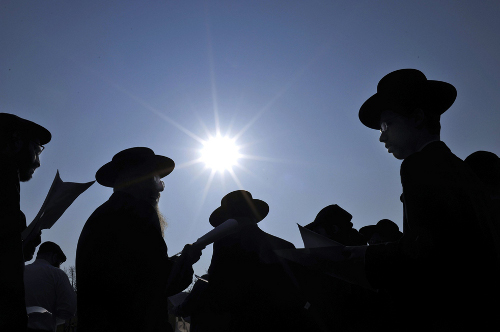
Orthodox JewsSome non-Jews entering Messianic community have shot out the other end, so to speak, and converted to (usually Orthodox) Judaism as a way to end that dissonance and secure a religiously and socially acceptable identity within Judaism. To do so however, they had to surrender all fealty to Yeshua as Messiah and King, thus, from Christianity’s point of view, becoming apostates.

I believe, both in ancient and modern times, that God gave the Jewish people the ability to be “gatekeepers” into their realm. Nanos spoke of a “chronometrical gospel”, that is, a time-related good news event or set of events, a good news that entered our world heralding the advent of the New Covenant promises with the birth, life, death, resurrection, and ascension of the Master, the Messiah.

Prior to Yeshua, there was a mechanism in place whereby Gentiles who were drawn to the God of Israel could undergo a ritual allowing them to join Israel and thereafter be considered indistinguishable from the born Israelite. It was the only real option for such Gentiles, apart from the status of God-Fearers who had no covenant status relative to God (unless you count the Noahide covenant).

The process of conversion seemed to morph over time and was likely different in some manner to the process we see Ruth undergoing to convert to Judaism and become the eventual ancestor to King David and ultimately, Yeshua.

No one should question the authenticity of David’s let alone Yeshua’s Judaism because a convert was their ancestor.

But as I said before, if converting to Judaism were the only way for Gentiles to apprehend the blessings of the New Covenant (let alone Sinai), then as I said above, God’s promise to Abraham would fail.

two pathsSo through Messiah, another avenue was created, one that does not require we convert and become Israel. We are permitted now to come alongside Israel, not being them but being at the same table with them, partaking in the same blessings without being responsible for the same obligations. This makes it possible for the whole world to come to God, to be blessed by God, to attain the companionship of the Holy Spirit of God, and to receive the promise of a life in the world to come, all without conversion and all while remaining fully Gentile citizens of the nations.

In another Aish Ask the Rabbi column, the Rabbi states in part:

Being culturally Jewish, without belief in God, is compared to a cut flower. While it still retains much of its vitality, the flower has been cut off from its source of nutrition, and within a short time will wither and die. The ideals which have kept the Jewish people alive and thriving over the millennia – despite all odds – can only be transmitted with the framework that the Torah provides.

I’ve mentioned in this blog post and several others including this one, that we “Messianic Gentiles” actually have a very specific duty, that of encouraging and supporting Jews in Messiah (any Jew we may encounter, actually) to return to Torah and to more fully observe the mitzvot.

Without Jewish devotion to Torah, as the Aish Rabbi states, what God has preserved in the Jewish people will eventually fade…and without Israel, we Gentiles have no hope, because 100% of the promised blessings we receive God made with Israel, not us!

That’s why Yeshua is the King to the Jews first and only after, the King of the nations of the world. Whether the realization is comfortable or not, Israel is the gatekeeper, it guards all the doors, it holds all the keys, all through God’s covenants with Israel, and all through the person of Israel’s King, King Messiah, Son of David.

There may well be some valid reasons for Gentiles converting to Judaism, but they are all minimized within the Messianic Jewish realm simply because, as Paul pointed out repeatedly, it’s not necessary in order for a Gentile to have an authentic relationship with God. Particularly for the Gentile but also for the Jewish people, the cornerstone, the lynchpin to that relationship is Messiah. He opened the door that let the Gentiles into a full relationship with God, and he brought the very beginnings of what will someday be the completion of God’s New Covenant promises to Israel, and only through Israel, to the world.

aloneWe non-Jews should not dismiss or denigrate converts to Judaism, regardless of which branch they convert into, but we should rest assured that it is not a requirement either. This may be confusing relative to Gentile identity in Messianic community (which is why I suspect such Gentiles either covert to Judaism, return to the Gentile Church, or just give up on religion completely), but what Jews and Gentiles don’t yet understand about the non-Jew’s role and function among Israel, is well understood by God.

If I, as a non-Jew who studies within a Messianic Jewish framework, am never accepted as who I am, either by Gentiles or Jews, I can take comfort that in the privacy of my prayers and studies, I am still accepted by God. I can be a disciple and a Goy. I can be who I am. I don’t have to become someone else or pretend to possess another’s responsibilities to stand in the presence of the Almighty.

Chag Shavuot Sameach!

Of Dissonance and Hashkafah

Hashkafah is a great Hebrew word without an exact English equivalent. Your hashkafah is your worldview. The term is often used when referring to one’s personal worldview as regards to religion and halachah (Jewish law). It’s the lens through which you view things. It’s how you understand a system. It’s your paradigm of thought. It dictates the way you think about things, and therefore impacts the conclusions you will reach. It’s your ideology and the reason behind your ideology.

-Boaz Michael
“Hashkafah,” p.7
from the Director’s Letter for Issue 119/Spring 2015 of
Messiah Journal

I learned something new today. I learned that my blog is all about discussing my hashkafah, “the lens through which I view things” including my “paradigm of thought” and my “ideology and the reason behind my ideology.”

I’ve said this before but it bears repeating. I’m not writing because I think I’m smarter than other people and that I am delivering my learned pronouncements from some virtual ivory tower. I’m writing to explain what I’ve been learning and how it affects the development of my hashkafah.

Actually, Boaz said so much more in his letter that I found quite useful, which is why I’m sharing this with you. Here’s another useful idea:

A person’s hashkafah (worldview or paradigm) is like the DNA that determines both appearances and actions as a fully formed body. If one’s outward appearance is inconsistent with his hashkafah, it will lead to cognitive dissonance and a crisis of faith.

-ibid (emph. mine)

And that’s what I’ve been experiencing, both in my previous attempt to integrate into a local church and, ironically enough, in my encounters with Messianic Judaism.

For instance, for Shauvot 2012, I attended First Fruits of Zion’s Shavuot Conference at Beth Immanuel Sabbath Fellowship in Wisconsin and I had a blast. I made connections with new people and deepened relationships with old friends.

But the following year, I had started going to church and as a result, I was encountering some of that “cognitive dissonance” Boaz talks about. At the Shavuot conference in 2013, I was confused and conflicted as to who I was and what I was supposed to be doing. I eventually settled in, but not before behaving in such a way that damaged a number of friendships.

The dissonance worked both ways, and not only made it unlikely for me to be invited to attend future Messianic conferences, but ultimately ended up with me leaving church as well.

How do you resolve the dissonance between being attracted to a Messianic Jewish study and practice paradigm and yet not being Jewish?

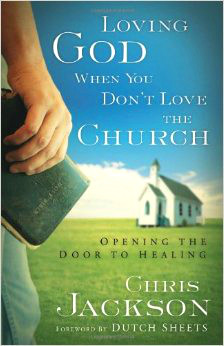
jackson's bookThis is the reason I’ve been reviewing Pastor Chris Jackson’s book Loving God When You Don’t Love the Church: Opening the Door to Healing. I’m using my review series as the lens through which to look at whether there’s any likelihood of me returning to fellowship or if I should even try. Since Boaz’s letter speaks to what’s going on behind that concern, I consider examining it here part of that investigation.

Here’s what’s at the core of not only my difficulties with the church but with just about every single religious argument we have in the blogosphere:

Most religious arguments involve bitter clashes over “what we believe” (theology) and “what we do” (praxis). If we do not share the same hashkafah informing our theology and praxis, this type of debate will be pointless and irresolvable.

-ibid

That, in a nutshell, describes the vast majority of the religious arguments that happen in the comments sections of my blog and many other religious blogs, especially in the Messianic Jewish and Hebrew Roots spaces.

Although I doubt Boaz intended to, he described exactly what happened between me and the head Pastor of the church I used to attend:

For example, many Christians operate under the hashkafah which assumes that the authority of the New Testament has replaced the authority of the Old Testament. This paradigm holds it as self-evident that any conditions established in the Old Testament remain operative only if restated in the New Testament. So long as that paradigm remains firmly in place, there is no point in arguing…

-ibid, p.8

It took two years to get to this point, but Pastor and I finally arrived on the shores of “there is no point in arguing.”

Boaz, spent much of his letter describing his perspective on the hashkafah of various related movements such as Christianity, One Law, Missionary and Post-Missionary Messianic Judaism, and then what he calls Messianic Judaism for the Nations, which is First Fruits of Zion’s (FFOZ) perspective.

I won’t go into all of that here (I may in a future blog post), but for the sake of matters of dissonance and fellowship (or lack thereof), I’ll focus on the portions of Boaz’s letter I consider relevant. He restated the hashkafah of Messianic Judaism from his previous letter in issue 117 thus:

The practice of Judaism coupled with the realization that Yeshua of Nazareth is the Messiah, the New Testament is true, and the kingdom is at hand.

Boaz Michael
Boaz Michael

My immediate question was how that’s supposed to work for someone who isn’t Jewish. Boaz answers that question subsequently, but does Boaz’s answer work for me? We’ll see by the by.

I do want to mention something regarding Boaz’s hashkafah for Post-Missionary Messianic Judaism since Derek Leman said something similar recently.

Post-Missionary Messianic Judaism is interested in practicing Judaism and maintaining Jewish identity, because Torah is seen as covenantally binding on all Jews. It has an interest in restoring the faith and practice of first-century believers for Messianic Jews, but not for Gentiles. Under this vision for Messianic Judaism, Gentile believers belong in Gentile Christianity identifying as Christians and Messianic Jews belong in Messianic synagogues identifying as Jews.

-ibid, p.10 (emph. mine)

It’s important to remember that Boaz distinguishes his personal (and FFOZ’s official) hashkafah from this Post-Missionary description, but it’s equally important to realize that there is significant overlap. So what does this mean for the so-called “Messianic Gentile?” What is FFOZ’s hashkafah for Messianic Judaism for the Nations?

The practice of Messianic Judaism by both Messianic Jews and Messianic Gentiles for the sake of continuity with the New Testament and the coming kingdom.

He further defines this view of Messianic Judaism as “the Judaism of the Messianic Era.” As far as that goes, I agree with him, and I’ve said more than once that when Messiah returns, as such, there will be no such entity as “the Church.” There will only be Messianic Judaism as it applies to Jews and to the people of the nations.

Relative to the rest of the Judaism in our world, Boaz states:

Our hashkafah acknowledges Jewish authority. We do not believe the New Testament stripped the Jewish people of the biblical and God-given authority to transmit, interpret, and apply the Torah. Although the rest of the Jewish world may be enemies regarding the gospel, they are nonetheless beloved for the sake of the fathers (Romans 11:28).

morning prayerIn other words, God did not abandon the Jewish people or Judaism nearly two-thousand years ago all for sake of the Gentile Christian Church. He didn’t change horses in mid-stream, and He didn’t jump from Plan A to Plan B in Acts 2 or anywhere else in the Bible, or for that matter, in post-Biblical times. God is with the disciples of Yeshua (Jesus) and God is also with His people Israel, the Jewish people, all of them, for the sake of His promises in the Torah and the Prophets as well as the aforementioned Romans 11:28.

As far as Messianic Jews and Messianic Gentiles, Boaz says:

Our hashkafah distinguishes between Jews and Gentiles and their respective obligations to the Torah. Since we accept the authority of the apostles, who also made that distinction clear, we maintain distinction. We advocate the integrity of Jewish identity as defined by Jewish tradition, with all its associated prerogatives, privileges, responsibilities, and obligations. We advocate the integrity of Messianic Gentile identity with its own prerogatives, privileges, responsibilities, and obligations as defined by the New Testament. Although Messianic Jews and Messianic Gentiles are two distinct groups, they share one religion.

While I wholeheartedly agree with all of that, I still asked myself where the Gentile praxis is defined specifically. It seems to vary from one Messianic group to the next, and my personal response was to give up all (or almost all) practice that could even tangentially be considered Jewish (I will still occasionally use a siddur).

I’m writing this on Saturday afternoon (I’m not much of a Sabbath-keeper anymore). Last night, my family and I had a very pleasant, low-key, and quite yummy Passover seder. I’m still getting full noshing on left-over matzah ball soup, and matzah and hummus.

This morning, my wife (who is Jewish) went to shul at the local Chabad, and I believe she’ll be attending the second seder night there as well (which means she won’t be home until very late). One of the obligations I believe we “Messianic Gentiles” have is encouraging and supporting Jewish Torah observance. To that end, I’m delighted she can partake of Jewish community as a Jew. I wish the same for all Jews, Messianic or otherwise.

Now if only someone would write and publish the definitive guide to Messianic Gentile praxis within the context of “Messianic Judaism for the Nations.”

I would encourage you to see our various works in our Mayim Chayim series: Mezuzah, Tzitzit, Tefillin, etc.

-ibid, p.12

Tent of DavidApparently there is a praxis for Messianic Gentiles, and after a few minutes and a quick Google search, I remembered that in past years, FFOZ had published a series of small booklets about different aspects of Jewish practice as applied to non-Jews. Toby Janicki wrote about Gentiles and Tefillin in this 2007 blog post. However, a quick search of the FFOZ online store front didn’t yield any positive results, so I can’t point you to where to purchase them. I remember possessing at least some of these booklets in the past, but either I loaned them to interested parties who never returned them, or they didn’t survive one of my wife’s “reducing clutter” projects.

Now as I said, so far, I agree with Boaz on most or all of the points he makes in his letter. But in terms of my own situation and especially the last two-and-a-half years of my personal history, here’s the kicker:

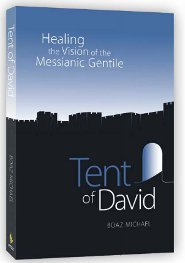
I should point out that I do not believe that Gentile believers need to leave their churches and join a Messianic synagogue or Sabbatarian group in order to be part of Messianic Judaism. As I advocate in my book Tent of David, I feel the best place for most Messianic Gentiles, at this point in history, is to remain in their respective churches, supporting the local church’s efforts for the kingdom and becoming an ambassador within that church for this message of restoration. Yes, it may be lonely, one may face theological opposition in the form of subtle anti-Semitism and not-so-subtle replacement theology, but disciples of the suffering servant should expect to suffer a little bit. If we greet only those who greet us and love only those who love us, what reward will we get?

-ibid

Now let’s compare that paragraph to two of Boaz’s previous statements:

Most religious arguments involve bitter clashes over “what we believe” (theology) and “what we do” (praxis). If we do not share the same hashkafah informing our theology and praxis, this type of debate will be pointless and irresolvable.

And…

For example, many Christians operate under the hashkafah which assumes that the authority of the New Testament has replaced the authority of the Old Testament. This paradigm holds it as self-evident that any conditions established in the Old Testament remain operative only if restated in the New Testament. So long as that paradigm remains firmly in place, there is no point in arguing…

I think Boaz’s suggestion works with some Messianic Gentiles in some churches under certain circumstances. I don’t believe it can be universally applied to all Messianic Gentiles in all churches under all circumstances. Of course, that’s not what I think Boaz is suggesting, but still, we must acknowledge that in terms of the “Tent of David” ideal, one size does not fit all.

Don’t worry. It’s not like I’m pounding on the doors of some Messianic Jewish community demanding to be let in. Far from it. As I’ve said many times before, my current family situation would prohibit such a thing, even if the perfect Messianic shul was just down the street from my house.

As far as church goes, I went in with the idea of being an ambassador and left to avoid being a nudnik (pest), at least any more than I’d already become.

To be fair, Boaz also said:

At the same time, I believe that the Messianic synagogue should function as a daughter of the holy Temple: “A house of prayer for all nations.” What would it look like if Messianic Judaism was to open its doors to the many Gentiles who come flocking to Messianic Judaism seeking leadership, direction, and spiritual guidance? What if Messianic Jews took up our role as the head, and not the tail, and we began to lead and shepherd our Master’s flocks? What might that look like?

alone-desertGiven the goal of maintaining Jewish identity and distinctiveness, all of that is easier said than done. Boaz says “Messianic Judaism is the Judaism of the Messianic Era–practiced today.” Well, sort of. There’s still so much we don’t know about exactly how Messiah will consider Jewish vs. Gentile devotees. It would be nice to believe there’s a way to smooth out all of the rough edges between Jews and Gentiles sharing Jewish community in Messiah, but I can only have faith that this is something Messiah will accomplish when he returns.

What’s the bottom line for me? Like my reviews of Pastor Jackson’s book, while I can see what both of these authors mean, and I can see it working for others, I don’t see a personal application. I’ve said before that I was willing simply to surrender the idea that I must be in community at all. I have limited social needs, so it’s pretty easy for me to be self-contained and to progress forward as an individual. Relative to my faith, it’s what I do at home anyway. It was only the concerns of a friend that had me return to this topic and take another look.

I’ve finished reading Pastor Jackson’s book and I’ll continue my reviews soon.

Final Note: I realize that every time I mention Boaz Michael and First Fruits of Zion, those people who have “issues” with him and his organization tend to make a number of rather “uncomplimentary” remarks in the comments section of my blog. I insist that you stick to the actual issues I’m discussing, that is the hashkafah of Messianic Judaism for the nations as contrasted with Post-Missionary Messianic Judaism and with Christianity as applied to my personal situation. If you can’t comment within the bounds of decorum and avoid committing lashon hara, then consider not commenting at all. Thank you.

The Return of the Pesky Challenge

Every other Sunday, a friend of mine and I have coffee together and talk about whatever. Some of what we discuss is religion (his beliefs are close but not exactly the same as mine), but we talk about everything else under the sun, too. So, as he reminded me, we can’t strictly define our conversations as “fellowship” in the Christian (or Messianic) sense.

And that concerns him.

Many of you know that after a two-year experiment in attending a local church, I found it necessary to leave church again. For sometime now, I’ve pondered joining some sort of virtual religious community via the Internet, but I know that virtual relationships can’t take the place of face-to-face connection and communication with human beings. It’s just not fellowship in the truly realized sense of a community of faith.

A few weeks ago, out of the blue, my wife (who is Jewish, not Messianic, and who does have community) asked if I missed having a congregation to go to (and I am pleased that she seems to be making attending services at Chabad on Shabbat a regular thing). I have no idea what brought that comment up, but I played it off like it wasn’t an issue. Most of the time it’s not, at least consciously, and I relegate the idea to some dark closet in the back of my mind. But then Sunday before last, my friend challenged me over coffee.

He really, really thinks I should be in religious community. He isn’t the only one. I receive emails occasionally from people who believe I should not set aside fellowship indefinitely. In principle, I agree, but as a matter of practicality, I have nowhere to turn for two basic reasons:

  1. I have no idea how to go “church shopping” and the very idea of randomly visiting churches in my area hoping to get lucky and find a theological match is not even slightly attractive.
  2. The effect of my going to church has on my wife.

infinite_pathsI sometimes receive what I feel are mixed signals from her. I know that she believes I should be in community too, but she’s already embarrassed by having a Christian husband, and my being in Christian community only makes it worse. I used to struggle within myself every Sunday morning as I got ready to leave for church while she was staying at home and being uncomfortable with the thought of my going (not that she’d say anything about it, of course).

And the one time I went to Easter services just about crushed her. I could see it on her face, in her eyes, as I walked out the door. I guess it would do that to any Jewish wife of a Christian husband.

I’m not doing that to her again.

Which led me to download a book (it was a special deal from Amazon so I got it for free) called Loving God When You Don’t Love The Church by Chris Jackson. Jackson is a Pastor who uses his book as a forum to talk about how damaging church experience can be to some people (including him), and damaging to the degree that people don’t (necessarily) leave the faith, but they do leave their churches in droves.

I can relate.

But I don’t relate to most of the reasons these people are leaving. I wasn’t kicked out, scorned, called a “sinner” or “demonic” or anything like that. The Pastor, who I had become friends with and who knew exactly what my doctrinal position on the Bible was (and is), directly contradicted everything I believe and called a Messianic faith a “misuse of the Law“.

He had to have known how I’d feel listening to his sermon.

(I should note at this point that I have no ill feelings for the Pastor, leadership, or members of the church I used to attend. I met many genuinely kind and caring people, all of whom were serving God and other people in their walk of faith with Christ. But in the end, I was an elephant in a roomful of gazelles. I was never going to fit in.)

I’m only about a quarter of the way through Pastor Jackson’s book, but it’s an easy read. At the end of each chapter there are study questions, so I guess the book can be used in small groups of people who have all felt alienated by their local churches (or “the Church” with a big “C”).

I guess I’m looking to see how others have responded to this situation and I’m finding that (of course) I’m not a typical Christian. It’s not just a matter of being burned by some snobby clique at one local church (although that also happened to me back when I first came to faith). If that were the case, I could just go to another church, since the theological dissonance between me and other Christians would be slight (if it existed at all since I’d be blissfully ignorant of everything I know now).

But standing on the foundation of the Jewish Bible and declaring myself a Messianic Gentile (in two parts), means that my theology and doctrine differs significantly from the vast majority of people you’ll find in most churches on any Sunday morning.

chris jackson
Pastor Chris Jackson

However, for lack of any other course of action for the reasons I specified above, I’m going to work my way through Pastor Jackson’s book and see if there’s anything he presents that I can somehow adapt. Jackson seems sincere, reasonably transparent, friendly, and approachable. But knowing myself as I do and getting a sense of who he is in his writing and on his blog, I suspect he’d drop me like a hot rock if we ever entered into conversation and I told him exactly what I believe about the New Covenant, the Bible in general, God’s promises to Israel, and the specific sort of “connectedness” we Gentiles have to all that through Messiah (Christ).

I suppose it’s not a coincidence that Derek Leman recently wrote a blog post called How to Read the Bible if You’re Not Jewish, highlighting the focus of scripture on national Israel and the Jewish people and not so much the rest of the world (that is, the goyim).

The uncomfortable truth of the Bible in general and my faith in particular is that I continue to find myself where I left off at the end of this missive. Both church and synagogue (and I would be fine with Jewish community if it could be with my wife) of any variety are out-of-bounds for me and as concerned as some people are for me because of that, I simply see no viable option.

I’m sorry to keep revisiting old ground. It’s not like I’m the only person without community. Both Gentiles and Jews find themselves in this situation as part of the consequence of being Messianic. I’ll keep reading Pastor Jackson’s book and post my thoughts about it here in the coming days, but this is as much in God’s hands as it is mine. I’m still trying to decide of He’s painting me into a corner or if I’m the one doing it.

Here’s the link to Part One of my book review.

Who Am I and Why Am I Here?

Indeed, surveys show that actual converts to Judaism are far outnumbered by Americans born outside the faith who consider themselves Jewish despite having never formally converted to Judaism. However, even in the most liberal Jewish communities, there is a dividing line that excludes non-Jews. Practically no synagogues allow non-Jews to be called to the Torah (unless they are accompanying a Jewish spouse at their kid’s bar mitzvah). Jews married to non-Jews are barred from admission to rabbinical school. And, of course, non-Jews can’t marry Jews under Conservative or Orthodox auspices.

Most importantly, you can call yourself whatever you want – friend of, member of, parent of. But unless you formally join, you’re no Jew.

-from the article “10 Questions About Jewish Conversions You Want to Know but are Afraid to Ask”
VirtualJerusalem.com

Don’t worry. I’m not considering converting. However, I saw a link to this article on Facebook and was interested about which ten questions one might be afraid to ask.

In my two most recent “meditations,” Are Christians Idol Worshipers and Doing It Right, the conversations kept returning to what Derek Leman might call “the intersection of Judaism and Christianity, Jesus and Torah, temple and atonement.”

But while many or most traditional Christians don’t see much of an intersection between their faith and Judaism, those of us involved, at some level in Messianic Judaism find it unavoidable. In a comment to Gene on Doing It Right, I said in part:

From my point of view (and I could be wrong, of course), you have a ready-made world, a Jewish community, to which you belong and in which roles, identity, and expectations are all clearly defined. It would seem to me that all you have to do is step inside of that community, close the door, and never look back.

I, on the other hand, picture myself fighting my way through the Bible tooth and nail, clawing my way through the collision (Derek calls it an intersection) between the Jewish and Christian aspects of my faith, feeling like the inside of a sandwich being squeezed by two opposing slices of bread.

I could make up a story or a series of stories about the Jews and Gentiles who left Messianic Judaism and entered a more mainstream Judaism or entered (re-entered) the Church.

disconnectedI could say that the dissonance (remember, I’m making all this up) experienced living in-between various elements of Jewish and Christian faith are very “crazy making” and that in order to reduce or even eliminate the inherit discomfort of being identified as “Messianic,” these individuals chose to escape into a more internally consistent or at least more readily acceptable religious identity.

I’ve heard stories of more than a few non-Jews in Messianic Judaism who (in my opinion) became confused about what to prioritize in a life of faith and mistook function for devotion by converting to Orthodox Judaism. It’s not being Jewish that makes one acceptable to God, since even the Orthodox readily admit that Gentile conversion isn’t the only way, or even the primary way, a Goy may merit life in the world to come and be considered righteous. It’s living a life that is Holy to God by transforming our lives from being focused on ourselves to being focused on service to others and service to God (think Matthew 22:36-40).

Of course, that’s not the only path leading out of Messianic Judaism. For Jews, there’s going to/returning to a more normative Judaism such as Orthodox Judaism, and for the Gentile, there’s going to/returning to normative Christianity. Those groups disagree with each other, but the world generally accepts them as valid religious expressions.

But the world, including the religious world, doesn’t always know what to do with Messianic Judaism. While many of the Jewish people within the movement strive greatly to live authentically Jewish lives, in some cases, indistinguishable from Jews in Reform, Conservative, and even Orthodox Judaism, the really big question (and I’ve brought this up before) is what to do with all the Goyim in Messianic Jewish community space.

Actually, there are two other escape paths, particularly for the Gentile, I haven’t mentioned. Leaving the world of faith entirely and becoming an atheist, and continuing to adhere to faith but leaving all forms of religious community and considering all such community as non-sustainable.

I rarely quote from Christian articles and blogs, but the other day, I did find something written by A.W. Tozer called The Saint Must Walk Alone.

The idea, based on a number of Biblical precedences, is that the person of faith by definition is isolated from the larger culture. Tozer cited a number of the Prophets including Noah, Abraham, and Moses, but while it’s true that, in the end, Noah only had his family as his form of community, and Abraham had to gather people around him in order to construct community, Moses, though effectively isolated from the community of God for the first forty years of his life, found a ready-made body of millions of Israelites once God commanded him to rescue His people Israel.

In the Apostolic Scriptures. Jesus (Yeshua) called apostles and disciples to himself, and after the crucifixion, resurrection, and ascension, the apostles and disciples, made many more disciples, both Jewish and Gentile, across the latter part of the First Century CE and beyond.

I’ve said before that people gravitate to groups made up of “their own kind”, that is, others who are like themselves. That’s why in older cities in our nation, you have neighborhoods defined by nationality and ethnicity. Visit New York, Chicago, or San Francisco to see what I mean.

And I believe the same is true of religious people. We all want to hang out with people like us, so we don’t get thrown too many theological curve balls. The secular world is a hard place to live in, so it’s comforting to know you have a place to retreat once in a while where you can truly be yourself and be understood without being judged or maligned (ironically, sort of like being a recovering alcoholic at an AA meeting).

Tozer writes:

The pain of loneliness arises from the constitution of our nature. God made us for each other. The desire for human companionship is completely natural and right. The loneliness of the Christian results from his walk with God in an ungodly world, a walk that must often take him away from the fellowship of good Christians as well as from that of the unregenerate world. His God-given instincts cry out for companionship with others of his kind, others who can understand his longings, his aspirations, his absorption in the love of Christ; and because within his circle of friends there are so few who share inner experiences, he is forced to walk alone. The unsatisfied longings of the prophets for human understanding caused them to cry out in their complaint, and even our Lord Himself suffered in the same way.

A.W. Tozer
A.W. Tozer

Of course, Tozer’s “Saint” is only lonely away from the authentic community of the Church, and while he says that there may be few who have great devotion to Christ in the body of believers, he hasn’t taken into consideration the fact that there could be “Saints” who have no access to fellowship, and any such like-minded communities nearby could be too internally conflicted and even unstable to be viable options.

Ultimately, the person of faith may be isolated and alone not only from society but from other religious people, even those who fundamentally conceptualize their theology in similar way.

The problem for many of these “Messianic Gentiles,” is not that they/we are attracted to God, but we’re attracted to a particular exegetical system that allows us to read the entire Bible (Tanakh and Apostolic Scriptures) as a unified Jewish document that upholds the primacy of national Israel and the Gospel message as one of national and even worldwide redemption rather than a truncated plan addressing salvation on an individual-by-individual basis.

By definition, we find Judaism more attractive than Christianity (I speak of institutions, traditions, and lifestyles here). However, as the VirtualJerusalem.com article I quoted from states, “you can call yourself whatever you want – friend of, member of, parent of. But unless you formally join, you’re no Jew.”

Not that I would try to be, but many others like me can’t separate their identities from Jewish (quasi-Jewish really) identities. In the end, we either find others who accept us as we are in religious community, we change our identity by conversion to find acceptance, we retreat into the Church (abandoning Messianic theology) to find acceptance, or we just retreat and call an end to seeking acceptance and community. In the latter case, acceptance comes from secular community. We’ve thrown our net very wide and through the wide gate, everyone can travel together.

Tozer concludes:

The weakness of so many modern Christians is that they feel too much at home in the world. In their effort to achieve restful “adjustment” to unregenerate society they have lost their pilgrim character and become an essential part of the very moral order against which they are sent to protest. The world recognizes them and accepts them for what they are. And this is the saddest thing that can be said about them. They are not lonely, but neither are they saints.

Earlier in his article, Tozer admits that those Christians who say they are never alone because Jesus is always with them, echo a rather hollow message. Remember, he also said man was made for community, and the people of God are made for community with their fellows.

But in the end, all we really have is God. No religious community is perfect, and some of them are downright toxic. There are who knows how many wounded souls who have sought fellowship, but once burned are thereafter “twice shy.”

I’ve been pleased with how discussions have gone on in my two previous blog posts, especially given the rather controversial nature of the topics at hand. After all is said and done, we “odd balls,” many of whom are like me and simply are not made to be in community, or who otherwise have no acceptable peer group at hand, in addition to God, have the Internet. This is the only place we can find each other, through our communication is merely so much binary and electrical chatter across fiber, copper, and wifi.

Since I’ve pulled back from writing so much, I can feel my intellectual and emotional attachment to the “Messianic blogosphere” wane correspondingly. I don’t scour the web looking at other blogs the way I used to. I don’t view each article and quote at Aish.com or Chabad.org as inspiration for yet another “morning meditation.” I no longer even peek out of my home office on Friday evenings to see if my wife is about to light the Shabbos candles. They either are lit or not as she wills.

purim
Purim Parade in Hebron

Right now (Sunday afternoon), she’s at the Chabad helping to prepare for the upcoming Purim celebration. I couldn’t be more pleased. That’s where she belongs, in Jewish community because that’s who she is. Given the enormous barriers she’s had to cross, I’m glad she’s found her way home. Her experience has taught me that my having community doesn’t seem to be part of the reason I exist. If my marriage to a Jewish woman has previously inhibited her from a Jewish life, maybe our union also helps to reveal my purpose in supporting and encouraging her pursuit of that Jewish life.

I believe for the Messianic Gentile, that’s why we are here, not to promote ourselves but to support Jews, both in Messiah and otherwise, to return to devotion to Torah, devotion to Jewish community, and devotion to Hashem.

As a “Messianic Gentile,” if that’s who I am and why I’m here, it’s enough.

My Shabbat That Wasn’t

Blessed are You, Hashem, our God, King of the universe, Who sanctified us with His commandments, and has commanded us to kindle the light of the Sabbath.

-from the Artscroll Sefard Siddur

That’s as far as I got on observing Erev Shabbat or really all of the Shabbat yesterday (as you read this). I dropped my wife and daughter off at the airport very early on Friday morning and thought I had the whole day ahead of me to make Erev Shabbat preparations.

But my plans were already unraveling.

Actually, this all started Thursday afternoon as I was driving home from work. Like an estimated 50 million people worldwide, I suffer from a form of tinnitus or what some people call “ringing in the ears.” For me, it’s always present in my left ear and occasionally I’ll hear intermittent sounds in my right, usually when under stress.

Most of the time, I can ignore it unless it’s very quiet, and even when I’m trying to sleep, it’s more like a form of “white noise” so it doesn’t prevent me from dozing off.

But for some unknown reason on Thursday afternoon, my right ear started perceiving loud and highly distracting sounds, so much so that at their worse, they actually blocked out the tinnitus noise I experience in my left ear.

Any loud noise, especially a sudden noise like a car door slamming, was like having my head shoved in an echo chamber. All sudden sounds had a clanging “metallic” quality that seemed to bounce back and forth inside my skull.

The long and the short of it is that I got a grand total of two to two and a half hours of sleep Thursday night/Friday morning. By the time I took my family to the airport at 5 a.m., my hearing was back to normal (what’s normal for me), but I felt like my brain was packed with boiled inner tubes and rusty railroad spikes. On top of that, there were two tasks that had suddenly come up that had to be resolved on Friday without fail.

Between my inability to concentrate and having to focus (as best I could) on all of the phone calls and appointments related to solving the two issues in question (they’re personal enough for me not to share them online), any time I had to organize Erev Shabbat observance was consumed.

The good news is that everything that needed to get done got done more than an hour before sundown. I have to thank the kind and understanding people involved for going the extra mile and helping me achieve my goals. I was very impressed with the amount of caring that these people extended to someone they had never met before.

The bad news is that by the time that candle lighting came around, I didn’t have anything prepared besides the candles. So I kindled the Shabbat lights, said the blessings, and instead of a hearty meal, challah, and wine, I settled for a couple of tamales and a beer. Actually, they were very good tamales and a very tasty Fat Tire amber ale.

But I learned a few things.

I can’t remember the source and a quick Google search yields no useful results, but I recall reading a Shabbat commentary stating that a particular Rabbi would spend all week preparing for his Shabbat observance. At some point mid-week, when he found a lamb he wanted to roast for the Erev Shabbat meal, he would loudly declare, “This is for Shabbat!” He would do this anytime he acquired something to be used in honor of the Shabbat.

I can see I will need to do the same. OK, not the loud, public declarations, but spending the entire week gathering and preparing for Friday afternoon.

While The Sabbath Table seems like a highly useful resource, I’m going to have to spend more time with it to map the flow of the prayers to my needs, particularly since I’ll be observing Shabbos as an individual, and particularly because I’m not Jewish.

Also, while I have a pretty good idea of the level of observance I will attempt, I will need to “nail down” what I want to do so that I don’t spend my rest fumbling over the prayers and worrying about procedure when I need to be welcoming the Shabbat Queen.

Which brings up an interesting question: my level of observance. I know some people will be thinking that I’m “picking and choosing” the “rules” to Shabbat rather than relying on the Bible and the Holy Spirit. Like it or not, though, there is preparation that goes into Shabbat and there are different standards of observance. I want this to be a joy, not a cumbersome activity, and “loading up” on a series of mitzvot that I don’t understand and have never performed before will just distract me from the actual purpose of my Shabbos Project, which is to honor God and experience some small foretaste of the coming Messianic Kingdom.

shabbatFor the rest of it, I can choose a wine, challah or at least some other acceptable substitute, and particularly plan out meals so I don’t find myself in a situation where I’m without an appropriate meal or snack at any point during the twenty-four plus hours of Shabbos.

I’ve come to think of the mitzvot related to Shabbat not in terms of restrictions and how much I want to be “obligated,” but rather how much I want to be blessed. The less “weekly baggage” I employ, the more of me, my thoughts, feelings, attention, and behavior is turned on this holy day to God.

Much of the Book of Exodus is dedicated to the exquisitely fine details of preparing to build the Mishkan (Tabernacle) in the desert along with all of the objects to be used, the robes of the priests, and everything else. The lists of activities and materials can seem mind numbing to read through, and I’m sure there have been more than a few people who have struggled with this section of the Torah and couldn’t wait to get past it to more “interesting” stories.

But consider. It takes all of this preparation (this is only a small sample)…

You shall make on the breastpiece chains of twisted cordage work in pure gold. You shall make on the breastpiece two rings of gold, and shall put the two rings on the two ends of the breastpiece. You shall put the two cords of gold on the two rings at the ends of the breastpiece. You shall put the other two ends of the two cords on the two filigree settings, and put them on the shoulder pieces of the ephod, at the front of it. You shall make two rings of gold and shall place them on the two ends of the breastpiece, on the edge of it, which is toward the inner side of the ephod. You shall make two rings of gold and put them on the bottom of the two shoulder pieces of the ephod, on the front of it close to the place where it is joined, above the skillfully woven band of the ephod. They shall bind the breastpiece by its rings to the rings of the ephod with a blue cord, so that it will be on the skillfully woven band of the ephod, and that the breastpiece will not come loose from the ephod.

Exodus 28:22-28 (NASB)

…to get to the “big event:”

He erected the court all around the tabernacle and the altar, and hung up the veil for the gateway of the court. Thus Moses finished the work.

Then the cloud covered the tent of meeting, and the glory of the Lord filled the tabernacle. Moses was not able to enter the tent of meeting because the cloud had settled on it, and the glory of the Lord filled the tabernacle. Throughout all their journeys whenever the cloud was taken up from over the tabernacle, the sons of Israel would set out; but if the cloud was not taken up, then they did not set out until the day when it was taken up. For throughout all their journeys, the cloud of the Lord was on the tabernacle by day, and there was fire in it by night, in the sight of all the house of Israel.

Exodus 40:33-38

If all of the details God provided Moses had not been attended to exactly as God had given them, then there would not have been the dwelling of the Divine Presence among the Children of Israel.

In my reading, I came across an interesting detail:

You shall not kindle fire in any of your dwellings on the Sabbath day.

Exodus 35:3 (Stone Edition Tanakh)

The Tanakh commentary for this verse states:

The Torah can be understood only as it is interpreted by the Oral Law, which God taught to Moses, and which he transmitted to the nation. The Oral Law makes clear that only the creation of a fire and such use of it as cooking and baking are forbidden, but there is no prohibition against enjoying its light and heat. Deviant sects that denied the teachings of the Sages misinterpreted this passage, so they would sit in the dark throughout the Sabbath, just as they sat in spiritual darkness all their lives.

I know a lot of people who will disagree with the above-quoted paragraph, but since the Torah is very limited in telling us exactly how one is to observe the Shabbat, whether you think the Oral Law was given to Moses or it is the compilation of Rabbinic rulings and commentaries about the Shabbat and all the other mitzvot, the fact remains that Judaism, the inheritor of the twelve tribes and of the Torah, has been the keeper of the Shabbat for more than 3500 years. Like it or not, when a non-Jew and a disciple of the Messiah enters into any form of Shabbat observance, we’re entering Jewish worship and ritual space.

praying alonePages 131 to 155 of Aaron Eby’s book First Steps in Messianic Jewish Prayer contain a minimalist siddur adapted for use by Messianic Gentiles (that would be me). Starting this (Sunday) morning, and at least for the next week, I intend to participate in regular prayer time in a more formal manner than I’ve become accustomed to.

Some years ago, I all but stopped using a siddur in prayer as part of my effort in backing out of Jewish space and honoring my wife who, as a Jew, thought it rather strange that a Christian Goy like me would be doing “Jewish” stuff. However, for the next week, it’ll just be me at home…well, me and God, and I find myself drawn to something I’ve missed.

No, I won’t be donning a tallit and kippah or laying tefillin (and in any event, although Aaron believes under certain circumstances these practices are appropriate for Gentiles, he did not include the applicable blessings for the use of such objects in his book). I’m a Messianic Gentile and am interpreting the will of my Master in this way. I’m not telling you what you have to do or should do. I’m describing what I did last week that didn’t work, and what I’m going to do in the coming week to enter a place that is a brief and precious portrait of the coming age of Messiah, may he reign in power and glory.

Discovering Myself by the Light of Torah

Question:

I came across your site and wow–I really want to become Jewish. My mother was a fairly devout Italian Catholic and my father an Anglican skeptic who never went to church. I was always so confused. But now your site has really turned me on to Judaism, a real coming home for me. What’s my next step?

Response:

Your next step is to become a better person. Develop greater faith in your soul, in your destiny, and in your Maker. Do more good, reach out to more people. Learn more wisdom, apply whatever you learn, and make life worth living.

But you don’t need to become Jewish to do any of that. Plenty of wonderful people doing beautiful things in the world are not Jewish, and G‑d is nonetheless pleased with them.

-Rabbi Tzvi Freeman
“Should I Convert to Judaism?”
Chabad.org

My wife was reading this in an email newsletter from Chabad last Friday afternoon. As I came home from work, I passed by her and happened to glance at what she was viewing on her computer. I briefly saw the title and was intrigued (since she’s already Jewish and conversion is a non-issue for her). Later on, I looked up the article and read through it.

The full content of what Rabbi Freeman wrote is astonishingly applicable to the debates we see happening between the Messianic Jewish and Hebrew Roots (particularly One Law/One Torah) movements. I recently became aware of an online dialog discussing whether the One Law/One Torah movement should or should not be considered a “Judaism”. Some of the more well-known pundits in that space were saying “no” based on the requirement to distance themselves from the large body of Talmudic authority and rulings (subsequent commentary indicates the opinions being expressed are more complicated, but that has little bearing on what I’m presenting here).

This is in contrast to how First Fruits of Zion (FFOZ) Founder and President Boaz Michael recently defined Messianic Judaism in his “Director’s Letter” in the Fall 2014 edition of Messiah Journal, p.10:

To me, Messianic Judaism is not just a Jewish-flavored version of Christianity. If I was asked to define Messianic Judaism, I would say, “Messianic Judaism is the practice of Judaism coupled with the realization that Yeshua of Nazareth is the Messiah, the New Testament is true, and the kingdom is at hand.”

Rabbi Stuart Dauermann in a recent blog post, quoted the first five of The Hashivenu group’s seven core principles, which also defines Messianic Judaism:

  1. Messianic Judaism is a Judaism, and not a cosmetically altered “Jewish-style” version of what is extant in the wider Christian community.
  2. God’s particular relationship with Israel is expressed in the Torah, God’s unique covenant with the Jewish people.
  3. Yeshua is the fullness of Torah.
  4. The Jewish people are “us” not “them.”
  5. The richness of the Rabbinic tradition is a valuable part of our heritage as Jewish people.
Boaz Michael
Boaz Michael

Rather than emphasizing the sufficiency or the primacy of scripture to the exclusion of all other considerations or practices as does One Law/One Torah, Messianic Judaism can be thought of in the manner of the other branches of Judaism in accepting, in addition to the primacy of Torah, all of the history, traditions, customs, wisdom, and interpretations of the great Jewish sages as part of their legacy, heritage, and lived daily experience, and added to all that, “the realization that Yeshua of Nazareth is the Messiah, the New Testament is true, and the kingdom is at hand.”

In his reply to the non-Jewish writer who was inquiring about conversion to Judaism, Rabbi Freeman continued:

You see, there’s Judaism and there’s Jewishness, and the two are not one and the same. Judaism is wisdom for every person on the planet and beyond. We call it the Torah, meaning “the teaching,” and it’s a divine message to all human beings containing the principles that much of humanity has already accepted as absolute truths. The idea that human life is beyond value is a teaching originating from Torah, as is the related concept that all human beings are created equal. So too, the right of every individual to literacy and education was brought to the world through Torah. And world peace as a value and goal was preached exclusively by the Torah and its prophets thousands of years before it became popular in the rest of the world. And of course, the idea that there is a single, incorporeal Being who creates and sustains all of reality, and is concerned over all that occurs with each individual, thereby giving each person, creature, event and object meaning, purpose and destiny–this is a core teaching upon which everything else rests, and the central teaching of the Torah.

That’s Judaism. Then there is Jewishness. To be Jewish means to belong to an ancient tribe, either by birth or by adoption (a.k.a. conversion).

I invite you to click on link I provided above and read R. Freeman’s entire commentary (it’s not very long). He says some amazing things about the comparison and contrast of Judaism and Jewishness. It seems, on some level, anyone who is responding to God through the basic presentation of the Torah and the awareness presented by Judaism can access God through that template, that is, through the relationship Israel has with God as understood through the Torah, but that “Judaism” isn’t the same as “Jewishness”.

Tribes have rituals. So do Jews. Males of the tribe wear particular items of clothing, such as tzitzit and kippot. Women keep a certain mode of modest dress and married women cover their hair. Men also wrap leather boxes containing parchment scrolls on the heads and arms every morning, while robed in woolen sheets with more of those tzitzit tassels. In our services, we chant ancient Hebrew and read from an ancient scroll. We have holidays that commemorate our tribal memories and establish our identity as a whole. Certain foods are taboo and other food is supervised and declared fit-for-the-tribe. Nope, you can’t get much more ancient-tribal than any of that.

The point is, none of that ritual stuff was ever meant as a universal teaching, except perhaps in a more generalized way…

Now, what I’m saying is not very PC nowadays. We live in a world of hypermobility. Not just because we own our own cars and reserve our own tickets online to go anywhere, anytime–but because we imagine our very identities to be just as mobile as our powerbook. Pick me up and take me anywhere. Today I’m a capitalist entrepreneur, tomorrow an Inuit activist, and the next day a Californian bohemian. And we can mix and match–today, you can be Italian, Nigerian, Chinese and Bostonian all in the same meal. So who is this Freeman character to tell me which tribe I belong to and which not?

To be frank, because this Freeman character considers the hyper-identity scheme to be a scam, a mass delusion and a social illness. You can switch your clothes, your eating habits, your friends, your social demeanor, your perspective on life and maybe you can even switch to a Mac. But G-d decides who you are, and the best you can do is discover it.

It almost seems as if Rabbi Freeman were borrowing his arguments from those I’ve recently heard expressed in Messianic Judaism, but maybe it’s the other way around. If indeed we consider Messianic Judaism as another branch of Judaism alongside the other branches, it stands to reason that how they think of “Judaism” and “Jewishness” should be similar, in this instance, to the Chabad among the other Judaisms.

At the same time, there are also Jewish disciples of Yeshua; their Jewishness remains significant, and it is central to their unique identity. Unity in corporate prayer between Messianic Gentiles and Jews is a beautiful and powerful testimony of Yeshua’s greatness. Such unity can only exist in a setting in which members are aware of their respective roles within the people of God.

-Aaron Eby
“Declaration of Intent for Messianic Gentiles,” p.47
First Steps in Messianic Jewish Prayer

Stand aloneOne of the “issues” that comes up, and Boaz Michael discusses it in the aforementioned “Director’s Letter” from Messiah Journal, is that Messianic Judaism has some difficulty in identifying the role of the Messianic Gentile within Jewish community. This, as I’ve mentioned before, is also one of my personal challenges, although I am not involved in face-to-face Jewish (or any other kind of) community at present. Still, every time I do “Jewish stuff,” it is prudent of me to be mindful of that community and to at least try to imagine what my role as a Gentile should be.

Gentiles who devote themselves to Yeshua of Nazareth are not only disciples; they are his subjects, and he is their King…

These Gentiles are no longer separated from Messiah or “alienated from the commonwealth of Israel and strangers to the covenant of promise” (Ephesians 2:12). Instead, they share in the inheritance and the destiny of the whole nation. In keeping with this identity, the God-fearing Messianic Gentile should not hesitate to join the Jewish people in formal prayer.

As Messianic Gentiles engage in these prayers, they must not lose sight of their own important and esteemed position as the crowning jewels of the nations.

-ibid

I previously wrote a two-part review of Mark D. Nanos’ paper ‘Paul’s Non-Jews Do Not Become “Jews,” But Do They Become “Jewish”?: Reading Romans 2:25-29 Within Judaism, Alongside Josephus’ which discussed some of the distinctive differences between “Jews” and “Jewishly” as it might have been perceived by the apostle Paul (and Nanos’ paper is now freely available online at the Journal of the Jesus Movement in its Jewish Setting (JJMJS) website).

I received a number of pointed responses based on the controversial nature of the topic, but then, the idea of Gentiles operating in Jewish religious and communal space as equal co-participants tends to get controversial.

If I can take Rabbi Freeman’s commentary and adapt it to the Messianic Jewish and Gentile framework, then it seems, as the Rabbi suggests, that Gentiles are perfectly free to take the higher principles of the Torah as universal, but should reserve those rituals that are specifically “Jewishly” for the “tribal” Jewish people as the Rabbi defines them.

R. Freeman finished his response with the following paragraph.

I believe that what G-d wants from each person is that s/he examine the heritage of his ancestors, discover the truths hidden there and live in accordance with them, knowing that this is what his Creator wants from her/him. The truths are there because all of human society was originally founded upon the laws given to Adam and to Noah, along with those laws that all the children of Noah accepted upon themselves. These truths are found by examining one’s heritage through the light of Torah. The Jewish Tribe are the bearers of that light. But you don’t need to become Jewish to partake of it. Light shines for all who have eyes.

Granted, he isn’t writing with the Messianic Gentile in mind and our status in relation to Israel through our devotion to Messiah Yeshua isn’t the same as a Noahide, but I believe his basic point is essentially the right one. Jews, as tribal members (although Israel isn’t truly tribal in the modern era, they inherit was belongs to the tribes as their descendents), are the original possessors of the Torah including all of the tribal rituals assigned to them by God. The rest of us, once we are drawn to Israel by the light of Torah and the light of Messiah, discover the truth of the Torah by its light from within our own national and ancestral contexts. This is why a Gentile approaching Messianic Jewish prayer does so along a somewhat different trajectory than a Messianic Jew.

Torah platesThis is why my upcoming personal Shabbos Project is traveling a somewhat different path and why I’ve had difficulty in attempting to interpret the path as it applies to me. I’ve come to a sort of peace with it now that Shabbos is approaching and I no longer feel intimidated about having to “get everything right”. The point of the experience is to experience God, not to worry about my level of observance. I’m not going to look anything like an Orthodox Jew nor should I ever try. I want to honor God and enter His presence and with that uppermost in my mind and heart, the rest will take care of itself with a little judicious preparation.

In some ways, I’m facing the Shabbat for the first time and already I’m discovering more about myself and who I am through the Shabbat and the light of Torah, which is the portrait Rabbi Freeman has so aptly painted.