Tag Archives: messianic judaism

Sermon Review of the Holy Epistle to the Hebrews: Things that Belong to Salvation

Eternal Security or Eternal Insecurity?

The “things that belong to salvation” include the gift of the Spirit, the goodness of the word of God, and the power of the age to come. This sermon deals with the difficult and controversial material in Hebrews 6:4-12.

-D. Thomas Lancaster
Sermon Sixteen: Things that Belong to Salvation
Originally presented on May 4, 2013
from the Holy Epistle to the Hebrews sermon series

For in the case of those who have once been enlightened and have tasted of the heavenly gift and have been made partakers of the Holy Spirit, and have tasted the good word of God and the powers of the age to come, and then have fallen away, it is impossible to renew them again to repentance, since they again crucify to themselves the Son of God and put Him to open shame. For ground that drinks the rain which often falls on it and brings forth vegetation useful to those for whose sake it is also tilled, receives a blessing from God; but if it yields thorns and thistles, it is worthless and close to being cursed, and it ends up being burned.

But, beloved, we are convinced of better things concerning you, and things that accompany salvation, though we are speaking in this way. For God is not unjust so as to forget your work and the love which you have shown toward His name, in having ministered and in still ministering to the saints. And we desire that each one of you show the same diligence so as to realize the full assurance of hope until the end, so that you will not be sluggish, but imitators of those who through faith and patience inherit the promises.

Hebrews 6:4-12 (NASB)

The Unplanned Detour

Lancaster went through a brief review of last week’s lesson and then, like the writer of Hebrews, intended not to cover any more material based on the six foundations since the Hebrews writer categorized those foundations as “milk” and not “solid food.”

But during the week, Lancaster received many requests from people, both face-to-face and by email to go into more details on the “milk”. It seems as if what the writer of the epistle to the Hebrews considered the ground floor basics of the faith are very difficult for modern Christians to grasp.

Lancaster wanted to make this detour back into the basics, but his lesson plan wasn’t written around it and a week wasn’t enough time to prepare. He wanted to get into chapters 7, 8, and 9 of Hebrews, but today, he’ll stay in chapter 6 and tell his audience what I consider something important (but I haven’t really found anything unimportant in what Lancaster has presented as yet). We’ll be back to learning how to drink milk by the by.

The Point of No Return

…and then have fallen away, it is impossible to renew them again to repentance, since they again crucify to themselves the Son of God and put Him to open shame.

Hebrews 6:7 (NASB)

This is actually terrifying on a personal level. I have family members who once came to faith in Yeshua who have since fallen away from him. I have friends in the same condition. This sounds like once you apostasize from faith in Jesus you will never, ever be able to come back, no matter what. That’s what a Bible literalist would conclude.

Does that means the people I love who have fallen away are doomed to burn forever? Is their no way to reach out to them and save them?

Lancaster’s opinion is not that of a Bible literalist. He does say that questions like these almost resulted in the Book of Hebrews not being canonized.

Think of it as the difference between the Western Church and the Eastern Church. For nearly a century (2nd to 3rd centuries CE) the Western Church thought that your sins were only forgiven up to your baptism. After that, if you sinned as a believer, you were condemned to hell. The Eastern Church wasn’t even concerned with the issue. It’s the difference between linear Greek thought (Western Church) and global Hebraic thought (Eastern Church).

For a Greek thinking Church, everything is on or off, black or white, left of right, there are no ambiguities in the text. Hebraic thinking, global as opposed to linear thinking can contain a lot more dynamic tension and even apparent contradictions in the Word. It’s the difference between believing one has to be either a Calvinist or an Arminianist, vs. believing that God is completely, perfectly, absolutely sovereign and man can also have free will to choose or reject God.

Eternal Security of Insecurity

But make no mistake, Lancaster does believe the writer to the Hebrews is delivering a dire and potentially fatal warning about the dangers of falling away from faith in Messiah. After falling away, it will be extremely difficult, and may be impossible to return to faith.

The focus of the letter so far has generally been one of warning and support of a population of Hellenized Jews in the area of Jerusalem who were in danger of or who had already lost access to the Temple. They were heartbroken and desperate to obey the commandments of the sacrifices. Who would be their priest? They were in grave danger of falling away from the Master in order to return to the Temple.

the letterSo yes, this is a letter of warning. But it isn’t a sudden detour into the theology of soteriology, the theology about how salvation works. That’s how most Christians read it, badly parsing the text into bite-sized but otherwise unrelated chunks. When you write a letter, unless you are a bad writer, you write with an overall theme in mind, not by tossing in an unassociated theological smorgasbord of ideas and concepts.

Lancaster says he tends to be more of a Hebraic thinker. He doesn’t believe salvation can be reduced to a series of talking points or some sort of bulleted list. He does believe it’s possible to lose one’s salvation, but he also believes that God’s grace covers a multitude of sins. Without grace, we would never survive, even as believers.

What You Have to Lose

What distinguishes a Messianic believer?

For in the case of those who have once been enlightened and have tasted of the heavenly gift and have been made partakers of the Holy Spirit, and have tasted the good word of God and the powers of the age to come…

Hebrews 6:4-5 (NASB)

Lancaster breaks this down into a list (I just got done saying salvation can’t be reduced into a list, but this isn’t a recipe to the plan of salvation):

  1. Enlightened
  2. Tasted the Heavenly gift of the Holy Spirit
  3. Tasted the Good Word of God
  4. Tasted the power of the Age to Come

This is what you have to lose and, as a believer, what you possess right now.

We are enlightened, that is, we have received the revelation of God, the awareness of the spiritual world, and the knowledge of salvation through faith in Messiah by grace.

We have received the Holy Spirit, God’s gift of a foretaste of the Heavenly Kingdom.

We have tasted the beautiful flavor of the Word of God, the Bible.

We have tasted the power of the age to come.

I think enlightenment, the Holy Spirit, and the Bible are all more or less understood, but what is the power of the age to come? Resurrection. We know Christ was resurrected from the dead and in that promise, so will we upon his return. The dead will be raised in him.

Lancaster drew a parallel between the approach of the weekly Shabbat and the Messianic Age. In Orthodox practice, all meals must be cooked before the arrival of Shabbat at sundown on Friday. Anyone who’s done any cooking knows you sometimes taste the dish before it’s finished to see how it’s coming along. Lancaster says that tasting the soup, so to speak, before the arrival of Shabbat is like tasting a preview of the Shabbat.

Bubbe's soupTasting the revelation of God, receiving the Holy Spirit, apprehending the Word of God, and the knowledge of the resurrection are all the foretaste, the preview of the future Messianic Age, the Kingdom of God on Earth.

That’s what we have to lose.

Lancaster tells us a midrash which I’ve heard before and one that I’ll repeat here because I think it’s important.

It is said that when humanity is resurrected, everyone will still have the physical defects they possessed when they died. If a man died without a left arm, he will be resurrected without a left arm.

Only after the resurrection will he be healed.

Why?

But Thomas, one of the twelve, called Didymus, was not with them when Jesus came. So the other disciples were saying to him, “We have seen the Lord!” But he said to them, “Unless I see in His hands the imprint of the nails, and put my finger into the place of the nails, and put my hand into His side, I will not believe.”

After eight days His disciples were again inside, and Thomas with them. Jesus came, the doors having been shut, and stood in their midst and said, “Peace be with you.” Then He said to Thomas, “Reach here with your finger, and see My hands; and reach here your hand and put it into My side; and do not be unbelieving, but believing.” Thomas answered and said to Him, “My Lord and my God!” Jesus said to him, “Because you have seen Me, have you believed? Blessed are they who did not see, and yet believed.”

John 20-24-29 (NASB)

The midrash states that if a person were resurrected in a totally healed state, he would be unrecognizable and many might doubt that the same man who died was the one resurrected. The example of Jesus and Thomas gives much credence to the midrash. Certainly Jesus appeared very, very different to John in Revelation 1:12-16 than he did, even within the first few weeks after the resurrection.

This is the power of the promise of the resurrection. And this is what we risk losing if we deny Yeshua.

Crucifying Jesus All Over Again

…and then have fallen away, it is impossible to renew them again to repentance, since they again crucify to themselves the Son of God and put Him to open shame.

Hebrews 6:6 (NASB)

Lancaster interprets this rather troublesome verse thus:

One who walks away from his faith in the Master can be compared to one who would crucify the Messiah again, bringing him to shame. May God have mercy on that person.
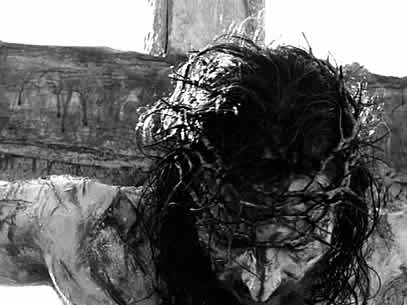
The Death of the MasterIt isn’t some mystical or literal re-crucifixion, but a metaphorical comparison. Apostasy is a dreadful, disgraceful act, according to Lancaster, and the path back from falling away, should that person repent, is as if the Master needs to be crucified again. But by God’s grace and mercy it is still possible to return!

Apostasy is a very, very hard place to come back from, but it’s not an absolute hopeless place of no return.

Thanks be to God.

For ground that drinks the rain which often falls on it and brings forth vegetation useful to those for whose sake it is also tilled, receives a blessing from God; but if it yields thorns and thistles, it is worthless and close to being cursed, and it ends up being burned.

Hebrews 6:7-8 (NASB)

Let’s first cover one part of verse 8 before moving on:

it is worthless and close to being cursed (emph. mine)

It is in grave danger of being burned and destroyed, it is very close to that end, but that final destruction, while imminent, is not absolutely a foregone conclusion.

In other words, if you let this happen you to, you are on the brink of falling into an endless pit of fire and darkness but it is still (marginally) possible for you to come back.

Lancaster spent some time comparing the Hebrews writer’s audience to the Master’s parable of the Sower (Matthew 13:3-23) as well as the parable of the Tares (weeds) among the Wheat (Matthew 13:24-30). These are all warnings of the level of our faith and whether we are even aware of the level (deep or shallow) of our faith (He says a lot more than what I’m including in this review, so you’ll want to listen to the entire recording for the details).

In a field of wheat and tares, it is impossible at first to tell the difference. When you go to church on Sunday or synagogue on Saturday, looking around the sanctuary, can you visually tell the difference between believers and false converts? Are people who raised their hand at a revival meeting or who once answered an altar call automatically saved and their “fire insurance” fully and permanently paid?

wheat and taresMany “weeds” are absolutely sure they are “wheat” even though they live like weeds. Lancaster told a story about a church youth group where almost all of the teens were sexually active and yet, they all (or most) believed they were saved and living Christian lives.

Then Lancaster made a confession. He said he was a weed and shallow dirt. But the difference is that he is deeply concerned about his being a weed. Even Paul admitted he was a weed:

I find then the principle that evil is present in me, the one who wants to do good. For I joyfully concur with the law of God in the inner man, but I see a different law in the members of my body, waging war against the law of my mind and making me a prisoner of the law of sin which is in my members. Wretched man that I am! Who will set me free from the body of this death? Thanks be to God through Jesus Christ our Lord! So then, on the one hand I myself with my mind am serving the law of God, but on the other, with my flesh the law of sin.

Romans 7:21-25 (NASB)

Even the best among us (and that certainly isn’t me) struggles between our two natures. Paul called himself a “wretched man” and so are we all wretched people in this struggle, desiring to obey the Master and continually failing. My review of the four steps in making teshuvah speaks a great deal about the continual struggle we have in repentance.

Saving Grace

The danger of falling away is great and the consequences are (potentially) terrible, but there is a “saving grace.”

But, beloved, we are convinced of better things concerning you, and things that accompany salvation, though we are speaking in this way. For God is not unjust so as to forget your work and the love which you have shown toward His name, in having ministered and in still ministering to the saints. And we desire that each one of you show the same diligence so as to realize the full assurance of hope until the end, so that you will not be sluggish, but imitators of those who through faith and patience inherit the promises.

Hebrews 6:9-12 (NASB)

Amid the cries of warning there’s also hope and encouragement. We haven’t fallen over the edge of the cliff yet, though we (or rather, the Hebrews reading the letter) are (were) still dangerously close. If you’re worried about whether or not you’re a weed, even if you’re a weed, you can still come back and be wheat. Be honest about the state of your heart and your need for a Savior and you can still repent and be saved.

What Did I Learn?

If you’ve been reading my Teshuvah series, you should realize that this exploration isn’t just for the sake of teaching but also for the sake of learning. Seeking God’s grace and repenting of sins isn’t the simple little task many of us were taught to rely upon. Since sin still lives in our hearts, our repentance should be active and continual. It’s still possible to fall off the wagon and while climbing back on isn’t impossible, it isn’t easy, either. In fact, once fallen, it may seem impossible to return, and so most people usually either give up or tell themselves a story that falling off was the right thing to do.

More’s the pity.

FallingThis isn’t just about me. It’s about people I love. It’s about people who have fallen and fallen hard, and yet they don’t see the problem. In fact, they think that apostasy from faith in the Master was the best thing that could ever have happened to them. Some still follow a religious tradition and while their faith is important and contains many good things, by definition (seemingly), it requires denying Yeshua.

Most Christians, including Hebrew Roots people, have long since written off my loved ones as already, permanently, irredeemably condemned to be thrown into the fire and perpetually burned.

May it never be!

I was scared to death when I read Hebrews 6:6. I was immeasurably grateful when Lancaster didn’t insert a “hard stop” at the end of that verse and also write off my loved ones.

If you’re an Evangelical and/or a Bible literalist, I believe I know what you’re thinking. You’re thinking I’m choosing to believe Lancaster and that I’ve chosen a Messianic Jewish perspective for self-serving reasons. You believe that I want there to be hope for my fallen loved ones and my chosen belief allows me to still continuously pray for their salvation and restoration.

Yes, of course I still hope and pray. Wouldn’t you?

But that’s not the only reason I believe what I believe. Something inside of me keeps telling me this is the right way to view things and the right way to go. I believe one of the “crimes” of the Church, at least historically, is that they (we) have been too literal in all the wrong places, and we’ve chosen a hard-line instead of God’s selection, grace and mercy.

Then the Lord passed by in front of him and proclaimed, “The Lord, the Lord God, compassionate and gracious, slow to anger, and abounding in lovingkindness and truth; who keeps lovingkindness for thousands, who forgives iniquity, transgression and sin; yet He will by no means leave the guilty unpunished, visiting the iniquity of fathers on the children and on the grandchildren to the third and fourth generations.” Moses made haste to bow low toward the earth and worship. He said, “If now I have found favor in Your sight, O Lord, I pray, let the Lord go along in our midst, even though the people are so obstinate, and pardon our iniquity and our sin, and take us as Your own possession.”

Exodus 34:6-9 (NASB)

It’s ironic in a sense, that I turn to the Torah, the Law, which Christianity disdains, in order to illustrate God’s grace and mercy in which we Christians have always depended upon so greatly. Most of us still believe grace and mercy only came to Earth with the birth of Jesus Christ. And yet the Jewish people have relied upon God’s thirteen attributes of mercy for must longer than two-thousand years.

I depend on God’s mercy. I depend on God’s mercy and grace not only for my flawed and damaged self but for everyone I love, who are also flawed and damaged. As I once heard said, if faith is a crutch, who isn’t limping? I’ve got a terrible limp. So does everyone I’ve ever met.

Man alone in a caveWe are all at risk of falling. We are all in danger of going “ker-splat” on the hard, cold ground. Once down there, getting back up isn’t easy, and for some, it seems impossible.

And for some, it seems like falling down put them in a better place, the better place. If not for God’s mercy, not only would it be impossible for them to get up, but God would just let them lie there.

If you ever find yourself at the bottom of a pit or deep in some dark, damp cave, look up. If there isn’t enough light for that, feel around. God provides a rope or a ladder, even for the apostate. All you have to do is find it and then to start climbing.

Zetterholm, Ancient Antioch, and the Problem of the Gentiles

In spite of this disheartening picture of the relations between Jews and Gentiles in Antioch there is, rather surprisingly, evidence of Gentiles who felt drawn to Judaism.

More relevant for the present discussion is whether there was a group of Gentiles with a clear interest in Judaism who may even have adopted several Jewish customs and who participated in the activities in the synagogue without having converted to Judaism.

-Magnus Zetterholm
Chapter 4: “Evidence of Interaction,” pp 121-2
The Formation of Christianity in Antioch: A Social-Scientific Approach to the Separation between Judaism and Christianity

This is both what Judaism has to offer and teach our confused and self-indulgent age. In the words of the psalmist, “Blessed are they who dwell in Your house.” (Psalm 145:1) The circuitous path away from the constricted focus on the self through the expansive world of the other. When we find renewal in the synagogue, we will have gained access to Judaism’s greatest boon: this-worldly salvation.

-Ismar Schorsch
“Holiness is a Communal Experience,” pp 431-2 (May 17, 1997)
Commentary on Torah Portion Emor
Canon Without Closure: Torah Commentaries

[This is a long “meditation.” Pour yourself a cup of coffee and give yourself the time to take it all in.]

This is something of a counterpoint to my previous blog post Zetterholm, Ancient Antioch, and Today’s Messianic Judaism. The prior write up was a look at the Judaisms operating in Antioch, including the “synagogue of the Way,” as they existed in the first century CE, through the lens of Zetterholm’s book and research. Today, we use the same lens to see how Gentiles were brought into this wholly Jewish religious stream, what the Jewish disciples understood about the social role of Gentiles, and how unconverted (to Judaism) Gentiles could participate in the New Covenant blessings.

It seems (and I’ve said this before) it wasn’t all that clear how to bring Gentile disciples into fellowship, and even among the Jews in the Way, opinions differed.

I’m going to focus on only part of this chapter, which is Zetterholm addressing “the Antioch incident” (Galatians 2:11-21) because the thirty some odd pages this author spends interpreting the conflict between Paul and Peter contains a great deal of commentary on the struggle to understand how Gentiles could be co-participants socially and benefit from Jewish covenant blessings without undergoing the proselyte rite and without being considered mere God-fearers (though God-fearers could not apprehend the covenant blessings).

Citing New Testament scholar J.D.G Dunn in his article The Incident at Antioch (Gal. 2:11-18), Zetterholm wrote:

Having evaluate[d] different exegetical alternatives, Dunn suggested that table-fellowship in Antioch involved observance of at least the basic dietary laws, since the Jesus-believing Gentiles were originally god-fearers. The men from James, shocked at what they regarded as too casual an attitude, demanded a higher degree of observance, especially with regard to ritual purity and tithing. According to Dunn, they referred to the earlier agreement made in Jerusalem (Gal. 2:1-10), where Paul’s mission to the Gentiles was agreed upon but where the specific issue of table-fellowship was never considered.

Zetterholm, pp 130-1

You’ll notice here that Dunn (apparently) believes in a “common Judaism” (see my previous article on Zetterholm) shared by all Jewish factions but variability in how to observe the mitzvot or at least to what degree to observe ritual purity customs within different synagogues of the Way. Zetterholm referencing Dunn states that it is likely the Jerusalem contingent, the home of James the Just, brother of the Master, and the core group of apostles and elders, held to a more strict observance of ritual purity than the Jews of the Way in Antioch.

Peter, as one of the original apostles of Jesus (Yeshua), may have originally held to the Jerusalem point of view, but his experiences with the household of Cornelius (Acts 10:28-29) modified that opinion. However, confronted with the more strictly observant emissaries from James, Peter gave in to peer pressure.

Notice, this doesn’t mean that Jews were eating non-kosher food, so the issue was about the competing halachot of the two Jewish communities relative to eating with Gentiles:

Dunn argued that this agreement in no way changed the obligation to torah observance for the Jesus-believing Jew.

According to Dunn, the reason why Peter suddenly withdrew from the table-fellowship was that “[h]e could not deny the logic of Jerusalem’s demand, that a Jew live like a Jew.” Continued table-fellowship could therefore lead to a severe loss of authority in relation to Jewish-Christian communities of Palestine.

-ibid, pg 131

J.D.G Dunn
J.D.G Dunn

I don’t know if I completely agree with Dunn’s and Zetterholm’s conclusion here regarding the compromise of authority, and it seems that Paul certainly didn’t think his halachah of table-fellowship with Gentiles was a problem based on his criticism of Peter. I do think this brings into sharp relief the potential differences between Paul and James, especially prior to the Acts 15 halachic ruling regarding the legal status of Gentiles in (Messianic) Judaism.

Of course Dunn isn’t the only New Testament (NT) scholar to have an opinion on this “incident.” P.F. Esler, according to Zetterholm, didn’t think it was a matter of the degree of observance but an outright halachic ban across the board on Jews eating with Gentiles, with perhaps only a few exceptions. From Esler’s perspective, this was a matter of the preservation of Jewish identity, which could only be maintained by a strict separation of Gentile and Jew with no table-fellowship between the two groups, period.

E.P. Sanders didn’t agree with either Dunn or Esler, and Zetterholm tends to favor Sanders’ viewpoint most of the time. Sanders didn’t think the issue had anything to do with ritual impurity, since most Jews are in a state of impurity (which has nothing to do with sin) most of the time, and must only be pure when participating in a Temple ritual. He also didn’t think it had much to do with social interactions, particularly in Antioch which, like other diaspora communities, required fairly free transactions between Jewish and Gentile inhabitants.

Sanders really did think it was the food, not that the Gentiles were insisting on eating ham, but the Gentile origin of the food itself was an issue. How could the Jews be sure that at least some of the meat hadn’t been sacrificed to idols?

I tend to think Dunn may have the most accurate perspective on the matter, especially given B. Holmberg’s opinion:

Holmberg suggested that James demanded a higher degree of observance not on the part of the Jesus-believing Gentiles but on that of the Jesus-believing Jews, and furthermore, a virtual separation of the Christian community into two commensary groups.

-ibid, pg 134

According to Holmberg, both Paul and James believed that the Gentiles benefited from the covenant blessings that issued from being grafted into the Jewish root, but their perspectives were different. While Paul advocated for Jewish and Gentile interaction and fellowship within the community of Messiah, James advocated for separate communities of Gentiles and Jews operating side-by-side rather than intermingled. This was to preserve the integrity of Jewish identity. Paul (according to Holmberg) disagreed.

To James and Peter, the Jerusalem agreement made no difference in how the Jesus-believing Jews related to torah, while Paul requested that the demands of a Jewish identity should cede to those necessary for maintaining a common Christian identity.

-ibid

This isn’t to say that Paul was advocating for a Torah-free practice for the Jewish believers, but rather for a more lenient halchah relative to Jewish/Gentile fellowship and co-participation in worship and social interactions.

Rabbi Mark Kinzer
Rabbi Mark Kinzer

It’s interesting that Holmberg’s perspective on James, Peter, and the Jerusalem community maps at least somewhat to that of modern Messianic Jewish author and scholar, Rabbi Dr. Mark Kinzer who wrote the rather controversial book Postmissionary Messianic Judaism: Redefining Christian Engagement with the Jewish People.  R. Kinzer advocates for a position called “bilateral ecclesiology,” which essentially establishes two communities within the body of Messiah, one for Jews and the other for Gentiles.

While many in the Church and in Gentile Hebrew Roots feel R. Kinzer’s position is a recent development, we see now that at least one NT scholar, Holmberg, suggests that it (or something very much like it) existed within the early Jerusalem Messianic ekklesia at the highest levels of leadership. What would this have said for Yeshua’s perspective on the matter?

We can’t know the answer to that one with any certainty, but it’s a compelling question. Yeshua rarely had dealings with Gentiles and stressed that he came “for the lost sheep of Israel” (Matthew 15:24). He only issued the directive to “make disciples of all nations” (Matthew 28-19-20) after the resurrection and (shortly) before the ascension.

Just to summarize, the explanation behind the “Antioch incident” was the degree of ritual observance for Dunn, food for Sanders, social intercourse for Esler, and Jewish vs. Gentile identity (related to observance issues) for Holmberg. Depending on your theological preferences, you can choose the scholar that fits your perspective. I think we all tend to do that and I’m just as guilty of the practice as the next person. Hopefully, I can cut through some of that and present a reasonable case for my conclusions, such as they are.

Zetterholm said that the problem is…

…that the text contains several gaps that must be filled in through an act of interpretation. The fact that scholars put forward different and sometimes even contradicting suggestions to solve a given historical problem often emanates from the character of the text: what we want to know is simply not in the text but must be supplemented from outside the text world.

-ibid

Not a very comforting thought, especially if you are a proponent of Biblical sufficiency.

I presented, in my previous blog post on Zetterholm, the nature of Jewish communities in Antioch and their implications for modern Judaism including Messianic Judaism. Now, I’m trying to solve the puzzle of how or if Gentiles could have been reasonably integrated into a Jewish community without compromising the Jewish nature and identity of that community. I think it’s clear Paul was convinced this was possible, but as history shows, it didn’t work out so well. I can only believe all this has profound implications for modern Messianic Judaism and the role of Messianic Gentiles within that Jewish context.

The issue for Paul in his letter to the Galatians was the Gentiles and encouraging them to maintain a Gentile identity within the Jewish Messianic movement, which did not require them to undergo the proselyte rite, become circumcised (males), and take on the full yoke of Torah observance. This is the same issue (Gentile role and status) within the Antioch synagogue (Acts 15:1), which most Christians would call “Paul’s home church.”

The challenge though, wasn’t just how to smooth over the wrinkles added by including Gentiles in a Jewish religious and social space, but how to understand the covenantal relationship (if any) Gentiles apprehended when they became disciples of the Master. I know in my own studies of the covenants, it is very clear how Jewish people and Judaism are in covenant with God, but Genesis 9 and Noah aside, when a Gentile comes into relationship with God through Messiah, just how does it work? There’s no clear and easy path in the text explaining it.

D. Thomas Lancaster
D. Thomas Lancaster

I came to my own peace with Gentile inclusion in the New Covenant about a year ago and more recently, in my multi-part review of D. Thomas Lancaster’s What About the New Covenant lecture series, I affirmed some of my convictions and discovered new information.

But what did this look like to the various groups inside of the Jewish Messianic movement in first century Antioch, or for that matter, from the perspective of James and the Council of Apostles and Elders in Jerusalem?

Based on various scriptures in the Tanakh (Old Testament) you could conclude that either Gentiles were cursed and would ultimately be wiped from the face of the Earth (for instance, Micah 5:9-15, Zephaniah 2:4-15), or that Gentiles had an eschatological future wherein at least some members of the nations and perhaps all nations would come into relationship with God and worship Him and Him alone (Isaiah 19, Isaiah 56:7, Zechariah 14:16).

From my point of view, I reconcile the opposing viewpoints in these texts by believing any nation (or any Gentile individual or group) which goes against Israel will ultimately be defeated by God and be cursed for cursing Israel, and any nation (or any Gentile individual or group) that joins with Israel in supporting her and her precious, chosen people, the Jewish people, will one day be called up to Jerusalem along with the returning Jewish exiles to worship God and to pay homage to the Jewish King.

You’ve probably heard the phrase “on the wrong side of history” in the news or social media recently, but applied to the Gentile nations and their relationship with Israel (for or against), those words take on a whole new meaning.

Believe it or not, I’m still talking about the Antioch incident, since how the Jews in the Way saw the Gentiles in relationship to the Jews, including socially and in the nature of their eschatology, was at the heart of the conflict.

If, however, we assume that he (Jesus) confirmed that Gentiles were to be embraced by the final salvation, it is not strange that within the early Jesus movement different concepts developed of how to relate to Gentiles and of how the actions of the god of Israel, through Christ, would also relate to the nations of the world.

-ibid, pg 140

Zetterholm, citing Sanders, said that the Jewish believers had no issue with Israel’s relationship with God since the Torah provides the means of atonement and…

…everyone living within the boundaries of the covenant and remaining in the covenant through obedience and atonement will be saved.

-ibid

But…

The soteriological system was, of course, for Jews only. Exactly how the Gentiles would be saved is less clear.

-ibid

The Church today takes its status of being saved rather for granted, although I doubt most Christians have ever seriously studied the New Covenant and encountered the challenge of finding themselves anywhere in the text. If they did, they might have some small idea of what the Jewish believers were facing when trying to insert Gentiles into the Jewish community, short of formal conversion to Judaism.

Magnus Zetterholm
Magnus Zetterholm

Zetterholm is convinced, citing T.L Donaldson and others, that what was not required ultimately, was the need to circumcise Gentiles and have them brought under the Torah in the manner of the Jews. But since circumcision was tied directly into the covenant relationship, it remained a mystery (apparently) to the first Jesus-believing Jews, exactly what status and role uncircumcised Gentiles played in Judaism and in covenant (if any). Salvation comes from the Jews, but how?

The Acts 15 decision was designed to settle all of this and render “halakhic clarification”, since, as Zetterholm says (pg 144) it was believed that the end of the present age was at hand and Gentile status had to be settled quickly before the Messianic Era arrived.

Zetterholm puts Luke’s Acts and Paul’s epistles in tension with each other, believing that Luke may have represented Paul differently than Paul actually saw himself. Zetterholm believes that Paul’s epistles are a more valid representation of Paul and how he saw Gentiles in covenant with God, but that view, given the complexity of Paul’s letters, isn’t all that clear.

We do know that Paul did support the continuation of Torah observance for Jesus-believing Jews as a given while at the same time, did not impose said-Torah observance along with circumcision upon the Jesus-believing Gentiles.

It is clear that under no circumstances would Paul accept that the torah be imposed on the Jesus-believing Gentiles.

If Paul accepted the apostolic decree (Acts 15) was applicable to Jesus-believing Gentiles, this would not mean that he imposed torah on them, since, strictly speaking, the halakhah for righteous Gentiles or god-fearers was not the torah but something to be observed by Gentiles not having been blessed with the gift of the torah.

-ibid, pg 148

This doesn’t answer the question of how Gentiles are included in the covenant blessings, but makes clear that Paul, as Zetterholm understands him and agreeing with Mark Nanos, believed the Sinai covenant and its conditions outlined in the Torah, was not the covenant operating that provides salvation for the Gentiles and brings them into relationship with God.

I do want to say that Zetterholm seems to more strongly relate the Noahide Covenant (which Zetterholm says was fully documented in the Tannaitic period [10-220 CE]) with the status of Jesus-believing Gentiles than I would. The Noahide covenant defines a very basic relationship between God and all humanity (all flesh, really) but if that were it, then Gentiles wouldn’t need an additional covenantal connection to God that required faith in the Messiah. The New Covenant, though made only with Israel and Judah, I believe is also apprehended by Gentiles who are Jesus-believers (see Lancaster’s New Covenant lecture series for details).

Finally, through his very long and winding narrative, Zetterholm came to the same place where I have also arrived.

The inclusion of the Gentiles meant for Paul the inclusion in the covenant, since it was the covenant that provided the ultimate means of salvation. By connecting the inclusion of the Gentiles with the promise given to Abraham in Galatians 3:7-29, Paul interprets the salvation of the Gentiles in covenantal terms, since the promise given to Abraham is a covenantaly promise as stated in Genesis 15:18: “[o]n that day the Lord made a covenant with Abram.”

-ibid, pg 157

Mark Nanos
Mark Nanos

This allowed Gentiles to remain Gentiles, remain uncircumcised, and to be accountable to a different set of conditions of covenant than the Torah (or conditions with some overlap), and yet be able to enjoy the blessings of a covenantal relationship with God. It was and is that Abrahamic faith in Messiah that opens the door to our drawing near to God in a way denied to the ancient God-fearers and the modern Noahides.

Zetterholm concludes that both James and Paul agreed the Gentiles enjoyed covenant blessings, but James…

…demanded a separation of the community into two commensality groups, one for Jews and the other for Gentiles, since too close social intercourse would have confused the boundaries between Jews and Gentiles.

-ibid, pg 166

Paul, on the other hand, declared:

There is neither Jew nor Greek, there is neither slave nor free man, there is neither male nor female; for you are all one in Christ Jesus.

Galatians 3:28 (NASB)

Zetterholm explains:

Paul, however, stressed that, “in Christ,” all distinctions between men become, on one level, superfluous. But here comes the paradox: this unity “in Christ” is arrived at only when the social distinction between Jew and Gentile is maintained. It is as “Jew” and “Gentile” that mankind becomes “one in Christ,” since the god of Israel is the god not only of the Jews, but of all humanity.

-ibid, pg 164

How does this speak to the relationship between Messianic Jews and Messianic Gentiles in community today?

If it seems like there’s been a lot of bickering, confusion, and debate over the status of non-Jews in the Jewish religious space called Messianic Judaism, but this is actually revisiting very old territory. It is, in some sense, a replay of what Paul went through in advocating for a Gentile presence as co-participants in Jewish community and fellowship, and in the covenant blessings of God. That the Gentiles are included in the New Covenant blessings, as difficult as that can be to trace down in the scriptures, isn’t the big problem, though.

The big problem is how to integrate Jews and Gentiles in Messiah in a religious, social, and halachic context. What role does the Messianic Gentile play in Messianic Jewish space? What are our obligations relative to Jewish obligations (which are far more clearly spelled out)? What does table-fellowship look like? Was James right in demanding social segregation between Jews and Gentiles, or is it more likely Paul, as Messiah’s special emissary to the nations, was correct in stating halachah should be constructed to allow closer social interaction and intermingling while still maintaining identity distinctions between the two groups?

Answering the ancient questions, if such a thing is possible, would also help answer our modern questions.

But while Paul was convinced within himself as to the intentions of God toward the nations in relationship with both God and Israel, others in the Way may not have been convinced. Zetterholm’s view of the Paul – James conflict is an educated opinion. At the level of the Christian sitting in a pew on Sunday morning, we all want to believe that the apostles were in complete unity with one another and that early “Christianity” presented a complete and undifferentiated whole within itself, only opposing the other Judaisms and pagan idol worship.

But what if Paul, Peter, James, and the rest were human after all? What if they disagreed, especially on such an emotionally hot-button topic as Gentiles within Judaism?

DaveningIf all that is true, it means we can look to the New Testament to help us understand what the problems are that we’re experiencing today, but no final solutions may be coming our way this side of the Messiah.

But as my quotes of Zetterholm and Schorsch at the very beginning of this missive testify, there is something about being in community that transcends all of the petty bickering. As a Gentile, I’m envious (I guiltily confess this) of Jews in a minyan, the reciting of the morning prayers, the special connectedness of synagogue life. Maybe it’s because I never quite feel integrated in the church. Maybe, like my first quotes above attest, I am one of those Gentiles who sees holiness in Jewish community, since that’s where we come from and I believe that’s where we’ll be returning to in the Messianic Kingdom.

For more on this and related topics, see my commentary on Shaye J.D. Cohen’s book From the Maccabees to the Mishnah, Second Edition.

Zetterholm, Ancient Antioch, and Today’s Messianic Judaism

It is a sad fact that our knowledge of the Judaism of the first century CE is rather limited. It is true that we know quite a lot about the ideology of different Jewish groups. The pioneering works of C.G. Montefiore, G.F. Moore, R.T. Herford, J. Parkes, and W.D. Davies, for instance, culminating in that of E.P. Sanders, have been of tremendous importance in showing that ancient Judaism was not a legalistic religion in which salvation was earned by merit, but a living religion of grace and forgiveness.

-Magnus Zetterholm
Chapter 3: “The Cultural and Religious Differentiation,” pg 53
The Formation of Christianity in Antioch: A Social-Scientific Approach to the Separation between Judaism and Christianity

I wish Pastors preached sermons based on the latest research performed by New Testament theologians and historians. What we hear from the pulpit, more often than not, is doctrine that is decades if not centuries (or longer) old, the same standard preaching that declares Judaism of ancient and modern times as a “religion of dead works.” Even in the church I attend, which has a very pro-Jewish perspective, Jewish people and national Israel are loved, but the Christians are very happy that the old Law is dead and replaced by grace. Jews are loved but Judaism is not, even the (Pharisaic) Judaism practiced by Paul and by Jesus and by all the apostles.

Zetterholm’s book seeks to understand and explain the early schism between the Judaism once called “the Way” and the emergent religious form adopted by Gentile believers known as “Christianity” from a sociological rather than a theological point of view. Of course, it’s impossible to keep theology completely at bay, but Zetterholm, who doubts the accuracy of certain sections of Luke’s Book of Acts and any part of the Bible that speaks of miracles, does his best.

That said, I find his research compelling because he doesn’t have a doctrinal ax to grind and he does establish and confirm certain things about Judaism as practiced by the believing Jews in first century CE Syrian Antioch.

It is generally accepted that the Judaism of the first century CE was not homogeneous but a complex, diversified phenomenon. At the same time these somewhat different realizations of Jewish life had something in common. E.P. Sanders has referred to what he calls “common Judaism” as “what the priest and the people agreed on.”

-ibid, pp 55-6

This isn’t the first time I’ve heard of this concept. Nearly a year ago, Rabbi Dr. Carl Kinbar had this to say in different comments on one of my blog posts:

The situation today is very different. There is no common Judaism or commitment to Torah that is shared by the streams of Judaism and, especially, by individual Jews. Second Temple Judaism varied from one form of Torah observance to another. Today’s diversity is from ultra-orthodoxy to atheism.

To avoid misunderstanding, let me put it this way: common Judaism had a core of practices that all communities of any size considered mandatory while also having a diversity of practice in other matters. Diversity does not mean that some Jews ate pork and did not daven.

That is, unless the Jerusalem leadership objected to the common Judaism of their time. If they did object, they may have engaged in the project of bringing about uniformity. Again, there’s no direct evidence one way or the other. However, there’s some indirect support that they did not teach or enforce uniformity — there is no record that they directed Paul (or anyone, for that matter) to teach or enforce uniformity of practice. There is also nothing in the apostolic letters to indicate that the Jerusalem leadership or other apostles mandated uniformity. If they practiced uniformly in Jerusalem, why would they be indifferent to the lack of uniformity elsewhere?

The Jewish people (in the Land of Israel in particular – I’m not as familiar with the rest) actually did quite well during the time of common Judaism (from late Second Temple times to at least 400 CE). (emph. mine)

In another portion of his book, Zetterholm explains that while each synagogue adhered to a core of common Judaism, they also diverged in meeting the various needs of their differing populations, as R. Kinbar described above.

Antioch was religiously a highly pluralistic milieu. Even though the “zeal for the law” also influenced the Jewish communities in the Diaspora, Judaism was but one of many religions practiced contemporaneously at Antioch.

-ibid, pg 65

.
The various Jewish communities in Antioch had to exist perhaps in some sort of “tension” between each other, depending of their differences, but they also had to exist in a wider environment of many other religious entities, many or most of which would have opposed monotheistic Judaism, which I can only believe was one of the core beliefs of the common Judaism these synagogues shared.

This speaks to me somewhat of the struggle of Messianic Judaism today. Messianic Judaism isn’t a single, monolithic unit that has a definition easily applied to all Messianic Jewish groups (and I define the different streams of Messianic Judaism as an overarching entity distinct from any of the expressions of Hebrew Roots, even though some [many…most] Hebrew Roots congregations define themselves as “Messianic Judaism”) and there is some variability between the different synagogues (in the U.S.) of which I am aware.

Messianic Judaism is trying to relate within it’s various groups as a Judaism as well as relating to the larger Jewish community (and the rest of the world) as a Judaism, all within a diaspora (again, I’m speaking of U.S. congregations) that is poly-religious and areligious.

Carl Kinbar
Rabbi Carl Kinbar

I say all this acknowledging Rabbi Kinbar’s statement above that the modern Judaisms of today cannot be directly compared to the Judaisms of the first century because they lack a commonly held core set of convictions related to Torah . Nevertheless, I can see connecting threads, especially between modern, western Messianic Judaism and the Judaisms in first century Antioch.

A number of critics of modern Messianic Judaism emphasizing itself as a Judaism, complain that this emphasis bumps Messiah Yeshua (Christ Jesus) to the back of the bus if not off the bus altogether. Normative Christianity stresses that Judaism was indeed (they claim) replaced by a more generalized and generic faith in Jesus without tradition or ritual, and modern Hebrew Roots proposes that modern Rabbinic Judaism is adopted by Messianic Judaism in place of “Biblical Judaism” which was (they claim) practiced by both Gentiles and Jews in the first century Messianic community.

Their sons will, furthermore, be subject to compulsive epispasm since they will be “cut by physicians to bring forward their foreskins.” In 1 Corinthians 7:18, Paul admonishes the circumcised Jesus-believing Jews against having this operation performed.

-ibid, pg 72

Zetterholm goes on in pages 76 through 79 to provide numerous examples of what we may not get from just reading the Bible…the fact that Jews in the diaspora, perhaps many, many Jews, struggled with or just plain left the Jewish community, attempted to cover up the signs of their Judaism (males), and assimilated socially and religiously into Greek culture.

Do we have that today?

How many Jews have converted to Christianity and exist and worship as “Hebrew Christians” within the Church, having abandoned any and all practices of Judaism and Jewish identity and adopted living as “Goyishe Christians?” Even the observant Jews within Messianic Judaism are considered by most other Jewish communities (i.e. not Messianic) as “Jews for Jesus,” as converts to Christianity who have abandoned their own people and left Israel. To resist this impression as well as to resist the draw from the Church that says if you believe in Jesus, even as a Jewish disciple of the Jewish Messiah, you are a Christian and are “free from the Law,” the Messianic Jew must strictly adhere to a Jewish lifestyle, including observance of the mitzvot and the traditions.

…that most Jews, in Palestine as well as in the Diaspora, worshiped daily and weekly, kept the Sabbath, circumcised their sons, observed certain purity regulations and supported the temple. Despite mixed opinions on how this obedience would be realized, we can safely assume that the majority of the Antiochean Jews intended to live their lives obeying the torah.

-ibid pg 80

The Jewish communities in the diaspora including Antioch were at risk of assimilation and absorption into the wider Greek culture and religious milieu. The barrier to stave off this threat for Jewish communities was Jewish observance and adherence to Jewish identity as distinct and unique among the myriad people groups and religions existing in the galut.

Magnus Zetterholm
Magnus Zetterholm

Zetterholm cited (pp 83-4) the practice of Jews in Antioch refusing to use Greek-produced oil, but believes that it was more an indication of Jewish identity rather than outright devotion to the Jerusalem Temple. Nevertheless, this still indicates that these diaspora Jews were highly aware of the necessity to keep separate from the surrounding culture, even to the point of being selective about which source of oil they used.

Further, Zetterholm citing Sanders says:

Antioch was thus located in an area almost regarded as part of the Land of Israel, and there is evidence of a particularly strong connection between some Antiochean Jews at least and the temple in Jerusalem.

-ibid, pg 85

Zetterholm’s opinion isn’t quite in line with Sanders’, though.

I would therefore conclude that we may cautiously assume the existence of a group more strongly committed to Jewish life than the main body of Antiochean Jews…

-ibid, pg 86

While Zetterholm doesn’t give much credence to the Book of Acts as an accurate model for Jewish/Gentile interactions of the first century Jewish history in Antioch, he nevertheless states:

…we may assume that there was no intermarriage between Jesus-believing Jews and Jesus-believing Gentiles, because the Jesus movement was a completely Jewish one with an unusual openness towards Gentiles.

-ibid, pg 89

And…

While Antiochus had clearly left Judaism, most Jews who were interested in Hellenism and wanted to create a Hellenistic Judaism were at the same time concerned with the preservation of a Jewish identity and had no intention of ceasing to be Jewish.

-ibid, pg 90

The Jewish PaulIf, as Zetterholm says, the first century “Church” was a wholly Jewish movement, albeit with a high tolerance for Gentiles in the community, then even if this represented a Judaism that was “open,” to some degree, to Hellenistic influences (though this is very dicey material to seriously consider), the “Jesus-movement” had no interest in abandoning Judaism and Jewish practice for something foreign to them or more in line with the religious practices of the Greeks. Paul, as we saw above, was not convincing Jews to give up Judaism. Quite the opposite. Zetterholm’s research and the sources he cites do not support at all the creation of an alien Gentile religion out of the teachings of a rural Jewish Rav who was known by his Jewish followers to be Moshiach.

Zetterholm covers the diversity of Antioch’s synagogues (pp 90-91), including (as I stated above) how they served diverse Jewish populations, and it seems likely that the synagogue Paul and his companions used as their “home church” throughout Paul’s three “missionary journeys” was one of the (perhaps) thirteen synagogues in Antioch. In fact, he says of the Jewish Jesus-believers:

…it is highly unlikely that the Jesus-believing Jews in Antioch were organized in any other way than the synagogue.

-ibid, pg 93

Zetterholm cites Mark Nanos (The Mystery of Romans: The Jewish Context of Paul’s Letters, pp 289-336) as well as a wide selection of scriptures from the Book of Acts, to support this position. This includes the most likely common usage of “ekklesia” to mean “synagogue.” Additionally, Zetterholm references James 2:2 and James 5:14 as evidence that James the Just, brother of the Master, considered the “assembly” and “community” of Jesus-believers to be the synagogue:

We can thus conclude that the terminology does not speak against the view that the Jesus movement in Antioch was originally a synagogue consisting of Jesus-believing Jews, and that the Jesus-believing Gentiles related to this synagogue as any Gentiles related to any Jewish community. (emph. mine)

-ibid, pg 94

What might we conclude from all of this?

Judaism in the first century CE (and in my opinion, much of Judaism today) was not a “works-based religion” but rather a vibrant, faith-based practice of devotion to God. While there were many variations of Judaism practiced in that day, there was a core or common Judaism that served to define and identify all communities of Jews as Jewish and those who worshiped the God of Israel. This would have included the Judaism then known as “the Way.”

Jewish identity, performance of the Torah mitzvot, and devotion to the Temple services were among the common qualities of the Jewish community, both in Roman-occupied Judah and in the diaspora. Jews in the diaspora were at risk of assimilation and absorption into Greek culture, even to the point of attempting to cover the marks of circumcision. There was likely little to no intermarriage between Jewish and Gentile believers and if intermarriage occurred, Jewish identity would be staunchly adhered to by the Jewish spouse. If not, it was more likely that the Jew would undergo apostasy and assimilate into Greek religious and social culture.

Paul was very much opposed to Jews in the community of believers undergoing the medical procedure to restore their foreskin (males) and continued to encourage and support the Torah observance of the Jewish believers. There is no evidence, based on Zetterholm’s research, that the combined community of Jewish and Gentile believers left the synagogue or that they left Jewish practice and formed a new religion that was opposed to the other Judaisms and core Jewish practice. The Way remained a Judaism that was distinguished only by its unusual acceptance of large numbers of Gentiles who were identified neither as proselytes or God-fearers but had a different legal status allowing them to remain Gentiles and equal co-participants in the community (It should be noted that the Way wasn’t the only Jewish community that has ever claimed to follow the Messiah, so Messianic claims are not all that distinguishing).

Many of these conclusions can be applied to Messianic Judaism (and to a degree, larger Judaism) today. My experience with Messianic Judaism is within the confines of the United States, so I’ll restrict my opinions to that population. Messianic Judaism, existing in the diaspora amid a nation of religious plurality including a strong emphasis of no religion at all, faces some of the same risks as its ancient counterpart in Antioch. There is a strong pull, especially for Jews who are believers in Jesus as the Messiah, to apostate from a Jewish faith in Moshiach and “convert” to Christianity, effectively becoming Gentile believers with Jewish DNA.

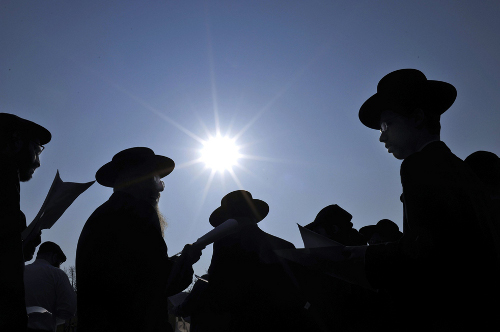
Orthodox JewsIntermarriage, although exceptionally common within Messianic Judaism and relatively rampant within all of the other Judaisms (with the likely exception of Orthodox Judaism) presents a risk or at least a challenge to the Messianic Jewish spouse to remain Messianic and Jewish in his/her observance of Torah and overall lifestyle. If this isn’t supported by the non-Jewish spouse, it could spell trouble for the marriage and/or the Jewish identity of the Jewish spouse. How the children are to be raised and their identity as Jewish vs. Gentile is also a serious consideration.

For these reasons, I reaffirm my previous assertion that a strong Messianic Jewish community be available, both for Jewish and for intermarried families who identify as Messianic. Furthermore, the Jewish Messianics should be allowed and encouraged to maintain and embrace a Jewish identity, and to consider themselves and the Messianic synagogues as part of larger Jewry. The continued effort by Messianic Gentiles and Hebrew Roots Gentiles (and some Hebrew Roots Jews), as well as the overall normative Christian community to demean any Jew in Messiah who continues to live a halachically Jewish life, and who further demands that Messianic Jews abandon Judaism as a practice, or observe some unobservable entity as “Biblical Judaism” vs “Rabbinic Judaism” must cease. Don’t argue.

It’s not our place as Gentiles within or outside the Messianic Jewish movement to dictate terms relative to how a Jew should or shouldn’t live as a Jew. A Jew’s relationship is and always has been with God.

No, I’m not throwing Jesus off the back of the bus and in fact, he’s at the center of all of this. Who lived a perfectly Jewish, halachically correct, completely Torah observant life as evidenced by the Gospels and the rest of the Biblical narrative? Only Yeshua Ben Yosef of Nazareth. Only he was born a Jew, of observant Jewish parents, within the borders of the Land of Promise, faithfully studying the scriptures and performing the mitzvot, and yet he was without sin and totally obedient to God.

What a role model for the apostles, all of the Jewish disciples, and for Messianic Jews today. Could anybody be more Jewish and live a more Jewish life than Messiah, Son of David? Will anyone live a more Jewish life in the Messianic Kingdom than the King of the Jews upon his return?

Zetterholm’s book has certainly confirmed a few things for me and opened up other doors. When next I revisit the pages of his book on this blog, I’ll further examine the relationship between Jews and Gentiles in the Messianic community in Syrian Antioch as Zetterholm’s research reveals it to us.

This series continues in my blog post Zetterholm, Ancient Antioch, and the Problem of the Gentiles.

Sermon Review of the Holy Epistle to the Hebrews: Six Foundations

What are the fundamentals?

Discover the six basic teachings of Messianic faith from Hebrews 5:11-6:3. This sermon presents and introduction and overview of repentance from dead works and of faith toward God, and of instruction about washings, the laying on of hands, the resurrection of the dead, and eternal judgment. (Hebrews 6:1-2).

-D. Thomas Lancaster
Sermon Fifteen: Six Foundations
Originally presented on April 27, 2013
from the Holy Epistle to the Hebrews sermon series

Concerning him we have much to say, and it is hard to explain, since you have become dull of hearing. For though by this time you ought to be teachers, you have need again for someone to teach you the elementary principles of the oracles of God, and you have come to need milk and not solid food. For everyone who partakes only of milk is not accustomed to the word of righteousness, for he is an infant. But solid food is for the mature, who because of practice have their senses trained to discern good and evil.

Therefore leaving the elementary teaching about the Christ, let us press on to maturity, not laying again a foundation of repentance from dead works and of faith toward God, of instruction about washings and laying on of hands, and the resurrection of the dead and eternal judgment. And this we will do, if God permits.

Hebrews 5:11-6:3 (NASB)

As someone commented recently on another of these reviews, in this sermon, Lancaster takes a break in teaching about Messiah as high priest according to the order of Melchizedek, but frankly, so does the writer of Hebrews. Lancaster says the writer of the Epistle to the Hebrews became frustrated with his readers. Why? Because he wanted to get into the deep mysteries of the priesthood of Melchizedek but he felt his audience wasn’t up to the challenge. They were still struggling with the very basics, the fundamentals of faith in Messiah. They were still consuming milk when they should have been dining on t-bone steaks by now.

Lancaster pauses to say something I don’t think many Christians, including Christian teachers and Pastors, are going to like.

If you’ve been reading this review series regularly and (hopefully) been listening to the previous recordings of these lectures, you know that within the first five chapters of Hebrews, we discover a multi-layered storehouse of meaning that is not evident on a surface reading, especially in English. The level of knowledge and education required to get this far exceeds, in Lancaster’s opinion, what is being taught in most (or all) Christian seminaries today.

In my opinion, all the various expressions of the Christian Church are so married to the static doctrine of their faith, that they can’t allow themselves to seriously examine the perspectives necessary to plunge into the hidden depths this Epistle possesses.

milkThe Hebrews writer considered the readers of his letter to be infants needing milk, unable to consume solid food, much as Paul addressed his own readership in 1 Corinthians 3. But if the original readers could follow the first five chapters of Hebrews and understand the deeper meanings are considered babies (since the writer to the Hebrews must have assumed he was being understood by his readers), then what does that make us in the Church today? Less than infants? Tiny, newborns? Undeveloped babies still in the womb? That’s hardly flattering at all. But what if it’s true?

Moving back to the text, Lancaster says this part of Hebrews outlines the basic foundations of Christianity or, in this case, Messianic Judaism as it was understood, taught, and practiced in the first century. He teases out a list of six items:

  1. Repentance from dead works
  2. Faith toward God
  3. Instructions about washings
  4. Laying on of hands
  5. Resurrection of the dead
  6. Eternal judgment

Even the summary Lancaster presents in today’s sermon is dense with information, and yet, these were the very, ground floor, teachings of what we think of as early Christianity among the Jewish believers. However, as you’ll see, every one of these fundamentals of the faith are completely Jewish teachings and were endorsed by the Pharisees.

And Lancaster says that even these fundamentals are almost completely beyond the comprehension of Christians today.

Repentance from Dead Works

When most Christians, including Pastors and teachers, read “repentance from dead works,” they believe, almost by reflex, that this is talking about repenting from works of the Law, that is, repenting from performing the Torah mitzvot.

Lancaster used some pretty strong language here and says the Protestant interpretation of “dead works” is dead wrong and in fact, the exact opposite of what the letter’s writer was trying to say.

For the wages of sin is death…

Romans 6:23 (NASB)

TorahWe covered a lot of this last week. Obedience to God doesn’t bring death. Sin brings death. These were Jews the letter writer was addressing. It would have been insane to tell a bunch of Jews longing to return to bring offerings at the Temple that observing the Torah was “dead works”. Dead works equals sin, according to how Lancaster reads this. He not only called the current Church interpretation of “dead works” wrong, he said the teaching was satanic. This is the first time I’ve ever heard Lancaster go this far in “calling out” a traditional Church teaching.

What was the basic teaching of Jesus? Did he say, “believe in me and you’ll go to Heaven when you die?”

“Repent, for the kingdom of heaven is at hand.”

Matthew 4:17 (NASB)

Jesus taught repentance of sins, not repentance of Torah obedience. He taught teshuvah. He taught turning away from sins and turning back to God. In Lancaster’s teaching about the New Covenant, he says over and over that Covenant is all about having a relationship with God by obedience to the mitzvot, which is what the Jewish people, including the believers, were doing. The first mitzvah is repentance, and it’s a mitzvah we must perform daily, lest we slowly, subtly fall away from the teachings of the Master and thus, fall away from God. Remember, Lancaster believes the letter’s readers were in grave danger of losing faith in Messiah and apostatizing.

Faith Toward God

You’d think this was a no brainer for the readers of the letter and for us, but faith is a lot more than just believing God exists. True, we must believe God exists before we can do anything else, but belief isn’t the goal, it’s just the starting line in the race.

In James 2:19 we learn that even the demons believe and they tremble, but we certainly can’t say that their belief somehow equals faith in God. Nearly two-and-a-half years ago, I wrote a commentary about the difference between faith and trust based on a rabbinic midrash, and I think it carries Lancaster’s meaning well.

We must trust in God’s sovereignty, that He is in control, and that He rewards obedience and punishes sin, both in this life and in the life to come. That means what we do matters. Our actions aren’t worthless or, as Derek Leman once put it, our deeds are not filthy rags. A transformed life in Messiah reflects that transformation in what we do.

Having faith equals having a relationship with God and, as Lancaster states in the aforementioned “New Covenant” lectures, covenant is all about establishing relationship, in this case, between man and man and between God and man. Lancaster said it’s a false teaching that all we have to do is “believe” intellectually or emotionally and do nothing else and that we are saved. If we don’t lead a life that shows fruit, our belief means nada.

As it turns out, Judaism at its core, is not a “religion of dead works,” but instead, its a covenant of intimate relationship between Israel and God.

Instruction About Washing

Washing? What? Is this about the various ritual washings such as Netilat Yadayim?

Some English translations of the Greek “baptismo” render the word “baptism,” but the problem is the word in Greek is plural. If this is supposed to be about multiple water and spirit baptisms, then it becomes a theological problem, since we are baptized in water and receive the Spirit only once. How can immersion be “immersions?”

Remember, this is a Jewish audience, an audience that would immerse on any number of occasions in the mikvah in order to render themselves ritualistically pure. They’d immerse daily before going up to the Temple. They’d immerse before getting married, women would immerse once a month, and the Torah prescribed many other circumstances that required immersion by Jewish men and women.

So what about the immersion of John the Baptist? Didn’t that replace all of the others? Lancaster calls John’s immersion the “Immersion of Repentance” which is also immersion into the Name of Yeshua. We see the first Gentile immersed in Messiah’s name in Acts 10.

But why would a group of Jewish believers need instruction about the mikvah as a fundamental teaching Messiah? They would have already been well versed in mikvah instructions from Torah. The way that the Greek expresses it, “baptismo didacus,” Lancaster believes that these were the instructions a new disciple would be given about the teachings of Messiah before being admitted into fellowship and immersed. We may even have those instructions preserved for us in the Didache, the set of teachings provided to new Gentile disciples of the Master, probably within or soon after the Apostolic era.

Do we have this today? So many churches, according to Lancaster, are focused on getting as many people saved as possible, but the Bible doesn’t say to make converts, but to make disciples (see this book review, and this short video for more). Is discipleship a lost practice in today’s Church? For many churches, the answer is “yes,” especially when compared to the process of discipleship as it existed in the various first century Judaisms. What we may be creating instead is a body of false converts where only a small minority of people in church pews every Sunday are actual disciples who are leading transformed lives in Messiah. The rest are merely those who said “Christ is Lord” and “believe” but otherwise are unchanged human beings.

The Laying On of Hands

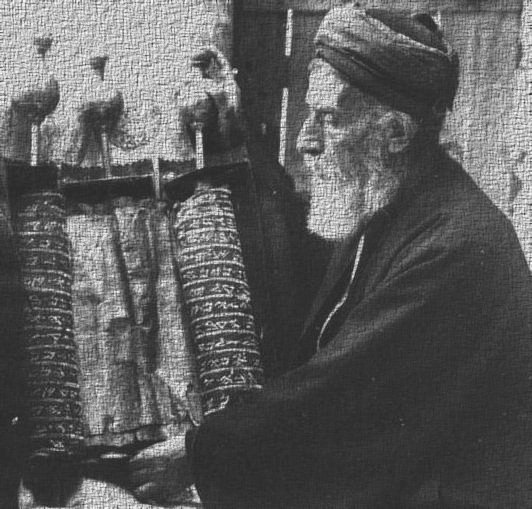
laying on of handsBesides in Pentecostalism, the Church isn’t into laying on of hands anymore. In the Bible, people were cured of illness through laying on of hands, but the practice is much older and in fact, based on the Torah and sacrificial system. The first step in offering a sacrifice at the Temple was for the person making the offering to lay hands upon it, transferring identity, if you will, so that in the case of a sin offering, the sacrifice would be made in place of the person.

Moses laid hands on Joshua to transfer authority over the tribes of Israel to him. Lancaster believes that after the mikvah, the last step in admitting a disciple into the fellowship of faith was to lay hands on the person, even as it was for the conferring of authority to a new elder in the community.

Do not neglect the spiritual gift within you, which was bestowed on you through prophetic utterance with the laying on of hands by the presbytery.

1 Timothy 4:14 (NASB)

Presbytery is also translated as “board of elders.”

So the basic steps of training and inducting a new disciples would be:

  1. Education in the teachings of Yeshua
  2. Acceptance into the community
  3. Immersion of repentance and into the name of Messiah
  4. Laying on of hands by the board of elders or the head teacher

All basic stuff, according to the Epistle’s writer. Fundamentals of the faith, first century Pharisaic Judaism style.

Resurrection of the Dead

Now this you’d think the Church would have down cold. I’m writing this on Easter Sunday so I’m sure Churches all over the world are preaching about the resurrection today. But according to Lancaster, many churches avoid talking about a literal, physical, bodily resurrection and instead, preach going to Heaven as a bunch of spirits. That’s eternal death (of the body) not eternal life.

The Kingdom of Heaven isn’t Heaven and it isn’t sitting on a cloud, strumming a harp forever and ever. It’s the Kingdom of God established on earth populated by a people who have been raised physically from the dead, which is why we call Yeshua our “first fruits from the dead.” It is his resurrection that is proof that we too will one day be resurrected in the faith through grace. Then we live here under the reign of King Messiah as living, breathing human beings under the New Covenant, with the Torah written on our hearts…and we will know God.

Eternal Judgment

This too should be well understood in the Church, the fact that there will be a final judgment for all humanity, when we will have to give an account for every word and deed we’ve committed in this life. Like the Master said, “Repent for the Kingdom of Heaven is at hand.” It was “at hand” or “imminent” because Messiah had entered the world and his death and resurrection flipped the “on” switch to start up the New Covenant. It’s on the edge of coming and is entering our world even now. And yet it will not have arrived until the Messiah returns.

repentanceWe have time, but who knows how much. Repent now. Don’t wait. Repent and obey. Lead a transformed life. Exert every effort so that when the books are opened, your name will be written in the Book of Life and not in the Book of Death.

Basic teaching. Milk.

And each and every one of these six fundamentals is what the Pharisees taught and these teachings were despised by the Sadducees. But the Sadducees had control of the Temple and the Priesthood and had no reason at all to allow the Jewish Pharisaic believers in Messiah access to the sacrificial system. So who would be their priest?

What Did I Learn?

I’d never separated out six fundamentals of faith in Messiah during the Apostolic period from Hebrews before. But what made the biggest impression was how, if we are to believe Lancaster, the vast, vast majority of the people we call Christians today are misreading not only this Epistle, but misunderstanding the fundamentals of their (our) own faith that is taught by the Bible.

I’ve written about Christian Fundamentalism before, which can trace its origins in Church history back about a century, but it doesn’t look like what Lancaster taught today. In fact, if you click the link I just provided, it too presents six fundamentals of the faith. They are just six points that don’t resemble those points we read in Hebrews 6:1-2

I felt Lancaster was a little hard on the Church, a little too critical of their mistakes and errors. After all, Lancaster was raised in the Church and his father was a Pastor. How long did Lancaster have to study and how many of his previously cherished attitudes and beliefs did he have to painfully surrender before he got to the point where he could teach this interpretation of Hebrews at Beth Immanuel?

This may sound strange, but I have the good fortune of not having spent my entire life in the Church. I had much less to “unlearn” and not too many attitudes and emotional attachments to Church tradition to give up. I have had quite a long and interesting time of putting together the Hebraic viewpoints on the Scriptures in a way that actually makes sense relative to the entire Biblical record, and I freely admit that Lancaster’s teaching, both at Beth Immanuel and through First Fruits of Zion, have been highly instrumental in that unlearning and retraining process.

But successfully transmitting that information to long-term and life-long Gentile believers is the challenge. Even getting a Christian to the point of considering that teachings like this one have value seems all but impossible. Many believers are so cemented into their theology and doctrine, that it would take dynamite to blow them out of their viewpoint and move them to a perspective where the Bible looks like and teaches something that, in my opinion, is much more consistent across the board. Many Christians don’t even believe there is more than one perspective on the Bible, and for those who do, they see those alternate perspectives are representing error, cultish belief, and even heresy.

But the end result is still the same. We enter the fellowship of Messiah through faith by grace and undergo a transformation into a new being who we are now and who we are in the process of becoming, little by little, until Messiah returns and the New Covenant is completely enacted.

followWe just need to be willing to take the risk of listening to teachings like this one critically but with an open mind. Once we learn to accept that what we’ve been taught about the Bible isn’t what the Bible actually says, we are faced with the daunting task of changing the Church from within to be more consistent with what the revealed Word of God turns out to be.

Some will follow. Others will continue to resist, clinging to the doctrines they’ve come to love, regardless of how they misconstrue God’s intent, especially toward Israel.

“Sometimes you have to move on without certain people. If they’re meant to be in your life, they’ll catch up.”

-Mandy Hale

To learn more about the six foundational principles of ancient Jewish Christianity, consider D. Thomas Lancaster’s new book Elementary Principles which is being offered by First Fruits of Zion (FFOZ) for free between now and June 3rd.

Messianic Evangelism

Some people object to this. When they see Messianic Jews declaring the Gospel to other Jewish People and to Gentiles, they say, “Why are you doing that? That’s not Jewish. We Jews are not a proselytizing faith.” Well, that may be a popular notion to many people, but it isn’t true. In Matthew 23:15, Yeshua says, “Woe to you, teachers of the Law and Pharisees. You hypocrites! You travel over land and sea to win a single convert and, when he becomes one, you make him twice as much a son of hell as you are.” Clearly, the Jewish leaders of Jesus’ day were proselytizing. They were telling people about God. They were winning converts, Yeshua says. So, sharing our faith is definitely Jewish. Not only was it true in the First Century, and before Messiah came, but it is also true today.

-Jonathan Bernis
“Good News for Israel”
Jewish Voice Ministries International

Last Sunday afternoon, I had my regular “coffee meeting” with a friend of mine. We meet every other week to talk about all sorts of things, but mainly to maintain relationship, friendship and community in Messiah. My friend is one of the few people in my life (face-to-face or online) who can really challenge me and present me with questions that make me stop and think. It’s not always comfortable but is it always inspiring.

Over lattes, he asked me how I’m personally sharing the good news of Messiah to the people around me as a Messianic Gentile. He didn’t word it exactly like that, but I have a reason for expressing the query this way.

Just about anyone I can think of who is involved in either Messianic Judaism or some aspect of the Hebrew Roots movement entered these movements by way of a Church experience. Before I entered Hebrew Roots and then became more Messianic in my practice and study, I came to faith in a Nazarene church here in Southwestern Idaho. Even the Jewish people I know, with rare exception, entered Messianic Judaism after coming to faith in Jesus (Yeshua) as Messiah within normative Christianity.

In other words, it wasn’t a Messianic Jewish or Messianic Gentile evangelist who shared the good news of Moshiach and the coming Kingdom of God with any of these folks. For me, a more traditional Christian evangelist (in my case, a youth Pastor and friend of my brother-in-law) asked me that standard question, “If you were to die tonight, do you know where your soul would go?”

share the gospelThat’s a horrible introductory line in my opinion, and the actual process of me coming to faith took a large number of specific steps and encounters over a six month to one year period of time. But in the end, I made the initial baby steps of coming to faith and then my life fell apart.

But how would a person with a Messianic Gentile perspective on the Bible come to evangelize, not Christians in the normative Church, which is what we’re used to doing, but atheists or even people from completely unrelated religious traditions, telling them of the plan of personal salvation through Christ?

It’s not an easy question to answer, because I believe the “good news” of Messiah is so much more than just a plan for personal salvation. Scot McKnight expanded on this idea in his book The King Jesus Gospel: The Original Good News Revisited and I agree that we (the Church) have reduced the actual gospel message down to a bullet list of talking points centered around individual salvation so that a person may be forgiven of their sins and go to Heaven when they die.

The gospel message of Jesus is often simplified down to believe in Christ and your sins will be forgiven and you will go to heaven when you die. In episode eight this common misconception will be challenged. Viewers will discover that the main message of the gospel is one of repentance and entering into the kingdom of heaven. The kingdom of heaven is not the place we go to when we die but rather God’s kingdom coming down here on earth. The gospel message is about preparation for the Messianic Age.

from the introduction to Episode 8
The Gospel Message
from the First Fruits of Zion television series
A Promise of What is to Come

The episode is only about thirty minutes long and free to view by clicking the link I provided. It offers a more expanded understanding of what the good news or gospel message of Messiah is really all about.

The Gospel MessageBut that story is aimed at people who already have faith in Christ and who are looking for a deeper understanding of what that faith actually means based on a Hebraic examination of the scriptures.

How do you introduce this sort of stuff to people who have no background in it at all? If I go up to someone, tell them I’m a Christian, and ask if they would like to talk about Jesus, they may say “yes” or they may say “no,” but they’ll at least have some idea of what I’m talking about. If I go up to that same person and tell them I’m a Messianic and ask if they would like to talk about the coming Kingdom of God and the blessings of the Messianic Age, they’d have no idea what I was saying and would probably think I’m some sort of religious cult nut.

The Sunday before Easter, one of the Pastors at church announced from the pulpit the opportunity for anyone who desired, to join with others on Good Friday to go door to door in the neighborhood offering to share the gospel message and to pray with people. For a brief instant, I imagined myself doing such a thing, but then all the questions about the true nature of the gospel I mentioned above came flooding in.

I want to share my faith, but it doesn’t always have a lot in common with the doctrinal position of Evangelicals, so how could I employ Evangelical religious tracts and Evangelical language and concepts in any program of sharing faith as I understand it?

Arguably, there are only two populations that Messianics attempt to engage: normative Judaism and the Church. Messianic Jews attempt to communicate to wider Judaism about the Moshiach, Yeshua HaNazir, and the New Covenant promise of a restored Israel and a reunited Jewish people as the head of all peoples and nations of the Earth. Messianic Gentiles and Hebrew Roots Gentiles tend to try to convince people in the Church or people who are disaffected and who have left the Church, that the Messianic and/or Hebrew Roots perspective on scripture tells a more authentic and accurate story about the relationship between God and humanity.

But how do we (or do we ever) communicate our message to people outside of those frameworks, people who don’t have the theological background we usually require of our audiences, and help them understand what it is to be a disciple of the Master?

I know of only one, single missionary effort currently operating, in this case in Uganda, that works to evangelize unbelieving populations directly from a Messianic perspective: Acts for Messiah. As the introductory text regarding their mission states:

ACTS for Messiah serves to follow in the footsteps of Yeshua and the apostles, providing for the needy, feeding the hungry, and providing a home for the children left in the streets. Our current area of operation is in Tororo, Uganda, where Emily Dywer brings ministry to small villages and runs an orphanage rescuing children from desperate and dangerous situations, giving them hope and a future…

That might be the answer or at least part of it. It’s not just what we say, but what we do and how we live. The answer may not be in the differences in perspective between Christians and Messianics (and of course, Messianics are Christians who simply view scripture from a different and more Hebraic perspective), but the similarities. At the end of the day, it’s all about humble obedience to the teachings of the Master, following the path, feeding the hungry, providing clothing, offering comfort, showing kindness, even to the unkind, for they are the ones who need kindness the most.

the missionary next doorI’m not a big fan of knocking on doors and offering to share the good news with strangers. I’ve been at the receiving end of door-to-door evangelists of one type or another and an unanticipated visit is usually an interruption. On the other hand, I am discounting the Holy Spirit and encounters previously arranged outside human awareness.

We have to start somewhere. We can’t just talk to ourselves about what we already know and we can’t just target limited populations if we really believe we have a good message that people need.

But where to begin? If you call yourself a Messianic anything, do you share your message with strangers or at least with atheists with whom you’re acquainted? How do you talk to someone about faith in a Jewish Messiah within the context of Messianic worship and faith?

The comments section is now open.

Leviticus, Homosexuality, and Abominations

You shall not lie down with a male, as with a woman: this is an abomination.

כב. וְאֶת זָכָר לֹא תִשְׁכַּב מִשְׁכְּבֵי אִשָּׁה תּוֹעֵבָה

Leviticus 18:22

Ok wait, we know that Leviticus forbids men having sex with each other, and that the penalty is death. But does G-d give us a reason? Yes, She does. “You shall not lie with a man as with a woman, it is an abomination.” When I was growing up and reading those words, I had no idea what abomination meant, but I knew it must be bad. I had visions of the abominable snowman attacking me if I did any of the mentioned activities that were said to be ‘abominations’. This fearful obedience stopped me from challenging my church’s beliefs about homosexuality for many years.

What does this strange word mean? Well, in Hebrew, the word is ‘to-evah’ (or to-ebah), but that helps little. The word is difficult to translate succinctly, but picture someone or something that is wild and dangerous, highly addictive and contagious. Picture something radioactive, that once unleashed, will spread like wildfire and affect (and infect) everything nearby. It’s not only wild, but disgusting, and describes detestable religious orgies, or idolatrous practices. If you were confronted with that kind of enemy, what would you do? You’d have to destroy it–stop it dead in it’s tracts (sic). If you didn’t, it would soon infect the entire population, yourself included.

One interesting fact is that the first time ‘ABOMINATION’ is used in the Torah is to DESCRIBE WORSHIPPING G-D, when Moses is asking Pharoah to let the Israelites worship G-d in the desert. The Pharoah inquired, “Why can’t they worship right here?” and Moses answered that if the Israelites worshipped G-d in Egypt, their acts would be an ABOMINATION to the Egyptians. Can you believe it? Worshipping the one true G-d is considered an abomination! Why? Because it is the religious rite of a different religion (from the perspective of the Egyptians–the Israelites were going to sacrifice animals whom the Egyptians worshipped, so it was considered detestable). Still don’t believe that toevah is about idolatry? “Do not inquire concerning their gods, saying, ‘How did these nations worship their gods? I also want to do the same.’ You must not do the same for the L-rd your G-d, because every TOEVAH that the L-rd hates they have done FOR THEIR GODS” Deut.12:30-1. This makes it clear, the abominations of the Canaanites weren’t just a bunch of random detestable acts, they were FOR THEIR GODS. As a child I wondered what ‘abomination’ meant, now I have the answer. The Bible gives its own definition in Deut. 12:30-31; an abomination is a detestable religious rite of a religion different from your own.

-from the B’nai HaKeshet (Children of the Rainbow) website

My stated intent to review Matthew Vines’ book God and the Gay Christian has inspired a lot of attention and responses on my blog post, on Facebook, and via email. One such email message led me to the B’nai HaKeshet website from which I quoted above. That quote was taken from a much longer missive which attempts to explain that the Bible never speaks against Homosexuality or Homosexual acts in general.

AshtorethI Googled the definition of the Hebrew word “toevah” which is commonly translated as “abomination,” such as we see in Leviticus 18:22 and the search results returned a lot of the same information, basically saying that this portion of scripture is not a blanket prohibition against male on male sexual acts, but specifically addresses such sexual activity within the context of idolatrous worship. The issue supposedly isn’t a man having sex with another man, but a man having sex with another man (male temple prostitute) in association with worshiping an idol.

It’s difficult to find a source (at least by a quick Google search) that is objective or neutral and simply defines the word and its usage, but the closest I found was a newspaper opinion piece written by Rabbi Bruce Warshal called Lots of abominations in the Bible (Sept. 19, 2012).

Rabbi Silvers discussed the meaning of the Hebrew word toevah, which most English bibles translate as “abomination,” as in Leviticus, chapter 18, verse 22: “Do not lie with a male as one lies with a woman; it is an abomination. He pointed out that the Hebrew word toevah is used extensively in the Bible regarding food prohibitions, idolatrous practices, magic and ethical violations. His prime example is that eating shrimp (shellfish) is toevah. Yet today he knows plenty of Jews who eat shellfish.

I also found a word study written by someone named Skip Moen on the word to’evah:

With this in mind, we can turn to the word to’evot (abominations). What is an abomination? Do you think that it is something so hideous, so immoral, that it ranks among axe murder, rape and incest? Remember the cultural background of the ancient Near East. Something is to’evah’ when it is loathsome and detestable. It may be physical, ritual or moral. It is something offensive to values of the culture. That means to’evah is determined within the culture and community, just like mishpat. And that means God defines what He finds offensive within the community of Israel. The world may not find some of these actions offensive. That doesn’t matter. They are not regulations for the world. They are offenses to the Hebraic biblical way of life. If we want to demonstrate with our behavior the values that God expresses with His words to His chosen community, then these to’evot will not be part of our actions.

We must understand this perspective in order to understand why homosexuality, slander and human sacrifice are in the same category as dishonest business practices and the eating of unclean animals. When it comes to offenses to God’s values, eating pork is the same as child sacrifice; ritual prostitution is the same as cheating a man with false weights and measures; and homosexual behavior is just as repugnant as lying. Forget the arguments about morality. Put aside the nurture/nature nonsense. None of these matter when it comes to embracing the culture of the Kingdom. If you want to be in God’s community, then you behave in ways that honor Him. End of story.

Topical Index: abomination, to’evah, rule, mishpat, Proverbs 6:16-19, Leviticus 18:26

forbiddenThe sense I’m getting from all of this is that the word “toevah” can be applied to many different acts which God forbade the Israelites from performing, considering all of them “idolatry” or alternately “adultery” (I’ll get to that). But does that mean all of the forbidden acts (including sex with close relatives, see the wider text in Leviticus 18) are only forbidden when engaged within the context of idol worship?

(Remember, context, context, context. Leviticus 18:22 is included in the larger context of the Leviticus 18 “forbidden relationships and acts” list for a reason).

Saying that these various sex acts are only an “abomination” if performed as part of idol worship doesn’t make sense. That would mean it would only be forbidden for an Israelite to have sex with his sister or step-mother if that sexual act was performed as part of worshiping a foreign god.

The crux of the argument presented at B’nai HaKeshet is that for something to be an “abomination” it must be related to idol worship and cannot be a “stand alone” prohibition that crosses all contexts. Just read Leviticus 18:6-18 and you’ll see prohibitions against sexual acts all involving either incest or sex with other close relatives (mother-in-law, step-sister, and so on).

As far as Rabbi Warshal’s reference to Rabbi Silvers, just because some or many Jews today eat shellfish in violation of the Torah commandment doesn’t make it right. Disobedience to God is still disobedience regardless of how many people are engaging in the behavior.

Although on the surface, it seems as if the anonymous writer at B’nai HaKeshet has done her homework (she does state that she’s a woman), the logic she employs to come to at least some of her conclusions has “gaps”.

Here’s what I mean.

When the Lord began to speak through Hosea, the Lord said to him, “Go, marry a promiscuous woman and have children with her, for like an adulterous wife this land is guilty of unfaithfulness to the Lord.”

Hosea 1:2

Rebuke your mother, rebuke her, for she is not my wife, and I am not her husband.

Hosea 2:2

“Though you, Israel, commit adultery, do not let Judah become guilty.”

Hosea 4:15

God compared the intimate relationship He has with Israel as a husband to a wife, with God playing the role of husband. When Israel strayed and worshiped false gods instead of or in addition to Hashem, it was compared to committing adultery. But did Israel to the last man and woman cheat on their spouses? Is that what God is talking about? No. He’s employing a metaphor through the prophet Hosea (to the point where Hosea is commanded to marry Gomer, a promiscuous woman) in order to illustrate His point.

hosea and gomerAny act of disobedience committed by the Israelites is compared to idolatry and faithlessness. We can’t say that only an Israelite who cheats on his or her spouse is guilty of idolatry or that it is only forbidden for an Israelite to cheat on his/her spouse in performance of an idolatrous act is forbidden.

You have to look at the broader scope. It is my opinion that toevah can mean many different acts of disobedience to God, some directly related to idol worship but many others involving forbidden activities that are not or at least do not have to involve worshiping an idol. It was still forbidden of the Israelites to eat a ham sandwich, even if it had nothing to do with a pagan practice, just as eating ham (or shellfish) for observant Jews today is considered a forbidden act. That many secular Jews eat ham or shellfish doesn’t make it acceptable in God’s sight.

I’ll stop here rather than continue with my assessment of the B’nai HaKeshet author’s other assertions. I may address them at some other point, but I want to get this published quickly so any of my readers who goes offline for Shabbat can have a chance to respond before Saturday night/Sunday morning. Also, because I’m writing/editing very quickly, this missive isn’t as polished as I’d like it to be, so excuse the rough spots.

I’m not trying to be mean or insensitive and I hope I’m being objective, but it just seems as if a certain bias has entered how these texts are being read, especially in light of the larger context of the Bible and God’s relationship with Israel. I know this doesn’t specifically address Christianity and Homosexuality, but I have some ideas about how to consider that paradigm.

Last point. I wrote this as a way to get my head into the debate relative to Homosexuality and whether or not the Bible supports and endorses (or at least doesn’t outright condemn) homosexual acts in the community of faith. So far, I can’t say there’s overwhelming evidence that God is “cool” with such behavior. Your polite feedback, as always, is welcome.