Tag Archives: messianic judaism

Subbotniks, Proselytes, and Messianic Gentiles

I was reminded of this once again when I recently came across some articles on the Russian Subbotniks. The Subbotniks were a break-off group from the Russian Orthodox Church. They observed a seventh day and also faithfully observed the laws of Torah. When researching their account, I was not only intrigued by its many similarities to the situation of increasing numbers of Gentiles disciples of the Master returning to the practice of Torah, but I was also struck by some dangerous pitfalls revealed by their story. If we are not careful, we might fall into the same traps. In that regard, the tale of the Subbotniks is as inspiring as it is cautionary.

-Toby Janicki
“The Subbotniks,” pg 49
Messiah Journal Spring 2014 (115) issue

In 1451, Pope Nicholas V issued a decree forbidding all social contact between Christians and Jews. The Church sought to stop Christian converts to Judaism; throughout Europe, those who did so were liable to the death penalty.

This Day in Jewish History
For 24 Adar 5774 – March 26, 2014

To be honest, I’ve been avoiding reading Toby’s article because the title just didn’t “resonate” with me, but now I’m glad I did. Lately, I’ve been writing about the nature of Messianic Judaism for Jewish people and just how Jewish should Jews in Messianic Judaism be. However, as I’m always reminded, there’s the other side of the coin; Gentiles who remain devoted disciples of Jesus as the Jewish Messiah and yet who are also attracted to the practice and/or perspective of Judaism on their (our) faith.

But I included the quote about Pope Nicholas V for a reason. When I first read it a day or so ago, I found myself wondering why this Pope found it necessary to forbid contact between Christians and Jews and why there was such a “problem” with Christians converting to Judaism in 15th century Europe? How many Christians were converting anyway, and why? What was the allure?

I suppose the story of the 18th century Subbotniks might contain part of the answer. It seems that periodically in the history of the Church, some sub-group of Gentile believers breaks off from their local, normative expression of Christianity and either converts to Judaism or, without abandoning their faith in Jesus, begins to take on more “Jewish” practices and perspectives.

Luther’s open letter of 1538 condemning Sabbatarian tendencies among Christians in Silesia and Moravia after 1527 is a key work marking the transition toward the anti-Judaic attitudes of the late Luther. Marked by a new severity toward the Jews on Luther’s part, the letter had its origin in Luther’s response to a new Sabbatarianism arising among radical Protestants, which Luther saw as a victory for Jewish legalism over sound evangelical teachings.

-Dr. Lowell H. Zuck
“Luther’s Writing Against Emerging Sabbatarianism”
ConcordiaTheology.org

Apparently, the Reformation didn’t end of the problem of Christian Sabbatarians anymore than Pope Nicholas did.

Martin Luther
Martin Luther

I’ve often thought that the authors of the Reformation didn’t take things far enough. Sure, they stood up against the errors and abuses of the Roman Catholic church as it existed in the 16th century, but they didn’t change as much as you might imagine. They still kept the Sunday worship day and continued to adhere to and enforce theologies and doctrines that were anti-Semitic and anti-Judaism, even accusing “the Jews” of attempting to mislead Christians (probably relative to the Shabbat):

I had made up my mind to write no more either about the Jews or against them. But since I learned that these miserable and accursed people do not cease to lure to themselves even us, that is, the Christians, I have published this little book, so that I might be found among those who opposed such poisonous activities of the Jews who warned the Christians to be on their guard against them. I would not have believed that a Christian could be duped by the Jews into taking their exile and wretchedness upon himself. However, the devil is the god of the world, and wherever God’s word is absent he has an easy task, not only with the weak but also with the strong. May God help us. Amen.

-quoted from “The Jews & Their Lies” (1543) by
JewishVirtualLibrary.org

I’ve been accused in the past of bashing Luther a little too hard, so I’ll try to be a little less aggressive here, but the history of Christians being attracted to aspects of Judaism doesn’t seem to be an isolated one.

Why? What’s the attraction?

Initially, these former members of the Christian Church continued to view both the Old and New Testaments as divinely inspired, but they believed that nothing in the New Testament abolished the commandments of the Torah, including the laws of kashrut (dietary laws). While still considering themselves disciples of the Master, the Subbotniks wrestled with the traditional Orthodox Church’s teaching on the Trinity, and they developed some of their own thoughts regarding Christology and Yeshua’s role as a prophet and miracle worker. They also squarely rejected icons and frescoes of the Orthodox Church as idolatrous.

-Janicki, pg 50

shabbos1My guess is when my traditionally Christian readers hit the word “Trinity” in the quote above, you may have decided that the Subbotniks were heretics and wrote them off, but hang in there. Also, for the Protestants out there, you may be thinking that the Subbotnik reaction to the “icons and frescoes” of the Orthodox Church may have been appropriate, but they certainly wouldn’t have that sort of issue with Protestant Christianity today. They certainly wouldn’t have left a (for example) Baptist church to take up Sabbath-keeping, would they?

Having spent some number of years in the Hebrew Roots movement (which meant I also exited traditional Church worship and thought), I’ve interacted with many, many people who “left the Church”. They (we) have a lot of reasons for doing so. For me, it was that the Christian Pastors and church members (Sunday School teachers, rank-and-file in the pews) weren’t able to answer all of my questions about the Bible and why Christians do and teach certain things (a Sunday Sabbath, replacement theology). But some people felt much, much worse about Christianity than I ever imagined.

Some people were actually angry at their former churches and their former Pastors. Some people felt lied to. They had discovered, through various processes, that the New Covenant didn’t say what many churches teach, it isn’t a recipe for replacing Israel with the Church in God’s covenant promises, and it isn’t the “swan song” for the Jewish people and Judaism. Many of these people, and some expressions of Hebrew Roots, attempted to follow a path similar to those of the Subbotniks, remaining believers in Jesus (or Yeshua, if you will), but adopting many of the practices of modern Judaism to varying degrees of observance. The logic is that if the fundamental theology and doctrines of Christianity are wrong because they are anti-Jewish, anti-Israel, and misrepresent the “Jewishness” of the foundations of “Christian” faith, the true answer to how we Gentiles are to be devoted disciples of Jesus can only be found by seriously revisiting the first century Judaism of “the Way” and building a worship practice and teaching from there. That point of view also accuses the Reformation of not going far enough or perhaps not going far enough back in time as I previously mentioned.
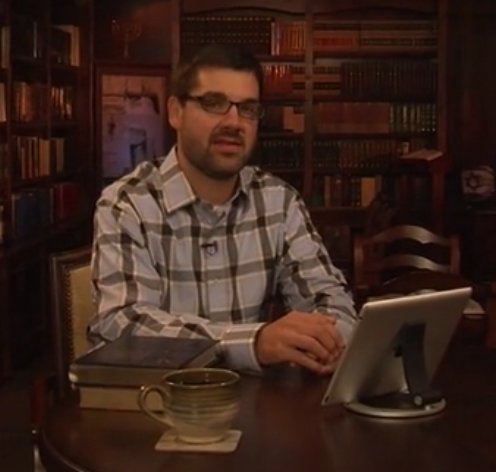
Toby Janicki
Toby Janicki

As I quoted Toby saying, the example of the Subbotniks and of all the various non-Jewish groups across history who have devoted themselves to Jesus by devoting themselves to Jewish study and practice is inspiring for modern-day Messianic Gentiles like me, but he also said their story is a cautionary tale.

Toby relates that the Subbotniks were persecuted by the Orthodox Church and the government, but it’s fairly unlikely Messianic Gentiles in the western nations would face the same treatment today. The separation of church and state means the U.S. government has no vested interest in enforcing a state religion as such, and how exactly is a Catholic or Evangelical (or any other kind of) church going to persecute us? No, we won’t be persecuted. Some Christians and some Churches are actually curious about Messianics. Up to a certain point, they find it interesting or even a little fascinating to be just a little more “Jewish” as Gentile Christians and to even “allow” a certain level of Jewish practice among Jewish believers.

But when they finally grasp just how people like me think Jewish believers should be completely Jewish, these Christians back off while rapidly raising their “you’re under the Law” shields. Even Christians like me, who don’t have a significant “Jewish” practice but who utilize a Messianic Jewish informational and educational platform in interpreting the Bible, are at best thought of as intelligent but mistaken and at worst as a member of a cult or even a heretic (what do you mean “the Law” wasn’t nailed to the cross with Jesus?).

But Toby’s right. Messianic Gentiles walk a fine line, at least potentially. We must never mistake Jewish perspective or Jewish practice as the object of our faith. The true focus must be Messiah as the “doorway” by which we may approach the Throne of God.

At the same time, the story of the Subbotniks cautions us about potential pitfalls. What began as a life-giving revelation ended in causing the people to deny Yeshua as Messiah — the very one who had brought them to the truth. This story is not just an interesting footnote for the history of religion. Both Jews and Gentiles in the Messianic Jewish movement face the same issues today that the Subbotniks did.

-Janicki, pg 57

I don’t have any numbers to draw from, but anecdotal information suggests more than a few Gentiles in the Hebrew Roots and Messianic Jewish movements have “swung to the other side,” so to speak, and converted to (usually Orthodox) Judaism. One of the best arguments “the Church” has to dissuade Gentiles from becoming involved in Jewish practices and studies is the danger of apostasy and conversion. This is as big a problem now as it was five-hundred years ago. The understanding that the Church labors under a set of misunderstandings, some of which go back to the very foundations of (Gentile) Christianity, creates the false impression that Christianity is bad and Judaism is good.
jewish-traditionI’m not denigrating Judaism, but I am saying that, for my part, it is a lens through which I gain a clearer (in my opinion) focus on what the Bible is actually trying to say, and a better view of the original intent of the Bible writers including the ever controversial Apostle Paul. One of the reasons I limit my “Jewish” practice is to avoid falling into the trap that captured the Subbotniks and that pulls many believers out of Yeshua-faith and into conversion to normative Judaism every year (I should say though, that it’s not my only reason).

In my opinion, Messianic Gentiles will continue to struggle with our own “identity” issues, regardless of whether we find ourselves in a Messianic Jewish synagogue or a traditional church. I’ve participated in adding some resources to a website called MessianicGentiles.com, created by Rabbi David Rudolph, in order to assist in building a positive identity for people like me. While I believe that it is vital for Jews in Messianic Judaism to have authentic Jewish community in the movement so as to not be cut off from larger Jewry, just like Messianic Jews, Messianic Gentiles must never forget that the central focus of our faith is not our practice but the Messiah.

If Judaism were the focus, then Jews in Messianic Judaism could find community in any synagogue of any of the other branches of Judaism. And if Judaism were the focus for Gentiles, then our answer would be to convert to some branch of normative Judaism and that would be that.

But then we end up denying the Master, Yeshua…Jesus. Having come this far under difficult circumstances, being dismissed by other Christians, trying to help our families understand why we do what we do, being accused of being “wannabe Jews,” are we to fail now in our faith and apostatize by becoming Jewish proselytes and casting Messiah aside like an old love affair?

Kareth and Messianic Judaism

At the core of the pluralism issue is the debate over whether there’s “More than one way to be a good Jew.” Indeed, there have always been divergent streams of observance – like Chassidic, Sefardic vs. Ashkenazic, and even the Talmudic arguments between the Talmudic academies of Shammai and Hillel.

And yet, historic precedents show that there are limits to pluralism, beyond which a group is schismatic to the point where it is no longer considered Jewish. For example, everyone considers Jews for Jesus as outside of the legitimate Jewish sphere. The disagreement, then, lies in defining exactly what are the acceptable limits of divergence.

-from “Ask the Rabbi”
Aish.com

I’m continuing my email conversation with my Jewish friend as I described in yesterday’s meditation, and this “Ask the Rabbi” column seemed to fit right in. As you just read, there are a whole bunch of divergent streams of Judaism, but how far can you diverge and still be Jewish? According to the Aish Rabbi, being “Jews for Jesus” is going too far.

I should say at this point that “Jews for Jesus” is how most Jews see Messianic Judaism, thus Messianic Judaism isn’t viewed as a “Judaism” at all. One problem is, as a private communication revealed to me just recently, even many staunch Jewish disciples of Messiah aren’t all that observant. For instance, one Messianic Jewish conference (I’m deliberately concealing identifying information for obvious reasons) was scheduled during a major Jewish fast day. At another conference, the conference leaders ate the local hotel (non-Kosher) fare, and the very few Jewish attendees who kept kosher were forced to have catered kosher meals brought in or to drive some distance to a kosher eating establishment. And driving on Shabbat for the Jewish conference organizers and attendees wasn’t considered a big deal at all.

Why do I say all this?

Historically, any Jewish group which denied the basic principles of Jewish tradition – Torah and mitzvah-observance – ultimately ceased to be part of the Jewish people. The Sadducees and the Karites, for instance, refused to accept certain parts of the Oral Law, and soon after broke away completely as part of the Jewish People. The Hellenists, secularists during the Second Temple period, also soon became regarded as no longer “Jewish.” Eventually, these groups vanished completely.

-the Aish Rabbi

One of the big issues that may inhibit halachically, culturally, and religiously observant Jews from recognizing Messianic Judaism as a Judaism is, based on the quote above, the lack of consistent Jewish observance in Messianic Judaism. Except for in a few small corners of the movement (at least from an Orthodox Jewish perspective), Messianic Judaism presents the appearance of being not a Judaism (there are many other issues, such as the deification of Jesus and the supposed worship of a man, but I’m choosing to focus on the matter of community and observance right now).

tallit-prayerIt’s a terrible thing for a Jew to be cut off from his or her people.

For those of you who don’t know, the concept of Kareth or “cutting off” is a consequence of a Jew committing certain offenses, such as having a forbidden sexual relationship or worshiping a deity other than Hashem (known as Avodah Zarah). Messianic author and teacher Derek Leman even wrote an article on the topic a few years back.

Should a Jew in Messianic Judaism feel cut off from larger Judaism? Is that a consequence of being a Messianic Jew? Not according to Rabbi Stuart Dauermann in his article “The Jewish People are Us – Not Them,” which he wrote for the Fall 2013 issue of Messiah Journal (and which I reviewed), however, R. Dauermann admits that this has been a consequence of Messianic Judaism historically due to its associations with Evangelical Christianity. Evangelicals believe that once a Jew becomes a disciple of Messiah through the Messianic movement (or by converting to Christianity), they have more in common with Gentile Christians than non-Messianic Jews.

That’s a terrible burden to lay on any Jew’s shoulders.

But does it really have to be that way? Has it always been that way?

Early Christians were the original “Jews for Jesus.” They accepted the Divine revelation of the Torah, but not the eternal, binding nature of the commandments. Initially, these Jews were reliable in their kashrut, and counted in a minyan. But the turning point came when Paul, realizing that Jews wouldn’t accept the concept of a dead Messiah, opened up membership to non-Jews. At that point, these “Jews” experienced a total severing of Jewish identity.

Now that’s a glaring assumption by the Aish Rabbi. Let’s look at that again:

But the turning point came when Paul, realizing that Jews wouldn’t accept the concept of a dead Messiah, opened up membership to non-Jews. At that point, these “Jews” experienced a total severing of Jewish identity.

Ending MacArthur seriesEvangelical Christianity believes that Paul broke with Jewish identity shortly after he encountered Jesus on the road to Damascus (see Acts 9) and that the extinguishment of Jewish identity in Messiah was by design. The Aish Rabbi says Paul may not have originally intended to break with Judaism and tradition, but when he couldn’t convince other Jews to “worship a dead Messiah,” Paul switched the object of his proselytizing from Jewish to Gentile populations and cut loose anything Jewish from devotion to Jesus.

No wonder so many Jewish people really hate Paul.

As Paul and Barnabas were going out, the people urged them to speak about these things again the next sabbath. When the meeting of the synagogue broke up, many Jews and devout converts to Judaism followed Paul and Barnabas, who spoke to them and urged them to continue in the grace of God.

Acts 13:42-43 (NRSV)

I invite you to read the larger context which is captured in Acts 13:13-52, but basically, after Paul’s discourse in the synagogue at Pisidian Antioch, on how Jesus was indeed the Messiah, his Jewish audience was extremely eager for him to return next Shabbat to say more. Apparently the issue of a “dead Messiah” wasn’t a problem. The problem was this:

The next sabbath almost the whole city gathered to hear the word of the Lord. But when the Jews saw the crowds, they were filled with jealousy; and blaspheming, they contradicted what was spoken by Paul.

Acts 13:44-45 (NRSV)

A certain number of God-fearing Gentiles generally attended this synagogue on a regular basis, so the huge crowds of non-Jews who showed up for the subsequent Shabbat to hear Paul must have been the result of word getting out and large crowds of idol-worshiping pagan Gentiles entering the Jewish community space.

The Jewish PaulSo like I said, the “dead Messiah,” at least in this case, didn’t seem to be the problem, nor, as we know from many of Paul’s other letters as well as the record in Luke’s Acts, did Paul totally abandon his people or Jewish practice in order to invent a new, Law-free, religion exclusively for the Gentiles. As the Aish Rabbi himself stated, the early Jewish disciples ”accepted the Divine revelation of the Torah” and ”these Jews were reliable in their kashrut, and counted in a minyan.” I do not believe that ”these Jews” denied ”the eternal, binding nature of the commandments” nor that Paul taught Jews to neglect the Torah.

Paul said in his defense, “I have in no way committed an offense against the law of the Jews, or against the temple, or against the emperor.”

Acts 25:8 (NRSV)

Paul continued to deny that he had committed any offense against the Torah or against Roman law for the rest of his life and unless we want to believe he was just lying to try to save his skin (didn’t do him very much good if that was his ploy), then we have to consider that the Aish Rabbi, representing the general Jewish view of Paul, and Evangelical Christianity, are both wrong about the Apostle to the Gentiles.

So we have some history that tells us the very first Jews who belonged to the Messianic stream of Judaism called “the Way” continued to be observant Jews and continued to be considered Jewish by the other branches of Judaism in the late Second Temple period.

But why can’t we have that now? Why can’t Messianic Jews be considered Jewish, even within Messianic Judaism? Why should a Jew in Messianic Judaism be considered cut off from his or her people in larger Judaism?

The Aish Rabbi ends his article this way:

I can’t predict what will happen to the various streams within Judaism today, but I do believe that the best bet for a strong Jewish future is to remain loyal to our faith and traditions.

I promise that the Rabbi was not considering Messianic Judaism in this opinion but I believe we should. What that means, is the Jewish people in Messianic Judaism, in order to ensure a strong Jewish future, must too remain loyal to Jewish faith and traditions. That’s why I wrote the blog post The Necessity of Messianic Jewish Community. That’s exactly why Messianic Jewish community is necessary, important, vital, critical.

There’s a lot more I could say about this, but for the sake of length, I’ll back off for now. It will probably be fuel for another blog post fairly soon. I don’t see this issue going away.

synagogue_arkI know it’s odd for me, a non-Jewish person studying within the context of Messianic Judaism, to be so passionate about Jewish identity for Jews in Messiah. I suppose it all comes back to my own (Jewish) family who aren’t Messianic but who I believe really need to be even better at connecting with Jewish community. There’s a huge danger as each generation passes, of Jewish people simply fading away, not assimilating into Christianity necessarily, but just drifting into secular oblivion.

Within Messianic Judaism, many of the leading Jewish teachers and promoters are themselves intermarried, and if the mothers of their children aren’t Jewish, then neither are their offspring.  If, as I stated above, there is a “crisis” of minimal or inconsistent observance of the mitzvot which further weakens the Jewish nature of Messianic Judaism and thus any connection with larger Jewry, will Jews be found within Messianic Judaism in twenty or thirty years?

Sermon Review of the Holy Epistle to the Hebrews: Enter My Rest

Three possible interpretations of Psalm 95:11 prepare us for understanding the discussion in Hebrews 3:7ff regarding the generation in the wilderness that did not enter into God’s rest. An important preface to the Sabbath discussion of Hebrews 4.

-D. Thomas Lancaster
Sermon Ten: Enter My Rest
Originally presented on March 9, 2013
from the Holy Epistle to the Hebrews sermon series

This lesson covers all of Hebrews 3 and most of Hebrews 4, but it all hinges on an understanding of Psalm 95:

O come, let us sing to the Lord;
let us make a joyful noise to the rock of our salvation!
Let us come into his presence with thanksgiving;
let us make a joyful noise to him with songs of praise!
For the Lord is a great God,
and a great King above all gods.
In his hand are the depths of the earth;
the heights of the mountains are his also.
The sea is his, for he made it,
and the dry land, which his hands have formed.
O come, let us worship and bow down,
let us kneel before the Lord, our Maker!
For he is our God,
and we are the people of his pasture,
and the sheep of his hand.
O that today you would listen to his voice!
Do not harden your hearts, as at Meribah,
as on the day at Massah in the wilderness,
when your ancestors tested me,
and put me to the proof, though they had seen my work.
For forty years I loathed that generation
and said, “They are a people whose hearts go astray,
and they do not regard my ways.”
Therefore in my anger I swore,
“They shall not enter my rest.”

Psalm 95 (NRSV)

There are three possible ways of looking at this Psalm that affect today’s study. But before getting into that, we need to ask, what is “God’s rest?”

Lancaster took his audience through a quick Hebrew language lesson. The word “Shabbat” is based on the Hebrew verb “Shavat” which means “to rest.” But that’s not the word used in Psalm 95:11. Lancaster says it’s the Hebrew word “Minuchah” (noun) which is also based on a Hebrew verb for “to rest.” Lancaster cited another reference to the Shabbat in verse 7: “O that today you would listen to his voice.” In this context, “today” is a Hebrew idiom for Shabbat . Also, to “listen,” or more accurately rendered “to hear,” is idiomatic for “hear and obey,” and is better rendered in English as “to heed.”

So it sounds like those who did not “heed” (hear and obey) God’s voice will not enter His rest, which we could interpret as Shabbat. But who are we talking about?

How long shall this wicked congregation complain against me? I have heard the complaints of the Israelites, which they complain against me. Say to them, “As I live,” says the Lord, “I will do to you the very things I heard you say: your dead bodies shall fall in this very wilderness; and of all your number, included in the census, from twenty years old and upward, who have complained against me, not one of you shall come into the land in which I swore to settle you, except Caleb son of Jephunneh and Joshua son of Nun. But your little ones, who you said would become booty, I will bring in, and they shall know the land that you have despised. But as for you, your dead bodies shall fall in this wilderness. And your children shall be shepherds in the wilderness for forty years, and shall suffer for your faithlessness, until the last of your dead bodies lies in the wilderness. According to the number of the days in which you spied out the land, forty days, for every day a year, you shall bear your iniquity, forty years, and you shall know my displeasure.” I the Lord have spoken; surely I will do thus to all this wicked congregation gathered together against me: in this wilderness they shall come to a full end, and there they shall die.

Numbers 14:27-35 (NRSV)

Mount SinaiBecause of the faithlessness of the Israelites, because they failed to hear and obey God and fulfill the promises made to Abraham, Isaac, and Jacob to enter and take the Land (all except Joshua and Caleb who desired to do so), they shall not enter God’s rest. This generation of Israelites, the ones directly redeemed from slavery in Egypt, would die in the desert and not enter.

Not enter what?

The first interpretation says they would not enter the Shabbat, but that’s ridiculous because they kept the Shabbat for the entire forty years they lived in the desert.

The second interpretation seems to make more sense. They did not enter the Land of Israel. Is that correct, though? I suppose it is literally, but could something else be going on?

Lancaster relates that according to Rabbi Akiva inTractate Sanhedrin, the generation in the wilderness would not enter the age to come. Now this gets a little confusing as sometimes this means the Messianic Age and on other occasions, it means everlasting life or eternity. Is Akiva saying the generation in the desert, to put it in Christian terms, are “damned?” Rabbi Yochanan disagrees and says that they will enter the world to come, that is, eternity, and offers accompanying proof texts.

Let’s get back to the word “Minuchah”. What does it mean? What can it mean? It can mean “rest” or “resting place”. After the Torah service, when the Torah scroll is returned to the ark, the ark is referred to as God’s resting place. One interpretation of Isaiah 66 is that God’s resting place can be the Temple or even Israel in the Messianic Kingdom.

So we have three possibilities. God’s rest or resting place is:

  1. Shabbat
  2. Israel
  3. The Messianic Kingdom

To find the correct interpretation for our study of Hebrews, we have to ask the Apostles or at least the writer of the epistle to the Hebrews. Starting in Hebrews 3:7, it says “according to the Holy Spirit,” implying that David, who wrote Psalm 95, was inspired by the Spirit. Verses 7 thought 11 quotes Psalm 95. Then, the letter writer states:

Take care, brothers and sisters, that none of you may have an evil, unbelieving heart that turns away from the living God. But exhort one another every day, as long as it is called “today,” so that none of you may be hardened by the deceitfulness of sin. For we have become partners of Christ, if only we hold our first confidence firm to the end.

Hebrews 3:12-14 (NRSV)

The writer of Hebrews is comparing the situation of his audience, who are suffering from a profound crisis of faith at losing access to the Temple (or at least potentially so) to the generation in the wilderness who lost faith and failed to obey God. Whatever fate the generation in the wilderness suffered for faithlessness, if the readers of Hebrews also loses faith and becomes disobedient, that consequence will be theirs, too.

soul_cries_outSo what would they lose? Shabbat observance? Unlikely. The Land of Israel? They, according to Lancaster, were living in Israel and since Lancaster dates the letter at about 63 CE, before the destruction of the Temple and the great exile, he doesn’t believe the writer or readers of Hebrews suspected any of that was coming. Entry into the Messianic Era seems to be the correct interpretation and what Lancaster is saying is that, just as the generation in the desert lost their place in the coming age of Messiah (which doesn’t mean they lost eternal life in the age to come, necessarily) for their faithlessness, if the readers of Hebrews continue on their path of faithlessness, they too will lose their place in the Age and Kingdom of Messiah when he returns.

So the letter functions both as an encouragement and a cautionary tale.

Therefore, while the promise of entering his rest is still open, let us take care that none of you should seem to have failed to reach it.

Hebrews 4:1 (NRSV)

There’s still time. This could go either way. If the readers of the letter choose to emulate the faith of Joshua and Caleb, who did merit to enter Israel and also a place in the Messianic Kingdom, then they too will share in that promise. However, if they should be like the faithless generation who died in the desert and lost entry into the Messianic Age, this too will be their consequence.

Oh, in verse 2, when the text says, “good news came to us just as to them,” that doesn’t mean Moses preached the Gospel of Jesus to the ancient Israelites, but rather the “good news” for the ancient Israelites is that the promise made to Abraham, Isaac, and Jacob was at hand, the promise of taking the Land for their own possession. Just “go get it.” The good news for the readers of Hebrews and for the rest of us is much more than personal salvation and eternal life, it is to enter the Messianic Kingdom by the merit of the Master, Yeshua.

Lancaster throws a monkey wrench into his well-oiled machine when verses 4 and 5 mention the “seventh day” again. So does this mean we are talking about Shabbat after all and not the Messianic Kingdom? Verses 7 and 8 also mention “today,” which as was mentioned above, is idiomatic for Shabbat.

However there is this:

For if Joshua had given them rest, God would not speak later about another day. So then, a sabbath rest still remains for the people of God

Hebrews 4:8-9 (NRSV)

So entering Israel isn’t “the rest” and losing Israel though exile isn’t losing the rest. What is that rest, then? Lancaster ends today’s sermon with that question. Come back next week when we all hope he can pull an answer out of this “cliffhanger.”

What Did I Learn?

Let’s revisit a few verses:

For we who have believed enter that rest, just as God has said,

“As in my anger I swore,
‘They shall not enter my rest,’”
though his works were finished at the foundation of the world.

Hebrews 4:3-4 (NRSV)

minyanA Kingdom that was already established since the foundation of the world and is not here yet should remind you of Lancaster’s sermon on Partisans which I reviewed a couple of weeks ago. It also reminded me of Brad Young’s book The Jewish Foundation to the Lord’s Prayer which I reviewed last week. The Kingdom of God or the Messianic Kingdom, according to Young, is something each of us, as believers, makes up, as if we are individual bricks being used to construct that Kingdom. All together, we are the Kingdom, and every time someone comes to faith, they are added to the overall structure. But to lose faith and abandon the Master is to remove ourselves from the structure and we lose being part of the Kingdom. I think that could be what the writer of the epistle to the Hebrews is saying. Perhaps this is also what the generation in the desert lost through faithlessness.

One of the greatest continual debates in Christianity is whether or not a believer can lose salvation. Rabbi Akiva said that the faithless Israelites did lose their place in the world to come (eternity) but Rabbi Yochanan disagreed. Perhaps they did lose their participation in the Kingdom of Heaven, but this is different from eternity. A great mystery how this would work, I must admit. And here we are sitting on the edge of Lancaster’s cliff, hanging around, so to speak.

May next week bring and answer and more illumination in this fresh perspective on Hebrews.

Oh, I just want to remind you to actually listen to the forty minute sermon (the link is at the top). I didn’t write down everything Lancaster taught.

Questioning Paul

Read today’s article, where you, in part, again defend Paul. Obviously, I have to come to read him very differently and would like to run something by you. Can you give me your thoughts on the following words of Paul, namely in Galatians 4:21-26 (and a bit beyond, in Galatians 5-1)?

“21 Tell me, you who want to be under law, do you not listen to the law? 22 For it is written that Abraham had two sons, one by the bondwoman and one by the free woman. 23 But the son by the bondwoman was born according to the flesh, and the son by the free woman through the promise. 24 This is allegorically speaking, for these women are two covenantsone proceeding from Mount Sinai bearing children WHO ARE TO BE SLAVES; she is Hagar. 25 Now this Hagar is Mount Sinai in Arabia and corresponds to the present Jerusalem, for she is in slavery with her children26 But the Jerusalem above is free; she is our mother. “

“It was for freedom that Christ set us free; therefore keep standing firm and do not be subject again to a yoke of slavery.” (Galatians 5-1)

Here Paul, although supposedly speaking figuratively, plainly says that the covenant on Mount Sinai produced slaves (even though the opposite actually happened there – Jews were freed from slavery there, becoming servants of G-d). According to Paul, Jews who are still bound by Torah and the Mosaic covenant are not the spiritual children, but the children of the flesh and are born not of Sarah, but of Hagar. Christians (primarily his Gentile audience), however, are Sarah’s true children, who are free. Following Torah as given on Mount Sinai, according to Paul, is a yoke of slavery from which Christ came to set humanity free (Galatians 5-1).

Would love to hear what you thought of the above. May be the billions of Christians over the many centuries didn’t misread Paul after all but received much of their view of Judaism from him?

-from a private email discussion

There’s a lot more to this conversation. For a little background, the person asking the above-quoted questions is a Jewish friend of mine who believes that Paul was anti-Torah and anti-Judaism.  He very gently but firmly is questioning my faith and our exchange, from my point of view, has reached something of an impasse. Not being a theologian or a historian, especially within the context of Messianic Judaism, I don’t always have all the convenient answers at my fingertips.

A “normative” (i.e. not Messianic) Jewish person has a wide variety of resources to draw from, such as Jews for Judaism, in questioning the validity of the “Christian texts,” while in response, all I’ve got is me.

For obvious reasons (obvious to my regular readership), I can’t really rely on traditional, Evangelical Christian apologetics, since I’m often a critic of Evangelical Christian theology.

To add a bit of dimension, where I “stalled” in the conversation, my friend questioned whether one could look at Paul’s letters in the same fashion as the writings of Moses. Moses received direct revelation from God while Paul was writing letters. Can his letters be elevated to the point of scripture inspired by the Holy Spirit? Moses knew he was recording the thoughts of God. Could Paul have imagined that his letters would also be included in canon?

In the body of believers, we tend to see deep theological meaning in Paul’s letters. Further, we (or at least I) believe that there are messages “encoded” within said-letters that are difficult to understand without a “Rabbinic” comprehension of the text. Scholars such as Mark Nanos and Roy Blizzard have written erudite works unpackaging the “hidden” meanings within Paul’s writing. But the Sages in more normative Judaism across the long centuries and into the modern era, reading the letters of Paul from a Rabbinic perspective, see nothing but a condemnation of Jewish people and Judaism in Paul’s writings. If Paul’s letters are so “Jewish” that most Christians don’t “get” Paul, why don’t most Jewish sages “get” Paul the way we do when peering through a Messianic Jewish lens?

The Jewish PaulIn line with the above, I’ve attempted to answer the “Hagar and Sarah” question with my own commentary based on Ariel Berkowitz’s paper A Torah-Positive Summary of Sha’ul’s Letter to the Galatians. However my explanation of more hidden meanings doesn’t seem to pass the “pshat test,” whereby the plain meaning of the text is still the primary meaning, even if there are other more hidden and even mystic meanings contained within.

Finally, many if not most of Paul’s letters were written to a primarily Gentile audience, with many or most of them having limited literacy (according to my source) and for those fresh out of paganism, virtually no apprehension of Judaism, Jewish thought, Hebrew idiom and word play, and Jewish symbolism. If Paul were writing to a bunch of Rabbis or other learned Jews, we could understand Paul crafting letters with great amounts of complicated theological detail, but wasn’t he trying to get his ideas across to mostly common Greek-speaking people?

It’s possible that no one can answer these questions or at least that no one will be willing to answer these questions on my blog, so I may continue to be stuck until subsequent investigation (which experience tells me could be months or years) helps me to understand where the answers lie (or, Heaven forbid, that there are no answers to give to my Jewish friend). I should say that my primary goal isn’t to “convert” him or otherwise convince him to become “Messianic.” My goal is to show why any intelligent and reasonable person could accept the writings in what the Church calls “the New Testament” as scripture at all and why we would go jumping through all of the hoops we have been in order to refactor Paul as pro-Torah and pro-Judaism after nearly two-thousand years of Church doctrine has been teaching the exact opposite?

I plan to put links to this blog post in the relevant groups in both Facebook and Google+. I’d like to encourage the readers there to post your responses here so my friend (and any other interested parties) can read them. If they’re “trapped” in closed groups on either of those social networking platforms, then they will not be available for my audience here.

Thank you.

Hurtado, Wright, and the Significance of Israel

In this posting I query another of Tom Wright’s major emphases in his mammoth new work, Paul and the Faithfulness of God. This concerns his emphatic view that in Paul’s view ”Israel” becomes effectively the church, or more specifically becomes simply all those who put faith in Jesus.

-Larry Hurtado
“‘Israel’ and the People of God: Wright & Response”
from Larry Hurtado’s Blog

For those of you who don’t know, Larry Hurtado is a scholar of the New Testament and Christian origins with quite a number of published works to his name. I follow his blog because I find his research and insights into the early church to be interesting and informative.

How Hurtado started commenting on Wright’s latest book is as follows:

Late in 2013 I was asked by the journal, “Theology,” to review N.T. (Tom) Wright’s then-forthcoming book on Paul. As I am committed to preparing an essay on Paul for a conference in Rome in June this year, I agreed. A few days later a huge parcel arrived for me, and upon opening it I found that I had agreed to read/review a work of two volumes comprising over 1600 pages! I’ve sent off the review now, and it’s been accepted for publication in due course. But, even with the special generosity of the editors, I had to confine the review to 1800 words, which required brevity and a selection of things to mention. I have more to say about the work, however, and so in this and subsequent postings will give some further observations and thoughts beyond what I was able to include in the “Theology” review.

Hurtado has written a small series of blog posts thus far, reviewing different aspects of Wright’s tome (and at 1600 pages, it can correctly be referred to as a tome).

This morning, Derek Leman wrote a brief blog post regarding “Hurtado’s critique of Wright’s low view of the Jewish people,” but I felt there were a few more things that could be said.

The first is that N.T. Wright is a well-known and read scholar and author, and I find his perpetuating Christian supersessionism (also known as “replacement theology” or “fulfillment theology”) by replacing Israel with “the Church” to be at least disturbing if not completely offensive. Not that Wright is trying to be offensive. He’s being honest within the context of his understanding and convictions. I just happen to believe he’s wrong and I’m gratified that a scholar of Hurtado’s stature is willing to challenge Wright’s low view of Judaism on his blog.

But Hurtado said something else in last Sunday’s blog post:

But (as I see it) Paul did continue to see the family of Abraham, the full company of the redeemed, as comprised of believing Jews (such as himself) who remained Jews, and gentiles who remained gentiles. To be sure, their respective identities were to have no negative impact upon accepting one another, for they were all “one in Christ Jesus” (Gal. 3:28). But along with that oneness there remained (for Paul) the significance of “Israel” as fellow Jews, who were (as he saw it) heirs of divine promises (Rom 9:4-5). Although at present, most of his fellow Jews were “enemies” (so far as concerns the gospel), they were, nevertheless, “beloved” by God, whose gifts and calling were irrevocable (11:28-29).

I hope you read that quote carefully. In the realm of Messianic Judaism in its various expressions, it is generally affirmed that Jews and Gentiles in Messiah are united and yet remain distinct identities, each possessing unique (though somewhat overlapping) responsibilities to God. Jews in Messiah are still Jews and Gentiles in Messiah are still Gentiles, though all are “one” in God’s love, in the promises of salvation, and participation in the Messianic Kingdom.

Larry Hurtado
Larry Hurtado

Larry Hurtado is a Christian scholar of early Christianity, not a “Messianic”. And yet we see him stating something that is quite familiar to those of us who are affiliated with or otherwise “friends” of the Messianic Jewish movement. And this isn’t the first time. I’ve mentioned before, primarily in Larry Hurtado on ‘A Muslim Reads Galatians’ and Jewish Identity in the Way, that Hurtado is associated with supporting the continuation of Jewish identity and Torah observance among the early Jewish disciples of Jesus.

Today, the typical “Christian on the street” (so to speak) takes it completely for granted that when Jews came to Christ, they stopped being Jewish (or at least stopped behaving “Jewish”) and converted to Christianity. I don’t doubt that the vast majority of Evangelicals truly believe Paul preached a “Law-free” gospel of Christ and that the Jewish believers were no longer “under the Law.”

But the Christian on the street, that is, the average man or women in a church pew on Sunday morning, most likely doesn’t keep up with current Christian scholarship, nor are they aware that there are bodies of Christian scholars who disagree with each other and strongly debate key principles of Christian theology and doctrine. It is more comforting for traditional church goers to believe that everything is settled and has been for many centuries. Christianity is what it is. All the questions have long since been answered. There are no mysteries. Sunday school is merely to discuss what everybody already knows (except perhaps the “baby Christian” who has just come to faith). Even seasoned Pastors tend to believe that, though their knowledge base is usually much broader than that possessed by their flocks.

The implication of Hurtado’s statements upon Messianic Judaism is interesting and encouraging. In Messianic Judaism and the somewhat related movement of Hebrew Roots, we talk to ourselves all of the time about the Torah not being “dead” or “nailed to the cross” with Jesus. We talk (and sometimes argue) about Jewish distinctiveness and uniqueness of obligation within the wider Messianic body.

But having a conversation with yourself isn’t very illuminating and that dialogue most often stays within our particular silos, rarely escaping into normative Christianity (or Judaism), at least in a form that can be heard or accepted by those groups.

So when a Christian and not Messianic scholar and author such as Hurtado can independently study the Bible and arrive at a conclusion which states “Jews who remained Jews, and gentiles who remained gentiles” and yet “they were all ‘one in Christ Jesus'”, it is remarkable. The significance of Israel as Israel remained in the Apostolic Era, and even unbelieving Jews were considered beloved by God and possessing gifts and a calling that are irrevocable.

One Caveat to consider is that Hurtado is defining Paul’s perspective not necessarily his own. But if this is indeed how Paul saw things (and I think it likely), then Paul, the author of much of what we think of as early Christian theology and doctrine, was setting the pattern for how we Christian (Gentile) believers should understand ourselves in relation to the Jewish people and Israel.

It’s pretty hard to ignore Paul and still call yourself a Christian.

The Necessity of Messianic Jewish Community

Orthodox Judaism is the approach to religious Judaism which adheres to the interpretation and application of the laws and ethics of the Torah as legislated in the Talmudic texts by the Tanaim and Amoraim and subsequently developed and applied by the later authorities known as the Gaonim, Rishonim, and Acharonim.

-from the Wikipedia page on Orthodox Judaism

Orthodox Judaism is not a unified movement with a single governing body, but many different movements adhering to common principles. All of the Orthodox movements are very similar in their observance and beliefs, differing only in the details that are emphasized. They also differ in their attitudes toward modern culture and the state of Israel. They all share one key feature: a dedication to Torah, both Written and Oral.

-from Jewish Virtual Library

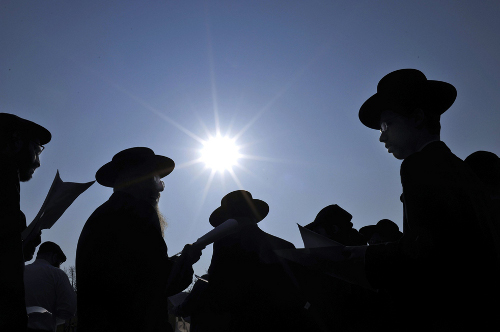
Note that the image above and all other images of Jewish people in this blog post are not specifically Messianic Jews. I say this so there will be no mistaken attributions assumed.

There have been some conversations going in the discussion sections of a number of my blog posts. They’re too numerous to reference here, but the general themes have to do with Messianic Jewish community, the role of Gentiles within a Messianic Jewish community space, Bilateral Ecclesiology, and just how “Jewish” Messianic Judaism should be.

Opinions span a broad spectrum as the Messianic Judaism and Hebrew Roots movements do themselves, but this morning, I read a rather interesting article that got my attention:

The Orthodox Jewish community has a certain mystique.

Whether it’s because we look, act or believe differently, people are intrigued by stories about the Orthodox Jewish community. Media outlets often oblige but whenever I read these stories, they don’t quite resonate with me. They don’t look like the Orthodox community I know. So I’d like to share a few things that happened to me over the last year that give a more accurate insight into the real Orthodox Jewish community.

My wife and I have experienced fertility problems. We thankfully had been blessed with two children but as they grew older we had been trying for some time to have another child to no avail. One day I was speaking with my rabbi about our situation and I conveyed to him that my wife and I wanted to pursue fertility treatments but because of the steep cost, we were having second thoughts. A few days later my rabbi said that he spoke with an anonymous individual with means in the Jewish community who had agreed to sponsor fertility treatment for young Jewish couples if they could not afford it. He would not know who we were and we would not know who he was. He was motivated purely out of a sense of loyalty to the continuity of the Jewish People.

That’s the Orthodox community I know.

-Shimon Rosenberg
“The Orthodox Community I Know”
Aish.com

As I read through Mr. Rosenberg’s story about “the Orthodox Community I know,” I was struck by how different this would probably seem to most people who aren’t part of this community, and especially to Christians. Even those Christians who are supportive of the Jewish people and of Israel, don’t always understand (how could they?) Orthodox Judaism in general and the devotion of individual people in Orthodox Judaism to their community, lifestyle, and commitments in specific. And even most Jewish people who are not Orthodox don’t always understand the Orthodox.

Seven years ago, had I encountered the woman I am today, I would have pitied her: long sleeves and an ankle-length skirt in the middle of summer; no driving, writing, talking on the phone or cooking from sundown Friday until sundown Saturday; recently married to a man she’d never touched — not so much as a peck on the cheek — until after the wedding. I’d have cringed and dismissed this woman as a Repressed Religious Nut. Now my pity — or at least a patient smile — is for that self-certain Southern California girl I was at 25.

-Andrea Kahn
“What’s a Nice Cosmo Girl Like You Doing With An Orthodox Husband?”
Aish.com

See what I mean?

Christians especially see Orthodox Jews as rule-bound, rigid, odd (to say the least), and on a path that will certainly lead them to Hell. After all, no one can be made righteous through their own acts as we see here:

For all of us have become like one who is unclean, And all our righteous deeds are like a filthy garment; And all of us wither like a leaf, And our iniquities, like the wind, take us away.

Isaiah 64:6 (NASB)

Derek Leman
Derek Leman

On that point, Derek Leman recently wrote a blog post called Our Deeds Are Not Filthy Rags which illuminates this matter and adds quite a wrinkle to the traditional Christian interpretation of the Isaiah verse. Also, Jacob Fronczak’s article “Sola Fide” in the latest issue of Messiah Journal deepens the exploration into this important topic.

I’m not trying to create a commentary on the nature of “salvation” and the differences between Christianity and Judaism, I’m just saying that we can’t automatically dismiss how Orthodox Jewish people (or any Jewish community) see their own relationship with God.

My friend Gene Shlomovich made a similar observation today on his blog:

So, the reason G-d chose Israel is because He already loved them and has promised their forefathers that He will take care of them. Does it make Jews somehow better than any other people? Not at all and it’s not the reason behind G-d’s love for Israel. After all, one parent’s child is not inherently better than a child of another parent. Your child is no more deserving of love than someone else’ – she is just yours. G-d loves Israel not because He has some grand plan and purpose for Israel (even though He does) or because Israel will proclaim her G-d and His Torah to all nations (which she certainly will). Neither did G-d set His affections on Israel because, as Christianity claims, “Israel was chosen to give birth to Jesus” and “to give nations the Gospel”, a useful tool that can be discarded once the chief purpose has been accomplished. No, these are all conditional reasons. G-d didn’t set His love on Israel because Israel was somehow capable of earning G-d’s love by her performance. Instead, G-d loves Israel because He loves Israel – that’s all there’s to it.

Depending on which denomination of Christianity you belong to or to which Christian doctrine concerning the Jewish people and Israel you adhere, you may actually believe that God still loves Israel and has future plans for her, but it’s really all about “the Church.” God may still use Israel, but their relationship isn’t what it once was, and God really loves the Church best.

I’m oversimplifying that viewpoint of course. I don’t have time to go into all of the details and you don’t want to read a ten-thousand word blog post.

But look at this:

Nine months later we gave birth to a beautiful baby girl.

The excitement began early Friday morning and as the day progressed I started thinking about Shabbat. What would we eat? How would I recite Kiddush? Light candles? I remembered hearing about an organization called Bikkur Cholim which means “visiting the sick.” It’s a volunteer-driven charity that looks after the needs of people in hospital. I called them and within a couple of hours someone came to our hospital room with literally bags of food, grape juice for Kiddush, electric candles to serve as Shabbat candles, even spices for havdallah. The food is free and the person delivering it is a volunteer. In the few moments I had to speak with him I learned that he was just a regular guy — an accountant — who takes off Fridays from work to volunteer for Bikkur Cholim. I asked him why he does it and he replied simply that it’s what God wants of us.

That’s the Orthodox community I know.

-Rosenberg

I’m talking about not just God’s love for Israel, but within the Orthodox Jewish community, one Jew’s love for another as well as the community’s love for one Jewish family.

I asked him why he does it and he replied simply that it’s what God wants of us.

Jewish Man PrayingThat’s the Orthodox Jewish community most of us, particularly in the Church, don’t see.

No, I’m not saying Orthodox Judaism as a practice or a community is perfect. The fact that it contains human beings means it will, by definition, be imperfect, just as any other form of Judaism will be imperfect, just as any of the estimated 41,000 Christian denominations and their members will be imperfect, just as any human community anywhere across time and space was, is, and will be imperfect.

Jews don’t need to be perfect for G-d to be on their side – G-d already loves them as His own people and nothing can ever change it. No doubt, He has disciplined us when we sinned, and He did that many times. However, at the same time, He’s very merciful. He promised that He will not be angry with us forever (Isaiah 57:16). As that Deuteronomy prophecy promised us G-d Himself will “circumcise” the hearts of all Israel after He brings them to the Land. When He does, all Jews will be Torah-observant, to the last one.

-Shlomovich

The statement that Jews don’t need to be perfect for God to love them, particularly in Orthodox Judaism, might take some Christians by surprise. It is generally thought by some of the Christians I know that Jews believe they have to perform the mitzvot perfectly in order to please God.

Again, I’m steering clear of the whole “salvation” issue, and I’m instead talking about love. Please don’t try to “bust my chops” about Christians being saved and Jewish people not being saved. It’s not what I’m writing about and I won’t approve any comments on the topic.

But what does all this have to do with Messianic Judaism?

It has been argued by many non-Jews affiliated in one way or another with Messianic Judaism or Hebrew Roots, that the “Jewishness” of Messianic Judaism should be toned down a bit. Those Jewish people in the Messianic movement who advocate for wholly Jewish communities for disciples of Yeshua as Messiah are putting Judaism first and Messiah second. I myself have quoted Troy Mitchell of Beth Immanuel Sabbath Fellowship as saying:

“One who romanticizes over Judaism and loses focus of the kingdom of Heaven can be compared to a carpenter who is infatuated with the hammer, rather than the house it was meant to build.”

Of course, I usually aim that quote at non-Jews who are so enamored with Jewish practices that they leave faith in Jesus entirely and convert to Judaism, usually Orthodox Judaism. You’d think, given that, I wouldn’t be trying to paint such a rosy picture of Orthodox Judaism here.

But, on the outside looking in, we often criticize things we don’t understand. It’s easy for Christians or just about anyone else to be critical of Orthodox Judaism because we are outsiders. We aren’t like them. We’ve been taught that we should never be like them, and if we tried (by converting or otherwise affiliating with the Jewish community), we would lose our salvation and God’s love.

From an Orthodox Jewish point of view (not that I have that point of view, I just quote articles), God loves Orthodox Jews and, referencing Shimon Rosenberg, Orthodox Jews love each other.

Applied to the Jewish people within the various circles of Messianic Judaism, they are also loved by God and they are also Jews who love each other, both within their specific Jewish communities, and identifying with larger and even worldwide Jewry. That doesn’t mean Yeshua plays second-fiddle to Messianic Judaism anymore than Hashem plays second-fiddle to Orthodox Judaism. From an outsider’s point of view, it seems like an Orthodox Jew’s devotion is to the “rules” first and the will of God second, but as I quoted above:

I asked him why he does it and he replied simply that it’s what God wants of us.

The mitzvot, especially those that are performed for the well-being of other people, are done because ”it’s what God wants of us.”

JewishMost non-Jews in Messianic Judaism and Hebrew Roots, and probably not a few Jewish people in those groups believe that it’s unBiblical, racist, and just plain wrong for Jews in Messianic Judaism to desire a community that is primarily or exclusively Jewish. The fact that Gentiles are “grafted-in” to the Jewish community, once called “the Way” and are considered equal co-participants in God’s love make it almost unthinkable that God would still reserve a “specialness” for the Jewish people and that God would not only tolerate but expect that Jews feel a “specialness” for each other.

Gentiles feel excluded by this sentiment among believing Jews. They (we) feel like we are rejected, inferior, second-class citizens, and “back of the bus” riders traveling on the road to the Kingdom.

To counter this, I can see at some point, a Messianic Jewish writer composing and publishing a small article called ”The Messianic Jewish Community I Know,” describing why it is important to have such a Jewish community for Messianic Jews. Granted, the uniqueness of Messianic Judaism when compared to the other Judaisms in our day (or historically), makes it more difficult to operationalize Jewish community within the larger community of disciples of Messiah, and I think we’re still working that out.

But the consequences of failing to support Jewish community within Messianic Judaism can be (and have been) disastrous.

Now I am speaking to you Gentiles. Inasmuch then as I am an apostle to the Gentiles, I glorify my ministry in order to make my own people jealous, and thus save some of them. For if their rejection is the reconciliation of the world, what will their acceptance be but life from the dead! If the part of the dough offered as first fruits is holy, then the whole batch is holy; and if the root is holy, then the branches also are holy.

Romans 11:13-16 (NRSV)

According to Mark Nanos in his classic text The Mystery of Romans, the problem Paul was addressing in his letter were Gentiles who were flaunting their “freedom” (not being obligated to Torah observance to the level of the Jews) to the Messianic and non-Messianic Jewish populations of local synagogues in Rome, acting as a “stumbling block,” especially for the non-believing Jews who, because of Gentile arrogance, were inhibited from considering, let alone accepting, faith in Yeshua.

While the Nanos view would be considered controversial by many Christians, it does explain Paul’s rather harsh rebuke or even threat (Romans 11:21) to the “grafted in” branches. Paul was passionate for his people, the Jewish people, even his opponents, and Paul said he would surrender his own salvation if it would save some of them (Romans 9:3).

The Jewish PaulPaul never abandoned his people and God never abandoned Israel. We, as non-Jews, may not understand Jewish “choseness” but it exists. We, as non-Jews may not understand the need for Jewish people to have community specifically within a wholly Jewish context, but it exists. I live it out. I live with a Jewish wife. She needs to be a part of our local Jewish community and even though it is sometimes uncomfortable for me, she needs for me to not be a part of that community.

Admittedly, other intermarried couples share synagogue life, even within Orthodox Judaism (look at Chabad), but given my background in Hebrew Roots and my current relationships within different aspects of Messianic Judaism and normative Christianity (and the fact that our little corner of Idaho makes it difficult to be anonymous), it’s best for her that we have a clean line separating me from that part of her life.

I think it’s because I can see that line on a highly personal level and that I’ve gone through the struggle of making it OK for that line to exist and even to be necessary for my Jewish wife, that I can see the necessity for an exclusively Jewish community within the body of Messiah, too.

Humanity, when completely unbound by G-d’s Laws, when unrestrained by fear of Him, when viewing their fellow human beings not as created in G-d’s image but as an unprofitable animals to be destroyed is at its absolute worst. Unshackled from the divine, humanity is driven to satisfy the desires of its lower, animalistic nature. In such a state, human beings have the capacity to do much evil in their rebellion against the Almighty. Since there’s nothing they can do to G-d Himself, evil people can only resort to rejecting, despising and destroying everything that G-d loves and holds dear. This is why, I believe, Jews have suffered so much during the Holocaust and have been an object of hatred everywhere they went and to this very day. Their identification as the people loved and chosen by G-d has made them the perennial target for the worst humanity has to offer.

-Shlomovich

Gene wrote that in response to the question, ”If G-d is with Jews, why did the Holocaust happen?” Maybe I’m being extreme applying it to the current context, but I believe just because we don’t always understand the relationship God has with the Jewish people and that the Jewish people have with each other, we shouldn’t discount it, either. And as Christians, we absolutely should do nothing to destroy Jewish people and Jewish community. We have been warned.

In Jeremiah 31:3, God said to Israel ”I have loved you with an everlasting love,” and in John 13:34, Jesus gave his Jewish disciples a new commandment to love one another as he loved them. Christians generally apply that “new” commandment to themselves (ourselves), the commandment of self-sacrificial love, but I don’t want to set aside the immediate context in which Jesus uttered these words. He was talking to Jewish disciples within his Jewish community. He knew each and every one of them would suffer and all but John would die in excruciating ways for the sake of Heaven. That’s the kind of love the Jewish Messiah and Rabbi from Nazareth wanted each member of his Jewish community to have for all the other Jewish members.

Again, that doesn’t mean this commandment doesn’t have wider implications, but even Paul, the emissary to the Gentiles went ”first to the Jew” (Romans 1:16 for instance), because the Gospel message, the “good news” of the Kingdom of God, belongs first to the Jew and then also to the rest of the world.

In a comment on one of Derek Leman’s blog posts, I said:

That gets back to the one statement you made among your list of questions: “Maybe what they were impassioned about was the hereafter, the blessed age to come, not so much the Messiah.” In my opinion, the focus really wasn’t so much about the afterlife or eternity, but the restoration of Israel under the Messianic King, who would return the exiles, rebuild the Temple, teach Torah, and bring peace to all the nations of the world, with Israel as the head.

That’s something to be impassioned about in my humble opinion.

Christian and JewishIt’s not comfortable to belong to a group where certain members are more special than you are, especially if their being special has to do with an inborn trait such as, in this case, being Jewish. There’s no way to acquire being Jewish except through conversion, so we can never attain that particular position of being special. We can never fully belong to that group in a way that is identical to what the members of that group have between each other.

We Christians balk at that, in part, because anyone can become a Christian and Jewish Christians in the church (as opposed to Jews in Messianic Judaism) are just like everyone else, identical in role, function, and identity. That’s actually not a good thing, and I have had more than one Jewish person tell me that Jewish conversion to Christianity is just finishing the Holocaust that Hitler started.

Which is a really good reason why Messianic Jewish communities for Messianic Jews is so important and so necessary.

I have no desire to participate in any attempt to remove Jewish people as a distinctive people and community from the face of the Earth. That would be like wanting to remove the Jewish identities and specialness of my wife and three children, and frankly, I wish they were more observant and more mindful of their distinctiveness as Jews. This isn’t to say that I don’t want them to also embrace Messiah, but that’s out of my hands for lots and lots of reasons. I must trust in God that He loves my wife and children, not just because He loves human beings, but because He loves Jews.

Paul said “all Israel will be saved” (Romans 11:26). He also said ”If the part of the dough offered as first fruits is holy, then the whole batch is holy; and if the root is holy, then the branches also are holy” (Romans 11:16), meaning (I believe) if the first fruits, that is, the first Jews to come to faith in Yeshua are holy, all Jewish people, all the branches, are holy. While the Church struggles with the plain meaning of that text, I find it gives me some strength and assurance that God won’t throw the Jewish people in general and my Jewish family in specific under some cosmic bus just for giggles. I trust the Apostle Paul that he was using those words to caution arrogant Gentile believers in the Jewish synagogues in Rome that the calluses on the Jewish heart for Messiah will one day be made smooth and they will be healed.

In the end, all I have is my faith in God that, for the sake of the Jewish people, my Jewish people, my family, they will also be healed and saved.

In the meantime, I accept that there are some places my wife must go that I cannot and should not follow. And as objectionable and offensive as some members of my readership (and beyond) find the term “bilateral ecclesiology” and the concepts behind it, I ask that you try to see Jewish people and Jewish community requirements from my point of view, even if you can’t see it from theirs.