Tag Archives: messianic judaism

Review: John MacArthur on Judaism, Part 3

We were sitting in the State Dining Room just to the left of George Healy’s arresting portrait of Abraham Lincoln, seated forward and listening intently. I couldn’t help recalling the stinging words from his Second Inaugural Address: “Both [North and South] read the same Bible, and pray to the same God; and each invokes His aid against the other.

-Ismar Schorsch
“Jewish and Catholic Views on Abortion,” pg 264 – Jan. 28, 1995
Commentary on Torah Portion Mishpatim
Canon Without Closure: Torah Commentaries

Through Grace Church we ought to probably say for our first time guests we believe in two things that make the church what it ought to be. One is love. And that’s an honest kind of biblical love. The other is sound doctrine. And so our commitment is not only to love the brothers and exercise the ministry of spiritual gifts and the responsibilities of fellowship to one another, but it is also to systematically verse by verse teach the Bible. Believing that if we protect the saints, the saints will do the work of the ministry.

And so in our study of the Scripture, we find ourselves in the book of Acts which is the historical record of the early church from the day of Pentecost through those early years. And we have come in our study to the 18th chapter and really begun what is one message in three parts as often we find is the case. We’re studying the subject generally from Judaism to Jesus. And beginning in 18:18 the Holy Spirit gives us three incidents or three little experiences that illustrate to us the transition that was taking place from Judaism to Jesus.

-Pastor John MacArthur
“From Judaism to Jesus, Part 3: Have you Received the Holy Spirit?”
Commentary on Acts 19:1-7, Jan. 27, 1974
GTY.org

This is continued from Part Two of my review and is the third and final offering in MacArthur’s “From Judaism to Jesus” series and thus my third and final review of the material. I thought I was through with MacArthur when I finished my reviews of the various sessions of his Strange Fire conference, but he keeps popping up on my radar screen. Hopefully, this last review of his sermons will put all the “demons” surrounding my dubious interest in this Pastor to rest.

When Christianity was established and a new covenant was introduced, there were many Jews who found it very difficult to make all of the transition very rapidly. And so there were people in the midst of transition, coming to Jesus Christ from Judaism and caught somewhere in the transition.

And we come in to this study to the third section of our transitional study, verses 1 to 7 of chapter 19 and we meet a group of 12 men who also are in transition. Now remember this, that the whole of Judaism pervaded all of these people’s lives, Christianity came in and it took a while for all of the adjustments to take place. In some cases like Paul, he couldn’t let go of some old patterns. Like Apollus (sic) he just didn’t know the whole Gospel.

Paul personally had two extraordinary visions of the Master, was hand-picked by the exalted Jesus to be God’s emissary to the Gentiles and to take the Gospel message to the then-civilized world, and yet MacArthur has the bald-faced chutzpah to say that Paul couldn’t let go of Judaism because “he just didn’t know the whole gospel.” Amazing.
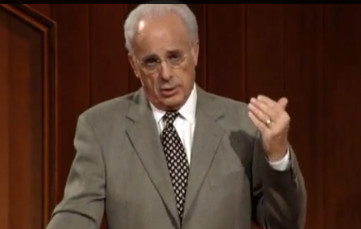
John MacArthurI think MacArthur, like many Christians, believes that the gospel or “good news” is a New Testament invention of Jesus rather than one that is more expansive, dates back much farther in Jewish history than Jesus, and is not simply defined by the textual contents of Matthew, Mark, Luke, and John. If you’d like (or maybe need) a primer on what “gospel” and “the gospel message” means, please see the thirty-minute episode The Gospel Message of the First Fruits of Zion (FFOZ) television series A Promise of What is to Come.

At this point, it might be good to have a look at the scripture MacArthur is referencing:

It happened that while Apollos was at Corinth, Paul passed through the upper country and came to Ephesus, and found some disciples. He said to them, “Did you receive the Holy Spirit when you believed?” And they said to him, “No, we have not even heard whether there is a Holy Spirit.” And he said, “Into what then were you baptized?” And they said, “Into John’s baptism.” Paul said, “John baptized with the baptism of repentance, telling the people to believe in Him who was coming after him, that is, in Jesus.” When they heard this, they were baptized in the name of the Lord Jesus. And when Paul had laid his hands upon them, the Holy Spirit came on them, and they began speaking with tongues and prophesying. There were in all about twelve men.

Acts 19:1-7 (NASB)

Now remember, MacArthur is teaching that this passage indicates a transition is taking place in the lives of Jewish believers “from Judaism to Jesus.” In reading the text, I’m not seeing immediate signs of any difficulty with Judaism, struggle in transition, or some sort of apparent conflict between Judaism and Jesus. What does MacArthur have to say (besides, quite a lot)?

Now that question posed in 19:2, “have you received the Holy Spirit since you believed” has become the favorite question of a modern movement in Christianity. And it’s not that I am here for the purpose of having a fight with any other Christians or egoistically declaring my own theology or trying to convince myself and you that I’m right and they’re wrong. The point of view that I take here is simply the exposition of the text. But I want to approach it in the light of a current movement because then I think you can see its significance.

We live in a day when the movement that we know of is Pentecostalism or if you will the later movement begun in 1960 called the charismatic movement has posed this question as the question to ask Christians. “Have you received the Holy Spirit since you believed?” The view that they take is that you can be a Christian and not possess the Holy Spirit. And at some point after your salvation you then by a certain activity allowed through certain information to come to the knowledge of the fact that the Spirit is available to you and that you can receive the Holy Spirit in certain ways.

Strange FireRemember, MacArthur originally delivered this sermon in January 1974, nearly forty years before his controversial Strange Fire conference. And yet, he approaches the issue of Pentecostalism in basically the same manner four decades ago as he did just four months ago, and anticipates the response to his message in the words, “And it’s not that I am here for the purpose of having a fight with any other Christians or egoistically declaring my own theology or trying to convince myself and you that I’m right and they’re wrong,” knowing his message would sound like he was looking for a fight and to define right and wrong by his standards. When he says his point of view “is simply the exposition of the text,” he creates the illusion that he is only reporting the facts with no filters in place and no embellishment of the Biblical text. As we’ve seen time and again in analyzing his messages (and in examining just about anyone’s theological bent), there are always interpretive filters in place. The Bible can’t be understood without interpretation, even with the assistance of the Holy Spirit.

Here, in the guise of an analysis of Acts 19 and even a replacement theory viewpoint of “from Judaism to Jesus,” MacArthur takes a stab at the Pentecostal church.

And we’re going to approach this question to try to show that the Christian, whoever he is, receives the Holy Spirit in full permanent, personal in dwelling from the moment of salvation. And this is an important question. I couldn’t tell you how many times I’ve been asked this. People say to me, “Have you received the Holy Spirit?” And I say, “Of course.” And one fellow said, “Oh, I didn’t realize. You’re one of us.” I said, “Well I don’t know about that, I might be one of you, what are you?”

It’s actually an interesting situation. Some people who were believers received the Holy Spirit and some didn’t know that they were supposed to. I don’t think that Cornelius and his household (see Acts 10) expected to receive the Holy Spirit. They just did. For that matter, did the apostles in Acts 2 really expect to receive the Spirit as “tongues of fire” or did it just happen to them without any expectation?

Are you only a believer if you receive the Holy Spirit in an Acts 2 and Acts 10 way? I don’t recall any “tongues of fire” and speaking foreign languages or prophesying when I became a believer. Maybe I’m the same boat as the disciples in Ephesus who received John’s baptism but not the Spirit. For that matter, Acts 8 records the Ethiopian becoming a believer during his conversation with Philip but is conspicuous in that he did not receive the Spirit. He was just baptised in water and went on his merry way back home. Did Philip not know about the Spirit? Did he not receive it in Acts 2?

I wonder what MacArthur would think about all these monkey wrenches in the machine? When he became a believer, did he see tongues of fire, speak in foreign languages and speak prophesies? If not, why not? Is that one of the “gifts of the Spirit” we don’t experience today? Do we just presume that the Spirit inhabits us when we declare our faith in Messiah?

If you make the book of Acts the norm, then you got tremendous problems. You’re going to have to allow for revelation current today. You’re going to have to allow for Apostles today. You’re going to have to allow for all of the signs and wonders and miracles that accompanied the early church and the various manifestations. Not just in some segments of Christianity, but throughout unqualified. There are many problems.

Charismatic prayerMacArthur spends quite some time going over various arguments he has with Pentecostals, which isn’t what I expected to read about and isn’t the focus of my interest in this sermon series. He does seem to say that we can’t expect to receive the Holy Spirit as believers in the manner commonly observed in the Book of Acts, so I guess that covers those of us who didn’t have a “tongues of fire” experience. Actually in this, I tend to agree more with MacArthur than some of his opponents. We don’t seem to find the same experiences when we become believers as the apostles and early disciples did.

So now we’re back to MacArthur the Supersessionist:

So as we see in the book of Acts is a transition. The new covenant comes, the old covenant has died and as the book of Hebrews says, “It fades away, it decays and grows old.” But as the new covenant arrives, the people come to Christ which is a momentary miracle; they still find it difficult to make the full transition. And so in the book of Acts, there are various transitional things occurring. There are some old things that just kind of die slowly. Some old forms like for example, the early church met in the synagogue.

Again, this is straight replacement theology, with the New Covenant directly replacing the Old Covenant rather than, as we see in Jeremiah and Ezekiel, the New Covenant restating and reasserting the conditions of the previous covenants for Israel. In fact, only one condition in the Abrahamic Covenant can be directly applied to Gentiles having a binding relationship with God, and that’s only through faith as Abraham had faith. And it’s only because that one condition in the Abrahamic covenant is carried over and restated in the New Covenant that Gentiles have access to reconciliation with God through faith.

In other words, there’s no provision in the covenantal structure for new to replace old. New simply ratifies older and re-emphasizes it. It took me a long time to figure this out, about eleven blog posts worth, starting with this one. The revelation in my self-education is why I can’t swallow the traditional Christian replacement theology model. The Bible, and particularly the language around the New Covenant, just doesn’t support it.

“Paul after this charity good while in Corinth and then he took his leave of the brothern, (sic) sailed from there to Syria, with him Priscilla and Aquila. Paul having cut his hair in Cenchrea for he had a vow.” And that tells us he was in transition, he was still making vows on an Old Testament basis, Nazarite vow and he did it in thanks to God for delivering him from Gallio and from those Jews in Corinth who wanted to take his life.

No, Pastor MacArthur, that tells us Paul took a Nazarite vow in accordance to Numbers 6. There’s nothing in the text that says anything about a transition. Please stop reading into the text.

Now this shows you this stringent nature of Paul’s Judaism, even though he was a Christian, he still wanted to fulfill this vow in the right way and he wanted to be there for the feast which was a Judaistic feast.

MacArthur sets Christianity and Judaism in sharp contrast to one another, making them mutually exclusive. One could not practice Judaism as a Jew and at the same time pay homage to and be a disciple of the Jewish Messiah.

That is a crazy statement to make, but all too many Christians don’t see the glaring error in Biblical interpretation. If Sola Scriptura is really supposed to mean “by scripture alone,” traditional Biblical interpretation in the modern Christian church doesn’t meet this standard by a long shot. You can’t be reading the plain meaning of the text in the larger context of the book and the even larger context of all of the scriptures and come to the conclusions at which MacArthur arrives.

I was about ready to dismiss the rest of his sermon when I came across this paragraph:

Ezekiel 36:26. You don’t need to turn to it, just listen. God says, now watch this promise. “A new heart also will I give you, and a new spirit will I put within you.” verse 27. “And I will put my Spirit within you.” Now do you read any conditions there? What are the conditions for getting the Spirit? What are they? Is there an if there? Nope. God says I will do it. Now the credibility of God is at stake. If a Christian has to do something to get the Holy Spirit then in theory, there are some Christians who never do that something so they never get the Holy Spirit. Therefore the promise of God is invalidated in their behalf. No the credibility of God is at stake. And secondly the credibility of Jesus is at stake in John 14, verse 16.

MessiahI find it astonishing that MacArthur can read one of the key texts that describe the New Covenant and still not know what it means. Do we have a new heart and a new spirit yet as Christians? We do? Really? Then why do we still struggle? Why do we still sin? If we got that new heart and new spirit already, what can we look forward to in the Messianic Era when human beings are perfected and King Messiah establishes his reign of total peace and understanding of God?

I hope you understand that. And again I hope you understand that this is said with a sense of love and a sensitivity to the fact that many could construe that I am bitter towards these people (the twelve disciples Paul encounters in Acts 19:1-7). I am not; I am zealous for the glory of God. Well so we meet the third party in transition. Let me close by saying this. We met three little transitions here, didn’t we? First Paul, then Apollos, then the 12. And you know something? We’re a long way from the book of Acts. But we see these three groups still. You know that in the church of Jesus Christ we’ve got people like Paul who are saved, have come all the way to Jesus Christ, but they’re hanging on to legalism?

There’s no way to know what MacArthur really thinks and feels, so I guess I have to take it for granted that MacArthur really doesn’t have it in for the twelve presumably Jewish disciples under discussion because they had the baptism of John but not the Holy Spirit. MacArthur, referencing his first two sermons as well as this one, says that Paul, Apollos, and the twelve were all Jews in transition from Judaism to Jesus.

They’re hanging on to old patterns, traditions, even some Jewish people who find it very difficult to fully absorb themselves in the life of the church. And I say this; I praise God for Jewish Christians who function fruitfully in the ministry of the body of Christ as opposed to maintaining isolation. But you know we have many believers today in Christ who are still they’re not in yet. They’re still holding on to old things. And then we have people like Apollos, sure we have people who good people, honest people, repentive sin, they just believe in God, but they’ve never met Christ.

It seems that MacArthur is praising the Jewish people who have become believers and assimilated into the Gentile Christian Church, while “challenging” or “not praising” those Jews who are believers but who “can’t let go of the old ways” and saying they know God but haven’t met Christ. They’re “not in yet,” according to MacArthur. So much for Messianic Jews, apparently. They aren’t real believers until they set aside the mitzvot and the traditions and function just like goyim in the Church. Ham sandwich, anyone?

Maybe they think of Jesus as a wonderful teacher, a man of great ethics, they never come to the cross and the resurrection. And then we’ve got a lot of people running around who are uninstructed in the Holy Spirit. Much of it is because they don’t even know Jesus Christ. Some know Christ. And grieve the Spirit by misunderstanding His marvelous work. I hope you’re not in transition. I hope like the writer of Hebrews says, “you will come all the way to the fullness of experiencing all that God has provided for you.” Let’s pray.

Ending MacArthur seriesAnd so we come to the end of the sermon and the end of the sermon series. As far as praying goes, now that I’ve reviewed three of MacArthur’s sermons as well as writing multiple reviews of the “Strange Fire” presentations, I pray I can let go of John MacArthur. He can travel his particular trajectory and I can travel mine.

We both read the same Bible and we pray to the same God but, like Abraham Lincoln once said, in our own ways, as Messianic to supersessionistic Christian, we “each invoke God’s aid against the other.” I actually don’t want to oppose Pastor John MacArthur. I don’t want to define myself as an “anti-MacArthurite.” But I do, as I have made abundantly clear, disagree with him pretty much across the board. I think he represents everything that inhibits Boaz Michael’s vision of Gentiles partnering with Israel in rebuilding David’s fallen tent. I think MacArthur is the living embodiment of Boaz’s statement, “The church is the biggest stumbling block for the people of Israel to see the true message, the redemptive message of the Messiah.”

More’s the pity.

Addendum: Turns out my Pastor preached on this part of Acts as well recently. Tomorrow’s morning meditation will contain my Pastor’s take on some of this, which should augment and occasionally modify what MacArthur preached.

Sermon Review of the Holy Epistle to the Hebrews: Sundry Times and Divers Manners

Our fourth teaching on the book of Hebrews considers the first two verses of the epistle:

“God, who at sundry times and in divers manners spake in time past unto the fathers by the prophets, hath in these last days spoken unto us by his Son.” (Hebrews 1:1-2)

How does Yeshua and the message of Messiah stack up against the patriarchs and the prophets?

The thesis statement behind the book of Hebrews with reference to Yalkut Shimoni and Midrash Tanchuma on Isaiah 52:13.

-D. Thomas Lancaster
Sermon Four: Sundry Times and Divers Manners
Originally presented on January 19, 2013
from the Holy Epistle to the Hebrews sermon series

After my significant goof up in my review of last week’s session, I’m a little hesitant to write another review, but hopefully, I’ll be more mindful of my notes if not my memory.

Today’s the day. It’s the day Lancaster actually starts delving into the book of Hebrews, well the first couple of verses in the first chapter, anyway. However, there’s a lot to cover in this thirty-five minute sermon. Let’s get going.

The first thing a traditional Christian Bible student should know is that Lancaster thinks the Book of Hebrews reads like Midrash Rabbah, other Talmudic portions, and even the Zohar. That’s because the sermon/letter seems so Jewish. That isn’t going to make a lot of Christians happy because they (we) have been taught some pretty negative things about Talmud and especially about Zohar (most Christians have probably heard of the Talmud but how many teachers and Pastors even breathe the word “Zohar”?).

Lancaster says he feels pretty comfortable with Talmudic literature, at least in English, but he rather feels sorry for the innocent and unsuspecting Christian Bible student who stumbles into Hebrews without that background. The implication is that without familiarity with Rabbinic commentary, most Christians are going to come away from Hebrews with an inaccurate interpretation of what the anonymous author was trying to say.

Lancaster says the experience of an uninitiated Christian facing Talmudic writings encounters the intellectual and perhaps spiritual equivalent of stepping on a rake. I assume he means the “business end” of the rake and not the handle.

God, after He spoke long ago to the fathers in the prophets in many portions and in many ways, in these last days has spoken to us in His Son, whom He appointed heir of all things, through whom also He made the world.

Hebrews 1:1-2 (NASB)

What does this mean?

It’s actually pretty straightforward. In ancient days, God spoke to “the fathers in the prophets”. Who are they? Prophets include Abraham, Isaac, Jacob, and especially Moses. They also include anyone of the Judges as well as prophets like Samuel, Isaiah, Ezekiel, Jeremiah, and any of the so-called “minor prophets” who, in Hebrew Bibles, are called the “later prophets.” No prophet of God is “minor.”

We also see prophetic words from God in the writings such as the Psalms and Proverbs, so God spoke to all of the writers of all of the books of what Christians refer to as the “Old Testament” and what Jews call the Tanakh (Torah or Law, Nevu’im or Prophets, and Ketuvim or Writings).

We call all of this put together the “Old Testament,” but for Jews in the Apostolic Era, it was just The Testament or The Scriptures.

Verse one testifies that God inspired all of the writers of all of those writings speaking through them and to them. These were the men of God of the past and God spoke to ALL of them. Thus, what they wrote is ALL the Word of God. God spoke in many diverse ways to the prophets:

He said, “Hear now My words: If there is a prophet among you, I, the Lord, shall make Myself known to him in a vision. I shall speak with him in a dream.

“Not so, with My servant Moses, He is faithful in all My household; With him I speak mouth to mouth…”

Numbers 12:6-8 (NASB)

God spoke through the other prophets in many and different ways but only with Moses did God speak “face-to-face” (lit. mouth-to-mouth). The message of the prophets was to all of Israel and ultimately, to all the world.

However in the last days, God spoke through His Son.

What last days? While the apostles and early disciples may have thought they were living in the last days, they must have been wrong, because almost two-thousand years have passed and the “days” haven’t ended yet.

But were they wrong? They were living in the last days of the Apostolic Era. They were living in the last days of the Holy Temple. They were living in the last days of Jerusalem, the last days before the Jewish people would be exiled from their Land to wander the diaspora for nearly twenty desperate centuries.

Thy Kingdom ComeThe First Fruits of Zion (FFOZ) television show A Promise of What is to Come produced a number of episodes describing how the coming of the Messianic Kingdom was upon us and that time wasn’t the relevant factor in summoning the Kingdom. Episodes such as Seek First the Kingdom, Thy Kingdom Come, and Keys to the Kingdom all speak of this.

Lancaster characterized the imminent coming of the Kingdom as a clock that is stuck at one minute to midnight, sort of how the Doomsday Clock is used to show the imminence of Nuclear War.

The men and women of the Apostolic Era were living in the “end times” no more or less than we. The stage has been set, the actors have taken their places, now all that is left is for the curtain to go up, the house lights to go down, and for the play to begin. However, the audience and the actors haven’t been told exactly when the curtain will rise and to a large degree it is they who will determine the moment, not the director.

Truly I say to you, this generation will not pass away until all things take place.

Luke 21:32 (NASB)

But this interpretation makes me consider that “this generation” isn’t meant to be taken literally.

…in these last days has spoken to us in His Son.

Hebrews 1:2 (NASB)

This speaks more than I could have possibly known before hearing this sermon.

Lancaster invoked my English 101 class which I took the first time I attended university. In an English Composition class, you’re taught to begin a paper with a thesis statement, a declaration of the topic and purpose of the paper, then you spend the rest of the time writing documentation supporting your thesis.

That’s how Hebrews begins.

Lancaster took a moment to explain that the New Testament is NOT just commentary on the Torah, which may come as a surprise to some Messianic Jewish and Hebrew Roots people who have been taught to focus on the Torah and almost nothing else.

The thesis of the writer of Hebrews is that in ancient days, God spoke through and to the Prophets of old and what they spoke and wrote was and is the Word of God. But in the End Times, God spoke through his Son, Moshiach, and what Moshiach spoke is recorded in the Gospels.

We take all this for granted as Christians in the twenty-first century. After all, we have our Bibles, they include the Old Testament and the New Testament, and the New Testament includes the Gospels, so of course what Jesus said was and is the Word of God, but that was a revolutionary concept in the early 60s CE. The Jewish believers as well as all other Jewish people understood that the Hebrew Scriptures were the Word of God, but could Jesus of Nazareth also speak God’s Word (not to mention his apostles, but we won’t address that today)?

Was/is Jesus greater than the Prophets? The answer is of course, “yes,” but what did the original readers of Hebrews believe? Was Jesus greater and better than angels (see Hebrews 1:4)?

The writer of Hebrews had to establish this as his thesis and then spend the rest of the sermon/letter defending and supporting that thesis.

Behold, My servant will prosper, He will be high and lifted up and greatly exalted.

Isaiah 52:13 (NASB)

Delitzsch BibleThis is the beginning of the Song of the Exalted Servant. Traditional, normative Judaism considers the Exalted or Suffering Servant to be the people and nation of Israel, while Christians believe it is Messiah, it’s Jesus.

Lancaster began to establish that the Servant must be Messiah based on a variety of Jewish sources, such as Targum Jonathan and too many others for me to write down and thus record here. He mentioned again that the Zohar is one of those sources, but it should be noted that most if not all of the supportive Jewish writings were authored well after the Apostolic Era.

Lancaster wants to show his audience that his interpretation is correct but that it must be understood and supported by Jewish sources. The question, and it’s an important one, is if the audience of the sermon/letter to the Hebrews would have understood this document through the Jewish documentation and commentary they had access to in or around the year 62 CE.

The most reliable estimates regarding the Zohar say it was written in about the 12th century and the Talmud wasn’t authored for centuries after the apostles died. We can accept some of Lancaster’s argument if we believe the information later recorded in Rabbinic writings already existed, probably in oral form, during Apostolic days. But for many Christians, that’s quite a leap.

What Lancaster is trying to establish is that the writer of Hebrews was declaring, and again, this would be controversial and even revolutionary in the mid-first century, that Yeshua of Nazareth was not only equal to the Prophets and Judges and even Angels, but that he was superior to them all as Messiah and as the Son of God. The audience of Hebrews was to understand that the words of Jesus were indeed also the Word of God, which Christians accept today without question but the original readers of Hebrews still needed to comprehend.

And He is the radiance of His glory and the exact representation of His nature, and upholds all things by the word of His power. When He had made purification of sins, He sat down at the right hand of the Majesty on high…

Hebrews 1:3 (NASB)

For He has been counted worthy of more glory than Moses, by just so much as the builder of the house has more honor than the house.

Hebrews 3:3 (NASB)

Jesus is worthy. He sits at the right hand of the Father. He is the radiance of God’s glory, an exact representation of God’s nature. Messiah upholds all things by his word, which is the Word of God because Messiah is greater, more glorious, more worthy than any of the prophets, including Moses and even more so than the Angels.

Now here’s the important part for today.

For this reason we must pay much closer attention to what we have heard, so that we do not drift away from it.

Hebrews 2:1 (NASB)

Read the entire first chapter of Hebrews and then read the first verse of the second chapter. What were the readers of this sermon/letter (and what are we) supposed to pay much closer attention to?” The Word of God as spoken by Messiah. Why? So they wouldn’t drift away.

life_of_pi_by_megatruh-d5noigdRemember, that according to previous sermons, the writer of the Book of Hebrews was deeply concerned that his audience, because they were denied access to the Temple in Jerusalem, were tempted to “drift away” from their faith in Messiah, all for love of and devotion to Temple worship.

Christians believe that Hebrews was a warning to Jews not to abandon Jesus and “backslide” into Jewish practices including the Temple sacrifices, but according to Lancaster, it was a warning to not forget priorities.

Lancaster used a number of metaphors to get his point across but I’ll choose just one. How many couples do you know have gotten a divorce? Maybe you are divorced. Maybe you have friends who are, or maybe your parents are.

Sometimes, when describing the process that lead up to divorcing, men and women will say that they drifted away from each other over time. This rather contradicts a sudden trauma such as being abruptly denied access to Temple worship and suggests a gradual cooling of faith.

Faith and devotion to the Master are there, but for a variety of reasons, they can begin to become less important over weeks, months, and even years. Christians are taught in Church that only one thing matters: Jesus. It’s pretty easy to lock onto Jesus and not let go because he is all anyone ever talks about.

But the Messianic Jewish and Hebrew Roots movement are sometimes so devoted to Torah, to Talmud, to Shabbat, to a thousand other things, that Jesus gets lost in the shuffle. I think that’s why some Gentile Messianic believers convert to normative Judaism, usually Orthodox, because the things of Judaism become more attractive and they slowly drift away from Yeshua.

Hebrew Roots people accuse Messianic Jewish adherents of promoting this kind of apostasy all the time, but here we have D. Thomas Lancaster, no small voice in the realm of Messianic Jewish teachings and writings, offering the same cautionary tale based on the warning of whoever wrote the Book of Hebrews.

What Did I Learn?

I’ve been bending my brain around what Lancaster has been teaching and filtering it through some of the comments of people who have been reading my reviews.

broken-crossCould the Book of Hebrews been written after the Temple’s destruction and the writer was trying to encourage his Jewish readers that the quintessential Temple continued to exist in Heaven with Messiah as its Kohen Gadol?

Regardless of differences in interpretation, the main point of Lancaster’s sermon was what hit home the most, especially in the face of recent failures and my continued struggle with the rigidity of certain Christians and their commentaries.

For this reason we must pay much closer attention to what we have heard, so that we do not drift away from it. For if the word spoken through angels proved unalterable, and every transgression and disobedience received a just penalty, how will we escape if we neglect so great a salvation?

Hebrews 2:1-3 (NASB)

We must…I must pay attention to what I have heard so that I do not drift way from it, for if the Word spoken by angels at Sinai to Moses, the Torah, proved unalterable, how can I escape if I neglect so great a salvation as the Word uttered by the Master?

Once Again Foolishly Rushing In

“The truth is that our finest moments are most likely to occur when we are feeling deeply uncomfortable, unhappy or unfulfilled. For it is only in such moments, propelled by our discomfort, that we are likely to step out of our ruts and start searching for different ways or truer answers.”

-M. Scott Peck

I post quotes in the sidebar of my blog to honor this “mission” to offer “morning meditations,” and so I added Peck’s to the list. But then I’m wondering if Peck lived a religious life ( I guess I should do a little research before asking such dippy questions)?

Judah Gabriel Himango to Toby Janicki:

With all due respect, you are not the Apostle Paul. You’re choosing to amplify “these other people needing correction” *over* the positive report from the Jewish world. That is disappointing.

You suggested we end the discussion. OK, I will not reply any further.

I am going to reproduce this discussion over on my blog, because it is noteworthy and important to understand the direction FFOZ has taken.

Shalom.

Judah Gabriel Himango to James:

James, you claim Hebrew Roots people are “attempting to appear indistinguishable from Chabadniks.”

The very first photo in the article shows the people at the conference. Please tell us which ones are indistinguishable from Chabad practitioners.

James to Judah Gabriel Himango:

I’m basing that on the quote from the article, Judah.

Kaiser said: “Many of the thousand-plus people who attended Revive 2013, a religious conference held at the Dallas Sheraton last June, wear tzitzit. Many keep kosher and observe the Sabbath and Jewish holidays. Some of the men have beards and peyos.”

-from comments made on the blog post
“God-Fearers: The Balance of Torah”
by Toby Janicki
blogs.ffoz.org

What part of “peyos” don’t you understand? Anyway…

I didn’t transcribe the full conversation because it would have consumed too much space. Please visit Toby’s blog to read the article that inspired this set of transactions and the complete dialog that followed.

One thing I said when I first commented was:

I keep asking myself if I want to touch this conversation with a ten-foot pole, especially since it’s going to be enshrined in infamy on Judah’s blog, but here I am with my fingers tapping on the keyboard.

At the keyboardI was right. I am living to regret being the “monkey at the keyboard” and entering yet one more “spitting contest” between different factions of the Messianic Jewish and Hebrew Roots world. Actually, only one individual created a level of “discomfort” but that’s all it takes.

This is actually a reflection of a larger dynamic, a much larger dynamic, that has been going on for years and years. It waxes and wanes and I thought it was waning and that we’d finally get past all this “jockeying for position” and actually focus on something worthwhile like, oh…I don’t know…serving God, but then stuff like this happens, to which I respond and then based on a follow-up comment, respond again.

Finally, I read a Chabad commentary (one of my favorite sources, I must admit) and since it reminds me of the latest incarnation of our little debate, I write one more thing. I must be self-destructive or more likely, just a compulsive writer (are they the same thing?).

I should have removed my fingers from the keyboard and kept them off when I read Toby’s latest blog, especially when I saw that Judah was already involved but I didn’t listen to the voices of wisdom in my head.

As Alexander Pope famously wrote, fools rush in where angels fear to tread. Guess what that makes me?

This is just my latest rant on how I periodically lose my faith in religious people but now I’m starting to ask, is involvement in religion worth it?

Note, I didn’t ask if my faith was worth it, but faith can be lived out in an entirely positive environment and doesn’t really require that anyone knows I even exist. I can give to charity, donate to my local food bank, and perform many other acts of kindness and compassion without having to argue about whether Gentile believers should wear tzitzit and payos or not. Really, why should I care?

“Speak (keyboard) in haste, repent at leisure,” to bend the Hasidic proverb all out of shape.

Of course, it’s not just the Messianic vs. Hebrew Roots “duke fest” that’s contributing fuel to today’s “extra meditation.” Part 1 and Part 2 (Part 3 publishes next Sunday morning) of my John MacArthur vs. Judaism reviews figure prominently in my disillusionment of religion and religious people.

Incidentally, I did consider, just for the sake of “balance,” sampling some sermons by R.C. Sproul but when I saw the one titled “Israel Rejects the Gospel,” I lost heart.

I’ll probably get over this after a good night’s sleep, but the overwhelming and competing demands of different religious groups and different religious individuals cannot be easily managed if at all. Muslims get violent if anyone draws a cartoon of the Prophet, and some Messianic Jews are rankled if a Hebrew Roots Gentile wears tzitzit on his belt loops or claims to be of the (two) House of Israel.

I get bent out of shape when John MacArthur says that God killed Judaism in Acts 2 on the first birthday of the Church.

God isn’t so chaotic so why are we?

Is religion worth it?

Up until recently, I’ve taken the Hebrews 10:25 directive to not neglect meeting with one another as a sort of commandment by God to regularly congregate with like-minded believers. But in my case, “like-minded” is hard to come by, which is also part of the problem I’m facing. If I had never encountered Hebrews Roots and later Messianic Judaism, I might be blissfully cruising along in some church oblivious to any of these debates and fully convinced (like many Christians) that my particular paradigm was always right about everything and all discussions were settled by God and the Bible, at least as my church interpreted them.

keyboardTomorrow morning, my latest review on D. Thomas Lancaster’s Holy Epistle to the Hebrews sermon series will published. The day after that, a commentary comparing the Jewish perspective on Oral Tradition to Christianity’s hidden but no less powerful Protestant tradition on Biblical interpretation will appear. Following that, my final review of MacArthur on Judaism will become available on Sunday and then my Pastor’s interpretation of the same portion of scripture will be published on Monday.

Is it all worth it? I mean, does it matter? Does God care? I know I can irritate or even anger people if I use the right “hot button” words and phrases (see the comments between Judah and me above).

Rabbis write for Jews, Preachers sermonize to their parishioners. Usually religious writers and speakers write and speak to already defined and self-contained audiences who are predisposed to accept their messages for the most part, or at least audiences that will not respond significantly if they disagree.

But then we have this little corner of the blogosphere, which is just part of the larger religious blogosphere and when populations collide, feathers fly.

Ben Zoma says: Who is wise? The one who learns from every person…Who is brave? The one who subdues his negative inclination…Who is rich? The one who is appreciates what he has…Who is honored? The one who gives honor to others…

Pirkei Avot 4:1

Like a dog that returns to its vomit is a fool who repeats his folly.

Proverbs 26:11 (NASB)

No, I’m hardly calling myself wise and yes, I’m definitely the fool at the keyboard.

“The truth is that our finest moments are most likely to occur when we are feeling deeply uncomfortable, unhappy or unfulfilled. For it is only in such moments, propelled by our discomfort, that we are likely to step out of our ruts and start searching for different ways or truer answers.”

Really Dr. Peck? I can think of only one place that my discomfort could propel me to step out of my “ruts and start searching for different ways or truer answers.”

End Rant.

Addendum: Since my wife’s car is in the shop, she has mine, so she and my grandson picked me up from work this afternoon. He and I spent the evening playing with his toys, eating pizza, reading books, and watching Jonny Quest. Since he has pre-school tomorrow, we had to take him home rather early, but after all that, I decided I didn’t want to have to manage a “controversy magnet” of comments (I saw what happened on Toby’s FFOZ blog) for the rest of the evening and into tomorrow, so I’m summarily closing comments. For those of you who had something to say, I apologize that those comments won’t see the light of day, but we’ve had this conversation before. Time to wind down the evening and hope for a more pleasant tomorrow, God be willing.

Don’t Argue

“What is the point of arguing with a Jew? Every Jew has a mitzvah with which he feels an affinity. Find that mitzvah and assist him with it.”

-Rabbi Tzvi Freeman
“Each One’s Mitzvah”
Chabad.org

I know that Rabbi Freeman was addressing a Jewish audience when he wrote this, encouraging one Jewish person to help other Jewish people with their special mitzvot, but consider this.

In her article for Messiah Journal, First Fruits of Zion (FFOZ) contributor and translator Jordan Levi referred to the Gentiles who help Jewish people find and assist with their mitzvot as “the Crowning Jewels of the Nations.” If I take the thoughts of Rabbi Freeman and Jordan Levi and put them together, then the Rabbi’s message is just as appropriately addressed to Gentile believers, that is, Christians, as it is to Jewish people.

Am I crazy? Christians helping Jews to find and perform their special mitzvot? Christians don’t even believe in mitzvot because the vast majority of them believe the “Law” is dead as a doornail, killed when the church was born in Acts 2

If you’ve been reading my blog for any period of time, you know I don’t believe that last part for even a second. I believe that we non-Jewish believers have a special duty, assigned to us by God, to be part of the restoration of Israel by helping Israel raise David’s fallen tent (Amos 9:11-12). We people of the nations are to be drawn to the Jewish people because they are close to God (Zechariah 8:23), and we desire to go up with them to the Temple of God in Jerusalem because we know it is the House of Prayer for all peoples (Isaiah 56:7, Micah 4:2).

I recently posted two articles on my blog about the Gentile relationship to Messianic Judaism, specifically within the Messianic Jewish worship context, Twoness and Oneness: From the Sermons of David Rudolph and Oneness, Twoness, and Three Converts. This was an attempt on my part to describe what it is to be a member of the “crowning jewels of the nations” “on the ground,” so to speak, worshiping and associating among believing and observant Jews.

As you might imagine, my commentaries were not well received within certain venues, specifically some Hebrew Roots groups where the message of Gentiles having a critical role in uplifting and supporting a return to Torah for the Jewish people without usurping the Jewish role for ourselves is not well understood or perhaps simply considered unacceptable.

But then I read Rabbi Freeman’s brief missive from this morning and the message clicked into place again. “What is the point of arguing with a Jew?” That’s what I’d like to ask some of these folks. And yet they insist on arguing with Jewish people over ownership of the Torah of Sinai rather than getting on with the job we were assigned by Hashem. “Find that mitzvah a Jew feels an affinity for and assist him with it.”

Let me spell it out to you again in case you’ve missed this message in previous blog posts. We have a duty to provoke the Jewish people to Zealousness for the Torah (see the link I just provided for the details). By doing so, we bring the time of Messiah’s return that much closer, summoning the Messianic Age, which is the true gospel message of the Bible.

The FFOZ television series episode The Good News which I reviewed last summer, also illustrates that the gospel message of Jesus is far, far more than a simple plan of personal salvation.

Why are there non-Jewish believers in Messiah Yeshua worshiping alongside Jewish believers in Messianic Jewish synagogues? Why are there individuals or small groups of Christians who self-identify as “Messianic Gentiles” in traditional churches attempting to softly, gently deliver an understanding that the greatest part of the gospel message is our role in assisting Israel to bring about the future Messianic Age?

Rabbi Tzvi FreemanRabbi Freeman answered the first question in the quote at the top of the page. Boaz Michael, in his book Tent of David, answered the second question by stating we must help the Church to realize its true role in Israel’s future redemptive history, pointing them to the small lesson that Rabbi Freeman presented so succinctly.

When men like Pastor John MacArthur say that “In the character of the book of Acts, the church is born, and Judaism in God’s eyes is a dead issue…,” he is not only saying something terribly wrong about God’s intent toward Israel, he’s directly denying the Church’s role to assist Israel in bringing the return of Jesus Christ through the process of the Church coming alongside Israel as a partner, standing ready to restore David’s fallen sukkah.

“What is the point of arguing with a Jew? Every Jew has a mitzvah with which he feels an affinity. Find that mitzvah and assist him with it.”

Until we, the people of the nations who are called by God’s Name, we Christians are willing to put our traditions, our egos, and our fear of change aside, and do what God commands us to do, the Church and any other groups of Christians, including Hebrew Roots groups, are going to be highly limited in our service to God.

Until we stop either dismissing the Torah as yesterday’s trash or coveting the Jewish role in Torah observance for ourselves, we may still “win souls for Christ,” but we will be stifling the fulfillment of the greatest revelation of God to the world, the return of the Messiah King, the establishment of his rule on the Throne of David in Jerusalem, and the establishment of a reign of peace for all the world, so that everyone “will sit under his vine And under his fig tree, With no one to make them afraid, For the mouth of the LORD of hosts has spoken,” (Micah 4:4).

Sampling Tent Builders

The church is supposed to be a partner with Israel. If it doesn’t see this then it’s not fulfilling it’s function.

-Boaz Michael
“Envision the Ideal Church” session
Tent Builders presentation

I mentioned a few days ago that I’d received a DVD in the mail from First Fruits of Zion (FFOZ) providing an eighty-two minute “sampler” of the day-long conference called “Tent Builders” which is meant to accompany and augment the message in FFOZ President Boaz Michael’s book Tent of David: Healing the Vision of the Messianic Gentile.

I’ve read Boaz’s book more than once but never had any of the education or training that is supposed to equip the target audience on methods of approaching the Church with the Messianic message of just how Jewish the Jewish Messiah is and what it means to “partner” the Church with Israel.

The sampler DVD is divided into four portions:

  1. Envision the Ideal Church
  2. The Strategic Mission
  3. Interview with Boaz’s Pastor
  4. About the Book Tent of David

This review focuses on the first two portions which were taken from a presentation Boaz gave in Atlanta, Georgia. I won’t try to dissect everything Boaz taught and certain sections of his teaching came, more or less, out of the book, so if you’ve read “Tent of David,” you already have some familiarity with the message. The sampler disc contains excerpts of what I imagine is supposed to be a DVD containing the entire conference sessions, so that people who weren’t able to attend the in-person conferences, could still benefit from everything that was taught. It’s also meant to be accompanied by a workbook and presumes that the audience has already read “Tent of David.”

The goal of the conference and of participation is to become a “sent out one” or an emissary into the Church, to share the wonderful message we as “Messianic Gentiles” were given in order to assist the Church in ceasing to be the stumbling block standing in the way of Israel seeing the truth of Messiah. One of Boaz’s key phrases is that we must change the Church for the sake of Israel.

This was actually born out of Boaz’s own experience at a small Baptist church in Marshfield, Missouri where he and his family have been living. He actually began attending this church almost by accident, thanks to a visit to Marshfield by Rabbi and Messianic blogger Derek Leman. It was out of the development of the relationship between Boaz and his wife with the members of their local church that Boaz realized this “model” could be replicated “on the ground” so to speak, by many, many other Christians across the country.

For over two decades, FFOZ has been producing books, magazines, seminars, and many other educational materials trying to get its message out, but in spite of the expectation that at any minute, the floodgates would open and the Christian Church as an entire unit across the world would “see the light,” nothing happened. Groups of Christians would leave the Church disillusioned by shallow teachings and Christian disdain for Israel, and they would join small groups of like-minded Gentile believers, but over the years and decades, these groups didn’t grow, didn’t show fruit, and nothing happened. The Church certainly didn’t change and most of these small groups stayed small groups, generally spinning their wheels and sometimes complaining about “Christians.”

BoazOccasionally, through his contacts, Boaz would know of a motivated family of Gentiles who were “Messianically” minded and know of a willing and open Pastor in the same community. He’d put them together and the combination would result in change in the local church. Boaz and his wife Tikvah in their own local church had the same experience. It seemed like something that could be replicated on a large-scale, but at the grass-roots level.

But it’s not that easy. It wasn’t easy for Boaz and Tikvah and it isn’t easy for anyone else. While some churches have managed to change trajectories away for teaching supersessionism and toward an enlightened view of the Jewish Messiah (which is a lot more than just saying “Jesus was Jewish”) and the significance of Israel and Torah, it required tremendous sacrifices in time, money, and participation in portions of church teachings that are not always spiritually enlightening. It also isn’t always accepted and Boaz even said that it’s a message the Church usually doesn’t want to hear.

Boaz challenged his audience in the first session to envision the ideal church, write down their description, and then participate in making that ideal church happen at the local level.

I have a vision about what an “ideal church” would look like too, but I haven’t the faintest idea how to make it happen, especially all by myself. But as I listened to Boaz, I began to feel guilty because he described many Messianic Gentiles as either complainers or just people who wanted others to do the work of changing the Church for the sake of Israel. Am I a bad, complaining, lazy person for feeling discouraged?

Moving to the “Strategic Mission” session, Boaz expanded on what was needed. He used to think that having a good message was enough, but that hasn’t worked for the past twenty years. He finally discovered, though a gentle rebuke by someone he trusted, that without the involvement in the Holy Spirit and without relationship and familiarity, the message was never going to be successfully delivered.

The core of “Tent of David” is derived from a passage in Amos 9:11-12 that’s quoted by James in Acts 15:16-18. You can look up the text, but it paints portrait and prophesy of a time when the people of the nations will partner with Israel in rebuilding the fallen tent of David and restore Israel in the Messianic Age. James, leader of the Apostolic Council in Jerusalem saw the participation of the first Gentile disciples in the Jewish movement of “the Way” as the beginning of the fulfillment of that prophesy. The prophesy of Gentiles coming alongside Israel to strive for a mutual goal without requiring that those Gentiles convert to Judaism and take on the full yoke of Torah. In fact, the prophesy can’t be fulfilled if Gentiles convert to Judaism or otherwise are circumcised to become “pseudo-converts” with the belief that they are obligated to the full yoke of the mitzvot in the manner of the Jewish people. Jews and Gentiles must continue distinct roles and identities within the body of Messiah and become interdependent elements in the creation of the Messianic future.

ChurchIs this how the Church sees its role in relation to Christ? In most cases, probably not. In fact, the apostles including Paul, would not even recognize what most Churches teach today as having much or anything to do with the original gospel message they transmitted to Jews and Gentiles in the first decades after the resurrection and ascension of the Master. The Church, for the most part, thinks the greatest revelation and the only revelation of Jesus has already happened: the message of Salvation through the life, death, and resurrection of Christ.

Of course that is amazingly good news, but the story doesn’t stop there and in fact, according to Boaz, the best part is yet to come…the establishment of the Messianic Kingdom with Jesus on the Throne of David in Jerusalem, raising Israel to the head of all the nations, returning all the exiled Jews to their Land, and establishing a reign of world-wide peace. It’s the promise of what is yet to come.

And the Church has missed it. Oh sure, churches talk all the time about the “end times” and the “return of Jesus” and how “the Church” will be the thing that’s elevated and glorified, but at the end, people go up to Heaven as opposed to what it actually says in the Bible of God coming to earth and living among His people as He once did in Eden.

Boaz unpackaged the message that he believes the “grass-roots tent builders” need to be taking back into their local churches. I won’t go into all of his points, but I want to cover the one that I think is most important but also the message that the Church will find most difficult. The centrality of Israel. What does that mean?

The Church believes that it’s all about “the Church.” The Church will be raptured to Heaven, the Church will return with Jesus, the Church will rule and reign.

In reading the Bible, if I substitute the Greek word “ekklesia” for “church,” and I realize that generically “ekklesia” just means an assembly of people gathered for a common purpose, the “magical significance” of the word “church” is taken down a peg or two. When Jesus speaks of his “church” he is speaking of an assembly of human beings gathered together to begin to fulfill the prophesy of Amos (and many other prophesies) to establish the first fruits of a partnership of Jews and Gentiles together in the body of Messiah, to ultimately summon the coming Messianic Age which will see Jesus as the King of Israel who will bring total peace to humanity.

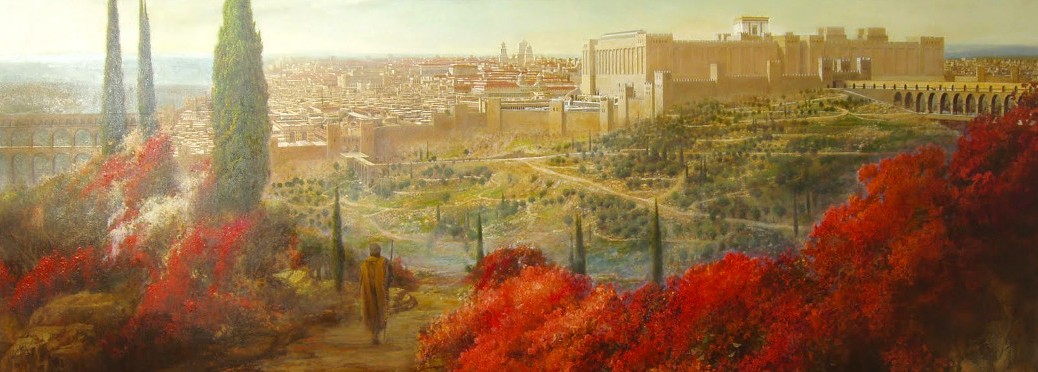
ancient_jerusalemBut this requires we realize that in all of the ancient prophesies and how they were understood by the apostles and first century Jewish and Gentile disciples, it was always Israel that was restored, and Israel that was central to God’s entire redemptive and restorative plan, and Israel that was the center and lynchpin of the entire Biblical message and the good news of Messiah. This is not the message Christianity has promoted and instead, they have caused the basic concept of “ekklesia” to evolve, morph, and develop into a separate and self-defined entity known as “the Church,” which across Christian history and into modern times has wholly separated from Israel, from its original purpose and mission, and has watered down the gospel message into “merely” one of personal salvation, denying the vast, panoramic scope of the Messianic Kingdom to come that we must all strive to bring to fruition.

As Boaz continued to lay out everything involved in this grand plan, I started to feel overwhelmed. Every time he said something meant to inspire his audience to greatness, I compared it to my actual experience in my local church. Boaz sees success in the Tent of David plan because it puts together enthusiastic Messianics with Pastors in local churches who are at least receptive to relationship and partnering, but what if the local church leaders are so assured of their theology and doctrine that they see the relationship as one where the church needs to convince the intelligent but misguided Messianic that Church tradition based on the Reformation, Calvinism, and Dispensationalism (none of which existed in the time of the apostles) is actually the true message of Jesus Christ?

So my primary take away as I ejected the DVD from my computer and prepared for bed was a combination of guilt and feeling overwhelmed with more than a hint of failure added to the mix.

Boaz ended his “Strategic Mission” session with a story about his daughter who is currently serving with the IDF. I don’t know how much I should reveal about her, even though she has been uncompromising in her devotion to Messiah and has not hidden this from anyone who knows her in Israel. Also, as Boaz said, he’s a public figure, so it wouldn’t be hard to find out who his daughter is and what her family believes.

It’s actually an amazing story. I knew some of it just because I’ve briefly spoken with Shayna a few times and am her “friend” on Facebook, but Boaz filled in the details as only a very proud father can. Boaz and Tikvah raised all their children with a strong sense of mission. I guess growing up within the context of the development and progression of First Fruits of Zion’s mission must have had a strong impact.

Boaz laid that sense of mission and dynamic struggle squarely at the feet of his audience. Of course, I only got to see a small portion of the conference and nothing at all about how the students received the message or interacted with Boaz and each other. I have absolutely no idea at all how this is actually playing out in churches across America and I don’t know anyone else who is a “Tent of David” graduate and how they have met with success, failure, or anything else.

Boaz in churchBoaz said that in the church he attends, two HaYesod classes had been taught, one Torah Club cycle had been completed, and there was a group viewing the various episodes of FFOZ’s television series A Promise of What is to Come and using them as topics of discussion.

I won’t lie. That really sounds wonderful, but in my current context, none of that will ever be received. I previously mentioned that having Tent Builders graduates attempt to go into some place like Pastor John MacArthur’s congregation would likely result in a less than enthusiastic reception. It is true that time, relationship, and familiarity helps the “Messianic Gentile” in church gain credibility and even a minority voice in Sunday school discussions, but there will always be churches that will listen and decide that they see and hear nothing that should deter them from what they have always believed to be true about the Bible, about Jesus, and about God, Judaism and Israel notwithstanding.

I’m enjoying D. Thomas Lancaster’s sermon series Holy Epistle to the Hebrews and recently I discovered the sermons of Rabbi David Rudolph. I can “feed my head” all I want and struggle in my personal relationship with God and what all this is supposed to mean, but except for how some people see my blog as a positive or even inspirational influence, that still has little or no effect at the level of the local church, and it certainly isn’t a testimony to changing the Church for the sake of Israel.

Do I think the “Tent Builders” mission is good? Yes, of course I do. You may be surprised to read that sentence after everything else I’ve said, but I still think it’s essentially sound. The thing that Boaz didn’t say in the DVD sampler though he mentions it in his book, is that the mission isn’t for everyone. He also doesn’t mention, though it should be obvious (it certainly is to me) that not only does the Church not want this message, but in some cases (how many, I don’t know), the message will be continually resisted, regardless of relationship, and ultimately rejected.

The Messianic Gentile can then decide (assuming he or she hasn’t been ejected from the local church) to either continue going for the sake of fellowship (which Boaz recommends) and perhaps with hope beyond hope that eventually some people will be more accepting of the paradigm shift Boaz suggests, or that Messianic person can leave.

I don’t know if there’s a “plan B” built into the Tent Builder’s mission profile. Try again at another church after months or years at the first? Try a less formal venue such as a local Bible study or home fellowship? Retire into the world of virtual study and quiet contemplation? Boaz maps out a highly public, visible, dynamic mission of reaching out to the local church, all of the local churches with the Tent Builders message built on relationship and familiarity, inspired and supported by the Holy Spirit, with the ultimate end goal to show the Church their true priority and purpose in partnering with Israel to bring the time of the return of the Messiah.

a-better-placeI suspect that it is not going to come very quickly. Conferences aside, it’s like the ads for going back to the gym that are popular right after New Years when people are feeling the remorse of eating too much during the holidays. People get pumped up and excited and join a gym, but I can tell you from personal experience that after the enthusiasm wanes or, in this case, the conference is over and months have passed, there’s only you and the weights. You either show up each morning and start working, or you stay home and get fat.

This metaphor breaks down when you realize that exercising is between you and the exercise machines. All you need is motivation and the will to carry on over the long haul. In the local church, what people think about you, about your message, about Jews, about Judaism, and about the very real threat that change represents makes a huge difference, and you have control over none of that. You can do everything “right” and still fall flat on your face.

There are no “magic” answers. Win, lose, or draw, there is only God.

Good Shabbos.

Oneness, Twoness, and Three Converts

Let us use the famous story of Shammai, Hillel and the three converts (Shabbos 31) to demonstrate the fusion of Halacha and Aggadah,: A gentile once came to Shammai, and wanted to convert to Judaism. But he insisted on learning the whole Torah while standing on one foot. Shammai rejected him, so he went to Hillel, who taught him: “What you dislike, do not do to your friend. That is the basis of the Torah. The rest is commentary; go and learn!” Another gentile who accepted only the Written Torah, came to convert. Shammai refused, so he went to Hillel. The first day, Hillel taught him the correct order of the Hebrew Alphabet. The next day he reversed the letters. The convert was confused:”But yesterday you said the opposite!?” Said Hillel: “You now see that the Written Word alone is insufficient. We need the Oral Tradition to explain G-d’s Word.” A third gentile wanted to convert so he could become the High Priest, and wear the Priestly garments. Shammai said no, but Hillel accepted him. After studying, he realized that even David, the King of Israel, did not qualify as a cohen, not being a descendant of Aaron…

from “Hillel, Shammai and the Three Converts”
Saratoga Chabad

This is sort of the “B-side” to my earlier blog post Twoness and Oneness: From Sermons by David Rudolph which, in turn, was a response to a blog post written by Peter Vest called David Rudolph to Gentiles: Like Yeshua, Our Mission is to the Jews, not Gentiles

The basic allegation is that certain Messianic Jewish organizations, congregations, and leaders are being “exclusionist” and even “racist” by having a mission only or at least primarily to the Jewish people. This was based on a twenty-minute sermon delivered by Rabbi Rudolph called Our Mission. I listened to the sermon and, not finding anything disturbing or offensive in the content, looked for other sermons and materials to add some dimension to this discussion, and then I wrote “Twoness and Oneness.”

I knew that there would be some folks my response wouldn’t satisfy. There will always be someone who disagrees and there are people with whom I disagree. That’s the nature of human beings, especially in discussions of religion and politics.

The comparison of Messianic Jewish congregations to churches such as Chinese or Korean churches broke down, at least in one person’s eyes (see the comments on Peter’s blog post for details), because it was argued that if you were not Korean but attended a Korean church (let’s say you regularly attended with Korean family members or friends) your role would not be restricted because you weren’t Korean.

In certain Messianic Jewish congregations (and this is regularly debated and agonized over in many of those congregations), non-Jewish members are not allowed to fulfill certain roles or perform certain functions (be a Rabbi or be called up to an aliyah, for example) as those roles and activities are reserved for Jewish members only.

I have no idea how any of this works at Tikvat Israel, Rabbi Rudolph’s congregation, and I can hardly speak for his position, but even if it’s true, there is a foundation for making such distinctions.

Notice the quote I placed at the top of this blog post. It’s a rather famous story that would have taken place about a generation before the time of Jesus. Three Gentiles wanting to convert to Judaism for various reasons first approach the sage Shammai with their rather outrageous requests and are chased away. When they approach Rabbinic Master Hillel, he accepts all three as converts and students but he does so with a “twist.”

The relevant convert is the man who wanted to be Jewish so he could fulfill the role of High Priest and wear the priestly robes. Hillel didn’t explain that it would be a role forever denied him because, even converting to Judaism, he wasn’t a Levite and he wasn’t a direct descendent of Aaron. He let the convert find out for himself.

Hillel and ShammaiI remember reading a commentary that described a conversation between the three converts some years after these events. I can’t find where I read it and only sort of recall it (such is my middle-aged memory), but I think these three men realized finally that not only were they incredibly arrogant in their original motivations, but that Hillel, in his graciousness, enabled them to learn the truth for themselves and saved them from condemnation by Hashem.

If someone can point me to the actual commentary online so I can correct any errors in recall, I’d really appreciate it.

As applied to the latest allegations against Rudolph in specific and Messianic Judaism in general, frankly ladies and gentlemen…this isn’t “church”.

Potentially, in the Christian hierarchy, anyone can be anything provided they meet certain qualifications. You can be the Pastor of a church, regardless of lineage or background, as long as you satisfy the educational and experiential requirements.

But to be the High Priest, you must be a Levite and a descendant of Aaron. To be the rightful King of Israel, you must be from the tribe of Judah and be a descendant of David.

In the modern synagogue setting, Messianic or not, you must be Jewish to qualify for certain offices and activities (In a Reform synagogue, a Gentile can be on the board of directors, but still will never be Rabbi). As a Gentile, I would not be called up for an aliyah, to read the Torah on Shabbat, in any synagogue in the world. I certainly wouldn’t qualify as a Rabbi or Cantor, even if I had the proper equivalent education (and I would never be admitted into a Yeshiva for study as a non-Jew, though there have been rare exceptions).

Because a synagogue is Messianic, that is, because the members have come to faith in Yeshua (Jesus) as Messiah and as Israel’s King, doesn’t mean it is not a center of Jewish community and worship, and it doesn’t mean that Jewish and Gentile roles have stopped being Jewish and Gentile roles. I’ve written a great deal on the legal decision rendered by James and the Council of Apostles on the status of Gentiles within the ancient Jewish religious stream of “the Way,” and how Jewish and Gentile roles were to be managed.

Granted, after Acts 15, there would be a long period of application and adjustment as copies of the Jerusalem letter circulated in the Messianic communities in the Land and in the diaspora. We don’t have a complete record of how it was (or if it was) finally lived out, unless the Didache can give us some clues, but what we definitely don’t have is a “smoking gun” saying that Jewish and Gentile members of “the Way” were indistinguishable units in the body of Messiah (this is hotly debated in Christianity, of course, relative to Ephesians 2:15, which I addressed in my previous missive).

Again, the opinions I’m expressing are my own. I have no idea, based on the recorded sermons of David Rudolph I reviewed, how things are run at Tikvat Israel. For all I know, they may have a completely different conceptualization of these issues. This is only how I look at these matters.

I don’t say all this in the hopes of convincing anyone to change their minds and to look at Messianic Judaism in a different light. But the question was raised and I thought some people might want to read one possible answer. As I said on Peter’s blog, I’m not interested in toggling back and forth across two or more web-based venues trying to talk about all this. I just want to clarify my position on the issues at hand for the sake of anyone who might want to know.