Tag Archives: messianic judaism

Should Our Children Imitate Us?

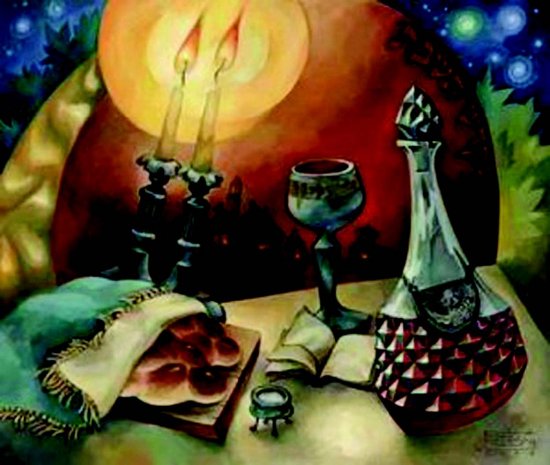
passover_seder_table_settingPesach is coming! Monday night, March 25th is the first Seder. What kind of Seder will you have for your family and friends? Will it be “Let’s hurry up and get to the food” — or something more meaningful, uplifting, impactful? There are 3 types of people: Those who make things happen, those who watch things happen … and those who ask, “What happened?” The kind of Seder you have is up to you and depends on what you do starting NOW! Make it more than — “They wanted to kill us. We won. Let’s eat.”

The Seder should help your children to feel positively about being Jewish. You cannot transfer feelings, but you can create the atmosphere and the experience which will engender positive feelings. Many people who love being Jewish, fondly reminisced about their Zaideh (grandfather) presiding over the Shabbat table and the Seder or their Bubbie (grandmother) lighting Shabbat candles … and their Seder! You are a link in that chain!

-Rabbi Kalman Packouz
“Shabbat Shalom Weekly”
Aish.com

All in all, this year’s Passover seder in my home was pretty lousy. There are a lot of reasons for this, most of which I am not at liberty to discuss. It’s wasn’t anyone’s fault. No one burned the roast, or behaved poorly, or arrived abysmally late to the event. But it certainly wasn’t the joyous occasion of freedom that I usually anticipate…at least not on the surface.

But I was disappointed and sundown at the end of Shabbat and the first full day of Passover was a sad relief. At least it was over.

-Me from my blog post
The Uninspired Passover Seder

Easter and Passover are coming and I’m dreading them both. I’m dreading Easter because I haven’t observed it in a very long time. But now that I’m going to church, I am faced with a sunrise Easter service followed by brunch (I can only imagine what’s on the menu), and then a more traditional service afterward. Don’t get me wrong. I have no problem with celebrating the resurrection of the Master, but the event seems so disconnected from the way I think and feel about God, Messiah, and the Bible. But then again, that’s how I felt about church before I let myself return.

I’m dreading Passover because of what happened last year. I recall that my wife and I decided on having a seder at home at the last possible second and everything came off just as we planned…that is, we had no plan. Everything was rushed. Everything was disorganized. I felt like I’d never even seen a haggadah before let alone held one in my hand and read from it. It was miserable and I blame myself for pushing it through. I should have left well enough alone.

But I have another reason for dreading these events as they are rapidly approaching. I’ve been complaining lately about the fussing, fighting, and turf wars in the Messianic and Hebrew/Jewish Roots movements and I know the whole “Easter is pagan” stuff is about to be spewed all over the blogosphere. It’s really a war about what’s more important to us, the death of Messiah or the resurrection of Christ. It’s really a war about the cultural context to which we prefer to be adhered. It’s really an opportunity to complain and kvetch about which religious expression is “better” and how we are all trying to justify our choices for worship and identification.

Face it. All of you. It all has very little to do with God and celebrating the Messiah. Why even bother?

Remember that the Seder is for the kids, to transmit our history and understanding of life. You’ve got to make it interesting and intrigue them to ask questions. If a person asks a question, he’ll be inclined to hear the answer! The only way to transmit your love and feeling for Judaism is through shared, positive experiences. You need to be excited about the Seder!
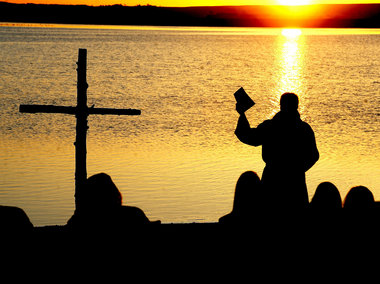
sunrise-easter-serviceIf I was a traditional Christian traveling along the usual Christian path, Easter would be one of the most important times of year for me. But if I strip away the cultural history and context that has built up over the long centuries, in celebrating the resurrection of Messiah, we’re celebrating the entrance of hope into the world for all of humanity. Watching the sun come up on Easter Sunday while praying and singing hymns and praising God for His Son must be like watching the dawn of an era of grace and illumination, the promise of peace to all mankind through our Lord Jesus Christ.

If I was a traditional religious Jewish person, Passover would be a time to be very excited. It’s yet another wonderful opportunity on our calendars to celebrate our liberation, our identity, our journey to the Torah, and the platform upon which we can pass what it is to be a Jew down to the next generation, participating in the continued survival and existence of the Jewish people, illustrating that against all odds, God cares about us and He is with us, and He is sufficient for us.

But I’m neither of those things. In spite of all my efforts, I’m still a person journeying between different worlds. My “traditions” aren’t set in concrete like those of most other Christians or Jewish believers. I exist in a molten plastic universe where I’m exploring concepts, ideas, realities, and existences. I can see the Shabbat from a direction of devotion and a rest in Messiah for human beings, and also from a direction where it appears exclusively Jewish. I can see the vital importance of Christians celebrating Passover as a connection to the seder of the Messiah, and I can also see it as a wholly Jewish experience.

And I’m still getting really, really tired of all of the bitching about who owns what and who is obligated to what and the perpetuation of the split between believing Gentiles and Jews that was already in progress, even as Paul was still preaching in the synagogues to the born Jews, the converts, and the God-fearing Gentiles at the beginning of his “missionary journeys.”

I’m convinced that if Jewish and Gentile believers in Messiah historically ever formed any sort of unified community, it must have been one that Paul didn’t write about, and the event probably lasted about forty-five seconds until someone found a reason to argue about whether or not Gentiles should be circumcised or if a Gentile should or shouldn’t be wearing tzitzit.

You shall converse in the words of Torah and not in other things.

-Yoma 19b

The Talmud explains “other things” as referring to idle, meaning less things.

The Hebrew language has words that mean rest, play, relaxation, and pleasant activities, while it has no word for “fun.” A “fun” activity has no goal, as is implied in the colloquial expression, “just for the fun of it.” In other words, the goal of the activity is within itself, and fun does not lead to or result in anything else.

This concept is alien to Judaism. Every human being is created with a mission in life. This mission is the ultimate goal toward which everything must in one way or another be directed. Seemingly mundane activities can become goal directed; we eat and sleep so that we can function, and we function in order to achieve our ultimate goal. Even relaxation and judicious enjoyable activities, if they contribute to sound health, can be considered goal directed if they enhance our functioning. However, fun as an activity in which people indulge just to “kill time” is proscribed. Time is precious, and we must constructively utilize every moment of life.

Furthermore, since people conceptualize their self-worth in terms of their activities, doing things “just for the fun of it” may in fact harm their self-esteem.

Today I shall…

…try to direct all my activities, even rest and relaxation, to the ultimate purpose of my life.

-Rabbi Abraham J. Twerski
“Growing Each Day, Adar 23”
Aish.com

rothschild-jewish-libraryThere are days when I think the perfect life of devotion would involve the destruction of the Internet and me with my nose buried in book after book in some vast library containing all of the great Jewish and Christian wisdom of the sages and tzaddikim. It would be an old-fashioned library where people would have to be quiet. I would have my little corner with my table and chair, my reading lamp and my stack of books. I could pray uninterrupted. I could even dream of the day of Messiah’s return when he would bring peace and abolish discord.

But that doesn’t work, because faith was never intended to exist in isolation which is why, in spite of the enormous risks of mixing with foreigners, Israel was meant to be a light to the nations.

More’s the pity.

What will my seder look like this year? I don’t know that I’m going to have one. If my wife expresses the desire, then of course, we shall have one and invite as many guests as want to attend. If my wife and daughter choose to attend the public seder at one of the local synagogues, then I hope they have a marvelous time. If we are invited to someone else’s home for a seder, assuming my wife wants to go and it’s appropriate for me to go with her, we’ll go and I presume it will be a wonderful time.

I can attend a sunrise Easter service. I feel that I somehow have to as part of my commitment to my church and my renewed “Christian walk,” though I still travel a rather unusual path. I just need to pull my head out of the computer and remember that despite all of the problematic people and problematic conflicts I encounter on the web, God is not on the web nor is he confined to someone’s pet theology, doctrine, or dogma. God is God and I am grateful each day that He is so far above all of the mucking around we mire ourselves in.

If there is a perfect seder or a flawless Easter, that is yet to come…perhaps at the feast of Abraham, Isaac, and Jacob.

I tell you, many will come from east and west and recline at table with Abraham, Isaac, and Jacob in the kingdom of heaven…

Matthew 8:11 (ESV)

I don’t desire that anyone be thrown into the outer darkness but rather that we all learn what is really important in the Kingdom of Heaven, and then we all choose to participate in that effort. Jesus said to the Roman centurion who had been pleading for his suffering servant, “let it be done for you as you have believed.” Remember, what we believe and how we act will also be done for us, for good or for ill.

Your future is whatever you make it. So make it a good one.

-Doc (played by Christopher Lloyd)
Back to the Future III (1990)

Children have never been very good at listening to their elders, but they have never failed to imitate them.

-James Baldwin

Remember, all of this isn’t just for us but for our children. Our children are watching us. Heaven help them if they should decide to imitate us.

Where Do We Go From Here?

jewish-family-lifeQuestion: I need a good book on Judaism. My wife is Jewish and I recently found out that I am, too! We want to raise our kids Jewish. I have read extensively on the subjects of philosophy, religion and psychology. I need something with some real meat, not a yawn intro book.

The Aish Rabbi Replies: The first place to start, of course, is with the all-time bestseller, the Bible. It is not a yawn! I recommend the “Stone Chumash” (artscroll.com), because it will give you a proper Jewish translation plus extensive commentary.

Jewish life is based largely around the calendar year. “The Book of Our Heritage” by Rabbi Eliyahu Kitov (feldheim.com) is a classic work, featuring a lively and scholarly explanation of all the laws and customs of the Jewish holidays.

An understanding of history is also integral. Rabbi Ken Spiro has written an excellent book filled with facts and anecdotes – “Crash Course in Jewish History” explores the 4,000 years of Jewish existence from Abraham to Zionism, while answering the great questions: Why have the Jewish people been so unique, so impactful, yet so hated and so relentlessly persecuted?

Finally, I suggest you start in earnest by attending a Discovery seminar. It provides an excellent overview of Jewish history, philosophy, and literature. The seminar is given in hundreds of cities throughout the world. For a current schedule, visit http://www.aish.com/dis/

May the Almighty guide you and your family on the path to Jewish fulfillment.

“Home Study”
From the “Ask the Rabbi” archives
Aish.com

Seems pretty straightforward, necessary, and praiseworthy. A gentleman who has recently discovered he is halachically Jewish and who is married to a Jewish wife wants to establish a Jewish family life. While the person in question wasn’t raised in a Jewish household and apparently spent most of his life believing he wasn’t Jewish, the fact that he married a Jewish woman and then recently discovered he is a Jew has had a profound affect on him. He desires to integrate himself into Judaism and ultimately the Jewish community. What could be wrong with that?

Problem (no, not with the guy who wrote “Ask the Rabbi”):

More than a few non-Jewish Christians also express more than a passing curiosity about Judaism and their (our) faith’s “Jewish roots.”

Why is this a problem? Because once you’re drawn to Jewish practices, Jewish philosophy, and Jewish literature, what do you do with that knowledge and those desires?

There are numerous answers, some relatively benign and some highly controversial. I didn’t want this morning’s “meditation” to be controversial but either God or the defective wiring in my brain had other ideas.

Those non-Jews who began in 1960s America to seek the roots of the faith that trusts Rav Yeshua for the redemption of mankind were attracted to the budding MJ movement precisely because it seemed to be seeking the same thing. I sometimes suspect that the resulting fusion between Evangelicalism and MJ has produced the kind of Christian-Jewish religious result they were seeking, though it is currently mislabelled as MJ (while the real essence of MJ has been inhibited because it must pursue more authentic halakhic Jewish praxis that is not suited to non-Jews and is not always appreciated by assimilated American Jews who have lost touch with comprehensive genuine Jewis praxis and perspective). If we could effect the necessary separation that sets MJ free to become itself (i.e., a truly and thoroughly Jewish messianism), while the Jewish Roots of Christianity folks satisfy themselves with the semi-Jewish style of religious praxis developed together with MJs so far, perhaps we would end with a pair of related religions resembling the first-century vision. And if we do it now, maybe we’ll be better prepared for the physical establishment of the messianic kingdom in Jerusalem ‘ere long.

ProclaimLiberty
Comment on Shammai, Peter, and Cornelius

two-roads-joinThat’s a very generous and informed perspective from a Jewish point of view, although I don’t doubt that a number of people will disagree with this statement. It necessitates two separate religious paths or conduits in the worship of the God of Israel through the Messiah, one for Jews in the Messiah and one for Christians. Coming alongside does not require any overlap and I know more than a few Jewish believers who would prefer that non-Jewish Christians (or “Messianic Gentiles” as the case may be) not “overlap” into their world at all.

My personal belief is that at some point, most likely in the Messianic age, non-Jews will enter into some parts of a space that was previously reserved for Jewish people in terms of the Shabbat, perhaps some manner of keeping kosher (if for no other reason than to maintain table fellowship with Jews), visiting Jerusalem at least once for Sukkot, and generally attempting to reconcile with Judaism after Christianity’s long separation from its “root faith.”

This isn’t to say that I support Christians attempting to mimic the totality of Jewish identity and lifestyle under the mistaken belief that Paul or James commanded them to, but if what we see in many of Paul’s epistles is any example, the very early Gentile believers (and I’ve said this more than once before) had lived experiences that were far more “Jewish” than what Christians are accustomed to today.

Can we use something of what we see in the apostolic scriptures as a sort of “model” for “trying on” a variant method of worship and observance on a voluntary basis?

Maybe not.

Derek said: If you are not Jewish, but keep Sabbath with the Jewish people, don’t forget you are doing it with Israel, not in place of Israel.

But one day, all will keep Sabbath in the interim age and in the final age, all will be Sabbath. Jews who keep Sabbath now are forerunners, proclaiming by our peculiarity that God is Lord of Time, the bringer of the Time to Come.

James said: I’m sure someone’s going to mention Isaiah 56:1-8 to you at some point, so it might as well be me. I don’t really have a problem with what you’re saying since you aren’t taking that stand that non-Jewish believers are wholly forbidden to observe some sort of Shabbat rest. Certainly those of us who are intermarried would have a tough time avoiding Shabbat if our spouse chose to observe it (or other mitzvot such as kosher food in the home).

It seems clear that in the Messianic age, everyone will be keeping Shabbat and I don’t see why, given the parameters you’ve presented, Gentiles who choose to do so shouldn’t get a head start.

Derek said: Isaiah 56. Two interpretations. (1) This is the Age to Come and reflects what the law for the nations will be then. Many believe this. I prefer: (2) This was about the Persian period (539-334 BCE) when Isaiah 56 was written and was about the situation of Gentiles in Jerusalem at that time.

As to the idea, “Since Sabbath will be universal in the Age to Come, therefore why not keep it now?” let me say a few things. This is a valid choice, not obligation. Those who make this choice are not holier than those who don’t. And the best reason Messianic Gentiles have for doing this is to join with Israel in foreshadowing the Age to Come. It is not to replace Israel’s calling as the forerunners. Gentiles are not commanded to be forerunners in this matter. To choose to do so should go along with a right understanding of Israel’s priestly calling.

James said: I never said I was claiming obligation, Derek.

Derek said: James, I know that because I know you and what you believe. I was giving my perspective on your question for the benefit of all readers. Many would see your words “I don’t see why . . . Gentiles who choose to do so shouldn’t get a head start” as an argument for “I must keep Sabbath as a headstart” or “it is better to keep it now even if we don’t have to.” There are many worthy callings in the world and foreshadowing the world to come by resting in the seventh day is only one of them. Differing ways of holiness are lesser or greater based on deeds of lovingkindness and not based on ritual holiness statutes.

From Derek Leman’s blog post
The Sabbath is Between God and the Jewish People

Shabbat-Made-Easy-paintingSorry for that rather lengthy copy and paste of our conversation, but I wanted to illustrate that even between two people who hold relatively the same perspective on Shabbat, there can still be room for a “dynamic” exchange of viewpoints.

I resigned from the vast, vast majority of anything “Messianic” nearly two years ago when I launched this “morning meditations” blog. I made that decision for a wide variety of reasons that are too lengthy to recount here. However, one such reason was to become part of the solution by ceasing to be part of the problem. If the issue is an objection to Gentile Christians assuming Jewish identity, even superficially, my response was to stop assuming any aspect of Jewish identity. It’s easier to talk with people if they don’t perceive you as a threat.

It’s also why I started publicly identifying myself as a Christian, in order to make my “voice” available to a wider audience. Messianic Jewish and Hebrew Roots writers and teachers tend to end up speaking to a rather limited audience in most cases. However, some of what we talk about is really important and I believe should be consumed by a wider audience. If I can talk to more people and a broader spectrum of populations, maybe the dialog can be expanded and maybe it will actually do some good for a change.

Anyway, I can hope.

But on mornings like this one, I wonder if hope is enough. All of these religious factions and their variants continually butt heads against one another and periodically, I get tired of fighting the turf wars. If you want something, take it. If you think I’m “playing with your toys” and you want them back, here they are. If you want me out of your yard, I’ll go home.

But then, one of the imperatives of some areas of Messianic Judaism is to carry a unique message back into the church. That’s kind of hard to do if there is no dialog between Jewish and non-Jewish believing communities and no overlap in perspectives and practices. I can’t always say what you say without also doing what you do, at least in some minimalist fashion.

Did Paul kick all the God-fearing Gentiles out of the synagogues because they were associating with Jews in a Jewish space on the Jewish Shabbat? Did Peter refuse to enter the home of Cornelius because he was a God-fearing Gentile and Jews were forbidden to enter into Gentile homes? Did James and the Council of Apostles rule that the Gentiles had no share in the Messiah or the world to come and that they should return to their pagan practices rather than turning to God (or did he say that the Gentiles should turn to God, but by way of inventing a totally new religious system totally divorced from Judaism)? For that matter, and to play the other side of the coin, Did James, Paul, or any other apostle absolutely demand that the Gentiles must conform  to the Torah and even (eventually) to become circumcised?

I can see why some Christians might become so exhausted by all of this wrangling that they’d (we’d) just finish the job, retreat into church, and never look at anything Jewish or Hebrew Roots again. You guys all want your various turfs? They’re yours. Have fun.

I know that’s not what the vast majority of believing Jews are saying, but in Messianic Jews defining their exclusive space, is there a space for interaction with Christians? There is going to be another Shavuot conference given by First Fruits of Zion (FFOZ) and hosted at Beth Immanuel Sabbath Fellowship in Hudson, Wisconsin in a few months. There will be Jews and Christians in attendance. There will be some overlap of practice between the two populations. Jews and Christians will be having (kosher) meals together, praying together, listening to teachers together. They’ll be breathing the same air together.

I know that given the real and perceived threats (and some of them are pretty darn real) to Jewish identity specifically within the Messianic Jewish realm, it’s important to make sure there are firm definitions for what is exclusively Jewish about Messianic Judaism as one of the Judaisms in our world, but just once it would be nice to see someone go out of their way and say what believing Jews and Gentiles have in common and on what platform we can both stand.

where-do-we-go-from-hereI believe my basic perspective and the direction from which I’m coming has merit and value. Not that I can’t be wrong and not that I haven’t made mistakes (and I’m sure I’ll make them again), but I think that part of what the Messiah will do when he returns is find a way to bring peace between Jews and Gentiles who are in him. I believe it’s possible to be different and still to co-exist and even to be friends. I believe that when you have something special, you can share it, even though it still belongs to you.

I don’t want to be Jewish. God made the person He wants me to be and I have no right to change that. If I did want to be Jewish, then I’d convert (though that would be problematic since I’d have to surrender my faith in Messiah in the process, which is completely unacceptable). But being married to a Jewish wife, having three Jewish children, and having something of a passion for reading Jewish literature, philosophy, and theological studies, I find myself drawn in a certain direction. If I have violated your “keep off the grass” sign, I’m sorry.

Two-thousand years ago or so, the Gentile believers decided to walk away from their Jewish neighbors. We left their house and taking a few of the “toys” with us, moved in next door and set up a completely different place to live, with a Messiah who didn’t look even remotely Jewish. Now a few of us realize that was a big “oops.” The problem is, even trying to repair the damage that was done is enormously difficult. The rift is huge, the pain runs deep, and the blood still pours out like a river.

I don’t know what to do about it. I don’t want to be an antagonist and I certainly don’t want to claim an identity that I have no right to, but the Jewish pain at the presence of Gentile Christians (including Hebrew Roots) may just be too great for any extension of olive branches to cover. But I keep getting these mixed messages that say “approach,” “retreat,” “approach,” “retreat.”

Where do we go from here? I’ll continue discussing this theme from a different direction in tomorrow’s morning meditation.

Sparking Illumination

bright-spark-welderThe Jewish people have no monopoly on G-d and spirituality. In fact, Judaism’s core desire is that the world perceive G-d’s presence in their lives, and grow spiritually. What’s curious then is the wording of what is arguably Judaism’s most famous expression: “Shema Yisrael… Listen Israel, G-d is our Master, G-d is One (Deut 6:4).” If this eternal message relates to all mankind, why is it addressed only to Israel? Would not the One who created and sustains all mankind, by definition, be the Master of all?

Rashi’s classic commentary solves the puzzle: G-d might appear to be the Master of only the Jewish people, those who received and accepted the Torah at Mt. Sinai. The nation of Israel got direct instructions on how to live from the Master Himself — “Israel, G-d is our Master.” However, “G-d is One” — we wish and hope for the day when every soul universally recognizes the Al-mighty’s intimate involvement with all, when the spirituality hidden beneath every surface becomes abundantly clear.

Perhaps this is a perspective that has been overlooked, but it’s crucial that our practice and interaction with people reflect this hope. It increases our concern and our love for others, and helps us appreciate everyone’s efforts to grow and live meaningful lives. Is this not a recipe for unity?

Good Shabbos!
Rabbi Mordechai Dixler
Program Director, Project Genesis – Torah.org

The Rabbi’s message was originally posted on August 12, 2011 but I periodically revisit it because I took the rather bold step of asking Rabbi Dixler a question. I’ve blogged about it before but in re-reading the Rabbi’s blog post and particularly the comments that have accumulated, I decided it was time to write about the message again.

I must say at this point that trying to “retrofit” modern or any post-Biblical Rabbinic commentary and insights into the original Messianic faith of “the Way” and thus into Christianity is a dubious prospect at best (not that I haven’t been guilty of doing so time and again), but it’s a way of creating dialog and raising awareness among the different “fragments” of the people of God about how God really, really is One and that He is the God of all of Creation, not just of one people group or one religious group. No, I’m not saying that the God of the Bible talks through all religions and their stuff such as Taoism, Buddhism, or Hinduism. I’m saying that regardless of the “systems” and “theologies” and “philosophies” that we human beings manufacture in order to organize ourselves and make “us” feel better and superior to “them,” God is God, a complete and objective unity, in spite of what we believe about Him or even if we believe He exists.

But remember I said that I asked Rabbi Dixler a question. Here it is:

Greetings, Rabbi Dixler.

Thank you for your insightful message, but I must admit to not quite seeing how Rashi’s commentary, as presented in your letter, solves the puzzle. G-d did indeed give direct instructions to the nation of Israel on how to live, but I don’t see where the rest of humanity receives the information that G-d is One.

I’m aware of the Noahide Laws as recorded in Genesis 9, but they don’t resonate from Noah to the rest of the nations in the same sense as the unbroken chain of Torah does from Moses and Sinai to the Jews of today. There’s a unified link between G-d, Moses, and the Israelites who stood at Sinai that can be traced from 3500 years in the past all the way to the present-day Jewish people. When you say that “we wish and hope for the day when every soul universally recognizes the Al-mighty’s intimate involvement with all”, how do you believe this will happen? Will we only become aware of the “spirituality hidden beneath every surface” when the Messiah comes?

Forgive me for asking you this question. I’m a Gentile married to a Jewish wife and we frequently have discussions like this. Since you asked for comments, I thought I’d take this opportunity to ask for your viewpoint.

Thanks and Good Shabbos.

And here is the Rabbi’s response:

James, You make a great point. He did give instructions to the rest of the world, but not to the level He gave to the Jewish people. It would seem that the discrepancy would give the appearance of Him acting as Master over the Jews, while exhibiting less mastery over the non-Jews. The point of the message was to say that He has as much a desire to have that relationship with the non-Jews, if they reach the required level of recognition of Him. While Jews may not always act at that level of recognition, they are the descendants of the Patriarchs and Matriarchs which gives them an advantage.

The recognition of the non-Jews has been happening throughout history and it will certainly reach it’s zenith at the time of the Messiah. The spread of the belief in monotheism to most of the civilized world was likely the greatest manifestation of this that we’ve seen so far.

the-shepherdNow remember that I said it wasn’t so good an idea to try to fit what normative modern Judaism says into normative modern Christianity. From my point of view, Rabbi Dixler doesn’t present a full picture because, from his perspective, he can’t present a full picture. He is (understandably) unwilling or unable to recognize that the Messiah has already come and will come again and that, in his first coming, he did something remarkable for all of humanity. He gave us the ability to get a lot closer to God than we ever could previously. He gave the non-Jewish people of our world the ability to connect to God in a way that is much more intimate and fulfilling than Rabbi Dixler has described on his blog.

“For God so loved the world, that he gave his only Son, that whoever believes in him should not perish but have eternal life.

John 3:16 (ESV)

And Jesus came and said to them, “All authority in heaven and on earth has been given to me. Go therefore and make disciples of all nations, baptizing them in the name of the Father and of the Son and of the Holy Spirit, teaching them to observe all that I have commanded you. And behold, I am with you always, to the end of the age.”

Matthew 28:18-20 (ESV)

While Peter was still saying these things, the Holy Spirit fell on all who heard the word. And the believers from among the circumcised who had come with Peter were amazed, because the gift of the Holy Spirit was poured out even on the Gentiles. For they were hearing them speaking in tongues and extolling God. Then Peter declared, “Can anyone withhold water for baptizing these people, who have received the Holy Spirit just as we have?” And he commanded them to be baptized in the name of Jesus Christ.

Acts 10:44-48 (ESV)

Therefore my judgment is that we should not trouble those of the Gentiles who turn to God, but should write to them to abstain from the things polluted by idols, and from sexual immorality, and from what has been strangled, and from blood. For from ancient generations Moses has had in every city those who proclaim him, for he is read every Sabbath in the synagogues.”

So when they were sent off, they went down to Antioch, and having gathered the congregation together, they delivered the letter. And when they had read it, they rejoiced because of its encouragement.

Acts 15:19-21, 30-31 (ESV)

The beat goes on, but you get the idea.

But while God is God and God is “universal,” human beings are scattered and shattered and fragmented all over the place in terms of who we think we are, who we think God is (if we have a concept of God) and what we think that means about ourselves and everybody else (and I’ve talked about this before). I’m not just talking about Jewish identity vs. Christian identity, but we can’t ignore that aspect of our connection to God either. As I said just yesterday, we need to heal the broken pieces of humanity, not tear ourselves more and more apart.

But as I’ve also said, unity is not the same as uniformity. I’m not talking about coming together in one, anonymous, doughy, blob with no distinctive features or identifying marks. Don’t worry though. As one of the people commenting on Rabbi Dixler’s blog said, we are nowhere near any form of unity:

I’m a Chab Jew and I have experienced the desdain of other Orthodox jews, some Chassidim. If we cannot be one how can we expect to have the goyim in the boat?

Good question.

After quite a number of questions and comments, Rabbi Dixler sent out a general reply:

An issue that has been raised by a few is that this message somehow dilutes the idea of the Chosen Nation and that the commandment to love is only towards others Jews. To be clear, the Jews were chosen by G-d to be the recipients of His Torah since they are the children of the Patriarchs and Matriarchs – those who discovered G-d’s presence for themselves, devoted every ounce of their being to Him, and introduced the pagan world to what it means to have one G-d. At the same time, the mission of Jews that they’ve been chosen for is to spread the knowledge of G-d’s presence to all of humanity, by acting as a light to the nations. Built into this mission is the concern that all of humanity appreciate G-d and the spiritual relationship we have with Him.

The supreme irony is that Israel is a light to the world in a way that much of Judaism must deliberately reject due to the historic nature of the relationship between Christians and Jews.

Again Jesus spoke to them, saying, “I am the light of the world. Whoever follows me will not walk in darkness, but will have the light of life.”

John 8:12 (ESV)

cloaked-in-light-tallitAs Israel’s first-born son, the Messiah embodied Israel’s mission to be a light to the nations. He was and is the living, breathing expression of God’s intention to live among, not just the Jewish people, but among all people and to bring us all close to Him and close to each other. Rabbi Dixler’s comments come so very close but still miss the target, at least as I see it.

“You are the light of the world. A city set on a hill cannot be hidden. Nor do people light a lamp and put it under a basket, but on a stand, and it gives light to all in the house. In the same way, let your light shine before others, so that they may see your good works and give glory to your Father who is in heaven.

Matthew 5:14-16 (ESV)

Israel is the light of the world and that light is transmitted in its most perfect form from the body of the first-born son of Israel, the Messiah, Son of David. But as his disciples, we too are called to be a light to the world, to send forth the light that originates from God to a dark and desperate humanity. One of the Jewish commentators I quoted above lamented that if Judaism isn’t united, how can they expect the goyim to get into the boat? If the disciples of Messiah aren’t united in love and purpose, how can we expect to ignite a spark, let alone shine a light that illuminates the power and glory of Christ in a fallen Creation?

After examining my finances, I think I’m one step closer to being able to attend the Shavuot Conference being hosted by First Fruits of Zion (FFOZ) in Wisconsin this May (there are still a few more details to work out). But based on my experience with the conference last year, I realize that “for every ascent, there is a descent,” for every uplifting event of fellowship, there is an inevitable let down when it’s over. That’s why, as much as I’m looking forward to going again this year, it’s not the focus of my faith or my “mission” (if I can be so bold as to say that I even have a “mission”).

The goal, the focus, and purpose of our lives and our very beings is not to count on periodic events of fellowship, sharing, and worship, but to live out each day with purpose, seeking an encounter with God, promoting healing between the damaged and torn parts of Messiah’s body. The Messiah isn’t just the Christ who belongs to the goyim and he’s not just Yeshua who belongs to a tiny population of modern Messianic Jews. Messiah belongs to all Jews everywhere and he belongs to any and all people from among the nations who hear his voice, who are called out, and who recognize the shepherd.

the-last-candleWe don’t all do “light to the world” in the same way, so it appears as if we are working at cross purposes relative to all of the different “Judaisms” and “Christianities” that exist in the world today. But if we believe that God is One and His Name is One, then we must also believe that whatever man has put asunder, God will one day join back together, not as an anonymous, gooey, doughy mass of bland, “wonder bread,” cookie cutter cut up humanity, but as who He made each of us to be and each of our people groups to be; those chosen at Sinai and those who joined him at the cross.

We don’t “get it” now. None of us really “get it” now. But if we keep striving for our encounters with God, if we continue to seek His will, if we keep striking our little stones against our little bits of flint, maybe we’ll one day create a spark, ignite a flame, and then the light to the nations and the light of the nations will illuminate the world.

And we will be illuminated, too. I just hope my tiny candle doesn’t burn out first.

Imploring Unity

jewish-davening-by-waterAnd on the Sabbath day we went outside the gate to the riverside, where we supposed there was a place of prayer, and we sat down and spoke to the women who had come together.

Acts 16:13 (ESV)

They did not find any Jews. On that particular Sabbath only a small group of God-fearing Gentile women gathered to worship the God of Israel in the open air. The handful of God-fearers seems to be all that remained of the Jewish community in Philippi. The decree against the Jews had overlooked God-fearers. Even in the absence of the Jewish community, the women continued on with Sabbath observance and prayers.

-D. Thomas Lancaster
Torah Club, Volume 6: Chronicles of the Apostles
from First Fruits of Zion (FFOZ)
Torah Portion Terumah (“Heave Offering”) pg 488
Commentary on Acts 15:36-17:14

Yesterday’s extra meditation addressed the “Jewish oral traditions” as applied to the early Gentile disciples in the days of James, Paul, and the Council of Apostles. We saw, based on Lancaster’s commentary, that it is very likely Paul taught a sort of oral law or “halachah” to the Gentiles regarding the teachings of Jesus and how to implement those teachings using a basic understanding of Torah as a foundation.

I wrote that meditation because for the past week or so, I’ve been focused on Jewish halachah and the right of the Jews in the modern Messianic communities to establish and maintain a halachah for themselves that is substantially similar to halachot utilized by other streams of Judaism. But in defining Jewish identity through halachah, Gentile identity definitions have been neglected relative to the Bible. Based on that neglect, some Christians have opposed the maintenance of a unique Jewishness among the Jewish disciples of Messiah, defining it as “exclusivist” and even “racist.” There’s also a suggestion that “things of the flesh” and “things of the spirit” are mutually exclusive, and that God has ceased to apply a special spiritual identity and purpose to the Jewish people, the living inheritors of Sinai, particularly now that the Messiah has come and will (hopefully soon) come again.

Christianity and Judaism stand in stark contrast to each other, even within the context of Messianic Judaism where Jews and Gentiles share the same God and the same Messiah. However, as we saw in Lancaster’s commentary on Acts 16:13 above, in the days of Paul, the Gentile disciples and God-fearers probably looked more “Jewish” than we ever would look today, up to and including observing Shabbos. Lancaster quotes Ben Witherington’s The Acts of the Apostles : A Socio-Rhetorical Commentary (pg 491) to provide us with a bit more detail.

Presumably these women had assembled to recite the Shema, to pray the Shemoneh Esreh, and to read from the Law and the Prophets and perhaps to discuss its meaning, to hear from a teacher, and to receive a final blessing. In this case, Paul was the guest teacher.

This short paragraph provides us with a rich picture of a group of non-Jewish women, not yet disciples of the Messiah Yeshua, who came together in the absence of their exiled Jewish mentors and teachers, to continue to worship the God of Israel in the only way they knew how. If it had been the custom to light Shabbos candles in that day just before the arrival of Erev Shabbat, I can imagine these devout women doing so with humility and even a sense of awe and wonder, welcoming God’s rest into their homes as best they could.

LydiaMariaElkinsSome Christians, primarily those associated with the Hebrew Roots movement, have come under the mistaken belief that supporting Jewish identity uniqueness means abandoning what the women in Acts 16 were practicing and scurrying off to a Christian church, learning to be a “good goyishe” believer, and forgetting the rich history and imagery of worshiping God within the beauty of many of the mitzvot. Nothing could be further from the truth. Here we have a wonderful example of a small group of women who had devoted themselves to God within the Jewish traditions, but who were isolated from exploring and extending their faith until they met Paul and his small group by the water.

The women gladly welcomed the visitors. Paul, Silas, Timothy, and Luke sat down with the women and explained their errand to Philippi. They presented the women with the good news of the kingdom.

-Lancaster, ibid

There’s a certain simplicity in picturing such a scene and it makes me long for that sort of encounter with holy men of God and indeed with the good news of the Messiah. I can only imagine what it must have been like to sit by the river and listen to Paul and the others teach. One day, may we all be privileged to hear such words of integrity and holiness.

“Religion” has gotten so complicated and so divisive (not that religious divisiveness didn’t exist during the days of Paul). Even in my own little corner of Christianity/Hebrew Roots/Messianic Judaism, sparks fly, tempers flare, and opinions are bandied about as if they were the sacred texts themselves (well, in the blogosphere anyway…my face-to-face encounters are always very civil and friendly, even when some of my brothers and I don’t see eye-to-eye).

Derek Leman shared a link on Facebook, and I found the article written by Rabbi Dr. Nathan Lopes Cardozo called I am Taking Off My Kippah quite compelling.

Don’t be shocked. But I need to be honest. I am contemplating taking off my kippah. No, do not worry. I have no intention of becoming irreligious, or even less religious. Far from it. In fact, I want to become more religious and have come to the conclusion that my kippah prevents me from doing so.

All my life I am trying to become religious, i.e. genuinely religious, but so far I have bitterly failed. Oh yes, I am observant, even “very observant.” I try to live by every possible halacha. It’s far from easy and boy, do I fail!

But that is not my problem. My problem is that I don’t want to be observant. I want to be religious, and that is an entirely different story.

Please pause and read all of Rabbi Cardozo’s missive and capture the full flavor of his message and intent before proceeding here. You see, he makes a very good point. As I read his words, I am aware of a thought and a direction that has become my “traveling companion” for the past few years now. When I was involved in Hebrew Roots (and I still maintain friendships with my former colleagues), I originally fell into the “trap” of mistaking being “observant” for encountering God. It’s not that you can’t do both. It’s not that you can’t wear a kippah, don a tallit, lay tefillin, daven from a siddur and not still encounter God, it’s just that doing a bunch of “stuff” and wearing a bunch of “stuff” doesn’t guarantee the experience, nor does it make you better or more holy than the Christian who doesn’t do all that.

They do all their deeds to be seen by others. For they make their phylacteries broad and their fringes long…

Matthew 23:5 (ESV)

Don’t misunderstand me. I’m not saying that davening while wearing tzitzit and tefillin is a bad thing (particularly for a Jewish person), but it is a pit that some have fallen into, like the scribes and Pharisees Jesus was addressing. When the “stuff” becomes more important than what you’re trying to accomplish with the “stuff,” then it’s time to put it all in a box, put the box on a high shelf in your closet, and proceed to encounter God unfettered and exposed. Then maybe if you choose to pick some of that “stuff” back up in the future, it will actually mean something to you by then. If Rabbi Cardozo, who is Jewish and who is a child of the commandments can see this for himself, how much more should we who are not Jewish and who are “grafted in” only by faith and mercy see it for ourselves?Jewish_men_praying2

But even in acquiring this view, and returning to Paul and the Gentile God-fearers who have become disciples of the Master, there is a problem. While I do indeed support Jewish identity distinction within the body of Messiah, I’m not going to pretend that it doesn’t present a barrier to unity.

As Paul spoke about repentance, the Messiah, and the kingdom, “the Lord opened her heart to respond.” She declared her desire to become a disciple. She and her household (children, slaves, and husband if she had one) received immersion into Messiah.

After her immersion, Lydia implored the apostles to consider staying in her home. As a God-fearer, Lydia was aware that Jews did not ordinarily lodge in the homes of Gentiles. She attempted to persuade them, “If you have judged me to be faithful to the Lord, come into my house and stay.” Her request implies an appeal to judge her favorably on the basis of her observance to the Torah. The apostles expressed some reluctance, perhaps because of uncertainty about the Gentile home or perhaps because their lodging in the home of an unmarried woman (if she was) might appear unseemly. Luke says, “She urged us…and she prevailed upon us.” At last, the apostles agreed to accept her hospitality.

-Lancaster, pg 489

Some folks will jump on the phrase, “judge her favorably on the basis of her observance to the Torah” as an indication that Lancaster believes Lydia and her household were Torah observant in an identical manner to the Jews, and certainly in order for Paul and his party to stay in her household, a number of the mitzvot involving food and wine would have to be followed. We don’t have very many details regarding Lydia’s “Torah observance,” but putting everything together, we can see that she and the other devout God-fearing women in Philippi appeared to follow a number of the mitzvot, and from an outsider’s point of view, much of the behavior of these Gentile women may have been indistinguishable from Jewish women.

But there was a dynamic tension involved when Lydia asked Paul and his group to stay in her home because she wasn’t Jewish and because Paul and his party were Jewish (I believe Timothy was considered halalachally Jewish because Paul had him circumcised…Luke was arguably not Jewish but obviously was accepted as an appropriate traveling companion by his Jewish associates nonetheless). That dynamic tension has resurfaced in the Messianic realm today and for similar reasons…but not identical reasons.

In Paul’s day, being a disciple of Jesus and being Jewish was not at odds at all. While other Jewish sects may have disagreed with the identity of Jesus as Messiah, the Master’s Jewish disciples were unequivocably considered Jews. It was a no-brainer. No one gave it a second thought. But as we’ve seen in some of my previous blog posts, just who and what a Gentile disciple in the Messiah was presented quite a problem. The Apostolic Decree James issued in Acts 15 provided a basic starting point for Gentile disciples, but how far their observance and worship could be taken may have still been up for grabs.

Today, like it or not, the tradition of the church says that a person is only a Christian if they believe Jesus is Lord and died for your sins…and for Jews, they are only Christians if they give up “the Law” and rely on grace alone. No Jewish mitzvot are welcomed along on the journey of Christian faith. Yes, those attitudes are changing, but it’s completely understandable that Jewish Messianics are sensitive to any suggestion that they’ve “converted to Christianity” and are no longer observant Jews. Just as Paul was nearly lynched when it was even suggested that he took a Gentile into the Temple (Acts 21:28-29), a Messianic Jew associating with non-Jews who, for all intents and purposes, are also taking on board Jewish identity markers with apparent impunity, brings forth a lot of questions about just “who is a Jew?” Sometimes the answer to that question prompts “circling the wagons.”

Dr. David Stern in his book Restoring the Jewishness of the Gospel: A Message for Christians insists that Messianic Jews continue to observe the mitzvot and follow halachah as long as it doesn’t hinder unity with the Gentile believers. Paul, Silas, and the others were caught in a similar bind, desiring to observe halachah but also recognizing the need to be accepting of their fellow Gentile disciples.

Shechinah-Above-The-TownI don’t have an absolute answer for this puzzle, but we do see that Paul was able, in some manner or fashion, to overcome the struggle he was facing and allow his party to stay in Lydia’s home. The Bible text is silent about the specific arrangements involved so we don’t have a concrete map to use for our present situation. We also see that “Christian” women were acting a whole lot more “Jewish” than is typical in most churches today. That suggests it may be possible for completely Gentile churches or congregations to “recite the Shema, to pray the Shemoneh Esreh, and to read from the Law and the Prophets and perhaps to discuss its meaning.” That’s not “normal” in most churches today, but according to the Bible, it’s not exactly forbidden, either. I think this type of worship is at the heart of what the Hebrew/Jewish Roots movement is supposed to be all about.

But the goal isn’t for Gentile Christians to become “Jewish” or even to go out of their way to “act Jewish.” For that matter, the goal isn’t really for Jews to “act Jewish,” recalling the intent and purpose of Rabbi Cardozo’s blog post. The goal is to be who we are in our relationship with God and to seek His face always.

If your “stuff” is getting in the way of that or in the way of your relationships with the wider body of believers, including the church, then it’s time to reconsider what your goals are and who your Master is. It’s time to restore bonds between the different little “bodies” of Messiah that have been running around on this world, all proclaiming that they hold exclusive truth. Efforts are being made. Barriers are being lowered. Books like Tent of David are being written which embrace this vision of healing the shredded and fragmented body of Messiah. And amazingly, Boaz Michael and Toby Janicki from the Messianic Jewish educational ministry First Fruits of Zion (FFOZ) are being interviewed on Christian television (two-hour long video).

The world is changing. God is bringing us together. But that will only happen if the different parts of Messiah body know who we are and what we’re supposed to be doing, each of us with our special gifts and unique identities. Bring peace and unity. The barriers will fall. The fallen sukkah will be restored.

According to the Traditions: A Primer for Christians

paul-edited

In his letters to the Thessalonians, Paul frequently referred back to the teaching he passed on to them. For example, he wrote, “Now we command you, brethren, in the name of our Lord Yeshua the Messiah, that you keep away from every brother who leads an unruly life and not according to the traditions (paradosis) which you received from us.” (2 Thessalonians 3:6). In the New Testament, the Greek word “paradosis” refers to Jewish oral tradition. The gospels of Matthew and Mark use the same word to describe Jewish traditions such as washing hands before eating bread and so forth. Paul also used the word in the context of Pharisaic traditions.
Nevertheless, the “paradosis” Paul and Silas imparted to the Thessalonians did not consist of the type of halachic teachings that characterize the legal wrangling of Mishnaic law. Paul and Silas delivered to the community specific commandments in the name of the Master:

We request and exhort you in the Master Yeshua, that as you received from us instruction as to how you ought to walk and please God (just as you actually do walk), that you excel still more. For you know what commandments we gave you by the authority of the Master Yeshua.

1 Thessalonians 4:1-2

What commandments did they transmit in the name and authority of the Master Yeshua?

-D. Thomas Lancaster
Torah Club, Volume 6: Chronicles of the Apostles
from First Fruits of Zion (FFOZ)
Torah Portion Terumah (“Heave Offering”) pg 496
Commentary on Acts 15:36-17:14

I’ve been spending a lot of time this week (and previously) discussing the important role halachah plays in Jewish religious observance, including in the practice of Messianic Judaism. I thought it only fair to give some time to the other side of the coin. What was halachah like for the non-Jewish believers in the Jewish Messiah?

In my Return to Jerusalem series, I spent some time going over Lancaster’s Torah Club commentary on Acts 15 and particularly on the halachah James and the Council of Apostles issued on behalf of the new Gentile disciples. James started with the “four prohibitions” (Acts 15:19-20) and added what some consider a rather cryptic comment that “from ancient generations Moses has had in every city those who proclaim him, for he is read every Sabbath in the synagogues” (v.21), likely indicating that the details or foundations of what the Gentile disciples needed to know would be learned in a more lengthy manner by hearing and studying the Torah as it applied to them (and applies to us today).

Just as a refresher, let’s recall the moment when Jesus gave the apostles the authority to issue binding legal rulings on earth for the community of Jewish and non-Jewish believers:

Truly, I say to you, whatever you bind on earth shall be bound in heaven, and whatever you loose on earth shall be loosed in heaven. Again I say to you, if two of you agree on earth about anything they ask, it will be done for them by my Father in heaven.

Matthew 18:18-19 (ESV)

Thus, just as other Rabbis did for their disciples, allowing them to issue and adapt halachah in order to “operationalize” Torah observance, Jesus issued such authority to his apostles, the difference being that the Messiah’s authority extends infinitely beyond any earthly teacher.

rabbinBut then we are left with the question about just exactly what was the halachah for the Gentile disciples relative to obedience to God? Often, the “four prohibitions” are criticized for being rather anemic about details and obviously lacking in addressing the “obvious” commandments, such as those involving murder, theft, coveting, and so on. Some Christians have suggested that, because of the lack of detail, the intent was for the Gentile disciples to observe the Torah and halachah in an identical manner to the Jewish disciples. On the other hand, we see in the words of Paul to the Thessalonians and in Lancaster’s take on them, that Paul (and presumably the other apostles who were ministering to the non-Jewish disciples) where issuing instructions to the Gentiles both in terms of general teachings and as particular situations came up.

I borrowed a quickie explanation of the role of halachah that should help us from someone on Facebook:

In every branch of Judaism you have set guidelines that those who are under that group agree to, at least on the face, but how and where they are applied varies. As to the rabbis giving rulings here are a few things to remember; 1) halakah is always being reviewed as times change to see the best way to apply the basics, 2) those who establish the halakah are usually well versed in the issues so they can make wise decisions. Think of it this way. Its like a Jewish supreme court. The principles remain the same. The rulings affect the community at large, and just like any court system, there will be times when we need to ‘ go back to the books” In this case Torah and rabbinic writings. For example; the basic halakah for observing Shabbat is to do no normal work that day. However, if your job is being a firefighter, policeman, etc. then what? The answer is that since saving a life outweighs all else working is not only ok but actually a mitzva.

So halachah isn’t necessarily supposed to be “timeless truth” that is immutable across all of history. It’s supposed to be a method of living out the commandments of Torah that are specific to a time, place, culture, and so on. Halachah can’t contradict the words of Torah but it can shape the nature of how to apply a commandment given some specific detail (should one drive their car to Shabbat services, for instance).

As Lancaster points out in his commentary, the Gospels hadn’t yet been written, so the teachings of the Master as we have them today did not exist in a documented form. If some missionaries were “planting a church” in a foreign land today and they were about to depart, the missionaries could leave copies of the Bible behind, including the Gospels, but that wasn’t possible in the days of Paul and Silas. Thus, from Paul’s perspective, the teachings of Jesus were considered paradosis, the operationalization of how to obey God and applied to a local community’s situation or circumstances.

In 1 Thessalonians 4:3-12, Paul mentioned the prohibition on sexual immorality, and he contrasted the standards of “the Gentiles who do not know God” against the sexual purity he expected from believers. He cited prohibitions on defrauding a brother and warned against moral impurity. He reminded the disciples about the commandment to love one’s neighbor as oneself.

Paul boasted, “You also became imitators of us and of the Master” (1 Thessalonians 1:6). In his second epistle to Thessalonica, he encouraged the disciples to “stand firm and hold to the paradosis which you were taught, whether by word of mouth or by letter from us” (2 Thessalonians 2:15).

-Lancaster, pg 497

ancient-rabbi-teachingSo according to Lancaster, we can reasonably believe that Paul was issuing rulings of halachah to the newly minted Gentile disciples (both those who had been former God-fearers and those who had only recently been worshiping in pagan temples) based on the teachings of Jesus and adapted to the local communities he was addressing. I say “adapted” not to say that the teachings were changed, just “contextualized” for those receiving his message. For instance, Paul might take a specific teaching such as the prohibition against looking at a woman with lust (Matthew 5:27-28) and applied it to a community where a problem with extramarital affairs was apparent, citing circumstances that were specific to that community. That “halachah” may not necessarily apply in the same way to other communities or even to the same community in the future, assuming circumstances change.

It’s kind of a difficult thing to get your brain around if you are not used to thinking in these terms, but Paul had quite a job to do in educating the various non-Jewish “churches” on ethical monotheism, the teachings of the Master, their basis in Torah, and the Apostolic decree from Jerusalem.

And in looking back across history at all of this, we have a problem.

While reading the narrative in the Acts of the Apostles or the content of Paul’s epistles to his congregations, readers should keep in mind that we are without the vast body of the paradosis that Paul passed on to his communities. In general, his writings express concern only with issues which had arisen as problems within the communities or his perspectives that contradicted those other teachers. That narrow expression sometimes creates the false impression that Paul was at odds with Judaism in general and with the rest of the apostles specifically. The reader should remember that the larger body of unrecorded paradosis taught by Paul was consistent with the teaching of Yeshua, the twelve, the rest of the apostles, and the Jewish community.

-Lancaster, ibid

If someone could have pinned Paul down and had him write a book compiling all of the paradosis he taught and then we inserted that book into our Bibles, we might have a far different impression of what it is to be a Christian than we do today, and history between the Jewish and non-Jewish disciples might have charted a different course (well, probably not, but I can dream). But it didn’t happen that way, so it looks like we must exist with gaps in our knowledge, and experience an uncomfortable tension between who we are today in the church and how the first Gentile Christians in Paul’s communities understood who they were.

Originally, the Jewish Council of Apostles and their emissaries, which included Paul, were charged with guiding the Gentile disciples in the teachings of the Messiah including issuing halachah that had general scope across the entire body of believers, and sometimes a more specific scope within a particular community. But only Acts and Paul’s letters stand as witnesses to what that was and what it all meant. But if we have faith not only in God but in the Word that He left for us, then we must believe that the Bible is sufficient for our needs. I’ve heard some people weave this sort of “conspiracy theory” or that about how the Bible’s canon was manipulated to drive Gentile Christianity away from its “Hebrew roots,” but we can’t rewrite nearly 2,000 years of history.

two-roads-joinWe can however, chart a course into the future. I continue to maintain that relationships between believing Jews and believing Gentiles are slowly improving. Part of what contributes to that effort is the struggle to understand where we came from and what that means for us today. Christianity must look beyond its traditional doctrine and dogma and try to see the looming shadow of the Jewish Messiah King as he dons his sword, readies his steed, and prepares to return to the world we all live in. If we ever hope to truly understand the Messiah and King we call “Savior” and “Lord,” then we must try to understand not only the “Jewish Jesus,” but the apostles and emissaries he left to guide the first Gentile disciples into “Christianity.”

I’m not writing all this to answer questions but to pose possibilities. If there is halachot that applies to Jewish practice today, then there is something corresponding that applies to the church as well. We can’t fully recover everything Paul taught but we can acknowledge that the traditions regarding how the Jewish disciples understood the process of teaching and applying commandments aren’t so different after all, from what was taught to the non-Jewish disciples. I don’t intend to delete distinctions between Jewish and Gentile disciples, either historically or as they exist today. I only want to say that we may also have a few things in common. We share the same God. We share the same Messiah. And back in the day, we shared the same teachers who all taught application of commandments in terms of paradosis, according to the traditions.

Throwing Stones

jacobs-wellDo not throw a stone into the well from which you drank.

-Bava Kama 92b

The Talmud states that this folk saying is related to the Torah commandment, “Do not reject an Egyptian, because you were a dweller in his land” (Deuteronomy 23:8). Since Egypt hosted the Israelites, we, their descendants, must acknowledge our gratitude.

The brief period of tranquility that our ancestors enjoyed in Egypt was followed by decades of ruthless enslavement and brutal oppression. Thousands of newborn Israelite children were murdered. This unspeakable horror more than obscured any favorable treatment they had received earlier, and our natural inclination is to despise the Egyptians with a passion.

The Torah tells us to take a different path. Although we celebrate, every Passover, our liberation from this tyrannical enslavement and commemorate the triumph over our oppressors, we have no right to deny that we did receive some benefit from them. Even though a denial of gratitude might appear well justified in this particular case, it might impact upon us in such a manner that we might also deny gratitude when it is fully deserved.

If people cast stones into the well from which they drank, the well will not be hurt in the least, because it is an inanimate and insensitive object. The act, however, might impact negatively upon those who do it: they might subsequently behave with a lack of gratitude to people as well.

Today I shall…

…try to remember to be considerate of anyone who has any time been of help to me, even though his later actions might have been hostile.

-Rabbi Abraham J. Twerski
“Growing Each Day, Adar 10”
Aish.com

Over the past week or two in my blogs, I’ve had encounters with a few people who you could consider hostile or at least ill-mannered. This, in spite of what I’ve been trying to accomplish by refraining from participating in so many other online encounters. As Rabbi Zelig Pliskin says, “Why don’t people like to remain silent when others insult them? Because they’re afraid that others might think they’re weak and unable to answer back.” But as he also says, “The truth is, it takes much greater strength to remain silent when someone insults you. Revenge, on the other hand, is a sign of weakness. A revenger lacks the necessary strength of character to forgive.”

I strive to learn how to be better at forgiving, even when others may not realize they have caused harm or offense (and it’s not like I’m blameless, either).

Then I encountered Rabbi Twerski’s commentary for yesterday and it occurred to me that many of us have been “throwing stones in the well from which we drank.”

Yesterday, both Derek Leman and I wrote about the vital importance of Jewish Torah observance, particularly for those Jews who have become followers and disciples of Jesus as the Jewish Messiah. In some manner or fashion across the long centuries after the destruction of Herod’s Temple, we in the church have been throwing pebbles, and rocks, and boulders, and monolithic asteroid-sized chunks of granite into “the well from which we have all drank.”

We’ve been making a mockery of what Paul was trying to tell us.

Therefore remember that at one time you Gentiles in the flesh, called “the uncircumcision” by what is called the circumcision, which is made in the flesh by hands—remember that you were at that time separated from Christ, alienated from the commonwealth of Israel and strangers to the covenants of promise, having no hope and without God in the world. But now in Christ Jesus you who once were far off have been brought near by the blood of Christ. For he himself is our peace, who has made us both one and has broken down in his flesh the dividing wall of hostility by abolishing the law of commandments expressed in ordinances, that he might create in himself one new man in place of the two, so making peace, and might reconcile us both to God in one body through the cross, thereby killing the hostility. And he came and preached peace to you who were far off and peace to those who were near. For through him we both have access in one Spirit to the Father. So then you are no longer strangers and aliens, but you are fellow citizens with the saints and members of the household of God, built on the foundation of the apostles and prophets, Christ Jesus himself being the cornerstone, in whom the whole structure, being joined together, grows into a holy temple in the Lord. In him you also are being built together into a dwelling place for God by the Spirit.

Ephesians 2:11-22 (ESV)

tearing-down-the-wallI know I’m going to be accused of misusing this part of scripture, which is often used to confirm the destruction of the Law and the elimination of any unique Jewish identity in the body of the Messiah, but it all hinges on what sort of “dividing wall of hostility” was brought down and what exactly was the “law of commandments expressed in ordinances” that was abolished. It makes a lot of Christians (including those in the usual variants of the Hebrew Roots movement) feel “hunky dory” to believe that it was the uniqueness of Judaism that Jesus “nailed to the cross” along with his battered, bloody body. Even those Christians who agree that the Law is intact and it was only Judaism that died, agree to the elimination of what it is to be Jewish by redefining the sign commandments of the Torah as not Jewish any longer but belonging to anyone and everyone who claims them.

(And I must say at this point that a great deal of what we also call “Torah” is perfectly accessible to Jews and Christians alike).

I’m sure that when non-Jews claim Jewish sign commandments as their very own, it must feel “hostile” to the Jewish people who would prefer to keep their identities intact.

Back in Acts 15 the problem faced by the Council of Apostles was how to establish and implement “Gentile inclusion” into the body of the Jewish Messiah. For most of the history of the church, the problem reversed itself and was considered how do we establish and implement “Jewish inclusion” into the Christian church? In the latter case, it was by requiring the Jews surrender every last vestige of what it is to be a Jew. However James and the Council made no such requirement of the Gentiles in the former situation, though to be sure, the Gentile disciples had to give something up. But it wasn’t their identity as such, otherwise there would be no “Gentiles called by the Messiah’s name,” only Jews. The Gentiles were included, and ancient “Christianity” became one of the most inclusive religious movements on the planet, because one did not have to covert to Judaism and accept the obligation of the total yoke of Torah in order to join.

But as I’ve said in many conversations recently, I don’t think the relationship between the Jewish and Gentile disciples in those early days ever reached any sort of stability. There wasn’t time. Events such as the Jewish exile from Israel and the Bar Koshba revolt came and went too quickly on the stage of time, and once played out, the result was a separation between the Jews, and the Gentiles who wrested observance and worship of the Moshiach from the Jewish people for nearly twenty centuries.

But all that is beginning to change. What stands in the way is that across all of the long years, the “dividing wall of hostility” has been rebuilt with a vengeance and it is tall and thick and wide and hard. The people on both sides of the wall have built it up and the people on both sides of the wall have been heavily invested in keeping it standing. Good fences make good neighbors as Robert Frost once wrote.

Rabbi Twerski is determined to “remember to be considerate of anyone who has any time been of help to me, even though his later actions might have been hostile.” That certainly describes what we Christians should say of Israel who gave us the Messiah but later was hostile to us because we tried to sell them a “Goyishe King.”

But I’d like to reverse that saying for us. The Master said “salvation comes from the Jews,” (John 4:22) and that statement is the crystallization of Israel’s mission to be a light to the world (Isaiah 49:6). Without Israel and without Israel’s first-born son, Yeshua HaMoshiach, Jesus the Christ, none of us could be saved. But since the time when salvation entered into the world in the body of a man and as the flesh and blood expression of the Divine, much enmity has built up between Israel and the Christianity that resulted from her light. A few Christians and a few believing Jews are finally beginning to breach the wall of hostility and extend friendship and brotherhood to one another, as it was in days of old. I can’t speak for the Jews in Messiah, but as a Christian…

unityToday I shall…

…try to remember to set aside any hostility I may have expressed to either a Jewish person or a Christian because of the struggle in which we are engaged in removing the barriers between us, and realize that though we may not always see things in the same way, we are striving toward the same goal, achieving unity in the body of Messiah so that God may once again dwell among the peoples called by His Name.

Before embarking on a journey from your place of residence, arrange a Chassidic farbrengen and receive a parting blessing from your good friends, and as the familiar expression goes: Chassidim never say farewell, for they never depart from each other. Wherever they are, they are one family.

-“Today’s Day”
Monday, 10 Adar 1, 5703
Compiled by the Lubavitcher Rebbe
Translated by Yitschak Meir Kagan
Chabad.org

Where your thoughts are, there you are, all of you.

-Rabbi Tzvi Freeman
“All of You”
Based on letters and talks of the Rebbe
Rabbi M. M. Schneerson
Chabad.org

May we all work to bring unity and peace among ourselves as believers, and with all humanity, through the Master and Savior of the world, Christ Jesus our Lord.