Tag Archives: messianic judaism

Why Loving Each Other Isn’t Easy

A greater and more intense love than this (i.e., than the love which results from realizing that G-d is one’s true soul and life), a love which is likewise concealed in every soul of Israel as an inheritance from our ancestors, is that which is defined in Ra‘aya Mehemna, (in description of Moses’ divine service:) “Like a son who strives for the sake of his father and mother, whom he loves even more than his own body, soul and spirit, (… sacrificing his life for his father and mother in order to redeem them from captivity.”

This manner of service is not limited to Moses alone: it is within the province of every Jew,)

for “have we not all one Father?”

(Just as Moses possessed this love because G-d is his Father, so, too, every Jew can possess this love, for G-d is equally our Father.)

And although (one may ask), who is the man and where is he, who would dare presume in his heart to approach and attain even a thousandth part of the degree of love felt by Moses, “The Faithful Shepherd.”

Today’s Tanya Lesson (Listen online)
Likutei Amarim, middle of Chapter 44
By Rabbi Schneur Zalman of Liadi (1745-1812)
founder of Chabad Chassidism
Elucidated by Rabbi Yosef Wineberg
Translated from Yiddish by Rabbi Levy Wineberg and Rabbi Sholom B. Wineberg
Edited by Uri Kaploun

I am the good shepherd. The good shepherd lays down his life for the sheep. He who is a hired hand and not a shepherd, who does not own the sheep, sees the wolf coming and leaves the sheep and flees, and the wolf snatches them and scatters them. He flees because he is a hired hand and cares nothing for the sheep. I am the good shepherd. I know my own and my own know me, just as the Father knows me and I know the Father; and I lay down my life for the sheep. And I have other sheep that are not of this fold. I must bring them also, and they will listen to my voice. So there will be one flock, one shepherd. For this reason the Father loves me, because I lay down my life that I may take it up again. No one takes it from me, but I lay it down of my own accord. I have authority to lay it down, and I have authority to take it up again. This charge I have received from my Father.”

John 10:11-18 (ESV)

A few days ago, I wrote on the profound mystery of Christ’s love for the church. Not much later, I also described who we are in Christ as a tangible expression of that love. We are to love all humanity as God loves them (us), and have compassion for them in their troubles, but we are specifically to love each other as brothers and sisters in the Messiah:

A new commandment I give to you, that you love one another: just as I have loved you, you also are to love one another. By this all people will know that you are my disciples, if you have love for one another.” –John 13:34-35 (ESV)

Oddly enough, for some Christians, it’s easier to love strangers than others to also claim the name of Jesus Christ.

In part 3 of my “Who Are We in Christ” series, I set aside all of the theological and behavioral differences between different denominations, groups, and sects among the disciples of the Master, and focused with great intensity on what makes us all alike. It’s in our united vision of our love and obedience to the Master that we are truly his disciples, regardless of our surface differences.

When Jesus gave us the new commandment to love one another as he loves us, he may well have been considering the love the Good Shepherd has for his sheep. Only moments after he gave his new commandment, he also said “I and the Father are one” (John 10:30). We, among the body of believers, are also to be one; one in purpose and goal, if not always practice. That is why I previously described us all this way:

We are people who love those who are like us and those who are unlike us. We treat everyone the way we want to be treated as human beings. If someone has needs like food, water, or companionship, we do our best to provide for those needs, not just because the other person needs them, but for the sake of our love for God and His love for us. When we show this kind of love, we’re telling people this is how God loves all human beings. Our actions are our witness and speak much, much louder than all the sermons ever spoken and all the religious tracts and pamphlets ever shoved into undesiring hands.

If only these thoughts were at the forefront of all our desires and actions in the name of Christ. Sadly, they aren’t, at least not all the time. We very often focus on the differences between the different groups of believers within “mainstream Christianity” and also outside of what Christians might consider the norm, such as the Hebrew Roots movement. We erect fences between our various groups and then take theological pot shots at each other over those fences, which can’t help but accentuate our differences at the expense of our “oneness” in Christ.

There’s got to be a better way…and there is. The better way is suggested in the following words from an unpublished manuscript that is not yet ready to be openly discussed and reviewed:

I am going to propose a radical solution. This solution may not work for everyone—I do not believe that every Messianic Gentile would fit this call. It may not bear fruit in every single instance. But I am convinced that the great task and mission of the Gentile Hebrew Roots movement is not to form a new religion or a new denomination (though again, I believe that solid, grounded Messianic congregations—Jewish and Gentile—are necessary).

The great mission of the Messianic Gentile is to be that voice within the church that speaks gently but firmly against supersessionism and the doctrinal errors associated with it; that speaks toward the church’s connection with the land, the people, and the scriptures of Israel; that inspires people to connect with Jesus in a new and fresh way and to follow his teachings with unprecedented zeal.

This mission requires that many Messianic Gentiles get involved with churches. They must build and maintain a positive relationship with congregational Christianity, and affirm what is good and right in their mother faith. They must build real relationships with Christians and show them personally what it means to follow Jesus the Jewish Messiah.

The single outstanding advantage the (Gentile) Hebrew Roots movement has over traditional Christianity is in its grasp of the Jewishness of Jesus as Israel’s King and Messiah. The single outstanding disadvantage the Hebrew Roots movement labors under is in allowing that information to focus their attention on “minutiae” such as how to tie tzitzit, what foods are considered kosher, and whether or not it is permitted to drive to services on Shabbat. I’m not saying such questions are entirely unimportant, but in those topics being paramount, unity and love between different groups of disciples gets put on the back burner, usually forever.

We can change that, both those in the Hebrew Roots movement and those attached to the mainstream Christian church. We can decide to actually communicate with each other. We can decide to set differences aside and focus on similarities. Are not the Christian in the church and the Hebrew Roots person in the Shabbat congregation both commanded to do good to others, to feed the hungry, to visit the sick, to comfort the mourning? Are we all not commanded by the Master to love one another as he has loved us?

Considering the strife between different denominations within traditional Christianity, let alone the friction between Hebrew Roots and the church, we don’t seem to be doing a very good job at obeying the Messiah’s commandment. Particularly for Hebrew Roots or Messianic people, who take great pride in being “obedient to the commandments,” if you are not obeying the commandment to love, the rest of the Torah is meaningless to you.

If I speak in the tongues of men and of angels, but have not love, I am a noisy gong or a clanging cymbal. And if I have prophetic powers, and understand all mysteries and all knowledge, and if I have all faith, so as to remove mountains, but have not love, I am nothing. If I give away all I have, and if I deliver up my body to be burned, but have not love, I gain nothing.

Love is patient and kind; love does not envy or boast; it is not arrogant or rude. It does not insist on its own way; it is not irritable or resentful; it does not rejoice at wrongdoing, but rejoices with the truth. Love bears all things, believes all things, hopes all things, endures all things.

Love never ends. As for prophecies, they will pass away; as for tongues, they will cease; as for knowledge, it will pass away. For we know in part and we prophesy in part, but when the perfect comes, the partial will pass away. When I was a child, I spoke like a child, I thought like a child, I reasoned like a child. When I became a man, I gave up childish ways. For now we see in a mirror dimly, but then face to face. Now I know in part; then I shall know fully, even as I have been fully known.

So now faith, hope, and love abide, these three; but the greatest of these is love. –1 Corinthians 13:1-13 (ESV)

Can we love our good shepherd but hate the other sheep? Being human, loving one another isn’t always easy. But being sheep of the good shepherd, who loved us with a love that cost him his life, if we aren’t willing to make sacrifices to love each other, then when we say we love him, we are lying.


Who Are We in Christ, Part 2

The task for defining the identity of Gentile converts was largely left to the Apostle Paul, the self-described “apostle to the Gentiles.” Modern social-scientific studies on the Bible have called Paul an “entrepreneur of identity” or a “social entrepreneur” who was engaged in forming the identity of his Gentile converts, creating for them a definition of who they were and mapping their relationships with other social groups. To do this, Paul used some metaphors that were drawn from the Old Testament and others that were drawn from Roman society. Taken together, they help give substance and definition to the identity of Gentile believers in Jesus. We will find that even though they do not become Jewish, neither do they remain an undifferentiated part of their pagan society. Paul “invents” a new identity for them and uses variegated imagery to describe that identity. Romans 4:16–17 and Galatians 3:7–9 contain one of Paul’s most powerful metaphors for describing Gentile identity. Paul claims that believing Gentiles are children of the forefather of the Jewish people, Abraham himself! His argument is that since Abraham believed when he was uncircumcised, he is not only the father of the Jews, his biological descendants, but also of all those throughout history who have had “the faith of Abraham.”

It is worthwhile to note that Paul leaves out the other two forefathers of the Jewish people, Isaac and Jacob. By limiting Gentile identity to children of Abraham, he makes it clear that these Gentiles are not part of “Israel” – a name reserved for Jacob’s descendants. However, God promised that Abraham would become the father of many nations, as recorded in Genesis 17:4. Paul sees the believing Gentiles as a fulfillment of that promise. They are still members of the “nations” (Gr. ethnē, Heb. goyim) but their new identity allows them to be simultaneously children of Abraham (and therefore heirs to the promise of Abraham) and members of the nations.

Paul takes great pains to emphasize that the covenant of promise which helps define Gentile identity in Christ is the Abrahamic covenant and not the Sinai covenant. His repeated contrast of these two covenants, especially in Galatians, is meant to drive home the point that though the Gentile converts are children of Abraham, they are not children of Israel, nor did they stand at the foot of Mount Sinai and receive the Torah.

Despite their shared ancestry in Abraham and their shared inheritance in the promise to Abraham, believing Gentiles and Jews have differing obligations to God. Paul also includes his Gentile converts as citizens of a kingdom. Variously described as the “kingdom of God” (1 Corinthians 6:9–10; Galatians 5:19–21), the “kingdom of light” (Colossians 1:12), and the “kingdom of the Son” (Colossians 1:13), Paul uses “kingdom” to indicate the Gentile believer’s eschatological political situation. In other words, who is the Gentile believer’s ultimate authority? Is he still nothing more than a subject of the Roman emperor, while the Jewish people have an eschatological King to look forward to? Paul’s answer is that Gentile believers, like their Jewish brethren, are included in the reign of Jesus Christ. He is their King, and they are his citizens. They have transferred their allegiance from the reign of Caesar to the reign of Christ, a reign that will come into its fullness at his return. This metaphor may underlie the language of citizenship in a commonwealth in Ephesians 2, discussed below. Paul used the imagery of slavery and freedom as well. He regarded Gentile idolaters as “slaves to sin” (Romans 6:20–21) and to “the weak and worthless elementary principles of the world” (Galatians 4:9). Typical of Jewish attitudes toward idolatry, Paul associated it with all kinds of immoral behavior—behavior that led naturally from idolatry, and that was in some way an involuntary consequence of idolatry, dictated by God (Romans 1:18–32). This status of slavery has been removed through obedience to Christ (Romans 6:17–18). The Gentile believers are now free from sin and slaves to obedience (v. 16), to righteousness (v. 19), and to God (v. 22). Paul describes this process as redemption (apolytrosis), a word normally used to describe the ransom, or buying back, of prisoners of war or captive slaves. Paul envisions his Gentile converts as more than just freed slaves; they are adopted children, brought into God’s family (Galatians 4:5).

Another metaphor Paul uses is the term “in Christ” (Romans 8:1; 1 Corinthians 1:30; 2 Corinthians 5:17). In contrast to those who are “in Adam” (1 Corinthians 15:22), those who are in Christ “belong to the new aeon with its freedom and life.” Gentile believers are no longer identified with the old way of life that characterizes sinful humanity; “in Christ” they participate in the eschatological community that Christ inaugurated, the community that foreshadows the ultimate redemptive era, the World to Come.

“Salvation” or the idea of being “saved” is very common in the Pauline corpus and is probably the most popular term used today to describe the action that brings someone into the community of faith—and rightly so. Believers are saved, or rescued, from this world, just as the Jewish people were saved from slavery in Egypt or the captivity in Babylon.

-Also from the book I’m reading that I can’t talk about yet

Updated! See the end of this blog post for details.

I couldn’t resist a “part 2” since these concepts and this discussion won’t leave me alone right now. I suppose it’s an issue that is really at the core of most of Christianity. Who are we in Christ? What does a Christian identity mean to me? What does it mean for a non-Jewish person to accept discipleship under the Jewish Messiah and King?

More plainly put, just who in the heck do we think we are?

Actually, that last question is really part of the problem. There’s (in all likelihood) a difference (probably a whopping big one) between who God thinks we are in Christ and who we think we are in Christ/Messiah (depending on our particular denominational orientation). It’s kind of interesting to think that Paul was the one to actually figure out (or make up) an answer to “the Gentile question.” I mentioned this in yesterday’s part 1 of Who Are We in Christ and decided I should allow the “other shoe to drop,” so to speak.

For the sake of some folks in the Hebrew Roots movement, I thought I should include what should be (but isn’t) obvious, in that if we claim a connection to Israel through Abraham, as our mysterious author tells us, “Paul leaves out the other two forefathers of the Jewish people, Isaac and Jacob.” Interesting, eh? If Abraham is “the father of many nations,” then he is father to more than just Israel. Islam also claims him, and because of Paul, so does Christianity. I seriously doubt most Christians (or any Hebrew Roots folks) would seriously consider Islam to be part of Israel through Abraham, so how can we justify Christianity being synonymous with Israel?

Or can we?

The Christian church hasn’t had to struggle with its identity for a long time. For many centuries, it (we) have been secure in the knowledge that we were the spiritual inheritors of all of the covenant promises because the Law (and the Jewish people along with it) was nailed to the cross of Christ and we were adopted by God’s grace to supplant the descendents of Sinai.

Except that isn’t so clear anymore.

Periodically, I become aware of articles that describe a general exodus from the church, especially by young singles and families who feel their needs are not being met. Some of those needs are spiritual, and the church in the early 21st century, appears to be leaning toward a kind of “entertainment” model to bring in and keep parishioners. Except that may not be what they really want or rather, what they (we) really need.

Some of those disaffected Christians make their way into the Hebrew Roots movement, hoping to find a deeper understanding of their faith and a richer and more robust God than the one they left behind in the Christian Bible class. We all have a tremendous need to feel close to God and sometimes we do that by asking questions and posing puzzles the church (or most of it) doesn’t want to deal with. Hebrew Roots, on the surface, seems to offer those kinds of answers, but it’s sort of an illusion. For a lot of people, “different” means “better” and it takes them a long time to realize that such may not be the case. Also the “stuff” that goes along with Judaism (Messianic and otherwise) is very compelling.

Wearing fringes makes you closer to God. Avoiding ham sandwiches makes you closer to God. Wearing a “beanie” makes you closer to God. It’s really cool stuff. But is it your stuff, or are the Gentiles entering Hebrew Roots merely attracted to playing with someone else’s toys because the toys look brand new, are from different toy stores, and are really cool?

I suppose that’s kind of a mean statement, but I think that fits some Hebrew Roots Gentiles.

For the rest, I think you’re like me. You really do feel there’s a larger reality to who you are and who God is than you’ve been presented with so far. However, I exited traditional Christianity, entered, and then (eventually) existed One Law because it didn’t satisfy what I was looking for either. Ultimately, I had to conclude that “doing Jewish” wasn’t who I really am and that whoever the first century Gentile disciples were, their identity wasn’t “doing Jewish” either.

There’s a mystery that needs to be solved and I think there’s an answer available. Maybe it’s not the final answer, but it beats settling for someone else’s identity because it’s not easy to find your (our) own. If the identity of the Gentile disciple of the Jewish Messiah isn’t in your local Baptist, Lutheran, or non-denominational church, and it’s not in assuming a Jewish identity with all the “bells and whistles” (minus Talmud which tends to put most Hebrew Roots people off), then we may need to start digging a little deeper.

I think enlisting the aid of some reliable Hebrew Roots and Messianic Jewish teachers is a good way to start. If folks, such as my (presently) anonymous author, are taking the time to tell us who Gentiles aren’t in the world of the Jewish King, I think they’ll be more than happy to help us discover who we really are in Christ.

Stay tuned. My commentary on this week’s Torah portion speaks more to this issue and greatly expands upon it. Please give it a read and let me know what you think.

Who Are We in Christ?

Being caught up in the fresh wind of God’s activity among the Gentiles, none of the apostles or the other Jewish believers immediately attempted to formulate a theology of Gentile identity. They just rejoiced. As we seek to formulate—or perhaps more accurately, to rediscover—that same theology today, we must remember to keep our priorities straight. We must praise God that his activity is universal and that he gives the same Holy Spirit to all who believe. But our questions still haven’t been answered, and neither had the questions of the believing Jews in Jerusalem. Before too long, two elements emerged. One group, mostly Pharisees who had accepted Christ, did not recognize the eschatological significance of the miraculous conversion of Cornelius. They argued that these Gentile believers must proselytize; they must convert to Judaism. Others, though, dissented. One of them was Sha’ul, also known as Paul, who had just come back from a mission trip to Asia Minor (known today as Turkey). He, like Peter, had witnessed God working in the lives of Gentiles. He reported that many Gentiles had come to faith in Jesus. We know from Paul’s epistles that he immediately forbade these Gentile converts from worshipping idols. They could no longer be identified as pagans. So how were they to be identified?

While the “circumcision faction” —probably a majority— answered this question by requiring conversion to Judaism, Paul refused this answer to the Gentile problem. This conflict was resolved in Acts 15 at what is now called the Jerusalem Council. First, Paul’s opponents made their case. Then Peter got up and told his story. Then Paul and Barnabas told theirs. They didn’t give a theological reason for their position. They just told their stories. For them, that was enough. They had seen firsthand how God had miraculously changed the hearts of the Gentiles who had attached themselves to Jesus. It was clear enough to Peter, Paul, and Barnabas that the Gentiles didn’t need another status change. They had been accepted just as they were.

It was James, Jesus’ brother, who gave a theological voice to the position of Peter and Paul. He quoted Amos 9:11–12: “‘After this I will return and rebuild David’s fallen tent. Its ruins I will rebuild, and I will restore it, that the rest of mankind may seek the Lord, even all the Gentiles who bear my name,’ says the Lord, who does these things, things known from long ago.” James reasoned that the wave of Gentiles who were coming to faith were a fulfillment of biblical prophecy. At this juncture, with James’s ruling, it became halachah — law — within the early church that Gentiles did not have to become Jews. Not only that, but their identity was just as valid and as valuable as that of the Jews. They too had an eschatological significance, they too were a fulfillment of prophecy, and they too were called by God to be part of the body of believers, just as the Jews were.

At the Jerusalem Council, then, one aspect of the identity of the Gentile believers had been confirmed. They weren’t Jews, and since the term “Jew” and “Israelite” had been synonymous since the Captivity, they couldn’t be called “Israelites” either. They were still Gentiles. But in the first century, the terms “Gentile” and “pagan” were synonymous.

Knowing this, many Two-House proponents are offended at being called “Gentiles.” To them, the terms “Gentile” and “pagan” are still synonymous today. They believe that Israel constitutes the only people of God. The negative connotation of the word goy in rabbinic literature only serves to confirm this sentiment. Yet the New Testament is clear that believing Gentiles are still called Gentiles. They remained members of the ethnē, the nations, and the apostles addressed them as such.

Yet non-idol-worshipping Gentiles were virtually unheard of. There was no precedent. New words and concepts had to be created to explain this new phenomenon, or else familiar concepts had to be adapted. The latter route is the one the New Testament authors took in identifying the Gentile converts, their place in God’s plan, and their obligations to God and to the Jewish people.

-From an unpublished book I can’t talk about yet

Receiving the SpiritIn my various roles as an author, editor, and reviewer, I occasionally receive advance copies of books that I really can’t discuss until they are published or near their publication dates. Nevertheless, as I was reading this one, I came across the above quoted section of a particular chapter and was rather taken by the content. The viewpoint of the author (who must remain nameless for now) is very much like mine, and what is written speaks to not only what I understand to be true for me, but also answers a number of my questions about who the Gentile disciples of the Master were in the first century…and maybe who they…who we really are today.

We don’t really think about it much now from a “church” point of view, but just how did the original Jewish Apostles of the Jewish Messiah see the newly-minted Gentile disciples? What sort of plan was there (if any) to integrate them into the larger Jewish faith in the God of Abraham, Isaac, and Jacob? When a first century idol worshiper accepted being a disciple of Jesus of Nazereth, did they stop being a “Gentile” and turn into something else? If so, what did they turn into…a Jew?

Paul says no, otherwise, he wouldn’t have had any objections to Gentiles (males, that is) becoming circumcised (see Galatians 2) and actually converting to Judaism, but if the Gentiles weren’t “spiritual Jews,” what were they? More to the point, who are we now?

(I know you’re thinking “we’re Christians,” but that term didn’t exist back then, at least not as it’s defined today. Who the new, non-Jewish disciples were was a completely unsettled matter in the beginning. So who were they, and who are we?)

That, as they used to say, is the $64,000 question. But why am I even bothering to ask it, especially right now?

Another round of the “One Law” vs. “Bilateral Ecclesiology” debate has reared its ugly head, this time starting in Derek Leman’s blog post We’re Not All the Same and then continuing in Comfort, Agitation, Breakthrough (I say “raised its ugly head” not to disparage Derek’s writing or choice of themes, but just to describe the rather repetitive nature of said-discussions and their lack of concrete resolution). The comments sections of Derek’s blog posts were fresh in my mind as I was reading the text from the above-quoted book and I couldn’t let the matter go, much as I’d like to.

Besides my usual stance that non-Jews claiming obligation to a Jewish lifestyle that (apart from disdaining Mishnah, Gemara, and Talmud) mirrors actual Jewish observance dilutes and threatens to eliminate Jewish distinction from the nations, I realized there was another serious matter going on.

Consider this.

When a Gentile Christian with an attraction to Jewish observance concludes that the same 613 commandments that the Creator gave to the Israelites at Sinai are also assigned to any non-Jew who has accepted discipleship under the Jewish Messiah, then they are saying that every Christian is obligated to a Torah lifestyle. That means, astonishingly enough, that any Christian who does not observe the entire “yoke of Torah” is sinning!

And yet, the vast majority of Christians in the church have absolutely the opposite understanding of their obligations to God.

It’s one thing for a “Messianic Gentile” to say that, as a matter of conscience and personal commitment, they have taken on board behaviors such as refraining from eating Leviticus 11 “treif,” praying with a siddur, and wearing tzitzit, but it’s another thing entirely to say that, according to their own understanding of the Bible, they declare that all believers, Gentile and Jew, must perform the same mitzvot!

That’s rather cheeky.

Particularly when, based on the rather lengthy block of text I quoted at the start of this blog post, the Jewish disciples were still trying to figure out what to do with the Gentile disciples back when all this first got started. Full Torah obligation for all non-Jewish believers certainly wasn’t the obvious conclusion at which the Jewish Apostles arrived. In fact, James said that it seemed not only good to the Council, but to the Holy Spirit as well (Acts 15:28), that the full Torah lifestyle not be dumped upon the Gentiles as a whole. Further, the non-Jewish disciples not only didn’t mind not being obligated to the weight of Torah, they were actually happy about it.

So when they were sent off, they went down to Antioch, and having gathered the congregation together, they delivered the letter. And when they had read it, they rejoiced because of its encouragement. And Judas and Silas, who were themselves prophets, encouraged and strengthened the brothers with many words. –Acts 15:30-32 (ESV)

PaulMaybe the movement to bring the Gentiles into discipleship with the Jewish Messiah never reached a point where matters of identity and practice were resolved before the destruction of the Temple and the final, tragic exile of the majority of Jews from their homeland. Those events paved the way for a “Gentile takeover” of this Messianic Jewish sect (which would eventually evolve into what we call “Christianity” today), such that theology and history would be re-written to remove Judaism and Jews from devotion to Jesus as the Jewish Messiah.

For twenty centuries, the original vision of Paul and Peter was lost or at least significantly distorted, and only in the last few decades has their been a modern attempt at restoration.

But now we have a new problem. Originally, it was up to the Jewish sect administered by James from Jerusalem to apply a set of standards to the non-Jewish disciples, defining identity and limits to their religious practice. Today, the cart has come before the horse, so to speak. The non-Jewish disciples are doing their own defining and identifying, and to that end, summarily ignoring or disagreeing with how Jews define themselves, their participation in the Messiah, and the mechanism for practice of non-Jewish attachment to the God of Israel.

It was Paul who attempted to resolve the “Gentile identity problem” by bringing Abraham into the picture, but that story exceeds the scope of this “extra meditation”. I only want to point out that we haven’t come to the point where we fully understand how a non-Jewish person is supposed to relate to Jewish disciples of the Jewish Messiah, or for that matter, how (or if) our religious practice relates to Judaism. I certainly think that mainstream Christianity has missed a few things along the way, but I think that many non-Jews in the Hebrew Roots movement have “over-corrected” by jumping from a “no-Law” position to a “the Torah is totally mine” stance.

Who are we among the nations who have our identity in Christ? The Bible has a lot to say about the answer, but it doesn’t say everything, at least in a language we can understand. Once the book that has inspired this missive is available to be discussed openly, I hope to write more about this topic.

Until then, let us conclude that each of us is making personal decisions about how we choose to practice our faith relative to how “Jewish” we behave. We just don’t know how or if those decisions mesh with the intentions and desires of God for the people of the nations of the world. We certainly don’t know enough to walk into a church and condemn everyone present for not wearing kippot and tallitot.

I wrote a Part 2 to this article. I hope you’ll read it.

Is the Cross Holy?

Today’s amud discusses the level of respect one should afford the bimah, aron and the sefer Torah.

A certain man’s niece married someone that he felt was below her. The uncle preferred to stay as far away as possible from the chosson and did everything he could to avoid him. Yet every time he got an aliyah, the uncle would follow the halachah and walk back to his seat using the longer route around the bimah, and this meant that he passed near the chosson’s place. He preferred not to even see him and now he was forced to walk past him! Since he was an important man in the community he was called up to the Torah fairly frequently and this became more than a passing annoyance.

After much thought, he figured he had a solution to his problem. He would walk back to his seat the way he came, but he would do so very slowly rather than take the longer route. Surely this was as much honor to the Torah as going the long way since he was taking at least as much time to return to his seat. After all, does it not say that one should rush to shul but leave in an unrushed manner?

But when he consulted with the Ben Ish Chai, the sage ruled this is absolutely prohibited. “You are definitely incorrect in your assumption that walking slowly to your place via the shorter way back is the same as taking the longer way with bigger steps. The proof to this is the words of the Rambam who writes that rushing or walking slowly does not have any relevance on our consideration of what is the short or long way to leave the Beis Hamikdash. The same holds true here.

He concluded, “Taking the longer way to one’s seat shows respect; any other way shows disdain no matter one’s pace!”

Mishna Berura Yomi Digest
Stories to Share
“The Respectful Route”
Siman 154 Seif 7

From a Christian point of view, this rather elaborate response to the respect and sanctity shown to holy objects in Judaism may seem rather excessive. While Catholicism and other Christian traditions maintain a number of holy objects that must be treated with sanctity, Protestant Christianity has few if any such items.Perhaps the sanctuary itself is considered holy or the baptismal font. Some Christians consider their personal Bibles to be holy objects and will treat them with care (although this isn’t consistent across all Christians in all churches).

What else? Anything?

How about the cross?

I pass a number of churches when I travel to and from work each day. One church, just a few minutes from my home, has a large cross mounted on their grounds outside the church building. Since the church is located near a major intersection, the cross is visible to thousands and thousands of drivers every day. How much holiness should this cross, or any cross, afforded? Should a cross be afforded respect and sanctity as an object that is holy to God?

I don’t know.

The reverence shown the cross was always a little mysterious to me, even when I attended the church. I’m sure I’m not the first person to notice that a great deal of attention is being paid to an object that was used to kill a lot of people in ancient times. The “execution stake” used by the Romans to do away with criminals was not exclusive to Jesus. Who knows how many thieves and murderers and political dissidents met their lingering and horrible end nailed to this gruesome thing?

I’m not completely naive, and I realize it is the symbolism of the cross that has meaning in Christianity, not the physical object itself. Of course, we also have this:

And he said to all, “If anyone would come after me, let him deny himself and take up his cross daily and follow me.” –Luke 9:23 (ESV)

It is clear that the Master also used the cross as a symbol of self-sacrifice and even as representing an aspect of discipleship, so maybe I’m way off base in even raising this question. I expect to be criticized by more than a few people for using this topic as my morning meditation, but in reading and studying about the holy objects in Judaism, it seemed to be a logical extension of my current thoughts. Also, in studying both last week’s Torah Portion and this week’s, the mention of holy objects is extremely prominent (especially considering the “incident of the Golden Calf” and how Israel believed paying homage to an object was an appropriate way to worship God).

But even if you, as a Christian, consider the cross as holy or even a church as holy, not everyone shares your opinion.

Today’s amud discusses things which are unusable for holy purposes because they are disgusting.

Beis Medrash Hagadol on the East Side of New York was confronted with a serious problem. They were required to find new premises in the area but the only place for sale was an apartment that had been used as a church for several years. Although Rabbi Avraham Yosef Asch knew that many authorities prohibit this in general, here the structure had been a regular apartment which had not originally built for religious purposes. In addition, the prior tenants had not brought in idols or icons of any sort. Nevertheless, they asked the Binyan Tzion if this was permitted.

The Binyan Tzion ruled decisively. “It is certainly not prohibited to purchase the property, since one can buy a place used for idolatry for his personal use. The moment he sells the property he has nullified the idolatrous use of it and it is permitted.

“However, there is a dispute whether a house of idol worship that has been nullified is considered disgusting for use as a shul and the like.”

Mishna Berura Yomi Digest
Stories to Share
“The Former Tenants”
Siman 154 Seif 12

I suppose it’s not comfortable for most Christians to consider the thought that many religious Jews would see their churches as places of “idol worship,” and perhaps even too “disgusting” to be used for Jewish worship. However, I often write about the “intersection” between Gentile Christian worship of Jesus and Jewish worship of Jesus, or Yeshua, as Messiah. Fundamentally, the Christian and Messianic Jew worship the same God and give honor to the same Messiah. But the cross that the Christian holds so dear may not be seen as holy and precious by the Jew who, though Messianic, has endured the memories how the cross was used for thousands of years as a symbol of persecution, exile, and even death.

I’m not saying that the cross has that meaning in the church today, but old wounds heal slowly. If you beat a man often enough with a baseball bat, pretty soon, all you have to do is show the man the bat in order to get him to cringe.

The Torah, including the portions of Exodus that are currently being studied in the synagogue, is very specific about the exact nature and character of objects that are considered holy to God. The cross isn’t one of those objects considered holy anywhere in the Bible. Nevertheless, I often miss the point, according to some of my critics, so I’m willing to admit that I may be missing something here.

Answer me if you can and are willing, because I don’t know. Is the cross a holy object in the church? Is it holy to God? Are we, as disciples of the Master, to afford it sanctity? And how should Jewish believers in Jesus as the Messiah view the cross?

Everything Man is given comes in a finite package. Even the tablets Moses carried down from Mount Sinai were defined and bounded.

And so, when G-d saw Moses mourning over the broken tablets, He said, “Your powers were focused when you smashed the tablets. For now you will receive a Torah you may extend wider than the sea.”

When Man fails, he shatters the treasures G-d has put in his trust. But then he cries and picks up the shards to restore what he has ruined.

That is when he discovers that G-d Himself was hidden inside.
He discovers the Infinite.

-Rabbi Tzvi Freeman
“Breaking Limits”
Based on letters and talks of the Rebbe
Rabbi M. M. Schneerson
Chabad.org

If the cross of Christ were smashed, would we find that its pieces contain the infinite light of Jesus?

Saving Israel

Several reasons are given why it is prohibited to record the oral Torah in written form.

Ritva (Gittin 60a) and Ra”n (14a) explain that once something is put into writing, it is subject to being interpreted or misinterpreted according to the viewpoint of the reader. Putting such developed ideas into written form necessarily restricts the concepts into rigid sentences, which is too limiting for their true meaning. When, however, concepts are transmitted orally from rebbe to talmid, they are able to be articulated and explained with emotion and clarity.

The give and take which follows allows a student to ask and pursue that which needs further elucidation. This is essential for the transmission of the mesorah, and this is why the Torah prohibits us to record the oral law in written form.

P’risha (O.C. 49:1) also notes that the written word limits the ideas it represents by the usage of particular phrases and expressions. This leads to subjective interpretation and understanding based upon the author’s choice of words, which may or may not convey the accurate intent of the writer to the reader.

Daf Yomi Digest
Distinctive Insight
“The oral law may not be written down”
Termurah 14

I have to admit, I’ve never comprehended this. It’s always been my understanding that information transmitted orally from one generation from the next was subject to distortion over time. We see this demonstrated in the children’s game where kids sit in a circle and one child whispers a short story to the next. The story is transmitted around the circle, and by the time it gets to the person who told the original story, it (in all likelihood) has significantly changed. Even an individual’s memory of a single even tends to change over time, making eyewitness testimony in court unreliable, although legally, it is still considered one of the more reliable forms of evidence.

Add to all that the fact that during different periods of exile in Jewish history, there were “breaks” in the transmission process when it is very likely that the Oral Law was not transmitted at all. Once such a break occurs, how could this information be recaptured if it has not been preserved in some documented form? Once the last of the old generation dies, if they haven’t passed on the oral law to the next generation, the oral law dies with them.

That’s why we have written information. That’s why we have books, magazines, newspapers, and other physical and virtual documents. So that information can be preserved over time, unaffected by a distortion of transmission or a distortion of memory.

And yet, the above commentary is right in that, once information is nailed down in written form, it becomes accessible to everyone’s individual and subjective interpretation. We see this commonly in Bible interpretation, particularly within the church, where any individual can tell themselves that a scripture means “such and thus” to them, even if it doesn’t carry that meaning for anyone else.

(I say “particularly within the church” because Judaism tends to interpret the Bible based on established tradition rather than an individual’s “feelings.” To be fair though, it is true that Christianity also has traditions that are applied to Bible interpretation, but the “freedom” the average Christian has seems to include the freedom to ignore scholarship, at least on occasion)

Don’t look to me for an answer to this conundrum, because I have none to give you. We know that the Oral Law was finally redacted around 200 CE because of the fear that it would be lost due to the Jewish exile from Israel, and so we have a rich body of interpretation and commentary on Jewish Law that is with us to this day.

But in studying this topic in today’s Daf and the original reasons that documenting the Oral Law was forbidden, I did come across this.

Yefei To’ar (to Shemos Rabba 47:1) explains, based upon the Midrash, that if the oral law would be written there would be a risk that the gentiles would take our law and copy it for themselves. They would implement many of the aspects of our system of life, and the clear and obvious differences between the Jews and the non-Jews would be less apparent, causing many Jews to blend into the non- Jewish society.

Most Christians reading this quote will find it rather a strange concern for the Jewish sages to have, since one of the foundations upon which Christian faith is built is on the destruction of Jewish Law and it being wholly replaced by the grace of Christ. In fact, in the long history of the Christian church, most church theologians, scholars, and clergy have gone out of their way to avoid any type of practice of anything that looks like Judaism in worship or belief. Christians are not only completely uninterested in copying Jewish law, they actively disdain it.

(OK, this is overly simplistic and there are a number of parallelisms historically between Christianity and Judaism, but for the sake of this “mediation,” let’s assume that the schism between Jewish and Christian thought, faith, and practice is absolute)

But in the here and now, we have a glaring exception. Messianic Judaism.

To be more accurate, there’s a branch of Messianic Judaism called “One Law” that states Gentiles who are “grafted in” to the root of Israel are also grafted in to the full “yoke of Torah” such that, there is no distinction between Jewish and “Christian” practice of the Law. In essence, the dire worry of the sages has come to past. The Gentiles have taken the Law and copied it for themselves. Let’s read part of the quote again that predicts the result:

They would implement many of the aspects of our system of life, and the clear and obvious differences between the Jews and the non-Jews would be less apparent, causing many Jews to blend into the non- Jewish society.

This is precisely the concern many ethnic, cultural, and religious Jews in the Messianic movement have, and it seems the concerns of the sages are well justified.

But wait.

It’s not the Oral Law that is being copied by the Gentiles, it’s the written Torah. The Gentiles in “the movement” have about as much interest in the Oral Law as their traditional Christian counterparts. So it seems that documenting the oral traditions really hasn’t yielded the feared result.

But the core of the concern remains. Gentiles are copying Jews and the distinction between Jews and Christians is eroding. Some Jews who have only a tenuous understanding of what Judaism actually is, are gravitating to One Law congregations rather than pursuing more significantly Jewish communities (Again, to be fair, many One Law Jews have been raised in Jewish homes and have a very strong Jewish identity). Many Gentiles who have become disillusioned with the church are flocking to One Law congregations in droves, believing they are embracing their “lost” Jewish roots and in practice, becoming “pseudo-Jews.” It doesn’t matter then, whether the Oral Law was written down or not, since the written portion of Torah was sufficient to produce a collection of Gentiles who, for all intents, believe they are “spiritual Jews,” and who have adopted many of the Jewish religious practices and traditions.

Praying with tefillin(It should be noted here that many non-Jewish One Law practitioners actually do adhere to some of the Oral Law without realizing it, since the traditions involving how to put on a tallit gadol, lay tefillin, perform a blessing before a meal, conduct a Torah service, and many other worship activities, are rooted in the Oral Law rather than in written Torah. Some of the prayers in the siddur originate in the Zohar, thus even small portions of Kabbalah are unknowingly included in One Law practice)

The irony is that, in utilizing the written but not Oral Law of the Jews, One Law Gentiles fulfill the concern of the sages which has lead to…

…a subjective interpretation and understanding based upon the author’s choice of words, which may or may not convey the accurate intent of the writer to the reader.

Modern Judaism believes that the written Torah, and the intent of the author’s choice of words, cannot be accurately understood unless seen through the lens of the oral Torah. In disregarding the oral traditions and rulings, the Jews and Gentiles in One Law may be falling into the trap that so concerned the ancient sages. Of course, there are branches of Judaism that historically have rejected the Oral Law, such as the Sadducees and Essenes, but unlike the Pharisaic tradition, they did not survive into modern times. The Kararites have survived and currently exist, but they are the only Jewish sect I’m aware of, that does not, in some manner or fashion, recognize the Oral Law.

(It is true that between Reform, Conservative, and Orthodox Judaism, there are differing levels of adherence to Oral Law, but none of these branches does away with the it altogether).

Usually, in discussions like this one, the primary concern presented is Gentile “misuse” or “misapplication” of Jewish Law, which I’ve certainly addressed, but the Story Off the Daf for Temurah 14 illustrates another problem.

It is tragic that so many Jews have fallen away from Torah observance in the modern period. Immigration to America—the “Goldeneh Medinah” —played a large role in a historic shift away from tradition. The vast majority of those who arrived here from “der alter heim,” the “old country,” fell away from observance. At a superficial glance, this seems a bit hard to fathom. Throughout our long past, the Jewish People faced so many obstacles, a multitude of decrees forbidding Torah, which did not deter us at all. What was it about America, and the rest of the free world, that had such a detrimental effect on Torah and mitzvos?

Perhaps we can understand the solution to this puzzle in light of how the Chofetz Chaim, zt”l, explains a statement on today’s daf. “In Temurah 14 we find that it is better for the Torah to be disrupted then forgotten. When various parties rise up and block us from learning Torah, the situation is not so spiritually dangerous as one might have thought. When they chase after people who learn, usually we find a solution. Jews learn in caves, attics and cellars, and Torah is preserved.

“A far worse situation is when Jews forget the Torah—when it is abandoned and considered unimportant. Then, learning Torah is something that Jews simply do not aspire to at all. In such circumstances, there is a vast spiritual danger.

“To understand the true state of a Jew without Torah let us consider a person who is completely paralyzed. Just as such a person is sadly unaware of what the senses of a normal person would perceive—since he is completely unfeeling—the same is true of those who have no feel for the value of Torah.”

My wife was raised in an intermarried family. Her mother was Jewish and her father, raised as a Christian Scientist, had left the faith and was non-religious. Her mother also had left religious, and for the most part, cultural Judaism to such a degree that my wife didn’t even realize that she was Jewish until early adulthood.

After my wife and I converted to Christianity some fifteen years ago or so, her first sustained exposure to “Judaism” was via the One Law congregation we started to attend. If she had stayed there, she more than likely would have continued her faith in Jesus. However, she wouldn’t actually have understood what it is to be a Jew, since the congregational leader and most of the board of elders were not Jewish. Even those Jews who participated in the congregation back then, had not been raised in cultural and religious Jewish homes.

But the drive in her to understand what it is to be a Jew would not let go, and she eventually gravitated to first the Reform, and then the Chabad synagogues. There, she established herself among other Jews and enjoyed the full measure of participation in a completely realized ethnic, cultural, and religious Jewish community.

But the cost was her faith in Jesus.

What would have made a difference? I’m not sure anything would have. I’m not some sort of dictator in the home, and I cannot simply tell my wife where to go, how to feel, and believe. I’m not going to tell her she must embrace Jesus as the Messiah. I believe each human being negotiates his or her own relationship with God and no one can act as a go-between. If, perhaps, we had a congregation available that offered a fully Jewish community and true Jewish worship of the Jewish Messiah, maybe…maybe it would have made a difference. Maybe my wife could have securely explored her Judaism while preserving her faith in Jesus. But we don’t live in a world of “what ifs”. We live in a world of completed actions and what is done, is done.

I know that my friends in the One Law movement (who will no doubt be upset at today’s “meditation”) will tell me that if she had stayed in One Law, she could have lived a completely Jewish lifestyle and a continued to be believer, but I know that congregation well. I love the people who attend and who lead, and they are sincere in their faith and wonderful disciples of the Master…but it’s not a Jewish congregation. The men may wear kippot and don tallitot in prayer, they may use siddurim, and call the Master, “Yeshua,” but the vast, vast majority of them are Gentiles, and most of the Jews weren’t raised within Judaism.

tallit-prayerSo should I raise Judaism above the Messiah? As Paul might put it, “heaven forbid.” But I can’t separate a Jew from the Jewish worship of the Jewish Messiah, either. I cannot demand that a Jew, in order to maintain faith in the Moshiach, water down or delete their Jewish identity in any aspect. 2,000 years of history have created the illusion that there must be a separation between Judaism and Jesus and sadly, that separation is being maintained, not only by traditional Judaism and traditional Christianity, but by (hold on to your hats) the One Law expression of the Messianic movement. For in removing the Oral Law and traditions, which I’ve said before have been the only things that preserved Jewish cultural and religious existence in post-Second Temple times, they have removed almost everything that comprises historic and modern Judaism, and that tells a Jew what it is to be a Jew.

(I’m not making this up. For an excellent illustration of the meaning of Oral Law, tradition, and Talmud to the Jewish lifestyle, read Rabbi Daniel Gordis’ book God Was Not in the Fire)

I know I’m going to be criticized for yet another one of my opinions, but like the proverbial baseball umpire, “I calls ’em as I sees ’em.” I continue to be grieved that my wife no longer recognizes Jesus Christ as the “hidden” Messiah who will one day be revealed to Israel, but I cannot behave toward her as have countless generations of Christians across the long march of history, and demand that she stop being Jewish, even in the smallest detail, for the sake of worshiping a Messiah most of Judaism disregards. I do however, continue to pray that this is not the end of her story or the final destination of her path, and that there is a milepost up ahead, or an unseen bend in the trail, where she will one day be reunited with the “Maggid of Natzaret.”

Lest you be wise in your own sight, I do not want you to be unaware of this mystery, brothers: a partial hardening has come upon Israel, until the fullness of the Gentiles has come in. And in this way all Israel will be saved, as it is written, “The Deliverer will come from Zion,he will banish ungodliness from Jacob”; “and this will be my covenant with them when I take away their sins.” –Romans 11:25-27 (ESV)

Review of “The Gentile Believer’s Obligation to the Torah of Moses”

At the same time, believers sometimes assume that HaShem’s Torah applies only to Jews and not to Gentile disciples at all. Nothing could be further from the truth. Despite the fact that the apostles “loosed” the Gentiles from these sign commandments, for the most part they are bound to the rest of the Torah’s mitzvot. It should be emphasized that Gentiles in Messiah have a status in the people of God and a responsibility to the Torah that far exceeds that of the God-fearer of the ancient synagogue and that of the modern-day Noachide (Son of Noah). Through Yeshua, believing Gentiles are been (sic) grafted in to the people of God and become members of the commonwealth of Israel. While membership has its privileges, it also has its obligations.

-by Toby Janicki
“The Gentile Believer’s Obligation to the Torah of Moses”
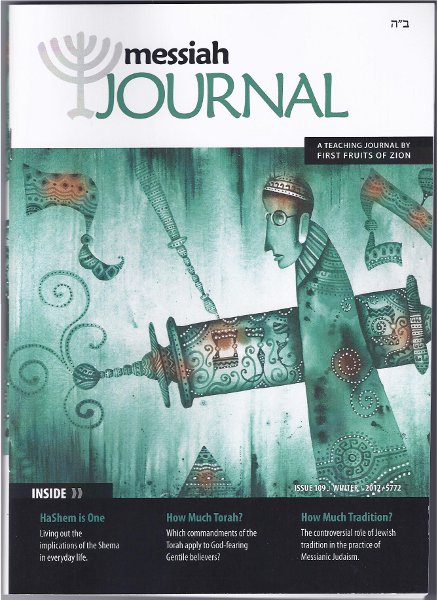
Messiah Journal
Issue 109/Winter 2012, pg 45
First Fruits of Zion (FFOZ)

Excuse me. What did you say?

A few days ago when I received the latest issue of Messiah Journal (MJ) in the mail, I commented that was looking forward to reading Toby’s article, but I wondered if what he was addressing was just a rehash of previous write ups on the same topic.

No, it’s not.

Toby does something I’ve never seen done before (not that somebody else couldn’t have written about this and I’m just not aware of it). He takes the four basic prohibitions outlined in the Acts 15 “Jerusalem Letter” and deconstructs them, expanding the specific details underlying the directives of James and the Council, and then tying them all back into the relevant portions of the traditional 613 commandments. Basically, Toby uses Acts 15 as the jumping off point to explain the nature and character of a non-Jewish disciple’s obligations (yes, I said “obligations”) to the Torah given at Sinai.

I did something similar over a year ago, but my jumping off point was Matthew 28:18-20, which is commonly referred to as “the Great Commission.”

To get the true flavor of what Toby is suggesting, let’s review the basics of “the letter:”

For it has seemed good to the Holy Spirit and to us to lay on you no greater burden than these requirements: that you abstain from what has been sacrificed to idols, and from blood, and from what has been strangled, and from sexual immorality. If you keep yourselves from these, you will do well. –Acts 15:28-29

As Toby points out, on the surface, it seems as if the Gentile disciples of Jesus had very few responsibilities to God, but this is deceiving. As he points out in the subsequent pages of his article, each of these prohibitions has an amazing depth all its own that isn’t apparent until you dig into it. This is, as Toby muses, probably why James also said “from ancient generations Moses has had in every city those who proclaim him, for he is read every Sabbath in the synagogues” (Acts 15:21). The Gentile disciples would need to attend the synagogues to learn and understand the many and subtle details involved in just complying with their responsibilities to these “simple” prohibitions.

I won’t go into those details because then, I’d have to recreate large portions of Toby’s article (and you’d be better off getting a copy of MJ 109 and reading the whole thing for yourself). However, Toby doesn’t limit himself to the “Jerusalem Letter.” He responds to some of the criticisms about Christians being limited to “the letter” by explaining some of the more obvious prohibitions against murder, theft, and coveting, which were not written down and were considered “Duh…obvious commandments” (quoting D. Thomas Lancaster from his book The Holy Epistle to the Galatians [pp 252-253]). These “Oh duh” commandments also include loving your neighbor, although I notice Toby did not cite the most apparent example found in the Master’s own teachings:

But when the Pharisees heard that he had silenced the Sadducees, they gathered together. And one of them, a lawyer, asked him a question to test him. “Teacher, which is the great commandment in the Law?” And he said to him, “You shall love the Lord your God with all your heart and with all your soul and with all your mind. This is the great and first commandment. And a second is like it: You shall love your neighbor as yourself. On these two commandments depend all the Law and the Prophets.” –Matthew 22:34-40

Beyond that, Toby digs further and presents some commandments that apply to the Gentile disciples that are not “Oh duh” and not found in Acts 15:

They can rather be derived from a careful reading of the Apostolic Writings in light of Jewish thought. One such set of mitzvot is the Gentile’s responsibility of honoring the Temple.

-Janicki, pg 53

What? The Temple? Most people don’t realize that during the Second Temple period, a non-Jew actually could bring an acceptable sacrifice to Herod’s Temple and expect that it would be received.

While Gentiles were not to bring certain offerings at certain times such as guilt..or sin..offerings, they were permitted and encouraged to bring burnt (olah) and peace (shelamin) offerings. The priest would attend to these offerings just as if an Israelite offered them up, and Gentiles were required to follow the same standard requirements for the sacrifices, e.g., their sacrifices were to be unblemished (Leviticus 22:21) and from an animal seven days or older (Leviticus 22:27).

-Janicki pg 54

Toby goes on to describe how the laws regarding ritual purity relate to the Gentile, as well as the application of set times for prayer (see my article The Prayer of Cornelius for additional details) and mealtime blessings.

Toby’s article does restrict certain of the mitzvot to the descendents of the Hebrews such as the mitzvah of circumcision (brit milah). I had a brief phone conversation with Boaz Michael (founder of FFOZ) yesterday, and he mentioned how the picture of circumcision in Paul’s letters seems like such an obvious demarcation line in terms of those who are fully under the Torah’s yoke, with Titus and Timothy cited as the clearest examples. Yet even in this, Toby said something very surprising:

Gentiles are specifically enjoined not to be circumcised for the ritual covenantal status. We can assume that, like Maimonidies, the apostles would have no problem with Gentiles voluntarily being circumcised for the sake of the mitzvah, but to do so complete with expectation of covenantal status as Jews would be to “seek circumcision” in the Pauline sense.

-Janicki pg 58

I must admit that a lot of this took me by surprise. As I mentioned earlier, I’ve never seen the prohibitions in the Acts 15 letter expanded in terms of their scope and tied back into the Torah. I have seen the Seven Noahide Laws expanded into between 80 or 90 different sub-commandments, but traditional Judaism doesn’t generally connect these sub-commandments to the Torah of Sinai (even though they have many thematic and operational similarities). I have seen traditional Judaism confirm that, at least in the time of the Third Temple, that sacrifices of the Gentiles would be accepted, so that part wasn’t a stretch for me.

Has FFOZ changed it’s stance regarding Gentiles and the Torah? I’m not sure (I didn’t specifically query Toby before writing this review). On the one hand, it isn’t quite the same position as the viewpoint FFOZ has previously referred to as “Divine Invitation”. Being “invited” to take on board additional mitzvot beyond a Gentile’s obligation is voluntary and pretty much a “take it or leave it” approach. On the other hand, this article states that a significant portion of what we refer to as “Torah commandments” are obligations the Gentile disciples (Christians) must perform and to fail to do so constitutes a sin against God. It seems (and this is just a guess) that FFOZ is doing what I’m doing: continuing to explore and investigate God, the Bible, and a life of faith and allowing their understanding of each of these to evolve progressively.

Wow!

There are a couple of obvious concerns.

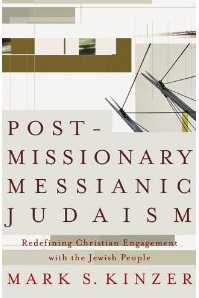
The first is that other Messianic Jewish organizations, such as the Union of Messianic Jewish Congregations (UMJC) may take exception to the idea that Gentiles have a greater Torah obligation than previously advertised. UMJC and similar “Jewish-oriented” groups, tend to take a more definitive stance on Gentile vs. Jewish distinctiveness in worship of the Messiah, with advocates such as Tsvi Sadan proposing a complete separation between Messianic Jewish and Christian/Gentile worship of the Jewish Messiah. The content of Mark Kinzer’s book Postmissionary Messianic Judaism: Redefining Christian Engagement with the Jewish People, which has gained a “foundational” status in the modern Messianic Jewish movement, likely operates in less then perfect accord to many of the points in Toby’s article as well.

The other concern is how all this applies to the church. It’s one thing to say that the Gentile Christian is “allowed but not commanded” to pray at fixed times (as Cornelius did), keep a “sort of” Shabbat,” and refrain from sexual relations with their wives during their menstrual periods, and another thing entirely to say these are all obligations. Once FFOZ states that there are aspects of the Acts 15 directives and other portions of the New Testament that actually obligate the Gentile believers to specific parts of Torah obedience, then we come to the realization that a very large part of the Christian world is (unknowingly) disobeying God.

OK, maybe I’m overstating the point, but Toby’s article seems to open up that can of worms and it also takes the One Law vs. Messianic Judaism debate to a whole new level. I’ve been actively participating in that debate (again) on this blog for the past several days (and I have the headaches to prove it) and I must admit, Toby’s article tosses some of the arguments presented into a cocked hat, so to speak.

As far as the debate regarding Gentile Christians, the Acts 15 letter, and the refactoring of Christian obligations to the Law are concerned (traditional Christians reading this blog cannot fail to be intrigued and maybe dismayed at this point), Toby Janicki’s article “The Gentile Believer’s Obligation to the Torah of Moses” may have put us into a whole new ballgame (please forgive the mixed metaphors). I highly recommend that you buy a copy of Messiah Journal, issue 109 for this article alone. Toby’s article is nothing less than landmark.