Tag Archives: messianic

5 Days: Practicing Christianity

pakistani-christians-singing-hymnsBoth the Jews and gentiles recognized that the Jews denied the gods of the nations and claimed that their God alone was the true God, the Lord of the universe, but for both Jews and gentiles the boundary line between Judaism and polytheism was determined more by Jewish observances than by Jewish theology. Josephus defines an apostate as a Jew who “hates the customs of the Jews” or “does not abide by the ancestral customs.” He defines a convert to Judaism as a gentile who, through circumcision, “adopts the ancestral customs of the Jews.”

-Shaye J. D. Cohen
Chapter 3: The Jewish “Religion”, Practices and Beliefs
From the Maccabees to the Mishnah, 2nd ed.

Many years later, as recorded in Acts 21, the apostles reaffirmed that the Jewish believers in Jerusalem were all “zealous for the Law.” To clarify the key difference between Jewish and Gentile believers, they continued: “But as for the Gentiles who have believed, we have sent a letter with our judgment that they should abstain from what has been sacrificed to idols, and from blood, and from what has been strangled, and from sexual immorality” (Acts 21:25).

Based on this ruling and on the revelation Christ gave to him personally, the apostle Paul staunchly fought for the right of Gentile believers to remain Gentiles. This is actually what Paul was arguing for in Galatians 3:28: “There is neither Jew nor Greek, there is neither slave nor free, there is no male and female, for you are all one in Christ Jesus.” In other words, the body of Messiah accepts everyone as they are – it doesn’t matter whether you’re slave or free, male or female, Jew or Gentile. You don’t have to become something you’re not in order to follow Yeshua.

-Boaz Michael
Introduction, pg 20
from his book
Tent of David: Healing the Vision of the Messianic Gentile

That’s comforting to know. God is the ultimate supporter of diversity. No matter who you are, where you come from, what your race, ethnicity, nationality, language, heritage, or anything else is, you can be reconciled to the Father through His Son, Jesus Christ, Yeshua HaMashiach, the Savior of the world and the Jewish Messiah King.

Only let each person lead the life that the Lord has assigned to him, and to which God has called him. This is my rule in all the churches. Was anyone at the time of his call already circumcised? Let him not seek to remove the marks of circumcision. Was anyone at the time of his call uncircumcised? Let him not seek circumcision. For neither circumcision counts for anything nor uncircumcision, but keeping the commandments of God. Each one should remain in the condition in which he was called.

1 Corinthians 7:17-20 (ESV)

This is Paul, saying the same thing we read in Galatians 3:28 and it fits very well with how Cohen states Josephus defines a convert to Judaism. Since we know that Paul opposed Gentile believers becoming circumcised when they came to faith in God through the Messiah, then we understand that the Gentiles did not convert to Judaism. They retained their Gentile identities. If we compare the message of Acts 21 with the rest of the definition of a convert as presented by Josephus, we can reasonably believe that the Gentile disciples of Messiah were not required to adopt the full yoke of the Torah and not commanded to perform the entire body of mitzvot.

I know I’ve talked about this before in The Uncircumcised Convert, Part 1 and Part 2, but when I started reading my actual, official, published copy of Boaz Michael’s book Tent of David (yes, it finally arrived) and in parallel, took up Cohen’s book again (I couldn’t access it for a while because I needed to get my Kindle Fire replaced – battery problems), I immediately saw how what both Michael and Cohen wrote dovetailed into this message.

christian-coffee-cultureI know it seems as if I’m off on another religious harangue designed to bring the so-called “One Law” or “One Torah” movements within Hebrew Roots (as opposed to Jewish roots and as more opposed to Messianic Judaism) to task, but this is more personal, or more to the point, this has more to do with my personal identity.

After a recent encounter, I’ve received a very strong message that I need to redouble my efforts to return to church, stay there, and become part of the body of believers within their walls and their context. Part of that effort is picking up, to whatever degree I’m able, the identity of a Gentile believer, a Christian. Boaz Michael in his book plainly defines a “Messianic Gentile” as:

While these believers are still Christians, for the sake of clarity and definition I will call them by the term “Messianic Gentile” (the term “Gentile” meaning nothing more than “non-Jew”). A Messianic Gentile is a non-Jewish Christian who appreciates the Torah, his relationship with Israel, and the Jewish roots of his faith.

-Michael, pg 17

There are probably a fair number of Christians in churches who are also “Messianic Gentiles” based on that definition, but who just haven’t thought of themselves in such a light.

Based on my recent coffee encounter as well as other factors, not the least of which is Boaz’s book, I know I have to go to church and stay in church. It still doesn’t particularly thrill me at this stage, but I must proceed hopefully. And I know I’m not going in to change anyone or to present myself as some sort of “expert.” I’m certainly not going to bill myself as a “Messianic Gentile,” though I suppose the definition fits me after a fashion.

But who I am needs to fit better with other Christians. I can study the Jewish texts forever, and forever I will be isolated and alone because I’m not Jewish. It’s not my “Messianic Gentileness” I’m taking into the church and it’s not even my Christianity…it’s my desire to encounter God within the context of his non-Jewish disciples. Perhaps at some point, my voice will be added to theirs but for now, I need to be a learner and not a teacher.

I know I’m not a Jew and I know based on the Bible, that I’m not required or directed to act like one. Yes, the very early Gentile believers took on a number of the mitzvot such as giving to the poor among Israel, donating to build synagogues, studying the Law of Moses, and the fixed times of prayer.

All these texts imply that the recitation of prayers was a prominent feature of Jewish piety, not just for sectarians like the Jews of Qumran but also for plain folk. Jews who lived in or near Jerusalem prayed regularly at the temple. This is the plausible claim of Luke 1:10, “Now at the time of the incense offering, the whole assembly of the people was praying outside [the temple],” and Acts 3:1, “One day Peter and John were going up to the temple at the hour of prayer, at three o’clock in the afternoon.”

-Cohen, Chapter 3

PrayingWe know the early Jewish disciples met at Solomon’s colonnade (John 10:23, Acts 3:11, 5:12) at the Temple for daily prayers. The later Gentile converts to “the Way” most likely adopted the times and “the prayers” in their own worship (Acts 10:3) as well as other Jewish customs and practices, but of course, as we’ve seen above, they were not considered converts to Judaism nor obligated to the mitzvot, although it seems like they were certainly allowed to perform the mitzvot in a number of instances. That had limits, particularly in terms of access to the Temple.

When the seven days were almost completed, the Jews from Asia, seeing him in the temple, stirred up the whole crowd and laid hands on him, crying out, “Men of Israel, help! This is the man who is teaching everyone everywhere against the people and the law and this place. Moreover, he even brought Greeks into the temple and has defiled this holy place.” For they had previously seen Trophimus the Ephesian with him in the city, and they supposed that Paul had brought him into the temple.

Acts 21:27-29 (ESV)

We may never recapture the full history of what the relationship was like between the early Jewish and Gentile disciples of the Master, but we can take what information we have and use it to reasonably recognize who and what we are today as Christians. For me, that means pursuing a course of action that requires following both the timeless footsteps of the first Christians such as Cornelius (Acts 10) and the modern Gentile believers, with the firm conviction of who I am and who the Jewish people are in relation to God. If God permits, maybe my role will one day be of some use to Him among His people in the church, but for now, I just need to practice being who I am…a Christian.
Man On A String

interfaithFortunately, sociologist Steven M. Cohen has awakened me from my bloggy slumber with a post on Rosner’s Domain, a blog on L.A.’s Jewish Journal. Journalist/blogger Shmuel Rosner (who updates his blog just a wee bit more than I do) asks sociologist Steven M. Cohen, “Are you biased against intermarried Jews?” In essence, Cohen’s reply is that he has no problem with intermarried Jews, just with intermarriage.

-Julie Wiener
“Some Of My Best Friends Are Inmarried”
from the In the Mix series
The Jewish Week

I’ve missed Julie’s blogs. As an intermarried Christian husband to a Jewish wife, I have a sort of affinity with her favorite topic. On the other hand, even for an intermarried couple, my wife and I are very strange. We don’t fit anyone’s idea of intermarried, mainly because my wife’s parents were intermarried (her mother was Jewish) and she wasn’t raised in a Jewish household.

In a blog post called Being Married to the Girl with the Jewish Soul, I’ve mentioned how I feel about my wife, about her being Jewish, and about my absolute need for her to embrace her Judaism. If you haven’t read it yet, please do so before continuing here. It’ll provide a lot of context and dimension for what I’m going to say next.

Being intermarried is not bed of roses but it’s not exactly a bed of thorns, either. It does define a demarcation point between my wife and I on certain topics, but for the most part, our marriage is just like a lot of other marriages in the U.S. We’ve been married thirty years as of last April. We have three adult children. One of my sons is married and has a three-year old son of his own (my grandson, playmate, and fellow Spider-Man fan).

Another thing that makes our particular intermarriage unusual is my background in the Messianic Jewish/Hebrew Roots movement. As a blogger, I’m remain actively involved in that realm, but only because I tend to write on Jewish and Christian themes. My wife intermittently attends shul and I don’t attend a church or congregation of any kind (long story). We both have our faiths but except for brief moments of passionate interaction on some point, they have lives of their own and rarely show up in the same room. I started this blog fifteen months ago, in part to chronicle what I imagined would be my introduction into her religious world.

When that didn’t happen, I kept on writing because that’s just what I do. I write.

Back to why I’m writing this though. As I was reading Julie’s latest blog, I started thinking about my marriage and how it seems to mirror the larger dynamic between Christians and Jews in the world. More specifically, there is a significant parallel between how I live every day of my married life and the sort of relationship, call it a vision, I would wish upon the Christians and Jews to attempt to connect and interact within the Messianic space.

There’s a sort of debate going on in certain corners of the blogosphere about the exact interaction between Jews who believe that Jesus is the Messiah and those Christians who are drawn to a more Jewish (or Hebraic) lifestyle and worship template. For years, there’s been a kind of “jockeying for position” among the various groups that reside beneath the Messianic Jewish/Hebrew Roots umbrella regarding whether or not it was Christ’s original intent for non-Jewish disciples to perfectly emulate their Jewish mentors in all things, including a form of “Jewish” identity.

I used to believe that such an emulation should take place and now I don’t. Some people didn’t (and still don’t) appreciate that I changed my mind, let alone my lifestyle.

But here’s the interesting part.

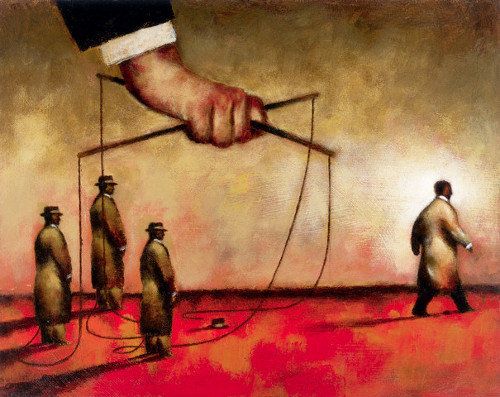
Sometimes, the motives for my change in perspective have been attributed by others to the influence of various individuals and groups in the Messianic Jewish world who advocate for a Jewish/Gentile distinction within Messianism. It was as if I was accused of being a type of Pinocchio to a Messianic Jewish Geppetto; a marionette dancing at the end of someone else’s strings.

I certainly won’t deny that I have been influenced by various folks in the online and real world Messianic community, but that alone probably wouldn’t have been enough to start me investigating the scholarly and Biblical evidence for Jewish and Christian covenant distinction and relationship. After all, organizational position statements and blogosphere commentaries have never changed anyone’s mind about anything.

But I’m married to the girl with the Jewish soul and that made all the difference in the world.

I know I’ve probably explained this before, but I don’t think people understand how important this is to me. I doubt that even my wife understands any of this. Remember in my previous blog post I stressed how vital it is for me to support my wife being Jewish. Obviously, I can’t direct her observance or her lifestyle, but I know how to avoid standing in her way.

In addition to traveling on my own journey of faith, I’ve been watching my wife’s journey. As the months and years passed, I saw just how critical it was and is for her to be part of the Jewish community, to be thought of and treated as a Jew. Every time I picked up a siddur or she “caught” me praying with a tallit and tefillin, I started to feel as if I were stealing from her. It was as if she walked into the room while my hand was in her purse. It was embarrassing and I felt it was pushing us apart rather than bringing us together.

intermarriageNot that she said anything, of course. She always supported me in whatever expression of my faith I chose to observe (though there were times when she was vocal about not understanding it) but I could sense a growing wedge between us. She tried to discourage me from leaving my One Law congregation and I know she didn’t want to influence any of my decisions about what I believed and how I acted upon those beliefs.

Fat chance. How can a husband not let himself be influenced by his wife if he cares about her?

Setting all of those people, those congregations, those organizations aside who have some sort of stake in Messianic worship between Jews and Christians, I’m still a Christian husband married to a Jewish wife. I’m not the perfect husband of course (and my wife reminds me of that periodically), but that doesn’t mean I don’t love my wife and that what’s important to her doesn’t matter to me.

Being Jewish is important to her. Forging a Jewish identity and Jewish relationships for the first time as she’s well into middle-age wasn’t easy for her. She worked very hard to establish her place in the community of Jews. Being married to a non-Jew isn’t a disaster for a Jew, but my being a Christian does throw a monkey wrench into her machine (she’d deny this). My being “Messianic” and performing traditional Jewish acts of worship absolutely threw a pipe bomb into her machine (she’d deny this, too).

My wife is more important to me than whether or not someone on a blog somewhere thinks I should wear a tallit when praying, devote myself to a day of complete rest on Saturday, and try talking to God in a bad approximation of Hebrew (I know some of you are thinking about Matthew 10:34-39, but I don’t think that applies here). That’s why I do what I do and don’t do a bunch other things that other people do.

This next part is important, so pay close attention here! While I agree that Jews continue to have a special covenant relationship with God and unique covenant responsibilities that are not shared by the rest of the world, (including the world of Christians) what really sent me “over the edge” was filtering all that information through the lens of watching my Jewish wife be Jewish. If you’re not a Christian husband married to a Jewish wife, you don’t have my perspective and you are absolutely not going to get the lived experience of my point of view.

But there’s hope. I think I know how to show you what I’m feeling. I’m getting to that part.

Being married to a Jewish wife has allowed me to see Judaism from a singular perspective. I can see how important it is for a Jewish person to be uniquely Jewish and how some Jews struggle when they see others trying to co-opt that uniqueness for their own use. Part of that uniqueness is the way Jews talk, and pray, and worship, and interact, and what they wear sometimes, and lots and lots of other “identity” stuff.

And I don’t want to put my hand in my wife’s “purse” because I love her and I don’t want to take stuff from her.

Please understand that I’m not dancing at the end of some puppeteer’s strings. I’m just a husband who is looking out for his wife. I suppose my methods of doing so seem strange or unusual, but even for an intermarried couple, we can be strange and unusual. She’s not a stereotypical Jew (if there is such a thing) and I certainly am a very odd Christian.

But that’s who I am and who I choose to be and why I’ve made the choices I’ve made. I don’t think these are bad choices and in fact, I think there is a lot to be gained by we Christians coming alongside the Jewish people, even as I am “alongside” my wife, and being co-heirs with Israel, just as my wife and I share our lives together.

I was discussing some of this with my friend Gene on his blog Daily Minyan, and at one point, I made this observation in response to one of his comments:

When I was at the FFOZ Shavuot conference last spring, I met a young Jewish woman named Jordan. She is a gifted scholar and during one of her presentations at the conference, she referred to the Gentiles who supported the spiritual and national redemption of Israel as the crown jewels of the nations. Your comment reminded me of that and the fact that we Gentile disciples of the Master do have a wonderful gift from God, and He has planned out a terrific future for us.

Jordan’s teaching meant a lot to me, not just because it presented such a wonderfully unified vision of a Christian/Jewish “partnership” in the Kingdom of God, but because it so amazingly resonated with how I see my marriage. If I could give everyone reading this blog a gift, it would be to see the relationship between Christianity (that is, all non-Jews who are disciples of Jesus, regardless of denominational or congregational affilation) and Israel the way I see myself and my wife together. If we Jewish and Christian disciples of Jesus could achieve that level of affection and intimacy toward each other, we would be fulfilling the words of the Master.

A new commandment I give to you, that you love one another: just as I have loved you, you also are to love one another. By this all people will know that you are my disciples, if you have love for one another.” –John 13:34-35 (ESV)

Love and peace.

Ekev: Do Not Forsake Your Father’s Torah

These concepts are related to this week’s Torah reading, Parshas Eikev. Eikev literally means “heel,” and refers to ikvesa diMeshicha, (Or HaTorah, the beginning of Parshas Eikev.) the time when Mashiach’s approaching footsteps can be heard. Moreover, the connection between this era and “heels” runs deeper. The human body is used as a metaphor (See Tanya, ch. 2.) to describe the Jewish nation as it has existed over the ages. In that context, our present generation can be compared to the heel the least sensitive limb in the body for we lack the intellectual and emotional sophistication of our forebears.

Other interpretations (Devarim Rabbah 3:1,3; Ibn Ezra and Ramban to Deuteronomy 7:12.) explain that the word eikev refers to “The End of Days” when the ultimate reward for observance of the Torah and its mitzvos will blossom. Indeed, the beginning of the Torah reading focuses on the reward we will receive for our Divine service.

The rewards of health, success, and material well-being mentioned by the Torah are merely catalysts, making possible our observance. For when a person commits himself to observe the Torah and its mitzvos, G-d shapes his environment to encourage that observance.

And yet, man should not strive for this era merely in order to partake of its blessings.

The Sages and the prophets did not yearn for the Era of Mashiach in order to rule over the entire world, nor in order to eat, drink, and celebrate. Rather their aspiration was to be free [to involve themselves] in the Torah and its wisdom, without anyone to oppress or disturb them. (Loc. cit. :4, see also Hilchos Teshuvah 9:2.)

It is the observance of the Torah and the connection to G-d which this engenders which should be the goal of all our endeavors.

The two interpretations of the word eikev are interrelated. For it is the intense commitment that characterizes our Divine service during ikvesa diMeshicha which will bring the dawning of the era when we will be able to express that commitment without external challenge. Heartfelt dedication to the Torah today will bear fruit, leading to an age in which the inner spark of G-dliness which inspires our observance will permeate every aspect of existence. “For the world will be filled with the knowledge of G-d as the waters cover the ocean bed.” (Isaiah 11:9, quoted by the Rambam, loc. cit.: 5)

-Rabbi Eli Touger
“When the Heel Becomes a Head”
Commentary on Torah Portion Ekev
Adapted from
Likkutei Sichos, Vol. IX, p. 71ff;
Sefer HaSichos 5749, p. 641ff
Chabad.org

Certainly the meditations and interpretations of the Chassidim are esoteric and not easily understood. Also, there is a difference between midrash and the more plain meaning we can derive from scripture, so we can’t take any significant portion of Rabbi Touger’s commentary as “Gospel” from a Christian point of view. However, the lesson is not completely without merit, either.

In reviewing this commentary (you can read the complete text at the link I provided above) and also from reading the text from this week’s Torah Portion, we can see revealed before us as Moses continues his closing address to the Children of Israel, that the nation; the people of Israel are indeed unique among all of mankind. God chose them and set them apart as a “kingdom of priests and a holy nation” (Exodus 19:6) before Him and that they would always be a nation in His Presence.

Given what I’ve just said, it’s natural for Christians then to ask, “What about us?” The answer is that by the merit of the blood of our Master and Lord Jesus Christ, we Gentiles also have access to a covenant relationship with the God of Abraham, Isaac, and Jacob. Of course how the covenant is applied to the nations is not identical to God’s “choosing” of Israel from out of the nations, so we have never seen Gentiles turned into Jews without undergoing the full conversion process (which has changed significantly over time). Becoming a Christian is just that, becoming a disciple of the Jewish Messiah King and being covered by the “Messianic” covenant (I’ve said all this before).

I know we struggle with the idea of maintaining distinctions between the Jews and Gentile Christians relative to God and the Messiah. But what if those distinctions were to go away? What if Jews voluntarily decided to “unchoose” themselves?

Actually, it’s already happened:

I’ve often heard the Jews referred to as the “Chosen People.” Isn’t that possibly the source of much of the anti-Semitism in the world?

The Aish Rabbi Replies:

If Jewish “choseness” is in fact the cause of anti-Semitism, then hatred against the Jews should disappear when Jews drop the claim that they are chosen.

Late in the 19th century, the Jews living in Germany and Austria collectively rejected their “choseness” and were assimilated by their host nation. In fact, they believed that the non-Jews among whom they lived were the true chosen people. “Berlin is our Jerusalem!” they loudly proclaimed. Gentile society was their social environment of choice, and Germany their beloved motherland.

Did anti-Semitism disappear? We all know the tragic answer to that question. The Jews in Germany and Austria experienced the most vicious outpouring of anti-Semitic hatred in history. Precisely when Jews rejected their claim to “chosenness,” they suffered the most virulent forms of anti-Semitism.

Another test of the Chosen People theory is to see how humanity responds to other peoples who claim to be “chosen.” If the claim that Jews are chosen gives rise to anti-Semitism, then all groups who make similar claims of having been “chosen” should also become targets of persecution and hatred.

Christianity and Islam represent two other major religious groups that claim to have been chosen. Christian theology accepts that God gave the Bible to the Jews and made the Jews His special messengers. However, it is the Christian belief that once the Jews rejected Jesus, the Christians became God’s new chosen people.

Muslims likewise believe that the Jewish Bible is the word of God. However, Muslim theology claims that when Mohammad appeared on the scene, God made the Muslims His chosen people. But why hasn’t this historically generated hatred against them?

Ask the Rabbi
“Chosen People – Source of Anti-Semitism?”
Aish.com

Even when all of the Jews in an entire nation voluntarily “surrendered” their status as “God’s chosen people,” there was no difference. The world still chose to treat them in exactly the same manner as when Jews stand firmly upon the foundation of the Torah and behave in accordance to their covenant status and perform the mitzvot. God will not permit the Jewish people to forget the promises He made to them and He will not permit them to relinquish their responsibilities to Him. If the Jewish people attempt to go back on their promises to God, there are powerful consequences that come into play.

Now let’s apply that to the Jewish people who have accepted Jesus as the promised Messiah and yet who insist on affirming the Torah covenant between them and God. Are they wrong for refusing to relinquish their “chosen” status that requires they perform the mitzvot of Sinai in response to the Mosaic covenant? Should we non-Jewish believers insist that the Jews give up the Torah mitzvot to the rest of the world, thereby diluting and ultimately dissolving anything resembling a distinct identity among the worldwide community of Jews. Except for a bit of DNA, the Jews would no longer be Jewish as God defines them.

Somehow, given the example of history, particularly within the past 80 or 90 years, it seems that would be a bad idea. I don’t believe God would permit the Jewish people who have come to faith in the Messiah to permanently and en masse, surrender the Torah to the nations of the world, particularly if their Judaism goes along with it. If the nation of Israel was supposed to be unique in the time of Moses, and it was the nation of Israel that sent forth Jewish emissaries carrying the good news of the Messiah to the nations, why would God subsequently desire to liquidate Israel and replace them with a more generic body comprised of Gentiles and (former) Jews?

Judah Gabriel Himango recently coined the term “supersessionoia” on his blog, and I’m probably guilty as charged. On the other hand, is it really a “phobia” to support the Jewish people as the Jewish people, as unique to God, as His treasured splendorous people, and at the same time, acknowledge, affirm, and support the special covenant relationship the rest of we disciples of the Master have as Christians?

In all clear conscious, and I admit that I’m hardly objective since my wife and three children are (non-Messianic) Jewish, as a Christian husband and father, I will continue to support them being Jewish and hope and pray they will turn their hearts to God and Torah and live as Jews from one generation to the next. I know that terrible consequences face the Jewish people for surrendering the authority of the Torah as given to them and them alone at Sinai.

Take care lest you forget the Lord your God and fail to keep His commandments, His rules, and His laws, which I enjoin upon you today. When you have eaten your fill, and have built fine houses to live in, and your herds and flocks have multiplied, and your silver and gold have increased, and everything you own has prospered, beware lest your heart grow haughty and you forget the Lord your God — who freed you from the land of Egypt, the house of bondage; who led you through the great and terrible wilderness with its seraph serpents and scorpions, a parched land with no water in it, who brought forth water for you from the flinty rock; who fed you in the wilderness with manna, which your fathers had never known, in order to test you by hardships only to benefit you in the end — and you say to yourselves, “My own power and the might of my own hand have won this wealth for me.” Remember that it is the Lord your God who gives you the power to get wealth, in fulfillment of the covenant that He made on oath with your fathers, as is still the case.

If you do forget the Lord your God and follow other gods to serve them or bow down to them, I warn you this day that you shall certainly perish; like the nations that the Lord will cause to perish before you, so shall you perish — because you did not heed the Lord your God. –Deuteronomy 8:11-20 (JPS Tanakh)

These are the Father’s loving instructions to His Jewish children:

Hear, O sons, a father’s instruction, and be attentive, that you may gain insight, for I give you good precepts; do not forsake my Torah. –Proverbs 4:1-2

Good Shabbos.

If God Loves You, Why Are You Complaining?

The angels glare in envy as the breath of G‑d descends below to become a human soul. Ripped out of the Infinite Light, it squeezes itself within meat and bones to experience that passion which belongs uniquely to earth below—and channel it towards its Beloved above. A new sort of love is born, a novelty to the cosmos and to its Creator: a fire within the human heart upon which the animal roasts, transformed to the divine.

“And G‑d saw all that He had made, and it was very good.” The sages tell us that “good” refers to the urge to do good, “very good” to the passion to do no good. The evil is not good, but the passion—if only it will find its true purpose—is very good.

For all that He made, He made for His glory.

-Rabbi Tzvi Freeman
“Human Passion and the Envy of Angels”
From the “Freeman Files” series
Chabad.org

I sometimes wonder what we complain about. No, I don’t mean “complain” in terms of being afraid, being sick, or some other such human problem. I mean “complain” like what happens in the blogosphere and in social networking venues. I mean “complain” like always needing to be “right” and being upset when someone else thinks we’re “wrong” and won’t just agree with us that we have all the answers. I mean complain like “I’m the good guy” and everyone who doesn’t agree with me are “the bad guys.”

That kind of complaining.

As we see from Rabbi Freeman’s midrash and metaphor, even the angels envy our special relationship with God. Not the Jewish relationship with God, and not the Christian relationship with God. The human relationship with God.

Even if you temporarily put aside any distinctions between Jews and Christians, between the various other religious groups, and between the many other differing bodies of humanity, we all have one thing in common that is very important.

We were all created in the image of God.

Even the angels can’t say that. No other living being that exists today or that has ever existed can say that. Just we poor, pathetic, mortal human beings can say that.

I’m tempted to quote the mostly over-quoted John 3:16 since it emphasizes God so loving the world and not some subsection of its population. I want to sometimes scream at some people to please get over themselves because things are the way things are, not the way you want them to be.

Tomorrow’s “morning meditation” and my commentary on this week’s Torah Portion talks again about the “choseness” of the Jewish people and why that’s not a threat to the rest of us (though you’d suspect otherwise by reading other religious blogs). Once you let yourself get past the unique relationship God has with the Jewish people through the giving of the Torah at Sinai, you can understand that none of that means God loves you or me any less or that somehow Jewish distinctiveness makes Christians second-class citizens in the Kingdom of God.

And yet, this week in the “Messianic blogosphere” I’ve noticed some authors sparing no effort in maligning individuals and reputations, even to the point of calling some Jewish Messianics “racist” in order to justify their positions and jockey for a superior spot in the race to significance.

But wait a minute.

Take one giant step backward and look at Creation and then picture yourself in the midst of it. That’s where you are. That’s where I am. That’s where we all are. God so loved you and me and all of us, that he sent His only begotten son so that if anyone, anyone at all, believes in him, he/she/they will have eternal life in covenant relationship with our Creator, with God.

Anyone at all.

Isn’t that good enough for you?

You have a life given to you by God. So do I. What are we supposed to do with it? B*tch about other religious people all the time because they don’t support our own special viewpoint about how we’re supposed to be more special than they are? Really?

Our Sages gathered these sections in an order … according to the requisite steps (Introduction to Path of the Just).

While character refinement is an important and desirable goal, we must be careful to stride toward it in a reasonable and orderly manner. Overreaching ourselves may be counterproductive.

Physical growth is a gradual process. In fact, it is not even uniform; the first two decades are a sequence of growth spurts and latency periods. Generally, the body does not adjust well to sudden changes, even when they are favorable. For instance, obese people who lose weight too rapidly may experience a variety of unpleasant symptoms. Although the weight loss is certainly in the interest of health, the body needs time to adjust to the change.

If we are convinced, as we should be, that spirituality is desirable, we might be tempted to make radical changes in our lives. We may drop everything and set out on a crash course that we think will lead to rapid attainment of the goal. This plan is most unwise, because psychologically as well as physically, our systems need time to consume new information, digest it, and prepare ourselves for the next level.

Luzzato’s monumental work on ethics, The Path of the Just, is based on a Talmudic passage which lists ten consecutive steps toward spirituality. Luzzato cautions: “A person should not desire to leap to the opposite extreme in one moment, because this will simply not succeed, but should continue bit by bit” (Chapter 15).

Today I shall …
… resolve to work on my spirituality gradually and be patient in its attainment.

-Rabbi Abraham J. Twerski
“Growing Each Day, Av 21”
Aish.com

Imagine if we all blogged the way Rabbi Twerski does. Imagine instead of sowing contention and discord between our own little religious factions, we resolved each day to be just a little bit better as a person than we were yesterday. There’s nothing in that sort of lesson that has any room for tearing other people down. Even if someone were to tear down Rabbi Twerski, I doubt if he’d spend any time (I don’t know this of course, I’m just supposing) using his space at “Growing Each Day” to post a rebuttal and complain about opposing opinions and oppositional people.

(I know I’m complaining right now too, but hopefully I’ll end on an up-note).

What is your purpose in life? Why did God put you here? Why are you still breathing, walking around, talking, and (possibly) blogging?

We were put here to love God and to love other people. Easier said than done to be sure, but hardly impossible. If you can do that through blogging, that’s terrific. Rabbi Twerski’s “Growing Each Day” series proves (to me, anyway) that you can do good through blogging. If writing isn’t your thing or you can’t do it without having to always comment that someone is wrong on the Internet, then close your web browser, log off your computer, step away from the keyboard, and find something to do that actually does serve the purposes of God. You don’t have to slay dragons or tilt at windmills.

Just do something that in some small way, is helpful to another person in the world, preferably without making a big deal about it or about you.

Ben Zoma says:
Who is wise?
The one who learns from every person…
Who is brave?
The one who subdues his negative inclination…
Who is rich?
The one who is appreciates what he has…
Who is honored?
The one who gives honor to others…

Talmud – Avot 4:1

Tomorrow, I’ll probably continue to complain, though it’s not why God put me here. Today, I just want to thank God I’m living and breathing and that I have a tomorrow in which I will wake up alive.


The Lord’s Sabbath

ShabbatQuestion: According to Jewish Law and tradition, is it acceptable, discouraged or totally unacceptable for a Gentile to keep the Sabbath according to the regulations spelled out in the Torah and the Talmud and expounded upon by the Rabbis?

Answer: A non Jew is not allowed to keep Shabbos. Those that are in the process of converting make sure to do at least one thing on Shabbos that would normally not be allowed. For example they might carry something in their pocket.

The quotes above are part of a discussion group thread at judaism.stackexchange.com (and thanks to Judah Himango of the Kineti L’Tziyon blogspot for posting the link on his Facebook page). As you can see if you follow the conversation, it is generally discouraged for a non-Jew, Christian or otherwise, to attempt to observe the Shabbat in the same manner (if at all) as a Jew. The observations are apparently from the perspective of Orthodox Judaism, so Conservative and Reform Jews may have a somewhat more lenient viewpoint, nevertheless, the Shabbat is generally reserved for the Jewish people.

This doesn’t really upset most Christians since the Saturday Sabbath, as with most other aspects of “the Law,” was deemed done away with. While Christians generally worship on Sunday, it’s not really considered a “Sabbath” in the church, based on Pauls’ statement in Romans 14:5-6:

One person considers one day more sacred than another; another considers every day alike. Each of them should be fully convinced in their own mind. Whoever regards one day as special does so to the Lord.

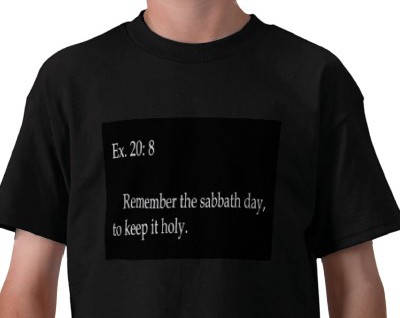
This effectively obliterates the fourth commandment to “Remember the Sabbath day by keeping it holy” for Ten Commandments believing Christians, but apparently, that can’t be helped. The result is that the vast majority of both Christians and Jews believe that Shabbat observance cannot and should not be applied to Gentiles and that is that.

Almost.

There is actually a lot of conversation going on in various circles about Gentles and the Shabbat, even as we’ve seen at judaism.stackexchange.com. In actuality, it doesn’t seem totally forbidden for a non-Jew to keep the Shabbat, they just can’t keep it in a way that is consistent with religious Judaism. AskNoah.org, a site created within an Orthdox Jewish context and dedicated to serving Noahides (righteous Gentiles), has this to say.

Question: I’ve been told that a Noahide must “mark” the Sabbath in some way. Could you give me examples of ways to mark Sabbath in the manner of a Noahide?

Answer: A Noahide is allowed to mark the seventh-day Sabbath in some types of ways. But there must not be a belief or conviction that he or she has – or is allowed to take on as a Gentile – any religious obligation to rest from all productive activity on the Seventh Day, or on any other day. (Although indeed, there must be an intellectual recognition that G-d assigns a special quality to the Seventh Day, since that is part of the Torah of Truth).

The answer continues by providing a number of suggestions for the Noahide as far as “marking” the Shabbat, but such marking must be done without making a vow of any kind in relation with the Shabbat, and with the understanding that “marking” the Shabbat is totally voluntary.

The world of Messianic Judaism, as seen from the point of view of Jews who accept discipleship under Jesus (Yeshua) as the Jewish Messiah, take a similar point of view. We can see one such illustration in a recent comment Derek Leman made in response to something I said on one of his blog posts at Messianic Jewish Musings:

So, I think a Divine Invitation exists for non-Jews. I don’t think (and the apostles didn’t think) it is a Divine Obligation.

My advice for non-Jews keeping Shabbat: learn the traditional prayers and songs. Make some modifications in parts where the wording is about God’s special relationship with Israel. Someone ought to make a Shabbat Seder (the Friday night prayers) for non-Jews which respects the wording of special relationship between God and Israel and pictures non-Jews coming into the sign between God and Israel as co-participants (not replacements, see Exod 31:13).

Shabbat candlesI’ve often said that I believe non-Jews who wish to honor God as sovereign Creator may do so based on Genesis 2:3, but AskNoah.org has a response for that as well:

Although it says in Genesis 2:1-3 that G-d designated the Seventh Day as holy and sanctified, don’t forget the basic principle that G-d did not limit Torah to always be a *chronological* account of events. In fact, G-d first dictated the book of Genesis to Moses shortly after the Israelites arrived at Mount Sinai. The first time there was any commandment about a special observance of a “Sabbath” was after the Israelites passed through the sea on dry land. When they ran out of the matzah they took out of Egypt, G-d provided them with mannah as food from Heaven. But no mannah fell on the Seventh Day. G-d instead provided a miraculous double portion on Friday afternoon, and He commanded the Israelites to remain in their camp on the Seventh Day. Moses explained to them that they were, from that time on, commanded to observe the Seventh Day as a day of rest and a holy Sabbath (Exodus 16:23). Thus, at the first mention of the Seventh Day in the text of Genesis, G-d told Moses to insert the information that He had blessed the Seventh Day (referring to the double portion of mannah that fell on Friday afternoon for the Israelites), and He made it holy (when He prohibited the Israelites from leaving their camp on that day).

It is true that in Judaism, the chronology of the writing and the order of events of and in the Torah aren’t considered to be strictly literal, so the authority answering the question about Genesis 2:1-3 may have a point. On the other hand, if we assume that there is a chronology to God’s creating the earth and that He actually “blessed the seventh day and made it holy,” relatively “soon” after He created the globe upon which we live, then the holiness of the Shabbat could precede the Sinai event by many hundreds or even thousands of years (or more).

Then we have another scripture which provides some illumination.

“And the foreigners who join themselves to the LORD,
to minister to him, to love the name of the LORD,
and to be his servants,
everyone who keeps the Sabbath and does not profane it,
and holds fast my covenant—
these I will bring to my holy mountain,
and make them joyful in my house of prayer;
their burnt offerings and their sacrifices
will be accepted on my altar;
for my house shall be called a house of prayer
for all peoples.”
The Lord GOD,
who gathers the outcasts of Israel, declares,
“I will gather yet others to him
besides those already gathered.” –Isaiah 56:6-8 (ESV)

This is very difficult to get around. While not a commandment, it certainly suggests that “foreigners” (non-Hebrews) not only may observe the Shabbat, but will derive some direct benefit for doing so, namely being brought to God’s “holy mountain”, which is probably the Holy Temple in Jerusalem, and having our offerings accepted by God in the Temple (and AskNoah.org does state that Gentiles will be able to worship at the Third Temple). Even the Master quotes the prophet Isaiah when he cries out that “‘My house will be called a house of prayer,’ but you are making it ‘a den of robbers” (Matthew 21:13).

I suppose Christians could say that the words of the prophet Isaiah were annulled when the Law was “nailed to the cross with Jesus”, but that hardly explains why Christ would quote prophetic words that would soon lose their power. Such a view also suggests that God’s Word is not eternal, so we have another puzzle when considering a traditionally Christian interpretation of scripture.

But if “Jewish” Shabbat observance is considered both by Christianity and by Judaism to be a dead issue for the Gentiles, why should the few of us who are not Jewish but who are drawn to the Shabbat care? Well, because we’re drawn and for whatever reason, God has written upon our hearts a desire to hold the seventh day as sacred.

As I’ve mentioned elsewhere, I don’t think Judaism has much to worry about as far as Christian or “Messianic Gentile” Shabbat observance goes. I’ve never met a person who was not Jewish who kept the Shabbat with anywhere near the level of sanctity and detail as an Orthodox Jew, so it can be truly said that we “mark” the Shabbat without ever actually “keeping it holy,” at least to the measure of accepted Jewish halachah.

But what does God think of the disciples of Jesus keeping the Shabbat? Even if we are not commanded, are we allowed and is our rest pleasing to Him? Or was that last question moot?

Then he said to them, “The Sabbath was made for man, not man for the Sabbath. So the Son of Man is Lord even of the Sabbath.” –Mark 2:27-28

If the Savior and Messiah is Lord of the Shabbat, what does that mean for we non-Jews who are his disciples?

We Have Met the Others and They Are Us

broken-crossIn rabbinic literature, reference is made to non-Israelites (gentiles of various descriptions). These “external others” often appear in rabbinic literature as mirror opposites of Israelites, and so sharpen the rabbis’ definition of Israel. However, insofar as this literature explores and develops a definition of the rabbi as the ideal Jew, reference is made to non-rabbinic Jews (of various descriptions). These “internal others” often appear in rabbinic literature as mirror opposites of the rabbis and so sharpen the rabbis’ definition of their own class.

-Christine Hayes
“The ‘Other’ in Rabbinic Literature” (p. 243)
The Cambridge Companion to the Talmud and Rabbinic Literature
Edited by Charlotte E. Fonrobert and Martin S. Jaffee

For the past few mornings, I’ve been “assaulting” the concept of religion as opposed to faith, first with my blog post Longing for the Dawn and then with yesterday’s Red Stew in Context (the latter being a wee commentary on Torah Portion Toldot). Today, I’m returning to the challenge of a Christian attempting to gain insights into a faith in Jesus by studying the Jewish texts. More specifically, I’m drilling once again down into the well of Jewish/Gentile relations from (as accurately as I can depict) the Jewish point of view.

The view isn’t always encouraging.

I was fascinated as I read the Hayes article on the use of the “other” in rabbinic literature. This isn’t an unknown technique and individuals and groups have frequently defined themselves in comparison to some outside “other”. Sometimes these comparisons are benign and meant to illustrate how different cultures and ethnicities approach the same concepts but often the comparison game is used to elevate one group at the expense of the other. Jews, more than most other people groups, are acutely aware of how they have been negatively compared to the world around them, being blamed for virtually every evil that has encountered mankind. It’s small wonder that the Rabbis might use the same method to point the finger in the opposite direction.

But what is it that the Rabbis are saying?

In rabbinic halakhah, the gentile can be imagined as an ethnic other or as a religious other. As an ethnic other, the gentile is merely a non-Israelite or goy (member of a non-Israelite nation) to whom the laws of the Mosaic covenant do not apply. In tannatic law, the gentile is seen in contrast to the Israelite, as one who does not observe the dietary laws, is not obligated by the ritual purity system, does not contribute to the upkeep of the sanctuary, does not pay the half-shekel tax, and so on.

-Hayes, p. 245

Here, we see the Jew and Gentile compared to each other from a Jewish point of view and that comparison is devoid of any value judgments regarding either group. Jews carry certain duties and responsibilities that the Gentiles don’t. It’s quite simple, really. Hayes breaks the comparison down even further:

This depiction of the ethnic other – as outside and ignorant of the covenant – is not as straightforward as it might appear. According to the Pentateuch, some of the terms of Israels’ covenant apply even to non-Israelites who choose to take up residence among the nation of Israel as resident aliens (ger, pl. gerim). The pentateuchal model of peaceful coexistence, cooperation, and even limited integration of an ethnic other is realized in halakhot that exempt but do not forbid gentiles from observing certain laws.

It’s interesting that the comparison here relative to Gentiles being “outside and ignorant of the covenant” is based on ethnicity and not religion. That means the covenant of Moses was given to the Children of Israel which, in the context of the rabbinic texts, is an effect of ethnicity. Christians see their access to God through the covenant of Christ as an effect of religious identity and the Messianic covenant being “ethnicity-blind”. What happens if the rabbis look at Gentiles as religious “others”?

The gentile is also imagined as a religious other (‘oved’ ‘avodah zarah’) who worships a deity or deities other than Israel’s deity. The gentle as religious other falls under greater suspicion and is subject to more severe and at times hostile legislation than the gentile as ethnic other.

-Hayes, p. 246

Hayes is addressing the Gentile as a “generic idol worshiper” here and not specifically talking about Christians, so we could say that Jews believe the Gentile Christian do worship the same God as the Israelites, with only a disagreement as to the identity and status of Jesus Christ. But it’s not that easy.

Early Christianity was a dissident Jewish movement among other Jewish movements. Only in the late first century do Christian writings begin to affirm Christianity over and against Judaism, a trend that increased rapidly in the second century. As rabbinic Judaism took firmer shape and gentile Christianity set itself off from Jews, the group referred to by scholars as Jewish Christians emerged in the middle. The latter were followers of Jesus who, like Jesus and the apostles, kept the law of Moses. In early rabbinic literature, Jews partaking of a Christian heresy fell under the classification of min (plural minim), an umbrella term that included not only Jewish Christians but also a variety of Jewish sectarian groups, such as Sadducees, Boethusians, Zealots, and Samaritans (but not in an early period in Palestine, gentiles).

-Hayes, p. 258

Reading this, I wonder how those “Jewish Christians” of the early 21st century who call themselves “Messianic Jews” are viewed by the larger Jewish rabbinic community. We know historically that Sadducees, while not fitting into the first century Jewish mainstream, were nevertheless considered Jews, however Samaritans, though related, were not. This was even acknowledged in an encounter between a Samaritan and Jesus.

When a Samaritan woman came to draw water, Jesus said to her, “Will you give me a drink?” (His disciples had gone into the town to buy food.) The Samaritan woman said to him, “You are a Jew and I am a Samaritan woman. How can you ask me for a drink?” (For Jews do not associate with Samaritans.) –John 4:7-9

In the closing decades of the first century, “Jewish Christians” were not yet considered to have completely left Judaism, but they were not exactly welcome either. Hayes attributes this to the Gentile Christians and their efforts to separate themselves and their faith from Jewish origins and indeed, to elevate Christianity as the branch, above its Jewish root, giving birth to the ugly spectre of supersessionism.

But, as Hayes goes on to state, “Minim are almost universally depicted as possessing a knowledge of Scripture, but differing from the rabbis in their interpretation of Scripture (some even mocking or criticizing it).” The rabbis chose to include the Minim in with other “Christians and heretics,” all but rejecting them as Jews. As the schism increased, so did the “otherness” of both Jewish and Gentile Christians in relation to mainstream rabbinic Judaism.

Early Palestinian sources, in particular, urge rabbis and their families to avoid all contact with minim and Christians. The most vehement set of proscriptions against minim is found in T.Hullin 2:20-21. Many of these prohibitions stand in explicit contrast to similar laws concerning gentiles and are remarkable for their severity.

In other words, rabbinic proscriptions against contact with Jewish and Gentile Christians were even more stringent than those against contact with more “generic” idolators. And it wasn’t going to get any better as history progressed beyond the initial Rabbinic era of the 2nd to 4th centuries CE.

Compare all this to my previous blog post about how people self-identify with a specific religious context. In Judaism, there is largely a sense of being “born to it”. Though Jews can reject their religious heritage, it can be argued that the Torah will always be a part of the Jew, even when the Jew rejects religion for a purely ethnic lifestyle. For the religious Jew, the connection to God through Moses is an absolute and thus, so is the “rightness” of their faith and status. In comparison to that, the worshipers of oto ha’ish are at best misguided and at worse, the most repulsive of idolators, who claim to honor a first century Jewish itinerant teacher as both the Son of God and as God. Apparently, worshiping Apollo of Zeus would be an infinitely preferable choice for a Gentile as a religious orientation. The Christian wouldn’t be appropriating significant sections of the Jewish religious structure and scriptures for their (our) own purposes and contradicting and facing down the Jews at every turn.

My brief analysis of the Hayes essay is that, assuming we can project its conclusions into the present, both Gentile Christians and Messianic Jews of today have a very long road to walk in terms of establishing and maintaining a positive and normative relationship with traditional Judaism. Previously, I appeared to separate Messianic Judaism and Rabbinic Judaism, and largely the separation exists, but there are Messianics who were born and raised in Jewish homes and educated in Torah and Talmud in the traditional Jewish fashion who nonetheless, have come to faith in “oto ha’ish” and who do not see the dissonance between the Messianic and the Rabbinic. For these Jews, it will be the hardest to see and think and feel and be Jewish while at the same time experiencing the centuries-old separation between themselves and their Jewish brothers who continue to consider the Messianic Jews are minim.

For Gentiles like me, it affirms that my course of religious study, from a Jewish point of view, is problematic at best. There’s no prohibition against it per se (and certainly any book available for sale at Amazon.com is at my Gentile fingertips), but it is still rabbinically “uncomfortable” for more conservative Jews when they consider a Christian goy attempting to comprehend the mysteries of Talmud. Of course, there would be the comfort that I probably won’t really “get it” since, as I’ve stated before, I lack the required context and education to truly understand the rabbinic intent, but on the other hand, I could be accused (and perhaps rightly so) of misappropriating what is Jewish to feed what most Jews consider, my faith in a religion that historically has been very anti-Jewish.

back to backEven (Messianic Jew) Mark Kinzer in his book Post-Missionary Messianic Judaism strongly urged Christians who “dabble” (my word, not Kinzer’s) in the Messianic world to return to their (our) churches and to leave Messianic Judaism to Jews, so any Gentile Christian who may consider the Messianic movement to be a “meeting place” for integrating a faith in Jesus with the Torah of Moses (for the Gentile) is likely engaging in wishful thinking. That wishful thinking could even evolve into an odd form of supersessionism by the Gentile who, while not replacing Judaism with Christianity, quite innocently replaces Jewish covenant distinctiveness with the Jewish/Gentile Messianic “blend”. Hence Kinzer’s message of the church and the (Messianic) synagogue operating side-by-side in their individual silos rather than overlapping or being combined in a giant, religious mixing bowl.

One way to keep all of our traditions “safe” is to, as Kinzer suggests (echoing larger Judaism), all keep to our individual silos, being self-contained communities, and not allowing a mixing of identities. The traditional Jews and Christians already have gotten quite good at this, so they don’t contribute to the “problem”. Messianics, both Jews and Gentiles, by their very existence, tend to blur the lines, both within their silos and between silos. We each identify ourselves in relation to the “other” but Messianic Jews are attempting to cease being the “other” in relation to larger Judaism. I, for my part, understand that I will always be “other” in terms of the Jewish identity and rabbinic learning, and only want to read, learn, and understand what small parts I may take upon myself for the sake of my Master. Though in my heart and my experience, I also am “other” in relation to the church, it would be false for me to not claim Christianity as my identity since, it is only the church built by Christ that allows a Gentile access to God at all as a member of a covenant relationship.

If this “meditation” seems slightly disjointed and incomplete, that’s because it is. The “minim” are rising again after centuries of dormancy and attempting to show their more traditionally Jewish brothers that the life of a Messianic Jew follows an authentic Jewish tradition. Some Gentiles are coming along for the ride with precious few, like me, not claiming Messianic lineage in the Jewish tradition but trying to rediscover if there are crumbs from the Master’s table that we may eat. The man sitting at the far end of the banquet table, furthest from the bridegroom continues to wait. I am not worthy to have the Master come to my house. I am waiting for him to speak to me as his humble disciple, and because if he says a thing, it is so.

Christians are very comfortable with the Christian Jesus, but our master is the Jewish Messiah. Most Christians haven’t met him yet, but as in days of old, the “minim”, the Jewish disciples of the Master, are going to introduce us to him to us. We have been invited to the wedding feast and must hurry to put on our wedding clothes, buy oil for our lamps, and then wait for the doors of the banquet hall to open. There are many barriers between us and our Master. Those barriers are human beings. Those barriers are us.