Tag Archives: New Covenant

Sermon Review of the Holy Epistle to the Hebrews: The Bypass

For, on the one hand, there is a setting aside of a former commandment because of its weakness and uselessness (for the Law made nothing perfect), and on the other hand there is a bringing in of a better hope, through which we draw near to God. And inasmuch as it was not without an oath (for they indeed became priests without an oath, but He with an oath through the One who said to Him,

“The Lord has sworn
And will not change His mind,
‘You are a priest forever’”);

so much the more also Jesus has become the guarantee of a better covenant.

The former priests, on the one hand, existed in greater numbers because they were prevented by death from continuing, but Jesus, on the other hand, because He continues forever, holds His priesthood permanently. Therefore He is able also to save forever those who draw near to God through Him, since He always lives to make intercession for them.

For it was fitting for us to have such a high priest, holy, innocent, undefiled, separated from sinners and exalted above the heavens; who does not need daily, like those high priests, to offer up sacrifices, first for His own sins and then for the sins of the people, because this He did once for all when He offered up Himself. For the Law appoints men as high priests who are weak, but the word of the oath, which came after the Law, appoints a Son, made perfect forever.

Hebrews 7:18-28 (NASB)

Does the priesthood of Messiah cancel the priesthood of Aaron and the Levitical system? The relationship between the Aaronic priesthood and the Melchizedekian priesthood explored in Hebrews 7:18-28.

-D. Thomas Lancaster
Sermon Twenty-eight: The Bypass
Originally presented on October 26, 2013
from the Holy Epistle to the Hebrews sermon series

This was a particularly interesting (and difficult) part of Hebrews to get through because I had to bypass (no pun intended) the traditional Christian reading (and what seems to be the plain reading) of the text and not believe that the Aaronic priesthood, the Temple, the sacrifices, and the Torah were all weak and useless and that Jesus replaced them as a better hope in bringing us closer to God.

By his own admission, Lancaster’s “bypass” analogy is flawed and by the end of the recording, he was asking his audience to forget he had even used it. But here it is anyway.

bypassI’ll use my own location as an example. Just west of Boise is the community of Eagle, Idaho. When I first moved here nearly twenty years ago, State Street ran west out of Boise and directly through downtown Eagle. Now between Boise and Eagle, you could travel about fifty-five miles an hour but as you approached Eagle, you had to slow down considerably. This could be a pain if you were just passing through and your destination were further west.

Eventually, the highway department built a bypass. Now State Street completely avoids Eagle and folks can go fifty-five (or more), not go through Eagle at all, and get to where ever they’re going faster. Old State Street still goes through Eagle, but you have to specifically take that turnoff to get there.

Lancaster says the Aaronic priesthood is like Eagle, Idaho and that the priesthood of the Melchizedek “bypasses” it to better promises, as opposed to replacing it. Eagle is still there and still a destination. So is the Aaronic priesthood.

Yeah, it’s an imperfect metaphor. Here’s why.

The former priests, on the one hand, existed in greater numbers because they were prevented by death from continuing, but Jesus, on the other hand, because He continues forever, holds His priesthood permanently. Therefore He is able also to save forever those who draw near to God through Him, since He always lives to make intercession for them.

Hebrews 7:23-25 (NASB)

Why is the Aaronic priesthood considered weak, imperfect, and useless? Was it really so? Was the Torah so weak and were the sacrifices so useless? It depends. It depends on what you are using them for. If you are using the Torah to give you eternal life in the resurrection and to justify you at final, eternal judgment, then yes, they are weak and useless…because they were never designed to be used for those purposes!

To employ another metaphor of Lancaster’s, it would be like using a screwdriver instead of a hammer to pound a nail into a board.

The Aaronic priesthood had a completely different purpose and it wasn’t an eternal purpose, even though the Aaronic priesthood itself is eternal:

Then you shall bring his sons and put coats on them, and you shall gird Aaron and his sons with sashes and bind caps on them. And the priesthood shall be theirs by a statute forever. Thus you shall ordain Aaron and his sons.

Exodus 29:8-9 (NASB)

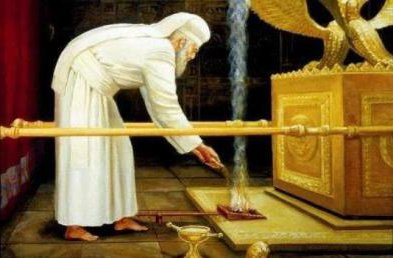
high_priestThe priesthood belongs to the sons of Aaron by statute forever. They still have a job. It will be there waiting for them when Messiah returns and builds the Temple in Jerusalem.

But…

…but, Jesus as our priest in the order of Melchizedek has a different purpose than the Aaronic priesthood and it operates in a completely different venue, in the Heavenly Court or Temple.

Let them construct a sanctuary for Me, that I may dwell among them. According to all that I am going to show you, as the pattern of the tabernacle and the pattern of all its furniture, just so you shall construct it.

Exodus 25:8-9 (NASB)

God instructed Moses to have the Israelites build what could be described as a scale model of the Heavenly Court on Earth, the mishkan or tabernacle. If you look at the specific instructions, all of the objects of the tabernacle, right down to the priestly robes, and the proportions of the tabernacle itself were all carefully modeled on their Heavenly counterparts.

That means for everything in the tabernacle, there was a counterpart in the Heavenly Court where Yeshua (Jesus) functions as the High Priest (and if it took a whole army of Aaronic priests and Levites to serve in the tabernacle, then there must be a host of priestly angels assisting Jesus our High Priest in Heaven).

So what Jesus does in Heaven as Priest, the sons of Aaron do in the earthly tabernacle and later the Temple in Jerusalem. They are not in competition, they’re complementary. The Heavenly Court then is not a “bypass” around the earthly Temple, they exist on two separate parallel roads, and they don’t even go to the same destination. It would be like modeling one interstate freeway system on a different, similar system.

Oh, “former” priests. Verse 23 is misleading in English. The Greek doesn’t say “former”. Lancaster tells us it says something like “those who are many who have become priests.” If you look at the context, you see the major difference between the Aaronic priests and Yeshua is that the sons of Aaron, like all men, die, while Jesus, having died and been resurrected, is immortal. There were no immortal Aaronic priests in the tabernacle or Temple.

Thus, Jesus is able to intercede for us forever, not just in terms of our immortal souls and salvation at the eternal judgment, but right now, today, Jesus is praying to the Father for us.

What about verses 20 and 21 where it mentions an oath? What oath?

The Lord has sworn and will not change His mind,
“You are a priest forever
According to the order of Melchizedek.”

Psalm 110:4 (NASB)

Oh, that oath.

MessiahGod swore an oath that an immortal Jesus would serve perpetually in the Heavenly Court as the eternal High Priest. No human priest in the Temple in Jerusalem was immortal and God swore no oath regarding them. Their mortality and imperfections, that is, their having sinned, made them “weak” and “flawed” and “useless” for the purposes of providing perpetual forgiveness of sins before the final judgment and eternal life through the resurrection (and remember, that’s not what they were designed to do). Jesus as High Priest is indeed “holy, innocent, undefiled, separated from sinners and exalted above the heavens.”

That’s the difference. That’s a much more consistent explanation of the comparisons and contrasts between the Aaronic and Melchizedekian priesthoods. That the latter is better doesn’t mean it replaces the former. It just means they function in different contexts and each one fulfills different job descriptions. Nearly two-thousand years of Christian interpretive tradition makes it seem otherwise.

What Did I Learn?

Just about everything. As I listened to Lancaster’s sermon, it all clicked into place, but trying to read Hebrews 7 without running it through this interpretive matrix made these passages seem terribly depressing when compared to my overall understanding of the New Covenant message.

That’s what this is all about. The “better promise” is what happens as the New Covenant enters our world and what happens when it reaches fruition. We are still in Old Covenant times. People are not perfected. We don’t have the Torah written on our hearts and our hearts have not yet been circumcised. We have received the indwelling of the Holy Spirit but not in its fullness so that we “know God” and obey His statues as a natural response.

Lancaster said that “perfection” refers to the resurrection and our perfected physical and spiritual states. Well, we certainly haven’t gotten that far yet.

Lancaster alluded to his What About the New Covenant lecture series which I suspect he incorporates into later sermons in his “Hebrews” series. The only way to understand Hebrews or any other part of the Apostolic Scriptures is to have a firm understanding of the New Covenant and how it works, which Lancaster provides in his New Covenant audio recordings.

Without that perspective, it is almost impossible to see the intent of the writer of the Epistle to the Hebrews in any accurate manner or in any way that is consistent with God keeping the promises He made to His nation Israel.

Where Do We Encounter God?

They shall make for Me a Sanctuary and I shall dwell among them.

Exodus 25:8

The Midrash notes that God did not say, “I shall dwell within it” (the Sanctuary), but “I shall dwell among them” (the Israelites), i.e. the Divine Presence will be within each person.

-Rabbi Abraham J. Twerski
“Growing Each Day,” Tammuz 26
Aish.com

That sounds incredibly like this:

When the day of Pentecost had come, they were all together in one place. And suddenly there came from heaven a noise like a violent rushing wind, and it filled the whole house where they were sitting. And there appeared to them tongues as of fire distributing themselves, and they rested on each one of them. And they were all filled with the Holy Spirit and began to speak with other tongues, as the Spirit was giving them utterance.

Acts 2:1-4 (NASB)

Well, maybe not exactly. Actually, the “Pentecost event” sounds more like this:

The Lord descended in a cloud and spoke to him, and He increased some of the spirit that was on him and bestowed it on the seventy elders. And when the spirit rested upon them, they prophesied, but they did not continue.

Numbers 11:25 (Chabad Torah Commentary)

So we have two examples from the Bible, Numbers 11:25 and Acts 2:1-4, where we witness the Holy Spirit of God being imparted to groups of devout Jews and whereupon they prophesy. Then we have a Midrash on a portion of the Torah that says it was God’s intent to dwell among Israel by dwelling within each individual Israelite, rather than in (or in addition to) the Sanctuary itself.

When the Midrash states God did not say, “I shall dwell within it” (the Sanctuary), but “I shall dwell among them”, it seems more like clever word play than an obvious interpretation leading to the aforementioned conclusion.

Still, it’s a compelling thought, since it summons images of God desiring, even as He commands the Mishkan to be built, to dwell within the devout of His people.

But dwelling among His people can also be compared to this:

They heard the sound of the Lord God moving about in the garden at the breezy time of day; and the man and his wife hid from the Lord God among the trees of the garden. The Lord God called out to the man and said to him, “Where are you?”

Genesis 3:8-9 (JPS Tanakh)

Here too we see God “dwelling” among His people in Gan Eden (the Garden of Eden) but we don’t see the Divine Presence dwelling within Adam and Havah (Eve). Can we say that the Divine Presence dwelt among Israel with the Tabernacle (and later the Temple) as the focus of His presence in the same manner as He dwelt (or at least visited) the Garden?

After all, the Midrash presented by Rabbi Twerski isn’t the only one referencing Exodus 25:8:

And they shall make Me a sanctuary: And they shall make in My name a house of sanctity.

Rashi’s commentary on Exodus 25:8

Rabbi Prof. David Golinkin

Rabbi Professor David Golinkin, President of the Schechter Institute of Jewish Studies in Jerusalem, wrote a commentary on Exodus 25:8 in 2003 called Why Do We Need Synagogues in which he offered numerous Midrashim on this particular verse.

Of all of the Midrashim proffered, he believes this one best defines the reason for the commandment to build the Mishkan:

This whole matter of the Menorah, the Table, the Altar, the boards, the Tent, the curtains, and the utensils – what is it for? Said Israel before the Holy One Blessed be He: Lord of the Universe, the kings of the nations have a tent and a table and a menorah and incense and these are the trappings of kingship, for every king needs this. You are our king, our redeemer, our savior – shouldn’t you have the trappings of kingship until all people know that you are the king? God said to them: My children, flesh and blood need all that, but I do not, because I don’t eat or drink and I don’t need light… [Finally God relented:] If so, do what you want, but do it as I instruct you: As it is written: “And let them make me a sanctuary… make the menorah… make the table… make the altar…” (Midrash Aggadah to Parashat Terumah, p. 170).

The Jewish people built the mishkan and later the mikdash and later the synagogue because they – like all human beings – had a need for a physical place in which to worship God.

We are physical beings designed to live in the material world. God is Spirit and exists outside of Creation and indeed, there is no place where God does not and cannot exist. We are limited and He is limitless. So if He desires to dwell among us, where do we meet? We cannot go to His realm for how does a finite human visit infinity? He must somehow “reduce” Himself and come to us where we live. It was for us that all of Creation was made.

And who knows what aspect of the Almighty was “moving about in the garden” on that breezy day?

But R. Golinkin also quoted his father Rabbi Noah Golinkin from the senior R. Golinkin’s booklet Say Something New Each Day (1973, p. 18):

God, where are You?
Where do I find You?
You do not live here.
You have no address.
The Universe is filled with Your glory.
You live in every mountain
and in every valley
and on the busy turnpike outside.
You live in the beautiful riot of many colors
of the Indian summer;
and You live in my soul.

“You live in my soul.” But there’s more:

And yet
I have built for You a special building,
Beautiful, dignified, majestic,
Intimate, warm and friendly.
For whom did I build it?
For You and me.
For our conversations together.
For Your glory, O God,
And for my humble need.
I should be talking to You –
When I see You in the beautiful sunrise,
When I see You in the innocent smile of a child
When I see You in the kind deed of a man.

Inner lightIt seems there doesn’t have to be an inconsistency between God dwelling among us and God dwelling within our souls. He speaks to us from within ourselves but also meets with us in Holy places of worship.

I should say that, particularly in Judaism, personal worship and study is conducted in the home and the synagogue is reserved for communal worship and study. Jews pray individually but to join a minyan, must go to the synagogue.

Then the LORD God said, “It is not good for the man to be alone…

Genesis 2:18 (NASB)

Behold, how good and how pleasant it is For brothers to dwell together in unity!

Psalm 133:1 (NASB)

In the Garden, in the Mishkan, in the Temple, in the Synagogue, and dare I say it, in the Church, people were not meant to encounter God as individuals, because we can do that anywhere, including within our souls. God commanded the Mishkan to be built so that the community, the nation of Israel could gather and dwell with God.

The indwelling of the Spirit is inexorably coupled with the New Covenant:

Moreover, I will give you a new heart and put a new spirit within you; and I will remove the heart of stone from your flesh and give you a heart of flesh. I will put My Spirit within you and cause you to walk in My statutes, and you will be careful to observe My ordinances.

Ezekiel 36:26-27 (NASB)

“Thus you will know that I am in the midst of Israel,
And that I am the Lord your God,
And there is no other;
And My people will never be put to shame.
It will come about after this
That I will pour out My Spirit on all mankind;
And your sons and daughters will prophesy,
Your old men will dream dreams,
Your young men will see visions.
Even on the male and female servants
I will pour out My Spirit in those days.”

Joel 2:27-29 (NASB)

In Gan Eden, human beings had an unparalleled intimacy with God which they took for granted because they had never known separation from God. It was only after the first act of disobedience that they truly understood was it was to be separated from God, the anguish, and agony of having known God and then becoming alienated from Him. How like our Master when he took upon himself the sins of humanity, thus for the first time also becoming separate from the Father:

About the ninth hour Jesus cried out with a loud voice, saying, “ELI, ELI, LAMA SABACHTHANI?” that is, “MY GOD, MY GOD, WHY HAVE YOU FORSAKEN ME?”

Matthew 27:46 (NASB)

exileHumanity has been separated from God for virtually all of human history. And yet not only has God desired to once again dwell with us, but as the Midrash testifies, we have yearned to dwell with Him. But once broken, shattered, torn asunder, intimacy with God is not so easily recovered. We see a series of steps, from the Mishkan, to the Temple, to the Master (John 1:14) and the Master’s Good News that the New Covenant was (is) near, to the giving of the Spirit to the Jews (Acts 2) and the Gentiles (Acts 10).

But the best is yet to come.

While most Christians don’t give much serious thought to Midrash, it’s a reminder that the desire for intimacy with God is much older than the Church and that the people who authored the Bible also witnessed the Divine Presence descending upon a structure that man built at the command of God.

Then the cloud covered the tent of meeting, and the glory of the Lord filled the tabernacle. Moses was not able to enter the tent of meeting because the cloud had settled on it, and the glory of the Lord filled the tabernacle. Throughout all their journeys whenever the cloud was taken up from over the tabernacle, the sons of Israel would set out; but if the cloud was not taken up, then they did not set out until the day when it was taken up. For throughout all their journeys, the cloud of the Lord was on the tabernacle by day, and there was fire in it by night, in the sight of all the house of Israel.

Exodus 40:34-38 (NASB)

The Divine Presence of God descended upon the Tabernacle but God also dwelt within the souls of each individual Jew. Messiah will someday come to rebuild the Temple, but Paul also called our bodies Temples of the Holy Spirit (1 Corinthians 6:19). We don’t have to conclude that an infinite God can only reside within one domicile within our world, for nothing is impossible with God.

But if not for human frailty and folly, where would God be to be among us?

The purpose of the tabernacle and the subsequent Temples was “they shall make me a sanctuary that I may dwell amongst them” (Exodus 25:8).

The great kabbalist Rabbi Isaiah Halevi Horowitz (1560-1630), author of the monumental work the Sheloh, writes that since the verse employs the plural “them” rather than the singular, the Torah must be referring not to the sanctuary but to the people themselves.

According to this mystical interpretation, God’s commandment was never for a home of gold, silver and marble. Rather, God’s desire is that we create a space in our hearts and souls for him to abide in. Our very beings should function as portable temples that elevate our lives to be sanctified wherever we are.

-Rabbi Shlomo Zarchi
“Torah: Why do we pursue justice? The answer lies inside all of us” – March 7, 2013
JWeekly.com

R. Twersky concludes his commentary on a similar note:

If my relationship to God is limited to going to the Sanctuary and praying for my needs, then I am merely using Him, and God becomes an external object. But when I make His will mine, then His will resides within me and He becomes part of me. This is undoubtedly what the Zohar means by, “Israel, the Torah, and God are one unit,” because the Torah, which is the Divine will, is inseparable from God, and when one incorporates the Torah with one’s own code of conduct and values, one unites with God.

PrayingWe meet God in multiple venues in the present world, within our churches and synagogues, but also within ourselves. But even as God resides within our souls and as His Spirit infuses our flesh, the union is still incomplete. The word is not yet written upon circumcised hearts. The Messiah has not yet brought that to us.

So we yearn. Our souls groan for what they don’t know but have once known in antediluvian ages past. May the Spirit of God quicken within us and may Messiah come soon and in our days.

Amen.

Reflections on Romans 3

For indeed circumcision is of value if you practice the Law; but if you are a transgressor of the Law, your circumcision has become uncircumcision. So if the uncircumcised man keeps the requirements of the Law, will not his uncircumcision be regarded as circumcision? And he who is physically uncircumcised, if he keeps the Law, will he not judge you who though having the letter of the Law and circumcision are a transgressor of the Law? For he is not a Jew who is one outwardly, nor is circumcision that which is outward in the flesh. But he is a Jew who is one inwardly; and circumcision is that which is of the heart, by the Spirit, not by the letter; and his praise is not from men, but from God.

Romans 2:25-29 (NASB)

Pour yourself a big cup of coffee and relax. This one is long.

It may seem a little odd to start a commentary on Romans 3 by quoting from Romans 2, but remember that I previously stated that my “reflections” on Romans series was an attempt to describe my impressions of this epistle as a complete unit, that is, a letter intended to be read all at once, rather than slicing and dicing it up into little sound bytes. The context of what Paul writes in the third chapter of this book (and remember, for Paul, this wasn’t a “book” nor did he actually divide his letter into chapters) spills over from what has come before it.

As a refresher, here’s how I ended my commentary on Romans 2:

If a Jew fails to perform a mitzvah, does he stop being a Jew? Does he become “uncircumcised?” This used to puzzle me. The whole “For he is not a Jew who is one outwardly, nor is circumcision that which is outward in the flesh” thing has been used to justify calling Christians “spiritual Jews” and to support the old, tired theology of supersessionism. But I don’t think that’s what Paul is saying.

Paul is trying to inspire zeal for the Torah and for faith in Messiah in his non-believing Jewish brothers in Rome. How would he do that by insulting them and rejecting them? Worse, how would he do that by denigrating the Torah? He couldn’t.

But he could be saying that a Jew is justified before God if he is outwardly a Jew, that is, if he is obedient to the commandments, and if he is inwardly a Jew, that is, if he has faith in God and that faith is the motivation for obedience. The two go together…faith and works.

Paul, in my opinion, is saying that a Jewish person devoted to Hashem must be a Jew in his or her inward faith and also outwardly a Jew in behavior, in performance of the mitzvot. The two are inseparable to a complete Jewish identity.

And, if the Jewish person is boasting based on ethnicity and being a recipient of the promises but not also living a life of faith and obedience to God, then…

So if the uncircumcised man keeps the requirements of the Law, will not his uncircumcision be regarded as circumcision? And he who is physically uncircumcised, if he keeps the Law, will he not judge you who though having the letter of the Law and circumcision are a transgressor of the Law?

Romans 2:26-27 (NASB)

So if a Gentile who is not circumcised, that is, who is not a Jew, nevertheless behaves as if he has a circumcised heart, that is, is obedient to God through faith in Messiah, then sees a Jewish person who is hypocritical, boasting in their ethnic identity but not “walking the walk,” so to speak, won’t that Gentile be justified in “pushing back” when the less-than-faithful Jew attempts to assert some sort of religious superiority over the Gentile based just on being ethnically Jewish?

And that’s where we start chapter 3:

Then what advantage has the Jew? Or what is the benefit of circumcision? Great in every respect. First of all, that they were entrusted with the oracles of God. What then? If some did not believe, their unbelief will not nullify the faithfulness of God, will it? May it never be! Rather, let God be found true, though every man be found a liar, as it is written,

“That You may be justified in Your words,
And prevail when You are judged.”

Romans 3:1-4 quoting Psalm 51:4 (NASB)

PaulRemember, Paul created no chapter divisions, so he’s simply continuing his point from the previous portion of his letter.

So is Paul saying that being ethnically Jewish in and of itself meaningless? Are people who are ethnically Jewish but not obedient to the mitzvot or even imperfect in their attempts to be observant cut off from God? What advantage is there in being (just) ethnically Jewish, simply born into a covenant relationship with God?

“Great in every respect.”

In other words, being born into a covenant relationship with God all by itself still has great advantages and still orients the Jewish person, regardless of their behavior, to God, both as the focus of His love and, if they are disobedient, the focus of His discipline as outlined in the conditions (listed in the Torah) of the Sinai covenant.

Then Paul lists one of the advantages: “entrusted with the oracles of God.” That word “oracles” is also translated as “words,” “revelation,” “utterances,” and “truth”. This means (to me) that at a time when the entire world was worshiping idols of wood and stone and passing their infants through fire as some sort of fertility rite, only the Israelites were trusted to possess and commit themselves to the words of God, which we can interpret as the Torah, Prophets and the Writings, the Tanakh or the entire canonized Bible as it existed when Paul was writing to the Romans.

The Bible records many periods when Israel was faithful to God and many periods when she wasn’t. And yet, through it all, God was faithful and the Israelites remained His people, entrusted with his statues and ordinances.

Then Paul says, “So what if some Jewish people are unfaithful? Do you think that means God is going to stop being faithful to the Jews and abrogate his covenant promises? Absolutely not!”

So even if “every human being [is] a liar, God it true.” Then Paul quotes from Psalm 51:4, which is King David’s famous confession and plea to God after his sin with Batsheva. This is David’s admission of sinning against God alone and because he has sinned, David knows God is justified in judging him and God’s verdict against David is true.

To me, this says a couple of things. The first is that, because God and Israel are in a covenant relationship with each other, and that covenant relationship lists consequences if Israel, or any individual Jew such as David is faithless, then God is justified in disciplining the nation or the individual based on that relationship. This is what happened to David and I believe Paul is saying that individual Jews in his time would also receive consequences from God for faithlessness and sin specifically because they are in a covenant relationship with God.

JudaismIn other words, just because God disciplines individual Jews or the entire nation of Israel doesn’t mean God has abandoned them and ended His covenant with them. Quite the opposite. It means that God is fully engaged with national Israel right down to the lives and behavior of each individual Jewish person. We Gentiles (Christians) have no right at all to say that God abandoned Israel in favor of “the Church.” Too bad “the Church” hasn’t read this passage of Romans in that particular light over the past nearly two-thousand years.

Was Paul concerned that Jesus-believing Gentiles were somehow “lording it over” Jews who were less than faithful or less than observant? According to Mark Nanos in his book The Mystery of Romans, Paul was admonishing the Jesus-believing Gentiles for parading their “freedom” (being “grafted in” to the blessings of the New Covenant promises without the requirement of undergoing the proselyte rite and being obligated to the full yoke of the Torah mitzvot) in front of the non-believing Jews with whom they were associating (along with Jesus-believing Jews) in a common synagogue setting and/or a common Jewish community context.

It may be (and this is just my “reflection”) that the Gentiles were encountering some Jewish non-believers who, not at all happy that Gentiles were being afforded equal social status and inclusion in Jewish community without converting to Judaism, were being boastful that they were ethnically Jewish, possessors of the “oracles of God,” and thus were to be accorded a superior status. The Gentiles to whom Paul is addressing may have been rather vocally stating that these Jews were indeed Jews “in the flesh” but their behavior in Torah observance and obedience to God was (in the Gentiles’ opinion) coming up short.

Paul then is telling these Gentiles not to be “knuckleheads” and “so what” if these Jewish non-believers aren’t perfect. They still have many advantages. Don’t rub their noses in the fact that Gentiles in Messiah are considered (at least by Paul) as equal co-participants in the covenant blessings and in Jewish worship and communal space.

But if our unrighteousness demonstrates the righteousness of God, what shall we say? The God who inflicts wrath is not unrighteous, is He? (I am speaking in human terms.) May it never be! For otherwise, how will God judge the world? But if through my lie the truth of God abounded to His glory, why am I also still being judged as a sinner? And why not say (as we are slanderously reported and as some claim that we say), “Let us do evil that good may come”? Their condemnation is just.

Romans 3:5-8 (NASB)

I may not be getting everything Paul is trying to communicate here, but my sense is that Paul is saying, even though the Jews have many advantages just by being born Jewish, God is still justified in judging unrighteousness among them, even as He promised He would in the Torah. God “inflicting wrath” does not mean He’s unrighteous, that is, does not mean (as I said before) that God is abandoning His relationship with Israel. When any one in Israel is judged by God to have sinned, God is justified in inflicting discipline.

In verse 9, Paul says that relative to judgment for sin, the Jews do not have an advantage over the Gentiles due to their covenant relationship with God, because God is justified in condemning anyone who sins. No one is perfect. Everyone sins. Everyone can be under the “power of sin” (Romans 3:9 NIV).

In Romans 3:10-18, Paul weaves a number of different scriptures into his “none are righteous” part of the chapter, including Psalms 14:1-3; 53:1-3; Eccles. 7:20; Psalm 5:9; Psalm 140:3; Psalm 10:7 (see Septuagint); Isaiah 59:7,8 and Psalm 36:1.

Now we know that whatever the Law says, it speaks to those who are under the Law, so that every mouth may be closed and all the world may become accountable to God; because by the works of the Law no flesh will be justified in His sight; for through the Law comes the knowledge of sin.

Romans 3:19-20 (NASB)

This continues Paul’s point that even if Jews are obedient to the mitzvot, obedience without faith does not justify one before God. Only faith and obedience. The whole world is accountable to God. Does that mean the whole world is obligated to the Torah mitzvot in the manner of the Jews? Some might conclude that we are based in this single verse. On the other hand, taking the larger Biblical narrative into account, we know that Israel was to be a light to the world, and up to the time of Messiah’s first advent, that light hadn’t been producing a lot of illumination.

light-of-the-worldBut it’s by Israel’s light that the world was intended to be informed of God and His blessings, as well as be informed of what constituted both righteousness and sin. The Torah, among its many other purposes, defines what it is to disobey God and thus be condemned. But even an awareness of the Law and being behaviorally compliant is insufficient if there is no Kavanah or intension, sometimes expressed as “direction of the heart”.

Although Jews and the Gentiles in Messiah had different (overlapping) behavioral obligations, they were all judged based, not necessarily on the perfection of their performance, but on the presence or absence of faith, devotion, and motivation. All have sinned and fallen short of God’s expectations, but if a man like King David who sinned greatly with the affair and impregnation of the married woman Batsheva, the murder of her husband Uriah, and attempting to cover it all up by quickly marrying Batsheva after the mourning period for her husband’s death had passed, could still repent and be considered “a man after God’s own heart” (1 Samuel 13:14) specifically because of the quality of David’s kavanah, then so could the less than perfect Jews Paul was referencing in his letter.

But now apart from the Law the righteousness of God has been manifested, being witnessed by the Law and the Prophets, even the righteousness of God through faith in Jesus Christ for all those who believe; for there is no distinction; for all have sinned and fall short of the glory of God, being justified as a gift by His grace through the redemption which is in Christ Jesus; whom God displayed publicly as a propitiation in His blood through faith. This was to demonstrate His righteousness, because in the forbearance of God He passed over the sins previously committed; for the demonstration, I say, of His righteousness at the present time, so that He would be just and the justifier of the one who has faith in Jesus.

Romans 3:21-26 (NASB)

We might condense the above-quoted statement to say something like, “But now apart from the Law the righteousness of God has been manifested through faith in Jesus Christ.” That makes it seem as if faith in Christ has replaced the Law (Torah observance) as a means of being considered righteousness. Except that Torah observance was never considered a means of righteousness. Only faith.

Then he believed in the LORD; and He reckoned it to him as righteousness.

Genesis 15:6 (NASB)

Abraham was considered righteous by God because of his faith, long before the Torah was given at Sinai and even before the commandment of circumcision as a sign of God’s covenant with Abraham. Thus it is faith that is the common denominator across all populations, Jewish and Gentile, that reckons anyone as righteous before a Holy God.

That seems to explain part of what Paul is saying in Romans 3:21-26, but what about faith in Jesus Christ, in Yeshua HaMashiach? Up until now, faith in Hashem, God of the Heavens was required. What changed?

The second elementary teaching of the Messiah in Hebrews 6:12 is called “faith toward God,” but how is this distinct from other first-century sects of Judaism? Even the Sadducees believed in God. Find out how Yeshua transformed the faith of his followers, and get a fresh handle on what it means to “believe in Jesus” and to be “born again.”

-D. Thomas Lancaster
Sermon Twenty: Faith Toward God
Originally presented on June 15, 2013
from the Holy Epistle to the Hebrews sermon series

That is exactly the question D.T. Lancaster answers in the above-quoted sermon in his “Hebrews” series, which I reviewed a number of weeks ago. I also mentioned this topic in a related blog post called Why No One Comes To The Father Except Through The Son.

What changed? Why was devotion solely to Hashem no longer the target to be aimed at for a devout Jew? Actually, that’s not what changed. As mentioned in both of my commentaries on Lancaster, the Jesus-believing Jews of “the Way” and the Pharisees had almost exactly the same set of beliefs about God. There was only a slight variance between them and you could almost call Paul and the other Jesus-believing Jews “Pharisees with a Messianic twist.”

AbrahamYou might say that God’s plan for the ultimate redemption of Israel had been progressing forward in time since Abraham. If you look at the pattern of the covenants, you’ll see God building, step by step, on His plan, establishing the promises with Abraham, carrying them out through Isaac, and Jacob, the exile of Jacob’s family to Egypt where they grew into a great multitude, the raising up of Moses and Aaron, leading them out of Egyptian slavery and on their many journeys, and culminating at Sinai with the establishing of the Mosaic covenant and the giving of the Torah, forming the nation of Israel as the light to the world.

But it didn’t end there. Even after possessing the Land, national Israel struggled. Their history is clear. Did God’s plan fail? Did Israel fail? No. The plan was incomplete. It was never meant to encompass just Israel, but the whole world through Israel.

That’s why the New Covenant was prophesied through Jeremiah, Ezekiel, Isaiah, and many other prophets. The New Covenant would be written, not on scrolls or tablets, but on the Jewish heart, so that Israel could finally perfectly observe the mitzvot with absolute kavanah and without sin.

Messiah, among other things, was the herald of the New Covenant. He brought the beginning of the inauguration of that Covenant with his birth into the world, receiving the Holy Spirit, his ability to heal, his correct teachings, his death and resurrection, and his promise to return.

He was the messenger of the next logical, Biblical, evolutionary step in God’s redemptive plan, his Good News to the nation of Israel, and through Israel’s redemption, the salvation of the world as well.

At each step in the plan, the Jewish people could continue to have faith in God or not. Many did. Some didn’t. The Bible records their fate. Messiah came not to say “believe in me instead of God” but “believe in me because of God for I am His messenger and through my message you can come fully and completely, in a way never before realized by any living Jew, to God the Father, Master of Legions, Author of Life.”

Another step and a really big one in God’s plan. Accept or reject. Faith or faithlessness. You choose.

new heartThe choice was given to Gentiles for the first time since the establishment of the Israelite nation. No longer would a non-Jew have to undergo the proselyte ritual and convert to Judaism. No longer would a Gentile be required to affiliate with a tribe or clan of Israel (as they did in the days of Moses). Now, because of the New Covenant promises and how they include the Abrahamic blessings to the nations, all people of every nation, tribe, and tongue can, through Messiah, come alongside Israel, just as it was prophesied, and take part in the covenant blessings of God by being grafted into the root.

Where then is boasting? It is excluded. By what kind of law? Of works? No, but by a law of faith. For we maintain that a man is justified by faith apart from works of the Law. Or is God the God of Jews only? Is He not the God of Gentiles also? Yes, of Gentiles also, since indeed God who will justify the circumcised by faith and the uncircumcised through faith is one.

Romans 3:27-30 (NASB)

Paul might be saying, so, having said all that, do Jews get to brag that they are justified and made righteous by being born Jews or even by observance of the mitzvot? No. Yes, being born Jewish and having the Torah has terrific advantages as I said, but ultimately, no one is justified by being born a Jew or by being physically circumcised. Justification, for a Jew or Gentile, comes only through a faith like Abraham’s.

I can see Paul really needing to make this point to the Gentile Jesus-believers reading the letter. I can see how they could be really confused in the face of non-believing Jews telling them that justification and righteousness comes only through being Jewish. Paul needed to set them straight and orient them and their Jewish counterparts, to the reality of the “law of faith”. God is a God of the Jews and a God to the Gentiles so both the Jews and Gentiles have their hope in Him through Messiah’s Good News.

But Paul has to be particularly careful. In emphasizing faith, he can’t be seen to diminish the reality and the vital importance of the Torah or of Jewish identity. Remember, the Jews still have many great advantages over the Gentiles (sorry, but it’s true) as possessors of the words of God. Israel was the original recipient of Torah, and is the total and complete object of the Abrahamic, Mosaic, and New Covenants. It’s only through Israel that the rest of us have any hope of salvation at all, so let’s not get cocky.

That explains the last verse in the chapter:

Do we then nullify the Law through faith? May it never be! On the contrary, we establish the Law.

Romans 3:31 (NASB)

Especially according to the entire context of the letter as it has been presented so far, Paul’s statement couldn’t be plainer. Faith does not nullify, do away with, fulfill (in the sense of abolish), abolish, replace, or complete (in the sense of abolish) the Law. Faith establishes the Law!

That is, through a completeness of Jewish faith, in this context, in God through Messiah, the Law is established, fully founded in a way never conceived or before or if conceived of, never accomplished before in Jewish lives.

Remember, we have to view all of this through the New Covenant. Jesus was bringing the New Covenant into our world. The evidence was the fact that even the Gentiles were receiving the Holy Spirit (see Acts 10) just as the Jews had (Acts 2). The New Covenant was going to radically change the relationship between the Jewish people, the Holy Spirit, and observance of the mitzvot:

“But this is the covenant which I will make with the house of Israel after those days,” declares the Lord, “I will put My law within them and on their heart I will write it; and I will be their God, and they shall be My people. They will not teach again, each man his neighbor and each man his brother, saying, ‘Know the Lord,’ for they will all know Me, from the least of them to the greatest of them,” declares the Lord, “for I will forgive their iniquity, and their sin I will remember no more.”

Jeremiah 31:33-34 (NASB)

Moreover, I will give you a new heart and put a new spirit within you; and I will remove the heart of stone from your flesh and give you a heart of flesh. I will put My Spirit within you and cause you to walk in My statutes, and you will be careful to observe My ordinances.

Ezekiel 36:26-27 (NASB)

When the New Covenant reaches fruition, God will write the Torah on the heart, and each Jewish person (and ultimately the rest of us) will have an apprehension of God that is so complete, that they/we will know God, as the prophets knew Him, as Moses knew Him, with complete intimacy, and all Israel’s sins (and the Gentiles’ attached to Israel through Messiah) will be forgiven.

the-divine-torahFurther, a completeness of the Holy Spirit will be poured out so that it will be possible for Israel to totally observe all of the Torah ordinances perfectly and without sin.

This is what it means when Paul says, Do we then nullify the Law through faith? May it never be! On the contrary, we establish the Law.

The Torah will be established in the New Covenant era in a way that it never could have been at any other time in history, for the conditions of God’s covenant with Israel will no longer be limited to being recorded on scrolls but will, in some mysterious manner, be written on the Jewish heart and soul, and Israel will be enabled by the Holy Spirit to finally, perfectly be in obedience to God as God requires through the Torah.

And we Gentiles who come to faith in the God of Israel through Messiah will be grafted in and be sharers of the covenant blessings, living in the resurrection under the reign of King Messiah in perfect peace and knowledge of Israel’s God.

“Run to pursue even a minor mitzvah and flee from a transgression.”

-Ben Azzai, Pirkei Avot 5:2

Next up: Reflections on Romans 4.

Shabbat Shalom.

What I Learned in Church Today: Partakers in Tribulation, Kingdom, and Perseverance

I, John, your brother and fellow partaker in the tribulation and kingdom and perseverance which are in Jesus, was on the island called Patmos because of the word of God and the testimony of Jesus.

Revelation 1:9 (NASB)

John sees himself as a “brother and fellow partaker” with the Asian Christians in three things which are “in Jesus”. Does this mean that these are part of God’s design for them? Explain your answer.

-Charlie’s notes on Rev 1:9-20
for Sunday School class

As I mentioned last week, as a teacher, Charlie has few questions and presents limited material so that we can explore the great depths the Bible has to offer.

I won’t attempt to go over all that we discussed in class today, but I thought that the “three things” Charlie says John identifies as “in Jesus” were particularly interesting. What three things are we “fellow partakers” in?

Tribulation, Kingdom, and Perseverance.

When I saw those three words together, they just “clicked”.

Consider.

When Jesus died and was resurrected, he inaugurated the very beginning of the entry of the New Covenant into our world. In fact, even before the crucifixion, the central message of Jesus was “the Kingdom of Heaven is near,” as if the Kingdom could burst into our world at any second, even as he was speaking (Matthew 3:2, 4:17, 10:7, Mark 1:15).

seek first the kingdomBut even as the Kingdom is entering our reality, it will not reach fruition until the Messiah returns to us as King. We are to live in the present world, we believers that is, as if the Kingdom is already here and as if Jesus were already enthroned in Jerusalem as King Messiah. As D. Thomas Lancaster preached in his Epistle to the Hebrews sermon series, we are freedom fighters or partisans, fighting against the world’s current tyranny, against the brokeness of a world that thinks it’s getting better every day, and fighting for our allegiance to the King, who is steadily coming nearer and soon to return.

Until then, we will indeed face great adversity and tribulation, even as the freedom fighters in Nazi occupied France did during World War Two. But we fight for a great cause, and we represent the King’s justice and mercy. We are fellow partakers in this troubled world, in the hope of the coming Kingdom, and we must maintain patient endurance until the Master comes back and establishes his reign over Israel and nations of the world.

After I was done laying out my answer (and I was feeling really proud of myself), Charlie asked for Biblical support for all that. Oops. I didn’t put that in my notes. Pride indeed goes before a fall. Fortunately, other class members stepped up to the plate and provided what I was missing. I guess there’s some truth in what Paul E. Meier said in his article for Messiah Journal issue 116 Christian Theology and the Old Testament:

Scripture points out that the understanding of individual believers is fragmental; each one of us has been granted a different degree of insight (1 Corinthians 13:9-10). The dimensions of God’s love are so vast that the whole body of believers is needed in order to comprehend them (Ephesians 3:18). God may give more insight to some than to others; he gives to each one according to the measure of his grace (Romans 12:3, Ephesians 4:7).

In other words, it “takes a whole village” or in this case, a whole Sunday school class to properly interpret the Bible. No one of us holds all the keys or can open all the doors to the Word of God, since we’re all apportioned gifts of different types and to different degrees by the mercy of Hashem.

Torah at SinaiThat means, we are all fellow partakers in the tribulations, the kingdom, and in perseverance with each other as we are all in Yeshua our Master, the Messiah King and Priest. But I wouldn’t have put all this together the way I have without an understanding of how the New Covenant works and what the Kingdom of God, the Kingdom of Heaven really means (see The Kingdom is Now, Seek First the Kingdom, Thy Kingdom Come, Keys to the Kingdom, and Foretaste of the Kingdom).

John’s Revelation, his mystic vision of the exalted Messiah King, is the source of a great deal of mystery and I can’t pretend to understand it all, but I do understand that we have one whose “voice [is] like the sound of a trumpet” as our High Priest.

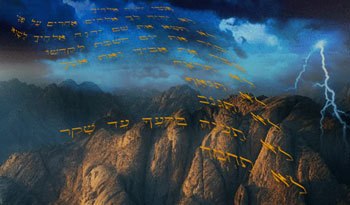
So it came about on the third day, when it was morning, that there were thunder and lightning flashes and a thick cloud upon the mountain and a very loud trumpet sound…

Exodus 19:16 (NASB)

I was in the Spirit on the Lord’s day, and I heard behind me a loud voice like the sound of a trumpet…

Revelation 1:10 (NASB)

Yes, my Master and Lord. May your Kingdom come soon.

He who testifies to these things says, “Yes, I am coming quickly.” Amen. Come, Lord Jesus.

Revelation 22:20 (NASB)

Amen.

What I Learned in Church Today: Christianity is Jewish

Get past the title. Get past the title. Just keep reading.

Is Christianity a Judaism? I think most Christians and most Jews would say “no,” but last Sunday morning in church, Pastor Randy said it was. In fact, it was the second Sunday he’s said such a thing.

Christianity is a Judaism?

I was kind of surprised that he said that. He also said that when Jesus returns, it will be as a Jewish King, the Messiah and he will still be Jewish.

You might be thinking “oh duh, of course he’ll be Jewish,” but there are a lot of Christians out there who believe his being Jewish died on the cross with him and that Jesus was resurrected as someone more “generic” in terms of ethnicity.

The last few times when Pastor has spoken with me at church, practically the first words out of his mouth as we’re shaking hands is, “I’ve been reading your blog.” He hasn’t said much else to me lately, so I’ve tended to take that as a message meaning he’s not really happy about what I’ve been writing. But now I wonder.

I’ve certainly been hammering away at the Jewishness of the ekklesia of the Messiah and how the Christian Church, as it exists today, won’t be what the ekklesia will be like in Messianic days.

As I was quickly taking notes on the sermon (Acts 25:23-26:32), I continued to reflect on the implications of Pastor’s words. Although I have no problem with any of the statements he made, I wondered how the rest of the congregation was taking it. No one mentioned it in Sunday school, although we were studying Ephesians 4 rather than Pastor’s message, so there wasn’t a natural opportunity to bring up the subject.

In speaking on Acts 26:4-18, Pastor referred to it as “A Conversion Story” but oddly enough, he defined “conversion” as making a “u-turn,” turning away from darkness and turning to light, to God.

That sounds more like teshuvah than conversion and in any event, as Dr. Larry Hurtado mentioned in a comment to me on his blog:

In any case, Paul didn’t undergo a “conversion” to “Christianity.” He refers to his experience as a prophet-like “calling” (e.g., Gal. 1:13-15), and there was no “Christianity” (as a separate religion) to which he could “convert” as a Jew. We could describe the former “pagans” (gentiles) that formed his churches as “converting” from the worship of their various ancestral deities to the God of the Bible/Israel.

paul-on-the-road-to-damascusSo Dr. Hurtado would call it “A Prophet-Like Calling Story” while using Pastor’s own definition, I could call the Acts 9 event “A Teshuvah Story”.

No, Paul wasn’t repenting of being Jewish or of practicing Judaism. Far from it. However, we could say that he had to make teshuvah relative to his disbelief in Yeshua as the Messiah and opposing God’s plan of using the ekklesia of “the Way” to bring Jews and Gentiles to Hashem and inaugurate the New Covenant in our world.

“So then, all Jews know my manner of life from my youth up, which from the beginning was spent among my own nation and at Jerusalem; since they have known about me for a long time, if they are willing to testify, that I lived as a Pharisee according to the strictest sect of our religion. And now I am standing trial for the hope of the promise made by God to our fathers; the promise to which our twelve tribes hope to attain, as they earnestly serve God night and day. And for this hope, O King, I am being accused by Jews. Why is it considered incredible among you people if God does raise the dead?”

Acts 26:4-8 (NASB)

I’m pulling a lot of my interpretation of this section of scripture, not only from D. Thomas Lancaster’s lectures on the New Covenant, but his sermon series The Holy Epistle to the Hebrews.

Paul continues to identify himself as a Pharisee, living in the strictest sense of that stream of Judaism, and that he has the “hope of the promise made by God to” his “fathers”, the hope of the resurrection, of life from the dead. He even asks his Roman audience as well as King Agrippa why they should find it so difficult to believe that the God who created the universe could also raise the dead back to life, thus extending the promise beyond just the Jewish people and making it a hope for all human beings.

Apostle Paul preachingIt may have seemed that Paul was the prisoner, but he appears to have made a captive audience of his jailers and accusers in delivering the message of the Good News.

I did have the opportunity to discuss part of Pastor’s sermon with one young fellow in Sunday school. After class let out, he had some questions about a part of Ephesians he’d been studying and thought for some reason I could help answer his queries.

In the course of our conversation, I realized part of the problem many late second temple period Jewish groups had with accepting Yeshua (Jesus) as the Messiah.

So when they had come together, they were asking Him, saying, “Lord, is it at this time You are restoring the kingdom to Israel?” He said to them, “It is not for you to know times or epochs which the Father has fixed by His own authority; but you will receive power when the Holy Spirit has come upon you; and you shall be My witnesses both in Jerusalem, and in all Judea and Samaria, and even to the remotest part of the earth.”

Acts 1:6-8 (NASB)

Even Yeshua’s disciples believed that the Messiah would first raise Israel as the head of all the nations, defeat her enemies, and ascend the Throne of David, and only afterward reconcile the Gentiles to God. Saying that the Messiah died, was resurrected, and ascended into Heaven to sit at the Father’s right hand and that before he returned to take the throne, the Gentiles would be brought alongside Israel in the worship of Hashem was reversing the expected order of things.

For a lot of Jews, it must have seemed pretty bogus to say that Gentiles could be brought into the ekkelsia, into a Jewish community and worship space, as equal co-participants while the Messiah was not yet physically ruling as King over Israel and over the rest of the world.

Paul knew the truth but he had a special insight. He had received two visions of the Messiah (Acts 9:3-8, Acts 22:17-22) and was caught up to the third heaven (2 Corinthians 12:2-4) and taught inexpressible words that he was not permitted to speak. For those Jews and Gentiles who believed, they did so from a profound sense of faith, since even though Paul could be persuasive, his words were not always convincing to every one who listened.

King Agrippa, do you believe the Prophets? I know that you do.” Agrippa replied to Paul, “In a short time you will persuade me to become a Christian.” And Paul said, “I would wish to God, that whether in a short or long time, not only you, but also all who hear me this day, might become such as I am, except for these chains.”

Acts 26:27-29 (NASB)

When Agrippa said “become a Christian,” the term “Christian” was not used in the same sense as we understand it today, because, as I’ve mentioned on numerous previous occasions, faith in Messiah Yeshua was not a religious stream distinct from Judaism at that point in history. Agrippa might have just as well said “make me a disciple of the Way”. And it was well-known that Agrippa was hardly devout and pious though he doubtless had some education in the traditions of his fathers (for Paul knew Agrippa believed the Prophets).

The Jewish PaulDoes that bring us back to thinking of Christianity as a Judaism, or am I the one getting things reversed?

During his lifetime, Paul obviously considered faith in Yeshua as Messiah King to be the next, natural, logical extension in the development of God’s plan for Israel. Yeshua was and is the beginning of God’s starting to fulfill the New Covenant promises to Israel, but those promises include bringing the Gentiles into worship of Hashem by coming along side Israel and becoming attached to her. Messiah was the doorway for the Gentiles to enter that forward-progressing stream of God’s plan for Israel, not by making Gentiles into Jews through the proselyte rite, but allowing them (us) to remain of the nations and yet, as was prophesied, enjoying the blessings of the spirit and the hope of the resurrection into the age of peace and tranquility.

I’d like to believe that some of the things I’ve written lately have been positively received by Pastor Randy, but that’s probably arrogant presumption on my part. However, his sermon last Sunday did seem to speak to many of the themes I write about on my blog. I not only found myself in general agreement with Pastor’s sermon but found myself learning some things I hadn’t noticed before in my reading of this part of Luke’s “Acts”.

Is Christianity a Judaism? In its current form, we can say that it owes a great deal to its Hebrew or Jewish roots, but there’s a lot about that “Judaism” the Church as left by the wayside. But as Pastor said, the return of Jesus is the return of the Jewish Messiah King to the Throne of David in the City of David.

With Jewish devotees cheering and Gentile disciples alongside them crying out in joyous approval, Messiah will raise Israel up as the most exalted of all nations, rebuild the Temple, return the Jewish exiles to their Land, rule the world with a rod of iron, and bring peace to all peoples.

What will the ekklesia be then? It will be Jewish, but it should be remembered that “every knee shall bow” (Isaiah 45:23, Romans 14:11), not just of the Jews but of everyone, the whole world.

Why I am A Messianic Gentile, Part One

I consider myself a Christian in the sense that I am a disciple of Jesus Christ but more specifically, I am a student of Messianic Judaism because I believe that discipline represents a perspective on the Bible, the Good News of Messiah, the New Covenant, and Israel that is scripturally sound and that describes the Bible as the single, unified expression of God’s desires, intent, and plan, first for Israel, and then, by Israel’s light, for the rest of the world.

And yet, to do that, I have learned to accept a few things that other people, that is, Christians, don’t like. I accept that the New Covenant was made exclusively with the House of Israel and the House of Judah (Jeremiah 31:31) and not with humanity in general. Further, I accept that when God, through the prophet, says “the House of Israel and the House of Judah,” He is referring specifically to the physical descendents of the Israelites who stood before God at Mt Sinai and accepted the covenant relationship between God and Israel (Exodus 20) in perpetuity (Jeremiah 31:35-36), who are today the Jewish people, and that the eternal inheritance of the Jews is the nation of Israel, which we have with us now.

I accept that the Gentiles are to be attracted to Israel as a light (Deuteronomy 4:5-8, Isaiah 49:6) with the strongest light being King Messiah, Son of David (John 8:12) as God’s emissary, agent, and deliverer of the promises God has made, causing the New Covenant age to be inaugurated with his death and resurrection, that the Jews might believe God will deliver on His promises to them, and that the Gentiles might be grafted into the blessings of those promises, taking the fringes of a Jewish man and going with him, for God is with him (Zechariah 8:23).

I’ve heard it said that the Jewish man in question is not just any Jewish person, but specifically is Messiah. That we from the nations approach God and His holiness by attaching ourselves to Israel through Messiah and going up with him to Jerusalem, to the House of Prayer for all the peoples (Isaiah 56:7).

So what’s wrong with all of that? Apparently, plenty.

From a Christian’s point of view, which includes some in the Hebrew Roots movement who say they disdain the Church, God made a covenant with Israel at Sinai that had effect and potency until the birth, death, and resurrection of Jesus. Then everything changed. The Jewish people no longer were automatically included in the Sinai covenant (although the Abrahamic covenant remained in force) and in order to re-enter a covenant relationship with God, they had to enter into the New Covenant, represented by a brand new entity wholly divorced from Judaism called “the Church”.

From Christianity’s point of view, this means Jewish people remain Jewish but must surrender Judaism and convert to Christianity, along with the Gentiles, and live, for all intents and purposes, a Gentile Christian lifestyle free of “the Law” and solely under grace (as if the two are mutually exclusive). There must be absolutely no distinction between Jew and Gentile in the Church.

beth immanuelFrom a Hebrew Roots perspective, this means Jewish people remain Jewish and continue practicing Judaism, but the “one new man” entity they must join requires that all Gentile disciples are totally and completely the same as their Jewish counterparts, and must observe the identical set of Torah commandments as the Jew. There must be absolutely no distinction between Jew and Gentile in Hebrew Roots congregations, many of which inaccurately call themselves “Messianic Judaism.”

But the Messianic Judaism I study and adhere to has a different perspective, one that recognizes a specific distinctiveness between Jews and Gentiles within the ekklesia of Messiah, such that each group in the body serves different, although sometimes overlapping functions.

I accept, for instance, that it would be inappropriate for me to claim an obligation to don tzitzit and lay tefillin when praying, to keep kosher in the manner of the Jews, to observe, in the present age, a Shabbat, and to say that it would be a sin if I did not perform any of those mitzvot.

That isn’t to say, especially being married to a Jewish wife, that I’m forbidden to keep kosher or observe the Shabbat (though at present, I only keep “kosher-style” and both my wife and I have elected to work on the Shabbat — may the day come when our observance is more faithful). I even know Gentile Messianics who choose to don tzitzit and lay tefillin privately in prayer, but who do not declare that they are obligated to do so.

I also accept that the New Covenant was made only with the Jewish people and that my only access is through faith in Messiah, not because of any inherit worth I have ethnically or nationally as a non-Jew.

MessiahMy understanding of the Jewish covenant relationship with God is that it extends continually from Exodus 20 forward in time and into the modern age. While Jesus inaugurated the New Covenant with his death and resurrection, getting the ball rolling, so to speak, it won’t reach any sort of fruition until his second coming, when he destroys all of Israel’s enemies, making the Gentile survivors vassal nations under Israel’s sovereignty, and establishing a unprecedented world-wide reign of peace. Then the Jewish people will be restored to their Land, to Israel, and the Gentiles who are called by His Name will come alongside Israel and serve her King, for he is our King, and worship God on the Temple Mount.

No new body is created in Acts 2, it’s an extension of the all of the previous covenants God made with Israel including the New Covenant, and the precursor to the ultimate fulfillment of God’s promises to Israel and to the nations. A subset of all the Jewish people in existing in the first century accepted the Good News of Messiah, and they represent an unbroken stream that goes all the way back to the Exodus and even to Abraham. And the Jewish people who did not accept the Good News remain under the Sinai covenant and in God’s love and compassion, and as God declares in the New Covenant:

“I will put My law within them and on their heart I will write it; and I will be their God, and they shall be My people. They will not teach again, each man his neighbor and each man his brother, saying, ‘Know the Lord,’ for they will all know Me, from the least of them to the greatest of them,” declares the Lord, “for I will forgive their iniquity, and their sin I will remember no more.”

Jeremiah 31:33-34

One day, God will forgive Israel’s sins, and the Jewish people will make teshuvah and return.

“Jerusalem, Jerusalem, who kills the prophets and stones those who are sent to her! How often I wanted to gather your children together, the way a hen gathers her chicks under her wings, and you were unwilling. Behold, your house is being left to you desolate! For I say to you, from now on you will not see Me until you say, ‘Blessed is He who comes in the name of the Lord!’”

Matthew 23:37-39

Israel will one day say “Blessed is He who comes in the name of the Lord” and on that day, the Gentiles will join with Israel at feast of Abraham, Isaac, and Jacob (Matthew 8:11).

the crowdDoes that make me and all the non-Jewish disciples of Messiah who study Messianic Judaism into second-class citizens in the Kingdom of God? To be honest, there are days when I think so. I suppose it’s my innate attraction to Jewish worship and scholarship that periodically has me longing to be able to join a minyan or to be called to the bema for an aliyah (not that I speak or read Hebrew). I sometimes see Jews in Messianic synagogues worshiping and praying the prayers and wish I could be a part of them. Sometimes I feel I should leave any sort of affiliation to Messianic Judaism behind and just keep my peace silently, communing only with God, because I feel I can never truly be part of Jewish people in Jewish community.

But I don’t fit in at church either, so that cannot be my sole connection to fellowship. Also, I must admit that any issues I may have feeling any disconnection with Messianic Judaism are my personal issues and hardly the fault of Jewish needs or requirements in community, since after all, the “chosenness” of Israel is a decision of God, not of man, and I must obey God before the will of any human being, even (especially) my own will (Acts 5:29).

That is why I call myself a “Messianic Gentile” and choose to study within a Messianic Jewish framework. That is why it is OK, even if I am a “second-class citizen” (which I’m actually not), because my citizenship is in the Kingdom of God, among the ekklesia, both ancient and modern, in the tradition of every Gentile who has ever come alongside Israel because we have heard God is with them, from the days of Moses to the days of the apostle Paul.

And Korach, the son of Yitzhor, the son of K’hos, the son of Levi, took …

Numbers 16:1

Rashi explains that the key reason for Korach’s rebellion against Moshe was that he was envious of another relative who received honor while he didn’t.

-Rabbi Zelig Pliskin
Commentary on Torah Portion Korach, pg 332
Growth Through Torah

Rabbi Zelig Pliskin
Rabbi Zelig Pliskin

If I were to allow envy of the obligations and privileges of the Jewish people in the Messianic community to affect me, I would be as Rashi characterized Korach and his band: rebellious. May it never be.

Rabbi Pliskin’s Torah commentaries speak more to me about my own state as a Gentile studying and learning within a Jewish context, being attached to but not the same as the Jewish co-participants in the body of Messiah. In Part Two of this series, I’ll discuss more of my perspective using R. Pliskin’s missives as a foundation.

For more on the Korach rebellion, which was last week’s Torah portion, read “The Importance of Unity” at ProjectGenesis.org.