I wrote these blogs, first of all, to speak of and expand upon some of the concepts behind a recent commentary on Torah Portion Shelach published online by First Fruits of Zion (FFOZ). Actually, that was the motivation for the first blog post. I wrote the second in response to some online misinterpretation of my intent and motives, but that only made things worse.
It seems I need to restate my beliefs about the New Covenant and the place of the nations in relation to Israel. That won’t be easy to contain in a single blog post, since the information is vast. It took me eleven or twelve blog posts to work through my original investigation and D. Thomas Lancaster covered the New Covenant material in five sermons on four CDs in his What About the New Covenant series.
Here’s the “Reader’s Digest” version:
“Behold, days are coming,” declares the Lord, “when I will make a new covenant with the house of Israel and with the house of Judah, not like the covenant which I made with their fathers in the day I took them by the hand to bring them out of the land of Egypt, My covenant which they broke, although I was a husband to them,” declares the Lord. “But this is the covenant which I will make with the house of Israel after those days,” declares the Lord, “I will put My law within them and on their heart I will write it; and I will be their God, and they shall be My people. They will not teach again, each man his neighbor and each man his brother, saying, ‘Know the Lord,’ for they will all know Me, from the least of them to the greatest of them,” declares the Lord, “for I will forgive their iniquity, and their sin I will remember no more.” (emph. mine)
–Jeremiah 31:31-34 (NASB)
The direct objects of the New Covenant are the House of Judah and the House of Israel, the descendants of the object of the Sinai Covenant, the Israelites. The nations are not mentioned in the New Covenant language so they (we) are not directly connected. Then how are we involved at all? Consider the Abrahamic Covenant:
Genesis 12:1-3 – God promises to make Abraham into great nation, bless those who bless him and curse those who curse him, and all peoples on earth would be blessed through Abraham.
Genesis 15:18–21 – God promises to give Abraham’s descendants all the land from the river of Egypt to the Euphrates, and this area is later referred to as the Promised Land or the Land of Israel.
Genesis 17:2–9 – God promises to make Abraham a father of many nations and of many descendants and the land of Canaan as well as other parts of Middle East will go to his descendants.
Genesis 17:9-14 – God declares that circumcision is to be the sign of the covenant for Abraham and all his male descendants and that this will be an eternal covenant.
Notice that only portions of the first and third condition have anything to do with any other people besides Abraham’s descendants through Isaac and Jacob. The first condition promises that “all peoples on earth” will be blessed through Abraham, and the third condition states that Abraham would be a father of many nations. Of course that last part speaks to the wives of Abraham and the children he had with them after Sarah died, so that condition doesn’t really figure into how all of earth’s people will be blessed.
Brethren, I speak in terms of human relations: even though it is only a man’s covenant, yet when it has been ratified, no one sets it aside or adds conditions to it. Now the promises were spoken to Abraham and to his seed. He does not say, “And to seeds,” as referring to many, but rather to one, “And to your seed,” that is, Christ.
–Galatians 3:15-16 (NASB)
We have to go to the apostolic scriptures and Paul’s epistle to the Galatians to understand how to interpret Genesis 12:1-3, but we see that the blessing to the nations comes through Messiah. He is the “mechanism” by which we Gentiles may be “grafted in” to the promises, not making us Jewish converts without a bris, but beneficiaries of the blessings such that we too can approach God as sons and not strangers (Ephesians 1:4-5).
Some things have been said about me ignoring that Israel is to be a light to the nations (Isaiah 49:6). The idea is that the Gentiles were to be attracted to that light (Deuteronomy 4:6) and then be prompted to join the nation, assimilating into the tribes and clans and becoming one with Israel.
I refer you back to FFOZ’s One Law and the Gentiles article for the details about what it was to be a “Ger” both in the days of Moses and in the time of the apostles.
Well over a year ago, I wrote Building My Model, which was my prior attempt at summarizing Gentile inclusion in the New Covenant. I reduced everything down to five points:
God creates a provision in his covenant with Abraham that allows the Gentiles to be blessed through Messiah (Abraham 12:1-3).
The New Covenant (Jer. 31, Ezek. 36) renews, affirms, and amplifies all of the previous covenants God made with the people of Israel and the people of Judah which, by definition, includes the Abrahamic covenant.
Messiah alludes that the (new) covenant is poured out in his blood (death), (see Mark 14:22-24, Luke 22:19-20) for all people.
Paul interprets the Abrahamic covenant provision referring to Gentiles as Messiah being our connection to God (see Galatians 3:15-16).
Paul describes the process of Gentiles being made co-heirs to the Messianic promises through Messiah as a mystery (Ephesians 3:1-13).
There are multiple portions of the Prophets that mention Gentiles, the Temple being a house of prayer for all peoples, Gentiles holding fast to observing the Shabbat and the Festivals, and ten men of the nations taking hold of the fringes of a Jewish man’s clothing to go with him and to be near to God.
All of those passages speak to Gentile involvement alongside Israel in being devoted to God in the future Messianic Age, but in sending the Messiah the first time, God sent a message and a gift, a foreknowledge and guarantee of the coming Kingdom and confirmation that God will fulfill all of the New Covenant promises.
The coming of the first Gentiles into relationship with God by receiving the Spirit (Acts 10) just as the Jews did (Acts 2) is one of the signs of that promise and guarantee. The prophesies of Joel (Joel 2:28) must have come to Peter’s mind as he saw Cornelius and his household receive the Spirit, and when Paul, as Messiah’s emissary to the Gentiles, brought vast numbers of former goyishe idol worshipers to the God of Israel through faith in Yeshua, it must have seemed as if the Messianic Age was close to fruition, and that the New Covenant times were about to burst into completion.
That hasn’t happened yet, but we are in the midst of that process. The fact that Gentiles continue to be drawn to Messiah by the Spirit and to desire to learn about the Jesus of the Jewish scriptures is clearly a sign. Of course, we Gentiles are involved in the New Covenant, but only through Israel for the Master said “salvation comes from the Jews,” (John 4:22).
I’ve tried to compress a great deal of information about a very complex topic into one short article and I hope I’ve been successful. For a more complete picture of my understanding of the New Covenant, go through my eleven part series, starting with part one: The Jesus Covenant: The Foundation, and then click through the subsequent parts until you get to the end. Afterward, you should also read Gifts of the Spirit Poured Out on all Flesh which filled in one last piece of my investigative puzzle.
I hope this puts a few frenzied souls to rest. I also want to remind everyone reading my blog that my opinions are solely my own. I may quote from First Fruits of Zion and similar resources, but that doesn’t mean I work for them or am their “mouthpiece.” I also quote from Aish.com and Chabad.org but that doesn’t make me an Orthodox Jew or Chabadnik. Like any researcher, I utilize different sources to support my commentaries. You can bug organizations like the UMJC if you want, but I am not affiliated with them in any way so my comments should not be taken as representing them. Nor do they (or any other organization) have the ability to censor or repudiate me.
Now will people please calm down? It’s OK to disagree, but any level of adult emotional maturity should enable a person to have differences of opinion with others without personalizing conflict. Otherwise, all we’re doing is engaging in “spitting contest” and I hardly think that sort of behavior is for the sake of Heaven.
“The world doesn’t care how many times you fall down, as long as it’s one fewer than the number of times you get back up.”
In spite of this disheartening picture of the relations between Jews and Gentiles in Antioch there is, rather surprisingly, evidence of Gentiles who felt drawn to Judaism.
More relevant for the present discussion is whether there was a group of Gentiles with a clear interest in Judaism who may even have adopted several Jewish customs and who participated in the activities in the synagogue without having converted to Judaism.
This is both what Judaism has to offer and teach our confused and self-indulgent age. In the words of the psalmist, “Blessed are they who dwell in Your house.” (Psalm 145:1) The circuitous path away from the constricted focus on the self through the expansive world of the other. When we find renewal in the synagogue, we will have gained access to Judaism’s greatest boon: this-worldly salvation.
[This is a long “meditation.” Pour yourself a cup of coffee and give yourself the time to take it all in.]
This is something of a counterpoint to my previous blog post Zetterholm, Ancient Antioch, and Today’s Messianic Judaism. The prior write up was a look at the Judaisms operating in Antioch, including the “synagogue of the Way,” as they existed in the first century CE, through the lens of Zetterholm’s book and research. Today, we use the same lens to see how Gentiles were brought into this wholly Jewish religious stream, what the Jewish disciples understood about the social role of Gentiles, and how unconverted (to Judaism) Gentiles could participate in the New Covenant blessings.
It seems (and I’ve said this before) it wasn’t all that clear how to bring Gentile disciples into fellowship, and even among the Jews in the Way, opinions differed.
I’m going to focus on only part of this chapter, which is Zetterholm addressing “the Antioch incident” (Galatians 2:11-21) because the thirty some odd pages this author spends interpreting the conflict between Paul and Peter contains a great deal of commentary on the struggle to understand how Gentiles could be co-participants socially and benefit from Jewish covenant blessings without undergoing the proselyte rite and without being considered mere God-fearers (though God-fearers could not apprehend the covenant blessings).
Having evaluate[d] different exegetical alternatives, Dunn suggested that table-fellowship in Antioch involved observance of at least the basic dietary laws, since the Jesus-believing Gentiles were originally god-fearers. The men from James, shocked at what they regarded as too casual an attitude, demanded a higher degree of observance, especially with regard to ritual purity and tithing. According to Dunn, they referred to the earlier agreement made in Jerusalem (Gal. 2:1-10), where Paul’s mission to the Gentiles was agreed upon but where the specific issue of table-fellowship was never considered.
Zetterholm, pp 130-1
You’ll notice here that Dunn (apparently) believes in a “common Judaism” (see my previous article on Zetterholm) shared by all Jewish factions but variability in how to observe the mitzvot or at least to what degree to observe ritual purity customs within different synagogues of the Way. Zetterholm referencing Dunn states that it is likely the Jerusalem contingent, the home of James the Just, brother of the Master, and the core group of apostles and elders, held to a more strict observance of ritual purity than the Jews of the Way in Antioch.
Peter, as one of the original apostles of Jesus (Yeshua), may have originally held to the Jerusalem point of view, but his experiences with the household of Cornelius (Acts 10:28-29) modified that opinion. However, confronted with the more strictly observant emissaries from James, Peter gave in to peer pressure.
Notice, this doesn’t mean that Jews were eating non-kosher food, so the issue was about the competing halachot of the two Jewish communities relative to eating with Gentiles:
Dunn argued that this agreement in no way changed the obligation to torah observance for the Jesus-believing Jew.
According to Dunn, the reason why Peter suddenly withdrew from the table-fellowship was that “[h]e could not deny the logic of Jerusalem’s demand, that a Jew live like a Jew.” Continued table-fellowship could therefore lead to a severe loss of authority in relation to Jewish-Christian communities of Palestine.
-ibid, pg 131
J.D.G Dunn
I don’t know if I completely agree with Dunn’s and Zetterholm’s conclusion here regarding the compromise of authority, and it seems that Paul certainly didn’t think his halachah of table-fellowship with Gentiles was a problem based on his criticism of Peter. I do think this brings into sharp relief the potential differences between Paul and James, especially prior to the Acts 15 halachic ruling regarding the legal status of Gentiles in (Messianic) Judaism.
Of course Dunn isn’t the only New Testament (NT) scholar to have an opinion on this “incident.” P.F. Esler, according to Zetterholm, didn’t think it was a matter of the degree of observance but an outright halachic ban across the board on Jews eating with Gentiles, with perhaps only a few exceptions. From Esler’s perspective, this was a matter of the preservation of Jewish identity, which could only be maintained by a strict separation of Gentile and Jew with no table-fellowship between the two groups, period.
E.P. Sanders didn’t agree with either Dunn or Esler, and Zetterholm tends to favor Sanders’ viewpoint most of the time. Sanders didn’t think the issue had anything to do with ritual impurity, since most Jews are in a state of impurity (which has nothing to do with sin) most of the time, and must only be pure when participating in a Temple ritual. He also didn’t think it had much to do with social interactions, particularly in Antioch which, like other diaspora communities, required fairly free transactions between Jewish and Gentile inhabitants.
Sanders really did think it was the food, not that the Gentiles were insisting on eating ham, but the Gentile origin of the food itself was an issue. How could the Jews be sure that at least some of the meat hadn’t been sacrificed to idols?
I tend to think Dunn may have the most accurate perspective on the matter, especially given B. Holmberg’s opinion:
Holmberg suggested that James demanded a higher degree of observance not on the part of the Jesus-believing Gentiles but on that of the Jesus-believing Jews, and furthermore, a virtual separation of the Christian community into two commensary groups.
-ibid, pg 134
According to Holmberg, both Paul and James believed that the Gentiles benefited from the covenant blessings that issued from being grafted into the Jewish root, but their perspectives were different. While Paul advocated for Jewish and Gentile interaction and fellowship within the community of Messiah, James advocated for separate communities of Gentiles and Jews operating side-by-side rather than intermingled. This was to preserve the integrity of Jewish identity. Paul (according to Holmberg) disagreed.
To James and Peter, the Jerusalem agreement made no difference in how the Jesus-believing Jews related to torah, while Paul requested that the demands of a Jewish identity should cede to those necessary for maintaining a common Christian identity.
-ibid
This isn’t to say that Paul was advocating for a Torah-free practice for the Jewish believers, but rather for a more lenient halchah relative to Jewish/Gentile fellowship and co-participation in worship and social interactions.
Rabbi Mark Kinzer
It’s interesting that Holmberg’s perspective on James, Peter, and the Jerusalem community maps at least somewhat to that of modern Messianic Jewish author and scholar, Rabbi Dr. Mark Kinzer who wrote the rather controversial book Postmissionary Messianic Judaism: Redefining Christian Engagement with the Jewish People. R. Kinzer advocates for a position called “bilateral ecclesiology,” which essentially establishes two communities within the body of Messiah, one for Jews and the other for Gentiles.
While many in the Church and in Gentile Hebrew Roots feel R. Kinzer’s position is a recent development, we see now that at least one NT scholar, Holmberg, suggests that it (or something very much like it) existed within the early Jerusalem Messianic ekklesia at the highest levels of leadership. What would this have said for Yeshua’s perspective on the matter?
We can’t know the answer to that one with any certainty, but it’s a compelling question. Yeshua rarely had dealings with Gentiles and stressed that he came “for the lost sheep of Israel” (Matthew 15:24). He only issued the directive to “make disciples of all nations” (Matthew 28-19-20) after the resurrection and (shortly) before the ascension.
Just to summarize, the explanation behind the “Antioch incident” was the degree of ritual observance for Dunn, food for Sanders, social intercourse for Esler, and Jewish vs. Gentile identity (related to observance issues) for Holmberg. Depending on your theological preferences, you can choose the scholar that fits your perspective. I think we all tend to do that and I’m just as guilty of the practice as the next person. Hopefully, I can cut through some of that and present a reasonable case for my conclusions, such as they are.
Zetterholm said that the problem is…
…that the text contains several gaps that must be filled in through an act of interpretation. The fact that scholars put forward different and sometimes even contradicting suggestions to solve a given historical problem often emanates from the character of the text: what we want to know is simply not in the text but must be supplemented from outside the text world.
-ibid
Not a very comforting thought, especially if you are a proponent of Biblical sufficiency.
I presented, in my previous blog post on Zetterholm, the nature of Jewish communities in Antioch and their implications for modern Judaism including Messianic Judaism. Now, I’m trying to solve the puzzle of how or if Gentiles could have been reasonably integrated into a Jewish community without compromising the Jewish nature and identity of that community. I think it’s clear Paul was convinced this was possible, but as history shows, it didn’t work out so well. I can only believe all this has profound implications for modern Messianic Judaism and the role of Messianic Gentiles within that Jewish context.
The issue for Paul in his letter to the Galatians was the Gentiles and encouraging them to maintain a Gentile identity within the Jewish Messianic movement, which did not require them to undergo the proselyte rite, become circumcised (males), and take on the full yoke of Torah observance. This is the same issue (Gentile role and status) within the Antioch synagogue (Acts 15:1), which most Christians would call “Paul’s home church.”
The challenge though, wasn’t just how to smooth over the wrinkles added by including Gentiles in a Jewish religious and social space, but how to understand the covenantal relationship (if any) Gentiles apprehended when they became disciples of the Master. I know in my own studies of the covenants, it is very clear how Jewish people and Judaism are in covenant with God, but Genesis 9 and Noah aside, when a Gentile comes into relationship with God through Messiah, just how does it work? There’s no clear and easy path in the text explaining it.
D. Thomas Lancaster
I came to my own peace with Gentile inclusion in the New Covenant about a year ago and more recently, in my multi-part review of D. Thomas Lancaster’s What About the New Covenant lecture series, I affirmed some of my convictions and discovered new information.
But what did this look like to the various groups inside of the Jewish Messianic movement in first century Antioch, or for that matter, from the perspective of James and the Council of Apostles and Elders in Jerusalem?
Based on various scriptures in the Tanakh (Old Testament) you could conclude that either Gentiles were cursed and would ultimately be wiped from the face of the Earth (for instance, Micah 5:9-15, Zephaniah 2:4-15), or that Gentiles had an eschatological future wherein at least some members of the nations and perhaps all nations would come into relationship with God and worship Him and Him alone (Isaiah 19, Isaiah 56:7, Zechariah 14:16).
From my point of view, I reconcile the opposing viewpoints in these texts by believing any nation (or any Gentile individual or group) which goes against Israel will ultimately be defeated by God and be cursed for cursing Israel, and any nation (or any Gentile individual or group) that joins with Israel in supporting her and her precious, chosen people, the Jewish people, will one day be called up to Jerusalem along with the returning Jewish exiles to worship God and to pay homage to the Jewish King.
You’ve probably heard the phrase “on the wrong side of history” in the news or social media recently, but applied to the Gentile nations and their relationship with Israel (for or against), those words take on a whole new meaning.
Believe it or not, I’m still talking about the Antioch incident, since how the Jews in the Way saw the Gentiles in relationship to the Jews, including socially and in the nature of their eschatology, was at the heart of the conflict.
If, however, we assume that he (Jesus) confirmed that Gentiles were to be embraced by the final salvation, it is not strange that within the early Jesus movement different concepts developed of how to relate to Gentiles and of how the actions of the god of Israel, through Christ, would also relate to the nations of the world.
-ibid, pg 140
Zetterholm, citing Sanders, said that the Jewish believers had no issue with Israel’s relationship with God since the Torah provides the means of atonement and…
…everyone living within the boundaries of the covenant and remaining in the covenant through obedience and atonement will be saved.
-ibid
But…
The soteriological system was, of course, for Jews only. Exactly how the Gentiles would be saved is less clear.
-ibid
The Church today takes its status of being saved rather for granted, although I doubt most Christians have ever seriously studied the New Covenant and encountered the challenge of finding themselves anywhere in the text. If they did, they might have some small idea of what the Jewish believers were facing when trying to insert Gentiles into the Jewish community, short of formal conversion to Judaism.
Magnus Zetterholm
Zetterholm is convinced, citing T.L Donaldson and others, that what was not required ultimately, was the need to circumcise Gentiles and have them brought under the Torah in the manner of the Jews. But since circumcision was tied directly into the covenant relationship, it remained a mystery (apparently) to the first Jesus-believing Jews, exactly what status and role uncircumcised Gentiles played in Judaism and in covenant (if any). Salvation comes from the Jews, but how?
The Acts 15 decision was designed to settle all of this and render “halakhic clarification”, since, as Zetterholm says (pg 144) it was believed that the end of the present age was at hand and Gentile status had to be settled quickly before the Messianic Era arrived.
Zetterholm puts Luke’s Acts and Paul’s epistles in tension with each other, believing that Luke may have represented Paul differently than Paul actually saw himself. Zetterholm believes that Paul’s epistles are a more valid representation of Paul and how he saw Gentiles in covenant with God, but that view, given the complexity of Paul’s letters, isn’t all that clear.
We do know that Paul did support the continuation of Torah observance for Jesus-believing Jews as a given while at the same time, did not impose said-Torah observance along with circumcision upon the Jesus-believing Gentiles.
It is clear that under no circumstances would Paul accept that the torah be imposed on the Jesus-believing Gentiles.
If Paul accepted the apostolic decree (Acts 15) was applicable to Jesus-believing Gentiles, this would not mean that he imposed torah on them, since, strictly speaking, the halakhah for righteous Gentiles or god-fearers was not the torah but something to be observed by Gentiles not having been blessed with the gift of the torah.
-ibid, pg 148
This doesn’t answer the question of how Gentiles are included in the covenant blessings, but makes clear that Paul, as Zetterholm understands him and agreeing with Mark Nanos, believed the Sinai covenant and its conditions outlined in the Torah, was not the covenant operating that provides salvation for the Gentiles and brings them into relationship with God.
I do want to say that Zetterholm seems to more strongly relate the Noahide Covenant (which Zetterholm says was fully documented in the Tannaitic period [10-220 CE]) with the status of Jesus-believing Gentiles than I would. The Noahide covenant defines a very basic relationship between God and all humanity (all flesh, really) but if that were it, then Gentiles wouldn’t need an additional covenantal connection to God that required faith in the Messiah. The New Covenant, though made only with Israel and Judah, I believe is also apprehended by Gentiles who are Jesus-believers (see Lancaster’s New Covenant lecture series for details).
Finally, through his very long and winding narrative, Zetterholm came to the same place where I have also arrived.
The inclusion of the Gentiles meant for Paul the inclusion in the covenant, since it was the covenant that provided the ultimate means of salvation. By connecting the inclusion of the Gentiles with the promise given to Abraham in Galatians 3:7-29, Paul interprets the salvation of the Gentiles in covenantal terms, since the promise given to Abraham is a covenantaly promise as stated in Genesis 15:18: “[o]n that day the Lord made a covenant with Abram.”
-ibid, pg 157
Mark Nanos
This allowed Gentiles to remain Gentiles, remain uncircumcised, and to be accountable to a different set of conditions of covenant than the Torah (or conditions with some overlap), and yet be able to enjoy the blessings of a covenantal relationship with God. It was and is that Abrahamic faith in Messiah that opens the door to our drawing near to God in a way denied to the ancient God-fearers and the modern Noahides.
Zetterholm concludes that both James and Paul agreed the Gentiles enjoyed covenant blessings, but James…
…demanded a separation of the community into two commensality groups, one for Jews and the other for Gentiles, since too close social intercourse would have confused the boundaries between Jews and Gentiles.
-ibid, pg 166
Paul, on the other hand, declared:
There is neither Jew nor Greek, there is neither slave nor free man, there is neither male nor female; for you are all one in Christ Jesus.
–Galatians 3:28 (NASB)
Zetterholm explains:
Paul, however, stressed that, “in Christ,” all distinctions between men become, on one level, superfluous. But here comes the paradox: this unity “in Christ” is arrived at only when the social distinction between Jew and Gentile is maintained. It is as “Jew” and “Gentile” that mankind becomes “one in Christ,” since the god of Israel is the god not only of the Jews, but of all humanity.
-ibid, pg 164
How does this speak to the relationship between Messianic Jews and Messianic Gentiles in community today?
If it seems like there’s been a lot of bickering, confusion, and debate over the status of non-Jews in the Jewish religious space called Messianic Judaism, but this is actually revisiting very old territory. It is, in some sense, a replay of what Paul went through in advocating for a Gentile presence as co-participants in Jewish community and fellowship, and in the covenant blessings of God. That the Gentiles are included in the New Covenant blessings, as difficult as that can be to trace down in the scriptures, isn’t the big problem, though.
The big problem is how to integrate Jews and Gentiles in Messiah in a religious, social, and halachic context. What role does the Messianic Gentile play in Messianic Jewish space? What are our obligations relative to Jewish obligations (which are far more clearly spelled out)? What does table-fellowship look like? Was James right in demanding social segregation between Jews and Gentiles, or is it more likely Paul, as Messiah’s special emissary to the nations, was correct in stating halachah should be constructed to allow closer social interaction and intermingling while still maintaining identity distinctions between the two groups?
Answering the ancient questions, if such a thing is possible, would also help answer our modern questions.
But while Paul was convinced within himself as to the intentions of God toward the nations in relationship with both God and Israel, others in the Way may not have been convinced. Zetterholm’s view of the Paul – James conflict is an educated opinion. At the level of the Christian sitting in a pew on Sunday morning, we all want to believe that the apostles were in complete unity with one another and that early “Christianity” presented a complete and undifferentiated whole within itself, only opposing the other Judaisms and pagan idol worship.
But what if Paul, Peter, James, and the rest were human after all? What if they disagreed, especially on such an emotionally hot-button topic as Gentiles within Judaism?
If all that is true, it means we can look to the New Testament to help us understand what the problems are that we’re experiencing today, but no final solutions may be coming our way this side of the Messiah.
But as my quotes of Zetterholm and Schorsch at the very beginning of this missive testify, there is something about being in community that transcends all of the petty bickering. As a Gentile, I’m envious (I guiltily confess this) of Jews in a minyan, the reciting of the morning prayers, the special connectedness of synagogue life. Maybe it’s because I never quite feel integrated in the church. Maybe, like my first quotes above attest, I am one of those Gentiles who sees holiness in Jewish community, since that’s where we come from and I believe that’s where we’ll be returning to in the Messianic Kingdom.
When Moses descended, he carried the Word of God—not the Word made flesh, but the word made stone upon the two tablets of the covenant.
“The Word from Heaven Was Broken”
Commentary on Chol HaMo’ed Pesach First Fruits of Zion (FFOZ)
The obvious image those words should invoke is this:
And the Word became flesh, and dwelt among us, and we saw His glory, glory as of the only begotten from the Father, full of grace and truth.
–John1:14 (NASB)
The Old Covenant was established with the Children of Israel at Mount Sinai and the conditions of that covenant, the Torah, were given on stone tablets.
The mediator of the New Covenant entered our world as “the Word made flesh” and the conditions of that covenant were in every spoken word and action of that “Word,” in the person of Yeshua (Jesus) of Nazareth, HaMaschiach (the Messiah). But of course, the conditions previously established didn’t change, and everything taught by the Rav from Nazareth was Torah.
“Do not think that I came to abolish the Law or the Prophets; I did not come to abolish but to fulfill. For truly I say to you, until heaven and earth pass away, not the smallest letter or stroke shall pass from the Law until all is accomplished.”
–Matthew 5:17-18 (NASB)
The conditions of the Old Covenant were written on stone tablets. Exodus 32:16 says the finger of God wrote on the first set of tablets before the sin of the Golden Calf, before Moses broke them.
The FFOZ commentary tells us that according to midrash, the tablets that descended from Mount Sinai can be compared to a human body, and when Moses broke that “body,” because of the sin of Israel, the letters on the tablets flew off the stone and returned to their Source in Heaven.
When Messiah Yeshua’s body was broken due to the sin of Israel, his spirit left him and returned to its Source.
After the sin of the Golden Calf, Moses returned to the mountain and to God to plead for Israel and to renew the covenant (Exodus 34). This began a long and cyclical pattern of sin and repentance for Israel.
After the death of the Master, he was resurrected three days later and thus was completed the inauguration or the very starting of the New Covenant, a process that will not reach fruition until the Master’s return, for he ascended to Heaven and sits on the right hand of the Father, our High Priest in the Heavenly Court, who makes final atonement for the sins of humanity, who is the mediator of better promises. But get this:
“Moreover, I will give you a new heart and put a new spirit within you; and I will remove the heart of stone from your flesh and give you a heart of flesh. I will put My Spirit within you and cause you to walk in My statutes, and you will be careful to observe My ordinances.” (emph. mine)
–Ezekiel 36:26-27 (NASB)
“But this is the covenant which I will make with the house of Israel after those days,” declares the Lord, “I will put My law within them and on their heart I will write it; and I will be their God, and they shall be My people. They will not teach again, each man his neighbor and each man his brother, saying, ‘Know the Lord,’ for they will all know Me, from the least of them to the greatest of them,” declares the Lord, “for I will forgive their iniquity, and their sin I will remember no more.” (emph. mine)
–Jeremiah 31:33-34 (NASB)
The conditions of the Old Covenant were written on stone tablets and on scrolls, objects that are inanimate and external to human beings. If we want to know about God and if we want to “know God,” we must study and practice, and yet Biblical and human history is all too clear that even the best of us fail, no matter how great our desire to serve God.
Yeshua came as the “Word made flesh,” the living embodiment of the Torah, the walking, talking, flesh and blood, human expression of the will and wonder of God, all contained within a human body. He was the perfect image of what we strive for, the Word written on flesh.
There’s a difference. John’s Gospel says that Yeshua was the Word made flesh, while we get from Ezekiel and Jeremiah that the Word will be written on our fleshy hearts. We don’t literally become the Word as a human being, we “merely” have it wholly integrated into our being.
But here’s the result.
Amen, I say to you, none among those born of a woman has arisen greater than Yochanan the Immerser; yet the smallest in the kingdom of Heaven will be greater than he.
I mentioned above the concepts of knowing about God vs. knowing God. I don’t doubt that there are people today, great tzaddikim or saints who know God, at least to the current extent of human ability, but the Bible records that Moses spoke with God “face to face” (Exodus 33:11). That’s pretty hard for me to imagine, especially since God is considered Spirit and without physical form (the third of the Rambam’s Thirteen Principles of Faith).
But the Master prophesied that when the New Covenant is fully enacted, then the finger of God will have finished writing His Word on our hearts of flesh and, like Moses and the Prophets of Old, including John the Baptizer, we will all know God, God’s Spirit will be poured out on all flesh (Joel 2:28, Acts 2:17), and everyone, from the least to the greatest, will have a full knowledge and intimate relationship with God. We won’t just know about Him, we will know Him.
Jesus, when the Spirit was poured out on him at his immersion (Matthew 3:16) became the forerunner, the first fruits of New Covenant human beings. He was still fully human, but with the Spirit poured out on him as it will be someday in the Messianic Era, a human being who could be tempted but still not sin. He’s the living promise that we will be perfected even as he was perfected.
It’s exciting to watch God’s plan open up in the pages of the Bible. The progression from the tablets and scrolls to the first fruits of the New Covenant, Messiah, coming as the “Word made flesh,” and then anticipating the day when that Word will be written on our flesh as well.
Right now, we experience just the leading edge of that New Covenant as we continue to live in the Old Covenant era, the Spirit was given as a pledge and a promise of what is yet to come (2 Corinthians 1:22). We aren’t there yet, but God has given His Spirit to us as His bond that what He has promised will indeed occur.
But there’s a catch.
For I am already being poured out as a drink offering, and the time of my departure has come. I have fought the good fight, I have finished the course, I have kept the faith; in the future there is laid up for me the crown of righteousness, which the Lord, the righteous Judge, will award to me on that day; and not only to me, but also to all who have loved His appearing.
–2 Timothy 4:6-8 (NASB)
This doesn’t just happen.
Yes, God promised it and it will happen, but it won’t just happen to us without an effort on our part. It isn’t just an intellectual and emotional acceptance we make that Jesus is Lord and then suddenly we’re in. As we see from Paul’s example, we only get to the finish line after running the race, after exerting ourselves, after keeping the faith and holding fast to our confession (Hebrews 4:11, 14).
Each day, we struggle to reaffirm our faith. Each day we must repent anew, plead for the forgiveness of our sins, and turn to Yeshua as our atonement. The finger of God is moving and writing, but only if we are willing participants in allowing our stony heart to be transformed, only if we surrender ourselves as the material upon which (upon whom) God may write His Torah.
And we do that only by recognizing the one who came from God and who returned to God and who will come again. The one who arrived as a flesh and blood man and who was (and is) also the Word. For only through him can we find the Word within us as we are within Him.
“Behold, days are coming,” declares the Lord, “when I will make a new covenant with the house of Israel and with the house of Judah, not like the covenant which I made with their fathers in the day I took them by the hand to bring them out of the land of Egypt, My covenant which they broke, although I was a husband to them,” declares the Lord.
–Jeremiah 31:31-32 (NASB)
This is the fifth and final lecture in the series What About the New Covenant presented by D. Thomas Lancaster and produced by First Fruits of Zion (FFOZ). This sermon is the one that wraps everything up, at least hopefully. We’ve gone through the other four lectures and I’ve offered my thoughts and opinions. Let’s see how everything ends.
Lancaster says the above-quoted text from the New Covenant language in Jeremiah reminds him of the incident with the Golden Calf (Exodus 32). Moses smashed the first set of tablets, symbolizing how Israel broke the covenant, rebuked the people, then went back up the mountain to make atonement. He came back down with another set of tablets, symbolizing the renewal of the covenant.
It came about when Moses was coming down from Mount Sinai (and the two tablets of the testimony were in Moses’ hand as he was coming down from the mountain), that Moses did not know that the skin of his face shone because of his speaking with Him. So when Aaron and all the sons of Israel saw Moses, behold, the skin of his face shone, and they were afraid to come near him. Then Moses called to them, and Aaron and all the rulers in the congregation returned to him; and Moses spoke to them. Afterward all the sons of Israel came near, and he commanded them to do everything that the Lord had spoken to him on Mount Sinai. When Moses had finished speaking with them, he put a veil over his face. But whenever Moses went in before the Lord to speak with Him, he would take off the veil until he came out; and whenever he came out and spoke to the sons of Israel what he had been commanded, the sons of Israel would see the face of Moses, that the skin of Moses’ face shone. So Moses would replace the veil over his face until he went in to speak with Him.
–Exodus 34:29-35 (NASB)
There’s a lot going on in this paragraph in the Torah. The only time I’ve heard this passage explained before was on Christian radio, and the Pastor doing the teaching (I can’t recall who it was) used it as some sort of evidence to how bad the law was. I can’t remember his arguments, but it seemed more than a little allegorical and was yet another shot by the Church from its Replacement Theology arsenal. Lancaster gives this portion of scripture a fresh look.
When Moses was in the presence of God, his face took on the “radiance of the Divine Presence” but it eventually faded. The people were initially afraid of seeing the light of God’s Glory shining on Moses’ face but he called them back to him. When he was around people, he veiled his face, maybe to keep from scaring people, but maybe to keep them from realizing that the light eventually faded. Only when he was with God did he unveil his face and the shining glory returned to him. almost like Moses was being “recharged.”
This will all become important shortly as we get into Lancaster’s commentary on Paul’s midrash:
For we are not like many, peddling the word of God, but as from sincerity, but as from God, we speak in Christ in the sight of God.
–2 Corinthians 2:17 (NASB)
Lancaster and the rest of the FFOZ staff typically default to the ESV Bible when writing or teaching, but this time Lancaster switched to the NASB, explaining that the ESV Bible does a poor job at translating the verses he’s going to teach from. This matches what Pastor Randy told me one time, saying that he found the ESV Bible in general to give a certain amount of support to Replacement Theology by how it translates the original languages.
We start with Paul defending himself from allegations that he is not really an apostle because he was not commissioned as were the other apostles, by Yeshua (Jesus) during the Messiah’s “earthly ministry.” Paul explains that he did not come “peddling the word of God,” that is, asking for money, but he worked to support himself. He also said “we speak Christ in the sight of God,” explaining that he and his companions were commissioned by God as it were.
Are we beginning to commend ourselves again? Or do we need, as some, letters of commendation to you or from you? You are our letter, written in our hearts, known and read by all men; being manifested that you are a letter of Christ, cared for by us, written not with ink but with the Spirit of the living God, not on tablets of stone but on tablets of human hearts.
–2 Corinthians 3:1-3 (NASB)
Without stealing Lancaster’s thunder by explaining everything, he describes Paul as sarcastically asking if his Master or the Council of Apostles in Jerusalem, should have sent him out with a letter or recommendation, sort of like asking, “Should I have brought a note from my Mother?”
But he also says something interesting. He says “you,” his audience, “are our letter of recommendation,” indicating that their behavior, their lives changed by the knowledge of and faith in Messiah, are what establishes Paul’s “cred” as an apostle. But a letter written on hearts by the Spirit of God? Where have we heard that before?
And I will give them one heart, and put a new spirit within them. And I will take the heart of stone out of their flesh and give them a heart of flesh, that they may walk in My statutes and keep My ordinances and do them. Then they will be My people, and I shall be their God.
–Ezekiel 11:19-20 (NASB)
“But this is the covenant which I will make with the house of Israel after those days,” declares the Lord, “I will put My law within them and on their heart I will write it; and I will be their God, and they shall be My people.
–Jeremiah 31:33 (NASB)
Lancaster says that Paul took those two passages, both of which end with the same declaration of Israel being His people and He being Israel’s God in New Covenant language, and leveraged them in this 2 Corinthians 3:1-3 commentary. Paul is continuing to establish himself as an apostle and emissary of the New Covenant, contrasting the Old Covenant and New Covenant, not that the conditions are different, because the Torah as the conditions, are the same between one covenant to the other, but that those conditions, written on stone tablets in the Old Covenant, are written on hearts by the Spirit of God in the New Covenant.
Such confidence we have through Christ toward God. Not that we are adequate in ourselves to consider anything as coming from ourselves, but our adequacy is from God, who also made us adequate as servants of a new covenant, not of the letter but of the Spirit; for the letter kills, but the Spirit gives life.
But if the ministry of death, in letters engraved on stones, came with glory, so that the sons of Israel could not look intently at the face of Moses because of the glory of his face, fading as it was, how will the ministry of the Spirit fail to be even more with glory? For if the ministry of condemnation has glory, much more does the ministry of righteousness abound in glory. For indeed what had glory, in this case has no glory because of the glory that surpasses it. For if that which fades away was with glory, much more that which remains is in glory.
–2 Corinthians 3:4-11 (NASB)
Especially starting at verse 7, these scriptures are used by many Christian teachers and Pastors to substantiate the allegation that the Torah was “bad” and killed, and that it was replaced by the grace of Jesus which is “good” and gave life. I have to admit, if you had no context for interpreting Paul’s meaning, then “the ministry of death, in letters engraved on stones” sounds pretty grim. The Torah brings death, the ministry of Moses was (and is) deadly, he seems to say. But look at the full message from the point of view of a val chomer or from lighter to heavier argument. I’ll paraphrase somewhat:
But if the ministry of death, in letters engraved on stones, came with glory, so that the sons of Israel could not look intently at the face of Moses because of the glory of his face, fading as it was, how will the ministry of the Spirit fail to be even more with glory?
I guess this “ministry of death” thing needs some explanation. What brings death, obeying the Torah? That hardly seems likely since God gave Israel the Torah as the conditions of the Old Covenant at Sinai and, as we’ve seen these past several weeks, the Torah represents the conditions of the New Covenant as well. So how can the Old Covenant and the Torah be a “ministry of death?” What’s the difference between the Old and New Covenants?
Under the Old Covenant, if you disobey the conditions, thereby disobeying God, the consequences were exile and death. The wages of sin is death (Romans 6:23). It’s not the Torah that brings death, and it is not fidelity to the Torah and to God that brings death, the ministry of death is disobedience and sin, the consequences for which, under the Old Covenant, bring death.
But as we’ve previously seen, under the New Covenant, the Torah or the conditions don’t change, it’s the people who change. It becomes possible for people to not sin at all thanks to what God does in the New Covenant, writing the Torah on people’s hearts so obedience to God becomes part of human nature. It is the ministry of righteousness because the people become righteous.
Paul is saying something like:
If you thought the Old Covenant came in tremendous glory, just you wait. The New Covenant comes with even much more glory, so much in fact that, by comparison, the shining of the New Covenant will make the light and glory of the Old Covenant seem like a dim night-light!
Paul isn’t saying that the Old Covenant had no glory, only that by comparison, the New Covenant, because it makes it basically impossible for people to sin, will seem so much more glorious. In a val chomer argument, the second condition cannot be true unless the first condition is true, so if the New Covenant has tremendous glory, the Old Covenant is glorious as well (present tense), just not quite so much.
Like the glow on Moses’ face, it was brilliant in its illumination, but it had a tendency to fade and needed to be renewed. Something like the pattern of Israel under the glorious Old Covenant. Israel’s faith tended to fade and they sinned, requiring repeated renewal efforts. Christianity has a similar problem but then, we’re still living in Old Covenant times, too. We do however have a pledge of the coming New Covenant, just as all believers do, Jew and Gentile alike.
Lancaster previously talked about a Heavenly Torah that, in order to be understood and accessed by man, had to be “clothed” so to speak, to “translate” from Heaven to Earth. The Torah of the Lord is perfect, restoring the soul (Psalm 19:7), but since it exists in our world, it is also temporal. Basically, it’s glory “fades.” The Torah of Messiah in the New Covenant is the Supernal Torah and will never fade but instead, Messiah will reveal what is now concealed in the Torah, removing the veil, as it were, from the Torah and from in front of our eyes, so we can see the full glory, just as Moses saw God’s glory on the mountain.
Do not think that I came to abolish the Law or the Prophets; I did not come to abolish but to fulfill. For truly I say to you, until heaven and earth pass away, not the smallest letter or stroke shall pass from the Law until all is accomplished.
–Matthew 5:17-18 (NASB)
The Old Covenant does not change at all while Heaven and Earth are still here, but eventually, we get a New Heaven and New Earth, so the Old Covenant will eventually cease. Actually I had a problem with this example of Lancaster’s because what I see Yeshua (Jesus) saying is that the Torah, the conditions of the Old and New Covenants, don’t change as long as Heaven and Earth exist, so it seems that the conditions of even the New Covenant will change once we get a New Heaven and a New Earth. Of course, until then, we are living in Old Covenant times, holding only a pledge of the New Covenant through receiving the Holy Spirit, so the conditions are still with us under the Old Covenant and the emerging New Covenant.
When He said, “A new covenant,” He has made the first obsolete. But whatever is becoming obsolete and growing old is ready to disappear.
–Hebrews 8:13 (NASB)
Sure, the Old Covenant is becoming obsolete, but that’s a long, drawn out process, and it won’t disappear until Messiah returns bringing the fully realized New Covenant with him.
Let’s finish up with chapter three of 2 Corinthians:
Therefore having such a hope, we use great boldness in our speech, and are not like Moses, who used to put a veil over his face so that the sons of Israel would not look intently at the end of what was fading away. But their minds were hardened; for until this very day at the reading of the old covenant the same veil remains unlifted, because it is removed in Christ. But to this day whenever Moses is read, a veil lies over their heart; but whenever a person turns to the Lord, the veil is taken away. Now the Lord is the Spirit, and where the Spirit of the Lord is, there is liberty. But we all, with unveiled face, beholding as in a mirror the glory of the Lord, are being transformed into the same image from glory to glory, just as from the Lord, the Spirit.
–2 Corinthians 3:12-18 (NASB)
Lancaster goes through this line by line, but what I found important was how his interpretation of Paul redeemed Paul from the criticism of many Jewish people or for that matter, the mistaken understanding of many Christians, who saw Paul as anti-Torah and Law-free, and was teaching Jews and Gentiles to also forsake Torah and to believe the Torah was a “ministry of death”.
Lancaster describes why the Jewish people couldn’t simply obey the Torah as they had always done and have that be enough. It’s why there aren’t two paths to salvation, Moses for the Jews and Jesus for the Gentiles. Hear me out. I think this explanation makes sense.
Under the Old Covenant, as hard as a Jewish person might strive, being only human, sooner or later he would sin and require atonement under the conditions of that Covenant, that is, the Torah. When Israel sinned greatly and did not repent, the conditions of the Old Covenant required exile and death. Nothing in that Covenant made Jewish people “sin proof,” so to speak.
Look at Israel’s history. It’s glorious but it’s also terrible. How many exiles have there been? How many times has Jerusalem been destroyed? How many times has God (temporarily) withdrawn His presence from among Israel due to their “hearts of stone?”
But under the New Covenant, God makes it possible for Israel not to sin at all and further, God promises to forgive all of Israel’s sins past and present. Apprehending the first fruits of the New Covenant through faithfulness to Yeshua HaMashiach, the conditions of the Old Covenant and New Covenant, that is, the Torah, don’t change, so Jews are still required to perform the mitzvot, but God starts writing on their hearts, starts softening hearts, begins to lead His people Israel into the better promises of the New Covenant.
The veil is lifted and the concealed Torah is revealed. Israel is liberated, not from the Torah but liberated from sin.
What does from glory to glory mean?
From the glory of the Old Covenant, which was and is glorious indeed, but to the greater glory of the New Covenant, which will be eternal and in which all men will know God face to face, the way Moses knows God, not dimly through a mirror, as we know God now.
The glory of the Old Covenant forgives sin but does not make people sinless. The glorious New Covenant forgives all sins past and present, and then makes it possible for people to naturally obey God so that we will never again sin. The Old Covenant was and is good, but the New Covenant really is the better deal. It’s incredibly fabulous.
I’m kind of sad to see this study end. I was really enjoying it. Of course, I’ve got about a year’s worth of Lancaster’s Epistle to the Hebrews study to still work through, so it’s not like I’m out of material to review.
I deliberately left out quite a bit of detail from my reviews, so if these “meditations” have piqued your interest, I’d recommend you order the full five-disc set of audio CDs What About the New Covenant. May you be as illuminated as I have been.
But Jesus has now obtained a more excellent ministry, and to that degree he is the mediator of a better covenant, which has been enacted through better promises.
–Hebrews 8:6 (NRSV)
I have a feeling I’m going to encounter this material again when I listen to and review the relevant presentations in D. Thomas Lancaster’s Holy Epistle to the Hebrews sermon series. However, the Hebrews material has been folded into a different context, one contrasting and comparing the Old and New Covenants in First Fruits of Zion’s (FFOZ) latest teaching lectures What’s New About the New Covenant.
On disc four, Lancaster starts with a brief summary of the previous lectures. We learned that Old Covenant doesn’t mean Old Testament, and it doesn’t even mean the Torah. It is an agreement God made with Israel (and only Israel) at Sinai stating that He would be Israel’s God and they would be His people as long as they obeyed His commandments (the conditions recorded in the Torah), and should Israel disobey, God would punish them and exile them (but not forever reject them).
We also learned that the New Covenant doesn’t mean the New Testament and it doesn’t mean the Church. It also doesn’t mean “renewed” Covenant because it indeed is something new. The New Covenant is also an agreement made between God and the Houses of Judah and Israel (and only the Houses of Judah and Israel) and that, according to the writer of the Epistle to the Hebrews, the New Covenant is made of “better promises” and Jesus is the mediator of that New Covenant.
But what are the better promises and how can they be better if between the Old and New Covenants, God does not change even a single condition or requirement for Israel (the Torah mitzvot) but does change the hearts of all Jewish people, making it possible for them to correctly perform all of the mitzvot?
To answer that question, Lancaster takes us through a study of a few of the chapters in the book of Jeremiah. This is why I like reading large portions of the Bible in one setting. I can get the full message of God to Israel in its complete context rather than parsing bits and pieces and verses together artificially to form a picture that might not be correct.
Better Promises in the Messianic Future
The days are surely coming, says the Lord, when I will make a new covenant with the house of Israel and the house of Judah.
–Jeremiah 31:31
“The days are surely coming” indicates the end of days, the final redemption, the future Messianic Era. For those Christians who believe that the New Covenant has already replaced the Old Covenant, this statement makes that particular doctrine impossible because the New Covenant hasn’t been enacted or completed yet. The death and resurrection of Jesus only got the ball rolling, so to speak. We’re still in the Old Covenant age. The Torah is still in effect as it always has been since Sinai.
Good News for Israel and Judah
Notice (and I’ve mentioned this before) that the addressees of the New Covenant are “the house of Israel and the house of Judah.” This is only with the house of Israel and the house of Judah. Period. It’s an exclusive relationship between God and the Jewish people, just as the Old Covenant defined an exclusive relationship between God and the Jewish people. The New Covenant (pay attention please, this is important) has nothing to do with the nations, with Gentiles, or with anything called “Christianity” or “the Church.” The New Covenant does not create a stand-alone covenant relationship between the Church and God. The only covenant that all the people of the earth can claim for their (our) very own is the Noahide Covenant (Genesis 9:1-17).
The Transformation of the Jewish Heart
It will not be like the covenant that I made with their ancestors when I took them by the hand to bring them out of the land of Egypt—a covenant that they broke, though I was their husband, says the Lord. But this is the covenant that I will make with the house of Israel after those days, says the Lord: I will put my law within them, and I will write it on their hearts; and I will be their God, and they shall be my people.
–Jeremiah 32-33
The next “better promise” is that God will make it possible for the Jewish people to obey His righteous standards and not sin by writing those standards on the Jewish heart.
Husband and Wife
Lancaster says an oath the groom would recite at the wedding ceremony in the ancient near east was to declare, “I will be your husband and you will be my wife.” God declared “I will be a God to you and you will be a people to me,” but that was contingent upon Israel not disobeying God and worshiping idols. Idol worship was considered as adultery by God, a wife going astray with other lovers (gods). Under the Old Covenant, Israel went astray, but under the better promises of the New Covenant, since the Torah will be written on their hearts and not just on tablets and scrolls, Israel will never again “cheat” on God, so to speak, and will always remain faithful.
Intimate Knowledge of God
No longer shall they teach one another, or say to each other, “Know the Lord,” for they shall all know me, from the least of them to the greatest, says the Lord; for I will forgive their iniquity, and remember their sin no more.
–Jeremiah 31:34
Under the Old Covenant, many times the people of Israel, including the Priests and Prophets knew about God, but they didn’t know Him in the sense of an intimate knowledge that led to obedience. This is often true of Jews and Christians today. It’s easy to study the Bible and learn about God but not so easy to live a life that is consistently, day-by-day, hour-by-hour pleasing to God. Under the New Covenant, there will be a universal revelation of God to the whole world. It will be natural for everyone to obey God.
I know I said the New Covenant is an agreement just between God and the Jewish people, and I, or rather Lancaster, will get to the issue of Gentiles by the by.
Forgiving All of Israel’s Sins Forever
So that you may not claim to be wiser than you are, brothers and sisters, I want you to understand this mystery: a hardening has come upon part of Israel, until the full number of the Gentiles has come in. And so all Israel will be saved; as it is written,
“Out of Zion will come the Deliverer; he will banish ungodliness from Jacob. And this is my covenant with them, when I take away their sins.”
–Romans 11:25-27
Lancaster didn’t cite Paul or Romans 11 but I felt it an appropriate addition. Lately, I’ve been hearing some bad opinions about Paul and his so-called anti-Torah, anti-Judaism, and anti-Jewish people letters, and I thought this would be a good time to clear some of that up, since Paul is preaching to the Romans New Covenant doctrine that is highly favorable to the Jewish people and to Israel.
Jeremiah, according to Lancaster, is saying one of the “better promises” of the New Covenant mediated by Messiah, is that God will forget all of Israel’s sins which is what makes it possible for Paul to literally mean that “all Israel will be saved” rather than some tiny remnant who, according to the Church, must leave Judaism and convert and assimilate into (Gentile) Christianity. God doesn’t change the Torah. The Torah is unchangeable at its core. God does change the Jewish people so that they naturally will be faithful to God and God, for His part, will forgive all of Israel’s sins, from the Golden Calf forward throughout all of history and into the Messianic Age.
That’s very good news, a wonderful gospel for the Jews.
Israel Will Always Be a Nation Before God
Thus says the Lord,
who gives the sun for light by day
and the fixed order of the moon and the stars for light by night,
who stirs up the sea so that its waves roar—
the Lord of hosts is his name:
If this fixed order were ever to cease
from my presence, says the Lord,
then also the offspring of Israel would cease
to be a nation before me forever.
Thus says the Lord:
If the heavens above can be measured,
and the foundations of the earth below can be explored,
then I will reject all the offspring of Israel
because of all they have done,
says the Lord.
–Jeremiah 31:35-37
I suppose this could be two “better promises.” Israel will be a distinct nation and the Jewish people will be a distinct and identifiable people as long as there is a sun, a moon, stars, and a sea, which is to say, as long as the earth, our solar system, and the universe exists. It is also a promise that God will never reject Israel and the Jewish people and they will remain a people and a nation until the heavens can be measured and the foundations of the earth can be explored. These conditions, by the way, are rhetorical language meaning “always.” Israel will always be a nation before God and God will never reject the Jewish people. Ever.
This flies in the face of the various churches who still adhere to some form of Replacement Theology because for them, the New Covenant replaces the Old Covenant, and they interpret that to mean that God rejected Israel permanently because Israel rejected Jesus as Messiah. God then replaced Israel with the (Gentile) Church which accepted Jesus. Now, the only way God will accept a Jew is for the Jew to reject Judaism and convert to (Gentile) Christianity. However, examining the New Covenant language reveals that Replacement Theology is hopelessly unBiblical.
Jerusalem the Eternal City
The days are surely coming, says the Lord, when the city shall be rebuilt for the Lord from the tower of Hananel to the Corner Gate. And the measuring line shall go out farther, straight to the hill Gareb, and shall then turn to Goah. The whole valley of the dead bodies and the ashes, and all the fields as far as the Wadi Kidron, to the corner of the Horse Gate toward the east, shall be sacred to the Lord. It shall never again be uprooted or overthrown.
–Jeremiah 31:38-39
Who can count the number of times Jerusalem has been conquered and destroyed? OK, probably someone has, but the point is that historically, whenever Israel sins, the Temple is destroyed and Jerusalem is left in ruins. This “better promise” for the Jewish people states that Jerusalem will be rebuilt and expanded and it will never again be destroyed because the Jewish people will never again sin against God or other people.
Some of the really exciting “better promises.”
Jeremiah 32:1-15 tells of God commanding Jeremiah to buy a field in Judah during Nebuchadrezzar’s siege against Jerusalem, a command Jeremiah couldn’t understand. It would have been crazy to do so, but God had something in mind: more “better promises.”
I don’t really want to reveal all of the better promises since if I do, you might not be as inclined to listen to the full lecture. In brief, the other promises include the regathering of the Jewish people to their Land, giving the Jewish people all one heart, and one way (in my opinion, “the Way”) so that there will be no division among Jews, that the New Covenant will be everlasting, that God will rejoice over doing good for Israel, that a “righteous branch” meaning the Messiah, will rise from the line of David. In addition to a return of the Davidic dynasty on the throne of Israel, the line of Aaron and the Levitical priests will return, which means there must be a Temple for them to offer sacrifices in.
God even says that He will only break His covenant with David and with Aaron if someone can break God’s covenant with day and night. More rhetorical language meaning “never.”
But there is something more about Lancaster’s sermon I do want to reveal since it contains a dire warning.
Those Who Say God Rejected Israel
The word of the Lord came to Jeremiah: Have you not observed how these people say, “The two families that the Lord chose have been rejected by him,” and how they hold my people in such contempt that they no longer regard them as a nation? Thus says the Lord: Only if I had not established my covenant with day and night and the ordinances of heaven and earth, would I reject the offspring of Jacob and of my servant David and not choose any of his descendants as rulers over the offspring of Abraham, Isaac, and Jacob. For I will restore their fortunes, and will have mercy upon them.
–Jeremiah 33:23-26
Historically, who has held Israel in contempt and said that God no longer regards the Jewish people as a nation? OK, just about everybody, but that “everybody” includes the Christian church. Even today, many churches continue to adhere to some form of Replacement or Fulfillment Theology, and any Christian who does espouse such a theology is who God, through Jeremiah, said “hold my people in such contempt” (emph. mine). Really, do you want to be on God’s “wrong side” by holding Israel in contempt, or even in the slightest degree, believe that God has rejected Israel and replaced her with the Church?
In addition to their being more “better promises” and “good news” for the Jewish people in these chapters of Jeremiah, Lancaster mentioned that there are still more better promises littered about the various books of the Prophets including Isaiah, Ezekiel, Amos, and Joel. That’s really a lot of better promises and good news for Jewish people.
But What About the Gentiles?
Then certain individuals came down from Judea and were teaching the brothers, “Unless you are circumcised according to the custom of Moses, you cannot be saved.”
But some believers who belonged to the sect of the Pharisees stood up and said, “It is necessary for them to be circumcised and ordered to keep the law of Moses.”
–Acts 15:1, 5
Remember what I (citing Lancaster) said above about the New Covenant being made only with the House of Israel and the House of Judah? No mention of Gentiles at all. So do we even figure in? There’s a lot of language in the Apostolic Scriptures that says “yes” but we have to dig for it.
However, from the point of view of the various Jewish sects in the late second temple period, including believing Jews in “the Way,” recalling the New Covenant language, the only way they could see how Gentiles could be included in these “better promises” was to convert to Judaism.
In Acts 15:1-2 and 15:24, Now with what Satanically-inspired and dogmatic false teaching did these “certain men from Judaea” try to infect the church at Antioch, and why according to Galatians 2:4-5? (emph. mine)
That quote is from the study notes for the Sunday school class I attend when they were teaching on Acts 15 last September (here’s the link to the relevant blog post). What they couldn’t see was that the Jewish people asking these questions were not “Satanically-inspired” but rather, asking a legitimate question based on the Jeremiah 31 text.
Paul knew that the Gentiles didn’t have to convert to Judaism in order to be included in better promises (hence his letter to the Galatians), and Peter witnessed this first hand as recorded in Acts 10:44-48, but no formal decision had been rendered by the Council of Apostles and Elders defining Gentile legal identity within the Jewish community. Acts 15:6-29 records a summary of the legal hearing, including the testimony of various witnesses, and the conclusion and ruling of the Council that Gentiles could be granted honorary status within the commonwealth of Israel, grafted into the nation (see Romans 11:11-24), but only because of their association with Israel through faith in King Messiah.
That’s an incredibly vital point to get, because without the New Covenant “better promises” being applied exclusively to the House of Israel and the House of Judah, if God really did reject Israel and the Jewish people in perpetuity, then we Gentiles would have absolutely, positively no hope of salvation at all! Israel is central in God’s plan to redeem the people of all the nations of the earth.
When King Messiah returns, he will be King of Israel, King of the Jews, and he will conquer all of the other nations and be their King. He will annex all of the other countries and Israel will be at the head of the nations, and all of the other nations will be vassal servants to Israel. As citizens of these vassal nations, we too will be annexed subjects of Israel and her King. The good news for the Gentiles is if we swear allegiance to King Messiah now, even before his return, we become his subjects and the New Covenant blessings become ours.
No, we don’t become Jews because we are citizens of a nation annexed by Israel and not citizens of Israel itself. We are granted an honorary status in the commonwealth of Israel. We’re grafted in.
As I’ve mentioned about a million times elsewhere, we don’t come under “One Law” in terms of being commanded to wear tzitzit, lay tefillin, and such, but we do become people who are called by His Name, and partisans or freedom fighters, so to speak, who are defending our King and his people until he returns and ascends his throne in Jerusalem, much as Robin Hood and his Merry Men of legend fought against the tyranny of Prince John and protected the innocent until King Richard’s return.
And many peoples will come and say, “Come, let us go up to the mountain of the LORD, To the house of the God of Jacob; That He may teach us concerning His ways And that we may walk in His paths.” For the law will go forth from Zion And the word of the LORD from Jerusalem.
–Isaiah 2:3
If you are not a Jew and if you call yourself a Christian or any other name that indicates an allegiance to the King of the Jews, to Jesus Christ, then this is your hope in the New Covenant through national Israel, the Messianic Kingdom, and through the Messianic King. The Master said, Salvation comes from the Jews,” (John 4:22) and according to Lancaster, he was talking about the New Covenant and everything that was presented in this lecture ”Better Promises.”
If you want to be part of those “better promises” then please carefully consider everything you’ve read here today. It really wouldn’t hurt and might do a great deal of good if you got a hold of the five-disc set of What’s New About the New Covenant and listened to all of the content, since it really applies to who we are as Christians and what God expects of us and of how we treat His people Israel. Our salvation comes from Israel and her firstborn son Yeshua of Nazareth, the Messiah, the King…not the other way around.
Old English cir(i)ce, cyr(i)ce, related to Dutch kerk and German Kirche, based on medieval Greek kurikon, from Greek kuriakon (dōma ) ‘Lord’s (house),’ from kurios ‘master or lord.’
I’ve always wondered how you get “church” out of “ekklesia” and in a bout of insomnia, I decided to find out. It’s not so much that I want to know about the usage of “church” as a building or even an organization, but as the entity that has, in some circles, replaced Israel as the focus of all His New Covenant prophesies and promises (see my five-part review series on D. Thomas Lancaster’s lectures, What About the New Covenant for more).
The definition above is what I first came up with in a Google search using the search string “origin of the word church”. Here’s more detail:
church (n.) Old English cirice, circe “church, public place of worship; Christians collectively,” from West Germanic *kirika (cognates: Old Saxon kirika, Old Norse kirkja, Old Frisian zerke, Middle Dutch kerke, Dutch kerk, Old High German kirihha, German Kirche), probably [see note in OED] from Greek kyriake (oikia), kyriakon doma “Lord’s (house),” from kyrios “ruler, lord,” from PIE root *keue- “to swell” (“swollen,” hence “strong, powerful”); see cumulus. Phonetic spelling from c.1200, established by 16c. For vowel evolution, see bury. As an adjective from 1570s.
Greek kyriakon (adj.) “of the Lord” was used of houses of Christian worship since c.300, especially in the East, though it was less common in this sense than ekklesia or basilike. An example of the direct Greek-to-Germanic progress of many Christian words, via the Goths; it probably was used by West Germanic people in their pre-Christian period.
Also picked up by Slavic, probably via Germanic (e.g. Old Church Slavonic criky, Russian cerkov). Finnish kirkko, Estonian kirrik are from Scandinavian. Romance and Celtic languages use variants of Latin ecclesia (e.g. French église, 11c.).
— n , pl -siae
1. (in formal Church usage) a congregation
2. the assembly of citizens of an ancient Greek state
[C16: from Medieval Latin, from Late Greek ekklēsia assembly, from ekklētos called, from ekkalein to call out, from kalein to call]
According to biblehub.com, the “English word “church” comes from the Greek word kyriakos, “belonging to the Lord” (kyrios).” By comparison, “ekklēsía(from 1537 /ek, “out from and to” and 2564 /kaléō, “to call”) – properly, people called out from the world and to God, the outcome being the Church (the mystical body of Christ) – i.e. the universal (total) body of believers whom God calls out from the world and into His eternal kingdom.”
So as nearly I can figure, not being a linguist or etymologist, we can understand the word “ekklesia” as originally meaning (for the purposes of this brief study) an assembly of Greek citizens or more specifically, a popular assembly in the city of Athens. In its most generic sense, it was probably used to mean any assembly of people for a common purpose.
There’s also a sense, when used to describe an assembly of believers, as it’s used in the New Testament, that said-assembly is a group of people “called out”. This is probably (in the minds of the Jewish writers of the New Testament) related to the Hebrew word Shaliah, meaning “legal emissary” or “agent,” equivalent to the Greek word “apostolos” from which we get the English word “apostle”. It’s reminiscent of the use of the word Shaliach as employed by the Chabad to mean “a member of the Chabad Hasidic movement who is sent out to promulgate Judaism and Hasidism in locations around the world.”
That probably fits since historically and into modern times, one of the primary functions of the Christian Church as an institution is to send out members as missionaries or “sent out ones” to “promulgate Christianity in locations around the world.”
Called out ones, sent out ones. In either case, a population of individuals separated from the larger group for a common purpose. From a Christian standpoint, “the Church” is called out of the generic population of the nations for the purpose of being worshipers of Jesus Christ. An important secondary mission (Matthew 28:19-20) is to spread the gospel message of salvation to the world, creating more called out ones to join “the Church.”
Except, as you may have noticed above, the word “church” is more related to the Greek word “kyriakos,” so I’m not sure it’s reasonable to directly translate “ekklesia” as “church”.
But I haven’t written this in the middle of the night to be that picky. I’m just using it as background.
In studying Lancaster’s What’s New About the New Covenant lecture series, I started wondering, given the centrality of Israel in all the New Covenant language, how “the Church” managed to replace Israel or usurp her position in that Covenant. Actually, I’ve wondered this for a while and it keeps bothering me.
I’ve learned in past conversations with Pastor Randy at the church I attend, that “the Church” was created in Acts 2 at Pentecost, was originally made up of mostly Jewish people, and was centralized around Jerusalem and the Temple. Subsequently, the Church began to spread and its locus of control was shifted to the assembly at Syrian Antioch (see Acts 11 starting at verse 19 and subsequent chapters) as more Gentiles were added. Paul returned to Antioch after his first two “missionary journeys” rather than Jerusalem, to give a report of his activities. He only returned to Jerusalem after his third journey (Acts 21) at the prompting of the Holy Spirit (Acts 20:22-23), not as a missionary going back to his “home church” to make a report, but for a larger and most likely eternal purpose.
From this perspective, as time goes on, starting during the lifetime of Paul, “the Church” becomes less and less Jewish and less and less of a Judaism, and increasingly describes a body of Jewish but mostly Gentile people focused on the worship of Jesus Christ, while divesting themselves of the various practices, perspectives, and even thoughts that previously associated it with a first century stream of Judaism (very similar to the viewpoint of John MacArthur on this topic).
Can you see why this bothers me? I’ve mentioned recently that if God really did reject Israel and replace her with “the Church” in all of the covenant prophesies and promises, then it would be like a man cutting off his own legs and expecting to run a marathon afterward.
It would be impossible.
All of the New Covenant language we see in Jeremiah 31 and Ezekiel 36 is focused on Israel as the object of God’s prophesies and promises, not another entity, and certainly not an entity that isn’t Israel and Judah (which “the Church” isn’t). It’s as if traditional Christian thought on the New Covenant starts in the Gospels and particularly the Epistles, and then works its way backward into the “Old Testament,” proceeding to engage in some significant theological and eisegetical gymnastics to rework the words of the Prophets in order (some how) to make them fit the way institutional Christianity chooses to interpret Paul.
I’ve also mentioned recently how at least some of what Paul wrote is all too easily interpreted as anti-Torah, anti-Judaism, and anti-Jewish people, making Paul a big problem for understanding the New Covenant as it’s described in the Prophets, and giving “the Church” the (apparent) leverage it needs to reinterpret the New Covenant in a Gentile-focused manner that diminishes Israel and the Jewish people in favor of Goyim Christianity. At this point, if the Jews weren’t kicked out of the Church (unless they converted to Christianity and gave up Judaism and being Jewish people), they would have walked out, since the “no Jews allowed” sign had been raised. The Church isn’t a Jewish place, it’s a Gentile place.
“The older I get, the more I realize how different it is to be a Jew in a Jewish place as opposed to a Jew in a non-Jewish place. It’s definitely a different feeling in terms of how freely you can be yourself and celebrate your culture and religion.”
-Natalie Portman
Etymology is defined as “the study of the origin of words and the way in which their meanings have changed throughout history.” As we’ve seen above, the etymology of the word “Church” isn’t as straightforward as the casual users of that word might believe. In fact, “Church” is more related to a completely different Greek word, but most people don’t know that.
I suggest that the way most Christians understand the word “Church” today isn’t how the original apostles and disciples of the Master understood “ekklesia” or meant for anyone to understand it. The “ekklesia” were the called out body of Messiah, but did not call out Jews from Judaism. If the New Covenant prophesies mean anything at all, then primarily, it was the non-Jewish peoples who were “called out” of paganism in order to be grafted in to the commonwealth of Israel to benefit from the blessings of the New Covenant through their Abrahamic faith in Messiah, Son of David. The Jewish disciples may have been called out of other Jewish streams and into the Judaism of “the Way,” but if they had been called out of Judaism as modern Christians believe, then they (and we) would have exited the New Covenant altogether.
But just as we see how the word or words that eventually became “church” in English went through many changes throughout history, the meaning, purpose, and composition of the body of believers has also “morphed” a great deal over time. I doubt Paul would recognize a modern group of Christians in a Sunday worship service because of the result of nearly two-thousand years of evolutionary changes.
I wish I could do this wee study more justice, but it would take more study and time than I have right now. I fell asleep exhausted several hours ago, woke up way too late (or too early) and now I can’t sleep at all. For some reason, I keep thinking of “the Church” in general and the little local church I attend in specific.
I emailed one of the associate Pastors earlier today in relation to the church’s website, and one of the things he asked in response was, “How are you doing in your walk?”
Given how unusual I am in relation to just about everyone else in church, I didn’t know how to respond. I feel “fine” in my “walk,” but I don’t know if that’s how I’d appear from his point of view.
I suppose I should try to get some more sleep. Morning will come all too soon and I’ll regret it if I go to work with my brain in a fog. Maybe I’ll write a “part two” to this when I get more time and can do more research. I don’t really feel like I’ve said what I wanted to say, except that I wanted to say that what the Church has become today, not as a building or even an institution, but as an entity or even a concept, seems to have changed a great deal from the hopes and dreams of the apostles and from the spirit of what was intended in the New Covenant, a covenant non-Jewish people can only partake of through Israel and her firstborn son, Messiah, Son of David…the person we call Jesus Christ.
"When you awake in the morning, learn something to inspire you and mediate upon it, then plunge forward full of light with which to illuminate the darkness." -Rabbi Tzvi Freeman


 Notice that only portions of the first and third condition have anything to do with any other people besides Abraham’s descendants through Isaac and Jacob. The first condition promises that “all peoples on earth” will be blessed through Abraham, and the third condition states that Abraham would be a father of many nations. Of course that last part speaks to the wives of Abraham and the children he had with them after Sarah died, so that condition doesn’t really figure into how all of earth’s people will be blessed.
 Some things have been said about me ignoring that Israel is to be a light to the nations (Isaiah 49:6). The idea is that the Gentiles were to be attracted to that light (Deuteronomy 4:6) and then be prompted to join the nation, assimilating into the tribes and clans and becoming one with Israel.
 I hope this puts a few frenzied souls to rest. I also want to remind everyone reading my blog that my opinions are solely my own. I may quote from First Fruits of Zion and similar resources, but that doesn’t mean I work for them or am their “mouthpiece.” I also quote from Aish.com and Chabad.org but that doesn’t make me an Orthodox Jew or Chabadnik. Like any researcher, I utilize different sources to support my commentaries. You can bug organizations like the UMJC if you want, but I am not affiliated with them in any way so my comments should not be taken as representing them. Nor do they (or any other organization) have the ability to censor or repudiate me.






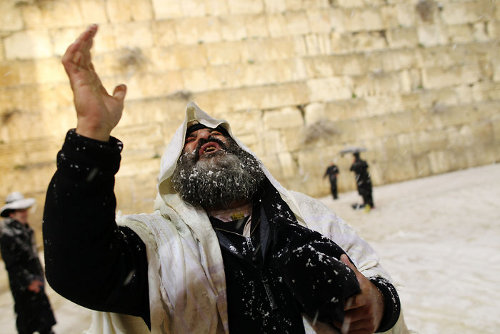

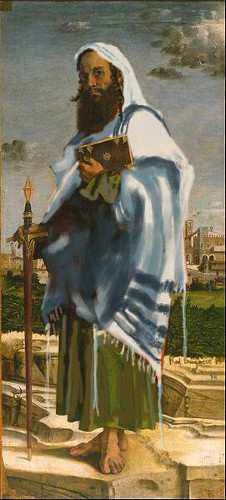





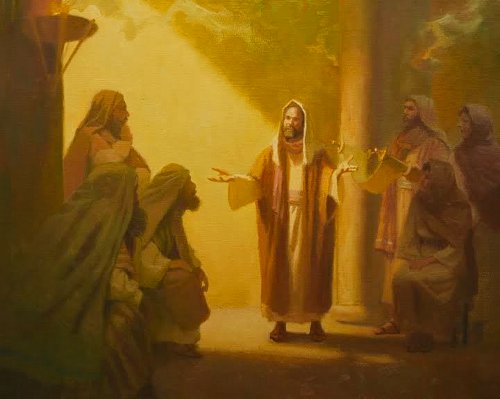




 Morning Meditations