Tag Archives: passover

Passover for Gentiles in the Diaspora, Not Jerusalem

But if a stranger sojourns with you, and celebrates the Passover to the LORD, let all his males be circumcised, and then let him come near to celebrate it; and he shall be like a native of the land. But no uncircumcised person may eat of it.

Exodus 12:48

Gentiles are welcome at the Passover table. The rituals of the Passover seder and the Feast of Unleavened Bread are designed to inspire curiosity. The children at the table, observing the unusual rites and foods, are supposed to be inspired to ask, “Why is this night different from all other nights?” The purpose of Passover is to transmit faith to the next generation, to the Jew first, but equally also to the Gentile.

from “No Uncircumcised Person”
Commentary on Torah Portion Bo
First Fruits of Zion (FFOZ)

I read this commentary the morning of New Year’s Eve 2013 and it makes sense as far as it goes, but it doesn’t go far enough.

Wait. Let me explain.

There may be some believing non-Jewish people who want to or who have attended a Passover seder. I attended my first seder decades ago, long before I became a believer. I worked with a young Jewish woman and we became friends. She invited me to the seder at her home one year, saying it was a mitzvah to invite Gentiles.

It’s a mitzvah for a Jew to invite a Gentile to eat at a Passover seder? Not according to Adath Shalom:

There is a well-established halachic ruling which forbids inviting a non-Jewish person to festival meals prescribed by the Torah, as opposed to those of Shabbat, where this is permitted. [Shulchan Aruch, Orach Chaim, 512.] The reason for the prohibition is that the law authorizing cooking in these days (in contrast to Shabbat) applies only for those who observe the laws of the festival, which is, of course, is not the case with non-Jews. This is not the place to detail the relevant sources. But we maintain that as long as certain precautions are taken, such as cooking for all of the guests together (and not in separated utensils) – one would not transgress the basic law.

That looks authoritative, but I’d never heard of Adath Shalom before, so I kept looking. Chabad.org seemed to have a somewhat different opinion.

What addressing the myth that “One may not have a Gentile at their Pesach Seder,” Rabbi Aryeh Citron writes:

Fact:

One may not invite a non-Jew to a Yom Tov meal unless Shabbat coincides with that Yom Tov. The reason for this is that one may inadvertently cook for the non-Jew on Yom Tov, which is forbidden. On Shabbat when one may not cook in any case, it is permitted to invite a non-Jew. (Orach Chaim 612:1, Shulchan Aruch HaRav ibid, 2.) If the non-Jew comes without being invited, one may feed him on a regular Yom Tov as well but may not cook or heat up food for him. There is no distinction between the Pesach Seder and other Yom Tov days in this regard.

Possible source of myth:

A gentile may not participate in eating the Paschal lamb in the era of the Holy Temple. (Exodus 12:43)

In addition, to commemorate the Paschal lamb, it is not considered proper to share the matzah from the Seder plate with a non-Jew. (Kaf HaChaim, 558:19 citing the Shelah)

That’s a little better, but the net result is that it would be better or at least easier for Jewish people to not invite Gentiles to their Passover seder.

I still wasn’t satisfied. My friend from long ago must have had a reason for saying that inviting me, a Goy, to her seder was a mitzvah. I know she was deeply rooted in her Jewish identity but she wasn’t always observant, so I don’t believe an Orthodox opinion is where she was coming from.

At Jewish Values Online I found the following question answered by an Orthodox Rabbi, a Conservative Rabbi, and a Reform Rabbi:

I invited a dear non-Jewish friend to my Pesach dinner for the second night. She wrote back stating that her other Jewish friends told her it would be inappropriate for her to attend. As a new Jew I find this off-putting. Were we not strangers in Egypt?
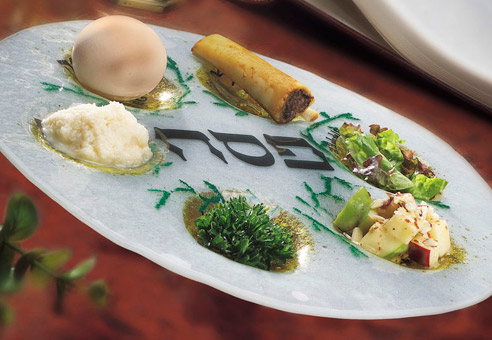
passover-bitter-herbs-sederIf you click the link I provided above, you can see the answers each Rabbi provided. In short, only the Orthodox Rabbi said “I would generally not encourage inviting non-Jewish friends to the seder.”

Both the Conservative and Reform Rabbis considered it permissible and even desirable to invite a non-Jew to a seder as a way to show kindness to strangers, “for you were strangers in the land of Egypt” (Ex. 22:21, Lev. 19:34, Deut. 10:19) and as an educational experience for the non-Jewish attendees.

But what about the FFOZ commentary? Every authority I’ve cited thus far is traditionally Jewish in the sense that they do not consider Yeshua (Jesus) as the Messiah, and therefore, would have no especially close association with Christians (in some cases, quite the reverse) or any other non-Jew. FFOZ is a Messianic Jewish educational ministry and on the matter of non-Jewish believers and the festivals, their viewpoint should be a lot different:

When we speak of Passover, we generally mean the entire Feast of Unleavened Bread. In the Torah, the term Passover (pesach, פםח) applies only to the sacrifice of the Passover lamb and its consumption. Exodus 12:48 prohibits an uncircumcised person from making a Passover sacrifice and eating a Passover lamb. The New American Standard version makes it sound like an uncircumcised person is prohibited from celebrating Passover in general, but the Hebrew makes it clear that such a person is only prohibited from sacrificing the lamb. This law applies to both Jews and Gentiles:

The same law shall apply to the native as to the stranger who sojourns among you. (Exodus 12:49)

An uncircumcised Jew and an uncircumcised Gentile are both forbidden from sacrificing or eating a Passover lamb. The Torah does not forbid them from keeping the Feast of Unleavened Bread, though. The law leaves them free to participate in the seder meal and keep the seven days of Unleavened Bread.

The matter, as was alluded to earlier in this blog post, isn’t the status of Gentile or Jew as such, but whether or not a non-circumcised person can make the paschal offering at the Temple. In most cases, it’s a foregone conclusion that Jewish males with any attachment to the Temple rituals in ancient times would be circumcised, so by definition, a Jew would be permitted to make the offering and then eat of it.
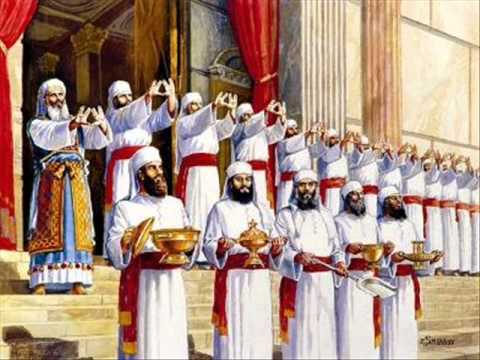
levites-aaronic-blessingGentiles, on the other hand, even those who were disciples of the Master in the late Second Temple period, would have been forbidden to make the Passover offering or eat of it. It even seems unlikely that they would be permitted to attend a seder in Jerusalem because the offering would be present at the table of the Jewish host and the Gentile would be forbidden to partake of it. Also, in most cases, Jewish tradition at that time made it extremely unlikely for any Jewish family to invite a Gentile to a seder fearing the non-Jew’s presence would make the entire meal unclean (see my review of the FFOZ TV episode All Foods Clean for details).

But in the diaspora, there was no access to the Temple because of the distance and Jewish families, particularly those who had come to faith in Messiah Yeshua, could invite believing Gentile friends to their Passover table, as there would be no sacrificed lamb.

According to the FFOZ commentary, that is all the more true today because the Temple currently does not exist. Passover can be a time of interfaith and cross-cultural fellowship between Jews and non-Jews. In the community of Messianic believers, in addition to what I just wrote, the Passover seder has greater meaning in the body of Yeshua, our Passover lamb, and this celebration offers a bond between Jew and Gentile in His Name, a reminder not only of Jewish redemption from Egypt, but of humanity’s redemption from sin.

But I mentioned that the FFOZ commentary didn’t go far enough. According to My Jewish Learning:

That Gentiles as well as Jews brought sacrifices to the Temple is implied in the prayer of Solomon when he dedicated the Temple (I Kings 8:41-3) and in the declaration by the prophet that the Temple will be a house of prayer for all peoples (Isaiah 56:7).

The Rabbis say (Hullin 13b): ‘Sacrifices are to be accepted from Gentiles as they are from Jews,’ although this saying dates from after the destruction of the Temple.

Even Orthodox Jews believe that Gentiles will have a role in offering sacrifices at the future Third Temple, according to AskNoah.org:

Gentiles were welcomed to the First and Second Temples in Jerusalem, and they will participate even more at the Third Temple – especially during the festival of Sukkot (Zech. 14:16). In his commentary on the Torah section beginning with Gen. 12:1, Ramban (Nachmanides) wrote:

“Even in the time of Joshua, … the Gentiles knew that this place was the most august of all, that it was at the center of the inhabited world; and Tradition had taught them that it corresponds in this world to the celestial Temple where Divine Majesty, called (righteousness), resides.”

When the First Temple was inaugurated by King Solomon, he beseeched G-d with an eloquent prayer that included the following words (Kings I, 8:41-43) (which show that in the past, Gentiles were welcomed to the First and Second Temples, and that they will participate even more in the Third Temple)…

So to bring this around full circle, we have an ancient prohibition against an uncircumcised person (Jew or Gentile) making and eating the Passover lamb offering, but it is permissible for an uncircumcised person (which in all likelihood, is a Gentile) to eat the seder meal when the Paschal lamb is not present, either because the seder is being held in the diaspora and/or because the Temple is not currently in existence.

We see that in ancient days, when the Temple did exist, the sacrifices of Gentiles were accepted and it is believed in Judaism that in the future Third Temple, the Gentiles may also make sacrifices and even have a greater role than in the past.

But what about making or even just eating the Passover lamb? In my opinion, even if a Gentile was circumcised (typically as a newborn for hygienic reasons), that is not sufficient for him to even eat of the sacrificed lamb much less make the offering. In Judaism, circumcision is the sign of the covenant and in the eyes of God, uniquely identifies Jewish males eight days of age and older. The requirement of only a circumcised man being allowed to make the sacrifice means that an ethnic Jew or one who has converted is permitted to make the sacrifice, and only born or converted Jews are allowed to eat of it.

The Sacrifice - detailI know there will be Christians who say the Third Temple will never be built because Christ is our Temple. And even if the Temple is built, I know there will be Christians who say that there will be no sacrifices because Christ is our sacrifice, the final sacrifice, the Passover Lamb of God, who takes away the sins of the world.

I believe, based on the article “Did Jesus Offer Sin Offerings – Part 1” written by David Matthews at AncientBible.net, that there is scholarly evidence to support Jesus having made sacrifices, perhaps even sin offerings (read the article for the details) in the Second Temple.

Also, Ezekiel 45:13-17 speaks of “the prince,” who very well may be the Messiah (although this is contested), making a number of offerings, so even in the age to come, we have some idea that there will be a Third Temple and possibly the Messiah will offer sacrifices on the altar in Jerusalem.

I know I’m stringing together a lot of “maybes” but I think these are “maybes” that can be supported by Biblical evidence, so don’t disregard out of hand what I’m suggesting.

I personally think there will be a Third Temple in the Messianic Era and in traditional Judaism, it is believed that one of the signs of the Messiah is that he will rebuild that Temple.

If the Temple is restored and sacrifices are made there as in days of old, then there’s no reason to believe that the Pesach offering will be overlooked or absent. That means, unless God decides to change His laws and to modify His decrees, that although Gentiles and Jews will be allowed to sit and eat at the same seder table in the diaspora on Pesach (but will there be any Jews living outside of Israel in those days?), this will not be so in the Land of Israel and in Jerusalem, City of David, as each Jewish family reclines at their table, opens the haggadah, and enters the mystery of why this night is different from all other nights.

It’s something that God has preserved for His Holy people, the Jewish people.

At the end of the Passover seder each year, we say, “Next year in Jerusalem.” I’ve never been to Jerusalem at Pesach or any other time. It is my heartfelt desire to visit the Holy City one day, either in this life or the one to come, Hashem be willing. But if next year Messiah returns and builds the Temple, and next year my Jewish family goes up to make the Pesach sacrifice in obedience to the Law of Moses, then I can’t possibly eat of it with them or even recline at the table with them (apart from the Mechilta commentary on Exodus 12:44 regarding non-Jewish slaves), unless one of you theologians out there has another understanding of all this.

Passover this year begins the evening of Monday, April 14th and concludes the evening of Tuesday, April 22. Chag Sameach Pesach.

Learn more about circumcision and the Passover Seder by reading Why is Elijah the Prophet Invited to the Seder?

Addendum: Since writing this, I wrote another Passover related blog post which received this knowledgeable response from reader ProclaimLiberty:

In that future Pesa’h scenario you pictured, you should certainly refrain from eating the lamb from the sacrifice, but if you have passed through a mikveh of cleansing you should not have to worry about rendering anything tamei by your presence at the table where there should be lots more to eat. This would be the sort of scenario that worried Kefa in Antioch when some visitors from Yakov’s orthodox MJ congregation in Jerusalem showed up. He wasn’t confident that he could convince them that these non-Jews had become purified per HaShem’s instructions and that it was OK to eat kosher meals with them. The notion of purifying non-Jews was still new and unfamiliar at that time. However, by the time of this future event in the messianic era, there should exist some familiarity already with non-Jews coming up to the Temple for festivals like Sukkot, so it shouldn’t be misunderstood if at least some who are properly prepared attend seders.

PassoverPerhaps my original assessment of the commandments around Pesach were a little too severe. If I’m going to make a mistake, I tend to err on the conservative side as far as Biblical requirements are concerned. If indeed, PL’s assessment is correct, then we intermarried Gentile believers will indeed be able to become purified and sit at the table with our families, partaking of the meal but not the Paschal offering in accordance with the commandments. That will require the proper frame of mind on the part of people like me, to celebrate the relationship between God and Israel as a member of the nations who is called by His name, honoring the specialness of the Jewish people by appreciating the imagery of them partaking of the Lamb as we support and defend the miracle of death passing over the Jews, as we, like the mixed ethnicities who originally joined with the Israelites in leaving Egypt, saw God through the lens of who He is to Israel.

Passover, Messianic Judaism, and Mutual Inclusiveness

Jewish wealth is not houses and gold. The everlasting Jewish wealth is: Being Jews who keep Torah and Mitzvot, and bringing into the world children and grandchildren who keep Torah and Mitzvot.

-from “Today’s Day” for Nissan 9 5703
Compiled and arranged by the Lubavitcher Rebbe, Rabbi Menachem Mendel Schneerson, of righteous memory, in 5703 (1943) from the talks and letters of the sixth Chabad Rebbe, Rabbi Yosef Yitzchak Schneersohn, of righteous memory.
Chabad.org

“The older I get, the more I realize how different it is to be a Jew in a Jewish place as opposed to a Jew in a non-Jewish place. It’s definitely a different feeling in terms of how freely you can be yourself and celebrate your culture and religion.”

-Natalie Portman

I have tried to pull back from my formerly self-imposed obligation of writing and posting a “morning meditation” each day (except for Shabbos). I typically plan to write only one or two blog posts each week. But I realize that, perhaps below the level of conscious thought, I’m actually leaving room in my schedule for those things I write spontaneously when I come across a compelling topic…

…like Jewish identity.

Jewish identity and the approach of Pesach (Passover). What do they have in common besides the obvious?

Our Sages assert that the Israelites in Egypt were on the lowest level of spiritual impurity. They worshipped idols. They were debauched and dissolute. So how did they merit the grand and miraculous redemption?

They had only three things going for them: They kept their Hebrew names, their Hebrew language, and their distinctive Hebrew dress. In other words, they retained their Jewish identity.

Wait a second! Didn’t you cringe when you found out that the biggest Ponzi scheme in history had been perpetuated by someone with a distinctly Jewish name? Wouldn’t we have preferred that instead of retaining his Jewish identity he had changed his name to Christopher Johnson?

What is the redemptive value of Jewish identity?

-Sara Yoheved Rigler
“Jewish Identity: Are You In or Out?”
Aish.com

In Christianity, one is redeemed by God due to faith in Jesus Christ. It’s not who we are, for Christ accepts everyone, regardless of heritage, background, nationality, language, walk of life, and so on. You aren’t saved by who you are but by what you believe, almost regardless of what you do about it (though to be fair, I know Christians who expect believers to live a transformed life in response to their faith).

But what Sara Yoheved Rigler is suggesting, is that Jews are redeemed by who they are, particularly in their outward appearance. What redeemed the ancient Israelites (according to the Sages) is that, regardless of worshiping idols and being enslaved, they retained an obvious Jewish identity.

Seems crazy, huh?

But according to Ms. Rigler, this isn’t just an issue for the Jews of antiquity, but it is a critical question for modern Judaism.

The question assumes particular importance in our generation. Indeed, the rates of adultery, domestic violence, addiction to drugs and porn, and murder for reasons as trifling as being cut off in traffic have skyrocketed in this generation. An objective look at our moral standing would produce a grim assessment.

Judaism promulgates a teleological worldview – that history is moving toward a specific goal, namely, the Redemption, or the Messianic era. So how can a generation as dissolute as ours be redeemed?

jewish-davening-by-waterI’ve written before about the necessity of a Jewish community for Messianic Jews and that one of the critical purposes of Jewish community for Jews in Messiah is to prevent them from being cut off from the world-wide community of Jews. But no matter how much or how well I think I’ve made my point, it’s one that is difficult for many others, including some Messianic Jews, to accept.

What many people read and hear is that I’m replacing Messiah with Judaism, as if Messiah and Judaism are mutually exclusive terms. Certainly the Chabad don’t think that, although they’d certainly disagree with me about the identity, function, and to a degree, purpose of the Messiah. On the other hand, they certainly expect him to arrive and don’t consider the desire for the coming of Messiah to eliminate their Jewish identity.

So where do we get the idea that Jews must stop being Jewish and stop having community with other Jews when they come to faith in Yeshua of Nazareth as Messiah?

From Christianity and Judaism, historically.

For nearly two-thousand years, any Jew who has realized that Jesus (Yeshua) is indeed the Messiah and desired to worship him and honor him has been required, by the Church (in its many and various forms) to renounce Jewish identity and Jewish practices and convert to (Gentile) Christianity. In its darkest days, the Church has resorted to various sanctions, torture, and even the threat of death to “convert” Jews to Christians. For Christianity, being Jewish and being a Christian are mutually exclusive terms.

To be fair, this is also considered true by most Jewish people. I’ve heard stories that in Orthodox Judaism, a friend or family member is mourned as if they died if they should become a Christian (I don’t know how true this is but I can see the point). Messianic Jews, that is, halachically Jewish people who come to faith in Yeshua as Messiah and yet retain their Jewish identity, continue to perform the mitzvot, and in all other ways, live a completely consistent Jewish life are still thought of as “Jews for Jesus” and tend to be shunned by secular and religious Jews alike.

In the Fall 2013 issue of Messiah Journal, Rabbi Stuart Dauermann wrote an impassioned plea that all Jews in Messiah must consider the Jewish people as Us, not Them, meaning that faith in Messiah should not and must not stand in between a Jew and all other Jews.

And many centuries ago, another Jew made a similar plea:

I am telling the truth in Christ, I am not lying, my conscience testifies with me in the Holy Spirit, that I have great sorrow and unceasing grief in my heart. For I could wish that I myself were accursed, separated from Christ for the sake of my brethren, my kinsmen according to the flesh, who are Israelites, to whom belongs the adoption as sons, and the glory and the covenants and the giving of the Law and the temple service and the promises, whose are the fathers, and from whom is the Christ according to the flesh, who is over all, God blessed forever. Amen.

Romans 9:1-5 (NASB)

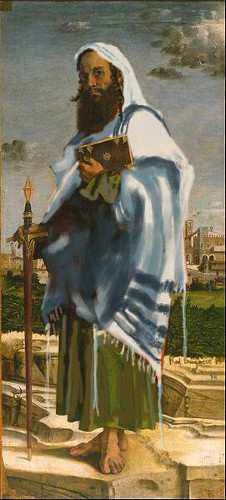
The Jewish PaulIn his faith in Messiah, Paul did not see himself as separated from the larger Jewish world or from other religious streams of Judaism. In fact, his love for his fellow (unbelieving) Jews was so great that he would have willingly become accursed and separated from the Messiah for the sake of other Jewish people, that they might see and accept Messiah as Paul did.

For Paul, the Jewish people, all of them, were “us” not “them.” Jewish identity and faith in Messiah were never at odds for Paul. Faith in Messiah was the natural extension of his being a ”Hebrew of Hebrews; as to the Law, a Pharisee…as to the righteousness which is in the Law, found blameless” (Philippians 3:5-6). It’s thought by many Christians that Paul was talking about his past, before “conversion,” since he mentioned his persecuting the church, yet he was speaking in the present tense when he said:

I am a Jew, born in Tarsus of Cilicia, but brought up in this city, educated under Gamaliel, strictly according to the law of our fathers, being zealous for God just as you all are today.

Acts 22:3 (NASB)

”Being zealous for God just as you all are today.” Paul was talking to a crowd of Jewish people. True, they were calling for his death, but that wasn’t because Paul surrendered his Jewish identity and was encouraging other Jews to do likewise, as the false allegations suggested. He remained a devout and faithful Jew and zealous for the Torah. His only “crime” was his fervent desire to also include Gentiles among the community of the redeemed.

Maimonides, in his code of Jewish Law, makes a startling pronouncement. He writes that a Jew who lives in isolation from the Jewish community, even if he keeps all the commandments, is considered a kofer b’ikar, a heretic. The implication is that identifying with the Jewish community is a basic value that underlies all the commandments.

Living among so many Gentiles for so much of his life must have taken a toll on Paul. I don’t know if the concept of kofer b’ikar existed in first century Judaism, but if it did, it may have been another reason the Jewish crowds in Acts 21-22 were so angry at Paul. He was a Jew who, because of his unique mission as an emissary to the Gentiles, didn’t spend a great deal of time in Jewish community. Yes, he went first to the Jew and then also to the Greek, but by the end of his third missionary journey, many Jewish communities in the diaspora were incensed with Paul because of the issue of the Gentiles.

This is a huge issue in Messianic Judaism today. This is one of the vital reasons why Messianic Jews must consider themselves as part of a larger Jewish community, not just a Messianic Jewish synagogue, but the overarching world of Jewry and affiliation and allegiance to national Israel. Even if a Messianic Jew is scrupulous in observing the Torah and faultless in performance of the mitzvot, outside of Jewish community, or more to the point, buried neck-deep in a community of Gentile believers, whether Messianic Gentiles or Evangelical Christians, the very real threat of kofer b’ikar and kareth exists.

Sara Yocheved Rigler

I’m not suggesting that all Messianic Jews abandon their relationship with non-Jewish believers or stop associating with non-Jews in Messianic Jewish religious spaces, but first and foremost, a Messianic Jew must continually grasp tightly to the fact that he or she is a Jew and part of the Jewish people, all of them, everywhere.

In her article, Ms. Rigler goes on to describe the different critical points in history when Jews could and often did renounce their Jewish identity through forced or voluntary conversion to Christianity or to blend in with American culture when emigrating to this country.

That’s why alarm bells rang a couple years ago when a study revealed that 50% of American Jews under the age of 35 would not consider it “a personal tragedy if the State of Israel ceased to exist.” Two months ago an American Congresswoman declared that the Jews of America had sold out Israel in their support of Obama’s diplomatic surrender to Iran’s nuclear program.

Today, the community of Jews in the diaspora and particularly in western nations, could easily be extinguished through assimilation. I don’t believe that’s what God wants but I do believe it’s what most Christians want as long as said-assimilated Jews assimilated into the Church.

But unlike why I, or rather Ms. Rigler said above, it’s not just about appearing Jewish:

Let’s be clear here. God wants the maximum from us Jews: love your neighbor as yourself; keep Shabbos; don’t speak lashon hara; keep kosher – the whole nine yards. But the minimum requirement to be redeemed is to identify as a Jew.

Jewish identity is where you start, not where you finish. Particularly for Jews in Messiah, it must be abundantly clear to all other Jews as well as to everyone else, that the Jewish person in Messiah is Jewish. That’s why it’s (in my opinion) not optional for a Jew in Messiah to observe the mitzvot. While the minimum requirement to identify as a Jew is good, it is much better to go the whole nine yards, so to speak, and to live a life indistinguishable from other religious Jews, regardless if the standard of observance is Orthodox, Conservative, or Reform.

Jewish identity is what prompted Kirk Douglas to fast every Yom Kippur. As he proudly stated, “I might be making a film, but I fasted.”

Jewish identity is what prompted Supreme Court Justice Ruth Bader Ginsburg to post a large silver mezuzah on the doorpost of her Supreme Court chambers.

Jewish identity is what prompted movie star Scarlet Johansson to stand up for Israel at the cost of her prestige as an Oxfam ambassador.

schiffman
R. Michael Schiffman

This morning, Rabbi Michael Schiffman, who grew up in Jericho, NY in a traditional Jewish family, wrote a simple and heartwarming blog post called Finding Yeshua. No, being a Jewish believer and living a life consistent with Judaism, Jewish identity, and affiliation with Jewish community does not replace or reduce Messiah. It simply puts everything in perspective.

Ms. Rigler ends her article this way:

The Passover Seder speaks about four sons. Only one of them is cast as “wicked.” As the Hagaddah states: “The wicked son, what does he say? ‘What is this service to you?’ ‘To you,’ but not to him. Because he excludes himself from the community, he is a heretic. … Say to him, ‘Because of what God did for me when I went out of Egypt.’ For me, but not for him, because if he would have been there, he would not have been redeemed.”

The first Passover marked the birth of the Jewish nation. Every Passover since poses the challenge to every Jew: Are you in or are you out?

If you are Jewish and you are a believer, how do you answer this question? Since I’m not Jewish, it’s not a question directed at me, but as a Messianic Gentile, I believe it is my duty to encourage believing Jews to answer “in.”

The Battle Between Easter and Passover

Passover and Easter are fast approaching, and I am still immersed in speaking and traveling in support of my book, Being Both. So I am reposting some essays from the archives. This one dates from the spring of 2010. Enjoy!

-Susan Katz Miller
“Passover: Three Generations of Interfaith Family”
On Being Both

The “collision” of Easter and Passover is hitting me particularly hard this year. Last year I “celebrated” both. I put that word in quotes because I had the traditional Passover seder in my home as I do every year, but for the first time in over a decade, I went to the “Resurrection Sunday” (they don’t call it “Easter”) service at the church I currently attend.

I remember that Sunday morning as I was leaving for services. It was too late to do anything about it and since I’d been going to church for months, I didn’t think my wife would mind. But as I was getting up to leave, the hurt I saw in her eyes was almost tangible. It was too late to stop and as I drove away from our house, I realized that this was probably the worst thing I could have done…attend an Easter service while being married to a Jew.

In the history of the Church how many passion plays were immediately followed by a pogrom?

I remember quite some number of years ago attending Shabbat services at our local Conservative/Reform synagogue. Everyone was talking about the Mel Gibson film The Passion of the Christ (2004) which had just been released. All of the Jewish people in the room were absolutely terrified.

In the history of the Church how many passion plays were immediately followed by a pogrom?

I’ve never seen “Passion” and I never will. I realize Evangelical Christians won’t understand my reasoning, but I know the film would just make me angry and I know bringing the DVD into my home would be insulting to my Jewish family.

Passover this year begins the evening of Monday, April 14th and concludes the evening of Tuesday, April 22nd. Easter Sunday is on April 20th. I’ve never really connected to Palm Sunday or Good Friday, so I’m pretty detached from the whole sequence of Easter related events. And yet, especially this year, Easter and Passover seem heavily intertwined.

This coming Sunday, the church service will be quite different from normal. Not only will Pastor be speaking about Passover, but the entire service will be geared around Pesach. No, I don’t mean they will be conducting a seder, but there will be “Passover related” music such as “My Passover Things,” “The Ballad of the Four Sons,” and “Don’t Sit on the Afikomen.” The program does include a couple of more traditional pieces of music such as “Dayeinu” and Hallel,” but when I first saw this in the church bulletin last week, I wasn’t sure if I wanted to attend or not. Also, and this is the heavy punctuation to the event, they will also be conducting a communion service. I don’t begin to know how to wrap my brain around a matzah-communion wafer mashup.

Normally, communion is only offered in the evening service at this church, perhaps as an inducement to get people to attend both morning and evening services. I haven’t taken an actual communion since first coming to faith as a Christian. I’ve always practiced ”Do this in remembrance of me” (Luke 22:19, 1 Corinthians 11:24) as part of my Passover observance. Communion, to me, seemed at least redundant if not a skewed path away from this additional meaning Messiah attached to the Pesach meal.

The problem of whether or not to attend became moot when I was asked to help a family move to their new home this coming weekend. This is a friend of my wife’s, a Jewish woman, a single mother with three sons, all with some degree of disability. I’ve helped out this family in small ways before and long-planned to be part of the “grunt labor” when it was time for them to move.

PassoverMy wife is slowly winding things up for our Pesach seder this year. She ordered the matzah for the meal from some place in Vermont that processes the matzah from the growing of the wheat through baking, packaging, and shipping the matzah. For the rest of the week of unleavened bread, we’ll be eating more local fare (although we’ve already opened a box and have started munching).

But while people like Susan Katz Miller can celebrate interfaith families and (apparently) not encounter significant dissonance between Christian and Jewish worlds, there are points in my life experience where I can’t avoid them. One point I faced was last year on Easter, uh…excuse me, Resurrection Sunday, as I was about to walk out the door and looked one more time at the expression on my Jewish wife’s face. I don’t think I can take seeing that hurt and feeling that guilt again.

But there’s another less personal but still important reason.

Imagine this alternate prophetic scenario, which I believe accords far better with the Jewish prophets than the New Testament’s version of the future, where the glorious multinational Church and Jesus are reunited. This is not a version of future events where Jews belatedly accept and worship the messiah they “murdered” two thousand years ago, and finally join the Church, feeling very sorry for not recognizing Jesus all along. The unfolding events looks (sic) decidedly different than what the authors of the gospels, Paul and the author of Revelation would have their readers believe. This is my reading of the Jewish prophets. I took some liberties with filling in the blanks.

-Gene Shlomovich
“The future of Israel, Messiah and the World (the Jewish version)”
Daily Minyan

LevitesGene has made it something of a mission to try to educate Christians, including Hebrew Roots Christians and Messianic Gentiles, of the error of our ways, and how the Bible does not really presuppose “the Church” in any form, but still allows the people of the nations to join with Israel in the worship of the God of Israel. But the people of the nations, including (especially) Christians, are much less Israel-friendly in his scenario.

The real Jewish messiah appears on the scene. He’s not Jesus, but a virtuous and devout Jewish man who is able to unite all Jews. While he knows full well the tradition of Davidic lineage of his family, he does not find it significant when it comes to himself, at least not at this time. After all, many Jews today are able to do the same. Coming from a deeply devout family which nevertheless identified with Jews of all walks of life and participated in the national life of Israel, he is both a scholar and experienced military leader. Humble and wise, he is respected by all sections of the Jewish society. He doesn’t call himself a messiah. In fact, just like his ancient predecessor, Moses, he doesn’t even know that he too one day will help lead Israel – only G-d does. Neither has he been anointed – this is still to come. Still, the nations of the world hate and oppose him and work against him, as they’ve done to every Jewish leader in Israel‘s history. Some already derogatorily speak of this Jewish leader as a false messiah, scorning and ridiculing the fact that he’s so respected by the Jewish people while Jesus has been rejected.

Indeed, he’s nothing what they expected to see in a messiah as Christianity long portrayed him – not the glorious all-powerful heavenly god-man coming back for his beloved Church. It does not take long for this leader of the Jewish nation to branded as the “antichrist”. Preachers preach fiery sermons in their churches against him and against the Jews who fell “under his spell just as Jesus, Paul and John predicted”. No Christian may believe in him or support him in any way, or they risk losing their salvation. Christian tourism to Israel dries up as do other forms of Christian support, with many Christians denominations joining the boycott of the Jewish nation. Jews are ridiculed for their “folly” and the New Testament is held up as having already predicted everything the Jews will do. Muslims, who along with Christians likewise believe that Jesus is the Messiah and that no one else fits the bill, also reject the leadership of the real Jewish Messiah and join with the Western world in their opposition to him and the nation of Israel.

This is the more traditional Jewish viewpoint of the Messiah, the last battle, and the ultimate victory of Israel over her enemies. Gene’s last mention of Jesus will seem particularly difficult for most Christians:

The idols of the nations which do not save (including Jesus) are destroyed, are put away for good and are remembered no more. All false prophets and idol worshipers will be ashamed – they will all realize that they inherited nothing but lies from their forefathers.

sunrise-easter-serviceWhile I consider Gene to be my friend, I am more than conscious of the gulf that lies between us, it’s incredible width, it’s gaping depth, because while I believe (unlike most Christians) in the primacy of Israel and that it will not be replaced by “the Church” as God’s central focus of devotion, love, and the receiver of all the covenant promises, our perception of not only the identity of Messiah, but of his very nature, character, role, and mission as Israel’s King are dramatically different and tremendously at odds.

And as Gene knows quite well, having personally experienced persecution as a Jew in his native Russia, after every passion play, there is a pogrom.

We don’t have pogroms as such in America in the 21st century, but the very act of celebrating Easter is bound to send out some sort of spiritual tremor into the atmosphere that is keenly felt by many Jews. Certainly in interfaith families, it is unavoidable. A collision of Easter and Passover.

My own answer this year will be to not attend Easter or Resurrection Day services. I’m not even sure that Jesus intended to add Easter to the calendar of religious moedim and I’m sure he didn’t intend for Easter to actually replace Passover.

Today, churches all over the U.S. pay some sort of attention to Passover. It’s usually the one festival of Judaism Christians know something about, thanks to the “Last Supper” of Jesus. One of the Jewish Christians at the church I attend will be holding a Passover seder and is inviting anyone in the church who wants to attend. Church and the Passover. It almost seems like an oxymoron.

What will Passover be like in the Messianic Age? My guess is that, from Gene’s point of view, “reformed Christians” will not be attending, at least to eat the Pascal meal, since only men who are circumcised may eat of the sacrifice in the Messiah-built temple. From the Church’s point of view, while some Christians believe there will be a third temple, many more believe that since “Christ is our sacrifice,” the actual sacrificial system will not be reinitiated, and therefore, there will be no Passover sacrifice.

If anyone celebrates Passover, it will be as a memorial of Christ’s Last Supper. Probably the expectation is that since Communion seems to have replaced Passover, that will be the more significant event.

Even from my point of view, one that holds the belief in a third temple, in the return of the sacrifices, and the continued commemoration of all of the moadim, including Passover, I can’t see how I, an uncircumcised male, would be able to eat of the Pascal offering with my Jewish family (assuming they made the pilgrimage to Jerusalem for Pesach) or even sit at the same table with them, lest my presence render the offering tamei (unclean).

i_give_upI know Christians and Hebrew Roots Gentiles will say that I’m rebuilding the dividing wall between Gentiles and Jews, but the Bible is the Bible. I can’t simply ignore certain parts of God’s Word because it’s inconvenient to Christian theology. I must not allow myself to stand in the way of God’s special, chosen people, the Jewish people. I believe there are personal sacrifices all believing Gentiles must make for the sake of Israel.

Only God can heal the nations after the terrible wars against Israel that will occur in the future. Only God can heal the rift between believing Gentiles and the Jewish people. For Gene, that healing comes at the price of our faith in Jesus as the Messiah. From my point of view, it comes at the price of Christian arrogant presumption that they (we) are the center of God’s universe and that the Jews either mean nothing at all, or at least have been reduced to “shield carriers” standing silently in the background of our tragic play.

Only God can heal how distant I feel from Him sometimes, and how distant I can feel from Jewish people, even in my own family, because of my faith.

Only God can heal us…

A Christian Brings a Tanakh to Sunday School

jerusalem_templeSome people believe the 4 spring holidays (Passover, Unleavened Bread, Firstfruits, and Feast of Weeks/Pentacost) were fulfilled in Messiah’s 1st coming and that the 3 autumn holidays (Feast of Trumpets, Day of Atonement, and Feast of Booths/Tabernacles) will be fulfilled at his 2nd coming.

-from Sunday School study notes
for August 4th, “Leviticus 23, Feasts of Israel: God’s Picture of Things to Come”

Help.

I knew Pastor Randy was going to start giving a series of sermons on the Festivals to better educate folks about their past and future (and hopefully their present) meaning. I forgot that meant my Sunday School class would be teaching on them too, since my class “mirrors” the Pastor’s sermons.

I like my Sunday School teacher but in many ways he has a very “basic” approach to the Bible, that is to say, very basically Christian. I’ve had to bite my tongue on a few occasions during a study rather than open a can of worms that would not easily be closed again.

To his credit, the teacher came up to me before the start of class today and said he expected I’d have a lot to say about next week’s lesson. That’s something of an understatement. I plan to really do my homework this weekend, come prepared with a lot of notes, and bring my Stone Edition Tanakh for good measure.

What’s kind of scary is that the Festivals won’t be approached based on their own merit, but on their “symbolic meaning” relative to Jesus and all that “fulfilling” stuff.

Really, Passover has been “fulfilled?” I’m not sure what that’s even supposed to mean. Does that mean it’s over. No more Pesach seders? Then why did Jesus say “do this in remembrance of Me” (Luke 22:19)? Oh. Am I supposed to believe that the sacrament of communion replaced Passover? What happens when the Temple is rebuilt? Will there be no Pesach sacrifices because Jesus “fulfilled” Passover?

Actually, I told my teacher that I do sometimes keep my mouth shut and my opinions to myself in his class on various occasions. Our conversation was light-hearted but I know I’m going to have concerns over the next two months. I won’t be as quiet as I have been in the past. I can’t be.

Actually, in preaching on Acts 14:21-28, I encountered my Pastor’s opinion on Shabbat as applied to Christians. This section of Acts addresses the end of Paul’s “first missionary trip” and his return to Syrian Antioch. Although the text doesn’t actually say Paul and his team rested, it’s assumed that once they returned to their “home church,” they may have taken it easy for a bit.

Both Pastor and my Sunday School teacher emphasized the importance of taking a break from our duties to recharge our “spiritual batteries,” so to speak. Pastor went so far as to mention the Shabbat, “but not in a legalistic sense” (Oy). He did say that he felt it was important to take one day out of the week as a day of total rest. That day can’t be Sunday for him since it’s his busiest day, but every Monday, he and his wife spend the day at their cabin. No phone and no Internet. Just taking it easy and pursuing some personal activities and projects.

From the way he’s described it to me, it doesn’t sound like a “Jewish” Shabbat as such, but it is a day of rest. However, Pastor says we can choose whatever day we want. I don’t see that in the Bible, but then, he’s not going to be preaching a Saturday Shabbat to his congregation, either.

levites-aaronic-blessingAs an aside, in ancient times, the Kohenim (Levitical Priesthood) also worked on Shabbat and yet were held blameless (Matthew 12:5). I wonder when they rested? Of course, in the days of Jesus, the Priests worked on a rotational basis, so maybe it wasn’t as bad as all that. However, what about Rabbis working on Shabbat? But I digress.

I wonder if Pastor or anyone else at church would consider actually observing a Saturday Shabbat as “legalistic,” particularly if observed from sunset Friday to sunset Saturday and abstaining from some form of the Melachot or the thirty-nine types of work traditionally forbidden on Shabbos? Would it be legalistic to observe Shabbat because it honors God as the Creator rather than just because we need a rest?

Christianity didn’t switch Shabbat from Saturday to Sunday, they eliminated it altogether. Few Christians treat Sunday the way a religious Jew observes Shabbat, not even close. I think the church surrendering the Sabbath and its traditional observance was like Christianity shooting itself in the foot. Could you imagine the enormous relief and freedom we could experience if we didn’t choose to treat Sunday pretty much like any other day of the week?

That’s pretty much what I’m going to be addressing at church for the next two months. I’m actually kind of excited to hear what Pastor is going to say about the Festivals, but I’m also kind of dreading how it’s going to play in Sunday School. I’m going to go. In some ways, I really want to go. And I’m going to give input. People have become aware of my basic leanings and seem to be OK with it, but this will be the real test.

People are going to find out that in my own small way, I do observe the Festivals. My wife and kids being Jewish, we have a family seder each spring and I build a sukkah in our backyard each fall. I eat matzah instead of leavened products for the eight days of unleavened bread. And although I don’t always fast on Yom Kippur, I have done so periodically in solidarity with the Jewish people.

Too bad this didn’t come up before Tisha B’Av.

I’m sure I’ll have more to say after next Sunday’s message and Bible school study. This is where my real life experience and the mission illustrated in Boaz Michael’s book Tent of David intersect, hopefully not to forcefully, though.


He Will Come

LionIn that day, the stock of Jesse that has remained standing shall become a standard to peoples — Nations shall seek his counsel and his abode shall be honored.

In that day, My Lord will apply His hand again to redeeming the other part of His people from Assyria — as also from Egypt, Pathros, Nubia, Elam, Shinar, Hamath, and the coastlands.

He will hold up a signal to the nations and assemble the banished of Israel, and gather the dispersed of Judah from the four corners of the earth.

Isaiah 11:10-12 (JPS Tanakh)

This passage from Isaiah is part of the readings for the last day of Pesach (Passover) which ends at sundown today (Tuesday). For any Christian, the imagery is immediately recognizable as describing Christ, and for a religious Jew, the Messiah is surely appearing here. We see part of the Messianic prophesy and what the King will do upon his return, such as bringing the scattered of Israel back to their nation from the four corners of the earth. He will also be a standard and a banner attracting we from the nations to seek his counsel and to honor his abode, which is the rebuilt Temple in Holy Jerusalem.

The last day of Pesach sends a message of hope to both the Jewish people and all human beings on earth that the Messiah will gather us all to him and he will be our King. Revelation 2:27 speaks of Messiah “ruling with a rod of iron,” which doesn’t sound pleasant, but it shows that King Messiah will have dominion and authority over everything and everyone. The Bible speaks at length about the Messiah and his rule.

It shall come to pass in the latter days
that the mountain of the house of the Lord
shall be established as the highest of the mountains,
and it shall be lifted up above the hills;
and peoples shall flow to it,
and many nations shall come, and say:
“Come, let us go up to the mountain of the Lord,
to the house of the God of Jacob,
that he may teach us his ways
and that we may walk in his paths.”
For out of Zion shall go forth the law,
and the word of the Lord from Jerusalem.

Micah 4:1-2

For the children of Israel shall dwell many days without king or prince, without sacrifice or pillar, without ephod or household gods. Afterward the children of Israel shall return and seek the Lord their God, and David their king, and they shall come in fear to the Lord and to his goodness in the latter days.

Hosea 3:4-5

While we in the church firmly understand and believe in the Christ, the Moshiach, in the person of Jesus; that he walked the earth once before and will dwell among us again, this has yet to be discovered by many, both Gentile and Jewish. But is can be discovered, just by watching Jesus and listening to him. Even a simple fisherman saw this.

When Jesus came to the region of Caesarea Philippi, he asked his disciples, “Who do people say the Son of Man is?”

They replied, “Some say John the Baptist; others say Elijah; and still others, Jeremiah or one of the prophets.”

“But what about you?” he asked. “Who do you say I am?”

Simon Peter answered, “You are the Messiah, the Son of the living God.”

Matthew 16:13-16

Who is Moshiach?Religious Jews all over the world desperately await Messiah, crying out to him, “How long?” In case you haven’t noticed, the world is a mess and particularly for the Jewish people, and particularly for the Jewish nation Israel, these are very hazardous times. Of course, times are always hazardous for the Jews and for Israel. It seems to be built into the very fabric of their existence that the world will always be against them. That is why it is so important for we Christians to support and uplift them. Many promises have been made about what Messiah will do for his people Israel and if the church isn’t standing for Messiah and for his nation and people Israel, then we stand against them; against Christ, very much at our own peril.

In writing about Moshiach (Messiah), the Rambam states in his Code of Law, Yad HaChazakah : “Whoever does not believe in him or does not await his coming, denies not only [the statements of] the other prophets, but also [those of] the Torah and of Moshe, our teacher, for the Torah attests to his coming, stating: ‘And the L-rd your G-d will bring back your captivity and have compassion upon you.’

-Based on the teachings of the Lubavitcher Rebbe
Rabbi Menachem M. Schneerson for Torah Portion Balak
“The Prophecies of Bilam”
Chabad.org

In honoring the week of Unleavened Bread by eating only matzoh and reading the daily readings for this season, we temporarily draw closer to Messiah and draw him closer to us. The church also celebrates Resurrection Day bringing glory to the risen King and looking to the hope of his return, even as the Jewish people look to his coming.

Our only hope is in continuing to believe that he will come, even as it says in the twelfth of Rambam’s Thirteen Principles of Faith:

I believe with complete faith in the coming of the Messiah. And even though he may delay, nevertheless, every day I anticipate that he will come.

A couple of years ago at this season, I wrote a blog post called Why Don’t Christians Count the Omer? It’s a serious question, since Jews and Christians both share Shavuot, though we in the church call it Pentecost. There’s another reason I ask the question, though. Jews and Christians also share the same desire and the same hope for Messiah, though we understand his specific identity differently. The person is the same person (most Jews will disagree with me, of course) and the hope is the same hope. Given that, why don’t we bind our anticipation together?

Could the Messiah return on Shavuot/Pentecost? There’s no way to know for sure. If he does, then counting the Omer is sort of like a “countdown” for Messiah’s appearance as we anticipate his “coming with the clouds of heaven” (Mark 14:62).

waiting-for-mannaA blogger who has asked to remain anonymous speaks of the Christian appropriation of Judaism and particularly the co-opting of the Seder for the Communion story, but while I share her desire to protect Judaism from Christian misuse, I can’t help but see the parallels. I can’t help but see my Christ and my King in the classic Jewish and Christian texts. The Messiah is there, and for those who believe, we are all waiting for him.

His “face” has been very visible and clear to me this week and I wonder, shouldn’t all Christians be celebrating Pesach, not to steal from the Jews, but to come along side them, joining our hope with theirs? Shouldn’t we also be counting the Omer, not to appear more “Jewish” but to long for the Messiah we see in the ancient Holy texts of Israel?

A bottom line requisite to bring about redemption is to eagerly “await” the Messiah with a genuine burning desire. Whether he comes in our time or, God forbid, not, we are both held accountable and credited for the quest. Nothing stands in the path of willing. We must will, long, yearn, desire, quest, beseech and pray. But as to the actualization of that long awaited promise, we must defer to the unfathomable wisdom of the Almighty.

-Rebbetzin Feige Twerski
“Bringing the Messiah”
Aish.com

Rebbetzin Twerski concludes her article by inspiring her readers to be mindful of their actions, always behaving in a manner that pursues Messiah rather than material things, to pray for others, for an end to misery in the world, and an end to the pain of God, who some Jews believe suffers right along with His Creation. And she tells us to hope, yearn, anticipate and have faith.

As it is said, “I believe with complete faith in the coming of the Messiah. And even though he may delay, nevertheless, every day I anticipate that he will come.”

Being Filled

jewish-temple-messiahWe celebrated Easter this year with our community of Christian and Jewish interfaith families. Our minister started off by pointing out that Easter is not in the Bible, and that our holiday traditions make reference to ancient goddesses, and the fertility rites of spring. She then gathered the children together and talked to them about the Buddhist metaphor of a cup of tea representing the comforting memories of life after the tea bag (or body) is gone. She’s not your typical minister.

Next, our rabbi gave an adult sermon about the themes of intimacy, transcendence and unity in the story of the resurrection of Jesus. Somehow, the idea of life beyond death, of renewal and regeneration, seemed completely universal to me as he spoke. As a Jew, I do not feel I need to believe in a messiah or a personal savior in order to celebrate these Easter messages. Our rabbi spent his career at Georgetown, knows his gospels, and has been called a “closet Catholic” by Catholic friends. And yet, he’s an erudite, dedicated and deeply spiritual Jew. He’s not your typical rabbi.

After our Easter morning with Christians and Jews, I made a quick change out of my pastel dress and Easter bonnet and into a bold print Senegalese outfit, in order to join a community of Catholics and Muslims for our second Easter event of the day, a gathering of the local Catholic Senegalese association. We had the great fortune to be invited to this event by two Senegalese-American friends, one Catholic and one Muslim, who are cousins from an interfaith family, and who know that my husband and I crave Senegalese food and company ever since our years in Dakar. Intermarriage between Muslims and Catholics is not uncommon in Senegal. In fact, both of the Muslim Presidents of Senegal I interviewed as a journalist (Abdou Diouf and Abdoulaye Wade) had Catholic wives.

-Susan Katz Miller
from “My Easter with Christians, Jews and Muslims”
On Being Both

There is even a Chassidic custom, instituted by the Baal Shem Tov and further developed by the Rebbes of Chabad, to conduct a “mirror-seder” in the closing hours of the last day of Passover, complete with matzah and four cups of wine. These are hours, say the Chassidic masters, when time relinquishes its last hold upon our lives; when the future, too, can be remembered, and the Era of Moshiach tasted and digested as the Exodus is on the seder night.

-Rabbi Yanki Tauber
“The Third Seder”
Chabad.org

Ever since Easter Sunday services and particularly this morning, I’ve been feeling a profound sense of disconnection or maybe it’s just disappointment. I don’t know what it is, but I don’t like it.

I don’t know what I expected out of Easter or Resurrection Day, but whatever it was, I didn’t get it. Then I read Susan Katz Miller’s article, which I partially quoted from above, and I was captivated by the variety and “differentness” of her intermarriage, multicultural celebration of the resurrection. I’m sure a staunch Christian would be set back on his/her heels by even reading of, let alone participating in, such a “mash-up” of different religious practices and calling it “Easter,” but then I can see the meaning infused in this series of events, meant to speak to people from different religious backgrounds and to bring them all together in the service of the King.

I’m not setting aside the idea that God is an objective God and that His understanding of Himself is the understanding of God, but human beings are highly variable. Even within this thing we call “Christianity,” there are hundreds or perhaps even thousands of different and distinct expressions, theologies, doctrines, and dogmas. That’s why we have such a tough time getting along with each other.

meal-of-moshiachAnd yet, Katz Miller deftly merges these different traditions together within the span of a short blog post, and makes them live together, if not seamlessly, then at least in a complementary manner. I mean, how many different ways and different cultural and religious contexts can be applied to the resurrection and still have a proper celebration? Easter is a tradition, not a mitzvah (at least not one explicitly expressed in scripture), so how far can it be extended beyond Christian choirs, ham dinners, cries of “He has risen,” and still remain “kosher?”

In the seventeenth century the founder of the Chassidic movement, Rabbi Israel ben Eliezer (the Baal Shem Tov) instituted a new custom for the last day of Passover. He called it the Meal of Messiah (Seudat Mashiach,סעודת משיח ). It consisted of a special, additional meal on the afternoon of the last day of Passover, paralleling the traditional third meal of Shabbat. The Baal Shem Tov emphasized that the main component of the meal was matzah. After all, it was the last meal on the last day of Chag HaMatzot, the feast of Unleavened Bread. A few generations later, the Rebbe Rashab (1860-1920) added the custom of four cups of wine, mirroring the seder of the first night. Some Chassidic Jews still celebrate this special Messiah seder on the last day of the festival. They gather together to end the festival with matzah, four cups of wine, and a special focus on the Messiah.

The entire theme of the meal focuses on the coming of Messiah and the final redemption. The meal is festive in spirit. Everyone wishes one another “L’chayim! (to life!)” while discussing their insights into Messiah and their dreams and hopes for the Messianic Era. The meal concludes with fervent singing and dancing in joyous elation over the promise of the Messianic redemption.

What is the connection between the last day of Passover and the coming of Messiah? The Tzemach Tzedek writes:

The last day of Pesach is the conclusion of that which began on the first night of Pesach. The first night of Pesach is our festival commemorating our redemption from Egypt by the Holy One, Blessed be He. It was the first redemption, carried out through Moshe Rabbeinu, who was the first redeemer; it was the beginning. The last day of Pesach is our festival commemorating the final redemption, when the Holy One, Blessed be He, will redeem us from the last exile through our righteous Moshiach, who is the final redeemer. The first day of Pesach is Moshe Rabbeinu’s festival; the last day of Pesach is Moshiach’s festival.

One is incomplete without the other: the first redemption is connected to the last. The sages say, “In Nisan they were redeemed and in Nisan they will be redeemed in the time to come.” In fact the prophet Jeremiah tells us that the second exodus will be so great that it will overshadow the first.

-Boaz Michael
“What is the Meal of Messiah? Part 2 of 3”
First Fruits of Zion (FFOZ)

I suppose there is a limit to how much diversity we can cram into Easter, and certainly the Baal Shem Tov’s creation of this meal probably exceeds the comfort zone of even the most liberal church, but if we consider the themes being introduced and recall that the Messiah is irrefutably, irreducibly Jewish, then we must allow the celebration of the resurrection of King Messiah to also be cast in a Jewish mold and produced as a Jewish rite and tradition.

And yet, as I said above, the Messiah also transcends Judaism and extends himself to all of the people groups and nations of the world.

“Thus it is written, that the Christ should suffer and on the third day rise from the dead, and that repentance and forgiveness of sins should be proclaimed in his name to all nations, beginning from Jerusalem.”

Luke 24:46-47

multicultural-celebrationWhat is Easter like for the Christians in Egypt, for the Christians in China, for the Christians in Norway, for the Christians in New Zealand? How many different peoples have how many different traditions to commemorate the risen King and the resurrected Jesus? What do they look like? What foods are eaten? What prayers are said? What songs are sung?

I imagine if you could gather representatives of the faith from each nation and province from the four corners of the earth, and have them join together to celebrate Resurrection Day, you’d get a set of observances something like what we see on Susan Katz Miller’s blog. Add the Meal of the Messiah on the last day of Matzot and it would be complete.

The Messiah is the hope of the Jewish nation and the King of the House of David, but although he first and foremost came for the lost sheep of Israel, we also see that he came for humanity. God so loved the world that He gave His only and unique son so that none should be lost but all who choose to come to faith should be saved.

What am I looking for? In my small corner of the world, perhaps it cannot be found. But if I can transcend my world, what I want to discover is this:

Some Chassidic sources say that participation in the Meal of Messiah causes the person to carry the light of Messiah within him throughout the rest of the year and thus it infuses every action of his day. It foreshadows the Messianic Era when all mankind will be saturated with Godliness. Through this feast, the Chassid hopes that he has connected with the very soul of Messiah.

Boaz Michael’s words express my desire for what I think we are all looking for…hope. Hope in the future, hope that there is a future, hope that our lives have meaning beyond the day-to-day routine and rut of existence, hope that there is a God and that He loves us, hope that we are more than we think we are, and that we can do more than the world around thinks we’re capable of.

Rabbi Tauber says of Passover:

The “first days” with its seders and its reliving of history, and the “final days” with its messianic themes — days that herald the divine goodness and perfection which, the prophets promise us, is the end-goal of creation and the fulfillment of our present-day lives.

What I was looking for, and what I’m still looking for is the encounter with the infinite, and to be filled full of the promises of the prophets, and the final promise, the Messiah, the end-goal of creation.

Someday, we are told that we will sit at the banquet table of Abraham, Isaac, and Jacob, each of us from the north, south, east, and west who proclaims Messiah, and we will eat of that meal

Jesus said to them, “I am the bread of life; whoever comes to me shall not hunger, and whoever believes in me shall never thirst.

John 6:35

…and be filled.