Tag Archives: peace

Minister of Peace

“Reorganizing the letters of shalom spells out moshel (king). The purpose of a true king is to make peace. King Solomon’s name means ‘peace.'”

Rabbi Yitzchak Ginsburgh
found on twitter

For to us a child is born,
to us a son is given;
and the government shall be upon his shoulder,
and his name shall be called
Wonderful Counselor, Mighty God,
Everlasting Father, Prince of Peace.

Isaiah 9:6 (ESV)

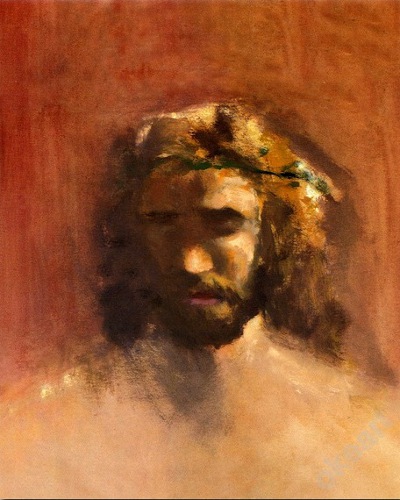
Most Christians will immediately connect the words of Rabbi Ginsburgh with the passage from Isaiah and arrive at the Messiah, the Savior, Jesus Christ, the Prince of Peace. He came as a teacher and prophet, a humble man of God, who was led like a lamb to the slaughter. He will one day return as the Lion of Judah, the conquering King of the Jews, who will restore Israel to a place of high honor and bring peace to all the world.

In Rabbi Ginsburgh’s blog post The secret of peace, he describes the following:

In the Torah portion of Behar, we read that as a consequence of observing the sabbatical and jubilee years, God’s promises us, “…You shall settle the land securely… and you shall settle securely upon it.” This twice repeated promise recurs a third time at the beginning of the next Torah portion, Bechukotai, which is often read in conjunction with the portion of Behar: “And you shall settle securely in your land,” and is immediately followed by the blessing of peace, “And I will grant peace in the land.” Rashi asks, “If you were to say, ‘We have food and we have drink, but if there is no peace then they are worthless!’ for this reason the Torah continues, ‘I will grant peace in the land.’” From here we learn that peace is as important as the sum of all other blessings.” Another blessing that concludes with “peace” is the Priestly Blessing. The Amidah, the main prayer repeated three times a day, also concludes with a blessing for peace. Peace is the link that connects all the prophetic visions of the ultimate redemption and it is the universal catchword and today, everyone wants peace…

We are promised peace in the days of the Messiah, but we are not content to wait (and it’s difficult to be content when there’s no peace). We want our peace; our shalom right now. But in a world of chaos and turmoil, where can it be found?

We seek peace everywhere; with our families and friends, with our neighbors and co-workers, in every area of our lives, but we don’t often find it. We substitute true peace for temporary entertainment and distraction, and the desire to distract ourselves has become a multi-billion dollar industry (just look how well the movie The Avengers has done at the box office recently). I’m not sure that even people of faith can find a true and lasting peace in the world around us. Is it any wonder that those who do not even seek God can find no true and lasting peace at all?

So we wait for the Prince of Peace to come. Rabbi Ginsburgh’s commentary continues:

Obviously, the messianic goal doesn’t end with peace amongst Jews alone, but aims even higher, to achieve universal peace. The Mashiach will teach the entire world how to make true peace: peace between the soul and the body, family harmony, fraternal peace, peace between Jews and the nations, and peace between all of humanity. As the prophet Zechariah said of the Mashiach, “And he shall speak peace to the nations, and his rule shall be from the sea to the west and from the river to the ends of the earth.” [The word “peace” (shalom) appears explicitly in this verse, and in the initial letters of the words, “peace to the nations, and his rule shall be from the sea.”] World peace does not marginalize the unique light of the Jewish nation. On the contrary, the peace that spreads out so far, “to the ends of the earth,” is the perfect setting from the special qualities of the Jewish nation to be revealed, for in the end, peace between Jewish souls comes from the most exalted source of all.

The Master said that Salvation is from the Jews,” (John 4:22) but then, so is peace. This is another reason why we Christians, and indeed, the entire world, owes the Jews a debt that can never be repaid. It is their King who will finally come and bring peace for everyone, not just the nation of Israel, but the nations of the earth.

…but they shall sit every man under his vine and under his fig tree, and no one shall make them afraid, for the mouth of the Lord of hosts has spoken. –Micah 4:4 (ESV)

In spite of what I said before, Rabbi Ginsburgh believes we can achieve a sort of peace in the present world through pursuing righteousness.

These three circles of peace can help us understand Rabbi Shimon bar Yochai’s words in the Zohar regarding the Mashiach, who is called, “the minister of peace” – “The minister of peace is a righteous person who is at peace with the world, at peace in the home [peace among Jews] and at peace with the Divine Presence.” These three circles of peace form a progression, with each higher than the previous one. We hope to see all three revealed speedily in our days by the minister of peace, the Mashiach.

It’s interesting that Rabbi Ginsburgh says that a righteous person is at peace with the Divine Presence rather than at peace with God. The Divine Presence, also known as the Shekhinah, is that expression of God which descended upon the Tabernacle in the desert (and later Solomon’s Temple) and inhabited it; God dwelling among His people. This is just an opinion, but maybe we weren’t designed to understand peace between us and the great, unknowable Ein Sof God, but only that expression of the Divine that allows itself to enter into our world.

Is that the secret to being at peace with God, by being at peace with the Minister of Peace, the blood of the prince, the “I am” who was before Abraham, the Messiah, Jesus?

Learning to Breathe

Breath, the inhale and exhale, marking life itself. From the first breath to the last, the constant inhale and exhale signifies vitality.

Take a moment to experience it. Breathe deeply. Fill your lungs with the fresh, pure oxygen. This inhale represents your very inner, core essence; your very being in life. It signifies who you are.

Now, release it; let it all out. Witness your breath exiting and meshing with your surrounding. This represents your doing in life, your impacting on the outside world and accomplishing. Your inhale is self-preservation, defining your own boundaries of self. Your exhale is your universal imprint on the society and world around you.

All beings and any life force experience this duality of inner and outer; inner parameters and boundaries versus outer affects and imprints. Who it is and what it does. The protection of its inherent boundaries, and its reaching out to the world.

The greater a life force the more evident is its inhale and exhale.

-Chana Weisberg
“In and Out”
Chassidic Thought
Chabad.org

I’ve been looking for ways to unload my surplus stress and to reorganize my life around life, rather than around anxiety, depression, and despair. (OK, things aren’t quite that bad, but still…) After “plumping up” over the past few months, I’ve returned to the gym in a (vain) attempt to dump my belly fat and to fit more comfortably in my jeans.

I’m also trying to fit more comfortably inside my skin and my skull and my being.

It’s no secret that I’ve been struggling a bit lately, as evidenced by my family’s Passover Seder as well as other recent events. Although I know that the struggle with mortality and humanity is unavoidable, it’s still difficult to let go and to integrate all of the ugly little bits and pieces of reality into my life, rather than shunning them. I need some way to reminding myself, even at the worst of times, that God has not disappeared down the cosmic rabbit hole and escaped my angst and anguish.

I’m trying to learn how to breathe.

Obviously, I know how to breathe and I’m not talking about some esoteric or mystic breathing technique used during deep meditation. Well, not exactly. I was remembering a quote from a few episodes of Star Trek Voyager, where the character Tuvok (played by Tim Russ) in assisting another member of the crew to meditate. Tuvok would say something like, “Turn your attention to the white light that is your breath..”

I can’t remember the exact quote and my Googling skills have failed me. (but thanks to the helpful commenter (see below) for supplying the correct link and quote) However, I try to imagine my breath as a white light as I breathe in and out during exercise. This image is especially helpful during the last five minutes of an aerobic workout, when I’m trying to reduce my heart rate back to some semblance of normalcy, rather than trying to go from 156 to 70 in a single, sudden stop. I’m actually able to close my eyes and visualize the light as it goes in and out of my mouth and lungs.

With my legs still moving on the machine, I can imagine myself on a trail. It is narrow, with the forest on either side of me. The trail is going up and I can see the crest of the hill ahead of me. There’s a point where the sky meets the ground that is a bright, white light. My breath seems to go to and come from that light. I realize that I’m getting closer to the top and the light is getting brighter. And yet, I’m not able to get too close.

I know that the light is God and that, in those few short moments as I’m encouraging my body to go from working very hard to beginning to calm down, I’m also approaching that calm with my mind, my feelings, and my spirit.

Indeed all creation, say the Kabbalists, is characterized by this to and fro movement, called ratzo v’shuv (running forth and drawing back) or mati v’lo mati (reaching and retreating).

The heart contracts and expands; the lungs exhale and inhale. On a deeper level, the body sleeps, extinguishing its active faculties in order to rejuvenate. The earth enters an interlude of night and winter in order to vivify itself with the necessary energies for its more outward oriented dawn of spring.

The same is true of the flow of vitality from G-d to His creation. This flow also comes in flashes of running forth and drawing back, reaching and retreating.

Furthermore, each breath of life — each protective withholding of boundaries as well as each outer exertion — reflects the Divine balance and flow to creation.

-Weisberg

Each breath we take, each beat of our heart, separates us from eternity and yet joins us with the infinite at the same time. God breathed life into the first man and something of that breath exists within all of the living. When we think of ourselves as being “created in the image of God,” we (OK, I) tend to imagine that image as static and unchanging. I can’t really picture what that “image” must look like, but when I’m breathing in and out the light of God’s breath, the Spirit of God and man are dynamically being interchanged, interwoven, and stirred together. I have no way to truly understand God, but in those few minutes, as a strive to approach the top of the trail and to reach the light, I am able to touch something and to share something with God.

And He shares a little something with me.

Come and see! G-d made the world by a breath and by the breath of the mouths of those who study Torah it is preserved.

-Translated and annotated by Rahmiel-Hayyim Drizin
from the Zohar selection in Hok L’Yisrael
Based on Zohar Bereishit 47a
Chabad.org

It is common for us to try to understand God and who we are in Him, by studying the Bible as well as other learned texts. We read and we attend classes and we ask knowledgeable teachers our questions and attempt to touch the edge of great mysteries.

It is also common to pray and to reach out with our thoughts and feelings to God, calling across the bridge that stands between the earthly and the Divine in the hopes that we can reach Him and in some way, connect with something that is part of our Creator.

But for all that effort, and none of it is wasted, sharing something with God may be as simple as taking a deep breath, letting it out, and visualizing that light going in and out of us as the breath we share with God. His light fills us every time we take a breath, and He wills every beat of our heart.

We are alive because He is the Living God.

There will come a time, very soon, when we will be shown miracles so great, they will make the Ten Plagues and the splitting of the Red Sea appear as ordinary as nature itself.

So great, no mind can begin to fathom them;
so powerful, they will transform the very fabric of our world, elevating it in a way that the wonders of the Exodus never did.

For then, our eyes will be opened and granted the power to see the greatest of miracles: Those miracles that occur to us now, beneath our very noses, every day.

-Rabbi Tzvi Freeman
“Greater Miracles”
Based on letters and talks of the Rebbe
Rabbi M. M. Schneerson
Chabad.org

Every moment we’re alive, and each time we breathe in and breathe out, is a miracle.

An Introduction to a Prayer

Skill testing question:

Which of these two will be better able to focus on tefillah, and thereby have a great day:

Activity

Goldstein

Goldberg

Retiring to bed Falls asleep watching a rerun of Brain Dead while washing down pizza with cola on the couch. Mentally reviews the day, says the Shema Yisrael, falls asleep in bed reading Baal Shem Tov stories.
Waking up Rudely awakened by e-mail alert. Checks more e-mail and stock report before falling back asleep. Repeats until resigning himself to getting off the couch. Wakes up by circadian rhythm. Says Modeh Ani as approaching consciousness. Smiles when recalling Baal Shem Tov dreams.
Washing up Jumps off the couch in frenzied panic. Grabs mug, car keys and cellphone charger. Runs frantically to the car. Gently slides out of bed to greet the sunrise. Washes, takes care of bodily necessities and gets dressed. Washes hands and says morning blessings.
Breakfast Stumbles into Starbucks on the way to shul to grab a hyper-caffeinated brew. Gets into a yelling match with the attendant over the bill / change / brew / temperature / politics / whatever. Sips a hot drink while engaged in a half-hour Tanya class with the rabbi.
Meditation Listens to news and traffic report on car radio while sipping coffee, texting clients and hurling imprecations at fellow drivers. Sits quietly, pondering the morning lesson. Visualizes the continuous act of creation unfolding about us.
Prayers Takes care of some business decisions by cellphone while the minyan “warms up.” Jumps in late but catches up in no time. Sticks around to chat, then runs out in yet another mad rush. Phone is on buzz. Starts with the minyan, saying each word out loud. Ignores the buzzes.

-Rabbi Tzvi Freeman
from the article “Prepare for Takeoff”
as part of the A Multimedia Guide to Jewish Prayer
Chabad.org

I have to admit that my first thought upon reading this comparison was, “Does Goldberg have a job?” My next question was, “Is Goldberg married?” Frankly, the way he starts his day seems absolutely wonderful and it goes along with the “mission statement” for my own blog:

When you awake in the morning, learn something to inspire you and mediate upon it, then plunge forward full of light with which to illuminate the darkness.

But as pleasant and ideal as those thoughts happen to be, they aren’t always compatible with my lifestyle.

No, I’m not all that much like Goldstein. I don’t fall asleep watching TV, but by the time I’m ready for bed, my mind feels numb and it’s difficult to make it through even a truncated version of the Bedtime Shema. I hate alarm clocks, but I don’t have the luxury of waking up by circadian rhythm either, since I have a schedule to keep, usually even on the weekends. I do recite the Modeh Ani when I’m ready to get out of bed, but it’s short and easy to memorize (at least in English). I don’t think I’ve ever dreamed about the Baal Shem Tov.

I do get out of bed and take care of “bodily necessities” but usually grab my first cup of coffee and read the funnies online as my initial entry into the day. Then, I’ll either eat breakfast in front of the computer or head for the gym to sweat for 45 minutes or so.

I hardly have the time for a half-hour Tanya class, even if I had access to such a resource, nor do I have the time to “sit quietly, pondering the morning lesson” and visualizing “the continuous act of creation unfolding about us.” It goes without saying that I don’t pray with a minyan.

I’m only sort of like Goldstein though, in that I’m not usually in such a hurry to get out of the house. I have my routine pretty well down, so I’m able to leave most mornings right on time at 7 a.m. I don’t stop for overpriced Starbucks swill, but I do listen to the radio, primarily for oldies rock and the traffic report. I’m not always happy with the other drivers I encounter on the morning commute.

And it looks like even Goldstein is able to pray with a minyan, although in his typical “rushed” fashion.

I know what Rabbi Freeman is saying and a lot of it is aimmed at Jews who live a religious Jewish lifestyle. There’s no reason why some of this couldn’t be adapted to a Christian morning routine, except I’d have to wake up at 3 a.m. instead of “by circadian rhythm” in order to have to time to meditate and pray in the measured and orderly fashion the Rabbi describes, and still have time for the gym and breakfast.

He’s right, though. If it were possible, the “Goldberg” style of going to bed and waking up is better for the body, the mind, and the spirit. If a person could establish and maintain such an evening and morning rhythm, they would be more likely to experience a sense of peace with themselves and with God.

But then, it would be much easier to accomplish if you lived alone and didn’t share the world with other people and other priorites. If you lived in a world that was ordered in complete consistency with such a spiritual lifestyle, it might work out. But for most of us, and particularly me, my world is not at all consistent with such a lifestyle, more’s the pity.

In the Mishna Berua Yomi Digest “Stories to Share” section for Shulchan Aruch Siman 447 Seif 8, the commentary “A Difficult Situation” describes such a person who is “out of sync” religiously with her husband, and much more than her peace of mind is at stake.

A woman who was a recent baalas teshuvah was approaching her first Pesach. Her husband absolutely refused to consider avoiding chometz, and she was at a loss as to how to proceed. Should she insist that she cannot live without him agreeing to no chometz in their home on Pesach, he was likely to divorce her, leaving her alone. She could try to convince him to let her leave for the holiday but was afraid he would refuse. She wondered if there was a halachic way to permit her to stay at home even if her husband had chometz there.

When she asked this question to her rabbi, he was baffled. “I have to admit that this is out of my league. I will take it to someone qualified to respond and see what he says…”

When this question reached Rav Yosef Shalom Eliyashiv, shlit”a, he ruled that there was a halachic way for the woman to live at home even though her husband kept chometz—which he ate—in their house. “The best thing is if she can stay away from home on Pesach. But if this is impossible she can make a neder not to eat chometz. There is a precedent that even when we don’t believe that someone will avoid a prohibition for whatever reason, we are certain he or she will not forget if it is also prohibited for another reason like a vow. If she makes a neder, she can stay in their home if there is no choice.”

A woman who has committed to a greater religious lifestyle than her husband faced the horrible choice of keeping her commitment to Judaism and to God and losing her husband or preserving her marriage and forsaking God. In an interesting way, her story is not unlike that of another woman who is trying to make a similar commitment.

I am Jewish. It is how I identify myself. My father is Jewish. My mother is Christian.

My Judaism is a beautiful challenge; one I happily accept.

But the faith of my forefathers, of my peers, and of my family often frustrates me on a level that I cannot capture in words. Judaism cuts to the essence of who I am and challenges my identity. Judaism brings me a lot of joy; it also brings me pain…

In a letter to Ovadiah, Maimonides writes, “There is no difference whatever between you [the convert] and us… do not consider your origin as inferior.”

Maimonides’ words are a small part of a larger Jewish tradition that teaches to love the convert as oneself. Yet, the convert is also often reminded of his or her non-Jewish heritage. For example, he/she cannot make the declaration during the Bikkurim ceremony that “G-d swore to our forefathers, and to us” [Mishnah Bikkurim1:4].

I recently stopped dating someone, not because we were incompatible as people, but because he is a Kohen and I am a convert. If my origin is not supposed to be considered inferior, and if I am supposed to be loved as oneself, how am I supposed to feel when I am told that I cannot marry a Kohen because as a convert I am considered promiscuous? I grew up in a world surrounded by Jewish people. I am no more likely to have slept with a non-Jewish man than many of my fully Jewish counterparts.

-by “Ruth”
“A convert in a strange land”
Sunday, March 18, 2012/Adar 24, 5772
The Times of Israel

All I’m trying to do is “uncomplicate” my life and to find a sense of peace within myself and within my relationship with God. What complicates my plan is not only the struggles inside of myself but the world around me, starting with my immediate household and the practicalities of relationships, schedules, and priorities. I am religiously incompatible with my wife and daughter, but it’s not nearly as extreme as we see in the examples I quoted above. Both of those Jewish women find themselves at odds with either their spouse or with Judaism as a faith and as a people. They are both alike in their desire to “be more Jewish” and to have a closer relationship with the God of Israel.

In that very last part, I’m like them, too. But like them, I’m also facing the realities of the world and the people around me. The world will not become perfect this side of the Messiah, nor can I wait for that event to occur before attempting to climb the first rung of the ladder and lift myself from the bottom of the abyss.

According to Rabbi Freeman, the secret to being awake to God is how you fall asleep and even how you dream. I’m still sitting at the bottom of my dusty but not uncomfortable well. I’m still contemplating the first rung to the ladder God has set before me. But maybe this too is just a dream, and I am perpetually waiting to wake up.

It will be Monday morning when you read this and the rush of the beginning of the work week will have already begun. How did I sleep last night? What did I dream? When I woke up, where was my spirit, and where is God?

Ki Tisa: Pursuing Tranquility

Inner lightThe Torah portion of Sisa contains an entire section (Shmos 31:13-18.) relating to Shabbos. It begins by stating that Shabbos is “a sign between Me and you for all generations, so that you know that I, G-d, am making you holy.” The section concludes: “And the children of Israel shall observe the Shabbos … as an everlasting covenant … for in six days G-d made heaven and earth, and on the seventh day He ceased working and rested.”

Why is Shabbos and its laws discussed here at such length, when it was already covered in detail (.Ibid., 20:8-11.) as part of the Ten Commandments?

Our Sages derive (Taanis 27b; Beitza 16a.) from the words “He ceased working and rested,” that “An additional [measure of] soul is granted [the Jew] on the arrival of Shabbos.

What exactly is meant by the statement that “an additional [measure of] soul is granted [the Jew] on the arrival of Shabbos”? According to the Zohar, this literally refers to an additional measure of spirituality that is granted from above as a gift on Shabbos.

“Shabbos and the Additional Soul”
Commentary on Torah Portion Ki Tisa
Based on the teachings of the Lubavitcher Rebbe
Rabbi Menachem M. Schneerson
Chabad.org

I sometimes have difficulty with the rather esoteric teachings of the Chasidic sages, and certainly imagining that an “extra soul” comes upon a Jewish person with the arrival of the Shabbat is a bit of a stretch for me. On the other hand, part of what is being communicated is that, for the Jew, Shabbat brings a special kind of peace and tranquility that cannot be found on the other days of the week. This could be more than simply choosing to refrain from normal work and focusing more on God, and contain a supernatural or even mystical component. After all, where God is involved, anything is possible.

Starting with my “morning meditation” Learning Acceptance, I have been attempting to “pursue peace” in a different manner or fashion than I have previously, making adjustments to my behavior and even my thoughts as I attempt to approach this goal. The arcane imagery of receiving an “additional Shabbat soul” is rather appealing, but the Chasidic teachings on Ki Tisa remind me of the demarcation line that is set between the Jew and the Gentile. According to the Chasidim, this “additional soul” of peace arrives on the Shabbat for the Jew and not for the Gentile, because only the Jew is set apart as holy (Exodus 31:13).

I suppose I could complain about this not being fair, but then I’m sure someone would remind me that life, and even God (although He is always just) are not always fair. But then, the Rebbe and the Chabad Rabbis are hardly taking the teachings of Jesus into consideration. Could there be a kind of peace we Christians can access as well?

Sometimes Christians don’t realize that Jesus, when he walked among men, observed the mitzvot of first century Judaism in the same manner as the other Jews in Israel, as did their fathers and their father’s fathers. The Shabbat was no stranger to Jesus, in spite of the fact that most Christians and Jews believe that Jesus actually taught breaking the Shabbat (which is untrue). His Jewish disciples would also have observed the Shabbat with their Master, and continued to do so in the manner of the Jews after the death, resurrection, and ascension of Christ. Paul, the Apostle to the Gentiles, and James, brother of the Master and leader of the Messianic council in Jerusalem, were also devout, Shabbat keeping Jews.

Although the exact form of the teaching from which I quoted above may not have been known to them, certainly the peace of the Shabbat would be all too familiar to the Jewish followers of the Way. In what manner, if any, would this special type of peace have been transmitted to the non-Jewish disciples, both in Roman occupied Judea and in the Greek diaspora?

There’s no way to know for sure, but it is likely that the Gentile disciples would have worshiped on Shabbat, if for no other reason, than because their Jewish mentors did so. It’s in the realm of the historians and the New Testament scholars as to whether or not the Gentile disciples attempted a form of Shabbat rest along with their Jewish counterparts, but usually, when someone is trying to learn a new type of worship, they do so by imitating an original model. This may be the reason the rather mysterious words of Acts 15:21 were recorded:

For from ancient generations Moses has had in every city those who proclaim him, for he is read every Sabbath in the synagogues.”

The Gentiles were assumed to learn the intricate details of the God of the Hebrews from hearing the readings of the Torah and the Prophets during Shabbat services, but that would presuppose that even a few Gentiles were in the synagogue for worship on Shabbat. Leaping forward twenty centuries, I know from my own experience, the beauty of witnessing the lighting of the Shabbos candles, and the sublime grace of welcoming the Queen into my home. I must admit that my family doesn’t keep the Shabbat as we’d like, but it remains an ideal and a goal toward which we strive.

Tranquility is also an ideal and a goal toward which I strive, even in a troubled world and in struggling with a troubled soul. I guess that’s what makes the idea of receiving an “additional soul” so appealing. But is receiving this “Shabbat soul” something the original non-Jewish disciples would have understood let alone attempted?

I don’t know. Maybe not.

I only know as an outsider looking in, the glow and warmth of Shabbat peace is attractive to me as well.

There are two aspects of Shabbat observance: outwardly, it is a day of rest, but inwardly, it is a time of soul-union with our Maker; in the same way the additional soul has an inner and outer purpose. This outer purpose is, as Rashi explains, an expanded heart, or in other words a sharpening of our sense perceptions comparable to the effect of mind-altering drugs which heighten the ability to see colors, taste food, appreciate sound, and the like. This outer purpose helps us fulfill the commandment of delighting in Shabbat.

From Rafael Moshe Luria; translated by Simcha H. Benyosef
“The Additional Shabbat Soul”
Kabbalah Online
Chabad.org

When Rabbi Eli Touger discusses the dynamics of the sin of the Golden Calf in his Ki Tisa commentary, he says:

Similarly, all the punishments suffered by the Jewish people throughout the centuries are connected to this sin (Sanhedrin 102b; Rashi, Exodus 32:35.). What place can such an event have in a portion whose name points to the Jews’ ascent?

To answer this question, we must expand our conceptual framework, for the state to which G-d desires to bring mankind is above ordinary human conception. This is indicated by the very expression: “When you lift up the heads”; “the heads,” human intellect, must be elevated.

Rabbi Touger shifts his focus from “the Jews’ ascent” to “G-d desires to bring mankind is above ordinary human conception.” That is, the focus shifts from Jews to everyone. Of course, it could just be assumed, given his context, that everything he presents is directed to Jews and that the nations are not to be considered, but how can we reconcile this with the concept that the Jews were to be a light to the nations, and that God so loved even the nations (John 3:16), who were also created in His own image (Genesis 1:27)?

Whatever the understanding of the Chasidim may be in relation to Gentiles, God, and peace, the emissary to the Gentiles had this to say:

Rejoice in the Lord always; again I will say, rejoice. Let your reasonableness be known to everyone. The Lord is at hand; do not be anxious about anything, but in everything by prayer and supplication with thanksgiving let your requests be made known to God. And the peace of God, which surpasses all understanding, will guard your hearts and your minds in Christ Jesus. –Philippians 4:4-7 (ESV)

While this doesn’t address a Shabbat peace, it is an encouragement from our ancient Jewish mentor for the Gentile disciples to also seek peace through “prayer and supplication” and that “the peace of God, which surpasses all understanding, will guard your (our) hearts and your (our) minds in Christ Jesus.” Tranquility for the non-Jewish disciple then, is not considered unattainable nor forbidden.

But what about this “extra soul?”

So Peter opened his mouth and said: “Truly I understand that God shows no partiality, but in every nation anyone who fears him and does what is right is acceptable to him.

While Peter was still saying these things, the Holy Spirit fell on all who heard the word. And the believers from among the circumcised who had come with Peter were amazed, because the gift of the Holy Spirit was poured out even on the Gentiles. For they were hearing them speaking in tongues and extolling God. Then Peter declared, “Can anyone withhold water for baptizing these people, who have received the Holy Spirit just as we have?” –Acts 10:34, 44-47 (ESV)

I know. I’m stretching the metaphor completely out of shape, but when we among the nations accept the Spirit of God as disciples of the Jewish Messiah, do we not also inherit the ability to seek the peace Paul describes in Philippians? I mentioned previously that peace was as much a matter of practice as it is a thing of the spirit, but I think the two need to go together.

This brings up a curious discussion I had in a series of private messages on a Christian forum not too long ago. A person suggested that not all Christians possess the “indwelling of the Holy Spirit.” His evidence (or at least part of it) was that not all (and maybe not most) Christians experience speaking in tongues and the (temporary) gift of prophesy, as we see described in Acts 2 and Acts 10, when they declare Christ as Lord and Savior (that is, convert to Christianity). We also see (Matthew 7:23, Luke 13:27) that not everyone who believes they belong to Christ really have that relationship, and will be rejected by Jesus when he returns. Is it possible for me to “believe” and yet not “belong?” After all, there is a precedence illustrating that people can “confess Christ” and yet experience a delay between that confession and the actual receiving of the spirit. What if a person declares Jesus as Lord but never receives the Holy Spirit? Would there be no peace? Would there be no salvation? Is that person’s faith in vain?

On the other hand, the Ethiopian eunuch was baptized in water and rejoiced without any outward evidence of receiving the Spirit.

And the eunuch said to Philip, “About whom, I ask you, does the prophet say this, about himself or about someone else?” Then Philip opened his mouth, and beginning with this Scripture he told him the good news about Jesus. And as they were going along the road they came to some water, and the eunuch said, “See, here is water! What prevents me from being baptized?” And he commanded the chariot to stop, and they both went down into the water, Philip and the eunuch, and he baptized him. And when they came up out of the water, the Spirit of the Lord carried Philip away, and the eunuch saw him no more, and went on his way rejoicing. –Acts 8:34-39 (ESV)

Or am I making this harder than it really is?

In spite of Jewish exclusivity in relation to the Shabbat in general and a special peace with God in specific, perhaps pursuing tranquility is as simple as setting the rules and commentaries aside and simply opening up the heart and accepting God. Faith is knowing God exists. Trust is knowing that when you open the door and invite Him in, He enters. His Word is a “lamp unto my feet” (Psalm 119:105) not only on Shabbat, but always. Or it’s supposed to be.

True happiness is the highest form of self-sacrifice.
There, in that state, there is no sense of self
—not even awareness that you are happy.

True happiness is somewhere beyond “knowing.”
Beyond self.

All the more so when you bring joy to others.

-Rabbi Tzvi Freeman
“The Highest Happiness”
Based on letters and talks of the Rebbe
Rabbi M. M. Schneerson
Chabad.org

Good Shabbos.

In Silence Like Sheep

Today’s daf discusses the halachos that apply to a person who has shamed his fellow Jew.

Rav Raphael of Barshad, zt”l, was always careful to see the good in every Jew. Judging others favorably was part of his very nature. Another important characteristic of Rav Raphael was that he was always happy when embarrassed by others. To him, this was the biggest favor that one can receive from anyone. The Ramak, zt”l, writes in Tomer Devorah, that since being shamed is likened to being killed, one who is silent in the face of humiliation has atoned for all of his sins. Like dying, even the worst sins are wiped away if one endures disgrace quietly.

The Ramak adjures people to take this to heart. “Everyone falls short in one way or the other and requires atonement for his failings. What is better? To suffer pain and illness—which cause a person to lose precious time from learning—or to be shamed? Enduring humiliation is a matter of having the right attitude and truly understanding that the humiliation has saved him from much worse. If one achieves this understanding he will not hold it against the person who shamed him. On the contrary, he received a gift from the one who embarrassed him.”

When people would come to Rav Raphael about having endured shame, he would explain the greatness of enduring embarrassment and that this had saved the person much worse troubles. When the person was consoled, he would laugh with pure joy and say, “How wonderful!”

Daf Yomi Digest
Stories Off the Daf
“A Silent Atonement”
Arachin 14

Periodically, I experience some rather impassioned arguments happening in the comments sections of various blog posts. I don’t mind and even encourage spirited debate, but there were moments when that “spirit” crosses the line into insult and harm. We cannot behave like this as disciples of the Master and this is clear disobedience of his commandment for us to love one another (John 13:34). I know what it is to get a “head of steam up” in an argument and to lose sight of what I’m trying to express and why. In that moment, all that really seems to matter is to prove my point and to show “the other guy” that they are in error. Sometimes it may seem really is important to point out an error made in understanding our faith, but at what cost? Is it worth promoting resentment and division in the body of Messiah? Must we always have the loudest voice?

When reading the commentary on the Daf, I was immediately captured by how much this seems to describe Jesus. I doubt the author meant to create such a parallel, but for the Christian, it is unavoidable.

He was oppressed, and he was afflicted,
yet he opened not his mouth;
like a lamb that is led to the slaughter,
and like a sheep that before its shearers is silent,
so he opened not his mouth. –Isaiah 53:7 (ESV)

And the high priest stood up and said, “Have you no answer to make? What is it that these men testify against you?” But Jesus remained silent. –Matthew 26:62-63 (ESV)

How many of us would remain silent in such a situation? How many of us, even knowing what was at stake, would fail to vigorously defend ourselves against these unfair charges and attempt with all our might to avoid a death sentence and execution on the cross? And yet, in a way, we are commanded to do exactly that: to accept even death in silence, enduring everything for our Master’s sake.

But I say to you, Do not resist the one who is evil. But if anyone slaps you on the right cheek, turn to him the other also. –Matthew 5:39 (ESV)

And he said to all, “If anyone would come after me, let him deny himself and take up his cross daily and follow me.” –Luke 9:23 (ESV)

Recall the commentary from today’s Daf which says that insulting someone is the same as murdering them (and I’ve written about this recently), and that enduring an insult in silence is as if you died and have atoned for all of your sins. I realize that Talmudic midrash is not to be taken as literal fact, but Jesus did endure his own murder in silence and in fact, his death did atone for the sins of the world. It’s all right there, if we’ll only pay attention.

We all like to say that we want to “be like Jesus.” For most of us, that doesn’t mean literally dying a horrible and torturous death for the sake of others, but it does mean enduring many insults for the sake of Christ. He even said this would happen to us.

Brother will deliver brother over to death, and the father his child, and children will rise against parents and have them put to death, and you will be hated by all for my name’s sake. But the one who endures to the end will be saved. –Matthew 10:21-22 (ESV)

So did James.

Count it all joy, my brothers, when you meet trials of various kinds, for you know that the testing of your faith produces steadfastness. And let steadfastness have its full effect, that you may be perfect and complete, lacking in nothing. –James 1:2-4 (ESV)

Can you see why the Jewish lens often illuminates the words of the Jewish Messiah, even without apparent intent? And yet there are those who are uncomfortable with the way I choose to view my Master, and some even insist that the Jewish perspective is not only worthless, but has long sense been wiped away and replaced by the singular and wholly “un-Jewish” Christian interpretation. However, I do not want even this point to be the cause of divisiveness between brothers in the Messiah. There is much value in offering consideration for one another for the sake of peace.

“They said of Rabbi Yochanan ben Zakai that no man ever greeted him first, even idol worshippers in the market” [i.e., Rabbi Yochanan ben Zakai was the first to greet every person, even idol worshippers] (Berachot 17). At the same location the sage Abaye advocated soft speech and words of peace to everyone, especially including idol worshippers.

“[it is proper to] support the idol worshippers during the sabbatical year… and to inquire after their welfare [commentators: even on the days of the holidays of their idols, even if they do not keep the seven Noahide commandments] because of the ways of peace.” (Shevi’it 4,3)

The rabbis taught: ‘We support poor Gentiles with the poor people of Israel, and we visit sick Gentiles as well as the sick of Israel and we bury the dead of the Gentiles as well as the dead of Israel, because of the ways of peace.” (Gitin 61a)

the-joy-of-torahAs a Christian, part of how I approach the ways of peace between me and Jewish people is to attempt to understand what Judaism means to a Jew, to the best of my meager ability. Taking joy in the Jewish people and in Judaism may be what the Jewish Messiah himself did as he gazed longingly at Jerusalem, anticipating the final salvation of Israel (Matthew 23:37-38). What he said began in sorrow and dismay, but will one day conclude in great happiness, as we see in the words of Rabbi Tzvi Freeman:

This is the meaning of a Jew and Judaism, the very meaning of the word: To live in a state of sustained wonder. To know that there are things beyond human grasp. That the very existence of anything at all is beyond knowing. And then to strive to know.

Let us endure much in silence and humility for the sake of our brothers and for the Messiah, that we may one day know what is beyond knowing, and shout in brotherly joy at the feast of Abraham, Isaac, and Jacob (Matthew 8:11).

You are the God Who works wonders, You manifested Your might among the nations. With Your powerful arm You redeemed Your nation, the sons of Jacob and Joseph, Selah. –Psalm 77:15-16 (Stone Edition Tanakh)

Bo: When We Finally Leave Egypt

The command to confront Pharaoh and negate his influence is given to Moshe, representative of mankind, because the negation of selfishness is a fundamental dimension of man’s service. Man was given the mission of making this world a dwelling for G-d, and this is possible only when selfishness is nullified. Haughty self-interest prevents the Divine Presence from being manifest.

And yet, this nullification of self cannot be accomplished by man alone; it requires G-d’s power. For this reason, Moshe shrank at G-d’s command; he realized that the task was beyond him. That is why G-d instructed him: “Come to Pharaoh,” i.e., come with Me, and not “Go to Pharaoh.” G-d would confront Pharaoh together with Moshe.

-Rabbi Eli Touger
“Confronting Pharaoh”
Commentary on Torah Portion Bo
Adapted from
Likkutei Sichos, Vol. XXI, p. 48-49; Vol. XXXI, p. 32-33;
Sichos Shabbos Parshas Bo, 5733, 5751
Chabad.org

The primary function of the mitzvot is to enable man to permeate the world with goodness and holiness.

“Sanctifying Time”
Commentary on Torah Portion Bo
Adapted from the works of the Lubavitcher Rebbe, Rabbi Menachem M. Schneerson, of righteous memory. (Likkutei Sichos Vol. XXVI, pp. 59-65.)
Chabad.org

And all the Israelites did so; as the Lord had commanded Moses and Aaron, so they did. That very day the Lord freed the Israelites from the land of Egypt, troop by troop.Exodus 12:50-51 (JPS Tanakh)

As I wrote in last week’s Torah commentary Exodus: Challenge in Exile, one of the ways we can think of the exile of the Israelites in Egypt is as an “exile” into their own humanity and as a result, they were distanced from God. Yet, they could not release themselves from their own slavery without God’s intervention, thus God sent Moses as His agent to free the people, to lead them out of slavery, and to redeem them to Himself.

However, what did the Children of Israel have to surrender in order to be free?

I suppose that’s an odd question, since who wants to be a slave? What possible reason would a slave have for not “surrendering” their slavery in order to be free? What about all of the harmful things that enslave us? Pharaoh is a perfect example of this. After the terrible plagues that God had caused upon the land of Egypt, it was in Pharaoh’s best interest to release his slaves and allow them to leave. Even after the plague of the firstborn, when the Israelites finally looted Egypt and left, Pharaoh “strengthened” himself and sent his army to retrieve the Hebrews. As we see, even in the face of overwhelming adversity from God, Pharaoh found it impossible to surrender his “self” in order to protect his nation and his people. He reaped utter destruction as a result.

Is that how we sometimes destroy ourselves, even in the face of the living God who desires to redeem us? The Children of Israel were redeemed when they left Israel and they were saved from themselves. Pharaoh and Egypt could have been redeemed by just letting Israel go at God’s command. Rabbi Touger’s commentary concludes thus:

Penetrating and nullifying self-orientation makes possible the revelation of a positive dimension. And thus the Zohar refers to the House of Pharaoh as: “the place where all lights are revealed in an unrestrained manner.”

Carrying this concept further, the Exodus from Egypt is connected to the ultimate Redemption. Indeed, had the Jews merited, they would have entered Eretz Yisrael immediately after leaving Egypt.

As it is, the entire period from the Exodus until the final Redemption is referred to as “the days of your exodus from Egypt.” For nullifying the selfishness of Pharaoh and breaking through the limitations of Egypt began and begins for each of us as we relive the Exodus a self-reinforcing dynamic destined to take our nation beyond all natural limitations and lead to the Redemption.

And once redeemed, then what? Remember the true purpose of the mitzvot as I mentioned above:

The primary function of the mitzvot is to enable man to permeate the world with goodness and holiness.

The purpose of our redemption, our freedom, and our status as sons and daughters of the Most High is not to exalt ourselves but to “permeate the world with goodness and holiness.” The Master commanded us not to continually resist the insults of “one who is evil” but to turn the other cheek to him (Matthew 5:39). Jesus didn’t teach us to refuse to go a mile with someone by force, but instead, to go with him for two (Matthew 5:41). Yesterday, I tried to say that there are times we must stand resolute before evil as an iron wall against the storm, but there are also times we must bend and be supple like a reed before the wind.

The prophet Isaiah teaches:

a bruised reed he will not break, and a faintly burning wick he will not quench; he will faithfully bring forth justice. –Isaiah 42:3

Yet for all I’ve just said, we cannot free ourselves from ourselves alone. We must rely on God for that strength and that sense of direction which leads us out of our personal Egypt, across the desert, to the redemption promised to all who serve as disciples of the Messiah. If we refuse, even though we claim his name as Master, and continue on our own egotistical and self-destructive course, we’ll find our freedom is an illusion and discover that we never left Egypt at all.

When the time for redemption came, G-d did not keep them for even the blink of an eye

Rashi’s commentary

In the Passover haggadah we say: “Had G-d not taken our forefathers out of Egypt, we, our children, and our children’s children would still be enslaved to Pharaoh.”

After two centuries of exile and subjugation there was little to differentiate the Jewish people from their idol-worshiping masters. So deeply had they sunk into the pagan depravity of Egypt that their redemption came at the very last possible moment, when they were but a hairsbreadth from spiritual annihilation.

Nachmonides

Ironically, we don’t always find redemption when we ask or even beg for it. God waits until we are totally lost within our own worlds of self-indulgence and sin and when we’ve forgotten God completely. Then our redemption comes as Moses came for the unwilling children of Israel.

Said the Zeidehof Shpoli to the Almighty: “Master of the Universe! The sages of the Talmud pleaded before You to bring the Moshiach. You chose not to do so. The holy Ari begged You to bring Moshiach – again You were unwilling. We have reached the point where it is left to someone of my ilk to ask for the redeemer. Still You are holding out.

“Mark my words. There will come a generation who will have no interest in You or Your Moshiach. Then You will have no choice but to bring him.”

-Rabbi Yanki Tauber
“Mark My Words”
Commentary on Torah Portion Bo
Once Upon a Chasid
Chabad.org

This week, there have been many discussions on my “morning meditations” and they do not reflect well on we who claim the cause of Christ. As disciples of Jesus, we have lost our way and are like the Children of Israel in their Egyptian slavery. We say we belong to God but we act like we have completely forgotten Him. We stand up and demand our “rights” for this or that under God, and completely forget that the primary message of Jesus was not one of individual rights but rather, our responsibilities to God and to other people. Christ had the “right” to claim Kingship of the world and its people 2,000 years ago, but instead of standing up for his “rights” (and this is how the adversary tempted him), he submitted to the will of the Father, surrendering even to the horrible death on the cross. If he had “stood up for his rights”, humanity would have no hope. Only by Messiah’s humility and submission have we all been reconciled to God and saved by grace and mercy.

The message has been lost. We must take it back.

Good Shabbos.