Tag Archives: the apostle paul

Book Review of Paul within Judaism, “The Question of Conceptualization: Qualifying Paul’s Position on Circumcision in Dialogue with Josephus’s Advisors to King Izates”

Jews practicing Judaism in the first century observed the rite of circumcision, so it may seem natural enough to conclude that Paul’s arguments depreciating, when not opposing, circumcision undermine the very idea that Paul should be interpreted as a representative of Judaism. But Paul’s position is much more nuanced than the readings on which the interpretive tradition’s conclusions depend; so too is the practice of the right within Judaism.

-Mark D. Nanos
from the beginning of his essay:
“The Question of Conceptualization: Qualifying Paul’s Position on Circumcision in Dialogue with Josephus’s Advisors to King Izates”
Paul within Judaism: Restoring the First-Century Context to the Apostle (Kindle Edition)

So begins this rather lengthy article of Dr. Nanos’ on why, contrary to what is typically believed within Christianity today, Paul actually was a very good representative of the Judaism of his day, and why, again contrary to Christian tradition, Paul did support ritual circumcision of Jewish boys on the eighth day of life, though this was not required of non-Jewish boys, even among those families who were devoted disciples of Yeshua (Jesus).

Even if I were just to quote those passages in Nanos’ paper I highlighted as significant, this blog post might become almost as long as the original article. I will try to be brief and also to capture the essential points being made in this fourth submission to the “Paul Within Judaism” book (and yes, I realize it’s been quite some time since I’ve offered a review of this material).

Paul within JudaismIn real estate, the predominant credo is “location, location, location.” In Biblical exegesis, it’s “context, context, context”. Our traditional view of Paul relative to Judaism and circumcision (and most other things) tends to disregard that context, that is, the first century Jewish context in which the Apostle wrote, taught, and lived.

According to Nanos, viewed and read within that context, alongside “similarly qualified statements made by other Jews,” Paul always remained properly observant to the Torah of Moses and upheld circumcision of Jewish males as a continued sign of the Abrahamic covenant between the Jewish people and God.

If Paul opposed circumcision, it was specifically regarding the proselyte ritual to convert a non-Jew to Judaism, as was the tradition of his day (and ours).

I should make clear that, as Nanos writes, Paul did not object to non-Jewish practicing Judaism alongside ethnic Jews and converts, or at least he didn’t object to them behaving “Jewishly” within a Jewish social and community context. This did not require these Gentile disciples to become obligated to the Torah mitzvot in the manner of the Jewish people. Rather, for the sake of social discourse with their Jewish mentors as well as elevating the non-Jews’ spirituality and moral/ethical behavior to the level Hashem expects of those who were created in His Image, they behaved, as I have just said, “Jewishly,” or in a way that an outside observer might believe is “Jewish”.

Nanos slowly builds his arguments (which are too long to cite in detail here) regarding how we can read Paul and how the Apostle uses the term “circumcision,” “circumcised” (for a Jew), and “foreskinned” (for Gentiles including Gentile Yeshua disciples) to show that Paul supported (male) Jewish disciples being circumcised but not so the Gentile believers. Paul only was against circumcising Gentile Yeshua-disciples and fully supported the circumcision only of Jewish Yeshua disciples along with all other Jewish males.

The gospel’s chronometrical claim creates the basis for Paul’s resistance to circumcision of Christ-following non-Jews. He believes that now they must represent those from the other nations turning to the One God of Israel, and thus, that they must not become Israelites…

Nanos turns to a story related by Josephus, the narrative about the circumcision of the non-Jew Izates, King of Adiabene. Rather than attempt to familiarize you with that story from Nanos’s full rendition, you can find a summary of the life and significant experiences of Izates, specifically his familiarity with and eventual conversion to Judaism, at Wikipedia (not the best of sources, but it will get you started…feel free to Google Izates for more).

In short, Izates, who was a contemporary of Paul, encountered a Jewish advisor named Ananias, who familiarized the young King with Judaism, so much so, that even without converting, Izates took on a number of “Jewish” behaviors and, to a casual observer, could have been mistaken for acting “Jewishly” if not being “Jewish”.
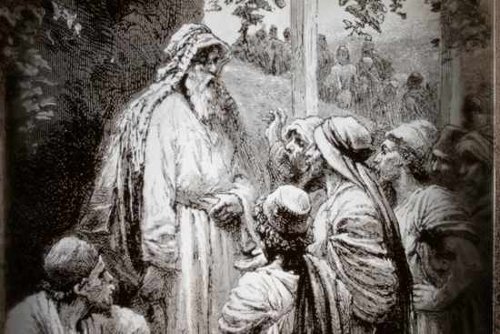
Ancient Rabbi teachingAnother advisor, Eleazar, told Izates that it was improper for him to study Torah without converting. Izates greatly desired to convert, but Ananias believed the King’s subjects would not accept the rule of a Jewish King (how ironic, since one day, the whole world will be ruled by a Jewish King, King Messiah).

Even uncircumcised, that is, as a Gentile, Izates (as well as his mother) were practicing a form of Judaism without being Jewish. And while the advice of Eleazar won out and the King did indeed convert, Nanos makes the point that both Paul and Ananias held quite similar points of view, that it was unnecessary for a non-Jew to convert in order to worship “[sebein; literally , ‘honor,’ ‘respect,’ or ‘fear’] God without circumcision…”

Here’s an important point Nanos made:

…Izates had not yet given up his desire to become circumcised: thus Eleazar “urged him [Izates] to accomplish ‘the work’ [or ‘the rite,’ ton ergon].” Eleazar is a Jew from the Galilee, and likely a Pharisee…

Terms such as “the act,” “deed,” or “work” as we find in Paul’s writings on “the works of the law” (see Galatians 3:2 for example) specifically refer to the Apostle’s disapproval of Gentiles undergoing ritual circumcision for the purpose of conversion in order to be justified before God. Again, Paul’s “works of the law” had nothing to do with forbidding Jewish Yeshua-disciples from being circumcised nor was Paul preaching against Torah observance for the Jewish followers of Messiah.

Nanos quotes Josephus (quoting Eleazar) as outright stating that one must be a Jew in order to be obligated to the commandments of the Torah of Moses. In Eleazar’s case, the only way to resolve the conflict of a non-Jew even voluntarily observing some of the mitzvot was for him to “complete the act,” “rite,” “work” of conversion through circumcision.

Ananias, on the other hand, like Paul, saw devotion to God and observing a life of moral and ethical excellence as a Gentile was Izates’ proper response “apart from becoming a Jew, and thus, apart from becoming under Torah on the same terms as a Jew (a distinction that people of his [Itazes] kingdom are represented as grasping…).”

Nanos dovetails off of Josephus to re-engage Paul, stating:

Moreover, this raises interesting comparisons with Paul’s insistence that faith(fullness) for Christ-following non-Jews requires abstaining from becoming Jews through circumcision, while at the same time insisting that they turn away from cults associated with familial and civic gods, which would be expected to apply to themselves in most Jewish groups…

synagogueSo Paul expected that Gentiles as Gentiles behave “Jewishly” but not become Jewish. However behaving “Jewishly” does not mean they became Jews without a bris and were in any manner obligated to the 613 commandments as were/are the Jewish people, either born or converted.

Further:

Such unorthodox behavior creates for them [Yeshua-believing Gentiles] an anomalous identity leading to sociopolitical marginalization, both from Jews, who do not share their chronometrical gospel claim to be neither guests nor proselytes but full members alongside of Jews, and, for different reasons, from their non-Jewish families and neighbors. If even those who become proselytes may be regarded with suspicion as atheists and traitors, then likely all the more threatening would be those who remained non-Jews if they simultaneously claimed the right to abstain from honoring their fellow non-Jewish people’s gods and lords.

I suppose a brief explanation of the term “chronometrical gospel” is in order. As I understand it, the term refers to a time-based event in the overarching salvational plan of God for Israel and the nations, whereby with the first advent of Messiah ben Joseph, Gentiles were granted, for the first time in human history, the opportunity to be equal partakers in the blessings of the New Covenant (Jer. 31, Ezek. 36) without becoming Gerim as was required in the time of Moses, and having the third generation of their offspring being accepted as an Israelites (thus partaking in the Sinai covenant), or in first century (and later) times by undergoing the rite of the proselyte and converting to Judaism.

From the life, death, resurrection, and ascension onward, non-Jews were provided a new and better path by which we can swear fealty to God through the faithfulness of the Jewish Messiah King.

We also see from the above-quoted passage, that Yeshua-believing Gentiles were accepted as social equals and sharers of the New Covenant blessings of the Holy Spirit and the promise of the resurrection, not only without being required to first convert, but without the identical obligation to perform the Torah mitzvot, an obligation that remains exclusive to born-Jews and proselytes.

Nanos brings up something especially relevant to the role of the “Messianic Gentile” today, the matter of identity ambiguity. Just like our first century counterparts, we modern Gentiles in Messiah, when within (Messianic) Jewish communal space, are not Jews but are also not allied with our former identities as non-believers. We are expected to take the moral high road, so to speak, and particularly in Jewish space, we say Jewish prayers (although our prayers are sometimes adapted due to us not being Israel), attend prayer services with Jews, attend the Torah service with Jews, eat kosher food when we dine with Jews, cover our heads when davening with Jews, and committing many other acts that look pretty “Jewish,” even though we are not Jews.
identityIn many ways, we are neither fish nor fowl, and the question of just what Messianic Gentile behavior actually is supposed to look like is often a matter of spirited debate.

Changing the discourse about Paul by adding a contextual tag to virtually every statement made about his standing on Jewish matters, such as the circumcision of non-Jews, is a good place to begin for those who are attempting to conceptualize Paul within Judaism…

It would be nice if our Bibles contained such “tags” to make Paul appear more within his own context to those of us reading him thousands of years later in a religious, cultural, and conceptual environment definitely outside of his original context.

Sadly, no such Bible exists (to the best of my knowledge), but Nanos does attempt to give us examples:

In the shortest sense, this could consist of no more than adding the phrase “…for Christ-following non-Jews” to statements made about them in order to avoid universalizing the matter under discussion.

And…

…such as, “for non-Christ-following Jews”

And again…

…by adding “for Christ-following non-Jews who are participating in Jewish communal life”

Or even…

“…who practice Judaism according to the teachings of Paul”

Or even better…

policy changes toward these non-Jews, hence… “for Christ-following non-Jews who practice Judaism according to the chronometrical claim of the gospel proclaimed by Paul and the other apostolic leaders of this Judaism.”
messianic judaism for the nationsYou get the idea. What would have been understood as a matter of course by the original readers of Paul’s epistles almost completely eludes lay-person, clergy, and Christian scholar (or most of them) twenty centuries later in our American churches, seminaries, and universities.

Getting back to the role of the ancient Messianic Gentile who was not expected to observe many/most of the mitzvot in the manner of the Jews, what God did (and does) expect of them (us)…?

…and Paul regarding what signifies faith(fulness) alone for non-Jews is striking…

Or in more detail:

This reasoning parallels Paul’s argument about Abraham’s becoming circumcised as a “sign” of his faithfulness (based upon Gen. 17:11); yet Abraham for Paul illustrates why faith(fulness) for Christ-following non-Jews is shown [specifically] by their [our] not becoming circumcised (Rom. 3:27-4:25; Gal. 3:1-4:7; passim). Paul insists that these non-Jews represent the children promised to Abraham from the other nations before he was circumcised…

…they [we] must remain non-Jews, that is, must not become members of Israel.

That, in a nutshell, so to speak, is the particular path of the ancient and modern Messianic Gentile. The evidence of our faith is to deliberately not become circumcised, that is, to avoid converting to Judaism, within the Messianic community or otherwise, and to fulfill our destiny as the children from the nations called by His Name, thus fulfilling the promise God made to Abraham about his gaining (faithful) children from the nations…that is, us.

By either converting, or unjustly claiming full obligation to the Torah as if we were converts without a bris, we are making a mockery of God’s promise to Abraham, and denying our own role as non-Jews in Messiah, further throwing God’s prophetic word back in His Face (as it were).

In contrast, Paul argues for faith(fulness) alone exclusive of circumcision as the decisive action for the Christ-following non-Jews he addressed, even though it came at the price of marginalization.

In other words, if you’re a Messianic Gentile and you at least sometimes feel marginalized, both in the Messianic Jewish world and in the Church among more traditional Christians (and I know what that feels like), that’s normal.
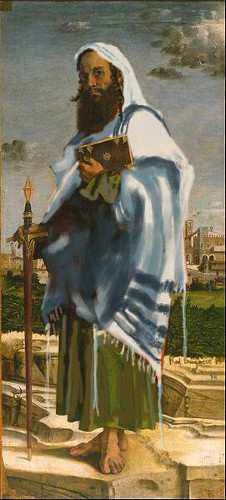
The Jewish PaulBut Nanos believes Paul was not seeking to bifurcate faith for the Gentile vs. actions/deeds for the Jews. Both Jews and Gentiles are saved by faith(fulness), but what is required by the faithfulness of the Gentiles does not include an identity transformation by becoming Jews and/or Israel. That identity is reserved and the faithful Jews are assigned obligations and duties not incumbent upon the Gentiles in Messiah.

Or as Nanos puts it…

Paul appeals to principle, not expedience. He defines the principle as faith(fulness) according to what is appropriate for them as non-Jews, which can be different in specific ways from that faith(fulness) might consist of for those who are Jews.

Bingo.

Hopefully, I’ve captured the essence of Nanos’ arguments. He tends to approach his core points from numerous different directions, and adding a great deal of detail that sometimes defies my ability to succinctly review him. Nevertheless, there are two major takeaways from this essay as I see it:

  1. Any statements made by Paul that appear to devalue or require the elimination of Torah observance and circumcision by all Yeshua-believers, when read within Paul’s original first century Jewish context, only apply to his non-Jewish audience, the Yeshua-believing non-Jews in the Messianic ekkelsia.
  2. Any statements made by Paul that appear to require full observance of the Torah commandments and circumcision by all Yeshua-believers, when read within Paul’s original first century Jewish context, only apply to his Jewish audience, the Yeshua believing Jews in the Messianic ekkelsia (although they would also apply to Jews who were not Yeshua-believers since all Jews have Jewish identity, being Israel, and obligation to the Torah of Moses at the core of their being Jews).

I’ll continue with my reviews as time allows.

Note: Edited at Portland International Airport using PDX’s free wifi and free electrical power in their business courtesy room.

Book Review of Paul Within Judaism, “The Question of Assumptions: Torah Observance in the First Century”

Much of the debate about whether Paul was a representative of first-century Judaism has centered on the question of his relationship to Jewish “law,” that is, Torah. Although a majority of proponents of the traditional view presume that following his “conversion” Paul no longer attributed an intrinsic value to Jewish identity and no longer considered Torah to be binding, adherents of the Paul within Judaism perspective generally maintain that Paul remained a Torah observant Jew throughout his life.

Karin Hedner Zetterholm
from the beginning of her essay
“The Question of Assumptions: Torah Observance in the First Century”
Paul within Judaism: Restoring the First-Century Context to the Apostle (Kindle Edition)

For me, it’s a foregone conclusion that Paul followed a Pharisaic lifestyle all of his life and that the revelation of Messiah was not a “conversion” from Judaism to Christianity (and I remind you that in the First Century, there was no such thing as Christianity), but the next step (quantum leap actually) into the understanding and lived experience of God’s redemptive plan for Israel and the Jewish people.

Nothing in the revelation of Messiah or becoming his disciple and the emissary to the Gentiles required Paul to change anything about his observance. Well, OK, he most likely developed a more liberal halachah regarding associating with Gentiles, but in terms of his obligation to Hashem, God of his fathers, to the Torah mitzvot, to davening at the set times of prayer, to returning (if at all possible) to Jerusalem for the moadim, to continuing to eat kosher and observe the rest of the commandments, he need change nothing at all.

In fact, if he did, he would be diminishing his relationship with God by not being faithful to the Sinai covenant, even as the Master, Yeshua (Jesus) was faithful to the covenant.

But that’s hardly the traditional Christian understanding of Paul. The Church believes Paul converted to Christianity, replaced the law with grace, and taught both Jews and Gentiles that the law was done away with and need not be followed any longer.

Not that the Gentiles were the least bit concerned about the law since they/we have never been subject to the Sinai covenant, but the accusation that Paul had turned away from the Torah, the Temple, and was teaching other Jews to do the same would have been devastating. In fact, it was:

“You see, brother, how many thousands there are among the Jews of those who have believed, and they are all zealous for the Law; and they have been told about you, that you are teaching all the Jews who are among the Gentiles to forsake Moses, telling them not to circumcise their children nor to walk according to the customs. What, then, is to be done? They will certainly hear that you have come.

Acts 21:20-22 (NASB)

And…

When the seven days were almost over, the Jews from Asia, upon seeing him in the temple, began to stir up all the crowd and laid hands on him, crying out, “Men of Israel, come to our aid! This is the man who preaches to all men everywhere against our people and the Law and this place; and besides he has even brought Greeks into the temple and has defiled this holy place.”

Acts 21:27-28

Paul in chainsEven though Paul vigorously denied these allegations under oath during a number of legal proceedings, both Jewish and Roman, most Christians believe that Paul really did the things he was accused of, and it’s OK with the Church because they believe Jesus wanted Paul to do all of these things.

But then, was Paul lying all those times he denied teaching against the Torah of Moses? If he was, why should we trust anything he wrote that’s recorded in the Apostolic Scriptures? Frankly, if we can’t trust Paul, most common Christian theology disintegrates since, oddly enough, most of what we understand about Christian faith in the Church comes from Paul, not Jesus.

Zetterholm in her article, proposes to show us that Paul remained a Torah observant Jew throughout his lifetime. Let’s have a look.

The first point she lands on is that Torah observance is not a distinct set of well-defined behaviors and that it “means different things to different groups and people, and, accordingly, different people define violation of Torah observance differently.”

She then cited different examples from the various branches of modern Judaism, comparing in one case, her Israeli friend who defines himself as “liberal Orthodox” to another friend who is a Conservative Jew. In referring to the latter friend:

In his view, he was not “breaking the law,” but interpreting it, or rather, applying the interpretation of the denomination to which he belongs.

Zetterholm further states:

Since Jewish law is the result of an ongoing collective interpretation and extension of injunctions and principles laid out in the Hebrew Bible, disagreements over their correct understanding are bound to develop.

Actually the matter of how Torah is understood and halachah applied between the different Judaisms of our day is enormously complex, and Zetterholm’s essay wouldn’t even begin to do this discussion justice if, for no other reason, than the fact that it’s simply not long enough. This is a book-length conversation at least.

I found myself disagreeing with her somewhat, since I know that an Orthodox Jew would not consider a Reform Jew, for example, to be Torah observant at all. The Orthodox aren’t terribly approving of Conservative observance, either. From an Orthodox Jew’s point of view, only they are observing Torah correctly. It gets even more complicated when you consider the different Chasidic Jewish movements exist, all of which are generally considered Orthodox.

However…

The Qumran literature and the New Testament provide ample evidence that there was no consensus on this issue or in other areas of Jewish law in the first century. The Qumran community disagreed with the Pharisees on which activities were prohibited on the Sabbath…

Don't ArgueCertainly both the differing streams of ancient and modern Judaism debate, disagree, and outright argue regarding how Torah is applied, and yet they must also agree that Torah is being applied and the mitzvot are being observed, even as they may disagree in the halachah of how the mitzvot should be observed. We see examples of Yeshua (Jesus) doing this on a number of occasions in the Gospels, particularly on proper observance of the Shabbat:

At that time Jesus went through the grainfields on the Sabbath, and His disciples became hungry and began to pick the heads of grain and eat. But when the Pharisees saw this, they said to Him, “Look, Your disciples do what is not lawful to do on a Sabbath.” But He said to them, “Have you not read what David did when he became hungry, he and his companions, how he entered the house of God, and they ate the consecrated bread, which was not lawful for him to eat nor for those with him, but for the priests alone? Or have you not read in the Law, that on the Sabbath the priests in the temple break the Sabbath and are innocent? But I say to you that something greater than the temple is here. But if you had known what this means, ‘I desire compassion, and not a sacrifice,’ you would not have condemned the innocent.

Matthew 12:1-7

This isn’t the Master informing this group of Pharisees that he canceled the Sabbath or any of the mitzvot related to observing Shabbat. This is a passionate discussion between two poskim debating proper halachah for Shabbos.

That said, I think it goes too far to say all Judaisms may be equally valid in their interpretation of Torah and leaving it at that, but perhaps for the sake of time and word count, as I mentioned above, Zetterholm couldn’t drill down into the details. As I said, the topic is highly complex and nuanced and, not being an expert in Torah, Talmud, and halachah, I’m not particularly qualified to explain beyond a certain elementary point.

But what does any of this have to do with whether or not Paul was Torah observant?

So far, Zetterholm is laying the groundwork for her readers, and she has to assume that some, many, or most of them do not have a firm understanding of Torah observance among differing Jewish groups. I get that. She takes a number of pages to solidify her argument before moving on to what Torah observance may have looked like in Paul’s time.

In addition to the general factors pertaining to Torah observance outlined above, a discussion of Paul’s relation to the Torah is further complicated by the fact that we know very little about halakic observance in the first century.

We do know that the Pharisees, Sadducees, the Qumran community, and other Jewish streams differed in their halachic systems, but there’s more we don’t know about those details than we do.

Hillel and ShammaiHowever, we do, for example, know about the famous schools of Hillel and Shammai as they existed a generation before Yeshua. A number of their arguments are well documented. And yet, Zetterholm states that “both seem to have been associated with the Pharisaic movement…” It’s likely for Rabbis within the same stream of Judaism but from differing schools, to debate halachah while still considering each other as “observant.”

Our knowledge of how Torah observance was considered among the first century Judaisms is incomplete, but we don’t have to know all of the details to understand if Paul was observant or not. We have his own testimony about it:

If anyone else has a mind to put confidence in the flesh, I far more: circumcised the eighth day, of the nation of Israel, of the tribe of Benjamin, a Hebrew of Hebrews; as to the Law, a Pharisee; as to zeal, a persecutor of the church; as to the righteousness which is in the Law, found blameless.

Philippians 3:4-6 (emph. mine)

I don’t know what the Greek text says, but the English translation as the NASB presents it indicates Paul speaking of himself in the present tense (apart from his being a persecutor of the church at that time). These are things he considered himself as he was writing this letter, not things he was before he “converted to Christianity.”

The next question then is did Paul teach anyone to not observe the mitzvot, Jew or Gentile?

To answer this query, Zetterholm uses 1 Corinthians 10:23-30 as the foundation for her response. I won’t go into all of her arguments, but here’s what she said in part:

For instance, is Paul’s permission in 1 Corinthians 10:25 to eat food purchased at the market in Corinth and to eat whatever is served when invited to dine with “an unbeliever” (10:27) really evidence that he no longer considered Jewish law binding, as scholars commonly claim, or is it better understood as an expression of first-century Jewish Diaspora halakah for Jesus-oriented gentiles, as others have suggested?

In her discussion of 1 Corinthians 8-10, she answers that question, but in brief, she concludes that Paul was specifically developing halachah as it applied to Jesus-oriented Gentiles. This was not Paul abandoning the Torah or abrogating the commandments for himself or for other Jews, but adapting halachah for the needs of Gentiles, in this case, in the city of Corinth.

Ancient Rabbi teachingActually, Zetterholm wasn’t saying that Paul felt it was proper for Gentile disciples of Yeshua to eat meat sanctified to the pagan gods as such. If the Gentiles in question realized that these “gods” were wholly fictional and not “gods” at all, then whether or not foods were sacrificed to them would be meaningless and no harm is done in eating it.

Only if these Gentiles were in the presence of other non-Jews, either pagans, or Gentile believers who may have been “newly minted” or otherwise weak in their faith, should they abstain from such meat, lest they give the impression that they were approving of pagan worship.

Expressed another way:

Paul’s argument here bears a resemblance to the rabbinic idea of mar’it ‘ain, the principle according to which one must refrain from acts that are permitted but inappropriate because they may lead a less knowledgeable Jew to draw false conclusions and cause him or her to do something that is not permitted.

One example of this she gives is a Jew who puts a piece of cheese on a vegetarian “hamburger”. Although this is not mixing meat and dairy, another Jew who casually observed the event might get the wrong idea.

Zetterholm goes into the “nuts and bolts” of her argument using the 1 Corinthians 8-10 example in much more detail than I have room for here. For the complete answer, you’ll have to get a copy of the book and read what she’s written.

The bottom line is:

Far from declaring Jewish law null and void, Paul is engaged either in establishing a halakah concerning idol food for Jesus-oriented gentiles, or teaching them an existing local Corinthian Jewish halakah.

In either case, Paul is clearly not abrogating Torah observance for Jews, he’s adapting or creating halakah specifically for his non-Jewish students because such halakah wasn’t necessary before there were Gentile disciples of the Jewish Messiah operating in community with other Gentiles and with Jews in a Jewish religious movement.

She also said:

Far from “breaking the law,” Paul seems to be engaged in the process of applying it….establishing a rule of law for Jesus-oriented gentile, Paul was engaged in the balancing act involved in establishing halakah…

This also addresses (again) the matter of how Gentiles were to relate to the Torah in general, and Pharisaic halachah in particular. In this example, Paul was not teaching the Gentiles to observe the Torah and perform the mitzvot in a manner identical to the Jewish believers. He was adapting or inventing halachah that was specific to Gentiles but not necessarily applicable to Jews.

The Jewish PaulThis is probably why, referring back to Acts 21, some of the Jews in Jerusalem had the idea Paul was teaching against the Torah. He was teaching Gentiles that their obligations were different and certainly not as stringent as those of the Jews. Somehow the information was twisted, deliberately or not, to be interpreted that Paul was teaching Jews that they were not obligated to the mitzvot and did not have to circumcise their infant sons on the eighth day.

In her conclusion, Zetterholm wrote:

We have no means of knowing whether other Jews regarded Paul as lenient or strict, but in light of the complex nature of Torah observance in general and rabbinic legislation on idolatry in particular, nothing in his reasoning seems to indicate that he had abandoned Jewish law.

Derek Leman had written the first part of a two-part article for the now defunct AncientBible.net site called “Paul Was Too Jewish for the Synagogue.” I reviewed it here on my blog about sixteen months ago. It was Derek’s opinion that Paul may have been too strict in his observance for many diaspora synagogues, indicating the Apostle’s devotion to the Torah of Moses was rather high.

In addition to Leman, I think Zetterholm makes a compelling case for concluding that Paul was indeed a Torah observant Jew throughout his life, even as he was also an emissary to the Gentiles at the command of the Master.

I’ll post the next part of my review of the Nanos/Zetterholm volume soon.

Book Review of “Paul within Judaism,” The Introduction

A new perspective in Pauline scholarship is represented in this volume. This perspective is readily distinguishable from other interpretations of the apostle, including the collection of views now formally recognized as “the (!) New Perspective on Paul” and, all the more, the views mounted in opposition to it because of the New Perspective’s challenge to major tenets of traditional Christian interpretation.

Mark D. Nanos
from the Introduction to
Paul within Judaism: Restoring the First-Century Context to the Apostle
Edited by Mark D. Nanos and Magnus Zetterholm

I’d known for sometime that Nanos and Zetterholm were collaborating on a new book about Paul, but it wasn’t until I read Toby Janicki’s brief review of the book in the current issue of Messiah Journal that I discovered it had already been published (back in January, actually). Throwing caution and my credit card to the winds, I quickly purchased it at Amazon and downloaded it to my Kindle Fire.

There are nine individual contributors to this volume, including Nanos and Zetterholm, and while they all operate within what has been termed the New Perspective on Paul (more on that in a minute), they aren’t in total agreement with each other. So much the better. Generally within any discipline there is not unanimous agreement on all points, which invites discussion to hone what we can learn in said-discipline. I’m optimistic that because of this “honing,” “Paul within Judaism” will bring into sharper focus who Paul was within his first century Jewish framework as the emissary to the Gentiles.

Since I’m facing nine separate essays inspired by “a session entitled ‘Paul and Judaism’ at the Society of Biblical Literature in 2010” plus an Introduction, I intend to review each essay as a stand-alone presentation. That means yet another multi-part review for me to write and offer to anyone who wishes to read them.

I mentioned above something about “The New Perspective on Paul,” but considering the diverse group of scholars whose work we will be evaluating, Nanos states:

The diverse expressions of their research have been variously described in recent years collectively as the “Radical New Perspective,” “Beyond the New Perspective,” and “Post-New Perspective.” Yet these monikers do not fully communicate the major emphases of this research paradigm, since it is not primarily a new development within the New Perspective…

See what I mean?

This volume marshalls the talents of “an international group of scholars” in challenging “major tenets of traditional Christian interpretation” of Paul, using an “alternative approach, for which the phrase the ‘Paul within Judaism’ perspective seems most appropriate.”

Nanos argues that the current prevailing understanding of Paul anachronistically places him within Christianity rather than Judaism, and what keeps Paul within a Christian context is the Church’s long history of tradition regarding the Apostle. The result is:

…profound discontinuities arise between the Paul constructed in this new paradigm and the theological traditions constructed around Paul in the past.

Paul within JudaismI should say these past-constructed traditions about Paul are equally applied by Christianity and normative Judaism, the former to justify reinventing an ancient branch of Judaism as Gentile Christianity, and the latter to condemn that invention and Paul along with it.

However, a Christianity and Judaism that clings to such erroneous and yet enduring traditions on the Apostle results in their failure to see Paul as perhaps he truly was: a Jew operating within a Judaism that was devoted to the revealed Messiah and that had a remarkably liberal view of Gentile admission into their community.

Speaking of the contributors to the New Perspective, Nanos writes:

It also draws deeply from the scholars responsible for the so-called “Sonderweg” trajectory, which detects in Paul’s letters the belief in a “special way” for non-Jews to be included in salvation through Christ alongside the historical Sinai covenant with Israel. (emph. mine)

I bolded “alongside” above to notify anyone who may be concerned that this perspective on Paul defines Jewish and Gentile roles and responsibilities within the ancient (and modern) Ekklesia of Messiah differently. How differently, we will discover as we proceed through the various reviews including this one.

I mentioned above about Christianity’s and Judaism’s anachronistic view of Paul as a “Christian.” To clarify that point of view, the Introduction says in part:

He (Paul) is often enough described simply as a “Christian,” as are his “churches”; he is a “missionary.”

…because it is built on the conviction that there is something fundamentally, essentially “wrong” with, and within Judaism. Further, what is wrong with Judaism is generally analogized with what Paul is understood to have found wrong with “paganism”…

In other words, Nanos shows us that the traditional interpretation of Paul is that he found both Judaism and paganism to contain the same sorts of “wrongs,” necessitating that he create a separate religious stream called “Christianity” that departs from both, taking both Jewish and non-Jewish adherents with him. Paul then ceased the practice of Judaism and identifying himself as a Jew through his “conversion” to “Christianity.”

In this light, it’s small wonder that most non-Jewish (and Jewish) Christians in the Church revere Paul while most Jews consider him a traitor and revile him.

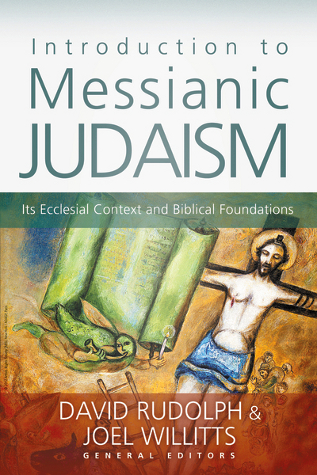
introduction to messianic judaismI’d love to send a copy of this book to every Christian Pastor, Preacher, Minister, and Priest in America but I suppose it would do no good. As the old saying goes, “you can lead a horse to water…” I tried that on a much smaller scale some time ago by purchasing a copy of Rudolph’s and Willitts’ volume Introduction to Messianic Judaism: Its Ecclesial Context and Biblical Foundations and giving it to the Head Pastor of the church I used to attend, in the (vain) hope that such an august collection of scholars writing on the merits of a Messianic Jewish perspective would at least get him to consider changing some of his views.

It didn’t work. He clung too tightly and too dearly to his Fundamentalist Christian “hashkafah,” as Boaz Michael puts it, and was unable to travel the distance necessary to view God, Messiah, and the Bible from a distinctly different, and in my opinion, a more Biblically sustainable, vantage point.

Nanos speaks to this:

If one might say that the latter oppose the New Perspective for being too new for their traditional theological positions to embrace, the contributors to this volume oppose it for being not new enough.

And…

…and the consistency of their answers with the fundamental views attributed to Paul in various traditional Christian theologies, not least the way that Jewish identity and Judaism are portrayed.

…some oppose the New Perspective because it undermines the traditional view that what Paul found wrong with Judaism was its works-righteousness and legalism.

This view of how Christianity sees Paul in relation to the “wrong” in Judaism is contrasted with:

Judaism was characterized by “covenantal nomism,” which recognizes the initial role of divine grace and of faith to initiate the relationship, but also perceives the consequent responsibility to behave according to the terms of the agreement into which participants have entered.

More simply put, the Jewish people entered into a relationship with God by grace and faith and from that, agreed to a set of covenant conditions requiring a specific set of responses, that is, observance and performance of the Torah mitzvot.

Unfortunately, “the ineluctable sin of arrogance at least since Augustine” has resulted in a radical distortion and refactoring of Paul, wholly removing him from his original context, and placing him in one that would have been completely foreign to a first century Jew, that is, Christianity.

And yet, the Church continues to insist that those of us who view Paul as a Jew within Judaism are guilty of:

…the supposed sin of ethnic particularism, variously described and named. On the premises of the New Perspective, this “wrong” is assumed to be the necessary sin involved in celebrating and guarding the boundaries of Jewish identity and behavior, as if claiming to be set apart for God was inherently arrogant, mistaken , and evidence of bigotry.

Not only does larger Christianity hold this viewpoint against those various streams of modern Messianic Judaism, but so does much of the Gentile Hebrew Roots movement. In Part 1 of a recent blog post, I quoted Carl Kinbar as stating he has hesitated to express such views of Jewish particularism for fear of inadvertently offending non-Jews in Messianic Judaism and the wider body of faith in Yeshua (Jesus).

Speaking to the presence of Jews and non-Jews in the ancient Ekklesia, Nanos writes:

This also means that the “assemblies” that he (Paul) founded, and to which he wrote the letters that still provide the major basis for this research…were also developing their (sub)culture based upon their convictions about the meaning of Jesus for non-Jews as well as for Jews within Judaism.

Magnus Zetterholm
Magnus Zetterholm

Of course, it needs to be understood that non-Jews finding the meaning of Messiah within a Judaism does not mean they become Jews nor does it mean, even remaining Gentiles, that they (or we) inherit the obligation of the Sinai covenant to observe the mitzvot.

…even though many if not most of those who were joining these subgroups were and remained non-Jews.

Nanos spent the remainder of the Introduction briefly describing each contributor to the volume and summarizing each of their articles. I won’t go into this portion of the Introduction except to draw something from what Nanos says of the first essay, written by Magnus Zetterholm, the co-editor of this work:

Moreover, if one postulates that Paul still observed Torah, as do Zetterholm and several contributors, then the idea that Paul dismissed it as obsolete or antithetical to the goals of Christ-following Jews is illogical. Zetterholm explains that Paul was not against Torah observance for Jews, including himself; rather, he was adamantly against the observance of Torah by non-Jews who became followers of Christ.

We’ll have to wait until I read and review Zetterholm’s essay to get the full details of his perspective, but this statement does address what I mentioned above about a central view in much of Messianic Judaism, that there remains a distinctiveness between Jew and non-Jew in the Ekklesia of Yeshua relative to the Torah mitzvot and our specific responsibilities to each other and to God.

This next part also needs to be expressed:

However, since this Jewish “faction” drew in many non-Jews, who would naturally be thereafter practicing the Jewish norms of communal life, even if not under Torah technically as non-Jews, this led to various conflicting views about the standing and behavior to be expected of these non-Jews from within the movement and from those outside of it, to which Paul’s letters attest.

And this is exactly what we find happening in Messianic Jewish communities today, particularly those containing a non-Jewish majority membership (which is the vast majority of Messianic Jewish synagogues in the United States today). This is another excellent reason to radically revise how we read Paul. If he knew the answer to the problems vexing non-Jewish participation in modern Messianic Judaism, we need to find out what they are.

Next time, I’ll begin my review of the first essay out of nine, written by Magnus Zetterholm called “Paul within Judaism: The State of the Questions.”

The Christianization of Acts 20

On the first day of the week, when we met to break bread, Paul was holding a discussion with them; since he intended to leave the next day, he continued speaking until midnight.

Acts 20:7 (NRSV)

Christians sometimes cite Acts 20:7 as evidence that the early believers met on Sundays: “On the first day of the week, when we were gathered together to break bread.” The narrative does not support that interpretation. If Paul met with the Troasian believers on Sunday morning, they had a very long church service. Paul spoke until midnight: “Paul began talking to them, intending to leave the next day, and he prolonged his message until midnight.”

The Greek text of Acts does not indicate that they met on Sunday morning at all. Instead it literally says, “On the first of the Sabbath …” The word “day” does not appear in the Greek. According to the Jewish reckoning of time, the first of the week begins Saturday after sunset.

-D. Thomas Lancaster
from Torah Club Volume 6: Chronicles of the Apostles
Tzav (“Command”): Acts 20:1-21:14, pg 653

It’s been awhile since I dug into a Torah Club study but I needed to get my bearings.

I probably shouldn’t even write this but part of my returning to church is to “experience church” relative to my own unique perspectives and practices.

I’d like to think that Pastor Randy, the head Pastor at the church I attend, and I have formed a friendship, and within the confines of that relationship, we are free to engage in candid and forthright conversation. He reads my blog, when he has time (he’s a really busy guy), so nothing I put here is meant to be kept from him.

I know that my criticism of “the Church” does frustrate him on occasion and I think he is authentically puzzled why, when he presents his educated and logical arguments about theology, I just don’t “get it” and accept his basic understanding of the fundamentals of Christianity.

Last Sunday morning, Pastor’s message was based on Acts 20:1-12. I was particularly interested in his lesson on the following verses:

On the first day of the week, when we met to break bread, Paul was holding a discussion with them; since he intended to leave the next day, he continued speaking until midnight. There were many lamps in the room upstairs where we were meeting. A young man named Eutychus, who was sitting in the window, began to sink off into a deep sleep while Paul talked still longer. Overcome by sleep, he fell to the ground three floors below and was picked up dead. But Paul went down, and bending over him took him in his arms, and said, “Do not be alarmed, for his life is in him.” Then Paul went upstairs, and after he had broken bread and eaten, he continued to converse with them until dawn; then he left. Meanwhile they had taken the boy away alive and were not a little comforted.

Acts 20:7-12 (NRSV)

Pastor always includes a page of notes in the Church bulletin, and I review what he’s going to talk about before services start. When I came across the section called ”Parenthetic Conclusion: Sunday worship,” I knew where he was headed. Then there was the quote from Justin Martyr he inserted. I’ll only use part of it here:

But Sunday is the day on which we all hold our common assembly, because it is the first day on which God, having wrought a change in darkness and matter, made the world; and Jesus Christ our Savior on the same day rose from the dead.

-Justin Martyr
The First Apology
“Weekly Worship of Christians” (c. CE 155)

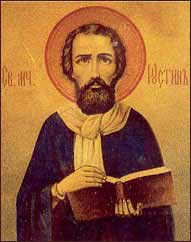
Justin MartyrI won’t try to replicate all of Pastor’s points, but he did say the phrase “first day of the week” (although as Lancaster states above, the word “day” does not appear in the literal Greek) appears only three times in the New Testament (actually, there are a few more). In addition to the above-quoted verse, it can be found in Mark 16:9, the declaration of when Jesus rose from the tomb, and 1 Corinthians 16:2, which is part of Paul’s instructions to set aside funds for Paul’s intended donation to the poor and needy in Jerusalem.

There were a number of conclusions Pastor derived from Acts 20:7-12:

  1. The Roman rather than Jewish calendar was being used to fix the date of the gathering, so that we see they were meeting on Sunday evening rather than Saturday night after Shabbat.
  2. The breaking of bread was likely an enactment of the “Lord’s Supper” indicating the practice of communion.
  3. Preaching and teaching of scripture was a common activity in such assemblies.
  4. Collecting tithes for the church on Sunday was becoming a more common practice.

Both Pastor and my Sunday school teacher said this is evidence that “church services” within Paul’s lifetime weren’t all that different from what we have today: preaching the Word, meeting on Sunday, gathering tithes on Sunday (presumably as part of the service), and taking communion.

Sunday Worship

I’ll get into my reaction in a moment, but the one thing that puzzled me was Pastor’s proof that Paul had to be meeting with these believers in Troas on Sunday evening rather than just after Shabbat had ended (Saturday at sundown). He says that if this was a Saturday night, Paul, who intended to leave by ship the next day, would have had to wait two days, until Monday, to depart, so it had to be Sunday night.

But I either couldn’t hear the rationale or it went by so fast that I just plain missed it. I’ve read Acts 20 numerous times since listening to the sermon, but I just can’t see where this is coming from. I emailed Pastor after I got home from services asking for details, and hopefully he’s respond soon. Once I receive a response, I’ll edit this blog post to reflect his views.

Addendum, Tuesday, March 18: Pastor responded to my email with his explanation. He’s pressed for time, so the rationale is brief. I’ll put it in the comments below rather than interrupt the flow of the narrative here more than I already am.

Justin Martyr, Sunday, and Supersessionism

Now to my response. In the absence of the information Pastor possesses regarding why the assembly at Troas must have been meeting on Sunday, it is my opinion that a shift from a Saturday to Sunday Sabbath occurs here much too early in history. We have Justin Martyr’s writing declaring that Sunday is the proper day of Christian worship, but that isn’t published until some time after Paul’s death (and I find the reasoning, that it’s the day God separated light and darkness, completely disconnected from anything taught by Jesus or the Apostles). I don’t know that Martyr is relying exclusively on his interpretation of scripture and I suspect that he, like many of the other “church fathers,” may have had attitudes about Jewish people and Judaism that colored his thinking and possibly had him making doctrinal decisions about practice based on that bias.

I know Wikipedia is a poor source to quote, but it will have to do for my current analysis:

Justin was confident that his teaching was that of the Church at large. He knows of a division among the orthodox only on the question of the millennium and on the attitude toward the milder Jewish Christianity, which he personally is willing to tolerate as long as its professors in their turn do not interfere with the liberty of the Gentile converts; his millenarianism seems to have no connection with Judaism, but he believes firmly in a millennium, and generally in the Christian eschatology.

Justin saw himself as a scholar, although his skills in Hebrew were either non-existent or minimal. His opposition to Judaism was typical of church leaders in his day but does not descend to the level of anti-semitism. After collaborating with a Jewish convert to assist him with Hebrew, Justin published an attack on Judaism based upon a no-longer-extant text of a Midrash.

-from the Wikipedia page on Justin Martyr

Economic supersessionism is used in the technical theological sense of function. It is the view that the practical purpose of the nation of Israel in God’s plan is replaced by the role of the Church. It is represented by writers such as Justin Martyr, Augustine, and Barth.

-from the Wikipedia page on Supersessionism (Replacement Theology)

HavdalahNone of what I just quoted is rock-solid evidence that Martyr’s declaration of Sunday as the proper meeting day for Christians was motivated by supersessionistic ideology (and it was stated above that Martyr was probably not anti-Semitic), but it does open the door to the possibility that Martyr may not have been operating purely on his understanding of scripture. Based on my understanding of early supersessionistic bias and the church fathers (See my four-part article ”Origins of Supersessionism in the Church” in issues 109-112 of Messiah Journal), I believe there was a focused effort to create a set of practices of worship that specifically separated the budding Gentile Christian Church from its Jewish origins and heritage, replacing the Jewish institutions to which Paul and the other Apostles were accustomed with completely separate rituals, including a calendar disconnected from the Jewish holy days.

Please keep in mind that I have no problem with Christianity choosing a day of the week for corporate worship, but I consider it a tradition based on an emerging (in the mid-second century) reverence for the day of Jesus’ resurrection, not necessarily on a decision of Paul or any of the other Apostles.

Breaking Bread

Depending on the translation you’re using for Acts 20:7, the words the NRSV Bible renders as “break bread” are also read as “the Lord’s Supper” (New Living Translation) or “break the Eucharist” (Aramaic Bible in Plain English). Actually, all of the other translations I’m looking at just say “break bread”. I can’t access the Greek for this term, so I don’t know if it contains something that doesn’t translate into English, but, as Sigmund Freud is supposed to have said, ”Sometimes a cigar is just a cigar.” In other words, just because something is longer than it is wide, doesn’t mean it’s a phallic symbol.

Applied to the current context, I might say, “Sometimes breaking bread is just breaking bread, grabbing a loaf and tearing it in two or more pieces.” The term “breaking bread,” as far as I know, could just as easily indicate a meal of fellowship. It’s typical to “break bread” with friends and companions as a sign of affiliation and trust. Why does it have to mean communion unless we’re trying to make this verse fit a later institution created by the Church?

We were gathered for the disciples came, A.V. and T.R.; discoursed with for preached unto, A.V.; intending for ready, A.V.; prolonged for continued, A.V. The first day of the week. This is an important evidence of the keeping of the Lord’s day by the Church as a day for their Church assemblies (see Luke 24:1, 30, 35; John 20:19, 26; 1 Corinthians 16:2). To break bread. This is also an important example of weekly communion as the practice of the first Christians. Comparing the phrase, “to break bread,” with St. Luke’s account of the institution of the Holy Eucharist (Luke 22:19) and the passages just quoted in Luke 24, and St. Paul’s language (1 Corinthians 10:16; 1 Corinthians 11:24), it is impossible not to conclude that the breaking of bread in the celebration of the Lord’s Supper is an essential part of the holy sacrament, which man may not for any specious reasons omit.

-from the Pulpit Commentary on Acts 20:7

The key scripture as far as “the Lord’s Supper” goes seems to be 1 Corinthians 11:17-34 but Acts 20:7 only mentions “breaking bread”. In comparison to that verse, almost all translations of 1 Corinthians 11:20 refer to “the Lord’s Supper”, so I can only imagine the original Greek is more specific here (only the Aramaic Bible in Plain English states, ”When therefore you assemble, it is not according to what is appropriate for the day of our Lord that you eat and drink.”).

I’m going to have to set the early initiation of what Christians call “communion” today to one side for the moment except to say that it is certainly not definitive that the group in Troas was assembled for the specific purpose of taking a weekly communion or Lord’s Supper. It’s even possible, as I mentioned above, that the very concept of a communion might have been a later invention of the Church.

Tithing

We see a strong record of Paul collecting money or directing the various assemblies to set aside money which he would collect when he arrived (1 Cor 16:1–4; 2 Cor 8:1–9:15; Rom 15:14–32). However, we also see Paul having a specific concern for the poor in Jerusalem (Gal. 2:10). Paul’s companions we find in Acts 20:4 were to accompany Paul to Jerusalem, presumably with donations from the various congregations they represented.

TithingSo Paul was collecting money for the poor and needy in Jerusalem, but this does not mean he was collecting money to pay for the operational costs of the local churches or the Jerusalem “church”.

No, I’m not saying that it’s wrong for the church to ask for donations from the congregants to support the costs incurred in running such an institution, I’m just saying the practice can’t be directly attributed to specific references in the Bible.

It is true that in ancient times, the Israelites did donate materials and services in the building of the Mishkan (Tabernacle) in the desert (Ex. 35:4-36:7), and King Solomon heavily taxed his citizens and required tens of thousands to contribute labor in the service of building the Temple in Jerusalem (starting 1 Kgs 6). But again, none of these point specifically to a church tithe. Frankly, neither does Abraham’s offering to Melchizedek (Gen. 14:20).

But like I said, I don’t think it’s wrong for the administrative office of the local church to request that members and attendees contribute to the upkeep of the church, since those attending are consuming the church’s resources. I also think it’s reasonable and Biblical for churches to collect money for the poor and even money to support missionaries (Paul alluded that he deserved to be supported but preferred to support himself to avoid being a burden). But I maintain that the modern concept of tithing, especially by having men pass around metal plates through the pews so that people can give their weekly donation, isn’t exactly what we see in Acts 20 or any of the other referenced scriptures.

Resurrection Day

I’m returning to the issue of Sunday here but with an eye on it being a day of reverence early on in the first century community of “the Way.” Do we actually see concrete evidence that the day of the Master’s resurrection was directly revered and added to (or replaced) the list of holy days traditionally observed in the various Judaisms? Did the followers of Christ move away from a Sabbath rest because Sunday became so incredibly important to them?

There’s no smoking gun but a lot of inference. I know that Sunday was an important day of gathering in the mid-second century, but is that because of what was gleaned from the Bible, or because the men establishing Sunday as the Christian assembly day needed to separate their religion from Judaism? In the latter case, the “invention” of Sunday worship would have come after the Apostolic Era ended and the church fathers would have just “mined” the various scriptures and verses to support such a decision, declaring it “Biblical” and “Holy Doctrine” of the Church.

Revelation 1:10 was brought up in Pastor’s sermon as well. John was “in the Spirit on the Lord’s Day” when he had his well-known (but not always well understood) set of revelations and visions, but what did “the Lord’s Day” mean to him at that time? It’s assumed by many Christians to mean “Sunday” but Pastor thinks rather that it indicates Resurrection Day, that is, Easter.

Frankly, I don’t think anyone knows, and I think Christian theologians have developed various educated theories over the centuries. Each church denomination has adopted a set of practices that appear to map to certain parts of the Bible, but the question for me is which came first?

Do we believe, for example, that Sunday is the official day of Christian worship because it was established in the Bible, or was Sunday established nearly a century after the Apostles were all in their graves because the leaders of the Gentile Christian church needed to separate their movement from Judaism (and in this case, especially Shabbat observance) and they found portions of scripture they could leverage to support their requirements?

Past and Present

I know that sounds terribly cynical and I know this will make a lot of Christians feel hurt and angry. I know it can’t possibly please Pastor Randy when I write these things, and I know he’s being absolutely honest and sincere when he preaches on Acts 20 and draws conclusions that are consistent with modern Christian practices.

ShabbatHowever, I don’t think it’s all so clear. In fact, I believe if Paul were to walk into a Christian church today, even if he understood our language, he would hardly connect the experience to the practice of the assemblies he established in the diaspora nearly twenty centuries ago, and he absolutely wouldn’t see the Jewishness of everything he taught and the Jewish Messiah he lived and died for in modern Christian observance. I’m sure he’d wonder why modern disciples weren’t gathering on Shabbos.

I’m not saying modern Christian observance is bad or wrong as a set of practical traditions, just that it’s mostly not what Paul did. Yes, he’d understand collecting money for the poor. Yes, he’d understand preaching. Yes, he’d understand studying the scriptures with a learned teacher. Yes, he’d understand sharing a communal meal (though that’s more like Oneg than communion).

But I think it’s OK to admit that Christianity has evolved, and not in an entirely linear fashion, since the days when Paul planted his “churches.” I think it’s OK to admit that the majority of what Protestants believe and the majority of what they do has a history of more like five-hundred years rather than two-thousand. Evangelical Christianity is more a product of the Reformation than what you might call “Apostolic” or “Messianic Judaism”.

Purim

I knew it was Purim when I walked into the church Sunday morning. So did Pastor Randy and Pastor Virgil. So did those few people in the church I know to be Jewish. Most other people would have missed it, though. I kept pondering the significance of experiencing the “Christianization” of the scriptures in Acts 20 as I listened to the Pastor’s message in church on Purim. Why is there a desire to “rush” history, so to speak, and to give the early Judaism of our faith the bum’s rush out the door while the Pharisaic Apostle Paul (or Saul if you prefer) was still alive and desiring to reach Jerusalem before Shavuot or Pentecost (Acts 20:16). He’d already been delayed so he couldn’t be in the Holy city for the Pesach sacrifice and meal (Acts 20:5).

Paul and the Moadim

Paul was an observant Jew and as such, he desired to obey the mitzvot associated with the moadim, the appointed times chronicled in the Torah. This is a clue we should pay attention to. Paul’s desire to return to Jerusalem was connected to specific seasons and events, Passover and Pentecost, Pesach and Shavuot. Wouldn’t it make more sense to believe that Paul also revered the Shabbat as did his forefathers? The Church (big “C”) changed quite a lot of things later on, but for Paul, there was nothing inconsistent with being an Apostle of the Messiah and practicing the Judaism of the Way. In fact, departing from the Torah and the traditions would likely never have occurred to him.

Regrets and Conclusion

I’m actually feeling pretty down about having to write this. I’ve been keyed up since hearing the sermon. I was nervous around the others in Sunday school yesterday. I didn’t sleep well last night. Obviously this bothers me. Last week, I wrote about fellowship in the church and today it seems like I’m doing a big turn around by disagreeing with the conclusions of Pastor’s sermon. Believe me, I’m not disagreeing just to disagree. I’m not being oppositional or “anti-Church.” I’m being who I am as a believer operating with a particular understanding and perspective on the Bible. I’m looking through a different lens, I’m standing at a different look out point. The Bible I see looks a lot more “Jewish” than most of the people I worship with suspect. I apologize if what I’ve written results in hard feelings. That’s not my intention, believe me. But someone needs to stand up for the Jewish Apostle to the Gentiles, and represent who I believe he was and is, and what he was trying to teach.

I started writing this “meditation” early Sunday afternoon and stopped. I figured I needed a “cooler head” before actually getting into this, and I really thought about not writing it at all. I consulted with a good Christian friend. I agonized over it. Finally, I needed to do this. I’m sorry. It’s not against you, or Pastor, or anyone else. It’s for Paul and it’s to keep my head from exploding.

The Jewish PaulThere’s the Paul the Christian church sees, the murderous Jewish Pharisee who encountered Jesus on the way to Damascus one day and became blind. Having his sight restored, he converted to Christianity and left his Judaism behind, preaching a Torah-free faith to Jew and Gentile alike. Then there’s Paul the Jewish Pharisee, who met the Messiah in a vision and having been blinded and his sight then restored, embarked on a journey to tell the good news of Moshiach to his brothers and sisters as well as the Gentiles, that the Messianic Age was at hand, the pinnacle of the history of the Hebrews was within reach, and even the Gentiles could be redeemed by coming alongside Israel through Messiah.

When Messiah returns, we’ll know, everyone will know. For now, I am a loyal subject of the Jewish King and I await his return. May he come soon and in our day. Amen.

Nanos, Paul, and the Consequences of Jewish Identity in Messiah

PaulFor we hold that a person is justified by faith apart from works prescribed by the law. Or is God the God of Jews only? Is he not the God of Gentiles also? Yes, of Gentiles also, since God is one; and he will justify the circumcised on the ground of faith and the uncircumcised through that same faith. Do we then overthrow the law by this faith? By no means! On the contrary, we uphold the law.

Romans 3:28-31

The discovery of the Shema Israel as central to Paul’s theology was a profound moment for me, and has shaped my reading of him ever since. If I was writing a theology of Paul, it would be the center around which all other topics turned. Here we see it employed clearly and in a pivotal point in his argument in Romans for why non-Jewish believers in Christ must remain non-Jews and not become proselytes, and by the implication of his logic, why Jews remain Jews after faith in Christ: “since [if indeed] God is one.” Paul’s language here, and throughout Romans and Galatians, calls to mind the central prayer of Judaism, repeated twice daily, and the last words a pious Jew hopes to pass his or her lips, which begins: “Hear [shema] Israel, the Lord is our God, the Lord is one.”

-Mark D. Nanos
“A Torah Observant Paul?: What Difference Could it Make for Christian/Jewish Relations Today?” (pg 45)
May 9, 2005 (PDF Version Sent – Endnote Formatted)
marknanos.com

Since I completed my final summary of the classic Mark Nanos book The Mystery of Romans: The Jewish Context of Paul’s Letters, I’ve been wondering how Nanos’ research into and perspectives on Paul have progressed. After all, the “Romans” book was published in 1996, almost two decades ago. What’s Nanos been up to since then?

The paper I’m quoting from gives a compressed answer, though it is still almost nine years old. I find the same voice and the same perspectives in the “Torah Observant Paul” paper as I do in “Romans,” with just a hint of additional development. The paper, as a whole, addresses the more “troublesome” passages in Paul’s epistles as they appear to conflict with the life of a Torah-observant Jew in the late Second Temple period. Nanos points out the overwhelming body of Christian scholarship that paints Paul as a traitor to his own people and the “inventor” of Christianity, and seeks to refactor the Biblical record by deliberately viewing Paul as a devout Jew with a life-long devotion to Hashem, the Temple, the Torah, and Judaism.

I’m not going to review the entirety of this lengthy paper right now. I’m focusing only on a small portion of it so I can extend the Nanos commentary on Paul’s letter to the Romans, gleaning additional insights and sparkling bits of wisdom as they are scattered ahead of me on my path of faith.

In the “Romans” book, Nanos also mentions the Shema as the central element required in understanding the Jewish apostle’s message to the non-Jewish believers in Rome. Built on his commentary on Romans and Galatians, Nanos, in addressing Jewish and Gentile identity in Messiah, believes Paul is not only discouraging Gentiles from converting to Judaism as a means of justification before God, he’s forbidding its as contrary to prophesy and to the “oneness” testified to by the Shema.

Likewise, somewhere halfway between Paul’s time and our own Rashi wrote, to explain the repetition of the Name (Hashem, the Name, a rabbinic circumlocution for YHWH/Lord) in the Shema:

“The Lord who is our God now, but not (yet) the God of the (other) nations, is destined to be the One Lord, as it is said, ‘For then will I give to the peoples a pure language, that they may all call upon the name of the Lord, to serve Him with one consent’ (Zeph 3:9). And (likewise) it is said, ‘And the Lord shall be king over all the earth; on that day shall the Lord be One and His name One’ (Zech 14:9).”

Paul’s argument is that the God who now righteouses (sic) Israel is the same God who now righteouses (sic) non-Israelites who turn to Israel’s God in Jesus Christ as the Lord of all the Nations too. He is the one whom both the members of Israel and of the other nations within the Christ-groups choose—like the special one that someone falls in love with like no other, thereafter the only one for themselves. For Paul, if non-Jews in-Christ become Jewish proselytes, and thereby Israelites, they do not bear witness to the arrival of the day when representatives from all of the nations turn from idols to the worship of the One God, but simply to the truth that in the present age Israel represents the righteous ones of God, members of which they become by proselyte conversion. That identity transformation for non-Jews is available apart from the confession of faith in Jesus Christ in most other Jewish groups of the time, which provide for proselyte conversion to join the family of Abraham, of God, within the present age, and await with Israel the hope of the age of reconciliation of the nations, when the wolf (such as is Rome) will lie down with the lamb (Israel), without devouring her.

Nanos, pp 46-7

Mark NanosFor Nanos as well as for Paul, it was not a matter of Gentiles having the option to convert to Judaism within Yeshua-faith, it was strictly forbidden, for prophesy tells of both Jews and Gentiles worshiping alongside each other, Israel expressing devotion to Hashem beside all the other nations (i.e. non-Jewish people) of the Earth, acknowledging that God is One and His Name is One. Even if a Gentile converted, not for the purpose of justification (for only faith justifies) but for some other reason (the desire to take on the full beauty of the Torah, an intermarriage of a Gentile with a Jew), it contradicts God’s Word and intent for both Jewish and non-Jewish humanity.

Once again I testify to every man who lets himself be circumcised that he is obligated to obey the entire law.

Galatians 5:3

Many seek to phrase the issue of proselyte conversion for non-Jewish Christ-believers from Paul’s point of view thus: Paul sought to communicate that one did not “have to” become a Jew in order to become a Christian, or if a Christian, in order to be a good one, or some such thing. Paul in Galatians, especially 5:2-6, makes it plain that a non-Jewish Christ-believer “cannot” become a proselyte.

-Nanos, pg 30

Cannot? Why not? Or have I already tipped my hand?

However that may be, let each of you lead the life that the Lord has assigned, to which God called you. This is my rule in all the churches. Was anyone at the time of his call already circumcised? Let him not seek to remove the marks of circumcision. Was anyone at the time of his call uncircumcised? Let him not seek circumcision. Circumcision is nothing, and uncircumcision is nothing; but obeying the commandments of God is everything. Let each of you remain in the condition in which you were called.

1 Corinthians 7:17-20

The point Paul drives home is that regardless of which state one was in when called, their present state requires attending to obedience to God’s commandments—even guarding the interests of these commandments rather than the interests of identity as Jew or non-Jew. The noun (in Greek) can be translated as “keep,” or “obey,” and carries the sense of “guard” or “watch over.” There is no shadow of concern with works-righteousness, but rather, with failure to behave appropriate to the state of Christ-believingness…

Paul’s language here brings up a point that corresponds to several points in the previous discussion of Gal 5:3. In Paul’s propositional arrangement, a Jew — such as he was — remained in-Christ a Jew, and thus obligated to observe Torah. However, a non-Jew in-Christ remained a non-Jew, and thus not obligated to observe Torah on the same terms as a Jew, since not a Torah-person. Nevertheless, a non-Jew was now obligated to turn from slavery to sin to slavery to righteousness, which was defined in terms that embody an essentially Torah-observant life (cf. Rom 6:14-23; 13:8-14; Gal 5:6-6:10), the lifestyle incumbent upon a so-called righteous non-Jew (something of an oxymoron).

Nanos, pp 32-3

The ProphetNanos not only emphasizes that Paul forbids a Gentile in Yeshua faith from converting to Judaism as a contradiction to the prophets, but he sees the co-participation of righteous Jews and Gentiles in Messiah expressed relative to identity issues, with Jews who came to Christ as Jews remaining Jewish with continuing Jewish obligations to Torah observance, and Gentiles who came to Christ as Gentiles not assuming a Jewish obligation to Torah but nevertheless, requiring a behavioral as well as “heart change” relative to lifestyle (probably as defined, at least in part, by the Acts 15 letter to the Gentile believers).

All this certainly reiterates my own opinion that Gentiles coming to faith within the ancient (or modern) Jewish religious stream of “the Way” (or its modern expression, Christianity, including within the such groups as Hebrew Roots and Messianic Judaism and their variations) that we (Gentiles) are not obligated to the Torah of Moses, at least not in the manner of observant Jews (Messianic or otherwise).

Many ancient prophesies cite how the nations (i.e. non-Jewish people) in Messianic days will take hold of the tzitzit of a Jewish man (Zechariah 8:23) and go up to the Mountain of the God of Jacob (Isaiah 2:3) to worship, because the House of God, the Temple, is a House of prayer for all people (Isaiah 56:7). In Nanos’ opinion, how did Paul see this, since he was living out the first fruits of those prophesies?

At issue is not that most other Jewish groups would likely disagree with Paul’s proposition that such reconciliation will occur when that day arrives, so that members of other nations do not then join Israel to join with her in worship of the One Creator God of all humankind. Some may believe that day will be accompanied by the conversion of the nations, in the sense of proselyte conversion to Israel; others might await the destruction of those of the other nations as foremost in their hopes. These expectations and others can be gleaned from the Scriptures and other writings of Paul’s time.

But even those who hope for reconciliation with the nations and expect them to remain not-Israel would not agree with Paul that this moment had arrived in the resurrection of Jesus Christ, or even just begun to arrive and be witnessed in the life of the communities of believers in that proposition—unless sharing Paul’s faith in Christ. In their groups the distinction and membership that follows from it remains between Gentiles, however welcome as friends and guests, and Jews or Israelites, a category that includes (albeit with some variety among groups) proselytes, those who have turned from idolatry to worship the One God and have completed the rite of conversion signaling that they have joined the people of that God in full membership, so that they are no longer regarded as mere guests.

-Nanos, pg 47

Nanos continues with this point:

I do not agree with the view of many interpreters of Paul—Jewish as well as Christian—that Paul taught the dissolution of differences, that there were no longer Jews and Gentiles in Christ, but a kind of new, third race, as some have phrased it. I grant that he does sometimes write that there is neither this nor that. But it cannot be so. There remain fundamental biological differences between women and men, for example, and the male penis has either been circumcised or remains in its foreskinned state. Recognition of this reality is witnessed in his arguments, including about just this matter, and in his continued employment of this distinction to address and explain the composition of the world from an Israelite-based conceptualization of reality: he does not address anyone as “Christian,” but as Jew or non-Jew, circumcised or foreskinned, and within those categories, as having faith in/of Jesus Christ (Messiah), or not.

-Nanos, pg 48

Reading of the Torah at Beth ImmanuelEqual co-participation in the Messiah did not include obliteration of identity. Jews remained Jews and Gentiles remained Gentiles, with one primary indicator of distinction being relationship with Torah obligation. This did not, in Nanos’ opinion, inherently create class differentiations between Jews and Gentiles. Salvation, justification, intimacy, accessibility to God were all equally within the apprehension of Jewish and non-Jewish Yeshua-believers, but none of this required Jews to abandon Judaism and become Gentiles, nor Gentiles to convert to Judaism (or conversely not convert) and take on the Jewish obligatory observance of the Torah mitzvot.

In fact doing so, in Paul’s opinion (according to Nanos) would be an affront to God and a violation of the ancient prophesies of the Tanakh (Old Testament).

Today’s commentary is a mere subset of the Nanos paper and I hope you click the link to read the full contents of what he wrote. For me, this information is an affirmation of the original intent of God for both the Jewish people and the nations of the world, that He desires all to be reconciled before Him, and that the flow of prophesy from the earliest books of the Bible through the apostolic writings, proceed in a comprehensive, consistent, and additive manner, painting a unified portrait of the people of God moving forward through history, rather than a cosmic “bait-and-switch” whereby God attracts Israel to Himself, and then in the final act of his drama, summarily abandons his bride for a more “youthful” partner, as traditional Christian doctrine demands.

Nanos applies his research to the last part of his paper, suggesting what Christians and Jews can and should take away from this information and how it facilitates modern Christian/Jewish dialogue. Perhaps I’ll address this important issue at some future time. However, I do want to mention one important point:

In a slightly different direction, Michael Wyschogrod suggests that Christians should change the church policy that holds Jews to be no longer Jews upon becoming Christians, so that after baptism they cannot observe Torah, or if they do, that it cannot be respected as an act of faith, so that the difference between Jews and non-Jews in church is erased in the direction of Gentile-only identity. This posture infers that the election of Israel is superseded by that of the church and that the covenant with the Jewish people is regarded to be over. In other words, not urging Jews in Christ to remain Jews betrays disrespect for the place of empirical Israel.

-Nanos, pg 55

Even in churches that generally support the Jewish people and Israel, in expecting the “Jewish Christians” within their own walls to not have a continued obligation to the Torah is, in and of itself, “cryptosupersessionism” (a term I attribute to Rabbi Dr. Stuart Dauermann), which is a tragic consequence of nearly twenty centuries of anti-Jewish theology in the Church.

The irony of all this is that, from Nanos’ perspective (and mine), it may well be discovered that it is the duty of the Church to encourage its Jewish members, who have abandoned Jewish practice and assimilated within Gentile Christianity, to re-engage Judaism and Torah observance as an act of “Christian” faith.