Tag Archives: torah club

Return to Jerusalem, Part 2

Torah at SinaiFor this commandment that I command you today is not too hard for you, neither is it far off. It is not in heaven, that you should say, ‘Who will ascend to heaven for us and bring it to us, that we may hear it and do it?’ Neither is it beyond the sea, that you should say, ‘Who will go over the sea for us and bring it to us, that we may hear it and do it?’ But the word is very near you. It is in your mouth and in your heart, so that you can do it.

Deuteronomy 30:11-14 (ESV)

Now, therefore, why are you putting God to the test by placing a yoke on the neck of the disciples that neither our fathers nor we have been able to bear?

Acts 15:10 (ESV)

Peter’s statement, which seems to disparage the Torah, presents no difficulty for traditional Christian interpretation. Gentile Christianity has always taken a dim view of Torah and is glad to dismiss “Old Testament law” as an unbearable yoke. Disdain for the Torah is not a Jewish perspective. Instead, the apostles teach that “the Torah is spiritual,” “the Torah is holy, and the commandment is holy and righteous and good,” and most pertinent to Peter’s so-called deprecation, God’s commandments are not unbearable: “His commandments are not burdensome.”

Given this positive view of the Torah and the fact that 1 John 5:3 explicitly says that God’s commandments are not burdensome, could Simon Peter have referred to the Torah as a yoke “that neither our fathers nor we have been able to bear?”

-D. Thomas Lancaster
Torah Club, Volume 6: Chronicles of the Apostles
from First Fruits of Zion (FFOZ)
Torah Portion Yitro (“Jethro”) (pg 437)
Commentary on Acts 15:1-20

This is Part 2 of this multi-part series on Acts 15 and its implications for Christians and Jews today. If you haven’t done so already, please read Part 1 before continuing here.

So how could Peter believe that the Torah was too difficult for his Jewish fathers (ancestors) and his Jewish people to bear and still presumably believe that the Torah was good, spiritual, holy, and righteous?

In some of my previous talks with my Pastor about Jewish obligation to Torah, one of the areas we discussed was whether or not it was possible to obey the Law perfectly. Pastor Randy says “no” and I tend to agree with him because as Paul has said, ” for all have sinned and fall short of the glory of God.” (Romans 3:23) I may upset some of my Jewish readers, but personally, I don’t think that any Jewish person (let alone any non-Jew who has ever tried) has ever perfectly performed all of the mitzvot, from the day it was given by God to the Children of Israel through Moses, forward to the present.

For whoever keeps the whole law but fails in one point has become accountable for all of it.

James 2:10 (ESV)

Funny that James should write such a thing, when he was also present with the council of Apostles listening to Peter speak about how much of a burden Torah is. James seems to be saying that it is impossible to keep the Torah because there are so many difficult commandments, and this verse, along with Peter’s statement, are part of the scriptures many Christians use to justify how the Law is now dead (and sometimes Judaism along with it) and has been replaced by grace (and sometimes replaced by Christians).

Is there an alternate way of understanding all of this and also preserving Jewish devotion to Torah for the Messianic Apostles and disciples? Lancaster in his commentary on Acts 15 seemed to think so.

To insist that Simon Peter could not have referred to the Torah’s obligations as a difficult burden simply because other texts contradict that sentiment denies a literal reading of Scripture. Peter was able to articulate the idea that, though the Torah is a source of blessing and holiness, it is also difficult. A naive, rigid, theological reading, which cannot tolerate tension between one passage and another, will find this difficult, but the Jewish voice, following the contour of Hebraic thought, would find no difficulty in admitting it.

-ibid, pp 437-8
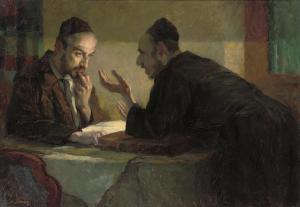
Talmud Study by LamplightNevertheless, some commentators have attempted to reduce the “tension” Lancaster mentions by insisting that the “Torah” Peter was speaking of was the “Oral Law of the Pharisees,” even though Acts 15:5 specifically references the “law of Moses.”

But Peter, as a Jew who had lived in the Jewish homeland all his life, and had observed the mitzvot and halachah all of his life, knew what he was talking about, and so did his Jewish audience. If Peter had required that the Gentile disciples all convert to Judaism, he would be requiring them to be obligated to the full weight of the Torah. While it is an honor to serve God and to walk in His ways as a Jew, it is not easy.

A yoke which neither our fathers nor we have been able to bear…

Acts 15:10

For freedom Christ has set us free; stand firm therefore, and do not submit again to a yoke of slavery. Look: I, Paul, say to you that if you accept circumcision, Christ will be of no advantage to you.

Galatians 5:1-2

Paul echos Peter’s statement and describes a state in which, should a Gentile disciple convert and be bound to Torah, he or she will be obligated unrelentingly to the full weight of the yoke of the Law. According to Lancaster this includes the following:

Previous generations of Jewish history had already proven the Torah to be an unbearable duty for sinful human beings. The Torah is a source of blessing, but outside the Messiah’s righteousness, it is also a source of curse. All men sin and fall short of the glory of God and incur his wrath. “The law brings wrath.” (Romans 4:15). Peter only means to point out that obligation to the Torah (Jewish status) is not an avenue to salvation.

In addition to the theological ramifications of forcing Gentile believers to become Jewish and keep the whole yoke of Torah, the apostles also had in mind the very practical implications of such a decision. If the Gentile believers took on halalaic Jewish status, they placed themselves under the authority of the Torah courts (including the Sanhedrin, which was at the time, hostile to believers)…

-ibid, pg 438

Lancaster may be reading between the lines about what the Apostles were and weren’t thinking about, but it’s a reasonable assumption. If the Gentiles could only be saved by converting to Judaism and converting to Judaism meant full halalaic obligation to Torah and the traditions, then any theological and legal consequences for failure to perform the mitzvot correctly landed right on their shoulders. This also means that any particular blessings Gentiles are intended to receive because they are Gentiles attaching themselves to God, would be lost when they converted.

Before we continue, I want to point out something special Lancaster said:

The Torah is a source of blessing, but outside the Messiah’s righteousness, it is also a source of curse.

If the Torah has always been too difficult to obey, and outside of Messiah, it is a source of both blessings and curses, why did God give the Torah at one point in history and bring the Messiah much later?

What then shall we say was gained by Abraham, our forefather according to the flesh? For if Abraham was justified by works, he has something to boast about, but not before God. For what does the Scripture say? “Abraham believed God, and it was counted to him as righteousness.”

Romans 4:1-3

Faith in God and God’s graciousness to humanity was always the foundation. Paul made a point to tell that to the Jewish and Gentile believers in Rome. The Torah does not justify you. It never did. Torah was never the mechanism by which an individual or the nation of Israel was justified before God. It was by faith. The mitzvot were, in many ways, given originally to be sort of the “national constitution” of ancient Israel, and a description of the way of life the Israelites were to live because they were God’s chosen ones. Yes, part of the Torah was to enable Israel to be a light to the nations and to attract them (us) to God, but Torah didn’t exist for its own sake, at least not according to Paul.

What did Peter have to say about this?

But we believe that we will be saved through the grace of the Lord Jesus, just as they will.”

Acts 15:11

key-of-kingdomHis response to those Jews who believed the Gentiles must convert to Judaism to be saved was to say that by placing the Torah upon the Gentiles, it would be an unbearable yoke for them…and for the Gentiles, who after all were not standing there with the Israelites at Sinai, conversion and full Torah obligation wasn’t necessary. Like the Jews, they were also saved through the grace of Christ. Both Jewish and Gentile believers were and are saved only through the grace of Messiah, but the Jews retain additional obligations under the yoke of Torah, which they can bear because of Moshiach’s righteousness.

But where does Peter get off making such a decision (or at least arguing for making such a decision) for the Gentiles?

And I tell you, you are Peter, and on this rock I will build my church, and the gates of hell shall not prevail against it. I will give you the keys of the kingdom of heaven, and whatever you bind on earth shall be bound in heaven, and whatever you loose on earth shall be loosed in heaven.”

Matthew 16:18-19

You may have your own opinion on what you think Christ giving Peter the “keys to the kingdom” means. Here’s Lancaster’s interpretation:

“Since the elders agreed with what had been said by Peter, the whole assembly kept quiet.” (see Acts 15:12) The Master had given Simon Peter the “keys to the kingdom of heaven,” the halachic authority to bind and to loose in matters concerning His assembly. Simon’s testimony made it clear that he loosed the Gentiles from the obligation of circumcision and coming under the yoke of Torah as Jews.

-ibid, pg 439

In other words, Jesus personally gave Peter halalaic authority to make binding decisions for the disciples, Jews and Gentiles, who were members of the sect “the Way.”

I’ll stop here and pick up with James and his summation of the arguments that had been presented in the next part of this series, but I do want to make clear what’s been said so far. Although many Jews did not comprehend how the Gentile disciples could become disciples without conversion to Judaism, Peter (see Part 1) reminded the assembly that Cornelius and his household received the Holy Spirit and were baptized but were not circumcised, thus illustrating that salvation was also available to the Gentiles without converting to Judaism.

We have to go to Galatians to support Peter’s argument that only being born Jewish or converting to Judaism required a person to be obligated to perform the full body of Torah mitzvot. This was apparently a common understanding among all of the Jews present and no one disputed it.

Peter had the halalaic authority to make such decisions or at least to seriously suggest them before the council (and James was the head of the council, so his response is still required before any conclusions can be made), so that, plus his experience with Cornelius, made him more than qualified to say that the Gentile disciples should not be made to convert to Judaism and it would be “testing God” (see Luke 4:12) to do otherwise.

But the final decision hasn’t been made. We still need to review James’s response to all of the testimony presented and then his (and the Holy Spirit’s) final decision on the matter. We’ll begin with the response of James in Part 3.

Return to Jerusalem, Part 1

up_to_jerusalemPaul and Barnabas appeals to the ruling given by the pillars, James, Simon Peter, and John. The newcomers questioned the ruling and the circumstances around it. Did the apostles really mean that the Gentile believers should remain as Gentile believers indefinitely? Surely not! Surely they only intended a grace-period during which the Gentiles could learn Torah. The newcomers raised practical questions:

“Do the Gentile disciples need to keep the commandments of the Torah at all then? Are they free to do as they please? Did not our Master teach us that whoever breaks the least of these commandments and teaches others to do so will be called least? Is it not sufficient for a disciple to be like his teacher? If our Master kept the Torah, should not His disciples keep the same commandments?”

Paul argued, “The whole Torah is fulfilled in one word, in the statement, ‘You shall love your neighbor as yourself'” (Galatians 5:14). He said, “The deeds of the flesh are evident!” (Galatians 5:19). On the other hand, he argued resolutely that those commandments which he styled “works of the Law,” i.e., circumcision and Jewish identity-markers, should not be required from Gentile believers.

-D. Thomas Lancaster
Torah Club, Volume 6: Chronicles of the Apostles
from First Fruits of Zion (FFOZ)
Torah Portion Yitro (“Jethro”) (pg 432)
Commentary on Acts 15:1-20

Paul and Barnabas seem to have a real problem here and so do we. It has been argued by some that the Jewish “newcomers” who Paul and Barnabas were debating in the Jewish community in Syrian Antioch were correct, at least in part, that the Gentile believers, both in ancient days and in the present, should do everything that Jesus did in living a lifestyle consistent with our Jewish Master as his Jewish disciples. After all, the short definition of a disciple is one who learns from his or her Master through imitation. If we’re not imitating the practices of our Master down to the last detail, how can we be said to be his disciples?

On the other hand, the Jewish people arguing with Paul and Barnabas on this point saw no other way for the Gentiles to be disciples and imitators of Jesus than to become circumcised (the males) and to become full converts to Judaism. In their way of thinking, having Gentiles who were disciples and fully under the “yoke of Torah” was an impossible thought. One was either a Jew or not. There was no middle ground.

Paul was arguing strenuously for Gentile inclusion as disciples without conversion to Judaism, but how was such a thing to be done? The questions brought forth by the “newcomers” are indeed valid. We don’t consider such questions today in most of the church and in some ways, that represents the tremendous “disconnect” between most 21st century Christians and the origins of our faith. We have become unconscious of the “Jewishness” of our very first teachers, the Apostles and the Jewish disciples of our Jewish Messiah. Most of us, when we read Acts 15, interpret the scripture the way we’ve been taught rather than reading what the Apostles were actually saying.

Also, Paul’s argument, as Lancaster presents it, offers another problem. How can you truly reduce the Torah down to a single commandment and how were the Gentiles to enact “loving their neighbors as themselves” without obeying all, or at least very significant portions of the mitzvot and halachah as they were understood in that day? Lancaster separates out the “works of the Law” or “Jewish identity markers” from the larger body of mitzvot, but is that understanding taken directly from scripture or a theological interpretation of the writer and FFOZ? If the Torah could be “reduced” to a single, basic commandment for the sake of the Gentiles, why wasn’t it reduced for the Jewish disciples as well?

ancient-rabbi-teachingTo answer all those questions, we must do what Paul and Barnabas did: take it to the council of Apostles in Jerusalem.

So they decreed that Polos and Bar-Nabba along with some others would go up to Yerushalayim to the shilichim and the elders concerning this question.

Ma’asei HaShlichim (Acts) 14:2
from an unpublished translation based on Delitzsch

Lancaster’s commentary provides a variety of details about Paul’s and Barnabas’ journey to Jerusalem and the preliminaries about how they were received that I’m not going to discuss, both because of the length and because I have no intention of recreating the full body of Torah Club commentary on Acts 15 here (You can read Vol. 6 of the Torah Club to get the full analysis).

However, Lancaster does present a very handy outline of the Acts 15 problem that I think we should review before getting into the details of the matter.

  • The Original Question: Must the Gentiles be circumcised (become Jewish) in order to be saved? (15:1)
  • The Charge: The Gentiles must be circumcised and required to obey the Torah of Moses (in order to be saved). (15:5)
  • The Rebuttal: Why do you put God to the test by placing upon the neck of the disciples a yoke which neither our fathers nor we have been able to bear? But we believe that we are saved through grace of the Lord Jesus, in the same way as they also are. (15:10-11)
  • The Proof Text: Amos 9:11-12 (David’s Fallen Tabernacle). (15:16-18)
  • The Decision: It is my judgment that we do not trouble those who are turning to God from among the Gentiles… (15:19)
  • The Four Essential Prohibitions: But what we write to them that they abstain
    1. from things contaminated by idols
    2. from fornication
    3. from what is strangled
    4. from blood. (15:19-20)
  • The Explanation of the Decision: For Moses from ancient generations has in every city those who preach him, since he is read in the synagogues every Sabbath. (15:21)

-ibid, pg 433

Luke compresses the arguments presented before James and the Jerusalem Apostles so that they appear very brief, but according to Lancaster, the discussion may have lasted for days, as argument and counter-argument was presented by one side and then the other. The arguments against Gentile inclusion without conversion, using the words of the Master himself, must have been compelling:

“Do not give what is holy to dogs, and do not throw your pearls before swine. Do not go in the way of the Gentiles…but rather go to the lost sheep of the house of Israel. It is not good to take the children’s bread and throw it to the dogs. I was sent only to the lost sheep of Israel.”

-ibid
see Matthew 7:6, 10:5, 15:24, 15:26

The argument, as we read it from a modern Christian perspective, is not without its irony. In today’s church, Jewish people (or anyone else) cannot be saved unless they totally surrender their “Jewishness” and convert to (Gentile) Christianity. The Jewish identity and everything else about what it is to be a Jew, including the Torah of Moses, must be totally excised from the Jewish convert to Christianity. Yet in this hearing before the Jerusalem council, it is being strongly argued that a Gentile (anyone who is not Jewish) cannot be a valid disciple and follower of our (Jewish) Lord Jesus Christ unless he or she totally gives up their pagan ways and their Gentile identity and converts to Judaism.

But then Peter spoke:

And after there had been much debate, Peter stood up and said to them, “Brothers, you know that in the early days God made a choice among you, that by my mouth the Gentiles should hear the word of the gospel and believe. And God, who knows the heart, bore witness to them, by giving them the Holy Spirit just as he did to us, and he made no distinction between us and them, having cleansed their hearts by faith.

Acts 15:7-9 (ESV)

Peter is, of course, referring to his encounter with the Roman Centurion Cornelius and his household:

While Peter was still saying these things, the Holy Spirit fell on all who heard the word. And the believers from among the circumcised who had come with Peter were amazed, because the gift of the Holy Spirit was poured out even on the Gentiles. For they were hearing them speaking in tongues and extolling God.

Acts 10:44-16 (ESV)

Burning-Star-of-DavidTaken one way, Peter could be saying to the Council that the Holy Spirit destroyed any and all distinctions between the Jewish and Gentile disciples of Messiah, creating “one new man,” and indeed this is exactly what the vast majority of Christians believe today. However Lancaster, reverses this and says that Simon Peter’s argument hinges on the necessity of maintaining a clear distinction between Jews and Gentile believers. According to Lancaster, Peter was not speaking in overly general terms and was specifically describing eligibility for salvation rather than defining legal identity, nationality, or covenantal obligations. Paul seems to echo this in his most famous statement in his epistle to the Galatians.

There is neither Jew nor Greek, there is neither slave nor free man, there is neither male nor female; for you are all one in Christ Jesus.

Galatians 3:28

Applying Lancaster’s understanding of Peter’s statement to what Paul wrote, we then see that Jews and Greeks, slaves and free men, men and women, though different in status, class, nationality, ethnicity, and gender, all have identical access to salvation through Jesus Christ. Discipleship under Messiah doesn’t blur or destroy distinctiveness, including the specifics of Jewish covenant distinctiveness, but it does destroy any barriers between all humans and the salvation of God.

Naturally, this is going to be a lengthy discussion and analysis and Lancaster’s commentary covers a lot of ground, so yes, this the first part of another multi-part series. We’ll pick up with Simon Peter and “the unbearable yoke of the Law” in Part 2 of “Return to Jerusalem” tomorrow.

Collision and Recoil, Part 1

ancient-torahFor some days he was with the disciples at Damascus. And immediately he proclaimed Jesus in the synagogues, saying, “He is the Son of God.” And all who heard him were amazed and said, “Is not this the man who made havoc in Jerusalem of those who called upon this name? And has he not come here for this purpose, to bring them bound before the chief priests?” But Saul increased all the more in strength, and confounded the Jews who lived in Damascus by proving that Jesus was the Christ.

When many days had passed, the Jews plotted to kill him, but their plot became known to Saul. They were watching the gates day and night in order to kill him, but his disciples took him by night and let him down through an opening in the wall, lowering him in a basket.

Acts 9:19-25 (ESV)

And when the Gentiles heard this, they began rejoicing and glorifying the word of the Lord, and as many as were appointed to eternal life believed. And the word of the Lord was spreading throughout the whole region. But the Jews incited the devout women of high standing and the leading men of the city, stirred up persecution against Paul and Barnabas, and drove them out of their district.

Acts 13:48-50 (ESV)

This becomes a familiar refrain in Paul’s life. Always someone is condemning him for his message or what it implies in their lives. As you may recall from yesterday’s “morning meditation,” when, in Acts 9:23, it says that “the Jews plotted to kill him,” the word we read in English as “Jews” in Greek is “Ioudaioi,” which specifically refers to the Jewish religious leaders and those who support them, not the Jewish people in general (according to the commentary in my ESV Bible, anyway). We see the same word used in Acts 13:50 when it also says, “But the Jews incited the devout women of high standing and the leading men of the city, stirred up persecution against Paul and Barnabas…”

I’ve been reading D. Thomas Lancaster’s Torah Club 6: Chronicles of the Apostles, specifically his commentary on Acts 13 (pp 379-405) which is intended to be read during the week that Torah Portion Bo (“Come”) is studied. I really wish that all of you reading this blog (and everyone else) could read this particular lesson on chapter 13 of Acts, because it is illuminating in many ways, presenting the message of salvation to Jews, Jewish converts, and everyone else in such a clear manner. Space on this blog prevents me from replicating Lancaster’s arguments in full and besides, if I simply “copied and pasted” the lesson here, I would be depriving you of the pleasure of studying from the Torah Club.

Nevertheless, there is some important territory to cover. For instance, why does Chapter 13 end with the Jewish religious leaders of Antioch (and according to Lancaster,“thanks to the Seleucid dynasty, more than fifteen cities in the Roman world bore the name Antioch”), conspiring with “a few prominent, God-fearing, Gentile women who were friendly with the Jewish community” to drive Paul and Barnabas out of their area? I mean, the whole thing started out so well. After Paul’s brilliant teaching as we read in Acts 13:16-41.

When they went out [from the synagogue] they requested of them to speak these things to them the following Shabbat. When the assembly was dismissed, many individuals from the Yehudim and righteous converts followed Polos and Bar Nabba, who spoke to their heartfelt need and warned them to stand in the kindness of God

Ma’asei HaShlichim 13:42-43 (As quoted from Torah Club, vol 6, pg 393)

The above version of Acts 13:42-43 is taken from an unpublished translation based upon the work of the nineteenth-century Christian scholar Franz Delitzsch (a translation of the Gospels based on Delitzsch’s work is currently available). Let me present the same verses in a form that might be more familiar to you.

As they went out, the people begged that these things might be told them the next Sabbath. And after the meeting of the synagogue broke up, many Jews and devout converts to Judaism followed Paul and Barnabas, who, as they spoke with them, urged them to continue in the grace of God.

Acts 13:42-43 (ESV)

Now, according to Lancaster, here’s the Jewish reaction to what Paul had taught the Jews, converts, and Gentile God-fearers about the risen Messiah:

The synagogue of Pisidian Antioch received Paul’s message enthusiastically. The synagogue heads asked Paul and Barnabas to return the following Sabbath and present more teaching about the man from Nazareth, His messianic claims, His resurrection from the dead, and the evidence from the prophets. After the Sabbath services concluded, an excited group of Jewish people (both Jews and proselytes) gathered around Paul and Barnabas. They followed them back to where they were staying and asked for more teaching and stories about the Master. The apostles spent the remainder of the Sabbath instructing them further in the message of the gospel and the teaching of Yeshua. They “were urging them to continue the grace of God.”

-Lancaster, pp 393-4

I’m not sure where Lancaster found that level of detail about what happened between the Jewish and proselytes from the synagogue and Paul for the rest of the Shabbat, but I can see how it could be true. Certainly it is evident that Paul’s message sparked a tremendous amount of excitement from his audience, it was received enthusiastically, and they couldn’t wait to hear more. This hardly seems like the sort of atmosphere that would abruptly turn to the local Jews experiencing “the offense of the cross” as some modern Christians might put it.

What happened?

Well, let’s back up a little bit.

Brothers, sons of the family of Abraham, and those among you who fear God, to us has been sent the message of this salvation.

Acts 13:26 (ESV)

Before proceeding, let me present the same verse from the Delitzsch translation to give it a more Judaic context:

Men, brothers, sons of Avraham’s family and God-fearers who are among you: to [us] this word of salvation was sent.

Ma’asei HaShlichim 13:26

synagogueAnd now Lancaster’s explanation:

Paul finished his historical review with the prophecies of John the Immerser. Before going on to present the story of Yeshua, his suffering, and resurrection, he stopped to appeal directly to the people present in the synagogue. He declared, “To us the message of this salvation has been sent.”

Paul’s first person, plural pronoun “us” included all three types of people he addressed that day in the synagogue: “Brethren, sons of Abraham’s family, and those among you who fear God” (Acts 13:26). “Brethren” referred to his fellow Jews. “Sons of Abraham” referred to proselytes. (Proselytes take the patronymic “son of Abraham” at the time of their conversion.) “You who fear God” referred to the God-fearing Gentiles present that day in the synagogue. The God-fearing Gentiles were not accustomed to being acknowledged in such addresses, and they had never been included in the promises of Messianic redemption or covenant privilege.

-Lancaster, pg 390

That’s absolutely true. God-fearers, such as the Roman Centurion Cornelius and his household who we met in Acts 10, acknowledged the sole sovereignty of the God of Israel and denied all other Gods, but they had no covenant status to connect them to God as did the Jews. There was only the covenant God made with Abraham, but it was unrealized as far as the Jews and God-fearers who were listening to Paul knew.

I will bless those who bless you, and him who dishonors you I will curse, and in you all the families of the earth shall be blessed.” So Abram went, as the Lord had told him, and Lot went with him. Abram was seventy-five years old when he departed from Haran. And Abram took Sarai his wife, and Lot his brother’s son, and all their possessions that they had gathered, and the people that they had acquired in Haran, and they set out to go to the land of Canaan. When they came to the land of Canaan, Abram passed through the land to the place at Shechem, to the oak of Moreh. At that time the Canaanites were in the land. Then the Lord appeared to Abram and said, “To your offspring I will give this land.” So he built there an altar to the Lord, who had appeared to him.

Genesis 12:3-7 (ESV)

Now the promises were made to Abraham and to his offspring. It does not say, “And to offsprings,” referring to many, but referring to one, “And to your offspring,” who is Christ.

Galatians 3:16 (ESV)

For the first time, as Paul addressed all those present at that synagogue in Antioch, he “hot wired” the connection between the Abrahamic covenant and the Jewish Messiah who he revealed was Yeshua of Nazareth, Son of David, who was born, died, and resurrected, and who carried the promise of salvation to the Jew, the Jewish convert, and yes, even to the Gentiles of the nations who feared God.

We’ve already seen how the Jews and proselytes reacted with great joy, but what was the response of the Gentiles who heard this message?

We’ll pick up with the answer to that question and more in Part 2 presented in tomorrow’s “morning meditation.”

Distinctions

distinctionsFor before certain men came from James, he was eating with the Gentiles; but when they came he drew back and separated himself, fearing the circumcision party. And the rest of the Jews acted hypocritically along with him, so that even Barnabas was led astray by their hypocrisy.

Galatians 2:12-13 (ESV)

Who were these certain men from James? In the Greek of the period, the term “a certain man” usually indicates someone of prestige. By saying that they were certain men from James, Saul (Paul) indicated that they were from the Evyoinim, the Jerusalem community fo believers. The “certain men” from James must have been prestigious members of Jerusalem’s community, perhaps apostles, members of the Twelve, or even members of the Master’s extended family such as sons of Clopas. Whoever they were, their approval or disapproval seems to have carried weight.

Luke does not tell us why they came to Antioch, but when they arrived, they expressed their disapproval about the free intermingling of Jewish and Gentile believers. Saul referred to them as “the circumcision,” a term he uses to indicate Jewish believers.

-D. Thomas Lancaster
Torah Club, Volume 6: Chronicles of the Apostles
from First Fruits of Zion (FFOZ)
Torah Portion Va’era (“and I appeared”) (pp 366)
Commentary on Galatians 2:1-18, Acts 12:25

One of the things I’ve been trying to communicate lately is that no religious or faith community is perfect and free from conflict. As we see above, that includes the early community of “the Way” as Paul was taking the message of the Jewish Messiah to the non-Jews in the diaspora. While Paul obviously felt very strongly about his mission to the goyim, there were apparent difficulties, one being the “free intermingling of Jewish and Gentile believers.” Peter himself was instrumental in bringing the first household of Gentiles into full covenant relationship with Jesus (Acts 10) and yet, when “certain men from James” came to Antioch, Peter, who had previously felt comfortable eating with the Gentile believers, suddenly became intimidated and drew back from them. According to Lancaster’s interpretation, there was a difference of opinion among the “high-ranking” Jews of the Way as to the appropriate level of contact (or lack thereof) between Jews and non-Jews who shared a faith in the Christ; the Moshiach.

One of the things I sometimes hear from folks in the Hebrew Roots movement is that there was originally a sort of “super-unity” between the First Century Jewish and Gentile believers, and that, apart from a string of DNA indicating that one had Hebrew lineage and another did not, they became identical “co-heirs” in the Kingdom, sharing everything, including covenant identity and covenant responsibilities relative to the Torah mitzvot. While I agree that the early Gentile Christians, those who lived in the day of James, Peter, and Paul, most likely did live a worship and daily lifestyle that appeared far more “Jewish” than we Christians do today, it is obvious from this section of Paul’s letter to the Galatians and Lancaster’s commentary on the matter (which he no doubt borrowed from his “must have” book on the topic The Holy Epistle to the Galatians) that there was already “trouble in paradise.”

Lancaster, referencing material from Magnus Zetterholm’s book Approaches to Paul: A Student’s Guide to Recent Scholarship (Fortress Press, 2009) states the following:

The Jewish believers from James argued that, if the Gentile believers were fellowshipping and worshipping and eating within Jewish space, they should go the full distance and become Jewish. If they chose not to do so, they should be set outside the Jewish community – quarantined, so to speak – so that the distinction between Jew and Gentile remained perfectly clear. In expressing that opinion, they may or may not have been expressing the opinion of James, the brother of the Master.

-Lancaster, pg 367

PaulNot only does Lancaster introduce the idea that representatives of James did not approve of a completely free intermingling between Jews and Gentiles in the movement and advocated for a separation between the two groups socially, we see strong signs of disagreement on this very matter between different groups of Jews in the apostolic community.

But what about Paul? According to Lancaster:

Saul saw that the separation could only result, ultimately, in two different faith communities, two different religions, and two different peoples: a Gentile ekklesia and a Jewish ekklesia, and he did not care for that prospect. He took a bold step; he even stepped out of line and rebuked Simon Peter.

-ibid

But when Cephas came to Antioch, I opposed him to his face, because he stood condemned.

Galatians 2:11 (ESV)

Paul called Peter out on his hypocrisy in having table fellowship with Gentiles when the “big wigs” weren’t around but shying away from his Gentile brothers when they were. Paul doesn’t seem to be a person who really cared about appearances and he had a lot invested in his relationship with the Gentiles he mentored.

James, Peter, Paul, and the rest of the Jewish apostles and believers were Jews who lived a halakhic Jewish lifestyle consistent with that period of time and who maintained that their faith in the God of Israel through the Jewish Messiah was wholly Jewish. Integrating non-Jews without requiring them to convert to Judaism (and Peter knew this since he deliberately did not have Cornelius and his household circumcised after receiving the Holy Spirit and before baptism by water – see Acts 10:44-47) was an amazingly difficult task. How was it to be done?

While the men from James felt that the Gentiles should either be circumcised and convert to Judaism or be completely segregated from the Jewish community, Paul had grave misgivings about the separation of believing Jews and Gentiles, and yet, this is the same Paul who likely foresaw just such an event.

Lest you be wise in your own sight, I do not want you to be unaware of this mystery, brothers: a partial hardening has come upon Israel, until the fullness of the Gentiles has come in. And in this way all Israel will be saved…

Romans 11:25-26 (ESV)

traintracksAs much as he may have resisted it and even dreaded it, Paul could very well have known that the Gentiles and Jews would ultimately travel divergent trajectories across future history and indeed, that is exactly what has happened.

After all, Paul came to forcefully realize the depth of the Jewish struggle in attempting to accept Gentiles within a Jewish religious and identity context:

When the seven days were almost completed, the Jews from Asia, seeing him in the temple, stirred up the whole crowd and laid hands on him, crying out, “Men of Israel, help! This is the man who is teaching everyone everywhere against the people and the law and this place. Moreover, he even brought Greeks into the temple and has defiled this holy place.” For they had previously seen Trophimus the Ephesian with him in the city, and they supposed that Paul had brought him into the temple.

Acts 21:27-29 (ESV)

When I was reading this part of Lancaster’s commentary on Galatians 2, I couldn’t help but think of the struggles in the modern Messianic Jewish and Hebrew Roots communities over the very same matters. How are Jews and Gentiles supposed to interact with each other within a Hebraic worship context? What role should a Gentile Christian take in a Messianic Jewish fellowship? Should Jews and Gentiles all say the same prayers? Should we all wear tzitzit? Will a Jewish Cantor or Rabbi call a Gentile worshiper up to an aliyah to read a Torah Portion during Shabbat services?

I know I mine this particular nugget of information often, but Rabbi Dr. Michael Schiffman’s article Messianic Judaism and Christianity: Two Religions With The Same Messiah speaks volumes about the current struggle that we also find in Paul’s letter to the ancient Galatians.

I’m not sure what to do about it but then again, I’m in no position to do anything about it. I’m not in charge of any aspect of any movement that would allow me to take a definitive action impacting Jewish and Gentile relationships within the Hebrew/Jewish Roots or Messianic Jewish communities (or the larger traditional Christian communities for that matter). According to Lancaster, Paul desired a unity that extended up to the level of table-fellowship, but it seems unlikely that he would have advocated for a complete fusing of Jewish/Gentile identities. He never advocated for Gentiles becoming fully Jewish:

Look: I, Paul, say to you that if you accept circumcision, Christ will be of no advantage to you. I testify again to every man who accepts circumcision that he is obligated to keep the whole law.

Galatians 5:2-3 (ESV)

On the other hand, Lancaster said this of Paul:

Saul pointed out that, if Simon Peter, of all people, built a sharp division between Jew and Gentile by removing himself from table-fellowship with Gentiles, he was rebuilding the barrier that he had originally torn down (see Galatians 2:18)…If he agreed that Jews and Gentile believers should limit their social and table interaction, then he had erred by tearing down that wall of division in the first place and proved himself to have been living in sin and transgression.

-Lancaster, pg 369

Let me tell you a story.

I heard this story very recently and I was impressed.

A certain Christian was traveling with a tour group in Israel led by a number of Jews. Each morning, the Jews would rise early and form a minyan to pray shacharit. The Christian would also rise early to pray, but never approached the Jewish minyan. He sat in the back of the room where the minyan had gathered, reading his Bible and praying. When the minyan was finished with prayers, the Christian was finished with prayers and they joined each other for breakfast. In a way you might not expect, this formed a bond between the Jewish men and the Christian, one of mutual respect and perhaps even a realization that Jew and Christian mutually shared a devotion to God.

SuccothThe Christian now lives in America and still keeps in touch with some of the Jewish men he traveled with in Israel based, in part, on what they “shared” in morning prayers.

I’m not necessarily suggesting that a complete division between believing Jews and Gentiles is the way to go. Paul seemed to believe there should be some sort of interaction between the two groups, though how far he would have taken it is questionable. Jewish believers such as Rabbi Dr Schiffman recognize that Jews and Christians must maintain separate religions, as the emissaries from James supported, to preserve Jewish covenant identity. Yet like Paul (and Lancaster), there are other groups within Messianic Judaism where Jews and Gentiles do worship together and share table-fellowship in peace.

Halalaic Jews in the movement of Messianic Judaism are still a minority population, with the majority of worshipers and leaders being non-Jews. But there are enough Jews present to beg the questions we see expressed in Galatians 2. We debate back and forth and occasionally, arguments become heated, but the struggle in which we’re engaged is very old. I don’t know if Paul ever solved his dilemma or if he and James (or the men he sent to Antioch) ever came to an agreement on the matter. I only know what Peter finally concluded as he addressed James and the Council.

And God, who knows the heart, bore witness to them, by giving them the Holy Spirit just as he did to us, and he made no distinction between us and them, having cleansed their hearts by faith.

Acts 15:8-9 (ESV)

May we who possess the Spirit of God within us and who humbly attempt to walk in the dust of the footsteps of our Master be granted wisdom and fellowship in the presence of Christ, the Messiah.

Message to the Sons of Solomon

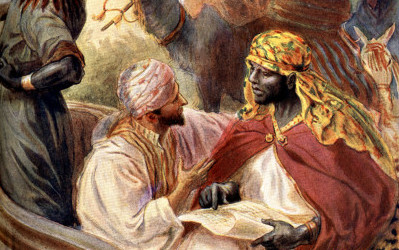
philip_and_the_ethiopianAnd King Solomon gave to the queen of Sheba all that she desired, whatever she asked besides what was given her by the bounty of King Solomon. So she turned and went back to her own land with her servants.

1 Kings 10:13 (ESV)

Now an angel of the Lord said to Philip, “Rise and go toward the south to the road that goes down from Jerusalem to Gaza.” This is a desert place. And he rose and went. And there was an Ethiopian, a eunuch, a court official of Candace, queen of the Ethiopians, who was in charge of all her treasure. He had come to Jerusalem to worship…

Acts 8:26-27 (ESV)

The Ethiopian history described in the Kebra Negast, or “Book of the Glory of Kings,” relates that Ethiopians are descendants of Israelite tribes who came to Ethiopia with Menelik I, alleged to be the son of King Solomon and the Queen of Sheba (or Makeda, in the legend) (see 1 Kings 10:1-13 and 2 Chronicles 9:1-12). The legend relates that Menelik, as an adult, returned to his father in Jerusalem, and then resettled in Ethiopia, and that he took with him the Ark of the Covenant.

-Budge, Queen of Sheba, Kebra Negast, chap. 61.
quoted from Wikipedia

I’ve written before about the section of Acts 8 that chronicles the encounter between Philip and the Ethiopian eunuch in relation to D. Thomas Lancaster’s commentary in Volume 6 of the Torah Club: Chronicles of the Apostles. Today (as I write this “church report”), it was Pastor Randy’s turn to teach us his perspective during Sunday services where I go to church.

It was also Charlie’s turn to discuss it in Sunday school and it was interesting. I already knew that Charlie believed the Ethiopian was Jewish but as Pastor started delivering his message, he shared with us that he just that week had changed his opinion about the Ethiopian and now believes that he must have been a Jew! Interesting.

I’m torn between whether to write about the history of the Ethiopian Jews, which is a topic of some controversy and speculation, or if I should focus on why God found it necessary to send an angel to tell Philip to find the Ethiopian (Acts 8:26). I think I’ll focus on the latter.

Let me explain.

In teaching the Sunday school lesson, Charlie remarked more than once how unusual he thought it was for God to send “an angel of the Lord” to tell Philip to stop everything he was doing in Samaria and travel south on the desert road to find one man who was returning to his native Ethiopia after a pilgrimage to Jerusalem. Why was this one man so important?

From a traditional evangelical Christian point of view, converting a high-ranking official of a foreign country to faith in Jesus Christ is a great way to spread the gospel message to all of the other high-ranking government officials in that country as well as to the general body of citizens. But I don’t think we can exactly map 21st Century evangelical strategies to First Century CE Jewish devotion to the sect of “the Way.” Charlie thought, given how the message of Christ was transmitted first to the Jews, then to the Samaritans, and finally to the rest of the nations, that God believed the Jewish population in Ethiopia was close to the heart of their Creator, and that the “Good News” of Messiah was a message God intended for all Jews to embrace. After all, much of the New Testament text addresses the spread of the Gospel into Europe, Asia, and the Near East. What about the Jews to the south?

This is all speculation of course, and only one part of a single chapter in the New Testament is devoted to transmitting such a message in that particular direction, but what Charlie also said more than once got my attention. He said that God wanted to make sure all of the Jews got the message that God had changed the rules.

What? What rules?

(I should say at this point, when Charlie made his comment about “changing rules” I was seriously considering what I should say or do in response. I chose not to say or do anything, but given my sensitivity to the matter of supersessionism in the church, I was afraid that I would have to defend against such a theology at the cost of my budding relationship among these fellow believers. Fortunately, it didn’t come to that.)

Actually, something important did change thanks to Christ.

Go therefore and make disciples of all nations, baptizing them in the name of the Father and of the Son and of the Holy Spirit…

Matthew 28:19 (ESV)

While Israel had always been intended to be a “light to the nations” (Isaiah 49:6), this is the first indication that the Messiah wanted people from all of the nations, and not just from Israel, to become disciples of the Master and grafted in sons and daughters of God. As we progress forward and especially attending to Acts 10 and beyond, we see that God’s intent was not to require the Gentiles to convert to Judaism or abandon their own national and ethnic uniqueness in order to become disciples. The Holy Spirit was just as available to the Gentile disciple as to the Jew.

Walking TogetherIn this specific sense, something had changed. Prior to this moment in time, if a Gentile wanted to worship the God of Israel in a covenant relationship, he or she had to embrace Judaism (that’s more or less an exact quote from Pastor Randy). With the command of Christ, which the church calls “the great commission,” anyone from anywhere could worship God in a covenant relationship without converting to Judaism (the concept of conversion is complicated…it probably didn’t exist as such during the days of Moses or David, but it was a recognized practice during the late Second Temple period and beyond).

Did God want Philip to tell the Ethiopian that God changed the rules? A plain reading of the text doesn’t suggest such a thing. From my point of view, what God wanted Philip to tell the Jewish Ethiopian was the good news of the Messiah who had come and will come again, as revealed by Isaiah 53. Why God wanted this event to occur is up for grabs, but what the Ethiopian carried back with him to his land and to his people was the gospel message, or as much of it as Philip was able to transmit in the time they were together and related to the passages from Isaiah. What fruit resulted upon the eunuch’s homecoming and in the years and centuries to follow, we cannot know.

But if God changed anything, it wasn’t His “rules” or His Torah but rather access. God opened up covenant access to Himself for all peoples. There are two portions to the good news of Christ. Of course, there is the good news for the Gentile, that we can now come to God in covenant through the blood of His son. However, Christianity rarely considers the good news of Christ to the Jew who already had such a covenant relationship (which would include the Jews in Ethiopia), that the Messiah had come, the King of Israel had been born, that he died and rose and sits at the Father’s right hand, and that at the proper time, Messiah would cause a scattered Israel to be gathered together as a nation and one day, the King would rule from Jerusalem (I’m not suggesting two, separate paths of salvation, one for Gentiles and one for Jews, but because of Israel’s special unique relationship with God, the Messiah has more and different good news for the Jews in addition to the good news he has for the Gentiles).

On Friday May 24, 1991: Over the course of 36 hours, a total of 34 El Al Hercules c-130s – with their seats removed to maximize passenger capacity – flew non-stop.

14,325 Ethiopian Jews came home to Israel, to be greeted by thousands of Israelis who gathered at temporary absorption centers, hotels and hostels to welcome their brethren.

Operation Solomon saw the rescue of twice the number of Ethiopian Jews in Operations Moses and Joshua put together.

-from bluestarpr.com

A Christian group said Tuesday, June 7, it would help organize “the return of the last 8,700 Ethiopian Jews to Israel” by sponsoring what are known as “Aliyah” flights, the coming months.

“Last Ethiopian Jews to Return to Israel, Christian Group Says”
-from worthynews.com, June 8, 2011

I know I’m stringing together bits and pieces of scripture, news, and commentary in a less than rock-solid structure, but consider for a moment that Jews from all across the nations have been returning to Israel and are being gathered to their people. God has never forgotten them nor will He ever forsake them. Perhaps that’s why He made it a point to send an angel to Philip and to insure that the message of the Messiah would reach all of his people, including the Jewish Ethiopians.

Just a thought.

The Evolution of Judaism, Part 6: Evolutions

ancient_jerusalemThe best evidence that the temple was the locus of prayer during the First and Second Temple periods is the book of Psalms. Virtually all the biblical psalms, even those that lament personal or national catastrophes or that hail a king at this coronation, are hymns of praise to God. They range in date from the period of the monarchy, if not earlier (some of them are Israelite versions of Canaanite or Egyptian hymns), to that of the Maccabees.

All these texts imply that the recitation of prayers was a prominent feature of Jewish piety, not just for sectarians like the Jews of Qumran but also for plain folk. Jews who lived in or near Jerusalem prayed regularly at the temple. This is the plausible claim of Luke 1:10, “Now at the time of the incense offering, the whole assembly of the people was praying outside [the temple],” and Acts 3:1, “One day Peter and John were going up to the temple at the hour of prayer, at three o’clock in the afternoon.”

By the third century BCE, diaspora Jews began to build special proseuchai, which literally means “prayers” but probably should be translated “prayer-houses.” Instead of “prayer-houses,” the Jews of the land of Israel had synagogai, which literally means “gatherings” but probably should be translated “meeting-houses.” Whether they prayed regularly in their “meeting-houses,” which are not attested before the first century CE, is not entirely clear.

The history of this (Amidah or Eighteen Benedictions) prayer is immensely complicated, but its basic contours were established no later than the second century CE, and its nucleus certainly derives from the latter part of the Second Temple times. It bears obvious similarities to the Lord’s Prayer (Matt. 6:9-13 and Luke 11:2-4).

…by the end of the Second Temple period, sections of the Torah were read publicly in synagogues every week.

The purpose of all these rituals was, as the Torah repeatedly says, to make Israel a “holy” people (Exod. 19:6; Lev. 19:2; Deut. 7:6). To better achieve this objective, the Jews of the Second Temple period developed new rituals, broadened the application of many of the laws of the Torah, and in general intensified the life of service to God.

After the destruction of the temple, the petition was changed from a prayer for acceptability of the sacrifices to a prayer for their restoration, and the petition entered the Eighteen Benedictions. In rabbinic times, the prayer was still in flux.

This practice is based on the idea that God can be worshiped through the study of his revealed word.

-Shaye J.D. Cohen
Chapter 3: The Jewish “Religion:” Practices and Beliefs
From the Maccabees to the Mishnah, 2nd Ed.

Forgive the rather lengthy history lesson from different portions of this chapter in Cohen’s landmark book, but as I’ve continued to read from his work, I’ve been struck by how Judaism developed significantly in practice and in its comprehension of a life of devotion to God from the days of the Mishkan (Tabernacle) in the desert to the post-Second Temple era. Some time ago, I began a series of blog posts intended to outline the evolution of Judaism as it applies to Yeshua (Jesus), halakhah, and the “acceptability” of the various Judaisms in any given age and across time to the God who established Israel as a nation. You can follow the link at the end of Part 1 of the series to review all of my comments to date, which ends at Part 5. I had intended for Messiah in the Jewish Writings, Part 1 to be the “sixth” part of the series, but it was pointed out to me that certain “weaknesses” in the scholarship of the material from which I was quoting made it unsuitable for that purpose.

Before proceeding, you should probably review Noel S. Rabbinowitz’s paper “Matthew 23:2-4: Does Jesus Recognize the Authority of the Pharisees and Does He Endorse their Halakhah?” which can be found as a PDF as published in the Journal of the Evangelical Theological Society 46:3 (September 2003): 423-47. That, along with reading the other “Evolution” blog posts in this series, should provide the foundation for continuing (and ultimately concluding) the discussion here.

In providing the series of quotes from Cohen’s book, I intended to illustrate how what was acceptable Jewish practice in worship, Temple sacrifice, and prayer developed over time and was never a single, static set of religious rules and procedures that perfectly reflected the intent of the Torah and God in the life of Israel. Sometimes in certain corners of Christianity and its variants, we find people who sincerely are seeking a more authentic method of practicing their faith, based on some sort of idealized and perfect template or model that was established, either by Moses or Jesus. Somehow that particular set of behaviors is believed to be what God wants us to do and is the only valid model by which we should construct our faith practices in the present age.

But as the title of this series implies, perhaps the human practice of worshiping God can never be static nor was it ever intended to be a single set of rigid rules and concrete regulations that never modified in the slightest across the long centuries between Sinai and the present.

I don’t mean that right and wrong don’t have timeless value and that God changes His requirements for humanity at a whim, but humanity changes, circumstances change, and what seems right to do at one point in human history seems very much different at another point on the timeline of existence. Surely how Solomon viewed what was proper worship differed greatly from what the Rambam might have considered right Jewish practice, and yet can we say that either one of them (or both) was wrong? They were both certainly convinced that they were doing what God required, but who they were, where they lived, and the demands of history upon both of these men (and the untold scores that lived before and since) were radically dissimilar.

But while you may understand this relative to the history of the Jewish people, what at all does this have to do with believers in Jesus and who we are in Christ?

Agrippa’s first full year as king over Judea (41/42 CE) was a Sabbatical year. Drought had already begun to hamper the land. The people were gathered for Sukkot to pray for rain and to hear the new king read from the Torah (see Deut. 31:10-11). The apostles and the disciples of Yeshua were present along with the rest of the pious of Israel to witness the historic event. Their hearts burned within them, jealous for the Master. They longed for the day when King Messiah will stand in the Temple and read the Torah aloud to the assembly of Israel.

-D. Thomas Lancaster
Torah Club, Volume 6: Chronicles of the Apostles
from First Fruits of Zion (FFOZ)
Torah Portion Shemot (“Names”) (pg 329)
Commentary on Acts 12:1-24

Yom Kippur prayersLancaster is no doubt taking a bit of poetic license in describing whether or not the hearts of the apostles were “burning” on this occasion, but it does cast the early Jewish disciples of “the Way” in a light that integrates them with overall Jewish religious and social participation. In the church, we tend to think of the “early Christians” as a body wholly apart from the various Judaisms that surrounded them, but as I’ve mentioned before, the Jews who were devoted to the Messiah as part of “the Way,” were just as much a valid sect of Judaism as any of the other Judaisms (Pharisees, Essenes, and so on) with which they co-existed.

In fact, the Jewish disciples of the Master in the days recorded by Luke in the book of Acts can only be separated from overall, normative Judaism anachronistically.

The King James Version of Acts 12:4 translates the Greek “pascha” as “Easter.”

The Greek word “pascha” (which transliterates the Hebrew “pesach”) occurs 27 times in the New Testament. In every instance except Acts 12:4, the King James translators rendered it as “Passover.” In Acts 12:4, they retained William Tynsdale’s anachronistic, Christian rendering and translated it as “Easter.”

The translation betrays a theological bias. It assumes Christianity replaced Judaism. Christ cancelled the Torah, and the Christian Jews would not have been keeping Passover any longer. In reality, the apostles had never heard of a festival called Easter. They had no special Christian festivals. They kept the Passover along with all Israel in remembrance of the Master, just as He had instructed them… (Luke 22:19)

-Lancaster, pg 338

Lancaster continues in his commentary, explaining that the separate Christian observance of Easter wouldn’t be established until the Second Century CE as the Gentile believers in Rome began to neglect observing Passover, but began to revere the Sunday that fell during the week of Unleavened bread as the day of Christ’s resurrection. As you can see, the passage of time and the demands of history have resulted in both Judaism and Christianity evolving and changing how they practice their divergent methods of worshiping God. In fact, the divergence of “the Way” from the rest of the Judaisms post-Second Temple is likely part of those historical requirements.

Is all this desirable? Probably not. That is, it would be great to have a Christianity that actually remained a normative part of Judaism and was able to include Gentile practitioners who came to faith in the Messiah, but such was not to be.

Lest you be wise in your own sight, I do not want you to be unaware of this mystery, brothers: a partial hardening has come upon Israel, until the fullness of the Gentiles has come in.

Romans 11:25 (ESV)

Paul seems to be telling us that the schism between the Gentile and Jewish believers was inevitable for the sake of the Gentiles and that, referencing Isaiah 59 and Jeremiah 31, by doing so, all Israel will be saved. (see Romans 11:26-27)

If Judaism was practiced differently and in fact, in radically different ways between the ancient times of Moses, David, and Solomon, the time of the Babylonian exile, the time of Herod, the Second Temple, and the rise of “the Way,” and in the post-Second Temple rabbinic period, can we say that all of these Judaisms are “valid?” I don’t think we have much of a choice but to say that they are. If you disagree, then you have to point to some place in history and say “here’s where the Jews made their big mistake.” I know that many Christians will point to Jesus and say that the Jewish rejection of their own Messiah caused them to become lost and gave rise to the “age of the Gentiles,” but be careful. For the first fifteen years post-ascension, only Jews were disciples of Jesus Christ. Even after Peter’s fateful meeting with Cornelius and the subsequent mission of Paul to the Gentiles of the diaspora, Jews remained in total control of the “Jesus movement” within Judaism until the fall of Jerusalem and the scattering of the vast majority of the Jewish population among the nations (there has always been a remnant of Jews living in the Land). It is rumored that there were Jews in synagogues acknowledging Yeshua as Messiah into the second, third, and possibly even up to the fifth century CE or later.

Rabbi Joshua Brumbach wrote a blog post called Rabbis Who Thought for Themselves which records the lives of a number of prominent 19th century Rabbis who all came to the knowledge and faith of the Messiah in the person of Yeshua (Jesus), and we know of a remnant of Jews in the 21st century who also have come to faith and yet have lives that are completely consistent with modern Jewish halakhah.

At no one point in history will you find the quintessential moment where you can say “that is the true Judaism” or for that matter, “that is the true Christianity.” Humanity in all our forms has been struggling with our relationship with God, what it means, and how to live it out since the days when God walked with Adam in the Garden. We never get it quite right because we live in a broken world and our vision of who we are, who God is, and what it all means is fractured and distorted, even with the Spirit of God residing with us as a guide.

staring-at-the-cloudsWe can look at the mistakes we have made and are making even now, but we cannot say that “at such and thus time, we got it all right.” We never got it right, we just made different mistakes. But faith and devotion have been a constant thread running through the tapestry and that is what we can find tied to our own heartstrings. We can then grab hold of that thread and pull ourselves along the line, touching the lives of the saints and tzaddikim who came before us, who like us, got some things right and some things wrong, but who like us, did their very best to serve the God of Heaven.

It’s easy to point a finger at history and at men who have been dead for hundreds or thousands of years, and vilify them in order to make ourselves look better, but in reality, they were no different from us in the important ways of how human beings work. Our only constant is love of God and of each other. We look to God to be the unchanging part of our own ever-changing universe. And we wait for the day when King Messiah will stand before Israel in Jerusalem and before the body of believers from the nations, and read the Torah aloud, and we will all hear his voice, and we will all know that we are his.