Tag Archives: Torah Portion

Vayetzei: The Mosaic of God

Jacobs_LadderJacob awoke from his sleep and said, “Surely, God is present in this place and I did not know!”

Genesis 28:16

What was the source of Jacob’s surprise? Jacob realized that he can relate to God even during sleep.

The Talmud (Berachos 63a) says that there is a brief passage upon which the entire body of Torah is dependent: “In all your ways know God” (Proverbs 3:6). Rambam and countless other commentaries refer to this statement, saying that one should serve God not only with the actual performance of mitzvos, but with all of one’s daily activities.

Dvar Torah for Vayetzei
based on Twerski on Chumash by Rabbi Abraham J. Twerski
quoted by Rabbi Kalman Packouz at Aish.com

Yesterday, I quoted another Aish source, Rabbi Zelig Pliskin, who suggests we should act the way we want to be. This was in part, to support how in serving God, we need to bring both a sense of justice and mercy to the table, so to speak. We need not to be severely biased in one direction or the other, though according to some areas of Jewish thinking, even God created the world with a very slight leaning toward mercy.

In his commentary on Torah Portion Vayetzei, Rabbi Packouz presents an interesting and related challenge.

What is true spirituality? My beloved friend, Rabbi Avraham Goldhar, who has a revolutionary approach to helping kids get better grades with less study time in both secular and Jewish studies, came up with the following paradigm of attributes to clarify the definition of spirituality.

  1. Emotion — Intellect
  2. Kindness — Justice
  3. Community — Solitude
  4. God — Nature
  5. Serenity — Challenge

Put a check mark by one attribute from each pair that you think is more spiritual.

Now, if you want to try something interesting, put an “x” mark by each attribute that you associate with the Jewish people.

Here’s the point Rabbi Packouz is making, a point that dovetails nicely with what I was saying in yesterday’s morning meditation:

What is fascinating is that most people associate spirituality with emotion, kindness, solitude, nature and serenity … and the Jewish people with intellect, justice, community, God and challenge. The reason is that we have an Eastern notion of spirituality — an all encompassing emotional bliss connecting with the universe. The Jewish approach to spirituality is based on fulfilling a purpose, to fix the world (tikun olom)– which requires intellect, justice, community, God and challenge.

For the Jew, intellect is to be channeled into emotion — emotions can’t rule you; you must do the right thing. Justice provides for a world of kindness. A society has to be willing to identify rights and wrongs and stand up to evil. If not, one can attempt to do kindness, but end up enabling evil. Community provides you with an understanding of who you are – a member of a people – even when you are alone, you are still part of something more. Realizing that there is a Creator and having a relationship with the Creator makes the natural much more profound. This world is a veiled reality with the Creator behind it. People can only receive serenity when they live up to their challenges; otherwise, they are tormented in their pursuit of serenity by not living up to their potential.
mosaicYou cannot lead with any one side of the equation, so to speak. You can’t even lead with just a few different but specific attributes. And yet people in religion do this all the time, usually to the detriment of the faith. In reading Rabbi Packouz, I get the impression, at least in the ideal, that Judaism strikes the desirable balance between emotion and intellect, between mercy and justice. Of course, the idea that the universe was created by God with these two elements is also a Jewish idea.

Don’t get me wrong, this probably isn’t literal and factual in terms of the process of Creation, but as a metaphor, it tells an important tale, one that we need to learn in order to truly serve God.

Rabbi Twerski ends his Dvar Torah like this:

A person should eat and sleep with the intent that food and rest are essential to have a healthy body, which enables one to do the mitzvos properly. Someone who is weak and exhausted cannot concentrate on Torah study or do mitzvos properly.

One engages in work and business to provide the needs for one’s family, and to acquire the means to do the mitzvos. Money is necessary to give tzedakah, to purchase tefillin and tzitzis, to build a succah, to pay for an esrog and for matzoh, to pay tuition and fulfill all of the mitzvos. If one partakes of world goods for the purpose of being able to serve God properly, then all of one’s actions become part and parcel of Torah and mitzvos.

If I may take a few liberties here, I’ll add that we should use every aspect of who we are in the service of God, not just a few. It is true that each of us has talents or areas where we excel. For some, it’s compassion, and so they serve God by being compassionate helpers. For some it’s intellect, and so they serve God as teachers and as students, always learning and passing on what they’ve learned.

And now you see why we need to work in a body. No one of us has the capacity to serve God in all areas. If we imagine that we do, then everyone around us will get a limited and probably inaccurate image of who God is, what God does, and what God expects of human beings. If all we know of God is from someone who is exceptionally merciful, we may think of God as loving and permissive in the extreme, but having few behavioral expectations, limits, or discipline, like some sort of “cosmic teddy bear.” If all we know of God is from someone who is exceptionally just, we may think of God as harsh, cruel, rule-bound, inflexible, and blind.

Look back at the numbered list I posted above. God possesses all of those qualities. He exists along all points of all continuums, from emotion to intellect, from kindness to justice, from community to solitude. There is no place where God does not exist, and there is no person God cannot comprehend.

But no human being lives with the same infinite set of perceptions and qualities as God. We are limited. We are finite. We have biases. We lean in one direction or another. No one of us gives anyone else an accurate picture of the attributes of God. That’s why we need to operate in a body. That’s why we need community, either physical or (if an approprite physical community of faith is not accessible) virtual. Because only together, as a body, can we balance and guide each other. It takes all of us, like the bits and pieces that make up a mosaic, to be the image of God.

alone-desertSometimes you’ll encounter someone, a person of faith, perhaps a leader, Pastor, teacher, or writer, and they gather a great deal of attention to themselves. When you encounter this person, remember that he or she is only one person. If that person is not tempered, guided, and corrected by a balanced community (plenty of “religious leaders” exist in an unbalanced community, made up of only people who think and feel just like they do), and I don’t care how powerful they are or believe themselves to be, then that person, all by himself or herself, cannot possibly represent God in all that God is.

Don’t be fooled into thinking that he or she can be such a “holistic” representative, even if that person thinks of themselves that way. Alone, a person is just one, and only God is complete as One. It takes a “village,” not only to raise a child, but to be a community in the image of God.

I shall praise God among a multitude.

Psalms 26:12

While the prayer and performance of a mitzvah are always praiseworthy, it is especially meritorious when an entire community participates in it, as the Sages teach, “The prayer of a multitude is never turned away.”

-from Devarim Rabbah 2

Good Shabbos.

Toldot: Eating Words

eat_words1“And Yitzhak was forty years old when he took Rivkah, the daughter of Besuail the Aromite, from Padan Arom, the sister of Lavan the Aromite, for himself for a wife”

Genesis 25:20

The Torah has already stated (in last week’s Torah portion) that Rivkah was the daughter of Besuail, the sister of Lavan, and was from Padan Arom. What do we learn from this seemingly superfluous information?

Rashi asks this question and answers that the Torah is emphasizing the praises of Rivkah. She was the daughter of an evil person, the sister of an evil person and lived in a community of evil people. Nevertheless, she did not learn from their behavior!

Many people try to excuse their faults by blaming others as the cause of their behavior. “It’s not my fault I have this bad trait, I learned it from my father and mother.” “I’m not to blame for this bad habit since all my brothers and sisters do it also.” “Everyone in my neighborhood does this or does not do that, so how could I be any different?” They use this as a rationalization for failing to make an effort to improve.

Dvar Torah on Torah Portion Toldot
based on Growth Through Torah by Rabbi Zelig Pliskin
quoted at Aish.com by Rabbi Kalman Packouz

I’ve had the displeasure of reading two very vitriolic and venomous blog posts written by a single individual (with comments, some of which were equally virulent) this week (no, not in my “morning meditations,” fortunately). I have to remind myself that online attack dogs are often really victims in a real or perceived sense (even if you misinterpret what is going on around you as “victimizing,” the emotional distress is still the same).

In this week’s Torah portion, we see some rather disturbing behavior by Isaac, his wife Rebecca, their son Jacob, and particularly Esau. Esau thinks so little of his birthright that he sells it to the rather clever Jacob for the price of a meal (it’s unlikely Esau was literally starving on that occasion). Both Isaac and Rebecca play favorites among their children, though Rebecca has some “inside information” about Jacob from God to guide her reasoning. And his two apparent acts of deception force Jacob to abruptly leave home and seek out the relative safety of the ancestral home of Paddan-aram and the house of Beuthuel.

Isaac is the son of Abraham, who walked with God, and yet he and his family, who should have known better, would be called “dysfunctional” in our day and age. But what does the Dvar Torah say of Rebecca (Rivkah)? She was raised in an environment of evil and you would expect that she’d emulate her family, including her father Laban.

We see from Rivkah that regardless of the faulty behavior of those in your surrounding, you have the ability to be more elevated. Of course, it takes courage and a lot of effort to be different. The righteous person might be considered a nonconformist and even rebellious by those in his environment whose standard of values are below his level. However, a basic Torah principle is that we are responsible for our own actions. Pointing to others in your environment who are worse than you is not a valid justification for not behaving properly.

Here we see that pointing the finger at others, even if the others are “worse” than you (or you only believe them to be worse) is no excuse for what you do or fail to do. Yes, it takes courage to walk the moral high road, to show compassion rather than negativity, to offer friendship rather than rejection, but how often is this kind of courage displayed by those people in the Bible who were closest to God?

messiah-prayerAlthough Sodom was unspeakably evil, Abraham pleaded with God to spare the city if it contained just ten righteous people (Genesis 18:16-33). After the sin of the Golden Calf, God was intent on destroying the Children of Israel and ready to start over by making a great nation of Moses, but Moses begged God to relent (Exodus 32:11-14). Even the Master, suffering on the cross, spoke no curses against those who were killing him but instead said, “Father, forgive them; for they do not know what they are doing,” (Luke 23:34).

If you ever find yourself saying, “It’s not my fault I did this. It’s because of the way I was raised or because I learned it from so and so,” change your focus to, “I’ll make a special effort to improve in this area to overcome the tendency to follow in the footsteps of others.”

Blaming others for your faults and saying that you cannot do anything to change them will be a guarantee that they will remain with you. Make a list of the negative traits you picked up from your early environment. Develop a plan of action to improve in those areas!

Even if someone wrongs you, even if someone disappoints you, even if someone you trusted seems to have betrayed you, how you react to them tells the world more about you than any flaw another person may have or display (whether that flaw is real of just imagined by you).

There’s no excuse for playing the victim card in order to express hostility, maliciousness, malevolence, spitefulness, viciousness, vindictiveness, or any other harsh or savage behavior or speech (and “speech” includes what you post in the blogosphere, in discussion forums, and on websites).

As a disciple of the Master, you have a responsibility to represent him in this world. So do I. So do all of us. We can either exalt or denigrate his name by our behavior. Provocation is no excuse. Any sense of victimization by others (real or imagined) is no excuse. Rachel didn’t use that excuse. Abraham prayed for Sodom. Moses pleaded for the Children of Israel. Our Master asked that the Father forgive his executioners.

Look at yourself in the mirror and ask, “What am I supposed to say and do?”

Be careful of the words you say. Keep them soft and sweet, because you never know, from day to day, which ones you’ll have to eat.

-K. McCarthy

Good Shabbos.

Chayei Sarah: The Days of the Years of Life

abrahamic-covenantAnd these are the days of the years of the life of Avraham which he lived; a hundred years and seventy years and five years. And Avraham expired and he died in a good age, mature and satiated and was gathered to his people.

Genesis 25:7-8

Reb Avraham, the son of the Vilna Gaon, testifies about his father:

“For over fifty years he never slept more than half an hour at a time…Even when his health began to fail, he did not set aside his holy learning. Immediately, he would rise like a lion, in fear and dread of his Creator, wash his hands, and recite his morning blessings with a joy and awe which is beyond description. Afterwards, he would stand on his feet from before midnight until the first light of dawn learning Gemora and Poskim in a beautiful and awesome voice…Whoever heard it was moved with deep feelings of holiness.”

Arriving in Jerusalem, one summer, I immediately made contact with my good friend and study partner, Reb Reuven, and we agreed to get busy the next morning studying an hour or more before Davening. The next morning I made it on time but I was suffering from jet lag, sleeplessness, and exhaustion. I commented to my friend that I don’t know how the Vilna Gaon did it. I can’t imagine what it means to only sleep at half hour intervals four times per day for the course of a lifetime. He told me, “It’s not true!”

-Rabbi Label Lam
“Today!”
Commentary for Torah Portion Chayei Sarah
Torah.org

I periodically suffer from insomnia. Some nights are better than others. In extreme cases, I walk around like a zombie the next day, barely able to think. All the coffee in the world doesn’t turn me back into a human being. Yesterday (as I write this) was such a day. I finally collapsed into bed at 7:30 p.m. and fitfully drifted off. Only to wake up on several occasions during the night. Fortunately, on each occasion, I was able to go back to sleep. I chose not to go to the gym this morning in order to spend an extra hour in bed, finally getting up at a few minutes after five.

I feel much better today. I have my brain back.

Rabbi Lam’s commentary helps me realize though that it’s not just the number of hours you are awake or asleep, but how you use them. I was disappointed that, even in my dreams last night, I was focused on the mundane and ordinary rather than anything more lofty. The previous day, I could hardly concentrate on anything except what I absolutely had to get done, which tends to be mundane and ordinary.

Which was too bad, because I received some rather inspiring reading material that I wanted to dig into, but fatigue argued with my desire and fatigue won.

Vilna-Gaon-207x300I don’t know how the Vilna Gaon did it either. It seems like a physical impossibility. I’ve learned to take such tales of the great sages with a grain of salt, so to speak, which probably wouldn’t endear me to many in Orthodox Judaism. On the other hand, these tales often act as an inspiration for a more important principle that is to be grasped and applied to our day-to-day experiences.

Rabbi Lam comments:

How are living “the days of years of the life” different than living just the “years of the life”? What is the great advantage of living in units of days? It’s a nice aphorism, “One day a time!” but how does that translate into daily life? What does it mean to live each day as if it was the only day?

Which reminds me of this.

And He went a little beyond them, and fell on His face and prayed, saying, “My Father, if it is possible, let this cup pass from Me; yet not as I will, but as You will.” And He came to the disciples and found them sleeping, and said to Peter, “So, you men could not keep watch with Me for one hour? Keep watching and praying that you may not enter into temptation; the spirit is willing, but the flesh is weak.”

Matthew 26:39-41 (NASB)

This was perhaps the most important night in the Master’s short, human life, and his closest disciples and companions couldn’t keep their eyes open for even one small hour.

I know the feeling, although last night was hardly the most important night for anything in particular.

Or was it?

He told me, “It’s not true!” I insisted I had read an authenticated biography of the Gaon and that it was certainly true that he only slept two hours in total each day. He told me again that it was not true and so I argued my case again only to be countered with the “not true” claim. Eventually Reuven explained and I realized how right he was. He told me, “It’s not true that the Vilna Gaon only slept two hours each day! He learned Torah twenty-two hours each day!” I understood that he was not into sleep deprivation as we imagine but rather the sublime joy of learning Torah.

It’s not true that the Vilna Gaon slept only a total of two hours a night. It is true that he studied Torah twenty-two hours a day.

Well, maybe not. He had to eat sometime, and I don’t doubt that various biological, family, social, and other demands may have consumed some portion of those twenty-two hours.

intimate-prayerBut this is still an important lesson to be learned. It’s not the amount of time you have that’s so important but what you do with it. What are your priorities? For that matter, what are my priorities? It is true that the spirit is willing but the flesh is weak, but what about when you are well rested and the flesh is strong (or stronger)? Do you spend your time in Torah study or in watching TV? Do you spend your time in prayer or in surfing the web? Do you spend your time in service to others or by serving yourself?

I’m not saying that you shouldn’t enjoy life and indulge yourself as you are able to (within the will of God), but I am saying that how you spend your time, day by day, hour by hour, defines your priorities. If you pray to God to be of greater service to Him but spend most of your time being of service only to yourself, you betray what and who is really important to you.

“Beware of the false prophets, who come to you in sheep’s clothing, but inwardly are ravenous wolves. You will know them by their fruits. Grapes are not gathered from thorn bushes nor figs from thistles, are they? So every good tree bears good fruit, but the bad tree bears bad fruit. A good tree cannot produce bad fruit, nor can a bad tree produce good fruit. Every tree that does not bear good fruit is cut down and thrown into the fire. So then, you will know them by their fruits.

Matthew 7:15-20 (NASB)

It’s nice to have space and a little slack time to relax and appreciate life instead of being on the go, go, go, but space is there so you (and I) can grow into it. It’s like when I was a kid and my parents bought me shoes half to a full size bigger than my feet because they knew I’d rapidly grow into that space.

That is why we have the mitzvot, prayer, Bible study, volunteering for charitable services, visiting those who are sick. It’s what we do to fill the space and time God gives us in our lives.

Rabbi Lam asks, How are living “the days of years of the life” different than living just the “years of the life”? Each day of our life is a lifetime within itself.

Today I shall learn to better spend my time in the service of God, with Bible study, in prayer, in meditation on His Word, in seeking an encounter with the Divine.

Good Shabbos.

Vayeira: Those Whom God Has Blessed

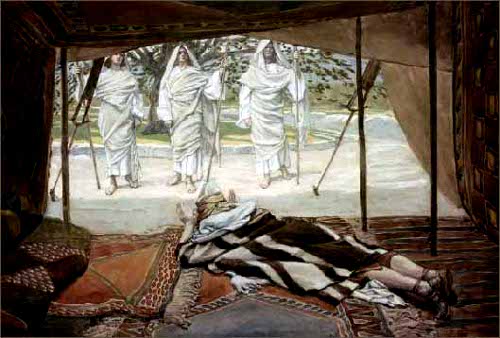
abrahams visitorsThe Lord appeared to him by the terebinths of Mamre; he was sitting at the entrance of the tent as the day grew hot.

Genesis 18:1 (JPS Tanakh)

The Lord took note of Sarah as He had promised, and the Lord did for Sarah as He had spoken. Sarah conceived and bore a son to Abraham in his old age, at the set time of which God had spoken. Abraham gave his newborn son, whom Sarah had borne him, the name of Isaac. And when his son Isaac was eight days old, Abraham circumcised him, as God had commanded him.

Genesis 21:1-4 (JPS Tanakh)

In this week’s Torah portion, Avraham is recovering from Bris Mila. Later, Isaac is born and has a Bris Mila. So, I thought to share a few insights on … Bris Mila!

-Rabbi Kalman Packouz
“Shabbat Shalom Weekly”
Commentary on Torah Portion Vayeira
Aish.com

The vast majority of people in the Church don’t imagine that baby boys born into Christian families must receive a ritual circumcision, called a Bris or Brit Milah, on the eighth day of life. It’s one of those things that we think of as uniquely “Jewish.”

But if we who are in the body of Christ are called the spiritual Sons of Abraham (Romans 9:8), and if we are “one body and one Spirit, just as you were called to one hope when you were called; one Lord, one faith, one baptism; one God and Father of all,” (Ephesians 4:4-6), then why are we too not obligated to be circumcised?

Then after an interval of fourteen years I went up again to Jerusalem with Barnabas, taking Titus along also. It was because of a revelation that I went up; and I submitted to them the gospel which I preach among the Gentiles, but I did so in private to those who were of reputation, for fear that I might be running, or had run, in vain. But not even Titus, who was with me, though he was a Greek, was compelled to be circumcised. But it was because of the false brethren secretly brought in, who had sneaked in to spy out our liberty which we have in Christ Jesus, in order to bring us into bondage.

Galatians 2:1-4 (NASB)

Paul came also to Derbe and to Lystra. And a disciple was there, named Timothy, the son of a Jewish woman who was a believer, but his father was a Greek, and he was well spoken of by the brethren who were in Lystra and Iconium. Paul wanted this man to go with him; and he took him and circumcised him because of the Jews who were in those parts, for they all knew that his father was a Greek.

Acts 16:1-3 (NASB)

A great deal has been made about why Paul did not have Titus circumcised but he did so for Timothy. The only obvious difference between them in scripture is that Timothy’s mother was Jewish but both parents of Titus were Greek (presumably, since Luke refers to Titus as “a Greek” in Acts 16).

Brit_MilahToday, it is common in the various streams of Judaism to consider anyone Jewish who was born of a Jewish mother, regardless of whether or not the father was Jewish. In the days of Paul, this may not have necessarily been the case, but if Timothy wasn’t Jewish, we are at a loss as to why Paul made such a distinction between he and Titus.

But getting back to what I was saying before, should any distinction be made between Jews and Gentiles in the body of Christ. Aren’t we all one in Messiah with ethnic differences swept away by the hand of God as a scorching sirocco sweeps over the desert sands?

But wait a second.

The Almighty commanded Abraham, “… My covenant you shall keep — you and your descendants after you for all generations. This is my covenant which you shall keep between Me and you and your descendants after you — circumcise all males. And you shall circumcise the flesh of the foreskin and it shall be the sign of the covenant between Me and you. And at eight days old every male shall be circumcised throughout all of your generations … My covenant shall be in your flesh for an everlasting covenant” (Genesis 17:9-13).

-Rabbi Packouz

This is the “ethnic” part of God’s covenant with Abraham and his physical descendants through Isaac, Jacob, the Children of Israel, and beyond. I previously said that in this portion of the covenant ratified by God with Abraham…

God promises to make Abraham a father of many nations and of many descendants and the land of Canaan as well as other parts of Middle East will go to his descendants. God declares that circumcision is to be the sign of the covenant for Abraham and all his male descendants and that this will be an eternal covenant.

But the blessings of the earlier portion of the Abrahamic covenant God makes with Abram are significant because that portion can be applied outside the ethnic, genetic, biological stream of Abraham and his offspring.

And I will bless those who bless you, and the one who curses you I will curse. And in you all the families of the earth will be blessed.”

Genesis 12:3 (NASB)

We have to access Paul’s midrash on Abraham to make better sense of this.

Now the promises were spoken to Abraham and to his seed. He does not say, “And to seeds,” as referring to many, but rather to one, “And to your seed,” that is, Christ. What I am saying is this: the Law, which came four hundred and thirty years later, does not invalidate a covenant previously ratified by God, so as to nullify the promise.

Galatians 3:16-17 (NASB)

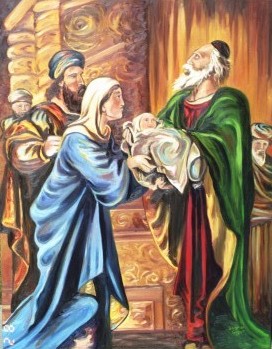
infant-jesus-templeThe “seed” is Messiah, Christ. He is the blessing, and this promise and blessing was established before the covenant was ratified and God required circumcision of Abraham and his offspring through Isaac, and through Jacob, and through all of Jacob’s offspring, and so on across the ethnic linkage that ultimately becomes the Jewish people.

In his letter to the churches in Galatia, Paul is strongly discouraging the Gentile disciples from being circumcised because, by that point in history, circumcision was the “shorthand” expression for ritual conversion to Judaism. If the Gentiles, through the blessings of Abraham’s seed (singular) and faith in Messiah, were already justified before God, and received the one Spirit, just as the Jews received that same Spirit, then for the purposes of justification, nothing else is required of the Gentile disciples.

Therefore I, the prisoner of the Lord, implore you to walk in a manner worthy of the calling with which you have been called, with all humility and gentleness, with patience, showing tolerance for one another in love, being diligent to preserve the unity of the Spirit in the bond of peace. There is one body and one Spirit, just as also you were called in one hope of your calling; one Lord, one faith, one baptism, one God and Father of all who is over all and through all and in all.

Ephesians 4:1-6 (NASB)

One body, one Spirit, one justification, one salvation, a unity of Spirit still doesn’t have to mean a uniformity of identity.

There’s a saying that goes, “everyone’s unique but no one is special,” but I don’t know if I can buy into that. I’m all for equal access to job opportunities and equal pay for equal work, but God did some really unique things. He chose the ethnic Jewish people, that is, those who were physically descended from Abraham, and Isaac, and Jacob, and Jacob’s sons, and the children of Jacob’s sons, who were all of the people led by Moses to Mount Horeb in the Sinai to receive the covenant and ultimately all of the promises, including the Land of Israel.

We can discuss the “mixed multitude” who eventually assimilated into the tribes after several generations and disappeared from the face of history, a process that cannot be anachronistically applied to modern times or even the time of James, Peter, and Paul. We can discuss ritual conversion to Judaism which existed in the time of James, Peter, and Paul and which exists today. I agree that you can’t “convert” to a tribal affiliation (which is why the ancient “gerim” in Torah were not converts). Judaism has long allowed for a few, select outsiders to join them, not because of ancestry, but by choice. But then, one choses to go “all the way,” so to speak, not retaining Gentile identity while living as a Jew. If we accept that God granted the Jewish community the authority to establish legally binding customs since antiquity, then we can accept Jewish converts.

But according to Paul and ultimately the Jerusalem Council (Acts 15), circumcision (conversion) is not required of the Gentile disciples of Messiah. We are one in Spirit and “co-inhabit” the body of Messiah. The body of Messiah is like the human body, which has different organs and structures, all of which are required for a healthy living person, and just like the body of Messiah, actually requires different parts.

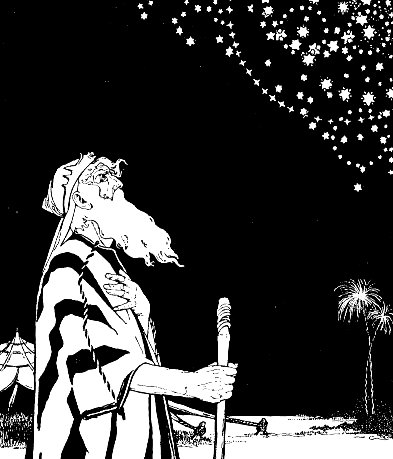
abraham1All of this was set into motion thousands of years ago with Abraham and it is a blessing that the whole world isn’t required to convert to Judaism in order to be reconciled to God. No stream of Judaism I’m aware of requires conversion and circumcision in order to be right with God. The Bible and God have always presupposed a world made up of Jews and Gentiles who are reconciled before our Creator. Messianic Judaism is the living example of a Judaism that recognizes the spiritual equality of Jews and Gentiles in Messiah without compelling circumcision and full Torah observance upon the Gentiles in the body (not that we can’t take on board more of the mitzvot voluntarily).

I know this won’t satisfy the Hebrew Roots Gentiles who believe in uniformity in the Messianic body, nor the traditional Christians who also require uniformity. But those alternatives either rob the uniqueness God gave to the Jewish people through circumcision, the Torah, and Israel by having Gentiles say “it belongs to us too,” or strips that uniqueness away, defying God’s will by Christians telling Jewish people they must cease their ethnic and religious uniqueness and performance of the mitzvot if they wish to worship Moshiach, requiring that Jewish believers live like the Gentiles in the Church.

Why has this mitzvah survived in strength while so many other mitzvot have fallen to the wayside by otherwise minimally observant Jews? Perhaps the answer is found in the 2,000 year old words of Rabbi Shimon ben Gamliel, “Every mitzvah that they (the Jewish people) accepted upon themselves with joy … they still perform with joy.” (Talmud, Shabbos 130a). Deep in our collective psyche we know that the Jewish people is eternal, that we have a mission to be a “Light Unto the Nations” and to perfect the world, that the Almighty loves us and watches over us — and that it is our great joy and privilege to be a part of that Covenant!

-Rabbi Packouz

However you choose to view this in terms of being Gentile members of the body of Christ, the creation of “the Church” didn’t eliminate the promises God made to Israel. Paul said (Galatians 3:17) that “the law, introduced 430 years later, does not set aside the covenant previously established by God and thus do away with the promise.” So too the work of Messiah did not annul the covenants previously established by God, but rather, Messiah was and is the crystallization of prophesy, the perfect expression of all of the covenants, the doorway allowing both people who are uniquely Jewish and those of us who are uniquely Gentile, to enter into relationship with God, co-inhabitants in a body that does require the heart, liver, lungs, spleen, stomach and many other organs, as opposed to being a single body, with a single organ, and a single identity, and a single function. A human being with only a stomach and no other parts couldn’t possibly live, so demanding absolute uniformity and canceling diversity within the body of Messiah kills the body.

Rabbi Packouz says the Jewish people are eternal. Circumcision is one of the signs of that eternal and unique existence before God. Opposing this is opposing God’s will. We can only be one in Messiah and possess the One Spirit of God by living in accordance with that One Spirit and that One God.

Therefore Jesus answered and was saying to them, “Truly, truly, I say to you, the Son can do nothing of Himself, unless it is something He sees the Father doing; for whatever the Father does, these things the Son also does in like manner.

John 5:19 (NASB)

I’ve often heard that we should imitate our Master, but I don’t think in this case it means so much what we eat or what we wear, but rather, how we treat those who God has uniquely blessed. If we bless the Jewish people, we too are blessed by Israel and by Messiah. Of course, there is the converse.

Good Shabbos.

Lech Lecha: Did You Hear the One About the Jewish Student and the Priest?

strangers-in-israelThe Lord said to Abram, Go forth from your native land and from your father’s house to the land that I will show you.

I will make of you a great nation, And I will bless you; I will make your name great, And you shall be a blessing. I will bless those who bless you And curse him that curses you; And all the families of the earth shall bless themselves by you.”

Abram went forth as the Lord had commanded him, and Lot went with him. Abram was seventy-five years old when he left Haran. Abram took his wife Sarai and his brother’s son Lot, and all the wealth that they had amassed, and the persons that they had acquired in Haran; and they set out for the land of Canaan. When they arrived in the land of Canaan, Abram passed through the land as far as the site of Shechem, at the terebinth of Moreh. The Canaanites were then in the land.

Genesis 12:1-6 (JPS Tanakh)

Thus Abraham took his first steps on a journey that would result in the vast and astonishing progression of the Jewish people across the grand panorama of human history. Abraham the Hebrew “crossed over” not just a geographical boundary, but a spiritual one.

I’ve said on a number of occasions that I thought one of the missions of the Christian church was to provoke zealousness among the Jewish people, to inspire Jews to return to Torah, return to Judaism, return to being who God made them to be.

Although I don’t believe God would allow it, there is a tremendous and ongoing concern, especially in America, that the Jewish population will continually assimilate, and ultimately vanish from our national landscape. And while many Christians believe that the only hope for the Jewish people is to convert to Christianity no matter what, there are some Jewish believers who insist that only when the Jewish people repent and return to Torah that the Messiah will finally return, and all of God’s promises to Israel and the people of the nations who are called by His Name (Amos 9:11-12) will finally come to pass.

In this week’s Torah portion, Avraham (Abraham) makes his way to the land of Israel and begins the journey of the Jewish people through history. Along that path we have seen nations rise and fall and have survived them, even through massive persecution. There were 2 million Jews during the Roman Empire 2,000 years ago. Demographers state that though there are approximately 14 million Jews identified worldwide, there are possibly 400 million halachic Jews (Jews whose mother’s were Jewish or converted according to Jewish law). Many Jews have fallen by the wayside of history. This week I share with you a story of one Jew who made his way back to identifying with the Almighty, the Jewish people and the Torah … albeit in a rather unusual way.

-Rabbi Kalman Packouz
“Shabbat Shalom Weekly”
Commentary on Torah Portion Lech Lecha
Aish.com

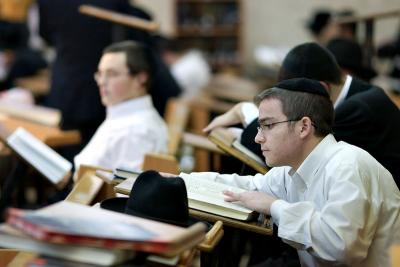
orthodox-talmud-studyRabbi Packouz goes on to tell the story of “Lance,” a young Jewish fellow who came from a family so assimilated that they sent him to a Catholic school to get the “best education.” One of Lance’s instructors, a Priest, found out that Lance was Jewish only by accident. Lance chose to write an essay about Rabbi Akiva for an assignment in the Priest’s class. Curious, the Priest asked Lance why he chose a great Jewish sage as the topic and Lance answered, “Because I’m Jewish.” This simple statement launched another journey into Judaism with some surprising twists:

The priest was surprised that he had a Jewish pupil and asked Lance if he had ever studied the Five Books of Moses with Rashi, the great commentator, or if he had ever learned the Mishna, part of the Talmud. When Lance told him “No,” the priest offered to teach him. For an hour a day after school, they learned together.

One day it occurred to Lance that Judaic studies were not the usual curriculum for the priesthood, so he asked his mentor, “How did you become so knowledgeable in Torah?”

The priest replied, “Before I entered the seminary, I traveled to Israel. While visiting the Western Wall a man asked me if I was Jewish. Curious as to why he asked, I answered ‘Yes.’ The man then asked me if I was interested in learning about my heritage. I figured it would be interesting, so I said, ‘Sure.’ He took me to a yeshiva in the Old City of Jerusalem and I was so impressed that I stayed for close to a year, never revealing that I wasn’t Jewish. I considered converting, but decided that it would be too difficult and too much of a shock to my family, so here I am.”

One Jewish young man who had grown up never knowing what it is to be Jewish and a Catholic priest who nearly converted to Judaism. What strange partners of God. A Priest encouraged his Jewish student, not to convert to Catholicism, but to become knowledgable in Torah and Mishnah. He encouraged “zealousness.”

Protestantism struggles with how to support the Jewish people but gets hung up on Jews who are not in the Church. They can’t always see that we can also “provoke zealousness” and that Messianic Judaism is the most likely vehicle for doing so. If Jesus is Jewish and the Messiah, then his Jewish followers will not abandon being Jewish and will not neglect Torah as his disciples.

Abraham took all that he had and, at the command of God, went to the Land of Promise in obedience. God put Lance and a Priest together and using a highly unlikely set of circumstances, sent one lost Jewish person on the correct path as well. According to Rabbi Packouz, Lance continued pursuing his Jewish studies and presumably became observant.

If you are a Christian, what does this tell you about what God wants you to do? If you are Jewish, where should you be going?

Good Shabbos.

Noah: Reminder of the Rainbow

rainbow-israelThe story of one righteous man in an evil generation. The Almighty commands Noah to build the ark on a hill far from the water. He built it over a period of 120 years. People deride Noah and ask him, “Why are you building a boat on a hill?” Noah explains that there will be a flood if people do not correct their ways (according to the comedian Bill Cosby, Noah would ask “How long can you tread water?”). We see from this the patience of the Almighty for people to correct their ways and the genius of arousing people’s curiosity so that they will ask a question and, hopefully, hear the answer.

The generation does not do Teshuva, returning from their evil ways, and God brings a flood for 40 days. ah leave the ark 365 days later when the earth has once again become habitable. The Almighty makes a covenant and makes the rainbow the sign of the covenant that He will never destroy all of life again by water (hence, James Baldwin’s book, The Fire Next Time). When one sees a rainbow it is an omen to do Teshuva — to recognize the mistakes you are making in life, regret them, correct them/make restitution, and ask for forgiveness from anyone you have wronged as well as from the Almighty.

-Rabbi Kalman Packouz
Torah Portion of the Week
Noah, Genesis 6:9-11:32
Aish.com

The rainbow is a sign to do teshuvah. I’d never heard of that before or, if I had, it leaked out of my memory somewhere along the way.

The Jewish world has just completed the period of the High Holidays including Yom Kippur, the Day of Atonement, the most Holy and solemn day on the Jewish religious calendar, a day when every observant Jew seeks to repent and to beg God’s forgiveness and the forgiveness of others. The rest of the world, including most Christians, don’t have much regard for Jewish holidays, but for Christians, you’d think we might take a cue from the rainbow.

Of course, since we have the blood of Jesus covering our sins and we’ve been washed white as snow, most Christians don’t give a great deal of thought to ongoing repentance, forgiveness, and atonement. More’s the pity.

But this is about me, not you. No, I’m not writing this as an exercise in narcissism, but rather as my effort to continue to turn toward God and to seek His face.

The heart of those that seek God shall rejoice. Seek God and His might, constantly seek His countenance

Psalms 105:3-4

As I write this, I didn’t sleep well last night. I thought about seeking God, about recounting His wonders, about remembering His marvels and judgments, but my mind was too clouded and distracted. Reading the Bible while fighting fatigue was unproductive. All I could do was to try to cling to God and pray that He would grant me at least a little bit of rest.

I’ve resolved to meditate on and even to memorize His Word (some of it, anyway) as a way to keep Him and His teachings close to my heart. Last night wasn’t a good time to do that and it reminded me of just how far a journey I must yet travel.

sandy-little-ferry-flooding-hmed-4a_photoblog500If I had known last night what I know this morning, I might have meditated on a rainbow.

Rabbi Yirmiyahu Ullman says that the rainbow is both a curse and a blessing. It’s a curse because it is a reminder that the world deserves to be destroyed for its sins, but that God has promised by covenant not to do so by flooding. Such a grim reminder of destruction that, in slightly smaller ways, we still suffer from today. But then, what else can we say about the rainbow? Rabbi Ullman states this:

The generation of the flood indulged in this worldliness to the point of perversion. Their wanton obsession with variety and variation resulted in their abusing the full gamut of their G-d given powers for the purpose of impurity. The flood purged the world of this impurity and the rainbow was given as a sign and reminder of what results from inundating the world with indulgence. However, the same rainbow simultaneously reminds us to repent from the relentless pursuit of multiplicity drawing us away from G-d. It urges us to direct the full spectrum of our powers and interests over the rainbow to the One on High.

In this way the rainbow is at once both curse and blessing; transgression and repentance; seductively appealing and pristinely beautiful. It depends on what you’re looking for in life. And perhaps that’s why, although it’s forbidden to indulge in the rainbow’s beauty, one may gaze at it – for the purpose of doing teshuva and directing one’s pluralities to G-d — in order to make the blessing.

I think the rainbow is visually appealing so that it will draw our gaze and having done that, remind us that we must continually seek to repent, to do teshuvah, to be reminded that we have a purpose in this world that goes beyond pursuing our individual desires.

I’ll never look at a rainbow the same way again.

One of the fundamental differences in Jewish Law and Noahide Law is that, Jews do not actively pursue Jewish converts, among non-Jewish nations.

The B’nai Noah are already under the Seven Laws, and have been permanently warned concerning their observance, so it is not a matter of trying to “convert” someone, from one religion to another; for the Noahide Code is not a “religion;” and all organized “religions,” are prohibited for the Noahide.

For the Noahide, it is a matter of Teshuva (return to G-d), not proselytization. Similarly a Jew who grew up atheist or agnostic, or who had strayed from the Torah and converted to an idolatrous religion; when he realizes his mistake and returns to Judaism, he does not “convert” back to Judaism; it is a matter of Teshuva, or returning.

It is the same for a Noahide. Others proselytize, Noahides return.

-Shlomo
“The Noahide Teshuva”
Gateway to Heaven

I include this quote because it suggests a very interesting idea. Jewish people are born into a covenant relationship with God whether they want to be or not. When a Jew leads a wholly secular life and later wants to return to God, as “Shlomo” says, that person doesn’t have to “convert” to Judaism, since they’re already Jewish and in relation to God. However, they do have to return to God, to do teshuvah, to repair the damage done in that relationship (I’ll argue that a Messianic Jewish person has not converted to Christianity but rather, made an even more complete return to God by becoming a disciple of Moshiach).

Blessed by GodMost Jewish people don’t recognize the Christian connection to God or that we are the beneficiaries of the blessings of the covenant God made with Abraham. However, they are quite willing to say, as “Shlomo” did above, that all non-Jews already have a covenant relationship with God through Noah. So, from that perspective, a Gentile does not have to “convert” to Judaism or anything else. The Gentile, like the Jew, is born already having a covenant relationship with God and on that basis, must return to God.

And in you all the families of the earth will be blessed.

Genesis 12:3 (NASB)

Now the promises were spoken to Abraham and to his seed. He does not say, “And to seeds,” as referring to many, but rather to one, “And to your seed,” that is, Christ.

Galatians 3:16 (NASB)

Christianity is something else. No one is born a Christian. Even if you are born to parents who are believers, you are not automatically a believer. Each person negotiates their own relationship with God. On the other hand, the covenant God made with Abraham is very old and spans across human history just waiting for any and all of us to grasp it and experience the blessings of the seed, of Messiah. In that sense, are we converting to Christianity or returning to something God intended for us all along?

The Lord is not slow about His promise, as some count slowness, but is patient toward you, not wishing for any to perish but for all to come to repentance.

2 Peter 3:9 (NASB)

Not that all of us will, of course. But we each have a responsibility to turn…to return to Him. It is not a casual act and it’s not something you do once and then it’s done forever. I neglect my relationship with God at my own peril. God created each of us in His own image, and endowed us with free will and a desire to seek Him. Many of us twist or distort those gifts and either go our own merry way in chasing our pleasures, or in seeking “something” we can’t define, become lost in the maze of religions and philosophies, imagining we are wise by worshiping what isn’t alive or even real.

Another Shabbos approaches. Another opportunity to welcome the Lord of the Sabbath (Matthew 12:1-8) beckons. Will the glow of the candles symbolize the warmth of God in my home and my heart? Will I fill in the “missing rainbow colors” in that glow and see the reminder to repent and return?

“A different world cannot be built by indifferent people.”

-Peter Marshall

Good Shabbos.