Tag Archives: Torah

Why I am A Messianic Gentile, Part One

I consider myself a Christian in the sense that I am a disciple of Jesus Christ but more specifically, I am a student of Messianic Judaism because I believe that discipline represents a perspective on the Bible, the Good News of Messiah, the New Covenant, and Israel that is scripturally sound and that describes the Bible as the single, unified expression of God’s desires, intent, and plan, first for Israel, and then, by Israel’s light, for the rest of the world.

And yet, to do that, I have learned to accept a few things that other people, that is, Christians, don’t like. I accept that the New Covenant was made exclusively with the House of Israel and the House of Judah (Jeremiah 31:31) and not with humanity in general. Further, I accept that when God, through the prophet, says “the House of Israel and the House of Judah,” He is referring specifically to the physical descendents of the Israelites who stood before God at Mt Sinai and accepted the covenant relationship between God and Israel (Exodus 20) in perpetuity (Jeremiah 31:35-36), who are today the Jewish people, and that the eternal inheritance of the Jews is the nation of Israel, which we have with us now.

I accept that the Gentiles are to be attracted to Israel as a light (Deuteronomy 4:5-8, Isaiah 49:6) with the strongest light being King Messiah, Son of David (John 8:12) as God’s emissary, agent, and deliverer of the promises God has made, causing the New Covenant age to be inaugurated with his death and resurrection, that the Jews might believe God will deliver on His promises to them, and that the Gentiles might be grafted into the blessings of those promises, taking the fringes of a Jewish man and going with him, for God is with him (Zechariah 8:23).

I’ve heard it said that the Jewish man in question is not just any Jewish person, but specifically is Messiah. That we from the nations approach God and His holiness by attaching ourselves to Israel through Messiah and going up with him to Jerusalem, to the House of Prayer for all the peoples (Isaiah 56:7).

So what’s wrong with all of that? Apparently, plenty.

From a Christian’s point of view, which includes some in the Hebrew Roots movement who say they disdain the Church, God made a covenant with Israel at Sinai that had effect and potency until the birth, death, and resurrection of Jesus. Then everything changed. The Jewish people no longer were automatically included in the Sinai covenant (although the Abrahamic covenant remained in force) and in order to re-enter a covenant relationship with God, they had to enter into the New Covenant, represented by a brand new entity wholly divorced from Judaism called “the Church”.

From Christianity’s point of view, this means Jewish people remain Jewish but must surrender Judaism and convert to Christianity, along with the Gentiles, and live, for all intents and purposes, a Gentile Christian lifestyle free of “the Law” and solely under grace (as if the two are mutually exclusive). There must be absolutely no distinction between Jew and Gentile in the Church.
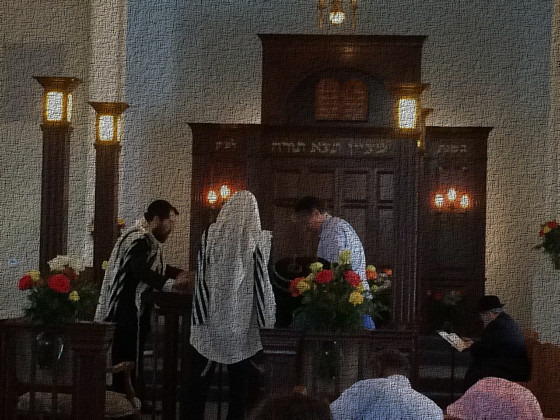
beth immanuelFrom a Hebrew Roots perspective, this means Jewish people remain Jewish and continue practicing Judaism, but the “one new man” entity they must join requires that all Gentile disciples are totally and completely the same as their Jewish counterparts, and must observe the identical set of Torah commandments as the Jew. There must be absolutely no distinction between Jew and Gentile in Hebrew Roots congregations, many of which inaccurately call themselves “Messianic Judaism.”

But the Messianic Judaism I study and adhere to has a different perspective, one that recognizes a specific distinctiveness between Jews and Gentiles within the ekklesia of Messiah, such that each group in the body serves different, although sometimes overlapping functions.

I accept, for instance, that it would be inappropriate for me to claim an obligation to don tzitzit and lay tefillin when praying, to keep kosher in the manner of the Jews, to observe, in the present age, a Shabbat, and to say that it would be a sin if I did not perform any of those mitzvot.

That isn’t to say, especially being married to a Jewish wife, that I’m forbidden to keep kosher or observe the Shabbat (though at present, I only keep “kosher-style” and both my wife and I have elected to work on the Shabbat — may the day come when our observance is more faithful). I even know Gentile Messianics who choose to don tzitzit and lay tefillin privately in prayer, but who do not declare that they are obligated to do so.

I also accept that the New Covenant was made only with the Jewish people and that my only access is through faith in Messiah, not because of any inherit worth I have ethnically or nationally as a non-Jew.

MessiahMy understanding of the Jewish covenant relationship with God is that it extends continually from Exodus 20 forward in time and into the modern age. While Jesus inaugurated the New Covenant with his death and resurrection, getting the ball rolling, so to speak, it won’t reach any sort of fruition until his second coming, when he destroys all of Israel’s enemies, making the Gentile survivors vassal nations under Israel’s sovereignty, and establishing a unprecedented world-wide reign of peace. Then the Jewish people will be restored to their Land, to Israel, and the Gentiles who are called by His Name will come alongside Israel and serve her King, for he is our King, and worship God on the Temple Mount.

No new body is created in Acts 2, it’s an extension of the all of the previous covenants God made with Israel including the New Covenant, and the precursor to the ultimate fulfillment of God’s promises to Israel and to the nations. A subset of all the Jewish people in existing in the first century accepted the Good News of Messiah, and they represent an unbroken stream that goes all the way back to the Exodus and even to Abraham. And the Jewish people who did not accept the Good News remain under the Sinai covenant and in God’s love and compassion, and as God declares in the New Covenant:

“I will put My law within them and on their heart I will write it; and I will be their God, and they shall be My people. They will not teach again, each man his neighbor and each man his brother, saying, ‘Know the Lord,’ for they will all know Me, from the least of them to the greatest of them,” declares the Lord, “for I will forgive their iniquity, and their sin I will remember no more.”

Jeremiah 31:33-34

One day, God will forgive Israel’s sins, and the Jewish people will make teshuvah and return.

“Jerusalem, Jerusalem, who kills the prophets and stones those who are sent to her! How often I wanted to gather your children together, the way a hen gathers her chicks under her wings, and you were unwilling. Behold, your house is being left to you desolate! For I say to you, from now on you will not see Me until you say, ‘Blessed is He who comes in the name of the Lord!’”

Matthew 23:37-39

Israel will one day say “Blessed is He who comes in the name of the Lord” and on that day, the Gentiles will join with Israel at feast of Abraham, Isaac, and Jacob (Matthew 8:11).

the crowdDoes that make me and all the non-Jewish disciples of Messiah who study Messianic Judaism into second-class citizens in the Kingdom of God? To be honest, there are days when I think so. I suppose it’s my innate attraction to Jewish worship and scholarship that periodically has me longing to be able to join a minyan or to be called to the bema for an aliyah (not that I speak or read Hebrew). I sometimes see Jews in Messianic synagogues worshiping and praying the prayers and wish I could be a part of them. Sometimes I feel I should leave any sort of affiliation to Messianic Judaism behind and just keep my peace silently, communing only with God, because I feel I can never truly be part of Jewish people in Jewish community.

But I don’t fit in at church either, so that cannot be my sole connection to fellowship. Also, I must admit that any issues I may have feeling any disconnection with Messianic Judaism are my personal issues and hardly the fault of Jewish needs or requirements in community, since after all, the “chosenness” of Israel is a decision of God, not of man, and I must obey God before the will of any human being, even (especially) my own will (Acts 5:29).

That is why I call myself a “Messianic Gentile” and choose to study within a Messianic Jewish framework. That is why it is OK, even if I am a “second-class citizen” (which I’m actually not), because my citizenship is in the Kingdom of God, among the ekklesia, both ancient and modern, in the tradition of every Gentile who has ever come alongside Israel because we have heard God is with them, from the days of Moses to the days of the apostle Paul.

And Korach, the son of Yitzhor, the son of K’hos, the son of Levi, took …

Numbers 16:1

Rashi explains that the key reason for Korach’s rebellion against Moshe was that he was envious of another relative who received honor while he didn’t.

-Rabbi Zelig Pliskin
Commentary on Torah Portion Korach, pg 332
Growth Through Torah
Rabbi Zelig Pliskin
Rabbi Zelig Pliskin

If I were to allow envy of the obligations and privileges of the Jewish people in the Messianic community to affect me, I would be as Rashi characterized Korach and his band: rebellious. May it never be.

Rabbi Pliskin’s Torah commentaries speak more to me about my own state as a Gentile studying and learning within a Jewish context, being attached to but not the same as the Jewish co-participants in the body of Messiah. In Part Two of this series, I’ll discuss more of my perspective using R. Pliskin’s missives as a foundation.

For more on the Korach rebellion, which was last week’s Torah portion, read “The Importance of Unity” at ProjectGenesis.org.
Review of Messiah Journal: Christian Theology and the Old Testament

I’ve slowly been reading through the various articles in the latest issue of Messiah Journal (issue 116/Summer 2014) but haven’t had the time to comment on it before this. While there are many good and worthy articles contained therein (as always), I was most taken with the one written by Paul E. Meier called “Christian Theology and the Old Testament” (pp 76-94).

First, a little background:

Paul Meier and his wife, Inge, spent over three decades as Bible translators with Wycliffe Bible Translators and SIL International in Nigeria before retiring in 1996. Meier and his wife heard Messianic Jewish pioneer Abram Poljak in Switzerland in the 1950s and, since 2000, have worked with friends who knew Poljak to preserve his writings in an online archive at www.abrampoljak.net. To learn more about their experiences in Bible translation, visit their website at www.israel-pro.org.

-from the article’s introduction, pg 76

I’ve spent almost no time on either website mentioned above. I want to focus on Meier’s article and what it means to me both generally and in terms of recent issues in my little corner of the blogosphere.

Meier compares the Bible to a structure with two stories. Access to that structure is on the main floor. To understand the structure as a whole, a visitor must start with the first room on the first floor, visit each room in turn, and only then proceed to the second floor and visit all of those rooms in turn. Upon completing the visits to all of the rooms, the visitor then returns to the first floor, exits the building, and contemplates the experience as a whole to gain insights as to what the structure means.

The first floor is what Christianity calls the Old Testament and the second floor is the New Testament. The building is locked, so to gain entrance to the main lobby, you need a key. This key is “interpretation”. In many Christian churches, the main agent of interpreting the Bible is the Holy Spirit.

But…

If we believe that God inspired the books of the Bible, we must also accept that God had an overarching plan and purpose as he inspired these various texts. Yet if this is the case, we need to ask, why are there so many extant interpretations of these same texts? Why do so many interpreters arrive at different conclusions? How can they all claim to have been led to these disparate conclusions by the same Holy Spirit?

-Meier, pg 77

Meier “hooked” me at “overarching plan and purpose.”, because I believe the Bible is a holistic document describing the historically sweeping panorama of God’s plan for Israel and the world, not something to be carved and sliced like a Thanksgiving turkey (“I only like the drumsticks”). I have asked the exact same question that Meier posed above to Pastors and online religious pundits, and their answers have ranged from “sin” to “not trusting the Holy Spirit” to “being influenced by the interpretations of men.” None of these responses have been particularly satisfying, since you’d expect some subset of Christians who are truly receiving interpretive revelations from the Spirit to all share an identical perception and understanding of the Bible.

And that body does not exist. Instead, we have churches upon churches upon churches and many other congregational groups that all have their individual “take” on the Bible, and even within a single congregation, it’s common to encounter many different individuals who have their own way of looking at different areas of scripture. I think I’m getting a headache.

Meier’s answer makes as much sense as any other one and perhaps more sense than most:

Scripture points out that the understanding of individual believers is fragmental; each one of us has been granted a different degree of insight (1 Corinthians 13:9-10). The dimensions of God’s love are so vast that the whole body of believers is needed in order to comprehend them (Ephesians 3:18). God may give more insight to some than to others; he gives to each one according to the measure of his grace (Romans 12:3, Ephesians 4:7).

-ibid

In other words, not all believers are created equal in terms of how the Holy Spirit will speak to them of the Bible, nor are all believers identical as far as their innate cognitive, perceptual, and interpretive skills sets relative to the Bible. We are each granted the gifts God has provided “according to the measure of his grace” which may have something to do with why we all see the message of the Bible differently.

That doesn’t explain why many of us have contradictory perceptions of the Bible, but what can and does get in the way is our own humanity, our needs, our wants, our “I’ve got to have it this way”. This may also explain why it’s better for us to congregate in somewhat diverse groups rather than go it alone in Bible study or only study with people who think and believe exactly as we do.

Think of it as a group of people all trying to put a jigsaw puzzle together. But the pieces of the puzzle aren’t loosely collected in a central box, they’re loosely collected in the pockets of the different people building the puzzle. First, these people have to come together and be willing to cooperate by sharing their pieces with the others. Ideas of how the pieces fit together will vary, sometimes widely, but (and this is where I think the Holy Spirit comes into my little analogy) finally with all the pieces on the table, one by one, the group begins to see a pattern starting to emerge.

puzzleBut what if you go to a Baptist church, and the person who holds some of the vital pieces to the interpretive puzzle attends a Messianic synagogue thousands of miles away? Interesting problem. We might have to expand our understanding of Biblical hermeneutics to realize that it’s not just the particular method we employ in our interpretive process, it’s the people we have on our team, the necessary talent that they possess and we lack, that will make the difference.

A second principle to keep in mind is the fact that the different texts that comprise the Bible were written in diverse literary styles; furthermore, they were composed over hundreds of years, and each text reflects a then-current understanding of the past, present, and future. Different parts of the story were revealed at different times; God alone sees the entire story from beginning to end.

-ibid

This will likely appeal to dispensationalists and progressive revelationists, and Meier does believe that God progressively revealed himself in history. On the other hand, most dispensationalists believe that the text of the Bible becomes more important and relevant as time passes, leaving the older sections of the Bible to decay and finally become obsolete. This leads most Christians to possess a very high view of the New Testament and a lower to very low view of the Old Testament, with some church Pastors almost never referring to the Old Testament at all in their sermons and classes.

As Meier says (pg 78), the “Christian aversion to the Old Testament is not a modern phenomenon.”

Meier spends some time on the “church fathers,” introducing Marcion (the Heretic) who we tend to dismiss but who nevertheless has an echo of influence on the modern Church. And then there’s this:

Marcion’s contemporary Justin Martyr was one of the first to articulate a position of replacement theology, also known as displacement, transfer, or supersessionist theology. Avner Boskey succinctly described this theological stream as “an expression of Gentile triumphalism in the early church.”

-ibid, pg 81

churchThis hasn’t subsequently gone away. Any church that teaches “the Church” is the primary body of Messiah and the center of God’s attention and relegates national Israel and the corporate body of Jewish people to playing second fiddle is an inheritor of “Gentile triumphalism.” And lest you are tempted to include Jews in “the Church,” I must remind you that the price of admission a Jewish person must pay for entry into “the Church” is a surrender of most if not all that makes that individual a Jew, apart from a string of DNA, including any view of the Torah that has the mitzvot remaining relevant and obligatory for a Jew.

If you are thinking the “men of the Reformation” corrected all of the errors that came in before them, think again:

The great reformers Calvin and Luther modified their inherited filter and read the Old Testament in fresh light; unfortunately, they were not able to overcome their inherited tendency to interpret many Old Testament prophecies allegorically.

-ibid, pg 84

Thus the history of the (Gentile) Church, from its very inception in the second century CE into the modern age, has inherited interpretive traditions and structures that are so integrated into general Christian theology and doctrine as to be indistinguishable from actual “God-breathed” scripture itself. My own attempts to summarize Gentile involvement in the New Covenant, which depart from standard Christian fare, illustrate how tightly bound are inherited interpretive tradition in Christianity to what the Bible does and doesn’t say.

If I could give the Meier article to each person reading this review, I would, because it’s just that important to how Christians interpret and (often) misinterpret the Bible. I can’t describe everything Meier wrote, but I can point to a few important matters related to how we generally devalue the Old Testament and build our New Testament “castle” in the clouds with practically no foundation at all.

The Old Testament is a record of the history of the Hebrew people, the history of Israel. A theology in which Israel has no prophetically significant role in the future is a theology in which Israel has no significant role in the present.

-ibid, pg 79

I point you to recent events in Israel to illustrate Christianity’s (or some of its representatives) disdain for the Jewish people as a result of the devaluation of Israel’s history, the Old Testament.

Further:

If all prophecies concerning Israel have been fulfilled in Christ and all that remains to be accomplished is the establishment of the new heaven and the new earth, then there is no difference left between Israel and the church or between Israel and the nations. (emph. mine)

-ibid

Messiah JournalThis is the classic error in much of Christianity including some portions of the Hebrew Roots movement, and their requirement for this lack of distinction between Jews and Gentiles in the body of Messiah necessitates them making artificial, interpretive shifts in their viewpoint of the Bible, particularly the Old Testament, to justify their position.

If Israel has been replaced by the church, either through having been deprived of its original identity or else through having been set aside during the so-called church age, then all the prophecies concerning the future of Israel must be divorced from the context in which they were delivered — the context of the greater story of Israel as told by the Old Testament. (emph. mine)

-ibid

Do you see where this is going? Regardless of whether Israel’s original identity as a unique and especially chosen nation, the Jewish nation, is removed (Hebrew Roots/One Law) and/or replaced with a fused Jewish/Gentile identity, or it is set aside during the “church age” (Christianity), the result is exactly the same, and the cause is a misunderstanding and misapprehension of the content and significance of the Old Testament in being the chronicle of God’s covenant relationship with Israel.

When we do not understand the Old Testament on its own terms, it becomes difficult if not impossible to understand God’s nature, plan, and purpose. We find it difficult to explain why God chose one nation through which to reveal his being to the rest of mankind and to express his desire to bring salvation, because we fail to acknowledge the historical reality that Israel and God have been in covenant for millennia and that God chose to reveal the texts of the Old Testament within the context of this covenant relationship.

-ibid, pg 80

And yet, many, many Christians put the New Testament at a far more exalted level than the Old Testament, ironically enough, cutting themselves (or the true understanding of salvation and the Good News of Messiah to Israel and then the nations) off at the knees.

A third problem is that many Christians believe that the Old Testament must be understood through the eyes of the New Testament.

-ibid, pg 82

Abrahamic CovenantI’ve spoken with Christians, both in person and online, who do not believe that any rendition of living relationships and events in the Old Testament have any intrinsic value or meaning, but only exist as “types and shadows” of Jesus and the Church. Some don’t even believe that the people we see in the Old Testament were real people, only “stories” pointing to Jesus. From their perspective, Abraham and Sarah never existed as actual individuals. Neither did Boaz and Ruth. They were mere representatives of Christian redemption and salvation. Only the Church matters, just “me and Jesus”.

An interesting variant of supersessionism is brought out by Meier, one that I hadn’t considered before. Typically, I have run into a replacement theology that says the Church has taken the place of Israel and the Jewish people in all of the covenant promises and blessings. But something else has emerged:

As a result, he now incorporates, as N.T. Wright has put it, “Israel-in-person.” This type of “fulfillment” theology is merely a new incarnation of replacement theology, regardless of what exactly was fulfilled in the life of Jesus…

-ibid, pg 83

I ran into this “Israel-in-person” theology just the other day in the Jesus-believing blogosphere which illustrates that even with the best intentions, and even with believers who have a strongly stated love for Israel and the Jewish people, it is still quite possible to let a deeply underlying tradition and multi-generational history of how we view the Old Testament and consequentially, the Jewish people, distort the reality of God’s New Covenant plan for Israel (and for Gentile Christians), present and future.

You may be thinking that I’m (again) removing the Gentiles from any connectedness to the New Covenant, for it is only through the blessings of that covenant that we may be saved, but look at this:

Jesus stated that he was sent only to the house of Israel, yet he came to prepare that house to carry God’s message to all humanity. This plan was described throughout the Old Testament (for instance, Psalm 87, Isaiah 49;6).

-ibid, pg 85

JudaismThe plan and purpose of Messiah in relation to Israel, the New Covenant, and inclusion of Gentiles can only be properly understood by taking a high view of the Old Testament and being willing to make the Old Testament the foundation of your understanding of the Bible, reading scripture from earlier to later rather from Paul backward. Otherwise, you end up with what Meier calls a “Christianized Jesus” rather than Moshiach, Son of David, the Jewish King.

One of the key points Meier made was:

God revealed his nature and his intentions progressively across the history of Israel. Yet later revelations do not replace earlier ones; rather, they build upon them.

-ibid, pg 86

If you remove the earlier covenants and their conditions in order to “make room” for later ones, you are removing the foundation and framework of the house in order to put on the siding and the roof. You end up with a structure that cannot possibly stand.

Of all the different forms of replacement theology Meier described, I found the following most illuminating as it describes my current church experience:

On the other end of the spectrum, the most conservative scholars take an overly restrictive stance, teaching that one must rely on these kinds of typological interpretations only when the New Testament explicitly confirms them.

-ibid, pg 88

Have you ever heard a Christian Pastor or lay teacher say that commandments in the Old Testament only remain valid for Christians if confirmed in the New Testament? I have. It’s like saying the “sacrament” of marriage remains valid because it was confirmed by Jesus in the New Testament (Matthew 19:5, Mark 10:8) but keeping Kosher is not, presumably because of Mark 7:19 and Acts 10:15.

Really, who made that rule up? Obviously someone who didn’t believe “all scripture is God-breathed” (2 Timothy 3:16-17). For if all scripture comes from God, and the only Bible Paul had when he wrote those words was the “Old Testament,” then whatever we have in those ancient scriptures can stand on its own “legs” and doesn’t need the writings of the apostles to support it.

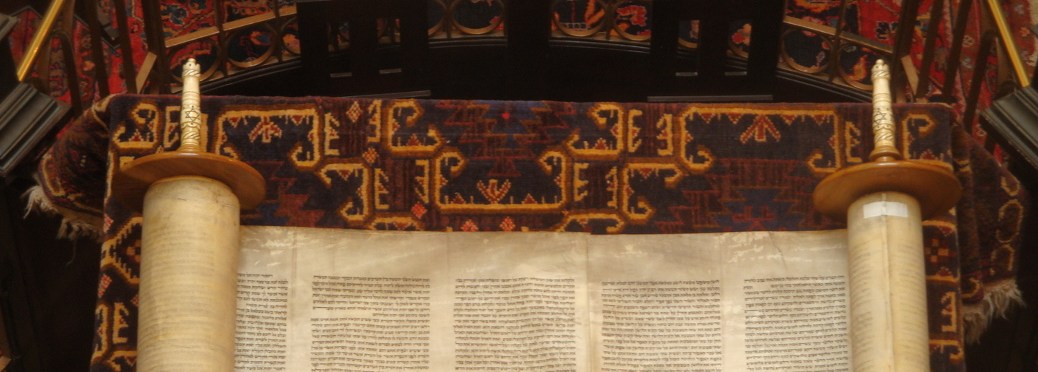
sefer torahThere’s a lot more I wish I could share with you about Meier’s article, but this blog post is long enough as it is. I may write one more “meditation” on something Meier said about how much we do (or don’t) translate sections of the Old Testament into the languages of people in other cultures who have never been exposed to the Bible before. How much of the Bible do we really teach them in their own language, and what impact on their understanding of the true Jesus Christ do missionaries impart who not only distort the Old Testament due to their devaluing it, but who actually leave out much or most of the Old Testament books in their work with new disciples of the Master?

I don’t believe Meier is attributing bad motives to Christians who take a low view of the Old Testament. After all, they (we) are doing what Christians have been taught to do for hundreds and hundreds of years, by a tradition that goes back to the early church fathers and was then inherited and re-enforced by the men of the Reformation.

But a low view of the Old Testament means a low view of Israel in God’s past, present, and future plans, and a low view of Israel fragments the foundation upon which the redemption and salvation of Gentile Christianity is supposed to rest. When we disdain the Old Testament and set aside the centrality of Israel, we not only insult God, we destroy our own future in the Kingdom.

This is why I keep on writing as I do. I cannot allow so many believers to innocently, unknowingly face a supposed salvation in which they feel utterly secure, but in reality, one that is constructed firmly on shifting sand.

Walking in the Dust of the Footsteps of Moshiach

This is the actual time of the “footsteps of Mashiach.” (the final age prior to Mashiach’s advent) It is therefore imperative for every Jew to seek his fellow’s welfare – whether old or young – to inspire the other to teshuva (return), so that he will not fall out – G-d forbid – of the community of Israel who will shortly be privileged, with G-d’s help, to experience complete redemption.

“Today’s Day”
Monday – Sivan 18 – 5703
Compiled by the Lubavitcher Rebbe; Translated by Yitschak Meir Kagan
Chabad.org

Previously, I wrote about how privileged Gentiles associated with the Messianic Jewish movement (and in theory, all Gentile Christians) are to be able to support and encourage increased Torah observance among the Jewish people united in Messiah, in order to bring nearer the coming (return) of the King. Although the small commentary above states that it is important for every Jew to seek his fellow’s welfare, I believe we can extend that sentiment to all of mankind.

There are two interrelated principles here. The first is for all disciples of Jesus to seek the welfare of any other person, as it is written, “love your neighbor as yourself” (Lev. 19:18, Mark 12:31). The second is like it in that we non-Jews should seek out the welfare of the Jewish people and the nation of Israel, as it is written, “And I will bless those who bless you, And the one who curses you I will curse. And in you all the families of the earth will be blessed” (Genesis 12:3).

As I also said, within the unity of the body of Messiah, we are all one and yet we are all distinct. Just as men and women are distinct, so are Jew and Gentile, for Paul in his various epistles, never stopped distinguishing between the Jew and the Greek (Gentile). Therefore, we have no excuse to fail to make such distinctions as well.

And yet, both within the larger body of the Christian Church and certain subsets of what is called Hebrew Roots, it is considered unfashionable and even offensive to continue to make such distinctions. However, if we fail to do so, either by eliminating the primacy of national Israel and replacing it with the Church, or forcibly inserting Gentiles into the nation of Israel, we violate God’s unique calling to the Jewish people to remain a set apart people before Him forever.

Thus says the Lord,
Who gives the sun for light by day
And the fixed order of the moon and the stars for light by night,
Who stirs up the sea so that its waves roar;
The Lord of hosts is His name:
“If this fixed order departs
From before Me,” declares the Lord,
“Then the offspring of Israel also will cease
From being a nation before Me forever.”

Jeremiah 31:35-36 (NASB)

For the New Covenant was made with the house of Judah and the house of Israel, not the people of the nations, and it is only by coming alongside Israel rather than replacing her or co-opting her unique relationship with God, that we can enjoy blessings of the covenants God made with the Jewish people.

To deny this on any level is to bring a curse upon yourself, but to bless and uphold the nation of Israel and the distinct nature and character of the Jewish people is to bring blessings upon yourself from God, who selected Israel for His own.

The early sages, who were like angels (may their merit protect us) have already determined that the healing of the soul is like the healing of the body:

The crucial first step is to identify the location of the illness, whether it is caused by the crassness, grossness and corruption of his physical body or by a failing in his soul-powers, the person being inclined to undersirable traits like arrogance or falsehood and the like. Or, the source of the malady may be habit – inadequate rearing or unwholesome environment having brought on bad habits.

“Today’s Day”
Shabbat – Sivan 16 – 5703
Compiled by the Lubavitcher Rebbe; Translated by Yitschak Meir Kagan
Chabad.org

This relates to another quote I cited before:

A person who worries about how others view him will have no rest. Regardless of what he does or does not do he will always be anxious about receiving the approval of others. Such a person makes his self-esteem dependent on the whims of others. It is a mistake to give others so much control over you. Keep your focus on doing what is right and proper.

-Rabbi Zelig Pliskin

Rabbi Zelig Pliskin
Rabbi Zelig Pliskin

Given the current context, applying R. Pliskin’s words to me, I see that those who disagree with my words are not in control of who I am. Those who disagree with the uniqueness, sanctity, and distinctiveness of the Jewish people; the nation of Israel before God, cannot affect the nature and character of the chosen people, even as they either seek to eliminate Israel in God’s plan or dilute Israel by inserting masses of Gentiles into her midst without continuing to uphold her distinction.

But R. Pliskin’s words can also be applied to those who oppose Israel in that these people and groups may see their self-esteem and self-assigned identity as being worthwhile only if Israel is diminished either by elimination from God’s plan, or by needing to be included and even fused with Israel, not allowing Israel to exist apart from Gentile inclusion.

To the Christians, including some groups within Hebrew Roots, it is important and even vital to realize that our distinctiveness apart from Israel does not diminish us. Quite the opposite. Our vital role in supporting Israel and heralding the return of Israel depends on our distinctiveness.

If a Gentile “keeps the Torah” in some manner or fashion, that may benefit the individual involved but it does nothing to summon the Messiah’s return. If, on the other hand, the Gentile were to support and encourage Jews in Messiah, including those in the Church referred to as “Hebrew Christians” in observing the mitzvot, then we are fulfilling our purpose and passion and performing a mitzvah “only Gentile disciples of Messiah may accomplish”.

As a young boy, Rabbi Yosef Yitzchak (the sixth Lubavitcher Rebbe) would go with his father on walks through the woods. One time, as they talked, the boy absent-mindedly plucked a leaf off a tree and began to shred it between his fingers. His father saw what his son was doing, but he went on talking. He spoke about the Baal Shem Tov, who taught how every leaf that blows in the wind—moving to the right and then to the left, how and when it falls and where it falls to—every motion for the duration of its existence is under the detailed supervision of the Almighty.

That concern the Creator has for each thing, his father explained, is the divine spark that sustains its existence. Everything is with Divine purpose, everything is of concern to the ultimate goal of the entire cosmos.

”Now,” the father gently chided, “look how you mistreated so absent-mindedly the Almighty’s creation.”

”He formed it with purpose and gave it a Divine spark! It has its own self and its own life! Now tell me, how is the ‘I am’ of the leaf any less than your own ‘I am’?”

-Rabbi Tzvi Freeman
“Purpose of a Leaf”
Based on the letters and talks of the Rebbe, Rabbi M.M. Schneerson
Chabad.org

Everything was created by God with a unique purpose, even a humble leaf, and must be treated with respect. How is the Jewish ‘I am’ any less than the Gentile (Christian) ‘I am’?

korahs-rebellionExodus 20 commands Israel not to covet the things that belong to a neighbor such as his house, his wife, his servants, or his animals. Far be it from me to add to or subtract from the Bible, but my personal “midrash” on coveting includes the “commandment” not to covet thy neighbor’s mitzvot. Just as Korach and his followers coveted the position and mitzvot associated with Moses, the Prophet of God, and Aaron, the High Priest and was judged in error by God, so we too will be judged as in error by coveting positions, roles, and mitzvot we do not merit because we are not Jewish.

And He began speaking a parable to the invited guests when He noticed how they had been picking out the places of honor at the table, saying to them, “When you are invited by someone to a wedding feast, do not take the place of honor, for someone more distinguished than you may have been invited by him, and he who invited you both will come and say to you, ‘Give your place to this man,’ and then in disgrace you proceed to occupy the last place. But when you are invited, go and recline at the last place, so that when the one who has invited you comes, he may say to you, ‘Friend, move up higher’; then you will have honor in the sight of all who are at the table with you. For everyone who exalts himself will be humbled, and he who humbles himself will be exalted.”

Luke 14:7-11 (NASB)

It is not shameful or diminishing to seek humility in the presence of God and in our daily lives. In fact, as we see from scripture, it is ultimately honoring, though we should not seek honor for ourselves, for in taking our proper place furthest away from the head of the table, how might the host of the banquet choose to honor us by placing us in a much better seat. But that selection of a better seat is not for us to make, it is for him, for Messiah, Son of David. For even he, though he deserves great honor and glory, chose to be humbled.

“For even the Son of Man did not come to be served, but to serve, and to give His life a ransom for many.”

Mark 10:45 (NASB)

The Master said that all those who choose to glorify themselves in this world already have their reward, but those who choose to humble themselves now will have great reward in the coming Kingdom:

“Beware of practicing your righteousness before men to be noticed by them; otherwise you have no reward with your Father who is in heaven.

“So when you give to the poor, do not sound a trumpet before you, as the hypocrites do in the synagogues and in the streets, so that they may be honored by men. Truly I say to you, they have their reward in full. But when you give to the poor, do not let your left hand know what your right hand is doing, so that your giving will be in secret; and your Father who sees what is done in secret will reward you.

“When you pray, you are not to be like the hypocrites; for they love to stand and pray in the synagogues and on the street corners so that they may be seen by men. Truly I say to you, they have their reward in full. But you, when you pray, go into your inner room, close your door and pray to your Father who is in secret, and your Father who sees what is done in secret will reward you.

Matthew 6:1-6 (NASB)

walking humblyServe God in all humility, placing the needs of others before your own. Realize that Paul always went to the Jew first, for the Good News of Messiah is the Gospel of Israel and only afterward the good news also to the nations.

If you seek to take what is not yours, when Messiah comes, will he not seek justice and remove from you that which you have usurped? Better to pursue nothing for yourself, and when Messiah comes, let him gift each of us with whatever we may merit according to his grace, kindness, and wisdom. Consider the parable of the talents (Matthew 25:14-30):

For to everyone who has, more shall be given, and he will have an abundance; but from the one who does not have, even what he does have shall be taken away.

Matthew 25:29 (NASB)

Also, the Master taught:

So do not worry about tomorrow; for tomorrow will care for itself. Each day has enough trouble of its own.

Matthew 6:34 (NASB)

To God be great honor and glory, and to Moshiach our King, let him be raised high above us. Let us walk in the dust of his feet (Nahum 1:3) and be satisfied with our lot.

Ben Zoma would say: Who is wise? One who learns from every man. As is stated (Psalms 119:99): “From all my teachers I have grown wise, for Your testimonials are my meditation.”

Who is strong? One who overpowers his inclinations. As is stated (Proverbs 16:32), “Better one who is slow to anger than one with might, one who rules his spirit than the captor of a city.”

Who is rich? One who is satisfied with his lot. As is stated (Psalms 128:2): “If you eat of toil of your hands, fortunate are you, and good is to you”; “fortunate are you” in this world, “and good is to you” in the World to Come.

Who is honorable? One who honors his fellows. As is stated (I Samuel 2:30): “For to those who honor me, I accord honor; those who scorn me shall be demeaned.”

-Pirkei Avot 4:1

May we make teshuvah and repent of our failings before God, then pursue the path of Messiah as he and he alone has set it before each of us. Amen and Amen.

For more on this topic, please see the Hebrew Roots section of the MessianicGentiles.com website.

Addendum: Sadly, this blog post did nothing to resolve conflicts and in fact seems to have added fuel to the fire. Thus, I’m forced to write a “part three” to this series. Please see Briefly Revisiting Gentiles and the New Covenant for details.

Unity in Messiah: A Commentary on One Law and Gentiles

As for the assembly, there shall be one statute for you and for the alien who sojourns with you, a perpetual statute throughout your generations; as you are, so shall the alien be before the LORD. There is to be one Torah and one ordinance for you and for the alien who sojourns with you.

Numbers 15:15–16

But does the Torah really make different laws for Jews and Gentiles? According to Numbers 15:15–16, there is to be only one law for both Jews and Gentiles.

This seems simple enough. According to these verses, there is one law for both Jews and Gentiles. Therefore, Gentile believers should keep the whole Torah.

But wait. It’s not that clear.

“One Law and the Gentiles”
Commentary on Torah Portion Shelach
First Fruits of Zion (FFOZ)

I quoted from this article just the other day as an example of what sometimes provokes other believers to anger and how I want to avoid being excessively and needlessly provocative. While the “One Law” issue is a “non-event” for the vast majority of the Christian world, this is a “hot button” issue in certain small (relative to the overall body of believers worldwide) religious circles in the blogosphere.

But then, I’ve been thinking about an ad I received by email recently. Eichers.com has extended its annual Talis and Tzitzit sale to June 24th. As I read the advert, I found myself involuntarily pining for the days when I used to actually don a tallit to pray.

Then my reality check came in and I closed the ad, but not before I started pricing tallit gadolim (just “window shopping”).

Many years ago, my wife arranged for a friend who was visiting Israel, to purchase my first tallit at the Galilee Experience. It was a total surprise when it arrived from Israel by mail and my wife presented it to me.

But that was a long time ago, and to put it mildly, my wife’s attitude about Christians and tallitot has changed considerably. For that matter, so has mine.

I don’t really regret the “course correction” I’ve instituted in my life, but I do need periodic reminders of who I am and what I need to be doing that’s important to God in order to counterbalance my attraction to various aspects of Judaism as a worship practice. Really, if I had my “druthers” and it didn’t matter to God (or anyone else, especially the Missus) one way or the other, comparing evangelical Christian worship and study to a (Messianic) Jewish template, I’d probably choose Jewish practice.

In any conceivable way, nothing would be removed from my devotion to Yeshua (Jesus), but a richness in spiritual texture and connectedness to the people of God that extends all the way back to Sinai would be the platform and environment for that devotion.

I know that if any Hebrew Roots people with a bent for “One Law” ever read this, they’d probably say, “go for it!”

But, no. I have good reasons not to. It’s not my world and my practice. God chose the Jewish people for a reason and He gave them the Torah as the conditions of the Sinai covenant for a reason. Then He made it possible through the emergence of the New Covenant for Gentiles to be grafted in, and provided conditions for we grafted in Gentiles in a binding legal ruling that outlines a distinction in how Gentile disciples are obligated to the Torah.

I can live with that, knowing that we Gentiles have a unique role in supporting Messianic Jewish return to Torah and in perfecting the world in preparation of Messiah’s return.

women_praying_at_the_wallAlso, living with a Jewish wife and daughter, I have a special appreciation for their own uniqueness as Jews and how my mimicking Jewish behavior in some sort of evangelical Jewish cosplay cheapens who they are and totally misrepresents me and all other Gentile disciples of the Master.

It was also no coincidence (in my opinion) that Chabad.org’s “mitzvah minute” email was on Tzitzit: Fringe Judaism this past week.

Most people don’t think of Judaism as a fringe religion. Yet that’s our uniform. Under their shirts, Jewish men and boys wear a poncho called a tallit katan (literally: small cloak), with fringes hanging from each corner, just as the Torah prescribes (Numbers 15:37–40), “They shall make fringes on the corners of their garments . . .”

That’s “Judaism,” not Christianity that wears the fringes. I’m not a thief. I don’t take things that belong to someone else. Donning a Tallit Gadol for prayer belongs to someone else…Jewish people.

Jacob Milgrom contends that in the ancient Near East the ornateness of the hem was a mark of nobility. Hence the wearing of tzitzit denoted that all Israelites were members of a priestly nation with a universal mission. That status and its attendant obligations rest on God’s deliverance of Israel from slavery, as the passage makes clear at the end: “I the Lord am your God who brought you out of the land of Egypt to be your God: I, the Lord your God.” (Numbers 15:41)

-Ismar Schorsch
“The Distinction between History and Memory,” pg 522 (June 16, 2001)
Commentary on Torah Portion Shelach
Canon Without Closure: Torah Commentaries

I assume D. Thomas Lancaster wrote the small article on “One Law and the Gentiles” and in referencing Numbers 15:15-16, he says:

First of all, the context deals not with the application of Torah as a whole, but specifically with the sacrifices. In other words, if an alien wanted to offer a sacrifice in the Temple he needed to follow the same Torah guidelines as the Israelite. The passage is not saying that all the laws of Torah apply equally to Jews and Gentiles.

Second, by the time of the apostles, the word translated as “alien” (ger, גר) was no longer understood as just a Gentile non-Jew. The Hebrew word had shifted its semantic value to refer specifically to a Gentile who had gone through a full, legal conversion to become Jewish, i.e., a proselyte. That conversion process included circumcision, immersion, and a sacrifice. That’s how the Greek version of the Torah (lxx) translates the word too. That’s probably how the apostles would have understood it.

Interestingly enough, Lancaster (I presume) says the Didache actually agrees with the surface reading of Numbers 15:15-16:

If you are able to bear all the yoke of the Lord [i.e., Torah], you will be perfect; but if you are not able, do as much as you are able to do. (Didache 6:2)

Wait a minute! What just happened? Did Lancaster say that the Didache supports an identical application of the Torah mitzvot on both Jewish and Gentile disciples of Jesus?

The Didache agrees with Numbers 15:15–16. There is not supposed to be a different Torah for Gentile believers. The Gentile believers are not supposed to have a different type of worship or religion. There is only one Torah for God’s people. The only question left open is to what extent the Gentile believer is obligated. Most of the laws of the Torah apply equally to Jewish and Gentile disciples of Yeshua.

On the other hand, Gentile believers are not obligated to keep all of the ceremonial laws as the Jewish believers such as circumcision and other distinct markers of Jewish identity like the calendar, the holy days, the dietary laws, and so forth. Despite that, the Bible does not create alternative Gentile versions of these institutions.

In the days of the apostles, the Gentile believers kept most of those things along with the Jewish believers as part of their participation in their shared religion.

The Torah, the conditions for the Sinai covenant, are the same conditions for the New Covenant. God didn’t re-write the conditions, just the material upon which they are written, on paper and tablets formerly, but later, on the human heart.

sefer-torahSo Torah applies to all who come under the New Covenant. The only question is how the roles and applications differ between those who entered into covenant with God at Sinai vs. those of us who were later grafted in, that is, between Jews and Gentiles.

Lancaster ended his small write-up by saying that in the apostolic era, it was likely the Gentile disciples, especially those embedded in Messianic Jewish synagogues in the diaspora, would have appeared much more Jewish than we Christians do today. Their practice and observance would have been modeled on their mentors, and as Lancaster mentioned, the Didache seems to support this view and was formally taught to newly-minted non-Jewish disciples.

So where does that leave me? Right where I am.

If I lived in a different environment, if my wife was Messianic, if a thousand other things were changed, how I outwardly worship God would probably not look the same as it does now. But there are no “what ifs” in God’s creation, there is only here and now and what is real.

What matters about discipleship and devotion to the Master is doing the will of God. I pray. I study. I worship in fellowship. I perform many of the mitzvot in the Torah such as giving charity to the poor, providing food for the hungry, visiting the sick, comforting those who grieve.

The message of the Good News of Messiah changes not at all for the Jew or the Gentile, and the coming of the Kingdom alters not one little bit for the descendants of Israel or the people of the nations. In fact, being a devoted Gentile who has fully apprehended a Messianic world view and perception of the Bible makes me a lot more valuable to the cause of Christ for Jewish and Christian people than if I felt that I would only be on God’s “approved list” if I looked and acted “Jewish”.

I know parts of what I’ve written will make certain people unhappy, but please remember, I’m not telling you or anyone else what to do, I’m just talking about who I am and what I need to do. I can’t allow how others view me to affect what I must do and refrain from doing before God.

The Kotzker Rebbe said that the mistake of the spies was in the words “and so we were in their sight.” It should not bother a person how others view him. (Otzer Chayim)

A person who worries about how others view him will have no rest. Regardless of what he does or does not do he will always be anxious about receiving the approval of others. Such a person makes his self-esteem dependent on the whims of others. It is a mistake to give others so much control over you. Keep your focus on doing what is right and proper.

-Rabbi Zelig Pliskin
from his commentary on Torah Portion Shelach (pg 330)
Growth Through Torah

There is “one law” but it is applied differently, even within formal Judaism, depending on who you are. It’s applied differently also for the Gentile. There is One God who is God of all. There is one Messiah who brings salvation to the world. There is one Kingdom waiting for the devoted to enter. There is one world to come where we will return to the Garden, because that’s where it all began.

If that’s not unity in Messiah, what is?

intermarriageFinal note: distinctiveness in identity and practice does not mean dissolution, disagreement, or disconnection. My wife and I are obviously different as man and woman, and we are different as Christian and Jew. Nevertheless, we are a family together with our children and grandson, and we share strong connections within that context. The same can be said for the Messianic community of Jews and Gentiles. We form a unity not in spite of our differences, but because of them. That is the beauty of “one new man” (Ephesians 2:15). You are changed, not in terms of ethnicity, nationality, or obligation, but because, men and women, Jew and Gentile, no matter how one differs from another, we are all interconnected in Messiah, may he come soon and in our day.

Addendum: See the “sequel” to this “meditation”: Walking in the Dust of the Footsteps of Moshiach.

What Should Shavuot Mean to Me?

Yesterday, I attended a class called “The Laws of Shavuot.” Being relatively new to Judaism, I expected a class similar to those before Passover or Sukkot. Many technical laws. Lots of “do”s and “do not”s.

To my surprise, other than going to synagogue to hear the reading of the Ten Commandments, there are very few laws unique to Shavuot. Unlike Rosh Hashanah and Yom Kippur, there are no lengthy prayers. And unlike Sukkot and Passover, we can eat whatever we like, as well as wherever we like. Sure there are the customs related to flowers, blintzes, and cheesecakes, but hey, it’s a piece of (cheese)cake compared to the other holidays.

Am I missing something here? Shouldn’t the holiday on which we received the many laws of the Torah have some laws of its own?

-from “Why is Shavuot So Easy?”
Chabad.org

I suppose I should write something about Shavuot. The festival begins at sundown this Tuesday, June 3rd and continues through sundown on Thursday, June 5th. It’s the only one of the Jewish moadim (appointed times) that has a direct corollary in the Christian religious calendar since the Church observes the Pentecost event (Acts 2:1-13), however, while Christians consider Pentecost a one time occurrence, Shavuot, from a Jewish perspective, is an annually recurring celebration.

As the person writing to the Chabad “Ask the Rabbi” column observes, unlike the other Jewish festivals, Shavuot doesn’t seem to have much in the way of customs or commandments associated with it. Of course, neither does the typical observance of Pentecost in churches. In fact, growing up in a Lutheran church, I didn’t even know Pentecost was an event. I only thought we celebrated Christmas and Easter. The same was true when I actually (finally) came to faith (as a child, I never understood I was supposed to do something like “accept Christ into my heart,” so I couldn’t be considered a Christian in those days) in a Nazarene church when in my early forties.

I guess I should correct a point I made above. Shavuot celebrates a one time event also, the giving of the Torah at Sinai. Yet, the Bible commands the Jewish people to observe the moadim in perpetuity, while Church custom added the “observance” of the giving of the Holy Spirit outside of the Biblical canon.

For Paul had decided to sail past Ephesus so that he would not have to spend time in Asia; for he was hurrying to be in Jerusalem, if possible, on the day of Pentecost.

Acts 20:16 (NASB)

In the church I attend, both in the sermons on this verse and in Sunday school class, it is imagined that Paul’s primary motivation to get to Jerusalem in a hurry has to do with the significance of the Pentecost event, the giving of the Holy Spirit, which the Pastor refers to as “the birthday of the Church”. And while Pastor does acknowledge that Paul, as an observant Jew (though he believes that in this “transitional period”, Torah observance was on its way to extinction among the Jewish ekklesia), would also be motivated to return to Jerusalem to celebrate Shavuot in accordance to the commandment, my Sunday school teacher is all but blind to the “Jewishness” of Paul and focuses exclusively on Pentecost as the apostle’s overriding concern.

More’s the pity. The Church wholly misunderstands Paul and has led the rest of the world, including ancient and modern Judaism, to misunderstand him, too. We also tend to miss why Shavuot would have been so special to Paul as a Jew and especially as the apostle to the Gentiles in the diaspora.

Torah is the life blood of the Jewish people. Our enemies have always known that when we Jews stop learning Torah, our assimilation is inevitable. Without knowledge there is no commitment. One cannot love what he does not know. A person cannot do or understand what he has never learned.

-Rabbi Kalman Packouz
“Shabbat Shalom Weekly”
Aish.com

Magnus Zetterholm
Magnus Zetterholm

As I’ve mentioned in one or two commentaries on Magnus Zetterholm’s book The Formation of Christianity in Antioch: A Social-Scientific Approach to the Separation between Judaism and Christianity, there were always Jews in the first-century diaspora who were at risk of abandoning Judaism and being assimilated into pagan Greek culture. Paul must have seen evidence of this in Antioch and other cities in the galut and I can only imagine how it pained him.

He, of all people, should have known the vital importance of Torah study and observance for Jews, Jesus-believers or otherwise, in order to maintain Jewish identity and covenant integrity. After all, he declared himself…

…a Jew, born in Tarsus of Cilicia, but brought up in this city, educated under Gamaliel, strictly according to the law of our fathers, being zealous for God…

Acts 22:3 (NASB)

Also, on many occasions after his initial arrest, he proclaimed his innocence, including in Rome:

Paul called together those who were the leading men of the Jews, and when they came together, he began saying to them, “Brethren, though I had done nothing against our people or the customs of our fathers, yet I was delivered as a prisoner from Jerusalem into the hands of the Romans.”

Acts 28:17 (NASB)

The Torah was always close to Paul and in spite of how the Church has distorted Paul’s teachings and his reputation and taught the Jewish people to distrust if not actively despise Paul, the meaning of Shavuot must have been heavily upon him during his last visit to Jerusalem.

What is it supposed to mean to Jews today? What is Rabbi Yisroel Cotlar’s answer to the question of why Shavuot is so “easy”?

Here’s what R. Cotlar says the answer isn’t:

The Torah is often seen as a “bandage” solution. The world is essentially a dark and scary jungle filled with all sorts of unhealthy foods, relationships and forms of recreation. So the Torah keeps us out of trouble.

Essentially, this perspective is saying that there was always a world, stuff, and us. The Torah? That came later on. It wasn’t until 2,448 years after creation that G‑d decided to work on the glitches, or at least provide us a way to maneuver around them.

With this approach, the Torah is an imposed set of laws—one that clashes with the world around us.

Now here’s the correct response:

The Torah is G‑d’s own wisdom. It existed long before there was a world. But G‑d wasn’t happy with this wisdom staying in the spiritual realms. He wanted a physical world where this wisdom would be studied and its commandments observed. To make things challenging, He planted obstacles and distractions, but these are merely masks that conceal the world’s true purpose: An activity center for Torah and mitzvahs, a place where every word can be transformed into Torah, every gadget used for holiness, every dollar turned into a mitzvah.

And because this was the intent from the very beginning, it’s Torah—not the craziness on the outside—that is the world’s true genetic makeup. We need the Torah merely to reveal what the world always was meant to be: a home for G‑d.

ShavuotThe celebration of the giving of the Torah seems so “ordinary” because the Torah represents what is supposed to be “normal life” for the Jewish people, it’s a reflection of what God’s intent for Creation was always supposed to be. R. Cotlar even calls the Torah the “very DNA of the world.”

He concludes:

Each year on Shavuot, when we re-experience Sinai, we show our appreciation for Torah through normal eating and celebrating—without any special rules. For the Torah does not introduce a new reality, but rather sheds light, purpose and sanctity into everything that is already here now. Even cheesecake.

What should Shavuot or “Pentecost” if you will, mean to Christians today? In most churches, not much. Even those churches that observe some sort of Pentecost celebration rarely, if ever, even give lip service to Shavuot. Until I started studying within a Hebrew Roots context, I had no idea what so many “out-of-town” Jews were doing in Jerusalem when the Pentecost event happened. I had no idea that Jews from all over the civilized world would be flooding into Jerusalem to observe Shavuot and to offer sacrifices at the Temple.

Although I won’t have the opportunity this time around, for the previous two years, I’ve seen first hand what Shavuot should mean to Jews and Gentiles celebrating together in response to the ancient mitzvot and through the revelation of Messiah. This year, First Fruits of Zion (FFOZ) is holding it’s annual National Shavuot Conference at Beth Immanuel Sabbath Fellowship in Hudson, Wisconsin from May 30th through June 5th. Messianic Jews and Gentiles from all over the U.S. and some from other nations, are currently gathering together for a time of worship, fellowship, and celebration in Messiah, perhaps not entirely unlike that early Jesus-believing “Synagogue of the Way” in ancient Syrian Antioch.

A Jew is commanded to learn Torah day and night and to teach it to his children. If a Jew wants his family to be Jewish and his children to marry other Jews, then he must integrate a Torah study program into his life and implement the teachings into his home and his being. One can tell his children anything, but only if they see their parents learning and doing mitzvot, will they inherit the love for being Jewish.

-R. Packouz

But if this is what the Torah, and by extension Shavuot, means to the Jews, what does it mean to those of us from “all the nations (who) will grasp the garment of a Jew, saying, “Let us go with you, for we have heard that God is with you” (Zechariah 8:23)? Do the Jews celebrate the giving of Torah while the Gentiles celebrate the giving of the Spirit?

We can see the application of celebrating the Spirit to both the Messianic Jews and the believing Gentiles, but what about the Torah?

conference2Last year at the Shavuot conference, during the Shabbat and Shavuot Torah services, I was reluctant to participate because of this very question. I had embraced Boaz Michael’s vision of the Tent of David and was attempting to integrate into “church life.” Would I damage that effort by not only participating in but thoroughly enjoying celebrating Shavuot within a wholly Jewish context?

I’m afraid my identity and affiliation confusion made me seem “inhibited” and I lost the sense of closeness I felt toward people the year before. I only started to “get into it” at the very end but by then it was too late. And when returning home, almost before the plane landed back in Boise, I thought I shouldn’t go back the following year. I felt like I embarrassed myself in front of many of the people I respect, people who I consider friends but who now seem distant.

In the past year, I find I don’t really fit in at church though I’ve tried to remain devoted to my mission. I seem to be making a mess of all of my relationships on both sides of the aisle. I’ve been reconsidering my purpose in church, but I’m rapidly running out of options and ideas except maybe continuing to attend while keeping my head down and my mouth shut.

My wife surprised me a few weeks ago. Actually, it was on the day she called me arrogant for thinking I had a purpose to change anyone or anything in any Christian church. She asked me why I wasn’t going to this year’s Shavuot conference.

I was more than surprised by her asking. I didn’t even realize she was aware that another conference was coming up. I told her the truth. First off, we always have a “discussion” about the financial cost of my attending, even though I’ve received generous support in the past. I also mentioned (again) the relative level of embarrassment I cause her in the local Jewish community, not only as a church-going Christian, but as a “Messianic” and one who periodically associates with “Messianic Jews.”

But she’s worried about my “fellowship,” which she brings up from time to time (again, to my surprise), and she said that for those people in the Jewish community who she’s closest to, my being a Christian probably doesn’t make a difference one way or the other. It’s not as if I interact with any of her Jewish friends, or at least I haven’t for many years.

Shavuot is a time of community. I suppose you could say that of any of the moadim, but on Shavuot, God forged the nation of Israel at Sinai, He created a Covenant relationship with Israel and delivered, through Moses, the conditions of that relationship, the Torah, which gives joy and is a tree of life to all those who cling to her. We grafted in Gentiles, by clinging to the garments of the Jewish people through faith, apprehend salvation and some of the covenant blessings. Through faith in Messiah who leads us to the Father, we can sit at the same table as the Jews in Messiah as equal co-participants, and be blessed as well as be a blessing as the crowning jewels of the nations.

Up to JerusalemThis Sunday (today, as you read this), I expect to be in Church listening to a sermon on Acts 21 and 22 and discussing Paul’s initial defense against the charges leveled against him by some Jewish agitators, largely due to his close association with Gentiles, both in the diaspora and in Jerusalem.

Yet Paul fought tremendous opposition to his return to Jerusalem, and many of his closest friends and advisors thought it was a mistake for him to enter the Holy City. Nevertheless, he went, for he was traveling not of his own accord but in response to God’s will. He knew it would be the last time he would see Jerusalem and that he was quite likely to die. His dedication to the Torah, to the Temple, and to the Jewish people was brought into question and many believed him to be a traitor, but he was responding to a higher purpose, not higher than Temple and Torah, but higher than criticism, insult, and even threats of death.

What should Shavuot mean? It should mean choosing (or being chosen, if speaking of the Jewish people) a way of life that isn’t comfortable and for some, isn’t even safe. It’s recognizing that God comes bearing gifts, but those gifts aren’t always easy to carry. Actually, the yoke of the Master is light, but in my case, I find the burden of my human character flaws to be an unwieldy weight that I stagger under and yet cannot release.

Shavuot means accepting what God gives in obedience and realizing your life isn’t your own anymore. It never was of course, but the illusion of “self-ownership” is swept away. Shavuot may be a time of fellowship, but can also bring near the realization that your “ekklesia” may be nowhere nearby, and in the stillness and quiet, you, or rather I, turn to the One who has taken my life and the One to whom I willingly surrender it.

As a result of this many of His disciples withdrew and were not walking with Him anymore. So Jesus said to the twelve, “You do not want to go away also, do you?” Simon Peter answered Him, “Lord, to whom shall we go? You have words of eternal life.”

John 6:66-68 (NASB)

Shavuot is a reminder to accept whatever comes from the hand of God, whether bitter or sweet.

Why the Torah is the Tree of Life

I also raised My hand [in oath] against them in the Wilderness to scatter them among the nations and to disperse them among the lands, because they did not fulfill my laws, they spurned My decrees, desecrated My Sabbaths, and their eyes went after the idols of their fathers. So I too gave them decrees that were not good and laws by which they could not live.

Ezekiel 20:23-25 (Stone Edition Tanakh)

In a moment of great pique, God has the prophet Ezekiel tell his exiled brethren of the relentless misdeeds of their fathers, which brought about their loss of the land. God insists at one point: “Moreover, I have them laws that were not good and rules they could not live by.” The import of these harsh words is that God might just be the author of inadequate or even malevolent law, a proposition that flies in the face of God’s goodness, love, and perfection.

-Ismar Schorsch
“Divine Music in a Human Key,” pg 468 (May 14, 1994
Commentary on Torah Portion Bamidbar (Numbers)
Canon Without Closure: Torah Commentaries

The twenty-fifth verse in Ezekiel 20 relates a startling admission on the part of God through the prophet, that God gave Israel “decrees that were not good and laws by which they could not live.”

When reading those words, I was immediately reminded of the traditional Evangelical Christian reasoning about why God gave the Torah to Israel at Sinai in the first place. I mean, if God was going to cancel the Law with the death and resurrection of Jesus, or at least have it pass into obsolescence to be replaced by the much more “livable” grace of Christ, by what rationale did God require and demand that the Israelites keep the Torah mitzvot?

The answer, and I was also startled when I first heard the Pastor at the church I attend present it to me, is that God wanted to illustrate that no one could possibly keep the law and that we all need God’s grace to save us from sin.

So God sets forth a lengthy set of conditions associated with the Sinai covenant between Hashem and Israel, with a generous collection of blessings for obedience to God’s Torah (Deuteronomy 28:1-14) and an abundant list of curses for disobedience (Deuteronomy 28:15-68).

God, being faithful to His Word, has indeed blessed Israel when they cleaved to His Torah and cursed them when they strayed from obedience.

The haftarah reading for Bamidbar, Hosea 2:1-22, chronicles the course of God’s response to His covenant people, from wrath in response to Israel’s faithlessness when she “played the harlot” (v 7) by abandoning her “husband” (God) and chasing after foreign lovers (idols), to the promise of renewing the intimate relationship between Hashem and Israel when they returned to Him in obedience:

And I will espouse you forever: I will espouse you with righteousness and justice, and with goodness and mercy, and I will espouse you with faithfulness; then you shall be devoted to the Lord.

Hosea 2:21-22 (JPS Tanakh)

Laying TefillinAfter all of that, with generation after generation of Jews all striving, sometimes succeeding and often failing to willfully keep the commandments, yet in their heart, always loving and revering the Torah, they never suspected that God was just setting them up for a huge fall. And then, during the Roman occupation, just a few decades before the destruction of Herod’s Temple, God was going to yank it all away from them and abruptly declare that He had planned to have Israel fail and fail miserably all along, in some sort of demented preparation for the coming the Messiah and “the law of grace.”

I enjoy reading mystery books that have a creative and unanticipated plot twist to keep things interesting, but God, according to Evangelicals, is the undisputed master if “I didn’t see that one coming,” the ultimate jumping of the tracks where the train carrying all the exiled Jews back to Jerusalem becomes the carriages transporting endless hoards of formerly pagan Gentiles to Rome.

Ezekiel 20:25, especially when read out of its immediate context and outside the overarching plan of God for Israel, could be interpreted as supporting this “double-dealing” motivation of God except for this:

But note what has been accomplished by this exegetical twist: The holiness of the text has been preserved. Whatever blemish we may detect has nothing to do with the original power and beauty of the Torah, but derives solely from inferior mediation. Not the author, but the interpreter is at fault.

-Schorsch, pg 469

It is said that Biblical interpretation starts with translation but it obviously doesn’t end their. The value of our Holy Scriptures rises and falls with the correct understanding of what we’re reading. Putting on the supersessionism-colored glasses forged by the Gentile “Church Fathers” and polished by the men of the Reformation, we indeed do read the Bible “through a glass darkly” (1 Corinthians 13:12) rather than accessing the plain sight of God.

But how can man see with God’s vision? We probably can’t, though we are experts at saying we really can, and in saying that, we reveal ourselves to be deluded or liars.

This thing you call language though, most remarkable. You depend on it for so very much. But is any one of you really its master?

-Spock/Kollos (Leonard Nimoy)
Is There in Truth No Beauty? (1968)
Star Trek: The Original Series

Leonard Nimoy
Leonard Nimoy

The above quote references a “mind-meld” between Mr. Spock and a non-humanoid being named Kollos, an ambassador for his planet who is non-verbal and who can only communicate with people through telepathy. He experiences “humanity” for the first time seeing the world (or the bridge of the Enterprise) through Mr. Spock’s senses and communicating through spoken language which he never had done before. You and I like to think we are familiar and even (as I said above) “experts” on understanding the Bible, but an outside observer, if they could access our point of view, might accuse us of what Kollos accused the people on the Enterprise, depending on language for so very much without truly being its master.

We depend on the Bible for so very much, but who can say if anyone can be the master of a document that, while scripted in this world by human beings, was inspired by the mind and spirit of God?

But it’s just about all we’ve got, just like language is just about all we’ve got to communicate with one another, to learn about one another. We only have the Bible to teach us about God.

But no one of us being its master, how dare we say that any part of the Bible, down to even the tiniest jot or tittle, in any way has been cancelled, annulled, eliminated, replaced, folded, spindled, or mutilated?

“Do not think that I came to abolish the Law or the Prophets; I did not come to abolish but to fulfill. For truly I say to you, until heaven and earth pass away, not the smallest letter or stroke shall pass from the Law until all is accomplished. Whoever then annuls one of the least of these commandments, and teaches others to do the same, shall be called least in the kingdom of heaven; but whoever keeps and teaches them, he shall be called great in the kingdom of heaven.

Matthew 5:17-19 (NASB)

It is a Tree of Life for those who cling to it, and happy are those who support it.”

Proverbs 3:18

It’s not just a matter of poorly interpreting the Bible but in selectively reading it. Christians can “cherry pick” those scriptures that seem to support a classic supersessionist view of an expired Torah, but they can’t explain those portions that support a high view of Torah, a continued zealous observance of Torah by multitudes of believing Jews in New Testament times (when Acts 21:20 speaks of “how many thousands there are among the Jews of those who have believed, and they are all zealous for the Law,” the Greek word we translate into English as “thousands” is literally “tens of thousands,” and that Greek word is the basis for the English word “myriads,” telling us that vast numbers of Jesus-believing Jews were completely over-the-top zealous for the Torah), and since the Bible (in my opinion…and the Epistle to the Hebrews notwithstanding) doesn’t speak of the Torah expiring like an aging carton of milk in the back of the fridge, then I have no reason to believe that God intended to annul the Sinai Covenant and its conditions for the sake of the inaugurated but not yet arrived New Covenant…not until after Heaven and Earth pass away.

Tree of LifeUntil then, the Torah is a Tree of Life, first to the Jew and also to the Gentile, defining, among other things, who we are in relation to God and who we are to each other, Jewish believers remaining wholly and completely Jewish in identity, role, and responsibility, and grafted in Gentile believers taking on, not a Jewish role, but one that uniquely defines us as the people of the nations who are called by His Name, who have a calling that is not Israel but that supports Israel, for our salvation comes from the Jews (John 4:22).

The one mystery I have struggled with up until recently was why, after the crucifixion, resurrection, and ascension, is worshiping God “not enough” anymore?

Many, many years ago, long before my wife and I became religious, we attended a Passover Seder at a friend’s home. At one point during the reciting of the Haggadah, he stood up and joyously cried out, “No one comes between a Jew and his God!” Even as a non-believer, it was quite obvious to me that he was referring to Jesus and Christianity, perhaps viewing Jesus as a layer of abstraction that was thrust between people (or Jews) and God when no such separation existed before.

We can debate whether or not the Temple and sacrifices separated Jewish people from God or actually brought them closer and say that Jesus draws Jews (and everyone else who will believe) closer still rather than further away, but from a Jewish point of view (I can only assume, not being Jewish), being told you now can only come to God through Jesus rather than praying to Him directly with no intermediary, makes it seem as if the rules have changed and a brand new player was added to the game, one that the Jewish people never needed before.

“For this commandment which I command you today is not too difficult for you, nor is it out of reach. It is not in heaven, that you should say, ‘Who will go up to heaven for us to get it for us and make us hear it, that we may observe it?’ Nor is it beyond the sea, that you should say, ‘Who will cross the sea for us to get it for us and make us hear it, that we may observe it?’ But the word is very near you, in your mouth and in your heart, that you may observe it.

“See, I have set before you today life and prosperity, and death and adversity; in that I command you today to love the Lord your God, to walk in His ways and to keep His commandments and His statutes and His judgments, that you may live and multiply, and that the Lord your God may bless you in the land where you are entering to possess it.”

Deuteronomy 30:11-16 (NASB)

The Torah is the Tree of Life, the source of everything that is good and is from God for a Jew. It was never too far away and it was never intended to be impossible to observe. God did intend for the Jewish people to observe the mitzvot and by obedience, they would draw closer to God and receive good life and prosperity in the Land. Why would that ever change? Not through Jewish disobedience, because God always provided Israel a way back through repentance. Not because of the coming of Messiah, but I’ll get into that at a later time (see below).

the-joy-of-torahSo far we’ve seen that Judaism is a religion of joy, and hopefully, I’ve shown that this joy emanates from observance of the mitzvot and study of the Torah, and that the Tree of Life brings a Jew (and realistically, all of us who embrace the Word of God) nearer to God. But where does Jesus fit in?

I know that’s an odd question and I know many of you think you know the answer. In my next meditation, I’ll see if I can show you a new answer (new to me, anyway) and why God didn’t change the rules, just as the New Covenant was never intended to replace the Sinai Covenant. God doesn’t destroy anything He has created, but He does continually reveal Himself to us across the history of the Bible.

It’s revelation I’ll speak of next time.