Tag Archives: Torah

Review of “What About the New Covenant,” Part 1

“I will make a new covenant with the house of Israel and with the house of Judah.”

Jeremiah 31:31

Does the New Covenant really replace the Old Covenant? Christian replacement theology is solidly based on a misunderstanding of the meaning of the new covenant. The church teaches that the new covenant cancels the Torah and God’s covenant with the Jewish people.

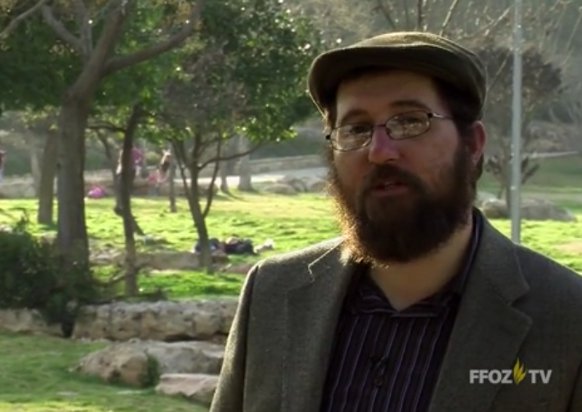
Messianic Judaism teaches that Yeshua did not abolish the Torah, but if that’s true, what about the new covenant? Doesn’t the new covenant of grace and faith replace the old covenant of works and law? In five engaging lectures, Torah Club author D. Thomas Lancaster digs into the Bible’s prophecies to dispel many of the common myths and misunderstandings about the new covenant.

-from the First Fruits of Zion (FFOZ) webpage for the
What About the New Covenant sermon series

Introduction to the Series

About eighteen months ago, I began my personal investigation of the covenants in an attempt to understand how Gentiles (including me) were able to have a covenantal relationship with God without converting to Judaism. This investigation resulted in an eleven (twelve, really) part blog series I euphemistically called “The Jesus Covenant” which I started here. It took over six months of study and anguish, but I finally arrived at a place where I could be at peace about where I fit in the New Covenant as a Gentile.

When I received the five-part audio CD lecture series called “What About the New Covenant” from FFOZ in the mail several days ago, I was interested in how my discoveries and conclusions map to those of theologian and teacher D. Thomas Lancaster. Was I completely off base or would Lancaster confirm that I am standing on solid, Biblical ground as far as my understanding of the covenants, and especially the New Covenant?

The material on this set of audio discs is repurposed from several sources, including parts of Lancaster’s Holy Epistle to the Hebrews sermon series, FFOZ’s Torah Club Volume 5: Depths of the Torah, and Lesson 3 from FFOZ’s HaYesod Program.

That said, organization and presentation of this information is completely new, and these teachings, once “trapped” within much larger tomes and recordings, have been “freed” so we can access specifically what Messianic Judaism teaches about the New Covenant. One caveat: this is Messianic Judaism as First Fruits of Zion sees, understands, and practices it. I should emphasize like any other Judaism or any other Christianity for that matter, Messianic Judaism isn’t a single, monolithic entity and opinions among the various groups may differ somewhat.

Session One: The Covenant Maker

The first session is nearly fifty minutes long and as you might imagine, is pregnant with both amount and depth of information. Here, Lancaster takes his listeners on a grand tour of all of the covenants God made with humanity and Israel (all of the covenants except the Noahide covenant were made with Israel) and attempts to answer the all important question, “What is a Covenant?”

A good question has a long afterlife.

-Ismar Schorsch
“What Do I Look at When I Pray?” (pg 382)
Commentary on Torah Portion Shemini
from his book Canon Without Closure: Torah Commentaries

It’s true, we don’t really understand what “covenant” means in our world today. The only covenant we have left in modern times is the marriage covenant, and even that one has been nearly destroyed by our lack of understanding of the binding nature of covenants. If we did understand, divorce wouldn’t be such an epidemic, at least among the faithful.
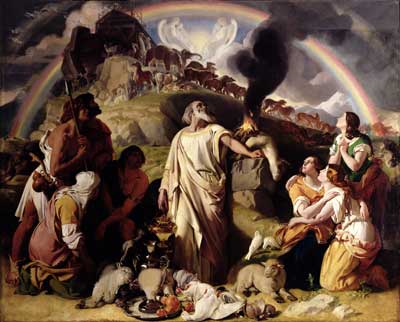
noah-rainbowI mentioned the Noahide covenant that God made with all life, including all of humanity. God created a set of obligations for humanity and in exchange for obedience, God promised not to destroy the world again by flood. The sign of this covenant is the rainbow we periodically see in the sky (see Genesis 9 for details).

But it’s not until Lancaster begins talking about the covenant God made with Abraham and all of Abraham’s descendants through Isaac and Jacob, the Jewish people, that we begin to understand the nature of this covenant and all the covenants to follow.

The first big point to get is that all subsequent covenants build on prior covenants rather than replacing them. In fact, this is really important for ancient and modern Israel because whenever Israel violated the covenant made with God at Sinai (such as the incident of the Golden Calf recorded in Exodus 32), it was God’s promises made in the Abrahamic covenant that allowed Him to repeatedly redeem Israel. You might want to review God’s promises to Abraham and his descendants by looking at Gen. 12:1-3, 7, and 22:18. You’ll also see this covenant being inherited by Abraham’s son Isaac in Gen. 22:18.

Interestingly enough, although it is commonly believed that Abraham had no obligations he had to fulfill apart from participating in the sign of this covenant, which was circumcision for himself and all the male members of his household, this is not actually true. Abraham was required to have a lived-out faith that God periodically tested. And the results of those tests really, really mattered.

The angel of the Lord called to Abraham a second time from heaven, and said, “By myself I have sworn, says the Lord: Because you have done this, and have not withheld your son, your only son, I will indeed bless you, and I will make your offspring as numerous as the stars of heaven and as the sand that is on the seashore. And your offspring shall possess the gate of their enemies, and by your offspring shall all the nations of the earth gain blessing for themselves, because you have obeyed my voice.”

Genesis 22:15-18 (NRSV)

Abraham and the starsGod said “Because you have done this…I will indeed bless you, and I will make your offspring as numerous as the stars of heaven.” These are conditions. You did this and in response, I will do that. Abraham had to demonstrate perpetual fidelity to God by faith, trust, and obedience, and doing so, God responded by fulfilling the covenant promises He made to Abraham and his descendants.

It is the same for us as James, the brother of the Master famously wrote in James 2:14-26. Lancaster says we are justified by faith and works, which is a rather radical thought in traditional Christianity, but as you’ll discover, his presentation of covenants including the New Covenant, is also not the “norm” from an Evangelical perspective.

As a side note relevant to justification and deeds, see Derek Leman’s blog post Our Deeds are Not Filthy Rags.

As far as the “duration” of the Abrahamic covenant, according to the Apostle Paul:

Brothers and sisters, I give an example from daily life: once a person’s will has been ratified, no one adds to it or annuls it. Now the promises were made to Abraham and to his offspring; it does not say, “And to offsprings,” as of many; but it says, “And to your offspring,” that is, to one person, who is Christ. My point is this: the law, which came four hundred thirty years later, does not annul a covenant previously ratified by God, so as to nullify the promise.

Galatians 3:15-17 (NRSV)

In other words, later covenants do not get rid of, annul, cancel, or make obsolete earlier covenants. In addressing the covenant God made with Abraham, Paul says it’s forever. A later covenant can only ratify an earlier one, not abolish it.

Lancaster spends some time on the Mosaic covenant, the covenant God made with the Children of Israel, that is, Abraham’s, Isaac’s, and Jacob’s descendants, at Sinai. One important point he makes is that this later covenant builds on the earlier one and in fact, the making of this covenant actually fulfills sections of the earlier, Abrahamic covenant. One example is the continuation of the promises that Abraham’s descendents would possess the Land of Israel, cementing this promise by establishing the laws specific to the Jewish people living in that Land.

Another important issue Lancaster brought up is the difference between the covenant and the Law. The Torah is not the Sinai covenant, it represents the conditions of the covenant, defining the responsibilities of each party: God and the Children of Israel. It also defines the sign of the covenant which is the Shabbat.

This sign is unique in that it is not a manifestation in nature, such as the rainbow, or a physical condition or procedure, such as circumcision. Shabbat is an “island in time” or, as Lancaster quotes Abraham Joshua Heschel, “a sanctuary in time.”

Therefore the Israelites shall keep the sabbath, observing the sabbath throughout their generations, as a perpetual covenant. It is a sign forever… (emph. mine)

Exodus 31:16-17 (NRSV)

Notice that the Sinai covenant and its sign are forever and perpetual. No exchanges or replacements allowed.

As I mention above, whenever Israel disobeyed the conditions of the Sinai covenant, according to those conditions, God punished Israel. There is no provision in the covenant for its annulment. All covenants God made with Israel are forever. Is that clear?
King DavidLancaster moved on to describe the Aaronic covenant, which is the promise that Aaron’s descendants will always be High Priests, and the Davidic covenant that states David’s descendants will be Kings over Israel. The conditions state that should a King disobey, he would be disciplined, but God would not remove his love from the Davidic dynasty (see 2 Samuel 7). The Davidic covenant is also the hope of the Messiah, for a sinless King must rule one day over Israel, that is, King Messiah.

So far, all of these covenants are built one on top of the other. Each later covenant expands upon the previous covenant in some way. But what about the New Covenant?

First, let me, thanks to Lancaster (though I knew this already), relieve you of a burden. The New Testament, that is the collection of scriptures from Matthew through Revelation, does not equal the New Covenant. I heard a highly intelligent, well-educated, and abundantly accomplished Pastor tell me once that the New Testament is the same thing as the New Covenant and I almost fell out of my chair.

According to Lancaster (and I agree with him), the New Testament is a collection of scriptures that record how Yeshua (Jesus) initiated some of the conditions of the New Covenant, but it is not the covenant itself. Lancaster (and again, I agree) says that the New Testament would be better named “The Apostolic Writings” or “The Apostolic Scriptures”. Just as the Torah is not the Sinai (or “Old”) Covenant, neither is the “New Testament” the New Covenant.

So where do we find the New Covenant? It’s all over the Torah, the Prophets, and the Writings, but as you hopefully already know, the key scriptures are these:

The days are surely coming, says the Lord, when I will make a new covenant with the house of Israel and the house of Judah. It will not be like the covenant that I made with their ancestors when I took them by the hand to bring them out of the land of Egypt—a covenant that they broke, though I was their husband, says the Lord. But this is the covenant that I will make with the house of Israel after those days, says the Lord: I will put my law within them, and I will write it on their hearts; and I will be their God, and they shall be my people. No longer shall they teach one another, or say to each other, “Know the Lord,” for they shall all know me, from the least of them to the greatest, says the Lord; for I will forgive their iniquity, and remember their sin no more.

Jeremiah 31:31-34 (NRSV)

I will take you from the nations, and gather you from all the countries, and bring you into your own land. I will sprinkle clean water upon you, and you shall be clean from all your uncleannesses, and from all your idols I will cleanse you. A new heart I will give you, and a new spirit I will put within you; and I will remove from your body the heart of stone and give you a heart of flesh. I will put my spirit within you, and make you follow my statutes and be careful to observe my ordinances. Then you shall live in the land that I gave to your ancestors; and you shall be my people, and I will be your God.

Ezekiel 36:24-28 (NRSV)

Taking all this together, first notice that the New Covenant is made only with Judah and Israel. No mention is made of the Gentiles and particularly “the Church” at all. It seems that outside of the Jewish people, God has no covenant relationship with humanity and never will. Also notice that nothing in this language whatsoever changes, annuls, cancels, or abolishes anything in any of the previous covenants God made with Israel. That means, among other things, that the Torah is perpetual and that Jesus didn’t lie:

“Do not think that I have come to abolish the law or the prophets; I have come not to abolish but to fulfill. For truly I tell you, until heaven and earth pass away, not one letter, not one stroke of a letter, will pass from the law until all is accomplished.”

Matthew 5:17-18 (NRSV)

CreationJesus never intended to come and abolish what God established in relationship with Israel, and the Torah will not change at all until Heaven and Earth pass away and until all is accomplished.

Well, Heaven and Earth are still here as far as I can tell. But what needs to be accomplished? I mean, didn’t Jesus say “It is finished” on the cross right before he died? (John 19:30) (Hint: If he said “It is finished” and then died, it’s very likely that what was finished was his suffering).

I said before, echoing Lancaster, that Jesus initiated the New Covenant by his death and resurrection. Jesus himself said that the bread and wine the Apostles ate at the last meal with the Master (and Lancaster taught that after a covenant was made in the ancient Near East, a meal was always eaten together by the participants of the covenant) were the New covenant in his body and blood (Luke 22:19-20), so the New Covenant started at that point. Jesus got the ball rolling. But what happened to the covenant after that?

Look at the passages from Jeremiah 31 and Ezekiel 36 again. Do you see all that happening? How can the Word of God be written on our hearts if we as believers still sin? How can the New Covenant be initiated but not completed?

For in him every one of God’s promises is a “Yes.” For this reason it is through him that we say the “Amen,” to the glory of God.

2 Corinthians 1:20 (NRSV)

He who has prepared us for this very thing is God, who has given us the Spirit as a guarantee.

2 Corinthians 5:5 (NRSV)

What is this promise and guarantee? It’s the sign of the New Covenant. Lancaster says that the New Covenant encompasses all of the previous signs (Shabbat, for instance) but also has its own sign. It’s also unique in that the sign functions as sort of a down-payment or promissory note that Messiah will return to complete what he started, that is to deliver on the rest of God’s promises outlined in the New Covenant language.

That’s why we as believers have the Holy Spirit but still don’t see evidence of the full arrival of the Messianic Kingdom, the Kingdom promised by the New Covenant. It is a promise of what is yet to come.

I said before that the New Covenant doesn’t annul or change any of the previous covenants but then why is it “New?” Look again at Jeremiah and Ezekiel. Judah and Israel are still obligated to obey God’s Torah but the big difference, the only real difference, is that this time, God will make it possible for man to obey.

Many Christians say that God gave Israel the Law to prove that they were incapable of obedience to God’s standards and, once He made that point, He replaced the Law (Torah) with the Grace of Jesus Christ, which doesn’t rely on man having to do anything, including, if you’re a Calvinist, exercising enough free will to accept that free gift of salvation. Lancaster says that God didn’t change His expectations of obedience, there has always been grace, and that knowing man cannot obey God consistently out of his own will, God places His Spirit in man and God writes His Torah on man’s heart, circumcising that heart, so that man will “naturally” obey God’s desires. That’s the “New” in “New Covenant.”

This is a beautiful way to dispense with the requirement in the Church that we retrofit modern Christian theology into the Old Testament and invent new interpretations to explain Christian doctrinal dissonance in trying to make the older and newer scriptures fit together. Lancaster creates a seemless progression across all scripture that doesn’t make it necessary for us to “jump the tracks” at Acts 2 and invent a never prophesied entity known as “the Church”.

But I mentioned before that the New Covenant, like all of the prior covenants except the one made with Noah, were made with Israel, that is the descendants of Abraham, Isaac, and Jacob. This is really good news, the gospel message to the Jewish people, but what about the Gentiles? Have we been left out in the cold after all? Where is the gospel for us?

In him you also, when you had heard the word of truth, the gospel of your salvation, and had believed in him, were marked with the seal of the promised Holy Spirit; this is the pledge of our inheritance toward redemption as God’s own people, to the praise of his glory.

Ephesians 1:13-14 (NRSV)

New CovenantThe Apostle Paul (Romans 11:11-24) said that the God-fearing Gentiles are grafted into the Commonwealth of Israel through fidelity to the Jewish Messiah King, that is, to Jesus, and that by swearing such allegiance and in obedience to our King (which I speak of in this blog post), we are added in to that commonwealth alongside the born citizens of Israel, the Jewish people.

Lancaster was quick to point out that such “grafting in” does not make Gentile believers (i.e. Christians) Jewish nor does it obligate us to the Torah in the same manner as the Jews. Yes, we Gentile believers are obligated to some of the conditions in the Torah, but that obligation is unique to us as Gentiles, and many other conditions are only applied to Jewish people, whether believers or not.

Again, this does not mean there is one, identical application of the Torah mitzvot for both Jews and Christians, and it absolutely doesn’t mean that the Church, under the New Covenant, has replaced Israel and the Jewish people or anything in the Old(er) Covenant made at Sinai…or any of the other of God’s covenants.

…remember that you were at that time without Christ, being aliens from the commonwealth of Israel, and strangers to the covenants of promise, having no hope and without God in the world. But now in Christ Jesus you who once were far off have been brought near by the blood of Christ.

Ephesians 2:12-13 (NRSV)

This particular doctrine on the New Covenant is certainly a lot easier to make sense of and follows the flow of the entire Bible much better than the traditional Christian understanding outlined, for instance, by gentlemen such as Dr. Thomas Schreiner in his book 40 Questions About Christians and Biblical Law which I reviewed a time or two.

I’m grateful to Lancaster and the other fine folks at First Fruits of Zion for producing this teaching and making it available to people like me. It certainly is a breath of fresh air and illuminates the Bible in a manner that we’ve gotten far away from in Christianity over the long centuries. It’s time to take back the lessons taught by the Apostles and to lead a new “reformation” of our own in the Church.

I strongly suggest that you acquire this audio series for yourself. I didn’t include everything Lancaster taught on disc one (though you must imagine I did given the length of this blog post) and he presents further information that solidifies his argument regarding the New Covenant.

I look forward to writing reviews on the rest of the series and having Lancaster show me just “how deep the rabbit hole goes” (with apologies to Morpheus, played by Laurence Fishburne).

Reviewing the Meaning of Midrash: Part 4

Heaven forbid we should tell a child an untruth! It is a Jewish custom, and a Jewish custom is also Torah—the Torah of truth. Everything the child is told is true: Those who throw the candies are doing it on behalf of the archangel Michael, the angel who seeks out the merits of the Jewish people. The sweetness of the candies is the sweetness of Torah as it descends and clothes itself in a physical object.

An adult won’t accept this, because he sees that he, and not an angel, is the one throwing the candies. When a child is older, we can explain to him that this is only a garb for something much higher. But when he is a three-year-old child just beginning his education, we tell him these things clothed in a story, and he has no problems with any of it. Nevertheless, when he grasps the outer clothing, the child grasps the archangel Michael, and the sweetness of Torah, and all the truth that is within that clothing!

-Rabbi Menachem M. Schneerson
from talks of Shabbat Parshat Pinchas 5734 and 8th day of Chanukah 5739
(translated, combined and abridged)

If you’ve been following this series, by now you should know that when you come across a fabulous story from the Midrash, you need to peel back the covers to discover what it’s trying to tell you. The stories are all true stories—just not necessarily the way things were able to unfold in our physically limited realm. This reality is not the ultimate expression of truth.

-Tzvi Freeman and Yehuda Shurpin
Limitless Truth for the Limited Mind
Part 4 of “Is Midrash For Real?”
Chabad.org

In the first quote above, the Rebbe is describing the traditional custom of celebrating a small child’s first day attending cheder (A Jewish schoolroom) by throwing candies at him from behind and then telling him it was the archangel Michael who had thrown them.

I suppose from an outsider’s point of view, it seems as innocent as the stories we tell our children about Santa Claus and the Tooth Fairy, which of course they believe at the time, but realize are mere fictions as they grow older.

But the Rebbe declares, “Heaven forbid we should tell a child an untruth!” Anyone who has pretended with their child that there really is a Santa Claus or Tooth Fairy doesn’t think they’re lying. They think they’re upholding a family and cultural tradition, just as the Rebbe states that attributing thrown candy to the archangel Michael is a Jewish custom.

OK, so far, so good. But then he says, “It is a Jewish custom, and a Jewish custom is also Torah—the Torah of truth. Everything the child is told is true…” Most parents outside of Orthodox Judaism aren’t going to extend their customs and say they operate as truths on some other level, and yet the Rebbe calls this custom (and many other Jewish customs) “Torah…the Torah of truth.”

This is a continuation of last week’s article and review and so far, I am no more illuminated now than I was then. Although I know there is a difference between the truth and a fact, I can’t see saying that Michael threw the candies represents an actual intent operating in the angelic realm that Michael expects this sort of action to occur. Does the tradition compel a change in angelic reality or do the Sages imagine that every tradition generated by the great Rabbis must originate from on high?

It is considered inappropriate to relate the midrashim to those who are unable to tell the difference between literal facts and an underlying or supernal truth, but here we have an example of doing so with a three-year old child who absolutely takes his elders’ word about candies and the archangel Michael as both truth and fact.

Historically, that just hasn’t been the case. Many, if not most of these midrashim are collections from sermons of popular rabbis of past generations. To whom were they sermonizing? To whoever came and listened: men, women and children—most of them simple folk.

So historically, most of the Rabbis most of the time compounded this problem by speaking the midrashim in sermons to simple folk who also, like small children, may not have been able to differentiate between the literalness of an event and an underlying truth, even on the level of metaphor. Why isn’t this a problem?

Truth doesn’t grow where falseness is planted. We must say that even as they are understood on their most basic level, each of these stories is absolute truth.

But how is that so? Either fine clothes will be growing on trees when Moshiach comes, or they will not. Can we say that for the small child they will do so literally, while for the sophisticated adult they will do so only figuratively?

Good question.

The question is not on midrashic aggadah alone. The Hebrew Bible is filled with anthropomorphism—G‑d’s eyes and hands, His wrath, His disappointment and His love, G‑d as king, G‑d as father—all understood by innocent and simple people exactly as stated.

Oh no you don’t. There’s a world of difference in describing certain attributes of God by metaphor, for after all, God doesn’t really have physical qualities like a human being, and juxtaposing that with some of the fantastic tales we find in midrash. I have to cry “foul” on this example.

Nevertheless, the question remains: How could the Torah—a Torah of truth—mislead the innocent reader of simple faith?

Again, good question.

Indeed, Rabbi Abraham ben David (known as Raavad) criticized Maimonides for making this ruling. He himself agreed that G‑d has no form, physical or otherwise. What he could not bear is the condemnation, as he writes, of “many who were better than him [meaning Maimonides (!)] who believed such things due to their innocent reading of the text.”

The Jewish PaulThis is something of a side topic, but as I read the two paragraphs above, I couldn’t help but think of the struggles we have in Christianity with Biblical interpretation, especially when it collides headlong with some of the alternate interpretations I find in different corners of Messianic Judaism and what has been called the new perspective on Paul.

From my point of view, many in the church have “believed” Christian interpretive traditions “due to their innocent reading of the text,” while from my (and other’s) point of view, that tradition and innocent reading of the text is based on a two-thousand year old mistake that does not reflect the true Gospel message of the Bible.

But this speaks of differences in how to interpret the Biblical text. Midrash is something else and is understood differently, even as it is addressed to the written Torah.

“Better than him,” writes Rabbi Abraham. Even though they believe something about G‑d that he himself agrees is utterly false! What is so wonderful about people who cannot fathom a formless G‑d?

To answer that question, we need to readjust our thinking about several issues: about Torah, about reality, and about human language.

OK, buckle up and get ready for the ride.

R. Menachem Azariah was concerned with a statement of the Talmud, that the Torah sometimes exaggerates.

R. Menachem Azariah writes, “Heaven forbid that the Torah should exaggerate! Everything in the Torah is truth—even the lies the characters of the Torah tell are truth. For in a Torah of truth, there is no room for inaccuracies, never mind exaggeration.

One of the supposed exaggerations in Talmud has to do with the report of the spies who were sent into Canaan to scope out the land (Deuteronomy 1:28) stating that the cities were “fortified up to the heavens” (Talmud, Chullin 90b and Tamid 29a).

Like last week’s example explaining why it is true in midrash that Moses was fifteen feet tall and yet in the written record we have in Torah, there’s no indication that Moses was seen as unusually tall, the description of impossibly high boundaries around the great cities is rationalized as a way of saying how the external ministering angels could not enter the boundaries of the land (Rabbi Menachem Azariah of Fano, Asarah Maamarot, Maamar Chikur Din, part 3, chapter 22).

In other words, Talmud does not exaggerate (Heaven forbid), it simply reveals greater truths about the observations of the spies in Canaan than are revealed in a plain reading the written Torah text (don’t forget the four “departments” or PARDES).

Ramban
Ramban

I feel like I’m running around in the same circle I was while I was writing last week’s review. Nothing new to see here. Really. I’m sorry. I’m just not convinced. I’ll buy that Talmud doesn’t exaggerate, at least for the sake of exaggeration, but it can employ metaphor to describe just how daunting and impenetrable the great cities of Canaan seemed to be to the Israelite spies. That’s not an untruth, it’s a poetic description to communicate an important point to the audience. This is a perfectly legitimate literary device to use, even when describing actual events.

Unfortunately, the Rabbinic commentary completely flips things around.

To R. Menachem Azariah, that itself is the meaning of exaggeration in Torah—not an inflation of the facts, but a statement of a higher truth that cannot be expressed in our physical world. Torah, however, speaks only secondarily about our physical world—and in a world higher than our own, there is certainly some very real manifestation of this truth.

The “higher truth” of which the Torah primarily speaks is also the “higher reality,” and actual, observable, factual events are relegated to playing second fiddle in the mystic Jewish tapestry of God’s interactions with Israel, at least as understood by some of the sages.

I think I like Ramban better than Azariah.

Ramban (Nachmanides) had written that the Torah speaks about earthly matters and alludes to spiritual ones.

The great Kabbalist Rabbi Moshe Cordovero presented a unique understanding…

This is a radically original way of thinking of metaphor in Torah: all that exists in our reality is nothing more than an analogy derived from the true reality to which it points. As the Rebbe, Rabbi Menachem M. Schneerson, explained this view, G‑d gave us a hand and eyes and ears so that we could understand the true hand and eyes and ears as they are above. And the same with all that we find in our world. The whole world is one big parable, a crystallized analogue of the real thing.

So it is our physical, observable reality that is the parable, and the parables of midrash that represent true and higher reality. Rather than saying God has arms or eyes by way of analogy, describing and indescribable God in terms mere mortals can comprehend, the “arms” and “eyes” of God represent “divine verbs,” so to speak, indications of His activity, while we are given physical equivalent body parts as a way to “understand” something about God.

Freeman and Shurpin are right. This is “a radically original way of thinking of metaphor in Torah.” One that my western, Gentile mind doesn’t want to accept. I feel like Neo (Keanu Reeves) in the film The Matrix (1999) where everything I ever thought was real turned out to be a complex illusion and “reality” exists almost completely outside my experience.

Morpheus (Laurence Fishburne): Unfortunately, no one can be told what the Matrix is. You have to see it for yourself.

However in the case of midrash, everyone can be told what “the Matrix” is, the chore is understanding and accepting without seeing it for ourselves, that is, experiencing the “reality” that the midrashic Sages expect us to comprehend beyond the simple meaning of metaphor.

Can a metaphor be a truth, not just in telling of some moral or ethical principle, but can it have a life of its own, so to speak, an independent heavenly meaning that transcends the mere symbolic representation between metaphor describing an event and the event itself? How can metaphor come from “above” and why should we not understand midrash as a product of a Rabbi’s fertile imagination in attempting to communicate a complex topic in simple, easy to digest terms?

Except we have an equation that I cannot resolve. Jewish tradition is Torah and Torah is always truth.

In my past conversations with Pastor Randy at the church I attend, he has asked me repeatedly “what is Torah” and the answer has always seemed elusive. Perhaps, if anything labeled “Torah,” no matter how outrageous, must always be truth, and many, many things beyond the written text are labeled, “Torah,” then I can see the source of his confusion, and admittedly, mine.

All of this will become clearer if we examine this metaphor of the metaphor: clothing. Why do ideas need clothing?

An author wishes to communicate an idea, an ethic or a perspective on life. If he would spell it out in the raw, the point won’t come across. He needs something that will carry his audience from their perspective to his, so that they will see that which is currently imperceptible to them. He can’t pick them up and take them there, and he can’t plop his mind into their brains.

Torah at SinaiI think the Rabbis are clothing the midrash and the definition of metaphor in an unnecessarily complicated way. Something can be “truth” and “not fiction” and still not have to be fact on any plane of existence and still function as a teaching tool and a guide. I know mystics are defining a lot of these concepts and I make a lousy mystic, but in order to assign mysticism a validity, you must subscribe not only to the existence of a supernatural world, which we do as religious Christians and Jews, but that Rabbinic Sages can peel back the covering over the written word in the Bible and uncover an objective, mystical reality underneath, much as one might remove the clothing from one’s beloved to reveal her greater beauty.

It’s all very poetic and even compelling, but I recently read a commentary by an Aish Rabbi saying that Christianity is a religion of (blind) faith, while Judaism is a religion of word, documentation, and truth. I’d like to get the Aish Rabbi and Rabbis Freeman and Shurpin together and listen to them engage in a frank discussion of their viewpoints.

Actually, my metaphor of unclothing a beautiful lover to reveal even greater beauty may not be correct.

But what he can do is find clothing that fits the subject and makes it presentable, that hides whatever is distracting them and brings out the highlights he wants to point out. As good clothing brings out the natural beauty of the subject, so a good parable brings out a depth otherwise ineffable. Paradoxically, both do so through concealment—concealment for the sake of revealing a deeper beauty.

Are we removing clothing, the outer material world, to reveal a greater beauty beneath, or is the metaphor, the midrash, clothing in which we dress the material world in order to show a more majestic appearance?

Bruno Bettelheim is best known for his classic work of child psychology, “The Uses of Enchantment: The Meaning and Importance of Fairy Tales.” He criticizes the “narrow-minded rationalists” who object to telling children fantasies, pointing out the value children receive from these stories in dealing with the emotions and turmoil of life. As for the unrealism, he writes that this is “an important device, because it makes obvious that the fairy tales’ concern is not useful information about the external world, but the inner process taking place in an individual.” In short, “The child intuitively comprehends that although these stories are unreal, they are not untrue . . .”

The Rebbe, Rabbi Menachem M. Schneerson, seems to be going beyond this. When a small child is told that the archangel Michael threw candies at him, that is very real to him. He imagines the angel there in the room, and the candies become very precious candies. And yet it is not a lie.

Most cultures have some sort of tradition of fables or folk tales that serve important purposes in educating their population, both children and adults. Usually the more industrially and technologically advanced a culture, the less room there is for folk tales that have any semblance of seeming “true” (Do kids even learn about “Paul Bunyan” or “Pecos Bill” in grade school anymore?). In the western world right now, many of our folk heroes are characters from 1960s comic books who are being brought to life in films such as The Avengers (2012) and Man of Steel (2013) (with Captain America: The Winter Soldier being released to theaters in less than a month).

But no one is suggesting that Superman or Captain America have a “reality” of their own that not only operates as a metaphor for our real world but that represents the best and truest form of our world. No one really believes that we are only a shadow of that higher existence of heroes, superpowers, and fantastic worlds that we see in film and television.

Midrash, even though we encounter it outside of its original, aged and ancient places of origin, meeting it here in the modern world, nevertheless demands that we accept it on its own terms.

I think the central message I’m getting here is that the very manner in which Freeman and Shurpin (and Orthodox Judaism) describe Midrash and metaphor is by way of metaphor. They rewrite how we understand the words “midrash, “Torah,” “reality,” and “language” in order to support a mystic vision of metaphor that lies in neither this world nor the next, but somewhere in-between.

against the darkIn his introduction to the 1963 episodes of the Twilight Zone television series, Rod Serling said in part, “You’re moving into a land of both shadow and substance, of things and ideas…” (the text of Serling’s now-classic introduction to this series changed a bit over time). This seems to be not only where we cross over into the Twilight Zone but where we meet the realm of midrash as well.

I don’t mean to sound unkind or disrespectful in my descriptions. I’m only illustrating how I understand what is being presented in this article as I encounter it. I really do feel I’m being asked to enter into a space that sits on a fence between my world and someplace else, evaluating a “fairy tale” as fanciful metaphor and ethical principle wrapped up in the gossamer fabric of Jewish lived experience.

Some are stuck with a very pedestrian view of the Talmud and Midrash as nothing more than a repository of teachings from various teachers—teachers they imagine to be much like themselves, prone to exaggeration for the sake of making a point. Such a view is sorely insufficient at explaining Jewish practice and belief.

Unfortunately, that describes me to a “T”. I’m willing to admit that I may be at fault here and that it is my human, Goyishe limitations that prevent me from seeing midrash as it’s being presented to me, but as inadequate as the Rabbis would believe me to be, I find it difficult to cast off my tethers to the world around me and enter their’s without so much as a safety net or even a soft pillow to cushion my eventual fall.

Next week’s article is called “Death by Secrets” and the title alone is worth the price of admission. It’s the last article in the series. Will Freeman and Shurpin be able to pull off an eleventh hour save and convince me that midrash actually does exist beyond just imagination?

Or should I, like last week, believe that midrash is the Chabad’s answer to Yann Martel’s novel Life of Pi and accept that the better story is also the more “real” story?

For additional reading, try this brief and succinct article, Is the Midrash Literal?

Reviewing the Meaning of Midrash: Part 3

We’re used to considering the precise measurements of our world as the final arbiter of all truth. It might help to jump to an event in Mezhibuzh, Ukraine, a century or two after Maharal:

…One of the homeowners of Mezhibuzh was involved in a nasty dispute with another resident of the town. It happened that while in the Baal Shem Tov’s presence, in his shul, he yelled that he was going to rip the other guy apart like a fish.

The Baal Shem Tov told his pupils to hold one another’s hand, and to stand near him with their eyes tightly closed.

He then placed his holy hands on the shoulders of the two disciples next to him. Suddenly the disciples began shouting in great terror: They had seen how that fellow had actually ripped his disputant apart like a fish…

Now, what if I ask you, “Did a resident of Mezhibuzh tear apart his disputant like a fish?”

You might answer, “Well, not really.” Problem is, I have witnesses. Very reliable ones. And they all saw exactly the same thing.

But can the perpetrator be charged in court for bodily harm? Problem is, his disputant is still walking around without a scratch.

So, which world is real?

-Tzvi Freeman and Yehuda Shurpin
“Midrash and Reality:
Part 3 of ‘Is Midrash For Real?'”
Chabad.org

This one made my head hurt. In this article, the authors and their sources tell me that I’m not supposed to take midrash, even those telling fantastic and impossible tales, as if they are mere metaphors. They are also true and while fiction can contain truths, they are also real in a mystical sense.

Rabbi Yehuda Loewe of Prague (known as the “Maharal of Prague”) was adamant: Torah is not fiction. Jews consider the words of their sages that have been recorded in the Talmud and Midrash to be Torah, no less divine than the Five Books of Moses. Once they were accepted by the general community of observant Jews as works to be studied and revered as Torah, they attain a status of G‑d’s own thoughts, arguments He has with Himself and stories He tells Himself. And if the Creator of the universe is telling it, it’s real.

And further:

On the one hand, you have to know that every story told and recorded by the rabbis of the Talmud is true. They are Torah, just as much as a verse from scripture or a halachah kept by all Jews is Torah.

MidrashThis is the part that makes my head hurt. Titus destroys the Temple and God assigns a gnat to eat his brain so that seven years later, upon the death of Titus, it is discovered that the gnat with metal claws reduced the size of the man’s brain to that of a year-old pigeon’s brain.

Moses is ten cubits tall (about fifteen feet) but no where in the Torah, which I mean as the five books of Moses, is this noted nor does anyone, Pharaoh,  Moshe’s wife, his father-in-law, his brother, seem to notice.

And yet these things are not only “Torah” but they are real?

Now, reading the chronicles of Roman historians, you won’t find anything about this gnat. Titus, they tell you, died of a fever. At any rate, metal claws on a big bug is a tad outrageous.

So, one scholarly Italian Jew named Azariah dei Rossi explained, “This is just aggadah.” It didn’t really happen. It’s just that the sages wanted to impress on people that G‑d can always find a way to punish the wicked, so they told this story.

So this really is a metaphorical tale to illustrate a moral point. It contains a truth but it is not objectively real.

So, Maharal tells us that the real Moses truly was fifteen feet tall. Not the one that Pharaoh saw, or that the fleeing shepherds saw. They saw only the physical shell of Moses, as he is invested in a body within our physical world—a world that for several reasons can’t manage a ten-cubit human form. But Moses is a complete person, and ten is the number of completeness. He should have been ten cubits tall—would the physical world be capable of such a thing. Certainly, writes Maharal, whatever could be reflected in the physical world was reflected, and Moses was likely taller than the average human being. But not as tall as he really was.

Am I supposed to believe that in some supernal realm, the person of Moses is really fifteen feet tall, but that he only appeared to be of a normal human height in our world because that was not the “real” Moses, and our physical world could not contain all the Moses was and is?

That’s a lot to swallow. As I keep saying, I can accept the metaphorical nature of the midrashic stories, but I have a tough time making the conceptual leap into the world the Rabbi’s suggest I accept. Maybe, harkening back to last week’s review, I am a “bigger fool.” It’s not that I don’t “get” what Freeman and Shurpin are saying, I just don’t believe in the literal reality of these “deeper meanings” as having a truth and a life of their own in an objective sense.

Maharal takes the same approach to the gnat in Titus’ brain. The sages are not concerned with telling us a story for the medical annals. Their concern is to present to us the real Titus and his true destiny. Did a physical gnat enter his brain? Perhaps not, writes the Maharal. But the story is still true, because the gnat got in there anyways. Every living creature has its essential quality that makes it uniquely what it is—and the essential quality of the gnat made its way in. This essential quality, if it could be seen, would appear in its most intense state with a mouth of bronze and iron claws.

hidden-keeperUnless evidence to the contrary appears, I’m not inclined to believe on any level, essential or otherwise,  that a gnat with bronze or iron claws was involved in the death of Titus. I can believe that God metes out justice upon the wicked, though not always in this life.

But the view of midrash I’m asked to accept isn’t one in which the Rabbis parse out words of wisdom in mythical or fanciful form to illustrate a “truth” alluded to by the plain text of a story, either in the Bible our outside of it.

Maharal sums up his approach in one simple line: “The sages do not speak of the physical at all; they speak of a world stripped of physicality.” Every midrashic teaching is a peek behind the veil, dressing deep truths in language that is meant to reveal an inner world. If that language seems foolish to us, it is only because we have not yet cracked the code. We are grabbing the clothes, the words, as though they themselves were their own meaning.

This is an attractive way to think about the universe, with hidden corners, metaphysical alleyways, mystical portals through which the sages are able to peer and then relate what they’ve seen to the rest of us. I wish I could believe it. I know in some manner the sages were granted the ability to issue rulings equal to what we have in the inspired Bible. I know that in Judaism, canon is never quite closed and there is always another revelation concealed in the Bible’s “code.”

But I’m not going for it. I’m not jumping headlong into believing that the sages, wise and learned though they may be, actually see into a non-physical reality beyond our mortal plane and what they relate in their teachings and writings represents a divine truth equal to the Word of God.

It is true that Ezekiel, the apostle John, and even Paul, the letter writer, each had their own mystic experiences, either physically or through visions, where they literally saw and heard things that do not exist in our own universe, but to attribute this same ability, or some shadowy version of it, to each and every sage to has told a midrashic tale ultimately recorded in Talmud is too far for me to go.

Now a systematic approach to midrash had been laid out clearly by Maimonides and Maharal. But that raises a new question, perhaps a more difficult one: If the point of midrash is not the story itself, but that which it contains, not the foreground but the background, and if anyone who understands these stories literally is a fool—then how is it that we tell these stories to children and simple folk, who certainly take them at face value? Are we to hide all of these tales from them? Have we been doing things wrong all these centuries?

I still believe it’s important for Christians to have at least a slightly passing knowledge of midrash considering that this interpretative method may well have been in use during the Apostolic era. This understanding may help us pierce the veil traditional Christian exegesis has cast over the Bible for the past nearly two-thousand years, blinding ourselves to the way the New Testament scriptures were written and intended to be read.

But that’s still a far cry from the “reality” of Midrash as opposed to the metaphorical truths midrashic tales can contain. I guess I wouldn’t make a very good mystic or even a very good Jewish person.

I did take way something quite positive from this week’s article however:

Adult Pi Patel (Irrfan Khan): So which story do you prefer?
Writer (Rafe Spall): The one with the tiger. That’s the better story.
Adult Pi Patel: Thank you. And so it goes with God.
Writer: [smiles] It’s an amazing story.

-from the film Life of Pi (2012)

dimuI’ve never seen the film but I have read the book (which I highly recommend, by the way), and this bit of dialog is the key to understanding the author’s message. The book and the film speak of a fantastic tale of survival at sea of both a boy named Pi and an adult Bengal tiger named Richard Parker who share a small lifeboat together.

Toward the end of the story, after many adventures, Pi and Richard Parker, the only survivors of a shipwreck seven months before, land on the shores of Mexico. The tiger disappears into the jungle forever, and Pi is rescued and eventually tells his story. Although the story of Pi and the tiger commands most of the book, he does tell a much more believable if horrible story of murder, starvation, cannibalism, and near-insanity that could also account for Pi’s survival.

But Pi asks the writer who is chronicling his early life, “So which story do you prefer?” It’s as if the sages are asking the same question about midrash. We accept “truth” if not “fact” from the more interesting story. That’s what midrash means, at least to me.

Or maybe midrash is God telling “the better story.” And so it goes.

Does God Owe Us “Rights?”

“Being your slave, what should I do but tend
Upon the hours and times of your desire?
I have no precious time at all to spend,
Nor services to do, till you require.
Nor dare I chide the world without end hour
Whilst I, my sovereign, watch the clock for you,
Nor think the bitterness of absence sour
When you have bid your servant once adieu.
Nor dare I question with my jealous thought
Where you may be, or your affairs suppose,
But, like a sad slave, stay and think of nought
Save, where you are, how happy you make those.
So true a fool is love that in your will,
Though you do anything, he thinks no ill.”

-William Shakespeare
“Sonnet 57”

This is more of a question than a statement. Well, maybe it’s a statement and a question. I occasionally read commentaries on various blogs including several Hebrew Roots related blogs. One of the concepts that comes up repeatedly is the idea of “rights.” Specifically, whenever the topic of differentiation of identity between believing Jews and Gentiles within the Messianic Jewish or Hebrew Roots arenas comes up, and someone (like me) suggests that the Torah mitzvot are applied differently to Jewish people than to Gentile people, one of the classic responses from Hebrew Roots is “We have a right to observe the Torah in the same way as a Jewish person observes the mitzvot!”

It’s an odd thing to say that one has a “right” to be obligated. It’s like saying we have a “right” to be obligated to obey the speed limit while driving, or a “right” to be obligated to pay our taxes. Obligations and rights tend not to go hand in hand, even when we consider that obligation just and correct and even desirable. After all, when my children were young (they are all adults now), I had a legal obligation to provide a certain level of care for them, even though as a father who loves his children, I did so and more out of love, not legal obligation.

But the big question here is “does God grant us rights?”

According to the Declaration of Independence:

We hold these truths to be self-evident, that all men are created equal, that they are endowed by their Creator with certain unalienable Rights, that among these are Life, Liberty and the pursuit of Happiness.

But that’s the Declaration of Independence, which defines our rights as citizens of the United States of America, not the Bible which (among other things) defines our roles as human beings in relation to each other and in relation to God.

The Torah (in this case, I mean the Five Books of Moses) contains a large amount of law code that was to be applied to the ancient State of Israel, a state that existed as Earth’s only functioning Theocracy; the only nation ever to exist to be directly ruled by God as their King. Even after human Kings were anointed (first Saul, then David, and so on), the law code in the Torah was still valid.

the-divine-torahThe legal force and application of the various law codes and such have changed over the long centuries, in part because of the loss of the Temple, the Levitical priesthood, the Sanhedrin court system, the functional King, and the nation itself as Israel went into progressively longer exiles.

The modern State of Israel currently exists, but the vast majority of the Torah legal code is not applied to their laws, at least as originally intended in ancient days. They probably won’t be applied in that manner until the return of Messiah King, Son of David.

But be all that as it may, are any of the obligations to the citizenry of Israel considered “rights?” That is, does a Jewish person have a “right” to don tzitzit? Does a Jewish person have a “right” to daven with a minyan? Is it a “right” to recite the Modeh Ani upon awakening and the Bedtime Shema before retiring? Is it a “right” for a Jewish baby to have a bris on the eighth day of life?

I don’t see God so much as a “rights giver” but as a definer of identity and responsibility. According to the Master’s teaching:

“Teacher, which is the great commandment in the Law?” And He said to him, “‘You shall love the Lord your God with all your heart, and with all your soul, and with all your mind.’ This is the great and foremost commandment. The second is like it, ‘You shall love your neighbor as yourself.’ On these two commandments depend the whole Law and the Prophets.”

Matthew 22:36-40 (NASB)

These don’t sound like rights to “life, liberty, and the pursuit of happiness,” but obligations to love God with the entire scope of our resources and our being and to love our neighbor just as we love ourselves. Where are the “rights” in all that, since it is a summation of all of the Torah and the Prophets?

It seems like the focus of God and what He’s trying to tell us in the Bible is that it’s not all about us, believe it or not. It’s all about God and it’s all about what we do for other people. It’s not about what we can get out of the deal.

I know the Christian interpretation of the Gospel of Christ can be summed up as “a plan of personal salvation.” That is, we just have to believe and we, I, me, are, am personally saved from hell and damnation and promised a life of pleasure and peace when I die and go to Heaven.

While that’s terrifically good news, it also seems kind of self-centered and even narcissistic. It says absolutely nothing about how Jesus presented the two greatest commandments. It says nothing about loving God, being in awe of God, deeply respecting God, being thankful to God, and out of all of that, responding to human beings around us with love, respect, generosity, compassion, and, employing a rather Jewish way of looking at it, being thankful to the poor, the needy, the orphaned, for giving us the opportunity to serve God by serving them.

rabbi-prayingNone of that sounds like “rights” and all of that sounds like “obligation,” but even though we know that obligation is right and true and valid and what we really need to be doing all of the time, it’s always directed outward, from who we are to other people and to God. We are, in response to God, directing everything that we are, all of our resources, even our very lives, to the service of God and the human beings He loves (and He loves all human beings, even the ones we don’t love).

I’m really not convinced that observant Jews have a “right” to wear tzitzit or even a “right” to feed the hungry. Those are obligations assigned to them by God because they are Jews and they were set apart at Sinai based on a set of laws and responsibilities they agreed to uphold in perpetuity. Whether the Jewish person wants those obligations or not, they’ve got ’em. Only converts ask to be Jewish. People who are born Jewish didn’t ask to be born into a covenant relationship. It just happened by God’s will.

So whatever obligations you may feel you have to the service of God and people around you, I don’t think you, or I have a lot of room to be talking about “rights.” That doesn’t strike a very respectful tone in relating to God. After all, do you really think God owes you something?

Particularly as non-Jewish people who are grafted in and who aren’t even original parts of the tree, so to speak, do we have a right to define our obligations to God and a right to respond to those obligations as we see fit as individuals or as religious groups? What do you think?

Or talk to Job. He knows the answer.

Reviewing the Meaning of Midrash, Part 1

Torah, like any wisdom, has departments. That’s important to know. You can’t study literature the same way you study biology, and you can’t critique poetry as you would journalism. So too, you can’t study one department of Torah the same as you study another.

There’s more than one way of dividing up those departments. One way is to talk about approaches to the text.

Rabbi Yitzchak Luria, the Ari, constructs an acronym from these four departments, disciplines, or levels of peshat, remez, derush and sod: pardes, meaning “an orchard.” He taught that every soul must delve into all four layers of the Torah, and must continue to return to this world until having done so.

-Tzvi Freeman and Yehuda Shurpin
Is Midrash for Real?
Part 1 in a series on the truth behind Talmudic tales
Chabad.org

I have been promising to write a review on this series for a few weeks now, but as I read part one, I already feel like I’ve bitten off more than I can chew. I’m not Jewish and certainly not an Orthodox Jew, nor am I a mystic, which is what seems to be required to understand what Freeman and Shurpin are saying.

True, I’ve been critical of Christian devotion to Sola Scriptura more than once, but investigating Midrash on the road to Kabbalah could be a bit much for me.

I’m not throwing in the towel. I just want you to know how different this is.

First things first. How does this article define Midrash?

Finding deeper meaning and lessons in life is yet another department, which we call derush or midrash—and our basic commentators will again be found in these halls as well. Midrash often includes stories, called aggadah, some allegorical, some anecdotal, some reaching far beyond what we understand to be possible in our world. Midrash can be found strewn throughout the Talmud, and in many anthologies compiled contemporaneously with the Talmud or later. The largest, best-known collection is called Midrash Rabbah.

Many of the juiciest midrashim are collected in the classic commentary of Rashi. This despite Rashi’s repeated insistence that “I come only to explain the simple meaning of the text.” Because the text bubbles with meaning, frequently defying the steamroller of the strict literalist, demanding deeper interpretation at every turn.

What I’m taking from this is that Midrash isn’t necessarily intended to be literal fact. Certainly Christianity has its own rich tradition of religious allegory, so how can we criticize Judaism for employing the same tools. Midrash is in the “Derush” department, that which reveals the deeper meanings of the Torah.

AggadahBut are these “deeper meanings” actually encoded in the Torah or are they what various authorities including the esteemed Rashi have taken out of Torah and formed into morality tales, fables, or colorful metaphors to communicate principles that can be derived from scripture? How many Christian Pastors take a verse or two of scripture and develop a homily to be delivered from the pulpit on Sunday? I can accept Midrash at that level of understanding and meaning, even though in Orthodox Jewish thought, it may be intended to represent so much more.

But according to the article and the sages it cites, a steady diet of all four “departments” of Torah understanding is necessary for the “spiritual health” of every Jewish person.

The Ari’s message is not as esoteric as it may seem: Just as our bodies do not live by carbs alone, so our souls require a mixed diet. To be a complete Jew embracing a complete, wholesome Torah, you can’t satisfy your requirements studying in one department alone. You need a well-rounded curriculum at all four levels.

But the focus on this series as well as my review is of only one of the four “departments” or “food groups” in this diet.

And the midrashic tales and the secrets of the Torah are just as vital. Why? Because as much as Torah is about what you know and what you do, it’s also about how you think and what you feel. As magnificent a structure as you may have built for yourself, without light and warmth nobody is going to live there too long. That’s the way life goes: without the sparks firing, the engine just stops turning.

Midrash is your gateway to connect with the Author of the Torah. “If you want to know the One who formed the universe,” the Talmudic sages advise, “learn aggadah.” Aggadah, the midrashic tales scattered throughout Torah literature, are said to contain “most of the secrets of the Torah.”

That’s probably a lot farther than most Christians would be willing to go, and understandably so. Outside of Orthodox Judaism and especially the mystic context of the Chabad, it’s also much farther than many Jewish people would want to go. Let’s not kid ourselves. What I’m investigating is a relatively narrow perspective within the panoramic landscape of overarching Judaism. Nevertheless, for those of us who “intersect” with religious Judaism at some level, encountering Midrash is inevitable. So why fight it? Let’s have a look.

But the secrets are veiled, as Maimonides writes (we’ll get to that soon), so that only those who are fit to receive them will discover them there. The Zohar provides a parable to explain why the Torah must speak in parables…

I’m pausing here to remind everyone that Jesus spoke in parables. Christians tend to take the parables of Jesus for granted, largely because those parables have all been explained in the text of the Gospels, and even if we don’t always understand the explanations, we usually receive some satisfactory interpretation from our Pastors or some Christian book writer.

ffoz_tv18_aaron
Aaron Eby

Last fall I reviewed an episode of the First Fruits of Zion (FFOZ) television series called Speaking in Parables which sought to explain the purpose of the Master’s parables in terms of Messianic Judaism.

FFOZ Teachers and Toby Janicki and Aaron Eby are the hosts for these episodes and present each one as a “mystery” that requires three “clues” to solve. In these clues and their solutions, they use the Bible and Jewish literature to teach their audience that “Parables were a common teaching device used to simplify complex concepts.” The question then is whether or not Midrashim also take complex concepts and simplify them for their audience. Most Christians encountering a Midrash would probably say “no.” Sometimes a midrashic tale can make what we think of as the plain meaning of the text seem all too mysterious.

Apparently, the stories and mysterious words are more than packaging. After all, as the parable of the Zohar tells, from within the cloak of these parables the inner soul of the Torah speaks. Perhaps we should think of these stories as haute couture for G‑d’s wisdom. They are the fine clothing and jewelry that allow expression for Torah’s most inner wisdom, as a tasteful wardrobe betrays beauty that would otherwise elude the senses.

I invite you to read Part 1 in a series on the truth behind Talmudic tales (I also put the link at the top) for the full article, including the various parables it contains, to gain the full context of what I’m discussing. The sense I get from this text, and I’ve read similar material before, is that the Torah almost has a life of its own and is deeply encoded with meaning that extends well beyond what we can perceive, even if we could read the oldest available Torah documents in their original ancient Hebrew.

So fitting, so magnificent is this wardrobe that it carries the secrets of Torah even to the small child. In a way, it transmits to the simple child much more than to the sophisticated adult. To the adult, the clothing is distinct from the meaning it contains; the analogy and its analogue live in two different worlds. The child, when he grasps the clothing, grasps the warm body and soul breathing within. They are all one and the same. In his simple understanding of the tale, he touches G‑d.

To better understand how that is so, we’ll have to examine midrash a little deeper. We need to ask, are the stories of the Midrash truth or fiction? If they are truth, how is it that they so often conflict with one another? And how do we know when the Talmud is telling us a historical anecdote and when it is speaking in parables?

MidrashJust a reminder. There’s a difference between facts and truth. Or as Indiana Jones once said, “Archaeology is the search for fact… not truth. If it’s truth you’re looking for, Dr. Tyree’s philosophy class is right down the hall.”

Midrash, like any metaphor or morality tale, can contain truth and still be fiction. We’ll see what more Freeman and Shurpin have to say in next week’s review.

Does the Church Interpret the Bible Based on Traditions?

Question: What if I believe only in the written text of the Torah?

Answer: I’m glad to hear that you have such strong faith in the “Hebrew Bible.” My question is, how do you know that this is true? Certainly, you must be relying on tradition. Otherwise, how do you know that the words you have before you are the original words written by Moses and the prophets? How do you know that they ever received this to begin with? What other way is there than to rely on the integrity of the Jewish people over the ages?

-Rabbi Tzvi Freeman
-from “What If I Believe in Only the Written Text of the Torah?”
Chabad.org

Rabbi Freeman has written a multi-part series on the nature of Midrash which I plan to explore. The above-quoted text isn’t part of that series but I think it’s a good place to start my own investigation for a couple of reasons. The first, as I previously mentioned, is I have my doubts of the effectiveness of the philosophy of sola scriptura as practiced by certain expressions of “the Church”. I really don’t believe that most Christians really, really access “scripture alone.” To be fair, I believe they think they do and that they are sincere in their convictions, I just think they are either blind to the presence of interpretive tradition, or if aware of it, they do not believe it has as much influence on their “vision” as it actually does.

One of the things I admire about Judaism is that it admits to relying on tradition to interpret the Bible and in fact states that it is impossible to understand what the Bible is saying without a system of interpretation and tradition to use as a lens.

That’s going to freak out a lot of Biblical literalists in the Church and this isn’t the first time I’ve made such a statement (see Removing the Garments of Torah and The Purpose of Torah in New Testament Judaism series for examples).

I do want to state upfront that just because a tradition exists, either in the Christian or Jewish frameworks, doesn’t mean we should automatically accept it as fact and truth. On the other hand, without tradition (and I agree with the Jewish perspective on this), at least to some degree, we’d never be able to understand let alone implement various portions of the Bible.

I should also mention at this point that many (most?) Hebrew Roots groups echo the question stated above, believing in the accuracy and authority of the written Torah but disdaining any of the Rabbinic commentaries which are used to interpret and operationalize Torah (and how do they tie their tzitzit and lay their tefillin without relying on Rabbinic tradition?). Such groups seem to take what they want from normative Judaism while escorting the Rabbinic sages and their rulings and interpretations to the nearest dust bin.

And that, really, is Judaism: a faith in the integrity of the Jewish experience as transmitted to us by previous generations. It turns out that everything we believe, including faith in the word of the written Torah, is based on this faith in the Jewish people. Perhaps that is the reason we call it Judaism (or Yahadut, or Yiddishkeit) and not “Torahism” (or Karaism)—because the most basic faith we have is in the Jewish people, and from there extends our faith in the written word and in the prophets.

As I read Rabbi Freeman, I get the impression that one of the functions of Judaism is to provide the traditions by which Jews interpret the Torah. This gets complicated in that there is no one “Judaism” and thus no one authoritative interpretation of Torah, although within the larger “Judaism” construct, meanings heavily overlap.

But how the Chabad traditionally interprets a portion of the Torah and how to perform the associated mitzvot may differ greatly from how a Reform or Conservative synagogue may read and understand the same material. Thus, from an outsider’s point of view, it makes Judaism seem very inconsistent, highly variable, and the meaning taken from the Bible to be incredibly fractured.

But what about the untold hundreds or even thousands of denominations, subgroups, and sects of Christianity? The answer my Pastor would give me is that there is only one right answer, which is why the Fundamentalist movement was established in the early days of the 20th century…to create (or return to) that one “right” answer. My Pastor has tried to explain the core meaning of Fundamentalism to me, apart from all of the media hype and unfair interpretation of the “label,” and I’ve recorded that understanding on my blog so I wouldn’t lose track.

Really, Fundamentalism at its center is just “getting back to the basics” of Christianity, but those “basics” were established barely a hundred years ago. Would the apostles have understood their faith in the same way as John MacArthur, R.C. Sproul, or Steven J. Cole?

R.C. Sproul
R.C. Sproul

So the best we can say at this point is that Judaism and Christianity both heavily utilize tradition to tell each religious body and their various subgroups  (actually, each of the subgroups have their own traditions) what the Bible is supposed to be saying and how we are to live out what the Bible tells us in our individual and corporate worship lives.

I’ve also recently mentioned the story of Hillel, Shammai, and the Three Converts, which Rabbi Freeman too mentions in his commentary.

Another gentile who accepted only the Written Torah, came to convert. Shammai refused, so he went to Hillel. The first day, Hillel taught him the correct order of the Hebrew Alphabet. The next day he reversed the letters. The convert was confused:”But yesterday you said the opposite!?” Said Hillel: “You now see that the Written Word alone is insufficient. We need the Oral Tradition to explain G-d’s Word.”

Rabbi Freeman’s point, citing Hillel, is “that without an oral tradition, there is no written Torah. Written symbols on a scroll are meaningless without context. We have no clue what the words mean, or even whether they are at all true.”

But is that really true? Does not understanding the original language in and of itself impart some meaning? Of course, you also have to understand the historic, cultural, national, linguistic, traditional, theological (and many other) contexts involved that subtly or significantly modify the meaning of the plain text. Could the overall understanding of those contexts be codified to become an interpretative tradition?

Because the prevailing interpretations have probed Paul’s text without sufficient appreciation of the powerful role of ironic inversion at work, at the formal as well as functional level, the interpretation of the apostle’s scathing rhetoric has exaggerated and, regardless of other plans, continues to accentuate the differences that are imagined to separate Christian and Jewish identity, behavior, and even intentions toward God and neighbor. The legacy of this perception of the Jewish other has proven often tragic for the Jewish people, at least in a world that has been often dominated by those who look to Paul to shape reality, and for others, as a foil to justify their twisted construal of what is right.

-Mark D. Nanos,
from the Prologue of his book (pg 2)
The Irony of Galatians: Paul’s Letter in First-Century Context

It is Nanos’ belief that Christianity’s understanding of the basic nature and personality of the apostle Paul has changed not very much since the days of the so-called “Church fathers” and hardly at all in the last five-hundred years since the Reformation. While the Church doesn’t cite time-honored Christian tradition as the necessary element to understand the letters of Paul or as required to comprehend his actions as recorded in Luke’s Book of Acts, nevertheless, my recent reviews of some of the sermons of John MacArthur have convinced me completely that Christianity’s understanding of the meaning of scripture is totally reliant on revered Christian traditions.

When, on occasion, I’ve tried to challenge those traditions (and not the scriptures themselves), the reaction I observed could at least be called resistance.

Judaism has its traditions as well, but Jewish authorities are quite upfront about saying that they have a tradition and that, as far as Rabbi Freeman goes, “Judaism-colored glasses” (my phrase, not his) are required when reading the Word of God.

The Torah says to rest on the seventh day. I once met a man who told me that he tried to keep the Sabbath as written in the Torah, but it was too hard—by four in the afternoon he just had to get up out of bed! Who says his interpretation is worth anything less than anyone else’s?

The Torah says that “these words should be totafot between your eyes.” What on earth are totafot? Where is “between your eyes”? When do you wear them, and how?

The Torah says, “You shall slaughter an animal as I have commanded you.” What was it that G‑d commanded Moses? How can we know? There seems to be no hint whatsoever in the entire Five Books of Moses. Obviously, everybody knew what Moses had been told; they did it all the time, and nobody needed it in writing.

Praying with tefillinGood points, Rabbi Freeman. Of course modern Christians would say all that stuff is dead and gone, so who cares if we don’t know how to properly rest on Shabbat, figure out what “totafot” means or how to put them “between your eyes,” and what the correct method of “slaughtering an animal” was as required by God?

But even if I took the Christian point of view, I’d have to admit those things meant something once. Just how were they enacted in ancient days without sufficient written instructions? When asked, how did Moses answer those questions? In the days of the Temple, how did Solomon address those issues? And did Jesus even obey those requirements since the Temple still stood during his “earthly ministry?”

It seems like neither Christianity or Judaism can exist and practice their faiths without a rich tradition of…tradition.

Protestants, as I experience them anyway, seem to have a deep-rooted resentment against a central authority in religion. I’ve heard Evangelicals say some pretty rough things about Catholics and their Pope, and I’ve listened to more than one Christian say (more or less) that it was part of God’s plan for the Apostles to die off so “Christian authority” could be de-centralized. Never mind that Christians tend to revere the “Church fathers” and particularly the authors of the Reformation. Some churches, including the one I attend, even celebrate Reformation Day.

The oral tradition also includes later decisions and exegeses made by those who led the Jewish people and were empowered to make decisions on their behalf. These are the seventy elders in every generation, as established originally by Moses himself (read all about it in Numbers 11). It is to these sages that Moses refers when he charges the Jewish people that if anything is to difficult for them to solve, they must take it to these wise leaders, and “do not turn from whatever they tell you, not to the right and not to the left” (read that one in Deuteronomy 17:8–12). Otherwise, what on earth are we supposed to do when Faraday discovers how to harness electrical power? Is it fire? If not, what is it? So, a rabbinical assembly came to the consensus that we will treat it as fire, and not turn it on or off on the Shabbat. Now all the Jewish people can keep one rule and one Torah.

These same sages were empowered to protect the Jewish people from breaking the Torah by “building fences” about the prohibitions. If you can walk right up to the edge of a serious transgression, it’s unlikely that no one is going to fall off. Which should provide an answer to your question about the boundaries for walking on Shabbat.

All this is seen by Christians as “adding to the Bible.” I’ve heard Matthew 23:4 and the surrounding text applied to Rabbinic Judaism as a whole, casting all Jewish practices into the same bucket and observant Jewish people under a bus.

On the other hand, try telling people in a church to do away with their Christmas and Easter (or Resurrection Day) observances because they’re “man-made traditions” (not to mention the previously cited “Reformation Day”) and you’ll likely start a riot (OK, probably an angry and offended discussion, not a riot).

Christians don’t like the Rabbinic sages for the same reason they don’t like the Pope. They don’t like or trust a central authority that can establish binding religious rulings over their lives. It interferes with the “freedom of the gospel” they enjoy, but do Christians really have that much freedom?

It depends on the church and which Pastors and teachers are favored, with their books enshrined in the church’s library or bookstore. Which books are studied by the Wednesday night woman’s group or deemed worthy of possessing lessons to be followed by the men’s ministry? Are preachers like John MacArthur, R.C. Sproul, and Steven J. Cole considered the “sages” of modern Evangelical Christianity? Do the churches that follow their particular teachings not rely on these men and their theologies and doctrines to interpret the Bible for them?

But allow me to summarize the most crucial point: You can choose to believe in a book. Or you can choose to believe in a divine revelation. The divine revelation was encoded into a book by Moses, but its light never ceased to shine. In every generation, more and more of it enters into the world, through the medium of those sages who study the book and its surrounding traditions and all the accumulated wisdom that has unfolded over the millennia. One day, we will see how all that we unfold was contained in those original words Moses wrote. But to access it all now, make yourself part of the Jewish people, and have a little faith in us. After all, if it weren’t for us, where would that little book be?

To be fair, the whole concept of a set of traditions being required for understanding what God’s Divine Revelation means, especially as adapted across multiple generations, is alien to Christian thought, even if it’s not foreign to Christian interpretative practice. We just don’t talk about it, like some dirty family secret, some hidden skeletons in the Church’s closet.

Christian BookshelfAlso to be fair, Rabbi Freeman wouldn’t have written such an article if some Jewish people, perhaps a lot of Jewish people, weren’t as critical of midrash and oral tradition as we Christians are.

R. Freeman offered some additional resources for the Jewish (and Christian?) curious including The Essential Talmud by Rabbi Adin Steinsaltz, R. Freeman’s own article Is It Really the Torah, Or Is It Just the Rabbis, and a series of audio teachings by Rabbi Lazer Gurkow called The Oral Tradition. You also might consider Is Torah Just For Jews?

I encourage you to read the responding comments to Rabbi Freeman’s article (scroll down) so you can see that among individual Jewish people, what the Rabbi professes is not a “slam dunk” in their minds and hearts. Hopefully, that will help dispel the idea held among some Christians that Jewish people are “all the same,” meant in the worst possible manner.

When the Church and its “sages” disregard and denigrate Jewish traditions while upholding Christianity’s own long history of interpretive tradition (all the while denying its existence), then it participates in another historical tradition of the Church that, while also “hidden,” is nevertheless still a potent force in the lives of many Gentile believers: anti-Semitism and supersessionism.

For more on the same topic, see Tradition!, According to the Traditions: A Primer for Christians, and Introduction to Messianic Judaism: Tradition!, my review of Rabbi Dr. Carl Kinbar’s article “Messianic Jews and Jewish Traditions”.