Tag Archives: Torah

Don’t Argue

“What is the point of arguing with a Jew? Every Jew has a mitzvah with which he feels an affinity. Find that mitzvah and assist him with it.”

-Rabbi Tzvi Freeman
“Each One’s Mitzvah”
Chabad.org

I know that Rabbi Freeman was addressing a Jewish audience when he wrote this, encouraging one Jewish person to help other Jewish people with their special mitzvot, but consider this.

In her article for Messiah Journal, First Fruits of Zion (FFOZ) contributor and translator Jordan Levi referred to the Gentiles who help Jewish people find and assist with their mitzvot as “the Crowning Jewels of the Nations.” If I take the thoughts of Rabbi Freeman and Jordan Levi and put them together, then the Rabbi’s message is just as appropriately addressed to Gentile believers, that is, Christians, as it is to Jewish people.

Am I crazy? Christians helping Jews to find and perform their special mitzvot? Christians don’t even believe in mitzvot because the vast majority of them believe the “Law” is dead as a doornail, killed when the church was born in Acts 2

If you’ve been reading my blog for any period of time, you know I don’t believe that last part for even a second. I believe that we non-Jewish believers have a special duty, assigned to us by God, to be part of the restoration of Israel by helping Israel raise David’s fallen tent (Amos 9:11-12). We people of the nations are to be drawn to the Jewish people because they are close to God (Zechariah 8:23), and we desire to go up with them to the Temple of God in Jerusalem because we know it is the House of Prayer for all peoples (Isaiah 56:7, Micah 4:2).

I recently posted two articles on my blog about the Gentile relationship to Messianic Judaism, specifically within the Messianic Jewish worship context, Twoness and Oneness: From the Sermons of David Rudolph and Oneness, Twoness, and Three Converts. This was an attempt on my part to describe what it is to be a member of the “crowning jewels of the nations” “on the ground,” so to speak, worshiping and associating among believing and observant Jews.

As you might imagine, my commentaries were not well received within certain venues, specifically some Hebrew Roots groups where the message of Gentiles having a critical role in uplifting and supporting a return to Torah for the Jewish people without usurping the Jewish role for ourselves is not well understood or perhaps simply considered unacceptable.

But then I read Rabbi Freeman’s brief missive from this morning and the message clicked into place again. “What is the point of arguing with a Jew?” That’s what I’d like to ask some of these folks. And yet they insist on arguing with Jewish people over ownership of the Torah of Sinai rather than getting on with the job we were assigned by Hashem. “Find that mitzvah a Jew feels an affinity for and assist him with it.”

Let me spell it out to you again in case you’ve missed this message in previous blog posts. We have a duty to provoke the Jewish people to Zealousness for the Torah (see the link I just provided for the details). By doing so, we bring the time of Messiah’s return that much closer, summoning the Messianic Age, which is the true gospel message of the Bible.

The FFOZ television series episode The Good News which I reviewed last summer, also illustrates that the gospel message of Jesus is far, far more than a simple plan of personal salvation.

Why are there non-Jewish believers in Messiah Yeshua worshiping alongside Jewish believers in Messianic Jewish synagogues? Why are there individuals or small groups of Christians who self-identify as “Messianic Gentiles” in traditional churches attempting to softly, gently deliver an understanding that the greatest part of the gospel message is our role in assisting Israel to bring about the future Messianic Age?

Rabbi Tzvi FreemanRabbi Freeman answered the first question in the quote at the top of the page. Boaz Michael, in his book Tent of David, answered the second question by stating we must help the Church to realize its true role in Israel’s future redemptive history, pointing them to the small lesson that Rabbi Freeman presented so succinctly.

When men like Pastor John MacArthur say that “In the character of the book of Acts, the church is born, and Judaism in God’s eyes is a dead issue…,” he is not only saying something terribly wrong about God’s intent toward Israel, he’s directly denying the Church’s role to assist Israel in bringing the return of Jesus Christ through the process of the Church coming alongside Israel as a partner, standing ready to restore David’s fallen sukkah.

“What is the point of arguing with a Jew? Every Jew has a mitzvah with which he feels an affinity. Find that mitzvah and assist him with it.”

Until we, the people of the nations who are called by God’s Name, we Christians are willing to put our traditions, our egos, and our fear of change aside, and do what God commands us to do, the Church and any other groups of Christians, including Hebrew Roots groups, are going to be highly limited in our service to God.

Until we stop either dismissing the Torah as yesterday’s trash or coveting the Jewish role in Torah observance for ourselves, we may still “win souls for Christ,” but we will be stifling the fulfillment of the greatest revelation of God to the world, the return of the Messiah King, the establishment of his rule on the Throne of David in Jerusalem, and the establishment of a reign of peace for all the world, so that everyone “will sit under his vine And under his fig tree, With no one to make them afraid, For the mouth of the LORD of hosts has spoken,” (Micah 4:4).

How Far Can We Explore the Bible?

The Bible is not a book but a library. It abounds with a spectrum of complementary, contrasting, and conflicting views, preserved by different sources and traditions. Diversity is not anathema. The Talmud records that books like Ezekiel, Proverbs, Song of Songs, Ecclesiastes, and Esther made it into the canon of Hebrew Scripture after much dispute, because they often contain often large chunks of theologically objectionable material. The editors did not put a premium on consistency and uniformity, but rather on assembling clashing voices driven by a hunger for the holy. A tolerance for diverse opinion and practice is imbedded in the foundation text of Judaism and in the vast exegetical literature that it inspired.

-Ismar Schorsch
“Conceiving of God,” February 13, 1999
Commentary on Torah Portion Mishpatim
Canon Without Closure: Torah Commentaries

Sounds kind of like how I relate to the Book of Hebrews and why I feel is it so problematic, but Schorsch’s commentary on the “theologically objectionable material” and its “clashing voices” in the “foundation text of Judaism” speaks to me of the whole Bible and especially those portions, like Hebrews, that “clash” with other portions. Perhaps that “clash” is deliberate (at least on God’s part) and exists not just to inform us, but to challenge us.

I must admit to being bothered by John MacArthur (yes, him again) and the Sufficiency of Scripture crew, because for them (as least as I read them), the Bible is to Christians what an auto repair manual is to a car mechanic.

You’ve probably heard of the “Bible” described by the acronym Basic Instructions Before Leaving Earth. Cute. There’s even a song with that title.

But it’s incredibly reductionistic and highly limiting of the power and the depth of the Word of God, as if the record of God’s interaction with man is just a history book, as if God were describing the workings of an internal combustion engine, which a sufficiently skilled human being can completely disassemble, describe the role and function of each and every part, and then reassemble and start-up with relatively no creative effort at all.

God is just a machine and the Bible is the instruction manual.

OK, it’s probably kind of unfair of me to say that, but there seems to be so much more “encoded” in the Bible, not necessarily though some arcane mystic means by which we must enter into an extraordinary metaphysical process to pry loose, but that requires we look at the scriptures as more than a book and even more than a library. If we believe that “all scripture is God-breathed,” (2 Timothy 3:16) then we must allow for the “breath of God” to be experienced as we open its pages and immerse in its waters. In other words, there’s a lot more to the Bible than meets the eye.

Even MacArthur’s commentary on scriptural sufficiency heavily, actually almost exclusively, references Psalm 19 and Psalm 119, both lyrical monuments to the glory, wisdom, and righteousness of the Torah of Moses. MacArthur just removes these passages from their original context and reforms them to suit his purposes.

This is probably why I have problems sometimes in Sunday school class. I expect to dive into a bottomless ocean of Biblical mystery and find myself wading in the shallow end of a swimming pool.

I’m being unfair again, but frankly, the Bible can take us just as far as we want to go and then, even farther. But just how far is that?

You’ll get a good idea of what I’m talking about if you’ll read Part 1 and Part 2 of my review on Boaz Michael’s lecture Moses in Matthew:

The two-hour seminar introduced many of the typologies throughout Matthew to Yeshua’s “Moses-like” fulfillment. The Gospels are composed in a thoroughly Jewish manner and need to be understood within that context to fully see what and why things take place and are said. The Moses in Matthew seminars are currently being offered at various locations and if you have the opportunity to attend one of these seminars, definitely do it! I found myself not only intellectually engaged and enlightened, but spiritually encouraged by this discussion.

-Rabbi Joshua Brumbach
“Moses in Matthew”
Yinon Blog

Gateway to EdenI’ve written before about the implications of treating Matthew and the other gospels as Jewish literature rather than Christian documents about Jesus and admittedly, the former is where my heart lies. It’s also where my head goes when I want to know more, learn more, see more clearly the path of God as He walks (metaphorically speaking) from Gan Eden (Garden of Eden) across early creation, on the road down to Egypt with Jacob, on the road up to Sinai with Moses, across the path of the Judges and the Prophets, and into the time of the apostles and beyond.

Why should God be so “Jewish” up until the end of the “Old Testament” (Tanakh, Jewish Scriptures) and then abruptly exchange His tefillin (and in Jewish legend even Hashem lays tefillin) for a cross around His neck (again speaking metaphorically)? Why would God set fire to the Torah scroll and when the flames have died out and the embers have cooled, sweep away the ashes and set a good ol’ King James Bible on the bema…uh, pulpit in front of Him to read to the Christian faithful as He evicts the Jews not only out of paradise but out of significance, love, hope, mercy, and completely off of the path of eschatology?

You think I’m kidding?

When Jesus came, everything changed, everything changed.… He didn’t just want to clean up the people’s attitudes as they gave their sacrifices, He obliterated the sacrificial system because He brought an end to Judaism with all its ceremonies, all its rituals, all its sacrifices, all of its external trappings, the Temple, the Holy of Holies, all of it.

-John MacArthur
“Understanding the Sabbath”
Grace to You

In other words, according to MacArthur and Protestant tradition, God destroyed everything that made the Jewish people Jewish, the Temple, the Torah, everything that defines Judaism, everything that sustains Jews. If you destroy what gives a people their life, don’t you destroy the people too?

My Pastor encouraged me to listen to some Christian sermons, probably since so much of my information comes from Jewish sources. I’m not sure that was such a good idea and the experience doesn’t seem to be producing the result I think he hoped for.

Why am I rehashing stuff I’ve rehashed and reheated many times before? What new information can I hope to produce? What new insights do I think will appear?

I suppose it’s one way to continue on the journey I declared couple of months ago. Challenged to stop sitting on the fence, I decided to hop off but not on the side I think my Pastor and the Church desired of me.

I’ve also been meaning to write some sort of commentary on Tzvi Freeman’s and Yehuda Shurpin’s series Is Midrash for Real?.

MidrashNow I’ve done it. I bet I’ve crossed somebody’s line in the sand. On the other hand, how do you get further into understanding the meaning of creation unless you break a few barriers and blow past a few “Do Not Enter” signs?

In a comment on one of my blog posts, I quoted from an article written by Adrian Kent called Our quantum reality problem or When the deepest theory we have seems to undermine science itself, some kind of collapse looks inevitable. I did this to illustrate how difficult it is for us to quantify and operationalize our observations of the universe. Shouldn’t our exploration into the deepest parts of a Spiritually inspired Bible, a Bible that was just as much authored by the finger of God as the pen of man contain just as much, if not more, difficulty and even “bizarreness?”

If God is truly infinite and unknowable in an absolute sense and even a created universe is only explained (and still imperfectly explained) by the shifting colors and currents described by quantum mechanics, how can we expect to experience the Bible as merely equivalent to the owner’s manual of a 1964 Volkswagen Beetle?

I’m not necessarily advocating for treating midrash as in any way the same as the Bible, but I am saying that we need to stop limiting ourselves by limiting the Word of God and thus limiting God. We must be willing to admit that God is God and He is not quantifiable. Even referring to God as “He” is a convention, just as the Bible describes God as having arms, or as walking. These are just literary devices to allow us to conceptualize the unimaginable.

“To claim absolute knowledge is to become monstrous. Knowledge is an unending adventure at the edge of uncertainty.”

-Leto, pg 275
Children of Dune by Frank Herbert (1976)

The Bible, among its other functions, sets up a basic framework for our faith. The framework exists as an environment in which to explore what that faith means, to discover our identity as God has given it to us, and what that identity means in relation to other people and in a relationship between the created and the Creator.

pathThe danger in this exploration is to read into the Bible what God did not put there, but there’s an equal danger in believing we have already discovered everything God breathed into the scriptures. Oversimplifying the matter, Christianity seems to be in danger of doing the latter and Judaism risks the former, at least in their most extreme expressions.

Somewhere there is a middle ground, a straddling path, a place where we can tether one foot in the pages of paper and ink and let the other one begin to stride among clouds. Even commentaries such as D. Thomas Lancaster’s Holy Epistle to the Hebrews sermon series (now, as I write this, at thirty-nine recordings and still counting) is just slightly slipping away from the Bible as a repair manual and entering the Bible as the barest beginning of an exploration into the hem of the garments of God.

For though by this time you ought to be teachers, you have need again for someone to teach you the elementary principles of the oracles of God, and you have come to need milk and not solid food.

Hebrews 5:12 (NASB)

If you think you have attained absolute knowledge of God and His Word, interestingly enough, you may still be dining on Gerber’s and have missed a few other culinary opportunities. The Bible contains an unending adventure of epicurean delights at the edge of uncertainty and I intend on tasting some delicacies.

“There is always an easy solution to every human problem — neat, plausible, and wrong.” -H.L. Mencken

Shemot: Jewish Survival and the Promise of the Torah

The death of Pharaoh's sonThen the Lord said to Moses, “You shall soon see what I will do to Pharaoh: he shall let them go because of a greater might; indeed, because of a greater might he shall drive them from his land.”

Exodus 6:1 (JPS Tanakh)

No other people have ever gone into exile and survived for thousands of years to come back to re-establish a national homeland. The return of the Jews from exile to the Land of Israel was nothing short of a miracle!

What does it all mean?

-Rabbi Kalman Packouz
“Shabbat Shalom Weekly”
Commentary on Torah Portion Shemot (Exodus)
Aish.com

If you follow the annual Torah readings as I do, you might be tempted to just blow past all of the miracles of God in the land of Egypt and the liberation of millions of Jewish slaves. After all, you know the story. Even Christians who only occasionally read the “Old Testament” are familiar, at least in general, with Moses and Aaron confronting Pharaoh, King of Egypt to demand the release of the Israelites so they may worship Hashem their God. But Shemot (Exodus) tells a very important story that is highly relevant to all of Jewish history and a story important to every Jew alive today.

It’s a story of survival against all odds, survival in the face of hardship, slavery, and even certain destruction. It’s a story of God’s extraordinary love for the Jewish people and the lengths to which the Almighty will go to rescue them from every type of harm. This doesn’t mean that individual Jewish people won’t have hardships or even that large numbers of Jews won’t suffer, but the Jewish people, Israel will survive and ultimately thrive.

The Lord will make you the head and not the tail, and you only will be above, and you will not be underneath…

Deuteronomy 28:13 (NASB)

This doesn’t mean that Israel will be the head and not the tail just within their own nation, and it doesn’t just mean Israel will be the head in their general region of the earth, it means, in the Messianic Era, when Moshiach returns all the exiles to their land and restores Israel with honor and power, the nation of Israel and the Jewish people will be ascendant over all the other nations of our planet, and Messiah will be King of all.

But what stands in the way of that accomplishment? After all, amazingly, there are Jewish people after thousands of years of concerted effort expended by various nations to exterminate them. Not only do Jewish people survive, but identifiably Jewish culture, religion, literature, art, music, and the Torah have all survived, continuing to set the descendants of the ancient Israelites apart from all the other nations and people groups in our world. God has always preserved them and He will always preserve them.

The Torah tells us, “And Joseph died, and all his brothers, and that entire generation” (Exodus 1:6). Why is it important for us to know that the whole generation has passed on?

The Ohr HaChaim explains that the enslavement of the Israelites by the Egyptians occurred in three stages: First, Joseph died and the Israelites lost their power. Second, the bothers (sic) died. As long as even one of the brothers was alive, the Egyptians still honored them. Third, everyone from that generation died. Until that happened — as long as the members of the first generation were alive — the Egyptians considered them important and were not able to treat them as slaves.

Rabbi Chaim Shmuelevitz, the Mirrer Rosh Hayeshiva, commented that there are two aspects here. One is on the side of the Egyptians. They were unable to treat the Jewish people as slaves as long as they considered them important. The other aspect is on the side of the Jewish people themselves. As long as they were considered important and worthy of respect by themselves, the Egyptians were not able to treat them in an inferior manner. Only when they personally considered themselves in a lowly manner could they be subjugated by others.

-Rabbi Zelig Pliskin
Based on Growth Through Torah
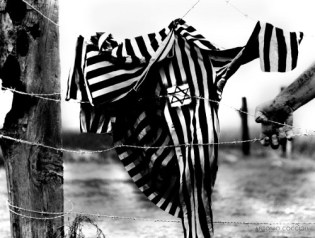
ShoahThis commentary on this week’s Torah portion also speaks to both Jewish and non-Jewish people in the present. Jewish survival is dependent upon how the Jewish people regard themselves and how the rest of the world regards them. Like Joseph and his brothers and their entire generation, as long as the rest of us understand the relationship between Israel and God and treat the Jewish people accordingly, they will continue to survive, because we can not bear to make “slaves” of such a people who have been lifted high by God. But when we denigrate the Jewish people, as we often have done across history, then we get Shoah, The Holocaust.

It takes great courage to come back and stand out after six million of your people have been starved, tortured, and exterminated. The natural tendency would be to hide, to go underground, to blend in, disappear, fade from history as a people, just in order to not be in a position where you, your children, or your grandchildren will ever again be taken from their homes and put in the camps. As Rabbi Pliskin’s commentary states, it’s not just how the rest of the world treats you, it’s how you consider yourself.

If the Jewish people don’t stand up for themselves as proudly Jewish, the rest of the world won’t respect them, and again, we get Shoah.

Am I contradicting myself? Earlier, I said that Jewish survival is dependent upon God’s great acts, and so this is true. But the Jewish people had to cry out to God, a leader had to be willing to rise up from the people to shepherd them, as Moses did. The Jewish people had to, and still have to willingly accept God, accept the fact that God chose them, that they are still chosen, and to “hear and obey” the Word of God that uniquely signifies their called out status.

When we look at Jewish history, we see a history where the Jewish people have defied the laws of nature and the laws of history! We have survived and impacted this world though we have been thrown out of our land not once, but twice! We have impacted the world perhaps more than any other people in history — the concepts of the value of human life, universal education, justice and equality, the importance of and goal of world peace (as opposed to glorifying war), the importance of a strong stable family as a basis for a moral foundation for society, individual and national responsibility for the world — though we were beaten, killed and exiled from one nation to the next. Though few in number and spread to the four corners of the earth, we survived as a people, never assimilating into anonymity. Even our land, the Land of Israel, defied the laws of nature, only fertile when the Jewish people inhabited it.

Coincidence? Good luck? A roll of the dice? Perhaps — except that each and every phenomenon was prophesied and predicted in the Torah hundreds and thousands of years before the events. Does it make you think that perhaps something is going on here? That perhaps there is a special relationship between the Almighty and the Jewish people?

The Almighty, the Jewish people and the Torah are intertwined. In the past 3,300 years there has been effort after effort — from within as well as from without — to redefine and redirect our people. Each and every one has failed. If you wonder why, then perhaps the time has come to read the Torah and find out. The Torah is not only our heritage, it is the game plan for the Jewish people and the world!

-Rabbi Packouz

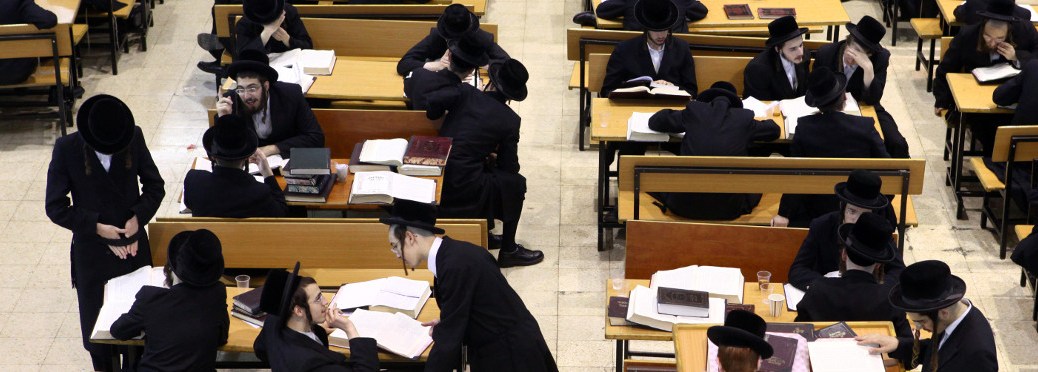
rabbi_child_and_sefer_torahPeriodically, my Pastor asks what I think the role of Jewish obedience to Torah is in today’s world (although I think Rabbi Packouz answered that question very well in the above-quoted statement), especially in light of Christ and the Church. Why would a believing Jew continue to observe the mitzvot when (from his point of view) they were clearly eliminated by Jesus and they, like the rest of us, now live by the grace of Christ?

Being “Messianic” doesn’t make a Jew not a Jew. All of the conditions for survival I outlined above still apply to them, just like they apply to any other Jewish person alive today. For a Jewish person to find, recognize, and acknowledge the Messiah is the answer to a prayer and the culmination of a dream.

He said to them, “But who do you say that I am?” Simon Peter answered, “You are the Moshiach, the Son of the living God.” And Jesus said to him, “Blessed are you, Simon Bar Yonah, because flesh and blood did not reveal this to you, but My Father who is in heaven.

Matthew 16:15-17 (NASB – adjusted)

I made a few minor changes to the translation above to make it clearer that Simon Bar Yonah was a Jew realizing that his Master, the Rabbi he has been following, is indeed the Moshiach, “the Son of the living God.” Peter didn’t stop being Jewish, immediately start munching on a ham sandwich, burn a Torah scroll, and join the local Baptist church because he became a Christian. He didn’t change into something else besides being Jewish, he received a revelation that at the core, all Jewish people want and need to receive. The revelation of the arrival and presence of Messiah, Son of David, King of Israel, who will save his people, not just from their sins and certainly not from the Torah, but from the centuries and centuries of persecution, pogroms, inquisitions, and genocidal efforts of a hateful and disbelieving world.

Peter recognized Jesus as who he was and is without a New Testament in hand and especially without the last two-thousand years of Christian theology, doctrine, dogma, and history, including the reformation, muddying up the waters to the degree that neither Jew nor Gentile can recognize Jesus as Moshiach any longer.

Peter recognized the Moshiach because he was there, he knew what to look for, not in spite of the Torah but because of it.

It has been prophesied in the Torah that Jews would be exiled from the land and that they would return to the land: “And it shall come to pass when these things shall come upon you, the blessing and the curse that I have placed before you, you will take it to heart amongst all of the nations where God has scattered you; you will return to the Lord your God and you will listen to His voice according to all that I am commanding you today, you and your children with all of your heart and with all of your soul. Then the Almighty will bring back your captivity and have mercy upon you; and He will return and gather you from among all of the nations where he has dispersed you. If your dispersed ones will be even at the ends of the heavens — from there God Almighty will gather you and from there He will take you. And God your Lord will bring you to the land that your fathers inherited and you shall inherit it and He will do good for you and make you more numerous than your forefathers” (Deuteronomy 30:1-5).

-Rabbi Packouz

For a Jew, particularly a Jew in Messiah, the Torah is inescapable. When Paul called the Torah a “tutor” or “child conductor” (Galatians 3:24), we can consider the Torah as a protector, a defender, a preserver of the Jewish people pointing toward the ultimate expression of the Torah. Yes, it “points to Christ” but once a Jewish person has recognized Moshiach and turned to him, it doesn’t mean the “tutor” is useless and tossed aside. It only means that the capstone has been added to the structure to make it solid and permanent. The structure still needs all the pieces. There are many other purposes the Torah fulfills for the Jewish person besides illuminating the image of Messiah. Without the Torah, the Jewish people lose everything it is to be Jewish, to be called out, to be unique among all of God’s Creations.

Rabbi Isaac LichtensteinThis is our mistake in the Church. We demand that when a Jewish person becomes a disciple of Moshiach, they consider Paul’s words as meaning that all of the purposes of Torah have been extinguished and that the Torah is not only useless, but actually a detriment to the believing Jew. Nothing could be further from the truth.

Jewish people such as Paul Philip Levertoff and Rabbi Isaac Lichtenstein did not stop being Jewish when they discovered the identity of the Messiah. Especially in Rabbi Lichtenstein’s case, the Torah became more important, more enlightening, not less. Performing each mitzvah was given a new dimension in Messiah.

This is something the rest of us don’t understand. This is something we were not only taught to disregard, but to actually disdain. We’ve been taught to shun and even fear the Law of Moses, but we fail to understand the joy and fulfillment that an observant life can be for a Jew. For a Jew in Messiah, the meaning of a Torah observant life is amplified. Torah and Messiah are complementary, not oxymoronic.

Messiah and Torah preserve and sustain the Jewish people, for both will be present in the age to come. If they didn’t, then how could the gospel of Messiah be good news for the Jews?

Good Shabbos.

Remembering Newtown: We Live to Love

9-11 Flag“When Jacob finished his instructions to his sons, he drew his feet into the bed and, breathing his last, he was gathered to his people.”

Genesis 49:33

“How utterly different was the cruel fate of those who perished in the Twin Towers, the Pentagon, and the hijacked planes on September 11. To its everlasting credit, The New York Times in its daily ‘Portraits of Grief’ has been compiling the fragments of eulogy for each individual whose life was so suddenly obliterated. Grief is compounded by the lack of preparation and by the absence of all remains. As I read these personal vignettes of largely young people bursting with zest, in pursuit of dreams and borne aloft by so many relationships, I must constantly remind myself that they are no longer. Nothing is left to mitigate the anguish of their loved ones but memories that need to last a lifetime.”

-Ismar Schorsch
“Portraits of Grief,” pg 180 (December 29, 2001)
Commentary on Torah Portion Vayechi
Canon Without Closure: Torah Commentaries

As I write this, it is the anniversary of the shootings at the Sandy Hook Elementary School in Newtown, Connecticut. As I write this, I recall reading earlier this morning that another school shooting has just taken place at a High School in Colorado, with the eighteen-year old shooter having killed himself and his fifteen-year old victim struggling for life in the hospital.

I have prayed for the victims in Newtown and I have grieved with their parents since I am both a parent and grandparent. The very idea of losing a child to a sudden and needless death is horrifying beyond imagination.

Schorsch’s commentary on the death of Jacob paints a portrait of a man who died with difficulty even as he lived. But he was also a man who had the time to prepare for death, to bless his children and grandchildren, and to be surrounded by a comforting family as he breathed his last and was “gathered to his people.”

In Judaism, there is a halakhic requirement to sit shiva or to mourn in solitude and withdrawal from the world for seven days following the death of a loved one. And on the anniversary of the loved one’s death, it is customary to observe yahrzeit by reciting the Kaddish, lighting a candle, and remembering the person who has died.

But these are not my loved ones nor am I Jewish, so what am I to do?

No man is an island, entire of itself; every man is a piece of the continent, a part of the main; if a clod be washed away by the sea, Europe is the less, as well as if a promontory were, as well as if a manor of thy friend’s or of thine own were; any man’s death diminishes me, because I am involved in mankind, and therefore never send to know for whom the bell tolls; it tolls for thee.

John Donne

Donne’s famous poem, which I learned forty years ago, reminds me that anyone’s death diminishes me because I am involved in humanity, because of my humanity and my mortality.

APTOPIX Connecticut School ShootingAccording to Schorsch’s commentary (pp 170-172), second century Jewish sage, Rabbi Meir’s midrash on the Creation account in Genesis was so controversial that it saw limited circulation during his lifetime. His interpretation of Genesis 1:31 where it is declared “And God saw all that he had made, and found it very good,” Rabbi Meir relates the Hebrew word “me’od” which is translated as “very” to “mot,” which is the Hebrew word for “death”.

In Christian doctrine, we believe that God introduced death into the world as a response to the fall of Adam and Eve. According to Rabbi Meir’s midrash…

…God did not inject death into the world later, as a punishment for human sin. Rather, death was part of life, for without its inescapable presence, humankind would never value or use life fully. The beauty of life flowed from its impermanence.

-Schorsch, pg 171

I’m sure this is little comfort to those who are mourning their children in this supposed season of joy. In abstract, we can philosophize that it is our mortality that defines our existence, and the shadow of death cast across our journey of life reminds us that every moment is precious.

But in reality, most people rarely consider their death until something shakes them out of apathy, such as a doctor’s dire report or the murder of a child.

There is a tremendous temptation to either sink into depressive despair or to cry out in anger and pursue the path of vengeance. We want and even need to do something, to respond in some way, either by withdrawal or violent projection, because of the senseless outrage of these deaths.

In the end, neither reaction does much good. The former honors no one and the latter is manipulated by the politicians and the media pundits to achieve their own agendas.

The only thing that makes sense to me, particularly in a universe where I acknowledge a loving, involved, and creative God, is to take the only option that remains…to love those who are left to me here and now, not just because I know they can be taken away at any moment, but because life has to be more than mere existence, pursuit of money, pleasure, and the consumable products in the latest ad campaign on television. If life isn’t the expression of love, especially to those who depend upon us for their every need (even as we all depend on God for our every need), then why were we given life in the first place?

As I write this, I mourn the loss of the young innocents, not just in Connecticut and Colorado, but everywhere, and for every person, because like God, I must be involved in humanity. It is said that when Jacob and the seventy went down into Egypt, God went with them. How He must have grieved knowing just how far down Israel’s children would descend in the following years and decades. It is said that when millions of Jews and other “undesirables” entered the Nazi camps, God entered with them and was imprisoned with them. How He must have grieved as He witnessed each individual death of the six million of His chosen little ones.

The only thing we have to keep us going in the face of death and disaster is our faith in God, that there is something more to life than what we can detect with our five senses, and that there is a greater meaning to it all. When a child dies, even great faith is shaken, for how could a loving God allow such a heinous act to occur?

But where we have faith, God has certainty of perception and knowledge. God knows. He knows the placement of each individual soul in this life and beyond. We live in a universe that is broken and under slow repair. In that universe, death occurs, injustice occurs, tragedy occurs. Tears and grief occur.

landonBut there is also hope.

I took a few days off of work last week to spend time with my grandson. We played with legos, I made him pancakes, we had “sword fights” in my snowy backyard, we went to the playground and slid down slides covered with melting ice. I dropped him off at pre-school and had the wonderful privilege of picking him up again as he ran toward me grinning and gleefully yelling, “Grandpa!”

I can’t say anything that will comfort the grieving and the dying except that if you still have someone precious in your life who needs you and who loves you, then they are the difference, the hope, and the faith that makes life more than just living day-to-day. This is what God does to open our eyes. This is what God does to open our hearts, to turn stone into beating flesh. This is why we are alive. We live to love.

Vayechi: The King’s Scepter

LionLast week I shared with you four Torah prophecies charting Jewish history: 1) that the Jewish people will be eternal though 2) we will be few in number and 3) scattered to the four corners of the earth and that 4) the host nations were ultimately inhospitable to us. This week, 2 more prophecies!

One would think, if the Jewish people were so reviled to be persecuted and killed, that we would have little impact upon those nations persecuting and killing us. Yet, the Torah prophesies that we will be…

-Rabbi Kalman Packouz
“Shabbat Shalom Weekly”
Commentary on Torah Portion Vayechi
Aish.com

You may be wondering what this has to do with this week’s Torah portion, with the blessings Jacob confers on his children and his grandchildren and his subsequent death, or with the burial of Jacob in Canaan, or with the death of Joseph and the end of the book of Genesis. Consider the following:

The scepter shall not depart from Judah, nor the ruler’s staff from between his feet; so that tribute shall come to him and the homage of peoples be his.

He tethers his ass to a vine, his ass’s foal to a choice vine; he washes his garment in wine, his robe in blood of grapes. His eyes are darker than wine; his teeth are whiter than milk.

Genesis 49:10-12 (JPS Tanakh)

These are the blessings Jacob set upon Judah before Jacob’s death. From a Christian standpoint, we see an obvious image of the Messiah, of Jesus in this blessing.

But now we have to find the connection I’m making between Rabbi Packouz’s commentary and the Torah reading:

“I will make you into a great nation. I will bless you and make your name great. You shall become a blessing. And I will bless those who bless you, and curse those who curse you. Through you all the communities of the earth shall be blessed” (Genesis 12:2-3). The prophet Isaiah (42:6) states, “I, the Lord, have called you in righteousness, and will hold your hand and keep you. And I will establish you as a covenant of the people, for a light unto the nations.”

Which, of course, reminds Christians of this:

Then Jesus again spoke to them, saying, “I am the Light of the world; he who follows Me will not walk in the darkness, but will have the Light of life.”

John 8:12 (NASB)

Immediately after the Master said these words, the Pharisees he was speaking to objected and accused him of false testimony. These men could not have failed to recall the prophecy of Isaiah that it was Israel who was the light to the nations. How could this one man claim to be such a thing, to represent all of Israel as it were, unless he were their King?

Interestingly enough, Rabbi Packouz referenced Genesis 12:2-3 which ends with, “through you all the communities of the earth shall be blessed.” All the nations of the earth are blessed through Abraham’s seed, through Messiah (Galatians 3:16), through the light to the nations, the firstborn son of Israel.

And so Jacob passed on the blessings to his sons, including the Messianic blessing onto Judah, the scepter shall not depart from Judah, nor the ruler’s staff from between his feet.” Judah’s descendant is Messiah, the ruler, the King, the light, and as he was born into humility as Yeshua ben Yosef, he will return in power and might as Yeshua ben David, and ascend the throne of David in Jerusalem, and rule with justice and with peace over his people Israel, and over the entire population of the world.

In next week’s “Shabbat Shalom Weekly,” Rabbi Packouz will finish his series with “the final prophecy — the return from Exile — and what does it all mean.”

As you might have guessed, today’s Torah commentary is an extension of the one I wrote last week, the “cautionary tale” to the Christian Church to not take the ancient Messianic Jewish prophecies too lightly, and especially not to refactor them in such a way that favors the Gentile Christians over God’s chosen people and nation.

Many peoples and strong nations shall come to seek the Lord of hosts in Jerusalem and to entreat the favor of the Lord. Thus says the Lord of hosts: In those days ten men from the nations of every tongue shall take hold of the robe of a Jew, saying, ‘Let us go with you, for we have heard that God is with you.’”

Zechariah 8:22-23 (ESV)

up_to_jerusalemFirst Fruits of Zion (FFOZ) author and teacher Toby Janicki, in the episode Fringes of the Garment of the television series The Promise of What is to Come said that the Jewish man in question is the Messiah, as he interprets this verse.

Toby further said that those ten men from the nations were not just a random group of non-believing Gentiles, but are Gentile believers from “the Church” who, in my estimation, must recognize the Savior as the Jewish Messiah King, fully the King of Israel and the Jewish people, and that grasping his tzitzit, as it were, is a recognition of that fact, a representation of the profound paradigm shift required by Christians in order to even recognize Yeshua ben David as our “Jesus,” and the desperate attempt to heal the tremendous wound that separates Christianity from the Jewish Messiah.

If Toby’s interpretation of Zechariah is correct, and my interpretation of Toby is correct, then many in the Church today are laboring under a needless burden placed upon our shoulders by a long history of misunderstanding, anti-Semitism, and supersessionism. Much was lost after the apostolic era ended and the Gentile majority of the Messianic followers took over and reformed the “Church of Christ.” We have a lot of work to do to repair the damage and prepare the road for the return of the King.

But why wait for Messiah to return to take hold of his tzitzit? Let’s do it now by humbling ourselves before the King and studying his ways as expressed through the Jewish prophets and the Jewish apostles.

For from Zion shall come forth the Torah…

Isaiah 2:3

Salvation is from the Jews.

John 4:22

For Moses from ancient generations has in every city those who preach him, since he is read in the synagogues every Sabbath.

Acts 15:21

Come, let us go up to the mountain of Hashem, and to the house of the God of Jacob.

Peace and Good Shabbos.

Snow and Shabbos

shoveling-snowMaimonidies explains our midrash by reference to the related instance of rabbinic religious psychology: “God’s presence is never felt in a state of sadness or lethargy or levity or conversation or distractedness, but only amid the joy of performing a mitzvah.”

-Ismar Schorsch
quoting Bavli Shabbat 30b.
“The Seedbed of Prophecy,” pg 165 (December 21, 1996)
Commentary on Torah Portion Vayigash
Canon Without Closure: Torah Commentaries

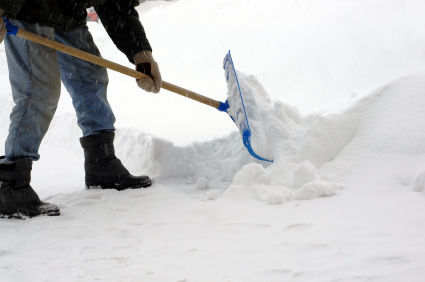
I read this on Shabbat after shoveling snow off of my driveway and sidewalk. Actually, I also shoveled the snow off of the sidewalks of my two next door neighbors. It was a mitzvah of a sort. I try to do a little more than required because I know it’s the right thing to do. I think it’s something God built into me for some reason.

But I was performing one mitzvah (I don’t think the Bible says to specifically shovel your neighbor’s sidewalk, but it does say to love your neighbor, so I figure helping them with shoveling snow qualifies as “love”) but I was breaking another, well, sort of. It depends on whether or not you believe that non-Jewish believers are obligated to observe Shabbos in the manner of the Jews. I know that the Didache, an early document dated to the second or even first centuries and purportedly used to train new Gentile disciples of the Jewish Messiah entering the Jewish religious stream of “the Way,” states that even a Gentile may keep the entire “yoke of the Lord” (i.e. Torah commandments) if they (we) are able, but if not, to keep what we can, so keeping the Sabbath in some manner is on my radar screen as an option.

On the other hand, the two Jewish members of my household (and the other two Jewish family members who have their own households) don’t observe Shabbos, though I believe they are obligated to do so.

But I’m not the religious police. Each person must negotiate their own relationship with God. Past efforts of mine suggesting to my family that they take a more observant path have resulted in a rebuke and a reminder that they themselves must make those sorts of decisions.

And so they must. My remaining option for the sake of peace in the family is to pray and to rely on God to lead His own back to Him, even as Messiah will lead all the Jewish exiles back to redemption in the Land of Israel.

In reading the quote from Schorsch (and Maimonidies), I tried to recall if I felt joy when shoveling snow and if I felt the Presence of God. I have to admit that I didn’t experience either state. There was a sense of satisfaction at the realization that I was exceeding my property lines and doing what wasn’t expected of me, but I can’t say I had any sort of religious revelation. I don’t think living a life before God or doing the right thing is magic. I think it’s just what we’re supposed to do.

I also believe that no one “does it” perfectly, and I’m a living example of that.

If anything, I have a greater sense of the presence of God when I reading the Bible, when I’m studying the Torah Portion, when I’m contemplating a Psalm, even when I’m writing a blog post about God and the mitzvot.

I know people (online) who do a much better job at observing Shabbos. Some of them live in places like Colorado and Wisconsin, places that get a lot of snow. What do they do on the Shabbat when it’s snowing, just let it sit on their driveways and sidewalks?

I live in a suburban neighborhood that has a homeowner’s association (whether I like it or not) and the association has a covenant which states that each homeowner is responsible for keeping the sidewalks in front of their homes free (reasonably) of snow. We are also legally responsible if we fail to do so and a pedestrian falls and is injured as a result. So I have a duty to protect my neighbors by keeping my sidewalks clean, even on the Shabbat.

I know some people who would be rather rigid and dictatorial about such a suggestion, saying God’s commandment to observe Shabbat trumps any law or other responsibility assigned by human beings, but let’s look at that. I have a duty to love my neighbors which could be interpreted as protecting them from harm. I know there’s a Torah commandment that specifies if you see someone drowning in a body of water and you do nothing to help save their life, you have sinned against that person and against God (Rabbinic interpretation does say however, that if you are a poor swimmer and would be likely to drown too, you are absolved of this responsibility).

So what’s the higher duty, to perform an act on the Shabbat that at least in potential, could prevent a neighbor from being harmed, or to observe the Shabbat and ignore my neighbors by playing the “I’m keeping the Shabbat, look at how holy I am” card?

It’s an interesting question.

Of course, returning to my lack of actual obligation to observe a strict Shabbat, at least in the present age, I am not in quite the same bind as a Jewish person. I also believe the commandment to love one’s neighbor is universal, particularly since we see it occurring not only in Leviticus 19:18, but issuing from the mouth of Jesus (see Matthew 22:39, Mark 12:31).

I know there is a part of Shabbat observance that is also universal, since such observance acknowledges God’s Creative Sovereignty, but I will have to be satisfied with acknowledging God’s creation of human beings by doing something, even on Shabbat, that is of service to some of those “creations.”

I try to spend most of my Saturdays in prayer, in study, in recording my contemplations on God, but it’s not perfect. In fact, it’s very far from perfect. But what I desire and am unable to accomplish today, may God grant me a life in the world to come where I may observe His peace and His perfection.

And as I write this, it’s still snowing outside.