
 Jewish repentance is not the same as repentance for Gentiles. R. Kendall Soulen highlights a pivotal distinction intrinsic to the Bible but almost entirely ignored by the church:
Christians should recover the biblical habit of seeing the world as peopled, not by Christians and Jews, but by Jews and gentiles, by Israel and the nations…. The Bible, including the Apostolic Witness, presents the distinction as an enduring mark of the one human family, still visible in the church and even in the consummated reign of God.
Human sin is never merely the sin of the creature against the Creator-Consummator. Human sin is also always the sin of Jew and Gentile, of Israel and the nations.
This insight has profound implications for our understanding of Jewish repentance. If departure from Torah living is the measure of Jewish sin, should not a return to the paths of Torah be a sign of Jewish repentance?
-Stuart Dauermann
“Chapter 7: Messianic Jewish Outreach” (pg 95)
quoting R. Kendall Soulen, “The Grammar of the Christian Story” and “The God of Israel and Christian Theology”
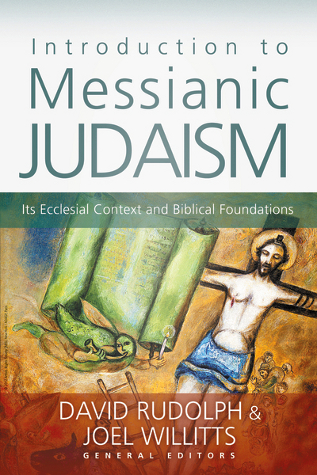
Introduction to Messianic Judaism: Its Ecclesial Context and Biblical Foundations
I chose the paragraph’s quoted above from Dr. Dauermann’s chapter in Rudolph’s and Willitts’ book largely to highlight the struggle of understanding between the Messianic Jewish and Gentile Christian perspectives. Certainly Dauermann’s and Soulen’s descriptions of sin and repentance, and especially differentiating them between Jews and Gentiles, flies in the face of how Protestant Christianity defines those concepts. In normative Protestantism, sin is sin, regardless of the individual involved being Jew or Gentile. It’s personal, never national. But therein lies the rub.
I might as well tackle this rather difficult topic since lately, I’ve been pursuing unpopular causes. No, that’s too cynical, even for me. It’s just been a rough week, and I know how much people struggle with the interactions I’m trying to explore.
Whenever I try to describe (let alone understand) the relationship between Messianic Judaism and Christianity, I typically am criticized for my “lack of understanding” of Messianic Judaism. I’m generally told that my error is in defining Messianic Judaism as a “Judaism.” Although my critics aren’t Jewish, they do accurately describe the problem between Messianic Jews and the other Judaisms, both historically and in the modern sense.
Messianic Judaism and its antecedent movement, Hebrew Christianity, first emerged as attempts to reconfigure the relationship between the Christian Church and the Jewish people. The Hebrew Christians of the nineteenth and twentieth centuries were for the most part evangelical Protestants who saw the Church as an invisible and universal body of “true believers” that was expressed concretely but imperfectly in the local Christian congregation – a community constituted by the regenerated individuals who voluntarily joined it.
-Mark Kinzer
“Chapter 11: Messianic Jews and the Jewish World” (pg 126)
Introduction to Messianic Judaism
Although I doubt Dr. Kinzer intended this paragraph to be received in such a manner, when I read it, I could only be reminded of a long-standing argument between Messianic Jewish and Hebrew Roots perspectives. In the situation described by Dr. Kinzer, Jewish people accepted Jesus as Lord and Savior, set aside all “Jewish” types of religious observance, self identified as Christians, and joined the larger body of the church, being absorbed into their ranks. The Hebrew Christians, except for a string of DNA and the self-awareness of being “Jewish,” were indistinguishable from their Gentile Christian counterparts. People “knew” they were “Jewish” but that knowledge was beside the point. They were first and foremost Christians and anything that distinguished their national and covenant identity as Jews was swept away.
By contrast, to accept (in general since there are a number of variations on this theme) the Hebrew Roots perspective of Gentile “obligation” to Torah observance and full covenant identity as “Israel” as wholly shared with Jewish believers effectively does the same thing to Messianic Jews. Jews and Gentiles in the Hebrew Roots movement look, act, and identify identically. Except for a string of DNA and the cognitive awareness that certain members are Jewish, both Gentile and Jewish participants are indistinguishable from one another. While Jewish covenant observances and behaviors are not “swept away” as such since the Jewish members remain Torah observant, the distinction becomes irrelevant, since everyone looks and acts “Jewish.”
 Hebrew Christians within evangelical Protestantism become invisible and absorbed by the church as a whole. In Hebrew Roots, it is the same for Messianic Jews.
But this is so hard for most Christian Hebrew Roots practitioners to understand.
And why is it so important for Messianic Jews to maintain their distinctiveness from Gentile Christian populations?
The term “postmissionary” was chosen to make an ecclesiological rather than a missionological point – namely, that Messianic Jews are not called to be representatives of the Christian community operating within another religious community (i.e., the Jewish people) but to be fully part of the Jewish world in both religious and national terms. In fact, they are to represent the Jewish community in relation to the Church, rather than the reverse.
-Kinzer, pg 132
Dr. Kinzer is describing material from his book Postmissionary Messianic Judaism: Redefining Christian Engagement with the Jewish People, a work that is at once revolutionary, controversial, wildly applauded by many but not all Messianic Jews, and frequently criticized by various branches of Christianity.
But it, and Dr. Kinzer, describe the need for Messianic Jews to be disciples of the Messiah first and foremost as Jews. The Hebrew Christianity and Hebrew Roots solutions to Jewish Messianic discipleship both require the surrender of that unique covenant identity and role from the Jewish people, in both cases, isolating Messianic Jews from larger Judaism and larger Jewish practices (while Hebrew Roots Gentiles generally support Torah observance in one sense or another, they usually disdain and reject much or all of the historic Jewish traditions which have identified Jewish communities for the past twenty centuries). The Hebrew Roots solution, like Hebrew Christianity, “absorbs” the Jewish population of believers into the wider “ekklesia,” diluting their identity and eventually, causing them to “disappear” within the masses.
But as has been pointed out to me time and again, even the largest and most robust of Messianic Jewish synagogues still have a majority of Gentiles as its members. However, as I have learned time and again, those are Gentiles who have chosen to come alongside Messianic Judaism in order to dialog with and to support the Jewish disciples of the Jewish Messiah King in Torah observance, identification with national Israel, and forming the ekklesia made up of (Jewish) Israel and (the believers of) the nations that will once day herald the Messiah’s return.
Together the Messianic Jewish community and the Christian Church constitute the ekklesia, the one Body of Messiah, a community of Jews and Gentiles who in their ongoing distinction and mutual blessing anticipate the shalom of the world to come.
“Defining Messianic Judaism”
UMJC.org
In quoting the Hashivenu core values, Dr. Kinzer states:
The expanded core value continues by expressing appreciation for the religious life of the wider Jewish world: “When we say that Messianic Judaism is ‘a Judaism,’ we are also acknowledging the existence of other ‘Judaisms.’ We do not deny their existence, their legitimacy, or their value.”
Never before had a group of Messianic Jewish leaders sought to differentiate their movement so definitively from evangelicalism and to identify it so radically as a branch of Judaism.
-Kinzer, pg 131
 I suppose you have to be Jewish to really understand the perspective Dr. Kinzer is describing, but being married to a (non-believing) Jewish spouse, I think I have some idea why it’s intensely important for her to be, not just genetically or generically Jewish, but culturally, ethnically, religiously, traditionally, and right-down-to-the-bone Jewish.
Obviously, her requirement has not been the “swan song” for our marriage because I’m a Gentile Christian since we’re still together after over thirty years, but it comes with a few additional challenges. In terms of the wider Messianic Jewish-Christian interface, those challenges are magnified.
Messianic Jews regard Gentile Christians as their brothers and sisters in the Lord and at the same time experience significant tension with the Gentile Christian world.
-Daniel Juster
“Chapter 12: Messianic Jews and the Gentile World” (pg 136)
That’s pretty much it in a nutshell. “You’re my brother and I love you, but you also drive me crazy.” That’s what family members do to each other, sometimes.
Oh, it gets even more “interesting:”
According to this statement, the Messianic Jewish community is united with the “Christian Church” in forming the ekklesia, the Body of Messiah. The term “Christian Church” is used here in a more delimited way to describe the “Gentile wing of the Church.” This is in keeping with the connotation of the word “Christian” in the wider Jewish world. For Jews, Christian = not Jewish, i.e., Gentile. This is why Messianic Jews do not self-identify as “Christians.” It would imply to fellow Jews that they are no longer Jews.
-Juster, pp 136-7
I can imagine that many Christians will take Juster’s words as an insult, but again, I think you have to be Jewish to understand the dissonance being experienced. For the vast majority of the last two-thousand years, Christianity has demanded that Jews surrender every last bit of their Jewish identity and practice in order to become disciples of the Jewish Messiah King. Go figure. For the vast majority of the last two-thousand years, the larger, normative Judaisms have considered any Jew who believes that Jesus is the Messiah is no longer Jewish but instead, a “Christian.”
But what if, like James, and Peter, and Paul, and all of the other first-century CE Jewish apostles and disciples (thousands upon thousands of them) you, as a Jew, wanted to be a disciple of the Moshiach and continue a fully lived and observant Jewish experience? Where’s the problem in that?
Old habits die hard. The church will need to learn to accept Jews who identify as “Messianic” as Jews, not just in terms of DNA and a cognitive awareness that the Jew in question had Jewish parents and other family members, but that the Messianic Jew is really, really Jewish in every observable, identifiable, and covenantal sense.
But what about those Gentiles who self-identify as “Messianic?” Not all of them are, as I previously described, Hebrew Roots Christians who aspire to the same identity as the Jews in the Messianic movement, thus claiming what is not their’s. I mentioned in my review of the First Fruits of Zion television series, that narrator and teacher Toby Janicki introduces himself as a Gentile who practices Messianic Judaism. Do Gentiles who come alongside Jews in Messianic Jewish synagogues practice Messianic Judaism (as distinctly different from Christianity)?
 I’ve laid out a case, based on chapters in the Rudolph-Willitts book, that describes why Messianic Jews need to identify separately from Christianity, even as Messianic Jews and Christians must be unified within the body of Messiah to form the Ekklesia, but where to “Messianic Gentiles” fit in, if at all?
I could make a case for Christian/Jewish intermarried couples to identify as “Messianic” and whose religious practice is within that context for what I hope are obvious reasons. What about the large number of non-Jews attracted to the Messianic movement who aren’t intermarried or otherwise connected to the Jewish community? I can’t really describe the attraction except I know it’s there. I have the same attraction, which is evidenced by what I write on this blog. Even if I weren’t intermarried at this point, the drive to see God, the Messiah, and the Bible through that particular lens would not go away. For some reason, it’s hardwired to my soul.
But that drive can’t be used to justify the diluting or elimination of Jewish identity and covenant distinctiveness from within the larger Ekklesia of Messiah. Juster, in describing the initiative Toward Jerusalem Council II, speaks of coming together to “heal historic wounds and repudiate ancient decisions by the Church against Messianic Jews.” I believe this should be applied to the overarching relationship of Messianic Jews and believing Gentiles, both within the Messianic Jewish worship framework and between Messianic Jews and all believing Gentile worship groups including the Church and other variant branches of Christianity (even if they choose not to self-identify as “Christianity”).
Juster’s conclusion of Chapter 12 is the hopeful note within the continual struggle between believing Jewish and Gentile communities.
This notwithstanding, the Messianic Jewish community views itself as united with the Gentile wing of the Church in a partnership that is intended by God to reflect interdependence and mutual blessing (emph. mine). Such interdependence and mutual blessing can come about only through close relationship. Therefore, Messianic Jews invest in Christian groups and organizations that welcome a Messianic Jewish presence, even as Paul wrote, “Welcome one another, therefore, just as Messiah has welcomed you, for the glory of God” (Rom 15:7 JNT).
Christian theology emphasizes that God is unfolding his great plan for the redemption and transformation of the cosmos through the work of the Church. As Messianic Jews, we have added a significant corollary to the traditional Christian narrative: the work of the Gentile Christian world cannot be accomplished without being in right relationship with Israel and the Messianic Jewish community in particular.
-ibid, pp 142-3
Most Gentile believers aren’t going to accept this message, at least at first. Some never will at all, for a variety of reasons, some of which I’ve already mentioned. But Christianity in all its forms has traditionally rejected the Jewish people from the worshipers of Messiah except on the condition that they give up being uniquely Jewish in any demonstrable and experiential sense. That is no longer a sustainable position for the church or any believing Gentile organization or individual.
When King Messiah returns in power and glory, the Church will be in no position to demand that he surrender his Jewish identity as a condition of ascending the Throne of Israel. That being the case, how can we dare to make such a demand of his Jewish subjects?
157 days.








 Morning Meditations