All posts by James Pyles

James Pyles is a published Science Fiction, Fantasy, and Horror author as well as the Technical Writer for a large, diversified business in the Northwest. He currently has over 30 short stories published in various anthologies and periodicals and has just sold his first novella. He won the 2021 Helicon Short Story Award for his science fiction tale "The Three Billion Year Love" which appears in the Tuscany Bay Press Planetary Anthology "Mars."

Overcoming with Good

negativeThe Almighty’s perspective is the ultimate perspective. It is the basis of reality. The real question we need to ask ourselves is, “What does the Almighty consider my true value to be?”

From the Almighty’s viewpoint, the answer is, “You are My child and you are precious. You are created in My image. In essence you are a Divine Soul. I have created the world for you. Your entire being and your value is a gift from Me. When you see yourself from My perspective, you know that you have infinite value. Your intrinsic worth is greater than anything that can be measured materially.”

Rabbi Zelig Pliskin
Daily Lift #984
“Almighty’s Perspective on Your True Value”
Aish.com

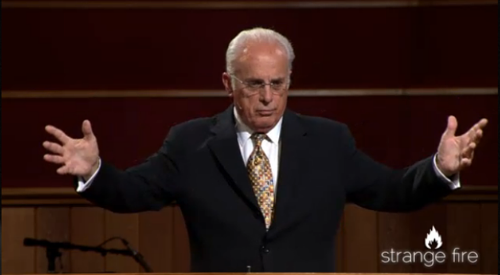
Just to let you know, this has nothing to do with my recent commentary on John MacArthur and his Strange Fire conference.

However, I recently have become aware of a resurgence of poor attitudes among believers in the blogosphere and the wider realm of the Internet. I guess it’s easier for these sentiments to be expressed in a semi-anonymous environment where accountability doesn’t appear to be an issue.

I’m not here to add to that negativity. Believe me, resisting this temptation is difficult, but in the end, if I didn’t, I would be no better than those I find who have betrayed friendship and trust.

There is always injustice in the world. Just as the Master said to his disciples that “you always have the poor with you,” it’s sad to say that we always have the unjust with us as well. Jesus went on to say “and whenever you wish you can do good to them,” reminding his listeners (and us) that poverty is an opportunity for us to help others and to do the right thing in his name. What can we say of the unjust? What opportunity do they present?

I could say they offer us the opportunity to be just and humane as they are unjust and inhumane, but the mistake here would be in attempting to confront others who, in their own “wisdom” and self-service, see themselves as upholding the cause of right.

No, confrontation and the continuation of angry words profits no one and does not serve man or God.

But there is another opportunity here. The opportunity is to uplift and uphold those who have been trampled on under the muddy and self-righteous boot. The opportunity is to offer healing words, an olive branch of peace, friendship, and hope.

unpopularRabbi Pliskin wrote the words I quoted above probably with the idea that he was addressing a primarily Jewish audience, but his words are true for everyone. We were all made in the image of God. To denigrate any human being is to lower that Godly image and even to drag it into the gutter. When people do this in believing they are serving God, it is a sad and miserable thing. It’s especially poignant that the instigators are woefully unaware of what they are doing and who they are hurting.

“Then He will also say to those on His left, ‘Depart from Me, accursed ones, into the eternal fire which has been prepared for the devil and his angels; for I was hungry, and you gave Me nothing to eat; I was thirsty, and you gave Me nothing to drink; I was a stranger, and you did not invite Me in; naked, and you did not clothe Me; sick, and in prison, and you did not visit Me.’ Then they themselves also will answer, ‘Lord, when did we see You hungry, or thirsty, or a stranger, or naked, or sick, or in prison, and did not take care of You?’ Then He will answer them, ‘Truly I say to you, to the extent that you did not do it to one of the least of these, you did not do it to Me.’ These will go away into eternal punishment, but the righteous into eternal life.”

Matthew 25:41-46 (NASB)

…it would be better for him to have a heavy millstone hung around his neck, and to be drowned in the depth of the sea.

Matthew 18:6 (NASB)

I know that some in the Christian world feel they just have to “call out” people and behaviors, even to the point of betraying a trust to do so, but if you feel there is a conflict or you feel you have been hurt, there is a better way.

“But if your enemy is hungry, feed him, and if he is thirsty, give him a drink; for in so doing you will heap burning coals on his head.” Do not be overcome by evil, but overcome evil with good.

Romans 12:20-21 (NASB)

I encourage you all and especially my brothers and sisters in the faith, if you feel anger within you for another, if they are within the faith or not, consider the words of Paul. And please, please, consider the consequences for failure as spoken by our Master.

So you shall not wrong one another, but you shall fear your God; for I am the Lord your God.

Leviticus 25:17 (NASB)

For those among the believing community who purport to observe the Torah, this verse is the basis for one of the 613 commandments to not wrong someone in speech, which I would extend to wronging someone in the blogosphere or other text-based environment.

Standing before GodA large number of the mitzvot that are specific to “love and brotherhood” are found in Leviticus 19, such as “not to carry tales” (Lev. 19:16), “not to cherish hatred in one’s heart” (Lev. 19:17), “not to take revenge” (Lev. 19:18), “not to put anyone to shame” (Lev. 19:17), and “not to curse any other person (implying Jewish person)” (Lev. 19:14).

The core of these commandments is that all human beings are created in the image of God. To deliberately attempt to damage or cause harm to another person, regardless of the provocation, is to also deliberately attempt to damage or cause harm to God’s image.

Saying that you love God while trying to hurt another person is kind of crazy-making.

And He said to him, “‘You shall love the Lord your God with all your heart, and with all your soul, and with all your mind.’ This is the great and foremost commandment. The second is like it, ‘You shall love your neighbor as yourself.’ On these two commandments depend the whole Law and the Prophets.”

Matthew 22:37-40 (NASB)

Love of God and love of your fellow human being, regardless of who they are, even if they are not like you, even if they have different beliefs, even if they have a different outlook, are two acts that are inseparable. A man who says he loves God but hates or denigrates another person, plunging their name into the mud publicly, is a liar.

The image posted at the top of this blog post was the inspiration for today’s “extra meditation.”

Any negativity that comes to you today should be returned to the sender.

That is my only response to the negativity I’ve been addressing. There is no one to fight. There is no one to hate. Anger solves nothing and only robs the person giving into anger of his peace. I choose peace.

Today, any negativity I discover in the blogosphere or any other environment I encounter will be promptly returned to the sender. My peace will be preserved. This is also my gift to any friends who have been victims of negativity, hostility, or any other ungodly attitude.

open-your-handAnd in the end, the real victims of negativity are those who nurture it in their own hearts and attempt to send it out to others.

It is said that Shabbos is a small foretaste of the peace of the Messianic Era. The Queen arrives within just a few short hours. In the tiny march of time left until we light the candles, I implore anyone reading these words to set your house in order, and by the time the sun dips below the western horizon, please be ready to invite peace into your home, and into your heart. But of course, you will need to repent and ask God for forgiveness. And if you’ve hurt another human being, before God will forgive, you must repent and ask forgiveness from those you have hurt.

He who conceals a transgression seeks love,
But he who repeats a matter separates intimate friends.

Proverbs 17:9 (NASB)

Good Shabbos.

Chayei Sarah: The Days of the Years of Life

abrahamic-covenantAnd these are the days of the years of the life of Avraham which he lived; a hundred years and seventy years and five years. And Avraham expired and he died in a good age, mature and satiated and was gathered to his people.

Genesis 25:7-8

Reb Avraham, the son of the Vilna Gaon, testifies about his father:

“For over fifty years he never slept more than half an hour at a time…Even when his health began to fail, he did not set aside his holy learning. Immediately, he would rise like a lion, in fear and dread of his Creator, wash his hands, and recite his morning blessings with a joy and awe which is beyond description. Afterwards, he would stand on his feet from before midnight until the first light of dawn learning Gemora and Poskim in a beautiful and awesome voice…Whoever heard it was moved with deep feelings of holiness.”

Arriving in Jerusalem, one summer, I immediately made contact with my good friend and study partner, Reb Reuven, and we agreed to get busy the next morning studying an hour or more before Davening. The next morning I made it on time but I was suffering from jet lag, sleeplessness, and exhaustion. I commented to my friend that I don’t know how the Vilna Gaon did it. I can’t imagine what it means to only sleep at half hour intervals four times per day for the course of a lifetime. He told me, “It’s not true!”

-Rabbi Label Lam
“Today!”
Commentary for Torah Portion Chayei Sarah
Torah.org

I periodically suffer from insomnia. Some nights are better than others. In extreme cases, I walk around like a zombie the next day, barely able to think. All the coffee in the world doesn’t turn me back into a human being. Yesterday (as I write this) was such a day. I finally collapsed into bed at 7:30 p.m. and fitfully drifted off. Only to wake up on several occasions during the night. Fortunately, on each occasion, I was able to go back to sleep. I chose not to go to the gym this morning in order to spend an extra hour in bed, finally getting up at a few minutes after five.

I feel much better today. I have my brain back.

Rabbi Lam’s commentary helps me realize though that it’s not just the number of hours you are awake or asleep, but how you use them. I was disappointed that, even in my dreams last night, I was focused on the mundane and ordinary rather than anything more lofty. The previous day, I could hardly concentrate on anything except what I absolutely had to get done, which tends to be mundane and ordinary.

Which was too bad, because I received some rather inspiring reading material that I wanted to dig into, but fatigue argued with my desire and fatigue won.

Vilna-Gaon-207x300I don’t know how the Vilna Gaon did it either. It seems like a physical impossibility. I’ve learned to take such tales of the great sages with a grain of salt, so to speak, which probably wouldn’t endear me to many in Orthodox Judaism. On the other hand, these tales often act as an inspiration for a more important principle that is to be grasped and applied to our day-to-day experiences.

Rabbi Lam comments:

How are living “the days of years of the life” different than living just the “years of the life”? What is the great advantage of living in units of days? It’s a nice aphorism, “One day a time!” but how does that translate into daily life? What does it mean to live each day as if it was the only day?

Which reminds me of this.

And He went a little beyond them, and fell on His face and prayed, saying, “My Father, if it is possible, let this cup pass from Me; yet not as I will, but as You will.” And He came to the disciples and found them sleeping, and said to Peter, “So, you men could not keep watch with Me for one hour? Keep watching and praying that you may not enter into temptation; the spirit is willing, but the flesh is weak.”

Matthew 26:39-41 (NASB)

This was perhaps the most important night in the Master’s short, human life, and his closest disciples and companions couldn’t keep their eyes open for even one small hour.

I know the feeling, although last night was hardly the most important night for anything in particular.

Or was it?

He told me, “It’s not true!” I insisted I had read an authenticated biography of the Gaon and that it was certainly true that he only slept two hours in total each day. He told me again that it was not true and so I argued my case again only to be countered with the “not true” claim. Eventually Reuven explained and I realized how right he was. He told me, “It’s not true that the Vilna Gaon only slept two hours each day! He learned Torah twenty-two hours each day!” I understood that he was not into sleep deprivation as we imagine but rather the sublime joy of learning Torah.

It’s not true that the Vilna Gaon slept only a total of two hours a night. It is true that he studied Torah twenty-two hours a day.

Well, maybe not. He had to eat sometime, and I don’t doubt that various biological, family, social, and other demands may have consumed some portion of those twenty-two hours.

intimate-prayerBut this is still an important lesson to be learned. It’s not the amount of time you have that’s so important but what you do with it. What are your priorities? For that matter, what are my priorities? It is true that the spirit is willing but the flesh is weak, but what about when you are well rested and the flesh is strong (or stronger)? Do you spend your time in Torah study or in watching TV? Do you spend your time in prayer or in surfing the web? Do you spend your time in service to others or by serving yourself?

I’m not saying that you shouldn’t enjoy life and indulge yourself as you are able to (within the will of God), but I am saying that how you spend your time, day by day, hour by hour, defines your priorities. If you pray to God to be of greater service to Him but spend most of your time being of service only to yourself, you betray what and who is really important to you.

“Beware of the false prophets, who come to you in sheep’s clothing, but inwardly are ravenous wolves. You will know them by their fruits. Grapes are not gathered from thorn bushes nor figs from thistles, are they? So every good tree bears good fruit, but the bad tree bears bad fruit. A good tree cannot produce bad fruit, nor can a bad tree produce good fruit. Every tree that does not bear good fruit is cut down and thrown into the fire. So then, you will know them by their fruits.

Matthew 7:15-20 (NASB)

It’s nice to have space and a little slack time to relax and appreciate life instead of being on the go, go, go, but space is there so you (and I) can grow into it. It’s like when I was a kid and my parents bought me shoes half to a full size bigger than my feet because they knew I’d rapidly grow into that space.

That is why we have the mitzvot, prayer, Bible study, volunteering for charitable services, visiting those who are sick. It’s what we do to fill the space and time God gives us in our lives.

Rabbi Lam asks, How are living “the days of years of the life” different than living just the “years of the life”? Each day of our life is a lifetime within itself.

Today I shall learn to better spend my time in the service of God, with Bible study, in prayer, in meditation on His Word, in seeking an encounter with the Divine.

Good Shabbos.

Burning on the Strange Pyre

strange-pyreWhen I first read MacArthur, I was enamored. I was young, and my no means spiritually mature; to me, MacArthur appeared to give real direction. His warnings fell on ready ears. Discernment—I was young, and naïve, but I was smart enough to know that I needed discernment. And MacArthur’s work was designed to capitalize on this knowledge. He and other teachers like him have helped to raise a generation of conservative Christians who, practicing what they believe to be “discernment,” have insulated themselves from being influenced by—well, you name it. Anti-megachurch, anti-charismatic, anti-seeker-friendly, anti-topical-sermons, anti-emergent-church, anti-Arminian, anti-dynamic-translations, anti-Rob-Bell, anti-Harry-Potter, anti-anti-anti. A generation of anti-s.

And yes, of course, anti-Messianic. It’s new, it’s weird, it’s different, it’s not what we grew up with, and it doesn’t square with the doctrines on which we have built our on theological superstructure. If Messianic Judaism is right, we’re wrong, and how could we be wrong?

So when I read Messianic Jewish teacher Michael Brown’s appeal to John MacArthur to cease and desist his campaign against the Pentecostal/charismatic movement, my first thought was, “Of course—if MacArthur doesn’t come to his senses, we’re next.”

-Pastor Jacob Fronczak
“Strange Fire & The Gifts of the Spirit”
FFOZ Blogs

Note: It’s Wednesday evening and I just came from my weekly meeting with my Pastor. He gave me his perspective and understanding of the Strange Fire conference which was significantly different than what I’ve been reading in the blogosphere recently. I wrote this blog post a few days ago, and will likely revisit the topic in the near future for the sake of being fair. In the meantime, this is my initial response to the information I previously received and more importantly, my impression of how the different elements in the body of Christ have been treating each other.

I was only marginally aware of the Strange Fire conference before today (as I write this) and only because I previously had some small encounter with the thoughts and writing of John MacArthur, both through my Pastor and in Sunday school. I’ve struggled with MacArthur before and I doubt I’ll ever become his biggest fan.

Then last Sunday, as he was introducing his sermon, my Pastor, from the pulpit, mentioned MacArthur, the “Strange Fire” conference (which got my attention), and how he generally commended it.

My blood ran cold for a second, but then I got lost in a flurry of note-taking as Pastor launched into his sermon, and I didn’t look back. Religious conferences come and go, and I thought MacArthur’s would simply fade into the background noise and finally degrade into static.

But then I read Jacob Fronczak’s commentary on the MacArthur conference. It’s not that I’m writing this as yet another critic of MacArthur or “Strange Fire.” Fronczak, Michael Brown, and many other people far more worthy than I and closer to the issues involved have already done that (I should say at this point that while I’m not particularly attracted to Pentecostalism, I don’t feel I have to lead a “holy crusade” against them, either).

But when Jacob wrote, “Of course—if MacArthur doesn’t come to his senses, we’re next,” it struck a chord.

Oh, some background first.

This is where the phrase “strange fire” comes from:

Now Nadab and Abihu, the sons of Aaron, took their respective firepans, and after putting fire in them, placed incense on it and offered strange fire before the Lord, which He had not commanded them. And fire came out from the presence of the Lord and consumed them, and they died before the Lord.

Leviticus 10:1-2 (NASB)

Christian and Jewish scholars and theologians have been debating for centuries as to exactly why Nadab and Abihu were killed and what the “strange fire” was that they attempted to offer before the Lord. No one really knows for sure, although I don’t doubt there are a few people out there who are certain they do. In the realm of religion, there are always those people out there who think they have all the answers set in concrete on matters so complex or mysterious, that it is reasonably unlikely or even impossible for them to be that sure.

michael-brownNext stop, John MacArthur writes another book. This one is called Strange Fire: The Danger of Offending the Holy Spirit with Counterfeit Worship. According to Amazon, it isn’t available for purchase until November 12th, so I suppose the conference anticipates the book’s publication (I could be cynical and suggest that part of MacArthur’s motivation for the conference was to drum up mass market interest to sell more copies of his book, since controversy sells like proverbial hotcakes, but I digress, since only God knows the heart).

And then we come to Michael Brown’s final attempt to appeal to MacArthur prior to the actual conference.

I received an advanced review copy from the publisher; all quotes here are from the Introduction and should be checked against the final text of the book.

In fact, he claims that leaders of the movement are “Satan’s false teachers, marching to the beat of their own illicit desires, gladly propagate his errors. They are spiritual swindlers, con men, crooks, and charlatans.”

This is divisive and destructive language based on misinformation and exaggeration, as Pastor MacArthur attributes the extreme errors of a tiny minority to countless hundreds of thousands of godly leaders worldwide.

I have worked side by side with some of these fine men and women myself, precious saints who have risked their lives for the name of Jesus, giving themselves sacrificially to touch a hurting and dying world with the gospel, literally shedding their blood rather than compromising their testimonies, yet an internationally recognized pastor calls many of them “Satan’s false teachers . . . spiritual swindlers, con men, crooks, and charlatans.”

May the Lord forgive him for these rash words.

MacArthur didn’t take the expressed concerns of Brown or any of his other critics lying down:

“In response to this conference, there have been some attacks, and we’ve been unable to escape them,” MacArthur said to the more than 3,000 attendees at the conference Friday night. “I just want to address those, because I do think that it’s important to answer the criticisms that have come.”

-Reporter Melissa Barnhart
quoting John MacArthur in the article
“John MacArthur Responds to Critics Who Believe His Strange Fire Conference Is Divisive, Unloving”
ChristianPost.com

I suppose I could make a case for the pot calling the kettle black since one good “attack” deserves another, but again, that would be unfair. To continue:

“This is for the true church, so that they can discern; so that they can be protected from error; and so that they can be a source of truth for others outside the church,” he said, adding that his book, “Strange Fire: The Danger of Offending the Holy Spirit With Counterfeit Worship,” can withstand the most intense scrutiny, when measured against the word of God in the Bible.

Judge NotThis is similar to the rationale behind why we have laws requiring that people in cars must wear seat belts and people riding bicycles must wear helmets…the authority is acting for our own protection.

In his blog post for First Fruits of Zion (FFOZ), Jacob Fronczak commented on this point:

The stated reason is always that it is for the good of the faith. MacArthur’s crusade against Pentecostalism claims to be based on reasoning similar, if not identical, to this: “After years of prayer, fasting, and serious searching of the Scriptures, undertaken due to a genuine concern for the purity of the Christian faith, we have been led by the Holy Spirit to the sobering conclusion that everything you think the Holy Spirit is doing in your life is actually the work of the devil.”

I don’t think we attack each other because we are insecure. John MacArthur is very secure in his beliefs. Nor do I think we attack each other out of genuine hate or malice. I think we attack each other because we enjoy it. We like to fight, and we like to win. We like to make ourselves look good at someone else’s expense. We like to be right, and we like it even better when someone else has to be wrong.

I think this is probably what the Bible calls pride. The unwillingness to admit that we could be wrong and someone else could be right. The unwillingness to give an inch for the sake of another person, even another believer.

“purity of the Christian faith?” Oh my! I can’t even begin to tell you how I’m viewing this statement.

Let me stop here for a moment. Like I said before, I’m not really “going after” MacArthur or his “Strange Fire” book or conference. Unlike Brown, I didn’t receive an advance copy of the book, and I have no idea what actually happened at the conference, so I have no basis upon which to say anything like “John MacArthur is wrong about such and thus.”

But I do have a concern. Under the guise of “revealing truth” and “protecting believers from error,” it becomes acceptable and even desirable to “go after” other religious groups, other denominations within the Christian Church (big “C”), other individuals associated with the denominations brought “under the gun.” It becomes acceptable and even desirable to take the failings of some individuals associated the denomination “under the gun” and to generalize those specific incidents to the entire denomination, painting everyone belonging to that group with an exceptionally broad brush.

rev-john-macarthurIf someone like “little ol’ me” writes a blog post that is critical of an individual, a group, a denomination, or an entire religion, maybe a dozen people at best will pay attention and respond one way or another…and that’s on a good day. When someone like John MacArthur writes a book and holds a conference, lots and lots of people, Christians and just about anyone else interested in what the Church (big “C”) is up to, will pay attention.

It’s a foregone conclusion that MacArthur has no doubts whatsoever that he’s right in an absolute sense. The quote of his words above tells us that he believes his viewpoint is completely backed up in scripture. Never mind that scripture has more than one possible interpretation and even more than one highly likely interpretation, hence the (seemingly) millions of variations on Christianity we see in the world today.

When the Nazis came for the communists, I remained silent; I was not a communist.

When they locked up the social democrats, I remained silent; I was not a social democrat.

When they came for the trade unionists, I did not speak out; I was not a trade unionist.

When they came for the Jews, I remained silent; I wasn’t a Jew.

When they came for me, there was no one left to speak out.

-Martin Niemöller
found at Wikiquote

Before you become too upset, no, I’m not comparing John MacArthur to a Nazi. Relax. I am drawing this parallel because some of the darkest moments in the history of Christianity have been when we’ve “gone after” others who were not like us. The Church may not employ brute violence, torture, maiming, and murder as its tools anymore, but we must now ask ourselves when does “expressing truth” become slander? When does “correcting error” become a lack of love for a fellow disciple of Christ? When do we commit cruelty while hiding beneath the thin veneer of kindness?

In my past experience with the “Hebrew Roots” movement, I met more than a few people who left the Church (big “C”) due to real or perceived injustices of other Christians against them. Some of these people had nothing good to say about Christians, Christianity, and their general church experience. They called the Church “Babylon.” They called the Church “apostate.” They called the Church “heretical.” They said they were telling “the truth.” They said they were trying to “correct error.”

They simply weren’t internationally famous Pastors and authors who could publish books backed up scrupulously by scripture, and the hold large conferences to draw attention to their opinions…fortunately.

Jacob Fronczak and for all I know, Michael Brown have their opinions about why John MacArthur is doing something like this (besides the reasons MacArthur himself gives). I have no idea. I could guess, but that guess would be based on very little information, so I’ll refrain.

Heart-on-FireJohn MacArthur, for all the press he’s currently getting (this will pass in a moment…the media and the public are fickle) is just one man and he has just one opinion. Lots of lots of “famous Christians” have stirred the pot over the years, upset a lot of people, and then faded into the woodwork (I can’t remember the last time James Dobson incited any significant upset in the media).

But the impression all this leaves me with is that some of the different members of the body of Christ have a hunger to eat the other members alive.

Although I attend a church that is part of normative Christianity, my personal beliefs are hardly “normatively Christian.” Anyone who has read more than one or two of my blog posts can figure that out. I know that as an individual, I’m insignificant and fall well below anyone’s radar, especially someone as famous as John MacArthur (thankfully).

But has it occurred to any of these firebrand Christian leaders out there that God is watching? Don’t they imagine that God has His own viewpoint on any of these matters of controversy? Do they think that Jesus Christ will personally approve of them and all their activities when the moment of judgment comes? Do they believe that their interpretation of scripture is so ironclad that their is no room for them to be wrong?

MacArthur was quoted as saying:

“The broader Charismatic movement has opened the door to more theological error than any other doctrinal aberration in this modern day,” MacArthur added, noting that in chapter 12 of his book, he has written an open letter to his continuationist friends.

“…more theological error than any other doctrinal aberration in this modern day.”

Wow. That’s quite a statement. I have an opinion, too. I believe that when the Messiah returns he’s going to be a lot more Jewish than John MacArthur or anyone like him can possibly imagine. I believe the thing we call “the Church” now, that distinguishes itself from any stream of Judaism, will become a lot more like what it was in the days of James, Peter, and Paul. I believe it will be the faith of the Israelites, the Jewish people, and that Gentiles are allowed to join that Jewish stream without becoming Jews. I think a lot of Christians, on the day they come to that realization, will feel pretty humiliated and will need to seek repentance for any “cursing” they may have aimed at Israel, the Jewish people, Judaism, and the idea that “Jesus Christ” will probably want to be called “Yeshua HaMoshiach.”

(The Christianization of Acts 15 is only one small example of how the Church can experience itself as “right” and yet might still be wrong).

broken_spiritAnd I believe that all those people, including the really famous Christians, who were all so sure of themselves, who believed that scripture, as interpreted through all the traditions and presuppositions they held onto as “truth,” totally backed them up, will be shocked out of their socks.

I hope and pray on that day that I’ll at least be prepared to be shocked out of my socks and kneel before my Master in humility and brokenness. I think though, that kneeling and humility and brokenness will be more difficult for some believers to achieve than others. I hope John MacArthur won’t be one of them. I hope all of us, no matter who we are or in what stream of Christianity or other religious expression that points us to Messiah, Son of David we exist, will be ready to receive him on that day.

But we won’t be ready as long as the primary expression of our faith in Jesus Christ is to go on the latest “error” hunt. I even wonder if it might be better to be one of the hunted rather than the hunter? Is it better to ignite someone with your strange fire or to burn on the pyre of someone else’s judgment?

Be bold in what you stand for and careful what you fall for.

-Ruth Boorstin

You may be interested in a blog post written by Boaz Michael called Shaping the Way Spiritual Gifts are Expressed to view the journey of Rabbi Carl Kinbar from a Charismatic Conference to Messianic Judaism, and to see how spiritual gifts have been a meaningful and active force in Rabbi Kinbar’s life.



FFOZ TV Review: Keys to the Kingdom

ffoz_tv16startEpisode 16: Jesus tells Peter that he gives him the keys to the kingdom of heaven. These words of Messiah have caused confusion and debate for almost two thousand years. Episode sixteen seeks to bring clarity to this controversy by examining the keys to the kingdom within their proper Jewish context. Viewers will discover that the keys to the kingdom are Jesus’ teachings about entering the kingdom and the revelation that he is the messiah. With these keys we can begin not only to prepare for the coming Messianic Era but we can begin walking in that kingdom right now.

-from the Introduction to FFOZ TV: The Promise of What is to Come
Episode 16: Keys to the Kingdom

The Lesson: The Mystery of The Keys to the Kingdom

Like many people addressing a large audience, First Fruits of Zion teacher and author Toby Janicki starts out with a joke. Actually, in this case, he starts out by describing a joke: the classic joke we see in many comics of a person who has just died standing at the gates of Heaven waiting for “Saint Peter” to use his keys to open up the gates…or not.

Interestingly enough, and you may already know this, the basis for this type of joke is actually in scripture:

And I also say to you that you are Petros, and upon this rock I will build my community, and the gates of she’ol will not overpower it. I will give you the keys of the kingdom of Heaven, and all that you forbid on earth will be forbidden in heaven and all that you will permit on earth will be permitted in heaven.

Matthew 16:18-19 (DHE Gospels)

Before going on to discover what the “Kings of the Kingdom” are, Toby tells us why Jesus gave them to Peter.

Shim’on Petros answered and said, “You are the Mashiach, the son of the living God!”

Matthew 16:16 (DHE Gospels)

It was because Peter was the one who correctly identified Jesus as the Messiah that Jesus gave Peter the Keys to the Kingdom. But what are these keys or for that matter, what is The Kingdom of Heaven?

Toby has told us in more than one prior episode that the phrases “Kingdom of Heaven” and “Kingdom of God” really mean the Messianic Age, the period of time when Messiah will rule, not only in Israel, but over the whole world. This is also our first clue.

Clue 1: Kingdom of Heaven does not mean “Heaven.”

The scene quickly shifts to teacher and translator Aaron Eby in Israel who tells us about the word “Heaven” in Hebrew: Shamayim. It took me a few moments to realize that this segment has been in a previous episode of FFOZ TV. Aaron gave us this “word study” before. I can only guess that someone at FFOZ made the decision that repurposing the “Shamayim segment” fit the requirements for this episode as well as a past one, or something else happened that prevented a unique segment of Aaron teaching from Israel to be videotaped.

The folks at FFOZ may also not be assuming everyone will be watching the episodes in order, and so all of the material that for me seems repeated or that comes across as a review, will be completely fresh and new to others. If Aaron’s teaching on “Shamayim” meaning “Heaven” and “Malkhut Shamayim” meaning “Kingdom of Heaven” is unfamiliar to you, watch the episode to get all of the details.

Back in the studio with Toby, we continue to get a review of the meaning of Kingdom of Heaven meaning God’s reign on earth, as opposed to Heaven as God’s supernatural realm or the court of Heaven.

ffoz_tv16_tobySo if the Keys to the Kingdom mean the keys to the Messianic Age, is it possible to be “locked out,” so to speak and to need a set of keys in some sense in order to gain entry? In previous episodes such as Seek First the Kingdom, Toby certainly gave the impression that even those people who are saved by grace can be locked out of entrance to the Kingdom, though I still don’t quite understand how that would work.

But in this case, that’s not what Toby’s talking about. The Keys to the Messianic Age, the keys that Jesus gave Peter, was the power and authority to pass on the teachings of Jesus to others, including subsequent generations. This dovetails into the central message of Jesus which is “repent, for the Kingdom of Heaven is at hand” and the core teachings of a number of other recent FFOZ TV episodes. You won’t really understand a lot of what Toby teaches unless you’ve seen those shows.

Up until now, I experienced almost everything in the episode as repeated information or a quick review of what has been taught before, but with the second clue, the show took on a very different direction.

Clue 2: The Key of David.

The key of what?

“And to the angel of the church in Philadelphia write:

He who is holy, who is true, who has the key of David, who opens and no one will shut, and who shuts and no one opens, says this:

‘I know your deeds. Behold, I have put before you an open door which no one can shut, because you have a little power, and have kept My word, and have not denied My name. (emph. mine)

Revelation 3:7-8 (NASB)

I’ve read the Book of Revelation just recently, but I never picked up on the key of David and certainly never made the connection to the Keys of the Kingdom. As Toby was talking, I thought again about where these connections in scripture come from. How do Toby and the other teachers at FFOZ arrive at some of their conclusions and associations? It would be helpful to have that information on tap, especially in order to study more in-depth.

But this isn’t enough to understand what these keys are supposed to be, especially relative to the second clue. To drill down further, Toby says we need to consult the ancient Jewish sages, something most Christians aren’t comfortable in doing. On the other hand, this is the third and final clue:

Clue 3: The traditional Jewish interpretation of Isaiah 22:22.

But what does this scripture say?

I will place the key to the House of David on his shoulder; he will open and no one will close, he will close and no one will open.

Isaiah 22:22 (Stone Edition Tanakh)

ffoz_tv16_aaronSo in Revelation 3:7-8, Jesus is quoting what Isaiah had to say about the Messiah and the Keys of David. In my Tanakh, there’s a note about this verse that simply says, “i.e. the affairs of the royal house will be arranged through him.” However, Toby cites a thousand-year old Jewish commentary (which he doesn’t specifically name, unfortunately) that reveals other details:

A teacher opens a discussion of scripture to fulfill that which is said in Isaiah 22:22.

This is interpreted to mean that the keys of the House of David are actually the power to teach God’s Word with authority, something that Jesus did and it was noticed more than once:

When Yeshua finished saying these words, the crowd was astonished by his teaching, for he was teaching them as a man of authority, and not like the scholars.

Matthew 7:28-29 (DHE Gospels)

Apparently, it was Jesus’s desire to pass that authority along to one of his disciples, Peter. That actually makes sense. In first century Judaism, the primary job of a disciple was to memorize the teachings of his Master in order to pass them along to the next generation and beyond. This job was specifically given to Peter, although all of the Master’s disciples would share in the responsibility.

How did Peter fulfill this task and wield the Keys of the Kingdom?

The most noteworthy answer is that Peter’s disciple John Mark wrote down everything Peter had to say about the teachings of Jesus. This is what comes down to us as the Gospel of Mark, which some Christian scholars say was the first Gospel written and the source for the Gospels of Matthew and Luke. Peter also used the Keys in other important ways:

  1. To be the first to preach the Gospel to Jews (Acts 2).
  2. To be the first to preach the Gospel to Gentiles (Acts 10).
  3. To participate in making important decisions for the body of believers (Acts 15).

Peter isn’t a gatekeeper passing in or locking out people from the Messianic Age. He was the first one responsible for passing on the teachings of Jesus. He was given power and authority to perform this task by receiving the Keys of the Kingdom from Jesus. It’s a task, Toby tells us, that all of us as believers must share; to learn, memorize, and teach what Jesus taught. Through the Holy Spirit, we too have been given power and authority…and responsibility.

What Did I Learn?

Pretty much everything from the second clue on was news to me. I’d have never made the association between Matthew 16:18-19, Revelation 3:7-8, and Isaiah 22:22. I also wouldn’t have known about the traditional Jewish interpretation of Isaiah 22:22 that folds back into what Jesus said to Peter and then later to John in Revelation.

I never thought of Peter as the major player in the New Testament much beyond the Gospels. Paul figures so prominently in so much of the Apostolic Scriptures, that the other apostles and disciples almost pale by comparison. Pretty much after his involvement in Acts 10 and Acts 15, Peter fades from the scene and Paul dominates the “passing on” of the teachings of Jesus, acting very much like he is the one to possess the Keys of the Kingdom of Heaven. Also, Paul’s rebuke of Peter recorded in Galatians 2:11-21 seems to even elevate Paul above Peter, at least in terms of an understanding of how the Gentiles were to integrate into the Jewish religious movement of “the Way.”

Toby showed me how important Peter’s early contributions were in setting the stage for everything that followed.

heurmenutic-keySomething else was made apparent to me (though of course, I always suspected it) in this episode as evidenced by the third clue. In using the traditional Rabbinic Jewish interpretation of Isaiah 22:22 (as opposed to the plain reading of the verse), part of what I think FFOZ is saying is that, in order to understand the Jewish perspective on the teachings of Jesus, the New Testament, as well as the rest of scripture, we have to be willing not only to look through that Jewish lens and accept what we see as accurate, we also must be willing to accept the whole of Judaism as a valid perspective in a Christian understanding of the Bible.

I know that would probably get the attention of my Pastor, and not in a positive way. He has a deep respect for the place of the Jewish people in history, prophesy, and in the future age of Messiah and beyond, but not necessarily modern Judaism with layer upon layer of Rabbinic custom, interpretation, and practice that seem, from his Christian point of view, to stray far and wide away from the text of the Bible. He believes the actual scriptures are the final authority as we can understand them through accepted exegesis, but factoring in traditional Judaism and it’s interpretation of that text by the Rabbis may be too far for him, and many Fundamentalists and Evangelicals to go.

I am drawn to and even fascinated by the Rabbinic sages and find many of their commentaries to be compelling guides to understanding God and a life of Holiness, but I will also be the first to urge caution in accepting all Rabbinic commentary as being unerring in its understanding and presentation of God and human beings.

It has been said to me before not to seek Christianity and not to seek Judaism, but to seek an encounter with God. It is with God that all truth resides. It is because human beings see so imperfectly that we require various lenses in order to examine God’s truth and God’s Word. I very much enjoy and appreciate looking through a Jewish lens in order to view Messiah better, but I will still use critical judgment in examining anyone’s commentary on Messiah and God, including the revered Jewish sages.

When Will Being A Christian Be Enough?

onfire.jpgStrange Fire by John MacArthur is basically an attack on anything and everything related to the charismatic movement and the various movements descended from it, as if the whole of it were composed of one monolithic set of doctrines and practices that all of us espouse. It invalidates anything that smacks of the supernatural or of emotion freely expressed in God’s presence.

-R Loren Sandford
“Real Holy Spirit Fire Out”
CharismaNews.com

For Thursday’s “morning meditation,” I’m going to publish my own commentary on John MacArthur’s recent Strange Fire conference in Sun Valley, California, or rather, the implications of such activities when one member of the body of Christ apparently attacks another. It’s like my liver wants to eat my pancreas because my liver doesn’t think my pancreas is an authentic member of my body.

Hey! Don’t I have anything to say about it? After all, I need all those organs inside of me so I can stay alive and healthy. Doesn’t my liver have enough to do processing all of the toxic junk that enters my body through the environment (including what I eat) without going after all the other stuff inside my body that keeps me alive?

But enough about MacArthur, Strange Fire, and all that…at least in detail. What I want to know is why being “a Christian” isn’t enough?

Recently I became aware of the buzz surrounding a new book, soon to be released, by a prominent cessationist who has been around for a long time.

Reading MacArthur, you’d think all charismatics espouse prosperity teaching. We do not. You’d think we are all Word of Faith adherents when, in fact, they constitute a small minority and promote a doctrine many of us oppose.

-Sandford

Oh yuk! More divisions and doctrines.

Before now, I’d never heard of the debate between Cessationism vs. Continuationism. I have heard of Prosperity Theology (and am not impressed), but I had to look up Word of Faith to figure out what all that’s supposed to mean.

I’ve written before about how different religious streams are basically Systems human beings use as an interface between themselves and the Bible as well as between themselves and God. We use this sort of interface, like the Graphical User Interface (GUI) of your computer, to help us talk to and understand what otherwise would be inaccessible to us. You use the GUI of your computer to interact with the computer’s software and hardware. You use your religious systems to interact with the Bible and with God.

But as anyone who has used a computer can tell you, the interface isn’t a perfect environment and it has inherit limitations. So does any religious system, even yours.

christian-devotionI’ve talked with my Pastor before about the various Christian denominations and why he’s attracted in a certain denominational direction. Obviously, I lean in my own direction, though it’s far from the fundamentalist world of my Pastor. I’ve also lamented as to whether or not I’ll make a good Christian, but what I’m really saying is that I wonder if I’ll ever make a good and true “demominationalist.”

I know, you probably think of my “denomination” as “Messianic Judaism,” but that has a few problems (I’m going to write on related topics pretty soon), not the least of which is whether or not a Gentile Christian can practice Messianic Judaism or any other Judaism. With apologizes to Toby Janicki and his classic introduction of himself on the FFOZ TV show A Promise of What is to Come, I have my doubts.

On the other hand, Toby could be right, at least in the sense of the future, Messianic Kingdom. My Pastor tells me that “the Church” was formed in Acts 2 and although it started as a completely Jewish religious entity, with the addition of Gentiles and finally, when Gentiles became the “majority stockholders,” so to speak, it became separate from the rest of Israel and developed into its own “thing.”

I disagree.

The Jewish religious stream of “the Way” in the first century CE was the culmination of everything that came before it in Jewish and Biblical history, the apex of a dream, where Gentiles could join a Jewish religious stream in a way that resulted in reconciliation and justification before God without the Gentiles having to convert to Judaism or take on the Torah in the manner of Jewish people. In that sense, “the Church” wasn’t a new thing but it did a new thing…allowing the Gentiles in as equal members without necessarily equal Torah responsibilities.

It’s not that way now, thanks to all kinds of terrible things that happened in the decades and centuries to follow the destruction of Herod’s Temple, but I firmly believe it will be that way again for all of us when Messiah returns. There will be one, valid, thriving, religious stream that has evolved from Abraham, from Sinai, from the life of Messiah, that was always Jewish and will again be Jewish that we, the people from the nations who are called by His Name, are allowed to join, in a manner defined by Jewish authorities with the approval of the Holy Spirit (Acts 15) and commanded by Messiah (Matthew 28:19-20).

But it won’t look much or anything like “the Church” looks like right now.

prophetic_return1Fundamentalism, Charismatics, Word of Faith, Prosperity Theology, Calvinism, yada, yada, yada, will all be swept away from the lived experience of any approved believer and disciple of the Jewish Messiah when he establishes his throne in Jerusalem.

I can imagine there will be Christians and Jews who will resist the Kingship of Messiah in those days. I can imagine there will be a lot of people who will have great difficulty surrendering their pet theologies, doctrines, and dogmas, all of which have been invented in the last two-thousand years, and most of which have been invented only in the past several centuries (or even decades).

It will be enough to be a disciple of the Master. Put in “church-friendly” language, it will be enough to be a Christian.

Religious Jews practice Judaism by definition. In those days (and maybe as a foreshadowing, even today), Gentiles who are disciples and worshipers of the Jewish Messiah King will also “practice Messianic Judaism” in the manner defined for us by Messiah.

And it will be enough.

So try not to become too attached to all of that stuff we argue about now in the blogosphere, on websites, at conferences, in books we write and publish, stuff preached from the pulpit, discussed at the bema, taught in Sunday school, yada, yada, yada.

Learn to accept the idea that someday you may have to let go of most or all of your much-vaunted doctrines and dogmas, because being a disciple of Messiah as he desires us to be will be enough.

It will be enough.

cropped-cropped-jerusalem-snow.jpgDayenu.

Transmissions from Church: The Missionaries

acts_isaac_maryAfter some days Paul said to Barnabas, “Let us return and visit the brethren in every city in which we proclaimed the word of the Lord, and see how they are.” Barnabas wanted to take John, called Mark, along with them also. But Paul kept insisting that they should not take him along who had deserted them in Pamphylia and had not gone with them to the work. And there occurred such a sharp disagreement that they separated from one another, and Barnabas took Mark with him and sailed away to Cyprus. But Paul chose Silas and left, being committed by the brethren to the grace of the Lord. And he was traveling through Syria and Cilicia, strengthening the churches.

Acts 15:36-41 (NASB)

I’m debating about whether or not to make “Transmissions from Church” a series, basically my “voice” about my experiences in Church worship and Bible study. I’ll make up my mind by the by, I suppose.

The above-quoted scripture was the basis for Pastor’s sermon last Sunday and the teaching in Sunday school. It’s always very interesting to me to see how Pastor can take a few verses that don’t seem to communicate a great deal theologically, and speak on them for ninety minutes.

But the sermon isn’t the first thing that happened in church last Sunday. The first thing that happened “officially” at the start of the announcements was an update about a missionary family that’s been serving in Papua New Guinea (PNG). What got my attention the most was the interaction the missionary had with one of the local Pastors, a man with only an elementary school education who on one Sunday, baptized twenty-two people. This Pastor lived and served in the mountains, a two-day walk from the nearest town. More than anything, he asked and even begged for more missionaries and more Pastors to speak the word of Christ to those people in the remotest parts of PNG who had never heard of Jesus.

I believe the Pastor’s name was David Livingston Tila. He was a man of great Spirit but his valiant heart was weak and he died not to long ago at too young an age.

I sometimes live in a very sheltered world in terms of my faith, and especially in terms of my theology and doctrine. I have a very narrow focus as far as what the Bible is trying to say, the identity of the Messiah, and how what God is trying to pass along to us may best be comprehended when viewed through a Jewish lens.

I was reminded recently that one of the primary functions of a disciple is to memorize the teachings of his Master and then pass those teachings along to the next generation, usually when that disciple has started to make his own disciples.

That’s also what missionaries do. They pass along the teachings of Jesus Christ to people who have never heard of Jesus before.

acts_messiah_ferret_visit_05Who are the missionaries? Except for A.C.T.S. for Messiah, the vast, vast majority of them are traditionally Christian Pastors and teachers, sent out by traditionally Christian churches and other organizations.

Within my own small set of connections across the blogosphere and occasionally in person, we debate about how movements such as Hebrew Roots and Messianic Judaism see things like the “message of salvation,” the identity of the Jewish Messiah, and what life will be like when the Son of David once again rules in Jerusalem.

I promise you that on a planetary scale, most people are not learning those things in the way Hebrew Roots and Messianic Judaism teaches them. They are learning those things the way the Church (big “C”) teaches them.

If you’re involved in Hebrew Roots or Messianic Judaism, that should make you feel kind of small.

Well, maybe not. I know that First Fruits of Zion (FFOZ) manages to get around, not only in the United States, but in the Middle East and South Africa (and probably other places I don’t know about). The most recent eye-opening announcement from FFOZ is that they will soon be going to Hong Kong. Bet you didn’t see that one coming. I know I didn’t.

My opinion is that stuff like this happens when Messianic Judaism approaches the Christian Church with an olive branch and an offer to partner on the mutual imperative (since we all serve one Messiah, and One God) to tell the world of the Messiah and make disciples of all nations.

But we have a long way to go.

Going back to last Sunday’s sermon, Pastor said that “the Church” in Antioch commended Paul and Sirus on their trip back to the churches in Galatia (no, there was no such thing as a “church” yet as we think of it in modern times). In Sunday school, it was noted that at one point Paul referred to himself as a “Father” to some of his disciples, and also that Peter called Mark his “son.” While everyone felt this expressed the love that Paul and Peter had for the “churches” and “Christians” they made, I reflected (silently) that it is common for a Rabbi to be considered the father of his disciples.

churchesA few weeks back, I wrote a blog post called The Christianization of Acts 15. I haven’t been to church again since I wrote that blog post until last Sunday. I had a legitimate reason on one Sunday, but on the other, I was just tired and I needed a break. I was even a little nervous about going back, but it all worked out. I even saw someone I hadn’t visited with in a long time. He was only there for that Sunday and I would have missed him if I hadn’t decided to go to services.

And I was reminded that the Church is still in charge of the Gospel of Jesus Christ, no matter what the Hebrew Roots and Messianic Jewish movements may think about that. As I write this, it is quite possible that Pastor David’s plea for Pastors and missionaries to be sent to the remote areas of PNG is being fulfilled by the Holy Spirit, and that men and women living in these areas, who have little education and who live very hard lives, are being taught about Jesus for the very first time. You and I can walk down any street in America and we can ask anyone we meet if they know who Jesus was and what a Christian is. Even if they are atheists, they’ll be able to give us an answer.

In PNG and many places on Earth like it, Pastors and missionaries are talking to people who have no idea who Jesus is but are more than eager to learn.

Pastor David baptized twenty-two people on a single Sunday. They worship in a church with no walls and they use wooden boards to sit on. Their biggest need until recently, was building materials so they could make a roof to keep out the rain.

In Acts 15:36-41, Paul and Barnabas, men who were friends and who had served God together for years, came to sharp disagreement, a violent argument, over whether or not Barnabas’s nephew John Mark should accompany them. The argument had an explosive ending when Paul chose Silas to go with him in his return trip to Galatia and Barnabas left with Mark for Cyprus.

Who was right and who was wrong? The “Church” in Antioch commended Paul and Silas, not Barnabas and Mark. Paul was always the point man for the mission to take the Gospel to the Gentiles, the function of any good disciple. Barnabas was in the background, supporting and encouraging Paul in his trials. Here, he supported Mark and the result was a splitting with Paul.

But something about that situation must have worked out. We learn later that Paul amended his opinion of Mark and considered him a valuable co-worker, helpful, and a comfort (Col. 4:10-11, 2 Tim 4:11, Philemon 1:24). Mark became Peter’s disciple and Peter (1 Peter 5:13) called Mark his “son.” And as Peter’s disciple, it was Mark’s responsibility to memorize everything Peter said about the teachings of Jesus (since Peter had been Messiah’s disciple), and he wrote everything down, which is where we get the Gospel of Mark.

We see that even situational arguments that seemingly end in disaster can have a good end, in part perhaps because of the situational arguments and other disasters.

broken-crossHow too is the body of Messiah currently carved up like a turkey on Thanksgiving, dark meat and light, giblets and gravy, drumsticks and wings, so many parts. On the one hand, we’re arguing and disagreeing on what we think the Bible is telling us and emphasizing why we’re right and the other folks are wrong (regardless of who “we” are and who the “other folks” are). On the other hand, we can see from Acts 15:36-41 and from the other scriptures I mined from my “church experience” last Sunday, that things didn’t turn out so bad for Mark down the road. Sure, he was accused of deserting Paul (in Acts 13:13) but for reasons we do not know, was able to restore himself in the community of “the Way” and specifically with Paul.

In the end for us, I don’t doubt that those problems we now have with each other, that we view as insurmountable barriers, will be smoothed down (or violently torn down) in Messiah’s reign, and every knee will bow to the King.

Some of those knees currently belong to people who live in the most remote areas of Papua New Guinea, who were brought to Christ as disciples by the now deceased Pastor David Livingston Tila, who are hungry to hear any Word of the Lord from whoever is willing to come as missionary or Pastor. The Master said, “the harvest is plentiful, but the workers are few.” (Matthew 9:37). That’s because too many workers are still arguing with each other over theologies and doctrines instead of actually working.