All posts by James Pyles

James Pyles is a published Science Fiction, Fantasy, and Horror author as well as the Technical Writer for a large, diversified business in the Northwest. He currently has over 30 short stories published in various anthologies and periodicals and has just sold his first novella. He won the 2021 Helicon Short Story Award for his science fiction tale "The Three Billion Year Love" which appears in the Tuscany Bay Press Planetary Anthology "Mars."

FFOZ TV Review: None Greater Than John

ffoz_tv11_1Episode 11: Jesus tells his disciples that the least in the kingdom of heaven is greater than John the Immerser. Does that mean that the worst Christian is better than John? Episode eleven will clear up the confusion over this passage by putting terms back into their proper Hebraic context. It will be shown that Jesus meant that the most insignificant prophets of the Messianic Era will be superior to the greatest prophets of our era. One day soon we will all be like prophets, all mankind will have revelation, and through the gospel we can take ahold of this now.

-from the Introduction to FFOZ TV: The Promise of What is to Come
Episode 11: None Greater Than John

The Lesson: The Mystery of Least in the Kingdom

This episode departs from the discussion of atonement and restoration of national Israel and the world, which we viewed in the previous series of five or six episodes including repentance and the Messianic Kingdom is now, and explores something very specific about John the Baptist.

Amen, I say to you, none among those born of a woman has arisen greater than Yochanan the Immerser; yet the smallest in the kingdom of Heaven will be greater than he.

Matthew 11:11 (DHE Gospels)

First Fruits of Zion (FFOZ) teacher and author Toby Janicki tells the audience that traditionally in Christianity, this verse has been used to say that even the worst New Testament Christian is better than the best Old Testament Jew. He also describes a form of dispensationalism, the Old Testament dispensation of the Law, in which John was the greatest prophet of his time, and the New Testament dispensation of grace, where believers in Jesus are even greater than John.

This belief has fueled a long history of replacement theology in the church as well as a great deal of blatant anti-Semitism. Strangely enough, some Christians have even interpreted this verse to mean that John the Baptist will not be in the Messianic Kingdom, even though Jesus already said that Abraham, Isaac, and Jacob will be in the Kingdom (Matthew 8:11). How can this be? Well, it can’t be. There’s no logic in excluding John from the Kingdom, particularly if Abraham, Isaac, and Jacob will be there, and here we see the danger in taking a single verse from the Bible and developing an entire theological position on it. As this television program has repeatedly stated, you must engage the original Jewish context of scripture and try to comprehend how the audience of Matthew’s gospel would have understood his words.

You also have to link the various relevant portions of the Bible together to add context and meaning to what you are studying, such as the following:

Truly I say to you, among those born of women there has not arisen anyone greater than John the Baptist!

Matthew 11:11 (NASB)

Since that time no prophet has risen in Israel like Moses, whom the Lord knew face to face, for all the signs and wonders which the Lord sent him to perform in the land of Egypt against Pharaoh, all his servants, and all his land, and for all the mighty power and for all the great terror which Moses performed in the sight of all Israel.

Deuteronomy 34:10-12 (NASB)

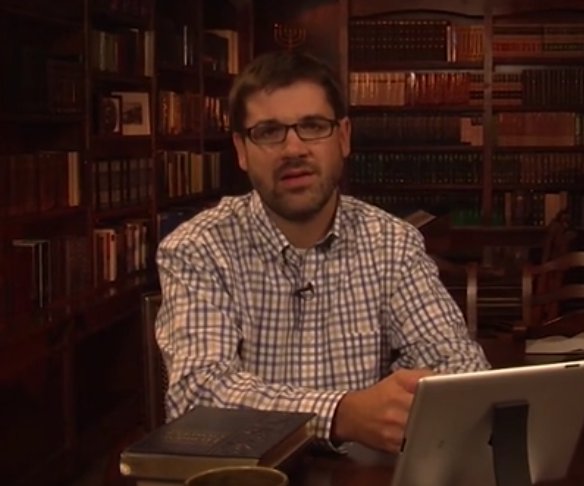
ffoz_tv11_tobyEven among modern observant Jews, Moses is revered as the greatest prophet who ever lived. He was greater than any prophet who came before or since and certainly, he could be considered the greatest prophet of his generation. But in comparing the passages we read in Deuteronomy to Matthew, Toby tells us that what Jesus was actually saying is that John the Baptist was the greatest prophet of his generation, just as Moses was the greatest prophet of his generation.

Compare: “no prophet has arisen” to “there has not arisen anyone,” and you’ll see the linkage Jesus was using to paint a picture to his listeners of who John was in their day.

How was John great? He was the greatest prophet in his generation. Here we arrive at Toby’s first clue in our attempt to solve the Mystery of the Least in the Kingdom:

Clue 1: John was the greatest prophet alive in his generation, just as Moses was the greatest prophet alive in his generation.

But we won’t get very far if we don’t understand the Hebrew words and meanings behind the words “least” and “greatest” in our English Bibles. To take the next step, we visit FFOZ teacher and translator Aaron Eby in Israel.

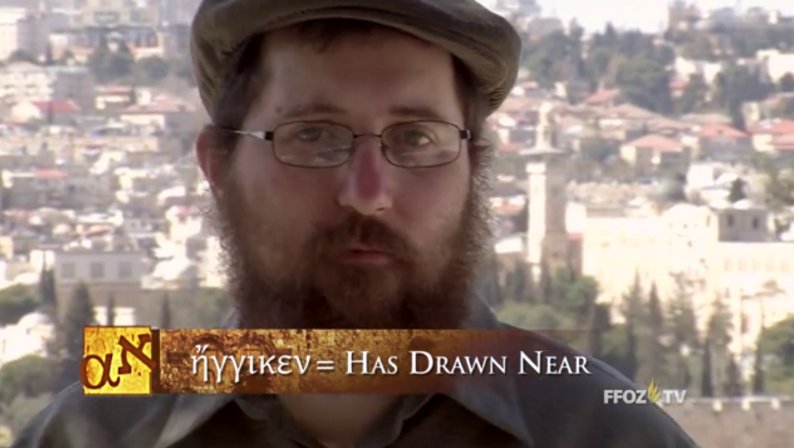
Aaron tells us that in Hebrew, the words Great and Least or Big and Little are “Gadol” and “Katan” or to say “little one,” “Katone.” Gadol isn’t just “big,” it can mean “great,” “older,” “more significant,” “mighty,” worthy,” and so forth. Katan can mean “little,” “younger,” “less significant,” “weak,” “unworthy,” and so forth. For instance, in Jeremiah 10:6, God is referred to as “great” (gadol) and His Name is “great” (gadol).

To describe katan or katone, Aaron cites the following scripture:

At that time the disciples came to Jesus, saying, “Who is the greatest in the kingdom of heaven?” And calling to him a child, he put him in the midst of them and said, “Truly, I say to you, unless you turn and become like children, you will never enter the kingdom of heaven. Whoever humbles himself like this child is the greatest in the kingdom of heaven.

“Whoever receives one such child in my name receives me, but whoever causes one of these little ones who believe in me to sin, it would be better for him to have a great millstone fastened around his neck and to be drowned in the depth of the sea.

Matthew 18:1-6 (ESV)

ffoz_tv11_aaronHere, Jesus is using children as an example of significance or worthiness of people in the Kingdom of Heaven or the Messianic Era. He’s also, according to Aaron, talking about how disciples of ancient Jewish Rabbis were considered. An experienced and learned disciple was called “great” or “gadol,” but an inexperienced and unlearned disciple was called “least” or “little one,” which in Hebrew are katan and katone. So the “little ones” being referred to in the above verse aren’t literally children, but disciples of Jesus who were inexperienced, vulnerable, and uneducated. If you caused one of these inexperienced disciples, these “little ones,” to sin, it would be very, very bad for you.

Back in the studio, Toby pulls together Aaron’s language lesson to give us our second clue:

Clue 2: Great meant high-ranking, experienced, prestigious, while Least meant low-ranking, inexperienced, insignificant.

But we still don’t understand how Jesus could say that even the least or most inexperienced believer (who could be Jewish or Gentile) in the Messianic Age could be greater than the prophet John the Baptist. One more clue is needed to unravel the rest of the mystery.

To do that, Toby takes us back to the prophets in the Tanakh (Old Testament):

They will not teach again, each man his neighbor and each man his brother, saying, ‘Know the Lord,’ for they will all know Me, from the least of them to the greatest of them,” declares the Lord, “for I will forgive their iniquity, and their sin I will remember no more.”

Jeremiah 31:34 (NASB)

“It will come about after this
That I will pour out My Spirit on all mankind;
And your sons and daughters will prophesy,
Your old men will dream dreams,
Your young men will see visions.
“Even on the male and female servants
I will pour out My Spirit in those days.”

Joel 2:28-29 (NASB)

Both prophets are talking about the Messianic Age, and Toby interprets their words to mean that everyone in the Kingdom, from the least to the greatest, will receive an overwhelming outpouring of prophesy, so much so, that by comparison, they all will have greater command of prophesy in that age than the degree of prophesy John possessed nearly two-thousand years ago at the close of the Second Temple period. This is the third and final clue.

Clue 3: In the Messianic Era, everyone will be a prophet.

The idea is that from the least of the prophets in the Kingdom to the greatest, the level of prophesy and apprehension of God they experience will still be greater than what John the Baptist experienced in his generation. This isn’t excluding John from the Kingdom and it isn’t saying that New Testament Christians are better than Old Testament Jews (or any Jewish person today), it’s saying that in the Messianic Era, God’s Spirit will be poured out to such a degree that an unprecedented surge of prophetic power will be possessed by literally everyone in the Kingdom.

What Did I Learn?
ffoz_tv11_childrenA lot. First of all, I didn’t even consider how Matthew 11:11 could be interpreted in isolation to support anti-Semitic thought and replacement theology in Christian history (and probably in some churches even today). I also didn’t fully capture the picture of the Messianic Era as being full of prophets, nor did I see the linkage between the different passages in the Bible that both Toby and Aaron referenced. I also had no idea that Matthew 18:1-6 referred not specifically to children but to the status of inexperienced and experienced disciples of a Rabbi, and specifically disciples of Rabbi Yeshua (Jesus).

When Toby mentioned Joel 2:28-29, I remembered a teaching he presented at the First Fruits of Zion (FFOZ) Shavuot conference at Beth Immanuel Sabbath Fellowship in Hudson, Wisconsin last spring. He gave me my final “clue” to solve my own mystery of how Gentiles are connected to God in a covenant relationship while retaining our status as people from the nations who are called by His Name. I wrote about that experience nearly four months ago, and I invite you to read it as an extension of the material I’m presenting here today, as well as providing additional details to the television teaching of Toby’s and Aaron’s.

For me, this was a fascinating and eye-opening episode. I tend to think of myself as experienced enough in the Hebrew Roots and Messianic Jewish realms to be beyond the “Messianic Judaism 101” stage, but I guess I’m not, at least in this area. I do wonder about Toby’s source material though, especially in connecting Matthew 11:11 back to Deuteronomy 34:10-12. I don’t doubt Toby’s word and I have no reason not to believe he isn’t correct, but information doesn’t come out of thin air. One of the things I wish for this television series is a set of “digging deeper” links or even just a Bibliography of the sources used to construct the lessons provided in each episode.

I’ll review another episode next week.

Finding the Path

Jewish_men_praying2That God is a redeeming God is a testament to God’s power, but that redemptive power is strangely ambiguous, for if God’s redemptive power will be manifest only at the end of days, then the inescapable implication is that in the here and now God’s power is not fully manifest. The final verse from the prophet Zechariah (14:9), with which we conclude every formal Jewish service of worship…has a significant implication here. The context is a vivid description of “the day of the Lord,” a common prophetic characterization for the age that will mark the culmination of history as we know it. The vision is apocalyptic: the familiar structures of nature will be overturned; there will be neither sunlight nor moonlight, just one continuous day; God will wage war against the evil nations and smite them with a plague. All who survive will make a pilgrimage to Jerusalem to worship the God of Israel. And then “the Lord will be king over all the earth; on that day there shall be one Lord with one name,” or as other translations would have it, on that day, “the Lord alone shall be worshiped and shall be invoked by His true name.”

-Rabbi Neil Gillman
“Chapter 9: God Redeems,” pg 139
The Jewish Approach to God: A Brief Introduction for Christians

I, John, your brother and fellow partaker in the tribulation and kingdom and perseverance, which are in Jesus, was on the island called Patmos because of the word of God and the testimony of Jesus. I was in the Spirit on the Lord’s day…

Revelation 1:9-10 (NASB)

If you’re at all familiar with the imagery presented in John’s Revelation, you’ll notice a number of similarities to my quote from Rabbi Gillman above. Of course, this imagery is also available in several sections of the Tanakh (Old Testament), so it’s not unreasonable or unanticipated that Rabbi Gillman should sound as if he’s channeling the words of the apostle. What may seem strange to some Christians is the idea that Israel is not only involved in the apocalyptic future, but that it is (they are) the conduit by which the rest of the world approaches redemptive history.

If you have been reading my blog for any length of time, this bit of news shouldn’t be completely unfamiliar. A number of my reviews of episodes of the FFOZ TV: The Promise of What is to Come television show have touched on this history. These include the topics exile and redemption, the ingathering of Israel, the Gospel message, Jewish repentance and the Kingdom being now. If you put all of this information together, you come up with a startling picture….well, startling if you are traditionally Christian.

Most of the time, in the church, we are taught that if anyone, including Jewish people, want to be reconciled with God, they must convert to Christianity and start worshiping Jesus Christ. Almost no one is teaching that in order to be saved by God, we have to go through Israel.

What? Am I saying we all have to convert to Judaism? Not at all. But we have tended to reverse causality as Christians, believing that Israel has lost significance with God and that the Church (big “C”) has overshadowed if not replaced her in God’s covenant promises. But if you read this blog post and especially the comments section, you’ll see there’s a strong indication that the return of Messiah and the final acts of redemptive history will only occur when Israel corporately repents and returns to God and the Torah! To that end, we in the Church (big “C”, all of us) have a responsibility and a duty to encourage Jewish Torah observance and repentance.

Yom-KippurThere was nothing preventing me from observing Yom Kippur in a traditionally Jewish fashion, but I chose not to fast this year. I know some of you will think I’m terrible for abstaining from “the fast,” and others will think not a thing about it. I suppose I could have fasted in order to encourage my wife and daughter, but it’s like the reason I stopped lighting the Shabbos candles. There’s little point in the only Goy in the home acting more “Jewish” than the Jewish people in the home.

Fortunately, my wife has started lighting the candles again, so there’s hope that she is participating in the forward flow of Jewish history that will culminate in the return of the Jewish King.

I feel a little guilty anyway, but if I believe that it is Jewish Torah observance that is the key to the coming of Moshiach, then shouldn’t I draw the distinction in my family? After all, my wife always thinks it’s strange of me when I avoid a pork chop or a plate of hot, buttery shrimp (not that such food would ever be found in our home). She’d no doubt have wondered why I was fasting on Yom Kippur (and I’m encouraged because for the first time in years, she fasted on Yom Kippur).

I’m meeting with my Pastor this week for our usual Wednesday night talk. I noticed on my calendar that our 7:30 meeting will also be the candle lighting time for Erev Sukkot. I experienced momentary guilt at this, and then regret that I’d miss my wife lighting the candles again. Fortunately, I just finished building and decorating our sukkah, so it’s all ready for the festival.

I must admit, Sukkot is one of my favorite holidays. Am I being a hypocrite by not fasting on Yom Kippur but building a sukkah in my backyard? I hope not. My wife and daughter won’t be building anything very soon, so it’s one of those gender-specific activities that lands on my side of the fence. I also find that the image of the Word which became flesh and “sukkahed” among us (John 1:14) is eminently portrayed at this time of year, so building a sukkah is my way of participating in the commemoration of the first Advent.

I have to admit that as the Days of Awe draw to a close and the next Torah cycle is poised to launch, I’m not sure what I’m supposed to do. Old friends in the Messianic movement have pulled away from me. Maybe I should have repented to them before Yom Kippur. Maybe I’m becoming too “Christian”. Maybe I just don’t matter in that world anymore. Who knows?

If Judaism is accelerating toward its own redemptive history, what future should I, a Goyishe Christian, anticipate? I believe the Jewish people and Israel (and especially Israel’s firstborn son, Messiah) are the doorway into redemption for the rest of the human race, but is viewing the world of faith through a Jewish lens becoming a closed door for me ? I don’t know.

God’s choosing is beyond our ability to understand. The Hebrew prophet, Amos put it this way:

To Me, O Israelites, you are
Just like the Ethiopians, declares the Lord.

True, I brought Israel up
From the land of Egypt,
But also the Philistines from Caphtor
And the Arameans from Kir.

-Amos 9:7

To equate God’s redemption of Israel from Egyptian bondage with God’s redemption of other nations — indeed, a nation such as the Philistines, one of ancient Israel’s enemies — is a striking acknowledgment that God loves all peoples equally.

-Gillman, “Chapter 8 God Reveals,” pg 119

Children of GodRabbi Gillman is observing Jewish “chosenness” from the point of view of Reform Judaism. I don’t think an Orthodox Rabbi would hold such an opinion. Nevertheless, Rabbi Gillman hits on something important, especially for Christians. God doesn’t just love Israel and He may not even bathe Israel with more love than any other nation. God may love all of humanity in exactly the same way, even as He has chosen Israel for a specific and special purpose that is separate from the nations of the world, including the people of the nations who are called by His Name (Amos 9:11).

For Jews, what precisely was the “content,” the substance, of God’s revelation to our ancestors? Torah can be defined in many ways. It can be understood as (1) the first five books of the Bible (the Chumash, or Pentateuch, both referring to “five”); (2) the entirety of Hebrew Scripture, from Genesis to 2 Chronicles; (3) all of Scripture plus the body of rabbinic interpretation that emerged in the talmudic era (from the first to the seventh centuries C.E.); or, even more broadly, (4) the ongoing interpretation of that material through our very own day. However we define it, Torah is a complex body of doctrines, history, narratives, prayers, and legal codes. It constitutes the entire body of Judaism’s distinctive religious message.

What authority does this body of teaching have for us? Are we to accept the entire body of tradition as absolutely binding on all Jews for eternity? How free are we to depart from it, and how do we decide? The different answers to these questions account for the denominational structures that characterize the Jewish community today, from right-wing Orthodoxy to left-wing Reform and everything in between.

-Gillman, pg 120

If we are all loved and we are all invited by God to participate in His redemption through the history and future of Israel, what then is the Torah to the faithful among the nations? Of course, being loved identically and even having identical access to salvation through faith and grace does not make Jews and Christians functionally identical in terms of all the covenants. As we see from the above-quoted statement, even among collective Judaism, how Jewish authority, teaching, and obedience to God is understood is highly variable. How much more variable should it be when Gentiles are thrown into the mix by our faith in Jesus through a single condition in the Abrahamic covenant?

In addition, Israel’s “daughter religions” inherited the notion of redemptive history, which led them to believe that God’s choice had passed to another, different community. The first Christians understood that God’s revelation in and through Jesus of Nazareth superseded the Sinai covenant with “the old Israel.” (In this post-Holocaust age, however, many Christians have come to question the accuracy of this reading of Christian Scripture and to abandon it.) Islam claimed that God’s revelation to Mohammed in the Arabian desert in the seventh century C.E. constituted the seal of prophecy, God’s final revelation.

-Gillman, pg 118

path-to-godChristianity tends to believe it is the “lead dog” in the pack, so to speak, so being referred to as a “daughter religion” may be a little disconcerting. However, invoking the perspective of Messianic Judaism, at least as I understand the movement, it’s certainly an appropriate term, as it fixes us in place in terms of sequence, not only regarding where we’re coming from, but in some sense, where we have to return to in order to fulfill prophesy and take our place as the crown jewels of the nations.

Even had he remained a tzaddik, the descent would still have been worthwhile; all the more so now that he has sinned.

He was meant to have confined himself to the permissible; he would have enlightened that portion of the world, healed it and carried it upward. He was meant to remain there, for if he would break out, intending to return, who knows that he could ever succeed in his gambit?

But now that he has fallen, let him return, and in doing so he will transform to light that which the tzaddik could never have touched.

-Rabbi Tzvi Freeman
“Even Better”
Based on letters and talks of the Rebbe, Rabbi M. M. Schneerson
Chabad.org

I know Rabbi Freeman never intended this, but I cannot help but be somewhat reminded of Messiah, of Yeshua (Jesus), the tzaddik who had fallen but who rose and who will return greater than ever. I’m also reminded that it is not me and it’s not Christianity or even Judaism that means anything to the future and to God. It’s the human desire to encounter God through the doorway of a broken and bleeding heart and spirit. From that encounter, we may not learn everything, but we learn where we are on the path He has placed before each of us.

I will educate you and enlighten you in which path to go…many are the agonies of the wicked, but as for one who trusts in Hashem, kindness surrounds him.

Psalm 32:8, 10 (Stone Edition Tanakh)

Whatever I end up doing in the coming year must conform to the path that God has designated for me, not the one being walked by anyone else.

How Forgiving is Our Teacher?

teaching-childrenMy late teacher Rabbi Louis Finklestein used to say, “When I pray, I speak to God; when I study, God speaks to me.” In the words of our liturgy:

Blessed are You, Lord our God, Sovereign of the universe…who commanded us to study the words of Torah. May the words of Torah…be sweet in our mouths and in the mouths of all Your people so that we, our children, and all the children of the House of Israel may come to love You and to study Your Torah…Blessed are You, Lord, who teaches Torah to the House of Israel.

Note the tense of the verb: God “teaches,” not “has taught,” Torah to Israel. God, then, is a teacher not only at Sinai, in antiquity, but today as well, and not only today but also in the world to come. The souls of the righteous who have perished are described as having gone to “the yeshiva on high,” where God will be their teacher and will elucidate all the puzzles of the Torah that were never clarified while they lived on earth.

-Rabbi Neil Gilman
“Chapter 4: God is Nice (Sometimes),” pp 62-3
The Jewish Approach to God: A Brief Introduction for Christians

I’ve mentioned before that I think of God as a teacher, at least sometimes, a bringer of enlightenment and truth. There are also some in religious Judaism who believe that when Messiah comes (or comes back), he will teach Torah perfectly. I suppose this means he’ll teach the Gentiles as well as the Jews how Torah is to be correctly applied to our lives and all of the messy confusion we experience now will finally go away…as long as we choose to accept his teaching and incorporate them into our daily practice.

It seems amazing that we might not, but as I read the Bible, even after the second advent, there will be plenty of people who won’t recognize him as King, even as he sits on the Throne of David in Holy Jerusalem.

But then again, even when we acknowledge God, sometimes we can still be opposed to Him; we can still be angry with Him. But that may not be as strange as it seems:

Yet even then, their anger at God’s behavior was always expressed from within their long-standing relationship with God. They never allowed their sense of being mistreated by God to drive them out of the religious community and its belief structure.

-Rabbi Neil Gillman
“Chapter 5: God is Not Nice (Sometimes),” pg 65

I know the idea of being angry at God usually elicits a certain amount of “pushback” from some readers, but I maintain that it’s a common human response to God…we just don’t talk about it. But what is God’s response to us when we are angry at Him?

Job’s “comforters” arrive and evoke the classical Torah interpretation of suffering: Job must have sinned. But Job retorts that he has not sinned, or that he has not sinned nearly enough to justify this punishment. At the end of the book, God addresses Job in the speeches “out of the whirlwind.” These are a paean to God’s power and to the complexity of God’s creation. Their message is “Job, don’t try to understand Me. Don’t try to fit Me into your neat moral categories. I am God; you are a human being.” Surprisingly, Job acknowledges the difference:

I know You can do everything,
That nothing You propose is impossible for You…
I had heard You with my ears,
But now I see You with my eyes;
Therefore, I recant and relent,
Being but dust and ashes.

-Job 42:2, 5-6

This implies that Job has now achieved a clearer understanding of God’s ways and a measure of closure.

-Gillman, pg 69

forgiveness_jayThis seems not unlike the article Jay Litvin wrote about his own need to attain closure or at least regain closeness with God, in Mr. Litvin’s case, by “forgiving” God for Litvin’s terminal illness. But Job’s and Litvin’s approaches are quite different. Whereas Job acknowledges God’s statement that he cannot understand the ways of God and thus should abandon any attempt to put God in a theological or doctrinal box, Litvin sets all this aside and treats God, not as understandable, but nevertheless, forgivable.

I suppose you could argue that having the temerity to “forgive” God might require that we would then need to be forgiven by God, that too is the act of a loving Father rather than a harsh and punitive Judge:

He will not always strive with us,
Nor will He keep His anger forever.
He has not dealt with us according to our sins,
Nor rewarded us according to our iniquities.
For as high as the heavens are above the earth,
So great is His lovingkindness toward those who fear Him.
As far as the east is from the west,
So far has He removed our transgressions from us.
Just as a father has compassion on his children,
So the Lord has compassion on those who fear Him.
For He Himself knows our frame;
He is mindful that we are but dust.

Psalm 103:9-14 (NASB)

Then comes the theological underpinnings for the power of repentance: “For He knows how we are formed; He is mindful that we are dust” (Psalm 103:14). God grants us the power of repentance because God knows how we were created: from the dust (Genesis 2:7).

-Gillman, “Chapter 6: God Can Change,” pg 91

In Rabbi Gilman describing the Jewish relationship to God for Christians, he says that God gives human beings the ability to repent because God knows how weak and frail we are (dust and ashes). Out of that knowledge, God desires to forgive us, which, of course, requires that we first repent.

Jonah chapter 3 tells the simple but powerful tale of Jonah prophesying to the great city of Nineveh that unless they repent of their sins, they will be destroyed by God. Amazingly, this Gentile and corrupt city, from the King to the lowest commoner, repent, and because of this, God relents and forgives.

There’s a certain irony, at least to me, in Rabbi Gillman final commentary in this chapter:

The poem then concluded with a theological justification for God’s compassion:

You are slow to anger and ready to forgive. You do not desire the death of the wicked but that we return from our evil ways and live. Even until our dying day, You wait for us, perhaps we will repent, and You will immediately receive us. Our origin is dust and we return to the dust. We earn our bread at the peril of our life. We are like a fragile potsherd, as the grass that withers, as the flower that fades, as a fleeting shadow, as a passing cloud, as the wind that blows, as the fleeting dust, and as a dream that vanishes. But You are ever our living God and sovereign.

The echo of Psalm 103:14…is unmistakable here. God must forgive because God above all knows what it means to be a human being and to live a human life (not because of Jesus, according to Jewish thought, but because God is the creator of all).

-ibid, pg 96

Jonah's KikayonAs a Reform Jewish Rabbi, Rabbi Gillman isn’t about to acknowledge the Christian view of Jesus, but comparisons between his closure to Chapter 6 and the following are unavoidable:

The Lord is not slow about His promise, as some count slowness, but is patient toward you, not wishing for any to perish but for all to come to repentance.

2 Peter 3:9 (NASB)

Therefore, since we have a great high priest who has ascended into heaven, Jesus the Son of God, let us hold firmly to the faith we profess. For we do not have a high priest who is unable to empathize with our weaknesses, but we have one who has been tempted in every way, just as we are—yet he did not sin. Let us then approach God’s throne of grace with confidence, so that we may receive mercy and find grace to help us in our time of need.

Hebrews 4:14-16 (NASB)

It’s not that God couldn’t feel compassion and empathy for human beings without experiencing a human life. What creator is unable to understand his creation? And yet, Jesus as both divine and human is uniquely positioned to understand human frailty and to act as intercessor between a fallen mankind and an ultimately Holy, Ein Sof God. Peter also echos Psalm 103 and “foreshadows” the Yom Kippur service in his words.

I sometimes wonder why we have a Christianity that is completely separate from Judaism. If modern religious Judaism is correct and the Gentiles are to come to God through Israel but without the Jesus of the Bible, then why isn’t modern Israel, the Jewish people, a light to the world, opening that door for the rest of humanity? I know the only “Jewish” requirement for Gentiles is our obedience to the Seven Noahide Laws, but without Jewish mentors and a Jewish understanding of this framework, non-Jewish humanity is without comprehension, let alone community (as far as I know, there are no exclusively Gentile Noahide “synagogues” or “churches”). Does modern Judaism truly believe that God left each generation of Gentiles without a means of redemption? It would seem so, since Judaism, for the most part, does not encourage “Noahidism” among the Gentiles.

Christianity was born of Judaism but we have been separated. Jewish people say the separation occurred when Paul developed an anti-Law religion for the Gentiles, effectively making Paul a Jewish traitor and perverter of Jewish teachings into a new Gentile religion. Christians say that Paul understood that the Law had been replaced by the grace of Christ and Torah entered into a period of obsolescence, making Paul the Jewish vanguard out of Judaism and into Christianity. Even my Pastor, who believes there will be a Third Temple and that there will be sacrifices again, tells me that the Torah was always intended to be temporary, and Paul was the instrument of closure for that part of Jewish existence.

I don’t accept either viewpoint. I can’t. One of the comments made on a recent blog post said in part:

In the case of the biblical literature, re-interpretation is a necessary part of such developments because many adherents to a given system are not native to the languages of the source literatures.

It may have become necessary for the form and structure of religious thought and practice to also have been reinterpreted because of the innate differences between Jewish and Gentile disciples of Messiah. Not only are the covenant structures different (or at least overlapping), but based on the much longer and unique Jewish history with God at the point of the apostolic period, how discipleship was transmitted by the Jewish apostles and received by the various Gentile populations in the then-civilized world, may have well required a sort of cultural “morphing,” even when Gentile Christianity and Jewish “Messianism” were still on speaking terms in the late Second Temple and early post-Temple time frame.

infinite_pathsGod is God of all and God desires to forgive all so that none should perish, but it seems apparent, given the wide variety of Jewish and Gentile approaches to God we’ve seen over the past two-thousand years, that God’s people have yet to come to any sort of consensus as to how that approach should look. Maybe this too is part of God’s gracious forgiveness, not locking human beings into a too tightly structured “approach pattern.”

I know that Jesus said that we only enter through the narrow gate (Matthew 7:13-14), but some Christians believe that gate is as narrow as a single denomination. Some Christians believe you are only “saved” is you are baptized in running water vs. a wading pool. As for observant Jews, how many believe other Jews who do not observe Shabbos will not merit a place in the world to come? How many Jews believe that only their branch of Judaism or only their Rebbe has the true teachings of Torah?

But if God is our teacher and perhaps ultimately, our only teacher, where can we go to learn from Him without having to endure endless layers of human filters? Ourselves and delving into the Bible by the power of the Holy Spirit you say? Many claim to possess the true Spirit and thus out of that (or their own imagination), possess the true teachings of Christ, but I still maintain that there is a lot more chaff than wheat in human understanding of God. I can only hope and pray that God is a lot more merciful and forgiving than some people of faith say He is, so that our honest but fumbling attempts to know Him aren’t in vain.

Yom Kippur: The Brokenhearted Offering

broken-heartedI hated Yom Kippur because it made me feel like a fraud. I would bang away at my chest all day, enumerating all my sins, promising I was repentant. But in my heart I knew that I would return to my mean self the moment the fast was over. I didn’t believe I could ever change, that I was really worthy of life and that I would ever be able to redeem myself. So I would go through the day anxious for it to be over, hating myself for being such a big, fat fraud.

-Eliana Cline
“Why I Hated Yom Kippur”
Aish.com

I’m writing this on Sunday, almost a full week before you’ll read it. Today, my Pastor’s sermon in church was on Yom Kippur. The timing was deliberate. Last week’s sermon, which I missed because I decided to skip church for the holiday weekend, was on Rosh Hashanah. It’s always interesting to hear a sermon in a Christian church about something that is so profoundly Jewish.

Aaron shall place lots upon the two he-goats: one lot “for Hashem” and one lot “for Azazel.” Aaron shall bring near the he-goat designated by lot for Hashem, and make it a sin offering. And the he-goat designated by lot for Azazel shall be stood alive before Hashem, to provide atonement through it, to send it to Azazel to the Wilderness.

Leviticus 16:8-10 (Stone Edition Chumash)

One of the things I’ve come to learn about Jewish holidays and festivals being preached in the church is that these Jewish events can never be allowed to just stand on their own. They always have to “point to Christ.” Otherwise, I guess, they just aren’t really worthy, God-given events all by themselves (that was a little sarcasm).

Anyway, it is Pastor’s opinion that each of these two goats represent the first and second coming of Christ. I have no idea where this idea comes from, but knowing Pastor, it comes from some Christian source or authority. Although I sometimes disagree with him, Pastor does his research and he hardly ever “shoots from the hip” in a sermon.

The analogy, which is how I think of it, falls apart when you realize the Azazel goat (Pastor called it by the more common name “scapegoat”) must bear the sins of Israel and be sent out into the Wilderness, presumably to die. One commentary in my Chumash on verse ten says:

Or HaChaim notes that the goat is referred to here and in verse 21, before the confession, as alive. After Aaron pronounces confession upon it, however, it is no longer called alive, even though it would be some time before it would go to its death. The confession had the effect of placing all of the people’s sins on the goat, which would then carry them off to the desolate Azazel. The presence of such contamination on the goat rendered it spiritually “dead;” thus it was called alive only before Aaron’s confession.

Even if you don’t quite buy what Or HaChaim says, the Azazel goat seems a poor symbol for the King of the Jews returning to redeem Israel in glory and power, leading an army of angelic beings.

But Pastor said a lot of really good things about Yom Kippur and how we Christians can learn from the Day of Atonement. Yes, he said our final atonement is Jesus Christ, who died on the cross for our sins and who was resurrected to give us the promise of eternal life through faith in him.

struggling_prayBut he also deconstructed the mechanism of teshuvah (though he didn’t call it that) as the observant Jewish world sees it, and said point-blank that simply answering an altar call or raising your hand at Christian camp professing belief in Jesus doesn’t automatically grant you the aforementioned eternal life. Seeking atonement of your sins requires much, much more, and we aren’t fully disciples of the Master and Children of God until we do. After that, we still need to have a life of continual repentance, since we sin every day.

Rabbi J. Immanuel Schochet wrote a rather lengthy article called The Dynamics of Teshuvah, which I won’t quote from here. I think it could be called “Everything You Always Wanted To Know About Teshuvah But Were Afraid To Ask.” If you want to know more, Rabbi Schochet’s article is a good source.

But the heart of teshuvah and atonement is contained in the more modest missive written by Rabbi Shlomo Yosef Zelvin called The Master Key:

One year, Rabbi Israel Baal Shem Tov said to Rabbi Ze’ev Kitzes, one of his senior disciples: “You will blow the shofar for us this Rosh Hashanah. I want you to study all the kavanot (Kabbalistic meditations) that pertain to the shofar, so that you should meditate upon them when you do the blowing.”

Rabbi Ze’ev applied himself to the task with joy and trepidation: joy over the great privilege that had been accorded him, and trepidation over the immensity of the responsibility. He studied the Kabbalistic writings that discuss the multifaceted significance of the shofar and what its sounds achieve on the various levels of reality and in the various chambers of the soul. He also prepared a sheet of paper on which he noted the main points of each kavanah, so that he could refer to them when he blew the shofar.

Finally, the great moment arrived. It was the morning of Rosh Hashanah, and Rabbi Ze’ev stood on the reading platform in the center of the Baal Shem Tov’s synagogue amidst the Torah scrolls, surrounded by a sea of tallit-draped bodies. At his table in the southeast corner of the room stood his master, the Baal Shem Tov, his face aflame. An awed silence filled the room in anticipation of the climax of the day—the piercing blasts and sobs of the shofar.

Rabbi Ze’ev reached into his pocket, and his heart froze: the paper had disappeared! He distinctly remembered placing it there that morning, but now it was gone. Furiously, he searched his memory for what he had learned, but his distress over the lost notes seemed to have incapacitated his brain: his mind was a total blank. Tears of frustration filled his eyes. He had disappointed his master, who had entrusted him with this most sacred task. Now he must blow the shofar like a simple horn, without any kavanot. With a despairing heart, Rabbi Ze’ev blew the litany of sounds required by law and, avoiding his master’s eye, resumed his place.

At the conclusion of the day’s prayers, the Baal Shem Tov made his way to the corner where Rabbi Ze’ev sat sobbing under his tallit. “Gut Yom Tov, Reb Ze’ev!” he called. “That was a most extraordinary shofar-blowing we heard today!”

“But Rebbe . . . I . . .”

“In the king’s palace,” said the Baal Shem Tov, “there are many gates and doors, leading to many halls and chambers. The palace-keepers have great rings holding many keys, each of which opens a different door. But there is one key that fits all the locks, a master key that opens all the doors.

“The kavanot are keys, each unlocking another door in our souls, each accessing another chamber in the supernal worlds. But there is one key that unlocks all doors, that opens up for us the innermost chambers of the divine palace. That master key is a broken heart.”

Eliana Cline’s article captured what it is for a Jewish person on Yom Kippur in a more modern setting:

This Yom Kippur, I can feel the pain of not being in a state of connection and own the consequences of my choices. I can say to God, “This is not me,” and mean it. I feel repentant, not from fear – but from a genuine desire for connection, love and transcendence. Getting in touch with my higher self that yearns to be good has enabled me to sense the sadness of my past choices.

The Talmud teaches that on Yom Kippur we are compared to angels. I never really got the comparison. Until now. On Yom Kippur all the daily responsibilities and tasks are removed; it’s a day we transcend the physical and live with total purpose. It’s a day with one sole mission, like an angel, to pray, to think and to connect – to God and to our inner soul.

PrayingWe can choose whether or not to truly repent of our sins and approach God. Most of us most of the time (am I being too cynical?) repent by saying “Sorry” to God, knowing full well, or at least suspecting it in the back of our minds, that we will be revisiting our same old sins again by the by. Repentance for the moment, sin for a lifetime. No wonder Cline felt like a fraud. Most of us should feel the same way.

But Christianity doesn’t have an event on its religious calendar that’s anything like Yom Kippur. Easter probably comes the closest, but that’s a holiday of victory over sin and death, not taking responsibility for sin and repairing relationships with people and with God.

Yom Kippur can seem incredibly depressing if you don’t come at it from the right direction. If you see it as having to wallow in your sins, feeling like a fraud, feeling like an abject failure, then yes, it’s really depressing. You afflict yourself, usually by a complete food and liquid fast for twenty-four hours and a bit more, and hope that’s enough to appease an angry God. But only pagan gods need to be appeased. You can’t “buy off” the One Living God with a sacrifice unless that sacrifice is you!

For You do not desire a sacrifice, else I would give it; a burnt-offering You do not want. The sacrifices God desires are a broken spirit; a heart broken and humbled, O God, You will not despise.

Psalm 51:18-19 (Stone Edition Tanakh)

And by “you,” I mean your broken, humble, and contrite heart.

Take words with you and return to Hashem; say to Him, ‘May you forgive all iniquity and accept good, and let our lips substitute for bulls.’

Hosea 14:3 (Stone Edition Tanakh, verse 2 in Christian Bibles)

Through Him then, let us continually offer up a sacrifice of praise to God, that is, the fruit of lips that give thanks to His name.

Hebrews 13:15 (NASB)

Whether you’re a Christian or a Jew, we all turn to the One God when we repent and ask for forgiveness, though we are unworthy. As Christians, we turn to God through our great intercessor Christ, and we pray that God reveals Himself and his compassion to us through him. I once heard a Jewish person tell me that no man stands between a Jew and his God. I can only ask, especially now, since as you read this, Yom Kippur is just a few hours away, that God reveals all truth, first to the Jews and then to the Gentiles.

Yom Kippur is a gift. It allows us to remove the barriers that separate us from a Holy God and to once again draw near to our Father in Heaven. The gift is offered by grace. All we have to do is accept it. The only cost to us, is to be sincerely brokenhearted.

Have an easy fast and may you be inscribed in the book of life.

12 days.


Make Teshuvah Now

TeshuvahWe have now gone well beyond Moses’ arguments with God. God’s power is not automatic or unbridled; it is, rather, an expression of God’s will. God can choose how and when to use that power. Teshuvah is God’s gift to us, a singular opportunity to sway God from anger to compassion. This distinctively Jewish idea also teaches that, ultimately, it is human beings who have the power to determine how God will use that divine power. We invoke this theme throughout the liturgy of the High Holidays.

-Rabbi Neil Gillman
“Chapter 2: God is Power,” pg 25
The Jewish Approach to God: A Brief Introduction for Christians

I often write about what Messianic Jews have to say to Christians, hopefully in a very positive light, but Rabbi Gillman’s book is what other Jews, those who don’t believe Jesus is the Messiah, have to say to Christians. By providing the Jewish viewpoint on God, Rabbi Gillman is attempting to be a “light to the nations,” showing us who he believes God actually is (as opposed to who Christians think God is).

We don’t often think we can change God’s mind but I think Rabbi Gillman may have a point.

Then Jonah began to go through the city one day’s walk; and he cried out and said, “Yet forty days and Nineveh will be overthrown.”

Then the people of Nineveh believed in God; and they called a fast and put on sackcloth from the greatest to the least of them. When the word reached the king of Nineveh, he arose from his throne, laid aside his robe from him, covered himself with sackcloth and sat on the ashes. He issued a proclamation and it said, “In Nineveh by the decree of the king and his nobles: Do not let man, beast, herd, or flock taste a thing. Do not let them eat or drink water. But both man and beast must be covered with sackcloth; and let men call on God earnestly that each may turn from his wicked way and from the violence which is in his hands. Who knows, God may turn and relent and withdraw His burning anger so that we will not perish.”

When God saw their deeds, that they turned from their wicked way, then God relented concerning the calamity which He had declared He would bring upon them. And He did not do it.

Jonah 3:4-10 (NASB)

Gillman calls Jonah the only successful prophet in the Bible. Typically, all other prophets call for repentance (usually of Israel) and they only receive a deaf ear in return. Often these prophets are killed by the very people they’re trying to save. The prophet warns Israel. Israel ignores the prophet and does not repent. God fulfills the prophesy by doing terrible things to Israel, which usually include war, exile, and death.

…and My people who are called by My name humble themselves and pray and seek My face and turn from their wicked ways, then I will hear from heaven, will forgive their sin and will heal their land.

2 Chronicles 7:14 (NASB)

jewish-repentanceIf the people who are called by God’s Name would humble themselves and pray and seek God’s face and turn from their wickedness, then He would hear from Heaven and forgive their sin and heal their Land. Seems pretty straightforward to me. But then, God set up the conditions. If you do this, then I will do that. If you do not do this, then I will do something else. God is prepared to respond to Israel depending on what choice Israel makes. It’s not as if God changes His mind as such.

But what about this?

The Lord said to Moses, “How long will this people spurn Me? And how long will they not believe in Me, despite all the signs which I have performed in their midst? I will smite them with pestilence and dispossess them, and I will make you into a nation greater and mightier than they.”

But Moses said to the Lord, “Then the Egyptians will hear of it, for by Your strength You brought up this people from their midst, and they will tell it to the inhabitants of this land. They have heard that You, O Lord, are in the midst of this people, for You, O Lord, are seen eye to eye, while Your cloud stands over them; and You go before them in a pillar of cloud by day and in a pillar of fire by night. Now if You slay this people as one man, then the nations who have heard of Your fame will say, ‘Because the Lord could not bring this people into the land which He promised them by oath, therefore He slaughtered them in the wilderness.’ But now, I pray, let the power of the Lord be great, just as You have declared, ‘The Lord is slow to anger and abundant in lovingkindness, forgiving iniquity and transgression; but He will by no means clear the guilty, visiting the iniquity of the fathers on the children to the third and the fourth generations.’ Pardon, I pray, the iniquity of this people according to the greatness of Your lovingkindness, just as You also have forgiven this people, from Egypt even until now.”

So the Lord said, “I have pardoned them according to your word; but indeed, as I live, all the earth will be filled with the glory of the Lord.

Numbers 14:11-21 (NASB)

On the surface, it certainly seems as if God was ready to wipe out the Children of Israel, but Moses, appealing to God’s reputation, gets Him to change His mind. Or was God setting up the situation so that Moses would change his mind? Remember, it’s far easier for a human being to lose his cool than for God to do so. By deliberately putting Moses in between the Children of Israel and God’s wrath, God is forcing Moses to make a choice. Either Moses can side with God and advocate for the destruction of his people, or he can confront God as Israel’s protector…the very role for which God chose Moses.

Ultimately, if God is Sovereign and if His will and His decisions are always perfect, then He really has no need to change His mind. We, on the other hand, have to change our minds all the time, and I think God is at work trying to get us to do this. We are flawed, sinful, imperfect, self-centered creatures and God loves us anyway. It’s like being the Father to billions and billions of two-year olds. We’re all screaming “mine,” all fighting each other over our toys, all hording the goodies for ourselves, and we all don’t want to listen to God telling us to be good and to share.

Yom-Kippur-ShofarYom Kippur starts at sundown on this coming Friday and ends at sundown on Saturday. Although the Day of Atonement has very little meaning to most Christians, we can still allow it to remind us that there may be some people we have hurt and we have neglected to repent of that. We may have sinned against God and have neglected to repent of that. As long as we are alive, we have the opportunity to repent, to turn back to the ways of God, and to make amends with anyone we have injured.

But who knows when one will die?

Rabbi Eliezer said: “Repent one day before your death.” His disciples asked him, “Does, then, one know on what day he will die?” “All the more reason he should repent today, lest he die tomorrow.”

Babylonian Talmud, Shabbat 53a

From that time Jesus began to preach and say, “Repent, for the kingdom of heaven is at hand.”

Matthew 4:17 (NASB)

Even during the days of Mashiach, it will still be permissible for people to repent…but why wait? God is reminding us to make teshuvah now.

FFOZ TV Review: The Kingdom is Now

tv_ffoz10_1Episode 10: The gospel message says “Repent, the kingdom of heaven is at hand,” but after two thousand years, where is the kingdom? Episode ten will examine this conundrum by looking at these words of Jesus from a Jewish perspective. Viewers will learn that the kingdom did not arrive in Jesus’ day because Israel did not repent. However, all followers of Messiah can receive a foretaste of the kingdom now by repenting and attaching to the king now as they eagerly await his second coming.

-from the Introduction to FFOZ TV: The Promise of What is to Come
Episode 10: The Kingdom is Now

The Lesson: The Mystery of the Kingdom at Hand

This episode continues to build on the previous ones having to do with exile and redemption, the ingathering of Israel, the Gospel message, and Jewish repentance. First Fruits of Zion (FFOZ) teachers Toby Janicki and Aaron Eby answer a question that has been of special importance to me. How can the Kingdom of Heaven, that is, the Messianic Era, be on the brink of arrival or at hand, and yet not have arrived in the past 2,000 years?

This is the “mystery” that Toby presents to his audience and solving the mystery hinges on understanding the meaning of the phrase often translated in our Bibles as “at hand.”

These twelve Jesus sent out after instructing them: “Do not go in the way of the Gentiles, and do not enter any city of the Samaritans; but rather go to the lost sheep of the house of Israel. And as you go, preach, saying, ‘The kingdom of heaven is at hand.’”

Matthew 10:5-7 (NASB)

The pacing of this episode runs a bit differently than previous ones. Even before Toby introduces his first clue in solving the mystery, the scene shifts to Aaron Eby in Israel and the Greek word used to impart the meaning that the Kingdom of Heaven is “at hand.” This word, Aaron tells us, more literally says “it has drawn near” or “it has drawn close,” which seems to indicate something came and has already passed by.

19th century translator Franz Delitzsch “retro-translated” the Greek back into the most likely form in Hebrew, which would be the idiom we would understand in English as “drawn near to come.” It gives the sense of something that is poised to enter, like a man standing outside your front door, close enough to ring the doorbell. However, that man hasn’t yet arrived until he is invited inside and goes through the doorway. If he hadn’t yet rung the doorbell or knocked on the door, even though he is literally close enough to touch, you wouldn’t even know he was there at all.

Aaron says something important. The Kingdom of Heaven being “near” isn’t about time or proximity, but rather, accessibility and potential. The Kingdom wasn’t only sort of near 2,000 years ago and slowly coming closer with the passage of time. In a very real way, it’s always like the man standing just on the other side of your front door. He could knock at any second. But what’s stopping him?

One of the scribes came and heard them arguing, and recognizing that He had answered them well, asked Him, “What commandment is the foremost of all?” Jesus answered, “The foremost is, ‘Hear, O Israel! The Lord our God is one Lord; and you shall love the Lord your God with all your heart, and with all your soul, and with all your mind, and with all your strength.’ The second is this, ‘You shall love your neighbor as yourself.’ There is no other commandment greater than these.” The scribe said to Him, “Right, Teacher; You have truly stated that He is One, and there is no one else besides Him; and to love Him with all the heart and with all the understanding and with all the strength, and to love one’s neighbor as himself, is much more than all burnt offerings and sacrifices.” When Jesus saw that he had answered intelligently, He said to him, “You are not far from the kingdom of God.” (emph. mine)

Mark 12:28-34 (NASB)

ffoz_tv10_aaronWait a minute. How can Jesus say that the scribe wasn’t far from the Kingdom of God if “far” and “near” are a matter of the timing of Christ’s return in glory and power? It has to do with the heart of the scribe and his true understanding of the Torah. That, in and of itself, should be a bit startling to a Christian audience, since being close to the Kingdom is linked to both a repentant heart and correct understanding of the Torah of Moses.

Aaron also refers to several different parts of Isaiah to re-enforce his interpretation including Isaiah 56:1:

Thus says the Lord, “Preserve justice and do righteousness, for My salvation is about to come.”

According to Aaron, deliverance is on the threshold of being revealed. It is here and accessible at any moment. The person or people involved just have to become aware of it and then touch it.

Back in the studio, Toby compares this to what we read in Revelation 3:20

Behold, I stand at the door and knock; if anyone hears My voice and opens the door, I will come in to him and will dine with him, and he with Me.

As I said above, the Kingdom is at the door poised to knock and is already knocking. All we have to do is open the door and it will arrive. All we need is to have the right heart and the right understanding of what God is telling us in the Bible. And here’s our first clue.

Clue 1: “At hand” means God’s Kingdom, the Messianic Era, was on the brink of being revealed.

I’m trying not to give too much away in advance of the other two clues, but the revelation of the Kingdom is something that Jewish people have been waiting for longer than there has been anything called “Christianity.” Even in Jesus’s day, once he was resurrected, his disciples expected the Kingdom to arrive immediately. They even asked him about it.

So when they had come together, they were asking Him, saying, “Lord, is it at this time You are restoring the kingdom to Israel?”

Acts 1:6 (NASB)

up_to_jerusalemIt was puzzling when Jesus didn’t summon the Kingdom right away. Yet not only did Messiah’s disciples expect the Kingdom to arrive right then, so did Jesus. Toby says that it was Messiah’s intent to bring the Kingdom to the generation in which he lived. What stopped the Kingdom’s arrival?

Truly I say to you, all these things will come upon this generation. “Jerusalem, Jerusalem, who kills the prophets and stones those who are sent to her! How often I wanted to gather your children together, the way a hen gathers her chicks under her wings, and you were unwilling. Behold, your house is being left to you desolate! For I say to you, from now on you will not see Me until you say, ‘Blessed is He who comes in the name of the Lord!’”

Matthew 23:36-39 (NASB)

It is said in some branches of Judaism that if all of Israel were to repent at a single moment, it would summon the arrival of Messiah. Toby says something very similar. He teaches that the arrival of the Kingdom of Heaven is contingent upon the repentance of the generation, and although he didn’t make this explicit, the generation of Jewish people. In other words, if all of Israel, the Jewish people, were to repent as a single body, the Messiah would come.

But remember, as we saw in last week’s episode, Jewish repentance does not mean simply coming to faith in Jesus Christ, and it definitely doesn’t mean forsaking the Torah of Moses and becoming goyishe Christians. It means repenting of sins, returning to the Torah, and having a profound faith in God. With Yom Kippur just days away, this message is extremely well timed. Perhaps Messiah will come one year during the Days of Awe, when all of Israel makes teshuvah and returns to God.

Why didn’t the Messianic Age arrive with the first coming of Messiah? Some Jewish people repented, but Toby says most didn’t. They weren’t ready. As Toby was talking, I started to think of that first generation of Israelites Moses liberated from Egypt. They had been redeemed but they too were not ready to enter into the Land. Only the generation after them was ready, and they were the ones who received the promises.

Which generation of Jews will be the ones to usher in the Kingdom of God and Messiah’s reign?

Thus we have arrived at the second clue:

Clue 2: The Messianic Era requires repentance.

tv_ffoz12_tobyAgain, I believe this is specifically Jewish repentance, and I believe the unique role of the Gentile Christians, the people of the nations who are called by God’s Name, is to encourage and support Jewish return to God and the Torah within a Messianic framework. Only then will the Messianic Era arrive.

But will that ever happen? The necessary repentance hasn’t occurred in the last twenty centuries. Can the Kingdom of God be near to people now as it was to the scribe to correctly interpreted Torah with Jesus?

Now having been questioned by the Pharisees as to when the kingdom of God was coming, He answered them and said, “The kingdom of God is not coming with signs to be observed; nor will they say, ‘Look, here it is!’ or, ‘There it is!’ For behold, the kingdom of God is in your midst.”

Luke 17:20-21 (NASB)

Christians are used to “beating up” the Pharisees, and believe they are nothing but hypocrites and liars, but here, Toby tells us they were asking a sincere question about the coming Messianic Age. Jesus gave them a sincere answer. Like the scribe, if they turned to God and Torah with a repentant heart, they would benefit from the blessings of the Messianic Era right now. They, and all believers, become a foretaste of the Kingdom in the present age. In that sense, anytime that believers in Jesus exist, some part of the Messianic Age of Jesus is always present.

Here’s the final clue:

Clue 3: Followers of Jesus who heed the message of the good news and repent are the Kingdom in the current age.

Toby describes the Kingdom as the Land and the People under the rule of the King. While we have a foretaste of the Kingdom in our lives as believers and we thus can share the Kingdom with others, it won’t arrive as a physical reality until Messiah arrives and rules as King in our world.

Think of the first coming of Jesus as his planting a seed. The seed is underground. It’s present. It’s real. It’s close enough to touch, but it’s still out of sight. If you didn’t know it had been planted, you wouldn’t know it existed at all. We believers are here as gardeners to nurture the seed and to help it grow.

But like a tiny mustard seed becomes a great tree, the reality of the Kingdom won’t burst forth from the seed, escape the bonds of the earth, and reach for the sky in magnificence until the Messiah’s second coming.

What Did I Learn?

Yom Kippur prayersI believe I’ve written about this before, but what Toby and Aaron taught confirmed something that never occurs to most Christians. The arrival of the physical Kingdom of God, the Messianic Age, is contingent upon human beings, and specifically the Jewish people. It matters not at all if or how well Gentile Christians, including devotees in the Hebrew Roots movement, observe and perform the Torah mitzvot, even with great and utter faith in Messiah. It matters absolutely if Jewish people return to God and Torah and practice a life of faith and obedience. Only when corporate repentance occurs in Israel will Messiah return, and then ” they will look on him whom they have pierced, they shall mourn for him, as one mourns for an only child, and weep bitterly over him, as one weeps over a firstborn.” (Zechariah 12:10 ESV)

As I’ve said previously, this is a little hard to take, because if the timing of the arrival of the physical Messianic Kingdom is totally in the control of the Jewish people and their repentance, then, depending on when they repent (or repented if it happened in the past), the understanding of these realities may or may not have been or be available to the people of the world’s nations.

But of that day and hour no one knows, not even the angels of heaven, nor the Son, but the Father alone.

Matthew 24:36 (NASB)

Jesus could be saying that the Father knows the exact time of the return, even though it is in the hands of the free will of the Jewish people.

Certainly, if I accept the FFOZ understanding of the coming of the Kingdom, then it sets a specific course for we who are believers in Jesus now. We can wait and wait and wait for Jesus to return and experience the foretaste of the Kingdom in our present lives, but Jesus will never return in the sky in power and glory until Israel repents. All this means that we Christians have a duty to support and nurture the Jewish people in their faith in God and in the study and performance of Torah so that they can arrive at repentance.

But as my Pastor often asks me, what exactly is the Torah, relative to the many traditions and customs of the different streams of Judaism in our day? What exactly must we do to encourage Jewish repentance so that the King will return and take up his throne?