All posts by James Pyles

James Pyles is a published Science Fiction, Fantasy, and Horror author as well as the Technical Writer for a large, diversified business in the Northwest. He currently has over 30 short stories published in various anthologies and periodicals and has just sold his first novella. He won the 2021 Helicon Short Story Award for his science fiction tale "The Three Billion Year Love" which appears in the Tuscany Bay Press Planetary Anthology "Mars."

Pray for the Victims of the Boston Marathon Bombings

boston_marathon_terror_explosionTwo bombs exploded near the finish line at the Boston Marathon on Monday, leaving two people dead and dozens more wounded.

A third explosion was heard just before 4 p.m., about an hour after the first two blasts, at the nearby John F. Kennedy Library. The police later said that episode may have been unrelated.

By John Eligon and Ken Belson
“Explosions at Boston Marathon Kill 2”
Published April 15, 2013
The New York Times

What can I say that hasn’t already been said except to encourage everyone reading this to pray for the victims of the blasts and their loved ones. May God grant mercy and consoling to them and to everyone touched by this horrible tragedy.

My heart grieves with the victims.

163 days.

Introduction to Messianic Judaism: The Silo Invasion

silosA synagogue is above all a sacred community of Jewish people who gather for worship, prayer, study, benevolence, social justice, lifestyle events, outreach, and other Jewish community activities. What distinguishes Messianic synagogues from mainstream synagogues is the centrality of Yeshua, the prominent place of the New Testament, and the presence of Gentile followers of Yeshua who come alongside Messianic Jews to build a congregation for Yeshua within the house of Israel.

-David Rudolph and Elliot Klayman
“Chapter 2: Messianic Jewish Synagogues” (pg 37)
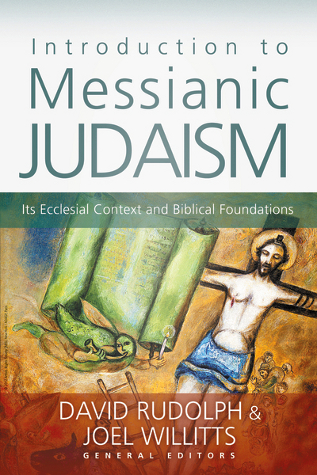
Introduction to Messianic Judaism: Its Ecclesial Context and Biblical Foundations

Let’s look at part of the above-quoted paragraph again.

…and the presence of Gentile followers of Yeshua who come alongside Messianic Jews to build a congregation for Yeshua within the house of Israel.

For a long time, I’ve been hearing some Messianic Jews describe the relationship between themselves and we Gentile Christians (whether we call ourselves “Christians,” “Hebrew Roots,” or “Messianic Gentiles,” in this context, it’s all the same) as two groups who come alongside each other, or more commonly expressed as “Christians coming alongside” Messianic Jews.

What does that mean?

I know the Messianic Jews who make this statement have an internal conceptualization about what it means, but I’ve never had access to that conceptualization. As someone on the outside looking in, this whole “alongside” thing has reminded me to two silos standing next to each other on a farm somewhere. Sure, silo B is standing “alongside” silo A, but otherwise, what do they have in common? They’re both silos, but let’s assume they hold different contents. Let’s also assume that there is no conduit (tunnel or other direct link) that attaches one silo to another and allows the contents of each silo to freely flow from one to another.

That’s how I’ve imagined the whole “alongside” thing.

Then I read the introduction to the Rudolph/Willitts book (pg 15) written by David Rudolph and received a revelation.

One of the main purposes of this book is to give Gentile Christians vision for the dialogical relationship they share with Messianic Jews so that they will come alongside the Messianic Jewish community and assist it. Coming alongside can take many forms, including (a) praying for the Messianic Jewish community, (b) sharing the good news of Yeshua in a way that affirms the calling of Jews who follow Yeshua to remain Jews and to become better Jews, (c) encouraging Jews in churches to be involved in the Messianic Jewish community, (d) supporting Messianic Jewish education, (e) contributing to the welfare of Messianic Jews in Israel, (f) helping local Messianic synagogues, (g) collaborating with Messianic Jewish ecclesial leaders and scholars, (h) preaching and teaching the Scriptures in a way that affirms God’s covenant faithfulness to the Jewish people and the bilateral (Jew-Gentile) nature of the church, and (i) including Messianic Jews in Jewish-Christian dialogue.

In reading Rudolph’s definitions for “coming alongside,” I seem to fit several of those points, at least as I perceive myself. Thus being alongside doesn’t mean just standing there next to, but actually being directly involved on numerous levels with the Messianic Jewish community including, as we saw in the quote at the top of the page, worshiping with Messianic Jews in a synagogue setting (and I’ll be coming alongside a number of Messianic Jews next month at the First Fruits of Zion (FFOZ) Shavuot conference).

Now, some people are going to take exception to this next part:

The demographic reality of Messianic Gentiles, including a second and third generation, raises a number of questions that the Messianic Jewish community is currently engaging. Many of these questions relate to time-honored traditions in the Jewish world concerning the participation of non-Jews in Jewish life. In mainstream synagogues, for example, Gentiles are not generally permitted to have a bar/bat mitzvah, wear a tallit, or read from the Torah because these are all activities in which a Jew affirms his/her covenant responsibilities as a member of the people of Israel, something a non-Jew cannot do. Some Messianic synagogues believe that these normative standards should be maintained for reasons of conscience and to avoid blurring the distinction between Jew and Gentile in the body of Messiah, a differentiation that the New Testament upholds (1 Cor 7:17-24; Acts 15; 21:24-25). Other Messianic synagogues contend that these customs should be modified so that Messianic Gentiles may participate more fully in Jewish community life.

-Rudolph/Klayman, pp 48-9

mens-service-jewish-synagogueI remember taking my three Jewish children to the local Reform – Conservative synagogue a number of years ago. As a Gentile I felt somewhat uncomfortable in reading from those portions of the siddur where I was supposed to refer to myself as “Israel” or to the patriarchs as my “Fathers.” Since it’s a pretty liberal place, the Rabbi once offered me an aliyah (to go up and read from the Torah) but I was incredibly intimidated and turned it down. In retrospect, and given my current values, I am glad I refused the honor because in a synagogue setting the honor is not mine. My children, once past bar/bat mitzvah age, were the ones accepting the aliyot because they (and their mother) are Jewish.

But as we’ve just seen within the Messianic Jewish community, the struggle continues regarding how to include and incorporate those Gentiles who have come alongside their Messianic Jewish brothers and sisters. Messianic Judaism is still in the process of creating itself and a “silo” containing both Jewish and Gentile components.

And that’s good. There should be a struggle. There was a struggle in Apostolic times, which was the whole point of Acts 15, but the Jerusalem letter didn’t define the specific halachah for Gentile participation in Jewish worship and ritual within the synagogue setting, at least not with any detail. In other words, we don’t have a Biblical model for how to include Gentiles in Messianic Jewish communities today.

At least not a good one.

And when the Gentiles heard this, they began rejoicing and glorifying the word of the Lord, and as many as were appointed to eternal life believed. And the word of the Lord was spreading throughout the whole region. But the Jews incited the devout women of high standing and the leading men of the city, stirred up persecution against Paul and Barnabas, and drove them out of their district.

Acts 13:48-50

And he said to me, ‘Go, for I will send you far away to the Gentiles.’

Up to this word they listened to him. Then they raised their voices and said, “Away with such a fellow from the earth! For he should not be allowed to live.” And as they were shouting and throwing off their cloaks and flinging dust into the air…

Acts 22:21-23

paul-editedAs you can see, many Jews didn’t have a problem with Paul’s message about the Messiah, but they had a really big problem with including non-Jews into a Jewish worship and ritual community. At that point in history, James and the Council of Apostles were the highest authority in our world for the Messianic community. Today, we have reversed the order, with Gentiles being the largest single body of people who worship the Jewish Messiah and Messianic Jews being only a tiny minority.

So should Gentile believers have control over the Messianic Jewish community? Common sense says “no” but that won’t stop some Gentile Christians from trying. Now keep in mind that for nearly twenty centuries, Gentile Christians have been treating Jewish people and Judaism with less than kindness and courtesy. It’s understandable that Jewish people should feel a little “standoffish” when approached by Christians since historically, Christians have been responsible for inquisitions, pogroms, and burning synagogues, Torah scrolls, volumes of Talmud, and occasionally bunches and bunches of Jewish human beings.

Remember those two silos I mentioned before? Now imagine that “coming alongside” wasn’t sufficient for a subset of Gentile believers. They want inside the Jewish silo and to take possession and control of the covenant identity and responsibilities assigned by God to Jews. Frankly, it doesn’t matter to this population of Gentiles if the Jews want them to do this or not.

Which is crazy, because based on my quotes of Rudolph, both in this blog post and in yesterday’s, Gentile Christians are not just welcome in Messianic Jewish communities, but we are an integral part of the body of Messiah. Messianic Jews and Gentile Christians must be united elements in a single body in order for the body to live and thrive, just as the human body must contain a heart, lungs, and liver in order to be alive. Yeah, they’re radically different organs with different functions, roles, and purposes, but they all work together.

For the body does not consist of one member but of many. If the foot should say, “Because I am not a hand, I do not belong to the body,” that would not make it any less a part of the body. And if the ear should say, “Because I am not an eye, I do not belong to the body,” that would not make it any less a part of the body. If the whole body were an eye, where would be the sense of hearing? If the whole body were an ear, where would be the sense of smell? But as it is, God arranged the members in the body, each one of them, as he chose. If all were a single member, where would the body be? As it is, there are many parts, yet one body.

1 Corinthians 12:14-20

I know Paul wasn’t necessarily talking about differences in Jewish vs. Gentile roles, and he was likely talking about the differences between prophets, preachers, teachers, and the guy who has to take out the garbage at church, but the principle and analogy holds up, at least to a degree. There are aspects to Jewish worship and community life that confirm the covenant identity and responsibility of a Jew as a Jew. Should Gentiles in the community also claim that identity, especially by force or demand? In First Century CE Jerusalem, the Jewish Council of Apostles had the authority to issue halachah that impacted both the Jewish and Gentile believers in Messiah. Shouldn’t Messianic Jewish communities in the Twenty-First Century CE have the right to issue halachah just for themselves and whoever attends their synagogues?

I know this gets into arguments that involve “flesh” and there are accusations of bigotry and even racism that fly about the blogosphere, but Gentiles aren’t being excluded from the Messianic community. The Messianic community is just in the process of defining itself and how it is supposed to work, something that was never made clear in the letters of Paul (and who better than Paul to have known such a thing?).

Both Judaism and Christianity are communities with unique cultures and characteristics. Some Gentile believers, for whatever reason, desire or fit better within the Messianic Jewish community than the Christian church community and that’s fine. Some Gentile Christians such as myself, take pieces of that Messianic culture, identity, and conceptualization and live it out within a church setting to support and encourage an understanding of Messianic Judaism in the church. I think that’s part of coming alongside, too.

going-to-church-sketchesBut I don’t tell my Pastor or the congregation what to do, what rights I have, how they aren’t being Biblical, or otherwise “storm the gates” of their community with my ideas and my personality just because I think the Bible tells me that I should (and I don’t think it tells me that I should). I respect the community and only speak my mind freely when invited (and Pastor Randy has been abundantly gracious with me in this area). I would never dream of going into the local Conservative – Reform shul or the local Chabad and telling the respective Rabbis that they’re doing it wrong and I’m there to straighten them out (although some local Hebrew Roots people have done exactly that in the past). Why would I do such a thing either in a church or in a Messianic synagogue? What would give me the right, even if I thought they had erred in relation to the commands of God?

In some ways, I’ve “come alongside” the church by going back to church since culturally, I’m not a “typical” Christian. Being part of a community isn’t about individual rights or making demands. It’s about being an active part of the community, making a contribution, benefiting the whole. Sure, the community gives back, but the community is about the community. We all benefit each other. I’m not there just to have my needs fulfilled, especially if that results in causing others in the community pain or discomfort.

One of the traditional songs sung at the Passover seder is Dayenu or “It would have been sufficient…” One portion of the traditional song goes:

If He had brought us before Mount Sinai, and had not given us the Torah – Dayenu, it would have been sufficient!

Part of my personal version goes:

If He had given us His only begotten Son so that the world might be saved, and had not given us the Torah – Dayenu, it would have been sufficient!

God has given us so much. What more do we want besides grace and mercy…and for believing Jews and Gentiles to come alongside each other and together bring honor and glory to King Messiah? It is sufficient.

I don’t share my thoughts because I think it will change the minds of people who think differently I share my thoughts to show the people who already think like me that they’re not alone.

-Anonymous

163 days.

Introduction to Messianic Judaism: An Exercise in Wholeness

intro-to-messianic-judaism-bigSimilarly, New Testament scholars have long-held that the Jerusalem community headed by Ya’akov/James was (1) primarily composed of Yeshua-believing Jews who (2) remained within the bounds of Second Temple Judaism and (3) lived strictly according to the Torah (Acts 15:4-5; 21:20-21). Michael Fuller, Richard Bauckham, Craig Hill, Darrell Bock, Robert Tannehill, and Jacob Jervell are among the many Luke-Acts scholars who maintain that the Jerusalem congregation viewed itself as the nucleus of a restored Israel, led by twelve apostles representing the twelve tribes of Israel (Acts 1:6-7, 26; 3:19-21). Their mission, these scholars contend, was to spark a Jewish renewal movement for Yeshua the Son of David within the house of Israel (Gal 2:7-10; Acts 21:17-26).

-David Rudolph
“Chapter 1: Messianic Judaism in Antiquity and in the Modern Era” (pg 22)
Introduction to Messianic Judaism: Its Ecclesial Context and Biblical Foundations

I very recently discovered this book in the “New Books” section of my local library. When I saw it, I immediately checked it out (on Thursday) so that means I have only two weeks to read it before I have to return it (no renewals for new books). I was pretty excited to find this book in my local library system (which covers several counties in Southwestern Idaho) since I’ve never seen any book that could remotely be called “Messianic” in our collection of libraries before. Congratulations Rudolph and Willitts for “breaking the barrier,” so to speak.

But what made me write this “meditation” based on the Introduction and Chapter 1 of this book was the focus on a topic that has been near and dear to my heart these past few months: the ancient Messianic Jewish world and how it impacted newly minted Gentiles disciples of the Jewish Messiah.

You all know the argument. In Acts 15, what exactly did James and the Council do? Did they cancel the Torah for all disciples of Jesus or only for the Gentile disciples? Opinions vary widely (and sometimes wildly), with most Christians seeing the chapter as the final death knell of the Torah and a minority Hebrew Roots group stating that it was the foundation of universal Torah obligation for everyone.

Messianic Judaism as I’ve come to understand the movement, somewhat splits the difference.

As F. Scott Spencer points out, “The representatives at the Jerusalem conference – including Paul – agreed only to release Gentile believers from the obligation of circumcision; the possibility of nullifying this covenantal duty for Jewish disciples was never considered.” If the Jerusalem leadership had viewed circumcision as optional for Yeshua-believing Jews, there would have been no point in debating the question of exemption for Yeshua-believing Gentiles or delivering a letter specifically addressed to these Gentiles. Michael Wyschogrod rightly notes that “both sides agreed that Jewish believers in Jesus remained obligated to circumcision and the Mosaic Law. The verdict of the first Jerusalem Council then is that the Church is to consist of two segments, united by their faith in Jesus.”

-Rudolph, pg 23

Sometimes when I’m having these debates with Pastor Randy in his office, I feel like it’s just him and me (well, it is just the two of us) with my tacit partner being D. Thomas Lancaster, since it is his book we are using as the object of our talks. In finding the Rudolph/Willitts book suddenly available to me, it’s a little like finding gold or a golden information treasure trove that links back to numerous, scholarly information sources, all supporting the basic belief that the ancient Jewish believers in Jesus (Yeshua) never saw being released from circumcision and Torah observance as an option. The only question on their minds was whether or not the Gentiles had to be circumcised and thus obligated to said-Torah observance as Jews.

It’s no secret that I depend on First Fruits of Zion (FFOZ) as my primary information repository for all things Messianic (and by inference, all things Christian), but no matter how reliable a source they may be, they are still one source. It’s sort of like putting all my eggs in one basket. I know better than to believe a single source of data without searching for corroborating support. While the authors and contributors of the “Introduction” book (Rudolph and Willitts are the primary authors of the book, but there are multiple, scholarly contributors as well, so the book reads like an anthology) share many of the views espoused by FFOZ, they don’t share all of them, and that variability lends itself quite well to my corroboration requirement. Do other scholars in the Messianic and Christian academic spaces support the basic belief of early believing Jewish adherence to the Torah that was considered normative and not anachronistic or transient, and do they also share the belief that Gentile disciples were united with their Jewish counterparts in the body of Messiah without having to ever accept obligations to Torah observance that were identical to Jewish observance?

ancient_jerusalemI’ve only read the Introduction and Chapter 1 of the Rudolph/Willitts book as I write this, but so far, the answer is a resounding “yes.”

Rudolph cites Philip S. Alexander’s “Jewish Believers in the Early Rabbinic Literature (2d to 5th Centuries) from the book Jewish Believers in Jesus: The Early Centuries (ed. Skarsaune and Hvalvik), 686-87:

They lived like other Jews. their houses were indistinguishable from the houses of other Jews. They probably observed as much of the Torah as did other Jews (though they would doubtless have rejected, as many others did, the distinctively rabbinic interpretations of the misvot). They studied Torah and developed their own interpretations of it, and, following the practice of the Apostles, they continued to perform a ministry of healing in the name of Jesus….[T]hey seem to have continued to attend their local synagogues on Sabbath. They may have attempted to influence the service of the synagogue, even to the extent of trying to introduce into it the Paternoster [the Lord’s Prayer], or readings from the Christian Gospels, or they may have preached sermons which offered Christian readings of the Torah. The rabbis countered with a program which thoroughly “rabbinized” the service of the synagogue and ensured that it reflected the core rabbinic values.

According to Rudolph, this is a description of Jewish believers who lived in the Galilee during the Tannaitic period or during the first two-hundred years (or so) of the Common Era (CE). In other words, according to Alexander, Jewish believers in Messiah continued to live as observant Jews after the lifetimes of the original Jewish Apostles of Christ.

I know I’ll get some criticism on a couple of points: the first being “circumcision” since it’s not Biblical as a means of conversion from being a Gentile to being Jewish (it certainly is Biblical in terms of the Abrahamic covenent which was re-enforced for the Jewish people by the Mosaic and New Covenants). I’m not going to get into a big argument. The Torah doesn’t presuppose circumcision as a sign of conversion because in the days of Moses, it wasn’t possible to convert to Judaism. One does not convert to a tribe or later, to a clan. By the days of the Maccabees forward, tribal and clan affiliation as a primary definition within national and covenantal Israel had been lost and Jewish religious authorities halachically introduced the process of allowing Gentiles entry into the covenants through ritual conversion.

Woe to you, scribes and Pharisees, hypocrites! For you travel across sea and land to make a single proselyte (convert)…

Matthew 23:15

Even Jesus accepts that the Pharisees and scribes (scribes can include other sects of first century Judaism including Essenses and Sadducees) were converting Gentiles to Judaism.

walking-together2The second point of criticism I’ll receive is how I believe that Jewish but not Gentile believers were obligated to full Torah observance as a result of the Acts 15 ruling (I’d receive a different criticism from most Christians by my belief that the Jewish apostles and disciples remained “under the Law”). See the earlier quotes in this blog post plus my six-part Return to Jerusalem series for my opinion and text supporting said-opinion on this topic. Again, I don’t want to spend a lot of time on this point. I have something more important to talk about.

The beginnings of this book go back to England. Joel Willitts and I met as PhD students in the New Testament at Cambridge University, where we studied under the same supervisor…

Joel and I became good friends and found that much mutual blessing took place whenever we had conversations about the Bible and theology. I valued Joel’s perspective as a Gentile Christian and Joel valued my perspective as a Messianic Jew. There was a synergy in our exchange that often led to fresh insights and unforeseen avenues of theological inquiry. My experience at Tyndale House with Joel and other Gentile Christian friends taught me that there is indeed a God-designed interdependence between Messianic Jewish and Gentile Christian ecclesial perspectives, and that one without the other is woefully inadequate.

Those were magical days in Cambridge. Joel and I talked about what we wanted to accomplish after we completed our doctoral programs and agreed to write a book together.

-Rudolph from the book’s Introduction, pg 18

The result of that dream is the book that’s sitting next to me on my desk as I compose this blog post. A Gentile Christian and a Messianic Jew collaborated together as co-authors, co-editors, and close friends to do what in all likelihood, they could never have done independently. In fact, it took twenty-six Messianic Jews and Gentile Christians to create Introduction to Messianic Judaism. The product is a physical example of an ecclesial reality. Messianic Jews and Gentile Christians need each other. Apart, each one is only half of the whole. Together they…we are the body of Messiah.

Christianity, in general, is the ultimate in inclusionist movements. Any one from any place can turn to Messiah and be accepted. No prior experience required. As it turns out in reading Rudolph, his vision of Messianic Judaism is one that isn’t whole without including Gentile Christians. Our differences complement each other, as do the differences between a man and a woman in a marriage. We aren’t complete without each other.

I look forward to continuing my reading of Rudolph’s and Willitts’ book. So far, it is inspiring hope.

Tazria-Metzora: Time Out

whispererTzara’at, the skin discoloration mistranslated for millennia as “leprosy,” is a curious disease. It is not contagious—it was only acquired by virtue of speaking badly of other people. It was a physical skin discoloration caused by a spiritual defect. The “metzora,” the sufferer with tzara’at, had to stay outside the city and inform all that he or she was spiritually impure.

-Rabbi Shlomo Yaffe
“Healing Hubris”
Chabad.org

Judaism does not believe in free speech.

Talking ill of your neighbor, even if it is the truth, is unequivocally banned. In fact, the Talmud (Erchin 15b.) equates gossip-mongering with idolatry, licentiousness and murder—the three cardinal sins—combined!

Moreover, the Jerusalem Talmud tells us that “King David’s soldiers would fall at war, for although they were completely righteous, tale-bearing was widespread among their ranks… Ahab’s militia, however, although they were notorious idol-worshippers, were victorious on the battlefield because of their exceptional camaraderie . . .” (Pe’ah 1:1.)

Apparently, G‑d takes greater offense at the badmouthing of His children than at the badmouthing of Himself!

In some ways, then, the gossiper is the worst sinner of all. As such, his “punishment” teaches us much about the nature of all the punishments prescribed by the Torah.

-Rabbi Mendel Kalmenson
“Spiritual Rehab”
Chabad.org

Commenting on this week’s Torah Portion TazriaMetzora is a difficult task, at least if I don’t want to seem repetitive. After all, I’ve been “bashing” lashon hara or “evil speech” for a few days now as a problem I have with religious people and in how such speech destroys God’s reputation and all our lives.

It is thought in some circles of Judaism, that the cause of tzara’at in ancient times was evil or ill speech. The consequence was that, after the condition was confirmed by a Priest (with the cry of “Unclean!”), the metzora was set outside the camp. There was a period of waiting and then re-examination. If the metzora was declared clean, then he or she undertook a certain set of rituals and then could re-enter the camp. If not, then they had to wait some more and the process would repeat itself. Presumably, anyone who was a metzora would eventually be declared clean and then re-enter the camp of God.

But what if someone was never declared clean? What if the disease wouldn’t go away? I guess that would mean not only the symptoms would remain, the skin disease, but the underlying cause would keep hanging around: talking ill of your neighbor (and your neighbor ultimately could be anyone).

“If your brother sins against you, go and tell him his fault, between you and him alone. If he listens to you, you have gained your brother. But if he does not listen, take one or two others along with you, that every charge may be established by the evidence of two or three witnesses. If he refuses to listen to them, tell it to the church. And if he refuses to listen even to the church, let him be to you as a Gentile and a tax collector.

Matthew 18:15-17

I suppose that’s the closest New Testament equivalent to the condition of the metzora who sinned against his or her neighbor by gossiping against them. Well, it’s not as if the metzora didn’t exist in the days when Jesus walked in Israel:

When he came down from the mountain, great crowds followed him. And behold, a leper came to him and knelt before him, saying, “Lord, if you will, you can make me clean.” And Jesus stretched out his hand and touched him, saying, “I will; be clean.” And immediately his leprosy was cleansed. And Jesus said to him, “See that you say nothing to anyone, but go, show yourself to the priest and offer the gift that Moses commanded, for a proof to them.”

Matthew 8:1-4

The word rendered as “leper” in verse two is probably a rather poor translation or there was no Greek word that captured the Hebrew “metzora.” It seems that, in one fell swoop, Jesus forgave the metzora of his sin and cured his physical and spiritual ailments.

the_leperIn some sense, it’s a shame we don’t suffer from tzara’at today. If our sins were as plain as the noses on our faces, perhaps we would be much more diligent in avoiding sin. Then again, to the degree that there was such a law that required the metzora be examined and isolated from the camp, I guess people under such a law weren’t able to avoid such a sin, even knowing the consequences.

Still, it seems cruel. Why isolate someone from the community if they’ve sinned? We see examples in both the Tanakh and in the Apostolic Scriptures. The metzora endured temporary (hopefully) exile, while the passage from Matthew 15 teaches that a person gets “three strikes” before they are “out.” Do they ever get back in? How did the metzora get back into the camp?

Rather than talk to others, he needed to talk to himself.

This wasn’t about revenge; it was about reflection.

He wasn’t being hurt because he’d hurt others in the past. He wasn’t even being isolated so that he wouldn’t come to socially isolate others in the future. He was simply being given the opportunity to get to know his present self.

People who hurt and isolate others are lonely and in pain themselves. Those who try to destroy other people’s security and happiness are themselves often sad and insecure.

The Torah—which is concerned with kindness, not power—sees the sinner as a victim, not an enemy, and therefore recognizes his need to be strengthened rather than weakened. This, the Torah perceives, cannot be done in the presence of others, but has to be done alone.

In the presence of others, he would see that which he lacked. Alone with himself, he was able to see that which he possessed.

-Rabbi Kalmenson

This isn’t hard to understand. Any parent who has put their child in “time out” understands what is happening. This is what parenting experts and educators call “logical consequences.” If you can’t get along with your community (your brother, mother, playmate), you don’t get to be with them for a certain period of time. If you sin against your brother (in Christ), and you don’t repent, you don’t get to be with your brother or any of your brothers, presumably until you are able to repent.

Then Peter came up and said to him, “Lord, how often will my brother sin against me, and I forgive him? As many as seven times?” Jesus said to him, “I do not say to you seven times, but seventy-seven times.

Matthew 18:21-22

Oh, yes. When they do repent, you take them back. That’s what happened to the recovered metzora and what was supposed to happen to the brother who sinned against you. When they repent, you take them back. Even if they sin against you later and then repent, and then sin against you later, and then repent, and then…

Gee, really? Is this like a sin and repent and forgive revolving door? I suppose there must be limits.

Or do you not know that the unrighteous will not inherit the kingdom of God? Do not be deceived: neither the sexually immoral, nor idolaters, nor adulterers, nor men who practice homosexuality, nor thieves, nor the greedy, nor drunkards, nor revilers, nor swindlers will inherit the kingdom of God.

1 Corinthians 6:9-10

That sounds pretty harsh, but then again, if someone is willfully and habitually sinning, are they really saved at all? Are they really members of Messiah’s “sheep pen?” Can we flaunt the will of God to His Face and still expect that He will write our names in His book of life?

Why are we sometimes exiled from the community of brothers?

And so, ultimately, this was a therapeutic time for the metzora, focused not on hurting him but on curing him. Rather than confine him, this procedure aimed to free him.

Could this be the reason that the Torah portion which describes the metzora’s impurity, likened in Jewish literature to spiritual death, (Talmud, Nedarim 64b.) is called Tazria, which means “conception,” or the beginning of new life? (see Likkutei Sichot, vol. 22, pp. 70ff.)

-Rabbi Kalmenson

isolationI suppose there’s a certain merit in the idea of isolating yourself when you realize that you are living a double-minded life. Why wait to be publicly humiliated when you can stop it now, take a “time out,” and turn to God to get yourself straight. How that’s implemented depends on your sins. Are you a gossip? Are you a drunk? Are you into “inappropriate adult material?”

For some of that, you might not be able to deal with it alone and in fact, being alone might make it worse. Sometimes you have to withdraw from your usual social avenues and connect with a group or individual who is there specifically to help you out with your specific problem.

The closest ancient analogy is the Priest, who was responsible for the initial and subsequent examinations of the metzora. The metzora’s counselor during isolation was God. In modern times, we continue to need God, but sometimes he sends us additional, human help.

And there’s hope for life after “tzara’at.”

Life isn’t out to get you.

It’s out to be gotten by you.

And if and when in life you are forced to punish, do it like a pro.

Imitate G‑d.

Don’t hurt out of weakness; repair out of strength.

-Rabbi Kalmenson

A life under repair might not look pretty, at least in the beginning, but if the life is truly being repaired, that means productive work is being done. Give it time. Give God time to work with you (and me). Jesus told Peter to forgive repeatedly, over and over again, so that none should perish but everyone come to repentance.

Good Shabbos.

Reviewing FFOZ.TV: A Promise of What is to Come

ffoz-tvThe First Fruits of Zion television program delivers a high-energy, professional presentation of the prophetic aspects of the Gospel message from a Messianic Jewish perspective. Every episode opens new insights into the teaching of Jesus of Nazareth with end-times implications. Kingdom-focused and Jesus-centered, this is Messianic Jewish teaching at its best. It will encourage Christians to go deeper in their personal relationship with the Jewish Messiah.

The program tagline, “A Promise of What is to Come,” acknowledges that there is something greater taking place than just learning and understanding the bible in a new way.

We are part of a restoration and a return predicted by Moses, the prophets, Yeshua (Jesus) and the apostles. The modern state of Israel and the messianic Jewish revival we see today is only the first blossoming of the great, final redemption, which will usher in the kingdom of messiah.

-from “Welcome to FFOZ TV”
tv.ffoz.org

Messianic Jewish educational ministry First Fruits of Zion (FFOZ) launched its own television series earlier this year with an eye on reaching Christian television networks and reaching Christians. Boaz Michael and Toby Janicki were recently interviewed by God’s Learning Channel (GLC) about FFOZ.tv, and GLC is the first Christian TV network to begin broadcasting the FFOZ TV series. My understanding is that FFOZ.tv is currently targeting other Christian television venues for their program in order to “spread the word.”

But what about their program?

Boaz Michael, Founder and President of FFOZ asked me to review the program on my blog. I’ve been aware of FFOZ.tv for about a year now, having viewed an early version of the first episode at last year’s FFOZ Shavuot conference. I’ve seen a few clips of the show since then, but I’m not a big television watcher, so I didn’t go out of my way to take a look at the finished product.

Overview

For my review, I chose to sample two episodes: episode 4, Jewish Prophesies, originally aired on March 17, and episode 5, Son of David, originally aired on March 24 (the full episode list is available for those shows that have already aired and they can be viewed freely online).

Structure and Format

Each show is approximately thirty minutes long and follows a standard format. Toby Janicki is the primary host of the program, presenting the issue to be examined during the broadcast, taking the audience through the scriptures to examine the topic, say Messianic prophesies, and then breaking the information down into three major “talking points.” Mid-show, the scene shifts to FFOZ teacher Aaron Eby speaking from Israel and explaining aspects of Judaism and the Hebrew language as they apply to the subject being discussed. The scene then shifts back to Toby in the studio, where he brings the program and the topic to a conclusion. At the very end, Boaz Michael makes a brief appearance, wrapping up the broadcast and introducing the topic for next time.

Content

The show is written for a Christian audience that knows little or nothing about Messianic Judaism and Judaism in general. For those of us who are familiar with the subjects involved, the content seems elementary most of the time, though therewere “tidbits” of information I found new or at least that were clarified for me. The show is definitely designed to be “Messianic Judaism 101” and its most obvious purpose is to gently bring mainstream Christians into a beginning familiarity with the Jewishness of Jesus, the continued meaning of the Jewish people and the nation of Israel in the present world and the Kingdom of God, and how the future of Christianity must always look to Jewish redemption for the people and nation of Israel as the goal.

ffoz-teaching-teamThere are twenty-six episodes “in the can” for the first season of the FFOZ.tv series. Each episode builds upon one another, so while each individual broadcast is a self-contained show, the audience won’t gain access to the complete Gospel message being presented from a Messianic Jewish perspective unless they view all of the episodes. Presumably, if the series is successful, the first twenty-six episodes will only be the beginning.

In the two shows I viewed, Toby regularly introduces himself as a Gentile who “practices Messianic Judaism.” This appears to be included to re-enforce Toby’s connection with his Gentile Christian audience but also connect him back to Messianic Judaism as a practitioner and teacher. Aaron’s portion, by contrast, is set in Israel, with his interviews being done “on the streets” to give a definite “Jewishness” to his content.

Look and Feel

Production values for the show are high and are at or near the levels of commercial television programs. The primary studio presents a “den” or “office” setting in rich earth tones, low lighting, and with numerous Jewish artifacts in the background to communicate warmth, approachability, and of course, Judaism. The music seems a little dramatic at times and for a couple of moments (during the HaYesod ad I think…I’m getting to that), I felt like I was getting ready to blast off into space. However, I noticed the tendency toward dramatic music and imagery on GLC when I watched the introduction to the Michael/Janicki interview, so maybe it’s an expected element of Christian television.

As I mentioned, Aaron’s part of the program is always filmed “on the streets of Israel” (presumably Jerusalem) so that the background views are universally recognizable as Jewish and Israeli. Aaron’s portions seem to create a bridge between the audience and Israel, supporting the overarching message of FFOZ.tv that Christianity is Jewish and irrevocably tied to Israel and Judaism.

Marketing

FFOZ is a non-profit organization and their primary “product” is the educational materials they produce. The purpose of FFOZ is to create and disseminate specific data to both Christian and Jewish audiences (see Vine of David for a list of materials specifically designed for Jewish people). The real “product” of FFOZ then is information which is packaged in a variety of forms including books, magazines, programs such as HaYesod and Torah Club, and of course, television.

However, in order to inform potential audiences of the material that is available, you have to market it. That’s another component of FFOZ.tv. The very first scripture that Toby reads in any program (of the two I viewed, anyway), is from the Delitzsch Hebrew Gospels. The rest of the time, he uses the ESV Bible. As Toby is reading from the Delitzsch version, a phone number and website URL appear at the bottom of the screen telling the audience how to purchase a copy.

About half to three-quarters of the way through the broadcast, the program content breaks for an ad about HaYesod, featuring mostly the FFOZ teaching staff presenting information on this learning program (which seems to have evolved quite a bit since I sat in a HaYesod class a decade or so ago).

Near the end of the broadcast, another commercial came on, this time describing the FFOZ Friends program, which allows people who subscribe to donate monthly to the ministry and describes, depending on which tier they choose, which products and services they’ll receive.

On the one hand, this all seemed a little distracting to me, but on the other hand, since at my “day job,” I directly report to the Vice President of Marketing, I have a deep understanding of the necessity and purpose of marketing any product that is for public consumption. You can’t buy and learn from something if you don’t know it exists.

Conclusion

resources-studyFFOZ.tv is made to introduce Christian audiences to Messianic Judaism, Judaism, and Israel. Although the Christian faith has its origins in first century Judaism and the Jewish Messiah, we have diverged from them significantly in the past twenty centuries, until the “Jewishness of Jesus” and the Hebraic beginnings of our faith are only a dim memory. FFOZ.tv is attempting to gently guide its Christian audience in a friendly and approachable atmosphere, back to some of the key concepts that define Messianic Judaism in order to realign Christian thoughts and feelings back toward our “Jewish roots.” The television program is also a “jumping off” platform for the audience to use in acquiring and exploring other FFOZ products, which will then (ideally) re-enforce and deepen the information base of Christians on Messianic Judaism, the absolute requirement of Israel’s national redemption in the Kingdom of God, and the vital role of the church in bringing about Jewish primacy and restoring Israel to its former glory, all in anticipation of the return of King Messiah.

If one picture is worth a thousand words, then what is television? In this case, television is entrance for any believer who watches Christian television or who is most likely to accept information in a video format, to the message of the Gospels from the perspective of Messianic Judaism. It provides and easy to access and easy to absorb doorway for the Christian to begin to encounter the Jewish Messiah King and the promise of what is to come.

Please visit First Fruits of Zion: A Promise of What is to Come and view any or all of the episodes available (seven as I write this but more are coming). Watching a single episode will only take thirty minutes of your time and you can judge for yourself whether or not if FFOZ.tv has a message that is speaking to you.

The Unsimple Truth

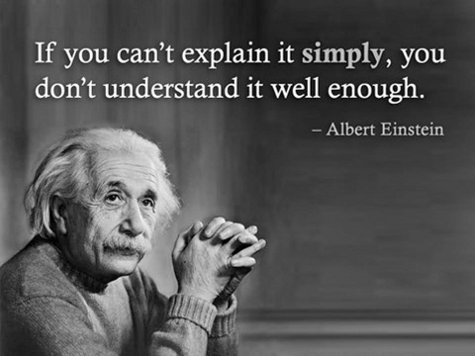
einstein_simplyIf you can’t explain it simply, you don’t understand it well enough.

-attributed to Albert Einstein

According to Rashi, the question is directed against Rav Yirmiyah who had said that the basket in the tree does not actually have to be within ten tefachim of the ground to be valid. We are dealing with a long basket where it could be tilted and emptied even without being brought below into the reshus harabim. In contrast to this, Rav bar Sh’va brings a Baraisa where an eiruv is not valid unless it is actually brought to where it must be situated. Here, we do not take into consideration the fact that the eiruv should be valid due to the potential that it could
theoretically be brought during bein hashemashos to its destination.

Daf Yomi Digest
Distinctive Insight
from “Rabbinic injunctions and Bein HaShemashos
Eruvin 33

I’m a failure. More to the point, I don’t understand God, Jesus, faith, and spirituality well enough. I can’t explain it simply. I’m not sure I can explain it at all. Certainly the fact that I have posted nearly eight-hundred articles in this “morning meditations” blog (not to mention other blogs) about these subjects and have hardly scratched the surface must mean I don’t understand all this well enough. I can’t explain what I believe simply. I certainly can’t explain it briefly.

I quoted from a commentary on an excerpt from Talmud above to illustrate the level of complexity of the halachot related to Orthodox Judaism. Although I read from the Daf Yomi Digest daily, I scarcely comprehend what I’m reading and what I understand most clearly is that the Talmud is an enormously complex set of works. I don’t know how observant Orthodox Jews manage to obey all of the minute details involved in daily living. I can only imagine that Einstein would have contended with the sages based on his above-quoted statement (though it is unsure if Einstein or Richard Feynman actually said those words).

I can hardly be said to live anything close to an Orthodox Jewish lifestyle in my “observance” as a Christian, but as I write and write and write, and then read back what I’ve written, I realize that I am no closer to truly comprehending God and faith than I was when I first accepted Jesus Christ as Lord. Sometimes I wonder if I’ve even gone that far.

For I do not understand my own actions. For I do not do what I want, but I do the very thing I hate. Now if I do what I do not want, I agree with the law, that it is good. So now it is no longer I who do it, but sin that dwells within me. For I know that nothing good dwells in me, that is, in my flesh. For I have the desire to do what is right, but not the ability to carry it out. For I do not do the good I want, but the evil I do not want is what I keep on doing.

Romans 7:15-19

If we’re honest with ourselves as Christians, then I suppose we all have to admit that this statement of Paul’s is also true of us. How can we live a life we call “holy” and yet still struggle with the mundane, the common, and even the evil within us? If God’s Word is written on our hearts, how can we defy that word and pursue what we know isn’t right? I can only imagine that atheists have moral struggles as well, though as I recall myself from before I came to faith, they didn’t seem as dire.

Is a life of faith really that hard or that hard to explain? It certainly seems that hard to live. But then again, is Einstein’s quote the litmus test we should be using against ourselves? After all, he also said this:

If I could explain it to the average person, I wouldn’t have been worth the Nobel Prize.

Einstein made that statement in response to being asked to give a brief quote on why he won the Nobel Prize. That’s the problem with taking quotes out of context. It’s easy to make a person seem completely inconsistent. How much more difficult it is to analyze “chunks” of the Bible and find consistency and comprehension?

My conversations with Pastor Randy (which are on hiatus for the month of April and for several weeks in May) about D.T. Lancaster’s book The Holy Epistle to the Galatians aren’t hugely complex, but they do get detailed…and we’ve barely covered one chapter in Galatians! How about the book of Romans?

mystery-in-midtownI know that Mark Nanos is popular in Messianic circles, but some years ago, when I tried to read his book The Mystery of Romans, I gave up, not getting very far in his book. Maybe I’d be better able to comprehend his writing now, but Paul’s letter to the Roman church is extremely dense with meaning that I wonder if I’ll ever truly understand either Paul or Nanos. I know the Nanos books on Romans and Galatians should be on my “required reading” list, but who knows if they’ll do me any good? I’m tasked to understand a scholar and author in order to understand the mystery of “letter writer.” Are these reasonable goals?

In some ways, trying to comprehend a life of faith is a fool’s errand. While the concept of Christian salvation is supposed to be simple enough for a small child to understand, the fact remains that the Bible contains depths that if plumbed, would make even explorers such as Jacques Cousteau bolt for the surface as if hotly pursued by Leviathan.

Maybe it’s not quite that bad, but I feel that way sometimes.

Of course there’s a difference between understanding a life of faith and living it. Well, maybe not for the Orthodox Jews since behavior and conceptualization are largely interwoven, but certainly for Christianity, where one can live a basic Christian life without having to know much of the Bible at all. You can feed the hungry, visit the sick, remain faithful to your spouse, give to charity, pray to God, and fellowship with other believers without having to spend even a single day in seminary. Of course studying the Bible gives such a life context and meaning, but you don’t really have to know all of the arcane debates about the doctrine of Divine Election, for example.

Don’t get me wrong. I enjoy reading. I enjoy studying. I enjoy discussing all of these little details. But at what point do you turn it all off and just spend time with God? What’s the point of all of our debates on the web? Why do you try to convince me you’re right about something and why do I try to convince you that I’m right about something? What difference does it make? OK, probably a pretty big one, depending on what we’re talking about, but we can’t all be right? Can we all be wrong? That seems far more likely.

If we believe God exists, then He must exist separately from what we believe and from the web of theology and doctrine we’ve spun for ourselves. God must be an “objective” God. If the world’s population stopped believing in God totally and completely, God would continue to exist and His plan for the universe would continue to move forward toward its ultimate conclusion. We spend all our lives examining the Bible trying to uncover the clues to that plan and what it means in our lives, but we only get bits and pieces, and much of the time, we can’t really be sure we understand what we think we’ve got in our hands.

This theologian espouses one particular theory and another theologian opposes him or her. More theories spring up, more debates occur. But God is God. Our theories and debates don’t affect him in the slightest. He exists as He exists regardless of our “religious orientation.”

We’re all seeking truth but even with the help of the Holy Spirit, who is supposed to guide us in all truth (John 16:13), we all come up with different conclusions. You’d think if there were one Spirit and He was guiding us to One truth, we’d all arrive at the same conclusion.

But we don’t.

I’m most of the way through Carlos Castaneda’s book The Teachings of Don Juan: A Yaqui Way of Knowledge. It’s not really what I expected, but I appreciate Castaneda’s honesty in saying that he didn’t quite succeed either in his field study or as a disciple of don Juan. I decided to read this book because I hadn’t read any Castaneda before and felt I owed it to myself to have the experience.

letting-goMaybe I should just let go and move away from religious and spiritual reading altogether and just read for pleasure (not that reading books on religion and spirituality aren’t pleasurable). I used to read a lot of science fiction and mystery back in the day, with a few of the classics thrown in just for giggles. Maybe that would be more satisfying. Nothing I know or don’t know affects God. I’m not sure it even affects me. I can probably explain simply Castaneda’s book, but how could I possibly explain even one letter of Paul’s? Many have tried, including Nanos and Lancaster, but what does it matter if you end up with a body of work about the Bible that is fraught with disagreement?

I guess there’s a reason people pursue truth all their lives but either never find it or find only what some people (but not all) call “truth.” Maybe we never find it at all. Maybe we just delude ourselves and say what we have is “truth” because living a life of existential uncertainty is too difficult to bear.

Maybe that’s why there are so many atheists. There are no mysteries to the universe beyond what they can see. It’s all nuts and bolts with no colors, textures, or moods. There’s only light and darkness. More’s the pity.

One who returns from the darkness must bring of it with him and convert it to light. He must exploit his experience to surge higher and higher with greater strength.

Therefore, the one who returns from a distance is greater than the one who was always close. What matters is not so much where you stand, but with what force you are moving in which direction.

-Rabbi Tzvi Freeman
“Exploiting the Darkness”
Based on letters and talks of the Rebbe
Rabbi M. M. Schneerson
Chabad.org

So which direction should I move in next in pursuing truth or God or whatever?