Category Archives: Torah Portion

The Consequences of Being Chosen: The Laws of Tumah

Speak to the Children of Israel and say to them: Any man who will have a discharge from his flesh, his discharge is contaminated.

Vayikra (Leviticus) 15:2

It is learned from this verse that only the Children of Israel are subject to the laws of tumah; people of other nations do not become tamei with the onset of any of the symptoms described in these laws. The severity with which the Jewish people are treated with regard to tumah is reflected in the term “speak to,” a term that implies a severe or stringent communication (see Rashi to Shemos 6:2).

A Torah Thought for the Day, p.215
Thursday’s commentary on Parashas Metzora
A Daily Dose of Torah
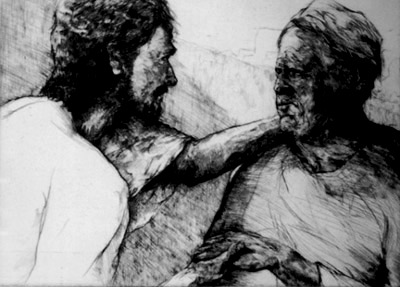
heal meAccording to this commentary, only the Jewish people are susceptible to what one person has called “spiritual skin disease,” not the people of the nations. We don’t have this disorder with us today to test that belief even though we know that these conditions did exist in the time of Jesus (Yeshua):

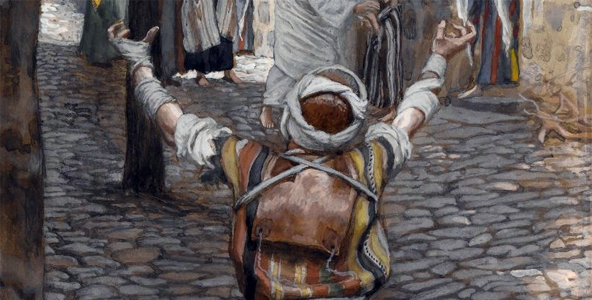
While He was on the way to Jerusalem, He was passing between Samaria and Galilee. As He entered a village, ten leprous men who stood at a distance met Him; and they raised their voices, saying, “Jesus, Master, have mercy on us!” When He saw them, He said to them, “Go and show yourselves to the priests.” And as they were going, they were cleansed. Now one of them, when he saw that he had been healed, turned back, glorifying God with a loud voice, and he fell on his face at His feet, giving thanks to Him. And he was a Samaritan. Then Jesus answered and said, “Were there not ten cleansed? But the nine—where are they? Was no one found who returned to give glory to God, except this foreigner?” And He said to him, “Stand up and go; your faith has made you well.”

Luke 17:11-19 (NASB)

Well, wait a minute. A Samaritan was among those men of Israel who were healed of tzara’at? How can this be if the commentary above states only the Children of Israel suffer from this affliction?

And this isn’t the only incident:

Now Naaman, captain of the army of the king of Aram, was a great man with his master, and highly respected, because by him the Lord had given victory to Aram. The man was also a valiant warrior, but he was a leper. Now the Arameans had gone out in bands and had taken captive a little girl from the land of Israel; and she waited on Naaman’s wife. She said to her mistress, “I wish that my master were with the prophet who is in Samaria! Then he would cure him of his leprosy.”

It happened when Elisha the man of God heard that the king of Israel had torn his clothes, that he sent word to the king, saying, “Why have you torn your clothes? Now let him come to me, and he shall know that there is a prophet in Israel.” So Naaman came with his horses and his chariots and stood at the doorway of the house of Elisha. Elisha sent a messenger to him, saying, “Go and wash in the Jordan seven times, and your flesh will be restored to you and you will be clean.” But Naaman was furious and went away and said, “Behold, I thought, ‘He will surely come out to me and stand and call on the name of the Lord his God, and wave his hand over the place and cure the leper.’ Are not Abanah and Pharpar, the rivers of Damascus, better than all the waters of Israel? Could I not wash in them and be clean?” So he turned and went away in a rage. Then his servants came near and spoke to him and said, “My father, had the prophet told you to do some great thing, would you not have done it? How much more then, when he says to you, ‘Wash, and be clean’?” So he went down and dipped himself seven times in the Jordan, according to the word of the man of God; and his flesh was restored like the flesh of a little child and he was clean.

2 Kings 5:1-4, 8-14

the leperA non-Jew, Captain of a foreign army, and a pagan was afflicted with this disease and cured by the Prophet Elisha. How can this be? Especially given the following from the same “Torah Thought for the Day:”

However the verse immediately adds [Hebrew phrase]. The root of [Hebrew word] can carry the connotation of “distinguished.” Klal Yisrael is thus told that their being subject to more tumah than others is a sign, not that they are on a lower level, but that they are being held to a higher standard. For when there is no tumah, there can be no exalted level of purity either.

As I mentioned, this condition doesn’t exist among the Jews or anyone else in the modern era, probably because the proscribed cure involved submitting one’s self to the Levitical priests, which as an organized body, are not currently present.

I can see the line of reasoning regarding only Israel being vulnerable to becoming tamei due to their special chosen status and, being given the Torah, having a much higher obligation to Hashem than the people of the nations.

But in Messianic times, upon the Temple being rebuilt and the priesthood being restored, will the laws of tumah also be re-established?

This might be the only way to test whether or not Gentile believers, disciples of the Master, Rav Yeshua, will endure such a visible indicator of their/our sins.

Of course, in the resurrection and under the New Covenant, people will possess an unparalleled apprehension of the Holy Spirit and it will become natural for them to not sin, so perhaps the whole point is moot.

The curing of Naaman by Elisha led the foreign Captain to the worship of the One true God of Israel, so his becoming tamei was ultimately for his benefit.

The Samarian who was unclean was also healed for the glory of the Almighty.

I can believe that the Jewish people are expected to exhibit a higher level of spirituality, and the consequences of failing that results in a greater level of discipline from their God than for the rest of us. However, when a Gentile comes to faith in God through the faithfulness of the Jewish Messiah, we are grafted into the blessings of the New Covenant (indwelling of the Spirit, promise of the resurrection), so who is to say that more isn’t expected of us as well, not necessarily in the manner of the Jews, but more nonetheless?

whisperIf Hashem were to reinstate this class of afflictions tomorrow, would Gentile believers be as vulnerable to them as the Jewish people and for the same reasons? Perhaps we are fortunate in never knowing for sure.

Sorry it’s taking so long to submit my next review from the Nanos and Zetterholm volume Paul within Judaism: Restoring the First-Century Context to the Apostle. I’m currently in the middle of an essay written by Mark Nanos and it’s rather verbose. Hopefully, I’ll have the article read and a review written by early next week.

The Wild and Dangerous Jungle of Religious Blogging

In all my days I have never had to look behind me before saying anything.

-Shabbos 118b

Lashon hara (gossip or slander) is not necessarily untruthful. The Torah forbids saying something derogatory about a person even if it is completely true.

-Rabbi Abraham J. Twerski
from “Growing Each Day” for Shevat 30
Aish.com

The primary reason I was compelled to close comments on this blog was the startling amount and frequency of (sometimes) true but disturbing, harassing, and occasionally derogatory comments being made by others.

whisperIn reading Rabbi Twerski’s commentary on Lashon Hara, I was reminded of those times many years ago when my wife would say something truthful about me that nonetheless was painful to hear. On occasion, she’d make these statements in front of others, which was certainly embarrassing, and when I would complain about this, she’d say, “Well, it’s true, isn’t it?”

According to Rabbi Twerski and the Talmud, it doesn’t matter if the statement is true or not if it also causes pain.

Derek Leman, who describes himself as “a rabbi, and speaker at the intersection of Judaism and Christianity,” recently wrote a blog post called The Infamous Incident at Antioch. While I generally agree with Derek’s “take” on the topic at hand, a large number of the 80 plus (as I write this) comments different people have composed in response to Derek’s blog (and to the other people commenting) are disturbing.

Yes, each person is telling the “truth” from their point of view, but the debate for some has gotten quite personal. It seems in this case, as in many or most other cases in the religious blogosphere, that “truth” always trumps kindness.

More’s the pity, for we are also commanded to love one another:

I am giving you a new mitzvah: that you love one another. As I have loved you, so you must love one another. With this all will know that you are my disciples: if love dwells among you.

John 13:34-35 (Delitzsch Hebrew Gospels)

From many of these blog commentaries, it would be very difficult for an outside observer to determine who the disciples of Messiah are based on this commandment.

Of course, at least one person commenting on the aforementioned article is Jewish and not Messianic, so I suppose this commandment does not apply to him, but to the degree that Shabbos 118b does apply to Jewish people, what does that say?

bullyingI should mention that the litmus test for Lashon Hara is whether or not you’d make such a statement in public. Since all these dialogs are incredibly public and available to anyone with an Internet connection, does that mean anything we’re willing to write on a person’s blog, regardless of the lack of kindness, cannot be considered gossip, slander, or hurtful just because we dare to press the “Post Comment” button? I hope the answer is abundantly apparent, but just in case it isn’t, the answer is “no”.

Targum Yonoson states that the center crossbar was made with wood that came from the trees that Avraham planted. I heard Rabbi Mordechai Mann of Bnai Brak comment on this that these trees were planted by Avraham for the purpose of doing kindness for travelers. The center crossbar was placed right in the middle of the tabernacle to remind us that even when we are devoting ourselves to serving the Almighty we should never forget to have compassion for our fellow men, who are created in the image of the Almighty.

-Rabbi Zelig Pliskin
“Even when serving the Almighty remember to do acts of kindness for people,” pp 207-8
Commentary on Torah Portion Terumah
Growth Through Torah

I don’t doubt that each and every person commenting on Derek’s blog, or who have made problematic comments on mine in the past, sincerely believes they are serving God in what they say, trying to straighten me and many others out, so to speak, correcting the “error” of our ways.

However, in (from their points of view) serving God, they are forgetting that some of what they say and write is not kind at all nor acknowledging that the objects of their criticism are indeed made in the image of God.

Some are even a little smug about it:

You could be 90 years old, standing right in front of me and I’d still tell you to your face that you need to be more mature in your online interactions. It’s the truth.

“It’s the truth.” As if that is sufficient moral justification for tearing down another human being.

But I suppose this could also make me guilty of Lashon Hara for I’m also trying to tell the truth at the cost of the dignity of other people.

If I am guilty of this, I ask forgiveness, but it would have been even better had I never written and published this missive.

So what’s my point?

If you want to serve God, is the best way to go about it to charge into battle or to do kindness and show compassion?

This concept of the Chinuch is a basic one for becoming a better person. Even if you are not able to have elevated thoughts at first, force yourself to behave in the way in which you hope to eventually become. If you want to become a giving person, even though you are inwardly very selfish you will eventually succeed if you continue to behave in a giving manner.

-Rabbi Zelig Pliskin
“You create yourself by your behavior. This allows you to become the person you wish to be,” p.168
Commentary on Torah Portion Bo
Growth Through Torah

closedI suspect if this principle were applied to becoming kinder human beings while in the service of the Almighty, the comments made on various religious blogs would be quite a bit more gentle, or maybe these comment sections would become astonishingly quiet.

Since it is unlikely that such a principle will ever become a reality among many religious people who comment on blogs (see my rants on this topic here, here, and here), and given that there is a significant overlap between Derek’s readership and mine, I’m convinced I’m doing the right thing by continuing my “closed comments” policy.

Addendum: Sunday Morning I’ve gotten a number of encouraging emails this morning and also a link to the definition of Insult at Jewish Virtual Library. That definition re-enforces the idea that even if you feel responsible to rebuke someone, you are required to do so in a manner that causes no embarrassment or other emotional discomfort. That’s pretty rare in the religious blogosphere. I’ve also been reminded that in 170 comments on this blog post of mine, no one tried to turn it into the “wild west shootout” that has recently occurred on Derek’s aforementioned blog article. So I’ll try a little experiment and temporarily reverse my decision by opening up comments on this one blog post and “take the temperature,” so to speak, of this matter. Can we be civil and non-exploitive in dialog?

Learning to Love from God

“And Moshe said to his father-in-law, the people come to me to seek the Almighty.”

Exodus 18:15

Moshe had arranged for the people to come to him when they had questions. The prophet Shmuel, on the other hand, went to the people to deal with their needs. What can we learn from Shmuel about coming close to the Almighty?

Rabbi Chaim Shmuelevitz comments that one’s closeness to the Almighty is dependent upon one’s love for other people. Shmuel’s going to the people showed that he had great love and concern for them.

-Rabbi Zelig Pliskin
from the Dvar Torah for Torah Portion Yitro
Published in Growth Through Torah
quoted at Aish.com

To what can this be compared?

One of the scribes came and heard them arguing, and recognizing that He had answered them well, asked Him, “What commandment is the foremost of all?” Jesus answered, “The foremost is, ‘Hear, O Israel! The Lord our God is one Lord; and you shall love the Lord your God with all your heart, and with all your soul, and with all your mind, and with all your strength.’ The second is this, ‘You shall love your neighbor as yourself.’ There is no other commandment greater than these.” The scribe said to Him, “Right, Teacher; You have truly stated that He is One, and there is no one else besides Him; and to love Him with all the heart and with all the understanding and with all the strength, and to love one’s neighbor as himself, is much more than all burnt offerings and sacrifices.” When Jesus saw that he had answered intelligently, He said to him, “You are not far from the kingdom of God.”

Mark 12:28-34 (NASB)

Rabbi Pliskin’s commentary continues:

Where did Shmuel get this great love other people? The Midrash says that the garment that his mother made for him when he was a child was with him his entire life. This garment, say Rabbi Shmuelevitz, was made with the profound love his mother had for him. This love became such a part of Shmuel that it manifested itself in his entire way of dealing with other people.

The love a mother shows her infants and young children by getting up in the middle of the night to take care of them implants in them a deep feeling of being loved. When such a child grows older he will have love for others. Any small thing a parent does with love for his children will pay off great dividends. The greater the child becomes the more many people will benefit from that love.

We learn to love other people because of the love shown to us by our Heavenly Father and by learning to love and draw close to Him. We also learn to love God by showing love to your spouses, our children, and anyone else around us, because God loves all those people, too.

Love is the fire in which Sinai burned and the fire in which Moses was with God. Love is the Spirit that dwells in each of us that comes from God.

Shemot: Jewish Survival and the Promise of the Torah

The death of Pharaoh's sonThen the Lord said to Moses, “You shall soon see what I will do to Pharaoh: he shall let them go because of a greater might; indeed, because of a greater might he shall drive them from his land.”

Exodus 6:1 (JPS Tanakh)

No other people have ever gone into exile and survived for thousands of years to come back to re-establish a national homeland. The return of the Jews from exile to the Land of Israel was nothing short of a miracle!

What does it all mean?

-Rabbi Kalman Packouz
“Shabbat Shalom Weekly”
Commentary on Torah Portion Shemot (Exodus)
Aish.com

If you follow the annual Torah readings as I do, you might be tempted to just blow past all of the miracles of God in the land of Egypt and the liberation of millions of Jewish slaves. After all, you know the story. Even Christians who only occasionally read the “Old Testament” are familiar, at least in general, with Moses and Aaron confronting Pharaoh, King of Egypt to demand the release of the Israelites so they may worship Hashem their God. But Shemot (Exodus) tells a very important story that is highly relevant to all of Jewish history and a story important to every Jew alive today.

It’s a story of survival against all odds, survival in the face of hardship, slavery, and even certain destruction. It’s a story of God’s extraordinary love for the Jewish people and the lengths to which the Almighty will go to rescue them from every type of harm. This doesn’t mean that individual Jewish people won’t have hardships or even that large numbers of Jews won’t suffer, but the Jewish people, Israel will survive and ultimately thrive.

The Lord will make you the head and not the tail, and you only will be above, and you will not be underneath…

Deuteronomy 28:13 (NASB)

This doesn’t mean that Israel will be the head and not the tail just within their own nation, and it doesn’t just mean Israel will be the head in their general region of the earth, it means, in the Messianic Era, when Moshiach returns all the exiles to their land and restores Israel with honor and power, the nation of Israel and the Jewish people will be ascendant over all the other nations of our planet, and Messiah will be King of all.

But what stands in the way of that accomplishment? After all, amazingly, there are Jewish people after thousands of years of concerted effort expended by various nations to exterminate them. Not only do Jewish people survive, but identifiably Jewish culture, religion, literature, art, music, and the Torah have all survived, continuing to set the descendants of the ancient Israelites apart from all the other nations and people groups in our world. God has always preserved them and He will always preserve them.

The Torah tells us, “And Joseph died, and all his brothers, and that entire generation” (Exodus 1:6). Why is it important for us to know that the whole generation has passed on?

The Ohr HaChaim explains that the enslavement of the Israelites by the Egyptians occurred in three stages: First, Joseph died and the Israelites lost their power. Second, the bothers (sic) died. As long as even one of the brothers was alive, the Egyptians still honored them. Third, everyone from that generation died. Until that happened — as long as the members of the first generation were alive — the Egyptians considered them important and were not able to treat them as slaves.

Rabbi Chaim Shmuelevitz, the Mirrer Rosh Hayeshiva, commented that there are two aspects here. One is on the side of the Egyptians. They were unable to treat the Jewish people as slaves as long as they considered them important. The other aspect is on the side of the Jewish people themselves. As long as they were considered important and worthy of respect by themselves, the Egyptians were not able to treat them in an inferior manner. Only when they personally considered themselves in a lowly manner could they be subjugated by others.

-Rabbi Zelig Pliskin
Based on Growth Through Torah

ShoahThis commentary on this week’s Torah portion also speaks to both Jewish and non-Jewish people in the present. Jewish survival is dependent upon how the Jewish people regard themselves and how the rest of the world regards them. Like Joseph and his brothers and their entire generation, as long as the rest of us understand the relationship between Israel and God and treat the Jewish people accordingly, they will continue to survive, because we can not bear to make “slaves” of such a people who have been lifted high by God. But when we denigrate the Jewish people, as we often have done across history, then we get Shoah, The Holocaust.

It takes great courage to come back and stand out after six million of your people have been starved, tortured, and exterminated. The natural tendency would be to hide, to go underground, to blend in, disappear, fade from history as a people, just in order to not be in a position where you, your children, or your grandchildren will ever again be taken from their homes and put in the camps. As Rabbi Pliskin’s commentary states, it’s not just how the rest of the world treats you, it’s how you consider yourself.

If the Jewish people don’t stand up for themselves as proudly Jewish, the rest of the world won’t respect them, and again, we get Shoah.

Am I contradicting myself? Earlier, I said that Jewish survival is dependent upon God’s great acts, and so this is true. But the Jewish people had to cry out to God, a leader had to be willing to rise up from the people to shepherd them, as Moses did. The Jewish people had to, and still have to willingly accept God, accept the fact that God chose them, that they are still chosen, and to “hear and obey” the Word of God that uniquely signifies their called out status.

When we look at Jewish history, we see a history where the Jewish people have defied the laws of nature and the laws of history! We have survived and impacted this world though we have been thrown out of our land not once, but twice! We have impacted the world perhaps more than any other people in history — the concepts of the value of human life, universal education, justice and equality, the importance of and goal of world peace (as opposed to glorifying war), the importance of a strong stable family as a basis for a moral foundation for society, individual and national responsibility for the world — though we were beaten, killed and exiled from one nation to the next. Though few in number and spread to the four corners of the earth, we survived as a people, never assimilating into anonymity. Even our land, the Land of Israel, defied the laws of nature, only fertile when the Jewish people inhabited it.

Coincidence? Good luck? A roll of the dice? Perhaps — except that each and every phenomenon was prophesied and predicted in the Torah hundreds and thousands of years before the events. Does it make you think that perhaps something is going on here? That perhaps there is a special relationship between the Almighty and the Jewish people?

The Almighty, the Jewish people and the Torah are intertwined. In the past 3,300 years there has been effort after effort — from within as well as from without — to redefine and redirect our people. Each and every one has failed. If you wonder why, then perhaps the time has come to read the Torah and find out. The Torah is not only our heritage, it is the game plan for the Jewish people and the world!

-Rabbi Packouz

rabbi_child_and_sefer_torahPeriodically, my Pastor asks what I think the role of Jewish obedience to Torah is in today’s world (although I think Rabbi Packouz answered that question very well in the above-quoted statement), especially in light of Christ and the Church. Why would a believing Jew continue to observe the mitzvot when (from his point of view) they were clearly eliminated by Jesus and they, like the rest of us, now live by the grace of Christ?

Being “Messianic” doesn’t make a Jew not a Jew. All of the conditions for survival I outlined above still apply to them, just like they apply to any other Jewish person alive today. For a Jewish person to find, recognize, and acknowledge the Messiah is the answer to a prayer and the culmination of a dream.

He said to them, “But who do you say that I am?” Simon Peter answered, “You are the Moshiach, the Son of the living God.” And Jesus said to him, “Blessed are you, Simon Bar Yonah, because flesh and blood did not reveal this to you, but My Father who is in heaven.

Matthew 16:15-17 (NASB – adjusted)

I made a few minor changes to the translation above to make it clearer that Simon Bar Yonah was a Jew realizing that his Master, the Rabbi he has been following, is indeed the Moshiach, “the Son of the living God.” Peter didn’t stop being Jewish, immediately start munching on a ham sandwich, burn a Torah scroll, and join the local Baptist church because he became a Christian. He didn’t change into something else besides being Jewish, he received a revelation that at the core, all Jewish people want and need to receive. The revelation of the arrival and presence of Messiah, Son of David, King of Israel, who will save his people, not just from their sins and certainly not from the Torah, but from the centuries and centuries of persecution, pogroms, inquisitions, and genocidal efforts of a hateful and disbelieving world.

Peter recognized Jesus as who he was and is without a New Testament in hand and especially without the last two-thousand years of Christian theology, doctrine, dogma, and history, including the reformation, muddying up the waters to the degree that neither Jew nor Gentile can recognize Jesus as Moshiach any longer.

Peter recognized the Moshiach because he was there, he knew what to look for, not in spite of the Torah but because of it.

It has been prophesied in the Torah that Jews would be exiled from the land and that they would return to the land: “And it shall come to pass when these things shall come upon you, the blessing and the curse that I have placed before you, you will take it to heart amongst all of the nations where God has scattered you; you will return to the Lord your God and you will listen to His voice according to all that I am commanding you today, you and your children with all of your heart and with all of your soul. Then the Almighty will bring back your captivity and have mercy upon you; and He will return and gather you from among all of the nations where he has dispersed you. If your dispersed ones will be even at the ends of the heavens — from there God Almighty will gather you and from there He will take you. And God your Lord will bring you to the land that your fathers inherited and you shall inherit it and He will do good for you and make you more numerous than your forefathers” (Deuteronomy 30:1-5).

-Rabbi Packouz

For a Jew, particularly a Jew in Messiah, the Torah is inescapable. When Paul called the Torah a “tutor” or “child conductor” (Galatians 3:24), we can consider the Torah as a protector, a defender, a preserver of the Jewish people pointing toward the ultimate expression of the Torah. Yes, it “points to Christ” but once a Jewish person has recognized Moshiach and turned to him, it doesn’t mean the “tutor” is useless and tossed aside. It only means that the capstone has been added to the structure to make it solid and permanent. The structure still needs all the pieces. There are many other purposes the Torah fulfills for the Jewish person besides illuminating the image of Messiah. Without the Torah, the Jewish people lose everything it is to be Jewish, to be called out, to be unique among all of God’s Creations.

Rabbi Isaac LichtensteinThis is our mistake in the Church. We demand that when a Jewish person becomes a disciple of Moshiach, they consider Paul’s words as meaning that all of the purposes of Torah have been extinguished and that the Torah is not only useless, but actually a detriment to the believing Jew. Nothing could be further from the truth.

Jewish people such as Paul Philip Levertoff and Rabbi Isaac Lichtenstein did not stop being Jewish when they discovered the identity of the Messiah. Especially in Rabbi Lichtenstein’s case, the Torah became more important, more enlightening, not less. Performing each mitzvah was given a new dimension in Messiah.

This is something the rest of us don’t understand. This is something we were not only taught to disregard, but to actually disdain. We’ve been taught to shun and even fear the Law of Moses, but we fail to understand the joy and fulfillment that an observant life can be for a Jew. For a Jew in Messiah, the meaning of a Torah observant life is amplified. Torah and Messiah are complementary, not oxymoronic.

Messiah and Torah preserve and sustain the Jewish people, for both will be present in the age to come. If they didn’t, then how could the gospel of Messiah be good news for the Jews?

Good Shabbos.

Vayechi: The King’s Scepter

LionLast week I shared with you four Torah prophecies charting Jewish history: 1) that the Jewish people will be eternal though 2) we will be few in number and 3) scattered to the four corners of the earth and that 4) the host nations were ultimately inhospitable to us. This week, 2 more prophecies!

One would think, if the Jewish people were so reviled to be persecuted and killed, that we would have little impact upon those nations persecuting and killing us. Yet, the Torah prophesies that we will be…

-Rabbi Kalman Packouz
“Shabbat Shalom Weekly”
Commentary on Torah Portion Vayechi
Aish.com

You may be wondering what this has to do with this week’s Torah portion, with the blessings Jacob confers on his children and his grandchildren and his subsequent death, or with the burial of Jacob in Canaan, or with the death of Joseph and the end of the book of Genesis. Consider the following:

The scepter shall not depart from Judah, nor the ruler’s staff from between his feet; so that tribute shall come to him and the homage of peoples be his.

He tethers his ass to a vine, his ass’s foal to a choice vine; he washes his garment in wine, his robe in blood of grapes. His eyes are darker than wine; his teeth are whiter than milk.

Genesis 49:10-12 (JPS Tanakh)

These are the blessings Jacob set upon Judah before Jacob’s death. From a Christian standpoint, we see an obvious image of the Messiah, of Jesus in this blessing.

But now we have to find the connection I’m making between Rabbi Packouz’s commentary and the Torah reading:

“I will make you into a great nation. I will bless you and make your name great. You shall become a blessing. And I will bless those who bless you, and curse those who curse you. Through you all the communities of the earth shall be blessed” (Genesis 12:2-3). The prophet Isaiah (42:6) states, “I, the Lord, have called you in righteousness, and will hold your hand and keep you. And I will establish you as a covenant of the people, for a light unto the nations.”

Which, of course, reminds Christians of this:

Then Jesus again spoke to them, saying, “I am the Light of the world; he who follows Me will not walk in the darkness, but will have the Light of life.”

John 8:12 (NASB)

Immediately after the Master said these words, the Pharisees he was speaking to objected and accused him of false testimony. These men could not have failed to recall the prophecy of Isaiah that it was Israel who was the light to the nations. How could this one man claim to be such a thing, to represent all of Israel as it were, unless he were their King?

Interestingly enough, Rabbi Packouz referenced Genesis 12:2-3 which ends with, “through you all the communities of the earth shall be blessed.” All the nations of the earth are blessed through Abraham’s seed, through Messiah (Galatians 3:16), through the light to the nations, the firstborn son of Israel.

And so Jacob passed on the blessings to his sons, including the Messianic blessing onto Judah, the scepter shall not depart from Judah, nor the ruler’s staff from between his feet.” Judah’s descendant is Messiah, the ruler, the King, the light, and as he was born into humility as Yeshua ben Yosef, he will return in power and might as Yeshua ben David, and ascend the throne of David in Jerusalem, and rule with justice and with peace over his people Israel, and over the entire population of the world.

In next week’s “Shabbat Shalom Weekly,” Rabbi Packouz will finish his series with “the final prophecy — the return from Exile — and what does it all mean.”

As you might have guessed, today’s Torah commentary is an extension of the one I wrote last week, the “cautionary tale” to the Christian Church to not take the ancient Messianic Jewish prophecies too lightly, and especially not to refactor them in such a way that favors the Gentile Christians over God’s chosen people and nation.

Many peoples and strong nations shall come to seek the Lord of hosts in Jerusalem and to entreat the favor of the Lord. Thus says the Lord of hosts: In those days ten men from the nations of every tongue shall take hold of the robe of a Jew, saying, ‘Let us go with you, for we have heard that God is with you.’”

Zechariah 8:22-23 (ESV)

up_to_jerusalemFirst Fruits of Zion (FFOZ) author and teacher Toby Janicki, in the episode Fringes of the Garment of the television series The Promise of What is to Come said that the Jewish man in question is the Messiah, as he interprets this verse.

Toby further said that those ten men from the nations were not just a random group of non-believing Gentiles, but are Gentile believers from “the Church” who, in my estimation, must recognize the Savior as the Jewish Messiah King, fully the King of Israel and the Jewish people, and that grasping his tzitzit, as it were, is a recognition of that fact, a representation of the profound paradigm shift required by Christians in order to even recognize Yeshua ben David as our “Jesus,” and the desperate attempt to heal the tremendous wound that separates Christianity from the Jewish Messiah.

If Toby’s interpretation of Zechariah is correct, and my interpretation of Toby is correct, then many in the Church today are laboring under a needless burden placed upon our shoulders by a long history of misunderstanding, anti-Semitism, and supersessionism. Much was lost after the apostolic era ended and the Gentile majority of the Messianic followers took over and reformed the “Church of Christ.” We have a lot of work to do to repair the damage and prepare the road for the return of the King.

But why wait for Messiah to return to take hold of his tzitzit? Let’s do it now by humbling ourselves before the King and studying his ways as expressed through the Jewish prophets and the Jewish apostles.

For from Zion shall come forth the Torah…

Isaiah 2:3

Salvation is from the Jews.

John 4:22

For Moses from ancient generations has in every city those who preach him, since he is read in the synagogues every Sabbath.

Acts 15:21

Come, let us go up to the mountain of Hashem, and to the house of the God of Jacob.

Peace and Good Shabbos.

Vayigash: Are You Willing to Save Someone’s Life?

joseph-and-pharaoh“Now when the news was heard in Pharaoh’s house that Joseph’s brothers had come, it pleased Pharaoh and his servants.”

Genesis 45:16

Pharaoh was delighted when he heard that Joseph’s brothers had come to Egypt. He immediately made provision to bring the entire family to Egypt so they could survive the famine in safety and comfort. He provided wagons for the move. He promised them the best of the land of Egypt.

Pharaoh’s warm welcome of Joseph’s brothers reveals an important detail about Joseph’s time in Egypt.

“What Pharaoh Heard”
Commentary on Torah Portion Vayigash
First Fruits of Zion (FFOZ)

This commentary from FFOZ comes with the following “Thought for the Week:”

When we are wronged by someone, it is natural to tell others about it. We want to tell others about how it happened to garner their sympathy and support. Somehow it makes us feel better to know that others are aware of the injustice committed against us. We seek out sympathy and commit a small act of retaliation.

It’s very human that when we feel we’ve been wronged by someone, to want to get even in some way. Usually, we get even by doing the same to them as we believe they’ve done to us (whether the damage the other person has done to us is real of just perceived makes no difference apparently).

I write periodically on something called Lashon Hara or the Jewish concept of wronging someone in speech (which can be spoken, written, or any other form of communication). I’ve even based the Comments Policy for this blog on that principle.

As the FFOZ commentator writes, what we say and how it is perceived can have hurtful and even dire consequences:

Joseph loved his brothers and his family so much that he could not bear the thought of having them defamed. He did not want Egyptians saying to one another, “Did you hear about the nasty thing that Joseph’s lowlife brothers did to him?” Joseph kept the entire episode to himself. The only thing he ever said about his past was the vague explanation, “I was in fact kidnapped from the land of the Hebrews” (Genesis 40:15). His love for his brothers compelled him to protect their reputation.

Instead of emulating Joseph, who was concerned about protecting the dignity of his loved ones, it seems we do just the opposite. A husband and wife are eating out at a restaurant when the husband drops his cup, spilling his beverage on the table. Embarrassed, the wife rolls her eyes and says to the stranger sitting at the next table, “He is such a klutz.” A man is out with his friends when they begin discussing the foils of marriage. All in good fun, the man complains to the guys about his wife’s bad habits. Everyone laughs. Why would we sell out the people we love like this? The wife shows more concern for the opinion of a stranger in a restaurant than she does for the dignity of her husband. The husband has higher regard for a few laughs from his buddies than he does for the reputation of his wife.

It’s one thing to read about a “Bible principle” and another thing entirely to behave out of that principle with unerring consistency. Reading about Joseph and his brothers makes a nice story, but most of the time, we don’t think to apply what we’ve learned to our day-to-day living. Reading the story of the wife casually defaming her husband in public brings the principle home. If anyone you’ve loved has embarrassed you in front of your friends, family, or strangers, even if what they said is true about you, then you know what I mean.

Here’s another example:

“The Torah ideal is to greet each and every person with a pleasant facial expression.” (Tomar Devorah, ch.2) When you greet someone in a friendly way, you never know what a positive effect you will have. A certain individual who greeted everyone with a smile and kind words was approached by someone and told, “You saved my life.” The person went on to tell how he’d suffered a number of serious setbacks and was contemplating suicide. He felt totally alone and depressed and felt that no one cared about him. Then this fellow greeted him with a sincere smile and a cheerful voice. This immediately lifted up his spirits and he was resolved to continue living.

-Rabbi Zelig Pliskin
Quoted from Gateway to Happiness, pg 26
Found at Aish.com

whispererI don’t know what Joseph felt about his brothers or why he didn’t “spill the beans” about their attempt to kill him to Pharaoh, King of Egypt, or anyone else in his sphere of Egyptian companions. Maybe he really did continue to have love for them in his heart, in spite of how they felt about him. Perhaps he just didn’t want the Egyptians to harbor any more disdain for the Hebrews than they already did. Regardless of the reason, even though Joseph would have been telling the truth if he revealed the terrible acts of his brothers to Pharaoh, he chose not to do it, keeping the matter to himself, and even forgiving his brothers, though they hardly deserved it.

When a spouse says something to revealing about his or her “other half,” depending on what it is, the person being spoken of can at least feel embarrassed if not ashamed or humiliated. As we see from Rabbi Pliskin’s example, how we treat another person, even if it’s simply greeting a stranger with a smile, can make a tremendous impact.

There are more than enough “moral police officers” on the web and particularly in the blogosphere who choose to point accusing fingers at others rather than greeting them (virtually speaking) with a “smile.” Especially since we cannot actually face the people we address on the Internet, we have no idea what good or evil we are doing to them and how they will respond. Most of the time, all we know is that they remain silent or they “bark back” at us if we have insulted or embarrassed them in some way.

But like the man in Rabbi Pliskin’s commentary, we don’t know how far we can push someone, especially if they are already on an emotional brink. We can knock someone over or we can pull them back, just by how we speak to them or about them.

James, the brother of the Master, said (James 3:8) that the tongue is “a restless evil and full of deadly poison'” We have been given the gift of speech (and writing, and other forms of communication) to bless and not to curse. Paul said (1 Thessalonians 5:11) that believers should “encourage one another and build up one another”, and New Testament scholar and author Mark Nanos, in his book The Mystery of Romans said Paul expressed his heartfelt desire that believing Gentiles should support and encourage even the non-believing Jews in the synagogue, rather than denigrate them for being “weak” and “stumbling” in faith.

If it is true that we have a duty to support even unbelievers so that they should come to faith, then what we say and what we do becomes incredibly important. We can not only save someone’s life in this world by how we greet them, we can be an instrument to bless or curse their souls.

The FFOZ commentary for this week’s Torah portion ends this way:

A woman was having a hard time at the Messianic synagogue she attended in the southern United States. She was involved in a heated conflict with some other members. This went on for some time. Frustrated with her congregation, she told her unbelieving friend about the problems she was having. Eventually the leadership arbitrated the situation. She made peace with the people. Some time later, she invited her unbelieving friend to attend a service. Her friend said, “Are you crazy? After the way you talked about those people and that place, I wouldn’t set foot in there.”

Joseph never told the Egyptians about the incident with his brothers because it was none of their business. By maintaining discretion, he was protecting the name and reputation of God in Egypt. Had he told his sad story to everyone, the Egyptians would have had cause to say, “If that’s how the followers of your God behave, I want nothing to do with Him or your religion.”

FallingI’ve heard it said that “you can’t unring a bell.” Once you have said or done something harsh or hurtful to another human being, you can never take it back. Just imagine all of the regret buried within you for all of the things you’ve said and done to sin against other people and against God over the years.

Fortunately, God is in the business of forgiving, but it’s not certain that all of the people you and I have hurt in our lifetimes will be willing or able to forgive us. But while we can’t change the past, we can make a new future starting right now. Have a care what you say and what you do. Greet others with a smile. Withhold a harsh criticism, even if what you could say is factual. Consider that God loves even the sinner and the apostate.

You may never know whose life you may save by either speaking a good word or withholding one that is evil. One day we will all have to give an accounting for how we’ve lived our lives and every action we have committed. What will you say to the King when it’s your turn? Will you attempt to justify hurting others, or be blessed by him for your kindness and compassion?