Category Archives: Torah Portion

Vayigash: Will the King Show Us Mercy?

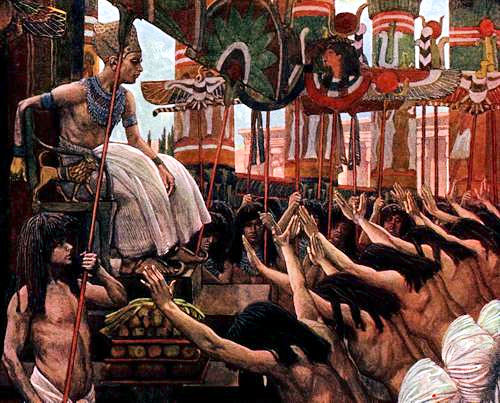
king-davidAnd Joseph said to his brothers, “I am Joseph!”

Genesis 45:3

The Chofetz Chaim comments that from the time the brothers first came to Egypt to get food — when Joseph spoke with them roughly and accused them of being spies — they were puzzled about what exactly was happening and why it was happening. In both encounters with Joseph they had many questions about their experiences. As soon as they heard the words, “I am Joseph” all their questions were answered. The difficulties they had in understanding the underlying meaning of the events — why Joseph accused them of being spies, yet treated them well, accused them of lying and stealing, but gave them a banquet, insisted on bringing the younger brother to Egypt, etc. — were now completely clarified.

Similarly, says the Chofetz Chaim, when the entire world will hear the words “I am the Almighty” at the final redemption of the Jewish people, all the questions and difficulties that people had about the history of the world with all of its suffering will be answered. The entire matter will be clarified and understood. Everyone will see how the hand of the Almighty caused everything ultimately for our benefit.

Dvar Torah for Torah Portion Vayigash based on
Growth Through Torah by Rabbi Zelig Pliskin
Referenced by Rabbi Kalman Packouz
at Aish.com

The brothers of Joseph discover a startling reality. The ruler of the Egyptians who has been treating them harshly all of this time is really their brother Joseph. In an instant, all the cruelty they showed him, including trying to murder him, must have come to the forefront of their conscience.

Before this, the Egyptian ruler had the power to do anything to them, imprison them, make them slaves, even kill them, but “it wasn’t personal.” That is, the sons of Jacob were no more or less significant to an Egyptian ruler than anyone else.

Now they not only discover that this man has the power of life and death over them, but that he is their brother, who they left for dead, who almost surely has a personal motive for seeking revenge. The brothers knew they had no right to appeal to Joseph for mercy, for they had not showed him mercy. They could only hope that in the years he ascended from slavery and imprisonment to being a viceroy of Egypt, second only to Pharaoh in power and authority, that he had learned wisdom and compassion and would be willing to offer them something they did not deserve: mercy and the continuation of their very lives.

Now look at what Rabbi Pliskin had to say from the above-quoted text:

Similarly, says the Chofetz Chaim, when the entire world will hear the words “I am the Almighty” at the final redemption of the Jewish people, all the questions and difficulties that people had about the history of the world with all of its suffering will be answered.

How much of the non-Jewish world will tremble at the feet of God when they realize the Almighty has appeared at the final redemption and that He is not at all pleased with how His people Israel have been treated?

Over the long march of centuries since Abraham, Isaac, and Jacob, since Joseph confronted his brothers, since Moses, Aaron, and Miriam liberated the Israelites from Egyptian slavery and set them before God at Sinai, and on and on across history, every people, tribe, and tongue throughout the Earth has been seeking to kill the Jewish people, God’s splendorous treasure, the apple of His eye.

This includes the Church of Jesus Christ. How confusing it will be in those days to be a Christian who has harbored hatred toward Jewish people, Judaism, and Israel, and to be confronted by an angry Jewish King. How strange it will seem to many Christians who have loved Israel but continued to deny the validity of the Torah, the Temple, and the adherence of Jewish people to a Jewish way of life for those Gentile believers to be faced with a Jewish King who upholds the “Jewishness” of his people Israel.

“Then He will also say to those on His left, ‘Depart from Me, accursed ones, into the eternal fire which has been prepared for the devil and his angels; for I was hungry, and you gave Me nothing to eat; I was thirsty, and you gave Me nothing to drink; I was a stranger, and you did not invite Me in; naked, and you did not clothe Me; sick, and in prison, and you did not visit Me.’ Then they themselves also will answer, ‘Lord, when did we see You hungry, or thirsty, or a stranger, or naked, or sick, or in prison, and did not take care of You?’ Then He will answer them, ‘Truly I say to you, to the extent that you did not do it to one of the least of these, you did not do it to Me.’ These will go away into eternal punishment, but the righteous into eternal life.”

Matthew 25:41-46 (NASB)

Woman in the darkI used to think this was an injunction for believers to show kindness and compassion for all of the needy people around us (and I still think we should), but almost a year ago, I heard a good and kind Christian man in a Sunday school class interpret this statement as the duty we Gentile believers have to take care of all the needy of Israel.

And if that statement is true, then woe be to the many, many Christians past and present who have utterly failed to do so because those needy people were “just Jews.”

In the case of the brothers of Joseph, their kinsman who was also ruler and King over them was merciful after all:

Now do not be distressed or reproach yourselves because you sold me hither; it was to save life that God sent me ahead of you. It is now two years that there has been famine in the land, and there are still five years to come in which there shall be no yield from tilling. God has sent me ahead of you to ensure Your survival on earth, and to save your lives in an extraordinary deliverance. So, it was not you who sent me here, but God; and He has made me a father to Pharaoh, lord of all his household, and ruler over the whole land of Egypt.

Genesis 45:5-8 (JPS Tanakh)

But was it for Jacob’s sake that Joseph spared his brothers? And for whose sake shall the King of Israel spare those among the nations and particularly those among the Church who have treated his little ones poorly?

…but whoever causes one of these little ones who believe in Me to stumble, it would be better for him to have a heavy millstone hung around his neck, and to be drowned in the depth of the sea.

Matthew 18:6 (NASB)

Mark Nanos in his book The Mystery of Romans defines the “weak” and “stumbling,” relative to Paul’s letter to the Romans, as the Jews in the synagogues of Rome who had not yet come to faith in Messiah. I’ll write a detailed “meditation” on this topic in a few days, but Nanos understands Paul’s admonition to the “strong,” the Gentile believers, as failing to uphold their responsibility to encourage the stumbling Jewish people, resulting in them stumbling even further away from faith. Paul never gave up on the stumbling, and he would have sacrificed everything for them.

For I could wish that I myself were accursed, separated from Christ for the sake of my brethren, my kinsmen according to the flesh, who are Israelites, to whom belongs the adoption as sons, and the glory and the covenants and the giving of the Law and the temple service and the promises, whose are the fathers, and from whom is the Christ according to the flesh, who is over all, God blessed forever. Amen.

Romans 9:3-5 (NASB)

It was the Master himself who called his people Israel “lost sheep” (Matthew 10:6, 15:24) and who are we to disdain those “sheep,” for it is obvious that even in their unbelief, God loves them with a great intensity and will violently protect them, even from those of us who are so arrogant as to believe their Father has cut them off from His care and compassion.
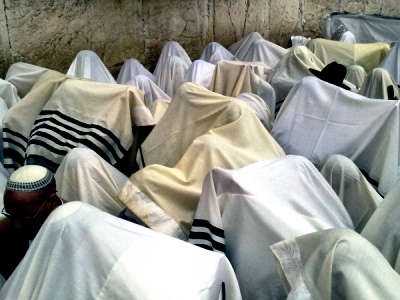
bk_kotelPaul says that all of Israel will be saved (Romans 11:26), though we in the Church cannot fathom this. But though the Jews have always been few in number (Deuteronomy 4:27) and suffered exile and dispersion (Leviticus 26:33), yet they shall be redeemed and live in peace (Micah 4:1-4), for God has declared that Israel shall eternally be a nation before Him (Genesis 17:7, Leviticus 26:43, Deuteronomy 4:26-27, 28:63-64).

It is within the power of the Jewish Messiah King, Yeshua, Jesus, to judge his Gentile Church and to cast out those of us who have failed in our duty to his people Israel in opposition to the prophesies and the commandments. The patriarchs were terrified of their powerful and very human brother for the vengeance he could exact upon them. How much more should we be terrified of an infinitely powerful and eternal King?

It is a terrifying thing to fall into the hands of the living God.

Hebrews 10:31 (NASB)

Tremble and sin not, reflect in your hearts while on your beds, and be utterly silent. Selah.

Psalm 4:4 (from the Siddur, nighttime blessings)

Let the world that has always hated the Jewish people learn to repent before it’s too late, and let each Christian who has hated or dismissed the Jewish people lie in his or her bed and tremble and be utterly silent before their King whose hand will always uplift Israel and whose greatest desire is to save his precious nation and redeem her as he has promised.

Good Shabbos.
Miketz and Chanukah: The Gift of Light

Joseph of EgyptThey said to one another, “Alas, We are being punished on account of our brother, because we looked on at his anguish, yet paid no heed as he pleaded With us. That is why this distress has come upon us.”

Genesis 42:21 (JPS Tanakh)

What lesson for our lives can we learn from their statement?

Rabbi Dovid of Zeviltov comments in the commentary Otzer Chaim: If a person did something wrong and recognizes that he has done wrong, he will be forgiven. However, if a person does something wrong and denies it, there is no atonement for him. When Joseph’s brothers previously said that they were innocent, Joseph responded by calling them spies. When they said that they were guilty, Joseph was full of compassion for them and cried.

Dvar Torah for Torah Portion Miketz
Based on Growth Through Torah by Rabbi Zelig Pliskin
Related by Rabbi Kalman Packouz
Aish.com

Rabbi Packouz also states that according to Rabbi Abraham J. Twerski in his book Twerski on Chumash, “there is no coincidence that Chanukah occurs during the week that we read about the epic of Joseph and his brothers.” But what can one have to do with the other? What can we learn about ourselves?

Well, for starters:

Many people deny their faults and the things that they have done wrong because they mistakenly think that others will respect them more. In reality people admire someone with the honesty and courage to admit his mistakes. It takes a braver person to say, “Yes, I was wrong.” This kind of integrity will not only build up your positive attribute of honesty, but will also gain you the respect of others. When you apologize to someone for wronging him, he will feel more positive towards you than if you denied that you did anything wrong. This awareness will make it much easier for you to ask forgiveness from others.

The Death of the MasterYesterday was Thanksgiving, an American national holiday dedicated to giving thanks to God for His bountiful goodness to us. All that we have, whether great or small, comes from the Holy One of Israel, the gracious and compassionate Provider and Creator. Even the ability to forgive and be forgiven by God is a blessing for which we should be thankful. Without such a gift, a single sin would forever separate us from God, and condemn us to our doom.

But as Rabbi Pliskin’s Dvar Torah states, we are only forgiven and freed from guilt, slavery, and destruction if we admit to our wrongdoings and ask for forgiveness. Our “free gift,” so to speak, actually comes with a price. True, as a Christian, I believe that the death of the greatest of all tzaddikim, Yeshua of Nazareth, paid that price, but forgiveness of sins is like a package wrapped in bright shiny paper decorated with a pretty bow. It just sits there until we accept it and open it up. To do that, we have to do something else. We have to admit our sins rather than deny them. For when we too say we are guilty, then the Father will welcome us back with open arms.

And the son said to him, ‘Father, I have sinned against heaven and in your sight; I am no longer worthy to be called your son.’ But the father said to his slaves, ‘Quickly bring out the best robe and put it on him, and put a ring on his hand and sandals on his feet; and bring the fattened calf, kill it, and let us eat and celebrate; for this son of mine was dead and has come to life again; he was lost and has been found.’ And they began to celebrate.

Luke 15:21-24 (NASB)

But what does any of this have to do with Chanukah?

“Rav Avraham Pam (former Rosh Yeshiva of Yeshiva Torah Vodaas) teaches us that we see this special love of God for the Jewish people regarding the many Jews at that time who had defected to Hellenism and then returned to Torah observance with the triumph of the Macabees — regarding their relationship with the Almighty after their return to the Torah. When a couple reconciles after a separation, the relationship often becomes one of peaceful coexistence, but the quality of love that they initially had for each other is rarely restored.

“Not so when Jews do teshuvah (repentance — returning to the Almighty and to the ways of the Torah). Rambam says that although a sinful person distances himself from God, once he does teshuvah he is near, beloved and dear to God. It is not that God “tolerates” the baal teshuvah (returnee), but rather that He loves him as He would the greatest tzaddik (righteous person). As the prophet says, “I will remember for you the loving-kindness of your youth, when you followed Me into the desert, into a barren land” (Jeremiah 2:2). The love of yore is fully restored.

“This is the significance of the miracle of the oil. It teaches us that with proper teshuvah our relationship with God is restored, as if we had never sinned.”

chanukah-candle-lightingAs believers, as disciples of Messiah, Son of David, the light of the world, the doorway to the Father, we too have been granted the ability to do teshuvah with the same results. It is not as if we are “damaged goods” that, once broken and dirtied, can only approach God just so far and no further. It’s as if we never left, as if we never sinned, as if we have always lived in the Father’s household as beloved sons and daughters. If I can extend the above commentary, God loves the baal teshuvah as He does His Son, His only Son, the one who saved us and redeemed us at the cost of blood and life.

During this week, people in Jewish homes will be lighting the Chanukah candles in remembrance of the miracle of the oil and the miracle of victory over the Greeks in battle. However, the Chanukah lights and the lesson learned by the brothers of Joseph should remind us of something more. As believers, when we light the menorah, we are reminded of God’s great forgiveness in our lives, and how He literally turned darkness into light in our hearts and souls.

In John 8:12, Jesus declared himself the light of the world. In Matthew 5:14-16 we discover that as his disciples, we too are the light to the world. In Jewish tradition, once the menorah is lit, it should be placed in a window for everyone to see. We too were encouraged to allow our own light to shine into the world, as a message of hope and peace, and as evidence that God does powerful miracles.

Love, hope, and redemption are powerful miracles indeed, and a tiny light shining in the darkness is evidence in our world of an overwhelming brightness shining from the Throne of Heaven.

Happy Chanukah and Good Shabbos.

Vayeshev: The Blessing and the Curse of the Presence of God

Joseph in prison“And it happened after these things that the cupbearer of the king of Egypt and the baker transgressed against their master, the king of Egypt.”

Genesis 40:1

“I have set God before me always…”

Psalm 16:8

Rashi brings the Midrash that the cupbearer was imprisoned because a fly was found in Pharaoh’s goblet of wine; the baker was imprisoned because a small pebble was found in the king’s bread.

Our tzaddikim (righteous ones) never lost sight of being in God’s presence. Everything that transpired was contemplated as to how it applied to their service of God. The story is told of one such tzadik, the Alter (Elder) of Kelm who once found a small chip of wood in his bread. This immediately brought to mind the story of the king of Egypt’s baker who was imprisoned for allowing a pebble to be in the king’s bread. The Alter cogitated, “A defect in a person’s bread is hardly grounds for so severe a punishment. No one will be punished for this chip of wood in the bread, especially since it was totally accidental. Why, then, was the king’s baker punished so harshly?”

Dvar Torah on Vayeshev
based on Twerski on Chumash
by Rabbi Abraham J. Twerski
quoted by Rabbi Kalman Packouz at Aish.com

A tzaddik is a holy or righteous person who, as Rabbi Packouz states, does not lose sight of being in the presence of God. There’s a reason most of us aren’t tzaddikim or “righteous ones.” It is extremely difficult (forgive me for saying this) to keep our thoughts on being in the presence of God every waking hour. Even if it is our most heartfelt desire, sooner or later our concentration will waver, our mind will wander, and we’ll start thinking and then doing things without an awareness that God is also present with us.

This is what separates someone like Joseph from you and me. Even when he was alone and knew he would not be caught, he still refused to take advantage of very appealing opportunities. For even if his human master was away, he was always in the presence of the Master of the Universe.

After a time, his master’s wife cast her eyes upon Joseph and said, “Lie with me.” But he refused. He said to his master’s wife, “Look, with me here, my master gives no thought to anything in this house, and all that he owns he has placed in my hands. He wields no more authority in this house than I, and he has withheld nothing from me except yourself, since you are his wife. How then could I do this most wicked thing, and sin before God?” And much as she coaxed Joseph day after day, he did not yield to her request to lie beside her, to be with her.

One such day, he came into the house to do his work. None of the household being there inside, she caught hold of him by his garment and said, “Lie with me!” But he left his garment in her hand and got away and fled outside. When she saw that he had left it in her hand and had fled outside, she called out to her servants and said to them, “Look, he had to bring us a Hebrew to dally with us! This one came to lie with me; but I screamed loud. And when he heard me screaming at the top of my voice, he left his garment with me and got away and fled outside.” She kept his garment beside her, until his master came home. Then she told him the same story, saying, “The Hebrew slave whom you brought into our house came to me to dally with me; but when I screamed at the top of my voice, he left his garment with me and fled outside.”

Genesis 39:7-18 (JPS Tanakh)

Of course, Joseph wasn’t always a tzaddik.

At seventeen years of age, Joseph tended the flocks with his brothers, as a helper to the sons of his father’s wives Bilhah and Zilpah. And Joseph brought bad reports of them to their father.

Genesis 37:2 (JPS Tanakh)

DescendingAs his father’s favorite son, Joseph could get away with almost anything, so much so, that his brothers learned to hate him and finally conspired to kill him. Thus began the long descent of Joseph from favored son to slave and the finally to prisoner in Egypt.

It is said in some circles of Judaism:

Before a person experiences a miracle – נס – , he is given a trial – ניסיון. There is no ascent (aliyah) without a prior descent (yeridah). The lower the descent, the higher the potential ascent.

And so it was for Joseph.

But what about you and me? Remember, while we have more than a few Biblical examples of people who started out in difficult circumstances only to rise mightily by the hand of God, there is also a certain amount of midrash involved in the commentaries I’m using. Can we say that for every difficulty or misfortune we encounter, we will ultimately spring back with the same force or greater, ascending exalted heights for the glory of God?

Probably not. The apostle Paul, while a highly respected Rav and tzaddik in his own right, died a cruel and unrecorded death among pagan Gentiles in Rome at the hand of Caesar. How many righteous ones, both Jewish and Christian, have suffered and died with no reward in this world? How many never thought of a reward in this present life, but only looked to Heaven?

For I am already being poured out as a drink offering, and the time of my departure has come. I have fought the good fight, I have finished the course, I have kept the faith; in the future there is laid up for me the crown of righteousness, which the Lord, the righteous Judge, will award to me on that day; and not only to me, but also to all who have loved His appearing.

2 Timothy 4:6-8 (NASB)

Paul too was a man who was always aware of being in the presence of God, standing before the Throne of the Master of the Universe. It was being in His Presence that was most rewarding to the apostle, much more than any reward he could ever receive in mortal life. His crowns are in Heaven.

Rabbi Packouz concludes his commentary like this:

The Alter concluded, “It was because when one serves or relates to the king, the standard of perfection is much greater than when relating to other people. One must exercise much greater caution to prevent any defects. In serving the king, even a small defect is a major offense!”

“I am in the service of the King of kings,” continued the Alter. “Is my behavior before Him without defect? Have I been cautious enough to avoid even accidental infractions?”

On the surface, we might wish always to be in the presence of God, but consider this. God watches every move and every mood. You cannot so much as twitch without God noticing. Then too, if you are always in His presence, that includes when you drive to work, when you discipline your children, when you talk to your neighbor, when you talk about your neighbor behind their back, and particularly when you are alone, for no one displays more of who they really are than when they’re alone and they think no one is watching.

The only difference between a tzaddik and the rest of us is that the tzaddik knows he or she is in the presence of God constantly. The rest of us are also constantly in God’s presence, but we aren’t always aware of that fact, or we don’t want to always be aware of it.

Joseph of EgyptJoseph became Prince of Egypt, second only to Pharaoh in power and majesty in that ancient land. But this was only after suffering great trials, and in those trials, always being aware he was in God’s presence. Only when he didn’t succumb to the temptations of lust, anger, and despair was he elevated to great heights, but even then, only for the glory of God and to serve the desperate and the starving…and only to ensure the continuation of Jacob and the Children of Israel.

Nearly two years ago, for Torah Portion Vayigash. I wrote something similar as related to our Master, to Messiah. Jesus also suffered many trials in his mortal lifetime as a humble teacher who could have risen to King, but in the presence of God, allowed himself to be degraded, crucified, and murdered.

But he rose to the most exalted place at the right hand of the Father, to be glorified and with the promise of one day returning as King to defeat Israel’s enemies, restore the Holy Land to glory, return the exiles to their nation, and to rule us all in justice and peace.

Any one of us may be called upon to serve the King at any moment, not in exalted glory, but as a humble and even humiliated servant. How we respond to suffering, hardship, and shame in the presence of God may determine how we will be allowed to continue to serve Him…or if we will be allowed to do so.

When you believe you are living inside of an unobserved and unguarded moment, that is the time to realize the truth. You are never alone. God is always there. You are always before the Throne. That can either be a blessing or a curse, depending on how you choose to use that moment.

Good Shabbos.

Vayishlach: The Good Fight

wrestlingIn this week’s parsha, our father Yaakov, fresh from his successful escape from Lavan, prepares to encounter his brother and sworn enemy, Eisav. He sends malachim to deal with Eisav before he will actually meet with him face to face. The word malachim signifies two different meanings. One is that it means agents, messengers, human beings who were sent on a particular mission to do Yaakov’s bidding. The other meaning is that the world malachim signifies angels, supernatural messengers of God who were sent to Yaakov to help him in his fateful encounter with his brother.

Rashi cites both possible interpretations in his commentary. When Rashi does so, he is teaching us that both interpretations are correct at differing levels of understanding the verse involved.

-Rabbi Berel Wein
“Human Effort and Supernatural Help”
Commentary on Torah Portion Vayishlach
Torah.org

A plain reading of the text suggests (at least to me) that Jacob sent human beings as messengers to his brother Esau rather than supernatural angels. It makes the most sense given the context. However, there is another encounter Jacob has with the supernatural that bears scrutiny.

Jacob was left alone. And a man wrestled with him until the break of dawn. When he saw that he had not prevailed against him, he wrenched Jacob’s hip at its socket, so that the socket of his hip was strained as he wrestled with him. Then he said, “Let me go, for dawn is breaking.” But he answered, “I will not let you go, unless you bless me.” Said the other, “What is your name?” He replied, “Jacob.” Said he, “Your name shall no longer be Jacob, but Israel, for you have striven with beings divine and human, and have prevailed.” Jacob asked, “Pray tell me your name.” But he said, “You must not ask my name!” And he took leave of him there. So Jacob named the place Peniel, meaning, “I have seen a divine being face to face, yet my life has been preserved.” The sun rose upon him as he passed Penuel, limping on his hip. That is why the children of Israel to this day do not eat the thigh muscle that is on the socket of the hip, since Jacob’s hip socket was wrenched at the thigh muscle.

Genesis 32:25-33 (JPS Tanakh)

A man comes out of nowhere in the middle of the night, encounters Jacob and starts wrestling with him. Amazingly, both fighters have the strength and stamina to sustain their combat for many hours until dawn nears. The intruder then pleads with Jacob to release him because the sun is coming up, but rather than demanding who the person is and why he attacked him, Jacob asks his fellow combatant to bless him.

At least from this translation, we only learn that the “person” who attacked Jacob was supernatural when we arrive at verse 31:

So Jacob named the place Peniel, meaning, “I have seen a divine being face to face, yet my life has been preserved.”

It is commonly believed that Jacob wrestled with an angel of God, but some believe is was some form of incarnate God Himself, while others believe it may have been a “pre-incarnate Jesus.”

Who knows?

But from Rabbi Wein’s commentary, we can assume, at least on the surface, that the mysterious fellow could either have been human or an angel.

Who was Jacob wrestling with? If it was an angel, why couldn’t the angel defeat a mere moral? When the attacker couldn’t defeat Jacob, why did he injure Jacob’s hip? Why did the “angel” attack Jacob in the first place?

Our problem is that if Jacob is truly alone, who can be wrestling with him? One possible answer is — no one! Jacob is actually wrestling with himself. This would explain the ambiguity in the passage. However, by solving the textual problem (if indeed we are correct), we have raised an even greater problem: Why would a sane man wrestle with himself? A careful reading of the text may give us some insight.

The “man” is referred to in Hebrew as an ish. And we find another verse — a great deal less enigmatic — in which it is apparent that the ish is clearly Jacob.

-Rabbi Ari Kahn
“Vayishlach: The Struggle of Jacob”
from M’oray Ha’Aish: Advanced-level Commentaries on the Weekly Parasha
Aish.com

OK, you’re probably not buying that, but I think the interpretation has merit, even as a metaphor. However, this isn’t the only way to look at this encounter:

Who is this man with whom Jacob wrestled? According to the Sages, he is the “angel of Esau,” and their struggle, which “raised dust up to the Supernal Throne,” is the cosmic struggle between two nations and two worlds — the spirituality of Israel and the materiality of Edom (Rome). The night through which they wrestled is the long and dark galut (“exile”), in the course of which Jacob’s descendants suffer bodily harm and spiritual anguish, but emerge victorious.

-Rabbi Yanki Tauber
“Wrestling with Angels”
Chabad.org

shoahSo, in this interpretation, the guardian angel of Esau attacks Jacob but is unable to defeat him, presumably because of the blessings of God that rest upon Jacob but not Esau.

I suppose it makes more sense, especially when considering that Jacob realized he had been wrestling with a divine being. This operates as another metaphor and even on a prophetic level. The descendants of Jacob will be attacked by the descendants of Esau and although the Children of Israel, the Jewish people, will be injured, sometimes terribly, and carry the marks of their injury forward through history, they will ultimately prevail.

But let’s get back to the immediate situation Jacob was facing:

The messengers returned to Jacob, saying, “We came to your brother Esau; he himself is coming to meet you, and there are four hundred men with him.” Jacob was greatly frightened; in his anxiety, he divided the people with him, and the flocks and herds and camels, into two camps

Genesis 32:7-8 (JPS Tanakh)

Courage is resistance to fear, mastery of fear — not absence of fear.

-Mark Twain (Samuel Clemens)

Fictional heroes may face danger and death without fear, but real men and women are afraid all the time. Jacob had a lot of good reasons to be afraid. In fact, fear was one of his primary motivations for leaving his home in Canaan and seeking refuge, such as it was, in the home of his kinsman Laban.

For twenty years, Jacob labored under extremely difficult conditions, married, raised a family, went from being in poverty to becoming very wealthy. He, his family, his servants, and his livestock had all just survived the pursuit and threat of destruction represented by Laban, but now Jacob must face his oldest foe and his greatest adversary: his brother Esau.

Jacob's-Ladder1Jacob had done everything he could think of, everything humanly possible to appease Esau and to create a circumstance between them that wouldn’t immediately result in armed conflict when they finally met, but Jacob had a bigger enemy than Esau: this own fear and perhaps even guilt.

No matter which way you look at it, Jacob not only removed Esau’s birthright and blessing from him, on both occasions, he had done so by guile and trickery, even to the point of deceiving his own father Isaac. Such a thing for the grandson of the sage and tzaddik Abraham to do. One dream about angels at his exit from Canaan, and he’s gone.

What results from Jacob’s fight with the stranger in the dark?

  • Jacob is permanently disabled, walking with a limp for the rest of his days.
  • Jacob is blessed with the name “Israel” because he combatted with the divine and was victorious.
  • Jacob not only survived the encounter with Esau, but was welcomed by his brother back into Canaan.

And [Esau] said, “Let us start on our journey, and I will proceed at your pace.” But he said to him, “My lord knows that the children are frail and that the flocks and herds, which are nursing, are a care to me; if they are driven hard a single day, all the flocks will die. Let my lord go on ahead of his servant, while I travel slowly, at the pace of the cattle before me and at the pace of the children, until I come to my lord in Seir.”

Then Esau said, “Let me assign to you some of the men who are with me.” But he said, “Oh no, my lord is too kind to me!” So Esau started back that day on his way to Seir. But Jacob journeyed on to Succoth, and built a house for himself and made stalls for his cattle; that is why the place was called Succoth.

Genesis 33:12-17 (JPS Tanakh)

Alright, Jacob also didn’t trust his brother Esau as far as he could throw him, so he lied. Instead of following Esau at a slower pace, he detoured to Succoth, avoiding any future meeting with his brother.

All night long, Jacob struggles with his success. His spiritual self and his physical self collide as he tries to determine his true identity. But Jacob is unable to resolve this conflict.

In the resolution that is finally achieved, the physical realm is forced to yield. Laws, like that of the hip tendon, Gid HaNashe, will create spiritual boundaries within physical experience, making possible the elevation of the physical world to a spiritual plane.

-Rabbi Ari Kahn

Rabbi Kahn sees the struggle as the conflict between the physical and spiritual forces within Jacob. Would he join with his brother Esau and combine wealth, denying his spiritual destiny as the inheritor of Abraham and Isaac, or would he defeat his baser self, and become the true father of Israel?

Kahn says the outcome is obvious and reflected in Jacob’s refusal to accompany Esau and rather, to pursue a higher destiny.

Rabbi Tauber sees the victory a little bit differently:

It is a long and difficult struggle till dawn. But in the end we triumph over men and prevail over the divine as well. For this is the essence of Israel.

Rabbi Tauber sees Jacob defeating both the forces of evil that Esau’s angel represents and the divine itself, illustrating that it will always be Israel’s destiny to contend, even with God. This may sound like a bad thing, but it has merits.

A relationship with God always involves struggle. The worst thing a person of faith can do, even worse than becoming an apostate, is to take faith for granted and become apathetic.

I know your deeds, that you are neither cold nor hot; I wish that you were cold or hot. So because you are lukewarm, and neither hot nor cold, I will spit you out of My mouth. Because you say, “I am rich, and have become wealthy, and have need of nothing,” and you do not know that you are wretched and miserable and poor and blind and naked, I advise you to buy from Me gold refined by fire so that you may become rich, and white garments so that you may clothe yourself, and that the shame of your nakedness will not be revealed; and eye salve to anoint your eyes so that you may see.

Revelation 3:15-18 (NASB)

coastSometimes it takes a crisis to shake us out of apathy. Like the church at Laodicea, Jacob had become rich. He was in danger of taking God’s blessings for granted. The angel of Jacob delivered the same message as the angel to the church in Laodicea (although the message of the Master may have been delivered by a human messenger rather than an angelic being). Do not be lukewarm. It would be better if you were cold than lukewarm. Do not let your material wealth fool you. You are miserable, poor, blind, and naked. Only through God can you be rich with true riches.

So what was the ultimate achievement attained by Israel’s struggle with God?

God appeared again to Jacob on his arrival from Paddan-aram, and He blessed him. God said to him, “You whose name is Jacob, you shall be called Jacob no more, but Israel shall be your name.”

Thus He named him Israel.

And God said to him, “I am El Shaddai. Be fertile and increase; a nation, yea an assembly of nations, shall descend from you. Kings shall issue from your loins. The land that I assigned to Abraham and Isaac I assign to you; and to your offspring to come will I assign the land.”

Genesis 35:9-12 (JPS Tanakh)

It may seem disrespectful and even dangerous to struggle against or contend with God, but remember, in the example we have with Jacob, God started it. Jacob was alone in the dark. He was afraid. He was uncertain. He did everything humanly possible to deal with his fears and to protect his family, but he didn’t know what was going to happen.

God knew all of this and challenged Jacob. It doesn’t look like Jacob had much of a choice. He could either fight off his attacker or surrender. Jacob chose to fight. He couldn’t afford to be “lukewarm” in this situation. He fought back and he won, not because he literally defeated God, but he defeated the challenge God set before him, the one Jacob had to defeat in order to overcome his fears; in order to become Israel, father of a nation, patriarch of an empire.

poured_outMost of us aren’t going to be the father or mother of a nation, but that doesn’t mean we don’t have challenges we must overcome in order to advance God’s plan and to grow spiritually. We can take from Jacob’s example that our challenges aren’t always easy. We can also see that God doesn’t always step in and overwhelm our challenges for us and in fact, sometimes He is the challenge, and we must contend against Him.

Even when we don’t escape such struggles unscathed, in the end, if we persevere, the injuries are worth the blessing.

For I am already being poured out as a drink offering, and the time of my departure has come. I have fought the good fight, I have finished the course, I have kept the faith; in the future there is laid up for me the crown of righteousness, which the Lord, the righteous Judge, will award to me on that day; and not only to me, but also to all who have loved His appearing.

2 Timothy 4:6-8 (NASB)

Good Shabbos.

Vayetzei: The Mosaic of God

Jacobs_LadderJacob awoke from his sleep and said, “Surely, God is present in this place and I did not know!”

Genesis 28:16

What was the source of Jacob’s surprise? Jacob realized that he can relate to God even during sleep.

The Talmud (Berachos 63a) says that there is a brief passage upon which the entire body of Torah is dependent: “In all your ways know God” (Proverbs 3:6). Rambam and countless other commentaries refer to this statement, saying that one should serve God not only with the actual performance of mitzvos, but with all of one’s daily activities.

Dvar Torah for Vayetzei
based on Twerski on Chumash by Rabbi Abraham J. Twerski
quoted by Rabbi Kalman Packouz at Aish.com

Yesterday, I quoted another Aish source, Rabbi Zelig Pliskin, who suggests we should act the way we want to be. This was in part, to support how in serving God, we need to bring both a sense of justice and mercy to the table, so to speak. We need not to be severely biased in one direction or the other, though according to some areas of Jewish thinking, even God created the world with a very slight leaning toward mercy.

In his commentary on Torah Portion Vayetzei, Rabbi Packouz presents an interesting and related challenge.

What is true spirituality? My beloved friend, Rabbi Avraham Goldhar, who has a revolutionary approach to helping kids get better grades with less study time in both secular and Jewish studies, came up with the following paradigm of attributes to clarify the definition of spirituality.

  1. Emotion — Intellect
  2. Kindness — Justice
  3. Community — Solitude
  4. God — Nature
  5. Serenity — Challenge

Put a check mark by one attribute from each pair that you think is more spiritual.

Now, if you want to try something interesting, put an “x” mark by each attribute that you associate with the Jewish people.

Here’s the point Rabbi Packouz is making, a point that dovetails nicely with what I was saying in yesterday’s morning meditation:

What is fascinating is that most people associate spirituality with emotion, kindness, solitude, nature and serenity … and the Jewish people with intellect, justice, community, God and challenge. The reason is that we have an Eastern notion of spirituality — an all encompassing emotional bliss connecting with the universe. The Jewish approach to spirituality is based on fulfilling a purpose, to fix the world (tikun olom)– which requires intellect, justice, community, God and challenge.

For the Jew, intellect is to be channeled into emotion — emotions can’t rule you; you must do the right thing. Justice provides for a world of kindness. A society has to be willing to identify rights and wrongs and stand up to evil. If not, one can attempt to do kindness, but end up enabling evil. Community provides you with an understanding of who you are – a member of a people – even when you are alone, you are still part of something more. Realizing that there is a Creator and having a relationship with the Creator makes the natural much more profound. This world is a veiled reality with the Creator behind it. People can only receive serenity when they live up to their challenges; otherwise, they are tormented in their pursuit of serenity by not living up to their potential.

mosaicYou cannot lead with any one side of the equation, so to speak. You can’t even lead with just a few different but specific attributes. And yet people in religion do this all the time, usually to the detriment of the faith. In reading Rabbi Packouz, I get the impression, at least in the ideal, that Judaism strikes the desirable balance between emotion and intellect, between mercy and justice. Of course, the idea that the universe was created by God with these two elements is also a Jewish idea.

Don’t get me wrong, this probably isn’t literal and factual in terms of the process of Creation, but as a metaphor, it tells an important tale, one that we need to learn in order to truly serve God.

Rabbi Twerski ends his Dvar Torah like this:

A person should eat and sleep with the intent that food and rest are essential to have a healthy body, which enables one to do the mitzvos properly. Someone who is weak and exhausted cannot concentrate on Torah study or do mitzvos properly.

One engages in work and business to provide the needs for one’s family, and to acquire the means to do the mitzvos. Money is necessary to give tzedakah, to purchase tefillin and tzitzis, to build a succah, to pay for an esrog and for matzoh, to pay tuition and fulfill all of the mitzvos. If one partakes of world goods for the purpose of being able to serve God properly, then all of one’s actions become part and parcel of Torah and mitzvos.

If I may take a few liberties here, I’ll add that we should use every aspect of who we are in the service of God, not just a few. It is true that each of us has talents or areas where we excel. For some, it’s compassion, and so they serve God by being compassionate helpers. For some it’s intellect, and so they serve God as teachers and as students, always learning and passing on what they’ve learned.

And now you see why we need to work in a body. No one of us has the capacity to serve God in all areas. If we imagine that we do, then everyone around us will get a limited and probably inaccurate image of who God is, what God does, and what God expects of human beings. If all we know of God is from someone who is exceptionally merciful, we may think of God as loving and permissive in the extreme, but having few behavioral expectations, limits, or discipline, like some sort of “cosmic teddy bear.” If all we know of God is from someone who is exceptionally just, we may think of God as harsh, cruel, rule-bound, inflexible, and blind.

Look back at the numbered list I posted above. God possesses all of those qualities. He exists along all points of all continuums, from emotion to intellect, from kindness to justice, from community to solitude. There is no place where God does not exist, and there is no person God cannot comprehend.

But no human being lives with the same infinite set of perceptions and qualities as God. We are limited. We are finite. We have biases. We lean in one direction or another. No one of us gives anyone else an accurate picture of the attributes of God. That’s why we need to operate in a body. That’s why we need community, either physical or (if an approprite physical community of faith is not accessible) virtual. Because only together, as a body, can we balance and guide each other. It takes all of us, like the bits and pieces that make up a mosaic, to be the image of God.

alone-desertSometimes you’ll encounter someone, a person of faith, perhaps a leader, Pastor, teacher, or writer, and they gather a great deal of attention to themselves. When you encounter this person, remember that he or she is only one person. If that person is not tempered, guided, and corrected by a balanced community (plenty of “religious leaders” exist in an unbalanced community, made up of only people who think and feel just like they do), and I don’t care how powerful they are or believe themselves to be, then that person, all by himself or herself, cannot possibly represent God in all that God is.

Don’t be fooled into thinking that he or she can be such a “holistic” representative, even if that person thinks of themselves that way. Alone, a person is just one, and only God is complete as One. It takes a “village,” not only to raise a child, but to be a community in the image of God.

I shall praise God among a multitude.

Psalms 26:12

While the prayer and performance of a mitzvah are always praiseworthy, it is especially meritorious when an entire community participates in it, as the Sages teach, “The prayer of a multitude is never turned away.”

-from Devarim Rabbah 2

Good Shabbos.

Chayei Sarah: The Days of the Years of Life

abrahamic-covenantAnd these are the days of the years of the life of Avraham which he lived; a hundred years and seventy years and five years. And Avraham expired and he died in a good age, mature and satiated and was gathered to his people.

Genesis 25:7-8

Reb Avraham, the son of the Vilna Gaon, testifies about his father:

“For over fifty years he never slept more than half an hour at a time…Even when his health began to fail, he did not set aside his holy learning. Immediately, he would rise like a lion, in fear and dread of his Creator, wash his hands, and recite his morning blessings with a joy and awe which is beyond description. Afterwards, he would stand on his feet from before midnight until the first light of dawn learning Gemora and Poskim in a beautiful and awesome voice…Whoever heard it was moved with deep feelings of holiness.”

Arriving in Jerusalem, one summer, I immediately made contact with my good friend and study partner, Reb Reuven, and we agreed to get busy the next morning studying an hour or more before Davening. The next morning I made it on time but I was suffering from jet lag, sleeplessness, and exhaustion. I commented to my friend that I don’t know how the Vilna Gaon did it. I can’t imagine what it means to only sleep at half hour intervals four times per day for the course of a lifetime. He told me, “It’s not true!”

-Rabbi Label Lam
“Today!”
Commentary for Torah Portion Chayei Sarah
Torah.org

I periodically suffer from insomnia. Some nights are better than others. In extreme cases, I walk around like a zombie the next day, barely able to think. All the coffee in the world doesn’t turn me back into a human being. Yesterday (as I write this) was such a day. I finally collapsed into bed at 7:30 p.m. and fitfully drifted off. Only to wake up on several occasions during the night. Fortunately, on each occasion, I was able to go back to sleep. I chose not to go to the gym this morning in order to spend an extra hour in bed, finally getting up at a few minutes after five.

I feel much better today. I have my brain back.

Rabbi Lam’s commentary helps me realize though that it’s not just the number of hours you are awake or asleep, but how you use them. I was disappointed that, even in my dreams last night, I was focused on the mundane and ordinary rather than anything more lofty. The previous day, I could hardly concentrate on anything except what I absolutely had to get done, which tends to be mundane and ordinary.

Which was too bad, because I received some rather inspiring reading material that I wanted to dig into, but fatigue argued with my desire and fatigue won.

Vilna-Gaon-207x300I don’t know how the Vilna Gaon did it either. It seems like a physical impossibility. I’ve learned to take such tales of the great sages with a grain of salt, so to speak, which probably wouldn’t endear me to many in Orthodox Judaism. On the other hand, these tales often act as an inspiration for a more important principle that is to be grasped and applied to our day-to-day experiences.

Rabbi Lam comments:

How are living “the days of years of the life” different than living just the “years of the life”? What is the great advantage of living in units of days? It’s a nice aphorism, “One day a time!” but how does that translate into daily life? What does it mean to live each day as if it was the only day?

Which reminds me of this.

And He went a little beyond them, and fell on His face and prayed, saying, “My Father, if it is possible, let this cup pass from Me; yet not as I will, but as You will.” And He came to the disciples and found them sleeping, and said to Peter, “So, you men could not keep watch with Me for one hour? Keep watching and praying that you may not enter into temptation; the spirit is willing, but the flesh is weak.”

Matthew 26:39-41 (NASB)

This was perhaps the most important night in the Master’s short, human life, and his closest disciples and companions couldn’t keep their eyes open for even one small hour.

I know the feeling, although last night was hardly the most important night for anything in particular.

Or was it?

He told me, “It’s not true!” I insisted I had read an authenticated biography of the Gaon and that it was certainly true that he only slept two hours in total each day. He told me again that it was not true and so I argued my case again only to be countered with the “not true” claim. Eventually Reuven explained and I realized how right he was. He told me, “It’s not true that the Vilna Gaon only slept two hours each day! He learned Torah twenty-two hours each day!” I understood that he was not into sleep deprivation as we imagine but rather the sublime joy of learning Torah.

It’s not true that the Vilna Gaon slept only a total of two hours a night. It is true that he studied Torah twenty-two hours a day.

Well, maybe not. He had to eat sometime, and I don’t doubt that various biological, family, social, and other demands may have consumed some portion of those twenty-two hours.

intimate-prayerBut this is still an important lesson to be learned. It’s not the amount of time you have that’s so important but what you do with it. What are your priorities? For that matter, what are my priorities? It is true that the spirit is willing but the flesh is weak, but what about when you are well rested and the flesh is strong (or stronger)? Do you spend your time in Torah study or in watching TV? Do you spend your time in prayer or in surfing the web? Do you spend your time in service to others or by serving yourself?

I’m not saying that you shouldn’t enjoy life and indulge yourself as you are able to (within the will of God), but I am saying that how you spend your time, day by day, hour by hour, defines your priorities. If you pray to God to be of greater service to Him but spend most of your time being of service only to yourself, you betray what and who is really important to you.

“Beware of the false prophets, who come to you in sheep’s clothing, but inwardly are ravenous wolves. You will know them by their fruits. Grapes are not gathered from thorn bushes nor figs from thistles, are they? So every good tree bears good fruit, but the bad tree bears bad fruit. A good tree cannot produce bad fruit, nor can a bad tree produce good fruit. Every tree that does not bear good fruit is cut down and thrown into the fire. So then, you will know them by their fruits.

Matthew 7:15-20 (NASB)

It’s nice to have space and a little slack time to relax and appreciate life instead of being on the go, go, go, but space is there so you (and I) can grow into it. It’s like when I was a kid and my parents bought me shoes half to a full size bigger than my feet because they knew I’d rapidly grow into that space.

That is why we have the mitzvot, prayer, Bible study, volunteering for charitable services, visiting those who are sick. It’s what we do to fill the space and time God gives us in our lives.

Rabbi Lam asks, How are living “the days of years of the life” different than living just the “years of the life”? Each day of our life is a lifetime within itself.

Today I shall learn to better spend my time in the service of God, with Bible study, in prayer, in meditation on His Word, in seeking an encounter with the Divine.

Good Shabbos.